← The NPR Politics Podcast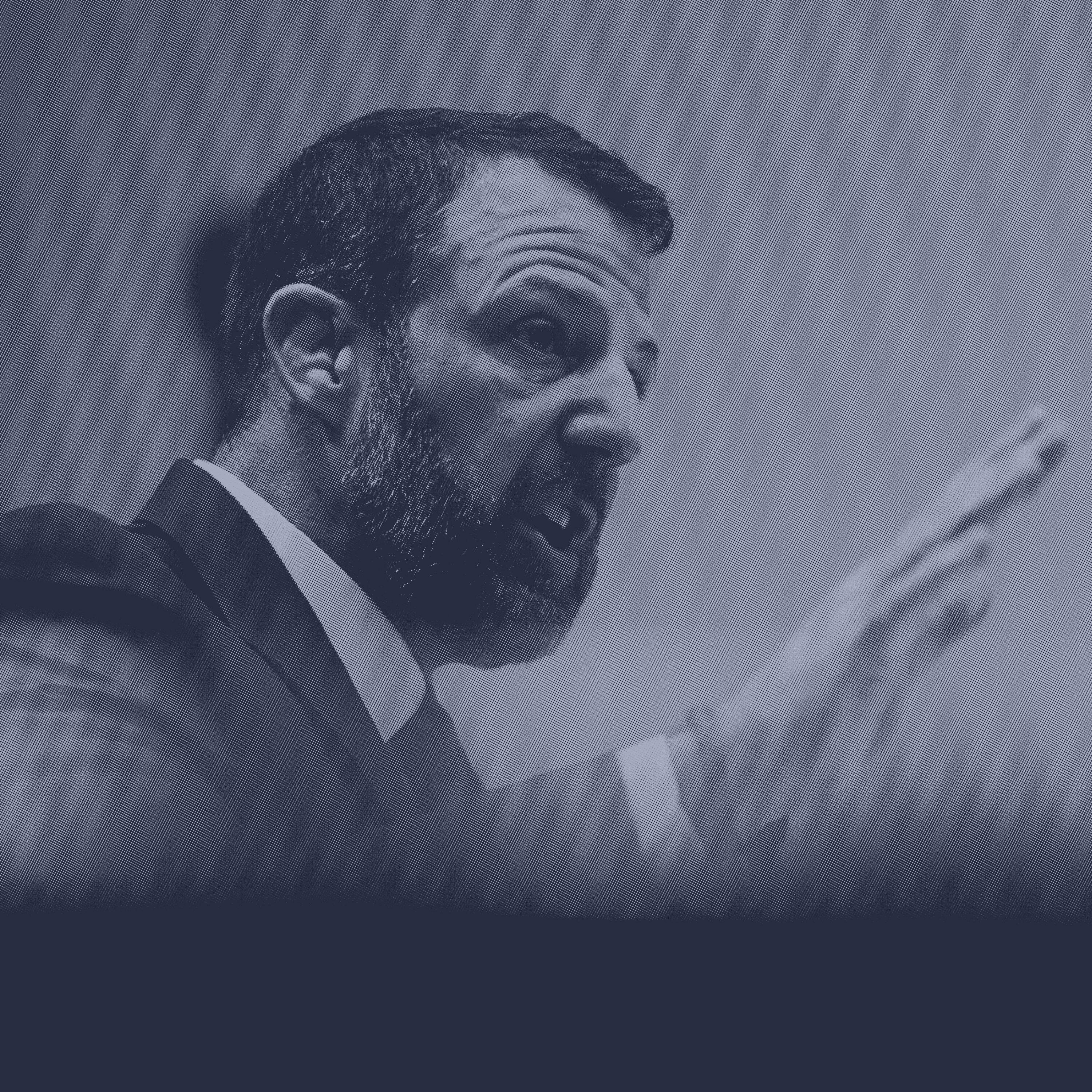
The NPR Politics Podcast
Sparks fly at DHS confirmation hearing, but Trump’s pick clears committee
00:19:05
Loading summary
Transcript46 lines
- [00:00]
A
This message comes from Mint Mobile. If you're tired of spending hundreds on big wireless bills, bogus fees and free perks, Mint Mobile is for you. Shop plans@mintmobile.com Switch taxes and fees extra. See Mint Mobile for details.
- [00:21]
B
Hey there. It's the NPR Politics podcast. I'm Tamara Keith. I cover the White House.
- [00:26]
C
I'm Ximena Bustillo and I cover immigration policy.
- [00:28]
D
And I'm Mara Liasson, senior national political correspondent.
- [00:31]
B
Today on the show, President Trump's pick to run the Department of Homeland Security, Oklahoma Senator Mark Wayne Mullen, was narrowly approved by the Senate's Homeland Security Committee after a heated hearing yesterday. Will new leadership change anything about the way the administration has been doing immigration enforcement? Ximena, before we get to policy, let's talk about that hearing. Kentucky Republican Rand Paul, who heads the committee, has some issues with Mullen that he aired right there at the beginning of the hearing.
- [01:04]
E
Tell it to my face. If that's what you believe, tell it to me today. Tell the world why you believe I deserve to be assaulted from behind, have six ribs broken and a damaged lung. Tell me to my face why you think I deserved it. And while you're at it, explain to the American public why they should trust a man with anger issues to set the proper example for ICE and Border Patrol agents.
- [01:27]
B
Okay, Jimena, help us out here. What is this beef and what was going on there?
- [01:33]
C
Yeah, so Senator Rand Paul was attacked by a neighbor in 2017. He was assaulted and that left him with those six broken ribs, as you hear him describe. And Senator Mullen at one point since then had said that he could understand why his neighbor would attack Paul. And so that is the first layer. And then the second layer is, you know, Mullen has been on record calling Paul a, quote, freakin snake. And then the third layer here is Mullen had previously threatened to fight the president of the Teamsters Union during a hearing pretty infamously. Now him and that Teamsters president appear to be friends and have made amends. That president was there in support of Mullen, but not in support of Mullen was Chair Paul, who is the highest ranking Republican on the committee and used a lot of his time during his opening statement, as we just heard, and even in his questions to pull apart Mullen's temperament and things that he has said before and bring that to the forefront.
- [02:54]
D
Yeah, you know, he could have shut this whole thing down over his feud with Mullen, but he didn't. He let the vote go forward. And because John Fetterman of Pennsylvania Democrat decided to vote with the Republicans and approve Mullen, his nomination moved forward.
- [03:08]
B
Mullen certainly has a tough guy image and is known to be quick to anger. But, Mara, Rand Paul made this about policy.
- [03:18]
D
That's right, he did. And what's so interesting about that exchange is how personal politics are in the era of Trump. You know, so many of the things that the White House does are based on Trump's whims or grievances. Very, very personal. So you've got this personal feud between Rand Paul and Mullen. And Rand Paul is an iconoclast. He often breaks with the Trump administration. He's a libertarian. But he did connect this to policy. He went on to say, I was shocked that you would justify and celebrate this violent assault that caused me so much pain. I wonder if someone who applauds violence against their opponents is the right person to lead an agency that has struggled to accept limits to the proper use of force. Of course, everybody knows that DHS is under extra scrutiny after two American citizens were shot and killed by ICE agents in Minnesota. So Rand Paul is definitely conflating this call to political violence. The fact that Mullins said he understood completely why Paul's neighbor would have attacked him to problems at the Homeland Security Department. And that's the bigger backdrop to. One of the many, many reasons that Kristi Noem Mullins, if he's confirmed his predecessor at the agency, had to step down, was that people have changed their minds about Trump's immigration policies. It used to be one of his most popular policies. Then people thought that ICE was going too far. They saw the killings of two American citizens. They saw a lot of people without criminal records, including children, being detained and deported. And they have really soured on the immigration policies.
- [04:55]
B
Certainly, use of force policies at the Department of Homeland Security are a significant issue following the killing of those Americans in Minneapolis earlier this year and other incidents. Ximena, is there any sense of how Mullen might change policy?
- [05:14]
C
Yeah, he was asked about it, but, you know, he didn't necessarily lay down too many plans. One of the things that was notable is he seemed to have an openness to discussing the use of warrants, which definitely connects to use of force, since there have been very aggressive scenes of immigration officers going into people's homes, doing foot chases, doing car chases. But the use of warrants is one thing that was really highlighted. Mullen seemed to be willing to negotiate or look into the use of judicial warrants to enter people's homes, as opposed to administrative warrants, which is basically the agency giving itself permission. He also said that he had the goal that the agency wouldn't be in the news headlines as often or every day within the first six months of him being secretary. And so a lot of those headlines have been related to use of force, particularly in the last several months. And so that's kind of an indication he at least wants to take what the agency's external perception is on how they are conducting themselves, on their professionalism, on their tactics, and flip that around a little bit.
- [06:31]
D
Jimena, did you see that as a change in policy or just kind of a change in tone? It sounds like Democrats are still insisting that the reforms they want, which include judicial warrants, no masks, body cameras, be legislated, not just, not just agreed to by a potential Homeland Security secretary.
- [06:49]
C
Right.
- [06:49]
B
Well, certainly Democrats in Congress at this point don't have a lot of trust between themselves and the White House or the Homeland Security Department. They don't want to take anybody's word for it.
- [07:00]
D
I mean, is that when he says, I don't want this to be the headlines anymore, he didn't seem to say, I don't want to change our policies or approach. He just said he doesn't want to get in trouble or he doesn't want.
- [07:13]
C
Yeah. I mean, I think you have to remember that the people at the top that are still driving the ship. So thinking about Deputy Chief of Staff Stephen Miller, thinking about White House border czar Tom Holman, that are really thinking about strategy, are essentially moving forward with putting someone else new at the helm and someone that has been reported, they might get along with a little bit more than Secretary Noem. There might be a little bit more uniformity in their approach. But at the end of the day, Mullins incoming does not mean that policy is changing in any way. It just, I think, depends on do they continue to do these surges in the cities like they did in LA and Chicago and Minneapolis, do they do these major influxes of enforcement that really increase the possibility of more clashes with civilians and protesters? Do they take a different approach in the second year? And so I think maybe some of those strategic decisions on the policy remain to be seen, but the policy itself is the same. And I think that's where things get a little muddy when thinking about immigration enforcement is like, you have the law, you have the policy to enforce the law, but then you also have the strategy to enact the policy that enforces the law. And so you can have a, like a goal of deporting, you know, an X amount of people or detaining an X amount of people. But, you know, you can find different people in different ways, make arrests in different ways, surge certain cities, like, make that conscious decision to go into one city or another. And so I think we'll have to see what direction Mullen takes that well.
- [08:52]
B
And certainly Homeland Security, ice, CPB Greg Bovino, that was all about just the show of force, the sheer like showing we're here, we're going into blue cities. We want the conflict. And that created a major problem for the administration.
- [09:13]
C
Right. It ultimately just didn't age very well for it. I mean, we kind of saw it start to bubble last summer in Boston and in la. And, you know, it really kind of started to tick up and kind of public perception started to wane a little bit. But things really did come to a head in Minneapolis.
- [09:33]
B
All right. We are going to take a quick break and we will have more in a moment.
- [09:38]
F
This message comes from NPR sponsor Focus Features. On March 27, Focus Features presents the AI doc or how I Became an Apocalyptimist, an explosive new motion picture event being called the most urgent movie of our time. The AI doc or How I Became an Apocalyptimist, rated PG13. Only in theaters March 27. This message comes from Betterment. Their automated investing and saving tools give you the quiet confidence of someone who knows where to put their money with tax smart tools that help grow your after tax returns year round. Get started today@betterment.com that's B E T T E R M E N T.com investing involves risk performance, not guaranteed. Betterment is not a tax advisor, nor should any information herein be considered tax advice. Please consult a qualified tax professional.
- [10:31]
A
This message comes from BetterHelp. This international women's Day, let's celebrate the leaders, the caregivers, the hype, friends with all they handle. Women need to care for themselves. And therapy's a great way to do that. Visit betterhelp.com NPR
- [10:48]
B
and we're back. And we've been talking about the confirmation hearing for Senator Mark Wayne Mullen to be the head of the Department of Homeland Security. And we have talked a lot about immigration. That was a big focus of the hearing. But the Department of Homeland Security also includes fema, the Federal Emergency Management Agency. And Kristi Noem was highly criticized for her handling of fema. How did Mullen talk about female?
- [11:13]
C
Mullen mentioned that he did not want to abolish fema, that he thought FEMA had a very important use to national security. He talked about wanting to reform or Restructure fema, which is in line with some of the latest language that the Trump administration has used in regards to fema, as opposed to earlier in the administration where it seemed like maybe the entire agency could be dismantled, but they've since completely moved away from that idea. He said he wants to appoint a female administrator that can be permanent in that position and. And has experience within the agency. So he really did speak about it as, you know, something he was looking forward to working with and working in. There's also been a lot of concerns and complaints of FEMA funding just simply not going out in time and not being approved by the secretary in a timely fashion. And so that was something he said that he would look into addressing as well.
- [12:11]
D
Ximena, where do you think the administration is on fema? Because, to me, it was so interesting that they wanted to get rid of it in the beginning. FEMA is one of those things where if the federal government does it properly, they don't get a lot of applause if they screw up, they get tremendous criticism. These are people at their most vulnerable. Their homes have been flooded out or burned, and providing emergency management is a real test for an administration. And in the early days, I thought, oh, Trump wants to get away from responsibility for emergencies. Where do you think they are now?
- [12:42]
C
Well, I think they are where Mullen kind of said that they are, which is, you know, they don't want to erase the agency, but they want to completely reshape it and rechange it. I mean, it's no secret that FEMA is one of the components of DHS that faced large cuts when there were efforts to reduce the size of the federal workforce. And, you know, there's definitely very low staff morale. The agency is in its fourth week of a government shutdown, and that includes many people who work in fema, are furloughed or they're working without pay.
- [13:17]
B
I do want to step back and talk a little bit more about Mullen and who he is, his background. Mara, what do you make of him as Trump's pick? Why do you think he's the one?
- [13:28]
D
I think that overall, Trump picks people based on loyalty, and I think he's seen as not just a real loyal person to Donald Trump, but even a Trumpian type of political figure. He's a former MMA fighter that figures very large in his resume, even though we understand he didn't participate in a tremendous number of MMA fights. But he's a big, tough guy, and that's been his political Persona. I think Trump probably likes that. And I also think that he's not gonna be somebody who's gonna be competing for attention with Donald Trump. That is really what did Kristi Noem in at the end.
- [14:06]
B
Yeah. And Mullen is someone who in recent months has been on TV all the time defending the president and his policies from his perch in the Senate. So President Trump loves someone who can go on TV and communicate his message. Ximena. How does he compare to Secretary Christino?
- [14:28]
C
There are already a few differences. One of the moments that stuck out to me was during the hearing. He was asked about comments that he had made about 37 year old Alex Preddy. And right after the shooting, Mullen made a statement calling Preddy, quote, deranged. And so when he was asked about that in the hearing, he did say that he should have retracted the statement, that he made it too quickly and without the facts, and that as secretary, the. The senators voting on him to work a little slower and not be so quick to make comments and statements. I mean, the reason that really stuck out to me is because I sat through two hearings, several hours of congressional testimony from outgoing Secretary Noem, where she was asked about calling Preddy a, quote, domestic terrorist. And she doubled down and even said that that's not what she said and really stood by her comments. And so it was a lot more of the line that we've seen from other members of the Trump administration, which is to dou down. And Mullen took that opportunity to not double down. And I'm sure he knew that that was something he was going to be asked about.
- [15:39]
D
Yeah. And he also declined to retract his statements that the other fatal shooting of Renee Goode was, quote, absolutely justified.
- [15:48]
C
That's very true. So he took a different approach with each one. And he did come out in front of social media and on television to speak on both of these instances. As a defender of the Trump administration's broader policies and the Homeland Security Department. Keep in mind that this is not a senator that sits on Senate Judiciary or Senate Homeland, two of the committees that tend to do more of the work related to immigration. But he was a talking head on the subject. And you're right, he still thinks the shooting against Renee Macklin Good was justified and did take back that he called Alex Preddy dera. So there is a split approach there.
- [16:35]
D
Do you see any progress at all? Did this hearing for Mullen help or hurt the administration's effort to reopen DHS to get Democrats to approve funding?
- [16:46]
C
In terms of, did this hearing move the needle either way? No. Which probably means it didn't hurt. He didn't come in with any ideas or proposals necessarily, other than that the agency needs to be funded. I'm not seeing a lot of movement from Democrats or the White House to move forward with a deal after the fact. But the shutdown was a really big part of the hearing. Republicans used that as a platform to say that there are other things not getting funded. Now, Democrats have tried to continue to fund certain parts of the agency and leave the immigration parts out, and those efforts haven't gone anywhere.
- [17:27]
D
The politics of this in the short term help Democrats because people don't like to see ICE shooting American citizens. They don't like to see people with no criminal records deported, especially people who pick their crops or work in their meatpacking plants or take care of their grandma. But over time, if there are no more killings of American citizens by ICE agents and things get off of the front page, it's possible the damage that how Trump has carried out his immigration policy has done politically to him could go away. There are a lot of months between
- [18:00]
B
now and November, and it largely is off the front page, aside from this
- [18:04]
D
hearing, because there's a war, but that's equally unpopular. I mean, he wants to get back to something that is unpopular, like the fact that the border was secure or that gas prices were coming down. Oh, wait, but that's. That's all been overshadowed.
- [18:19]
B
Just quickly, Ximena, before we go, do you have an update on immigration enforcement operations? They. They obviously haven't stopped with the shutdown. Has there been any change in the pace of deportations? As you know, some of this has moved from the front pages.
- [18:35]
C
So on deportations themselves, a lot of that data is not necessarily available. I've asked DHS for their latest numbers in the start of the year, and they haven't provided them yet. But I think we've seen the pace of immigration detention kind of stay steady. We're at about 70,000 people in immigration detention, which is about twice as much as we had around this period last year. And so there is still the. This focus on making these arrests and making sure people are detained while they're fighting out those cases. And so that's kind of where I fall back on the idea that even if things have slowed down for a minute, even if they're not on the front pages or even if there's a change in leadership, there ultimately hasn't been a massive change in the direction. We've been doing a lot of great reporting at NPR this week about the purchase of massive warehouse spaces to put even more people in detention and kind of these contracts that that Immigration and Customs Enforcement now has the money to sign. And these are warehouses that can hold 1500 people or 10,000 people. And there's a lot of litigation around that. But we just kind of see that as an indication that they're going to just continue to ramp up their capacity and make sure they have the literal infrastructure in place to be able to run with it once Mullen is brought on.
- [19:58]
B
All right. Well, we are going to leave it there for today. Tomorrow on the podcast, we will catch up on the latest news from the Iran war. Make sure you don't miss it by hitting that follow button wherever you get your podcasts. And if you want to support the show, a totally free and easy way to do that is to tell a friend to give us a listen. I'm Tamara Keith. I cover the White House.
- [20:18]
C
I'm Ximena Bustillon. I cover immigration policy.
- [20:21]
D
And I'm Mara Liasson, senior national political correspondent.
- [20:24]
B
And thank you for listening to the NPR Politics podcast.
- [20:32]
F
This message comes From NPR sponsor 1Password. Anyone else feel like 99% of your emails and texts are password reset codes trusted by millions of users and over 175,000 businesses? 1Password lets you skip the resets and sign in securely. With strong, unique passwords that autofill across all your devices, you can safely share logins, store cards and files. And finally, stop using your pet's name as a password. Try it free for two weeks at 1Password.com NPR this message comes from feeling heavy and depleted. Prolon's five day fasting mimicking Diet aims to make it easy to reset your body habits and energy. Developed at USC's Longevity Institute, the goal of Prolon's nutrition program is to rejuvenate you from within by working at the cellular level to support fat loss, glowing skin and Sharper Focus. Get 15% off plus a bonus gift when you subscribe@prolonlife.com NPR this message comes
- [21:37]
A
from Miti Health introducing Agewell Longevity Care, designed by women for women. Whether you're looking to prevent future health issues or just feel more like yourself, learn more@joinmidi.com that's joinmidi.com.