← The NPR Politics Podcast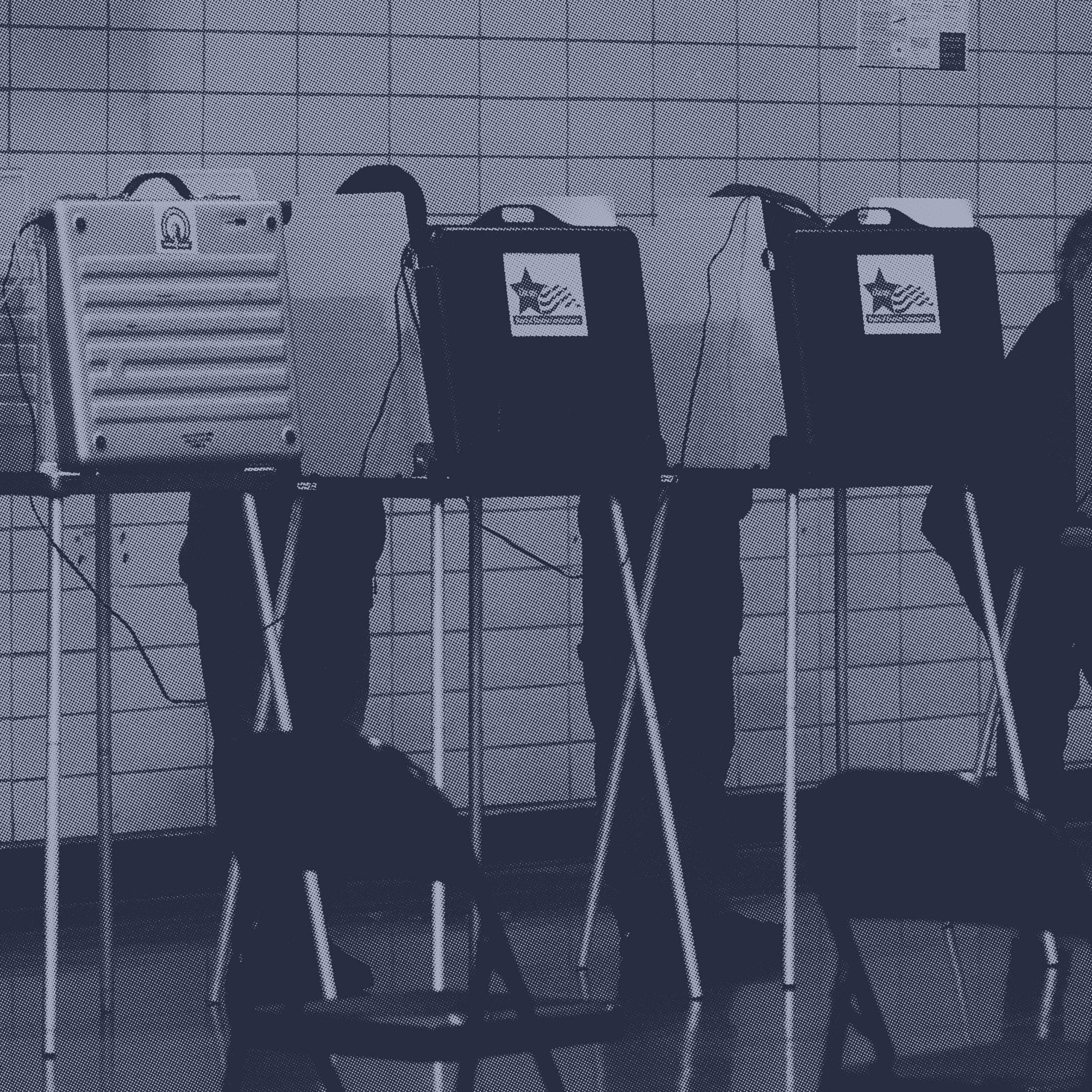
The NPR Politics Podcast
The race for a safe Democratic House seat offers clues about the party’s future
00:23:28
Loading summary
Transcript65 lines
- [00:01]
Sponsor/Advertiser
This message comes from Intuit. TurboTax with TurboTax Expert. Full service match with a dedicated expert who will do your taxes for you from start to finish, getting you every dollar you deserve. It's that easy. Visit turbotax.com to match with an expert today.
- [00:22]
Tamara Keith
Hey there. It's the NPR Politics Podcast. I'm Tamara Keith. I cover the White House.
- [00:26]
Elena Moore
I'm Elena Moore. I cover politics.
- [00:28]
Domenico Montanaro
And I'm Domenico Montanaro, senior political editor and correspondent.
- [00:31]
Tamara Keith
Today on the show, it's primary day in Illinois and in the suburbs of Chicago, 15 Democrats, 15 are competing for an open House seat in a safe blue district. The race offers clues for how Democratic voters see their party's future. Elena, you spent some time in the district. Tell us about the race.
- [00:51]
Elena Moore
Yeah, well, you know, Democrats have two battles going on right now. They're trying to flip seats, but they're also trying to create the next generation of Democratic leaders that get people, people excited. And if you look at this district, it, it kind of shows that dynamic on display. Illinois's 9th district is held by Jan Schakowski. She's 81 years old and she's retiring after this term. And there are, like you said, 15 Democrats hungry to take that spot. With the top few spanning three different generations, from Gen X to millennials to Gen Z. The two top candidates, Daniel Biss, who is 48, a Gen Xer mayor of Evanston, and Kat abogaz, she is 26. And so, you know, that's generational change, no matter what, how this ends up. But I was like, I gotta go there. I cover young voters. I need to see this.
- [01:42]
Tamara Keith
Yeah. So tell us about this field of candidates. Obviously, don't tell us about all 15.
- [01:46]
Elena Moore
Cause how much time do you have? Well, I mean, they have a lot of similarities. They're running on a very similar platform that really focuses on this idea of affordability, concerns wealth inequality, and then pushing for Democrats to fight harder in Washington. But I think that the big differentiator here, here is how direct are they going to criticize their own party? How much are they running to change party norms? And I think that's where you see a split between Abu Ghazale and Bis. Bis obviously has a lot more establishment support. And Abu Ghazali is saying we need to change the way we run primaries and the way we legislate in office.
- [02:21]
Domenico Montanaro
Yeah. It's interesting because, you know, the younger progressives in these blue districts have really pushed a lot of the Democratic leaders to adopt a more left wing, progressive populist message when it comes to, you know, economics in particular. So I don't know that there's that much of a difference between these candidates on the message, but there certainly is a difference on willingness to accept outside money. And the idea, I think, with that is not so much that you take money, but it's the access, the thought of who would you be doing favors for and would you really be pushing for this left wing populist message with the same fervor that somebody else who isn't taking that money is? I guess that's the. That's the argument that those younger progressives would make.
- [03:09]
Tamara Keith
And also, to state the obvious, whoever wins this primary is going to be the person that represents this district in. In these super solid blue areas. The primary is the election.
- [03:20]
Elena Moore
Yeah. I mean, that's why it was such a big deal in 2018 when New York Representative Alexandria Ocasio Cortez had that upset against Joe Crowley in New York, because when she won that primary, we knew that meant she headed to Washington. I also think it's just worth mentioning that the reason I found this race so interesting is Illinois 9 is a safe blue seat, like you said, but it kind of symbolizes this broader kind of inner party dilemma that the Democrats are having. Obviously, you know, the main leaders of the party will talk about we wanna flip the House, we wanna gain seats in the Senate, but this is a district that you can see some of those things going on behind the scenes, maybe so to speak, that are not the focus maybe of the front page, but like, where's this party headed? And I think if you look at this group of 15 candidates, you see very different versions of that, even if they're pushing a similar policy message.
- [04:16]
Domenico Montanaro
The other side of sort of the politics of money here is that, you know, there are two main things in politics that help you win. Name ID and money. Do people know you and can you spend enough to be able to win in that race? And what those, I think, some older pragmatic Democrats will argue anyway, is that you need the money to be able to win these races and you don't want to fight with a hand tied behind your back when the other side is perfectly happy to take money from wherever it comes from.
- [04:42]
Tamara Keith
Elena, you bring something up, which is, we have spent a lot of our time this year talking about who will control the House and the Senate. That is the main focus of the midterms. Why should we pay attention to a safe blue district and a primary in a safe blue district?
- [05:00]
Elena Moore
Well, when you think back to 2024, Democrats had an enthusiasm problem. They counted on specific groups that they would say are core to their base to turn out in overwhelming numbers. And I would put young people in there. Obviously, black and brown voters and Democrats struggled to have their base show up for them in 2024. So I think when we look at a district like this, a lot of these candidates are running to excite voters again who maybe haven't felt as proud to be part of the Democratic Party in a while. I mean, I talked to so many, especially young people, but progressives of every generation who are like kind of sigh before they give me their thoughts on the party. And that was no exception in Illinois. But, you know, when I was walking around, I talked to one young person who he told me he was never excited to vote for a politician before, but he actually was excited to vote for Kat Abu Ghazali. And I think that is striking to me. How do candidates drum up enthusiasm right now? It reminds me of what we saw in New York City with Mayor Zoran Mamdani. What are the messages resonating? And it seems like this idea of really seeing people's economic strain and the villain of big corporations, billionaires, is kind of what's engaging people.
- [06:15]
Domenico Montanaro
Yeah, I think there's a few things that are interesting about this race. Number one, I mean, this is a seat that hasn't been open since the 90s. Right. I mean, the 90s is new again, and that's where we're at with this race as well. Jan Schakowski had been in this seat for a very long time, and the person who was elected to the SE before Schakowski was first elected in 1948. So you're talking about two people who have held the seat for the better part of the last hundred years? Pretty much. So, you know, number one, sometimes it takes a long time for these seats to come available, especially ones that are very red or very blue because the incumbency rate is so high. People hold on to these seats. And I do think that it becomes a symbol of generational change whenever you have that kind of thing happen, because it highlights a lot of the issues that, you know, people have been sort of clamoring for. You know, we talked about some of the youth, we talked about populist message, and there's also this divide over Israel, which I think we'll probably have to talk about quite a bit here.
- [07:14]
Tamara Keith
Domenico, let's go there. In this race in Illinois, there has been a lot of conversation about the American Israel Public Affairs Committee. Better known as aipac. It has spent millions of dollars to influence the outcome. How is that affecting this race?
- [07:33]
Domenico Montanaro
Yeah, I mean, they've spent millions of dollars, tens of millions of dollars, you know, across multiple cycles and has weighed in pretty heavily in the Illinois primaries up and down the ballot, not just in this race, but it's become a bit of a flashpoint here because you've got multiple candidates, number one, and they're really trying to boost State Senator Laura Fine, who's a strong supporter of Israel. And that's really irritated someone like Daniel Biss, who is the EV mayor, he's the grandson of a Holocaust survivor, but has had questions about Israel's tactics post October 7th. And when Elena talks about some of the other candidates in this race, those candidates are very much against a lot of what Israel has done. And where some dirty pool has kind of come into play here. We've seen a bank shot with a little bit of a masse from.
- [08:23]
Tamara Keith
A masse. Is that a basketball term?
- [08:26]
Domenico Montanaro
Pool? Dirty pool.
- [08:28]
Tamara Keith
Oh, yes.
- [08:29]
Domenico Montanaro
Bank shot. And you're thinking different bank shot. I am thinking a different shot.
- [08:34]
Tamara Keith
Okay, thank you. Sorry. Thank you for clarifying.
- [08:38]
Domenico Montanaro
That's okay. There's been this ad that has been run to boost another candidate in the race, Bushra Amiwallah, who is a fierce critic of Israel. She's a lesser known candidate. You would think. Why would a group that has affiliation with AIPAC not even clear that it's AIPAC itself, but that they share vendors with this outside group, you know, that they're running this. And that seems pretty innocuous. Says that she's, you know, pretty progressive. Well, you want to be able to try to split the vote among these progressives to try to boost Fine. That's the, that's the calculus here in this, in this game of pool.
- [09:18]
Elena Moore
AIPAC direct spending is not really what's happening here. It is these outside groups that are under a different name where we're seeing a lot of overlap in, you know, who's supporting those groups and the connection there. I mean, in Illinois 9, Laura Fine, the senator who has benefited from support from aipac, there's a group called one of several, but this one is called Elect Chicago Women, and it has spent almost $6 million in support of Fine and against BIS. So they're under names that people would not associate with aipac.
- [09:53]
Tamara Keith
Elena, is. Is it safe to say that in this Democratic primary, and arguably in many Democratic primaries these days, being associated with AIPAC is actually toxic and negative, and
- [10:07]
Elena Moore
you don't want that I think increasingly so it comes up a lot on the campaign trail. It's been reported on a lot. It's kind of like the first line of attack we've been hearing from BIS and Abigail almost like that is another opponent in this race. And I think it's clouded a lot of fines messaging because again, you know, you look at all of these candidates and they do have very similar platforms. And so I think you're seeing these opponents try to differentiate themselves by, you know, this is like the thing that is, is separating her. And so it's kind of being emphasized also, like, this is such a weird thing because Bushra Amiwallah and Kat Abu Ghazali are actually courting some similar voters. They're hoping for the youth vote. They're both running on a similar progressive platform. And so APAC spending in this race in what appears to be in support of, of Amiwalla could, you know, take votes away from Abu Ghazali. But then you're seeing AIPAC also spend against BIS and that might split the vote for Laura fine. So it's like all of these, it's a cast of characters that we don't like. The TLDR is like we're playing like a weird game of like connect the dots, it seems like. And in the end, like these candidates to win are gonna only be able to get like 20% of the vote. Cause there's 15 candidates on the ballot. So it really like matters how people end up splitting their, you know, splitting that support.
- [11:33]
Tamara Keith
And Domenico, this is not the only race where AIPAC spending has become an issue. It was also really big in another Democratic primary that basically decides the election in New Jersey for the special election there.
- [11:48]
Domenico Montanaro
Yeah, we've seen it in New Jersey. We saw it in North Carol where a candidate got pretty close who was very outspoken against Israel. We saw it obviously play out in different ways in the New York mayor's race. And in Missouri, Congressman Wesley Bell had gotten a lot of support from AIPAC and ousted Cori Bush. And he just did a video that was reposted by AIPAC declaring his support for Israel. And what's interesting about this is that support for Israel didn't used to be controversial. It in any party and now it has completely. I mean, if you look at the Gallup polling overall, which asks this question about whether or not your sympathies more lie with Israel or more lie with Palestinians. For the first time this year, it crossed where more Americans had more sympathy with Palestinians than they did with Israelis. And a lot of that obviously comes from Democrats, but it also comes from independence. And we've seen that in multiple polls now.
- [12:47]
Elena Moore
All right.
- [12:47]
Tamara Keith
We're going to take a quick break and we will have more in a moment.
- [12:51]
Sponsor/Advertiser
This message comes from Babbel. Babbel's conversation based language technique teaches you useful words and phrases to get you speaking quickly about the things you actually talk about in the real world with lessons handcrafted by over 200 language experts and voiced by real native speakers. Start speaking with Babbel today. Get up to 55% off your Babbel subscription right now at babbel.com NPR spelled B-A-B-B-E-L.com NPR rules and restrictions may apply.
- [13:25]
Tamara Keith
And we're back. And I want to turn to the Senate. Illinois Senator Dick Durbin is retiring after nearly 30 years in office. What should we know about the race to fill his seat?
- [13:36]
Domenico Montanaro
Yeah, I mean, this comes down to money, power, crypto and race.
- [13:41]
Tamara Keith
Isn't crypto money?
- [13:44]
Elena Moore
We don't have enough time for that, Tim. And I don't have the answer.
- [13:47]
Domenico Montanaro
It comes down to power, crypto, money, things and race.
- [13:53]
Tamara Keith
Okay, let's talk about it.
- [13:54]
Domenico Montanaro
Well, the main candidates here are Lieutenant Governor Juliana Stratton, who's endorsed by the Governor J.B. pritzker, as well as sitting Senator Tammy Duckworth. And the other leading candidate is Congressman Raja Krishnamoorthy. He's really fundraising in this race at levels that are really kind of blowing away the field. He's spent more than $28 million on ads from his campaign. He's gotten a $10 million boost in support from a pro crypto super PAC. The crypto piece of this has become something that Stratton as well as Congresswoman Robin Kelly have been attacking Krishnamoorthy over. And it's really become this sort of thing that we've seen where just so much money has gone into this race and is really testing the power players in the state.
- [14:43]
Tamara Keith
Right. Because we should note that Governor JB Pritzker is also very wealthy, very wealthy
- [14:48]
Elena Moore
with a lot of money.
- [14:49]
Domenico Montanaro
He's a billionaire who's heir to the Hyatt Hotels chain. So, you know, yeah. Somebody with a ton of cash on
- [14:56]
Tamara Keith
hand and who may or may not be absolutely completely positioning himself to be a presidential candidate in 2028. What?
- [15:03]
Elena Moore
Damn. He's focused on his state and governing.
- [15:06]
Domenico Montanaro
He is definitely positioning himself for 2028 and certainly something like this. As much as we've talked about President Trump and his end prowess within Republican primaries and MAGA candidates and his ability to really sway those races. You know, how much power does someone like Pritzker have in his own state? And that's something that certainly he'll be able to tout or he'll be criticized for if he does run in 2028.
- [15:30]
Tamara Keith
And that is one of the many things that we are watching as returns come in. You know, whatever happens in November, it is clear that. But this year marks a changing of the guard. With dozens of members of Congress retiring, we're talking mostly about Democrats today, and there are many of them, including Durbin and Schakowski and longtime leaders like Nancy Pelosi and Steny Hoyer. Is this now a moment where the Democratic Party redefines itself?
- [15:59]
Domenico Montanaro
Well, I mean, if you think about just what's happening in Illinois, I mean, when you have someone like Krishnamoorthy and Robin Kelly also moving on to try to win the Senate race, Robin Kelly's 70 years old next month. And so those two seats are opening up, Illinois's 2nd congressional district and the 8th congressional district. And we're seeing this play out in all kinds of Democratic primaries in places like the main Senate race, which is going to be key for whether or not Democrats have a shot at this uphill battle to win control of the Senate. You have a fairly young candidate in Grand Platner against the governor of the state who is 78 years old and
- [16:37]
Tamara Keith
is the choice of the Democratic establishment, Janet Mills.
- [16:41]
Elena Moore
Yeah, I mean, I think the thing here is that no one wants to talk about, you know, in the party that in 2024, Joe Biden's age was a huge, huge, huge problem with voters. And I think that it's something that party leaders are still wrestling with both how to explicitly speak about and how to move forward from. And so we're seeing a very diverse range of solutions to that. We'll say that because obviously there is the formal I'm passing the torch, I'm going to ret. And just coincidentally, it is this year, and I am doing that. But then there is also a push among, you know, it's not just young people, but I would say broader progressive movement to tell people who maybe are not indicating they're ready to pass the torch, it's time to regardless. And so in addition to just general age, you know, people retiring, people running for different offices, there's this push to challenge members in the Democratic Party sitting incumbents. And I mean, on age, you can see there's more than 8, 80 Gen Z and millennial candidates challenging or running to succeed older Incumbents. I got that from a report from this Democratic fundraising group called Oath that they gave npr. And I think that that's really striking that we're seeing people not go through the traditional waiting in the wings style. I mean, TBD on if it works. It's very hard to challenge an incumbent. And again, it's more than just age. Look at New York. There is a member, Dan Goldman, a New York City representative, who is being challenged by a more progressive, older local official there.
- [18:14]
Tamara Keith
So we know there's a generational turnover. But Elena, in the Illinois race that you were talking about, you said that largely they agree on policy. So even if the age changes, are you guys expecting the policy to change?
- [18:32]
Elena Moore
Oh, I think candidates are pledging that it will. And then the divide is among voters. Is, is a pledge enough or do we need to. To just fully scrap anyone who's been in the system? You know, it's like it gets back to this idea of do voters trust that a system of some sort can work or if it has to be scrapped? And I think getting back to this question of, is this the moment the Democratic Party redefines itself? I think a lot of leaders have different answers to whether the system is savable or if the system is fully broken. I asked Kat Abigail about this when I was talking with her, and this idea of, are you a burn it down candidate? You know, do we need to scrap this and start over? And her argument is she's actually trying to build things back because she argues Trump burned it down and this system, that ineffective government. But this larger idea, I think that a lot of Democrats are talking about right now, which is what we have is fully not working.
- [19:27]
Domenico Montanaro
And I think that's very different than what we saw with the Tea Party because on the other side of this, with right wing populism, what we saw with a lot of the Tea Party candidates is that they felt like the government's just spending too much money. And you had a lot of people in sort of a shut it down caucus. And it's a lot easier to say, I'm not gonna vote for, I'm going to gum up the works. I'm going to shut down the government until you come over to my position then saying, okay, I believe that the country should have minimum wage of $15, homeowners getting a refundable tax credit and a free lunch program, which are things that are being talked about in this Senate race, for example, to be able to go and implement that at a federal level and then have it pass the House and the Senate. It's really difficult. And that can lead to a lot of frustration from people who had a lot of excitement about into politics in the first place.
- [20:17]
Tamara Keith
Right. You hear from voters and others this idea of, well, gosh, incrementalism. It just isn't what I'm here for. And yet you elect people and then they go and they're like, well, we got inches. And voters are saying, no, you promised me, Miles.
- [20:33]
Elena Moore
Well, again, it also, like, it's a lot easier to be a candidate than it is to be someone in elected office. And I think that's the next stage for populist candidates turned elected officials like Zoran Mamdani or potentially Kat Abu Ghazale, which is that, you know, being an organizer is one thing, but when you actually have to work with people, you know, in office and make compromises, like, what's the line? And I think we don't know the answer there. If voters are gonna be happy with a candidate who promises ambitious change and then does as much as they can. But is that enough?
- [21:10]
Tamara Keith
Yeah. Domenico, because you're here and because we are talking about primaries, I would like an update on your Can't Let It Go. The Texas Senate GOP runoff. President Trump still has not endorsed.
- [21:26]
Domenico Montanaro
Yeah. And today's a deadline for candidates to withdraw from the runoff election in that Republican Senate primary, which, remember, Trump put on Truth Social saying that he's gonna likely endorse somebody and he expects the other person to withdraw from the race. And he heard from both candidates saying that they would not withdraw in the race. So that would put Trump out there endorsing a candidate if he were to do so, where the other person could win and buck Trump's endorsement. You know, there was a phone interview that he did with NBC over the weekend where he said that he's not convinced, for example, that John Cornyn, the incumbent senator, is a Republican's best chance to hold onto the Senate seat. He said, I've heard that. I don't know. I mean, I don't know. I don't know that to be a fact. I like him. I've always liked him. I like both candidates very much. Now, if you read between the lines on that, what does it mean? The guy who talks about how polls are rigged is reading the polls, and the polls are not very good. And the polls are basically showing a toss up between both Paxton and Cornyn against James Talarico, who won the Democratic primary. And if that's the case, Trump's not going to put his name on the line for either guy who has about an equal chance to win in the final.
- [22:44]
Elena Moore
And this is a good reminder that we're having conversations about the inner party dynamics on the Democratic side. What's the future? We're gonna be having a ton of conversations like that on the Republican side very soon. Trump is a lame duck. You know, we're gonna have to talk about how do Republicans move forward. What is the MAGA message without the MAGA leader?
- [23:04]
Tamara Keith
And what is the Democratic message without the MAGA leader?
- [23:07]
Elena Moore
Oh, my gosh. I heard from so many younger voters, especially this idea of, of I don't want a Democratic candidate to only talk about how much they hate Trump. Tell me what you're gonna do.
- [23:16]
Domenico Montanaro
Well, this is why I think, and I've been saying this many times, I'm gonna say it many times over the next couple years. And I think 2028 is gonna be super interesting because it's life after Trump. And which direction does somebody take the country on either side, Democrat or Republican, they're gonna have to sell to not just their base, but to the country. What does America mean and what does it mean going forward? And they have to sell people on that to be able to win.
- [23:39]
Tamara Keith
Yeah, I'm going to just say 2028 is here. And we'll be talking about it on this podcast from now until the votes are in and after. If you want help making sense of political news every day, we've got you. Make sure you don't miss an episode by hitting that follow button. Wherever you get your podcast and if you enjoyed this one, please share it with your friends. I'm Tamara Keith. I cover the White House.
- [24:03]
Elena Moore
I'm Elena Moore. I cover politics.
- [24:05]
Domenico Montanaro
And I'm Domenico Montanaro, senior political editor and correspondent.
- [24:08]
Tamara Keith
And thank you for listening to the NPR Politics podcast.
- [24:20]
Sponsor/Advertiser
This message comes from Bombas. Your feet hit the ground an average of 2000 times in a mile. Bombas sports socks are designed to support you every step. Sprint to bombas.com NPR and use code NPR for 20% off. This message comes from Prolon. Feeling heavy and depleted after the holidays, Prolon's five day Fasting Mimicking Diet aims to make it easy to reset your body, habits and energy heading into the new year. Developed at USC's Longevity Institute, the goal of Prolon's nutrition program is to rejuvenate you from within by working at the cellular level to support fat loss, loss, glowing skin and Sharper Focus. Get 15% off plus a bonus gift when you subscribe@ProlonLife.com NPR this message comes
- [25:09]
from NPR sponsor 1Password. Anyone else feel like 99% of your emails and texts are password reset codes trusted by millions of users and over 175,000 businesses? 1Password lets you skip the resets and sign in securely. With strong, unique passwords that auto fill across all your devices, you can safely share logins, store cards and files. And finally, stop using your pet's name as a password. Try it free for two weeks at 1Password.com NPR.