Loading summary
Transcript53 lines
- [00:02]
A
The world's biggest story keeps getting bigger this week on up first, we're tracking the escalating war in Iran, rising oil prices and a global economy on edge as the conflict spills beyond Iran. Our host, Layla Fadel, is on the ground in Iraq. Listen each morning for three stories. You need to start your day on up first on the NPR app or wherever you get your podcasts.
- [00:28]
B
Hey there. It's the NPR Politics podcast. I'm Miles Parks Voting.
- [00:32]
C
And I'm Domenico Montanaro, senior political editor and correspondent.
- [00:35]
B
And NPR's chief economics correspondent Scott Horsley is also with us. Hi, Scott.
- [00:40]
A
Good to be with you. I wish the news were better.
- [00:42]
B
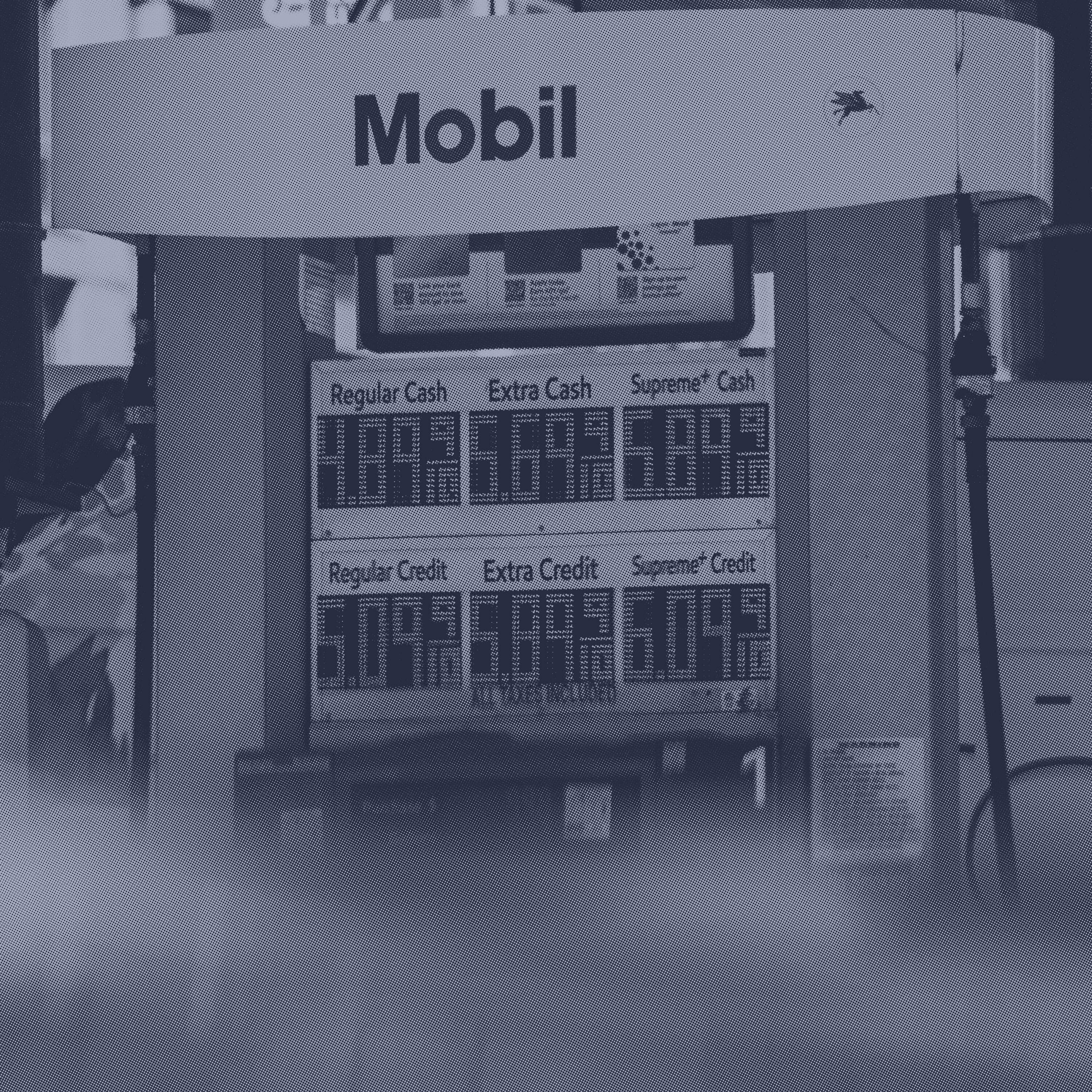
Well, welcome to 2026, I guess. And today on the show, we are going to be talking about a story that I think a lot of us have seen play out every day at the gas pump. The war in Iran is disrupting global oil markets and supply chains, and we're going to be taking a look at how that is affecting the broader US Economy. But I do want to start there with those gas prices. Scott, can you explain why prices have risen so quickly in the last couple weeks?
- [01:08]
A
Well, we've seen a real disruption in global oil supplies. Iran's retaliation for the US And Israeli attacks on that country have disrupted tanker traffic through this trade of Hormuz. About 20% of the world's oil flows through that critical choke point in the global trade. And that has ripple effects that you can feel at a gas station in Topeka or, you know, anywhere in the United States. And as the price of crude oil has shot up, so has the price of gasoline. In fact, we've seen gas prices jump about 60 cents a gallon since this war began less than two weeks ago.
- [01:47]
B
Can you zoom out a little bit, too? Before this war began at the end of February, what was the economic picture in the US at that point?
- [01:54]
A
Gasoline prices were already inching up, but more slowly, sort of at their normal seasonal pace. We usually see gas prices go up a little bit in the springtime as refineries switch over to a more expensive blend of summer gasoline and as driving picks up, you know, kids go on spring break and people are driving a little bit more than they were in the depths of winter. So we usually see a little bit of an increase. And we were seeing that in the last week or two of February. But then the war began on the last day of February, and it actually took a couple of days for a couple of days from that Saturday beginning of the war, we didn't see much movement in gas prices or crude oil prices. But by Tuesday, we were starting to see it go up a nickel or a dime every day. And that's been the pattern since then. And so we're now looking at gasoline prices that are up around $3.60 a gallon. And if oil prices just stay where they are right now, if they don't go any higher, gasoline still has some further increase. Just to catch up to where crude oil prices are, we could be looking at gas prices of $3.80 in the near future.
- [02:53]
B
Domenico, We've been talking on the podcast for the last couple years about how Americans are struggling with rising prices all over the economy. I'm thinking about housing and energy costs, medical bills, everything. How do we have any sense on how people are receiving now yet another sort of price increase?
- [03:11]
C
Well, they're not happy about it. I don't know who would be happy about going to the pump and paying more. And it's certainly something that affects people who make less money more. Right, because everyone pays the same at the pump. And look, the economy and prices, like you said, have been the top concern for people for years at this point. And people say Trump is not focused enough on it. In polling, majorities are saying that in our latest NPR PBS Newsmaris poll, 35% percent only give Trump a positive job approval rating when it comes to his handling of the economy. That's the worst we've ever seen. And that was something that was always seen as a strength of Trump's in his first administration. And you've got a majority of people, 56%, saying that they're against this war in the first place. The administration didn't make a huge case for getting into this war. And now people are paying the price at the pump. The longer this goes on, and Scott can tell you better, the more prices are likely to go up and the angrier people are going to be. The clock is only ticking closer to the midterm elections.
- [04:11]
A
Yeah, I mean, President Trump campaigned on a promise that he was going to lower prices. For the most part, the cost of living has continued to creep up on his watch. Gasoline had been one of the few things he could point to and say, look, gasoline prices are lower than they were before I came into office. And that was true for most of the last year. So for most of last year, relatively cheap gasoline has been a counterweight to the overall inflationary trend. But now gasoline prices are higher today than they were this time last year. So gasoline is actually pushing inflation up. And if these high prices that we're seeing at the pump right now are sustained. They're going to push inflation back above 3% by the end of next month.
- [04:52]
B
I also feel like, you know, the president doesn't have complete control over every aspect of the US Economy. But, Domenico, because he has been so personally involved in the decision to go to war in Iran, do you feel like Americans are really going to pin the gas prices issue on him more than maybe other things like the stock market?
- [05:13]
C
Well, I think that he's already been suffering the consequences for higher prices and people not having a good outlook on the economy. I mean, just overall, people's feelings about the economy have been very negative. The labor market has been softening, and people's views on how they feel they're paying more at, you know, grocery stores. And all that hasn't really abated since the COVID pandemic. And, you know, they blamed Biden pretty heavily when he was in office. They're blaming Trump while he's in office. And they're saying that his policies, Trump's policies, a majority are saying, are making things worse, and that's in particular because of those tariffs.
- [05:53]
B
Scott, is there anything the Trump administration can do to bring down the price of oil?
- [05:58]
A
You know, it's a global energy market. It's very difficult for the president to do anything in the United States that's going to have a meaningful effect on the global energy market when there's been a disruption of the scale that we've seen as a result of this war. And, yeah, I mean, you can talk about how inflation went up on Biden's watch and whether additional spending by Congress played a role in that, whether some of the policy choices that President Biden made contributed to higher inflation. There's no question about who's responsible for the rise in oil prices and rising gasoline prices. This was absolutely the president's decision to go to war with Iran that has caused this spike at the pump.
- [06:37]
C
And presidents often get more blame and credit than they deserve when it comes to the economy. But on tariffs and on oil prices, these are two things that people can clearly point to Trump as the reason for seeing those things be more problematic. And it has to be really destabilizing for Trump because during his first term when he left office, he had a 50% approval rating when it came to his handling of the economy, and it was never below 47% in our NPR PBS Newsmaris poll. This is a totally new position for him to have to try to figure out how to deal with and his party are gonna be the ones who are gonna deal with the political consequences. Cuz he's not on the ballot. Those frontline Republicans in swing districts are.
- [07:18]
B
That's so interesting because basically what you're saying is his numbers on the economy were outpacing his overall approval rating in all ways, whereas now they're actually lower than his overall approval rating, Is that right?
- [07:29]
C
That's right. And when he came into office, you know, by April was the first time we started polling on his economic handling because starting to implement those tariffs, it was already at 39%. So he has been below 40% on his handling of the economy all the way back to April of last year.
- [07:46]
B
Well, Scott, the President and the Secretary of Defense, Pete Hegseth, everyone in the administration has insisted this is not going to be a forever war, that this is all gonna be over, at least from the United States involvement in the next few weeks. Will the price of oil just come down after that?
- [08:04]
A
You know, if hostility in the Middle east ends, it's certainly possible that oil prices could go back down to where they were. That won't happen overnight. It will take some time. Oil prices tend to go down more slowly than they go up. Same thing with gasoline prices. But look, right now you have countries like Kuwait and Iraq that don't have a lot of onshore oil storage capacity. And because the tankers that they would usually rely on to carry that oil away to markets around the world are not making their usual passage, some of those countries are having to actually shut in oil production. And once they take that step, then we're talking about at least a matter of weeks, if not longer, to restart that production. So even if hostilities were to cease tomorrow, you wouldn't see oil go back down to the $60 a barrel range overnight. It would eventually come down, but the damage is going to be done. And you're see American people asking, what did we gain from all this? You know, if at the end of the day you say, okay, we have a more stable and more peaceful Middle east, maybe that's worth a month or two of higher gasoline prices. But if you wind up with an Iranian regime that is more or less the same regime, just a generation younger, if you wind up with the Iranian Revolutionary Guard that's still in place and calling the shots, then I think people are going to say, what did we spend all that extra money for?
- [09:28]
C
We saw Republican Senator Roger Marshall of Kansas, for example, on CNN yesterday saying that, you know, people might have to make sacrifices. Well, I think that a lot of people feel like They've been making sacrifices for years when it comes to the economy, and they're certainly not looking to make sacrifices on having to pay more at the pump without knowing what the goals are long term or what they're going to get out of in Iran, where the administration again never made a case to the American people for getting into this war in the first place.
- [09:58]
B
All right, we have to take a quick break, but more on all of this in just a moment.
- [10:02]
C
This message comes from Mint Mobile. If you're tired of spending hundreds on big wireless bills, bogus fees and free perks, Mint Mobile might be right for you with plans starting from 15 bucks a month. Shop plans today@mintmobile.com Switch upfront payment of $45 for 3 month, 5GB plan required. New customer offer for first 3 months only. Then full price plan options available, taxes and fees extra. See Mint Mobile for details.
- [10:29]
B
And we're back. At a press conference on Monday, President Trump was asked about how the war in Iran is impacting the cost of oil.
- [10:36]
A
I knew oil prices would go up if I did this, and they've gone up probably less than I thought they'd go up. But I don't think anybody thought we were going to be this quickly successful.
- [10:47]
B
And yesterday, White House Press Secretary Caroline Levitt said this, rest assured to the
- [10:52]
C
American people, the recent increase in oil and gas prices is temporary and this operation will result in lower gas, gas prices in the long term. Once the national security objectives of Operation Epic Fury are fully achieved, Americans will see oil and gas prices drop rapidly, potentially even lower than they were prior to the start of the operation.
- [11:15]
B
Okay, a lot there, including some promises from the press secretary. Domenico, what do you make about this messaging strategy on the gas prices or on the oil prices?
- [11:22]
C
Well, I think they're trying to keep their base in line and, you know, keep the poll numbers as we've seen them, where, you know, 8 in 10 Republicans continue to back this president, continue to back the war in Iran. Right now they're giving Trump a long leash and they've been giving him a very long leash for a very long time. But, you know, if you've got oil and gas prices that continue to stay high, that is going to be something that's going to test a lot of people's patience with this president, with this administration. And I think what you're hearing there is a lot of pleading for trust and patience.
- [11:55]
B
It almost kind of gets rid of any plausible deniability. Also from President Trump, he says right there that this was part of the expectation. He's basically telling the American people that, you know, yes, I knew gas prices were going up. And basically, this is a sacrifice you
- [12:10]
C
have to make, whether he really knew that or not, or if he's just saying that now because it's what's happening, and he wants to make it sound like that was the expectation. Never sold that to people, never told the American people, never readied them for that potential thing, especially considering a few days before he was touting how much lower oil and gas prices had been since he'd come into office at the State of the Union.
- [12:34]
A
I mean, it's not a big stretch to assume that an attack on Iran would result in higher oil prices. That's a pretty obvious night follows day kind of sequence when Caroline Levitt talks about prices coming back down as soon as the national security objectives are met. We still don't really know what the national security objectives of this war are.
- [12:55]
C
And how long, I mean, really would it take for gas prices to come down? Because it feels like they go up fast, but they don't necessarily come down quickly.
- [13:03]
A
That's usually the pattern. Up like a rocket, down like a feather.
- [13:06]
B
And it's not just gas prices. That's obviously the most. We see it when you're driving down the street on the signs. But there are a lot of other impacts of high oil prices, right, Scott?
- [13:18]
A
Absolutely. I mean, for one thing, not only does a lot of oil and natural gas pass through the Strait of Hormuz, but a lot of the sources of the fertilizer comes from the Middle East. And the Farm Bureau Federation was out just yesterday with a warning that this is coming at a very bad time for American farmers who are just getting ready to enter their planning season, and they're seeing their input costs go up again, as they already were because of tariffs. At the same time, their crop prices are down. So that's very tough on farmers. And then the other thing is, not only have gasoline prices gone up, but diesel fuel prices have risen even more sharply, and that affects the cost of transporting everything that moves by truck or train, which is basically everything. So if these high diesel prices are sustained, that is going to, again, put more upward pressure on the price of goods and more upward pressure on inflation overall.
- [14:06]
B
I mean, how does this interact with the tariffs? It's kind of been hard to keep track a little bit. I know the Supreme Court paused some tariffs, but President Trump ended up promising more of them. How, I guess, are these inflationary pressures we're talking about now interacting, or could they interact with where we've landed on tariffs?
- [14:23]
A
Well, it was important that the Supreme Court a couple of weeks ago struck down about half of the tariffs that President Trump had ordered. But he did move quickly, as you say, to replace them with other import taxes using different statutes where the president's authority is a little bit more clear and spelled out by Congress. So the overall tariff rate today is a little bit lower than it was before the Supreme Court ruling, but it's still a lot higher than it was before President Trump went back to the White House. All of that has had a meaningful effect on inflation and prices. It's not been outrageous because it only affects imported goods, it doesn't affect homegrown goods, and it doesn't affect services, but it's been meaningful. You can see the price of imported goods is higher than it would otherwise be. The other thing that's happened is last week, the Court of International Trade said that the government has to give back the money that it collected illegally from those tariffs that were in place for the better part of a year. And that's a pretty big refund. It's going to be $166 billion. That's going to go back to the US businesses that paid those tariffs.
- [15:23]
B
Another key component of the economy, Domenico, is the labor market, which you mentioned a second ago. This was something that Trump was aiming to bolster with his tariff policy by getting American companies to be motivated to build factories in the US and hire people. What have we seen on the labor market front during his second term?
- [15:43]
C
Well, I think it's been pretty stunning when you just look at the numbers for the job jobs reports that have come out. There's been a softening, really, in the labor market, which has not gotten as much attention. And remember, if you want to buy things that are going up in price, then you need a job to be able to do that. And there are real warning signs there. I mean, just in the past year during the Trump presidency, we've seen five months where we've seen negative jobs reports, where the country's reported losing jobs. Before that, there were four straight years of positive jobs reports, except for January of 2025, which was partially Biden and partially Trump. And, you know, we've talked about cost of living and high prices being the things that make it difficult for people to feel like the economy is going in a good direction. Well, if the labor market's softening, you know, you need a job to pay for those things.
- [16:34]
A
Yeah. And this really creates a headache for the Federal Reserve because, you know, when the job market is weak. The Fed would like to lower interest rates and kind of goose the economy. But when inflation is high, the Fed wants to keep interest rates relatively high to bring prices under control. And right now they're really caught in this tug of war between, on the one hand, a very weak job market. We saw a Net loss of 92,000 jobs in February and inflation, that's moving in the wrong direction. And it's moving in the wrong direction faster as a result of tariffs and now this war with Iran.
- [17:09]
B
Yeah, it's interesting to see this sort of impact people differently. But when the cost of debt goes up, you see credit card debt increases, and that really impacts low income consumers. But, Scott, we're also seeing a pretty substantial drop in the stock market, which we know impacts high income people, the people who own the majority of stocks in the US we've seen the S&P 500 drop something like 2.5% in the last month. Do you have any sense from investors on why that is or how that's connected to everything we've been talking about?
- [17:36]
A
Well, a lot of that is also connected to the war. We've seen a bit of a sell off since the war began. Businesses are worried that if people are having to spend more money at the gas pump, they're going to have less money to spend on everything else in their lives. Corporations are feeling the effects of this, both the cost increase and the weakening demand for other products. I will say that the stock market remains volatile. I mean, we saw a big jump earlier this week when the President seemed to suggest that the war was almost over. Investors, you know, leapt at that opportunity and bought stocks. But then there were hopes were sort of dashed when the President elaborated more. And it wasn't really clear how much longer the war might go on. But investors are watching all this with some nervousness, for sure.
- [18:19]
B
I do want to get into how this is all going to play out politically, too, because this does seem to put Republican candidates in a little bit of a bind. President Trump ran on the idea of lowering prices in 2024. He has not really sold this war to the American people. Domenico, how do you think Republican candidates are going to talk about cost of living issues? Because it seems unavoidable ahead of this year's midterms.
- [18:45]
C
Yeah, I think that those Republican candidates in those House races in swing districts, they're in a real bind because Trump has proved toxic with independence in the past year. They are a key group in trying to win those districts. He kind of has been trying to sell to them, to talk about culture issues, whether it's being against trans rights or talking about immigration and how to change talking about immigration because his deportation tactics are also unpopular. I mean, there's only 40% approval on immigration in our poll for Trump. And we've seen majorities say that federal immigration agents have been going too far and been too harsh. So, so overall, I think Trump again believes that the core of why he was elected was things like immigration and culture, and he wants Republican candidates to continue to stress those things. The problem is those things don't play in swing districts as well as the economy does, because that is the top concern. And that's where you see this persuasion as something that's possible, where we've seen fewer and fewer persuadable voters. And we know two of those groups, Latinos and independents, have heavily moved away from the president in this past year.
- [20:02]
B
All right, Scott, well, before we let you go, is there any good news, I guess, any glimmer of hope in the economy that we can look to right now?
- [20:10]
A
Yeah, there are a few glimmers of hope. We got a new inflation report this morning for the month of February. Overall prices were up 2.4% in February, which is probably a lot better than it's going to be in March now that we've seen this spike in gasoline prices. But one glimmer just ahead of Easter is egg prices are down sharply over the last year. You remember, egg prices a year ago were sort of the poster child of runaway grocery bills, but egg prices have fallen by 42% in the last 12 months. That's mainly because the avian flu this winter was not nearly as destructive to the egg laying flock of chickens as it was a year ago. We haven't licked the virus yet, but it was a much better winter for egg laying chickens.
- [20:53]
B
All right. We can leave it there for today. Scott, thank you so much for joining us.
- [20:56]
A
As always, my pleasure.
- [20:57]
B
I'm Miles Parks. I cover voting.
- [20:59]
C
And I'm Domenico Montanaro, senior political editor and correspondent.
- [21:02]
B
And thank you for listening to the NPR Politics podcast.