← The NPR Politics Podcast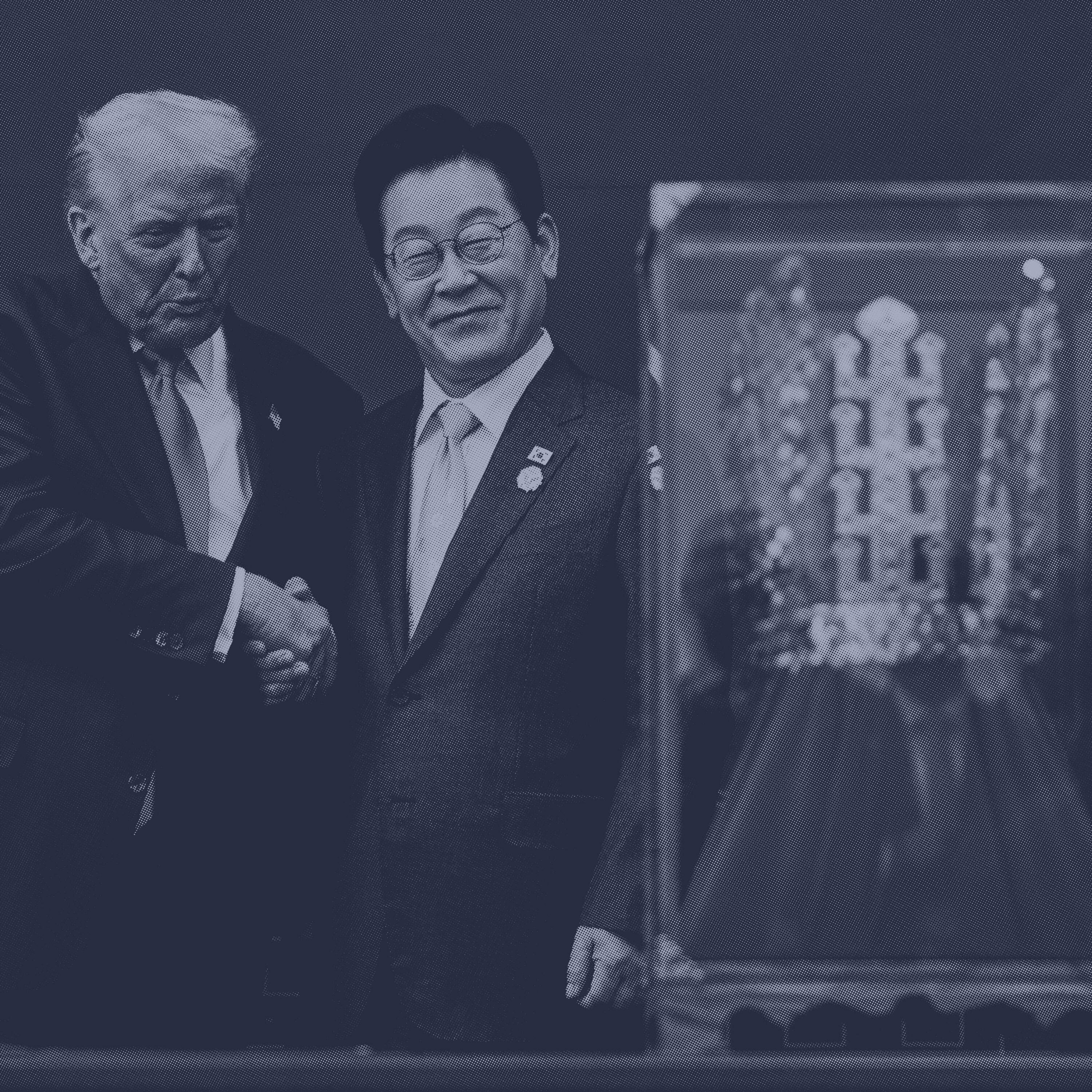
The NPR Politics Podcast
Trade Deals, Red Carpets And A Gold Crown: Takeaways From Trump’s Asia Trip
00:18:44
Loading summary
Transcript68 lines
- [00:00]
A
Hey, I'm Daoud Tyler Amin.
- [00:02]
B
And I'm Ann Powers.
- [00:03]
A
We are an editor and a critic at NPR Music. And we're also friends who love digging into music histories and thinking about how songs can change over time.
- [00:12]
B
And we're doing that on a new show. We're totally nerding out about the songs that just stick with us and why.
- [00:18]
A
Find our first episode in the All Songs considered feed on October 23rd.
- [00:24]
B
Hey, it's Tamara Keith. And it can feel impossible to find your next favorite podcast. And we are very glad you're here listening to the NPR Politics Podcast. But when you want to switch it up, check out NPR's Pod Club newsletter. Sign up and you'll get fresh podcast recommendations every week handpicked by the people that live for this stuff. You can subscribe for free@npr.org podclub okay, here's the show.
- [00:53]
C
Hi, this is Steve Fickleberg from Fullerton, California, but checking in from Tokyo, Japan, where I am finishing up a nine day trip with my daughter Kaylin.
- [01:01]
B
This podcast was recorded at 10:06am on Monday, November 3.
- [01:07]
C
Things may have changed by the time you hear it, but Kaylyn and I will be home in Fullerton probably eating a big slice of pizza.
- [01:19]
D
How appropriate.
- [01:19]
E
Neighbors.
- [01:20]
D
Yes.
- [01:21]
E
Hi from Korea. Hey there.
- [01:23]
B
It's the NPR Politics Podcast. I'm Tamara Keith. I cover the White House.
- [01:26]
E
I'm Deepa Shivaram. I also cover the White House.
- [01:28]
D
And I'm Greg Myrey. I cover national security.
- [01:31]
B
Deepa, what time is it where you are right now in Korea?
- [01:33]
E
Oh, you don't even want to know. It's like almost 11:30pm wow.
- [01:38]
B
So today on the show, President Trump is back from a week long trip to Asia where he received a warm welcome. But what did he bring home for America? And Deepa, you are still there. You flew into Malaysia, the first stop with President Trump on Air Force One. And I just wanna talk to you about how he was received there and throughout the trip.
- [01:58]
E
Yeah, I mean, Malaysia was maybe the most fanfare on the tarmac just in terms of the color and the music and everything else that was going on. There was a giant red carpet that was rolled out. So as soon as President Trump stepped off of Air Force One, he stepped onto this red carpet and there was like at least 100 different dancers. And Malaysia is a really diverse country. So like people from all kinds of backgrounds are dancing on the tarmac. They're waving as President Trump is waving back at them. There's like a military guard, there's people on the other side of the tarmac with like, Malaysian flags and American flags. It was really like, especially after flying for like 30 hours, almost like a really, you know, very warm welcome, let's put it that way. And also literally warm because it was like 90 degrees out.
- [02:42]
B
Yeah. So talk about this. Like, you've observed that really this trip catered to the President.
- [02:49]
E
Oh, my gosh, for sure. This was definitely. You know, it's kind of funny. The President came to Asia for a number of reasons. Primarily to meet with Chinese leader Xi Jinping, but also to attend these two big summits that go on in the region. The first one was asean, which is a summit of Southeast Asian countries in Malaysia. That was where it was held this year. And then the other summit was apec, held in Korea. Obviously a global gathering. Right. There's people from all over the world who are coming, world leaders from all these different countries. But it didn't really feel like that when you were on the ground. Like, it really just felt like these events were almost created for Trump to the point that, like, the menus that were being served were just like, so inherently American. And think about, like, the number of people from all over the world that are coming to these summits. But, like, there's Thousand island dressing on the menu and, like hamburgers being served to a president who, of course we know, you know, loves things like hamburgers and ketchup. And that was what was on the menu. So it's sort of even down to these granular details really speaks to how much, you know, of the pomp and circumstance and how much catering was done specifically to the U.S. president.
- [03:59]
D
Yeah. And so, Deepa, it seems like we've seen this in Trump's second term where countries know how to fet Trump now. They know what he wants. He wants big pomp circumstance far beyond just what's on the menu. Big announcements, big ceremonies. The way that you clearly play to what he wants and it just seems that he's getting what he wants this time around. It's not the more traditional, low key, behind the scenes negotiations, but big public expressions of celebration.
- [04:36]
E
Yeah. Nothing about this, I would say, was behind the scenes. And I think it's really interesting because one thing that was really notable in Korea was how the Korean President Lee had actually come to Washington about two months ago. @ this point, he was newly elected, came to the Oval Office, and people in Korea perceived that meeting as going very well because he was very complimentary of all the gold that is in the Oval Office that President Trump has put in there. And that meeting, it came out positively. And so to then have Trump in Korea, here on the ground, he was presented with this really large replica of a crown that's very significant to Korean history. He was even given the highest honor that can be bestowed by the president. Definitely not low key. And that really just tracks with this president. Right? Nothing about the Trump presidency is low key.
- [05:26]
D
And the one additional thing I'd add is that normally if there's any agreements, they're worked out weeks, months in advance by aides. The president or leaders show up, they sign it, It's a photo op, all very staged and choreographed. There's a lot of things that are very unpredictable because there are a lot of issues with these tariffs that go up or down according to Trump's whim and you don't know which way they're gonna go. So there's also this element of unpredictability whenever Trump shows up for these events beyond the big pomp and circumstance.
- [05:57]
E
Oh, for sure, right.
- [05:59]
B
Keep him happy, keep the tariffs low. Deepa, let's turn to the big event which came at the end of the trip when President Trump met with China's President Xi Jinping. What was the goal and what did they accomplish?
- [06:11]
E
Yeah, I mean, to Greg's point, like, about a lot of these negotiations with trade and tariffs being sorted out beforehand, I feel like the whole back and forth with China has just been like a complete rollercoaster. I know we've talked about it endlessly on the pod, but it was so tumultuous to the point that like a couple weeks ago, the President was throwing out posts on Truth Social, saying he wasn't even sure if he was going to meet with Xi Jinping because China had inserted basically these new limits on exports of rare earths, minerals. And Trump essentially said, well, that came out of left field for me. I'm not really interested in meeting with him anymore. So even just the meeting itself, there was a point where it wasn't really clear if this was going to happen. So that was like the context coming into it. But I would say the three big takeaways from the meeting were one about this rare earths exports. China agreed to back off from that. And. And the U.S. also kind of tinkered with its own export limits as well. So there was some agreements reached there. The other big thing was about fentanyl. And Trump said he really believes that Xi is going put some work in essentially to decrease the flow of fentanyl coming into the United States. Because of that effort Trump said that he would decrease the tariffs on Chinese exports from 57% to 47%. So there's going to be a 10% drop. And then the last thing that was really critical was that China agreed that they would start buying soybeans again from the U.S. which they paused. And that's been really detrimental for farmers in the US and that is going to start getting picked up again as well.
- [07:43]
B
Greg, this sounds so familiar, like a deal that President Trump struck with President Xi during the first term. Almost.
- [07:50]
D
Yeah. I mean, what you've heard a lot of Democrats is saying the arsonist wants credit for putting out the fire. That in a sense, we've gone full circle. Trump imposed tariffs his first term, he's done it again in this term, and then he goes back. And what we've essentially hit here is it true. So that's significant in that this, this escalation of tariffs with China and threatening not only that relationship, but the larger global economy has been de escalated for the moment. But essentially we're back to where we were in January when Trump came into office, or you could perhaps even go back to his first term. You haven't really resolved these underlying issues of how the US And China are going to trade for the long term, how they're going to work out some of these differences.
- [08:36]
E
And Greg's right, like the trade deal wasn't exactly completely finished. But what we do know is that the President announced he would be going to Beijing next April. So there's going to be another meeting with Xi Jinping coming up in months. It sort of bought some time for a lot of these trade, you know, negotiations to actually take place. Some of the nuances to be sorted out until that meeting in April where maybe we do get a formalized deal.
- [09:00]
B
Let's talk about more deals. President Trump also made announcements with Japan and South Korea.
- [09:07]
E
Yeah, that's correct. So Japan was interesting because they also have a newly elected Prime Minister, Sanae Takaichi. She was someone that Trump was really excited to meet. And he was also really excited because Japan formalized essentially that they would be investing $550 billion into the United States. So that was a really big number. And Trump, ever the dealmaker businessman, was really thrilled about that investment. And then with Korea, similarly, they came to terms on a 350 billion dol dollar investment in the US so Trump walked away feeling really excited about the amount of cash money that is flowing in to the US and he sees that as a win. That's definitely something that he's been touting is is just the sheer number of investments that have come throughout the months of negotiating in the months of this tariff back and forth that he's, you know, started since he's come back to the White House. But some of those details were finalized in this past week. All right.
- [10:05]
B
We're going to take a quick break, and we will have more in a moment.
- [10:09]
F
Families around the world aren't having as many kids as they used to. Researchers say the average woman is having half as many children now than they did in the 1970s.
- [10:19]
E
I love having only one child.
- [10:21]
F
On the Sunday Story from Up first, why are so many families making this choice and what exactly does it mean for our future? Listen now to the Sunday story on the Up first first podcast from npr.
- [10:34]
D
On the Throughline podcast from npr, the story of the undersea cables that run the Internet.
- [10:40]
E
Other historians have compared it to the Apollo missions of going to the moon. Listen to Throughline in the NPR app or wherever you get your podcasts.
- [10:55]
G
I'm Rachel Martin. If you're tired of small talk, check out the Wild Card podcast. I invite influential thinkers to open up about the big topics we all think about, but rarely talk about. Tune in this fall to hear Mel Robbins, Malala Yousafzai and Brene Brown talk about everything from grief and God to ambition and forgiveness. Watch or listen on the NPR app, YouTube or wherever you get your podcasts.
- [11:21]
A
On this week's books we've Loved. We're headed to the open range with MORNING edition's Michelle Martin to break down Charles Portis classic True Grit. Find books we've loved in NPR's Book of the Day podcast, feedback on the NPR app or wherever you get your podcasts.
- [11:40]
B
And we're back and we're talking about President Trump's week long trip to Asia. Deepa, what other highlights did you take away from this trip?
- [11:50]
E
Well, I mean, there was a lot that happened. I mean, this was compared to some of Trump's previous international trips that he's done. This one was quite long, hitting almost a full week. And so I would say by the time Korea was happening, I felt like Malaysia was like three years ago. But it really came down to a couple other big things. But one was announced pretty much at the tail end of the trip. The president said that he was giving South Korea permission to build nuclear powered submarines. And President Lee of Korea had asked Trump in his meeting with him in South Korea, permission for for South Korea to start doing this so that they could essentially keep better tabs on North Korea and China and so that announcement that Korea would get permission to do this came pretty much at the tail end of the trip. A lot of details, though, still not really clear just in terms of like the President said also that South Korea would be building these submarines in Philadelphia, bringing more money to the US Essentially, but that part isn't really confirmed. Also, like, is there space for that? Is there manpower for that? How long does that take? Like, there's a lot of unanswered questions.
- [13:00]
B
Well, and Greg, I feel like it's actually even more complicated than just the President saying, and you have my permission with things like building nuclear powered submarines. Doesn't it require congressional oversight or other things?
- [13:12]
D
Yeah, there will be many other things involved in this and more details we need to learn. But the word nuclear certainly gets your attention. But the key thing here is nuclear powered submarines. So these are a more advanced than traditional diesel powered submarine, but it is not a nuclear weaponized submarine. And that, of course, is the big difference. South Korea does not have nuclear weapons. They've always been under the US Nuclear umbrella. And that's why South Korea has been relatively relaxed about the fact that North Korea has nuclear weapons. Obviously, that's a major security concern for them. But because the US Is protecting them, they haven't pushed to develop nuclear weapons of their own. So this is an advance in their submarine techni technology would give them a more advanced submarine to keep tabs on North Korea and other rivals in the region, but is not providing nuclear weapons. So it's China and North Korea, the two countries in Asia that have the nuclear weapons. With the protection of the US On South Korea, Japan, other countries in the region, and Deepi.
- [14:19]
B
The US Has a pretty significant military presence in the region, including in Japan, where President Trump spoke to US Troops. That seems like a place where he was delivering a message about what he thought his role was in the world.
- [14:36]
E
Yeah, that rally was really interesting. It was probably rally.
- [14:39]
B
That is a funny word to use for speaking to U.S. troops.
- [14:42]
E
Yeah, it really did seem like a rally type vibe, though. It was on an aircraft carrier in Japan. Not only did Trump speak, but like I said, his budding relationship with the Prime Minister of Japan. He brought her up on stage to give her remarks. In the middle of his remarks, it was like, again, a lot of fanfare, a lot of pomp and circumstance like we've been talking about. I will say one takeaway from that speech that I found kind of interesting that sort of fits into the larger theme of the trip, was that Trump really wants to be known and validated as a peacemaker on the world stage. And it came about in so many different ways. When he was in Malaysia, that first stop on the trip, he presided over a peace deal between Cambodia and Thailand. They've been having this border dispute dispute this past year that sort of reignited. And Trump essentially threatened both of those countries with more tariffs if they didn't get it together and sign a peace agreement. So he presided over that. And when he was in Japan, the prime minister said that she was going to nominate him for the Nobel Peace Prize. And, you know, all of that is sort of happening. And, of course, you know, the recent ceasefire agreement in the Middle east is something that was mentioned a lot as well. But while all of that is happening, Trump is, you know, sort of toggling between this Persona of wanting to be known as a peacemaker and making all these agreements all over the world, and also, you know, renaming the Department of Defense to the Department of War and attacking boats that allegedly have drugs on them in the Pacific and the Caribbean. And so it's sort of this twofold dynamic that Trump is trying to walk the line on, which I found very interesting.
- [16:18]
B
Yes, that sort of peace through strength idea, I guess, is how he squares that circle.
- [16:23]
D
Yeah, I mean, it's interesting because, again, coming into office on an America first, don't get bogged down in foreign conflicts. He's used US Military force three times in the first year. The boats off Venezuela that we've been talking about, the airstrikes against the Houthis in Yemen and airstrikes against Iran. So he's done this three times, which is pretty exceptional for a president in his first year office, for conflicts that may or may not end quickly. And he's also inserted himself as a peacemaker in other conflicts as well. So, yes, as Deepa noted, sort of going back and forth, one day announcing an airstrike, the next day announcing that he's trying to broker peace.
- [17:08]
E
Yeah, it really allows him to play both sides of both equations, which is really interesting to watch, not only in the US but then to see it on a global stage was very different.
- [17:17]
B
And while President Trump was overseas, the government shutdown here in the United States was dragging on. It's now entered its second month. We are just days away from it becoming the longest government shutdown in US History. Deepa, what did the president say about the shutdown during his time abroad?
- [17:36]
E
Pretty much nothing, to be honest with you. I don't really recall it coming up very much, except for on the flight over to Malaysia. Which was at the very beginning when he was taking questions from reporters, and he said that he would potentially be open to meeting with Democrats once he came back from this trip, which has not happened. And so it really was not a main focus for the president. I don't think he wanted to factor any of that into the equation. When he was making all these deals and meeting all these world leaders, it wasn't really top of mind for him, which is pretty interesting because, Tam, it's quite unusual that a president would even leave the country during a shutdown.
- [18:17]
B
That's right. I went and looked back, and President Clinton, President Obama, and even President Trump in his first term all canceled planned foreign trips because of a government shutdown. Going through the president's travel schedule, he's actually been out of town 15 days during the government shutdown, which began October 1st. So that's more than 40% of the shutdown. He's been gone. He has gone golfed five times. He. He's just done a lot of things that don't involve him sitting in Washington and trying to make a deal.
- [18:52]
E
No. And it is quite a contrast to see that happening in Washington, or what's not happening in Washington, rather, and to see him trying to, you know, bring different parties together, negotiate, be the peacemaker on the world stage, that contrast was just extremely stark.
- [19:09]
B
Yeah, I mean, he's. He's over there making deals, but here at home, he has made it pretty clear he's not interested in negotiat. Democrats have said that they want to negotiate. They want to talk about finding a way to extend these tax subsidies for health care. The House of Representatives voted on a temporary spending bill in September. They left town and they have not been back. The message from the White House and from Republicans is essentially, we've done our job, you do yours. And the plan is, as it was on day one of the shutdown, to continue to pressure Senate Democrats to try to peel off the number that they need 5 more to vote to end the shutdown without any concessions.
- [19:51]
D
It's been quite striking both from the White House with Trump and Republican congressional leaders. There doesn't seem to be a sense of urgency that I recall from previous shutdowns, that they're happy for this to sort of play out. They presumably want to end it, but there's really just not that sense of urgency that we've seen. It's almost become business as usual. We'll have a shutdown. We'll let it play out. We'll see who wins politically on this. But if it goes on, that's okay.
- [20:19]
B
All right. We're going to leave it there for today. I'm Tamara Keith. I cover the White House.
- [20:22]
E
I'm Deepa Shivaram. I also cover the White House.
- [20:25]
D
I'm Greg Myreitt and I cover national security.
- [20:27]
B
And thank you for listening to the NPR Politics podcast.
- [20:39]
H
Hi, it's Terry Gross, host of FRESH AIR. Hey, take a break from the 24 hour news cycle with us and listen to long form interviews with your favorite authors, actors, filmmakers, comedians and musicians, the people making the art that nourishes us and speaks to our times. So listen to the FRESH AIR podcast from NPR and WHYY.
- [21:01]
I
Keeping up with the news can feel like a 24 hour job. Luckily, it is our job. Every hour on the NPR News now podcast, we take the latest, most important stories happening and we package them into five minute episodes so you can easily squeeze them in between meetings and on your way to that thing. Listen to the NPR NEWS now podcast now.
- [21:24]
J
Making time for the news is important, but when you need a break, we've got you covered on All Songs Considered. NPR's music podcast. Think of it like a music discovery show, a well deserved escape with friends and yeah, some serious music insight.
- [21:39]
E
I'm gonna keep it real.
- [21:40]
A
I have no idea what this story is about.
- [21:42]
J
Hear new episodes of All Songs Considered every Tuesday. Wherever you get podcasts.