← The NPR Politics Podcast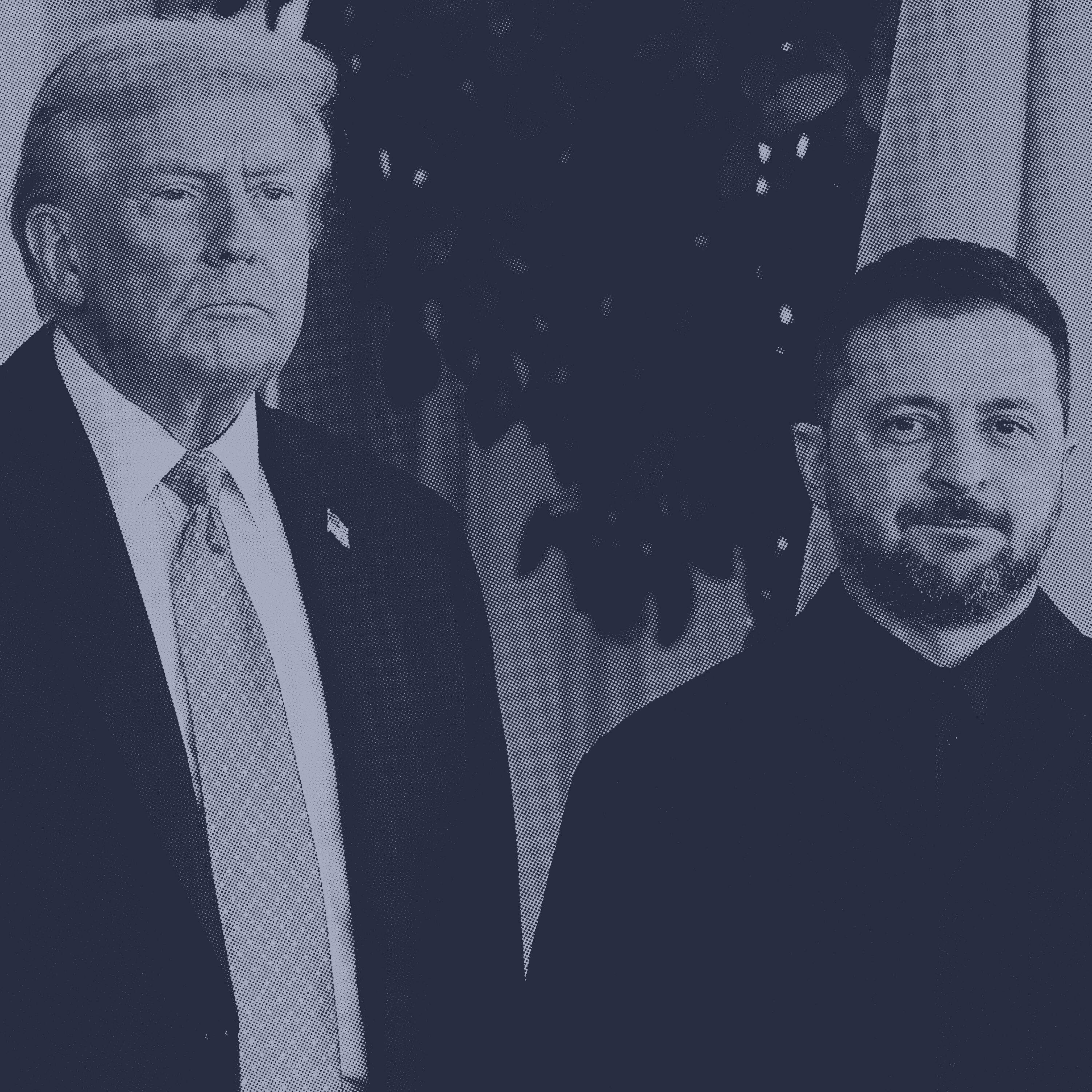
The NPR Politics Podcast
Trump Administration Pushes Russia-Friendly Plan To End War In Ukraine
00:17:43
Loading summary
Transcript52 lines
- [00:01]
Announcer
This message comes from the Council for Interior Design Qualification. Safety matters. That's why NCIDQ certified interior designers meet rigorous standards to protect health, safety and welfare. Learn more@cidq.org NPR hi, this is Teresa in Brunswick, Georgia.
- [00:20]
Tamara Keith
I'm on my way to my volunteer shift at the Friends of the Library Used Bookstore. This podcast was recorded at 1:05pm on Monday, November 24. Things may have changed by the time you hear this, but one thing will still be true.
- [00:37]
Greg Myhre
Libraries will still be magical places.
- [00:40]
Announcer
Okay.
- [00:41]
Tamara Keith
Enjoy the show.
- [00:46]
Frank Ordonez
I like libraries, too, Theresa.
- [00:47]
Tamara Keith
Yes, libraries are magical places. Though I'm too impatient for libraries. I always want my book to be available.
- [00:54]
Frank Ordonez
You can. If you get the app, you can, like, download it right away. They're awesome. Those library apps are wonderful.
- [01:00]
Tamara Keith
They are wonderful. But there's often a backlog for the books I want to read.
- [01:03]
Frank Ordonez
That's true.
- [01:04]
Tamara Keith
Hey there. It's the NPR Politics podcast. I'm Tamara Keith. I cover the White House.
- [01:08]
Frank Ordonez
I'm Frank Ordonez. I also cover the White House.
- [01:11]
Greg Myhre
And I'm Greg Myhre. I cover national security.
- [01:13]
Tamara Keith
Today on the show, the Trump administration is making a big push to try to cement a peace deal between Russia and Ukraine. And Greg, I want to read you a social media post from the president this morning. He writes, is it really possible that big progress is being made in peace talks between Russia and Ukraine? Three question marks. So I ask you that question, Greg.
- [01:36]
Greg Myhre
Well, if the president doesn't know, how should the rest of us know he's the one driving this train? I think the short answer based on what we know is no, it doesn't seem like big progress is being made. A big effort is being made. But it seemed like some details started leaking out a few days ago of this 28 point proposal. It was written very much with the kinds of things that Vladimir Putin and Russia have been asking for for years now, even before Trump came into the White House and it was widely seen as that way. And the White House has kind of been defensive and said, no, no, no, we helped author this plan and now we've had all these different groups and factions complaining about it. So there's a lot of effort and a lot of noise. But so far I don't think we're seeing big progress.
- [02:22]
Tamara Keith
Greg, there was this big meeting over the weekend in Geneva to talk about the plan. Who was there, what came out of it.
- [02:31]
Greg Myhre
Yeah, at the core was U.S. secretary of State Marco Rubio and the Ukrainians trying to sort through all this. And it seems like they took that 28 point plan, which was very heavily weighted towards Russia. And they've tried to rework it. We still don't know what's in this updated version. I suspect it will start to come out in some form fairly soon here. But it's already created these divisions between the White House, the Ukrainians, the Europeans, even Republican senators. So it kind of seems they went at this a little backwards, that maybe it should have had a unified proposal between the U.S. ukrainians, Europeans, and then taken that to Russia. So we're still sort of backing into this and not quite sure where we stand. But anyway, it was the US and the Ukrainians meeting in Geneva this weekend and that's where we stand now.
- [03:23]
Tamara Keith
So, Franco, I read the first half of the President's post. Now I would like to give you the second half of his post. He says, quote, don't believe it until you see it, but something good just may be happening. Some hedging of bets there. But what is the administration saying about all of this?
- [03:39]
Frank Ordonez
I will say I do think it's positive that there are talks going. At least the analysts I speak to see it as a good thing that the United States is still involved, considering that just a couple of months ago there are a lot of questions whether the United States was gonna like kind of exit its as leadership in the negotiations. The don't believe it until you see it. Part of that social media post is a good dose of honesty about where we have been and how many times this has happened. There's been so many times where the president or others have touted great progress that they're close to an agreement is just down the tunnel that there's going to be a ceasefire. All these big ideas and goals and expectations only for things to be kind of just undercut at the last minute. I've heard this before. It's Lucy pulling the football out from Charlie Brown. So I do think folks are more cautious and I think Trump is trying to touch on that because who knows what Russia is going to do in this situation because so far they have always kind of stopped at the last minute and not made the moves that the United States want and certainly not what Ukraine wants.
- [04:50]
Tamara Keith
So headed into this past weekend, the talk was there is a Thursday deadline. We need this done by Thanksgiving. Applying pressure to Ukraine after this weekend, that seems less clear too. Right, Greg?
- [05:02]
Greg Myhre
Yeah. Trump set this Thursday deadline and for no particular reason other than it's Thanksgiving, it didn't seem there was a real need or reason. Rubio has already kind of backed off this and said, well, if it's positive, we can keep talking. So I really don't see this as a realistic deadline. Again, it is a serious, big problem push, but there's nothing about Thursday that's special, and this couldn't go on if they're making progress. To me, the bigger issue is I don't see anything terribly new here. We saw the Russian proposal. These are the things the Russians have been asking for again, forever and ever. Ukraine has said we're not going to give up territory or we need really concrete security guarantees. I'm not seeing anything that would encourage either side to compromise or change positions. They've held essentially since the beginning of the war.
- [05:54]
Tamara Keith
So the White House put out a statement last night. It's called a readout. And this happens all the time after a big meeting. It's sort of a diplomatic statement about what happened. And it included this line which I'm hoping that you guys can translate out of jargon and into English. It says, the conversation was candid, detailed, and conducted in a spirit of partnership and shared purpose.
- [06:18]
Greg Myhre
So I'm rolling my eyes here because that's diplomatic boilerplate. There is truth in it this time. This was not just a casual meeting. Rubio went to Geneva for the weekend. There was serious talks in Kyiv between senior US Officials and senior Ukrainian officials. So it was not a casual meeting. There is this big effort. I'm quite sure the Ukrainians. Well, the Ukrainians have said we raised our issues, that we're just not going to give up territory. We need real security guarantees. So, yeah, I think serious, tough issues are being raised here. Again, is there progress? We're not seeing that so far.
- [06:58]
Tamara Keith
I do want to ask about Ukrainian politics, because Russia is increasing its bombing of Kyiv and other places, and Zelenskyy's just under a lot of political pressure at home. Greg?
- [07:11]
Greg Myhre
Yeah, absolutely. Russia has, with its increased drone campaign this year, been hitting harder and harder with its airstrikes. What general happens is they'll pick a couple cities and they get hit very, very hard one night, and then a couple nights later someplace else gets hit very hard. And then we get into winter, where the Russians really go after Ukraine's electricity grid. Ukrainians are very good about repairing it, keeping it going, but the effect is cumulative. And each winter we go through gets harder and harder for the Ukrainians to keep that going. Zelensky is also facing political pressure from some corruption scandals which have reared up periodically, and he's going through another one now. And just the limited resources that Ukraine has and how long can they continue to fight at this level? So all of these things are increasing the pressure on Zelensky and on Ukraine. How much longer can it continue to fight at this level? And that's exactly what the Russians want to do, is just increase the pressure and through attrition, get Ukraine to a point where it can no longer resist the way it has for nearly four years.
- [08:16]
Tamara Keith
Franco. There was this question of whether the US still had a stomach for it. There's also a question of Europe, but it sounds like they're still all in.
- [08:25]
Frank Ordonez
Oh, yeah. I mean, Europe's very much in. And that's, I mean, I think that's why they have so many concerns about what the United States is doing. They're concerned about the plan that was put out and how heavily leaning towards Russia it was. They're also concerned, as we saw a few months ago, that the United States could actually pull out. Certainly the analysts that I speak to feel like the United States is the only one with the leverage over both Ukraine and Russia in order to end this. I do think European leaders are seeing their own constituents getting a little fatigue for this. So they are also looking for an out as well. There's kind of this same right leaning country centric movement in Europe that is going on very much similar to in the United States. And I think Europeans want an end to this, but they have big concerns about the future and Russia doing this again. And they see Ukraine as kind of the first buffer to potentially stopping Russia from continuing its encroachment on other European countries.
- [09:26]
Greg Myhre
Remember, back to the beginning of the war. Will Europe stick around? Will Europe kind of give up or play any instrumental role here? Well, the fact is they have. And then the Trump administration has said, this really is Europe's war, you need to do more. And the Europeans have been doing more. And in fact, the initial reaction right today is the Europeans feel left out. They've been asked to do more in terms of peace negotiations, arming funding Ukraine. And here the Trump administration seems to be working with Russia on a peace plan and cutting out the Europeans. Europeans are asking, how do you expect us to do more if you're not including us fundamentally in any solution? And that Europe would in fact bear the brunt. It would face the security consequences of however this war may end, would be asked to pay for the reconstruction of Ukraine. So Europe is very much in. And some of the comments, you know, the Estonian defense minister was asked about the peace plan. He said, I would rewrite everything. The Polish prime minister said, well, before we start. It'd be good to know who authored this plan and where it was created. So the Europeans are feeling very much cut out and do want to play a larger role here.
- [10:38]
Tamara Keith
All right, we're going to take a quick break and we'll have more in a moment.
- [10:42]
Announcer
This message comes from Saatva, official mattress and restorative sleep provider for Team USA, who won 231 total medals at the Olympic and Paralympic Games Paris 2024. But could they have done even better if they were getting deeper restorative sleep? Ron Rudson, Saatva CEO, was determined to find out. So Saatva will provide mattresses for the LA28 Olympic and Paralympic Games. You can get deep restorative sleep too. Visit saatva.com NPR and save $200 on $1,000 or more. This message comes from NPR sponsor Adobe introducing the all new Adobe Acrobat studio. Now with AI powered PDF spaces. Need to turn 100 pages of market research into 5 insights with the click templates for a sales proposal that'll close that deal or an AI specialist to tailor the tone of your market report. You can do all that with the all new Adobe Acrobat Studio. Learn more@adobe.com do that with Acrobat.
- [11:46]
Greg Myhre
Every Friday, Idaho Matters brings you our reporter roundtable, where we get you up to date on the news that made headlines throughout the week here in the Gem State. Listen to the Idaho Matters podcast from Boise State Public Radio, part of the NPR Network.
- [12:03]
Tamara Keith
And we're back and we've been talking about President Trump's renewed effort to get peace in Ukraine. Franco, what does the president's goal seem to be here?
- [12:12]
Frank Ordonez
I think the president is being honest and true when he says that he wants to end the war and end the dying. You know, we've seen over the years him raising concern about people dying, especially children dying. That said, in regards to this peace plan, he's looking to fulfill a campaign promise. He wants an agreement. He wants to be able to declare a victory and to say this war is over. Now he's less concerned about the details, how you get there. And I think you're seeing that with this 28 point plan. He's not including the Europeans in the discussions because he feels like that will just make it harder to reach. Yes. He doesn't necessarily care that much about the details. He just wants the answer to be yes. And I think you see that in so many of the other agreements that he has broken brokered around the world. You know, he talks a lot about the Seven aid agreements that he reached and stopped or ended fighting and created peace. Well, in most of those, fighting still continues. You can even take Gaza, where, you know, he brokered a, you know, a ceasefire. But that is still a very complicated situation. So for him, details are less important, but they are very, very important for Russia and Ukraine in this battle. I mean, and that's why you see Russia wanting, you know, this strategic territory. They want to make sure that Ukraine is never a part of NATO. And Ukraine is so insistent about detailed security guarantees to ensure that Russia never does this again.
- [13:41]
Tamara Keith
I do want to talk about the domestic US Politics here and what might be driving this push. President Trump has gotten a fair bit of criticism that you've reported on Franco about focusing too much on foreign policy and not enough on domestic policy.
- [13:57]
Frank Ordonez
Yeah, it's been a big issue for Trump, especially in the last few weeks. I mean, we just had a medium sized election where the Democrats kind of shellacked Republicans and that raised a lot of questions about President Trump working too much on all these peace deals. I mean, I think at the time of that election, he had been on like three or four trips. You know, the number of foreign trips compared to domestic trips was, was pretty incredible. The amount that created a lot of consternation among some of his supporters in the MAGA universe, folks like Marjorie Taylor Greene, folks like Stephen Bannon, who are raising concerns that Trump was not focusing enough on the domestic concerns of people. And, you know, you look at the grocery prices and the cost of living and inflation, people are very concerned about those domestic issues. And Trump has not been at least public facing as focused on those issues. And that has raised a lot of concerns. In that election. A few weeks ago, you've kind of seen a turn by Trump to do that, which is also why I find it interesting that he's back at it in the international sphere again.
- [15:06]
Greg Myhre
Just on a related note, I would note the pushback he's getting from Republicans and particularly in the Senate. This weekend there was a security conference in Canada and there were a lot of senators, Republicans and Democrats speaking there. For example, Mike Rounds, a Republican from South Dakota, said he and others spoke with Marco Rubio and said he made it very clear to us that we were the recipients of this peace proposal, that it was in fact coming from Russia. And then Rubio shot back on social media that, saying, no, no, the US Authored this plan. Just a lot of Republican senators as well as Democrats saying, this looks like a Russian plan. So he's hearing it from his fellow Republicans in The Senate.
- [15:47]
Tamara Keith
And this is sort of remarkable because there's just been so little daylight between President Trump and members of his party in Congress. But here in this moment, there is some daylight.
- [15:59]
Greg Myhre
You know, there's always been strong bipartisan support in Congress for Ukraine, even with the recent military aid package, which was approved last year. It passed with very solid majorities in both houses. You know, we haven't had a vote on that in the Trump administration, so we don't know where it stands. But the point is there have been a lot of Republicans in the House and in the Senate who've been backing Ukraine support since day one.
- [16:25]
Frank Ordonez
Yeah, I mean, I'd agree with all of that. I think you are starting to see a little bit of wiggle room, though, between Republicans and the president on this issue, as well as, you know, the Jeffrey Epstein case. It's fascinating to watch President Trump continue to get so involved with these foreign policy issues when he ran on promising to pull the United States out of all these foreign intervention issues and kind of focus more on these domestic matters.
- [16:55]
Greg Myhre
And there's really three big ones at this moment. Ukraine, which we're discussing today, and then Gaza is still a very shaky ceasefire. And then, of course, Venezuela. And, you know, just as a statement of fact, the Trump administration is pushing very hard in Ukraine to get a deal and working on Venezuela, but we don't know what they're ultimately trying to achieve there. But it certainly raises the notion that Trump is suggesting that Russia could essentially do what it wants to do in Ukraine, then turn the US could do what it wants to do in Venezuela, and they wouldn't get in each other's way. One thing to keep an eye on. Again, nobody said that directly or openly, but the Trump administration is pushing very hard on both of these fronts at the same time. While having said that, they want to focus more on this hemisphere than, say, Europe or Ukraine.
- [17:46]
Tamara Keith
And there's a huge buildup of American military might essentially off the shore of Venezuela at this point, which is pretty remarkable coming from a president who said he didn't want more foreign wars and didn't want these entanglements. And now there's this massive buildup.
- [18:02]
Greg Myhre
Yeah, we're seeing a buildup that we haven't seen in decades in Latin America. 15,000 US forces, roughly half of them on Puerto Rico, half of them on ships. The world's biggest aircraft carrier is in the region. If you're just trying to deal with unarmed boats, allegedly, that have drugs on them, you don't need that level of firepower. So Trump has not said explicitly what he wants to do. He's talked very much about getting rid of the Venezuelan president, Nicolas Maduro, but it's a massive amount of firepower that we have not seen in a very long time in that region.
- [18:36]
Frank Ordonez
I'll just add that, you know, I mean, I think you are seeing that kind of focus on foreign issues. That said, you know, we are still a year out from the midterms. I do wonder sometimes and speak to people about this, that Trump may see kind of a deadline in a way that he only has so much more time to be talking about these international issues because soon come to spring, come the summer, he's going to have to be focus more on the domestic issues for the midterms.
- [19:02]
Tamara Keith
All right. We're going to leave it there for today. I'm Tamara Keith. I cover the White House.
- [19:05]
Frank Ordonez
I'm Frank Ordonez. I also cover the White House.
- [19:07]
Greg Myhre
And I'm Greg Myrey. I cover national security.
- [19:10]
Tamara Keith
And thank you for listening to the NPR Politics podcast.
- [19:20]
Announcer
This message comes from NPR sponsor Shopify. Start selling with Shopify today. Whether you're a garage entrepreneur or IPO ready, Shopify is the only tool you need to start, run and grow your business without the struggle. Go to shopify.com NPR this is Ira.
- [19:36]
Frank Ordonez
Glass of this American Life. Do you know our show? Okay, well, either way, I'm going to tell you about it. We make stories that hopefully pull you into the beginning with funny moments and feelings and people in surprising situations. And then you just want to find out what is going to happen and cannot stop listening. That's right. I'm talking about stories that make you miss appointments, this American Life, wherever you get your podcasts.
- [19:59]
Announcer
In just three years, ChatGPT has changed the way we think about and interact with artificial intelligence on college campuses. The impact has been swift, leaving teachers and administrators scrambling.
- [20:11]
Frank Ordonez
If we're not careful, the presence of AI can poison our relationships with our students.
- [20:17]
Announcer
How is AI changing higher education? Listen now to the Sunday story on the up first podcast from npr.