Loading summary
Transcript43 lines
- [00:00]
NPR Pop Culture Happy Hour Host
Do you love pop culture? Hate some of it, too. You're in good company. Pull up a metaphorical chair to Pop Culture Happy Hour, the podcast that breaks down the best and some of the most questionable moments in pop culture. We'll tell you what's great, what's interesting, and break it all down with debates that'll have you yelling at your speakers, but in a good way. Listen to NPR's Pop Culture Happy Hour by finding us wherever you get your podcasts.
- [00:29]
Ashley Lopez
Hey there. It's the NPR Politics podcast. I'm Ashley Lopez. I cover.
- [00:33]
Hansi Le Wang
I'm Hansi Lawang. I cover voting, too.
- [00:35]
Miles Parks
And I am Miles Parks, who also covers voting.
- [00:38]
Ashley Lopez
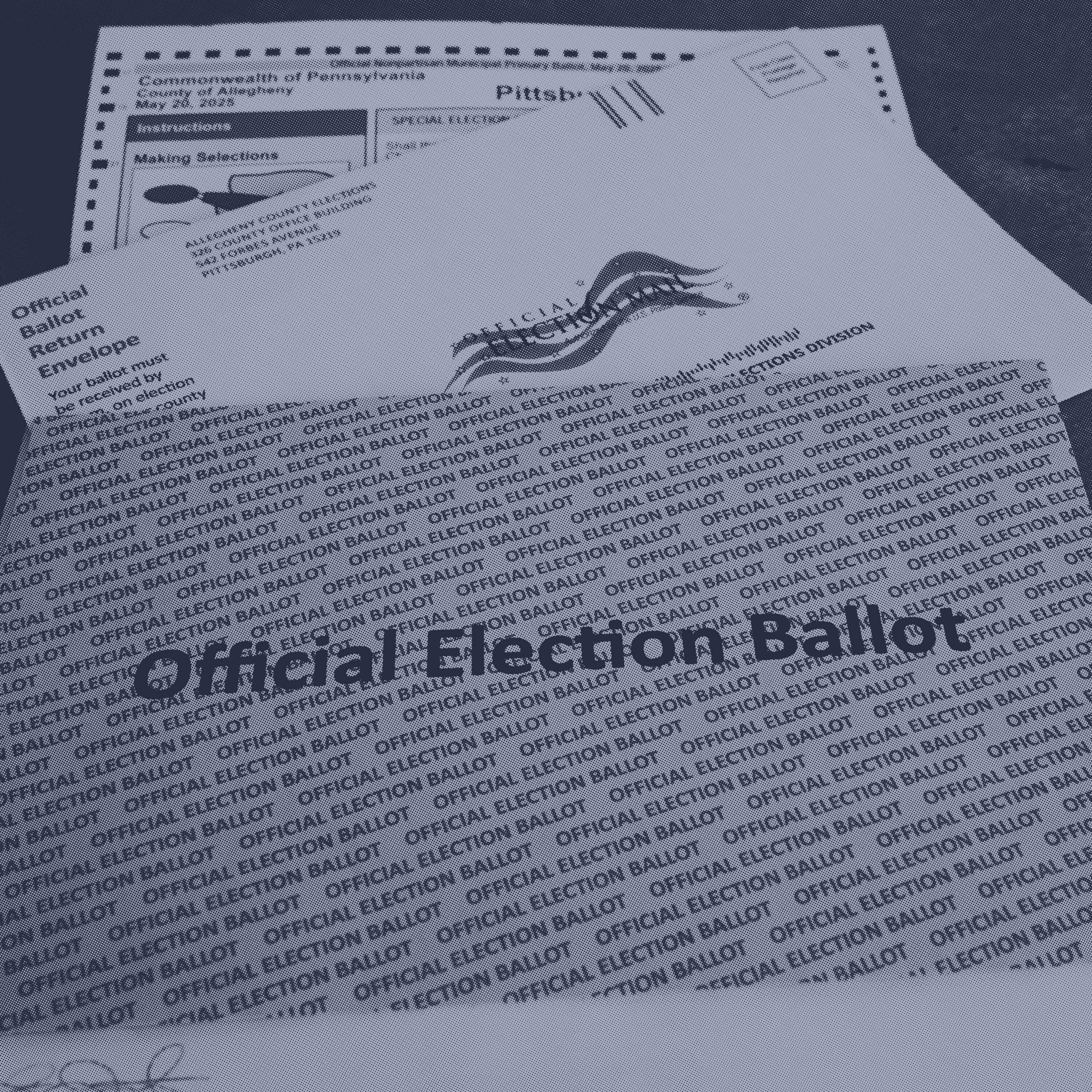
Woo. An auspicious day because it's the entire voting team on the same podcast. And for good reason, because today on the show, President Trump has signed a new executive order related to voting that is already facing multiple legal challenges, which isn't entirely surprising. For months, Trump has teased on social media that he would be signing an order related to mail in ballots. Hansi, though, can you catch us up on what Trump ultimately ended up signing on Tuesday? What was in that order?
- [01:04]
Hansi Le Wang
This order is basically about citizenship lists and the U.S. postal Service. It specifically calls for the Trump administration to create lists of adult U.S. citizens in each state. And states can review and suggest changes to those lists. And the Postal Service would be banned from delivering mail imbalance to anyone not on those lists.
- [01:25]
Miles Parks
Yeah. And I mean, this is a pretty hard executive order. Would you agree with that, Hansi, to understand, I mean, I feel like I've read it like six or seven times now, and I do feel like there's three different lists in terms of it feels like, you know, the federal government makes this list of citizens. The USPS makes a list, the states have a list. I want to be clear that it's not terribly clear exactly how any of this would work.
- [01:47]
Hansi Le Wang
A lot of questions.
- [01:48]
Ashley Lopez
But what was clear, like from the response almost immediately was that, like, Trump really can't do this. This isn't within the purview of what a president can do, which is why almost immediately you saw a lot of people threatening to sue. And I do wanna talk about that. Hansi, what do we know about what lawsuits this executive order is already facing?
- [02:08]
Hansi Le Wang
Well, we have Democrats suing, we have voting rights groups suing, civil rights groups suing, a group of overseas and military voters suing. And I'm watching to see if some states start suing. You know, Colorado secretary of state told me she's been in touch with the state attorney general's office for a potential lawsuit in Colorado is a state where every registered voter receives a mail in ballot automatically. And so there are some other states with this universal vote by mail that might want to line up with their own lawsuits. And the main legal argument in the lawsuits filed so far is that Trump is overstepping his authority by issuing an order that would basically create new rules for voting by mail in federal elections. The Constitution gives the power for making those rules to state legislatures and Congress. And if you're looking for a specific citation, you know, Article 1, Section 4, the Times, Places and manner of holding elections for senators and representatives shall be prescribed in each state by the legislature thereof.
- [03:05]
NPR Pop Culture Happy Hour Host
The.
- [03:06]
Hansi Le Wang
I can go on, but this is clearly in the Constitution and that's making up the main legal argument you see in these lawsuits. Another interesting legal claim is that Trump does not have the power to direct the Postal Service to make rules about who is allowed to receive mail in ballots. You know, the lawsuits are arguing those kinds of rules would overstep the Postal Service's power. Congress set up USPS to be an independent federal agency that delivers mail to. To basically the entire population of the United States.
- [03:36]
Miles Parks
Yeah, I feel like the moment the executive order came out that it was announced a couple days ago, the entire election law community was just like, this is not. You can't do this, man. Like, I thought this, this online post from David Becker, who runs the center for Election Innovation and Research, summed it up pretty good. He said, some may freak out about this, but honestly, it's hilarious. It's clearly unconstitutional, will be blocked immediately, and the only thing it will accomplish is. Is to make liberal lawyers wealthier. He might as well sign an EO banning gravity. So that's to the extent that I think the question of whether the president can just unilaterally make election laws is not something up for debate among most in the legal world.
- [04:15]
Ashley Lopez
And it's definitely not news to the administration. Cause they've been here before. Trump signed a different executive order related to voting last year. And I mean, remind us where that's at. I mean, from what I remember, it was very swiftly blocked by the courts for the.
- [04:27]
Miles Parks
Exactly. It was signed in March of last year. And that one sought to add proof of citizenship requirements, among other things, on registering to vote. Something that also might sound familiar because it's kind of similar to what the SAVE act in Congress is kind of seeking to do is just add kind of new restrictions that make it a little harder to register to vote to make sure only US Citizens are Registering to vote. And federal courts have unilaterally blocked different aspects of that. And under the same reasoning that the president does not have authority to make election rules.
- [04:58]
Ashley Lopez
Yeah. If you want to do that, you have to go through Congress, which I think is what these executive orders are trying to circumvent. And Hansi, I mean, this is another example of Trump. I mean, there are many at this point, of Trump trying to work around Congress to make big changes to how the government works. And right now, Trump is trying unsuccessfully so far, I should say, to get Congress to pass some sweeping changes to election law. Can you tell me how that effort's going?
- [05:18]
Hansi Le Wang
Well, that Save America Act Miles was just talking about, it's stuck in the Senate. You know, this is a bill that would require voters to show a photo ID when casting a ballot in federal elections. It would set up this new citizenship verification system for voters when registering to vote, showing a document proving their citizenship. The House has passed a version of this bill that was back in February, but the Senate has not held a final vote on whether to pass it yet. And Congress is on spring break right now until mid April. So it's unclear what the path is forward right now. You know, but the bottom line, politically speaking, is that Democrats in the Senate are against this bill, and there are some Republicans also oppose it. So at this point, this bill still faces really tough odds of becoming law.
- [06:05]
Miles Parks
There are some Republican states, though, that are kind of stepping up in this vacuum where we've seen Florida, South Dakota, Utah, all pass recently, some version of new proof of citizenship requirements in those states, kind of similarly kind of waiting to see if we see lawsuits challenging those laws. Because in the past, aspects of those sort of rules have run into legal challenges, but where, you know, it's much cleaner from a legal perspective of states being able to, like Hansi said, states definitely have authority to make election rules. And so it seems to be at least on much firmer ground than an executive order.
- [06:43]
Hansi Le Wang
I think we should point out also that states already have systems in place to verify voters who are registered are eligible, including that they are U.S. citizens, that their system's already in place. So it's not like this is creating a system that doesn't exist.
- [06:57]
Miles Parks
Right. Well, that's what I thought of, honestly, when this executive order came out. Is like, how effective of a messaging strategy. Right. I mean, it. Because by. By kind of putting out a potential solution to a problem, it does inherently give a lot of people who don't necessarily understand the back end of election offices and how Verification is already happening. You kind of are assuming that it's not happening if the president is kind of offering a solution.
- [07:22]
Ashley Lopez
Right. Well, I do want to talk about the practical aspects of this, which feels a little silly because, as we mentioned, this is likely to be blocked by the courts. What do we know about how, like, a national voter list would actually even be created?
- [07:34]
Hansi Le Wang
Well, Trump's latest order is calling for the Department of Homeland Security to create these lists of adult US Citizens. And it's saying agencies should use citizenship and naturalization records, Social Security Administration records, and other federal data. I should note, though, you know, the lawsuits filed so far, they argue these lists that Trump is ordering to be created, that. That they cannot be created, the lawsuits say, and used in time for this year's federal elections, including the primaries, without violating the Privacy Act. You know, that law requires notifying the public and getting consent ahead of time when the public's data is being used by agencies in new ways. And the Privacy act requires agencies to make sure the data they release is accurate and complete before they use them to make decisions or releasing them. And there are a lot of questions that. About the quality of this federal data that Trump's order is calling to be used to create these lists. Yeah.
- [08:32]
Miles Parks
It cannot be overstated how difficult it is to make voter lists accurate at any given moment, because the biggest thing is just the transient nature of the American population. People move in this country. I think it's something like more than 50,000 people move every single day. And so when you think about trying to create a list that would be used for a really important purpose to decide who is eligible to vote, and, you know, the sort of data is shifting in this way every minute or every hour in all these different states. The idea that the federal government, a, would be able to do this at all and it'd be accurate, but the idea that they would be able to do it this quickly, I don't know. As somebody who's been reporting on specifically the accuracy of voting lists for many years, it is a little bit hard to fathom.
- [09:20]
Ashley Lopez
Yeah. All right, we're going to take a quick break. More in a moment. And we're back. And, Miles, I mean, if the court's already blocked Trump's earlier executive order on voting, I guess, like, why issue a new one? Is there a point in Trump doing this, even if it seems inevitable that the courts will stop it?
- [09:37]
Miles Parks
Yeah. I mean, to be clear, I am not in President Trump's head. I always like to say that. But just trying to read the Tea leaves a little bit, considering it was clearly not written in a way to try to get around some of these thorny legal problems that an executive order around elections would have. And so you are naturally like, okay, what are other reasons that you would want to do this? To me, it does come back to messaging. Trump has shown numerous times a willingness to contest election results or cast out on legitimacy of election results, especially in races where he either doesn't win or underperforms in some way. When you think about kind of the longer game of the upcoming midterms, future elections, and anyone who wants to contest election results has to be able to point to an inherent problem. And so I think these sort of things, offering solutions and getting in people's minds that, well, I tried to fix this thing, but the liberals, the deep state, they wouldn't let me.
- [10:32]
Ashley Lopez
Yeah. And I also wonder if having a more conservative Supreme Court right now has also made them think, like, I don't know, the legal long shot of this might not be as bad as it was maybe in my first term. Like, who knows what the Supreme Court. Mike Grammy. Because he's had a pretty good batting average.
- [10:47]
Miles Parks
It's possible, I think also, I mean, executive orders are, I don't know, it just seems like low hanging fruit. I could see, I think we were talking earlier about, is this the last one? Is this the one that we've been hearing about? That to me feels very unlikely. I feel like there's no reason why he wouldn't just put out an executive order asking for different aspects of the election system to change a bunch of different times over the next few months. There's an incentive structure that makes that pretty rewarding for them.
- [11:15]
Ashley Lopez
Myles, I do want to talk about the voter list. It's not like the government would be starting exactly from zero, from all I can tell. Right. Like this is a project the Trump administration has taken on.
- [11:25]
Miles Parks
Well, on the citizenship aspect of it because, yeah, basically since the start of Trump's second term, he's really prioritized at the Department of Homeland Security building this sort of system that purports to be able to tell the citizenship status of most, if not close to all, Americans. They've been working on that. There's still clearly some kinks in the process. NPR reported just in the last couple months about false positives that came up when the state of Texas, for instance, deleted people off its photo rolls based on the data it was getting from dhs. And that number of those people turned out to be US Citizens. So data is not Perfect. But yes, they've been working on this kind of citizenship data project. But I think when you start overlaying that with residents data, that is much a much harder problem because of what I mentioned earlier about how frequently people move. And then I also will just say from a big picture policy perspective, it's really interesting to see this because for many, many years, conservatives have vehemently opposed the idea of a national voter registration list. And there are just a number of policies that keep coming from the Trump White House that look more and more like some sort of big national list of voter data. And so I don't know. I guess I'm just starting. I keep coming back to that of just wondering about whether that is something, because there are real problems that would get solved by potentially having a national voter registration list if it was done well and thought through. And you wouldn't imagine that if, like, when you change states, you wouldn't necessarily have to re register to vote. And there were, if there were a system within the government that was able to kind of take in the. The way Americans live a little bit more cleanly than what is currently done, you could see that working. The problem is, again, that's a Congress question. That's how a policy like that would be implemented. Not by the White House.
- [13:13]
Ashley Lopez
Yeah, I think about this all the time because in other countries you don't have to register to vote because the government already knows who's eligible.
- [13:18]
Miles Parks
Right. Usually attached to some sort of national ID system. There's a lot of different policies that are kind of grouped in many other countries in that way that the US because of the Federalist system, just doesn't have.
- [13:28]
Hansi Le Wang
Yeah.
- [13:28]
Ashley Lopez
And Hansi, I gotta say, when I saw like, I think all three of us watched the signing of that executive order, I was very surprised at first to see Commerce Secretary Howard Lutnick there. And I was like, why? Why is Lutnick there? And then it was very, like, quickly, very clear what was going on. One of the big parts of this order that stood out to me was that the role of the Postal Service would effectively grow under this. This order would create a big role for that agency in basically administering a big part of national elections. I wonder what you made of this, though, and do you have a sense of. Would actually work?
- [13:59]
Hansi Le Wang
Well, I think to start off with, to be very clear, Commerce Secretary Howard Lutnick, he has no role at the U.S. postal Service. The U.S. postal Service is an independent federal agency that's not part of the Commerce Department. But Secretary Lutnick has talked a lot about the Postal Service, especially during the first year of the second Trump administration, and bringing up talk of potentially taking over the Postal Service and having it under the Commerce Department. You know, the thing about this order is it's basically saying the Postal Service would have to come up with lists of eligible voters, get input from states on those lists, and make sure that mail in ballots are only delivered to the people on those lists. It's not clear how the Postal Service would actually carry this out. I Talked to the U.S. postal Service press office. A spokesperson told me earlier this week they're reviewing the order. Union leaders for postal workers have a lot of concerns. The National Rural Letter Carriers Association President Don Masten said this order would put USPS in a role of determining voter eligibility. And it's really weaponizing usps, Masten said, to undermine voting by mail. And Jonathan Smith, president of the American Postal Workers Union, said that Trump's order is trying to turn USPS into, quote, a tool to disenfranchise voters. And Smith pointed out that it's been USPS policy to take what it calls extraordinary measures during general federal elections. This is stuff the public usually doesn't see. But USPS does a lot of extra mail collections and deliveries and special sorting plans at processing centers in those last weeks before a federal general election to make sure that mail in ballots, especially ones that are returned close to a deadline, are delivered as quickly as possible to election officials. So this order really goes against what a lot of postal workers see as their core mission, which is to move the mail.
- [15:51]
Ashley Lopez
I mean, like, just practically speaking, does this agency have the bandwidth to take on a huge project like this?
- [15:57]
Hansi Le Wang
The short answer is no. This is a self funded government agency legally required to deliver the mail six days a week to almost every address in the country. And it's mainly funded not by tax dollars, but by selling stamps and service fees at a time when fewer people and businesses are using the mail. You know, the postmaster General told Congress just last month, usps is months away from running out of money, and it may not be able to deliver Valentine's day cards in February 2027 unless Congress steps in and maybe lets it borrow more money, change its pension system, or pass other reforms. But this order from President Trump is really the latest example I see of the Trump administration attempting to pressure the Postal Service to do its bidding. And recently, the Trump administration completely overhauled plans for a test for getting a more accurate count for the 2030 census. This is a test taking place this year, and it's been turned into an experiment to see if letter carriers can replace census workers to interview households for the census. This is another idea from Commerce Secretary Howard Lutnick. And it's raised a lot of questions because the government calendar billing office says that's not a cost effective way of conducting the census. But the Trump administration, for some reason, seems to see the Postal Service as this tool that it can use.
- [17:17]
Ashley Lopez
Yeah, I do want to make sure we revisit something you said, Miles, about how, you know, sort of irrespective of what the courts do, the message that the president is sending with this executive order is something that could affect how voters view upcoming elections, including these midterms that we have coming up. And I wonder from both of you what you make of what the overlying goal is here, sort of regardless of what ends up happening with the legal challenges.
- [17:44]
Miles Parks
I still just go back to messaging. You know, this is something that it seems like every week, if not almost every day, the president is also posting on his social media account talking about how insecure vote by mail is, how insecure voting machines are. There's just clearly a concerted effort to have this be in the news cycle, that this idea that the election system can't be trusted. So exactly how that manifests in the midterms is something none of us I don't think know, and also something that election officials are really desperate to figure out. I mean, they're game planning all these different ways that this could go and ways that President Trump could try to kind of capitalize on this doubt to affect the midterms. But I think the bottom line is we don't really know exactly where this is headed.
- [18:33]
Hansi Le Wang
I think we should all keep in mind that, you know, the midterm election is happening right now. Some states have already held, there are primaries for the midterm election. Voting is happening right now. Some people are voting by mail right now. And I don't know how much every voter is necessarily, every eligible voter is necessarily paying attention to the latest executive order from President Trump that is being challenged in court and may be blocked by courts and may not affect ultimately how they vote in the coming months.
- [19:02]
Ashley Lopez
All right, let's leave it there for today. And here's something we're watching for tomorrow. President Trump has announced that Paul Pam Bondi is out as Attorney General. We will talk about all that tomorrow. Don't miss it. Hit the follow button wherever you get your podcasts. I'm Ashley Lopez. I cover voting.
- [19:16]
Hansi Le Wang
I'm Hansi Le Wang. I also cover voting.
- [19:18]
Miles Parks
And I'm Miles Parks. I also also cover voting.
- [19:21]
Ashley Lopez
And thank you for listening to the NPR Politics Podcast.