Loading summary
Transcript60 lines
- [00:01]
A
This message comes from Carvana, who makes car selling easy. Enter your license plate or vin, get a real offer in minutes and have your car picked up from your door. Sell your car the easy way with Carvana. Pickup fee may apply.
- [00:17]
B
Hey there. It's the NPR Politics podcast. I'm Myles Parks. I cover voting.
- [00:22]
C
I'm Tamara Keith. I cover the White House.
- [00:23]
D
And I'm Mara Liasson, senior national political correspondent.
- [00:27]
B
And today on the show, President Trump is everywhere. Not just in the news, but literally. He and his allies are working to get his face and his name on more and more US Government stuff. We're gonna talk today about whether that matters. So, Tam, I wanna start with coins. I know that Trump could potentially appear on two different new ones. Can you tell us more about this?
- [00:50]
C
Yeah. Late Last week, the U.S. commission of Fine Arts approved a commemorative coin that will President Trump standing with his fists on a desk, looking very serious. It will be a gold coin. The commission members urged that it be made as large as possible, like 3
- [01:11]
D
inches, like the size of a chocolate chip cookie.
- [01:13]
C
I believe three inches is as large as possible.
- [01:16]
B
I was gonna say you could technically make a coin even larger, much, you know, the size of the room, the size of, I don't know, Washington, D.C.
- [01:22]
C
i don't know if the Mint could handle that.
- [01:23]
B
Okay, got it.
- [01:24]
C
And this coin is. Is commemorative. It wouldn't be in circulation. And it is part of a celebration of America's 250th birthday. And then there is another coin, which is a $1 coin that would be in circulation.
- [01:45]
B
Okay.
- [01:46]
C
And that coin will also feature the president's face on one side. And according to the US Treasurer who put out a. He says that there is no profile more emblematic for the front of coins that commemorate the 250th birthday than that of our serving President, Donald J. Trump.
- [02:10]
D
Is that legal?
- [02:12]
C
Well, not really. But who's going to challenge it? I think is where we are on that. All coins that are produced by the United States are supposed to go through the Citizens Coinage Advisory Committee. And I know that we're getting a little wonky here, but the government is bypassing that committee. The committee trying to resist these coins that they believe are in violation of US Code, refused to put it on their agenda or actually actively removed consideration of these coins from their agenda. And as a result, the administration is just moving forward without their consideration, saying that they have basically given up on their opportunity to review the coins.
- [02:56]
B
I mean, what is it specifically that they have a problem with when it comes to these coins.
- [03:00]
C
The idea of a living president appearing on a coin that is in US Circulation, or even a commemorative coin, is completely out of line with the principles of America's founding, that the American president is different from the monarchy that we pushed away from. And I talked to Donald Scott Gurinci. He is a member of that coinage advisory committee. He has been for 20 years. He says that for the past 20 years, the Mint's lawyers have told them, you cannot put living people on coins. There are laws that specifically say, yes, former presidents should be on dollar coins, but not until they're dead. And. And he goes all the way back, he says to George Washington.
- [03:51]
E
He was presented with coin designs for our first coinage that had his portrait on it. And he said that we fought a revolution against rule by a king. And, you know, the president is not a king, and the president should not have ever have his portrait on a coin. George Washington himself said that.
- [04:16]
C
So he is deeply offended, and he says that the other members of this committee that are really into coins and history are all offended by the idea of a living president's face being on a coin. And just one fun note. There is one piece of historical precedent here. Calvin Coolidge, 100 years ago, had his face on a coin to commemorate the 150th anniversary of the United States. His face was sort of behind George Washington's in the shadow. And according to Scrincy, it was so controversial that they actually ended up melting down most of those coins. And now that coin is a rare coin because it was so controversial at the time.
- [05:04]
B
This whole coin thing is going to be a back and forth that we're going to be monitoring, I guess, over the next couple weeks and months, probably.
- [05:09]
C
I think it's happening. Like, I don't think we're monitoring much. I think just wait for the money to show up.
- [05:15]
D
Well, but the question of legality, somebody's gonna try to take them to court. Do you think anyone has standing to do this? Well, this is yet another norm that Trump has shattered. That's not new, but there are laws that say the likeness of a living person should not be on the coin.
- [05:31]
C
Well, the Citizens Coinage Advisory Committee Skerrency is a lawyer. He believes that they don't actually have standing, but that maybe Congress would have standing. But that's a punchline.
- [05:45]
B
Notoriously, a body of government that feels emboldened to stand up for the president to do nothing.
- [05:49]
C
Right, Right. So I have no reason to believe that the dollar coin won't go into circulation. And the big golden commemorative coin won't show up on the Mint website at some point this year.
- [06:00]
B
We were just talking about coins. I feel like that would be one thing where we could debate, you know, what is the. What is the right amount of time after a president has died or left office to end up on a coin. But this is a broader thing with Trump, right, In terms of wanting to get his name on things.
- [06:14]
D
Trump is sui generis in many ways, in his grandiosity, his desire for acclaim and domination and power, and he wants his name on everything. This is certainly how he built his brand, but also how he sees himself as the President of the United States. The question I have is, will other future presidents try to do this? I do think that what this represents, which is an expansion of the power of the executive and making it more or less unchecked branch of government, I think a lot of that is going to stick around no matter who is president next. So the questions about the coins are a symbol of something else. They're a symbol of how our form of government is changing and how Trump is changing it. And some of that might be temporary. Maybe the coins will be out of circulation in six years, but other parts of it are going to be permanent. And I think that's what this is about.
- [07:03]
C
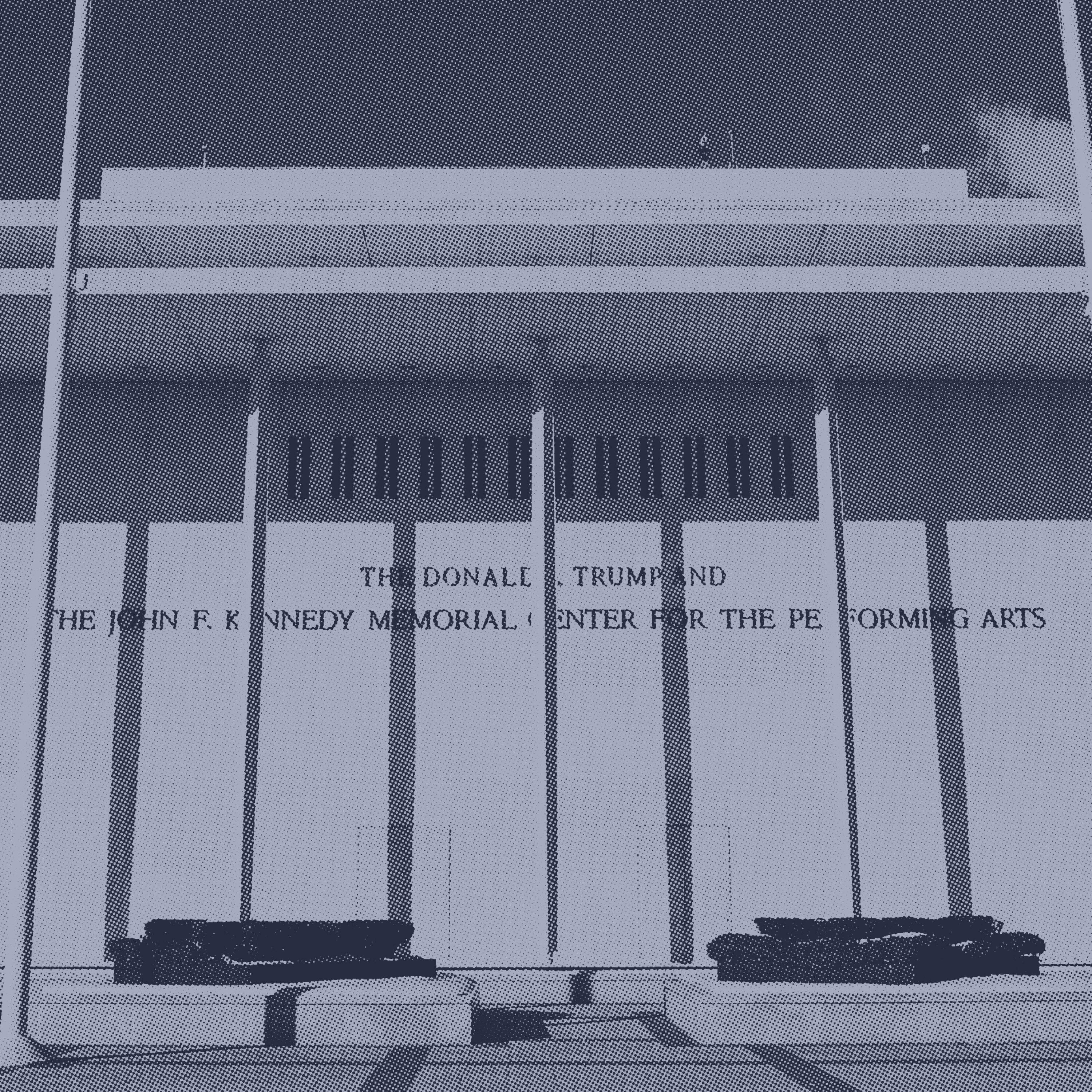
Living presidents are not on money, but living dictators and living monarchs are all over the world. And so what Scorency said is that this isn't, as Mara said, this isn't just about a coin. This is something bigger. But let me just take a deep breath to try to give you the list of all the things that have now been imbued with Trumpiness. There are now two federal buildings in Washington, D.C. named after him. His face looms large from banners outside of three different federal agency buildings, including the Justice Department. His face is now on national park passes. Then there's Trump rx, the Trump Gold Card, Trump accounts, and these are all government programs that prominently display the president's name and in the case of the Trump gold Card, also his face and his signature. The Gold card is part of a program that gives expedited immigration status to people who are willing to pay at least a million dollars. Trump has suggested renaming Dulles Airport Penn Station after himself. And then in Florida, the state legislature has approved legislation to rename both A street and the Palm Beach Airport after Trump. So. And that may not be a complete list.
- [08:21]
D
And what's so interesting about this is when we talk about norms, sometimes norms have laws attached to them, but most of the other times they are Just customs and traditions that are followed by elected officials and the president because they felt there was an importance to following them, like seeming modest, convincing American that they were working in their best interests, not self dealing for their own family or making a lot of money for themselves. So these norms of not putting your face on coins used to serve a purpose, and they sent a message in a democratic republic. But that's changed because Trump doesn't believe in any of those norms. You know, he has said, famously, I alone can fix it. I mean, he really believes he is the embodiment and the personification of, of the state. And to me, as I said before, it's just really interesting how much of this will outlast him.
- [09:11]
B
I think I still am a little bit unclear, though, on how unprecedented all of this stuff is, because you do walk around and see presidents names on all sorts of stuff. I mean, the airport we fly into is named after Ronald Reagan while he was the president. Okay, so is that the distinction? I guess I'm just trying to get a distinction. What is unprecedented about what we're talking about here?
- [09:29]
D
Yes.
- [09:29]
C
So I looked into this a bit, and typically these sorts of honors are reserved for former presidents and mostly dead former presidents, I will say. Former President Joe Biden had a rest area in Delaware named after him that happened after he was out of office between the vice presidency and running for president. Uh, there is a Biden train station that happened while he was vice president. There is Obamacare. Right. But that is not what it was called.
- [10:01]
D
It's the affordable nickname.
- [10:03]
C
That is not just a nickname. It was more of an insult that was hurled by the president's opponents until it stuck and kind of became the thing that everybody calls it. So, yes, it is unprecedented, it is unusual. And I talked to Ruth Ben Guyot, who's a professor of history at nyu. She's also notably author of a book called Strongmen Mussolini to the Present. And she says that we are living through the building of a personality cult to President Trump, and that what he is doing mirrors what autocrats around the world have done for a century.
- [10:40]
F
The leader must be everywhere. His face must be everywhere. His name must be everywhere. And his aesthetic, his taste must be reflected in buildings, in the people around him.
- [10:56]
D
And that's the central casting. People around him have to look a certain way. The buildings have to be encrusted with as much gold as possible. That's the aesthetic.
- [11:05]
C
And the ballroom as an example, the White House ballroom that we've talked about before on this podcast, traditionally, the White House was supposed to be humble. It was supposed to represent a country of laws, not men. It was supposed to symbolize that America was different, that it wasn't Versailles. However, the ballroom is something he wants to be opulent. And that is one of the objections that architects and others have, is that, like, this isn't really what the White House was intended to be.
- [11:38]
B
I mean, what does he say to all this? Because I have heard some of these comparisons to sort of autocratic regimes in the past. Does he have any response to that on the ballroom, on the coins, on any of this stuff?
- [11:49]
C
His White House, when I asked them about this, said that the president is really just focused on saving our country and not garnering recognition. This is an exact quote. However, given his vast accomplishments, no wonder people would want to name things after him. And we can talk about whether it's other people who had the idea or whether it's President Trump who has had the idea.
- [12:12]
B
All right, let's take a quick break and more on all of this in just a moment.
- [12:16]
G
This message comes from Betterment. Their automated investing and saving tools give you the quiet confidence of someone who knows where to put their money with tax smart tools that help grow your after tax returns year round. Get started today@betterment.com that's B E T T E R M E N T.com investing involves risk performance, not guaranteed. Betterment is not a tax advisor nor should any information herein be considered tax advice. Please consult a qualified tax professional.
- [12:46]
A
This message comes from Carvana, who makes buying and financing your next car easy. Thousands of vehicles, terms up front and 100% online even get it delivered to your door. Buy your car the easy way with Carvana. Delivery fee may apply.
- [13:01]
G
This message comes from Redfin. You're listening to a podcast, which means you're probably multitasking, maybe even scrolling home listings on Redfin, saving homes without expecting to get them. But Redfin isn't just built for endless browsing. It's built to help you find and own a home with agents who close twice as many deals. When you find the one, you've got a real shot at getting it. Get started@redfin.com, own the dream.
- [13:28]
B
And we're back. So, Mara, I'm curious. If Trump wants to put his name on coins on buildings, on all sorts of things, why does this matter? Or I guess, does it matter to voters, do you think?
- [13:42]
D
I think most people don't know about it, don't care about it. They want to know if they're going to be able to afford to fill up their car with gas. If the President was out there every day talking about this, which he hasn't so far, I think that would be a real irritant to voters who want their elected officials to pay attention to what concerns them on a daily basis. But I think that it does matter in a different way, in that it represents the way our form of government is changing and the way that we have a much more powerful executive who cares about himself. And this is the argument you hear from Democrats. He just wants to make money for his family and himself and his billionaire friends. He's not paying attention to your needs. I think this is a corollary to that. But the coin itself, I think if you took a poll, I bet a minority of voters wouldn't even know about it.
- [14:37]
C
Yes, I think that maybe coins aren't as big a deal as they were a hundred years ago when they were melting down coins with Calvin Coolidge's face on it. But I do think that, as Mara says, there's a large body of polling that shows that a majority of Americans feel like President Trump is not focused on the things that matter the most to them. And, you know, he's constantly posting pictures of, like, new, new renderings of the ballroom or, oh, look at this new statue I put up. And some amount of this I think you could chalk up to being legacy oriented and not wanting to leave things to chance because history might not remember him as fondly as he wants to be remembered. But if you put your name on things now, then you don't have to
- [15:25]
D
worry about history, except for they can be removed.
- [15:28]
B
Yeah. What about this idea that some of these things that are being renamed are not President Trump, like, actually pushing for it? Like in the Florida example, it was the Florida legislature that passed a bill that renamed some of the things down there, I guess. What is the distinction there? And does that matter?
- [15:45]
C
Yeah. So if you watch the President's State of the Union address multiple times, he said, trump rx. Oh, but it wasn't my idea to name it the Trump Accounts for Kids. Oh, that wasn't my idea. It was somebody else. They came to me, they said it would sell better if it had your name on it. And I was like, well, I guess I'll give it to you for free. It's sort of like a running joke he has. And as relates to the Kennedy center, he has claimed it wasn't his idea, but it really strains credulity because he is the chairman of the board of the Kennedy Center. The board that voted to put his name on the building. The lettering was available shockingly quickly after this decision was made. And weeks earlier, he had. And, you know, this is a trend with him. He had joked about that very outcome. He had. He was at the Trump Institute of Peace at the time, which also was renamed and referred to an event that was going to be at the Trump Kennedy Center. Oh, excuse me, at the Kennedy Center. And, you know, like, he often sort of jokes about things that he wants, and then people make it happen. If you look in Congress right now, there are any number of bills to put his name and face on Mount Rushmore, Dulles Airport, anything you want. And part of that is just trying to curry favor with the president, trying to show that they support him the most. And if you look historically, that is part of a broader pattern of when you have a leader, as Mara likes to talk about, who is a personalist, who makes decisions based on how he feels, then people will want to do things to curry favor with the leader.
- [17:38]
D
But also, he replaced the boards, the people who review the plans for the ballroom or who review the plans for the coin. I mean, he replaced them all with loyalists. So he. Maybe he didn't. Didn't actually ask for this coin, but he laid down all the groundwork to make it happen.
- [17:56]
B
I mean, you kind of asked this question already, Mara, this. Like, where does this go from here with future presidents? But I also think it ties into. There have been a number of reports that have come out the last couple weeks that have alluded to American democracy backsliding. I think one report from an institute in Sweden noted that America's democracy ranking moved down from 20th out of 179 to 51st out of 179. I do think that these. All of these things seem to be somewhat connected. How does the country stop moving in this sort of backsliding direction?
- [18:29]
D
Well, first it has to decide whether it wants to stop moving in this direction or not. It's up to voters. Cults of personality generally are not found in democratic republics. They're more found in places like Russia. So this is something that the American voters are gonna have to decide if they want or not, because it's not just Donald Trump. It could be future presidents. Although, as I said before, it's very hard to imagine someone acting in this way because Donald Trump is unique. There's never been anyone in the presidency that has expressed his grandiosity and desire for power and domination in the way that he has so far.
- [19:06]
C
So as I was doing research for this story. I found an interview that he did with Larry King on CNN. I think it was maybe it was 1999. It was a really long time ago. And Larry King was like, you put your name on everything. Are you running for president? Are you going to put your name on the White House? And president? Then businessman Trump said, no, I promise I will not put my name on the White House. But he is certainly putting his stamp on the White House and on Washington, D.C. more broadly.
- [19:40]
B
And there's still a long way to go, obviously, till the end of his second term. But we can leave it there for today. I'm Miles Parks. I cover voting.
- [19:47]
C
I'm Tamara Keith. I cover the White House.
- [19:48]
D
And I'm Mara Liasson, senior national political correspondent.
- [19:52]
B
And thank you for listening to the NPR Politics podcast.
- [20:03]
G
This message comes from Schwab. Everyone has moments when they could have done better, like cutting their own hair or forgetting sunscreen. So now you look like a tomato. Same goes for where you invest. Level up and invest smarter with Schwab. Get market insights, education and human help when you need it. Learn more@schwab.com this message comes from Cachava. Sometimes you crave a treat while prioritizing your wellness goals. Cacava's newest coffee flavor is the perfect treat. This all in one nutrition shake delivers bold flavor from decaffeinated Brazilian beans with 25 grams of protein, 6 grams of fiber, greens and more. Treat yourself to the flavor and nutrition your body craves. Go to cachava.com and use code NPR. New customers get 15% off their first order. That's K A C H-A V A.com code NPR.
- [20:59]
H
Do you love pop culture? Hate some of it, too. You're in good company. Pull up a metaphorical chair to Pop Culture Happy Hour, the podcast that breaks down the best and some of the most questionable moments in pop culture. We'll tell you what's great, what's interesting, and break it all down with debates that'll have you yelling at your speakers, but in a good way. Listen to NPR's Pop Culture Happy Hour by finding us wherever you get your podcasts.