Loading summary
Transcript63 lines
- [00:00]
Scott Horsley
This message comes from Carvana. The Carvana Value Tracker shows you your car's worth. Check it anytime, track changes and sell.
- [00:08]
Danielle Kurtzleben
When the timing feels right.
- [00:10]
Scott Horsley
Use Carvana Value Tracker to track your car's value today.
- [00:14]
Miles Parks
Hi, this is Benoit in Salt Lake City. And I am so excited after 22 years of belting, defying gravity around my house to finally be getting ready to go see the conclusion of the Wicked film film adaptation. This podcast was recorded at 12:05pm on Thursday, November 20, 2025. Things may have changed by the time you hear this, but I certainly will have been changed for good. All right, here's the show.
- [00:45]
Danielle Kurtzleben
I feel cheated that he didn't sing for us.
- [00:47]
Miles Parks
I was literally about to say the same thing, Danielle. I was like that timestamp should have been singing, sir.
- [00:53]
Danielle Kurtzleben
Disappointing.
- [00:54]
Miles Parks
Next time, take notes. Okay? Hey there. It's the NPR Politics podcast. I'm Miles Parks. I cover voting.
- [01:01]
Danielle Kurtzleben
And I'm Danielle Kurtzleben. I cover the White House.
- [01:03]
Miles Parks
And NPR chief economics correspondent Scott Horsley is also here with us. Hi, Scott.
- [01:08]
Scott Horsley
I'm always ready to sing.
- [01:09]
Danielle Kurtzleben
Prove it.
- [01:10]
Miles Parks
All right, go. Yeah, let's hear it.
- [01:12]
Scott Horsley
But you don't want to hear me sing.
- [01:13]
Danielle Kurtzleben
Okay.
- [01:14]
Miles Parks
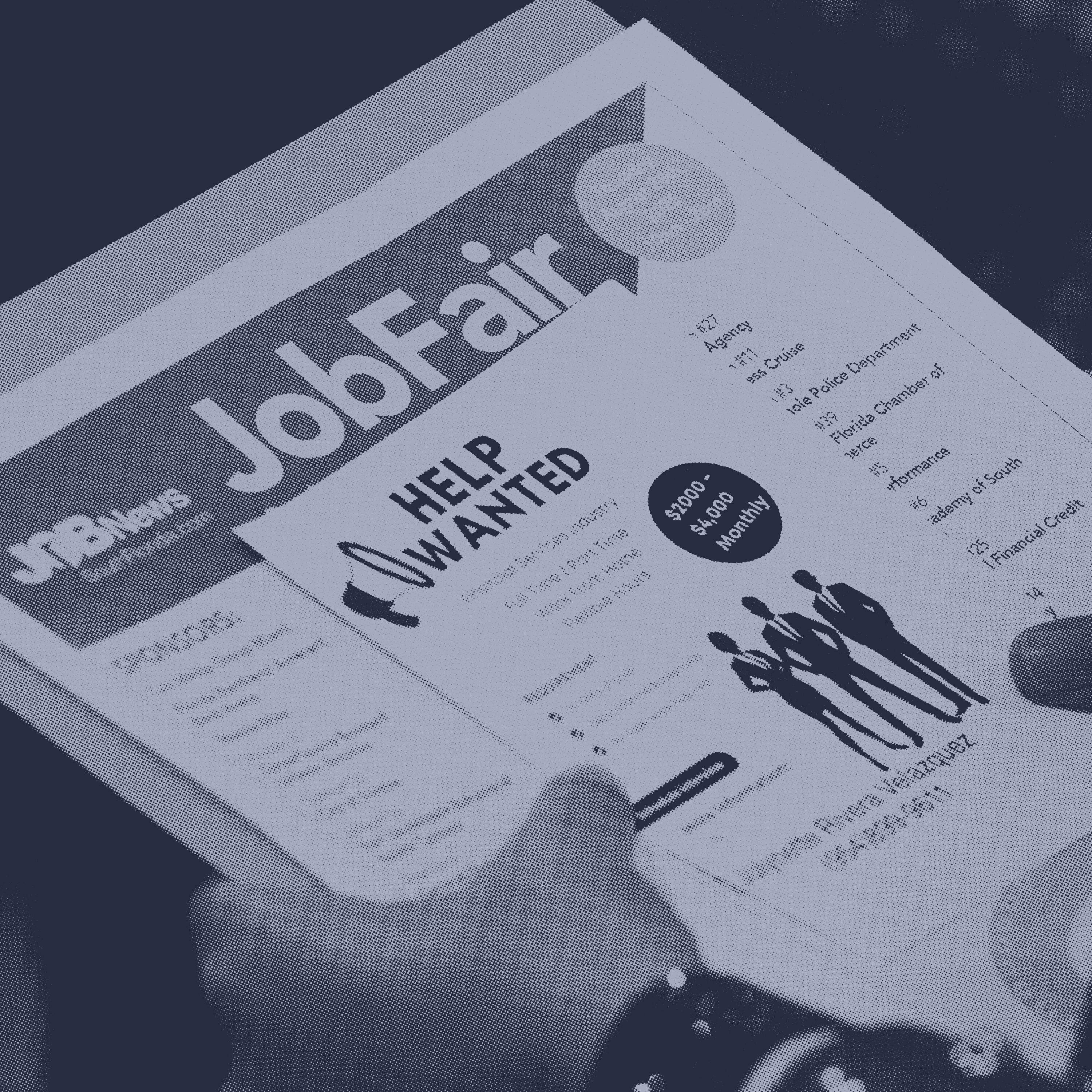
All right. Next time. Well, you probably guessed it. Today on the show, we are talking about the economy, what newly released data tells us and how the White House is trying to give the economy a boost. Scott, the Bureau of Labor Statistics released a delayed September jobs report this morning. Tell us what you saw there.
- [01:32]
Scott Horsley
Yeah, we had to blow the dust off the COVID of this report because it's been sitting around the government offices for almost seven weeks. It was supposed to come out in early October. Now we're in the latter third of November and it's finally coming out. But what it showed us is a pretty strong headline. It said that US employers added 119,000 jobs in the month of September, which was more than most forecasters had expected. However, it also showed that job growth in July and August was even weaker than the kind of anemic numbers we'd already seen. So it paints kind of a mixed picture.
- [02:08]
Miles Parks
A mixed picture. How is the Trump administration responding to that picture, Danielle?
- [02:13]
Danielle Kurtzleben
Well, in part, they're responding by doing what administrations do with jobs reports, which is emphasizing the bright spots. For example, emphasizing that, yeah, beat expectations. Besides that, talking about the things that they consider really good things. In statements about this jobs report, we had the Secretary of Labor, Laurie Chavez Darimer and Press Secretary Caroline Levitt emphasizing that native born workers got a lot of jobs and that These were overwhelmingly private sector jobs. And so those are the administration's initial responses. But there was also some more interesting messaging coming from Vice President J.D. vance today. He, he spoke at an event hosted by right wing news site Breitbart. And when asked about the jobs report, he started talking about the economy as a whole. And when he got on the topic of prices, he had this to say.
- [03:03]
Miles Parks
Even though we've made incredible progress, we understand that there's a lot more work to do. And the thing that I'd ask for the American people is a little bit of patience. This economy was not harmed in 10 months.
- [03:17]
Danielle Kurtzleben
So what he's saying with that last 10 months bit is he's holding onto that line that the Trump administration has held onto for this entire year, which is that Joe Biden and his administration hurt the economy and that Trump has to repair it now. One wonders when it will stop being the Biden economy in their minds and start being the Trump economy. But either way, this isn't exactly how Trump is talking about prices right now. Here he was speaking at the US Saudi Investment Forum held yesterday, but they.
- [03:45]
Scott Horsley
Came up with a new word, affordability. And they look at the we are all about affordability. And everyone assumes that that meant that no, their prices were high.
- [03:56]
Danielle Kurtzleben
And to me, this really shows that this administration is struggling in their approach about how to talk about the current economy. They're really struggling to find coherent messaging they can all latch onto. Because while on the one hand you have J.D. vance saying, hey, be patient, we know things aren't exactly where you want them, which is what polls are showing you, you also have Donald Trump saying, hey, things are actually fine. They are affordable. And that's not how the American people experience the economy through the president's eyes.
- [04:23]
Scott Horsley
Right.
- [04:23]
Miles Parks
And you mentioned that, you know, the administration obviously wants to latch onto the bright spots of this jobs report. But one data point I noticed was that manufacturing jobs are down. And I wonder, you know, so much of President Trump's policies are aimed at bringing manufacturing back to the United States. Is the administration engaging with that idea at all that, that manufacturers are not growing right now?
- [04:46]
Danielle Kurtzleben
I haven't seen that directly out of this jobs report, but that is, of course, one of the central points of Trump's tariff policy is to say we are going to tariff a whole bunch of foreign manufactured goods so there will be more American manufacturing. But if it's going to work, and that is a huge if, because a lot of economists say that it won't or it'll be tough, that would take a long time to happen anyway because you'd have to build factories, build up new supply chains, that sort of thing.
- [05:17]
Miles Parks
Got it.
- [05:17]
Scott Horsley
And manufacturing has been in a slump for months now. And every month we get a report from the Institute for Supply Management which goes out and surveys factory managers. And every month that report is just filled with quotes lambasting the administration's tariffs as making life miserable for factories. And you've seen that in several months of factory job losses as well.
- [05:40]
Miles Parks
Well, I feel like whenever a new jobs report comes out, another data point that is usually tied to that is interest rates. Scott, is there any data we can glean from this jobs report about what is going to happen with interest rates in the future?
- [05:55]
Scott Horsley
Well, yesterday we got the minutes of the October Federal Reserve rate setting meeting and there was a line in there that said there was a strong disagreement among policymakers about what they should do at their December meeting. And frankly, I don't think there's very much in today's jobs report that's going to settle that disagreement. There are members of the committee that very much want to cut interest rates and there's certainly ample evidence in this jobs report to suggest that's what they should do, whether it's the downward revisions in the July and August hiring numbers or the uptick in the unemployment rate to 4.4%. On the other hand, that relatively strong headline number of 119,000 jobs added in September suggests, well, the job market's not falling off a cliff. It's maybe not going gangbusters like it was at the beginning of the year, but it's not terrible. And that might argue for leaving rates unchanged. A month ago, the financial markets were very confident that the Fed was going to cut interest rates by another quarter point at the December meeting. Now the odds of such a rate cut are much closer to a coin toss.
- [07:02]
Miles Parks
Scott, I want to ask also, I have to admit when I saw that this jobs report was coming out, I had this moment where I was like, wasn't there a big controversy a couple months ago with the Bureau of Labor Statistics? Didn't Trump fire the head of it? I mean, wasn't there where does all of that stand? And was that felt at all in how this jobs report was created?
- [07:21]
Scott Horsley
Yeah, there wasn't much controversy around the product of the BLS itself. There was certainly some controversy that the president chose to fire the head of the Statistical bureau in early August because he was disappointed with the July jobs report. But then Trump tried to install his hand picked leader of the bureau of Labor Statistics, E.J. antoni, who's a very partisan economist who's worked most of his short career at politically right wing institutions like the Heritage foundation and a Texas think tank, not the sort of technocrat we would usually see in a job like head of the bls. There was a lot of pushback over that nomination, that this was not the right guy to be heading the the bureau, even from other right wing think tanks. And E. G. Antoni ultimately withdrew. So he's not going to be the new commissioner. For now, the bureau's being led by another career statistician. And then they, like so many parts of the federal government, were sent home in October and so a lot of their work was halted during October. That's delayed a lot of the economic reports, including the one that came out this morning. And it's going to delay more reports to come. The October report. In fact, we're only going to get half of it because some of the data wasn't gathered during October and you can't really go back and make up for what was missed. I have seen on social media some suggestion that these late reports or some of the reports that have been canceled are a sign that somehow the administration is cooking the books. I'll just say there's no evidence of that. I think we all knew about the government shutdown. It was very clear at the time that the data that would ordinarily have been gathered in October was not being gathered and that some of it might never be gathered. The bureau has been very transparent about this. We're gonna have to be patient to get the information. But it's still, I think, reliable when it comes out.
- [09:19]
Miles Parks
I don't know, Scott. If I saw it on social media, then it must be true. Absolutely. All right, let's take a quick break. More on all of this in just a moment.
- [09:28]
Scott Horsley
This week. And up first from NPR News, the House votes on the Epstein files. President Trump reversed course and said go ahead, but his Justice Department may yet block the release of some documents. Also, we get key unemployment numbers from the government a month and a half late. What do the indicators say? Listen this weekend up first on the NPR app or wherever you get your podcasts. Hey, it's Ray from Car Talk.
- [09:55]
Miles Parks
You tired of all the depth and thoughtful care that goes into NPR shows? Want some good old fashioned goofing around and stumbling to figure out what's going on? Well, I've been taking occasional car questions again. You can hear them by signing up for NPR plus, along with lots of other bonus content just go to plus.NPR.org.
- [10:17]
Rachel Martin
So I just want to check in really quick. Are you okay, or are you suffering from sleep deprivation, a stack of bills or political propaganda? If so, you may be stuck in the parent trap. On the It's Been a Minute podcast, we're diving head first into the anxieties of modern parenting and how that trickles out to all of us. Even if you don't have children. Come find some relief. Listen to the It's Been a Minute podcast on the NPR app or wherever you get your podcasts.
- [10:51]
Miles Parks
And we're back. And we've been talking about the economy, where things stand and what the Trump administration is saying about it. There does seem to be a disconnect here between the data that came out today and a sort of celebratory messaging around just the general state of how the economy is. Scott, I wonder whether this has to do with this idea of a K shaped economy, essentially, right, that people who have a lot of money feel really good about where things are, but people who don't, you know, have different feelings. Is that potentially what's happening here?
- [11:26]
Scott Horsley
It's certainly part of the story. And, you know, one of the indicators that the president sometimes points to as a sign of the success of the economy right now is the booming stock market. There's been some volatility in recent days, but the stock market is doing very well, largely on the strength of a relatively small number of tech companies that are all profiting off the artificial intelligence boom. And we'll see if that pays dividends for the rest of the economy in the future. So far, it's a pretty rarefied piece of the economy. And it's important to remember that an awful lot of the wealth of the stock market is held by a relatively small slice of the public. And a big slice of the public has no stocks or just a very small bit of stock holdings. And so they're really not swayed much one way or the other by what happens to the Dow Jones industrial average. They're much more concerned with the price of hamburger. And so we are seeing different spending behavior, different attitudes among the people at the tip top of the income ladder and the people on, let's say, the bottom 75, 80% of the income ladder. We've been getting a lot of earnings reports just this week from some of the big retailers. And you hear that over and over again that the lower income and middle income customers are keeping a pretty tight grip on their wallets right now. They're spending on things they have to have like groceries and medicine, but they're not splurging on more discretionary item like household furnishings and that sort of thing. McDonald's, for example, has had a pretty good quarter largely because of the value menu, people trying to save money at the Golden Arches. It's not people that are dining on prime rib.
- [13:03]
Miles Parks
That's interesting. I mean, I feel like I remember early in the year there were a lot of stories, Danielle, about how the cabinet was the wealthiest cabinet that has ever been assembled. And I wonder if maybe that is part of the disconnect that basically, if wealthy people are feeling one way about the economy and Trump is surrounded by a bunch of wealthy people, does that have anything to do with kind of how he's seeing things?
- [13:24]
Danielle Kurtzleben
It could to some degree. I mean, I will point out that this is a sort of on the one hand, on the other sort of thing because you don't ever have a factory line worker end up in a presidential cabinet. You never have lower middle class people in these cabinets. That said, it is absolutely true. You have a lot of wealthy business people in the cabinet. Now. Trump came to power sort of riding this wave of I am great at business, I'm a businessman. And so having a bunch of wealthy business people in his cabinet, one imagines is meant to sort of reinforce those bona fides. But I think that you're right. There is a fundamental disconnect. And I think the fundamental disconnect especially shows up with a combination of a guy who's president who loves being hyperbolic, who just can't help being hyperbolic. For example, earlier this week he said this is a golden age of the U.S. economy. Well, a bunch of Americans really don't feel that way. He also does not like to take responsibility for the economy. If anything is bad, he blames it on Joe Biden. And so that leaves very little room for him to say to a voter, I feel your pain.
- [14:35]
Miles Parks
Well, to that point, I mean, he won the election in 2024 on promises around the economy. Do we have any sense of what public opinion is right now about how he's doing on that issue?
- [14:47]
Danielle Kurtzleben
Several polls have shown that Trump's approval on the economy has declined. And that really notable because the economy had been a pretty strong issue for him during the campaign and in his first term. But also affordability is very much a big issue for voters. If you look at the latest NPR PBS News Marist poll, overwhelmingly Americans said their top issue right now is lowering prices. Nearly 6 in 10Americans said that that blows everything else away. The next highest thing was controlling immigration, which was only 16%. So 57 to 16, that's a lot. Now, there is a big partisan split there, as you might imagine, because there always is an America. Now, Democrats and independents, Democrats, 7 in 10 independents around 6 and 10 said lowering prices is their key issue. Republicans, a plurality 4 in 10, said lowering price should be the top priority. So Republicans are worried, but not nearly as much as Democrats and independents.
- [15:50]
Miles Parks
Well, when we think about what the Trump administration is doing to boost the economy, is this still kind of tariffs front and center as the main pillar of a plan or I guess can you detail exactly how the administration is approaching the economy in the upcoming year?
- [16:05]
Danielle Kurtzleben
Yeah. So tariffs are the most immediate thing that they are trying to do to boost economic growth and to help people. The most recent step they took on that our listeners might have heard of. Late last week, President Trump signed an executive order removing tariffs on particular grocery goods that are not grown really in a big way in the U.S. the things that they highlighted in the White House were coffee, bananas, that sort of thing. So they removed tariffs on those. The idea being to make what's in your grocery cart cheaper. But of course, they didn't reduce the tariffs from every country on all of those goods. So it's not clear how much some of those goods are going to get cheaper. Besides that, there are a couple other things that they are talking about. For example, Trump keeps talking about taking all of the tariff income and giving $2,000 checks to Americans. Well, that might work, but also I've talked to economists about this. It doesn't seem as if there is enough money in tariff income to do that, especially if Trump wants to pay down the debt with it, as he has said. So those are two immediate things.
- [17:13]
Scott Horsley
Slapping double digit tariffs on everything the U.S. imports and then rolling back a fraction of those tariffs does not seem like a move calculated to result in lower prices.
- [17:25]
Danielle Kurtzleben
Right.
- [17:26]
Scott Horsley
And when it comes to coffee, I'll just say that, you know, taxing a popular breakfast drink without a vote has been unpopular all the way back to the Boston Tea Party.
- [17:36]
Miles Parks
On the tariff income thing. It kind of struck my ear a little funny because there was so much hand wringing about the COVID era money going out to people having an issue with inflation. Any of those concerns come up when Trump talks about giving people a check for $2,000?
- [17:54]
Danielle Kurtzleben
Yeah, absolutely. If you're putting a whole bunch of money back out there into people's pockets, of course it is helpful to people. But yes, putting more money out there can lead to more inflation.
- [18:04]
Scott Horsley
The treasury secretary was asked about that, Scott Bessant, and he said, well, maybe people will save the money, which then doesn't seem very calculated to help in any way. That's a very curious sort of economic stimulus. Usually when the government sends money to people, it's because it wants them to spend it, not because it wants them to sock it away in a savings account.
- [18:22]
Danielle Kurtzleben
Yeah. And to be clear, if they wanted to do that, Congress would have to pass it, and it is very unclear whether that would happen.
- [18:29]
Miles Parks
Well, lastly, Scott, the next edition of the jobs report is going to be delayed still because of the government shutdown. What are you keeping an eye on through the end of the year in terms of economic indicators?
- [18:40]
Scott Horsley
Well, when we talk about the Federal Reserve, you know, they have two goals, which is maximum employment and stable prices. So we got a little bit of, albeit stale information about the job market today. We're still waiting to see when or if we're going to get information about the inflation rate for the month of October. So I'll be watching closely to see if and when we get that information and what it tells us when we do. We do know that in the few months leading up to September, inflation was moving in the wrong direction. It's not Super High. It was 3% in September, but it was going up. And that was partially a result of the president's tariffs. One bit of good news, though, we had a report from the Farm Bureau this week that the Thanksgiving feast is going to be a little bit cheaper this year than it was last year. So if you're heading out to the supermarket this week to do your Thanksgiving shopping, be grateful that we didn't build our national holiday around prime rib.
- [19:36]
Miles Parks
All right. Well, we can leave it there for today. Thank you so much as always for joining us, Scott.
- [19:41]
Scott Horsley
Great to be with you.
- [19:42]
Miles Parks
I'm Miles Parks. I cover voting.
- [19:44]
Danielle Kurtzleben
And I'm Danielle Kurtzleben. I cover the White House.
- [19:46]
Miles Parks
And thank you for listening to the Empire PR Politics podcast. On. Wait, Wait, don't tell me famous actors remember their days of obscurity, like when Pedro Pascal remembered the stress of being a waiter, the logistical labor of meeting everyone's needs in the right manner. You know, act one, the water, act two, the drink. Listen to Wait Wait. In the NPR app or wherever you get your podcasts.
- [20:22]
Danielle Kurtzleben
Wildcard is where big name interviews feel like conversations with a friend.
- [20:27]
Miles Parks
I mean, I can't believe how lucky I've been. You didn't say goodbye the right way, McConaughey.
- [20:33]
Rachel Martin
She told me I don't think you're Princeton material.
- [20:36]
Miles Parks
I'm nothing if not open, I guess.
- [20:39]
Danielle Kurtzleben
I'm Rachel Martin. Watch or listen to Wildcard on the NPR app, YouTube or wherever you get your podcasts.