← The NPR Politics Podcast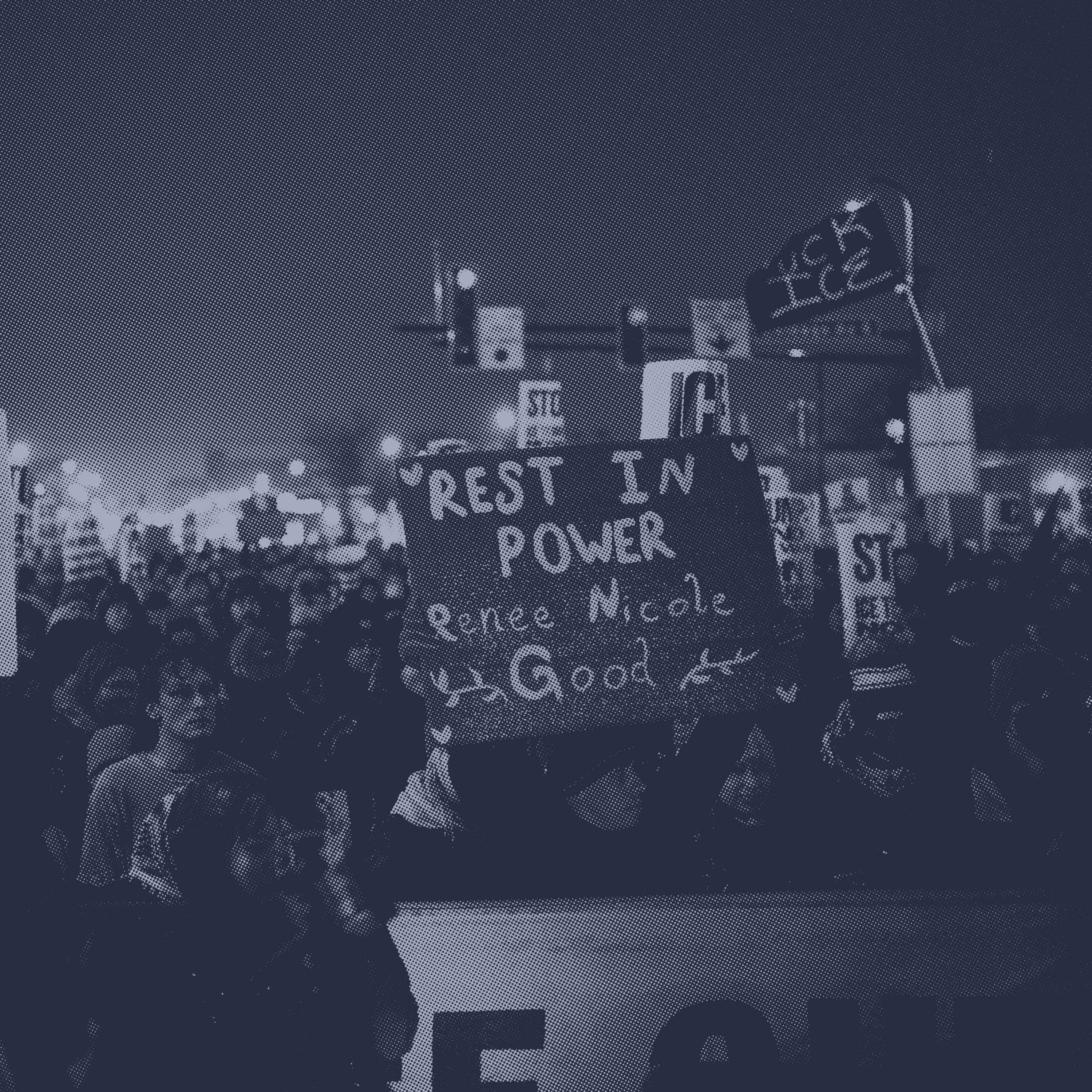
The NPR Politics Podcast
Week in politics: Minneapolis ICE shooting and congressional Republicans defect
00:31:09
Loading summary
Transcript98 lines
- [00:00]
A
This message comes from NPR sponsor Shopify. No idea where to sell? Shopify puts you in control of every sales channel. It is the commerce platform revolutionizing millions of businesses worldwide. Whether you're a garage entrepreneur or IPO ready, Shopify is the only tool you need to start, run and grow your business without the struggle. Once you've reached your audience, Shopify has the Internet's best converting checkout to help you turn them from browsers to buyers. Go to Shopify.com NPR to take your business to the next level today.
- [00:33]
B
Hey there. It's the NPR Politics podcast for Friday, January 9, 2026. I'm Tamara Keith. I cover the White House.
- [00:41]
C
I'm Claudia Grisales. I cover Congress.
- [00:44]
A
And I'm Domenico Montanaro, senior political editor and correspondent.
- [00:47]
B
And we are recording this at 12:50pm and we wanted to check in on what's happening in Congress where 17 House representative Republicans joined Democrats this week on a vote to extend health care subsidies that had expired at the end of 2025. Claudia, remind us about these subsidies and, and what happened here.
- [01:07]
C
Right. These were part of a pandemic era law to make the Affordable Care act program more affordable. And as costs have skyrocketed for healthcare, the subsidies have become that much more critical for millions of Americans who because these expired in December, they're facing premiums doubled or more. And so there is this core group of Republicans, as you mentioned, the 17 mostly moderate Republicans who joined Democrats, not only did they force this vote on the floor because they had been asking for this vote, but House Speaker Mike Johnson had been rejecting that plan, but they used a discharge petition and maneuver to get around him and force that vote. But then we saw those 17 House Republicans defect. It's a really big statement against President Trump that they want to see something get done here, you know.
- [01:58]
B
Yeah. And just a reminder, these subsidies were what Democrats held up as the reason they were shutting down the government last October. And that was the longest government shutdown in US History. It really raised the profile of these subsidies that are meant to make Affordable Care act plans affordable. And we had reporting on our air today with people talking about either having to drop insurance or they're looking for jobs. They'd been self employed, but they can't afford to be anymore. So this is people are actually feeling this now.
- [02:33]
C
Yeah, it's really coming through. And members are hearing about it, especially Republicans who are in districts that were won by presidential candidate Kamala Harris. And they are facing tough races. We look at the races from last year, you know, that caused some concerns for Republicans. So they're willing to buck the president on this. This is how critical this is. They're hearing those complaints and they're worried about their seats come November.
- [02:59]
B
Domenico, a couple of members defecting on votes here, and there is one thing, more than a dozen is something else. What do you make of these Republicans bucking House Speaker Mike Johnson and, by extension, President Trump?
- [03:12]
A
I think it reflects the political reality of which party has the momentum, number one, not just on health care, but also on the cost of living and therefore, in the 2026 midterm elections. And that's quite obviously Democrats, because Republicans have stood in the way of these subsidies passing. Trump is against them. Trump told the Republican Conference in a speech earlier this week that they need to, quote, figure it out when it comes to health care, that they need to own health care. There's no reason why Democrats should own health care. And he said that he thinks a really good slogan would be give the money to the people, not the insurance companies, based on an article he read in the Wall Street Journal about how the money goes to the subsidies, go to insurance companies. The fact is, this is not a campaign. It's different when you're campaigning on a slogan like that. And when you're president, you have to legislate on it. And people's premiums are going to go up, are going up this year, and, you know, even to just extend the subsidies a year to buy, you know, room is something that a lot of moderates have been talking about, really wanting to give themselves some political breathing room, too.
- [04:22]
B
Yeah, I mean, it actually is a good slogan, but putting that into practice and making it into legislation, that would be hard. The healthcare system is exceedingly complicated in this country. Claudia, I do wanna put this into a bigger context, which is the narrow nature of the House majority. And it got even narrower this week. If you could tell us about what happened exactly.
- [04:51]
C
We saw Georgia Republican Marjorie Taylor Greene, as we know she had this very public falling out with the president, resign her seat effective Monday. And then while these House Republicans are away at a retreat with President Trump, they get this tragic news that this California Republican, Longtime member Doug LaMalfa, who served in the House for more than a decade, had died. And so, even as they're mourning this member, they're also facing an even thinner margin here. Jim Baird of Indiana was in a serious car crash, and he's going to be out for some time. You know, his staff put out a photo of him all bruised up, and they said he's in recovery and he's going to come back soon. But House Speaker Mike Johnson acknowledged this after he saw that ACA vote this week on the floor succeed after all these Republicans defected. It just illustrates just how close this slim majority is. One bad flu away from losing majority votes on any day.
- [05:52]
A
I think that would matter if there was a clear agenda from Republicans, but there really isn't one right now. I mean, we were talking about health care. We're talking about affordable. You know, there are a lot of moderate Republicans right now who are sort of scratching their heads about what the strategy is because they are trying to save their jobs and save the majority heading into November.
- [06:12]
B
And I just have to say it has been remarkable to watch Democrats, who for most of this year were thought of as completely out in the wilderness, using their minority to almost to create a majority in more than one case. Discharge petitions are such a rare thing.
- [06:31]
C
Exactly.
- [06:31]
A
Exactly.
- [06:31]
B
And now they've effectively used them.
- [06:34]
C
Right. This is how the Epstein, the Jeffrey Epstein records were forced to be released. At least the Department of Justice is in the process of that for that law to pass that started with the discharge petition. It's really remarkable.
- [06:47]
A
And seeing how the middle has moved here. Right. You would think that the majority party, the White House leadership in Congress would make some adjustments.
- [06:57]
D
But.
- [06:58]
A
But we know that is not what Donald Trump does when backed into a ball.
- [07:02]
C
Exactly.
- [07:03]
B
And also though, that most of their districts are very safe. The majority of members are in safe districts.
- [07:09]
C
Yeah. When you look down this list of these 17 House Republicans who join Democrats to vote for these subsidies, their members who face really difficult races, like Brian Fitzpatrick of Pennsylvania, David Valadale, he's the last member in Congress in the House who voted to impeach President Trump. All the other Republicans on list have either retired or lost their races. So this is a California Republican who has faced a lot of difficult reelection fights, and he knows he's in for another one this year. We saw several New York lawmakers as well in that group. And these are the ones like Mike Lawler of New York, who have been outspoken about their concerns about the direction of the Trump administration and how that's going to mix with voters come November.
- [07:57]
B
Can we just return to healthcare quickly? This passed the House. What comes next? I believe the Senate has to weigh in. And my understanding is there's no way this bill would pass the Senate at this stage.
- [08:11]
C
No, but Fitzpatrick, other members, members in the Senate are talking. There are bipartisan talks as we speak. They were going through, through the end of the week. Trying to see if they could push this through the Senate. So a lot of folks are saying this is dead on arrival in the Senate. But when at the shutdown, for example, how the Senate found its way out of the shutdown, it was rank and file that came together on a deal. And it's possible it could happen again. And it is again an election year. So there's a lot of political calculations happening here, though.
- [08:44]
B
Then there's also the President of the United States who hasn't really shown a lot of love for bipartisan compromise in the second term of his. While we're still in the Senate, Claudia, there were more Republicans putting a little distance between themselves and the president this week. Several voted with Democrats to advance a war powers resolution related to Venezuela. Tell us about that.
- [09:07]
C
Right. You could say that Trump defection city on Capitol Hill grew a little bit this week. Folks are stepping out more and they're seeing the reality of Trump staring down a lame duck presidency, that era of his term. And so they know they're facing some, some tough calls, some tough question. And what we saw there was with this war powers resolution to stop any additional military action in Venezuela, we saw five Senate Republicans join Democrats to vote to stop the president from taking any additional action without consulting Congress first. And we had some in there who had never done this before, at least under this term, voting with Democrats. And so that includes Todd Young, for example, of Indiana. He has voted no on three, really war powers resolutions last year. This was the first one he stepped out.
- [10:02]
B
Yeah. He put out a truth social post that said, quote, republicans should be ashamed of the senators that just voted with Democrats and attempting to take away our powers to fight and defend the United States of America. Susan Collins, Lisa Murkowski, Rand Paul, Josh Hawley, and Todd Young should never be elected to office again. Well, Susan Collins is up for reelection and could have a tough Senate race.
- [10:31]
A
Yeah. And the closer that we get to Trump being out of office, you're going to start to see, I think this year, a lot of Republican senators who could be vulnerable. A lot of Republican moderate members of the House like we were talking about, start to buck him a little bit because they've got to think about their own futures.
- [10:49]
C
Right. Collins is not going to win herself any favors if she's going to keep voting with the president in Maine. She's facing pretty difficult race herself once again. She survived many of them, and the way she does that is by listening to her constituents. And they do not want her aligning herself with Trump all the time. So Collins has a lot to face and this is a familiar story. We've heard this happen to blue states, blue cities across the country. And so she has got a really difficult battle ahead trying to win re election while also dealing with Trump's fury when she steps out of line.
- [11:27]
B
All right. Well, let's take a quick break and then, Claudia, we will have you back for Can't Let It Go. So I guess you get to have coffee now.
- [11:35]
C
That's right.
- [11:36]
B
And then when we return, we will take a look at what's happening in.
- [11:40]
A
Minnesota this week on up first, the Trump administration and Venezuela. Can the US Run a foreign government? As the president says, they simply may not adopt the policies that Trump would like to see. It's a complex, fast moving story. As always. We're working overnight and every night so you can start each morning knowing what matters. Listen up first on the NPR app or wherever you get podcasts. NPR's podcast Trump's terms is your source for same day updates on big news about the Trump administration. Short, focused episodes, one topic at a time, about five minutes or so. We carry out reporting from across all of NPR's coverage. So you are always getting the biggest, most urgent stories. Listen to Trump's Terms on the NPR app or wherever you get your podcasts.
- [12:30]
B
And we're back. And a reminder, please hit the Follow button in your podcast app of choice to see our episodes as soon as they come out. That way you never miss the latest news and analysis from the NPR Politics podcast. And now I want to bring in an old friend of the pod. Minnesota Public Radio's Clay Masters is with us from St. Paul. Hey, Clay.
- [12:51]
D
Hi, Tam. Good to be here.
- [12:53]
B
Good to have you with us because there's been a lot that has been happening in your state this week and we wanna spend some time talking about the death of Renee Goode in Minneapolis as well as the aftermath. On Wednesday, an Immigration and Customs Enforcement officer shot and killed Goode in Minneapolis. She was behind the wheel of her SUV at the time. She was 37 years old, a US citizen and mother of three. This is how Homeland Security Secretary Kristi Noem described what happen.
- [13:23]
C
It was an act of domestic terrorism. What happened was our ICE officers were out in enforcement action.
- [13:30]
A
They got stuck in the snow because.
- [13:31]
B
Of the adverse weather that is in Minneapolis.
- [13:33]
C
They were attempting to push out their.
- [13:35]
A
Vehicle and a woman attacked them and.
- [13:37]
B
Those surrounding them and attempted to run.
- [13:38]
C
Them over and ram them with her vehicle.
- [13:42]
A
An officer of ours acted quickly and.
- [13:44]
C
Defensively, shot to protect himself and the people around Him.
- [13:49]
B
And my understanding is, is that she.
- [13:51]
A
Was hit and is deceased.
- [13:53]
B
But there was video footage that appeared to contradict that narrative of the shooting. And Clay, local officials reacted there quickly and angrily. Talk to us about that.
- [14:04]
D
Yeah. Witness statements and video that were given to our journalists who were on the scene here at NPR News also contradict that in those videos, the authenticity was verified. So just putting that on a side there. But yes, the. The reaction we're getting from local elected officials has been very sharp. The day that it happened, you had the mayor of Minneapolis, Jacob Fry, calling DHS's response BS calling for ICE to get the F out of Minneapolis, but actually using the term, and I think it's important context to put in here, too, that this all comes as there's been heightened presence from Immigration and Custom Enforcement in the Twin Cities. This started last month with what they're calling Operation Metro Surge. Large increase in ICE agents. I've been talking with various business owners in Latino and Somali neighborhoods, communities who have seen their business go down. And not just customers, but also employees not coming to work for fear of being questioned, just because of the way that ICE agents have been operating in the Twin Cities. So tension has been escalating now for the last month. And you're really seeing this play out with the mayor, as I just mentioned, but also Governor Tim Walz, the Democratic nominee for vice president president, just in 2024.
- [15:23]
B
And in the hours after that shooting, there were protests, there were press conferences from local officials. And it's just continued throughout this week. This sort of escalated anger and distrust.
- [15:37]
D
Yeah, and you're seeing the distrust increase. And there are protests. Our reporters have been attending these protests. They're still very peaceful at the moment. We have heard a call from Governor Walz and Mayor Fry to make sure that they are demonstrating in a peaceful manner. Just, you know, it's not hard for people to think back just five years ago with the civil unrest that followed the murder of George Floyd. So that is very much on people's mind. We've seen Minneapolis Public Schools cancel classes. So tension very much has been ratcheted.
- [16:10]
B
Up and the state and federal authorities are arguing about who should conduct the investigation.
- [16:17]
D
That's right, Tam. So state law enforcement is being pushed out. The investigation is just being done by the FBI.
- [16:23]
B
Domenico. In a highly charged political environment where there is an ongoing investigation into the use of force, political leaders in the past have proceeded with caution, not wanting to inflame tensions or get ahead of the investigation. That's really not what's happening. Here.
- [16:42]
A
No. And this has gone at the speed of social media. You know, it's basically like comment section come to life where you leaders not acting necessarily to calm things down, but to sort of channel the already previously held beliefs and frustrations that either side might have. I mean, we saw this as Clay's talking about with the mayor of Minneapolis, Jacob Fry, using the F bomb, you know, and I think that that speaks to a lot of the frustration that a lot of people who run cities and states, especially blue cities and states, have had with the lack of cooperation that they feel like has gone on with the federal government. You know, Fry, I talked a little bit about his rhetoric, quote, unquote, today, and he drew a notable comparison.
- [17:27]
D
You know, this notion of inflammatory comments.
- [17:31]
A
I mean, come on, guys, you know, I dropped an F bomb. I dropped an F bomb.
- [17:39]
D
They killed somebody. Which one of those is more inflammatory? I'm going with the killing somebody.
- [17:45]
A
You can see there. You know, when we look back to what Kristi Noem said, the Department of Homeland Security Secretary, I think a lot of people raised eyebrows when she immediately said that this woman was a domestic terrorist and tried to run over the ICE agent, regardless of what was going on before all of that.
- [18:02]
B
Well, and then President Trump put out on social media that the ICE officer had been run over, which was contradicted by the video. He actually, in an interview with the New York Times, brought out the video and then sort of walked back a little bit what he said had happened. The vice president, J.D. vance, came into the White House press briefing room yesterday and tore into the press for the narrative. He said that the press was sort of an anti ice, anti administration narrative that he said wasn't right and again called it domestic terrorism. So, yeah, things are not calm.
- [18:37]
A
This is not how leaders of a country generally speak about this kind of thing when there's this kind of a tragedy. I mean, this was an American citizen who was shot and killed. You know, there are major questions about training and cooperation with states, you know, and these highly aggressive tactics that ICE has been using. And instead of saying something like we might have heard previously, we'll let the investigation play out. I have full faith in, you know, the training that ICE undergoes. There was none of that immediately. It was a political messaging operation.
- [19:11]
B
And that can diminish trust. Because if it's all politics, then where is the truth? Clay, I do want to dig into this idea of cooperation a little bit more. Do you have a sense of how Minnesota officials are interacting with the ICE enforcement operation? How is this working. Is there cooperation or deconfliction or anything to, to make these very unsettled situations and neighborhoods calmer?
- [19:43]
D
Minneapolis has a separation ordinance. And the mayor and the police chief of Minneapolis, Brian o', Hara, have regularly talked with the press about how they are not enforcing immigration laws. And sometimes that can be confusing when there are officers on the scene. And so there has not been much cooperation between Immigration Customs and Enforcement and the City of Minneapolis's Police Department. And so you've been seeing, as I was mentioning at the outset of this conversation, you've been seeing that tension rise and become such an issue here in the Twin Cities. And then also it's, you know, reverberating to the state level with Governor Tim Walz, especially since you think of, I mean, the last time I was on the show was when I was at the DNC in Chicago when he was accepting the vice presidential nomination for the Democratic Party. He is somebody that was running against Donald Trump in 2024. He continues to be a punching bag for the president.
- [20:43]
B
Yeah. And particularly this week. And I want to get to the politics of this week because as you said, Tim Walls skyrocketed to national attention when he became Vice President Harris's running mate. They obviously lost. Then this week, Walz, who had been planning to run for reelection as governor, instead announced he was retiring. Comes amidst accusations of fraud involving social service programs in the state of Minnesota that the White House and right wing influencers are all in on.
- [21:18]
D
Yeah. And especially there was a viral video that went out over Christmas of a MAGA connected influencer that he was in Minneapolis knocking on doors of daycare centers that were primarily of Somali origin or the people that run them are Somalis. That went viral. J.D. vance, the Vice president reposted on X and the Elon Musk shared it out there. So all of this was going on leading up to this week. Governor Tim Walls had announced that he was going to run for an unprecedented third term back in the fall. There was a lot of speculation whether or not he was even going to announce that he did. But then on Monday, he went before reporters and said, said he was not going to run after all. On Tuesday, he was talking to the press about his paid family medical leave program and afterwards actually answered questions from the press. And he just lit into the Trump administration talking about how he was under assault because of a petty, vile administration. He told Republicans in the state that he's going to ride them like they've never been ridden before. I mean, like really ratcheting up the rhetoric. And then just the next day on Wednesday, what we've been talking about, the ICE agent shoots and kills Renee Good. And he is calmly before the press, you know, pleading with Minnesotans to peacefully protest. And then yesterday on Thursday, he was returning for another press conference where it was announced that the FBI would not be working with state authorities on looking into this investigation. And he was, you know, quoting Orwell from 1984 and talking about Minnesotans needing to hold the line on democracy and to hold the line on decency and accountability. So, I mean, this has been a lot that the governor has been having to go before the cameras and talking about this week.
- [23:14]
B
Domenico, do you have any sense of why Walz has been such a lightning rod?
- [23:19]
A
You know, the reason why Walls obviously has been a target of the administration, you know, like we talked about just now, obvious grand on that ticket that lost to Trump. Anybody who runs against Trump better win, otherwise he's gonna make you a perpetual target, no doubt about it. And he's a governor in a blue state, you know, and I think that that runs counter what the policies and priorities are in a lot of these blue states run counter to what the Trump administration's priorities are, especially when it comes to immigration.
- [23:51]
B
Clay, before we let you go, any sense of who might run for governor in place of Walls?
- [23:56]
D
We've been hearing a lot on the Democratic side that U.S. senator Amy Klobuchar has been possibly going to be throwing her hat in the ring. We're waiting to see if that's going to happen. You know, Minnesota, yes, a blue state, but when you think about the state legislature, it is about as close as it can get. In the Minnesota House of Representatives, it's a tie. And in the Senate, there's a one seat majority for the Democrats. The highest ranking Republican in the Minnesota legislature, Lisa Damon, she is running for governor. On the Republican side, we're also seeing Mike Lindell, my pillow CEO and Trump ally, he's running. And there's a long list of Republicans who are already filing paperwork and have filed paperwork to run for governor here. But the Democratic side, yeah, it's gonna make it very interesting to see if Senator Klobuchar actually decides to, you know, switch spots.
- [24:47]
B
So I think the good news here is that, Clay, this means we will definitely have to have you back on the podcast.
- [24:52]
D
Okay, sounds good.
- [24:53]
B
Clay Masters of Minnesota Public Radio, thanks as always for joining us.
- [24:57]
D
Good to be here. Thank you.
- [24:58]
B
And time for one more break and then we'll talk about what we can't let go of. For the week. And we're back. And Claudia Grisales is back with us as well. Hello, Claudia.
- [25:09]
C
Hey there.
- [25:10]
B
It is time for Can't Let It Go, the part of the pod where we talk about the things from the week that we cannot stop thinking about politics or otherwise. And because mine is related to politics, I will go first. Earlier this week on the pod, we had an entire episode about the January 6th insurrection in 2021 and efforts since then to erase history. As part of that podcast, I mentioned that there was a plaque created to honor members of law enforcement who fought to defend the Capitol that day and that it still hadn't been hung up. It was sort of a symbol of this effort to kind of make January 6th go away. Well, I have an update. Senators Thom Tillis of North Carolina, a Republican, and Jeff Merkley, a Democrat from Oregon, brought up a resolution this week in the Senate to have that plaque hung up on the Senate side. Here's Senator Merkley.
- [26:12]
A
In 2022, we passed a law saying we would put up this plaque to recognize the valiant efforts of the police officers. But the plaque has not gone up yet. So I'm here to team up with my colleague from North Carolina in order to have a strategy to make sure that we do get this plaque up until the House and Senate can reach an agreement.
- [26:38]
B
So that strategy involves hanging it on the Senate side, and they have buy in from leadership and a plan to do it. And they put this up for unanimous consent, and there were no objections. And then Senator Tillis delivered a floor speech talking about why this matters.
- [26:55]
A
A lot of people said that was a dark day for democracy. I would leave you with this. It was a great day for democracy because of the law enforcement officers, the people that kept us safe. Because you know what we did when confronted with thousands of thugs storming this building, we took a brief recess, we got ourselves together, the Capitol was secured, and before we left this compound, we came back and completed our constitutional duty to certify the election.
- [27:27]
B
I guess what I can't let go of here is just how difficult it has been to get this plaque hung up. And how, you know, it, it, like, takes a profile in courage for the Senate to, you know, go against the House and go against the president. I guess this is why they struggle.
- [27:44]
C
With their rep across the country.
- [27:45]
A
But it's five years after James, January 6, 2021, you know, and a lot of this is because Trump decided that he didn't want this hanging there. He wanted Johnson, the Speaker, to go along with his view of things. And, you know, it's really quite remarkable for something everyone saw on TV, that this is where we're at with January 6th.
- [28:07]
B
Maybe someday it will get to the permanent location it was supposed to be all along. Claudia, what can't you like about.
- [28:13]
C
Well, I'm going to continue the politics Congress theme. As I mentioned earlier in the pod, I can't let go of Marjorie Taylor Greene. She resigned her seat as of Monday, but not her voice. Today she posted a really lengthy response to an Axio story that reported the administration suspected her of leaking Trump's plans to an activist group known as Code Pink. Last fall, he was confronted. They came within feet of him at a restaurant right there by the White House. It alarmed his team. And so apparently Axios reported that they asked Secret Service to look into mtg, and she responded with a lot of details. And this is the thing, is that MTG is just spilling tea, if you will, left and right now, after this dramatic falling out with the president, Marjorie Taylor Greene, in this very lengthy post, said she only recommended the restaurant. She didn't make the reservation. I guess. I guess that's where the suspicion started that. That she somehow maneuvered for Code Pink to get there. But she said it was a horrific lie and goes on and on in terms of these details. And also she noted back in September when this happened, they hadn't had their falling out yet. But as we've seen, MTG has made the rounds. And I think people just love to hear from everything she's willing to share at this stage. You know, it's like a really bad breakup, and she's talking about the ex constantly, and people want to know she's.
- [29:48]
B
Gonna get a sub stack. Everybody gets a sub stack.
- [29:51]
C
Yes. So I'm just saying. Fascinating. And I can't get enough.
- [29:56]
A
Just another Icarus in the time of Trump.
- [29:58]
C
Exactly. There's a long list of them. Right.
- [30:01]
B
So many people get too close to the sun. Domenico, what can't you let go of?
- [30:05]
A
Well, I'm gonna go completely other direction here and talk about my relationship with AI. Oh, oh, no, not that kind of relationship. I will say that I was looking for a new fitness and nutrition routine as we start the new year here. It's always somebody, you know, people's resolutions to get in better shape and all of that. And, you know, I've tried other things in the past with varying success. And a lot of times, you know, I even one year paid a little bit for what was supposed to be like a personal coach, you know, who you would email and then the. But you would wait like a day for the person to get back to you. And then, you know, they may have or may not have answered all of your questions. Right. So I was just like, let me see what this AI chatbot will tell me. Because I think the thing that, you know, makes, that makes sometimes the nutrition plans in particular difficult is, you know, is being able to just give me. I want someone to give me like a scripted, you know, do this today, now, Monday, Tuesday, Wednesday, breakfast, lunch, dinner. Here's what to make. Here's what to do. And, you know, those things cost money usually. And I did that with AI and it was like a revelation.
- [31:20]
B
Is it good?
- [31:22]
A
Great. I mean, gave me scripted by day. I would tell it, oh, I don't have that or know where to get that. And like, well, you can substitute this. And then it was like, here's what to do for your workout routine. And then it would, like, adjust because I was like, well, on Thursday I'm playing basketball, so I don't know if that'll affect my back or whatever. And he's like, oh, great. Point, Point. Brace yourself more like on the bench and like, you know, do this stretch and do that stretch. I was, I was shocked. I was really blown away by, by just how scripted and, and how much it would adjust, too.
- [31:55]
B
All right, we are going to leave it there for today. Our executive producer is Mathani Muturi. Our producers are Casey Morell and Bria Suggs. Our editor is Rachel Bay. Special thanks to Krishnadev Kalimer and Anna Yakoninov. I'm Tamara Keith. I cover the White House.
- [32:10]
C
I'm Claudia Grizales. I cover Congress.
- [32:12]
A
And I'm Domenico Montanaro, senior political editor and correspondent.
- [32:16]
B
And thank you for listening to the NPR Politics podcast.