Loading summary
Transcript57 lines
- [00:01]
NPR Announcer
250 years ago, the nation's founders considered a free press a critical protection for we the people. Today, the NPR network proudly upholds your First Amendment rights with reporting accountable only to you. It's something we protect together. Power, a truly independent press. Support the NPR Network@plus.NPR.org it doesn't get
- [00:25]
Tamara Keith
much more dramatic than this.
- [00:27]
Steve Mistler
Great.
- [00:27]
Tamara Keith
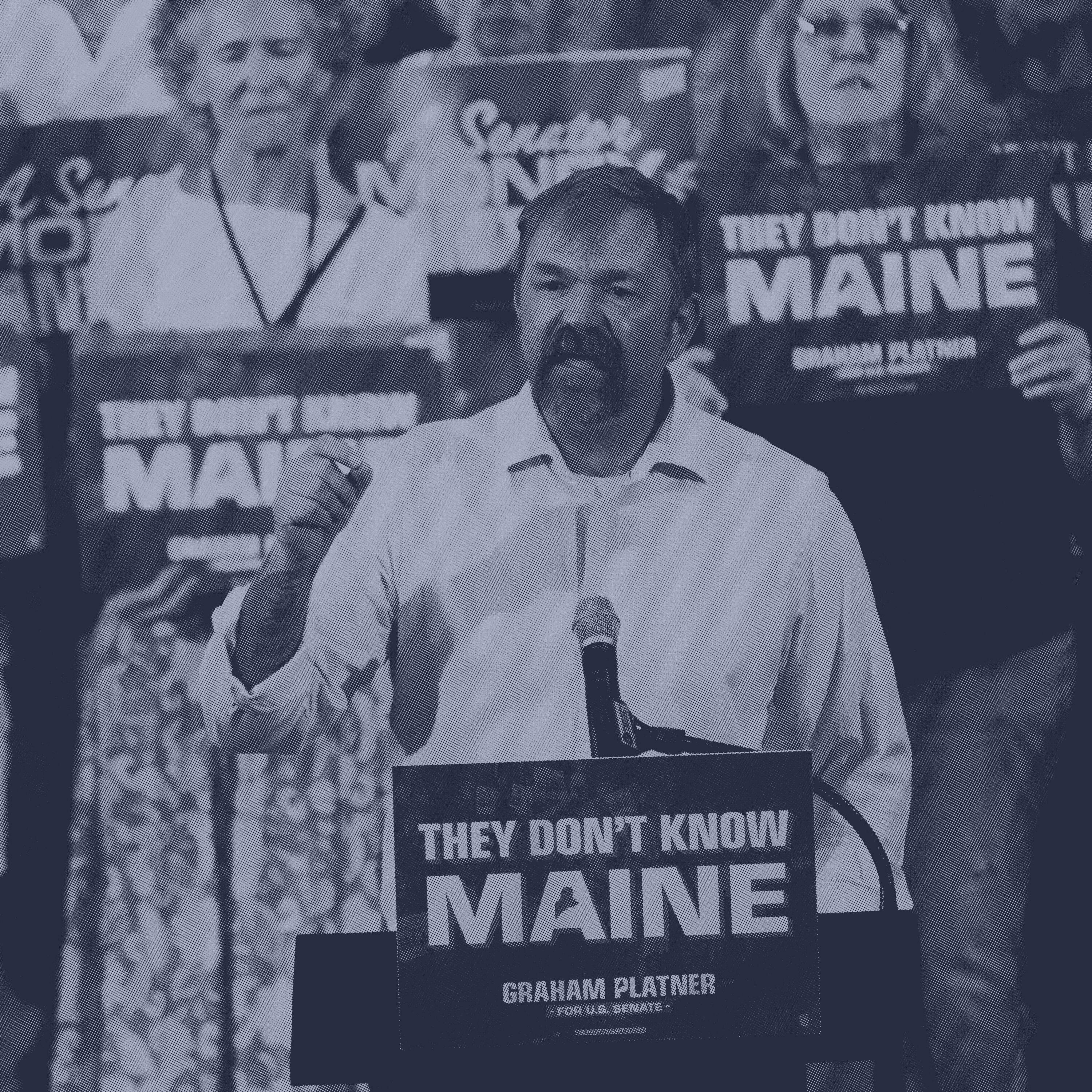
Graham Platner is out. The man who just one month ago Maine Democrats chose as their nominee in the state's high stakes U.S. senate race was forced to leave that race after a woman he once dated accused him of rape. He denies it, but the political fallout was immediate and intense. And it's probably not over. So let's dig in. It's the NPR Politics Podcast. I'm Tamara Keith. I cover politics.
- [00:54]
Elena Moore
And I'm Elena Moore. I also cover politics.
- [00:57]
Tamara Keith
And Maine Public's Steve Mistler also joins us today. Hi, Steve.
- [01:01]
Steve Mistler
Hello.
- [01:01]
Terry Gross
Hello. Hello.
- [01:03]
Tamara Keith
Hello indeed. So why don't you just start by walking us through what has happened in the past week that has gotten us to where we are right now.
- [01:12]
Steve Mistler
Yeah. Where to begin? I mean, the last week has been just incredible just because you've seen this rocket like rise by Graham Platner come crashing down in the last two and a half days. And all of that stems from a Politico story that broke on Monday afternoon where there was a woman that Platner used to date who essentially accused him of rape and sexual assault. And that's the publication of that story basically led to just absolute cratering of support. People who had endorsed Graham Platner immediately rescinded their endorsements. In some cases, they had actually sought his endorsement. I'm talking about state led state Democrats, specifically gubernatorial candidates. They had sought his endorsement because he was, you know, he was the shiny thing and he had, you know, this movement behind him. And even those folks failed on him as well. And so perhaps most significantly, he lost his biggest backer on Tuesday, which was Vermont Senator Bernie Sanders, the independent who had endorsed him right out of the gate last August when he declared his candidacy. And so that was really the signal that this was the beginning of the end for Graham Platner.
- [02:31]
Cheyenne Hunt
Yeah.
- [02:32]
Elena Moore
And it was, it was, it was so dramatic. Because this story breaks Monday, we see this real wave of endorsements rescinded from everyone from the, you know, leaders of the Democratic Party to, like Steve said, you know, biggest progressive names in politics. But we didn't hear from Platner after Monday. On Monday, he came out and made a statement, said he was going to take time to assess the path forward. And he denied the allegation. And then we didn't hear from the campaign until Wednesday evening when Platner put out this more than 11 minute long video where he was really visibly emotional and angry and, and eventually around seven minutes in, announced he was suspending his campaign.
- [03:17]
Graham Platner
This is incredibly difficult because I know that some will think it's an admission of guilt, and it most certainly is not. We're not doing it because of the allegations. We're doing it because of the structures that are being taken away from us by those in power.
- [03:30]
Tamara Keith
And Elena, explain what he means by that.
- [03:32]
Elena Moore
Well, that's been his message, like this whole campaign, which is, you know, a rejection of Democratic norms, of establishment politics. He wanted to be a change candidate. And that was really laced throughout his entire policy platform. Whether it was about, you know, affordability or wealth inequality. It always got back to the blame would fall on this system has been broken and it's affecting you.
- [03:58]
Tamara Keith
The Democratic establishment pulled the rug out from under him. And that means he didn't. He wasn't gonna have access to the voter file. He wasn't going to have the money that he would need to run a campaign. The donor network was drying up. It was over. It was, it was very over whether he wanted to be done or not. Right, Steve? Though, to be clear, there have been a lot of red flags before this latest accusation. There were the old Reddit posts where he was dismissive of victims of sexual assault, among other things, the Nazi tattoo, which he said was not actually a Nazi tattoo, or he didn't know it was, but then he had it covered up. Sexting with women outside of his marriage. I mean, it was just like one thing after another after another after another.
- [04:44]
Steve Mistler
Absolutely right. I mean, I think what's interesting is that, you know, with the Nazi tattoo and even some of the Reddit posts, those initially surfaced in October of last year, and there was a lot of speculation that that was going to be the end of this, this campaign, this nascent campaign, and it just didn't turn out to be true. And I think part of the reason why is that he was able to sort of craft this redemption story. He is a combat veteran, served tours in Iraq and Afghanistan. You know, he's. He's also disabled as a result of that service. And so he immediately went out and resumed this very prolific town hall circuit, which really became the staple of his campaign. And he would go out and talk about his experience as a combat veteran, how he suffered from PTSD and had all this had gone to therapy and was very open about that. And I think in talking about it that way, he helped create a redemption story that a lot of voters in Maine were sympathetic to. And it also helped sort of inoculate him from some of the other subsequent scandals or allegations that came out. I think the turning point, though, was the sexting story with women outside of his marriage, which came right before the June primary, which was on June 9th. And I think that story landed a little bit different. And that's because it came when he was supposedly redeemed.
- [06:13]
Planet Money Host
Right.
- [06:13]
Steve Mistler
It was just a couple of years ago. And so I think that changed a lot of people. And I noticed at that moment there was a lot of Platner defenders, people maybe who were reluctant to back him, but they were sort of swooped in by his message. But at that point, you know, Maine has a lot of early voting, and a lot of early voting had already occurred. And so I think that that was one of the reasons why he won so resoundingly on June 9. It was because so many people had voted, and he ended up getting, you know, more votes than any Democratic senatorial candidate in state history by a significant margin. But, you know, just a couple of weeks later, you know, as we said, it's all come crashing down.
- [06:54]
Tamara Keith
And I think we should pause here and just explain why we are so focused on Maine. It is one of very few potential pickup opportunities for Democrats who are hoping to gain control of the Senate. And Democrats have had their eyes on Susan Collins, the Republican senator from Maine, for a very long time.
- [07:17]
Elena Moore
Yeah, I mean, she's a 30 year incumbent. She's survived multiple presidential administrations. Multiple, you know, Republican led, Democratic led Congresses. And I think in a. In a year where the theme of this midterms for at least a lot of Democrats is change and out with, like, longtime party practices, I think people see Collins as part of that. And so, yeah, we can't really overstate how important Democrats flipping Maine is. They need to net a total of four seats in order to flip the Senate. That's no easy task even with Maine, to be clear. But this was a seat that they saw as more gettable than some of the other ones on that list. And so I think that this shakeup in the candidate is a big warning sign as Democrats try to look at their path back to the majority.
- [08:15]
Tamara Keith
So I guess the question I have here is, if this race was so incredibly important to Democrats, how did they end up with a nominee who was clearly flawed?
- [08:27]
Elena Moore
Yeah, well, I mean, part of it is, I Think he just broke a lot of protocols. And I think people liked that he was honest about the fact that he was flawed. You know, he said throughout most of, as Steve said, a lot of those earlier scandals, he'd say, yeah, I've made mistakes, like. And I think that was a striking thing. And of course, as we've talked about, there became a limit there. But that broader idea here that he was trying to be transparent and he was trying to not follow a political script and just offered a very different type of candidate at a time when we know parts of the Democratic Party have been calling out for something like that. These are the same groups that are key to the Democratic, Democratic winning coalition, who have been energized by figures like Platner, by people who are talking about this, you know, unapologetic progressivism and economic populism and calling out the fact that things have not been working in the party. And so I think one of the big reasons that Platner was successful is because he embodies a lot of that feeling right now for a lot of people.
- [09:28]
Tamara Keith
Steve, he dominated the Democratic primary. I mean, I guess I sort of have the same question for you. How is it that there was this deeply flawed candidate and Democrats didn't field anyone who could compete with him?
- [09:42]
Steve Mistler
I think there's also a timing issue here, and it centers around when Platner got into the race and when Governor Janet Mills got into the race. Now, Governor Janet Mills was a top recruit for Minority Leader Chuck Schumer, and he had been courting her to run for this seat, saw her as the ideal candidate to take on Collins because Mills had won two statewide elections, was a relatively popular governor. Also, she had had this, like, high profile confrontation at the White House with Trump, which is really important because Democratic voters want people who are going to stand up to Trump. But the problem is, is that the governor did not get into the race until closer to two months after Graham Platner did. And by the time she'd had, he had already built up this head of momentum that was very difficult for her to stop. And also, I think she had some fundamental disadvantages, too. One being her age. She's 78. That was a key concern, especially after, you know, in 2024, there was a lot of criticism of Joe Biden seeking a second term and the fact that she had been chosen by Schumer in some ways, that's also a key piece here. So she was seen as sort of this establishment pick, which, of course, Platner was railing against from Day one, he was railing against the establishment, its recruitment of candidates and even the policies it pursued. So she was running a more old school campaign, whereas Platner was just doing all these town halls, he was active on social media, he was doing all kinds of events that were, you know, unorthodox for candidates. You know, he was crowd surfing at a Dropkick Murphy's concert in Portland, everything else. And so I think Mills just couldn't gather any support, which is ultimately which forced her out of the race. She basically quit the race in late April because she just couldn't get donors to pay her staff. And also, I think she was just having a hard time landing a knockout blow against Platner, even though she was campaigning using ads that attacked him for old Reddit posts and some of the comments that he had made there. It just didn't work.
- [11:56]
Elena Moore
Yeah, he was a compelling candidate. He had a compelling message. And I think that a lot of progressives, especially who were excited by him, but are also repulsed by the allegations of this week, have been grappling with how the, you know, leftist movement, progressive movement, can build a movement without being so wedded to one leader. And that's something I talked about with Cheyenne Hunt. She leads the group Reckoning Action, which worked with Platners accuser that spoke with Politico to get her story out. And she argued to me that no high stakes election, even flipping Maine, is worth asking voters to, you know, vote for a candidate that has a fraught history with women, even if that candidate has a message that people support the
- [12:42]
Cheyenne Hunt
desire to stand by a man because he is being made. The movement is deeply flawed and it seems to be something that we only understand in retrospect. This is the price that we pay over and over again. When we do that, we need to be able to separate the leaders from the movement.
- [13:02]
Elena Moore
So I think the big takeaway here is that there are flaws kind of across the Democratic spectrum in how they think about putting forward a winning candidate and a winning message. And Maine is just an example of how messy that can be in finding the right one.
- [13:16]
Tamara Keith
All right, we are going to take a quick break and then we are going to talk about what Maine Democrats do.
- [13:21]
Shopify Sponsor Announcer
Now this message comes from NPR sponsor Shopify. No idea where to sell. Shopify puts you in control of every sales channel. It is the commerce platform revolutionizing millions of businesses worldwide. Whether you are a garage entrepreneur or IPO ready, Shopify is the only tool you need to start, run and grow your business without the struggle. Once you've reached your audience. Shopify has the Internet's best converting checkout to help you turn them from browsers to buyers. Go to Shopify to take your business to the next level today.
- [13:51]
Terry Gross
Hi, it's Terry Gross, host of FRESH AIR. Hey, take a break from the 24 hour news cycle with us and listen to long form interviews with your favorite authors, actors, filmmakers, comedians and musicians. The people making the art that nourishes us and speaks to our times. So listen to the FRESH AIR podcast from NPR and whyy.
- [14:13]
Planet Money Host
On this season of Planet Money Summer School, we follow the money and not just the dollars. We're following the yuan, the Naira, the crona, and more. Every Wednesday this summer, we're taking you on a world tour to meet the people trying new solutions to old economic problems. Planet Money Summer school. Grab some friends, pack your bags and don't forget the sunscreen. Listen on the NPR app or wherever you get your podcasts.
- [14:37]
Tamara Keith
And we're back. And now that Graham Platner says that he is suspending his campaign, the main Democratic Party has to figure out how to pick a replacement for him on the ballot pretty quickly. Steve, tell us about the timeline and the process.
- [14:54]
Steve Mistler
Well, it's a tight timeline. It's, it's very, very tight. It's so they basically, one of the reasons why this is all happening now and why there's a lot of pressure on Platner to get out is that he needed to get out of the race by July 13th at 5pm in order for Democrats to replace him on the ballot. And so that's why you saw the timing of the announcement. That's why it was so significant. But even once he submits that withdrawal paperwork, Democrats Only have until July 27th to select a new nominee. So they have basically a two week window to find a process because it's entirely in the hands of the Maine Democratic Party. That's the way Maine law is structured. It just basically leaves this in the hands of, of the political parties. And so we're kind of in uncharted territory here, especially with a, a race of this profile. And so what they're talking about doing now is holding a, basically a, a convention with 500, 600 people making this decision. And that's very striking when you think about the fact that more than 200,000 voters showed up on primary day and now you have five to six hundred people making the decision about how to replace that very candidate. So that's very much top of mind for people. And so is the comparisons to the Joe Biden Kamala Harris switcheroo from 2024. I've heard a lot of voters talk about that and how this feels like that moment, but it's desperate. It's desperation time. And so they, they seemed, you know, the party's really got to pull this together. And I think the most important thing is that they do it transparently, because that's what a lot of people are worried about. They're worried about party bosses picking this new nominee in secret. A convention is not the best way to do that. Perhaps, you know, it's not a caucus or another primary, but they just don't have the time to do those other two things.
- [16:46]
Tamara Keith
Yeah, Elena, the lesson I took away from 2024, well, one of many was that people don't like being told who they have to vote for. Voters like to feel like they have some license.
- [16:59]
Elena Moore
Yeah.
- [17:00]
Tamara Keith
And so I'm. Yeah, I really feel like we are having a lot of 2024 flashbacks at
- [17:07]
Elena Moore
this moment, especially given Plotner ran so much as a candidate rejecting things like party picking candidates, that it definitely is bad, you know, optics in that regard. I think the Maine Democratic Party has made some public statements saying they're seeking to be as transparent as possible. And I know that there's, you know, several main Democrats who are eyeing runs. So I think we have to wait and see how the actual slate of candid shakes out. But it's definitely ironic that two years later, we are once again dealing with a July dropout, what's next conversation. And also just so many conventions. Why have so many conventions? I'm not ready for more conventions.
- [17:54]
Tamara Keith
Well, and yeah, Steve, I know that certainly progressive groups are agitating for this to be as transparent as possible, for it not just to be sort of like party cronies in that room, but for it to be people that truly do represent the voice of the voter. But I don't know how you replicate that.
- [18:15]
Steve Mistler
Yeah, I just don't think you can. You know what I mean? It's like the numbers aren't there to replicate it and they don't have the time to bring the numbers out. Like, if they had maybe a month, they might be able to organize a statewide caucus or something like that, but, you know, they just don't have the time to do that. The other factor I would like to bring up though is that Maine has semi open primaries, and that means that unenrolled or independent voters were able to cast ballots. And a lot of them did. A lot of them came out to support Platner. Those folks are not going to be, you know, they're not going to have any say in this replacement process, which I think is going to irk a fair share of them. And also not, you know, not to mention the Democrats, you know, just rank and file regular voters who won't be a part of the process either.
- [19:00]
Elena Moore
I mean, it's a good point because we know that a growing share of the American electorate is not identifying with either main party. They're identifying as independent.
- [19:08]
Steve Mistler
And in Maine, that slice of the electorate is significant. It's about a third. Right. And, and it's in, in a lot of elections, especially general elections, it's, you know, winning over those folks is decisive. I mean, that's one of the reasons why Susan Collins has been able to win. She's been able to win, you know, centrist leaning Democrats, swing voters and just straight up independents. And so that's the challenge going forward is that, you know, can Democrats still bring out those independent voters who did turn out for Graham Platner?
- [19:39]
Tamara Keith
Steve, as quickly as possible, sort of introduce us to the names we might be hearing in the next week or two.
- [19:45]
Steve Mistler
Sure. I think the list that we have so far, these folks should be familiar to Maine voters because a lot of them ran in the Democratic primary for other offices. Troy Jackson is a former gubernatorial candidate and he was also the main Senate president. He's aligned with the progressive wing of the party. He actually campaigned with the Platner several times. He's been endorsed by Bernie Sanders. Troy Jackson's also a former logger. So he has those working class, blue collar credentials that Graham Platner was touting. He's the choice, I think, for a lot of progressive voters. Nariv Shah is the state's former CDC director. He almost won the gubernatorial race he was leading on election Day, but he ended up coming in second because of the ranked choice voting runoff. Shana Bellows, who's our Secretary of State, also a gubernatorial candidate, came in fourth in said runoff. She's also expressed interest. Paige Loud was running in the 2nd congressional district race and lost that race in a runoff. And then Jordan Wood, this is interesting. He's a former staffer for Katie Porter in California, lives in Maine. What he actually ran for the US Senate race before Governor Janet Mills got into the race and immediately withdrew after she got in and then joined the 2nd congressional district race, lost that, and now is expressing interest in running for the US Senate. The last name I'll mention here is Dan Cleban. He owns Maine Beer Company and is somewhat of an ally of Governor Janet Mills. And he's also expressed interest in running, too. That's the, that's a short list. It may grow.
- [21:23]
Tamara Keith
That sounded like a long list.
- [21:24]
Elena Moore
Yeah, that's not a short list.
- [21:28]
Cheyenne Hunt
Geez.
- [21:30]
Tamara Keith
So that's the field, the large field, I think, to close out. This has been quite a situation for Democrats in a race that is absolutely critical to them. Do either of you have any sense of how they recover from this?
- [21:52]
Elena Moore
I think that this controversy has exposed the question that was already pretty obvious to most Democrats, which is how do you bring more people into the party and how do you bring in the people you've lost? And those are two different fights. They're both kind of playing out right now. And I think both of them kind of played out in Maine. And so we're just gonna keep watching to see what kind of candidate is able, if they are able to keep Platner's movement, but maybe with some less baggage.
- [22:23]
Steve Mistler
You know, Platner's, he was able to, you know, draw a lot of energy, channel a lot of energy, anti establishment energy, anti Trump energy. I think the challenge for his replacement is to find a way to channel that themselves. I think that's a tall task because, you know, there's going to be a lot of people who are reticent now to support maybe a risky candidate, you know, like Graham Platner or, you know, a progressive fire brand, for example, or something like that, just because of the experience they just went through with Graham Platner. And so it's, it's very difficult, I think, for Democrats. I think they're all very anxious about it. But the national fundamentals do favor them. And so they there is an opportunity there. It's just if the, if this replacement candidate can harness that energy and take advantage of the fundamentals that do seem to be benefiting Democrats in Maine and
- [23:19]
Tamara Keith
nationally while also restoring trust. We are going to leave it there for now, but we will be following this very closely. Steve, thank you so much for joining us and bringing your reporting.
- [23:30]
Steve Mistler
My pleasure. And thanks for having me.
- [23:32]
Tamara Keith
I'm Tamara Keith. I cover politics.
- [23:34]
Elena Moore
And I'm Elena Moore. I also cover politics. Politics.
- [23:36]
Tamara Keith
And thank you for listening to the NPR Politics podcast.
- [23:47]
Shopify Sponsor Announcer
This message comes from NPR sponsor Shopify. No idea where to sell. Shopify puts you in control of every sales channel. It is the Commerce platform, revolutionizing millions of businesses worldwide. Whether you're a garage entrepreneur or IPO ready, Shopify is the only tool you need to start, run and grow your business without the struggle. Once you've reached your audience. Shopify has the Internet's best converting checkout to help you turn them from browsers to buyers. Go to Shopify.com NPR to take your business to the next level.
- [24:15]
Planet Money Host
Today, the Emmy nominations are here. We're unpacking record breaking nominations for Hacks, plus a big day for the Pit and newcomers like Widow's Bay. We'll talk about some snubs and make some early predictions of who will win. Listen to Pop Culture Happy Hour via the NPR app or wherever you get your podcasts.