Loading summary
Transcript54 lines
- [00:01]
Deepa Shivaram
This message comes from NPR sponsor Charles Schwab with its original podcast on Investing. Each week you'll get thoughtful, in depth analysis of both the stock and the bond markets.
- [00:11]
Anya Van Wagdentalk
Listen today and subscribe@schwab.com on investing or
- [00:15]
Deepa Shivaram
wherever you get your podcasts. Wisconsin Democrats have a dilemma. Their primary for the state's governor's race is in a couple of weeks. Do they pick a candidate from the establishment or do they pick a Democratic, social socialist or somebody else? It's the NPR Politics podcast. I'm Deepa Shivaram. I cover the White House.
- [00:36]
Tamara Keith
I'm Tamara Keith. I cover politics.
- [00:38]
Deepa Shivaram
And Anya Van Wagdentalk from Wisconsin Public Radio is with us from Madison. Hey, Anya.
- [00:43]
Anya Van Wagdentalk
Hello.
- [00:44]
Deepa Shivaram
All right. So, Anya, the Democratic primary has been, to put it lightly, like pretty dramatic in the past couple of weeks. Can you catch us up?
- [00:53]
Anya Van Wagdentalk
Yes. So we had a series of candidates as a crowded field for a while and then, you know, as things usually candidates started dropping out, including Milwaukee County Executive. David Crowley was one of the dropout candidates. It seemed like the sort of leading, you know, more mainstream candidate was our current lieutenant governor, Sarah Rodriguez. A couple Sundays ago, we all got a 9pm press release saying that she had fired her campaign manager amid kind of allegations of financial mismanagement. Later in the week, finance reports came out and showed that Rodriguez had many hundreds of thousands of dollars less in the bank than she had thought and was actually, in fact, a little bit in deb. So she ended her campaign and then David Crowley reentered the race. And so we have had a lot of deck shuffling over here just trying to keep track of who is actually sort of on the ballot and a contender.
- [01:42]
Deepa Shivaram
Yeah, a lot of moving things around. And I should point out, as people have already started voting. Right.
- [01:47]
Anya Van Wagdentalk
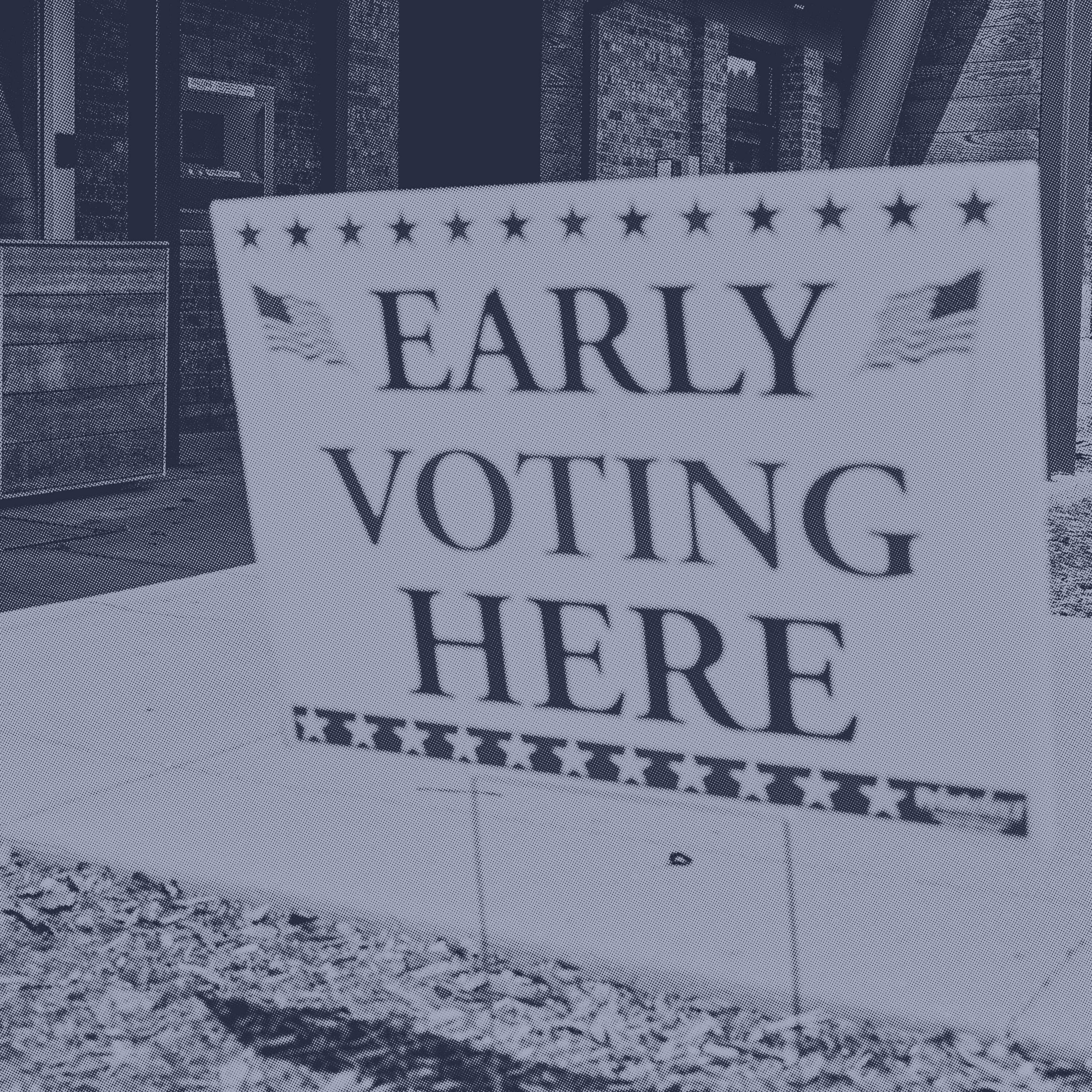
Yeah. Ballots have gone out a little bit earlier. And I think as of David reentering, tens of thousands had already been cast. So there was also a question of whether people would be able to throw out their ballots and revote if they had voted for someone who left or came back. And as of this week, the courts say, no, you cannot.
- [02:04]
Deepa Shivaram
Oh, my goodness. Okay. Well, let's talk about the leading candidate in this race right now. Who is that person?
- [02:09]
Anya Van Wagdentalk
So that would be Francesca Hong. She is a state representative here in Madison. While she was serving in the assembly, she served in the DSA Caucus, the Democratic Socialist Caucus. She is now running as a Democratic Socialist on the Democratic ticket. And before she got into politics, and actually while she was in politics, she was a chef and a bartender. She Owned a ramen restaurant here in Madison. She kept picking up bartending shifts while she was in the Capitol. Um, and so she has been pretty consistently polling at the front of the pack since the start of the year.
- [02:34]
Tamara Keith
Yeah, I mean, arguably all of this scrambling that's happening around her is because this progressive left candidate looks like she could walk away with the nomination. And the establishment, or I don't even know what the right word for it is, but there, there's a bit of a reaction like, um, is this really what we're doing in the Wisconsin governor's race?
- [02:57]
Deepa Shivaram
Yeah, it's kind of an interesting, you know, place where Democratic politics is playing out with some pretty big consequences here. I'm curious, just to get back to you, Anya, for a second, what are voters in Wisconsin saying about Hong? Why do they like her so much?
- [03:11]
Anya Van Wagdentalk
Yeah, I think, you know, that background that I discussed, where she comes from, a more non traditional background, I think people see that as authentic. They see her as, when she talks about sort of championing things for the working class, that she herself is a working person. Her campaign style is also very different, very energetic. It's very grassroots, but then also, you know, sort of fun. She has hosted rallies and livestreamed a slumber party. And her campaign has a regular game of policy Lotoria, which is like a Mexican lottery kind of. And so, you know, each of the campaigns, I should say, has their base of support. I talked to voters who are interested in all kinds of candidates, but the energy around the others is just not at all comparable to what you see if you go to any type of Hong event.
- [03:52]
Deepa Shivaram
That's interesting. And then when you talk to these voters, Anya, what are some of the big issues that are coming up for them that are. That are defining this race right now among Democrats?
- [04:00]
Anya Van Wagdentalk
Yeah, I mean, a lot of the kind of standard Democratic issues, so obviously affordability, expanding health care, things like that. Trump looms very large. All of the Democrats are trying to position themselves as the candidate that can sort of take on Washington and that can, you know, really kind of stand up to him to ice those kinds of issues. And then the other really big, kind of more perhaps local issue is data centers. And that's another area where I think Hong has really distinguished herself is that all of the other candidates have tried to more thread a needle on that issue. She has called for a categorical moratorium on data center development. And that's an area where voters, both Republican and Democrat and Independent, are pretty opposed to the data center boom that's been going on here in Wisconsin. And so that could be a really important issue in this race.
- [04:46]
Tamara Keith
Yeah.
- [04:46]
Deepa Shivaram
And an issue that's playing out across the country. I mean, data centers are pretty unpopular across the board. These moratoriums are happening in New York. There are lawmakers in Texas, which is obviously very politically a different state than New York, that are also trying to look into moratoriums. Tam it's really interesting, though, because that conversation and that apprehension towards data centers is definitely not how Trump and the White House are handling that issue.
- [05:08]
Tamara Keith
It is. It is not. The president just recently held an event all about trying to promote data centers, but also talking about creating ways to make sure that they can get electricity without hurting consumers. I think that there are a lot of issues related to data centers that actually cross partisan lines in super interesting ways. This is one of these issues where, you know, you can have someone who definitely is otherwise Republican raising concerns about the environment and noise pollution and, and is mad at these big outside corporations coming in and telling their community that you've got to do this because you have to do it. And there's a lot of frustration with the president process by which some of these data centers have been approved. So it is a fascinating issue where you, you are seeing a lot of candidates across the spectrum tap into that voter anger. But you've especially seen the progressive candidates, including Hong, really keying in on this data center thing. And, and Hong talked about it in the governor's debate earlier this week that aired on WISN tv. She talked about the type of regulation she would want around those centers going forward.
- [06:25]
Deepa Shivaram
I think it's important that we have enforceable regulation, that we bring union workers to the table, that this is very similar to what I believe could be seen as more collective bargaining to make sure that we're protecting union jobs and that, you know, the natural resources. We're letting some of the big tech companies know that they are not for sale. So interesting, because, you know, we talked about a second ago how the president is kind of out of step with voters on this issue, and data centers really encompass a lot of other sub issues under that. Right. You talk about labor and labor protections. You talk about apprehension towards technology, you talk about dissatisfaction with big tech companies. All those things are pretty bipartisan. Yep. So it's very fascinating to see this play across not only primary races, but other, you know, races between Democrats and Republicans starting to weigh in, too. But at the same time, you know, the president and the leader of the Republican Party is really not in step with everyone else. All right. We're going to take a quick break and more in a moment.
- [07:23]
NPR Sponsor/Advertisement Voice
This message comes from NPR sponsor Carvana. Carvana makes car buying easy 100% online prices down to the penny, delivered to your door. Why make car buying hard when it could be easy? Visit Carvana.com today. Terms may apply. This message comes from Cachava. It can be tough to stick to your wellness routine, especially when you're on the go. Kachava's new travel packs make it easier. Just one packet provides nutrition ready for wherever life takes you with protein, fiber, greens, probiotics, electrolytes and more. Take your daily ritual with you. Go to cachava.com and use code NPR. New customers get 15% off their first order. That's K A C H A V A.com, code NPR.
- [08:09]
Deepa Shivaram
This week on Consider this. Stay ahead of the latest news about AI. We unpack the wild story of two models that hacked into another company.
- [08:17]
Tamara Keith
We why?
- [08:18]
Deepa Shivaram
Some experts say it's a warning sign. And people with depression or anxiety are looking for help from chatbots, but that's not what they were designed for. We look at the risks this week on Consider this. Listen on the NPR app or wherever you get your podcasts.
- [08:33]
Anya Van Wagdentalk
Instead of scrolling mindlessly, engage mindfully with
- [08:36]
Tamara Keith
the NPR app with a mix of on demand news stories from this station and your favorite podcast. You can relax without shutting off your brain. Download the NPR app today.
- [08:50]
Deepa Shivaram
Welcome back. So, Tam, we talk a lot on this pod about the future of the Democratic Party. The tension between the different factions of the party and, you know, primaries are this vehicle essentially for appealing to base voters ahead of a general election. But there's a schism, right? Not all Democratic voters are these base voters. They're starting to vote differently. There was a CNN poll that came out this week that said that one third of Democrats identify as Democratic socialists. So there is this very obvious schism here. And I'm wondering, does it get resolved? Can it get resolved? What are your what are you seeing?
- [09:28]
Tamara Keith
My sense is that this schism will likely get resolved with elections. And what I mean by that is right now there is an open question, or actually a heated debate taking place in social media and elsewhere between more establishment Democrats and more progressive, or DSA or whatever you want to label it, Democrats. On one side, they say we need progressive fighters who are outside of this system who are going to shake things up. On the other side, the more establishment Democrats are saying, you guys are gonna lose in the general election and we're in swing states here. We're in states where it's purple, it is not blue. And you are taking a very huge risk by running a candidate who could turn off more moderate voters or independent voters.
- [10:21]
Deepa Shivaram
And.
- [10:22]
Tamara Keith
And it is a raging debate that I think really can only be settled with elections. It's not going to be settled with primaries. It can only be settled with some general elections. And the stakes are incredibly high. You're talking about the governor of Wisconsin. Wisconsin is a state where there have been so many battles between the legislature and the governor. When the governor was Democratic, the state Supreme Court was narrowly divided. For a long time, there are election issues. President Trump has disputed outcomes. Like, there's a lot going on there, and the governor of that state is really important. In Michigan, you have a U.S. senate race where there is the platonic ideal of the progressive candidate versus the establishment candidate playing out. And depending on how that goes in the primary, you then would have a very big test of progressive candidate versus kind of vanilla Republican, which I think is what you also have in Wisconsin.
- [11:17]
Deepa Shivaram
We did talk about that Michigan race on the POD earlier this week. I just wanna point out, Anya, I wanna ask, though, because, I mean, when you look at the. The general election that's coming, there are a lot of Democrats that are concerned that if Hong wins this primary, you know, she could potentially lose the general. Are they at all trying to put their thumb on the scale here?
- [11:36]
Anya Van Wagdentalk
I mean, I guess it depends on who you ask, whether you would describe this as putting a thumb on the scale. But, you know, it's not an accident that David Crowley reentered the race 10 days after dropping out. He came back because Rodriguez was out, but then also because he was able to get the endorsement of our current outgoing Democratic governor, Tony Evers, who up until this point had said that he was going to stay neutral, but his endorsement is kind of the thing that got Crowley back into the race. And so if that's not a signal that some level of traditional Democrats are trying to at least wield some amount of influence and make him a more serious contender, I don't know what would be. But, you know, Tam talked about the platonic ideal of an establishment versus progressive candidate. This is a much more, I think, muddied kind of match, because David Crowley is a black man from Milwaukee. There has never been a governor in Wisconsin that has not been a white man. And so he, up until this point, there was a question of electability around him and whether Wisconsin was ready for that kind of thing. And so, you know, a lot of his supporters are now saying that he's being held to this double standard. He can't both be two establishment and, you know, a historic first potentially.
- [12:47]
Tamara Keith
Well, and can you talk about Mandela Barnes, who is, I think, a fairly well known name in politics because he ran for the U.S. senate before. He's, he's, he's a known quantity. He's in this race and yet he doesn't seem to be getting that much support.
- [13:03]
Anya Van Wagdentalk
Yeah, you know, he entered the race a little bit later with this understanding that he was going to come in with a huge war chest because of that national name recognition. And that never quite materialized. And I think that's because a lot of these, again, national Democrats are concerned that because he did not win a U.S. senate race against Ron Johnson, who was at the time a pretty unpopular incumbent, that he just doesn't have what it takes to win again. I think Wisconsinites tend to play a little bit of 3D chess when it comes to casting their votes. Not just what candidate do I like, but who do I think can win in this super tight swing state. And so one of the other kind of criticisms I've also heard from, you know, again, sort of Democratic strategists and observers is that Crowley getting back in the race only serves to split votes away from Mandela Barnes. Rather than positioning himself as a true kind of alternative, it ends up being hung against a bunch of alternatives who are all splitting votes against each other.
- [13:56]
Deepa Shivaram
And what do we think the strategy is there? I guess, like for a party that's really trying to have it together and win the general in November, it kind of seems just like mess.
- [14:07]
Tamara Keith
It's definitely messy.
- [14:09]
Anya Van Wagdentalk
It has been a chaotic couple of weeks out here. I think that the strategy partly has to do with the fact that Republicans are not making any bones about the fact that they want Francesca Hong to win the primary. They think that she is beatable. And, you know, I've spoken again to some Republican strategists who say we're not going to count our chickens. She is popular in a way that, you know, we've certainly underestimated. But I think there really is this understanding that once, you know, moderates and independents get in, get involved, that she can't win. And so they are actually spending money, national Republican groups are spending money on these ads that kind of, they sound like attack ads against Fran Hong, unless you're a progressive, because they're saying like, she's so liberal, she will fight against, against ICE if you're a liberal voter. That sounds great. Right. And so there's A question of are they actually trying to boost her up to get her over the finish line so that they can kind of take her down. And so I think Democrats are also kind of flailing against that. Yeah, chess versus checkers, actually, out here, it's euchre.
- [15:04]
Deepa Shivaram
That's true. Euchre. Euchre. I love that game. Okay, well, Tam, just to circle back on this really quickly, speaking of Hong, you know, there are some concerns around her candidacy. She has a lot of popularity, as Anya was saying, a lot of excitement around her campaign, but it's not exactly like a straight shot to the finish here for her.
- [15:20]
Tamara Keith
She has in the past taken positions on defunding the police, abolishing ice, abolishing the Senate, that, you know, she. She's not campaigning on those positions now. Those were older positions at a different time. She's now campaigning for governor and has more nuance in the way she discusses these issues. Today in the debate, she said that she would not be pulling funding from the police as governor. She has also appeared on the far left streamer Hasan Piker's program. He has said that he will campaign with her, and the criticism of that is that she appeared to be aligning herself with someone who has made anti Semitic comments. Piker has also campaigned for some of the other progressive candidates around the country.
- [16:08]
Anya Van Wagdentalk
There were certainly some prominent Jewish Democrats who felt very strongly about her appearance on there. And she didn't just appear, but she also fundraised on that program. But, but of course, when I, when I talk to Hong about this, what she says is that this is part of that kind of unusual approach to campaigning that we discussed at the top, where she is trying to reach disaffected voters, voters that, you know, might not necessarily listen to Wisconsin Public Radio, but do get their information from these types of streams. She said appearing alongside somebody is not the same as endorsing them. But of course, you know, when we talk about the kind of nuance of messaging, there's nuance and then there's what is clippable for an attack ad. And Hasan Piker saying things about, you know, 9, 11 in the past is much more clippable than a more kind of nuanced exploration of what it means to, to appear with somebody and then
- [16:57]
Deepa Shivaram
just to like, wrap this all up here. We haven't actually talked about the Republican race going on. There's a far and away frontrunner in that race right now, right?
- [17:07]
Anya Van Wagdentalk
Yeah. So that is U.S. representative Tom Tiffany. He is endorsed by Donald Trump. But it's really interesting he is very much trying to run a boring campaign. So even though he is very aligned with the MAGA movement, he is putting out these ads that show him eating pancakes with his family and, you know, talking about the dairy farm that he was raised in, really trying to position himself as Wisconsin's dad. And so Democrats also kind of have their work cut out for them to try to tie him to these unpopular positions at a time that they are also trying to just win their primary themselves.
- [17:40]
Deepa Shivaram
All right. Well, voting ends on August 11th in this race. Anya, what are you watching for until then?
- [17:45]
Anya Van Wagdentalk
You know, I'm just going to keep talking to voters again, trying to get outside of these Democratic strongholds. I am based in Madison, of course, and that is kind of the most central place that any Democratic candidate is going to need to be getting votes from, but getting out onto the road and talking to voters about what they're looking for because one of the things we also forgot to talk about is that a third of Democratic voters are still undecided, even though early voting is underway. And so I'm really interested about how they're going to make those elections last minute decisions.
- [18:13]
Deepa Shivaram
All right. Thank you both for your very good analysis. And Anya, thank you for joining us today.
- [18:18]
Anya Van Wagdentalk
Thanks for having me.
- [18:19]
Deepa Shivaram
I'm Deepa Shivaram. I cover the White House.
- [18:20]
Tamara Keith
I'm Tamara Keith. I cover politics.
- [18:22]
Deepa Shivaram
And thank you for listening to the NPR Politics podcast.
- [18:32]
NPR Sponsor/Advertisement Voice
This message comes from Cachava. It can be tough to stick to your wellness routine, especially when you're on the go. Cachava's new travel packs make it easier. Just one packet provides nutrition ready for wherever life takes you with protein, fiber, greens, probiotics, electrolytes and more. Take your daily ritual with you. Go to cachava.com and use code NPR. New customers get 15% off their first order. That's K-C-H-A-V A.com code NPR.
- [19:04]
Anya Van Wagdentalk
This week on Here and Now Anytime Democratic voters in Michigan sound off ahead of the big primary election on Tuesday. The average American, I don't feel like our voice is being heard.
- [19:13]
NPR Sponsor/Advertisement Voice
Feel like a little man at the
- [19:14]
Anya Van Wagdentalk
bottom of the totem pole. Also, Haitian Americans in Ohio fear deportation after losing their temporary protected status. All that and more on Here and NOW Anytime. Listen on the NPR app or wherever you get your podcasts.