Podcast
The Occult Rejects
Hosted by The Occult Rejects · EN
Occultists, Rejects, and Mystics trying to educate others about magick and occultism so others can figure out who they are and the world around them.
34episodes
Episodes
Newest firstAll episodes
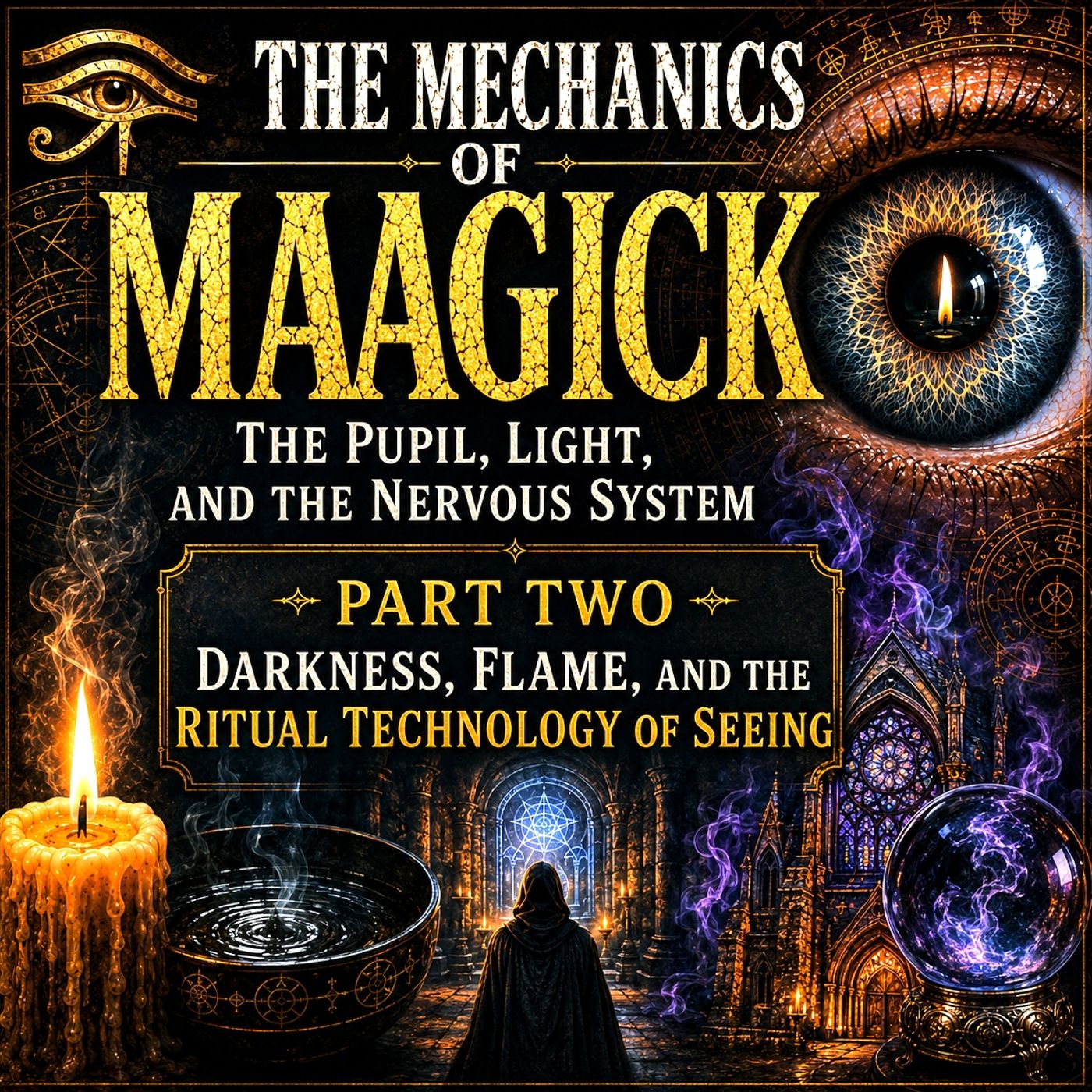
The Mechanics of Magick: The Pupil, Light, and the Nervous System Part Two- Darkness, Flame, and the Ritual Technology of Seeing
3d ago01:17:28Tap to summarizeIf you enjoy this episode, we’re sure you will enjoy more content like this on The Occult Rejects. In fact, we have curated playlists on occult topics like grimoires, esoteric concepts and phenomena, occult history, analyzing true crime and cults with an occult lens, Para politics, and occultism in music. Whether you enjoy consuming your content visually or via audio, we’ve got you covered - and it will always be provided free of charge. So, if you enjoy what we do and want to support our work of providing accessible, free content on various platforms, please consider making a donation to the links provided below. Thank you and enjoy the episode!Links For The Occult Rejectshttps://linktr.ee/theoccultrejectsOccult Research Institutehttps://www.occultresearchinstitute.org/Substackhttps://substack.com/@theoccultrejects?r=7auau0&utm_campaign=profile&utm_medium=profile-pageCash Apphttps://cash.app/$theoccultrejectsVenmo@TheOccultRejectsBuy Me A Coffeebuymeacoffee.com/TheOccultRejectsPatreonhttps://www.patreon.com/TheOccultRejectsDarkness, Sensory Deprivation, Caves, and Visionary ConditionsUstinova, Yulia. Caves and the Ancient Greek Mind: Descending Underground in the Search for Ultimate Truth. Oxford: Oxford University Press, 2009.Use for: caves, descent, darkness, ancient Greek revelation, incubation, inspired prophecy, and altered states in underground sacred settings.Lewis-Williams, David. The Mind in the Cave: Consciousness and the Origins of Art. London: Thames & Hudson, 2002.Use for: caves, prehistoric imagery, altered consciousness, visual phenomena, and symbolic environments. Use carefully because some interpretations of prehistoric religion remain debated.Eliade, Mircea. The Sacred and the Profane: The Nature of Religion. New York: Harcourt, 1959.Use for: sacred space, threshold, the difference between sacred and profane space, and the way religious environments reorganize orientation and meaning.Zuckerman, Marvin, and Nathan Cohen. “Sources of Reports of Visual and Auditory Sensations in Perceptual-Isolation Experiments.” Psychological Bulletin 61, no. 1, 1964: 1–20.Use for: sensory deprivation, perceptual isolation, visual/auditory sensations, and internally generated experiences under reduced stimulation.Wackermann, Jiří, Peter Pütz, and Carsten Allefeld. “Ganzfeld-Induced Hallucinatory Experience, Its Phenomenology and Cerebral Electrophysiology.” Cortex 44, no. 10, 2008: 1364–1378.Use for: Ganzfeld states, reduced/uniform sensory fields, pseudo-hallucinatory imagery, altered perception, and EEG findings.Metzger, Wolfgang. “Optische Untersuchungen am Ganzfeld.” Psychologische Forschung 13, 1930: 6–29.Use for: early Ganzfeld research and the effect of homogeneous visual fields on perception.Shenyan, O., et al. “Visual Hallucinations Induced by Ganzflicker and Ganzfeld Differ in Frequency, Complexity, and Content.” Scientific Reports 14, 2024.Use for: modern comparison between Ganzfeld and flicker-induced visual phenomena. Useful if connecting this episode back to the earlier flicker-light show.Candlelight, Firelight, Sacred Atmosphere, and the Agency of LightBille, Mikkel, and Tim Flohr Sørensen. “An Anthropology of Luminosity: The Agency of Light.” Journal of Material Culture 12, no. 3, 2007: 263–284.Use for: light as a social, material, emotional, and cultural agent; how light shapes atmosphere, social meaning, and movement.Bille, Mikkel, and Tim Flohr Sørensen, eds. Elements of Architecture: Assembling Archaeology, Atmosphere and the Performance of Building Spaces. London: Routledge, 2016.Use for: architecture, atmosphere, materiality, embodied space, and how built environments shape experience.Pallasmaa, Juhani. The Eyes of the Skin: Architecture and the Senses. Chichester: Wiley, 1996; later editions.Use for: architecture as multisensory experience, not just visual design; helpful for sacred architecture, embodied space, and sensory atmosphere.Barrie, Thomas. “Sacred Space and the Mediating Roles of Architecture.” European Review 20, no. 4, 2012: 505–514.Use for: sacred architecture as a mediating threshold between ordinary and sacred worlds.Kieckhefer, Richard. Theology in Stone: Church Architecture from Byzantium to Berkeley. Oxford: Oxford University Press, 2004.Use for: Christian sacred architecture, spatial theology, light, ritual orientation, and the way buildings teach belief through space.Do, Michael T. H. “Melanopsin and the Intrinsically Photosensitive Retinal Ganglion Cells: Biophysics to Behavior.” Neuron 104, no. 2, 2019: 205–226.Use for: melanopsin, intrinsically photosensitive retinal ganglion cells, non-image-forming vision, and the biological effects of light beyond ordinary sight.Hattar, Samer, H. W. Liao, Motoharu Takao, David M. Berson, and King-Wai Yau. “Melanopsin-Containing Retinal Ganglion Cells: Architecture, Projections, and Intrinsic Photosensitivity.” Science 295, no. 5557, 2002: 1065–1070.Use for: retinal ganglion cells that detect light for non-image-forming functions, including circadian-related pathways.Blume, Christine, Corrado Garbazza, and Manuel Spitschan. “Effects of Light on Human Circadian Rhythms, Sleep and Mood.” Somnologie 23, 2019: 147–156.Use for: light, circadian rhythms, sleep, mood, and why sunlight, darkness, dawn, and dusk matter biologically.Cajochen, Christian. “Alerting Effects of Light.” Sleep Medicine Reviews 11, no. 6, 2007: 453–464.Use for: light’s alerting effects beyond image-forming vision.Stained Glass, Religious Light, and Visual TheologyBinski, Paul. Gothic Wonder: Art, Artifice, and the Decorated Style, 1290–1350. New Haven: Yale University Press, 2014.Use for: Gothic visual culture, sacred display, ornament, and the emotional force of medieval religious space.Camille, Michael. Gothic Art: Glorious Visions. New York: Harry N. Abrams, 1996.Use for: Gothic imagery, religious seeing, visual devotion, and sacred art as visionary environment.Kessler, Herbert L. Seeing Medieval Art. Peterborough, Ontario: Broadview Press, 2004.Use for: medieval Christian theories of seeing, devotional image use, sacred art, and vision as religious practice.Hamburger, Jeffrey F. The Visual and the Visionary: Art and Female Spirituality in Late Medieval Germany. New York: Zone Books, 1998.Use for: visionary art, devotional seeing, mystical imagery, and the relationship between images and religious experience.Freedberg, David. The Power of Images: Studies in the History and Theory of Response. Chicago: University of Chicago Press, 1989.Use for: why images provoke emotion, devotion, fear, desire, reverence, and acts of ritual engagement.Scrying, Black Mirrors, Crystal Gazing, and Reflective VisionCaputo, Giovanni B. “Strange-Face-in-the-Mirror Illusion.” Perception 39, no. 7, 2010: 1007–1008.Use for: mirror-gazing under low light, face distortion, visual instability, and apparitional perception.Caputo, Giovanni B. “Apparitional Experiences of New Faces and Dissociation of Self-Identity During Mirror Gazing.” Perceptual and Motor Skills 110, no. 3, 2010: 1125–1138.Use for: mirror-gazing, dissociation, altered self-recognition, and strange-face experiences.Caputo, Giovanni B. “Strange-Face Illusions During Inter-Subjective Gazing.” Consciousness and Cognition 22, no. 1, 2013: 324–329.Use for: prolonged eye-to-eye gazing, face alteration, dissociative effects, and interpersonal gaze phenomena.Caputo, Giovanni B. “Visual Perception During Mirror-Gazing at One’s Own Face in Patients with Depression.” The Scientific World Journal, 2014.Use for: mirror-gazing research and altered self-perception. Useful for grounding black mirror and psychomanteum discussion, but do not overgeneralize.Moody, Raymond A., with Paul Perry. Reunions: Visionary Encounters with Departed Loved Ones. New York: Villard, 1993.Use for: modern psychomanteum practice, mirror-gazing, grief, and visionary encounters. Use cautiously; this is experiential/parapsychological material, not mainstream neuroscience.Roll, William G. “Psychomanteum Research: A Pilot Study.” Journal of Near-Death Studies 22, no. 4, 2004: 251–270.Use for: psychomanteum research, bereavement visions, mirror-gazing, and altered perception. Use cautiously.Northcote, Thomas. “Scrying.” In The Encyclopedia of Occultism and Parapsychology, edited by J. Gordon Melton. Detroit: Gale, various editions.Use for: general historical overview of scrying traditions, crystal gazing, mirror gazing, and divinatory seeing.Agrippa, Heinrich Cornelius. Three Books of Occult Philosophy. Translated by James Freake; edited and annotated by Donald Tyson. St. Paul, MN: Llewellyn, 1993.Use for: Renaissance magical imagination, correspondences, planetary symbols, spirits, and visual/ritual operations.Barrett, Francis. The Magus. London, 1801.Use for: later ceremonial magic, mirrors, spirits, correspondences, and visual ritual imagination. Use historically, not as scientific evidence.Magical Gaze, Concentration, Visualization, and Ceremonial PracticeCrowley, Aleister. Liber E vel Exercitiorum. In The Equinox.Use for: concentration, posture, breath, mental discipline, and the training of attention as a magical foundation.Crowley, Aleister. Magick: Liber ABA, Book 4. York Beach, ME: Samuel Weiser, various editions.Use for: ceremonial magic, concentration, visualization, ritual method, symbols, and disciplined magical practice.Regardie, Israel. The Golden Dawn. St. Paul, MN: Llewellyn, vario...
Transcribe →William Henry on Sacred Symbols, Ancient Mysteries, and Secret Knowledge
4d ago01:27:04Tap to summarizeLinks For The Occult Rejectshttps://linktr.ee/theoccultrejectsOccult Research Institutehttps://www.occultresearchinstitute.org/Substackhttps://substack.com/@theoccultrejects?r=7auau0&utm_campaign=profile&utm_medium=profile-pageCash Apphttps://cash.app/$theoccultrejectsVenmo@TheOccultRejectsBuy Me A Coffeebuymeacoffee.com/TheOccultRejectsPatreonhttps://www.patreon.com/TheOccultRejectsAlso want to remind people about the website, if you're into reading we have tons of information by multiple contributors, and we got t-shirts up on the site if you're interested. Fun fact, the art is all based on the eyeball.
Transcribe →Talking Crystals with Ashleigh from Big Crystal Energy
5d ago01:27:26Tap to summarizeLinks For The Occult Rejectshttps://linktr.ee/theoccultrejectsOccult Research Institutehttps://www.occultresearchinstitute.org/Substackhttps://substack.com/@theoccultrejects?r=7auau0&utm_campaign=profile&utm_medium=profile-pageCash Apphttps://cash.app/$theoccultrejectsVenmo@TheOccultRejectsBuy Me A Coffeebuymeacoffee.com/TheOccultRejectsPatreonhttps://www.patreon.com/TheOccultRejectsAlso want to remind people about the website, if you're into reading we have tons of information by multiple contributors, and we got t-shirts up on the site if you're interested. Fun fact, the art is all based on the eyeball.
Transcribe →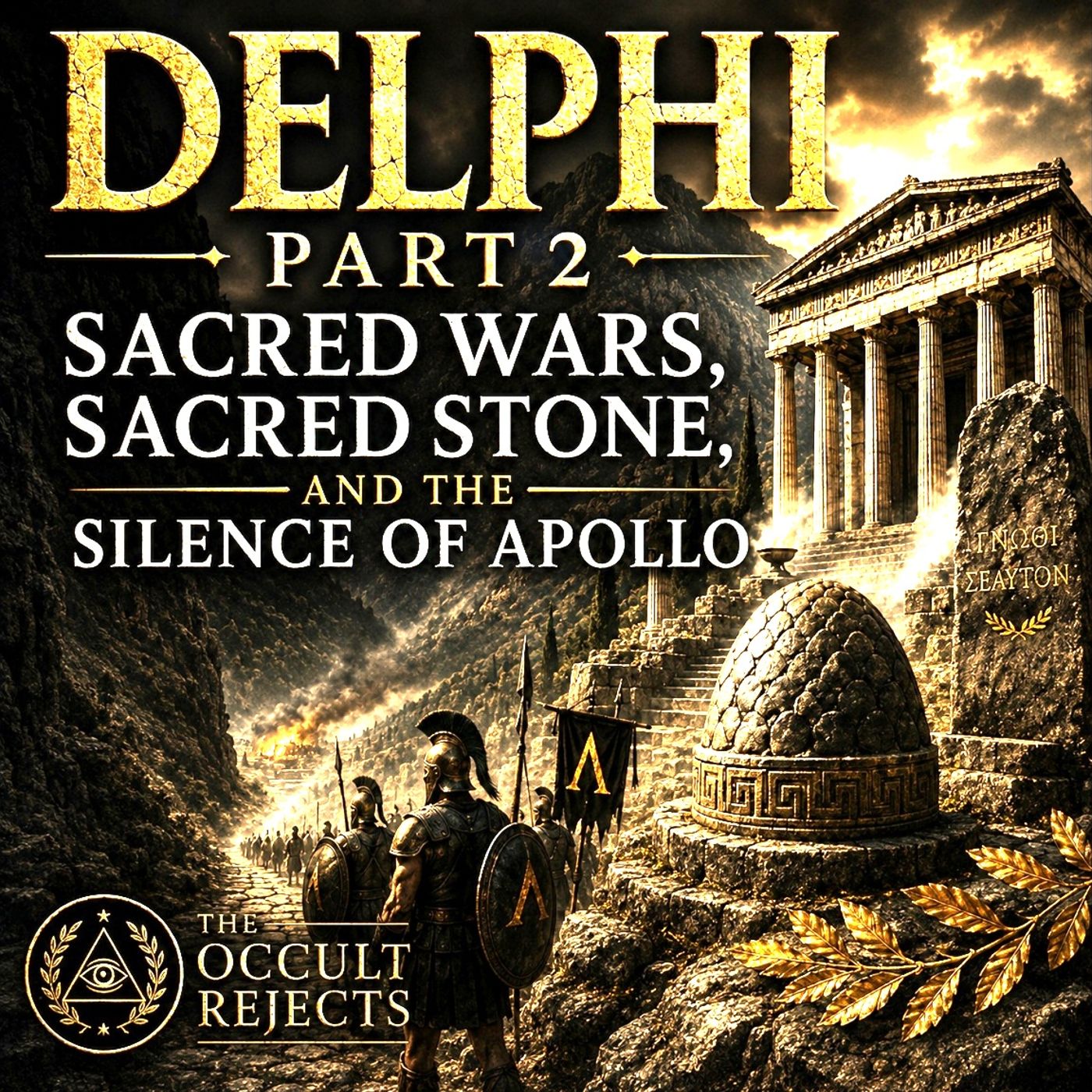
Delphi Part 2: Sacred Wars, Sacred Stones, & The Silence Of Apollo
6d ago01:11:23Tap to summarizeIf you enjoy this episode, we’re sure you will enjoy more content like this on The Occult Rejects. In fact, we have curated playlists on occult topics like grimoires, esoteric concepts and phenomena, occult history, analyzing true crime and cults with an occult lens, Para politics, and occultism in music. Whether you enjoy consuming your content visually or via audio, we’ve got you covered - and it will always be provided free of charge. So, if you enjoy what we do and want to support our work of providing accessible, free content on various platforms, please consider making a donation to the links provided below. Thank you and enjoy the episode!Links For The Occult Rejectshttps://linktr.ee/theoccultrejectsOccult Research Institutehttps://www.occultresearchinstitute.org/Substackhttps://substack.com/@theoccultrejects?r=7auau0&utm_campaign=profile&utm_medium=profile-pageCash Apphttps://cash.app/$theoccultrejectsVenmo@TheOccultRejectsBuy Me A Coffeebuymeacoffee.com/TheOccultRejectsPatreonhttps://www.patreon.com/TheOccultRejectsPrimary SourcesPrimary SourcesAeschylus. Eumenides.Cicero. On Divination.Herodotus. The Histories.Homeric Hymn to Apollo.Pausanias. Description of Greece. Book 10.Pindar. Pythian Odes.Plutarch. Life of Lycurgus.Plutarch. “On the E at Delphi.” In Moralia.Plutarch. “The Obsolescence of Oracles.” In Moralia.Plutarch. “The Oracles at Delphi No Longer Given in Verse.” In Moralia.Strabo. Geography.Official and Reference SourcesArchaeological Site of Delphi, Hellenic Ministry of Culture. “Excavations.”Archaeological Site of Delphi, Hellenic Ministry of Culture. “History of Delphi.”Archaeological Site of Delphi, Hellenic Ministry of Culture. “Mythological Versions of the Foundation of the Oracle.”Archaeological Site of Delphi, Hellenic Ministry of Culture. “The Sphinx of the Naxians.”Archaeological Site of Delphi, Hellenic Ministry of Culture. “The Temple of Apollo.”Archaeological Site of Delphi, Hellenic Ministry of Culture. “The Treasury of the Siphnians.”Encyclopaedia Britannica. “Delphi.”Encyclopaedia Britannica. “Delphic Oracle.”Encyclopaedia Britannica. “Hieromnemon.”Encyclopaedia Britannica. “Python.”Encyclopaedia Britannica. “Pythian Games.”UNESCO World Heritage Centre. “Archaeological Site of Delphi.”Modern ScholarshipChappell, Mike. “Delphi and the Homeric Hymn to Apollo.” The Classical Quarterly 56, no. 2 (2006).de Boer, Jelle Z., John R. Hale, and Henry A. Spiller. “The Delphic Oracle: A Multidisciplinary Defense of the Gaseous Vent Theory.” Clinical Toxicology 40, no. 2 (2002).Etiope, Giuseppe, et al. “The Geological Links of the Ancient Delphic Oracle.”Fontenrose, Joseph. The Delphic Oracle: Its Responses and Operations, with a Catalogue of Responses. Berkeley: University of California Press, 1978.Forrest, W. G. “The First Sacred War.” Bulletin de Correspondance Hellénique 80 (1956).Fragkaki, Maria. “The Great Rhetra.” Rosetta 17 (2015).McInerney, Jeremy. “Parnassus, Delphi, and the Thyiades.” Greek, Roman, and Byzantine Studies 38, no. 3 (1997).Piccardi, Luigi. “Active Faulting at Delphi, Greece: Seismotectonic Remarks and a Hypothesis for the Geological Environment of a Myth.” Geology 28, no. 7 (2000).Scott, Michael. Delphi: A History of the Center of the Ancient World. Princeton: Princeton University Press, 2014.Strolonga, Polyxeni. “The Foundation of the Oracle at Delphi in the Homeric Hymn to Apollo.” Greek, Roman, and Byzantine Studies 51 (2011).Music, Inscriptions, and ArchaeologyArchaeological Museum of Delphi. Museum collections and interpretive materials.The Delphic Hymns to Apollo.École française d’Athènes. Fouilles de Delphes.Also want to remind people about the website, if you're into reading we have tons of information by multiple contributors, and we got t-shirts up on the site if you're interested. Fun fact, the art is all based on the eyeball.
Transcribe →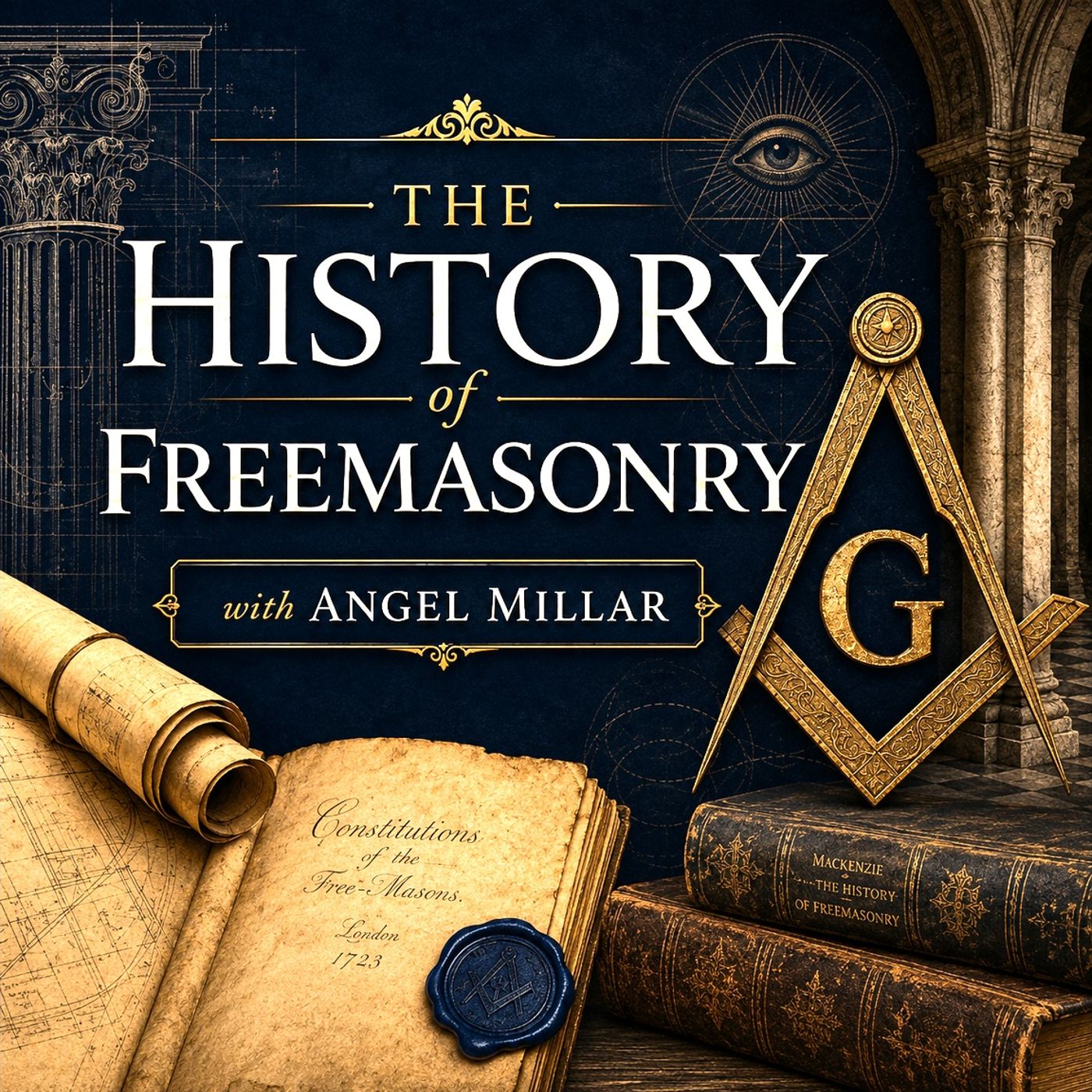
The History of Freemasonry with Angel Millar
1w ago01:44:19Tap to summarizeIf you enjoy this episode, we’re sure you will enjoy more content like this on The Occult Rejects. In fact, we have curated playlists on occult topics like grimoires, esoteric concepts and phenomena, occult history, analyzing true crime and cults with an occult lens, Para politics, and occultism in music. Whether you enjoy consuming your content visually or via audio, we’ve got you covered - and it will always be provided free of charge. So, if you enjoy what we do and want to support our work of providing accessible, free content on various platforms, please consider making a donation to the links provided below. Thank you and enjoy the episode!Links For The Occult Rejectshttps://linktr.ee/theoccultrejectsOccult Research Institutehttps://www.occultresearchinstitute.org/Substackhttps://substack.com/@theoccultrejects?r=7auau0&utm_campaign=profile&utm_medium=profile-pageCash Apphttps://cash.app/$theoccultrejectsVenmo@TheOccultRejectsBuy Me A Coffeebuymeacoffee.com/TheOccultRejectsPatreonhttps://www.patreon.com/TheOccultRejectsAlso want to remind people about the website, if you're into reading we have tons of information by multiple contributors, and we got t-shirts up on the site if you're interested. Fun fact, the art is all based on the eyeball.
Transcribe →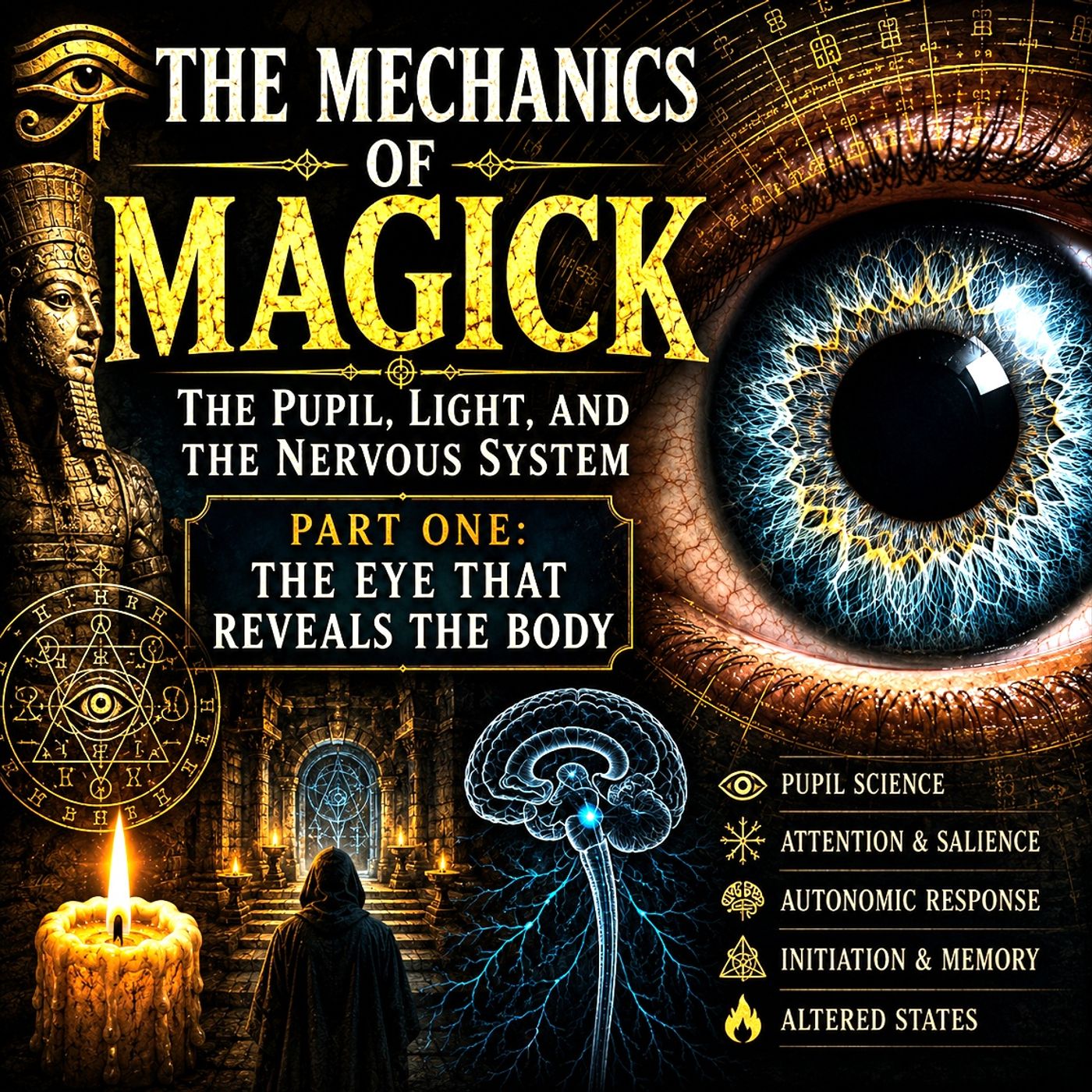
The Mechanics of Magick: The Pupil, Light, and the Nervous System- The Eye That Reveals the Body
1w ago00:59:50Tap to summarizeIf you enjoy this episode, we’re sure you will enjoy more content like this on The Occult Rejects. In fact, we have curated playlists on occult topics like grimoires, esoteric concepts and phenomena, occult history, analyzing true crime and cults with an occult lens, Para politics, and occultism in music. Whether you enjoy consuming your content visually or via audio, we’ve got you covered - and it will always be provided free of charge. So, if you enjoy what we do and want to support our work of providing accessible, free content on various platforms, please consider making a donation to the links provided below. Thank you and enjoy the episode!Links For The Occult Rejectshttps://linktr.ee/theoccultrejectsOccult Research Institutehttps://www.occultresearchinstitute.org/Substackhttps://substack.com/@theoccultrejects?r=7auau0&utm_campaign=profile&utm_medium=profile-pageCash Apphttps://cash.app/$theoccultrejectsVenmo@TheOccultRejectsBuy Me A Coffeebuymeacoffee.com/TheOccultRejectsPatreonhttps://www.patreon.com/TheOccultRejectsBibliographyCore Eye Anatomy, Retina, Optic Nerve, and Visual PathwaysBelliveau, A. P., & Somani, A. N. “Pupillary Light Reflex.” StatPearls. Treasure Island, FL: StatPearls Publishing, updated 2023.Cleveland Clinic. “Optic Nerve: What It Is, Function, Anatomy & Conditions.” Cleveland Clinic, updated 2024.Gupta, M., & Ireland, A. C. “Neuroanatomy, Visual Pathway.” StatPearls. Treasure Island, FL: StatPearls Publishing, updated 2022.Kolb, H. “Simple Anatomy of the Retina.” Webvision: The Organization of the Retina and Visual System. University of Utah / NCBI Bookshelf.Purves, D., Augustine, G. J., Fitzpatrick, D., et al., eds. Neuroscience. Sunderland, MA: Sinauer Associates.Szabadi, E. “Functional Organization of the Sympathetic Pathways Controlling the Pupil: Light-Inhibited and Light-Stimulated Pathways.” Frontiers in Neurology 9, 2018.University of Texas Health Science Center at Houston. “Ocular Motor System.” Neuroscience Online.Pupillometry, Cognitive Load, Attention, and Mental EffortBeatty, Jackson. “Task-Evoked Pupillary Responses, Processing Load, and the Structure of Processing Resources.” Psychological Bulletin 91, no. 2, 1982: 276–292.Beatty, Jackson, and Brennis Lucero-Wagoner. “The Pupillary System.” In Handbook of Psychophysiology, edited by John T. Cacioppo, Louis G. Tassinary, and Gary G. Berntson. Cambridge: Cambridge University Press, 2000.Kahneman, Daniel, and Jackson Beatty. “Pupil Diameter and Load on Memory.” Science 154, no. 3756, 1966: 1583–1585.Kahneman, Daniel. Attention and Effort. Englewood Cliffs, NJ: Prentice-Hall, 1973.Laeng, Bruno, Sylvain Sirois, and Gustaf Gredebäck. “Pupillometry: A Window to the Preconscious?” Perspectives on Psychological Science 7, no. 1, 2012: 18–27.Mathôt, Sebastiaan. “Pupillometry: Psychology, Physiology, and Function.” Journal of Cognition 1, no. 1, 2018.Piquado, Tepring, David Isaacowitz, and Arthur Wingfield. “Pupillometry as a Measure of Cognitive Effort in Younger and Older Adults.” Psychophysiology 47, no. 3, 2010: 560–569.Zekveld, Adriana A., Sophia E. Kramer, and Tammo Houtgast. “The Pupil Dilation Response to Auditory Stimuli: Current State of Knowledge.” Trends in Hearing 22, 2018.Emotion, Attraction, Arousal, and the PupilBradley, Margaret M., Laura Miccoli, Miguel A. Escrig, and Peter J. Lang. “The Pupil as a Measure of Emotional Arousal and Autonomic Activation.” Psychophysiology 45, no. 4, 2008: 602–607.de Winter, Joost C. F., et al. “Replicating Five Pupillometry Studies of Eckhard Hess.” International Journal of Psychophysiology 165, 2021: 145–161.Hess, Eckhard H. “Attitude and Pupil Size.” Scientific American 212, no. 4, 1965: 46–54.Hess, Eckhard H., and James M. Polt. “Pupil Size as Related to Interest Value of Visual Stimuli.” Science 132, no. 3423, 1960: 349–350.Lang, Peter J., Margaret M. Bradley, and Bruce N. Cuthbert. International Affective Picture System (IAPS): Affective Ratings of Pictures and Instruction Manual. Gainesville: University of Florida, 2008.Pan, J., et al. “The Effects of Emotional Arousal on Pupil Size Depend on Background Luminance and Stimulus Type.” Scientific Reports 14, 2024.Locus Coeruleus, Norepinephrine, Salience, and AttentionAston-Jones, Gary, and Jonathan D. Cohen. “An Integrative Theory of Locus Coeruleus–Norepinephrine Function: Adaptive Gain and Optimal Performance.” Annual Review of Neuroscience 28, 2005: 403–450.Joshi, Siddhartha, Yin Li, Ram M. Kalwani, and Joshua I. Gold. “Relationships Between Pupil Diameter and Neuronal Activity in the Locus Coeruleus, Colliculi, and Cingulate Cortex.” Neuron 89, no. 1, 2016: 221–234.Murphy, Peter R., Ian H. Robertson, James H. Balsters, and Redmond G. O’Connell. “Pupillometry and P3 Index the Locus Coeruleus–Noradrenergic Arousal Function in Humans.” Psychophysiology 48, no. 11, 2011: 1532–1543.Sara, Susan J. “The Locus Coeruleus and Noradrenergic Modulation of Cognition.” Nature Reviews Neuroscience 10, 2009: 211–223.Uddin, Lucina Q. “Salience Processing and Insular Cortical Function and Dysfunction.” Nature Reviews Neuroscience 16, 2015: 55–61.Memory, Emotion, Initiation, and Ritual EncodingCahill, Larry, and James L. McGaugh. “Mechanisms of Emotional Arousal and Lasting Declarative Memory.” Trends in Neurosciences 21, no. 7, 1998: 294–299.McGaugh, James L. “Memory—A Century of Consolidation.” Science 287, no. 5451, 2000: 248–251.McGaugh, James L. “The Amygdala Modulates the Consolidation of Memories of Emotionally Arousing Experiences.” Annual Review of Neuroscience 27, 2004: 1–28.Seligman, Rebecca, and Laurence J. Kirmayer. “Dissociative Experience and Cultural Neuroscience: Narrative, Metaphor and Mechanism.” Culture, Medicine, and Psychiatry 32, 2008: 31–64.Seligman, Rebecca, Ryan A. Brown, and Laurence J. Kirmayer. “Theory and Method at the Intersection of Anthropology and Cultural Neuroscience.” Social Cognitive and Affective Neuroscience 5, no. 2–3, 2010: 130–139.Whitehouse, Harvey. Arguments and Icons: Divergent Modes of Religiosity. Oxford: Oxford University Press, 2000.Whitehouse, Harvey. Modes of Religiosity: A Cognitive Theory of Religious Transmission. Walnut Creek, CA: AltaMira Press, 2004.Ritual, Synchrony, Social Bonding, and Embodied MeaningHobson, Nicholas M., Juliana Schroeder, Jane L. Risen, Dimitris Xygalatas, and Michael I. Norton. “The Psychology of Rituals: An Integrative Review and Process-Based Framework.” Personality and Social Psychology Review 22, no. 3, 2018: 260–284.Jackson, Joshua Conrad, Brock Bastian, and others. “Synchrony and Physiological Arousal Increase Cohesion and Cooperation in Large Naturalistic Groups.” Scientific Reports 8, 2018.McCauley, Robert N., and E. Thomas Lawson. Bringing Ritual to Mind: Psychological Foundations of Cultural Forms. Cambridge: Cambridge University Press, 2002.Rappaport, Roy A. Ritual and Religion in the Making of Humanity. Cambridge: Cambridge University Press, 1999.Turner, Victor. The Ritual Process: Structure and Anti-Structure. Chicago: Aldine, 1969.Xygalatas, Dimitris. Ritual: How Seemingly Senseless Acts Make Life Worth Living. New York: Little, Brown Spark, 2022.Xygalatas, Dimitris, et al. “Extreme Rituals Promote Prosociality.” Psychological Science 24, no. 8, 2013: 1602–1605.Meditation, Prayer, Trance, and AbsorptionFox, Kieran C. R., Matthew L. Dixon, Savannah Nijeboer, et al. “Functional Neuroanatomy of Meditation: A Review and Meta-Analysis of 78 Functional Neuroimaging Investigations.” Neuroscience & Biobehavioral Reviews 65, 2016: 208–228.Jerath, Ravinder, John W. Crawford, Vernon A. Barnes, and Kyler Harden. “Self-Regulation of Breathing as a Primary Treatment for Anxiety.” Applied Psychophysiology and Biofeedback 40, 2015: 107–115.Lutz, Antoine, John D. Dunne, and Richard J. Davidson. “Meditation and the Neuroscience of Consciousness.” In The Cambridge Handbook of Consciousness, edited by Philip David Zelazo, Morris Moscovitch, and Evan Thompson. Cambridge: Cambridge University Press, 2007.Tellegen, Auke, and Gilbert Atkinson. “Openness to Absorbing and Self-Altering Experiences (‘Absorption’), a Trait Related to Hypnotic Susceptibility.” Journal of Abnormal Psychology 83, no. 3, 1974: 268–277.Vago, David R., and David A. Silbersweig. “Self-Awareness, Self-Regulation, and Self-Transcendence: A Framework for Understanding the Neurobiological Mechanisms of Mindfulness.” Frontiers in Human Neuroscience 6, 2012.Darkness, Sensory Deprivation, Ganzfeld, and Visual InstabilityCaputo, Giovanni B. “Strange-Face-in-the-Mirror Illusion.” Perception 39, no. 7, 2010: 1007–1008.Caputo, Giovanni B. “Visual Perception During Mirror-Gazing at One’s Own Face in Patients with Depression.” The Scientific World Journal, 2014.Caputo, Giovanni B. “Strange-Face Illusions During Eye-to-Eye Gazing in Dyads.” Imagination, Cognition and Personality 38, no. 1, 2018: 51–77.Metzger, Wolfgang. “Optische Untersuchungen am Ganzfeld.” Psychologische Forschung 13, 1930: 6–29.Shenyan, O., et al. “Visual Hallucinations Induced by Ganzflicker and Ganzfeld Differ in Frequency, Complexity, and Content.” Scientific Reports 14, 2024.Wackermann, Jiří, Peter Pütz, and Carsten Allefeld. “Ganzfeld-Induced Hallucinatory Experience, Its Phenomenology and Cerebral Electrophysiology.” Cortex 44, no. 10, 2008: 1364–1378.Zuckerman, Marvin, and Nathan Cohen. “Sources of Reports of Visual and Auditory Sensations in Perceptual-Isolation Experiments.” Psychological Bulletin 61, no. 1,...
Transcribe →Modern Occultist Magazine with Chad Kushins
2w ago01:25:08Tap to summarizeThank you and enjoy the episode!Links For The Occult Rejectshttps://linktr.ee/theoccultrejectsOccult Research Institutehttps://www.occultresearchinstitute.org/Substackhttps://substack.com/@theoccultrejects?r=7auau0&utm_campaign=profile&utm_medium=profile-pageCash Apphttps://cash.app/$theoccultrejectsVenmo@TheOccultRejectsBuy Me A Coffeebuymeacoffee.com/TheOccultRejectsPatreonhttps://www.patreon.com/TheOccultRejectsAlso want to remind people about the website, if you're into reading we have tons of information by multiple contributors, and we got t-shirts up on the site if you're interested. Fun fact, the art is all based on the eyeball.
Transcribe →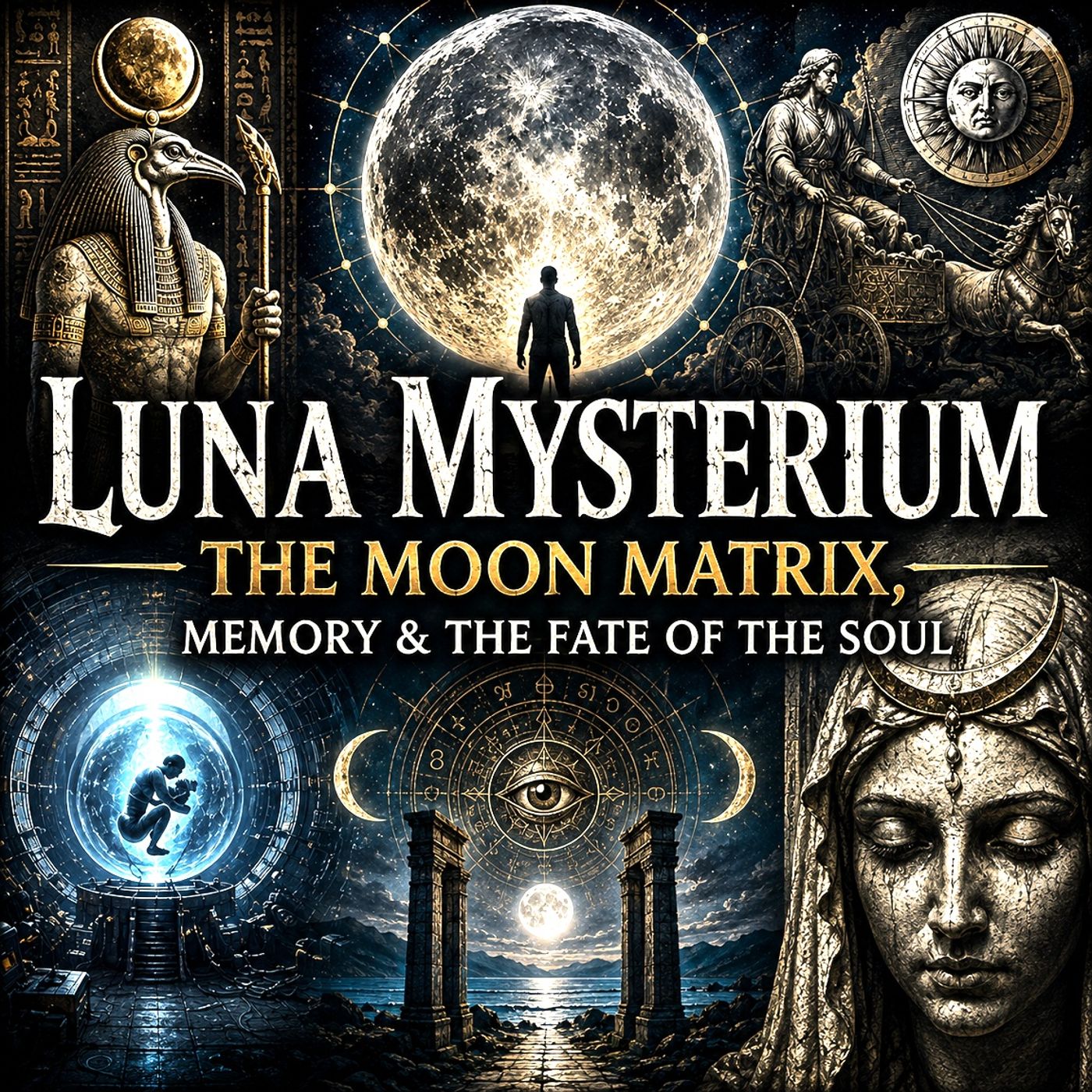
Luna Mysterium: The Moon Matrix, Memory & the Fate of the Soul w/ Library Of The Untold
2w ago02:03:20Tap to summarizeIf you enjoy this episode, we’re sure you will enjoy more content like this on The Occult Rejects. In fact, we have curated playlists on occult topics like grimoires, esoteric concepts and phenomena, occult history, analyzing true crime and cults with an occult lens, Para politics, and occultism in music. Whether you enjoy consuming your content visually or via audio, we’ve got you covered - and it will always be provided free of charge. So, if you enjoy what we do and want to support our work of providing accessible, free content on various platforms, please consider making a donation to the links provided below. Thank you and enjoy the episode!Links For The Occult Rejectshttps://linktr.ee/theoccultrejectsOccult Research Institutehttps://www.occultresearchinstitute.org/Substackhttps://substack.com/@theoccultrejects?r=7auau0&utm_campaign=profile&utm_medium=profile-pageCash Apphttps://cash.app/$theoccultrejectsVenmo@TheOccultRejectsBuy Me A Coffeebuymeacoffee.com/TheOccultRejectsPatreonhttps://www.patreon.com/TheOccultRejectsAlso want to remind people about the website, if you're into reading we have tons of information by multiple contributors, and we got t-shirts up on the site if you're interested. Fun fact, the art is all based on the eyeball.
Transcribe →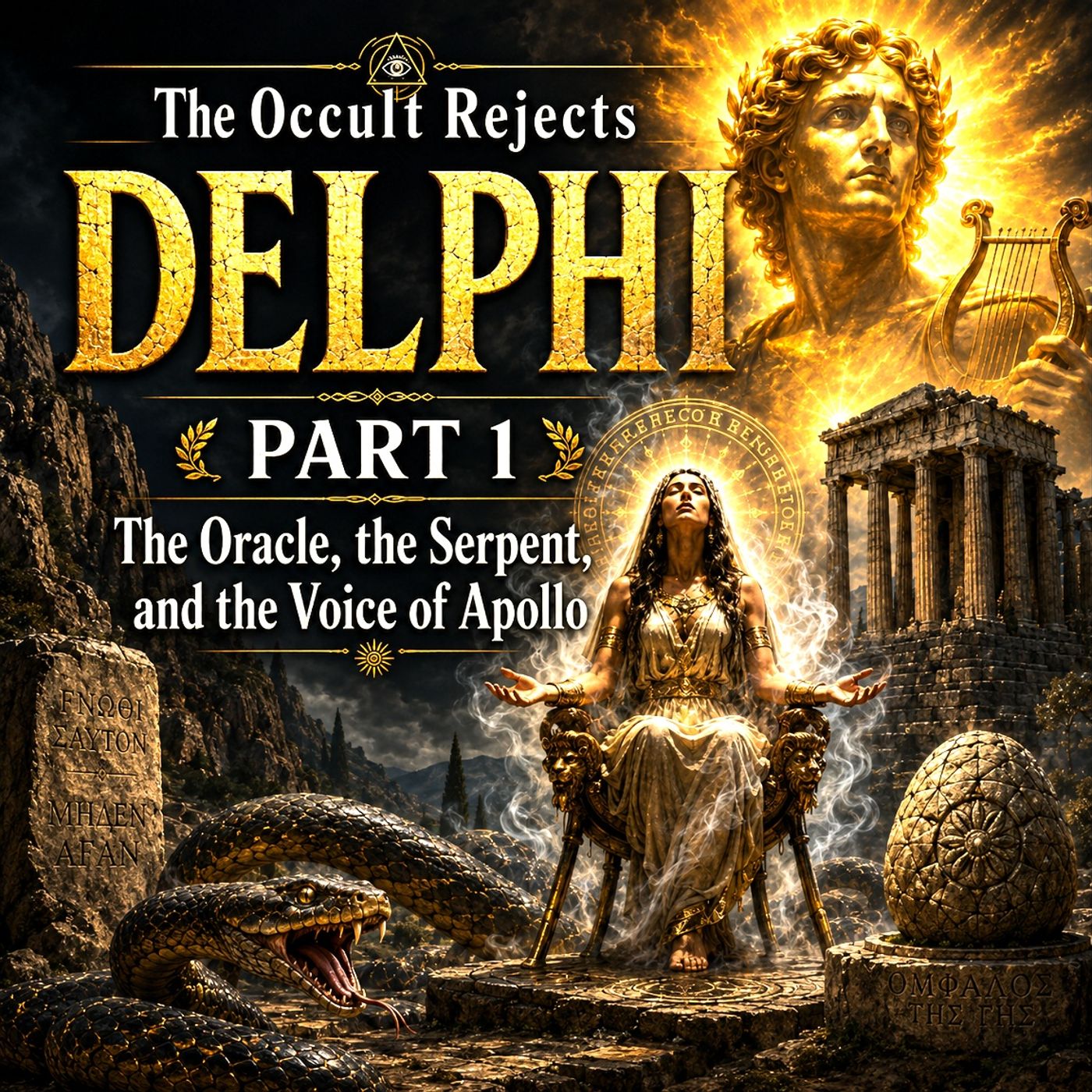
Delphi Part 1: The Oracle, the Serpent, and the Voice of Apollo
2w ago01:16:49Tap to summarizeIf you enjoy this episode, we’re sure you will enjoy more content like this on The Occult Rejects. In fact, we have curated playlists on occult topics like grimoires, esoteric concepts and phenomena, occult history, analyzing true crime and cults with an occult lens, Para politics, and occultism in music. Whether you enjoy consuming your content visually or via audio, we’ve got you covered - and it will always be provided free of charge. So, if you enjoy what we do and want to support our work of providing accessible, free content on various platforms, please consider making a donation to the links provided below. Thank you and enjoy the episode!Links For The Occult Rejectshttps://linktr.ee/theoccultrejectsOccult Research Institutehttps://www.occultresearchinstitute.org/Substackhttps://substack.com/@theoccultrejects?r=7auau0&utm_campaign=profile&utm_medium=profile-pageCash Apphttps://cash.app/$theoccultrejectsVenmo@TheOccultRejectsBuy Me A Coffeebuymeacoffee.com/TheOccultRejectsPatreonhttps://www.patreon.com/TheOccultRejectsFull Episode BibliographyPrimary SourcesAeschylus. Eumenides. Used for the ancient tradition of succession at Delphi and the mythic movement from older powers to Apollo.Cicero. On Divination. Used for ancient discussion of divination and the tradition of Delphic inspiration connected with breath or exhalation.Herodotus. The Histories. Used for Croesus, the danger of ambiguous prophecy, the Athenian “wooden wall” oracle, Themistocles’ interpretation, and Delphi’s role in war and public decision-making.Homeric Hymn to Apollo. Used for Apollo’s Delphic foundation myth, the serpent, the movement from sacred landscape to Apollonian institution, and the Cretan priests connected with Apollo’s dolphin form.Pausanias. Description of Greece, Book 10. Used for later ancient traditions concerning Delphi, foundation myths, Gaia, Themis, Python, Apollo, sacred monuments, and the Delphic landscape.Pindar. Pythian Odes. Used for the Pythian Games, victory poetry, Apollo, prestige, and the transformation of athletic victory into sacred memory.Plutarch. Life of Lycurgus. Used for Lycurgus, the Great Rhetra, and the tradition of Spartan law receiving Delphic sanction.Plutarch. Moralia: “On the E at Delphi.” Used for the mysterious letter E at Apollo’s temple and ancient philosophical interpretations of its meaning.Plutarch. Moralia: “The Oracles at Delphi No Longer Given in Verse.” Used for Delphic verse, the change in oracular style, and ancient reflection on why the Pythia no longer gave responses in meter.Plutarch. Moralia: “The Obsolescence of Oracles.” Used for Delphi in the Roman period, the decline of oracular centers, Plutarch’s reflections on divine inspiration, and the tradition that Delphi once had multiple priestesses.Strabo. Geography. Used for ancient geographical description of Delphi and the tradition of the oracle’s inspiration being connected with a breath or vapor rising from below.Official and Reference SourcesArchaeological Site of Delphi / Hellenic Ministry of Culture. “History of Delphi.” Used for Delphi’s geography, Mycenaean background, Apollo’s cult, Python, Cretan priests, the Amphictyony, sacred administration, Sacred Wars, Roman history, decline, and excavation.Archaeological Site of Delphi / Hellenic Ministry of Culture. “Mythological Versions of the Foundation of the Oracle.” Used for Gaia, Themis, Phoebe, Apollo, Python, Poseidon, the tripod, Athena Pronaia, the Thriae, and the dolphin/Cretan priest tradition.Archaeological Site of Delphi / Hellenic Ministry of Culture. “The Temple of Apollo.” Used for the sacred center of the sanctuary, the adyton, the temple’s rebuilding history, and the architectural setting of the oracle.Archaeological Site of Delphi / Hellenic Ministry of Culture. “The Sphinx of the Naxians.” Used for the Naxian dedication, apotropaic symbolism, civic prestige, and the monument’s role in the Sacred Way.Archaeological Site of Delphi / Hellenic Ministry of Culture. “The Treasury of the Siphnians.” Used for the Siphnian Treasury, its sculptural program, caryatids, wealth, painted decoration, and sacred display.Archaeological Site of Delphi / Hellenic Ministry of Culture. “Excavations.” Used for the Great Excavation, the village of Kastri, French archaeological work, and the modern recovery of Delphi.Encyclopaedia Britannica. “Delphic Oracle.” Used for the Pythia, Apollo’s oracle, Delphi’s high prestige, and the use of Apollo’s sanction by lawmakers, colonists, and political leaders.Encyclopaedia Britannica. “Delphi.” Used for the general history and significance of Delphi as a sanctuary, oracle, and pan-Hellenic religious center.Encyclopaedia Britannica. “Python.” Used for Python as the serpent or dragon killed by Apollo at Delphi.Encyclopaedia Britannica. “Pythian Games.” Used for the games at Delphi, their musical and athletic character, their relationship to Apollo, and the laurel wreath.Encyclopaedia Britannica. “Hieromnemon.” Used for the Amphictyony, pylagorai, hieromnemones, treasury supervision, and administration of sacred affairs.UNESCO World Heritage Centre. “Archaeological Site of Delphi.” Used for Delphi’s world heritage description, pan-Hellenic importance, sacred landscape, and historical significance.Modern ScholarshipChappell, Mike. “Delphi and the Homeric Hymn to Apollo.” The Classical Quarterly 56, no. 2, 2006. Used for the Homeric Hymn’s Delphic foundation narrative and Apollo’s Pythian identity.Fontenrose, Joseph. The Delphic Oracle: Its Responses and Operations with a Catalogue of Responses. Berkeley: University of California Press, 1978. Used as a major scholarly backbone for Delphic responses, authenticity problems, categories of consultation, and the operation of the oracle.Forrest, W. G. “The First Sacred War.” Bulletin de Correspondance Hellénique 80, 1956. Used for the First Sacred War, Krisa/Crisa, sacred access, and the political framing of Delphi’s early pan-Hellenic importance.Fragkaki, Maria. “The Great Rhetra.” Rosetta 17, 2015. Used for the Great Rhetra as a Delphic oracle and the divine validation of Spartan political order.McInerney, Jeremy. “Parnassus, Delphi, and the Thyiades.” Greek, Roman, and Byzantine Studies 38, no. 3, 1997. Used for Dionysus, the Thyiades, Parnassus, mountain ecstasy, and the fact that Delphi’s sacred landscape was not purely Apollonian.Piccardi, Luigi. “Active Faulting at Delphi, Greece: Seismotectonic Remarks and a Hypothesis for the Geological Environment of a Myth.” Geology 28, no. 7, 2000. Used for Delphi’s faulted landscape and the modern geological debate around the oracle.de Boer, Jelle Z., John R. Hale, and Henry A. Spiller. “The Delphic Oracle: A Multidisciplinary Defense of the Gaseous Vent Theory.” Clinical Toxicology 40, no. 2, 2002. Used for the modern argument that gases, possibly including ethylene, may have contributed to the Pythia’s altered state.Etiope, Giuseppe, et al. “The Geological Links of the Ancient Delphic Oracle.” Used for critique and reassessment of the geological and gaseous explanations of Delphic inspiration.Scott, Michael. Delphi: A History of the Center of the Ancient World. Princeton: Princeton University Press, 2014. Used for the broader historical arc of Delphi as sacred center, political institution, cultural symbol, and archaeological site.Strolonga, Polyxeni. “The Foundation of the Oracle at Delphi in the Homeric Hymn to Apollo.” Greek, Roman, and Byzantine Studies 51, 2011. Used for Apollo’s foundation myth and the literary shaping of Delphi’s origin story.Music, Inscriptions, and ArchaeologyFouilles de Delphes. École française d’Athènes. Used for the archaeological publication tradition connected with Delphi’s excavation, architecture, inscriptions, sculpture, and sanctuary remains.The Delphic Hymns to Apollo. Used for Apollo’s musical cult, sacred song, and the role of hymn, inscription, and performance at Delphi.Archaeological Museum of Delphi materials. Used for the Charioteer, Antinous, Kleobis and Biton, the Sphinx of the Naxians, the Siphnian Treasury, and other major finds from the sanctuary.Also want to remind people about the website, if you're into reading we have tons of information by multiple contributors, and we got t-shirts up on the site if you're interested. Fun fact, the art is all based on the eyeball.
Transcribe →
Magic, Madness, and Meaning: Dr. Ian Edwards on Occult Experience
2w ago01:38:35Tap to summarizeIf you enjoy this episode, we’re sure you will enjoy more content like this on The Occult Rejects. In fact, we have curated playlists on occult topics like grimoires, esoteric concepts and phenomena, occult history, analyzing true crime and cults with an occult lens, Para politics, and occultism in music. Whether you enjoy consuming your content visually or via audio, we’ve got you covered - and it will always be provided free of charge. So, if you enjoy what we do and want to support our work of providing accessible, free content on various platforms, please consider making a donation to the links provided below. Thank you and enjoy the episode!Links For The Occult Rejectshttps://linktr.ee/theoccultrejectsOccult Research Institutehttps://www.occultresearchinstitute.org/Substackhttps://substack.com/@theoccultrejects?r=7auau0&utm_campaign=profile&utm_medium=profile-pageCash Apphttps://cash.app/$theoccultrejectsVenmo@TheOccultRejectsBuy Me A Coffeebuymeacoffee.com/TheOccultRejectsPatreonhttps://www.patreon.com/TheOccultRejectsAlso want to remind people about the website, if you're into reading we have tons of information by multiple contributors, and we got t-shirts up on the site if you're interested. Fun fact, the art is all based on the eyeball.
Transcribe →