← The OCD Whisperer Podcast with Kristina Orlova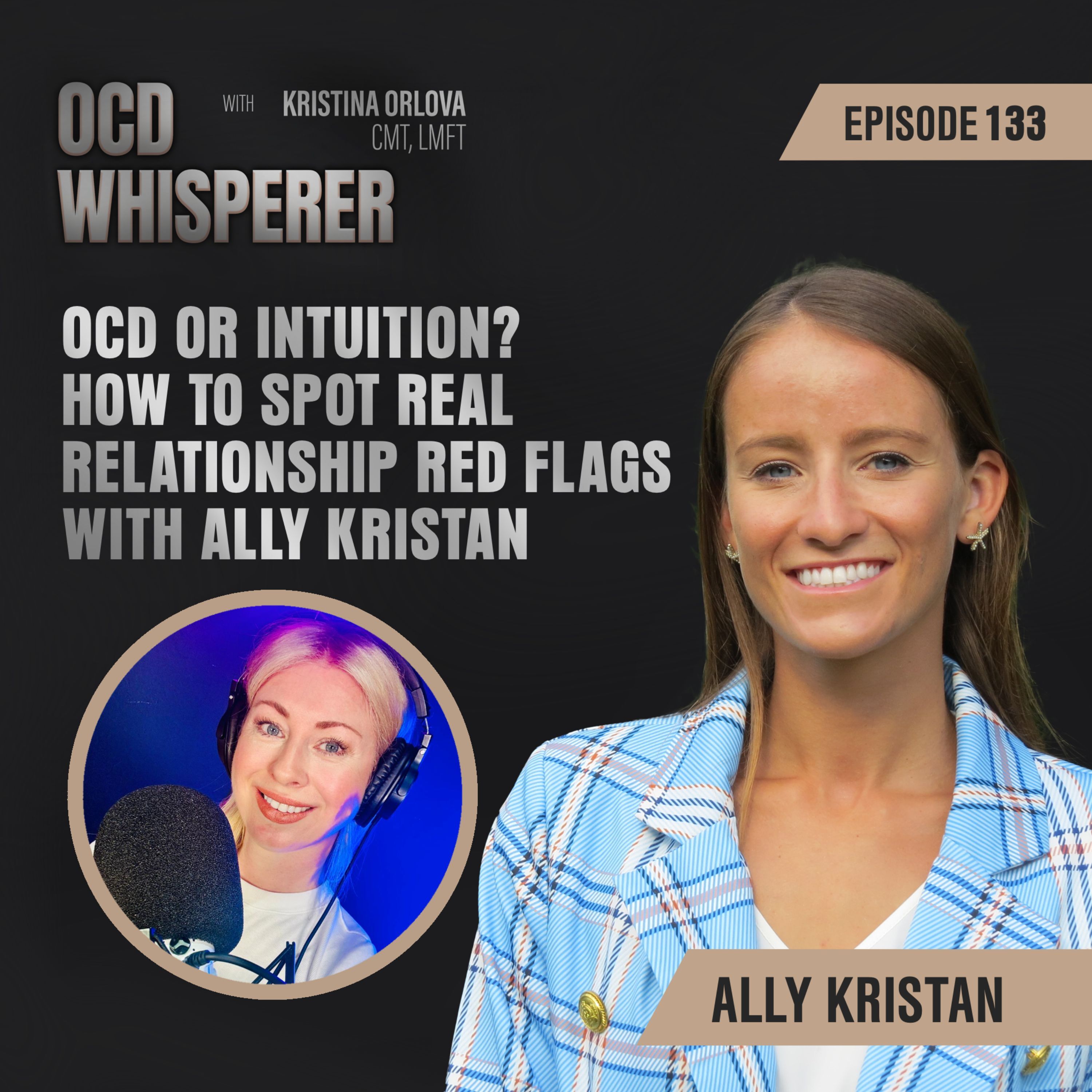
The OCD Whisperer Podcast with Kristina Orlova
133. OCD or Intuition? How to Spot Real Relationship Red Flags with Ally Kristan
00:34:24
Loading summary
Transcript51 lines
- [00:02]
A
Hi, I'm Christina Orlova, host of the OCD Whisperer podcast. As someone who lives with ocd, I understand the struggles firsthand. If you're here, you're not alone. Before we start, grab your free OCD survival kit at www.corresults.com to help you take control. That's K O R results dot com. Now let's dive into today's episode.
- [00:30]
B
Welcome to OCD Whispered Podcast. Today with me, I have Ali Crestan, who's a marine biologist, Antarctic expert, public speaker, and author of the book Braving the A Memoir and Guide to Overcoming OCD A Salient Voice in Wildlife Protection. Ali has appeared in National Public Radio, National Audubon Society, and Hawkeye Magazine, amongst others. And now she's speaking up about OCD, which she was first diagnosed with at age 12. Welcome to the show.
- [00:56]
C
Thank you. I'm really excited to be here.
- [00:58]
B
Me too. You know, you and I connected, and actually when we started talking about what we wanted to talk about here, my ears really perked when we talked about things like how can somebody with OCD tell the difference between, you know, if something like there's an intrusive thought about their partner. Right. Versus actual genuine red flags in a relationship. And I certainly know I get this a lot through DMs, through questions. And so, you know, as usually in my show, we're gonna dive right into this topic. So I would love to hear your perspective on this.
- [01:35]
C
Yeah, absolutely. I'd love to hear about that. And I think the way OCD affects relationships, I mean, I guess ROCD can be its own subset of diagnosis in itself, but for me, you know, I was diagnosed when I was 12 years old, so it just impacts every area of my life, including interpersonal relationships. And that's probably the part of my book that was the most vulnerable, but I think is the most fascinating because it took probably like 15 years of my life to figure out the impact that it was having. And it. It is really difficult to know the difference between the OCD noise and something that your gut instinct is telling you, especially in relationships. I can mostly speak to the way it kind of makes you ignore different warning signs. So I wound up in two different toxic relationships with emotionally abusive partners before I was 25 years old. And, you know, you go to therapy after these things to try and unwind from what has happened and was always presented with questions from my therapists who weren't OCD experts like yourself. So it would lead more to questions of, you know, what was your parents relationship like? What is your relationship with your father like? And the answer to both of those questions is, it's wonderful, and it always has been. So I had to do a lot of deep digging within myself to realize what was actually causing me to become involved in these situations where it really makes no sense for me to get involved in. You know, as someone who is, like, confident and comfortable and has a loving support network. But part of it I realized first, having been in therapy for OCD since age 12, you learn. You know, you talk a lot on this podcast about exposure response therapy. And so when you're doing that therapy, you'll be basically taught to go through a situation that causes you a lot of anxiety, and that would make you want to perform a compulsion, but you have to go over that hill with your therapist and see that nothing bad actually happens, and then your anxiety levels back out to ground zero, which is really, really helpful to learn. But for me, as a child, I kind of learned that as ignoring everything that wasn't completely logical. So pretty much anytime I was getting anxiety or having that danger signal going off in my mind, I would attribute that to OCD and just think, you have to be brave, and you have to overcome it. So I think a lot of times in these toxic relationships, we might be missing red flags that somebody else might notice, because you're saying to yourself, you know, oh, something doesn't feel quite right. That's your intuition, but you're thinking it's ocd, so you're saying back, you need to just let yourself be happy. Here's a person who obviously really likes you. You have ocd, you might be difficult to love. So it makes sense that these different issues are coming up. So I think a huge part of it can be not knowing where your gut instinct is, because you're taught that so many of your own thoughts are those anxious and obsessive thoughts that you need to be able to overcome. So I think that's a huge part of getting involved in those abusive relationships in the first place.
- [04:47]
B
As we're talking about that, the question that becomes like, well, so what are some signs or symptoms of something that's actually abusive? Right. And unhealthy versus, you know, with ocd. Of course, it's. It's these big doubts we have, like, right, it's not my partner, or maybe I'm not feeling the right level of attraction, or maybe now I'm questioning my own kind of, am I even into this? Or will I ever even be happy? Or, you know, can I even commit to somebody Right. There's so many different doubts that will come up. But what's. What's a distinction that we can discuss today?
- [05:21]
C
Right?
- [05:21]
B
Because I think there are some things that are really clearly markers of, like, no, this is actually unhealthy. This has nothing to do with you having OCD brain. Like, this is just unhealthy.
- [05:32]
C
So, yeah, yeah, yeah, you're absolutely right. You know, I think that a lot of it, it's so easy to see from the outside, and I know that there might be listeners who are listening who are in a toxic relationship, and it's really difficult to see it from the inside. Or maybe you have a friend who's going through it and you're like, this is so obvious. I can't believe my friend doesn't realize what's going on. But there are a few things that are really typical of those relationships and that I think people with OCD can be especially vulnerable to. The first is love bombing. So I think those of us with ocd, a lot of times your love language might be words of affirmation. You know, you've talked a lot on the show about how important reassurance is to somebody who has ocd. So a lot of these toxic relationships will start with somebody love bombing you, which is where you're getting an exorbitant amount of affection and reassurance and compliments and flattery and maybe even gifts from somebody. Even if you're not reciprocating it, they're going to be very vocal and clear about the way that they say they feel about you. I think if you have ocd, this can be particularly intoxicating because you're not having to ask for that reassurance like you normally do with all interpersonal relationships. This person is just already reassuring you and reaffirming how they feel about you. So that can create a sense of safety. So I think that love bombing is definitely something to look out for, especially if it's somebody pursuing you who you're not initially interested in in return. That should be a little bit of a red flag. They're so adamant. I think something else to look out for is if they use their ocd, use your own OCD against you. If they're, you know, if you've told them that you have this diagnosis and that those are thoughts that you struggle with. I know in my personal experience, it was a high school relationship with somebody extremely unhealthy, but if I ever called him out on things he was doing wrong, it would be, oh, did you forget to take your happy pill today because I had told him that I was, you know, on Prozac for my ocd. If anybody's using that against you, that's a huge red flag in a relationship. And I think it's difficult for people to decipher that sometimes because we're so used to arguing with our own mind, right? There's already a part of our mind that we distrust that we feel bull by we're gaslighting ourselves. Because you constantly have these OCD type thoughts that you can't tell if it's real or if it's just that anxious and shame ridden part of your mind. So when a partner starts doing that to you, if they're gaslighting you, if they're deceiving you but telling you that it's your own fault, then that's another huge red flag. And another big one is if you're ever with somebody who makes you feel like or explicitly tells you that you're difficult to love and maybe brings up your OCD and anxiety as an excuse of why a lot of times narcissists or other toxic partners will basically, they treat you like you're a piece of garbage. But at least I love you. Like, you're lucky that I love you. I'm the only one who could tolerate this behavior. So if you're with somebody who's ever making you feel that way, that's like the biggest red flag of a very toxic relationship. Because when you're with someone, somebody who does truly love you and have your best interest at heart, they're going to make it feel like loving you is easier than breathing, you know, and they're not going to use your OCD against you. They'll be understanding that it's not, it's not something that makes you crazy. I mean, I feel like ever since I've published this book, the amount of people who tell me, oh yeah, I have thoughts like that, or I do compulsions like that, and I just didn't know there was a word for it. This is a really, really normal thing, especially in today's society where we feel so out of control and uncertain about our own futures.
- [09:12]
B
So it is several things. So. So let's actually slow down for a second. So let's go back and clarify for anybody listening, like, because I, I think some terminology gets. We use a lot, right? And I want to make sure that we're on the same page. What do we mean? So when you're saying gaslighting, what do you mean gaslighting?
- [09:28]
C
Is when somebody. It makes me so angry to even think about because it happens all the time. But yeah, excellent question. Gaslighting is when somebody is. They're basically making you doubt your own sense of reality. So if somebody has done something to deceive you, but then they're. Instead of owning up to it, they're turning it around on you to make it feel like it's not what happened. I saw you texting somebody on your phone. No, you didn't. You're mistaken. You. You read wrong. You're just anxious. Any of these questions to turn it around back on you and make you question yourself. But I'm curious too, since you actually treat people with ocd, if you, if you've noticed these tendencies in people that you treat to kind of get wrapped up into these situations.
- [10:11]
B
Well, you know what, what I'll say that I've seen time and time again. And the thing is I have relationship ocd. And you know, I, I've had some situations like yourself. I mean, I think not everybody, but some, some folks have. And I think what becomes clear over time when you've, you know, learned about how OCD manifests for yourself and, and if you're treating people, you start to see patterns, right? So the most common thing I see is when actually people have really, actually healthy and good relationships where what somebody says and what somebody does really matches up. It's an alignment, right, that, that their partners are actually thoughtful and caring. But they might, for example, maybe, I don't know, they tend to work a bit more than not, or maybe sometimes they might not agree with certain things. And that's the key difference, right? Because those are all part of just natural relationship dynamics. We're not always going to agree. And just because we might not agree on something does not mean that the whole situation is now bad and red flag. And I think nowadays it would be so fast to jump into. Oh, everything's a red flag. It's like, well, hold on a second, right? Not, it's not. Let's not throw out these big blanket statements so rapidly. Let's really slow down and really look at it. And you know, you said to your point, you also internally know the difference when you're with somebody who really supports you and like you said, really loves you, right? Like, it's easy to like, you see, you feel loved, you feel calm, you feel supported. And even though you might have a moment where you bicker, but you can come back and you can talk through it, there's an understanding, there's a Growth, you're growing together. There's a bonding, there's a vulnerability, there's a deepening. You're really getting to know each other more. There's a lot of opening up that's happening. Right? So I think it's important to start to notice what those things are, because if you're not having those, like, if you're with somebody and, you know, after a little bit of time, you're not really diving deeper together, per se, again. And maybe that's not for everybody.
- [12:15]
C
Right?
- [12:15]
B
Because I do have to say, right, everybody has different relationships. So I'm not saying this to say that this is the way to have a relationship, but I am saying if you're with somebody and you're really not getting to know them or know as much, or like I said, you. You. You may experience inconsistencies in stories, right? Or you said this then. Well, no, I didn't. Or, you know, you misunderstood, right? That kind of stuff starts. Like, those kind of things start to become into question, and those are very different than, again, somebody who's consistent and with you and, you know, you have moments where you're disagreeing or, you know, your OCD maybe is driving you to get really rigid about something and like, no, no, no, to be this way. And your partner might say, but why, why can't we just kind of go with the flow? Like, right, that's. That's a different conversation than, you know, if you're kind of like, okay, my knees are actually not really getting met, or things are getting, you know, downplayed when they're actually big deal. And now I'm having to sit here and wonder, like, is it me? Right, Those, like you said, those are kind of signals. And then, of course, I think there's obvious things, like, right, if somebody's actually actively injuring you, oh, you're. You're literally not safe.
- [13:30]
C
Yeah, yeah, absolutely. No, I. I agree completely. And I think it's difficult, too, because sometimes having that relationship OCD can start to put dampers on a relationship that is otherwise so healthy and safe and secure. For instance, if you're constantly asking your partner for reassurance all the time about how they feel about you or what. What they were up to that day, on the inside, your gut knows everything is okay, but it's your mind that can't let it go and needs to ask for reassurance to feed that OCD part of the brain. But it's going to come across to your partner as distrusting them and distrusting the relationship. Which people only have so much patience for, or, you know, when you get into disagreements and you're. You're asking the same questions over and over again to try and make it make sense in your own mind or to reassure yourself again, then that feels a lot like interrogation and not being able to let the argument go. So, yeah, there are definitely. These situations can be created that are really unhealthy, even though nothing's happening in the relationship to warrant that. So it can be really difficult to know the difference. And I think it all comes down to being able to. If you're able to quiet your mind enough to feel that difference between feeling grounded, I know you talked about in your. I think it was episode 100 with Lucy. When you're working through these moments, whether or not you're feeling, like, grounded and in tune with yourself and calm, or if it's coming from that really tense and anxious place when something comes up. But sometimes, you know, when you're in the throes of ocd, it can be really difficult to feel if there is a difference between those two.
- [15:03]
B
Well, yeah, and if you're in something that's actually not healthy, you know, the other thing that comes to mind as you were just sharing that, is that it will definitely activate you because you can engage in. In so much more compulsive analyzing and trying to figure out and digging deeper and trying to understand that you kind of get lost in it and you would disregulate. And for some people, like, you can start turning to substances or doing other things because you're just trying to kind of feel some sort of release and just a little better and really not fully understanding yet that the source of this is not just your ocd. It's a combination of OCD and what's happening in your environment that isn't actually allowing you or your nervous system to relax and feel like, you know, you're in a safe place and so you're just kind of on guard or something, you know, and it could be subtle. It could be. It could be big and obvious. I mean, when you talked about narcissists, too, I mean, there's lots of different ways that that manifests. There's obvious malignant things. There can be altruistic kinds. There could be covert kinds. There's, like, so many ways this can show up that you could totally miss. And then once you see it, you see it, and you can't unsee it. But, you know, if you also have ocd, you're gonna be more vulnerable a lot More vulnerable. And so in those situations, like you said, if you're getting all this love and attention and then suddenly things start to turn a bit, but then when you bring it up, you're told like, well, I think it's in your head. I think it's you, right? Like, how can you not start to ruminate and compulse? And this would be true, I think, for anybody, even if you don't have OCD in that particular situation. But to your point, I think getting clear on like, what does a healthy, good relationship look like?
- [16:45]
C
Yeah, yeah, absolutely. Yeah. And I think you raise an excellent point too about having those feelings and being in that place of tension. And we have to recognize if you're in the throes of OCD that you don't like, your normal is different than other people's normal anyway. So we're used to always operating on fear and uncertainty. So if a partner is making you feel fearful and uncertain and anxious, that's kind of your normal already. So if they're telling you it's all in your head, you're used to that being all in your head anyway. So it's, it's really, really difficult. But I am, you know, speaking about the difference with healthy relationships. I am, fortunately now I'm engaged to the love of my life and we just celebrated our five year anniversary this past weekend. So all of that is very exciting. And I think the biggest difference for me finally being in a healthy relationship is just how easy it feels and how safe it feels. And I think I probably imagine that I would never feel that way because of my ocd, but it was just the negative experiences of the past. I really do believe that if you're with somebody who's really making you safe and really does have your best interest at heart, it's not going to exacerbate your OCD systems or your OCD symptoms. It doesn't fix them either. You know, that's still a personal journey that I'm on every day, but it's certainly not going to make your OCD symptoms any worse. And I think that the starting part of a relationship too, that's always the part where you guys never argue and everything's wonderful and exciting and brand new in that period. If you're with somebody who's healthy, you really shouldn't be seeing any of those toxic traits. You know, you're with somebody for long enough, there are always going to be times when problems come up and arguments happen. But if you're with somebody who isn't trying to deceive you and isn't trying to use your own mind against you, then you're going to that initial period of first getting together. You should be able to feel that true bliss without having those moments of, oh, maybe there is something wrong with me and maybe he's turning something against me. Those are gonna. Those signs will present pretty early on when you should still be in a honeymoon phase, in my experience.
- [18:52]
B
Yeah. And actually, to your point, right. It's that you're. Again, that consistency over time, right, that. Yeah, that's. That something can be maintained and it's in alignment again. Your words, your actions, that everything's in alignment because it should be effortless. It's just who you are. Right. So there's no. There's no issue then. And not just continue. It's a continuous process. It's not like something that you get in the beginning and then suddenly you start to get kind of Willy Wonka and go all over the place. And the other piece I'm really hearing from you is, you know, part of, well, how can you tell the difference? It's like, well, taking a moment to really. And again, not compulsively, like, you know, our OCD friends, like, all of us. God knows I've done it. I'm sure you've done it.
- [19:31]
C
Yes.
- [19:32]
B
When you go way too much into listening to every podcast and Googling and redditing and now probably chat, gpting and whatever else. But, like, no, no, like, stop, slow down and take a moment to really think through, maybe look at one or two places of. Okay, what would a healthy relationship actually look like? Like, what are those markers? And I think we. We don't spend enough time on that because that actually gives you a model that gives you an idea of, like, what it should look like, sound like, and feel like, when is that right? And so then you have a way to start to notice. Okay, is it generally mostly this?
- [20:07]
C
Right.
- [20:07]
B
If it's not really, truly not okay, then something else is going on. And again, that's not just your regular, regular, you know, misagreements, et cetera, because that's still all part of a good, healthy relationship that you have is if. If there's a miss, you work it out in a way that's usually resolvable and usually you feel a little bit better. You learn, you move on.
- [20:30]
C
Yes. Understanding each other. Absolutely. And I thought just now, as you were speaking, and I'm wondering if you agree with this, maybe a good temperature check for somebody who's wondering if they're just experiencing relationship ocd or if they're actually missing red flags, is if you have positive relationships with friends and friends you're really close with, maybe you could compare the feelings to the feelings you have with your friends. I know when I was in those toxic situations, I would feel so uncomfortable with my then partners at the time, I would feel uncomfortable bringing them around my friends because I felt like I had to be different people or I was walking two different lines to keep everybody happy. In a healthy relationship, it shouldn't feel that way, right? You should be with your best friend, so you should feel the ease and the joy and the comfort that you feel in situations with your best friends too. So it shouldn't.
- [21:19]
B
Well, and again, to add to that, right, you can be in a situation where the only time you feel somewhat okay is if there's a lot of people around, so everything gets a little diluted. And then you're generally just with your friends. But then again, that could be right. So we're just looking for, like you said, right? Is if I'm with this person and it's just us, like, is there something there? Like you said, like, it's a best friend that I can talk to, I can hang out with, I can spend whatever time, you know, we do stuff. Like there's always something and we're both contributing in a nice great way versus, like the only time we can really, I can feel comfortable is either to your point where I have to be not with them in public, or only if we're in public. Right. Like again, any of these kind of extremes, if you will. Relationships are tricky, right? But I love that though. Like, if you have good, healthy relationships, take a moment and re notice that and renotice how you feel and how they function. And like. Yeah, what's that like? And is this like that or not?
- [22:16]
C
Absolutely. And if you struggle with OCD or with your mental health, you're gonna have good days and bad days. And that relationship should feel just as good on the bad days as it does on the good days too, which is something, you know, if you're only with that person all the time, then that's something to take notice of. Is on the days when you're good and on the days when you're bad, are they making you feel like it's your fault that you're having a bad day? Or are they, you know, riding the waves and bringing their part of the partnership to it also?
- [22:42]
B
Well, you know, I think this is a great segue to kind of go into something else we were going to talk about, which is, you know, so what could be a way for somebody to kind of rebuild some of that trust into their own? Like we talk about gut instinct, right? When you've had, you know, years or months or however long it's been. But you know, when OCD is really active and noisy, it's really hard. It's a common thing that people get stuck and like, I don't know, I don't know if I could tell if there's. I have a gut instinct or what that is. It's just. I just deem it all OCD and it's like, well, again, that's too broad of a statement because we do have gut instincts. So what would you say?
- [23:19]
C
Yeah, absolutely. I love that question. And it's been something that's really fun for me to work on these past couple years and I neglected for so many years before that. And, you know, went down. My entire career is science. And your, you know, your career is very left brain, logical, analytical too. And that feels very safe when you have OCD because that's how you filter out the aberrant noise from what is quote unquote reality. Trying to get in touch with my own tuition again, I think part of it came from realizing that I was a very intuitive and perceptive child and kind of trained myself out of it and taught myself that that was wrong. So the first thing that was really helpful for me to be able to hear it again is you have to be able to quiet your mind. And a really helpful way to do this was meditation. And I know there are immediately going to be eye rolls and groans because it's so cliche. And meditation was miserable for me for many years. But what I finally realized is that you're not trying to make all the thoughts go away. You're just trying to focus on one specific thing so that you're brain isn't jumping around to all the different worries in the world anymore. And it took me, I mean, in 2023, I was like, my New Year's resolution is meditating every day, whether it's five minutes or 30 minutes. And it took probably six or eight months of doing it. And I usually just like lie down in bed instead of trying to do the Buddha pose. You know, you just lay down and put your headphones in and try to relax. But eventually you get to a place where like you can focus on one thing and your mind gets kind of quiet and you can hear your own thoughts again. And that is such a beautiful Feeling that I'd been missing for so long. The meditations, I really like. I don't know if you've ever done these on YouTube. It'll be called, like guided shamanic journey or guided visualization. And those are really fun for me and I think for people with OCD specifically, because if it's like telling you to count your inhales and exhales, maybe that could trigger anxiety because it's, you know, a bad number that they're saying. Or if it's about trying to clear your mind or positive affirmations, those words just aren't going to sink in. You already have have too many words going on in your mind. The guided journeys and visualizations, it's just kind of like the whoever is guiding the meditation is leading you on an exercise. So it'll be like you're walking through these beautiful woods and then you get on a boat and it's a boat ride to meet your ancestors, and you see these elephants nearby. And it. Whether or not it means something to you is personal. But at the very least, you're. You're able to focus on just one thing, this one story that's very calming and soothing and it's. It just brings your nervous system back down to that really calm place where you can hear your own thoughts again. So that's huge. And something to do in addition or to supplement that if sitting still and trying to meditate just is not possible for you. This also sounds a cliche, but just going outside and connecting with nature. There are so few times in a day, I bet, where like, you go outside and you're not texting or driving, eating something or like checking an email, exercising. We're always doing something when we go outside. But if you can go into the woods, if that's accessible to you or a park or wherever is, you turn your phone off and just be like, think about all of the different sounds you can hear. You'd be amazed how many different sounds are going on all the time, that you just tune out. Maybe you can go barefoot and, like, feel your feet on the ground and think about how deep the earth's crust is. Or, you know, maybe you smell something in the air. You just. You feel like you feel something on you when you turn and you notice that, like it's a bird looking at you. That's your intuition that picked up on that information that wasn't available in your immediate environment. So that can be another really wonderful way to just go outside and be and see. What you notice will help you Connect to that intuition again.
- [27:11]
B
I love that. I, I, yeah, I've been using Insight Timer lately and, and I always tell people, like, it's a matter of finding whoever you connect with. Whatever you connect with.
- [27:23]
C
Right.
- [27:23]
B
Like, it has to speak to you. So, you know, I, I personally like guided ones. Some people I know like more sounds. Some people like things where they're engaging their body. Some people actually, it's actually the opposite. It's being able to like, almost get out of their body, that anchor. So it's whatever you find that works for you at that moment.
- [27:43]
C
Right.
- [27:43]
B
But yeah, it's essentially a practice of, you know, for lack of a better word, kind of take giving yourself a little timeout. Like, literally take a little time out. Just take a minute and, and you could do that at any point throughout whatever. Like, even if just means sit and just close your eyes for a minute and just. But anything like that and you're right. I think over time you do learn how to.
- [28:04]
C
Yes.
- [28:05]
B
Reconnect back to you.
- [28:06]
C
Yeah.
- [28:07]
B
Reinker. Through whatever process. Right. Because again, everybody's different. Somebody needs to feel the floor. Somebody needs to hear. Somebody needs to actually not be in their body. Somebody needs to breathe. Somebody, you know, I don't want to breathe, like, whatever it is. But that you find a way that you connect like that and then, you know, kind of see from there, like, okay, what, what do I really. What really is my sense about X?
- [28:31]
C
Yeah, totally. And I like that you say over time too, because it's. That's the thing is we're always looking for a really quick fix and these sorts. Trying to regain touch with your own intuition and mind. Again, it takes time and practice and consistency, but once you get there, it's like the floodgates are open and such a sense of restored peace. I think I cut you off. Are you about to say something?
- [28:52]
B
No, no, I love it. I mean, that's it. Right. It's just, it's. Yeah, it's. I think that's awesome in terms of gut stuff. And, And I guess the only last thing is just more like, you know, and again, like understanding your OCD symptoms.
- [29:04]
C
Right.
- [29:04]
B
Like, it's ocdd, a disorder. So, like, what are some of those symptoms of the. Like that. I know this is an OCD symptom. Right. And so one of them is like, oh, I'm a gut kind of sense versus an anxiety sense. Like, they feel very different. Right. So part of that is also slowing down and kind of sensing like, oh, yeah. Oh, my gosh, there, there it goes again. Like my body's firing on all cylinders or my. Yeah, mine is racing or my stomach is turning or my God, my heart. I feel like somebody's, like, gripping it really tight. Like, you know, those are all very different symptoms. Like that's. That's your fight and flight, you know, really, really on and very high versus, you know, I'm operating from a different place where I'm more grounded and I can, yeah, kind of see everything as this, which we are. It's not like people with ocd, we're constantly in a state of heightened state of anxiety or guilt or shame. We're not in that 24 7. We have times where we're just being ourselves, being our human selves. So, you know, noticing those differences too, I think that's a piece of it is re. Noticing.
- [30:05]
C
Yeah, absolutely. And I know for me personally and some others might resonate, I've noticed that, like, when thoughts are coming from OCD and anxiety, I physically feel the tension in my head. And then when I'm having a feeling or making a choice coming from that, like, intuition and internal wisdom, I'll feel it more in my chest or down in my stomach. Like a. Literally, it's coming from a more grounded and centered place in my body. So the more you reconnect with your body and your own thoughts, you'll be able to feel that. And I wanted to mention too, those are great ways to quiet your mind and try to get to know your intuition again. Then you have to learn to trust it. And something that I found very fun and that I know we emailed a bit about and you have some experience with is working with like, Oracle cards and tarot cards. And I used to be terrified of them because I was like, why would you ever want to be given bad news? That's like, exactly what I'm trying to avoid. Avoid all the time. So I think finally realizing that that's not the intention of the cards at all. The deck I work with is like a Druid animal deck. I mean, that's literally all, like, happy animals outside. Some of them mean more challenging things than others. But there is no bad news. So I want everyone to first know that. That you don't. You know, you can pick a deck that doesn't have any bad news in it. And it's been a lot of fun to just work with doing readings, especially readings for other people, because you. You can hear your intuition again. So then you work on just being totally objective and like, what is coming up for you in the cards and you'll be surprised when you read for somebody else. It might sound absolutely nuts to you, but it resonates really profoundly with them. And so I've found that that has been an awesome way for me to learn how to trust my intuition again, because something will come up that actually makes sense. And it's also a lot of fun to do. Like I think the whole thing with ocd, especially like when you're in clinical treatment like I was for so many years, that was life saving. But a lot of it isn't very much fun. So you have to find ways to have fun with it and kind of make compromises. You know, maybe I'm, maybe I'm always going to be drawn to rituals, but now I'm focused on like doing a new moon ritual with my oracle cards that I'm having fun with and I can do with friends instead of like tapping on the refrigerator 204 times, you know what I mean? So it's these. If you're not able to totally get rid of it or be in remission, quote unquote or what you want to call it, just finding different ways to have fun with it and make it make sense and feel more natural and authentic to you, it just makes it a lot easier to move through your day to day life.
- [32:33]
B
I love it. Thank you for sharing that. Yeah, not everybody always is open or shares about that. I mean, I started to, but yeah, I mean whatever it is for each person, right. I mean we can get into satirical pieces, but yeah, I think to your point is find a way to re engage and get creative, get fun. Right? Live again, get that spark. You know, it doesn't have to be big. It can be anything you've been interested in and you pick it up again, even in the face of, you know, ocd. Well, listen, I want to say thank you for joining us today. And so if people would like to find you and your book Braving the Waves, a memoir and guide to overcome ocd, just anybody listening, I will obviously like always include it in the show notes so you can, you can get it there. But if people want to reach out to you or find you, how can they find you?
- [33:15]
C
Yes, absolutely. All of my information is on my website, which is alicristan.com a l l y K-R-I-S-T-A-N.com and then they can find me on Instagram at upyourally. So it's up underscore your underscore alley. And that's where I'll be awesome.
- [33:32]
B
Thanks so much for coming on the show.
- [33:33]
C
Yeah, thank you. This was really, really fun. I love chatting with you and I love listening to your show. So thank you for helping spread the word to folks with ocd. I think it's a light in a dark world.
- [33:44]
B
Thank you.
- [33:45]
A
Of course, thanks for listening to the OCD Whisperer podcast. Remember, freedom from OCD is a journey.
- [33:52]
B
And you're not alone.
- [33:54]
A
Visit www.coraresults.com to explore self help masterclasses like Sneaky Rituals with Jenna Over Bow or ICBT Masterclass with Christina Inabe. Don't forget to grab your OCD CBT.
- [34:07]
B
Journal tracker and planner while you're there.
- [34:09]
A
If you found this episode helpful, please subscribe, share and leave a five star review to help others find the podcast. Together we can make a difference. Keep going and I'll see you in the next episode.