← The OCD Whisperer Podcast with Kristina Orlova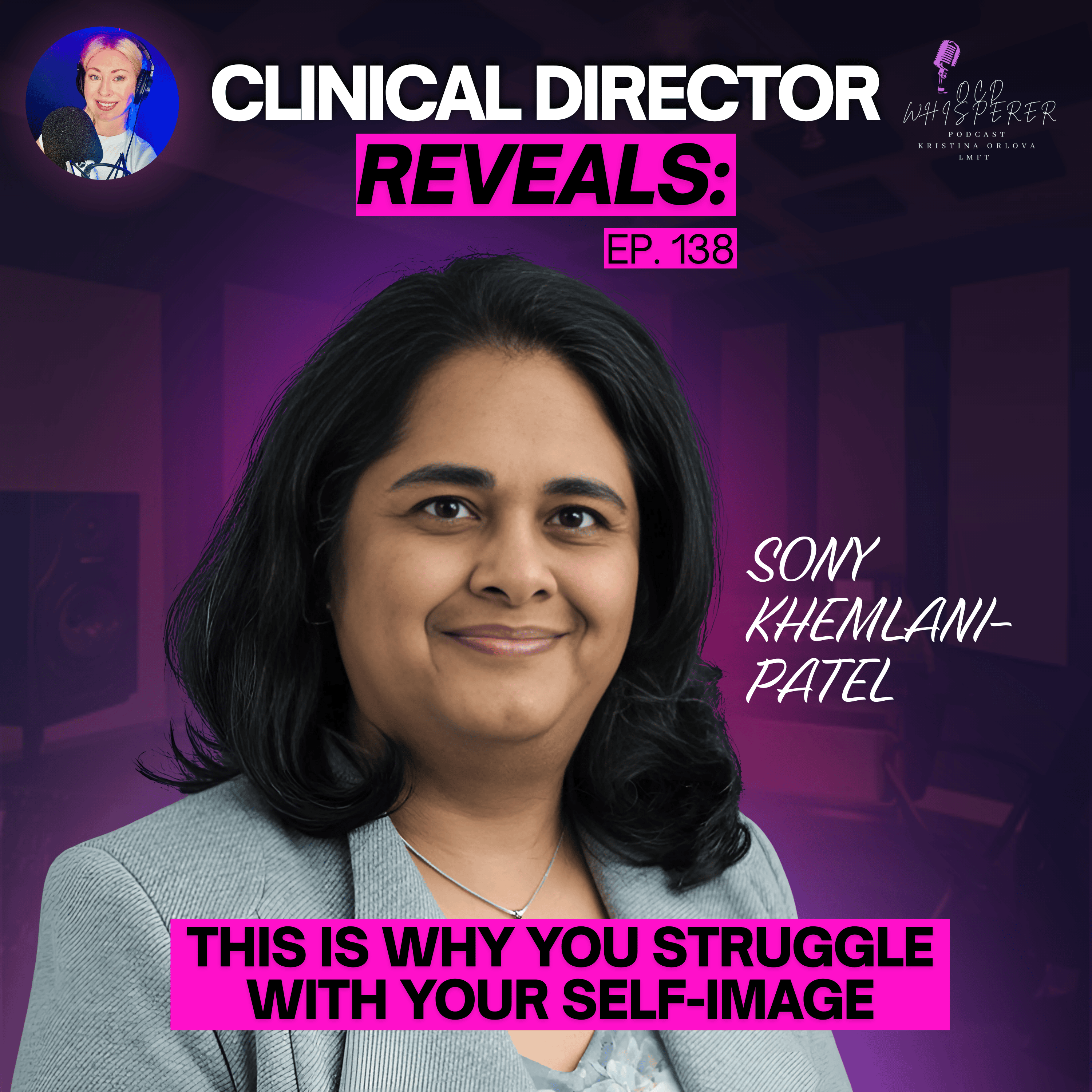
The OCD Whisperer Podcast with Kristina Orlova
138. CLINICAL DIRECTOR Reveals: This Is Why You Struggle With Your Self-Image
00:24:24
Loading summary
Transcript51 lines
- [00:00]
A
Every time I talk about BDD, I mention suicidality because up to 80% of people with BDD experience suicidal thoughts and 25% make attempts, which is really one of the highest in all of our psychiatric conditions.
- [00:15]
B
Hi, I'm Christina Orlova, host of the OCD Whisperer podcast. As someone who lives with ocd, I understand the struggles firsthand. If you're here, you're not alone. Before we start, grab your free OCD survival kit at www.corresults.com to help you take control. That's K O R results dot com. Now let's dive into today's episode.
- [00:44]
C
Welcome to OCD Whisper Podcast. Today with me, I have a special guest, Dr. Sonia Kamlani Patel. She's the clinical director of the Biobehavioral Institute in Great Neck, New York, where she specialized in evidence based treatment of OCD and related disorders for 25 years. Guys. She's on the scientific and clinical advisory board of International OCD foundation and is the vice president of OCD New York, which is the New York State affiliate of the IOCDF. And Dr. Kamlani has co authored three books, two of which are on BDD. Welcome to the show.
- [01:17]
A
Thank you so much for having me.
- [01:19]
C
Absolutely. You know, it was kind of a godsend. I got to meet you recently at the Anxiety Depression association of America Conferen, and I attended your talk on body dysmorphic disorder and I thought, oh, my gosh, yes, please say yes and come on my show. So I'm so grateful that you're here.
- [01:37]
A
Thank you so much. That was great. When you, like, ran into each other in the hall, I didn't even know you attended.
- [01:44]
C
So I, as everybody knows, love to kind of dive right in. And the most common thing that I hear people ask is, you know, what is the difference between like, body dysmorphic disorder versus an eating disorder versus body image? Would you be able to share with us what, what, what is, what is the difference? What is each one? Because I think people often get it confused as well as often think that, you know, I just have maybe some insecurity around my body, but not realizing that it might actually be more towards, you know, body dysmorphia.
- [02:18]
A
Absolutely. I think, you know, since COVID 2, we've come up with more terms like zoom, dysmorphia, body dysmorphia. And I guess that just suggests that you're unhappy with your appearance, which we know a significant portion of us are, do struggle with some part of our bodies at some point in our life. Right. We look in the mirror, we say, oh, I have bags under my eyes or my hair is a little frizzy. So that's not bdd. You know, a high percentage of us struggle with that. The difference really, in BDD is that it takes up more than an hour a day and typically three to eight hours a day of somebody really, like, ruminating, worrying, thinking, having these intrusive thoughts that some part of their appearance is flawed. You know, I hear people say, I look deformed, I look like a monster. So they really struggle daytoday. And then there's a significant avoidance that goes with it, because you can imagine if you don't feel good about the way you look to that degree, like, you say you're disgusting. It's very hard to go out to date, to go to doctor's appointments, you know, to sit in class feeling like people can really see you. So these are people that really struggle day to day, causes interference. They engage in, like, repetitive behaviors. Mirror checking is the most common.
- [03:37]
C
So how is that different than, let's say, somebody who has an eating disorder?
- [03:41]
A
So that's a little bit more complicated. I answered your first question. You know, us, I think, as clinicians, researchers are really struggling because there also is an overlap. Like you can have BDD and an eating disorder. It's not that if you have one, you can't have the other. There is an overlap between the two conditions. You can be diagnosed with both. You know, the difference with an eating disorder like anorexia is probably the one that comes to mind. They. People with BDD and eating disorders both struggle with body image. Right. They look in the mirror and there are these perceptual, like, visual differences that they see that they don't. We don't see what they see in the mirror. Right. Typically with bdd, people struggle with their facial features. That's the most common area that they fixate on. Their skin, their hair symmetry. Nose is a big one, Right. My nose, misshapen. There's a bump, it's crooked. Whereas in eating disorders, anorexia, it's really. It's a struggle with feeling overweight, like fat or the fat is accumulated in the stomach area, the thighs. So sometimes it's just a. It's a difference in what part of the body you're fixate on. And I think the most difference is the eating patterns that you see in eating disorders. So somebody with anorexia is really restricting their weight, I mean, their food intake, to feel like they can lose weight, whereas somebody with bdd, you know, is fixated on other parts of their body.
- [05:10]
C
Yeah. So I can also hear, like, part of the BDD too, is that you're perceiving something as deformed and off. And it sounds like it's something that may not be there or maybe there's something small or maybe there is something that happened, but perhaps how you're seeing it or how you're interpreting it can be really kind of drastic.
- [05:35]
A
Yeah, I mean, people with bdd, it's a, we call it a perceived flaw. So people don't see it. They're normal to, you know, above average, very attractive individuals, but they really struggle with that detail focus.
- [05:49]
C
So what would you say is happening in the brain? Because I, I, I, you know, I guess even for me, like some of the things I've learned and, and I just wanted to, you know, I mean, you're a specialist in this, right? Like, so what, is there a biological component here? Right. Is it something that somebody's learned just through their environment? Are they faking it? Because sometimes people, you know, have this misnotion, thinking, oh, somebody's just kind of for vanity purposes.
- [06:13]
A
Yeah, I mean, you know, BDD's been so misunderstood. We really didn't have good research until the 80s and 90s. So for anybody listening who has BDD, you are not vain. This is not something you made up. You're not narcissistic. It's a real, it's an OCD related disorder. Right. So we, there is some good biological. There's wonderful new biological evidence that came out in the last maybe 20 years that really shows that people with BDD struggle with like a perceptual problem. So it's like their brain is visually perceiving detail in a way that if you don't have bdd, you don't do. So it's like losing the context. Right. So I always give people a bunch of examples. Like imagine you go into a room and you just fixate on one little detail in the room. And there's so much going on, right? The colors, the patterns, the couch, the, the cushions. But somebody with BDD is like zeroed in on this one little, like one little mini like painting or something in the room or one little aspect of a painting, and you lose the whole context. And then when you stare in the mirror for hours every day at this one detail, you definitely lose the whole, the holistic approach of, of your entire body.
- [07:26]
C
Got it. So you're literally like, visually kind of your visual center is literally impacted. You're not seeing things. And then, and then this act of hyper focusing on that one piece. I mean, I love that example. Actually, I don't think I've thought of that. But, like, yeah, if you walk in the room and you just focus on one detail. Let's see, on a pillow, you completely zoom out and lose the context of the rest of the room. And where are you even and what's going on?
- [07:52]
A
Exactly. You know, I've had some patients, it's so interesting, over the years, who've coincidentally been photographers, right? Photographers. And one day I said, just show me some of your pictures. And they did. And it was like, all they did was focus on the detail. I had this one patient, like, go to this beautiful botanical garden, and, like, every picture was just zeroed in on the flowers, which we all do, Right? You take this flower, but it was like picture after picture. And I said, that's all you focus on? She said, yeah, details.
- [08:23]
C
Got it. That's really interesting, actually. Yeah. So, you know, I often also hear people say things like, but. But, like, I really, really, like, people insist that what this fly really is real. It's not distorted. It really. It's there. How would you address that? Like, what would you say to them?
- [08:40]
A
I think that's the hardest part of engaging someone in treatment with bdd, right. We spend a lot of time on education, right. Getting on the same page so that the client in our office is really on board with what the treatment entails, but explaining the difference between what body image is and what appearance is. So body image is like our mental representation of what we look like. That's cultural factors. Right. All these other factors are environmental, perhaps even early teasing, bullying, which there is some research suggesting abuse. So the onset of puberty and your experience with that. So it's a very complicated thing. And you bring all of those to the mirror, basically. So when you look in the mirror, you're not just looking at the way you look, like the color, size, shape of your face and your hair. You're bringing all of that in, and then you're bringing this biological perceptual experience. So it's like being colorblind is the most, like, kind of clear example I give to people.
- [09:47]
C
Interesting. I know you said bullying, and I'm kind of curious, like, if we can kind of touch on that for a second. Is. Is. Is there research that says that, like, kind of trauma happens and BDD is a result of trauma? Because I know often out there in the, you know, conversations that on the Internet, people say, oh, OCD is a result of trauma. And it's like, well, no, not always, but you can have both. Right. So is BDD a result of trauma? Or is it like. Yeah, you could have maybe teasing and bullying that, you know, is really stressful and unpleasant, and that can kind of start the BDD cycle. But you have a predisposition towards it, or how would you say that works?
- [10:23]
A
Yeah, I mean, I wouldn't see it as a cause. We don't have enough evidence. And I've met many of my clients, patients over the years who have not had a trauma history. So can it be a predisposing factor to bdd? Certainly. Can it be a predisposing factor to depression, to eating disorders, to other things also? Right. Trauma can create a whole host of conditions, not just bdd. So it's probably one factor, not the only factor.
- [10:48]
C
Got it. Okay, that's interesting. And so when you're talking about. I know you said kind of to come back, you said there's the. The body image, and then you said there was one other thing, so. Well, if we can go back to that, what was it?
- [11:02]
A
Sure. The difference between you were saying body image and appearance, like, just, you know, color, size, shape, and body image is the way we think about our appearance, the way we feel about our appearance. Right. How we judge it. So we really try to untangle all those factors, like the cognitive factors, the historical factors, you know, cultural messages, early life experiences. You know, what's so interesting is that some people with BDD aren't necessarily teased about their appearance growing up or told negative. In fact, they had a lot of positive attention placed on their appearance. So it's almost like their identity became, oh, you're so cute. You're so beautiful. I love your hair. And then suddenly that became the thing that they felt other people value in them, and then they just focused on that, too. That's not to say we should stop complimenting our kids, because people do, but maybe there's a biological predisposition there to kind of holding on to those messages somehow, along with a whole host of other factors.
- [12:08]
C
So is it fair to say, like, if somebody has bdd, like, when they look in the mirror, like you said, is that they're also carrying kind of this internal story that they have in their head about whatever the different things they've heard? Of course, like, whatever in their culture? Of course. There's also, I'm sure, certain standards or whatever the environment has reinforced or not, and kind of all of that is. Is there. So that kind of gets in the way of, like, seeing what's actually there. Yeah.
- [12:37]
A
And then we think this real visual perceptual experience happening as a result of how the brain perceives detail Right. Over holistic imagery. There's some great FMRI research that shows that people with BDD really visually perceive things differently than the rest of us.
- [12:54]
C
Interesting. Okay, so if we understand, then these are all the different pieces that go into what BDD is. Body dysmorphic disorder, kind of. I guess let's shift gears for a second and talk a little bit about what does the person do with this? How can they recognize? Oh, I think I have this because to your point, Right. Nowadays, I think too, a lot of terms get thrown around and people are very quick just to say, oh yeah, I'm bdd, I'm ocd, I'm this, I'm that, and you know, I have trauma everywhere. And it's like, hold on, we have to slow down for a minute. Right. So how can somebody, I guess two part question one is how can they recognize for themselves that, oh, maybe, maybe I am having body dysmorphic disorder. That's worth to assess. So that would be my first question, if we can get into that.
- [13:45]
A
Sure. I mean, it's surprising. Some of my patients self diagnose themselves. They read about it, they hear about it somewhere. So if you are someone who's thinking about your appearance multiple hours a day, if some people focus on very specific details. Right. They zero in on a couple of things. Some people just generally feel unattractive. So it can be this feeling of overall ugliness. So if you're spending hours doing that, if it's leading to interference in your daily functioning, if you can't go out because of it, I will say commonly camouflaging, like wanting to hide the appearance. Right. Wear hats. If you're somebody who's a male who's worried about balding hair, you're not balding. It's just the, you know, perception of it. If you're wearing baggy clothing, if you're unable to go out unless you do your makeup routine just perfect in the morning. So if you're having a lot of trouble getting out the door in the morning, if you're an adolescent, if you're struggling with school refusal, a lot of kids, surprisingly, you know, they're not doing it because they're truant. They're doing it partly. I mean, for many reasons. It could be ocd, it could be social anxiety, panic, but it also could be BDD that's coming back. So there's a lot of social avoidance comparison, comparison to other people, to an ideal image of your, you know, what you want to look like. So comparing yourself to others, seeking reassurance from family. Do I look okay? Are you sure I look okay? And then getting very angry because the response you're getting is still not satisfactory or you're frustrated if you're avoiding, avoiding mirrors or more typically, staring at the mirror and any reflective surface in a day. If you're experiencing a lot of shame, depression, suicidality. I always, every time I talk about BDD, I mentioned suicidality because up to 80% of people with BDD experience suicidal thoughts.
- [15:45]
C
That's really high.
- [15:47]
A
And 25% make attempts, which is really one of the highest in our, all of our psychiatric conditions. 25 suicide attempt. And oftentimes they're in the hospital and the hospital, you know, didn't think to ask, are you thinking about your appearance? Is that what's really making you suicidal? And so it gets missed a lot.
- [16:08]
C
Yeah. And I mean, I bet that, you know, if you're the one dealing with it and you don't even know, you're probably not going to be likely to share some of this stuff. Right. Because you don't want to appear like you're being vain about it. But internally you are stressed out because this is, you are experiencing and seeing these things in a completely different way. So, you know, I'm going to assume you're probably not going to tell your doctor right away or whoever's, you know, asking you questions.
- [16:31]
A
Oftentimes. Yeah. Usually I see people come in saying, I'm, I'm anxious, being in social situations, or I'm really depressed. Right. And I've been to doctor after doctor and, and considered treatment resistant depression. And then I'll just say, well, have you ever thought about your appearance in a negative way? Is there something that you don't like about your appearance? And they'll say, yes, I'll say, maybe let's explore that a little bit more because it could be the BDD that's comorbid with the depression and that's why you're not finding improvement.
- [17:00]
C
Yeah, I think, I think, I mean, what you're really pointing to is just how important it is to make sure that you have folks who are trained in this and really understand what they're looking for. Just like an ocd. Right. Because it can get missed so easily. I kind of want to jump to something else that you mentioned that I think is important because I definitely hear this a lot and, and I, and I want to Touch on this, which is comparison, right? Comparison is a thief of joy. I mean, it's a great quote, but you know, especially now with the Internet and, and all the social media, I mean, the amount of, you know, with AI, I mean, we're moving really, really fast with everything in the world. You know, there's no shortage essentially of being bombarded and, and having access to constantly looking at images. Again, some things. And as AI has gotten better, you know, being able to just recognize, like, wait a minute, is this even a real profile or a real person? You know, with everything looking so perfect. You know, what, what can somebody do if they're getting stuck in this comparison loop? You know, mentally checking, mentally even comparing their own old pictures, comparing themselves to pictures online, comparing themselves to, you know, these kind of standards that are, you know, sounds like perhaps unrealistic and kind of extreme.
- [18:11]
A
Yes, I think with AI, right, every image can be perfected. In our thing, there was years ago, Dove did this like beauty campaign, I don't know if you've even heard of it, where they showed the progression of like a model from when she was home without makeup, with nothing or hair and all of the things, not only the makeup, but the way Adobe Photoshop made her look at the time her photo ended up on a billboard. And, and that was years ago when our technology wasn't. So.
- [18:39]
C
Yeah.
- [18:40]
A
So I mean, what we try to show individuals with BDD is that, you know, when they compare, they're selectively, biasedly comparing. So when you walk into the mall, they're not just staring, they're not looking accurately at everybody per se. They're like zeroing in on people that they feel are more attractive than them. So they selectively bias.
- [19:04]
C
Got it. So that cherry picking process is what you basically want to teach them to recognize and say, hold on. And then, and so what do they do with that? Let's say they recognize it. Okay, I am doing that. But how do I stop? What if they, like, I can't stop, I have a hard time stopping. How do I let that go?
- [19:18]
A
Yeah, I mean, I, I think we talk about how that brings up a lot of their own insecurity and how that's not helping. And you know, if you were to compare yourself and your wealth, there's always people or have more money than you and less money than you. It depends on what your values are. So that's something we try to do is really like get underneath the suffering that's going along with it. The insecurity it brings up, you know, the value system that gets lost somewhere where appearance kind of takes up so much of their value and their identity and their self worth and what comparison really does for that.
- [20:00]
C
So in your experience with treating bdd, what would you say is kind of the best approach in terms of, you know, if folks are listening right now and they're like man, I think this is, this is something I'm dealing with. What therapy would you say that you'd, you'd recommend that they go and, and get like talk therapy? I'm gonna probably assume no. So what therapy would you say is the best?
- [20:21]
A
I'm. We have really good evidence that cognitive behavioral therapy works. Exposure and response prevention works similar to ocd, but also very different. There has to be a lot of adjustments done in how CBT and ERP are done for bdd. You know, has to be done much more gradually. It has to be done with this element of understanding shame, self disgust. So that there's some really good treatment, there's perceptual retraining, mirror retraining, where you learn to look at your whole body holistically. As I mentioned, people with BDD look at detail, right? So, so we bring a full length mirror into the room and we work slowly on non judgmentally describing their body head to toe, removing the language of oh, my hair is frizzy, my nose looks awful today. Oh, look at those bags to saying like I have shoulder length dark black hair, my eyes are almond shape, my nose is about 2 inches long. So we work on retraining them and how they see speak to themselves in front of the mirror and then certainly the SSRIs the similar to OCD, right. Serotonin, selective serotonin reuptake inhibitors be very helpful for people who find the CBT may not be effective. And certainly if you're struggling with suicidality, we would always suggest a referral to an expert.
- [21:44]
C
Got it. And so if the shame comes up, because I know people typically struggle a lot of course with heavy feelings. Right. Heavy hitters like guilt and shame tend to be really big ones. What would you say, how do you, how does that get addressed in, in doing CBT for, for that.
- [22:01]
A
What's been great is that a compassion focused therapy we've been adding in. I love it. Behavior therapy, mindfulness, compassion focused therapy has been a great addition. I love it.
- [22:14]
C
Yeah. Isn't it amazing how like intensely self critical humans can be and how much humans can tear them themselves apart and, and kind of like we can be kind to somebody else, but we can't always apply it to ourselves.
- [22:29]
A
Exactly. So Kristen Neff's workbook, you know, things like that. And Paul Gilbert has actually Paul Gilbert did a talk many years ago at the BDD Foundation, I think it was in England, and that's still available on YouTube on applying compassion focused therapy to to BDD. So I would say it's a package. Right after this person gets in feeling better with their symptoms, we really work on getting them reintegrated into life. We want to go after that quality of life component because they might have missed many years of socializing, dating, working.
- [23:04]
C
Yeah.
- [23:05]
A
Because of their bdd. So we also want to work on that kind of part two of treatment.
- [23:09]
C
I love it. Thank you so much for sharing that resource. I think that'll be really helpful for folks. And just in general, I just want to again, thank you so much for coming on the show and talking about this topic. I mean, it's a big topic, but I love hearing that there are strategies and kind of multimodal approach to help somebody get better. So, yeah, thank you for coming on. And if somebody wants to find you, how can they find you?
- [23:31]
A
Thank you so much. This was wonderful. They can find me just@www.biobehavioralinstitute.com.
- [23:39]
C
Awesome. All right, I will see you hopefully in the next one.
- [23:42]
A
Thank you so much, Christina. Bye bye.
- [23:47]
B
Thanks for listening to the OCD Whisperer podcast. Remember, freedom from OCD is a journey.
- [23:53]
C
And you're not alone.
- [23:55]
B
Visit www.coraresults.com to explore self help masterclasses like Sneaky Rituals with Jenna Overbaugh or ICBT Masterclass with Christina and Abe. Don't forget to grab your OCD CBT journal tracker and planner while you're there. If you found this episode helpful, please subscribe, share and leave a five star review to help others find the podcast. Together we can make a difference. Keep going and I'll see you in the next episode.