← The OCD Whisperer Podcast with Kristina Orlova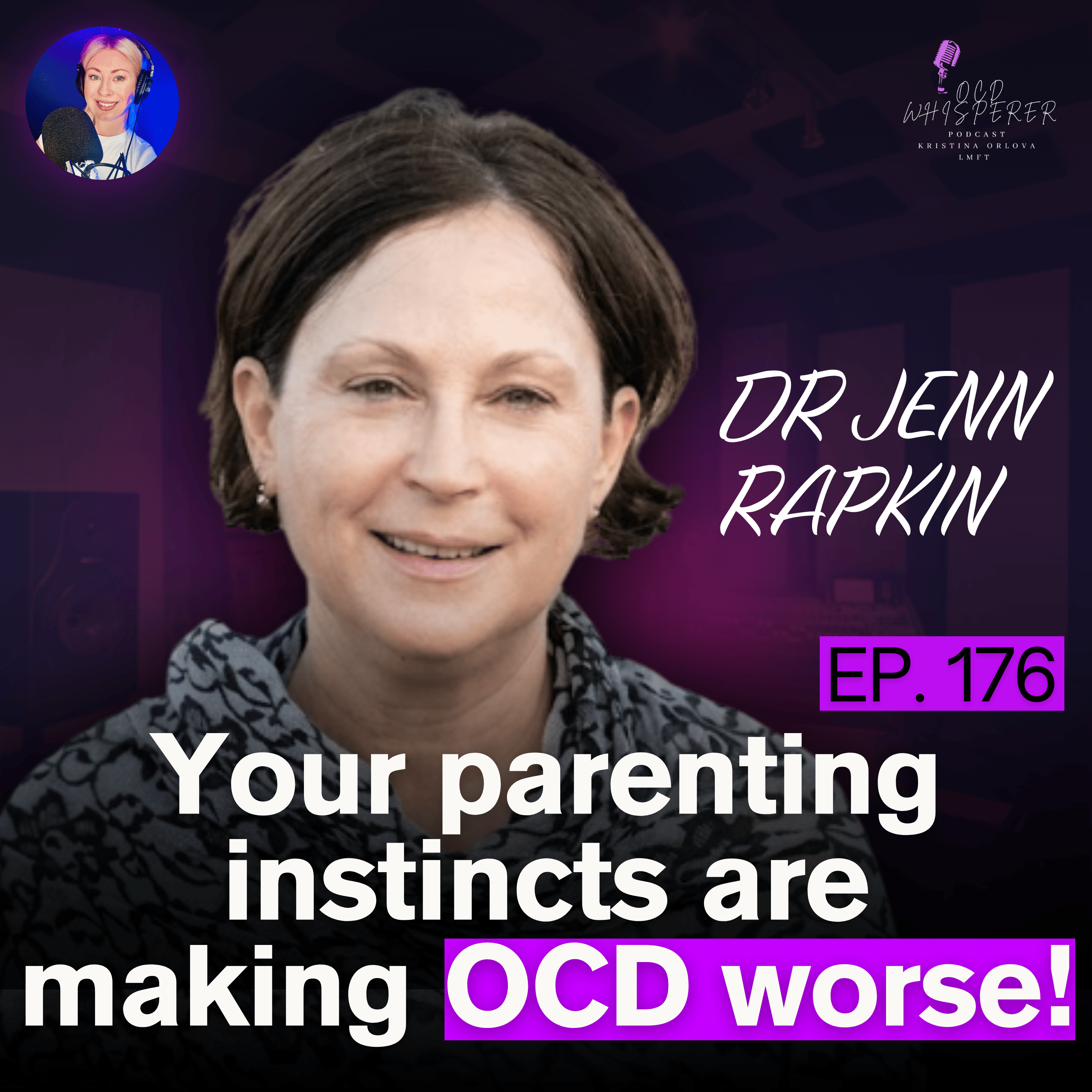
The OCD Whisperer Podcast with Kristina Orlova
176. The Hardest "No": Why I Stopped Fixing My Child’s OCD
00:32:57
Loading summary
Transcript79 lines
- [00:01]
Bleacher Report Announcer
The Bleacher Report app is your destination for sports right now. The NBA is heating up, March Madness is here, and MLB is almost back. Every day there's a new headline, a new highlight, a new moment you've got to see for yourself. That's why I stay locked in with the Bleacher Report app. For me, it's about staying connected to my sports. I can follow the teams I care about, get real time scores, breaking news and highlights all in one place. Download the Bleacher Report app today so you never miss a moment.
- [00:30]
Ryan Eggold
Hi, I'm Ryan Eggol and as a former TV doctor, I have a deep appreciation for the fact that a healthy meal isn't just nourishment, it's the start of something stronger. Access to good nutrition is critical for neighbors facing hunger to thrive. But that access can be limited by external factors. That's why I support Feeding America. Your gift helps the nationwide network of food banks provide fresh, nourishing food. Give now and your gift can double in impact. Every $1 can help provide 20 meals. Visit feedingamerica.org to join the movement.
- [01:01]
WSECU Representative
WSECU isn't just one of Washington's best credit unions. We're a Forbes Best in State five years running. Why? Because we put you first. Lower fees, early paydays, financial guidance and service second to none. As a member owned cooperative, we love Washington as much as you do. From the Olympic mountains to the rolling Palouse. Join us and discover how much we care about your financial well being because what we really do best is invest in you. Visit wsecu.org today to learn more.
- [01:29]
Christina Orlova
Washington let's Credit Union welcome to OCD Whisper podcast guys. Today with me I have Dr. Jen Arapkin and we're going to be learning a little bit about her story with ocd. And also her son has ocd, which is I think pretty interesting and unique and and I think by the end you're going to definitely get some nuggets out of this. Like how do you help your kiddo work through ocd? Also, she wrote a book and it's called Feeling the Feeling Muscle. How felt emotion can help you sit with an outlast hard feelings. And I definitely people with anxiety and all of us with OCD have a really hard time with emotions. So Jen's going to talk to us about that. So welcome to the show Jen.
- [02:10]
Dr. Jen Rapkin
Thank you so much for having me Christina.
- [02:13]
Christina Orlova
Absolutely. So for the audience to get to know you a little bit, tell us like what, what do you do? Who are you? Where do you what what's something that you enjoy doing in terms of your life and professionally?
- [02:24]
Dr. Jen Rapkin
Sure. So I'm a naturopathic physician and a body worker, and my passion is mind body medicine. So I have spent much of my professional life interested in meditation and mindfulness and body work.
- [02:41]
Christina Orlova
I love that. So you're really, like, embodying the presence of the moment?
- [02:47]
Dr. Jen Rapkin
Yeah, yeah. It's what I've been interested in.
- [02:50]
Christina Orlova
Hi, I'm Christina Orlova, host of the OCD Whisperer podcast. As someone who lives with ocd, I understand the struggles firsthand. If you're here, you're not alone. Before we start, grab your free OCD survival kit at www.corresults.com to help you take control. That's K O R results dot com. Now let's dive into today's episode. Amazing. Okay, so let's dive into learning a little bit about. How did you first find out you have ocd?
- [03:26]
Dr. Jen Rapkin
Yeah, you know, so I. I had OCD as an adolescent. And I will tell you, I grew up in the sort of late 70s and 80s, and I didn't tell anyone. I did. I didn't know what was going on in my brain. I was scared and confused and ashamed, and I didn't tell my parents. I just lived in my crowded and complex mind until my mid-20s when I worked with a therapist, and she helped me put a name to what was going on.
- [04:03]
Christina Orlova
That is such a common thing that I know people go through. Right. They don't know what it is. And so you just feel so horrible. Did it help you, like, once you got the name for it and you knew it was ocd, did that. Did that give you relief or did you feel maybe funny about it or question it?
- [04:19]
Dr. Jen Rapkin
Well, I think it helped. I have struggled my whole life, as I'm sure many of your listeners have, with just such a fearful mind. Right. Such a busy, crowded mind. And I think that that very much led me. I was, like, desperate, quite honestly, to find out who I was, apart from the intrusive thoughts and apart from my mind. And that is what led me into this journey of mindfulness. Because I just. I needed to. I needed to find something about myself that was more than that.
- [04:56]
Christina Orlova
So how did you. How did you work on ocd? Because some. Some people do things like exposure, response, prevention, some people do other kind of therapies. Did you do anything like that or what was your journey?
- [05:09]
Dr. Jen Rapkin
So I didn't know about ERP until my son was diagnosed. So to be honest, be honest with you. I, you know, I Fought with OCD basically my entire adult, you know, young adult life. And it did get better at times. As a naturopathic physician, I made choices in my life to live healthier, and I do believe that that helped. It quieted my mind. But I didn't have the tools. I didn't have the cognitive behavioral therapy tools that my son did. And so I. I feel really. I mean, I'm. It breaks my heart that he went through the journey that he did. It was a four year just being swallowed by ocd. But I do feel grateful that I have the tools. Current.
- [05:58]
Christina Orlova
Yeah. Well, if you don't mind, can you share a little bit with us? Like, what. What exactly happened or how. How did you even start to notice that something's going on here? That then it became such a big, big process?
- [06:09]
Dr. Jen Rapkin
Absolutely. And my son is now in high school, so he's given me permission to tell his story, but we were living abroad. We were living in Barcelona, Spain. And for the last four months of our time, there was the first four months of COVID and that is when we started. He was eight years old. And we started to see him show signs very similar to my ocd, which was repeating, needing to repeat behaviors over and over again. He was diagnosed with just right ocd, which basically means he has to repeat things until he has a feeling within himself that he's done it just right. And what's so just sneaky and awful about OCD is that it keeps moving the goalpost on him. Right. So, like, the just right might be five or six times one day and then 25 the next day. And maybe he has to repeat it 40, you know, today.
- [07:10]
Christina Orlova
God, yeah, totally. It's such a. It's such a horrible experience and feeling. And I just want to jump in and say, like, that's one of the ways my OCD manifests is that whole feeling of not right or that something doesn't feel complete or something. And it's just. It's wild when you don't know what it is and you're just trying to get that feeling to go away.
- [07:29]
Dr. Jen Rapkin
Yeah.
- [07:29]
Christina Orlova
Yeah. So then what happened?
- [07:32]
Dr. Jen Rapkin
So we moved back to the States and we. We got him into treatment. And what is interesting and sort of connected with what I. What I do professionally, it's there. There are no mistakes and there are no coincidences in life. So part of the work that I do is to help people with bodywork, to sit with hard feelings. And what was so. Just so difficult to watch was that my son was very treatment resistant. We had we had him in with teach, with doctors that were trained in erp, but he was so resistant to exposures and so resistant to the, you know, the feel, the, the, the feeling.
- [08:15]
Christina Orlova
Why do you think he was so resistant?
- [08:18]
Dr. Jen Rapkin
I think it's because the feeling in his body was so terrible that he didn't want to sit with that, with that hard feeling. And I say many, many times that here I was as a parent asking my 8, 9, 10, 11 year old son to do what adults struggle to do on a day to day basis, right? We don't want to sit with our hard feelings. We look for distractions and numbing, you know, numbing agents and ways to avoid hard feelings and erp. It's the brilliant, brilliant therapy. But it asks, it asks people to sit with the unknown and the uncertainty of, okay, I'm not going to engage in what my brain is telling me, but I have to sit with that awful feeling that something terrible might happen.
- [09:07]
Christina Orlova
I mean, you're hitting it exactly spot on. That's exactly right. Like, forget kids, Adults, right? Adults even who have a better grasp of, you know, just life and kind of more developed, really have a hard time with that. I mean, that's such, I think, poignant conversation. We talk about OCD and anxiety in general, but let's then get into that. So, I mean, I totally get it. Sounds like just the feeling alone was so intense and so much. He's like, no, I just, I don't want to do anything with this. I don't want to expose to anything. Like just, I just would rather do my rituals, which unfortunately a lot of people do do for a little while until doesn't work. So, so what happened? Because like, I'm assuming something happened somewhere that there was a shift or that he became willing to.
- [09:48]
Dr. Jen Rapkin
Absolutely. And for him it took a good four years. We were in and out of intensive outpatient programs, IOP programs. And it got to the point where we, my husband and I, decided to do space. Are you familiar with space? I am, yes. Supportive parenting for anxious childhood emotions. And so we started to slowly and systematically, you know, rollback accommodations because we were, we were tangled up and tied up in a lot of his rituals. So we slowly did that. And that didn't seem to move the needle for him. And so we did put him into a four month, well, three month residential program with another, an extra month of outpatient work. And you know, that is what moved. It was sort of like these things collided for him. It was, he was 12 years old, he was willing to do the work, wanting, wanting to, you know, have ocd, not be controlling his life. And that coincided with this intense treatment. And that was the recipe for him.
- [10:59]
Christina Orlova
Also. This is interesting, right, because it sounds like you, you were doing everything you could with what you had at the time. Then you. He's gone through different IOP programs and, and to the, you even started doing the space space treatment, which is really for parents to learn how, like you said, to pull back accommodations. And still with all of that, it didn't quite move the needle. And it really wasn't until you went through all those journeys and that he ended up in. In sounds like a four month program where he had to just be there and be focused and then that really started to move the needle forward. So like as a parent, as a mom or you. Right. Really, how did you manage your own internal, I'm sure you know, worries, fears, anxieties and so on as you're witnessing this. And you know, you can't, you can't just like step in there and like somebody falls, okay, let me put, you know, a little Neosporin and abandoned and you'll feel better. Or let me just, you know, give you a little hug and. Right. This isn't that. It's. So how. Yeah. How did you guys for yourselves, what did you do?
- [12:01]
Dr. Jen Rapkin
Christina? It was, it was so difficult. And I think one of the hardest pieces as a parent is our natural instinct is to take away our child's pain. Like, I want to make it better. I want to take his struggle away. And with OCD and anxiety disorders, as you know, we are coached as parents to give, give them support, but really let them know that they can do it on their own. And so, you know, he would, he would look at me with, in desperate, you know, please, Mom, I need your help. I want you with me. I want you to do this ritual with me. I want you to sit in my bed, in my room while I'm doing this ritual. And I had to say, you know, no, I love you and I know you can do this and I know it's scary, but I'm not going to be part of your, you know, your bedtime ritual and leave. And leave in his sort of most vulnerable moment.
- [13:01]
Christina Orlova
Yeah.
- [13:02]
Dr. Jen Rapkin
And it's really, it's. It was, you know, for me, I'm the nurturer. I'm, you know, as the mom, I just want to like scoop him up and, and make things better. And it went against sort of everything I thought about being a mom. But it's, it, it helped him on his journey to get better. And so I.
- [13:21]
Christina Orlova
Well, so what did you have to do? Like for self care? Right, because you're. The moment you're describing, I can almost feel it palpably, like watching you in the room, having to walk away. I mean, it's like my little heartstrings are like. Right. Everything feels tight, intense and like, oh my God. But I have to trust this. And there I go. So, like, how did you guys, as. As just parents together, support each other through that? Did you have, I don't know, something you did? Did you go on additional outings or try to laugh things off or what did you do to kind of, you know, let. Let that kind of move through?
- [13:52]
Dr. Jen Rapkin
I, you know, to be honest with you, we were so stuck in, you know, in the ocd. It had taken over our family that it. We, my husband and I just did the best we could to support each other, but admittedly there were moments where we, you know, it was really hard. And our marriage for sure suffered because we were just exhausted and sometimes angry and resentful. Not at our. Not at each other, but at our lives. Right. Like there was this grief that we had around, you know, not what the idea that we had of parenting. This wasn't it. This was.
- [14:33]
Christina Orlova
Yeah, I bet. I mean, it's. Yeah, I think it's. It's really poignant. You name that, right. Because we do have certain ideas for our lives. If you happen to have kids and for our kids lives or as a family, and then suddenly you're facing something like this that you didn't really expect. And it sounds like from what you're saying, like there was a period of time where there wasn't ocd, so there wasn't really anything that you. Any of you really thought about in that way. And then it just kind of showed up or. How did that happen?
- [15:03]
Dr. Jen Rapkin
Yeah, I mean, we. We were a family who did a lot. Obviously. We moved abroad for two years. We were living in Spain. We were sort of living this really adventurous life, doing a lot of traveling. And when OCD sort of became into our lives and into our son's life, our world just completely changed. As people know, with ocd, your. Your life becomes smaller and smaller. And for my son, you know, there were certain rooms in the house that he wouldn't go in. He didn't want to. He didn't want to do any of his hobbies. OCD had infiltrated everything. And so his life got smaller and smaller and smaller and our lives got smaller.
- [15:45]
Ryan Eggold
Hi, I'm Ryan Eggol. And as a former TV doctor, I have a deep appreciation for the fact that a healthy meal isn't just nourishment, it's the start of something stronger. Access to good nutrition is critical for neighbors facing hunger to thrive. But that access can be limited by external factors. That's why I support Feeding America. Your gift helps the the nationwide network of food banks provide fresh, nourishing food. Give now and your gift can Double in impact. Every $1 can help provide 20 meals. Visit feedingamerica.org health to join the movement.
- [16:16]
Bleacher Report Announcer
The Global Gaming League is presented by Atlas Earth, the fun cashback app. Hey, it's Howie Mandel and I am inviting you to witness history as me and my How We do it gaming team take on Gilly the King and Wallow. Two six seven's million dollars gave gaming in an epic Global Gaming league video game showdown. Plus a halftime performance by multi platinum artist Travy McCoy. Watch all the action and see who wins and advances to the championship match right now@globalgamingleague.com that's globalgamingleague.com in partnership with Level Up Expo and Smaller.
- [16:47]
Dr. Jen Rapkin
And so, you know, it was just, again, it was just very difficult. But of course all we wanted was for our son to have the support and the treatment that he needed.
- [17:00]
Christina Orlova
Of course. Yeah. I mean it's, and it sounds like it was then like a, like a progression kind of over time. Right? Because yeah, like ocd, we know you, you, you give into a little bit and then suddenly you have to avoid more and do more and do more next, you know, like really rapidly it takes over. Well, because you have OCD and your son has ocd. Like did you, did you end up getting triggered in some ways in your own O, C, D or how did you manage that piece of it?
- [17:28]
Dr. Jen Rapkin
You know, I managed it really in the sense that I was with him in many of his appointments and his sessions and I was just in my own quiet self along supporting him. I was learning these tools and using them like in real time because yes, his rituals would trigger mine and my OCD would start talking to me and there just wasn't time or space for that. And I, I had to, I just talked back, I talked back, I said no. And you know, I'm, I'm living proof as my son is as well now, that ERP is just a remarkable treatment. A remarkable treatment because we know that there's, there's no absolute cure for ocd. But when, when, when you can say no to it and Talk back to it. It gets quieter, it gets weaker, and it's just. It's. It's so powerful.
- [18:30]
Christina Orlova
Yeah. And when you say talk back, I'm assuming not like you're arguing with it, but more like you're making choices where you're like, no, like, I'm not going to go and do that. Like this demand that suddenly I feel.
- [18:41]
Dr. Jen Rapkin
I'm sorry if I use. If I'm using terms that are more specific for kids, like, that's something they talk about with my son. Was to say no to your ocd. Like, oh, your OCD is a bully, and you're going to talk back to it and you're not going to listen to it and you're going to ignore it. And so I. I do use that vocabulary. So I'm sorry.
- [19:03]
Christina Orlova
Oh, no, that's great. No, no, no, no. First of all, no apologies needed at all, Right? We just want. I just want to know, like, your story, your experience. And the only time I step in to clarify is because I always want people listening. Like, I want people to. To have some good takeaways from every ep, learn something. Right. And sometimes just because we know ocd, Right. If folks are listening, it's too easy to take something out of context or be like, oh, let me. Let me talk back to it. And. And accidentally, you actually might be fighting with yourself. Yeah. And then you're actually compulsing and not realizing. So I just. If I hear something, I like to clarify because I want folks to listen. Like what we're talking about. Well, from what I'm hearing from you is more like, I'm learning to say no to the demands. I'm not. I'm not fighting with it. I'm not going into some big, long winded conversations in my head around it and analyzing it. I'm just saying no, period.
- [19:52]
Dr. Jen Rapkin
Yeah, absolutely, Christina, 100%. Because as we know, mental compulsions can become, I mean, are certainly, you know, part of the. The rituals and, and the compulsions. So, no, I'm not talking about engaging in those compulsions. I'm talking about just strictly just saying no, not listening to them and not. Not engaging with it.
- [20:17]
Christina Orlova
Well, and I think that is going to take us to the next place, which is. Let's talk about the feelings. Right. Because I think that's a really great segue because if you're going to say no, like, feelings are going to come up because you're doing this stuff because you're trying to get rid of those uncomfortable feelings and feel better. Right. But let's talk about what you've learned and what you know through your own experience, through your work, you know, about feelings. Because I think people either looking for some big aha thing around feelings, like I'm. Or I'm going to have some big release or something I have to tolerate. And I think you have a different perspective on this. So. Yeah, I'd love to hear more.
- [20:56]
Dr. Jen Rapkin
Yeah, I do. And it really became clear to me sitting in on one of my son's sessions where his doctor drew a, a bell curve, so like a wave on his whiteboard. And he was trying to communicate to my son that he needed to sit with his discomfort. So when he would say no to his OCD or when he would resist engaging in his ritual, he would have an enormous amount of discomfort that would come up. And his, his doctor was telling him to sit with that. And I looked at my son's face and there was just this confusion. Like, what do you mean? What do you mean, sit with this discomfort? My son and I are very similar. We're big feelers. We feel things in our bodies. His just right feeling was in his body. And so I realized that for him and for many of us, sitting with discomfort just simply means sitting with a feeling. And that very well could be within our bodies. Right. Like it's a dis. The discomfort and the anxiety that we feel is within us. And so, you know, the work that I do is really just letting that feeling be and almost, almost as if you're just welcoming it in to your body just to be with it for a minute or two, to just let it be there. And for some people, that sounds crazy. Like I'm gonna just sit with a, with a yucky feeling.
- [22:33]
Christina Orlova
Yes.
- [22:34]
Dr. Jen Rapkin
But yeah, that's, that's what it is. It's like, can we begin? Can we begin to just sit with.
- [22:41]
WSECU Representative
WSECU isn't just one of Washington's best credit unions. We're a Forbes Best in State five years running.
- [22:47]
Dr. Jen Rapkin
Why?
- [22:48]
WSECU Representative
Because we put you first. Lower fees, early paydays, financial guidance and service second. As a member owned cooperative, we love Washington as much as you do. From the Olympic mountains to the rolling Palouse. Join us and discover how much we care about your financial well being. Because what we really do best is invest in you. Visit wsecu.org today to learn more. Washington let's credit union
- [23:13]
Dr. Jen Rapkin
hard, hard feelings. And realize that they're just feelings. I'm not diminishing, you know, I'm not. But, but I'm just saying that we can Indeed, sit with hard feelings.
- [23:27]
Christina Orlova
So let's talk about how very. Because I do talk about. I've talked about it in the past on the show, but I always love to hear different perspectives because I think this is the part, like you said, everybody gets really tripped up on, which is, how do I do this? What do you mean? It's overwhelming. It's so big. Or I feel like my heart's going to fly to my chest, I feel like I'm going to pass out, or I feel like I'm having, like I'm about to have a panic attack or. Or you. I feel so maybe gross or disgusted or, you know, any of those big things or guilty and so on. So what would you say from where you sit and what you both have experienced, what would you do? How would you start? How would you practice? Like you said, I think just letting it be without needing to do anything about it.
- [24:15]
Dr. Jen Rapkin
Yeah, it's a great question. And I. I would encourage people, if, you know, they're just beginning to think about this and to understand this is to really just take a moment, not necessarily tackle the discomfort around the ocd, the ERP initially and just begin to play with an everyday frustration or in every day, you know, feeling of insecurity or embarrassment or a wonderful feeling. Somebody just gave you a compliment and you want to stop for a minute and take that in. And so when we start with everyday feelings, we can begin to, like I said, almost as if you're shaking the hand of a feeling. Shake the hand, invite it inside you, and see if you can find a location of the feeling. Is it. Does the feeling exist somewhere in your body? Your jaw, your shoulders, your chest, your abdomen, behind your eyes? Does that feeling have an intensity? Does it have a shape? Does it have a color? Does it have a density? You know, it might have a word, it might have an image, it might have a memory, but just to really invite the feeling in and sit with it for a minute and just see if you can get to know it. And again, I know that may sound a little strange, but for many people that are feelers, people that feel emotion quite strongly in their body, they're probably as they're listening, there's probably some recognition there and maybe some validation and maybe some familiarity, like, yeah, I do feel things in my body. And just giving somebody permission to realize that that's part of the emotional experience. Part of the emotional experience is to feel what's going on. What is our inner experience of embarrassment or failure or rejection or wonder and awe and gratitude and appreciation and joy and sort of let these emotions have an experience and a physicality in their body. And then once that. Once we realize that and once we become familiar to that idea, then we can begin with OCD to realize that the anxiety that's coming up is an inner body experience for many of us, and that's what we need to sit with. And it will. It is like a wave. It will crescendo and peak and. And dissipate. But we have to trust that we have to learn. I mean, that's an experience that we learn. It's something that we have to trust.
- [27:17]
Christina Orlova
Well, I have a question then. Is it fair to say that then you're learning how to tolerate these things, to tolerate these feeling states and experiences that come.
- [27:25]
Dr. Jen Rapkin
Sure. Yeah. I think tolerate is a. Is. Is a. Is a great word because we're just. We're learning how to outlast it. We're learning how to sit with it. We're learning how to tolerate it so that we can be with it, so that we can think about it.
- [27:42]
Christina Orlova
Like when we have. Yeah, sorry. When we. Because when we have, like, positive feelings. Right. Like. Because I think about this sometimes. Like, when you feel happy or joyful generally. Right. Or excited about something, you don't really do anything about it.
- [27:54]
Dr. Jen Rapkin
Right.
- [27:54]
Christina Orlova
That excitement can last. It could be a quick, like, little hit or it could be for a little while, but generally, anything like that. I just think it's always so interesting in terms of just human experience, period, that, like, we don't. We don't get stuck on those, right. We. We look forward to them. We usually are like, yay. And then when we have a negative experience, like you said, right. Starting with maybe just an everyday frustration and kind of what I hear almost like getting curious and kind of saying, okay, I'm frustrated right now. Okay. Like, okay, let me lean into it. Let me just, like, actually put my shoulders down and get into, like you said, I guess, your body, right. And feel your body and what frustration feels like in your body and like, like building that muscle, right? Like reps, Right?
- [28:41]
Dr. Jen Rapkin
Exactly. Yes. Exercising the feeling muscle. And you're absolutely right. Even if you look at the words that we use and the phrases that we use for good feet, for feelings that are good. And I'm quoting, you know, that we. We want to freeze them. Right. Like, we want to freeze a feeling. I want to catch a feeling. I want to hold on to a feeling. We realize that feelings are fleeting.
- [29:04]
Christina Orlova
Yeah.
- [29:04]
Dr. Jen Rapkin
When we're talking about feelings that might feel good, we know that they're fleeting, but feelings that are hard, no, we think that they're going to stay forever.
- [29:16]
Christina Orlova
Yeah, that's actually a really good point. Right. And the truth is, feelings of all sorts, they come and they go. I mean, even within one hour, you can have multiple different feelings. So it's kind of like, okay, let's zoom out a little bit and understand that feelings come in all shapes and sizes and something like OCD and, or anxiety, any anxiety disorder. It's almost like it skews it and we just almost like hyper focus on the negative experience as if now it's going to last forever. And then we start treating it as if it's going to be forever and we kind of like hyper focus. And of course, all of that just makes it worse. Although I think we think we're figuring something out, but we're not.
- [29:56]
Dr. Jen Rapkin
Yeah, no, absolutely. And, And I, I would take that even further in the. The context of OCD is I feel like we're, you know, the success of ERP and they're maybe people that disagree with me, and that's, you know, totally cool. But I feel like the success of ERP really is, you know, partly just because we are experiencing and tolerating and trusting and learning that we can get through tough feelings and that terrible things don't happen. Right. Like, yeah, yeah. You know, there's. There's a certain amount of lived trust and experience that happens in these cognitive behavioral therapies that we begin to have experienced that this, these. This emotion is a wave, and then it. It can come and move through us and we can get through that.
- [30:53]
Christina Orlova
I love that I'm always a big fan of saying, kind of telling people, let's learn how to get out of our own way. Because when we start to compose and analyze and figure out so much, it's actually to our detriment that gets in our way. It's like our body knows what to do. We have to let our body do it, you know, and it's uncomfortable. It's definitely uncomfortable. I don't think anybody's like, like you said your son was even resistant. Like, I don't want to do this. Are you kidding me? But then you learn once you relax and kind of let yourself go into it. Sounds like you guys are in a place where you're in recovery and you're able to live, right? You're able to enjoy your life.
- [31:31]
Dr. Jen Rapkin
Yeah, absolutely. And we have, you know, it's really cool. Cool. And you just sort of said it there is that. We also Have a more friendly relationship with our bodies. Right. Rather than this combative relationship where we're holding our breath and pushing away the heart, you know, pushing away that discomfort. Instead, we're. We're relaxing into it and knowing that we can get through it. And there. That's a different. That's a different relationship with our body. It feels different, right?
- [32:05]
Christina Orlova
Yeah, absolutely. Well, and also, too, I'm just curious, like, through this journey you've all gone through, like, how's it changed you as a family?
- [32:14]
Dr. Jen Rapkin
Yeah.
- [32:15]
Christina Orlova
What are the things we get out of this now? Right. Because you probably are stronger or better or have a better connection or something.
- [32:21]
Dr. Jen Rapkin
Well, we for sure have a better connection, but I think one of the really cool things. And I have a daughter as well, so it's four of us, and we are really present with our. You know, we present with our emotions. But what's really cool is that we're learning to let, you know, one person. If one person is having really big emotions, let them have that and be there for them in sort of a quiet, observing way to hold that space. And we all take turns, right? Because some days mom's got a lot of feelings, and sometimes my daughter has a lot of feelings, and sometimes it's my husband and my son. But if we can just, like, consciously and intentionally realize, like, okay, let's just be here for this person and also practice holding space and being present for somebody else's emotions. So it's like giving somebody permission to have their big feelings and also practicing being there but not fixing.
- [33:22]
Christina Orlova
Yeah. Being that container. I think that's the hardest part, to be honest. Right. It's. It's. It's being able to be a witness. And. And I think there's a lot of beauty in that. But it can feel tough. And initially, because you. You want to make it better, right? You. You want to fix a situation. But I think like you said to your point, you've learned that you had to go against all of your instincts, even as. As a mother to say. But the only way to help here is I have to kind of lend that confidence to my kiddo. And now everybody gets to learn that you can do it, and you get to go through a cool learning process yourself.
- [33:58]
Dr. Jen Rapkin
Yeah, absolutely. There's so much that I learned from space around that sort of realizing that we just. We can give support. Support to people going through hard times, but that we don't have to fix it. We can just let them know that we know. I know you can handle this. I know that you can do hard stuff. I know you can feel hard feelings and that's, that's, I think, really big stuff to.
- [34:29]
Christina Orlova
Oh, absolutely. Yeah. You're giving them that confidence. Right. You're actually like, like, I think in a beautiful way a cheerleader. Right. To let them know that, like, I totally believe and trust in your ability to do this.
- [34:41]
Bleacher Report Announcer
Yes.
- [34:42]
Dr. Jen Rapkin
Yes. Yeah.
- [34:44]
Christina Orlova
Awesome. I want to thank you so much for coming on the show, sharing your personal story. I know you know personal stories are always vulnerable, but I love hearing it. I'm sure everybody else is going to love hearing it. And before we end, if people would like to find you, how can they find you?
- [34:59]
Dr. Jen Rapkin
Yeah, sure. So I have a website, www.doctorjenrapkin.com and if anybody's interested in checking out my book, it's to going called the Feeling Muscle and it's on Amazon and also bookstores. You can special order it.
- [35:15]
Christina Orlova
Beautiful. Thank you so much for coming on the show.
- [35:18]
Dr. Jen Rapkin
Thank you for having me.
- [35:22]
Christina Orlova
Thanks for listening to the OCD Whisperer podcast. Remember, freedom from OCD is a journey and you're not alone. Visit www.coraresults.com to explore self help masterclasses like Sneaky Rituals with Jenna Overbaugh or ICBT Masterclass with Christina and Abe. Don't forget to grab your OCD CBT journal tracker and planner while you're there. If you found this episode helpful, please subscribe, share and leave a five star review to help others find the podcast. Together we can make a difference. Keep going and I'll see you in the next episode.
- [36:03]
Bleacher Report Announcer
The Bleacher Report app is your destination for sports right now. The NBA is heating up, March Madness is here and MLB is almost back. Every day there's a new headline, a new highlight, a new moment you've got to see for yourself. That's why I stay locked in with the Bleacher Report app. For me, it's about staying connected to my sports. I can follow the teams I care about, get real time scores and breaking news and highlights all in one place. Download the Bleacher Report app today so you never miss a moment.