← The OCD Whisperer Podcast with Kristina Orlova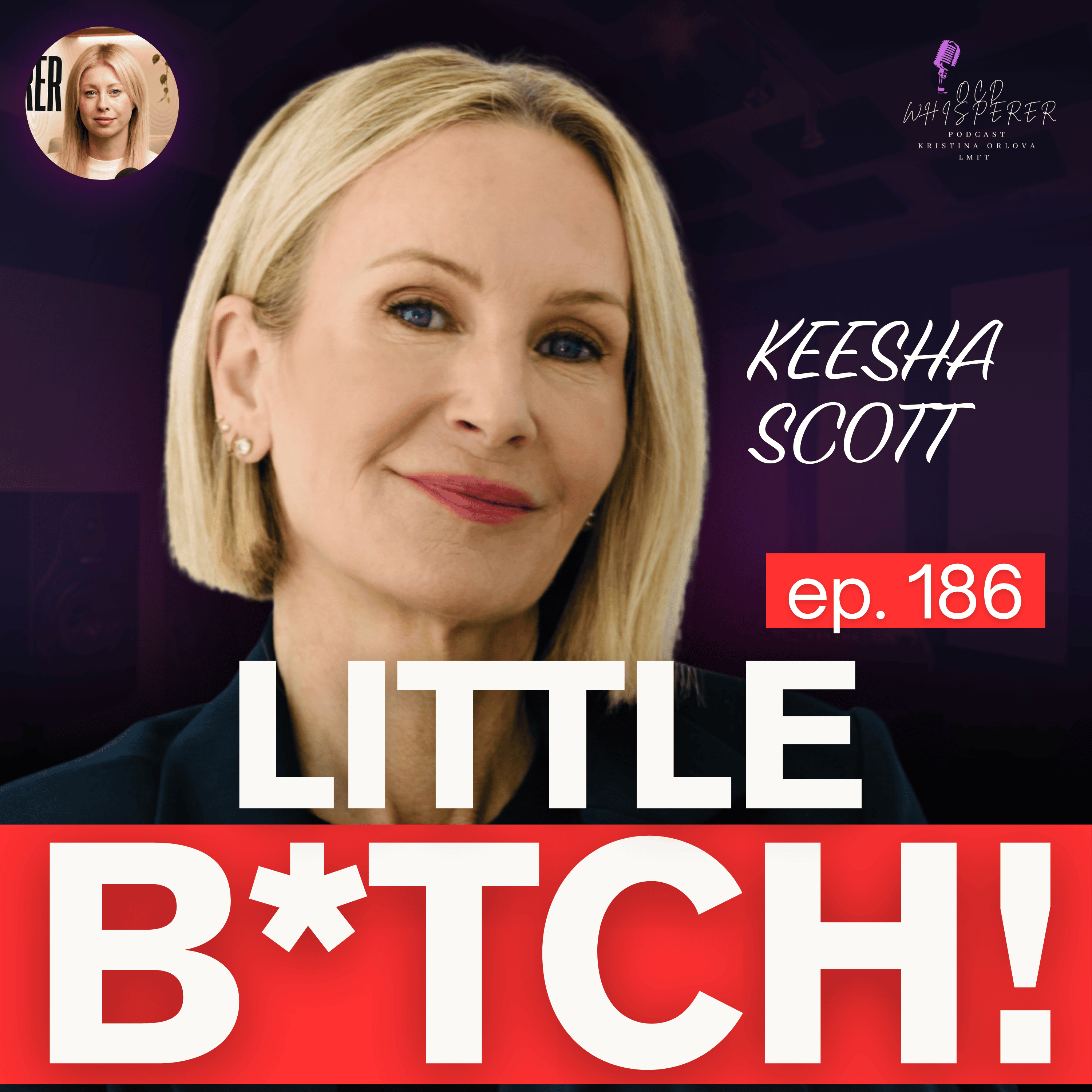
The OCD Whisperer Podcast with Kristina Orlova
186. The Wildest OCD Recovery Story I’ve Heard
00:35:57
Loading summary
Transcript76 lines
- [00:00]
Kesha Scott
Foreign.
- [00:07]
Podbean Advertiser
Need a moment to breathe with Podbean's ambient relaxation. Enjoy ocean waves, calming rain, and peaceful nature sounds anytime, anywhere. Whether you're working, studying, meditating, or winding down, your perfect calm is just one tap away. Download the Podbean app today on Google Play and the Apple App Store. Relax with Podbean. P O D B E A N.
- [00:35]
Kristina Orlova
Welcome to OCD Whisperer podcast, where we talk about ocd, anxiety and mental health. If you like these episodes, please remember to subscribe and hit that notification bell on guys today with me, I have Kesha Scott, and we're going to be talking about her personal story with her daughter and ocd. Welcome to the show, Keisha.
- [00:54]
Kesha Scott
Thank you so much for having me.
- [00:56]
Kristina Orlova
Absolutely. If you don't mind, can you tell us a little bit about yourself so folks can get to know you?
- [01:02]
Kesha Scott
Sure. I'm a mom of three. I am a co founder of a national behavioral health company. We treat substance use and mental health disorders. And I'm a new author. I just wrote a book that will be published in April 2027. It's a parenting book.
- [01:19]
Kristina Orlova
I love it.
- [01:21]
Hi, I'm Kristina Orlova, host of the OCD Whisperer podcast. As someone who lives with ocd, I understand the struggles firsthand. If you're here, you're not alone. Before we start, grab your free OCD survival kit at www.corresults.com to help you take control. That's K O R results dot com. Now let's dive into today's episode.
- [01:50]
So you have this amazing book coming out, but I also know you run a podcast called Cake for Dinner. Yeah. So, okay, let's talk a little bit then about your experience with getting your daughter the right treatment for ocd. Like, what was that. What was that process like?
- [02:08]
Kesha Scott
You know, it's tough because in my line of work, I work with teenagers and, you know, we have this big, big, you know, national behavioral health company, and we, we help people every day. And I think when you are in that line of work and then the person that needs the help is in your home, it's like, really scary. I felt really inadequate. She was clearly struggling. It started in fourth grade. I did not have much knowledge around ocd, and it didn't present itself in the beginning in a way that I would have known it was a mental health. It looked like poor behavior, and then that led into severe anxiety. So it started as, you know, it wasn't something that I knew how to identify. And I think in fourth grade, she went on a sleepover she threw up that evening. She was sick. And it. Her reaction to that was wildly, you know, just out of bounds. And she was just tortured by the idea that she had thrown up. We later came to understand that she had a metaphobia, which I also had never heard of. But so, you know, lucky enough because we do own a company, I reached out to a few people and, you know, got some information prior to that, you know, it's like going from therapist to therapist and trying to, like, figure out what is wrong with this kid.
- [03:43]
Kristina Orlova
Yeah. So I need to ask you then this question because I definitely know, and I hear this quite often, right. Which is like, so how many doctors or therapists do. Do you feel like you guys or do you know that you guys went through before anybody kind of realized or diagnosed this correctly?
- [03:59]
Kesha Scott
Probably like four or five. You know, we had her, you know, she took some testing to figure out, like, what her diagnoses were. They came up with ADHD and that was it. You know, some memory processing stuff that showed up academically, but nothing around. Anxiety, ocd, panic. We went to a few therapists where they, you know, it was really talk therapy, which I later learned can really just make OCD worse. And her panic really started to increase by 5th grade. She was almost agoraphobic by the time we got the proper help.
- [04:42]
Kristina Orlova
Wow, that's a big, long journey and that's a lot going on. I gotta ask you another question, which, you know, as a parent, as a mother, was there a moment that you felt like maybe you're being like the worst parent, but like there was maybe just because you didn't know it was actually happening? Oh, yeah.
- [04:59]
Kesha Scott
There's so many of those moments. And I, you know, I remember specifically one morning, school became a huge barrier. I mean, it was tremendous. And she has a twin brother. I also had a baby at the time. And, you know, she one morning, absolutely refused to go to school. And it presented as bad behavior, you know, and, you know, I just remember, like, you know, forcing her into the car. I think she literally was like, in her. A T shirt and her underwear. And like, I threw her clothes in and said, you get dressed, you're going regardless. And in retrospect, I look back on that and feel terrible because the reality is somebody had thrown up a year before in her class and she was having reaction to that. She wasn't able to communicate that to me because I don't even think she understood it because, you know, so much of OCD feels irrational. You know, looking back on it. Yes, I Feel terrible in her little body and her mind, she was fighting for her life.
- [06:06]
Kristina Orlova
Yeah. I mean, I think that's so poignant. Right? Like, we miss that stuff because also, you have a younger. A younger person, little human that doesn't even fully understand what's happening there and, you know, is trying to basically avoid. To kind of, like, protect herself. Right. And totally. You don't know this. You're like, come on. Like, I need you to get to school. I guess, like, so it sounds like you've. You've kind of got the right diagnosis and you've. Did you. Did you then plug into the right treatment or what was that like? Because you mentioned talk therapy and then learning. Oh, my gosh, that actually, it makes it worse.
- [06:42]
Kesha Scott
Right. So eventually we got. We were recommended to see Dr. Steven C. He's in Palm Beach Gardens, Florida, and. And he specializes in ocd. So we drove up there to meet him. We started with, like, an outpatient program where we would go up there, like, three days a week for a few hours at a time. And he started doing exposure therapy. And look, you know, I suppose everybody's different, but the combination of medication, which. He's not a big medication guy, but Olivia was incapable of taking in any of the exposures in the beginning. She was literally so terrified that she would physically run out of his office. I mean, it was.
- [07:26]
Kristina Orlova
Oh, wow.
- [07:26]
Kesha Scott
It was super intense. And basically it was like either she was going to go to Roger's inpatient, or she was going to go on medication and be able to receive some of the, you know, therapy. So she went on Prozac, and it just took the edge off enough for her to sit in with him. We started very intense exposure therapy and did that for a long time. So. And, you know, look, it was like a whole. A whole family education. Her twin brother, her baby brother, myself, my husband, we all had to learn about OCD exposure therapy, you know, what this thing was, because she also had homework, you know?
- [08:07]
Kristina Orlova
Right.
- [08:07]
Kesha Scott
And I'll just tell you, the homework around emetophobia is wild.
- [08:12]
Kristina Orlova
You know, give me one example. I mean, I know because I do this work, but I'd love to hear from you. What were some things that you're like, what is this?
- [08:20]
Kesha Scott
Yeah. You know how it goes. The first you're looking at pictures, and then you're listening to videos of people vomiting. We used to play this game where, like, you'd throw the ball to the next family member, and you threw the ball, you had to make a vomit sound. You know, her brothers were like, so into this because it was, like, weird and fun, but, you know, she would have a friend over, and it was like, oh, my gosh, like, I would be tortured that, like, one of them was going to bring up the vomit game, you know, and it was just so much to explain. And, you know, then it would progress over time where she had to watch videos of this, and it got to the point where we would have fake vomit in a bag that she would have to smell. And. And there was also things that went along with hermetophobia that weren't vomit related, like being hot, feeling trapped, feeling dizzy, all things that could lead to vomit or illness. So we had to take a trip to the hospital. You know, some. Some. Some really, like, intense things. So, you know, we had to learn a lot about this, you know, OCD thing, and a lot more than any of us wanted to know, really. But in order to help her and to support. Support her, we had to understand what we were dealing with.
- [09:37]
Kristina Orlova
I mean, honestly, it sounds you. Like you guys kind of all went all hands on deck, which is pretty amazing, you know, because that is part of the work. It's. It's not just like her. It's affecting the entire family unit, you know, but how did. I'm just curious, personally, how did you, as a parent, as a mom, you know, when you're looking all this from the outside and like, okay, we're gonna go to hospitals now and do all these different activities and try to make it a game, you know, what was going on through your mind in terms of kind of looking at this and. And, you know, because again, you have to think about, okay, when she's gonna have friends on. When she goes out into other places to play, like, how are we. How are we gonna navigate all this stuff?
- [10:17]
Kesha Scott
Yeah, I mean, look, it was terrible, right? But, like, I'm her mom. I would, you know, walk through fire for her. So there was no, you know, reservation about what we were gonna do. I believed that this guy, I mean, he turned out to be a complete OCD genius. I believed in him. I mean, it was to the point where we were driving, there was an hour drive, and she would be kicking the back of my seat, screaming. I remember one time she. She waved down a truck next to us and said, help me. You know, oh, wow. I'm like thinking, oh, my God. Oh, my gosh. Or she was also very disrespectful to him, which was very hard to watch as a mother. And he said to me one time, she's going to do everything possible for me to fire her because she's that scared of the exposures. So if you can't handle it, you need to wait in the waiting room. And I remember thinking, like. Like, this guy is in, you know, like, yeah, he's in. And so he was doing everything he could do, and my daughter was doing everything she could do. So I was going to do everything I could do. And my husband, the same. And as little as her twin brother, I think, understood he was there to support as well. And, you know, just a family thing.
- [11:32]
Kristina Orlova
I mean, first of all, it sounds like you actually were blessed to find a great therapist because there really are some great therapists out there that understand, that are well trained, that treat this. And know what? I will just say real OCD really is because, you know, I think we both can admit that in the world, right? People say things like, oh, my gosh, I like to line things up awful or oh, yeah, I like to. I do this thing and I like to. I'm like, okay, first of all, when you like anything like that, that's not. That's not in the realm. OCD is so distressing. It has nothing to do with liking or having it be a preference because I just want it this way. That's. That's just. You maybe are type A. I don't know.
- [12:15]
Kesha Scott
Well, a lot of people, you'll hear people say, and typically, you know, people reference cleanliness or germs, so they'll be like, oh, my gosh, he's so ocd. Right. I try not to take offense to that because I know everybody's just doing their best with the knowledge they have. But to somebody who has really battled ocd, I do think it's offensive. So in support of my daughter, I try and educate people, like in an, you know, situation like that, oh, 100%.
- [12:41]
Kristina Orlova
Because there is a difference, right? When you really are just a germaphobe or you. You like, again, you. You. You focus on cleanliness in some type of way. But again, that's still very different than real contamination, OCD or, you know, really any topic. So, I mean, I think like anything in life, when you really are dealing with that disorder and you see the intensity and. And how much it can destroy a person, you. You just view it different. You don't take it so lightly. Well, okay, I gotta ask you. What's something that you wish maybe somebody told you about parenting a child with ocd? That. That maybe nobody tells you that you now, in hindsight know?
- [13:18]
Kesha Scott
Well, actually, a psychiatrist once Told me that, you know, when your daughter is in this space, she's so afraid. He said, imagine if you flew to a foreign country as a kid and, and you got off the plane and you couldn't find your family. That's the level of fear that she has every single day. And that really changed things for me. Like, that really shaped things for me. Because the reality is, no matter how much I understood this OCD thing, it was still irritating. Irritating and inconvenient for me as a mom. I had three children at a full time job and there was so much that surrounded it and her that sometimes it was very frustrating. And when he told me that, I remember and she was very thin at the time because she had so much anxiety. And I remember just crying and you know, thinking like, gosh, like in that tiny little body, she's so scared. How dare I be inconvenienced?
- [14:24]
Kristina Orlova
Mm. I mean, that's real talk. I think that's exactly right. I cannot tell you how many times parents will say things like, and, and even, you know, partners or family members like, oh, I'm just so annoyed, I'm mad, I'm frustrated. And that's real. Like there is an element of that a hundred percent. So we can't deny that and sounds like to your point, but there is at least a different way that you were able to hear it, to really kind of bring it home and have that more, I guess, like a visceral understanding of something.
- [14:53]
Kesha Scott
Right, Right. Because I was fighting for, for, for my life in my space as a mother, but she was fighting in such a physical way. You know, she'd wake me up in the middle of the night because she couldn't sleep. She was, you know, riddled with fear, sweating bullets, you know. Yeah. So like some of those moments, I just, they really straightened me out. Like, you know, my job, this is my job and I'm going to do it and we are going to fight, fight like hell to get out of this.
- [15:23]
Kristina Orlova
So how did you, what support did you get for yourself? Because, you know, we talk a lot about our children, but let's talk about the mom, right? Because you, you're like you said, you're writing a whole family. There's all these kids. There's also your own career, then you have your own relationship. And I mean, there's you, right? There's you just needing to take care of you and your own well being. So what did that look like?
- [15:49]
Kesha Scott
I look like nothing. I did nothing. I, I fought like hell all day long. And as soon as she could get to sleep at night, then I would go to sleep. I neglected my marriage. I probably neglected my other kids, but I seriously and severely neglected myself. I think I was in a trauma, like, you know, state, state of, you know, my, my nervous system was just at peak all day, all the time. I never gave it a chance to, like, come down. Also, you know, her father had died years before, so I, I never really recovered from, from that. So I, you know, I was just in survival mode. And I felt like, I think so many moms feel that my job is to protect these kids and to manage this family, to help my husband and I will figure out my stuff later, you know, when she lands, when we get through this, because no matter how hard it was, I did feel we would get through it. And my daughter, uniquely to her, maybe, maybe not. She is a born fighter. I mean, she is extremely difficult sometimes. And I remember Dr. C saying to me one day when she was being a spirit, especially defiant, he said, you see that thing? That's the thing that's going to get her through this. So please, if you can't handle it again, wait in the waiting room. That's the thing, that little fighter in her, that's the thing that's going to pull her out of this. And it was once he taught her how to push back on the ocd. You know, she started pushing back in the way she pushed back on everything else. Also, one funny story, I don't know if she'll appreciate this, but he told in the beginning, said, you know, we should name your OCD because it's like an opponent kind of, and you need to be able to call it. And she named it Lil bit. Okay,
- [17:56]
Kristina Orlova
I heard many names, but that I, I, that's funny because it's somebody that's so little.
- [18:03]
Kesha Scott
Fourth grade, she was tiny, and, and he said, what would you like to name it? She said, little bit. And I remember thinking, like, oh, my God, Okay. So I said, can we call it LB for sure. Like, I just couldn't hear her just calling it little all day long. And he said, she said little, and that's what we'll be calling it. And I was like, all right. Like, I was the outcast in the therapy session every time, you know, he was just there for her, and that was it. So she named it little, and that's what we referred to it as.
- [18:35]
Kristina Orlova
That is hilarious. That's just.
- [18:37]
Kesha Scott
Now it is hilarious,
- [18:41]
Kristina Orlova
of course. Of course. I mean, you know, I, I again, I laugh because one, she's so little. And that's the name she went with. And I've heard so many interesting names, but also just as somebody who does this work, like, I, like I know it intimately. And yeah, that, that's, it's, it's just, that's what it takes, right? It's like your brain is. It's like this internal fighting, this internal fight that you're having. And you know, it's not like this external thing you can easily grab and then correct it or. Okay, here, let me show you how to do it differently. It's, it's, it's inside. So what are you supposed to do with it? Right? So you really have to find out these, find these different strategies and tools of how can I externalize it, how can I put a name or something that I can point to it, almost like, try to almost touch it and then go, go after it. And it changes the game. He changes the whole experience.
- [19:29]
Kesha Scott
And I think he tapped into that. Like, I think he saw what a feisty little young woman she was. So he didn't need an abbreviation for it. He was going to let her call it what she wanted to call it. So she would push back against it, which ultimately is how you survive. OCD is what I've witnessed, you know, because accommodating ocd, then it just keeps growing. So as soon as she saw it as little bitch and she started push back on it like that, she started to slowly but surely come out of it. And today she is not burdened by ocd, which as much as I've read, isn't super common. She's 19 and has not been in the grips of OCD for years.
- [20:13]
Kristina Orlova
I love it. Wow. From, from what, like 5, when it first starts in 19. What a beautiful journey. But like you said to your point, right, it's that you're finding, you're finding something that gives you a little bit of that inner confidence and ownership of that process, right. So you can fight back and say, hey, that's enough.
- [20:30]
Kesha Scott
And you know, it peaks, you know, like it. I think over there, was there a period of time where she'd start to worry about just interesting things like, is this dairy expired? And I would say, no, it's not. But if she'd get her mind around that and so she would need to eat the thing, otherwise she would become afraid of it. So, so it's like she, he taught her every time that pokes its head up, you have to counter it. You know,
- [20:58]
Kristina Orlova
I was going to ask you.
- [20:59]
Kesha Scott
Yeah.
- [21:00]
Kristina Orlova
If she maintained kind of doing that work. Because we kind of would say that this is when you get into doing ERP as a lifestyle. So you say, hey, in an ongoing way, that this is it. This is just what I'm going to do every time I'm going to lean in. And that's how I kind of short circuit that cycle immediately. Immediately. So that it doesn't take hold.
- [21:19]
Kesha Scott
And I think she just. He taught her that, and she just, for whatever reason, bought into it. And I can think of two scenarios, another really weird example that she might not appreciate. She called us from a party one night and she said, is dad there? I said, yeah. She said, put him on speaker. And she said, mom, you're not gonna believe it. I'm at a party and this girl is throwing up and I'm holding her hair. And meanwhile, most parents would be like, why are you at a party? Who's drinking? Is she drunk? We were like, celebrating in our guests because we knew what that meant. Yes. And then another scenario is that she tried hot yoga once and she. She couldn't do it. She felt trapped and panicked. And so what she did by herself was every day she went and tried to stay five more minutes.
- [22:13]
Kristina Orlova
So amazing.
- [22:14]
Kesha Scott
So that's just part of who she is. And. And it's wild how much he got that, because now when I look back, it's like he saw that and he knew that was his way to help her fight her way out of it. So at 19, if anything pokes its head up, she sort of counters it in the way that he taught her.
- [22:33]
Kristina Orlova
I mean, I think the big thing I will tell you that I'm definitely hearing also that is different is it's like you said, it's her personality. And that's. Saw that really quickly and almost like aikido, like, okay, let's take that energy and like, let's. Let's show how to work with it so you can use it to your advantage. And that's amazing because it sounds like she's really just took it and she's really own that process and really actively goes for it. That really is the name of the game. If you know, when you're using exposure response prevention, that's the kind of attitude we want. We want to take. Of course, everybody's different. Everybody has different issues, different other, you know, variables and things going on. But it, It's. It's incredible that, you know, for you guys, she was able to really take that feistiness, like you said, and direct it into this and. And get her life back.
- [23:20]
Kesha Scott
Well, there's so much accommodating that goes before that. Any parent that's ever called me with a child of ocd, it's like, immediately you hear it, you know, we're all just trying to stay afloat, we're trying to help our kid. They're telling you that this thing is going to happen, and you know it's not. So what you want to do is say, oh, don't worry, that's not going to happen. But what you don't know is that you're feeding the OCD while you're accommodating. And I had to learn that, you know, and it's tough. It's really, really tough because when your kid is in the crisis and, you know, you can just feed them one little thing that will stop the crisis temporarily, you kind of want to do it, you know?
- [24:00]
Kristina Orlova
Yeah, yeah. And so what was hard about that, right? Because that is a common thing, because that is a natural instinct and it typically is something that does work, and we do do because we want to soothe our babies. But here you're having to do something completely opposite. So what was that like?
- [24:17]
Kesha Scott
I mean, I just really thought to myself, like, either this guy is like so smart and this is going to work, or he's not. But if I'm going to pay him, if I'm going to drive all the way here year, I'm going to buy fully in and do what he tells me. And so I did, you know, when she would come in the middle of the night, be like, what do you think? What if I throw up tomorrow? Do you think I'm going to throw up tomorrow? I would say, I don't know. I mean, are you sick? Likely not. But ultimately I have no idea where I used to say, you're definitely not going to throw up tomorrow, so don't worry, you can go to sleep. And I had to start feeding her different answers and I just like, her bought in and we just gave it a go, you know, but.
- [24:58]
Kristina Orlova
And what did you notice? Like, did it take? How much time did it take? Right? Because I mean, you're doing something for so long that, you know, I bet maybe there's some like, come on, just tell me, just give me the answer.
- [25:08]
Kesha Scott
Like, oh, oh, yeah. She would get really mad in the beginning. What do you mean, mom? That's making it worse. Don't say it like that. That's making it worse. And I just, I had to just lead boldly with what he was telling me, which. But what he told me was that My answers were making it worse, worst. And that's all I needed to hear as a mother, because that's not ever what I want to do. So if he was right and by giving her different answers, I was going to help. I was going to do it, even if uncomfortable momentarily.
- [25:42]
Kristina Orlova
So you did see that for a little bit there was that, you know, she angry or she would fight or come on. And then lo and behold, a little bit of time passed and suddenly something else that happened.
- [25:52]
Kesha Scott
And it's also an education, right? Like at school, nobody understood. The teachers didn't understand, the principal didn't understand. And I would also have to tell them, you know, you can't just feed her what she wants to get her to the next class. Like, if we're going to help her, we need to give these answers. And to be honest, they were kind of like, yeah, look, we want to help you, but like, we don't have time for that. You know, I mean, like, not everybody's totally on board.
- [26:18]
Kristina Orlova
I hear that.
- [26:19]
Kesha Scott
Yeah. I actually quit my job when she was in fourth grade and I waited in the parking lot for the entire day because she couldn't get through the day. So. And they were so kind of done with dealing with it, which, which I understand they have other kids to accommodate, but the reality is there's plenty of kids with ocd. So it's great for educators to be educated in something that is this common. But we just battled through every single day and took his complete advice as a family. And you know, over time, I believe, coupled with the Prozac and I know some people aren't into medication.
- [26:59]
Kristina Orlova
Right.
- [27:00]
Kesha Scott
Interestingly enough, I grew up in a family that's anti medication. I had never taken medication. But again, when you face off with a dragon like this, you know, you're willing to do different things. And I believe without the Prozac, I don't know if she would have been open enough to receive the therapy that she needed to survive this. So I believe it was a double, you know, Prozac plus the exposure therapies was magic for her. You know, I know some people aren't open to that, but I've never been more grateful for medication in my life.
- [27:36]
Kristina Orlova
I mean, I think that's, that's also really poignant, right, because use, like you said, you come from an experience where you're not into medication, that isn't something that you would historically go to. But in this case, I mean, sometimes we do have to be open minded and a bit more flexible and try different things. To find that kind of combo that's going to work. And I mean, at the end of the day, we want our kids to get better, and our kid. I mean, she wants to get better. Right. I'm sure she's not sitting there saying, oh, yeah, I just want to keep. Keep staying in my room and avoiding and asking you same questions 50,000 times. Right. Like, she wants to get her life back. Yeah.
- [28:13]
Kesha Scott
And she was a real outcast amongst her peers, you know, I mean, she was in a private school at the time, Christian school, and they had church every morning, and somebody had thrown up in the church like a year before. So she was scared of chapel. So part of the exposures was that she had to go to chapel. So she would sit in the back of the church, you know, underweight, riddled in fear, shaking. Why? Her poor twin brother would sit in the pews with his buddies, and everybody's looking back at her. You know, it was like a terrible experience for him, too. Right. Because it's like, what's wrong with your sister? You know, and that was a hard thing to explain to other parents. What is wrong with her? So we were all struggling. I was struggling as a parent. He was struggling as a fourth grader. You know, she was fighting for her life in that pew. And so, you know, it was a really hard time for everyone.
- [29:09]
Kristina Orlova
And so when she had to go do those exposures, did just. Was it where, like, you would go with her initially just to kind of start and then build up to her being able to start to handle being on her own and you kind of pull back and eventually being outside the door kind of progressively like that.
- [29:27]
Kesha Scott
Yeah, we tried going on, like, Sundays a few times so we weren't around her peers, you know, just to be in the school. And then, you know, I would go in and sit with her. I eventually progressed to the back of the chapel where she would be in the front, and then tried, you know, not going at all. You know, and some of it worked, some of it didn't. You know, we had a few steps forward and a few steps back many times. It wasn't a straight line, and it wasn't probably as simple and easy as I'm making it sound. I mean, it truly. And I've been through death, divorce, drug addiction. I've been through a lot of stuff. This was by far the toughest thing that I've experienced, a hundred percent.
- [30:10]
Kristina Orlova
And I'm really glad you just said that. Right. Because again, in hindsight now, you know, she's 19. She's doing great. Of course, it can sound like, oh, yeah, we just did this, you know, follow these steps. And there was some fight along the way, but. But the truth is, like, no, it was really hard, and we had setbacks and something sometimes didn't work and it was messy. And that's exactly kind of what we hear is it's not like this is a straight, clean line.
- [30:36]
Kesha Scott
It was very, very, very lonely. You know, how many other moms understood, truly understood ocd? None. I had not one person. Person, you know, so I was lonely, I was scared, and I was lonely, and I didn't know about Facebook groups. And, you know, I started to find that towards the end of my experience. And I try and go on now whenever I can and answer people or write back because I didn't see a ton of hope when I was in it. And if I could ever be of hope to anybody parenting a child with ocd, I want to be because I was in it on my own. Or at least I felt so much so.
- [31:18]
Kristina Orlova
Well, you're right. I mean, even though there are resources, but the point is that when you don't know, you don't know what you don't know. So you're just in. In the throes of something. And I mean, unless the therapist could give you a referral or resource or something, it does. It feels very isolating. And of course, we. We can get through anything when we know we have at least somebody or a little community or something to help us with that. Right? Otherwise, it is very lonely. And like you said, you're already struggling with taking care of yourself in any way. I mean, you just said it was at zero, so, you know, that's a really hard one. So I gotta ask you one more question, which is, you know, all in all, how long did this entire process really take?
- [32:01]
Kesha Scott
I would say, you know, we. We were in. In deep for definitely a year. Like, you know, a year or two where we were, you know, just really struggling. Then we had education, we had the medication, and we had our exposure therapy. So we had a plan. But still high school was still hard because she developed panic disorder. And then as a result of her panic disorder, she would vomit every morning because she was riddled with anxiety. So then that became a thing. So she was not able to be in pain, hate in school, so I had to homeschool her. That took on a life of its own for pretty much all of high school. So, you know, different, but still difficult. And, you know, she really hasn't begun to thrive. Thrive probably until the past two years. I will say the silver lining, which I know it doesn't sound like there is one, but she did have a fear of drugs and alcohol, and I am an alcoholic. So, you know, sometimes the thing you think is so scary and it was, like, so awful, it did create some gap between her and her willingness to be physically out of control, which coupled with her genetics, is probably a good thing. So OCD may have, in some crazy way, saved her from a life of, you know, know, addiction. That's my belief.
- [33:33]
Kristina Orlova
Yeah. I mean, listen, I think you're right that, you know, we do need to take genetics into account. It. It's a pretty big factor of things, and this whole journey sounds like has been actually a lot longer than not. And there's actually a lot more in there from all the pieces you're sharing. So I. I mean, first of all, it's. It's amazing, and I'm glad to hear that everybody's out of the woods. Everybody learned, and you guys are able to enjoy now, and she's able to enjoy life and kind of get. Have her life back. And everybody sounds like has got some skills now and kind of knows how to support her. And I'm going to assume you are taking care of yourself and you're feeling a little more fulfilled and filled.
- [34:18]
Kesha Scott
Yeah. You know, this year, it's really been a great year for me. I've started my podcast. In interviewing moms telling the Truth, I've learned so much about my nervous system, the vagus nerve, you know, all these things. And what I've realized is, like, I've spent years just trying to stay afloat and care for the people around me. And this is the first year at 51 where I'm putting myself on the list. I might not always make first place, but I'm on the list for the first time in my life. And I actually think it's a big bigger conversation. I think so many moms do this. You know, I all. You know, I think we feel like we're supposed to. And so I'm trying to be a voice for moms, you know, put yourself on the list. We're better for it anyway. We're better moms. We're happier. You know, I wish I would have known how to take care of my poor little Vegas nerve then, but I didn't, and I do now. So I'm just moving forward with the that in mind.
- [35:19]
Kristina Orlova
That's beautiful. I mean, that's all we can ever do, right, Is acknowledge what I didn't know, but I know now. So here's what we're going to do moving forward. That's amazing. Thank you so much Kesha for coming on the show. And for anybody listening if they'd like to find you, how can they find you?
- [35:32]
Kesha Scott
So on Instagram, I'm Kesha W.W. scott so at K E E S H A w Scott. My website is Kesha Scott.com and that's probably the easiest place to find me. And cake for dinner.
- [35:47]
Kristina Orlova
Amazing. Thanks for coming on the show.
- [35:49]
Kesha Scott
Thank you so much.
- [35:53]
Kristina Orlova
Thanks for listening to the OCD Whisperer podcast. Remember, freedom from OCD is a journey
- [35:58]
and you're not alone.
- [36:00]
Visit www.coraresults.com to explore self help masterclasses like Sneaky Rituals with Jenna Over Bow with or ICBT Masterclass with Christina Inabe. Don't forget to grab your OCD CBT journal tracker and planner while you're there. If you found this episode helpful, please subscribe, share and leave a five star review to help others find the podcast. Together we can make a difference. Keep going and I'll see you in the next episode.
- [36:40]
Podbean Advertiser
Need a moment to breathe with Podbean's Ambient relaxation? Enjoy ocean waves, calming rain, and peaceful nature sounds anytime, anywhere. Whether you're working, studying, meditating, or winding down, your perfect calm is just one tap away. Download the Podbean app today on Google Play and the Apple App Store. Relax with Podbean P O D B E A N.