← The Overwhelmed Brain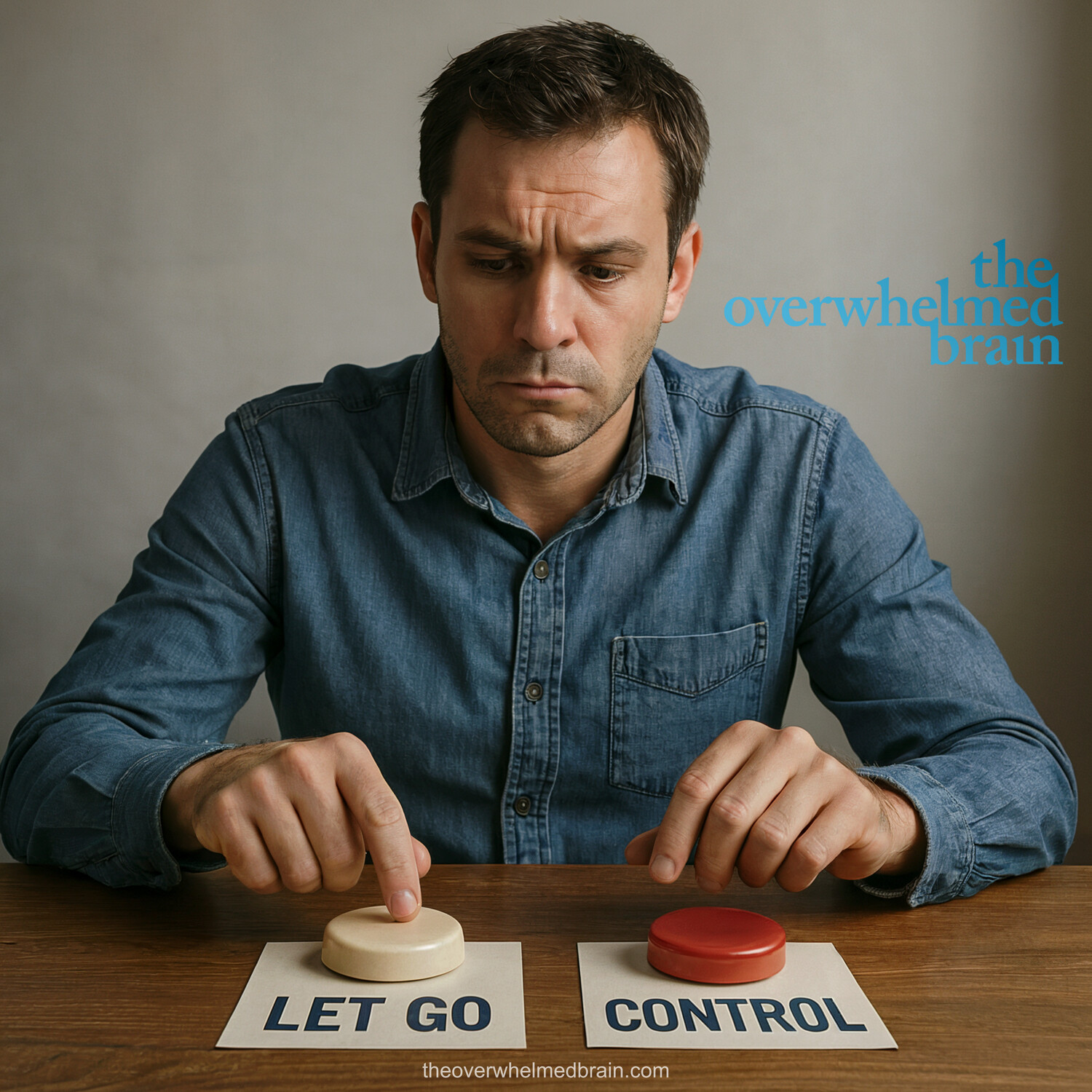
The Overwhelmed Brain
Stay in control or let it go?
00:42:55
Do we have to carry the weight of our past negative experiences into our future? Staying in control and letting go of it have the very same effect. I get into more detail about that in this episode about choice.
Loading summary
Transcript4 lines
- [00:00]
A
Back to school is better with family freedom from T Mobile, we'll pay off four phones up to $3200 and give you four free phones, all on America's largest 5G network. Visit your local T Mobile location or learn more@t mobile.com familyfreedom up to $800 per line via virtual prepaid card typically takes 15 days. Free phones via 24 monthly bill credits with finance agreement eg Apple iPhone 16128 gigabyte 820099 eligible trade in eg iPhone 11 Pro for well qualified credits end and balance due if you pay off early or cancel contact T Mobile Phone.
- [00:30]
B
Imagine you're a business owner relying on a dozen different software programs, each one disconnected. More expensive and more complicated than the last, it can be incredibly stressful right now. Picture Odoo Odoo brings all the tools your business needs into one simple platform. CRM, accounting, inventory, manufacturing, marketing, HR and more. All seamlessly connected. Everything works together, giving you the peace of mind that your business is running smoothly from every angle. Odoo's open source applications are user friendly and designed to scale with your business, saving you time and money. Say goodbye to juggling multiple platforms and hello to efficient integrated management. Stop wasting resources on complicated systems and make the switch to odoo today. Visit odoo.com o d o o.com and discover how Odoo can simplify and streamline your business operations. Odoo made simple these are my personal.
- [01:30]
A
Opinions Always seek a professional when you're making choices about your mental health and well being. Imagine if your parents when you were a child said everything right. Imagine if they treated you in a healthy way, in a loving way, in a non neglectful way, in a way that gave you no future trauma or history of trauma. Imagine if they were the perfect parents or if you had one parent or any caretakers that helped you grow out of childhood and into your teenage years and into an adult. Imagine what you would have brought with you as opposed to what you did bring with you. I don't know if there are too many people who listen to this show who have the perfect life. I don't think they would need to tune into a show called the Overwhelmed Brain. If they had the perfect life and they felt great and happy and everything was hunky dory in their life, there would be no reason to I have no overwhelm, I have no stress, I have no fears. I don't feel any insecurities. There are no toxic people in my life. I think I'LL tune into the overwhelmed brain that doesn't exist. It's far as I know. Or maybe somebody who knew me in high school says, I want to listen to what Paul is saying because he used to be this skateboarding punk and he was kind of an introvert, and he had this long hair, and he doesn't sound like the kind of guy that grew up and created a show like this. So I want to find out who this guy is that I used to go to school with that I have all these stories about. And then they listen, and hopefully they understand that I've grown. I've grown out of my dysfunctions, most of them. I've grown out of my toxic behaviors, which didn't really appear in high school. Well, actually, they did. Right after high school. They started appearing because my toxic behaviors appeared in my first romantic relationship or relationships. And that's usually when our toxic behaviors come out, if you have any. I know I did. And so what I'm saying is that most people that listen to this show, they want to learn something, they want to gain something, maybe some small nugget of information that they can take with them. And that's what I hope to provide. So I think about our childhood, you and me, whoever you are. I'm trying to get to know you as I continue this episode. Wish me luck, but I'll do my best. I think about our childhood, how we started in the world, who we first saw when we first opened our eyes and could see. And was that person healthy? Well, healthy for us? Maybe they were healthy in other ways, but healthy when it comes to a caregiver? Was that caregiver healthy for you? Were those two people, if you had two caregivers in your life, a mom and a dad, a mom and a mom, a dad and a dad, or an uncle and a friend, you know, who knows? We have different upbringings for different reasons. Maybe you were adopted, but somebody had to care for you as a child. And you learned from them. You learned because of them. You were conditioned by them, because of them, from them, whatever. And you took all this learning that you did, all these ways to respond to people, the world, into your teenage years and your adult years and into your adult relationships. And you became a product of who you were. And this person, who you are now, is a product of who you have been all these years. And I'm not telling you anything new. I'm reflecting. I'm philosophizing in a way, because I find it interesting that who we have become is a product of how we started. How you started set the first domino to fall into the next, into the next, leading to every single decision that you've made and every single life circumstance that has come about, and every response and reaction to life you've had was all a result of how you were brought up, unless you changed something. And that's where I philosophize. I think about, like, I used to get upset when someone I cared about, usually a romantic partner, would drink alcohol. I grew up in an alcoholic, abusive household, and I did not want anybody in my life to drink alcohol. So I had this aversion to alcohol, and that aversion stayed until I was about 20, maybe 19 and a half. And that means one relationship really suffered because of that. That was my. My major, first major relationship when I was a teenager. And I was upset that she drank alcohol. She told me the story, and she was happy to tell me the story of this drink that she had. We're underage is exciting. I'm not endorsing that. I'm just saying when you're a teenager or if you have a teenager, you know what happens. They like to experiment. And I didn't like to experiment. I was the square. I was the repressed one. I was the obsessive one. Like, other people shouldn't do these things. I was highly judgmental and critical because I grew up in a home where drinking and addiction was dangerous. At least that was what I learned. And so when my girlfriend at that time told me about a drink that she had, I acted like an upset father. What? You drank? And she just looked at me funny, and she had every right to look at me funny because she didn't expect me to act like a parent to her. She expected me to act like her boyfriend. Like, no way. That's so cool. Or, that's no big deal. We all drink. But that's not who I was at that time. I was, again, highly judgmental and critical and didn't want people I loved to do the things I didn't want them to do. It was the beginning of my emotionally abusive ways that I put many people that I cared about through that I shouldn't have, but I did. That's what I learned. That's how I learned to cope. That's where, you know, my childhood is, where my coping skills. That's where our coping skills are formed, and that's how we respond and react to the world. And then we get the results from that, responding and reacting. And then we can say, hey, I like these results, or I don't. Or we're responding and reacting because we don't like what we're getting. But part of my philosophy is to determine what I did to get the results I got before I had the response or reaction that I had. For example, being in a relationship with somebody who is harmful, toxic, that is a choice that maybe you could have made in your life at one point. And when you got together, they weren't toxic, but they became toxic. So you made another choice to either stay with them or not. Not. And if you stayed with them, do you blame them for continuing to be toxic or blame yourself? And I'm not trying to victim shame or blame. I'm just saying this is what we do. We make choices. We make choices on our next step. Like if you have somebody toxic in your life right now and your choice is to stay for many reasons, this is what we do. Financial reasons, there's no place to live, there's no other place to go, or you want to continue trying, it's your choice. But it is a choice. And I prefer to take responsibility for my own choice so that I can look back and say, hey, I gave it this amount of time and it didn't work. So I take responsibility for the results that I get or that I got. And then I can say, I made that choice. And I can't really blame anyone else for the choice I made. I'm talking about very specific circumstances here. Again, this is not about, hey, if you're a victim to this, it's your fault. That's not it at all. It's just a matter of looking at the choices that we make and knowing that there are times where, yes, it is impossible to make the choice that we want to make. At least it feels impossible because the odds are stacked against us and the cash is low or whatever, all kinds of reasons, but there's still a sense of responsibility so that we aren't under the misunderstanding that we aren't in control of our lives. In other words, it's a lot more beneficial to say, I am in control of my life and I am responsible for the choices that I make in my life, and I'm also responsible for the outcomes that I get in my life. And then someone will absolutely say, with good reason, that I couldn't control what happened after I made that choice. I took a left turn on that road and that person ran a red light and T boned me. I am not in control of that person. But we are in control of the choice we made. That's where some people might get a little bit uncomfortable or in total disagreement with like, I made that left turn. That is my choice. Yes, but that guy T boned me. They ran a red light. I had no control of that. I would have made that choice regardless because I believed that person would stop. Even believing is a choice. Believing someone will stop is a choice. Why do we take responsibility for our choices? Because it's a lot easier to go through life knowing that we are at least mostly in control of what happens to us instead of letting go of that control and believing that things will happen to us regardless of the choice we make. It's true. Things will happen to us regardless of the choice we make. But do we want to experience life believing that we have no control over it? Some people will say that's true anyway. We have no control over anything. I could have turned right that day. That's controlled. Yeah, but Paul, that's unrealistic. They might say that that's unrealistic because I did turn left and it was a red light. And I can't just go through life assuming that nobody's going to follow the law, nobody's going to do what I expect them to do. I mean, it's going to happen. Yes, but I can't just accept that every time something happened to me it was because of a choice that I made. Because of. Sometimes it's out of my control. I agree. I'm not going to disagree with that. If I'm walking down the street and an air conditioner falls on my head because someone's trying to install it in their window or it was poorly installed and I live, then I would be pretty damn upset that that air conditioner wasn't firmly tightened in that window, firmly installed in that window. And I would be upset to the point where I may get litigious. It just depends. If I have medical bills and they need paid, hopefully they have homeowners insurance. Probably not. If I'm walking under somebody's house, I'm probably not supposed to be there. But if I'm walking under an apartment, they may not have homeowners insurance, but maybe they have renters insurance, who knows? But if I am damaged in a way that I have to pay for it and it's not my fault, do I take responsibility for the choice that I made walking down the sidewalk that day? The answer is yes, I take responsibility for taking that walk. But I'm not to blame for the air conditioner falling on my head. I'm just taking responsibility. Why do I do this. Why do I take responsibility for that? Because that's an unexpected, impossible to predict event. It's not necessarily impossible to think about. Like, yes, an air conditioner could fall on my head, but am I going to go through life always looking up? Because then I could trip over something. So it's impossible to even prepare for that. But I choose to take responsibility for the choices that I make because I don't want to have to go through life believing I don't have any control. And control is another dysfunctional thing we can talk about if you believe that you need to have control in all circumstances. Because the best part of knowing that there are aspects of life that you can control is that there are also aspects of life that you can totally let go of. Control. They're both wonderful things. I can live my life knowing that I'm in control of all these other things. I'm in control of turning my car left or right. Full control, makes me feel good. Knowing that I can do that, it makes me feel good. I've done that all my life, turn my car left or right without getting into an accident. That's what makes me feel good. And I know you're saying, knock on wood, Paul, knock on wood. I don't do that myself because I'm not superstitious. But if I get into an accident tomorrow, I'll let you know. But I believe that I'm still in control. I'm still in control of my driving. And if somebody comes along and bumps into me or T bones me or whatever, then there is a point where I have to accept that there are some things out of my control. You know what both of these concepts do? Knowing that you're in control and knowing that you're also out of control. And it's okay to let go of control. Both concepts free you from the belief that you could or could have do something different. You could have done something differently, or you could do something different. It frees you from that. Because some people spend a long time after an event occurs in their life wondering how they could have changed that event, wondering what they could have done differently. They wonder what would have been a better choice. And then they think, I should have made that choice. I should have done that. I should have done this. When I think about those times, when I think about times I could have made a better choice or I should have made a better choice, I remind myself. Well, actually, there's two things that I remind myself. One, everything happens for a reason. That's my belief. It may not be Yours. But I choose to believe that because it offers less stress in my life, less overwhelm. I don't like stress. I don't like overwhelm. One of the reasons I created this show, because I want to create a stress free life, not only for me, but for everyone. I won't succeed with that, but I'm going to try and I'm going to keep trying until I succeed. That's my purpose in life right now. And I'm going to continue moving forward with that. But I don't want to be stressed by decisions I should have made, I could have made because I can't change it. And when you can't change something, it's out of your control. It's out of my control. The decisions that I could have, should have, or would have made in the past, those decisions in the past are out of my control because they already happened. Because that's one part of it. The second part of a decision from the past is, and this is a very freeing philosophical viewpoint. It is. I would not have made a different decision regardless, because I made that one. That's it. I would not have made a different decision regardless, because I made that one. And if I start to argue with myself, yeah, but I had these other factors going on and I should have made that decision. I was so stupid. I should have made that decision, but I didn't. Why didn't I make that decision? Because who I was then was the kind of person that would make that decision. That's who I was. That's who you were. The person you were back then made those types of decisions, even if they were terrible. Why did you make that decision? Because the resources and the tools and the knowledge that you had back then were what you had to work with. That's all you had. That's all you had to work with. And knowing what you know now, of course you might go back and make a different decision. But if you knew that, then you would have made that decision. That's why it's a lot easier for me to say it's out of my control. What happened in the past is out of my control. And that frees me. It frees me to think about it that way. What's in my control is the next decision. I make. The decision. I'm about to make. The decision to continue recording this episode is in my control. But if the roof caves in, that's out of my control. Crap. There's nothing I can do about it. Hopefully I live and then move on. However that looks Maybe with a limp or something. Hopefully I'm not damaged too much, but it will free me to not think about, man, I shouldn't have been sitting there. Man, I should have fixed that wet spot in the ceiling. And that's what eventually led to my getting damaged. There's nothing I can do about it, because if I knew then what I know now, of course I would make a different decision. But I didn't. So I made the decision with the resources that I had and the knowledge that I had back then. And that's just how it works. So I free myself by letting go of what I can't control. And what I can't control is the past. So I walk away knowing that all I have to think about now is the future. Every next decision that is within my control. What happens because of those decisions may not be in my control, but I do take responsibility for those decisions. I do take responsibility for taking a left turn instead of a right. Because when you take responsibility, then you have some say in how your life goes. You have a little bit less stress, typically, not always. And the reason for that is because you're not thinking about it in the same way. I should have taken a right, but instead I took a left and that guy nailed me. So am I going to continue thinking about all the decisions I could have made at that moment, or am I going to say, hey, that happened. Nothing I can do about it now. Now I'm damaged permanently. I might be physically disabled even, and that would be very tough. You might even carry some anger about that, and I'd understand that. I would, too. So angry. That person ran a red light. But do I focus on the past? Do I look in the rearview mirror? Or do I just continue doing the best I can every single day? Then hopefully you can do that if you've ever experienced something awful or debilitating or what have you. I remember when I went through my first major breakup back in the early 2000s. I was really depressed and I knew I needed help, but therapy seemed so expensive, and still I decided to invest in my mental health, and it absolutely changed my life. Looking back, I wish there was a service like our sponsor today, BetterHelp, because they make online therapy so much more affordable and accessible. With BetterHelp, you can get quality care at a price that makes sense. Whether you're dealing with anxiety, stress, or just want to be your best self. You pay one flat fee for unlimited weekly video sessions, saving you big on cost and time. Compared to traditional therapy, BetterHelp is the world's largest online therapy platform with over 30,000 therapists, having served 5 million people globally. It's convenient, too. You can join a session with a simple click, making it easier to fit into your busy life. Your well being is worth it. Visit betterhelp.combrain today and you'll get 10% off your first month. That's better. Help brain now. I didn't necessarily open the episode talking about this. I opened the episode talking about how we're born into an environment that may be healthy and it would be great if it was healthy and the people that we were around were healthy enough to raise us in a healthy way. Mentally healthy, physically healthy. But if they weren't, then what? It affects our decisions. It affects how we see life, it affects how we view the past, it affects how we view the future, and it affects, like I said, our decisions. So the next decision you make will be based on how you were brought up. Unless you healed from some damaged or unfinished code. If you want to look at it that way, like a program that's running in your mind or in your body, we might do things, we might repeat things that we have done before that give us the outcomes that we don't want, making us feel like we're out of control. And that makes life miserable or somewhat miserable or a lot miserable, depending on the decisions that you're making. But I'm going to give you an example. I used to have very few, if any, personal boundaries. And I would walk around people pleasing and letting people steamroll me without even. I mean, they weren't even trying to steamroll me. They just got what they wanted from me because I was a yes man. Yeah, of course I'll work on the weekend. Yes, of course I'll help you move that couch up and down four flights of stairs even though my back hurts. Yes, I'll do all of that stuff because I want to be liked. I want to be loved. I don't want anybody to dislike me. So absolutely, I'll do that. I got burnt out on relationships and friendships and I was upset at people because they just couldn't read my mind that I didn't want to do things when I said yes. Why can't they just understand that they're inconveniencing me or putting me out or can't they see my back hurt? I didn't say anything, I didn't speak up. So I walked around basically with no personal boundaries. And just a quick lesson for those, and it's true, some people don't know what Personal boundaries are a quick lesson for those who don't or may not know what a personal boundary is. My quickest definition is what you will and won't accept in your life. That can contain a whole lot of stuff. I won't accept someone doing heroin in my home. I think that's a pretty good personal boundary. But, you know, I won't judge you for it. But in my home, that's not going to happen. And if it does, it's going to happen without my knowledge. Because if I know about it, something's going to happen. Something is going to change really quick. But that, that's not going to happen in my home. I just know it, because how do I know it? All the decisions I've made up to this point have brought me the relationships and the friendships and the people in my life that aren't necessarily into that lifestyle. And so they won't end up in my home. Unless, of course, I go on vacation and they decide to squat in my house. There's nothing I can do about it then. And hopefully when I get home I can get them out. But back to personal boundaries. The point is, I went through most of my life without them and I had very, very few of them. And I would blame others for not honoring the boundaries I didn't have, or at least I didn't speak of, because I really did have boundaries. I just never expressed them and I never honored them and enforced them. I had them. I don't want somebody to do that to me. I don't want somebody to say that to me. They were inside of me, but I never expressed them. So I'd walk around with no visible or audible personal boundaries and people would do and say things that really upset me and I would pretend everything was fine. So what's the problem, Paul? There's no problem. Of course not, because I'm a people pleaser. So I went through life without personal boundaries. And what I ended up learning when I first started changing this about myself was that I had blamed so many other people for my decision not to express my personal boundaries to them. I blamed other people. I blamed the world for not being able to read my mind and do what I wanted them to do or not do what I didn't want them to do because they didn't know. They didn't know what I was thinking. They didn't know my personal boundaries. But I believed that they should know. You should know that it hurts me. You should know that it's disrespectful, but they didn't know. I had to tell them. I had to speak up. And some people may have known that they were hurtful or disrespectful, but they were never told to not do those things or say those things. They weren't told to be respectful, be nicer, until somebody came along and said, that's not acceptable. I won't allow that kind of behavior in my life. Or maybe they won't change, but they will change to the person who said that. That's what I started experiencing and discovering when I started honoring my personal boundaries. I just started speaking up for myself. Hey, you're standing too close. It's. It makes me uncomfortable. Will you please take a step back? I think I literally said that once to somebody standing at a counter. He just looked at me funny, took a step back, and that was it. That was like, one of the first times I honored myself. And, wow, I felt really good. I felt scared because I didn't know what was going to happen. In fact, I never honored myself before because I was always scared about what would happen, but I just said it. He took a step back, looked at me confused, completely oblivious that he was standing too close. And I felt good in myself when I said, hey, if I can say it to that person, I can say it to another person. And I started doing that more and more. Hey, that's disrespectful. Could you please not talk to me like that? I don't think I've said those specific words, but I've said something very close to that to other people. And 100% of the time, people listen. I'm not saying this will happen with you. And I'm a tall guy, so maybe I don't feel as threatened as some other people who might be short or might not feel as strong or whatever. I was still scared. I felt like a scared little boy when I did it, because I had never done it before, but I still did it. Man, it felt better every single time I did it. And I had to work my way up to my stepfather. That was the big challenge, because, you know, talk about the past. He was one of the people I was, or maybe the only person I was scared of when I was a child. I was very scared of him. What he could do to me was very afraid. So I look at the first domino of my life, of my life changing, of honoring my personal boundaries the very first time. That's the first domino of when my life changed. Because I can look back and see what happened after the second domino and the Third domino. It was a culmination of events that got me to the point where I could finally stand up to my stepfather and feel like a grown up and tell him what I will accept and what I won't accept. And I did that because I practiced. I did it the first time, the second time, the hundredth time, and then when I finally had to face him, and it was a totally wild, maybe spiritual experience for me because when it happened, when he finally showed up at my mom's door and I answered, was a wild thing that happened in my head. I only had nanoseconds to think about it. And the thought came to my mind, you have been doing this. You have been honoring yourself for years now. Don't stop now, don't back off now. This is your opportunity to apply what you have been training for. That's what I did. I applied my lessons, I applied my own personal experience, knowing that every time I honored myself, enforced my boundaries with somebody else, I survived. And in my case, it led to a better outcome every single time. It doesn't mean these people stayed in my life. Some people had to honor myself with and they were no longer in my life after that. I had to learn to accept that and let them be. But I made that choice in that moment with my stepfather to say, I'm sorry, you're not welcome in. That was it. You're not allowed to be here, you're not welcome in. And wow, that was so scary. I truly believe that every time I had an opportunity to honor myself, it was to build up to that moment. Because after that, I had no fear at all. I faced the biggest one I could face. That was it. That was the big challenge for me. And once you face that big challenge, the fear, most of it will go away. And since then I have faced other situations that are dangerous. I can think of three offhand that were more dangerous than that. And I'm not telling you to do that. I'm just saying I had the ability to do it and I made the choice to do it. And I walked into situations that I knew could lead to physical harm for me. And I still did it because I had to build up to that moment where I didn't want to be out of control anymore. I didn't want people to step on me or step on people I loved, or in one case, step on somebody I didn't even know. But this guy was yelling at the top of his lungs at the pool, at these two kids that weren't even his. And I thought, what the heck is going on? The guy was out of control, yelling at somebody else's kids for really zero reason, just because he was a jerk. So I stood up, the big fighter that I am kidding, I'm not. And I walked over to him and I said, hey, man, let's not do this. We don't want this to happen. We don't want the police to be here. I did my magic talking. I did my diplomacy, and I hoped that it would work. But I was also ready to be physical if I had to. There was a sense. I mean, this sounds like I'm patting myself on the back, and I don't mean to do that, but I'm saying there was an inner strength that I had to feel inside of me. And the only way I could feel that was the build up was continuing to work on what I needed to work on so that my life would change, so that the stress would decrease, so that the overwhelm would decrease. And I could get to a point in life where maybe I could share it with you and your life could change, or maybe I could just feel better in my own body, in my own head, so I don't have to think about it. And I know there are a lot of people out there that are constantly thinking and worrying about what decision they make next or not wanting to see that person again. And hopefully they don't run into them. There's a way out of that. There's a way through that. And if you can't avoid something like that or someone like that, to know that you can work on the appropriate emotional or behavioral muscles, that you can try these things. Try the. Try what you are afraid of in small steps, small bits and pieces that you can handle at first. The first time I honored myself, it was with somebody who was shorter than me, and it was in public. So if anything happened, at least I was sort of protected there in case he tried to attack me. And it was in front of somebody else, like directly in front of this guy behind the counter. And so there were other circumstances there that made me feel a tad bit safer, even though I still felt like a scared little boy. But it was a tad bit safe. That allowed me to practice. And that's sometimes what you have to do. You have to practice. Because what does this have to do at the very beginning of this episode? Sometimes we have to unlearn what we've learned, unconditioned, what we've been conditioned to do and think and how to think and how to act. Sometimes we've been doing the same thing over and over again, getting bad results that we don't want and we don't like. And we wonder why it keeps happening. It could be just because we're repeating the same behaviors, because we're afraid to change, because we don't know what will happen if we do change. And we're willing to stick with what doesn't work because it's more comfortable instead of what might actually work. But we're afraid to try that because there's a void of knowledge afterward, meaning you don't know what's going to happen. It's jumping into the abyss, taking a leap of faith, not knowing what will happen if you try something different, but knowing if you don't take that leap, you're gonna get the same results over and over again because you're afraid to make the changes that might change your life tremendously for the better. I hope you got something from today's episode. Thank you for tuning in. I appreciate you. Thanks for listening to another episode of the Overwhelmed Brain. I want to thank our patrons. I really appreciate each and every one of you for offering your financial support to the show. It is something that makes me feel warm. It makes me feel all warm inside. It makes me feel good. So thank you so much for your patronage. If you find value in this show like these patrons do and you want to give back, head over to MoreToB.com and there are options to do that over there. And for a show on how to navigate through a difficult relationship or a toxic one, or a manipulative one, head over to loveandabuse.com that is my other podcast called Love and Abuse, and I've been doing that since 2019. It has helped a lot of people figure out what's going on in their relationship and sometimes you need help doing that. That's over@loveandabuse.com and if you know you're the difficult one in a relationship and you want to change that about yourself, head over to healedbeing.com and there is a comprehensive program that I will walk you through all these lessons and give you the direct guidance that you might need to give you the best chance at salvaging a relationship that might be on the brink of destruction or failure. And also give you the best chance at healing, healing what's inside of you. Sometimes we can't heal our own coping mechanisms, so we do behaviors that are hurtful to others. And that's what I talk about in the program. And there's also a support online support group that you can join as well if you want to feel better inside yourself and heal and make your relationship the best it could possibly be. That's over@HealedBeing.com and with that, always keep your mind open because that's how you make the best decisions and be firm in your decisions and actions so that you can create the life you want. Always take steps to grow and evolve. You are powerful beyond measure and above all, and this is something I absolutely know to be true about you. You are amaz Foreign.
- [44:24]
B
Hi, I'm Chris Gethard and I'm very excited to tell you about Beautiful Anonymous, a podcast where I talk to random people on the phone. I tweet out a phone number. Thousands of people try to call you. Talk to one of them. They stay anonymous. I can't hang up. That's all the rules. I never know what's gonna happen. We get serious ones. I've talked with meth dealers on their way to prison. I've talked to people who survived mass shootings. Crazy funny ones. I talked to a guy with a goose laugh. Somebody who dresses up as a pirate on the weekends. I never know what's going to happen. It's a great show. Subscribe today. Beautiful Anonymous hey, this is Dan Harris, host of the 10% Happier podcast. I'm here to tell you about a new series we're running this September on 10% happier. The goal is to help you do your life better. The series is called Reset. It's all about hitting the reset button in many of the most crucial areas of your life. Each week we we'll tackle a topic like how to reset your nervous system, how to reset your relationships, how to reset your career. We're going to bring on top notch scientists and world class meditation teachers to give you deep insights and actionable advice. It's all delivered with our trademark blend of skepticism, humor, credibility and practicality. 10% happier is self help for smart people. Come join the party.