Loading summary
Transcript1 lines
- [00:01]
A
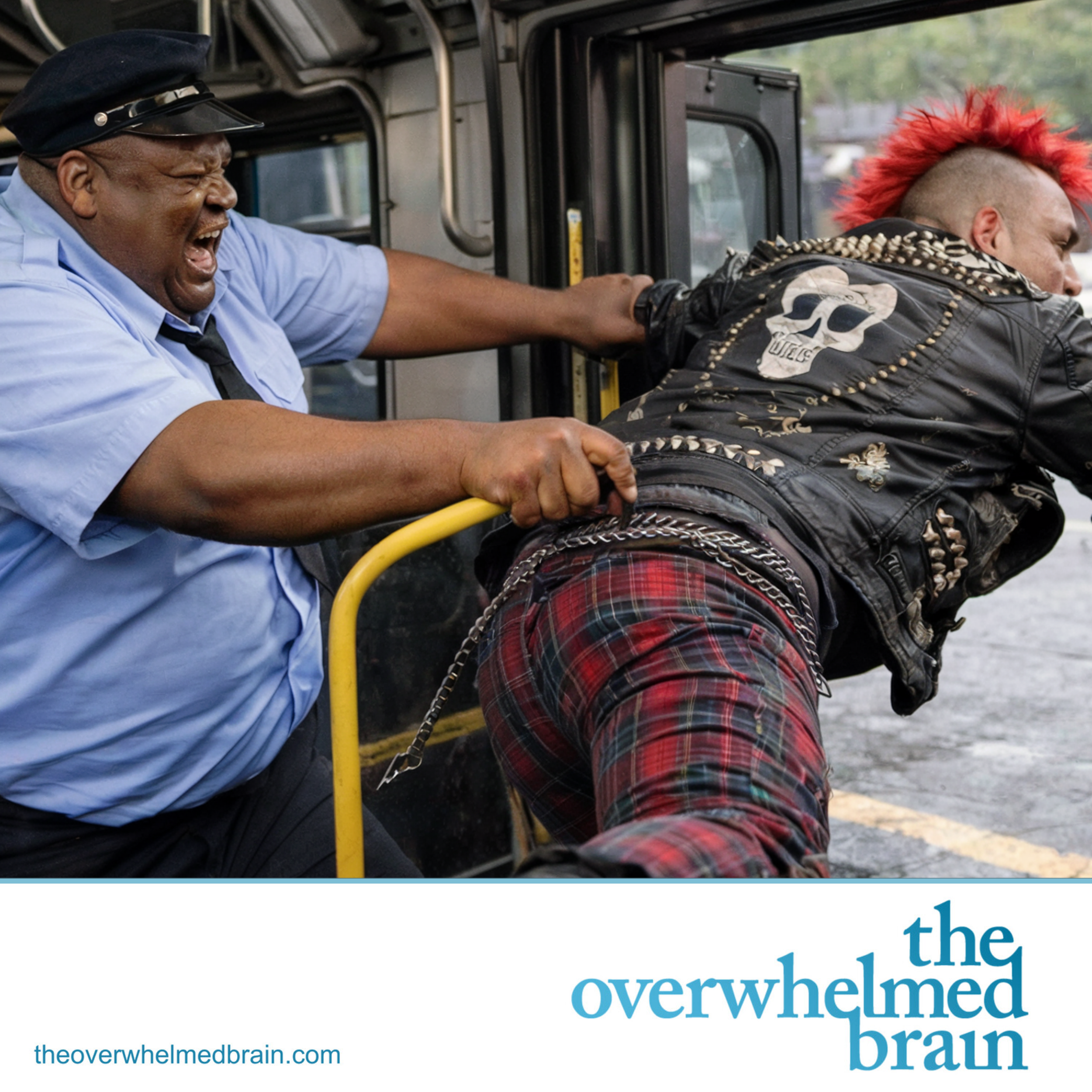
These are my personal opinions. Always seek a professional when you're making choices about your mental health and well being. Welcome to another episode of the Overwhelmed Brain. I'm glad that you are here. I received a message from someone that wrote to me about 10 years ago and said, it's been about 10 years since I last wrote you. I haven't listened to your podcast much lately. I hear that a lot. I listened to you a long time ago, but I don't listen much lately. And that's fine because the less you have to listen, the less you probably need what I have to talk about, which is a good thing. So I love having as many listeners as possible. But that's the progress, right? That's the progress we make. We learn it, we move forward, and hopefully we don't have to come back to this stuff and have to learn it again. But sometimes, you know, this is what happens. We figure out something that we need to change or work on in our lives and this is what this person did. So I'm going to continue reading this. He's been driving a bus for a while, I guess. And I'm writing to you today because I lost patience with a customer. I politely asked him to get off the bus and he kept ignoring me and it got extremely confrontational. I'm not supposed to get out of my seat, but today I did. I saw red and quickly got up and tried to push him off the bus. Picture the Hulk finally getting pushed too far. Well, that was me. I'm not proud of my actions. I figured it might be time to learn how to keep calm in these situations. I was wondering if you may have come across some self help books on learning patience or also maybe anger management. Thank you so much. All right. Thank you for sharing that. And wow, that's something that nobody wants to deal with, the confrontation at work, especially when you, I mean, I can picture your work. You're kind of trapped in your seat and now you have to deal with somebody who you just want them to follow the rules. Please just follow the rules. Just do what you're supposed to do. But we run into people like that throughout our lives and unfortunately at work, at our place of employment, this could happen in an office because this could happen anywhere. So where do I go with that? First, I'm glad that you're reaching out so that I can make you listen to this episode. And because you're not listening to the podcast, this is a way to get you to listen again. And I'm so glad that you wrote to Me, because I do have some thoughts on this. I'm not going to recommend any books on it because I don't know any. I don't know any books on learning patience or anger management. I do know, like, I would recommend one person. Some people love him, some people don't. I personally find him a great resource. It's Eckhart Tola. T O L L E. And if you go to YouTube, you can find him E, C K H R I'm sorry, H A R T T O L L E. And he talks about the ego and how the ego can absolutely take things very personally and send them to our, whatever, our amygdala, our fight or flight system. And that can turn into what you experienced because something is being hurt or offended or damaged in some way inside of you. So if the ego gets in the way, which it always does, I mean, at least for most people, it always does because there's a personal offense going on in some way. The ego says, oh, we got to take care of this. Or it says, we got to get away from this. And so you enter fight or flight or freeze. There's another one. Fight, flight or freeze. And then whatever happens next happens and you feel out of control. And the ego can bring us to that point of out of control or if we can pull back from the ego. And this is a personal opinion. Eckhart knows a lot more than I do about this, but I feel it and think it and see it as pulling back from the ego so that we don't act from a more primal state of being like that very low level, primal survival state of being. And it's very hard to do when you are getting triggered in the moment. This is a very, actually a very deep, complex subject because if you have old patterns or emotional triggers inside of you and someone activates it, activates one of them, what's going to happen is that your ego is going to take over and start driving the bus. I'll use that analogy. Your ego is driving the bus as opposed to you. And if your ego is driving the bus, you may end up wherever it takes you or you will end up wherever it takes you unless you're able to bring it back and step back from your ego. So that's why I like Eckhart Tolle. Tola's. I want to say Tolle, but Tola, that's why I like his teachings. His teachings. First of all, he shows up very calm. So you'll find that just watching him calms you. Again, he's not for everyone. But I personally have used him. I've watched him in the past and used his teachings and just watching him and listening to him and understanding his approach. And he's got a great story, too, because he used to be depressed. He felt all this stuff when he was, like, in his 20s or in his college days. And one day he was able to let go of his ego. And that was a great story. So if you can find his origin story, that might be very helpful for you to listen to. But a lot of us, you know, we live in the physical 3D world that things are happening to us and around us all the time. And so we're going to get triggered, we're going to get angry, we're going to feel all the sensations of being in this reality, this world, this physical, modern world that we're in, where people are a part of it. As a side note, you know, we see monks and other people that follow some sort of doctrine that appears so calm and patient. And, you know, the Dalai Lama, we look at him and we think, wow, this person is just really. Is so grounded. And then you think, well, how many people do they interact with on a daily basis? Are they on the road trying to get from point A to point B? I see them, and I think they're probably not as interactive as we are. They may be on stage, they may be in their temples or whatever, talking with other people, but that is in their environments. And their environments are more controlled. And I'm not saying they couldn't handle all of this stuff. I'm just saying it's just a little side note that I notice that they may be patient and calm because they're not exposed to all these outside forces, outside of their environment. And when you're outside of your own circle of control, circle of protection, then you might feel a little differently. So maybe they would be fine, too. The Dalai Lama would be fine, too. On the bus, driving the bus. I wonder how he would handle it. I wonder how anyone with the utmost patience would handle that. How would Eckhart Tolle handle that? And that is something to think about, to imagine. What would Eckhart do? What would a Buddhist monk do? You know, things like that. This isn't my answer. It's just something I'm thinking about as I talk about this stuff. But it can be helpful. That type of thinking can be helpful. What would so and so do? What would Jesus do? People like that, too. What would Jesus do? And then you act from that place. And then there's the. Yeah, But Paul, he's being aggressive and he's saying this and he won't get off the bus, and he's bothering other people, customers, and. No, I get it, believe me. I'm in the same real modern world that you are in, and you are trapped on the bus, and that bus is your, your responsibility. And you probably care about the other people on the bus, and you probably care that people follow the rules so that everyone feels comfortable, including yourself. So let me get to the main. My, my thoughts on this. I actually came up with an acronym for this very subject today, which is the word belt. So when there's a conflict with another person in your life, I'm going to practice this myself. I just made up this acronym because I was thinking through the best way to handle it before we get angry or while we're getting angry at another person, before we start to lose control and our fight flight or freeze activates and now we feel out of control and our ego's driving the bus. So the word belt, I'm going to explain it. And before I do, this really applies to any situation with another person where you feel like you might get triggered or angry or you know you're going to get angry if this continues. But this applies to those kinds of situations where there's another person involved. And the very first thing, the very first letter belt is believe. So you want to believe the person that is causing the conflict 100%. And I don't mean believe some sort of lie they're telling you. I mean believe them when they say what they're going to do or not going to do. So let's just say that this bus driver, for example, says you need to get off the bus, and that person ignores them. What should the bus driver believe that particular customer is going to do? He's ignoring him, is ignoring him. Hey, you need to get off the bus now. And he's ignoring him. The belief that I come up with is this person's not getting off the bus. I can 100% believe that that person is not getting off the bus because he's ignoring me. He heard me. I know he heard me. Unless he's deaf. I mean, I would probably establish that maybe he's deaf. Let's figure this out. But then he becomes aggressive. So we know that he is hearing, but he's ignoring the bus driver. So the bus driver should, in this instance, where the person is ignoring them, believe that he's not going to get off the bus. Okay, so we have established that. Let's Believe him. Why am I saying believe him? Because of the next letter E is determine if you are going to be the enforcer or the messenger. I'm going to just make it E though. I don't want to put em, so it's going to be believe, believe what they're doing or saying, you know, they're not going to get off the bus. Okay, I believe that. Now are you going to be the enforcer? Because now you believe 100% they're not going to get off the bus. And that means that you have to either enforce the rules or be a messenger for the rules. What's a messenger? It's someone who says I need to call the authorities and take care of this or I can take care of it myself. But if you believe 100% that this person's not getting off the bus and you choose to enforce it, you will create the conflict. That's my point here. We believe somebody 100%. I know they're not going to get off the bus. So I either need to enforce it because they won't or I need to be a messenger to someone else. I'm going to drive up to a cop and the cop can take care of this person. Hey officer, this person won't get off the bus and I need him removed. And then the cop can deal with it because the cop is the enforcer. So if you believe somebody 100% and you know they're not leaving because you believe them, then by enforcing you're creating your own conflict. I'm going to enforce this, then I'm going to go back there and push him off the bus myself. But by doing that, you put yourself in what could be a dangerous situation or what could be what happened to you. Like hey, that's not me. I don't want to do this. I don't want to be that person, but I become that person by being the enforcer. If you want to be the enforcer, if you're comfortable being the enforcer. I'm not saying that you can't or shouldn't do that, although there is a level of danger involved because you never know what is on somebody's mind if they're carrying a weapon, you just don't know. But if you become the enforcer, you put yourself in that, in that danger. And so I mean, I know the bus driver knows this, I know the person who wrote to me knows this and he knows that he was activated and he doesn't want to be activated. He doesn't want to get to that point, I totally get it. But remembering this acronym or remembering these steps can help. And I'm at two more after this. But. So you believe the person 100%. Okay, this person's not getting off the bus. I believe that. So if I become the enforcer, that means what? I have to force him off the bus. Because the enforcer forces. Forces the rules. I am becoming the enforcer of the rules, which may be spoken or unspoken. I don't know what the best policy is for people who won't leave, but if there is a policy, then the policy is the rule. And the policy needs to be enforced by the right enforcers. If that means the bus driver, then yeah, you may be stuck doing that. And that may be part of your job. I. I hope not. Because if somebody doesn't follow those rules, you shouldn't have to put yourself in danger. So that could be another thing that you have to talk about with your organization over there. But my point is, if you become the enforcer, you put yourself in conflict and you become the bad guy, you become somebody who puts yourself in danger. I mean, there are all kinds of caveats to that. But again, I know that you may have been triggered to this point, so approaching this person might have been something that you didn't want to do. But I'm going to get to that in a moment. So the second step is you are either the enforcer or the messenger, and you're either going to do it yourself or find somebody else to do it. I personally am a proponent of being the messenger, even when you are 100% responsible for enforcing the rules. And I'll tell you, or I'll give you an example. An example is a boss who has an employee that comes into the office and the boss says, you've been late three times this week. What the hell? If you're late again, I'm going to fire you. So now we have the employee looking at the boss as the bad guy, even though the employee is breaking the rules. And they, let's just say they know it. The employee knows they're breaking the rules, but they still think the boss is a jerk, Whatever. And so what that does is creates a tension between those two people. I'm not saying that's a bad thing. I'm not saying that a boss shouldn't do that. I probably would do it myself, but not so aggressively. But there is a way to, instead of becoming the enforcer, to be the messenger while still applying the discipline. And that is noting the policy says, this is how A boss might approach an employee in their office. The policy says that tardiness is a violation. And if you violate this policy three times, I'll have no choice but to give you a final warning. And if you are tardy again, I'll have to terminate you. So I'm hoping that I don't have to do that. I'm hoping that the policy can be followed. I'm hoping that we can agree that this policy has to be followed and that you aren't late again, because I don't want to have to do that to you. So will you follow the policy? So you see what I'm doing, and I didn't do the best job there, but you see what I'm doing? I'm making the policy the enforcer, while I'm the messenger of the policy. So I don't become the person that they can point at and say, well, he's a jerk, pointing at me as the boss. That guy's a jerk. He doesn't give me a break. He knows there's a lot of traffic. He knows that my alarm clock sometimes loses time. All the excuses. He knows this. He knows that. What a jerk. Instead, he has no choice but to say, well, that is the policy. He can still be mad at me, but he also has to agree. He has no choice but to agree that the policy does say that, and then he can be mad at the policy. I can't believe the policy says that they only give you three chances. That's ridiculous. I should get 10, 15, 30 chances. And I'm not saying he still won't be mad that I'm the messenger. But what it does is it creates a buffer between the person who needs to discipline or enforce and the message that they're trying to convey so that they can enforce the rules. Which is why step two, be the enforcer. Or the messenger can, for this person. Like, the bus driver can go something like, hey, you know, policy says you can't be on here. So at least it's not like, all directed. All the energy that that guy has, it's not necessarily all directed at the bus driver, even though it could still happen. But that's what I mean by you can still enforce policy. You can still enforce rules without being the actual enforcer. So that may or may not go perfectly well. It may not take all the focus off of the person being the messenger. Like, for example, the bus driver drives to a police officer and the police officer gets on the bus. That customer can still be angry at the bus driver for Driving up to the police officer. But the point of doing that, being the messenger while still being the enforcer, but doing it in a more passive way, like that, more indirect, is it takes the enforcer out of their own spotlight. Meaning like the boss may not want to be the bad guy. I'm using that in a generic sense. The bad guy. They may not want to be the bad guy. They may not want to be the jerk. And so they don't want to have to enforce the rules and say, well, if you don't do this, you're going to get fired. They may not want to be that way. So it helps be comfortable in oneself. So yes, you can be the enforcer and have no problem doing it. If you're late again, I'll fire you. That could be the way you operate. And that's fine as long as you don't have a problem with it and you don't have a problem with conflict. But if you do, and you don't want to get into conflict and you do want to have some sort of buffer, then I believe in enforcing the rules by being the messenger. So that could help in different situations, different scenarios, and maybe for this bus driver as well. But I'm still not exactly where I think he wants to go with this. So let's get to number three. So first, we have believed, meaning believe exactly what they're saying 100%. Second is enforce or be the messenger. So you're going to enforce the rules or just be the messenger for the rules. The third, and this has to do directly with the trigger, is loss. So we have B E L loss. This episode is sponsored by BetterHelp. I remember getting my first negative comment on this show back in 2014. After all the positive ones I was reading, that single criticism sent me into fear mode. You ever feel that way? I had some tools to help me back then, but if you don't have those tools, you may need a little support. The new year doesn't require a new you, but maybe just a lesson burdened you. And therapy can help you identify what weighs you down and offer an unbiased perspective to better understand your relationships, motivations and emotions. BetterHelp therapists are fully licensed and work according to a strict code of conduct. They do the initial matching work for you so that you can focus on your therapy goals. If you aren't happy with your match, you can switch therapists at any time. With over 30,000 therapists and an average rating of of 4.9 out of 5 based on over 1.7 million client reviews. BetterHelp makes it easy to get matched online with a qualified therapist. Sign up and get 10% off@betterhelp.com brain that's betterhelp H-L-P.com brain. Loss means asking yourself the question, what will I lose if I don't act? And this is meant to address why you get triggered, why you get upset, why you get angry. Because almost every time you get angry, you feel like you're going to lose something. We don't get angry when we think we're going to gain something. Unless it's gaining something that will take a loss. Like gaining someone's taxes for the last 10 years that they haven't paid. The loss to you might be all the time it takes for you to sort through it, because that's what they want you to do. Please sort through all these taxes that I haven't paid for the last 10 years and just reconcile everything so I can deal with it. That's going to be a big loss and it might make you upset. I don't want to deal with this. And so there's always a loss, or almost, almost always a loss when we get upset or triggered by something, angry by something, what's the loss? And that's what we need to find out. And this can help understand why we get angry in the first place. It seems obvious sometimes why we get angry about something. You hurt me, so I'm angry, but it's always deeper. When I hurt you, what did you lose? Like, did you feel disrespected? Did you feel betrayed? Did you feel like you were loved by that person or liked by that person? And now that's gone, which is a loss. And it goes even deeper than that. Like in my case, I used to get angry in my 20s. I used to get jealous because my partner would speak to someone who could be a potential partner. If I wasn't in the picture, what was I afraid to lose my partner? But what's deeper than that? I was afraid to lose love and connection. What's deeper than that? I didn't want to be alone. What's deeper than that? Well, being alone meant I would be terribly unhappy and I would have no reason to be here. That's deep. That's a very deep issue inside of me that's been sitting there waiting to get triggered by certain events. And watching my partner talk to someone else that could be a potential partner if I wasn't in the picture made me jealous. It made me angry. And my surface level thinking was well, she could go off with him and then I'd be alone. So I must keep her away from him, or I must get angry when she talks to him because I can't control her. And I have to control her. And I'm trying to find ways to control her, but I can't. Again, this is in my 20s. I was a little boy back then in my relationships, but that's what it felt like. I felt like losing control. And if I lost control, what does that mean? I would be unloved and alone. And I don't want to be unloved and alone. But why? I used to think being alone meant there was no meaning in my life. And worse than that, I found life pointless without another person to love me. If you want to know what leads to self hurt and even suicide, it's false beliefs like this. If you have deeper insecurities that haven't been addressed or healed, you'll develop beliefs that don't serve you. And it might even cause you to harm yourself or at a minimum, fall into a depression. If I didn't realize that, like, being alone didn't mean that I was completely unlovable or completely abandoned, then the times in my life that I actually was alone would have gone much different. But I had to heal that. I had to heal what was going on inside of me that made me believe that being alone wasn't horrible. It was temporary. And even if it wasn't like temporary, it wasn't a bad thing. It was just a part of life actually. Being alone taught me to connect with myself. And I started to realize that if I am bringing this lonely person into another person's life, that I am asking them to fill a void that I'm carrying around throughout life. And when I finally connect with a person, they'll fill that void. That was my thought. The problem is, when we have somebody else fill the voids in our life, we can become codependent and we start to drain them because we depend on them for what we're lacking. For me, I brought an incomplete version of myself into a. Into my relationships back then because I was looking for someone else to complete me. If somebody else can complete us, then we feel incomplete. And that's what leads to depression and darker thoughts. And I'm not saying that when someone completes you, it's always a failure, just saying that it has a higher probability of failure. Because if we are looking for someone else to fill the voids that we carry around, they might feel like they can't be themselves because they feel like they have to make up for what we don't or we haven't healed in ourselves. And I don't want to put anybody through that. I don't want to bring a lot of emotional deficit into a relationship that somebody else has to fill. Because what happens on a day that they're gone? Who am I? How do I show up? How do I feel inside about myself? What if they take a week off? What if we break up? Then who am I? Am I just a partial me again? Am I just an emotionally deficit me that feels incomplete? I'm not saying that we shouldn't have partnerships in our lives. I'm saying that we just have to be careful what we are looking for in another person. And I know I took a sidetrack here, but this whole point is about asking what you are going to lose. And it gets that deep. Like getting angry about something, getting triggered about something might go as deep as that. Feelings of rejection, feelings of abandonment, feelings like you'll go hungry because you're not part of the tribe. And if you're not part of the tribe, you'll actually die. That's how deep these things can go. So our triggers, our anger can go that deep. That's what I like to look at in myself. And I even ask myself, why am I sad that I got a divorce like my last marriage? Why am I sad that I'm divorced? What do you mean why am I sad? I mean, that's what I call a stupid question that leads to healing. What do you mean, why am I sad? I ask myself and I come up with an answer. I want to know why I'm actually sad. And the answer always starts off with, well, anyone would be sad if they were in my position. Yeah, but why are you sad that you're in this position? Why are you upset? Why are you angry? Talking to yourself, Paul? Why are you jealous? Well, I'm jealous because that person might take my partner away. Yeah, but why is that a problem? That's another question I like. What about that is a problem or why is that a problem? Why is that a problem that they take your partner away? Well, if they take my partner away, I'll be sad and I'll be upset. That's circular logic. But you discover this, you discover that you get stuck in this circular logic. Well, of course I'm angry because that person is not getting off my bus. Okay, but what would happen if he doesn't? What are you going to lose if he doesn't? What are you going to Lose if he chooses not to. And he stays on until you park the bus in the bus lot and you lock the doors and you walk away. What are you going to lose? Well, I might lose my job. I might lose my temper. There's one. Yeah, but why are you going to lose your temper? And so I like the question, what am I going to lose if I don't do anything? What am I going to lose if this person doesn't follow the rules? What am I going to lose if the customers are looking at me and it's embarrassing? What am I going to lose? You sort through those thoughts in your head. What am I going to lose if XYZ happens? When you figure out what you're going to lose, then you dive deeper into that. My point with all this is learning what you might be carrying around that you believe you'll lose if you don't address something right away. Addressing something right away stems from the trigger, oh, I'm triggered. I gotta address this right away. And the greater the loss that you think you're going to experience, the greater the chance of an intense emotional reaction. So I would be interested to know when this bus driver got mad and got up out of his seat and pushed the guy out of the bus, which actually sounds very satisfying. But we don't want to go there, right? We don't want to get to that point, but let's just ask, well, what were you going to lose if you didn't get angry? That might be the question, what was I going to lose if I didn't get angry and didn't get out of my seat and push him off? And you may not get the answer, but I want you to go as deep as possible with the answer that you get. If you just say, well, I might lose my job, then, yeah, sure, that would, that would be terrible. But then you ask yourself, well, how is that a bad thing? It's another question I like to ask myself. How is that a bad thing? Well, if I lose my job, I won't have any money. Well, how is that a bad thing? These are drill down questions that I like to ask myself that drill into the layers of the onion that create our triggers in the first place. And in fact, I have an article that will help you drill into these emotions and thoughts and the behaviors that you're experiencing. And the article is called something I already said, stupid questions that lead to healing. So if you go to the overwhelmedbrain.com in the search field, type in stupid or stupid questions. It should pop right up. And there's a line of questioning that I do even to myself even today, that when there's a trigger that comes up, I drill down into the trigger and what I'm going to lose and how it's a bad thing. And I even get into the worst case scenario, what's the worst possible thing that could happen if I don't take action or if I don't get angry or if I don't push that guy off the bus, for example, what's the worst possible thing that could happen? And I even go further than that and ask myself, okay, now that I know the worst possible thing that can happen, what's worse than that? And when you get to the what's worse than that? After that deep questioning of yourself, when you get to that deepest layer, you start to learn things about yourself and what you're truly protecting at the deepest level, at the most primal, almost non verbal level. And that's. It can be quite profound, like, oh, that's what I've been protecting all my life. That's why I get triggered so much. Because at the deepest level I'm really maybe protecting this or afraid of that. And that can be very helpful. So L is loss. What are you going to lose? What's the last one? T train your brain. And I was going to use V, but it doesn't work for belve, so I'm going to use belt. V is for visualize, but training your brain is visualizing it happening again and training for the next, training your brain for the next time. And just think of like when I was in martial arts, we would throw a hundred punches, 100 kicks, and each class we would throw a bunch of these things. We would do all kinds of things over and over and over again. And that trained us to be prepared for when something happened in the future. Hopefully nothing ever happens, but you're prepared. So if I throw 10,000 punches before something actually ever happens to me on the street again, hopefully not, but let's just say that somebody puts me in a precarious position and now I have to throw a punch. I don't have to think about it, I won't be triggered, I'll be prepared, it'll be automatic. That's what triggers do to us. Now. The triggers drive the bus, so to speak, instead of what we have prepared for. And preparation takes training. So B E L T train, train your brain by visualizing it happening in the future. So in this example, the bus driver visualizes the person on the bus ignoring and then getting More aggressive. And what do you want to say or do instead? And when you think about it happening, you know, put yourself there, Try to see yourself in first person, seeing through your own eyes. And as things progress and he won't get off the bus, what are you going to do or say next time? And really experience it. Even if you're feeling like anger come up while you do the visualization, this is your chance to train your brain for the next time and do it a few times. Train your brain by visualizing what you would do next or next time it happens. Even think of a few scenarios like the person gets up and approaches you. Now what are you going to do? Because if you're not prepared, what does your brain rely on? It relies on unprepared reaction as opposed to prepared action. It's like a best guess versus I've planned for this. I have thought about this, I have planned for this. And it's not like you're going to plan for everything that could possibly happen. But the good news is when you know what triggers you, you can plan for what triggers you. What triggers me is when this guy won't get off the bus and he gets so angry. Also, when somebody gets angry at you, train your brain to prepare for that in advance. Visualize it happening again. The guy is getting angry. He's calling me all kinds of names. He says something about my mother and I lose it. Okay, when he says something about your mother, what are you going to do next time? Maybe I'll let go of my ego and let it pass by and realize that this guy probably has a lot of anger in his life. And I'm just going to let that go because his anger is not mine, his issues are not mine. I'm just throwing that out there because I'm thinking of Eckhart. I'm thinking back to the way Eckhart Tolle might react. Or not. Because I want you to follow the path that you need to follow. I think it's important to believe what they're saying or doing. If they say I'm not getting off the bus, then believe that, okay? That's where they stand. And then are you going to be the enforcer or the messenger? Well, I'm going to take care of this myself or I'm going to get somebody else to take care of this and enforce that policy, because I don't really want to go there myself. And then if you feel the trigger coming on, ask yourself, what am I going to lose? Because clearly I'm getting triggered right Now I'm getting angry. So what do I feel I'm going to lose? And it may be hard to do in the moment. I understand that. But that's why training your brain will help you get to that point. So the last one, train your brain, which is visualizing it happening in the future, so that. Let's just say this bus driver visualizes it happening again in the future. And while he's visualizing, he asks himself, okay, I'm getting angry. What am I going to lose? Why am I getting angry? Why am I. What's behind this anger? What do I feel like I'm going to lose? And then you drill down from there. And as you visualize, as you train your brain, you'll be prepared next time. This does work. Training your brain does work, because when the event unfolds, you will have already played that event out in some way, shape or form. And when you have played that out, you'll be more prepared. And hopefully it will keep you from getting out of your seat and becoming the person that you don't want to be or getting into a conflict that you don't want to be a part of. So feel free to use the belt acronym if you want, or come up with your own. Belt is kind of a memorable word. It's like tightening your belt before reacting or having a tool belt. And this could be a tool that is in your belt that you could use and maybe it will help someday. I hope it does. Thanks for listening. I hope this helped in some way. I. You hope. I appreciate the person who wrote and shared that. It's great to hear from you again and I wish you the best through all of this. And stay the driver. Don't let your ego drive you. Be the driver. You are the one in control of you. And I've given you some. Hopefully I've given you some tools to strengthen those qualities about yourself. I want to thank you for listening to another episode of the Overwhelmed Brain. I want to thank the patrons of the week, Maria, Heather. And a special thank you to Brad, who. Wow, his. He sent me a message saying that he was getting married. And I've known Brad for many, many years because we met through my show and he reached out to me and we had a few conversations and wow, he just. He just gave me the most heartfelt letter and he was so happy that he had found someone special. And I am so happy for you, Brad. Thank you for your support over the years and thank you for sharing your story with me. And congratulations on the marriage. I'm excited for you. And yes, I expect a picture of the wedding day. So if you can send that to me, that would be great. And thank you to all patrons that support the show. I'm very grateful to all of you. If you find value in this show and you want to give back, head over to moretlb.com and there are ways to do that over there. And if you are in a difficult relationship and you want to figure out why it's so difficult, I have another podcast called Love and abuse over@loveandabuse.com and it's all about emotional abuse and control and manipulation. And a lot of the subtle things that you may not know are emotionally abusive. And that show can be very helpful for you to determine what's going on in your relationship. Again, that's over@loveandabuse.com and if you know you're the difficult one in the relationship, you are the one that might need to update yourself, change some of the behaviors that you're doing. And maybe you are dealing with triggers and you can't stop them and you're hurting people that you care about. Head over to healedbeing.com I have a full, comprehensive program that takes you from being the difficult one, the hurtful one, the emotional, emotionally abusive one. All the terms that we really don't like to admit that you might be and you might want to address that. If you keep finding that the people in your life are distancing themselves from you and love is disintegrating and you don't want that to happen, you may want to take a look at the first four lessons, which are free over@HealedBeing.com just sign up and you'll get those lessons for free. So with that, always keep your mind open because that's how you make the best decisions and be firm in your decisions and actions so that you can create the life you want. Always take steps to grow and evolve. You are powerful beyond measure. And above all, and this is something I absolutely know to be true about you, you are amazing. Sa.