Podcast
The Partially Examined Life
Hosted by Mark Linsenmayer · EN
The Partially Examined Life is a philosophy podcast by some guys who were at one point set on doing philosophy for a living but then thought better of it. Each episode we pick a text and chat about it with insight and flippancy. You don't have to know any philosophy or even have read the text we're talking about to follow and enjoy the discussion.
78episodes
Episodes
Newest firstAll episodes

Ep. 397: Federalist Papers LIVE (Part One)
4d ago01:03:18Tap to summarizeTo celebrate our nation's 250th birthday, we gathered in front of a lovely audience near Madison WI to discuss Federalist Papers 70, 78, 39, 54, 10 by Alexander Hamilton and James Madison from 1787-1788, Anti-Federalist Papers 78-80 (aka Brutus 11 and 15), and Frederick Douglass' Fourth of July Speech (1852). Is the American experiment working out as planned? We talk about the Founders' arguments regarding the unitary executive, the independence of the judiciary, factionalism, the 3/5 compromise for representing slaves, and finally, whether slavery corrupted the whole thing. Get more at partiallyexaminedlife.com. Visit partiallyexaminedlife.com/support to get ad-free episodes and tons of bonus discussion. Sponsors: Every self-made person started somewhere. Yours starts free at shopify.com/pel. Visit functionhealth.com/PEL to get the data you need to take action for your health. Learn about Mark's fall philosophy of mind class at partiallyexaminedlife.com/class.
Transcribe →
PEL Presents NEM#257: Josh Joplin Doesn't Look Back… Until Now
6d ago01:16:04Tap to summarizeWith his roots in folk, Josh released three rock albums in the '90s before his big hit "Camera One," from Useful Music (2001), which is getting a Silver Anniversary rework/reissue. (The intro music for this episode is the new version.) He has released seven more albums since then. We discuss "Goodbye Berlin" from GpYr (2025), "History of I Do" from Figure Drawing (2023), "Juniper" from Boxing Nostalgic (1997), and conclude by listening to "High, Low & Wide" from the self-titled album by his folk unit, Among the Oak & Ash (2008). More at joshjoplingroup.com. Hear more Nakedly Examined Music at nakedlyexaminedmusic.com. Support us at patreon.com/nakedlyexaminedmusic.
Transcribe →Ep. 396: Peirce on Knowledge (Part Two)
1w ago00:55:23Tap to summarizeContinuing on "Questions Concerning Certain Faculties Claimed for Man" and "Some Consequences of Four Incapacities." We talk about inference, the self, introspection, willing, the limits on what kinds of terms can have meaning, and more. Get more at partiallyexaminedlife.com. Visit partiallyexaminedlife.com/support to get ad-free episodes and tons of bonus discussion. Sponsor: Every self-made person started somewhere. Yours starts free at shopify.com/pel.
Transcribe →
PEL Presents Closereads: Galen Strawson on Panpsychism (Part One)
2w ago00:56:50Tap to summarizeOn "Realistic Monism: Why Physicalism Entails Panpsychism" (2008). Strawson argues that physicalism should not just be taken as matter in motion. Instead, the physical is a broader category that includes not just chairs and molecules, but also "my experience of red." Yet he's not trying to say that experiences are just brain states; they clearly include qualia (what it's like to experience red). And he's also not just trying to solve the problem by redefining "physical" to include "mental" (though he is doing that). Instead, he's claiming that we have no warrant to claim that the properties of the physical are exhausted by what third-person science can investigate, and that we can't solve the mind-body problem unless we posit that (at least some) physical objects have a mental aspect. Sounds like Spinoza to us! Subscribe to Closereads (and get a link to this text to read along) at patreon.com/closereadsphilosophy; follow us there via the free tier to part two and many other episodes like this one ad free, or pay us to get parts 2-5 and everything else we've recorded. (Alternatively, support both PEL and Closereads at patreon.com/partiallyexaminedlife for a nice combo deal.)
Transcribe →
PEL Presents PMP#226 Toy Story Played Out
2w ago00:57:16Tap to summarizeIn light of Toy Story 5, the gang (Mark, Lawrence, Sarahlyn and Al) consider the Pixar franchise that started in 1995. We consider the premise whereby your toys are loyal slaves that come to life whenever unobserved, the critique of screen-play in the new film, the use of nostalgia in the films, the repetition and/or escalation throughout the series, the horror-adjacency of living dolls, the emotional manipulation, and whether enough is enough. Get more at prettymuchpop.com. Get an ad-free experience, plus bonus talking for nearly every episode at patreon.com/prettymuchpop. Sponsors: Get 15% off OneSkin with the code PMP at oneskin.co/PMP. Get started with Claude AI at claude.ai/pmp.
Transcribe →Ep. 396: Peirce on Knowledge (Part One)
3w ago00:49:32Tap to summarizeOn 1868 essays by Charles Sanders Peirce: "Questions Concerning Certain Faculties Claimed for Man" and "Some Consequences of Four Incapacities." Do we know when knowledge is intuitive? Is there any such thing as intuitive knowledge? Do we directly experience the self or anything introspective, or do we just infer facts about ourselves from external perspectives? Peirce provides counter-intuitive responses to all these questions. Get more at partiallyexaminedlife.com. Visit partiallyexaminedlife.com/support to get ad-free episodes and tons of bonus discussion. Sponsor: Every self-made person started somewhere. Yours starts free at shopify.com/pel.
Transcribe →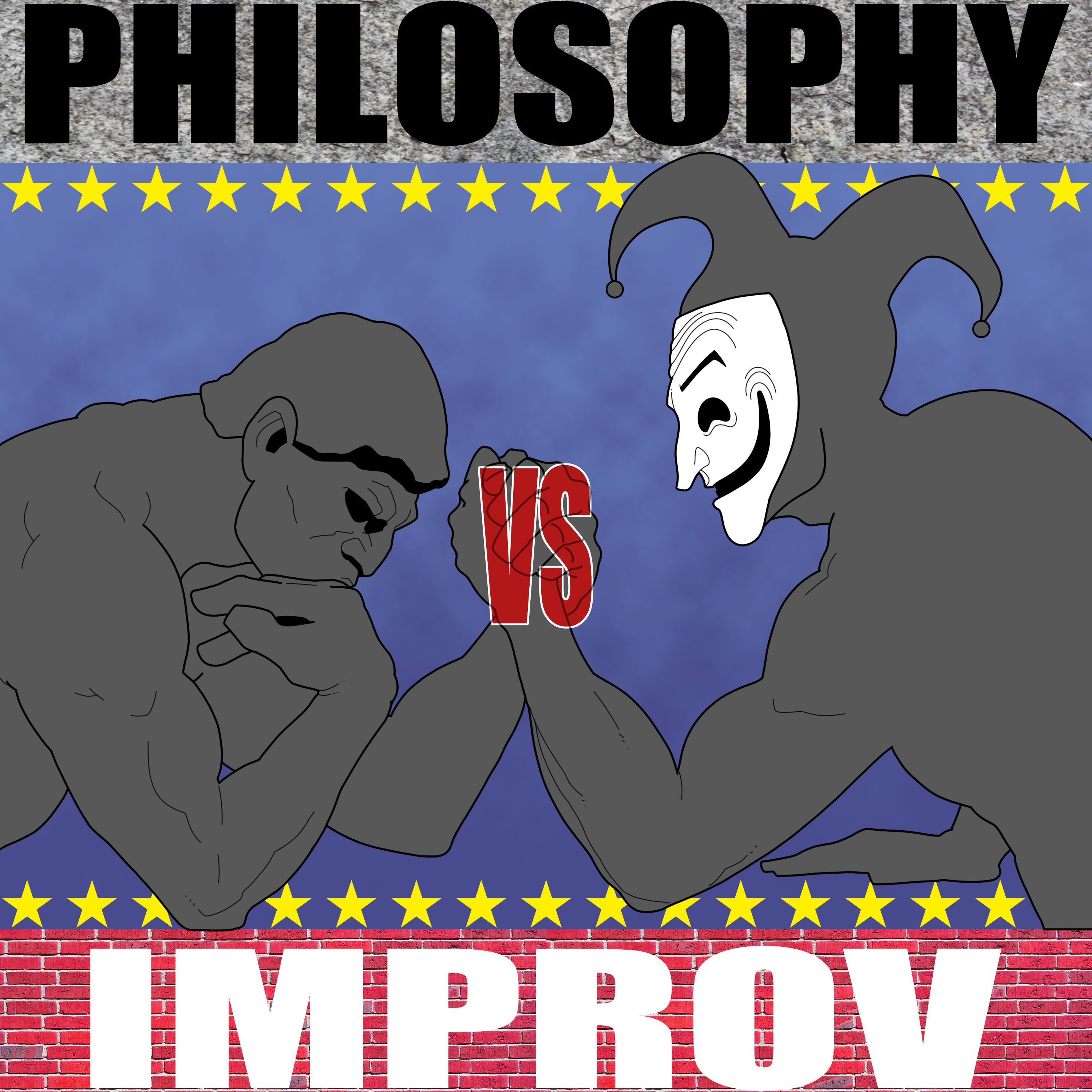
PEL Presents PvI#121: Meat Suit Dolls w/ Maddie Mutations
3w ago00:51:57Tap to summarizeThe LA-based clown, multimedia performance artist, and doll stylist (see maddiemutations.com) joins Mary and Mark to talk about her Doll Court show, clown types and the role of the fool, failing on stage, cities as women, silly villains, and more. Will Carol overcome her anxiety to go into the big meeting? Will Maddie keep all the nice dolls to herself? What should the demands of the LA doll union be? How edgy can a clown be? We wrap up with an exercise about numeric levels of joy. Hear more at philosophyimprov.com. Support the podcast and listen ad-free at patreon.com/philosophyimprov. Sponsor: Get 15% off OneSkin with the code IMPROV at oneskin.co/IMPROV.
Transcribe →PEL Presents NEM#256: Bruce Soord (Pineapple Thief): Heartbreaking Prog by Ear
3w ago01:09:47Tap to summarizeBruce started as guitarist for the '90s for Vulgar Unicorn and started Pineapple Thief as a solo project in 1999, though it quickly became a full band. He's released 16 studio albums with Pineapple Thief and four solo albums. More at brucesoord.com and pineapplethief.com. We discuss "Pillars" from Ghosts in the Park (his 2026 solo album) and some Pineapple Thief tracks: the title track from It Leads to This (2024), "Clapham" from 10 Stories Down (2005), remixed for 3000 Days (2008), plus to conclude "Alone at Sea" from Magnolia (2014). Intro: "Private Paradise" by from Abducted at Birth (1999, originally called Abducting the Unicorn). Hear more Nakedly Examined Music at nakedlyexaminedmusic.com. Support us at patreon.com/nakedlyexaminedmusic, which will get you access to a bonus episode with Bruce from 2018.
Transcribe →Closereads: Hegel on Faith vs. The Enlightenment, aka PEL ep. 394 (Part Three)
3w ago00:57:31Tap to summarizeNo description available
Transcribe →Ep. 395: C.S. Lewis Argues for Christianity (Part Two)
4w ago00:55:03Tap to summarizeContinuing on Mere Christianity (1952). We discuss his take on the problem of evil, how happiness is impossible without Christ, our potential to evolve from bios (biological nature) vs. zoe (spiritual nature), sexual morality, pride, and more. Get more at partiallyexaminedlife.com. Visit partiallyexaminedlife.com/support to get ad-free episodes and tons of bonus discussion. Sponsors: Every self-made person started somewhere. Yours starts free at shopify.com/pel. Visit functionhealth.com/PEL to get the data you need to take action for your health.
Transcribe →