Podcast
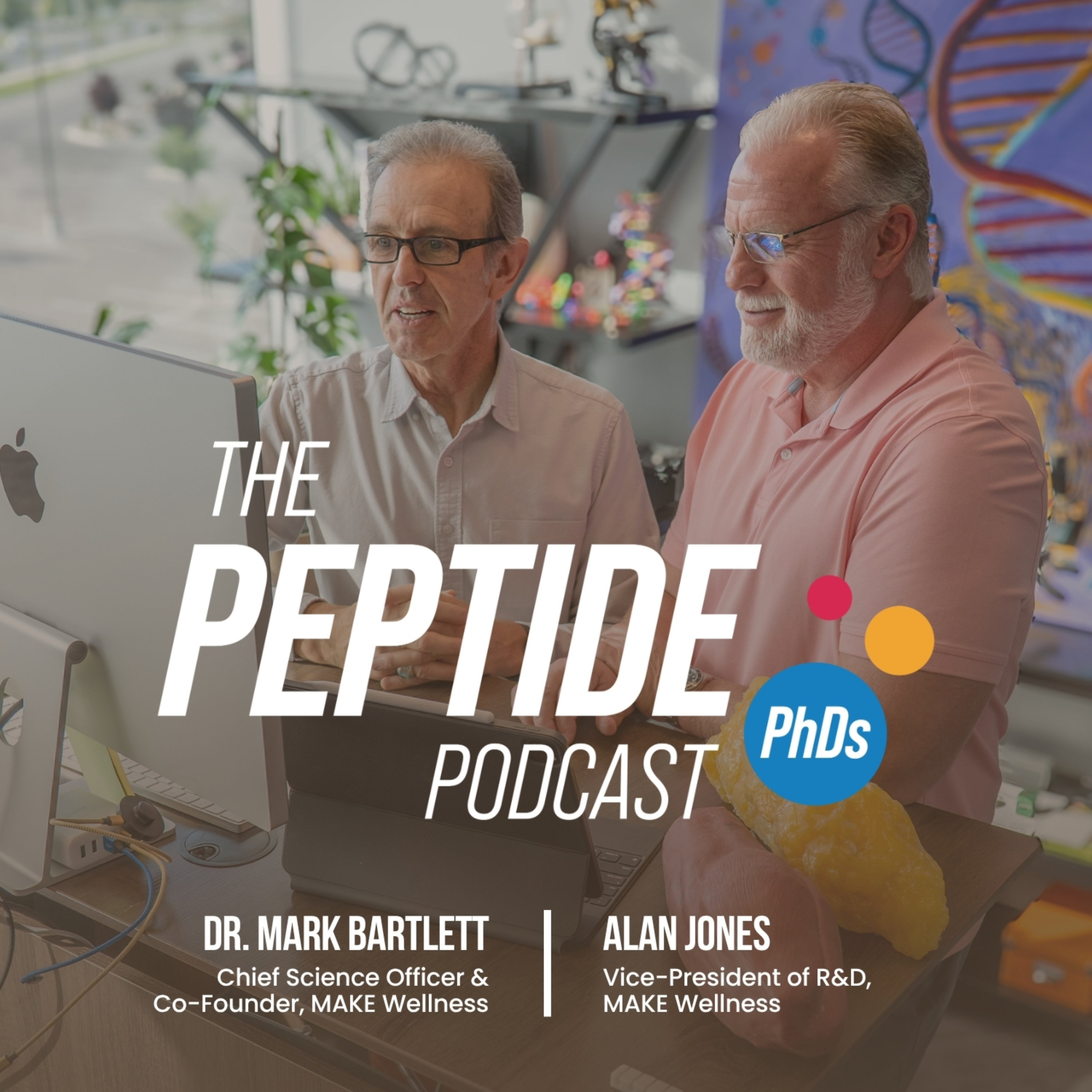
The Peptide PhDs Podcast
Hosted by MAKE Wellness · EN
The Peptide PhDs — the show where two science geeks with PhDs turn the complex world of peptides into stories you’ll enjoy. Dr. Mark Bartlett sees peptides as the secret language immune cells use to gossip, negotiate, and sometimes throw shade. Dr. Alan Jones looks at muscle as an endocrine powerhouse, flexing out a vocabulary of peptides that strengthen body and brain.
Each week we break down new discoveries from the lab, chat with guest experts, and unleash our cringy dad jokes. We hope it's a fun way to understand how these tiny molecules have a huge impact on health and wellness.
23episodes
Episodes
Newest firstAll episodes
Beauty Is More Than Skin Deep - Part 2
2w ago00:53:32Tap to summarizeThe Peptide PhDs are back for round 2 of their deep dive into beauty. Apparently, skin has a language, but it is not fluent in expensive moisturizer. In this episode, the Peptide PhDs explore how collagen fragments and bioactive peptides act as biological messages, telling the skin’s fibroblasts when it is time to repair, rebuild, and remodel.They unpack the science behind a smarter skin-support strategy: peptides provide the signal, plant compounds help preserve the matrix, and amino acids, vitamin C, minerals, and hyaluronic acid amplify the rebuilding process. They will explore clinical findings on collagen production, elastin, elasticity, and visible wrinkles. Plus, you'll have a front row seat to their collection of jokes involving E.T., almonds, frogs, and alligators that probably should not have survived peer review. "The information discussed on this podcast is for educational and informational purposes only and is not intended to be a substitute for professional medical advice, diagnosis, or treatment. Always seek the advice of your physician or other qualified health provider with any questions you may have regarding a medical condition. Never disregard professional medical advice or delay in seeking it because of something you have heard on this podcast."
Transcribe →Beauty Is More Than Skin Deep - Part 1
3w ago00:58:27Tap to summarizeWhat if we told you, in this episode, Dr. Jones and Dr. Mark are talking about tanning and new clothes? Don't worry, our PhDs aren't out on the town going for a new look. No, in this episode of The Peptide PhDs, they are talking about a different outward appearance: the skin. Our skin is more than just stuff holding other stuff in, and it's certainly more complicated than what's happening in your bathroom cabinet. In part one of our two-part series, the guys peel back the layers to explore the living, constantly remodeling organ that is our skin. They talk about the epidermis, dermis, collagen, elastin, fibroblasts--it's an all-out coverage of everything skin. Beauty may show up on the surface, but the real work is happening underneath it all. "The information discussed on this podcast is for educational and informational purposes only and is not intended to be a substitute for professional medical advice, diagnosis, or treatment. Always seek the advice of your physician or other qualified health provider with any questions you may have regarding a medical condition. Never disregard professional medical advice or delay in seeking it because of something you have heard on this podcast."
Transcribe →Maintaining Physical Independence as We Age
4w ago00:57:56Tap to summarizeWhat do our founding fathers and peptide signaling have in common? More than you might think.In this special Independence Day episode, Dr. Mark and Dr. Allen dive into myokines, metabolism, muscle, and modern peptide science. Along the way, they explore why muscle is the currency of healthy aging, how sleep and nutrition keep your internal communication systems firing, and why the most powerful health tools still require a little old-fashioned personal responsibility.Expect founding-father stories, a journey from muskets to molecules and an honest conversation about the responsible use of modern peptide science.Two hundred and fifty years ago, America declared its independence. In this episode, the Peptide PhDs ask a new question: How do we maintain our physical independence as we age?"The information discussed on this podcast is for educational and informational purposes only and is not intended to be a substitute for professional medical advice, diagnosis, or treatment. Always seek the advice of your physician or other qualified health provider with any questions you may have regarding a medical condition. Never disregard professional medical advice or delay in seeking it because of something you have heard on this podcast."
Transcribe →Get Under the Hood of Protein
Jul 1600:57:47Tap to summarizeProtein is having a moment—and, as usual, social media has made things complicated. Are you eating too little, consuming too much, or just aggressively shaking powder into a bottle and hoping for the best?In this episode, the Peptide PhDs get under the hood of protein to explore what actually matters: amino acids, digestibility, leucine, muscle protein synthesis, and why two foods with the same number of protein grams may not deliver the same results. They also tackle the plant-versus-animal showdown, explain why aging muscles may need a little extra seduction, and share practical ways to get more high-quality protein onto your plate.From GLP-1s and healthy aging to kidney myths, mTOR panic, and the supposedly sacred 30-gram protein limit, nothing is safe from scientific scrutiny—or a well-timed protein pun. It’s smart, practical, slightly cheeky, and packed with information your muscles will absolutely eat up."The information discussed on this podcast is for educational and informational purposes only and is not intended to be a substitute for professional medical advice, diagnosis, or treatment. Always seek the advice of your physician or other qualified health provider with any questions you may have regarding a medical condition. Never disregard professional medical advice or delay in seeking it because of something you have heard on this podcast."
Transcribe →Conversations Between Brain and Body
Jul 1300:56:39Tap to summarizeThis week, The Peptide PhDs are putting your brain on peptides—and no, this is not another scrambled-egg public service announcement. Dr. Mark Bartlett and Dr. Alan Jones break down how peptides and amino acids help create a communication network between the brain and the rest of the body. From the gut-brain axis to inflammation, stress, sleep, nutrition, and muscle signaling, your brain is receiving far more messages than most of us realize.The pair also digs into emerging research on apelin, a muscle-derived signaling molecule that may help explain why exercise can have such a powerful effect on mood and brain function.By the end, one thing is clear: exercise is doing a lot more than burning off lunch. Every walk, hill climb, bike ride, and resistance-training session may be sending valuable messages to your brain. In other words, your muscles are talking—so perhaps it is time to give them something interesting to say."The information discussed on this podcast is for educational and informational purposes only and is not intended to be a substitute for professional medical advice, diagnosis, or treatment. Always seek the advice of your physician or other qualified health provider with any questions you may have regarding a medical condition. Never disregard professional medical advice or delay in seeking it because of something you have heard on this podcast."
Transcribe →There's More to Your Body Than Just a Scale
Jul 700:59:25Tap to summarizeAfter a long hiatus, we're back!Dr. Mark and Dr. Alan dive into body composition—aka why the number on the scale is not the whole story, and sometimes not even the right story. Come unpack the difference between weight loss and improving the ratio of lean muscle to body fat, explaining how muscle acts like a metabolic engine while excess visceral fat can drive inflammation, insulin resistance, and long-term health risks. (Basically, your bathroom scale may be dramatic, but your muscle-to-fat ratio is the real plot twist.)The conversation also explores why maintaining muscle mass is one of the biggest keys to aging well, improving health span, and reducing mortality risk. With a mix of research, real-world examples, and a little classic Peptide PhDs banter, this episode makes a strong case for building muscle, managing fat, and treating your body composition like the biological upgrade it is.From air squats to incretin signaling, this one is packed with practical takeaways: lift something, eat enough protein, protect your muscle, and maybe stop letting your couch win the tug-of-war.
Transcribe →The 12 Hallmarks of Aging Part 3: The Final Four
Jun 2300:57:30Tap to summarizeIn this episode of Peptide PhDs, Dr. Mark and Dr. Alan wrap up their three-part tour through the 12 hallmarks of aging by tackling the final four: stem cell exhaustion, altered cellular communication, chronic inflammation, and dysbiosis. Translation: the body’s repair crews get tired, the cellular group chat starts dropping messages, the immune system gets stuck in “red alert,” and the gut microbiome can turn from a well-tended garden into a suspicious gas-station salad bar. The big takeaway is surprisingly empowering: while no one has found the “live to 200 and still crush leg day” button, many drivers of healthy aging are influenced by daily choices. Muscle takes center stage as a major communication organ, releasing myokines that help regulate metabolism, immune balance, brain health, and repair. Resistance training, daily movement, enough protein, micronutrients, hydration, sleep, and a healthy gut microbiome all help reduce biological “static” and give the body’s repair systems a fighting chance. In short, aging may be inevitable, but frailty does not have to RSVP early and your mitochondria would probably appreciate a walk after lunch.
Transcribe →The 12 Hallmarks of Aging Part 2: More Zombie Cells and Removing Loud Cells
May 2800:57:17Tap to summarizeIn part 2 of our Hallmarks of Aging series, the PeptidePhDs are back on the case — detective hats, zombie cells, muscle talk, and all. This episode dives into five more biological “clues” behind aging.From proteins that stop folding properly to cells thatforget how to take out the trash, the conversation makes complex aging science feel surprisingly approachable.The star of the episode? Movement. Again and again,muscle shows up as a major player in healthy aging — supporting metabolism, mitochondrial function, immune communication, and overall resilience. And yes, they also tackle “zombie cells” — thoseretired-but-still-loud cells that refuse to leave the party and stir up inflammation.Science over scrolling, peptides over procrastination, and one more reminder that moving your body might just be one of the best anti-aging strategies we have.
Transcribe →Hallmarks of Aging Part 1 - Aging at the cellular level...and zombie cells?! Oh my!
May 2100:53:33Tap to summarizeEver wonder why we age... at the cellular level? Have you ever heard of "zombie cells"? Well, you should, because they’re currently throwing a party inside your body—and they didn't invite you.This week, Dr. Mark and Dr. Alan kick off a brand-new series breaking down the 12 Hallmarks of Aging—the definitive, science-backed framework researchers use to decode how and why our bodies change over time. Think of it as the ultimate user manual for your biology.In Part 1, the docs unpack the first three culprits behind cellular aging:Genomic Instability: The biological "typos" and DNA damage that quietly pile up over the years.Telomere Attrition: The fraying and shortening of your chromosomes' protective end caps (think of them like the plastic tips on your shoelaces).Epigenetic Alterations: How your daily lifestyle signals actually dial your gene expression up or down.PLUS: They reveal the surprising, heavy-hitting role muscle plays in putting the brakes on all three. (Spoiler alert: strength training isn't just for aesthetics anymore; it’s cellular health insurance.)Oh, and the cellular clock isn't the only thing hitting major milestones. Dr. Alan officially walked the stage for his doctorate this week! Drop a comment to say congrats, Dr. Jones! 🎓🎉
Transcribe →Natural Peptides Explained--and where is Dr. Jones?!
May 800:56:08Tap to summarizeHas Dr. Jones been replaced?! With him away in Barcelona, Dr. Mark flies solo—luckily, Crystal is here to keep him honest!This week, we're diving into a major Science News article asking the big questions: Are peptides truly proven health aids, and is the FDA about to open the door regardless? We break down the facts to give you a clear, science-backed perspective on the future of the industry.Plus, coming off an amazing session with our affiliate community, we're tackling your real-world questions on natural vs. synthetic peptides and how they actually work. Tune in for a fun, science-packed episode!
Transcribe →