← The Portrait System Podcast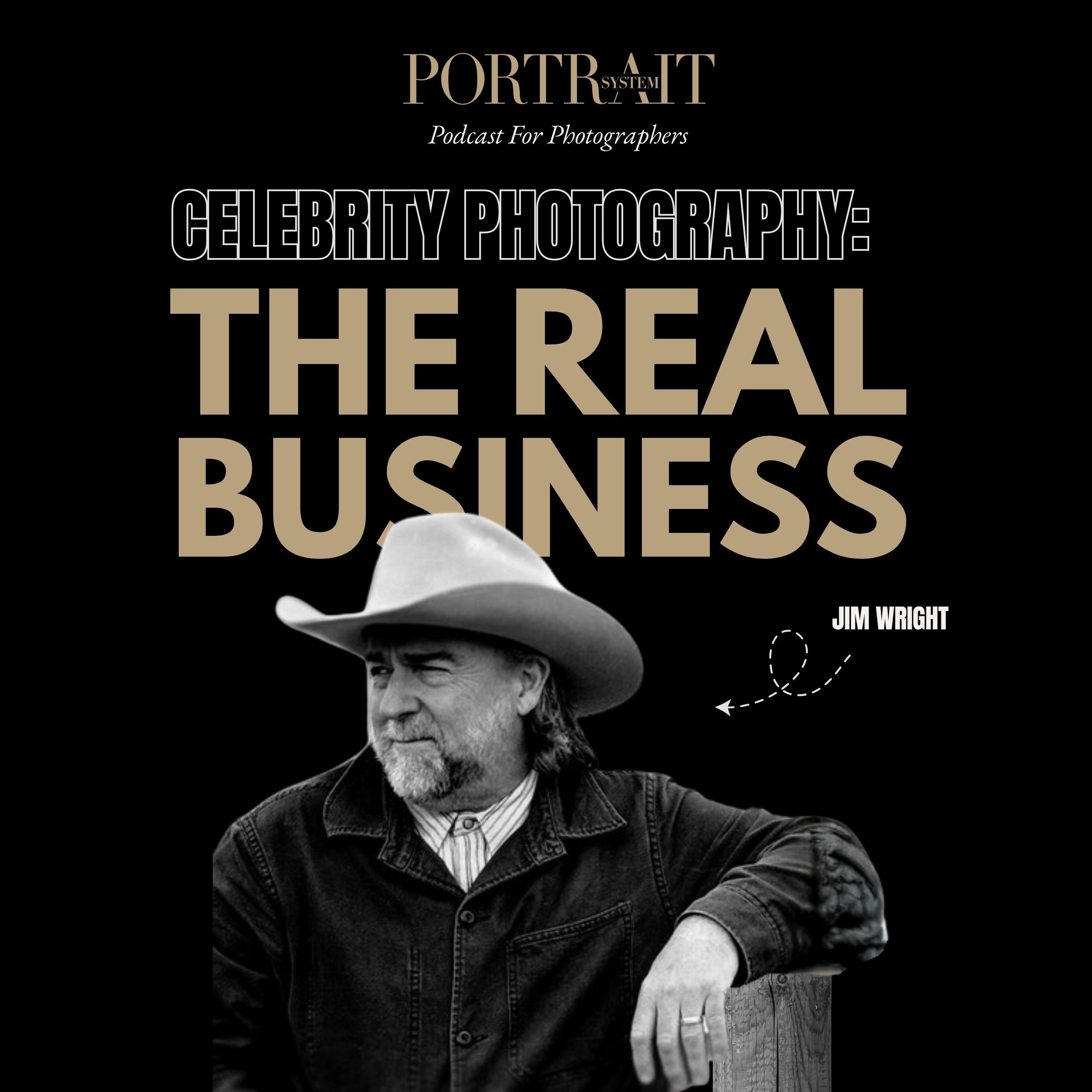
The Portrait System Podcast
From Rock Stars to Real People: Building a Lasting Photography Career
01:12:46
Loading summary
Transcript257 lines
- [00:00]
Nikki Klosser
Hey there, it's Nikki Klosser and I.
- [00:02]
Sue Bryce
Want to let you know about an.
- [00:03]
Nikki Klosser
Awesome free giveaway for people on our email list. If you haven't already, click the link in our podcast description or go to theportraitsystem.com signup to get on the list. If you sign up, you'll get a free posing 101 PDF to jumpstart things. It's an epic PDF, so you'll definitely want to get this. Also, just by being in our email community, you'll get deals, sales and information about any of our upcoming events and activities. So head over to theportraitsystem.com signup and and sign up. Today you're listening to the Portrait System podcast.
- [00:35]
Jim Wright
Any relationship that you make, you need to cultivate. And you know, a lot of the people that I've been working with, I've been working with for 20 years because I cultivate those relationships. I'm constantly doing reaching out. I'm saying happy birthday, Congratulations on your new puppy. Like just staying there and keeping the conversation going. Hey, anything. And also asking advice. Is there anything I should be doing differently? Like, what do you think? You know?
- [01:07]
Nikki Klosser
Welcome to the Portrait System Podcast.
- [01:09]
Sue Bryce
I'm your host, Nikki Klosser and this show is here to help you succeed in the world of photography and business. To help you learn to become financially.
- [01:17]
Nikki Klosser
Free, doing what you love and so much more.
- [01:19]
Sue Bryce
With over 1 million downloads, countless photographers.
- [01:22]
Nikki Klosser
Have taken what they've learned from both.
- [01:23]
Sue Bryce
Our episodes and from theportraitsystem.com and they.
- [01:26]
Nikki Klosser
Have grown their businesses, quit their day.
- [01:28]
Sue Bryce
Jobs and are designing a life of their dreams.
- [01:31]
Nikki Klosser
We keep it real and share stories.
- [01:33]
Sue Bryce
About the ups and downs that come with running a photography business.
- [01:36]
Nikki Klosser
You'll hear real life stories of how other photographers run their business and you'll.
- [01:40]
Sue Bryce
Learn actionable steps that you can take.
- [01:42]
Nikki Klosser
To reach your own goals.
- [01:44]
Sue Bryce
Thank you so much for being here.
- [01:45]
Nikki Klosser
And let's get started. What does it take to photograph celebrities and musicians, but also build a career that lasts? I'm Nikki Klosser and my guest today is Jim Wright. Jim is someone who's photographed tons of celebrities and musicians that you will definitely recognize, but he's also deeply grounded in the whole business of photography. We talk about what it's actually like to work at that level, how photographers can break into celebrity and music photography, how licensing works, and what most people don't tell you about the back end of the business side and how it all works. And I really love this part too. Jim still photographs everyday people because it's not about the fame, it's about the connection he makes with people. This episode goes way beyond the glamour of it all and really gets down to what it takes to have a sustainable photography career. Okay, let's get started with Jim Wright. Hi, Jim. Welcome to the Portrait System. How are you?
- [02:45]
Jim Wright
Hi, Nikki. Thanks for having me. It's a pleasure to be here.
- [02:48]
Nikki Klosser
Yeah. Where are you right now?
- [02:50]
Jim Wright
I am in the suburbs of Philadelphia in a little town called bluebell, Pennsylvania. It's kind of like a little country. Like, there's lots of farms around and wildlife and things like that. It's a big jump from after living in LA for 30 plus years.
- [03:11]
Nikki Klosser
Oh, wow. That is a big change. Yeah, yeah, yeah, I can relate. We lived in Seattle for 11 years, which is where I grew my business. And then we were from Michigan, we moved back home and now we live out in the country. I have chickens. Like, big change.
- [03:24]
Jim Wright
Well, we went from crack addicts and homeless people at the corner of our street to we watched the bucks fight in our backyard.
- [03:34]
Nikki Klosser
Yeah.
- [03:35]
Jim Wright
So it's a little different. We have a couple foxes that live on our properties and more wildlife than I can shake a stick at.
- [03:44]
Nikki Klosser
Yeah, it's a big difference. That's pretty much how it went for us.
- [03:51]
Jim Wright
We had our daughter. It kind of changed our perspective, you know, on life. So we wanted to move back to this. My wife is from this area and I grew up not far from here in New Jersey. So it was important for us to have family and grandparents and aunts and uncles, and we wanted our daughter to grow up with, you know, with family and cousins.
- [04:15]
Nikki Klosser
That's exactly one of the reasons we moved back. It's like having a village, especially when you are entrepreneurs.
- [04:21]
Jim Wright
Yes.
- [04:22]
Nikki Klosser
You know, you've got to have people around. You know, it's. I don't know, it's just really helpful.
- [04:29]
Jim Wright
Yeah. But with the travel schedule that I have and my wife travels for work as well, we literally could not do without grandparents and aunts and uncles and.
- [04:42]
Nikki Klosser
You know, it helps.
- [04:43]
Jim Wright
And nannies and, you know, things like that. Yeah, it helps a lot. A lot.
- [04:48]
Nikki Klosser
Well, you said you lived in LA for 30 years, which makes sense because for people who don't know you, you have photographed tons of celebrities and musicians. And we're gonna get into all of the, like, you know, glam, exciting part of all of it. But I want people to know too, that we're also gonna get into the business aspects and how you get there and how you license things and price things and like, all of that. So make sure. I just want people to know we're not only gonna talk about the glitz and glam side of it. Although that's fun too. But so la. And you had mentioned, when we were just getting our tech stuff ready, something about Nashville too. So it sounds like you've kind of been a little bit all over the.
- [05:28]
Jim Wright
Place, or I guess I should just start from the start is the easiest way. I grew up at the Jersey Shore. Not Jersey Shore like the TV show, the real Jersey Shore, Southern New Jersey. And I grew up at the beach, which, which was great. And I went to college. I went to Drexel University for a couple years and then I went to the Art Institute of Philadelphia. And that's where I really concentrated on photography at Drexel. I studied fashion design and art history and at one point wanted to be a painter. Wanted to be. Wanted to make surf clothes. And I kind of along that way when I was at Drexel, I had to take photography course and that's where I kind of fell in love with it. And then I was an avid surfer, so part of my scheme was to always live in California because I. I figured, hey, I can live in California. I can surf all the time and I can work in as an assistant. And I never really planned on being a photographer, believe it or not. I just wanted to get a gig working for like one of the big guys, one of the top photographers. And at that time, Herb Ritz and Matthew Ralston and Helmut Newton and, you know, all these other great photographers were based in la. So I was, by pure stupidity, I just thought that I could go out there and get a job working for him. And also out of pure stupidity, I just decided to go and knock on Herb Ritz's studio door. Wow. And I got a job cleaning the studio. And then I started working in the darkroom. And then once I had Herb's name on my resume, it opened other doors to work for other photographers. I never told them what I did for Herb. I just said that I worked for her. You know, I had the pay stub. And then I was able to secure a full time spot working for a great commercial photographer and celebrity photographer, Peggy Sirota, who I was with her full time for almost seven years.
- [07:39]
Nikki Klosser
Nice.
- [07:40]
Jim Wright
Yeah. And that's how it really rolled into the celebrity thing. I had never planned on being a celebrity photographer. And I still can't believe that I'm called a celebrity photographer because I was fashion and music. I grew up playing in bands. I was really into Music. I was just really into style and everything. And then. And when I first started shooting, that's. That's all I did. And then. But it was also the same time when the celebrity on covers of magazines was really starting to take off. And that's how I got into it. My agent at the time was, she said, hey, why don't, you know, you shoot this? Shoot fashion, it's the same thing. And you can make more money from syndication, sell it to other magazines and, and all this kind of stuff.
- [08:32]
Nikki Klosser
Yeah, you said it was a stupid decision to just go knock on her Brits door. But I mean, what's that old saying? You miss 100% of the chances you don't take? Like, who cares? The worst thing that they can say to you is no.
- [08:46]
Jim Wright
That was the whole thing. Unfortunately, in my life, I had lost both my parents when I was 19, my mother passed when I was 19 and my dad passed when I was 20. So I had this whole punk rock kind of go for it mentality. And I didn't know any different. That that wasn't how you did it. Like, everybody kept saying, well, that took a lot of cajones, you know, to, you know, in confidence. I'm like, I wasn't confident. I had nothing, so I had nothing to lose. I'm like, if they told me no, I would have been like, oh, well. And I would have moved on to somebody else.
- [09:25]
Nikki Klosser
Well, what I love too is that you weren't beneath like cleaning the studio. And I think sometimes, especially for photographers who've kind of already have a career and who've been in it for a while, it's like, sometimes you just gotta do the things that, you know, maybe you're more qualified than that. But sometimes just getting that foot in the door and cleaning the studio or assisting or whatever can really lead to big things. As long as you are doing a great job. Like, clearly you were doing something right. You know, I'm assuming you're a hard worker, like, strong work ethic, if you're willing to clean it, you know?
- [10:03]
Jim Wright
Yeah.
- [10:04]
Nikki Klosser
In that type of thing, people really notice. So it's not that. Look at my portfolio. It's so amazing. Whatever. A million people can have amazing portfolios, but how you show up every day for whatever job you're doing is so important.
- [10:19]
Jim Wright
I just had a hunger to be around it. I had stuff when I was in school, I had studied all these photographers, you know, and I just wanted to, like, I wanted to learn the process. How did they think of doing that? How did that idea come about, how do they research? And that was one of the great things that I learned when I worked with, with from Herb. I learned, surround yourself with great people. Best hair, best makeup, best location, best styling. Surround yourself with the best. And the rest comes easy. From Peggy. What I learned is research influences. You know, looking at every magazine, photography books, learning from the masters, digging deep, digging into their backstory and making visual references. Keeping your own library, your own cat. What do you like? I like this. Making notes. This is why I like this. And making notebooks and gathering that information. Making your own encyclopedia of photography, if that makes sense, that makes sense to you and what you like. Because I always tell this to students when I speak, that no matter how much you try to copy a photograph, you're never going to do it because you're not that photographer. You weren't there. You weren't in that moment. So you don't know. You don't know. So go ahead and try to copy, because all of a sudden, in your process, something's going to change and you're going to find something different that you liked. I love that you can use the influence. Use the influence, Try to copy it, try to nail it. Try to nail it. But I guarantee along the way, you're going to find something better that you like that is more of an expression of you as opposed to that photographer that you're trying to copy.
- [12:30]
Nikki Klosser
Oh, absolutely. And I mean, having your own personal style, you've got to set yourself apart somehow. And even, like when we teach a lot about different business models and we say the same thing, use that business model, but tweak it to make it your own, what feels right to you. It doesn't have to. You don't have to do exactly what everyone says to do all the time. Your photos don't need to look like everybody else's. Yes, start somewhere, start there. You don't have to recreate the wheel, but like, exactly what you said, in time, you're gonna find your style, you're gonna find what works for you. It's doing it. Like you have to do it. You can't. So many people have analysis paralysis where they're looking at all these amazing photos, they're looking at these business models, and they just don't even know where to begin. So they don't. And it's like, you just gotta do it. You just gotta do it.
- [13:18]
Jim Wright
It's funny because I always hear people say, well, of course he took that picture because he had this and they had that. Like, it's all these excuses, and it's just not true. I can do the same pictures with me and a subject that I can do with, like, if we're on a commercial production where I've got a crew of 30, I can take the same pictures. And I do. I do. Commercially, there's usually a lot more parameters involved, and there's a lot more people to please, and there's certain guidelines that have to be met as far as showing specific products at specific times, in a specific mood, in a specific location. But I basically, you know, I do my thing. I do. And a lot of times what I do is that I do what the client wants, and then I do what I want. And usually the compromise and the most successful picture is somewhere in the middle. You know, people always say to me, which I love hearing. It's like, I saw that picture and I knew it was a Jim Right picture.
- [14:29]
Nikki Klosser
Oh, isn't that the best? I love that. I get that sometimes.
- [14:32]
Jim Wright
I always say to them, great. Can you tell me what a Jim Right picture is? Because I never want to find out. I want to keep exploring. I want to keep trying to further my. My vision. Because I think if I ever really figured out tooth and nail, you know, where the rubber meets the tarmac, what a Jim Wright picture is, then I think it would be time for me to hang up the, you know, put the camera back in the closet.
- [15:04]
Nikki Klosser
Well, it's interesting you say that, because when I was looking at your portfolio. Well, actually. Okay, full disclosure, this is. This is. I probably shouldn't admit this, but I'm a bit of a procrastinator.
- [15:13]
Jim Wright
That's okay. So am I. Hello. Welcome to the club.
- [15:16]
Nikki Klosser
Yeah, initially, you know, when we decided we were gonna have you on, you know, I briefly looked at your website and everything and read about you. I'm like, okay, awesome. We definitely want to have him.
- [15:27]
Jim Wright
And then.
- [15:27]
Nikki Klosser
But I didn't get too in the nitty gritty of your portfolio until this morning. And last night, we were watching tv and I looked at my husband, and I go, I wish I was friends with Dolly Parton. And he's like, you say the most random shit. And I'm like, I know, but I just really want to be your friend. And it turns out you photographed her many times.
- [15:43]
Jim Wright
Yeah.
- [15:44]
Nikki Klosser
And I was like, oh, my God, Dan, the guy I'm interviewing today. You know, it's just the timing was funny, you know, because I have a Dolly obsession. I have a jean jacket with her picture on my Christmas sweatshirt has. Have a holly Dolly Christmas ever. I've dressed up as her for Halloween. And I'm not really someone who gets real starstruck. Like, I just don't care a whole lot about celebrities. But Dolly, I mean, well, if you.
- [16:08]
Jim Wright
Want to have me back, we can do a whole episode just on my experience with Dolly Parton, because sign me up. I started working with Dolly in the last three to four years.
- [16:19]
Nikki Klosser
Oh, even better. You get, like, now, Dolly, Dolly.
- [16:23]
Jim Wright
Yeah. And she's kind of changed my mantra of. Of life. It's funny because I just wrote it this morning to her publicist, who I was talking to, who I was texting with, and I just happened to say. I'm like, you know, thank you for. Because we just had a. A cover, a special edition of People magazine cover come out. Dolly at 80. They're doing this whole, like, media blitz right now with Dolly because she just turned 80. And it was from a previous shoot that I had done. So I was thanking him, you know, for the opportunity. And I said, my mantra in life is, you know, you come up against something. You're like, what would Dolly do?
- [17:04]
Nikki Klosser
I love that. What would Dolly.
- [17:05]
Jim Wright
Because she is one of the most. People always ask me, what's it like working with her? I'm like, that airs a little later. Smells are a little sweeter, colors are a little brighter. She just has this aura that. That.
- [17:20]
Nikki Klosser
The goosebumps from that.
- [17:21]
Jim Wright
Yeah. She exudes this love. And you just being around her and the energy, you just want to be a better person because this is a little girl who had nothing, who now is. And the best thing is that she's such a great philanthropist and speaks nothing of it. Speaks nothing of it.
- [17:47]
Nikki Klosser
Yeah. That is something that is, like, my favorite thing about her is that she doesn't do it for the glory. She does it because it feels. I'm assuming. I obviously don't know this, but it. My perception of her is she does it because it feels good and because she truly wants to help people. That's the best kind of person.
- [18:06]
Jim Wright
When she walks on set, the first thing she does is that she says the hellos to my crew that she already knows, you know, and she might not remember everyone's name, but, like, my first assistant, she's like, you're the guy from Brooklyn, right? And you got all the tattoos. How are you, sweetheart? So good to see you again. Thanks for being here. Do I know. Wait, you. Wait, you. You live here in Nashville? Didn't I just work a couple days on a different shoot with you? And it's that whole thing, like, everyone is family and everyone's coming. She's like, okay, boys, let's do this. You know me. I like to work fast, and boom, we just make it happen. Then when we're done, guess what? There's always time. Now. Now, do you guys need me to sign anything? Do you. Who want. Anybody want any snapshots or anything? You know, like, she's that kind of, like, giving, giving person. And because. Because of that attitude, her shoots are always successful because people want to go the extra mile. And it's rare that a star of that caliber is so open to collaboration. And that's what makes her great. And she makes everyone feel worthy to be there, that they're there for a reason. So instantaneously, when you do that with people, they. They just want to give. They just want to give more, you know, and I've learned to pick that up. I've learned, you know, I carry that into, you know, working with my crews and everything, you know, is. And it makes all the difference. It just makes all the difference in the world. So that's my what would Dolly do Story.
- [19:54]
Nikki Klosser
I love it. I love it. I know we got totally derailed with the Dolly, but I just. I had to. I had to bring it up. But when you were saying before how people say, I know this is a Jim Wright photo, something I wrote this note down that I wanted to mention is that even though you do have, like, there's a style, but your photos are all so different. Like, some of them are in studio, like, lots of studio lights. Some of them are outside with just the sunlight, or I'm assuming, some. Oh, my gosh. And you photographed Kyle Chandler. I missed that. He's my favorite. He was on Friday Night Lights, the TV series for people who don't know. Like, my absolute favorite series of all time, even though I couldn't care less about football, he and Coach and Tammy are my favorite couple I've ever watched on TV with Dan. I'm always like, we gotta be more like Coach and Tammy. And he's always laughing at me.
- [20:50]
Jim Wright
Well, I photographed Tammy before, too.
- [20:53]
Nikki Klosser
Oh, you did?
- [20:54]
Jim Wright
I can't think of her name right offhand.
- [20:56]
Nikki Klosser
Connie.
- [20:57]
Jim Wright
Connie Britton. Connie Britton.
- [20:58]
Nikki Klosser
Yeah. She's one of my favorites.
- [21:00]
Jim Wright
She's a sweetheart, too. She's a sweetheart.
- [21:02]
Nikki Klosser
But, like, all of your photos are very different. Some are outdoors, some are indoors. Some are, like, dark and moody. Some are bright and just a huge variety of expression and posing and location and everything. And I really love that. It doesn't Seem like you've pigeonholed yourself into a specific type of. Of portrait. You know, even though, like you said, people can recognize your portraits, they are vastly different. Like, there's some of Dwayne Wade here, where one of them, he's in studio. It's high key. He's got his shirt off and his muscles and, you know, and then the other one next to it, he's like, outside and the water and totally different vibe. Same guy, like. So it's really cool, the variety you have of images.
- [21:55]
Jim Wright
Initially, when I started shooting, I used to get hired to go on the road with bands all the time. So I was really, really into photojournalism. So when you're out, when you're out by yourself, you got to learn to make things happen without lights, without an assistant. And that was back in the film days. So that raw. I love that rawness and that edginess and that grit to it.
- [22:20]
Nikki Klosser
Yeah.
- [22:21]
Jim Wright
So for sure that's where that comes from. And then the more as I developed as a photographer, that's where the lighting came into it and the cinematic feel like, I just became obsessed with that, so. And I used to get hired to shoot stills on music videos as well.
- [22:42]
Nikki Klosser
Well, that was one of the things I was gonna ask you, Jim, because I noticed you have some music videos on your website, and I'm curious. Okay, side note, I was geeking out because I just started listening to country music, like, five or six years ago. If you would have told me I was gonna be a country music fan, I would have laughed in your face. But here I am, and that's pretty much all I listen to now. So I was geeking out a little bit at some of the music videos you've done. You know, Luke Bryan, Darius Rucker, Jon Pardee, Riley Greene. So just quickly, how much video are you doing versus photo 5050 now. Oh, okay. Interesting.
- [23:24]
Jim Wright
50 50. I also direct commercially, too. I just did a whole series of commercials with Guy Fieri, the chef. Okay. I'm digging the cooking. So that kind of when I was approached for that, that. That just kind of made, you know, kind of made sense. The funny thing how the video directing came into being is that in one of the things in preparation and research that I learned while an assistant was storyboarding, so all my still shoots, I used to storyboard. And then what started, and I wasn't directing at all. I wanted to. I'd had aspirations. I didn't know how to get there, though. And then what started happening is that I would storyboard because when you're doing album packaging, you have to get so much content because the talent has to usually get like a two year cycle out of it for the album package.
- [24:20]
Nikki Klosser
What they're going to use in the media and on their website and all of that.
- [24:25]
Jim Wright
And it has to be different, but it has to have, you know, continuity to it. So I used to storyboard everything and it made things simpler. Well, what, what started happening is that those storyboards would think the. The record label would have them and then the storyboard would get turned over to a director and they would go and shoot motion of everything that shot stills up. And it happened a few times. And finally I went to one of the record labels, creative directors, and I was just like, hey, like, what's going on here? You know?
- [24:57]
Nikki Klosser
Yeah.
- [24:57]
Jim Wright
And she was like, yeah, you don't have a reel? And I said, well, give me one. Let me have one of your baby bands and give me a shot at it. And that's what happened. And I did. I did. It was a Babyman no name artist that really went anywhere, but we kind of killed it on a little budget, you know, for it. And it got my foot in there, which allowed me to, based upon my relationship with all these country artists that I had, get me an agent for directing in Nashville. And then at the same time, I've been working with the singer, songwriter Pete Yorn for, you know, 20 at that point. You know, I've been working with Pete for, you know, 25 years. At that same time, I directed a music video with him and Scarlett Johansson. So. And that was getting played all over the world. That just kind of went viral before there was such thing as viral. So that kind of became my calling card. So people were like, oh, well, he can handle that talent. He could handle that. And then Darius Rucker was just about to, like, really go into the stratosphere as far as country music. And they came to me with this little song called Wagon Wheel.
- [26:17]
Nikki Klosser
Oh, Wagon Wheel. Gotta love it. Old Girl Medicine show is the. Is the original singer. But when he covered it, it's so good.
- [26:26]
Jim Wright
Yeah, that really became my calling card because that video was just like, I'm sick of that video. Like, there was a point where I could.
- [26:36]
Nikki Klosser
If it will never get old enough.
- [26:37]
Jim Wright
No, it came on the radio. I had to like, turn it off. I was like. Because I was so heavily associated with it, but it opened a lot of doors for me. And that. That kind of like got it really rolling. I mean, right now we're. I. This morning I just finished A treatment for a new artist on Sony writing a treatment for Riley Green. I'm in production for a John Party video, so. Awesome. But the other thing that that happens is because I'm a photographer, is that with new albums and artists like John Party, artists like Riley Green, it. It's usually a combo, which is so nice, where I'm directing the music video, but I'm shooting stills too. So we do these. These combo days or multiple days, so that everything has this. This continuity to it.
- [27:28]
Nikki Klosser
Yeah, I love that.
- [27:29]
Jim Wright
And that's really been my bread and butter for about, you know, the last, like, five, six years, so. And that's what I'm known for. And it also goes into the commercial side, too. Like I said, the projects that I just finished with Guy Fieri, it was the same thing. We were shooting stills and directing the commercial. So it was just bouncing. And I have. The crew that I work with is a hybrid crew of DPs, gaffers, photo assistants, digital technicians, that whole thing. So there's a lot. I'm usually totally burnt after a couple of those days because there's a lot of go. I don't get a break when we're working. But I like it that way though, too. Believe me, I'm not complaining. I'm not complaining.
- [28:16]
Nikki Klosser
Oh, no, I understand. No, totally. But going back to what you said before, or what we were talking about before, where you have to take the chances, and you did. You went to this person and said, give me a shot. You weren't trying to do some huge music video, but just let me try it and look where, you know, look where it takes you. So again, you got to put yourself out there. You do.
- [28:38]
Jim Wright
You have to.
- [28:39]
Nikki Klosser
Yeah.
- [28:40]
Jim Wright
And let me. I've been doing it for 40 years. I still struggle with it. It's of. Of go. Reaching out to people. Do I sound stupid? This is. And you know what everybody goes through through the same struggles. And you got to remember that no one has the perfect answer of. Of how to reach out. I will tell you this, though. I will tell you this. Is that as young photographers, as you go through it, important, so very. I can't stress it enough, is that the photo assistant that you meet at the record label, the assistant to the assistant, treat everyone with kindness and respect because in two years, that person might be the head creative director or might have left and started their own agency because they have a relationship. So any relationship that you make, you need to cultivate. And, you know, a lot of the people that I've been Working with, I've been working with for 20 years because I cultivate those relationships. I'm constantly doing reaching out. I'm saying, happy birthday, congratulations on your new puppy. That, like, just staying there and keeping the conversation going. Hey, anything. And also asking advice. Hey, is there anything I should be doing differently? Like, what do you think? You know, I just had a really good friend of mine that's a creative director just ripped like you're going on about my website. She ripped it apart. Ripped it apart to holy, you need to change this and you need that and blah, blah, blah. And like just gave me this, this Santa Claus list of stuff that I need to change, you know, so it's all about that collaboration and communication and treating people with respect and following up with what you say you're gonna do.
- [30:41]
Nikki Klosser
And, well, and this translates to photographing like everyday people as well. Like, for example, let's say you're a wedding photographer. You gotta treat the cousins, the aunts, the uncles, you know, everybody the same. Because that could be your next client.
- [30:56]
Jim Wright
Exactly.
- [30:56]
Nikki Klosser
And like you said, maintaining that relationship with clients is going to bring them back to you again and keep giving you more business. I think what happens a lot of time is someone will, you know, photograph someone and deliver their photos and then that's kind of it. And they don't keep that relationship going. Where past clients and people you've worked with before are the easiest people to market to. As long as you're, you know, treating them with respect and they know like, and trust you and doing a good job like it's the easiest people to rebook. So it translates. Whether you're dealing with crews or celebrities or just families and everyday kind of.
- [31:34]
Jim Wright
People in this day and age, it is a lot easier for everyone to be a photographer. Yeah, okay. Digital has made it that much easier. And so what people you have to remember is if you're a portrait photographer, you're doing weddings or people are hiring you for the experience, what I do as well, people hire for the experience. People always know that not only am I going to deliver, but I'm going to over deliver and I'm going to think about things while we're shooting that you haven't thought about. Wow, that's a great album cover. But you know what, if we crop it with this, it will be a great tour poster. This would be a great image to wrap around the tour bus. This would look great as a vertical hanging off the side of a stadium. You know, like things like that, that we were just joking on the Shoot, that we did the other day, we kept going. Tour dates, tour dates. Every once in a while, have one of my assistants whisper in my ear, tour dates. What that means is you have the subject here, move them there so we can put the tour dates. Leave the negative space so that they don't have to add it. The designers don't have to add it later. You know, think about backgrounds while you're shooting tour dates, tour dates, you know, album credits, you know, things like that.
- [33:09]
Nikki Klosser
So, and that translates. I shoot a lot of personal branding and that translates to that as well as well. Where you can, oh, you could use this photo on this part of your website or this could be where, you know, your logo go, you know, and this is where your LinkedIn profile, like, it truly all translates. Or if you're a family photographer, this could be the 8 by 10 on your desk. This could be the 16 by 24 on your wall.
- [33:34]
Jim Wright
This could be your Christmas card. And this is where Merry Christmas goes. This is where Happy Hanukkah goes. This is where happy holidays go.
- [33:41]
Nikki Klosser
Yep. And you're helping them, but it also helps you to sell more photos. Yeah, so. Well, that helps.
- [33:48]
Jim Wright
I'll let you know a little secret. I do all this high profile stuff. Magazine covers, album packaging, tour packaging. I still do family portraits. It's a little, it's a little like side hustle.
- [34:02]
Nikki Klosser
I saw on your website there's a tab that says real people.
- [34:06]
Jim Wright
Yeah, well, there's also, there's also Jim. Right. Portraits.com, too. And that's, that's where you can hire me.
- [34:12]
Nikki Klosser
Okay.
- [34:13]
Jim Wright
For, you know, an economical rate that I'll spend time with your, you know, you know, with, with your family. That's awesome. Yeah, I do it all the time. I just, you know, and also it gives me. Because of the big, it's kind of this balance thing because people see Jim Wright photography, they go in there and go, I could never afford him. And what I always say to people is, try me. Because I love the experience. I can't tell you how many people I photograph Christmas cards every year. I, I, and it's, that's cool. And I have the same families that come back every year. And this year we, like one family, we dressed up like a 1970s. Like, they all had wigs on and stuff. So, like, we do like these fun things. And then I have other people too, that I photograph their kid. I have this series that I shoot, and it's simply on white. It's a takeoff of Richard Avedon's, you know, into the, you know, into the west, where. Except in mine, everyone is wearing white. The kids wear white head to toe. They're serious portraits. And we shoot them on a white backdrop. And we have a studio set up just like Avenon with the white, seamless in the open shade. And I spend time with the kids. We do singles, we do group shots and everything. And I have people that come back year after year because they just love to document their kids. And it's fun and it's great. And, you know, I get to pay the mortgage with a couple shoots. So, you know, and it's also in our area, it's become a little. Not to toot my own horn, but like, cachet, because it becomes a conversation piece. Oh, you know, the photographer that shot that also works with Dolly Parton.
- [36:04]
Nikki Klosser
Total, yeah.
- [36:05]
Jim Wright
People were like, how did you get him? It's like, well, actually, here's his number. Just call him. Like, he's a great guy, you know. And again, it's the experience. The. The parents love it. They come into my studio, they see all the things on the Jon Bon Jovi hanging on the. Hanging on the wall and, you know, things like that. And, you know, there's Johnny Rotten from the Sex. This is Jason Aldean. You know, like, pictures like that on the wall. You know, James Hetfield that you see in. Back there in the corner from Metallica. And then the kids are like, I got photographed by Metallica's photographer. I wish I was. I wish I was Metallica's photographer. But, you know, it's. It's that, you know, it's that kind of thing. So one thing kind of leads into the other because the commercial business is peaks and valleys. You know, when it rains, it pours. Sometimes you, you, you. Everybody wants you on the same day or the same time sequence. And, you know, and you can't do it. So being able to. Being able to do the family portraits and, and headshots and stuff like that just kind of covers the bills, you know.
- [37:10]
Nikki Klosser
Well, and that I kind of. I wanted to talk about pricing and how it all works because I think there is that idea that if a celebrity reaches out, you know, oh, we're gonna do it for exposure so you can get that street cred. Like, at what point are you like, no, I don't do that for exposure anymore. Like, I need to get paid for this. Like, did you ever have to make that transition or did you start charging from the get go? Like, how did that work?
- [37:39]
Jim Wright
Well, 90% of the time, it's never really, the, the talent that reaches out. Okay, well, I got.
- [37:47]
Nikki Klosser
Yeah, yeah.
- [37:48]
Jim Wright
So sometimes there's. There's some editorial magazines that don't pay, you know, they don't. They give you access to the talent. So it depends on when. Early in my career, I did it a lot. I did it a lot. I was living in Venice Beach, California. There was a great independent magazine there called Venice Magazine. And they literally, they would ask us, who do you want to shoot? And they would try to get access to Venice magazine, would be in every hotel in la. So that's how I was able to get early, like music stuff, you know, and. And some, you know, celebrities and everything. But you can only do that so much. You still have bills to pay, right? Unless it's someone huge. I don't really do that that much anymore. Unless it's someone that I really, really, like, want to photograph. Like, if someone said, hey, you want to photograph Bruce Springsteen, but it's for free, I would, I would remortgage my house, you know. You know, to make it happen. But I at least got a. Have expenses covered, you know, there. There has to be. Has to be something like that. But starting out, you're a young guy, you're not married, you're living by yourself. Go for it, you know, but maintain those relationships. You know, that then. And that's what, that's what you're doing it for, you know, is. Is the relationships. It's really, really tough situation. You have to really learn to balance that.
- [39:35]
Nikki Klosser
Yeah.
- [39:36]
Jim Wright
It's one thing if it's a celebrity, as far as someone, like, doing, like, local branding and saying it would be great exposure, they better have a million followers on. On Instagram.
- [39:49]
Nikki Klosser
Oh, yeah, yeah.
- [39:50]
Jim Wright
You have to think about the time factor. It's not just shooting it. It's processing of files. It's retouching stuff, you know, and what's your time worth to you? Can you afford to do it? Can you not?
- [40:05]
Nikki Klosser
You know, Jim, the only times that I have done it, it's been a really long time where I would reach out to them because, well, that, that's.
- [40:13]
Jim Wright
That, that. That's a whole nother case. If you're reaching out to them that.
- [40:17]
Nikki Klosser
They were going to be an evangelist for me, if I could just like when I used, like, grew my business on networking meetings, and I would be like, all right, who's the queen bee? Look at their social media. Are they someone who tags their hairstylist? Do they tag their real estate agent? Are they shouting from the rooftops about their Massage therapist. Okay. I want them in front of my camera because I know they're going to tell everybody about me, which ultimately that's what happened. So I was very strategic about who I reached out to. Hey, do you want to do a trade? Sometimes I would do that. So it's not just like, do you want to free shoot? Because there's a little bit more value in it. I've done both. I've done both ways, but that was huge for me. But if someone just reached out to me and asked if I wanted to do a shoot for exposure, Unless, like you said, it's Dolly Parton or, you know, it's a hard no at this point, but I have, you know, my career is stable enough that I can do that. Where if you need to build your portfolio, that's different, you know, I don't know.
- [41:17]
Jim Wright
Yeah, well, I'll tell you one thing is that because once you become the free person, you're always the free person.
- [41:23]
Nikki Klosser
Yeah.
- [41:24]
Jim Wright
That's how. That's how you're thought of. Believe me. There are shoots that I've walked away from. I. For what you want, I can't do this. Like, it's not feasible for me. It's not worth it, you know, worth it for me.
- [41:38]
Nikki Klosser
So do you have like, you know, if an agent or pr someone reaches out or whatever? Are you like, okay, these are my set fees, These are my set packages. Are you adjusting things based on what they want? Like, do you just have like a one sheet saying this is what. What it costs? Like, how do you. How do you manage that?
- [41:57]
Jim Wright
Well, for private portraits, and it's on my website too, is that I have, like, I have little different packages. That's for private. That's for, you know, Tom, Dick and Harry that, you know, live down the road. But as far as commercially, it's. It. It varies.
- [42:16]
Nikki Klosser
That's what I thought you were going to say.
- [42:17]
Jim Wright
Yeah, it's all over the place. It depends on what the. Depends on what the project is. Depends on what the usage is. Depends on the length of the usage. Okay.
- [42:30]
Nikki Klosser
Okay, so let's get into that, because that is a question that comes up quite often is if you're photographing someone for a book cover, which I have done multiple times. Not real famous, you know, nobody famous or anything. But I've like, the licensing thing can be. Can be tricky. And you had mentioned when we were just getting our tech stuff ready, you said you wanted to talk about work for hire. And so if you can kind of get into a little bit of that, like you said, with usage and licensing and length of time and all of that, like, whatever you want to share about that that you think might be helpful to the listeners.
- [43:07]
Jim Wright
Sure. Work for hire is very common now. And what that means is that they're going to pay you. The clients or agency will pay you a fee, and they basically own the pictures. Okay. A lot of the record labels are like that. But what I do with the contract is I redline. I still maintain, I split the copyright. I retain the right to be able to use the pictures for fine art, prints, books, promotion and gallery shows.
- [43:47]
Nikki Klosser
Awesome.
- [43:47]
Jim Wright
Okay. I retain that right. Real work for hire doesn't do that. I'm able to do that because of my relationships that I have with the record labels. They know that that's part of my gig. Okay. There's other photographers, like, in my genre, like Danny Clinch. Danny Clinch does not give up any of his copyright at all.
- [44:09]
Nikki Klosser
Do you have to, like, work your way up to that, though?
- [44:11]
Jim Wright
I mean, like, it's a long, slow process. Okay. Because, see, I've been at it for so long. Is that. And I hate saying this, and my wife kills me because I go, well, back in the day. And she goes, it's not back in the day, it's now back in the day. What used to happen is that you would get hired and you would get a creative fee. And then the record labels, if they were going to use the picture for the beer sponsor, they put you in touch with the beer sponsor and the beer sponsor paid you. If there was a shirt that the artist was wearing, and all of a sudden Wrangler or Levi's or somebody wanted to. They worked a deal with the artist. Guess what? You talked to Rag or they paid you.
- [44:58]
Nikki Klosser
Yeah, I feel like that's how it should be.
- [45:00]
Jim Wright
That's how it should be. But now what happened. Now what happens is that the record labels feel as though we've made. We've made this contact for you. Okay. And has worked for hire. Why are you, as the photographer, getting the money? We have the relationship and we set it up so we should get the money.
- [45:21]
Nikki Klosser
I feel like the only way to really combat that would be if literally every photographer out there agreed that we're gonna do. We're gonna do it this way. But there's always gonna be that one who snakes in because they want that exposure. They want. Whatever. So it's like, ugh.
- [45:39]
Jim Wright
Well, that's. You know, there was a couple years ago that there was a young girl that was like, 19, and she shot A worldwide Levi's campaign. And then it came to light that she was paid $10,000. But at 19, that was a lot of money for her. She should have been, she probably should have been paid about a quarter of a million dollars.
- [45:59]
Nikki Klosser
Yeah.
- [46:00]
Jim Wright
You know, so there's, and I don't know if that's folklore, if that's true, but it's kind of the basis of what happens. If you don't know, you don't know. So I have, I have other younger photographers reach out to me all the time. Hey, I did this shoot and they now want to use it for billboards. I'm like, well, is that in your original contract that you. And you always have to have the contract? You always, you know, I've been burned so many times because you try to do things in good faith and I just don't, I just don't do it anymore. It's, it's like even if it's just an email that says that this is what the usage is.
- [46:42]
Nikki Klosser
Right. Well, do you have specific, I mean, obviously you have contracts, but did you have like an attorney draft them up? Did you get a template somewhere?
- [46:49]
Jim Wright
You know, yeah, I'm lucky because my brother in law is a contractual, contractual lawyer. So. Yeah. So I always say to young photographers, make, you know, get, find a lawyer. Find a lawyer, spend the money to draw up the correct contracts.
- [47:07]
Nikki Klosser
It's different state to state, country to country.
- [47:10]
Jim Wright
It's different state to state. It is. Yeah, it is. You know, it's, you have to control how your images are used. And a lot of young photographers will say, well, what do I care? I got paid for the day. I'm like, what they don't realize is that your pictures that you took are getting up and working for that artist 24 hours a day for the rest of the time with the Internet.
- [47:39]
Nikki Klosser
Yeah, yeah, okay.
- [47:41]
Jim Wright
And it's, it's just, it, it's, it's a, it's amazing. I'm in a track down right now. I did images of Kevin Costner. I shot Kevin, I shot Kevin three times in one of the pictures he had. There's these vests that he has on like that the Yellowstone guys wear. Well, every once in a while if I have downtime, I will Google my own name and do image searches. And those image showed up on a clothing brand. Okay. And my syndication lawyer is on my behalf is suing that clothing brand because they just felt as though, well, he's got our clothes on, we can use it on our website to sell our clothes. And it's like, no, that's not how it works. But you'd be.
- [48:29]
Nikki Klosser
Because you have that contract.
- [48:31]
Jim Wright
Yeah, well, it's. It's not even a contract. It's just usage. I. I own the copyright. I shot him for a magazine.
- [48:37]
Nikki Klosser
Right.
- [48:38]
Jim Wright
I didn't shoot him for a product. I own those. Kevin. Kevin doesn't own them. I don't own them. I don't even think Kevin even knows they're up there. You know, I also had a recent situation where there were pictures that I took of Charlie Hunnam from Sons of Anarchy.
- [48:54]
Nikki Klosser
He's my. One of my other favorites. If you say Taylor Kitsch, I'm gonna, like, squeal like a teenage girl. I did see those photos of the photo of Charlie, though. Very, very cool shot.
- [49:04]
Jim Wright
Yeah. And what happened is that some girl, some. I don't know where she was, she decided she was going to take my pictures off the Internet and make coffee mugs and blankets and. Oh, and towels and T shirts. And I reached out and acted like I was ordering and just happened to ask her, hey, where did you get the rights to do these? These are so cool. And she goes, well, I didn't. I got them off the Internet. I'm like, did you pay anything for them? No. Screenshot.
- [49:38]
Nikki Klosser
Yeah.
- [49:39]
Jim Wright
Lawyer shut her down. And she got. She went into this whole thing. Well, Mr. Big Photographer did it. And I go, no. I said, it's the same thing as me walking into your house, taking your television off the wall and walking out with it. You stole property. I don't. I don't know how many shirts You've sold for 29.95.
- [50:01]
Nikki Klosser
Right.
- [50:01]
Jim Wright
I don't know how many coffee mugs or bed sheets and pillowcases. She had a whole thing. And they were. It was my pictures.
- [50:08]
Nikki Klosser
Like, Jim, if she had reached out to you and said, like, I have this really great idea, and maybe you did, like, a profit share or something like that seems more ethical. And maybe you would have said no, but maybe would've said yes. You know, if she had just come to you and be like, jim, I absolutely love this photo. This is an idea I have. Would you be interested in partnering with me?
- [50:27]
Jim Wright
Yeah. And the first thing I would have said, great, let's get ahold of Charlie's lawyer, because it's his image and likeness selling a different product.
- [50:39]
Nikki Klosser
Oh, yeah. Yeah. That's true. Yep. Yep.
- [50:42]
Jim Wright
Okay. And that's why all the things going on with AI is then. And that's what Matthew McConaughey just. Just copy wrote if that's the correct word. Copy. Wrote his own image, voice, fingerprint and body type because of AI. So if anyone steals anything from him, all right, somebody imitating him going, all right, all right, all right. Boom. Lawsuit.
- [51:12]
Nikki Klosser
Well, and it's scary, I think, especially for celebrities with, with AI because they can make you look like you're literally doing anything and, and people don't know if it's real or not. Like, it's, it's scary stuff.
- [51:24]
Jim Wright
Here. I'll blow your mind. There's a company that has a beta process which means that it's in testing. But a producer friend of mine reached out to me to ask me because I have a lot of old stills that I shot from concerts back in the 80s and everything. A lot of artists that there's no motion of. Well, they're asking if they can have a look at my archive so that they could load all my still images into their program and make motion where motion didn't exist.
- [52:02]
Nikki Klosser
Wow.
- [52:03]
Jim Wright
From.
- [52:03]
Nikki Klosser
So make it look like they're actually singing and you know, like it's actually a live show from.
- [52:08]
Jim Wright
Yeah, from 1990. 1993.
- [52:10]
Nikki Klosser
Yeah.
- [52:12]
Jim Wright
It's crazy. It's crazy.
- [52:13]
Nikki Klosser
So you know what's funny? Side note, in my head, I'm like, I must have been an artist in the 70s, but he's not that old and oh my gosh, like, we didn't have. Yeah. Anyway, I, I Forget that the 90s is not that long ago. Like, I was born in 1977, so like to like, I forget that the 90s is like 30 or 30 years ago.
- [52:34]
Jim Wright
Yeah, me too. I do it all the time.
- [52:37]
Nikki Klosser
Okay, sorry, that was just a side note.
- [52:39]
Jim Wright
I have an intern that was born in 1997.
- [52:41]
Nikki Klosser
Oh God.
- [52:42]
Jim Wright
I'm like, I'm like, we're not old.
- [52:46]
Nikki Klosser
Right.
- [52:46]
Jim Wright
But anyway, back to, back to pricing, you really have to investigate, you know, usage and if people want to like outright own them. And you have to be very upfront about people that you do not own these pictures. You know, like when I do private shoots and even when, you know, my, my commercial clients, we put galleries online for them to look at. Everything is very low res as it can be so that it can't be used later, you know, and then when people go, oh, I just, I want to put everything, you know, after the shoot, can you put it all on a hard drive? Oh, you want to own it? Well, that's going to be X amount of dollars. And the reason why I'm not giving specific amounts is because every market is completely Different, Right?
- [53:35]
Nikki Klosser
Yeah, I figured, you know, it depends.
- [53:37]
Jim Wright
It depends on who your clientele is. You know, I'm not, you know, Mary down the street who, you know, does a mini session for $150.
- [53:49]
Nikki Klosser
Right?
- [53:50]
Jim Wright
It's like, yeah, yeah. Am I going to cost more? Yeah, but my. You're going to be with me for a few hours. We're going to. You're going to be treated like it was a magazine shoot, like we were doing a shoot for Vanity Fair or Rolling Stone. And that's the experience you get from me. And that's where the photographs are something that are a part of your family legacy. So that's my approach to it, to doing private sessions.
- [54:21]
Nikki Klosser
Yeah. Very cool. I like that you still combine that. I feel like it's a nice variety where you have music videos, like you said, directing, you know, music videos, doing stills for, you know, musician, celebrity, and also the family photo. Like, it's a nice variety, you know, mix things up a little bit. Because I'm sure, like, like, not everyone is Dolly Parton. So dealing with celebrities all the time, it's got to be exhausting. And it's. Must be kind of refreshing just to get like a family in, you know, that isn't.
- [54:50]
Jim Wright
I don't know. Well, people always say to me too, they're like, you know, what do you enjoy? You must like, enjoy like shooting celebrities all the time. And, and. Or do you. Or what do you like better? Do you like shooting models better? And I always say, and no offense to any celebrities because I'm a huge, like, kind of fanboy, but I like. I like shooting models better. A number one. Most of the time they show up on time and they. And they just do what they're told. You know, most of the time with celebrities, it's there, there's a window, there's an agenda. You know, you're the tool in their. In. In their cog. Which is fine because you have to know that, you know, you know, going into it and some. Some celebs. I always say this too. The reason why there's great. Oh, you always see great pictures of. Of certain celebrities is because when they show up to the shoot, they participate. There's. Unfortunately, I've had some situations where celebrity shows up and it's kind of like entertain me.
- [55:58]
Nikki Klosser
Right, right.
- [55:59]
Jim Wright
You know, and then you have to. You have to break them. Luckily, I've gotten pretty good at what we call breaking them, you know, is. But I talk a lot too. I don't wonder when celebrities are in hair and Makeup and styling and all that kind of stuff. I don't talk much. I talk on set. And a lot of times I will talk more than I shoot. And I just try to find. I do my. Once again, we go back to the research part. I do my research. What projects do they done? What have they done? Do I have any connections with them? Do we have mutual friends? Do we have mutual acquaintances? Do we like the same stuff? Are we both into cooking? You know, are we both. Are. Are we both sober? You know, Connections? Yeah, like, you know, you know, like, like things like that. Just, you know, are they into cigars? I'm really into cigars. You know, a lot. A lot of guys, you know, a lot of guys are these days. And so it's just trying to find little, little connections and then that makes your personal connection with them better and it. I. I believe that always shows up, you know, in the pictures.
- [57:11]
Nikki Klosser
Absolutely. Very cool. Well, this has been really interesting. Yeah, thanks for sharing all of this.
- [57:17]
Jim Wright
It's.
- [57:17]
Nikki Klosser
It's, yeah. Pretty awesome. You. You've built yourself quite a. Quite a career since cleaning Herb Studio.
- [57:26]
Jim Wright
Yeah.
- [57:26]
Nikki Klosser
Yeah. I love it. I love it. I appreciate your openness and kind of candidness about all of it. It's. Sure, yeah. Very interesting. But before you're off the hook, though, I do have four more questions.
- [57:36]
Jim Wright
Sure.
- [57:37]
Nikki Klosser
I always ask these at the end of each episode, if that's okay.
- [57:41]
Jim Wright
Huh.
- [57:42]
Nikki Klosser
Yeah, I figured. All right, question number one is what is something you can't live without when you're on a photo shoot? Not necessarily like gear related shoot on a photo shoot.
- [57:55]
Jim Wright
I thought you meant in life. In life. I was gonna say my wife and my daughter, who are. Who are the love. The loves of my life. They're the reason I do what I do and allow me to do what I do and. And are a constant inspiration on set. And all of my assistants will. There's one thing. There's one thing that I can't go without, and there's one thing that can't be near me. One thing I can't go without is Mexican Coke in the bottle with clean ice. Clean ice with a clear glass. The ice goes.
- [58:33]
Nikki Klosser
Very specific, Jim.
- [58:34]
Jim Wright
It's just my thing.
- [58:35]
Nikki Klosser
It green M&Ms.
- [58:37]
Jim Wright
It's kind. I know it's. It's just that thing. And it's kind of started out as a joke, but now it's taboo is that it's like this, like, good luck thing. So whether I'm directing, it's usually like right next to me or if we're shooting if something's not going right. One of my.
- [58:52]
Nikki Klosser
Superstition kind of thing.
- [58:53]
Jim Wright
Superstition. One of my. My first assistant will walk up to me and go, is it coke time? Now the other thing that I can't have on set, that. That is on set, but I can't be around is bananas.
- [59:05]
Nikki Klosser
Oh, smell. Is it smell?
- [59:08]
Jim Wright
No, it's the sound of people eating bananas.
- [59:11]
Nikki Klosser
Oh, yeah, yeah. That's a weird sound.
- [59:15]
Jim Wright
I know it's stupid, but it. It's also become a joke on my set because I've opened up my camera case before, and instead of reaching for my camera, one of my assistants has put a banana in there. Or I'll be flying home and I'll open up my shoulder bag and one of my assistants will put a banana in my shoulder bag or in my.
- [59:37]
Nikki Klosser
This clarifies that, you know, you're not like a dick about it because they're pranking you with it. So that's good.
- [59:43]
Jim Wright
No, no. They send me videos of themselves eating bananas.
- [59:47]
Nikki Klosser
Or that's just mean.
- [59:49]
Jim Wright
Or they. A couple of the guys are freelancers. They'll actually get other photographers that I'm friends with to do one video, eat bananas and. Oh, yeah, yeah. Just like. It's just turned into this whole thing.
- [60:02]
Nikki Klosser
So that's funny, though.
- [60:03]
Jim Wright
Yeah. But. But Mexican Coke is. Is. Yeah, I. It's part of my rider.
- [60:11]
Nikki Klosser
So good. I'm a diet girl, which I know is so bad for me, but it's just so good.
- [60:15]
Jim Wright
So it's. Right. So is regular coke. Who are you kidding? I've literally had. I've had to. To cut back. Yeah.
- [60:22]
Nikki Klosser
All right. Number two is how do you spend your time when you're not working?
- [60:27]
Jim Wright
When I'm not shooting, like.
- [60:29]
Nikki Klosser
Yeah, just when you're not working. In general, what's. What are your. I know you said cooking.
- [60:33]
Jim Wright
Well, three things. Cooking, love. Spending time with my daughter. Shooting. I shoot all the time. Like. Like all the time. And if I'm not doing that, then I'm thinking about other shoots. Personal work. I try to continue personal work. I paint as well. I have. If you look at my website, the first thing that pops up, their journal pages. That's an ongoing project that's been going on for 30 years. I have an exhibition next month up at Endicott College in Boston in one of their galleries. That is all my journal pages printed large scale. That's. That's what I do in my office. I work. Work on my journals a lot. It's very therapeutic. They become Visual reference points. Also when I have creative meetings and, and things like that, and it kind of ex planes to people more. How, how I think visually it's easier to show people than to, to. To really, you know, explain it.
- [61:45]
Nikki Klosser
Yeah. Interesting.
- [61:46]
Jim Wright
Yeah.
- [61:47]
Nikki Klosser
All right. Okay. Number three is what is a specific, like, photography product that you can't live without?
- [61:56]
Jim Wright
Lately it's been film.
- [61:58]
Nikki Klosser
Oh, back to film, huh?
- [62:00]
Jim Wright
Yeah. I've become. During COVID I sold all my old analog cameras just because I got tired of, like, looking at them on the shelf. And I recently just started buying analog cameras again. And I've become obsessed with it. And I think that it's something that's missing in, especially for young photographers because I'm all about digital too. I. I shoot both on set now all the time. It just has a different aesthetic, a different feel. But I also think that I can get the looks that I want digitally is because I learned to understand light through learning film processes.
- [62:43]
Nikki Klosser
Yeah.
- [62:44]
Jim Wright
How. How it reacts. And once you have that foundation, then digital is. It's easy. It's easy.
- [62:55]
Nikki Klosser
So film is such a great way to learn.
- [62:57]
Jim Wright
Yeah. If I can suggest, you know, I came from the 8 by 10 sh. Sheet world back in the day, so if I could suggest anything to young photographers, it's at some point, learn film. Learn asa. Like really learn it. Like, study it. Make it part of your craft. And once you can get down to the nitty gritty. Because film has to be so much more exact than digital.
- [63:21]
Nikki Klosser
Oh, totally.
- [63:22]
Jim Wright
And once you.
- [63:23]
Nikki Klosser
I mean, we had either 12, 24 or 36 shots on that camera back in the day. Like, it's just so funny because, I mean, I grew up in the film world. I had a dark room class in high school and that sort of thing. And we'd have to wait 10 days before running to Meijer to pick up our, you know, see what our photos looked like. Like, what a difference between now when and it's fun. I mean, they're taking thousands of photos and finding one they like. It's like, oh, my gosh.
- [63:51]
Jim Wright
And it's funny too, that you talk about that period of when to get your film. And I do this a lot. Like people when we do commercial shoots, they're like, well, we need this, you know, right away. And I'm like, well, I usually like to wait like five days before, three to five days before I edit to allow for a digestion period. Digestion period used to be already implicated when you shot film. Okay. So give your mind time to clear it. Okay. And then you go back and look at the film and what you thought was great is not great. And the mistake is the one that's the magic. And that doesn't happen anymore because people shoot digitally and they're working on the shot, they're working on the shot and they have an emotional attachment to it. A great thing to do is just not look at it for a couple days. Let your emotions disappear from the shoot. So when you go back to do your edit, you're doing more of analytical analysis of what you just shot. Yeah, it's great advice, if that makes sense.
- [65:02]
Nikki Klosser
I do this shoot every year for a couple colleges here in Michigan. An insurance company hires me to do the graduating dental students. Their head shops so that they leave, you know, it's a gift from the insurance company and they leave with a professional headshot. And I, I think I had 90 people on, 89 people on last Friday and Sunday. One of the students email found my email because I go just, I do it all through the insurance company. She found my email address and was like, can you send me the photo you took on Friday? And I'm like, I haven't even uploaded the photo. Like, it was Friday, It's Sunday. I was like, I don't work weekend. I didn't say it like this, but I don't work weekends. I haven't even uploaded the photos yet. Like, I'm still processing that. I had 90 different people to smell, touch, and, you know, like, which I love the shoot, don't get me wrong, it's easy money and I, I enjoy doing it. But like, I'm still coming down from that. I have, like, I'm not sending you your. But like, you'll get the photos when everybody else gets them.
- [66:03]
Jim Wright
Yeah, yeah, yeah. Sometimes you get, you gotta, you gotta, you gotta walk away.
- [66:07]
Nikki Klosser
It's that like, culture that we live in, the now, now, now culture, the instant gratification culture. And I've got two young kids. How old's your daughter?
- [66:16]
Jim Wright
Seven.
- [66:17]
Nikki Klosser
Okay, so I have a seven and nine year old. So we're in a similar. My husband and I are just like constantly trying to outweigh, you know, to weigh. Like, okay, we know it's not 1990 anymore and we want to give them the now technology and have the ability. But we also are like, dude, bro, excuse me, bruh. You gotta like not have this instant gratification for everything all the time. And we're like trying to balance that. Jim, I'm going on a tangent, but I know you're.
- [66:50]
Jim Wright
No, no, I, I Totally understand what you mean. Because let me tell you, the creatives that I work with are not getting older, they're getting younger. And it's literally like, there's people asking me to, like, take a hard drive with them at the end of the shoot, and I just say, no, no, no, because you're not seeing everything. You're not seeing my mistakes. You're not seeing my out of focus. You're not seeing some of my camera shakes. Yeah, look. Cause I do a lot of, like, slow shutter. And I'll drag, you know, and everything for, like, certain, you know, effects. Yeah. Or whatever. But there's a lot of mistakes in there, and it makes it look like what. What, you know? And also, there's just stuff that I don't want representational of me, and I don't want it out there, and I don't want the chance of it ever being out there. So it goes in, you know, trash can. I only have one client that part of their thing is, is that they literally check the frame number when you start to. When you finish. But I also. I trust that creative director because she seasoned and she knows. But it's part of their contractual thing that. That they do. They control. They control their shoots, like, very, very tightly because they had a photographer who. There were missing frames, and the photographer leaked the images. A very high profile star.
- [68:23]
Nikki Klosser
Yikes.
- [68:24]
Jim Wright
And they were wondering how it got there, and they tracked it back to the frame numbers and. And since it's embedded digitally, it's a protection. Yeah, yeah, it's a protection thing. Yeah. But the edit is very important to me. The same thing. I never send anyone RAW files either. No, never, never, never. Never. So.
- [68:45]
Nikki Klosser
All right, Jim, last question for you. What would you tell people who are just starting out? I know you gave a lot of advice already around this, but if there's anything you want to add, follow your.
- [68:56]
Jim Wright
Vision, trust your gut, your soul. Know what's. What is right. Your soul knows what is correct for you. So lean into it. If it doesn't feel right, it's probably not. And give yourself more credit for your intuition than you think. At the same time, don't be afraid to take chances. Push. Yeah, push. Push. And when you can't push, keep pushing. Every door that gets slammed in your face, take that as not as a no. But they weren't the right people for me anyway. There's someone out there. There's a place for everyone. You just need to keep searching. And a lot of times, it's not what you want or what you think you want, but it is a process of elimination. And you need to go through the process of elimination to find your place. And once you find your place, then go.
- [70:07]
Nikki Klosser
That's beautifully summed up.
- [70:09]
Jim Wright
And it took me a lot of years to find that of where I was. You know, I always dreamt of being the next Patrick Demarchelier or the next Francesco Sulo. I was going to be this huge, fast photographer. That's not me. When it gets down to it. That's not how I shoot, you know that I'm. I just, I don't have that esthetic. I'm a little gritty. Do I love shooting women? Of course I do. Am I good at it? As I've gotten older, I've gotten a lot, lot better at it and I really enjoy. Took me a while to get there. You know, my thing has been shooting men. You know, I make them look comfortable, I make them look cool, I make them look rock and roll and they look like everybody looks like the dude from next door and you can talk to them and that's been become my calling card, you know, so you gotta find your place and go with it. And once you get to that place, then it'll allow you to do other things. And that's how I found myself back to photographing women.
- [71:10]
Nikki Klosser
Fantastic. Well, thank you. Where can people find you online?
- [71:14]
Jim Wright
Jim Wright photography.com Jim Wright gallery.com. there are my two main websites in your Instagram @jersey Jim 1453.
- [71:27]
Nikki Klosser
All right, perfect. Well, thanks again, Jim. This has been awesome.
- [71:31]
Jim Wright
Thank you so much. Thank you.
- [71:33]
Nikki Klosser
Glad to have you back for a full Dolly Dolly episode.
- [71:37]
Jim Wright
Yeah. Or we do do a whole country music episode.
- [71:41]
Nikki Klosser
Oh, I would love it because that's.
- [71:43]
Jim Wright
That'S a whole genre, you know, into.
- [71:46]
Nikki Klosser
I interviewed Morgan Wallen's photographer once and just talking about like what it's like being on tour with someone, you know, so that was really interesting.
- [71:58]
Jim Wright
Yeah, I did that for years. You just got to remember that you're not in the band. That's a whole.
- [72:03]
Nikki Klosser
Oh yeah, totally.
- [72:04]
Jim Wright
I've seen a lot of tour photographers come off tour and they are just a mess and don't know what to do with themselves. You know, it's.
- [72:14]
Nikki Klosser
I mean, it seems like you're living in a bubble.
- [72:17]
Jim Wright
You live in a bubble when you're on the road. Yeah, yeah, yeah.
- [72:20]
Nikki Klosser
Anyway, well, thank you again, Jim, and this has been awesome.
- [72:24]
Jim Wright
Okay, great. Thanks for having me. Thank you.
- [72:28]
Sue Bryce
Thank you so much for listening to the Portrait System podcast. Your 5 star reviews really help us to continue what we do. So if you like listening, would you mind giving us a review wherever you listen? I also encourage you to head over to sue briceducation.com where you can find all of the education education you need.
- [72:43]
Nikki Klosser
To be a successful photographer.
- [72:45]
Sue Bryce
There are over 1000 on demand educational videos on things like posing, lighting, styling, retouching, shooting, marketing, sales, business and self value. There's also the 90 day startup challenge plus so many downloads showing hundreds of different poses. We have to do checklists for your business lighting PDFs. I mean truly everything to help make you a better photographer and to make you more money. Once Again, that's Sue briceducation.com.