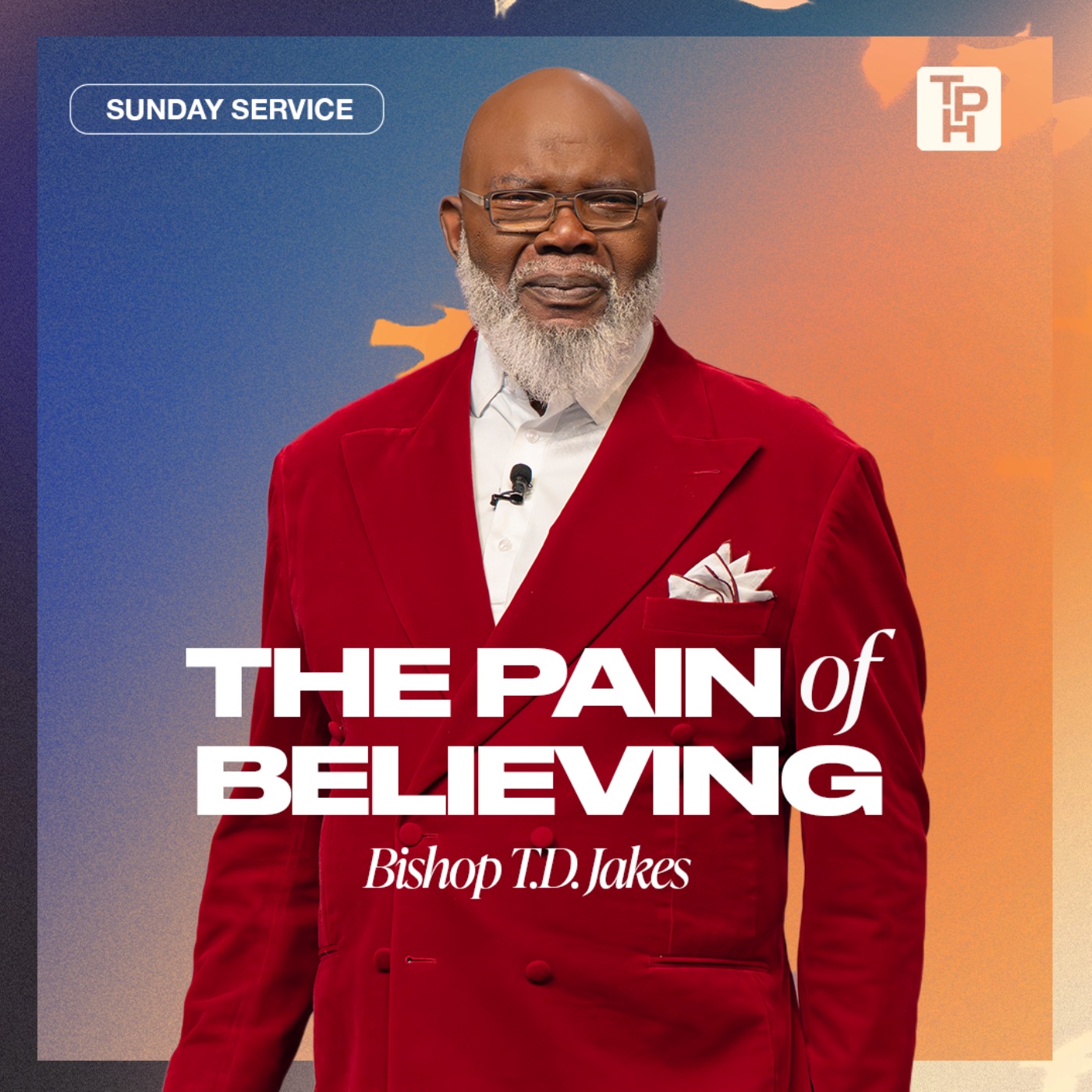
Loading summary
Transcript245 lines
- [00:00]
Grow Therapy Advertiser
Was January supposed to be your big fresh start? Well, sometimes the pressure to fix everything at once just can leave you feeling stuck. Grow Therapy makes it easier to reset at your own pace. With therapy that's covered by insurance and built around your life, you can search by what matters like insurance, specialty, identity or availability and get started in as little as two days. And if something comes up, you can Cancel up to 24 hours in advance at no cost. Whatever challenges you're facing facing Grow Therapy is here to help. Grow accepts over 100 insurance plans, including Medicaid in some states. Sessions average about $21 with insurance, and some pay as little as $0 depending on their plan. Visit growththerapy.com acast to get started. That's growththerapy.com acast growththerapy.com acast availability and coverage vary by state and insurance plan.
- [01:02]
BILT Advertiser
It's 20 and if you're still paying rent without Bilt, it's time for a change. BILT is the loyalty program for renters that rewards you for your biggest monthly expense. Rent. I don't like paying rent, and I bet you don't either, but BILT makes it feel a little better. BILT is the loyalty program for renters that rewards you monthly with points and exclusive benefits in your neighborhood. Let me explain. With bilt, every rent payment earns you points that can be used towards flights, hotels, Lyft rides, Amazon.com purchases, and so much more. And here's something I'm really excited about. Now BILT members can earn points on mortgage payments for the first time. Soon you'll be able to get rewarded wherever you live and unlock exclusive benefits with more than 45,000 restaurants, fitness studios, pharmacies and other neighborhood partners. Personally, I'd use my BILT points for travel. Turning rent into flights feels like a win. It's simple. Paying rent is better with bilt. And now owning a home will be better with BILT too. Earn rewards and get something back wherever you live. Join the loyalty program for renters at joinbilt.com acast that's J-O-I-N-B-I-L-T.com acast make sure to use our URL so they know
- [02:15]
Factor Meals Advertiser
we sent you exhausted from spending half your night cooking. Factor eliminates the stress with chef crafted, fully prepared meals delivered to your door fresh, never frozen, ready in two minutes. Factor delivers zero cooking, zero stress. Just heat and eat over 100 dietitian approved options weekly with no refined sugars, artificial sweeteners or refined seed oils. Right now go to FactorMeals.com Easy50OFF and use code Easy50OFF for 50% off and free breakfast for a year. That's FactorMeals.com Easy50 OFF and use code Easy50OFF.
- [03:00]
Pastor T.D. Jakes
This is the Potter's House podcast. We're here to keep you filled with the Spirit and guided by the Scriptures.
- [03:08]
Assistant or Co-Preacher
Jump up to your feet. We're going to the Word of God, the Gospel of St. John, chapter 20, verse 2528.
- [03:17]
Pastor T.D. Jakes
There you will find my assignment for this morning. The text is brief and simple, but the message behind it is profound and prolific. It comes at a moment in history that Jesus has gone to the cross. Jerusalem is in total chaos and confusion. The Romans are trying to manage it. The temple is trying to diminish it. The disciples are trying to dodge it because their leader is gone. Or so they thought. A lot of things that look gone on Friday, Resurrect on Sunday morning. The devil will try to talk you into thinking it's over. And this is for somebody that the enemy in some area of your life has convinced you that it's over. But it's not over. Just because it's hard doesn't mean it's not over. Just because it's difficult doesn't mean it's not over. One of the disciples in particular had a hard time with it, and I'm going to focus on him today. The other disciples therefore said unto him, we have seen the Lord. But he said unto them, except I shall see in his hands the print of the nails and put my finger into the print of his nails and thrust my hand into his side. I will not believe. Repeat those last words, I will not believe. That is a strong statement coming from a person who has given their life over to the Lord fully. I don't mean just gotten a conversion card and gone on about their life. These people dropped their jobs, walked away from their families, did everything to walk with Jesus. I'm going to explain a little bit why their dedication was so intense and so powerful and what their expectation was. Because sometimes we expect one thing from God and God does something else. God doesn't always answer in the way that you think he should answer, and it leaves you with questions in your mind. If I'm talking to you, say amen. And after eight days, again, notice how many days there was. Somebody say eight days.
- [06:03]
Assistant or Co-Preacher
After eight days again, his disciples were
- [06:06]
Pastor T.D. Jakes
within and Thomas with them. He wasn't with them before. He wasn't with them. Then came Jesus, the door being shut, And stood in the midst and said, peace be Unto you. Then said he to Thomas, reach hither thy finger and behold my hands. And reach hither thy hand and thrust it into my side. And be not faithless. Be not faithless, but believing.
- [06:50]
Assistant or Co-Preacher
And Thomas answered and said unto him, my Lord.
- [06:55]
Pastor T.D. Jakes
Oh, my. My God. This is restoration at its finest.
- [07:04]
Assistant or Co-Preacher
Remain standing for a moment.
- [07:05]
Pastor T.D. Jakes
I want to pray with you. But my subject this morning is the pain of believing. The pain of believing. We know about the power of believing, but nobody prepares you for the. Pain, the difficulty, the struggle, the pain of believing, the misunderstanding that comes. Pastor Torre has talked to you a little bit about believing, and he's going on to talk to you about knowing. But I want to digress for a moment and talk just a moment about the pain of believing. Because while others rush in to believing and go on to knowing, there are stragglers that are left behind because of how much it costs them to believe in the midst of the pain that they went through. And it is easy to judge other people for their pain when you haven't gone through what they've gone through. It's easy to quote scriptures and tell them what they ought to do and how they ought to handle it. Until it's your child laying in a casket up front, until your house is. Has been foreclosed on, until you've been snatched out of a car. You should kind of be quiet sometimes. Yeah.
- [08:39]
Assistant or Co-Preacher
And when you see me crying, just
- [08:41]
Pastor T.D. Jakes
hand me a handkerchief maybe. Maybe you don't have the word for me. Just hand me a handkerchief and keep your mouth shut, because I may be going through the pain of believing.
- [08:56]
Assistant or Co-Preacher
Father God, in the name of Jesus, I stretch my hands, my heart, my spirit, my soul, my bones, my toes,
- [09:03]
Pastor T.D. Jakes
my corpuscles, my blood, my hemoglobin, everything
- [09:07]
Assistant or Co-Preacher
that I have, I yield it over to you. Come into this place and be made
- [09:12]
Pastor T.D. Jakes
manifest and show the devil who's boss.
- [09:16]
Assistant or Co-Preacher
Throw.
- [09:17]
Pastor T.D. Jakes
Throw your weight around this room.
- [09:19]
Assistant or Co-Preacher
Reach into somebody's chest and.
- [09:21]
Pastor T.D. Jakes
And do surgery.
- [09:23]
Assistant or Co-Preacher
Reach into somebody's heart and give release. Reach into somebody's mind and fix their
- [09:29]
Pastor T.D. Jakes
mind in such a way that they can go from faith to faith and from glory to glory.
- [09:35]
Assistant or Co-Preacher
And we're not afraid to give you the praise in advance. We're not afraid to thank you for it in advance. We believe you're going to have your way, Great God that you are, have your way in this place. In the name of Jesus, somebody with the voice that you use when you hollering at your kids, shout Amen.
- [09:58]
Pastor T.D. Jakes
You may be seated. God bless your children, Jesus.
- [10:08]
Assistant or Co-Preacher
I was gonna bake a banana pudding.
- [10:11]
Pastor T.D. Jakes
But because Pastor Torre put us on a fast, He didn't say how long it would be. Yeah, yeah, I'm teasing you. I'm teasing you. Yeah, just a couple of days. Just a couple of days. I looked at Dr. Jill and started laughing. Thought about all the times we've been sitting down there, fellowshipping around the table, eating peach cobbler and banana pudding and all that. But that's the past. Forgetting those things which are behind us and reaching to those things which are before.
- [10:53]
Assistant or Co-Preacher
We press toward the mark of the
- [10:55]
Pastor T.D. Jakes
prize, of the high calling of God in Christ Jesus. I ain't bothering nobody this morning. There's an argument to be made about Thomas. It is only in the last few centuries that he has been nicknamed Doubting Thomas. The early church did not trivialize his experience down to a nickname. There was a spirit of Thomas that we need to contextualize in the text. And we can only do that if we understand the times. The times that they were living in were times that are almost mirrored to the times we are living in today. They are controlled by a sovereign nation that has come into their country and taken complete control. They are at home, but they're not at home. The Romans ruled with an iron hand. They were a sovereign kingdom, generally taking over by Dominus, taking whatever they wanted, doing whatever they wanted to do. They weren't the first ones by any stretch of the imagination. The way of the world if you study the way of the world, only the strong survive. And people will take a moment of vulnerability, a moment of weakness, not only to attack you, but to take over your whole country if you're not careful. We're just one step away. Because countries survive off of ideas like democracy. It's just an idea. It's just a thought. And if you don't support it and you get a rise up of people who think their voices doesn't matter and their vote doesn't matter and their council doesn't matter. Nobody says anything about it. It is easy to take over.
- [12:47]
Assistant or Co-Preacher
If you read About World War I,
- [12:49]
Pastor T.D. Jakes
you read about what Hitler did.
- [12:51]
Assistant or Co-Preacher
You see how he gradually, in stages,
- [12:53]
Pastor T.D. Jakes
took them deeper and deeper till they ended up in Oswich. And I know it's hard for you
- [13:01]
Assistant or Co-Preacher
to imagine, but it's not as hard
- [13:03]
Pastor T.D. Jakes
as it used to be. As we turn on our TV sets and we see people snatched out of cars and Woke up at 4 o' clock in the morning and naked babies and pregnant women drug out of cars.
- [13:15]
Assistant or Co-Preacher
It's not easy. It doesn't take long for Power to get out of control. And besides, in order for Rome to
- [13:27]
Pastor T.D. Jakes
be the empire that it was, it became an empire and not just a great country by its ability to come in and take over other geographical areas. And the more areas they took over, the stronger they became. The more taxes they took in, the more money they made, the more influence they had, the more they were revered. But once they took over those countries, they had to manage those countries to make sure that those countries were submissive to their will.
- [14:00]
Assistant or Co-Preacher
The same thing happened with Senegal.
- [14:02]
Pastor T.D. Jakes
Senegal has been systematically closing French military sites and plans to complete the withdrawal of all French forces by the late 2025.
- [14:13]
Assistant or Co-Preacher
It's happening right now.
- [14:14]
Pastor T.D. Jakes
You don't. Because it's not happening in your house. You don't feel things that are going
- [14:19]
Assistant or Co-Preacher
on in other cities until it happens
- [14:21]
Pastor T.D. Jakes
to you, until they drag your daughter out of the car pregnant.
- [14:25]
Assistant or Co-Preacher
You will keep on singing and clapping and going about your business and be
- [14:29]
Pastor T.D. Jakes
totally blind to the turmoil that goes on when one person or one group
- [14:35]
Assistant or Co-Preacher
or one class or one creed of
- [14:38]
Pastor T.D. Jakes
people, any kind, take over another person, the other persons become subjective to their own malicious will and purpose. They become submissive is a better word to their own will and purpose of the perpetrator who has set out to destroy them. And you don't feel it till it's you.
- [15:00]
Assistant or Co-Preacher
And it's not just the abuse alone.
- [15:02]
Pastor T.D. Jakes
It is the feeling of being home and not at home. It is the feeling of laying in your bed and wondering, will you make it through the night? It is the feeling of now when I grab my wallet, I grab my passport. Yeah, I don't go too far without it anymore. I just keep it with me just in case somebody, some lone ranger, some overdoer, some perpetrator, some obsessive person comes along and tries to make a lesson out of me. I know that I am not an illegal immigrant. I know that I'm not a murderer. I know that I'm not a killing. But I don't know what you think of me. And so for fear of what you think of me, I have to walk with a certain kind of fear that
- [15:57]
Assistant or Co-Preacher
I didn't have to worry walk into.
- [15:59]
Pastor T.D. Jakes
Five years ago, Senegal has completely disrupted France. Nigeria has also disrupted France. France's military presence has ended. Their diplomatic ties were reduced with French forces departing the country. The French people were marching in the streets just a couple of months ago
- [16:22]
Assistant or Co-Preacher
because they were losing power over all
- [16:25]
Pastor T.D. Jakes
of the colonies that they had made in Africa and elsewhere. Are you following what I'm saying? America was originally Meant to be under the rule of greatness and under the control of the UK. That's why we celebrate July 4th. That's the moment that we declared our independence. And they're getting ready to celebrate 250 years of separating ourselves from them, confusing, controlling us. Or we would have been subjugated and controlled by the ethics of parliament in the UK and still had to function and still had to deal with it. But we would have had to deal with it as second class citizens.
- [17:06]
Assistant or Co-Preacher
And there's something about being a second class citizen. People have a way of making you
- [17:11]
Pastor T.D. Jakes
know that you're second class.
- [17:13]
Assistant or Co-Preacher
They treat you with an air of there's a certain way, a little side eyed way that they look at you. The power could, power corrupts, but total power totally corrupts. And it's, you can tell that power
- [17:28]
Pastor T.D. Jakes
when it gets out of control will belittle you and demean you. And it's not just one group of people, it's anybody that gets too much control over you.
- [17:38]
Assistant or Co-Preacher
You got to be careful about who you let have control over you. You got to be careful about who you marry. Y' all not going to talk to me. You got to be careful about where you go to work. You can be subjugated to submissiveness in your own house. And little by little they're telling you what to wear and don't wear those
- [18:02]
Pastor T.D. Jakes
shoes with that, don't do this and
- [18:04]
Assistant or Co-Preacher
don't go over there and don't take the car. And little by little power can erode until you have no control or say so over yourself. And you have to do a revolution in your own living room to get back control of what you eat and where you drive and where you live. You understand what I'm saying? I want you to see the spirit of the times that they lived in. I want you to understand that they were besieged by the Roman Empire. And not just Jerusalem, but all across the world. Rome had stretched out its arms and
- [18:38]
Pastor T.D. Jakes
was controlling more and more geographical locations
- [18:43]
Assistant or Co-Preacher
and the whole city and the whole
- [18:45]
Pastor T.D. Jakes
nation of Israel and the city of Jerusalem was besieged.
- [18:49]
Assistant or Co-Preacher
They had leaders that were not like them, that didn't share their background, that
- [18:54]
Pastor T.D. Jakes
didn't share the things that they thought about. They had language issues, they had cruel beatings and muggings and horrible things happening to them. And they had to become used to, they had to become used to abuse.
- [19:13]
Assistant or Co-Preacher
I know all of you tell me
- [19:14]
Pastor T.D. Jakes
what you would do if you were born in slavery time, what you would do.
- [19:19]
Assistant or Co-Preacher
I hear all the stuff you said, but if you see Enough people hanging from trees and enough people beheaded and enough people beating to death. You're not quite as bad as you think you are. You're not quite as tough as you think you are. Ask any woman in here that's been a victim of domestic violence. Sometimes it's not as easy to get away from power, out of control, as the neighbors next door say. If that was me, I would do such and such a thing. But she has to consider her kids,
- [19:51]
Pastor T.D. Jakes
her livelihood, her future. Where she's going to move, where she's going to live.
- [19:55]
Assistant or Co-Preacher
Power can be a dangerous thing. It can be a disruptive thing, it can be a painful thing. That's why I'm glad I'm not a child anymore. I didn't like being a child because you don't have much control as a child. I had to eat what they ordered, I had to wear what they laid out. I had to do what they said do. When I grew up, I was so glad to be able to dress myself. I dress myself this morning. I put on what I like, I wear what I like to wear. I go where I want to go. I do what I want to do. And as much I didn't have a bad childhood, but I don't want to
- [20:31]
Pastor T.D. Jakes
go back to it.
- [20:32]
Assistant or Co-Preacher
I. I enjoy the freedom of being able to make my own choices. How many people in here enjoy the freedom of making your own choices? I don't care what you got on,
- [20:46]
Pastor T.D. Jakes
blue jeans and a T shirt, a
- [20:47]
Assistant or Co-Preacher
rag around your head. I don't care what you got on,
- [20:50]
Pastor T.D. Jakes
what you put on, what you wanted to wear and you did it.
- [20:53]
Assistant or Co-Preacher
There was nobody controlling you, telling you what to do and where to sit and where to go and when to leave and how to move. It's important if you're going to have dignity, to have a degree of control. If you're going to have self esteem, you have to have a degree, degree of control. I don't want control of the world, but over my decisions in my church choices, in my house. You don't get to come in and paint my house because you don't like the color of my living room. I painted it that color. I don't care if I made it striped. It's my living room. If I can live there, you can visit there. Keep your mouth out of my business. Come on, talk to me, somebody. Keep your mouth, keep your mouth, your mouth m o u t h out of my business. You paint your house with polka dots and I won't say nothing about it. I might not stay long But I won't say nothing about it. But that was not the circumstance for the Jews.
- [21:55]
Pastor T.D. Jakes
That was not the circumstance for Jerusalem. That was not the circumstance for Israel.
- [22:00]
Assistant or Co-Preacher
So when John the Baptist came along and said, repent for the kingdom of heaven is at hand, the first thing to come across their mind was liberation from the abuse and the turmoil that they were under. The first thing to come to their mind was being free from Caesar and his control and his dominance. The first thing that came to their mind, the dominance of had become so strong that he had even infiltrated their religion. That's why the temple is called Herod's Temple. And Herod wasn't even fully a Jew. And yet he has taken over the temple and he's taking taxes and making money from the church people to support taxes in the government. And that's why Jesus kicked over the tables. It was not because they were frying chicken and selling chicken chocolate bars at the door. It was because the government had come in and taken control over their religious freedom and their faith. Power gradually eats you up like cancer. It don't start with big stuff. It starts with little things. It starts with little things. Where are you going? What time you going to be back? I thought you'd be back at 9:00'. Clock. It's 9:15. Tell me where you been. I don't like your hair cut like that. Little by little, it just escalates. It don't start out with physical abuse and punching you in the mouth. It starts out with shoving you just a little bit. It starts out with insults and verbal attacks. And little by little, I want to give you some signs this morning so that you can begin to understand when you're being besieged, when you're being attacked, when you're being overridden. So when John the Baptist came along, it was important because John, John the Baptist was one of the few remnants left of their faith. They had already lost their kings and they were about to lose the lineage of their priesthood. And when Elizabeth God used an old
- [23:59]
Pastor T.D. Jakes
woman to have a baby because he
- [24:01]
Assistant or Co-Preacher
thought it was so important that they have a lineage to continue that when he was born, it meant a whole lot to them. Can I take my time this morning? Because they were trying to hold on to their priesthood, but the problem was he was not like his father.
- [24:17]
Pastor T.D. Jakes
Okay.
- [24:18]
Assistant or Co-Preacher
And we're living in a time that we cannot just be like our fathers. We can't just have a Zachariah anointing. That's why the Bible, his name shall be called John because none of his Kindred have been called by that name to the young people.
- [24:32]
Pastor T.D. Jakes
I want you to hear me for a minute.
- [24:34]
Assistant or Co-Preacher
Well, all the Sunday I got, something
- [24:36]
Pastor T.D. Jakes
came over me so strong I almost interrupted the service.
- [24:41]
Assistant or Co-Preacher
You're going to have to do more than we did. You're going to have to withstand more
- [24:45]
Pastor T.D. Jakes
than we would stand.
- [24:46]
Assistant or Co-Preacher
The situation is different. The times are different. The demons are different. The level of attack is different. The financial components are different. The economics are different. The emotions are different. You weren't shaped out of the same. The same clay we were shaped out of. You have a different clay. You have certain comforts that you're accustomed to and you're not used to being up under attack. And therefore you are emotionally fragile in ways that we grew up in turmoil and pain. And so you have to have a little different approach. You're gonna have to fight things that we didn't have to fight. Some of the things that you were fighting are things that weren't even talked about when we came along. And you have to fight that fight. The older folks, you gotta be a little bit tender with them and a little bit more understanding because they didn't come up with washboards and clotheslines. They didn't come up with outhouses and circumstances that we grew up that we call normal. They don't know how to make cornbread without jiffy.
- [25:49]
Pastor T.D. Jakes
They don't know.
- [25:50]
Assistant or Co-Preacher
They don't know how to freeze green beans. They don't know how to can corn. They don't know. They don't know how to make jelly out of skins of apples. Talk to me, somebody you know I'm telling the truth. The times you're living in affects how you progress and how you move and how you deliver. So when John the Baptist came along and said, repent, the kingdom of heaven is at hand. They're thinking about an earthly kingdom. They're wanting to crown Jesus as king. They're wanting to see Jesus rule. They want to see Jesus overthrow the Roman besiege and the Roman power and the Roman autocracy that has taken over their land. Because you must understand that these are people who walk 40 years to get to their land, only to get in their land and not be free in their own land. I might not be free in the grocery store, I might not be free at the gas station. I might not be free at the school, but I'd be doggone if I'm not going to be free in my own house. And they had learned, come on, somebody, when I go into my yard and close that gate, it Ain't none of your business. I get to be whoever I want to be. That's why I make the payments every month, so that I can be free somewhere. But they weren't safe anywhere. They were snatched out of their houses. Does it sound familiar? They were abused in the street. And I hate to shock you like this, but Jesus was not nearly the first person to be crucified. Crucifixions were as common as hangings were during slavery. And Nina Simone, I believe it was, was some strange fruit. How you could walk down the forest anywhere and see bodies hanging under the abuse of slavery. In the same way you could see crosses anywhere. And they meant for it to bring you to an open shame. Because terrorists always go. Not by the attack, but by the terror that it causes. It gives you control. It makes you submit. It makes you hush your mouth. It reminds you that I have control over your life. Those were the times that they were living in, up against those obstacles. And when John the Baptist said, repent, for the kingdom of heaven is at hand. I don't blame them. I would have jumped in the Jordan. I would have swam in the Jordan if you told me that all you had to do is dump me. And the kingdom was at hand and I was going to get control of the land my father March 40 years for. I would be baptized right now, baptized in any circumstance. I would go through anything just to be free. John the Baptist had a full congregation because they were looking for liberation. God is always on the side of the oppressed. Talk to me, somebody. God is always on the side of the oppressed. He's always on the one that's downtrodden. He walks past the person that's well to lay hands on the person that's sick. God is always for the one that's oppressed. God is on your side because of the oppression and the inequities of power that exist in your life, in your house, in your community, in your marriage. God is always on the side of the oppressed. Now, if you've never been oppressed, that don't mean nothing to you. But if you've had to live in a situation of oppression, you ought to shout me down right now. The disciples had given up everything to go with Jesus. Thomas was not weak. He was very powerful. When Jesus made up his mind to go to Jerusalem, there was a. There was a plot that had been set off to kill him. And Thomas was the one who said, we must go and die with him. That doesn't sound like a doubter. If you're willing to die for a cause. But sometimes people will forget all the good things you said and hold on to the bad thing that you said and define you by a weak moment. But the truth of the matter, Thomas was courageous. He was strong, he was powerful. The very fact that Thomas was not
- [30:21]
Pastor T.D. Jakes
in the upper room with the other
- [30:23]
Assistant or Co-Preacher
disciples because they were hiding for fear of the Jews, and Thomas was walking up and down the street tells you he's a bad Negro. Anytime you can walk down, Y' all ain't gonna talk to me. Anytime you can walk down the street, street where other people are afraid to go, you got to be some kind of bad. There's some bad folks in here that'll go someplace that other people wouldn't go. And you'll go because you got the courage to do whatever you got to do to get wherever you got to go. There's some bad sisters in this room. Don't let the hair fool you. They will pull that hair down, take that wig off, pull them nails off, yank them them eyelashes and fight you like a dog in the street. See, it don't have nothing to do with size. It's not the size of the dog in the fight, it's the size of the fight in the dog. Oh, hallelujah. Thomas was a strong fighter. He was a liberator. He was an emancipator. He was a deliverer. Those that were bound. And he said, I'm not gonna stay locked up like a dog in the a cage. I'm going to and fro as I will. So when Jesus came there, they were shocked because Thomas was not there. The others were hiding, but Thomas was going on about his business, and he was not there. What I like about the text what I like about the text is that Jesus came back eight days later. Somebody say, Eight days later.
- [31:57]
Pastor T.D. Jakes
Later.
- [31:58]
Assistant or Co-Preacher
You're eight days away from a new beginning. You're eight days away from A mighty change. You're eight days away fromA resurrection. You're eight days away from AA phone call. You're eight days away from AN email. You're eight days away from AR complete resurrection. Your situation is eight days away. That's why the devil's trying to kill you while you're in the way. But the devil is liar. 8 is the number of new beginnings in the Bible. Whenever you see eight, it symbolizes new beginnings. When you see seven, you come down to the end. But when you see eight, it's gonna start all over again. I don't know who I'm talking to. I don't know who I'm talking to, but I feel an eight day spirit in this place. I feel an eight day spirit in this place. I feel an eight day spirit in this place. Somebody's about to get a turnaround. The Bible said that Thomas came along. On the eighth day, he comes back in the room. You must understand. Y' all sit down.
- [33:04]
Pastor T.D. Jakes
Because you're gonna make me.
- [33:05]
Assistant or Co-Preacher
You're gonna make me. You gonna make me. You gonna make me. You gonna make me. You gonna make me. You gonna make me. Yeah, yeah, yeah, yeah, yeah, yeah, yeah, yeah, yeah, yeah. Slap somebody and say eight days. Your whole life can turn around in eight days. Your circumstance can change in eight days. Your breakthrough can happen in eight days. Your deliverance can. Can happen in eight days. Don't kill yourself till you have your eighth day. God can fix it in eight days. God can fix it and make it new all over again in eight days. And the Bible said that when it was eight days away, Thomas comes back in the room. Might I remind you that the Bible teaches according to Levitical law, that children, male children, weren't supposed to be circumcised till the eighth day. On the eighth day, God cuts away the flesh. On the eighth day, God takes away what is not needed. On the eighth day, God brings about a mighty deliverance. Eight is the number of new beginnings. So Thomas waited till it was the eighth day. And the Bible says, the Bible, the Bible, the Bible, the Bible says. The Bible says. The Bible, the Bible, the Bible, the Bible says the Bible, the Bible, the Bible says. The Bible, the Bible says. The Bible says on the eighth day, he come walking in the room. Nobody drug him, nobody snatched him, nobody handcuffed him, nobody chained him. He was walking in freedom while they were walking in bondage. Fear makes you be in bondage. But faith will liberate you. Faith will cause you to walk. Walk around like ain't nothing happening when there is something happening. And he walked in the room on the eighth day and he came in the room. But that is not what excites me. What really excites me about the text is that Jesus came back for an audience of one. Now I understand what he meant about the prodigal son and leaving the 99 and going after the 1. And the widow who swept the house looking for one coin even though she had nine. Now I understand why the father ran off the front porch to meet his one son. God cares about you as an individual. He cares about you. He knows your name, he knows your background. He knows Your circumstance. The hairs on your head are numbered. Not count, counted. Numbered. Their number. He got a number. If it gets caught in a cone, he knows us. Hair number 548 and 92. God so cares about you. If his eye is on the sparrow, then he watches over you. How dare you sit there and think that you are forsaken, forgotten, rejected and cast aside. The devil is like God knows exactly where you are. If you make your best dead in hell, God is there. If you take the wings of the morning and sail to the other.
- [36:22]
Pastor T.D. Jakes
Oh God, I feel like I gotta
- [36:24]
Assistant or Co-Preacher
watch myself and sail to the uttermost parts of the earth. God is still there. The church calls doubting Thomas that but heaven knew him as disappointed. Thomas, Thomas was disappointed. The key. He had to watch his king died. Let me say it this way. He had to watch his dream die. You do realize that Jesus was the first one to die on the cross. In that setting, all the other men
- [36:58]
Pastor T.D. Jakes
that were crucified that day, when they
- [37:01]
Assistant or Co-Preacher
came to check them, they were already dead. But when they came to Jesus, I mean when they came to check checked him, they were still alive. When it came to Jesus, he was already dead. That's why they didn't break his legs. Or at least that's why they thought they didn't break his legs. The truth of the matter is they didn't break his legs because Leviticus has said that in order for him to be a lamb, not one bone in his body would be broken. Good God Almighty. So when they came to Jesus, Jesus died first. So no bones, bones could be broken. If the bones had been broken, it would nullify his right to be the Lamb of God. But he presented himself holy and spotless before his Father. I feel a preaching anointing coming in this place. I feel the spirit of the living God coming in this place. And he stayed there and they found him dead. He was the first one dead. And Thomas and the disciples had to watch him die. They took him down off the cross and put him in a tomb that Nicodemus helped to bring about. It was a borrowed tomb. You don't borrow nothing that you're not
- [38:17]
Pastor T.D. Jakes
going to give back.
- [38:22]
Assistant or Co-Preacher
It was a borrowed tomb. And they put him in the tomb. And they thought it was over. They had to take his rigor mortis ridden body down off the cross and take his stiff hands and push them down on the side. They had to push his left hand down on the side. They had to put his legs together and wrap him in one inch strips as he was the custom of the time to wrap him till he looked like a mummy. They knew he was dead. He couldn't move. He couldn't walk. Blood and water came out of his body, which means that his body's blood had separated because it had been up there so long that the clear part of his blood had separated from the red corpuscles in his blood. They knew he was dead because he lost all his heat in his body. All the temperature was gone out of his body. He was fragmented, he was broken. And most of all, he was silent. Had he spoken, the angels would have come and delivered him and brought back the kingdom and ushered in the millennium too soon. Had he spoken? The warring angels were stronger than the Roman Empire. They were greater than Caesar. They were greater than Rome. They were greater than Herod. They were greater than Herod the Great. They were greater than anything. But he was gone. And his words were gone. Peter said, in your hands are the words of eternal life. And they saw blood come out of those hands, and they saw blood come out of his side. And they saw the nail that was in one nail in two feet, representing the Jew and the Gentile coming together up under one gospel. And they nailed him with one nail. And they had to pull that nail out. They felt the thud of the nail coming out of his feet, in between his foot joints. It came out. They knew he was dead because they prepared his body for burial. And Thomas had every right to doubt the rumor that Jesus was still alive. Some people say said that they'd stolen his body. Some people said that they had robbed the grave. It was not uncommon to rob the grave in the days of Jesus. They thought that he had robbed the grave. And so when Thomas comes in on the eighth day and they tell him he's alive, he's alive. I know that. Thomas said, I don't want to hear that. I don't want to hear that. That's what got me in trouble believing. That's what broke my heart. That's what upset upset me. That's what caused me to quit my job. That's what caused me to be away from my children. It hurts to believe. It hurts to believe once you've been disappointed. It hurts to believe once your heart has been broken. It hurts to believe once you've been tied down. It hurts to believe once you see somebody you put all your trust in nailed to a tree. It hurts to believe. He said, I don't want to hear your message because I don't want to go through the disappointment of another loss in my life and he said, I will not believe. The same one who said, I will die with him turns around now and says, I will not believe. Because believing hurts. Believing hurts when you are disappointed. Somebody in here knows what it's like to believe in somebody and they disappoint, point you so bad that your heart is broken. Somebody in here knows what it's like to cry yourself to sleep. Somebody in here knows what it's like for your dreams to be dashed against the rock. Somebody in here knows what it's like to go through hell and hot water, then go to work and smile and go home and cry and get in the car and let tears run. Somebody in here understands what it's like to deal with disappointment. You thought it was going to happen and it didn't happen. You thought you'd be there by now and it didn't happen. You thought you could count on her and it didn't happen. You thought everything would be all right and it didn't happen. And in other words, he was saying like the old song they sung in my day, now that I've cried my love to sleep, don't wake it up. I don't want to believe anymore. It reminds me of the Shunammite woman when Elijah told her that he she was going to have a baby. And he said. She said, don't play with me, don't play with me, don't play with me. It hurts too much to believe. And now that I finally got used to the fact that I'm going to have to go through the rest of my life alone, don't you come along and give me a promise. But God has a way of giving you a promise even after all hell
- [43:07]
Pastor T.D. Jakes
has been broken loose.
- [43:08]
Assistant or Co-Preacher
I got a message for somebody in the room today. God has a way of resurrecting your faith, even though it hurts. God has a way of restoring your mind and your heart. Even when you're backed up in a corner and shoved to the wall, God has a way of making you take it back. You see, Thomas name is also called Didymus in the Greek. Didymus means twin. One part of him wants to quit, the other part of him keeps coming back again. One part of him says, I'm through with it. The other part of him keeps reaching back again. It feels like he's schizophrenic because on one hand he left the room, on the other hand he came back to the room. Because all of us got a twin. And one twin wants to go one way and the other twin wants to go the other way. Paul said it this way. When I would do good, evil is present with me. That which I would do, I do not. That which I would not do, I do. Oh, wretched man that I am. Who shall save me not from demons, not from devils, not from witches, but save me from my twin. I got a twin I gotta control. Is there anybody else in here that got a twin you gotta control? My twin don't want to go to church. My twin don't want to live right. My twin wants to cuss you out. My twin will bust you in your mouth. My twin will drive the car right through your living room. My twin will act a fool like you ain't never seen. And I have to watch my twin because if I'm not careful, we look alike, we wear the same clothes, we dress alike, we even walk alike. But I got a twin that will freak out in here. I got a twin that will go slap off in here. If I don't keep him in his cage. He'll get loose. And you'll see somebody you have never met before. You met Bishop Jakes, but my twin is not Bishop Jake. Is there anybody else in here that's been dealing with your twin struggling with it? One day I'm in, one day I'm out. One day I'm okay. One day I'm not okay. One day I can take it. One day I can't stand it. Is there anybody in here that had your twin wait till you got into bed and be waiting for you? And there you are, crying in the bed. There you are frustrated in the bed. Thomas had a right
- [45:42]
Pastor T.D. Jakes
to be disturbed.
- [45:48]
Grow Therapy Advertiser
Was January supposed to be your big fresh start? Well, sometimes the pressure to fix everything at once just can leave you feeling stuck. Growtherapy makes it easier to reset at your own pace with therapy that's covered by insurance and built around your life. You can search by what matters like insurance, specialty, identity or availability and get started in as little as two days. And if something comes up, you can Cancel up to 24 hours in advance at no cost. Whatever challenges you're facing, Grow Therapy is here to help. Grow accepts over 100 insurance plans, including Medicaid in some states. Sessions average about $21 with insurance, and some pay as little as $0 depending on their plan. Visit growththerapy.com acast to get started. That's growtherapy.com acast growththerapy.com acast availability and coverage vary by state and insurance plan.
- [46:50]
Factor Meals Advertiser
Exhausted from spending half your night cooking? Factor eliminates the stress with chef crafted Fully prepared meals delivered to your door fresh, never frozen. Ready in two minutes. Factor delivers zero cooking, zero stress. Just heat and eat over 100 dietitian approved options weekly with no refined sugars, artificial sweeteners or refined seed oils. Right now go to FactorMeals.com Easy50OFF and use code Easy50OFF for 50% off and free breakfast for a year. That's FactorMeals.com Easy50 OFF and use code Easy50OFF.
- [47:33]
Pastor T.D. Jakes
Because it is painful to believe.
- [47:43]
Assistant or Co-Preacher
He didn't want to go through that again.
- [47:47]
Pastor T.D. Jakes
He didn't want to have his hopes dashed against the rocks. He loved Jesus. He absolutely adored Jesus. He had given up everything, everything to follow Jesus. He thought Jesus was going to be the answer to Jerusalem's problem. He thought Jesus was going to be the liberator that set them free from their oppressor. He was going to sign the Emancipation Proclamation.
- [48:26]
Assistant or Co-Preacher
He was going to be the Harriet
- [48:27]
Pastor T.D. Jakes
Tubman of their son situation.
- [48:30]
Assistant or Co-Preacher
He was going to bring them out of trouble. Judas was so disappointed that he hung himself. Because in his own mind, according to
- [48:39]
Pastor T.D. Jakes
the book of Judas, which is not
- [48:40]
Assistant or Co-Preacher
a canonical book of the Bible, Judas thought.
- [48:44]
Pastor T.D. Jakes
Yeah baby, I'm with you.
- [48:45]
Assistant or Co-Preacher
Judas thought. Judas thought that if he forced Jesus hand that Jesus would force himself out and show them who he really was. But Instead of calling 10,000 angels, he never said a mumbling word. And when Judas saw him crucified, he went out to the potter's field and hung himself. He couldn't take it because his plan backfired. Watch out for your plan, watch out for your scheme. Watch out for your trick. Sarah will tell you that your plans will go awry. Don't get a haggard to have your baby though it hurts. Have your own baby though you grown, have your own baby. There's some people in here that regret the mistake you made. Because you had a plot and you had a plan and it went wrong and it went wrong and you suffered. Lean not to thine own understanding, but trust in the Lord. I don't know who I'm talking to, but you gotta trust God when you can't trace him. You gotta trust God when you can't see him. You gotta trust God when it looks like he's not working. You gotta trust God when it looks like you're losing. You gotta trust God when it looks like you're going backwards. You gotta trust God when people are laughing at you. You gotta trust God when your twin is mocking you. You gotta trust God when you're running out of people food. You gotta trust God, when you're running out of time, somebody watching online, this word is for you. You gotta trust him now like you never trusted him before. Thomas said, I will not believe. You've been wrestling in your mind. You're scared to believe God for that job, for that house, for that car, for that entrepreneurship. You're a friend. But you got to trust God because God is about to do something. Slap three people and say, it's your eighth day. It's your eighth day. It's your eighth day. This is the day that something happens. This is the day that the story changes. This is the day that the yoke is broken. This is the day that the handcuffs fall off. This is the day that you get liberated. This is the day that God does the impossible. And the Bible, the Bible, the Bible, the Bible, the Bible, the Bible, the Bible, the Bible took the time to tell us that on the eighth day, the door was closed, it was shut, but Jesus came in anyway. Looked at show Jesus who's God enough to walk through the door and man enough to eat fish once he gets inside the door. He said, don't limit what I can do. You can't lock me out of your room. You can't lock me out of your business. You can't lock me out of your plan. And just to show you that I'm more than a ghost, I think I'll sit down and have me a little fish sandwich to remove all doubt that
- [51:52]
Worship Leader or Choir Member
I got all power, all power.
- [51:56]
Assistant or Co-Preacher
Can I preach like I want to preach? I got all power down in my hand. Turn around and tell somebody he's got all power. I don't care if you're on a kidney machine. He's got all power. I don't care if you're suffering from leukemia. He's got all power. I don't care if they say you got four stage cancer. He's got all power. I don't care if you got a heart that skips beats. He's got got all power. I don't care if you're on a respirator. He's got all power. I don't care if your son's in jail. He's got all power. I don't care if your daughter's living on the street. He's got all power. I don't care if they curse you to your face. He's got all power. He walks through doors whenever he wants to. Lord, walk through a door this morning I feel God walking through a door this morning where the enemy has set up a roadblock and tried to shut you down from what God said he'd give you. God is about to walk through the door. He's coming in your direction. Stop. Let me ask you a question. Who am I preaching to? You've been standing at the door crying because the door is shut. But you forgot that Jesus can walk through a door. He'll come and get you even if they put you in the prison. If they put you in the inner sanctum of the prison, even if they got several gates before you get out, he'll lead you out of every gate and every wall. Don't let your other twin tell you that all hope is gone. Because God's got a plan. Help me preach this word. Touch three people and say, God's got a plan. God's got a plan. God's got a plan. God's got a plan. God's got a plan for you. God's got a plan for you. I'm not talking about the group. God's got a plan for you. I'm not talking about all the disciples. God's got a plan for you. The reason you got out of the bed this morning is because God's got a plan for you. He's got a plan for your life. And no weapon formed against you shall be able to prosper. They might shut it, but it won't work. They might curse you, but it won't work. They may back you in a corner, but it won't work. Because when it's your time to come out, you're coming out. Tell your neighbor, excuse me, I'm coming out. I'm coming out this morning. I'm coming out this morning. I decree and declare that I'm coming out this morning. I decree and declare that I'm coming out of this situation right now. In the name of Jesus. Jesus came back for one person. If there's only one person in this room that believes God, he'll come to you. If there's one person in the city, he'll save the whole city. Is there one person in the potter's house that's got enough faith to see God, bring things out? Is there one person in the balcony that believes God for a miracle? Is there one person in this house that's not afraid to lift your hands and open your mouth and shout, jesus, Thou son of David, have mercy on me, Jesus.
- [55:49]
Worship Leader or Choir Member
I've been blind all night my life, but Jesus deliver me. I've been backed in a corner, but I can still open my mouth. My eyes don't work, but my mouth does.
- [56:04]
Assistant or Co-Preacher
Work.
- [56:05]
Worship Leader or Choir Member
Don't you know if your mouth works,
- [56:07]
Assistant or Co-Preacher
you can get out of anything? You shall have whatever you say. The power of life and death is in your talk. That's why the moment you get depressed, the first thing the devil tries to do is to get you to shut up. But the devil is a lie. I've been quiet long enough. I'm gonna open my mouth. I don't care what the demons do. I don't care what hell does. I don't care what the witch does. I'm gonna open my mouth. I need a crazy person better open your mouth.
- [56:45]
Worship Leader or Choir Member
Open your mouth. Open your mout mouth. Open your mouth. Open your mouth. Open your mouth. Open your mouth. Open your mouth. Break the silence, Break the quiet. Break the pain. Break the curse. When you open your mouth, Heaven assembles. When you open, open your mouth. Healing hits your body when you open your mouth. Doors swing open when you open your mouth.
- [57:24]
Assistant or Co-Preacher
God will supply every need. The power of life and death is not in his tongue. It's in your tongue. You should have whatever you say. If you confess death, you're gonna have death. If you confess, confess life, you're gonna have life. One more time. Let me hear you holler in this room.
- [57:49]
Worship Leader or Choir Member
Let me hear you.
- [57:50]
Assistant or Co-Preacher
Let me hear you. Let me hear you. Let me hear you. Let me hear you. Let me hear you. Let hell hear you. Let hell hear you. Let hell hear you. Let hell hear you. Let demons hear you. Let depression hear you. Let sickness hear you. Let fear hear you. That thing that's been craving you up at night, let it hear you.
- [58:20]
Worship Leader or Choir Member
Open your mouth. You might have tied me up at
- [58:24]
Assistant or Co-Preacher
night, but joy is coming in the morning. It's coming in the morning. It's coming in the morning. Somebody that's been having a series of rough nights, open your mouth and declare, it's morning. It's morning. It's morning. It's morning. And the Bible said. Can I finish preaching this? The Bible said that Jesus came in and spoke to Peter. He didn't wait for Thomas. He didn't wait for Thomas to speak to him. He spoke to Thomas. He said, reach hither your hand and feel the nail prints in my hand and reach hither your hand and see where they pierced me in the side. That represents outside wounds. That represents the wounds you had, that everybody saw. That represents public, public wounds. That represents public scandals. That represents public pain. That represents public divorces. That represents being trapped in that wheelchair. I'm gonna let you touch what you already saw. The nail prince in my hands and the piercing on my side. Hallelujah. And when you feel. When you feel the prince in my side, you can see where they whipped my back all night long. You wasn't there when they beat me. But I took whips for this. I took pain for this. Paul said, I bury my body. The marks of the Lord Jesus. And he said, when you see what I went through, you'll understand who I am. When you see how I stood, you'll understand who I am. You think I'm just Sister Sally and Brother Joe. But I've been through hell and high water. I wish I had a miracle in this room. Somebody that survived the scourging. Somebody that withstood the beatings. Somebody that still got the scars. Somebody that still got the scars. The wound. The wound is gone. The pain is gone, but the scar is still there. You still got the scars. Use your scars. Because whatever hurts you, God's gonna use it to bless you. Whatever hurts you, God's gonna bring ministry out of every wound in your life. Every time you suffered. God's gonna give you no power, more power. Jesus said, I am he that was dead, but I'm alive forevermore. Look at somebody and say, I was, but I am. I was, but I am. I was dead, but I am alive. I'm alive. The devil didn't want me to be here this morning. But the devil is a liar. I'm alive. I'm alive in the balcony. I'm alive watching online. I'm alive in the choir stand. I'm alive on the minister's board. I am alive. I've been beat bad enough. I should have been dead, but I'm still alive. Y' all got to come get me. Cause I can't stop preaching. I feel the anointing about a break of yoke in here. I feel chains about to drop in here. I feel doors opening up in here. I feel the spirit of revival about to break loose in this place. If you feel revived down in your soul, give God 30 seconds of crazy praise. Give God 30 seconds. Give God 30 seconds. Give God 30 seconds.
- [62:23]
Worship Leader or Choir Member
Give God 30seconds. Give God 30seconds. If you gotta do it in your seat, if you got to do it in a chair. If you got to do it on the floor, don't worry about your hair. Give God a praise that lets the devil know I'm alive.
- [62:43]
Congregation or Audience
I'm alive. I'm alive. I'm alive.
- [62:49]
Worship Leader or Choir Member
Yes, yes, Lord. Yes, yes, Lord. I got a quiver. Yes, yes, Lord. Yes, Lord. Yes, Lord. Yes, Lord. Yes, Lord.
- [63:07]
Assistant or Co-Preacher
Clap your hands and give him crazy praise. I'm about to are closed, but I need about a hundred people that'll jump out in the aisle and do a victory dance for Jesus. I need about a hundred people that's been through hell, but you got a victory dance. I'm alive. I'm back. I've been in the grave. I've been in the tomb. I've been in the fire. I've been beat, I've been torn. I've been nailed down, but I'm alive forevermore. I need about a hundred people I need about a hundred people that feel the Holy Ghost spirit in their soul to open your mouth, move your feet, clap your hands and give God a praise. I I hear God moving. I hear God moving. I hear God moving. Somebody's coming out of that tomb. Somebody's coming out of that grave. Somebody's coming out of that hole. Somebody's coming out. I hear stones rolling away. I dare you to praise him.
- [64:26]
Worship Leader or Choir Member
I dare you to praise him Till
- [64:28]
Assistant or Co-Preacher
the stone moves out of your life. I dare you to praise him. Come on, praise him like you lost him.
- [64:35]
Factor Meals Advertiser
Your mind.
- [64:39]
Congregation or Audience
Not alive forevermore. I'm alive forever more I'm alive forever more I'm alive forever more I'm alive I'm alive I'm alive, Lord Forever more I'm alive, Lord I'm alive Alive forever more I'm alive forever more I'm alive forever more I'm alive, Lord Forever more Forever more Forever more Forever more Forever more I'm alive forever more Forever more Forever more Forever more Alive I'm alive I'm alive I'm alive I'm alive I'm alive forevermore I'm alive I'm alive I'm alive forevermore. I'm alive. Forevermore.
- [66:14]
Assistant or Co-Preacher
As I bring this message to a close, the Bible said that Thomas dropped down on his knees and said, my Lord and my God. It may hurt to believe,
- [66:36]
Pastor T.D. Jakes
but when God gets through finishing what he's doing
- [66:40]
Assistant or Co-Preacher
in your life, your faith is gonna pay off. You're watching right now. Your faith is going to pay off. You're in the balcony right now. Your faith is going to pay off. You've been through hell and high water. Your faith is going to pay off. He dropped down on his knees and said, my Lord and my God, you're still Lord over my situation. You're still Lord over my circumstance. And I've got a feeling that everything is going to be all right.
- [67:19]
Worship Leader or Choir Member
I've got a feeling that everything is going to be all right.
- [67:26]
Assistant or Co-Preacher
I can't hear you.
- [67:27]
Worship Leader or Choir Member
I got a feeling that everything is going to be. I got a feeling I just got a feeling. I don't know where it's going going to come from but I got a
- [67:41]
Assistant or Co-Preacher
feeling everything is going to be all right. There's somebody in this room. God meant for you to hear this word. You have gone through the pain of
- [68:00]
Pastor T.D. Jakes
believing to the point that you have anointed. Anesthesize your faith to avoid the pain. You just want the pain to stop more than you want your prayer answered. The pain has taken center stage over the answering of your prayer,
- [68:29]
Assistant or Co-Preacher
and now
- [68:29]
Pastor T.D. Jakes
you think victory is the end of pain and you call it peace. But it's really anesthesia.
- [68:45]
Grow Therapy Advertiser
Was January supposed to be your big fresh start? Well, sometimes the pressure to fix everything at once just can leave you feeling stuck. Growtherapy makes it easier to reset at your own pace. With therapy that's covered by insurance and built around your life, you can search by what matters like insurance, specialty, identity, or availability and get started in as little as two days. And if something comes up, you can Cancel up to 24 hours in advance at no cost. Whatever challenges you're facing, Grow Therapy is here to help. Grow accepts over 100 insurance plans, including Medicaid in some states. Sessions average about $21 with insurance, and some pay as little as $0 depending on their plan. Visit growththerapy.com acast to get started. That's growthherapy.com acast growthherapy.com acast availability and coverage vary by state and insurance plan.
- [69:47]
BILT Advertiser
It's 2026, and if you're still paying rent without Bilt, it's time for a change. BILT is the loyalty program for renters that rewards you for your biggest monthly expense. Rent. I don't like paying rent, and I bet you don't either, but BILT makes it feel a little better. BILT is the loyalty program for renters that rewards you monthly with points and exclusive benefits in your neighborhood. Let me explain. With bilt, every rent payment earns you points that can be used towards flights, hotels, Lyft rides, Amazon.com purchases, and so much more. And here's something I'm really excited about. Now BILT members can earn points on mortgage payments for the first time. Soon you'll be able to get rewarded wherever you live and unlock exclusive benefits with more than 45,000 restaurants, fitness studios, pharmacies, and other neighborhood partners. Personally, I'd use my BILT points for travel. Turning rent into flights feels like a win. It's simple. Paying rent is better with BILT and now owning a home will be better with bilt too. Earn rewards and get something back wherever you live. Join the loyalty program for renters at joinbuilt.com acast that's J-O-I-N B I L T.com acast make sure to use our URL so they know we send you.
- [71:07]
Pastor T.D. Jakes
Because you don't want to believe, because you don't see it. And Jesus said to Thomas, you have believed because you have seen. But blessed are they
- [71:27]
Assistant or Co-Preacher
who have not
- [71:28]
Pastor T.D. Jakes
seen and yet they believe. You haven't seen a thing.
- [71:36]
Assistant or Co-Preacher
But you got that stubborn faith
- [71:41]
Pastor T.D. Jakes
that says, he's still gonna do it. He's still gonna do. Who am I talking to? He's still going to do it. I don't want people who like the message. I don't even want people who like me. You don't have to like me at all. I want people on this altar who know the word was for them. And God was talking to you while I was preaching about certain things going on in your life. And as the lady said, I was reading your mail.
- [72:38]
Assistant or Co-Preacher
I'm.
- [72:38]
Pastor T.D. Jakes
I'm delivering this mail to you today. I came like FedEx to drop off a package to you so that you could believe and watch God move in your have.
- [73:00]
Assistant or Co-Preacher
It is.
- [73:01]
Pastor T.D. Jakes
It is.
- [73:02]
Assistant or Co-Preacher
That's right.
- [73:02]
Pastor T.D. Jakes
Clap your hands for him.
- [73:03]
Assistant or Co-Preacher
Clap your hands.
- [73:15]
Pastor T.D. Jakes
It is
- [73:20]
Assistant or Co-Preacher
fearful.
- [73:24]
Pastor T.D. Jakes
It's frightening to keep believing. Disappointment don't feel good. And sometimes we run from the things God gave us, us, because they get hard. Rigor mortis hard, Mummy hard. And we don't want to go through the process of having the resurrection of our faith. But why come to church if something's not going to jump start your faith? I look on Facebook and Instagram and Twitter at all the stuff they say about the church and most of them who are talking about the church don't even go to church. I know they don't go to church. They be talking about, and if you build a mega church, how can you build a mega church? How can you make a mega church? People make a mega church. What you gonna do?
- [74:53]
Assistant or Co-Preacher
Come in a city and build a
- [74:54]
Pastor T.D. Jakes
big building and declare yourself a mega church? God makes it mega.
- [75:03]
Assistant or Co-Preacher
God makes it mega.
- [75:07]
Pastor T.D. Jakes
I did not come to Dallas to build a megachurch. I didn't even expect it to be a mega church. I was coming to Dallas because he said, come to Dallas.
- [75:20]
Assistant or Co-Preacher
And if I had to play the
- [75:21]
Pastor T.D. Jakes
piano and preach with a microphone up against the piano, I was going to preach this word because that's what I'm Used to. I'm used to a fight. Hit me if you want it.
- [75:36]
Assistant or Co-Preacher
I'm used to a fight.
- [75:38]
Pastor T.D. Jakes
I'm used to a fight.
- [75:39]
Assistant or Co-Preacher
I'm so used to a fight that
- [75:41]
Pastor T.D. Jakes
when people started coming, it scared me. 1500 people joined the first Sunday. It scared me to death. I thought, lord, I don't even know what to do with 1500 people. By the end of two years, I had 10,000 people. I thought, oh God, I didn't have 10,000 roaches in my church. People were driving from Longview and coming from around the world, moving from other cities to be this church. I'm telling you, your dream will exceed your vision. It'll be more than you expected. The trying of your faith. Work of patience. And patience. Work of hope. And hope maketh itself not ashamed. You're not going to be ashamed. You're not going to be ashamed. Lift your hands right where you are. You watching on online. Lift your hands. And if you've been trying to back away from your dream, if you've been like Sarah and trying to find her. Hey, girl. To fill in for the dream. God don't need your help to give you your baby. And I want you with your hands raised and your heart open to let God know. I'm sorry that I tried to do it by myself. I'm sorry that after you endured such pain, I gave up so easy. You see, when Thomas and Jesus came together, they both had scars. Jesus had scars on the outside, but Thomas had scars on the inside. He had scars on the inside. He had walked with Jesus three years only to find out that you didn't have a clue what Jesus was going to do. Yeah. Your doctrine, your doctrine, your ideology has made the word of God of no effect. We're going to kick open that door. Door and say, lord, come in. I'm not going to tell you how to do it. I'm not going to tell you who to use. I'm not going to tell you when to do it. But I'm going to keep on believing you. From your heart now. From your heart. Because the enemy going to try this. He going to try you. He's going to try you. This Sunday morning. I confess that it hurts to believe. And I confess that sometimes I've been double minded. My. My other twin. My other twin walks away. But at this altar, I'm calling them together to a place of wholeness and oneness. And I seek unity within myself. I'm not seeking unity with other people. I'm seeking unity within myself. And I'm not ashamed to say, lord, I believe you. I still believe you. I still trust you. I still expect you to move in my behalf whenever you get ready. I believe you're going to move. In the name of Jesus, we pray, give him the best praise you got. Honey, I want you. Where'd my wife go? Honey, I want you to write a check for $80. I'm believing God for an eighth day. I'm believing God for eighth day. You know, there are certain things that we're expecting God to do. I'm believing God for an eighth day. And I want to challenge as many of you as can to follow us in connecting with the seed, with the eighty dollar seed. If you can't give that anything, you got to aid in it. 28, 38, 18, anything that's got an eight in it. I am expecting a new beginning. I'm expecting a new beginning. If you don't have to leave, wait just to make moment. I know some of you going to your pocketbook, but if you don't have to leave, wait just a moment. If there's anybody in this room. That wants to be saved, Come and stand right up front over here. Come through the crowd like the woman with the. The issue of blood and say, I want to be saved. If there's anybody, Do y' all mind standing up for just a moment? I didn't pay you to wear them high heels. Come on down. You want to be saved, You stand right there. Somebody else, don't leave her standing by herself. Come on down. If you're here and you're a backslider and this message touched you and you want to come back to the Lord, come stand right here, right now. If you're watching online, there's a prayer number on the screen. See, the Bible said they overcame by the blood of the Lamb and the word of their testimony. Don't just keep it in your head. You got to bring it out where you say so. Is there anyone else? Come right now. You may be in the balcony, we'll wait on you. The devil will create any excuse he can to keep you bound. But Satan is a liar. I wait on you. Come on down. I wait on you. I'm getting ready to pray, but I don't want to leave anybody out of this prayer. Anybody that the Holy Spirit is nudging to get down here, I want you to come. Suppose Thomas had not come on that eighth day. That was his moment that Jesus came just for him. And I believe God gave me this word for somebody. He wanted to give you A chance to change your view. Clap for as she comes. I have no judgment to pass on you. I know what it is to be discouraged. I understand what it is to get tired. I understand what it is to want to quit. I understand that little voice that said, ain't nothing going to ever happen for me. I understand secret heartbreak. But you won't leave here like you came. God is going to do something so real in your life that some of your friends are going to like you no more. Because all you is going to die at this altar. And the new you is going to be resurrected right now. I don't care what you've been bound by. I don't care what you've been on. God is greater than anything that had you bound. It's still coming, y'.
- [86:15]
Congregation or Audience
All.
- [86:16]
Pastor T.D. Jakes
It's still coming. You're still coming. They're still coming. Grown men coming into this all. Give me just a few more minutes. Just a few more minutes. I'm still earlier than you normally get out. I want to give one minute for that soul that hell is holding back. 50 seconds. I know the devil don't want you to come, But I'm waiting 35 seconds. 25 seconds. That word was for me. Come on down, young man.
- [87:25]
Assistant or Co-Preacher
25 seconds.
- [87:26]
Pastor T.D. Jakes
That word was for me.
- [87:33]
Assistant or Co-Preacher
20 seconds and I'm going to pray.
- [87:37]
Pastor T.D. Jakes
20 seconds. Are you sure? Are you sure? Are you sure? Are you sure? Are you sure?
- [87:44]
Assistant or Co-Preacher
Come on down.
- [87:45]
Pastor T.D. Jakes
15 seconds.
- [87:46]
Assistant or Co-Preacher
Come on down.
- [87:56]
Pastor T.D. Jakes
Hold it for just one second. It's beautiful. It's beautiful. But hold it for just one second. I want you to hear this secret. I know you're his before you ever started walking. Because the Bible said, no man can come to the Father, save the Spirit. Draw him, he said. I know them that are mine. He knows you. He wants you to know him. You don't have to worry about rejection because you are accepted in the beloved. Jesus cares about you, or you wouldn't have felt that pull to be here. There are still some people in the crowd that don't feel a pull. They've moved so far away that they don't feel a pull. They've been bound by curses. They don't feel the pull. The very fact that you can feel the pull. The very fact that you got tears running down your face. The very fact that you came. I don't care if he was the last person to come. You belong to him. You belong to him. Your life is not your own, and God has a plan for you. And I'm happy this morning because when God Gave me this word. I got so happy. I couldn't wait for Sunday to come. I just couldn't wait for Sunday to come. I preached to my wife. I called people up on the phone and started preaching to them. I know my friends were sick of me because I was just preaching. I had to get it out. I had to get it out. The pain of believing you still come. The pain of believing. I would never try to stop you from coming to Jesus. You can still come. I just want you to know that you can't come if he don't draw you. And he doesn't draw everybody. He draws those that are his. He said, my sheep know my voice and a stranger they will not follow. You know his voice and you don't. There's still some people standing back there who don't hear nothing. But you heard him calling you and you're coming. Said, yes, and it's a gift from God to be able to hear him. That I didn't do anything so bad that I went deaf. It means he loves me. It means he cares about me no matter what.
- [91:27]
Assistant or Co-Preacher
He wanted. You.
- [91:56]
Pastor T.D. Jakes
Now, I'm going to pray with you, and you're going to pray with me. But if the truth be told, it's already done. It was done when you made up your mind to start walking.
- [92:19]
Assistant or Co-Preacher
By the time you got down here,
- [92:21]
Pastor T.D. Jakes
the door was open and the Lord was in your room.
- [92:25]
Assistant or Co-Preacher
Right then.
- [92:27]
Pastor T.D. Jakes
Because you have heard his voice, bow your heads with me, Father.
- [92:32]
Congregation or Audience
Father.
- [92:33]
Pastor T.D. Jakes
Repeat it with me. Father. I repent of my slothfulness, of my sinfulness, of all of my doubts and all of my brokenness. You went through all of that to get me out. And I'm glad that right here, here and right now, in front of all of these people, I accept you as Lord in my life. Do what you want to do. Change what you want to change. Fix what you want to fix. I'm giving my life to you. I decree and declare that I will never, ever be the same again. In Jesus name, Amen. Give him all the praise you can give him.
- [93:39]
Assistant or Co-Preacher
Come on, come on, come on, come on.
- [93:41]
Pastor T.D. Jakes
Give him all the praise you can.
- [93:43]
Congregation or Audience
Give
- [93:46]
Assistant or Co-Preacher
him all the praise you've been given.
- [93:56]
Pastor T.D. Jakes
Okay, we're getting ready to go home. I know y' all try to be the first one in the parking lot to be stuck. You'll be just running out the door. I know it. I understand it. I just know it don't work. Let me do something before I dismiss you and it's going to sound redundant and may even get on Some of your nerves. If there's somebody still standing there. And you're fighting with yourself because you didn't come, You almost think you're cursed. I'm going to call you again and I'm going to lay hands on you myself. I want you to come,
- [95:05]
Congregation or Audience
Sam.
- [95:44]
Pastor T.D. Jakes
You must be mighty special to God. You must be mighty special to God because I was going to give the benediction. He said, give her one more chance. As I lay my hands on you, As I lay my hands on you, every chain be broken, every barrier be moved.
- [96:11]
Assistant or Co-Preacher
As I lay my hands on you, I break every generational curse. As I lay my hands on you, I go all the way back into your ancestors and I command a deliverance right now in the name of Jesus. You will never be the same again. God brought you here this morning. You will not be the same again in Jesus name. Now tell God yes. Tell him yes.
- [96:42]
Worship Leader or Choir Member
Tell him yes. Tell God yes. No, God, yes. Yeah, tell him yes.
- [96:51]
Assistant or Co-Preacher
That's right. Here come them tongues back here. Come back them tongues. It's coming back. It's coming back. It's coming back. It's coming back. He's coming back. It's coming back. Somebody help her just for a second. Somebody help her. Oh, my God, I love you.
- [97:11]
Worship Leader or Choir Member
Somebody help me pray him.
- [97:14]
Assistant or Co-Preacher
Somebody help me. Praise him.
- [97:17]
Worship Leader or Choir Member
Somebody help me.
- [97:18]
Congregation or Audience
Praise him.
- [97:20]
Worship Leader or Choir Member
Somebody help me.
- [97:21]
Assistant or Co-Preacher
Praise him. Lift your hands and praise him. You free woman. You loose woman. You delivered woman. Right now, in the name of Jesus, it is finished. Have you clap your hands and praise him. Everybody, everywhere. Everybody, everywhere.
- [97:50]
Pastor T.D. Jakes
Well, church, I guess he gonna let me let you go now. Oh, that's right. I'm sorry.
- [97:58]
Assistant or Co-Preacher
The people who gave you an envelopes.
- [97:59]
Pastor T.D. Jakes
Pass it all the way down to the. Pass all the way down to the left. PMTs serve them. I pray God give you a special blessing because you were so anxious to give that you would not let me forget to collect that offer. I pray a double portion on your life right now. Now in the name of Jesus, is you online. That blessing goes to you too. Right now in the name of Jesus.
- [98:39]
Assistant or Co-Preacher
Pass it all the way down to the left.
- [98:41]
Pastor T.D. Jakes
PMT serve the people of God. How many people glad you came to church this morning?
- [98:50]
Assistant or Co-Preacher
I said how many people are glad? I said, how many people are glad? I feel like preacher boy. I said how many people are glad? My God, everybody in the.
- [99:08]
Pastor T.D. Jakes
In the pews touched somebody. We were getting ready to go home. We're gonna touch. We're gonna leave nobody untouched. If you're standing up here, touch somebody. We're gonna leave nobody untouched. Nobody's gonna come to the Potter's house and remain untouched. Nobody. Nobody. I care more about your souls than I do anything else. I listen to the man lie on the Instagram saying, we want your tax returns and all the kind of stuff never happened in my life. We.
- [99:46]
Assistant or Co-Preacher
We.
- [99:46]
Pastor T.D. Jakes
Our first revival was for homeless people. We went into prisons, we went into the jails. We got people who were castaways, we got people who were teen moms, we got people who were abused. We made a partnership with the house in Dallas so that abused women could escape. Yes. Never did without their said in my life. But we are living in a time where you can hardly tell a lie from the truth. It was. I'm going to be honest with you. It was hard for me not to say nothing back. That other twin jumped down off of my shoulder. That twin told me, you ought to just let him have it one good time. Just one good time.
- [100:40]
Assistant or Co-Preacher
Just one good time.
- [100:41]
Pastor T.D. Jakes
God ain't looking. You ought to just let him have it one good time. In the 50 years I have been preaching, I have never seen or asked anybody for a tax return. I have never counted an offering, ever. I never touch it.
- [101:04]
Assistant or Co-Preacher
Never,
- [101:06]
Pastor T.D. Jakes
never, never. I've had 15 New York Times bestsellers. I have executive produce over six books. I mean, movies. They're playing my stuff now. I made some money, y'.
- [101:33]
Congregation or Audience
All. That's all right, sir.
- [101:37]
Pastor T.D. Jakes
I didn't give it to him. I made some money and then came back home and taught my people how to make money, how to invest money, how to save money.
- [101:45]
Assistant or Co-Preacher
That's why I came back, got out
- [101:48]
Pastor T.D. Jakes
in the community and fed people and
- [101:50]
Assistant or Co-Preacher
had people wrapped all the way up
- [101:51]
Pastor T.D. Jakes
to 30, feeding people when nobody else would feed them. I preach almost every three years in this church with nobody in this building. But I stood there and preached the gospel. All through Covid, I preached the gospel
- [102:04]
Assistant or Co-Preacher
and I started to let them have.
- [102:05]
Pastor T.D. Jakes
I would have wrote a book in that little line. I don't know when they run out of words. I would have wrote a book and still been talking. And then God said to me, what good would it do? People believe what they like to believe. You are my witnesses. You are my witnesses. You are my credentials. You are my living epistles to the authenticity of my ministry. And I don't need nobody else. I got you. I got you. Now with everybody touching you, say, where two or three are gathered together in my name, there am I in the midst of them. We are gathered together in your name. You said, if any. Any two or three agree as touching anything on earth. It shall be done. I pray God in the name of Jesus that not one of these words would fail, but that you would manifest yourself in everyone's life in a different way, in an unexpected way, in a supernatural way. Let many testimonies come out of this word and bless our pastors as a servant and always question across the country. Bless them right now and bring them back home safely to us. Bless the Jackson family in a very special way and give them peace and power. In the name of Jesus, thank you for every gift you gave our generation. Thank you for every voice that cried
- [103:59]
Assistant or Co-Preacher
loud and spared not.
- [104:01]
Pastor T.D. Jakes
Thank you for everyone that names the name of the Lord. And most of all, we thank you. Thank you for these souls that come to this altar today. Oh my God, you thank you for these souls.
- [104:16]
Assistant or Co-Preacher
If all of them could tell what
- [104:17]
Pastor T.D. Jakes
they've been through, we'd still be shouting we thank you in Jesus name. Amen. I love you.
- [104:25]
Assistant or Co-Preacher
Take care.
- [104:29]
Pastor T.D. Jakes
You've been listening to the Potter's House podcast. If this episode encouraged your faith, walk it out with authority. Until next time, be blessed.
- [104:43]
Factor Meals Advertiser
Exhausted from spending half your night cooking? Factor eliminates the stress with chef crafted, fully prepared meals delivered to your door fresh, never Frozen, ready in 2 minutes. Factor delivers zero cooking 00 stress. Just heat and eat over 100 dietitian approved options weekly with no refined sugars, artificial sweeteners or refined seed oils. Right now go to FactorMeals.com Easy50OFF and use code Easy50OFF for 50% off and free breakfast for a year. That's FactorMeals.com Easy50 OFF and use code
- [105:20]
BILT Advertiser
Easy50OFF with all the GLP1 companies out
- [105:25]
Little Bird AI Advertiser
there, how does someone know which one's actually reliable?
- [105:27]
Bleeve GLP1 Advertiser
I tell people to look at four Is it safe? Does it work? Is it affordable? And will you actually get clinical support when you use that filter one brand keeps standing out? Bleeve they use US pharmacies. People see results close to the research about 18% weight loss. It's around $4 a day and they include nurse support at no extra cost and full disclosure. I actually use them. I signed up during my lunch break and got approved before I even left work.
- [105:56]
Assistant or Co-Preacher
Okay, I just googled it while you
- [105:58]
BILT Advertiser
were talking and yeah, it really does look simple. For anyone listening who wants to check it out, where should they go?
- [106:03]
Bleeve GLP1 Advertiser
It's joinbleive.com, spelled B L I V.
- [106:07]
BILT Advertiser
So if you've been curious about GLP1s, joinblieve.com might be a good place to start.
- [106:11]
Little Bird AI Advertiser
How much time do you waste searching for things you know you've seen? Little Bird is an AI assistant that remembers everything on your screen. Every doc, message, and website. It builds a secure memory of your work. So when you need something, you just ask. Littlebird finds it in seconds. And when you need to create, it uses what it already knows about your work to help you start stronger. Stop searching. Start creating. Download Littlebird for free at Littlebird AI.