
Podcast
The Practice Gap
Hosted by Elisabeth Aas-Jakobsen, DC, MSc · EN
This podcast is for chiropractors, chiropractic students, and other practitioners, who would like to move from frustration and overwhelm, to clarity, flow and fun. I am Elisabeth Aas-Jakobsen, a chiropractor, business-owner, coach, and entrepreneur on mission to help you close the gap between where you are and the practice you want. In the podcasts you will find relevant tips, and inspiration through interviews with great people, to add value for you when shaping your practice.
12episodes
Episodes
Newest firstAll episodes
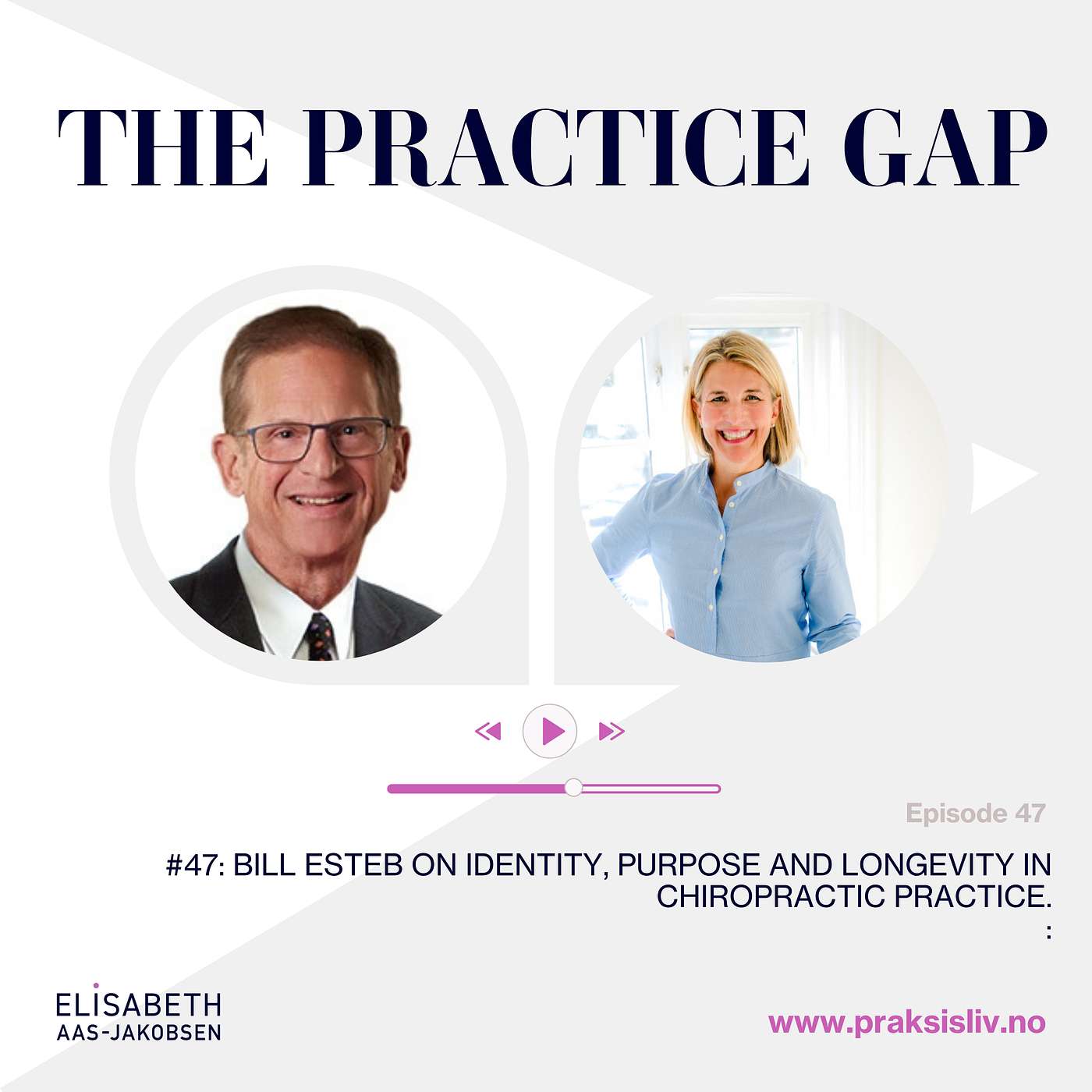
#47: Bill Esteb on Identity, purpose and longevity in Chiropractic practice.
Jun 1100:32:35Tap to summarizeSend us Fan MailWhat separates chiropractors who thrive for decades from those who struggle to find fulfillment in practice?In this episode of The Practice Gap, I sit down with chiropractic legend Bill Esteb to explore the foundations of a successful, purpose-driven practice. Bill shares insights gained from more than 40 years of working alongside chiropractors around the world, covering everything from practice identity and patient communication to marketing, boundaries, fees, and long-term professional satisfaction. We discuss: Why identity is more important than strategy The difference between therapeutic and wellness-focused chiropractic How to build a thriving family practice Common boundary mistakes that create stress and burnout Why patients—not chiropractors—are the heroes of the healing process How to attract patients who value health, not just pain relief The role of purpose in creating a fulfilling and sustainable career Whether you're a new graduate or a seasoned practitioner, this conversation is packed with wisdom that can help you build a practice aligned with your values and vision. "Identity is based upon purpose." – Bill Esteb Thank you for listening! If you like what you hear, please share it with someone that you think might find value in this episode. If you enjoy this podcast, please take a moment to rate us on Apple Podcasts or where you listen to us. Your feedback helps us improve and reach more listeners. Thank you! Kind regards, Elisabeth Aas-Jakobsen, DC, MScfollow on instagramor visit homepage
Transcribe →
#46: Compassion Fatigue: When Caring Hurts-With Alicia Lukachko DrPH
Jun 19, 202500:22:50Tap to summarizeSend us Fan MailCompassion fatigue represents an often-misunderstood occupational hazard affecting healthcare providers, therapists, and caregivers who regularly witness suffering. More than simple burnout, it's a specific type of exhaustion stemming from prolonged empathetic engagement with those experiencing trauma or distress.Licensed clinical social worker Alicia unpacks this complex phenomenon, describing how sustained exposure to others' pain creates a constellation of symptoms including emotional numbness, detachment, irritability, sleep disturbances, and decreased empathy. These manifestations don't indicate personal failure or heartlessness but rather signal a natural response to emotional overload. The condition particularly impacts professionals in helping fields who often neglect their own wellbeing while caring for others.For manual therapists like chiropractors, physiotherapists, and osteopaths, unique challenges emerge from the physically demanding, hands-on nature of their work combined with deep therapeutic relationships with patients experiencing chronic pain or trauma. The podcast explores practical strategies for prevention and recovery, emphasizing professional boundaries, work-life balance, mindfulness practices, and the crucial role of peer support. Most importantly, it highlights how healthcare providers must practice the same self-care they recommend to patients - not just as professional maintenance but as essential self-preservation. Whether you're experiencing symptoms yourself or supporting colleagues through their struggles, this episode provides vital insights into protecting the wellbeing of those who heal others.Have you noticed signs of compassion fatigue in yourself or your colleagues? Share your experiences and strategies for maintaining empathetic resilience while protecting your own wellbeing.Thank you for listening! If you like what you hear, please share it with someone that you think might find value in this episode. If you enjoy this podcast, please take a moment to rate us on Apple Podcasts or where you listen to us. Your feedback helps us improve and reach more listeners. Thank you! Kind regards, Elisabeth Aas-Jakobsen, DC, MScfollow on instagramor visit homepage
Transcribe →
What Your Small Clinic Can Learn from a $500 Million Company-With David Bandele, CFO
Jun 11, 202500:31:33Tap to summarizeSend us Fan MailWhat happens when you apply corporate strategic thinking to a small healthcare practice? In this eye-opening conversation, Elisabeth speaks with David Bandele, Chief Financial Officer at a company with 1,000 employees and a 5 billion Norwegian crown revenue, about the powerful business lessons small clinics can adopt from larger organizations.David reveals how strategic planning processes that drive corporate success can transform small healthcare practices, starting with the foundation of any thriving business: clarity of purpose. While most practitioners intuitively understand their "why," formally articulating this mission creates a powerful framework that guides all business decisions. Taking time away from daily operations to look three to five years ahead isn't just a corporate luxury—it's essential for sustainable growth in healthcare too.The conversation dives into practical tools like SWOT analysis (Strengths, Weaknesses, Opportunities, Threats), with particular emphasis on how small clinic owners can better anticipate market changes and position themselves strategically. David shares insights on team motivation that small practices can leverage through their unique ability to customize incentives based on individual drivers—whether that's financial rewards, schedule flexibility, or growth opportunities.Perhaps most valuable is the discussion around value-based pricing, a significant advantage for independent healthcare practices that can differentiate their offerings in ways corporations often cannot. As David notes, "It's trying to understand what value you are providing to that person," encouraging practitioners to consider pricing models that reflect their unique expertise and comprehensive care approaches rather than simply matching market rates.Thinking of starting a practice? Listen for David's practical advice on business planning, from honest entrepreneurial self-assessment to creating competitive differentiation in a crowded marketplace. His insights on using digital platforms to quickly build visibility offer particular hope to new practice owners.Tune in to discover how bridging the practice gap between clinical excellence and business acumen might be exactly what your healthcare practice needs to thrive in an increasingly complex landscape.Thank you for listening! If you like what you hear, please share it with someone that you think might find value in this episode. If you enjoy this podcast, please take a moment to rate us on Apple Podcasts or where you listen to us. Your feedback helps us improve and reach more listeners. Thank you! Kind regards, Elisabeth Aas-Jakobsen, DC, MScfollow on instagramor visit homepage
Transcribe →
Bridging the Gap: Pediatric Chiropractic Beyond Infancy-With Dorte Bladt DC
May 29, 202500:26:11Tap to summarizeSend us Fan MailIn this episode, you will meet Dorte Bladt, a Danish chiropractor practicing in Australia who specializes in pediatric chiropractic care. Dorte shares her journey that led to focusing on helping children with learning and developmental challenges through chiropractic adjustments.• There is a gap in chiropractic care between treating babies and teenagers with most practitioners missing the crucial developmental years• Many chiropractors lack confidence in assessing school-age children despite having foundational skills• Each developmental milestone builds on previous ones, making early intervention crucial for preventing issues• Introducing pediatric care into practice involves modifying existing assessment skills and learning to communicate effectively with children• Focusing on nervous system function rather than symptoms when explaining findings to parents• Creating appropriate care plans based on thorough assessment, with frequency determined by the severity of nervous system interference• Gentle adjustments calibrated to the child's nervous system capacity—"less is more" approach• Kids Summit in Barcelona (September 13-14) featuring expert speakers on pediatric chiropractic techniquesVisit the Kids Summit in Barcelona to learn from pediatric chiropractic experts and support research into chiropractic care for children.Thank you for listening! If you like what you hear, please share it with someone that you think might find value in this episode. If you enjoy this podcast, please take a moment to rate us on Apple Podcasts or where you listen to us. Your feedback helps us improve and reach more listeners. Thank you! Kind regards, Elisabeth Aas-Jakobsen, DC, MScfollow on instagramor visit homepage
Transcribe →
#43 The Pelvic Floor Connection: Why Collaboration Matters in Healthcare
May 7, 202500:28:58Tap to summarizeSend us Fan MailTove Villumstad, a physiotherapist specializing in pelvic floor dysfunction, shares insights on the importance of interprofessional healthcare collaboration and pelvic floor health for both women and men. She reveals how proper pelvic floor function affects everything from incontinence to sexual health, highlighting the value of specialized knowledge in this often overlooked area.• Women's health physiotherapy is the most evidence-based area of physiotherapy• Between 20-40% of women experience pelvic floor pain during their lifetime• Pelvic floor dysfunction affects both men and women at various life stages• Interprofessional collaboration between physiotherapists, chiropractors, and other practitioners leads to better patient outcomes• Manometry provides objective feedback on pelvic floor muscle function, showing patients visible progress• Pelvic floor exercises can help patients of all ages, with significant improvements possible even for elderly patients• Healthcare providers should be comfortable discussing intimate health concerns to properly identify and address pelvic floor issuesCheck out the Camtech manometry tool and visit the Norwegian physiotherapy organization website (MFF) to find specialized physiotherapists in your area.Thank you for listening! If you like what you hear, please share it with someone that you think might find value in this episode. If you enjoy this podcast, please take a moment to rate us on Apple Podcasts or where you listen to us. Your feedback helps us improve and reach more listeners. Thank you! Kind regards, Elisabeth Aas-Jakobsen, DC, MScfollow on instagramor visit homepage
Transcribe →
#42 Giving Away Free Care In a Sustainable way-with Haakon Kuhnle DC.
Mar 9, 202500:08:05Tap to summarizeSend us Fan MailWhat happens when healthcare providers recognize that financial barriers keep quality treatment from those who need it most? Haakon shares the inspiring story behind the creation of "Behandlingsfond for Quantum Kliniken," a treatment fund designed to help those on disability or minimum pension access life-changing care.Here is way we can give away care for free, in a sustainable way. The seed for this compassionate initiative was planted through a remarkable case: a patient who had suffered from severe dizziness for 15 years found that his symptoms temporarily disappeared only when consuming alcohol—a critical clue pointing to cerebellar dysfunction. After receiving treatment that dramatically improved his condition, this grateful patient wanted others to have the same opportunity, regardless of financial means.We look into the practical aspects of establishing and managing such a fund, from banking considerations to determining eligibility. Perhaps most touching is the story of a patient whose family requested funeral donations to the treatment fund instead of flowers, acknowledging how the care she received extended her life by approximately two years. The resulting 20,000 kroner in contributions speaks volumes about the impact proper neurological care can have on patients and their families.This eye-opening conversation challenges practitioners to consider: Are we only treating those who can afford our care? Could we create mechanisms to extend our expertise to those who cannot? Whether you're a healthcare provider or someone passionate about healthcare accessibility, this episode offers both inspiration and practical insights for making a difference. Ready to transform how you think about the economics of care? Listen now and discover how compassion can reshape healthcare delivery.Thank you for listening! If you like what you hear, please share it with someone that you think might find value in this episode. If you enjoy this podcast, please take a moment to rate us on Apple Podcasts or where you listen to us. Your feedback helps us improve and reach more listeners. Thank you! Kind regards, Elisabeth Aas-Jakobsen, DC, MScfollow on instagramor visit homepage
Transcribe →
#41 Why Talking Money Can Transform Your Practice
Mar 3, 202500:08:39Tap to summarizeSend us Fan MailWe explore the discomfort many practitioners feel surrounding money and how that affects their perceived worth in healthcare. There’s a deep-seated belief that health and earning shouldn't mix, leading to challenges in pricing. • Understanding the relationship between healthcare and money • The impact of insurance on pricing perceptions • The costs of undercharging and its effects on care quality If this episode resonated with you, please screenshot this episode and tag me on Instagram at the Practice Gap with your biggest takeaway. If you know a practitioner struggling with pricing, share this episode with them! Thank you for listening! If you like what you hear, please share it with someone that you think might find value in this episode. If you enjoy this podcast, please take a moment to rate us on Apple Podcasts or where you listen to us. Your feedback helps us improve and reach more listeners. Thank you! Kind regards, Elisabeth Aas-Jakobsen, DC, MScfollow on instagramor visit homepage
Transcribe →
# 40:Why Specializing Early & Finding Your Own Path Matters-with Haakon Kunle
Feb 24, 202500:20:56Tap to summarizeSend us Fan MailStarting Out in Practice, Specializing Early & Finding Your Own Path with Haakon KunleStarting out as a chiropractor can feel overwhelming—should you generalize or specialize early? What’s the best way to build a sustainable and fulfilling career? In this episode, we dive into these questions with Haakon Kundle, a chiropractor who took an unconventional path from the start.Coming from a chiropractic family, Haakon had early exposure to the field, but it was his own injuries and experience with functional neurology that led him to specialize early in complex neurological cases. Now, he runs his own clinic in Tønsberg, Norway, where he’s redefining what chiropractic care can look like.🎙 In this episode, we explore:✔️ The realities of starting out in practice – what Haakon wishes he knew sooner✔️ Why he chose to specialize early – and how it shaped his career✔️ Different ways to practice – from traditional clinics to niche specialties✔️ How to build a practice that fits your passion & skillsIf you’re a new grad, an experienced chiropractor, or someone looking to refine your practice, this conversation is packed with insights that will help you shape your own unique path.🎧 Hit play now and learn how to create a practice that works for YOU!If you want to get in touch with Haakon: post@kvantumklinikken.noThank you for listening! If you like what you hear, please share it with someone that you think might find value in this episode. If you enjoy this podcast, please take a moment to rate us on Apple Podcasts or where you listen to us. Your feedback helps us improve and reach more listeners. Thank you! Kind regards, Elisabeth Aas-Jakobsen, DC, MScfollow on instagramor visit homepage
Transcribe →
#39 Functional Neurology & Chiropractic: The Perfect Match – with Haakon Kuhnle
Feb 13, 202500:26:12Tap to summarizeSend us Fan MailIn this episode of The Practice Gap, we dive into the fascinating journey of chiropractor Haakon Kundle. Growing up in a family of chiropractors, Håkon never planned on following in their footsteps—until a series of injuries led him to discover the power of functional neurology. From extreme sports injuries to groundbreaking neurological treatments, Håkon shares how his personal experiences shaped his approach to chiropractic care. If you've ever wondered what sets functional neurology apart and how it can transform patient outcomes, this episode is for you!Thank you for listening! If you like what you hear, please share it with someone that you think might find value in this episode. If you enjoy this podcast, please take a moment to rate us on Apple Podcasts or where you listen to us. Your feedback helps us improve and reach more listeners. Thank you! Kind regards, Elisabeth Aas-Jakobsen, DC, MScfollow on instagramor visit homepage
Transcribe →
#38 Embracing AI in Healthcare—Efficiency, Connection, and Innovation-Part 2 with Anders Kvarme
Jan 24, 202500:26:18Tap to summarizeSend us Fan MailIn this continuation of our AI episodes, we dive deeper into the transformative power of artificial intelligence with Anders Kvarme, an osteopath and dietician. Building on our previous discussion, Anders shares practical insights into how AI is revolutionizing healthcare by streamlining tasks, enhancing communication, and empowering practitioners to focus on what truly matters—patient care and meaningful connections.Discover how Anders integrates AI into his practice to simplify complex processes, deliver faster responses, and stay ahead of professional knowledge. From crafting personalized patient advice to managing intricate dietary needs, he demonstrates how AI acts as the ultimate assistant for busy healthcare professionals.This episode also explores how AI can lighten your workload, improve your work-life balance, and even spark creativity in everyday life. Whether you’re new to AI or looking to take your expertise to the next level, Anders offers actionable advice on making AI work for you.Don’t miss this inspiring conversation about embracing technology to enhance both your practice and your personal life.Thank you for listening! If you like what you hear, please share it with someone that you think might find value in this episode. If you enjoy this podcast, please take a moment to rate us on Apple Podcasts or where you listen to us. Your feedback helps us improve and reach more listeners. Thank you! Kind regards, Elisabeth Aas-Jakobsen, DC, MScfollow on instagramor visit homepage
Transcribe →