
Podcast
The Real Education Podcast
Hosted by Magdoos Media Limited · EN
The Real Education Podcast (formerly Designing Digital Literacy) is for teachers interested in how to leverage students' inherent gaming and learning principles into the classroom.
Hosted by Tamer Asfahani and Chris Winson-Longley, the show series explores the importance of the ever-changing digital landscape and why education needs to get to grips with it. Together they produce a range of free materials through Checkpoint Learning - available to download.
Checkpoint Learning resources bridge the gap between children’s (often unsupervised) experience of digital technologies and a meaningful understanding of them.
Taking the gaming culture which children already possess, Checkpoint uses videogames as a vehicle for teaching subject specific national curriculum attainment targets. Evidenced by Brunel University and in partnership with the United Nations and UNESCO, The Real Education Podcast encourages dialogue best practices.
So, if you’re a teacher looking to make sense of the ever-changing digital landscape, this could be one place to start.
Chris Winson-Longley has over 25 years experience teaching English at the coalface. Management experience includes: created and delivered an Opening Minds curriculum, cross-curricular Literacy and Numeracy programmes and was a go-to mentor for new teachers.
Tamer Asfahani is a veteran broadcast journalist with a passion for technology, education and the way in which we can combine their benefits.
10episodes
Episodes
Newest firstAll episodes

TREP - Episode 8 - Alessandro Capozzi
Jan 10, 202400:50:03Tap to summarizeWelcome to Episode of The Real Education Podcast!In this episode, Chris and Tamer speak to Alessandro Capozzi, executive headteacher at Academy21.This episode discusses the importance of relevant education, blended learning and the need for more wholistic approach to schooling across policy and industry.Capozzi is a highly experienced and passionate teacher who has embraced the responsible use of technology and its applications in class. Academy21 has been offering alternative education provision since 2011, as well as advancing teaching methods for distance learners.Every episode you can expect a new guest from the world of education.To find out more about Academy21, please visit the website.
Transcribe →
TREP - Episode 7 - Dr Rachel Taylor p.2
Dec 7, 202300:31:41Tap to summarizeWelcome to Episode of The Real Education Podcast!In the second episode of two parts, Chris and Tamer speak to Dr Rachel Taylor; neuroscientist, researcher, writer and commentator. Most interestingly, however, this particular doctor has also taken a PGCE because she was unsure of how the education system worked. In this part we discuss the state of assessment and how it doesn't represent children's knowledge, the importance of experts and how the education system makes children feel "stupid".Every episode you can expect a new guest from the world of education. To find out more about Dr Rachel Taylor, please visit her website. And here is the poem "The Door" by Miroslav Horub referred to by Chris.
Transcribe →
TREP - Episode 6 - Dr Rachel Taylor
Nov 21, 202300:35:32Tap to summarizeWelcome to Episode of The Real Education Podcast! In the first episode of two parts, Chris and Tamer speak to Dr Rachel Taylor; neuroscientist, researcher, writer and commentator. Most interestingly, however, this particular doctor has also taken a PGCE because she was unsure of how the education system worked. It's a fascinating with questions she raises such as how are children learning and why aren't we learning about how children learn only to be dismissed by management.The next part will be out next week!Every episode you can expect a new guest from the world of education.
Transcribe →
TREP - Episode 5 - James O'Hagan
Nov 7, 202300:57:28Tap to summarizeWelcome to Episode of The Real Education Podcast! In this episode, Chris and Tamer speak to James O'Hagan, Vice President of Education Innovation at LeagueSpot.O'Hagan spent over 20 years in the classroom as a teacher before becoming more involved in esports in schools. Based in the US, O'Hagan discusses the opportunities afforded by more locally run schools and how he uses videogames as a vehicle for social change - especially in areas of extreme diversity.A fascinating and engaging discussion on how the inclusion of esport leagues can help learners of all ages.Every episode you can expect a new guest from the world of education.
Transcribe →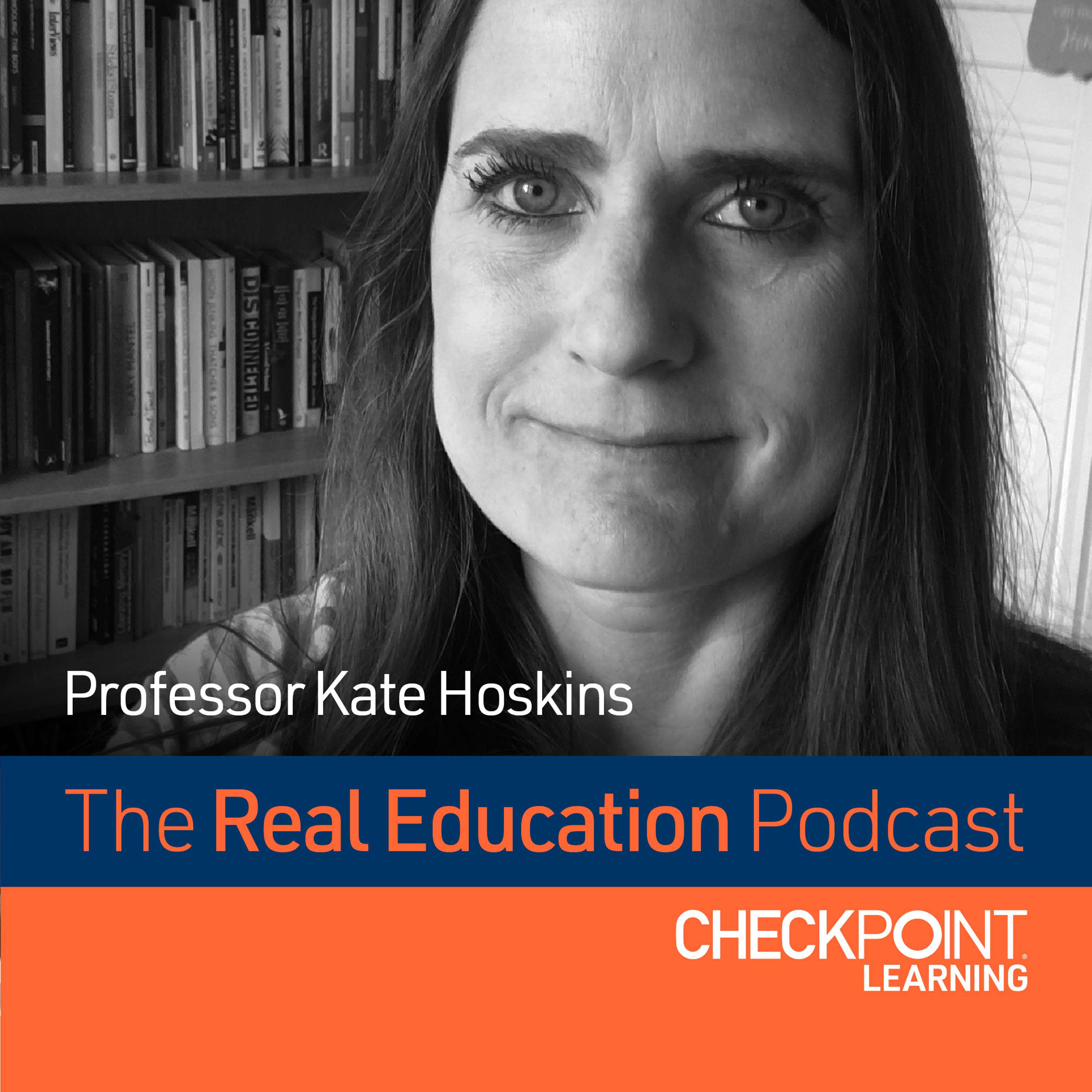
TREP - Episode 4 - Professor Kate Hoskins
Oct 23, 202300:40:25Tap to summarizeWelcome to Episode of The Real Education Podcast! In this episode, Chris and Tamer speak to Brunel University's Professor Kate Hoskins who lead the research of Checkpoint's pedagogy and curriculum materials, and After spending months honing the lesson, Prof Hoskins talks about the way in which the lessons were delivered and some of the initial findings. Most notably, this podcast focuses on the response of the children and the teachers when using gaming cultural wealth, a term coined by the findings of the research. How did videogame cultural wealth get used in classrooms, and what was the response? These are some of the questions that are discussed in this podcast.Every episode you can expect a new guest from the world of education.
Transcribe →
TREP - Episode 3 - Dr. Asma Lebbakhar
Oct 8, 202300:40:46Tap to summarizeWelcome to Episode 3 of The Real Education Podcast! In this episode, Chris and Tamer speak to Brunel University's Dr Asma Lebbakhar. Dr Lebbakhar was assigned to carry out the research of Checkpoint's pedagogy and curriculum materials. Find out what Dr Lebbakhar thought of the materials initially, and how her understanding developed as she saw the lessons delivered in class. How can videogame cultural wealth be used in classrooms, and how can teachers harness that wealth to deliver learning opportunities? These are some of the questions that are discussed in this podcast.Every episode you can expect a new guest from the world of education.
Transcribe →
TREP - Episode 2 - Professor Mike Watts
Sep 25, 202300:48:21Tap to summarizeWelcome to Episode 2 of The Real Education Podcast! In this episode, Chris and Tamer speak to Brunel University's Professor of Education - Mike Watts. Professor Watts was Checkpoint's first academic contact and helped shape the initial idea of what it is Checkpoint was doing within the lesson plans and pedagogy. Professor Watts, along with his colleagues - will feature regularly in the podcast as Brunel University is partnered with Checkpoint and quality assures and reviews Checkpoint Learning Materials before they are released to the public.Every episode you can expect a new guest from the world of education.
Transcribe →TREP - Episode 1
Sep 10, 202300:47:18Tap to summarizeWelcome to the re-branded, re-launched and re-focsed podcast that looks at how we can better our education system!In this episode, Chris and Tamer discuss the reason for changing the name and how the podcast will discuss the latest topics around education and pedagogy with their guests. Every episode you can expect a new guest from the world of education.
Transcribe →Designing Digital Literacy - Episode 3
May 25, 202200:33:18Tap to summarizeA new podcast series looking at Digital Literacy in education - made for teachers!In a world where digital is as ubiquitous as the devices we're connected to, Checkpoint Learning asks how education is embracing and including digital literacy in education. Many educators and institutions are aware of the growing need for Digital Literacy, but being such a broad and varied subject matter, it becomes a challenge in itself to define. Is Digital Literacy safety online, knowing how to use word processing, building websites, coding, being media savvy? Or is it all or none of the above?Hosted by retired veteran English teacher (and manager of literacy and numeracy, Opening Minds and more) Chris Winson-Longley discusses the importance of defining Digital Literacy within curriculums across the country - and beyond with Tamer Asfahani, journalist and founder of Checkpoint.In this series we discuss the issues involved in identifying and defining digital literacy, and the ways by which it can be addressed in schools.One readily available resource is the children themselves and the wonderful world of videogames. Anyone who has ever played one knows that videogames make demands on our determination, our ability to solve problems and our willingness to fail. They can be informative and instructive, and they are a ubiquitous cultural component of most of the developed world. However, videogames, like mobile phones, do not sit well in the classroom, which is why we are not interested in playing them. In this series we will explore how CheckpointLearning resources use the students’ knowledge of, and enthusiasm for, videogames to inspire learning experiences based in traditional subject disciplines whilst developing digital literacy and an appreciation of the gaming industry. Whether you are a manager, a teacher or a parent interested in how students can be better prepared for the future, then this is the podcast for you.Chris and Tamer argue that the modern world is crying out for students with the digital skills and knowledge to not only survive, but to prosper. And, whether they like it or not, schools will have to provide an appropriate and relevant education or risk sending students out as consumers rather than creators, as lambs to the slaughter in a world populated by media wolves like Google, Microsoft and Meta. And it doesn’t stop with online purchasing, social media or automation. The internet of things means that none of us can escape the digital world: your new car is sending data back to the company that produced it, CCTV is recording your every move and your phone is literally listening in.So far, the education system in England has responded to the challenge by focusing on consumer safety, rather than on the opportunities that digital technology presents, and on the promotion of an academic curriculum from 1904, rather than on developing digital literacy and intrapersonal skills such as creativity, innovation, resilience, determination and an ability to fail. Skills which are essential in a rapidly developing technological future where automation will replace a huge number of traditional jobs and the answers to climate change and a growing population lie in technological development combined with human ingenuity. In order to survive, students will need to be digitally literate.Edited and produced by Gabriella Incalza© 2022 Magdoos Media Limited - All Right Reserved.
Transcribe →Designing Digital Literacy - Episode 2
Mar 10, 202200:28:23Tap to summarizeA new podcast series looking at Digital Literacy in education - made for teachers!In a world where digital is as ubiquitous as the devices we're connected to, Checkpoint Learning asks how education is embracing and including digital literacy in education. Many educators and institutions are aware of the growing need for Digital Literacy, but being such a broad and varied subject matter, it becomes a challenge in itself to define. Is Digital Literacy safety online, knowing how to use word processing, building websites, coding, being media savvy? Or is it all or none of the above?Hosted by retired veteran English teacher (and manager of literacy and numeracy, Opening Minds and more) Chris Winson-Longley discusses the importance of defining Digital Literacy within curriculums across the country - and beyond with Tamer Asfahani, journalist and founder of Checkpoint.In this series we discuss the issues involved in identifying and defining digital literacy, and the ways by which it can be addressed in schools.One readily available resource is the children themselves and the wonderful world of videogames. Anyone who has ever played one knows that videogames make demands on our determination, our ability to solve problems and our willingness to fail. They can be informative and instructive, and they are a ubiquitous cultural component of most of the developed world. However, videogames, like mobile phones, do not sit well in the classroom, which is why we are not interested in playing them. In this series we will explore how CheckpointLearning resources use the students’ knowledge of, and enthusiasm for, videogames to inspire learning experiences based in traditional subject disciplines whilst developing digital literacy and an appreciation of the gaming industry. Whether you are a manager, a teacher or a parent interested in how students can be better prepared for the future, then this is the podcast for you.Chris and Tamer argue that the modern world is crying out for students with the digital skills and knowledge to not only survive, but to prosper. And, whether they like it or not, schools will have to provide an appropriate and relevant education or risk sending students out as consumers rather than creators, as lambs to the slaughter in a world populated by media wolves like Google, Microsoft and Meta. And it doesn’t stop with online purchasing, social media or automation. The internet of things means that none of us can escape the digital world: your new car is sending data back to the company that produced it, CCTV is recording your every move and your phone is literally listening in.So far, the education system in England has responded to the challenge by focusing on consumer safety, rather than on the opportunities that digital technology presents, and on the promotion of an academic curriculum from 1904, rather than on developing digital literacy and intrapersonal skills such as creativity, innovation, resilience, determination and an ability to fail. Skills which are essential in a rapidly developing technological future where automation will replace a huge number of traditional jobs and the answers to climate change and a growing population lie in technological development combined with human ingenuity. In order to survive, students will need to be digitally literate.Edited and produced by Gabriella Incalza© 2022 Magdoos Media Limited - All Right Reserved.
Transcribe →