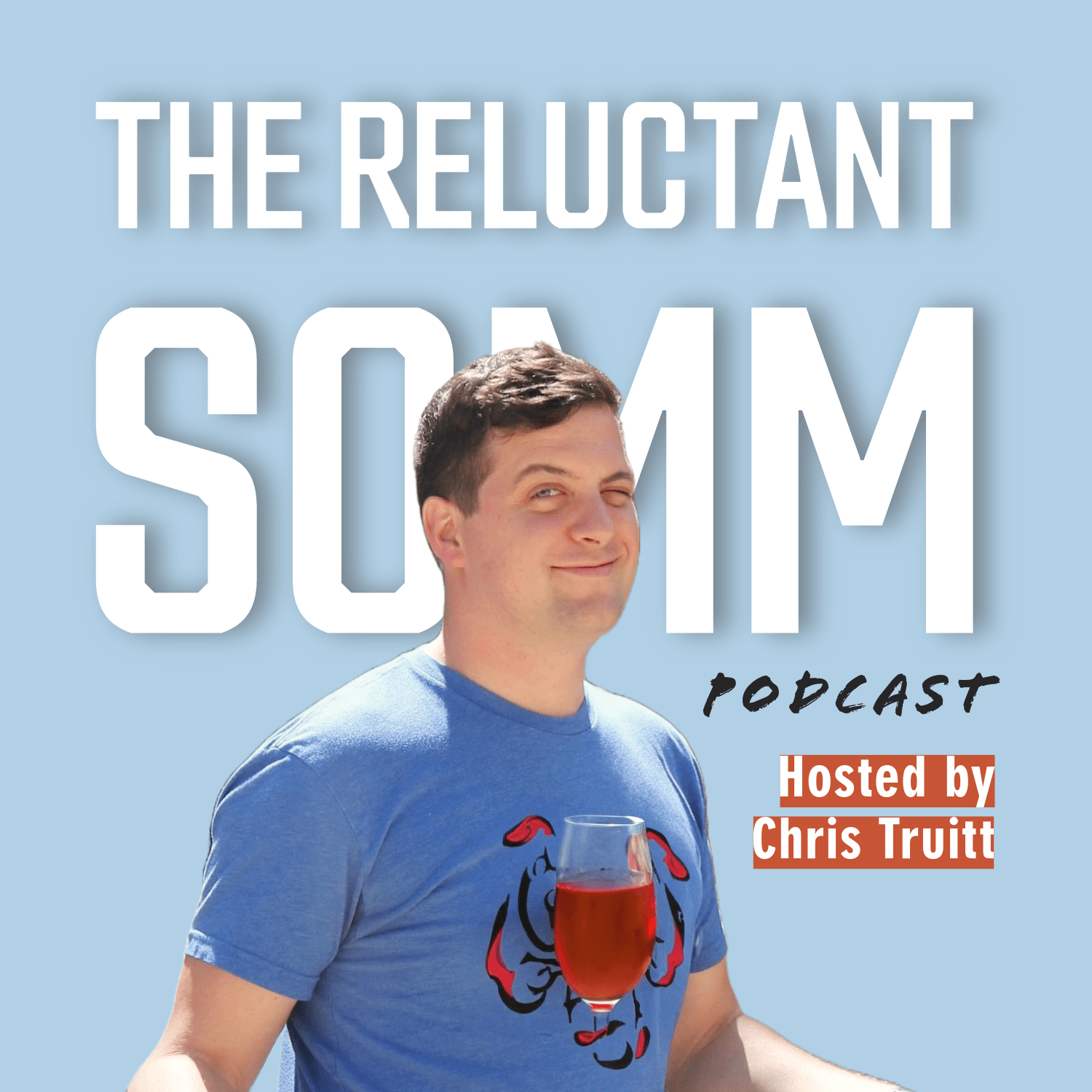
Podcast
The Reluctant Somm: Wine & Hospitality Podcast
Hosted by Christopher Truitt · EN
Tired of the same polished surface? Welcome to The Reluctant Somm, your unconventional podcast navigating the back alleys of hospitality and the real stories behind every bottle of wine. We’re not here to romanticize the grind. Host Christopher Truitt, an experienced sommelier with a crucial Front-of-House (FOH) perspective, pulls back the curtain on the messy, chaotic, and exhilarating world of the wine and hospitality industry – from the demanding restaurant floor and the depths of the cellar to the unpredictable vineyards.
This is your invitation to go beyond the perfectly plated dishes. We’re diving deep into the real talk of hospitality: the long nights, the challenging customers, the spilled drinks, the unpredictable harvests, and that never-ending quest for the perfect vintage. Christopher shares candid conversations and untold stories from the sommeliers, chefs, winemakers, and other dedicated food and wine professionals who live it every day.
Explore the true wine culture, understand the sommelier life, and get an uncensored look at the wine industry through engaging storytelling and Christopher’s fifteen years of experience in competitive markets like Houston, San Francisco and Los Angeles. Whether you’re a wine novice curious about the real stories, an industry veteran nodding along, or someone aspiring to a career in wine or restaurants, The Reluctant Somm offers a unique blend of insider insights, wine knowledge shared through authentic experiences, and sheer entertainment.
Join us as we explore what makes wine so damn good, the people behind the label, and the moments that make you question your sanity, only to remind you why you truly love this industry. If you crave authentic food and wine narratives and a genuine look at behind the scenes wine and restaurant life, you’ve found your podcast.
24episodes
Episodes
Newest firstAll episodes
Boundaries Are Fewer: Aaron Jackson on Petite Sirah and the SLO Coast AVA
Jun 1701:20:59Tap to summarizeMost premium consumer goods hide their history. We purchase luxury items based entirely on brand equity, rarely questioning where the raw components were extracted or how materials were managed at the source. Wine breaks that modern corporate template completely, demanding an unmatched detail of consumption—an explicit, unbroken life cycle that traces a liquid in your glass back to a specific soil composition, a seasonal weather pattern, and the exact human footprint that dug a vine into the dirt decades prior. In this episode, we sit down with Aaron Jackson of Aaron Wines and AKANA to trace a 25-year winemaking career built on independent grit, absolute regional humility, and a complete devotion to the Central Coast. Growing up in the small coastal hamlet of Cayucos, Aaron entered the field at fifteen, earning $12 an hour cash working a quad and hand-hoeing rows on an early three-acre vineyard project. By nineteen, the path was locked. Armed with saved cash, he bought his first ton of Petite Sirah for $900, navigated the federal permit system, and went commercial straight out of the gate. We look closely at the physical mechanics of working with an unmapped variety like Petite Sirah, and why Aaron views the broader world of wine as a limitlessly wide, endlessly deep pool of information that forces a winemaker to never stop learning. Over the last two decades, massive commercial entities have moved into the region, and market trends have continuously come and gone. Through it all, Aaron has remained entirely unswayed, staying fiercely true to his distinct winemaking style and what he considers to be the absolute best expression of the place he calls home. From spearheading the creation of the SLO Coast AVA—personally drawing the boundary lines based on his daily drives through fog patterns and windbreaks—to chasing extreme coastal frontiers where vineyards sit just two miles from the Pacific surf, this conversation maps what it actually looks like to carve out a distinct, un-manicured identity on the Central Coast. In This Episode: The Cayucos Perspective: Growing up in a coastal holiday hamlet and searching for a permanent, local career. The 14-Year-Old Crew: Planting a three-acre Pinot block, driving quads, and earning $12 an hour cash. The Detail of Consumption: Why wine stands alone as the most hyper-specific product human beings consume. The Life Cycle of the Bottle: Tracing a poured glass back to a teenager digging a hole in the dirt. The $900 Ton: Launching a commercial label at nineteen with neutral barrels and raw grit. Left of Center: Choosing a historic, misunderstood California grape over predictable Cabernet models. Flying Without a Benchmark: The immense creative risk and open opportunity of an unmapped variety. The Paso Profile: How limestone soils yield massive, dark reds with distinctively soft, approachable tannin structures. The Regional Shift: An insider's observation of how modern lifestyle capital altered the surrounding landscape while Aaron stayed true to his core style. Valley Floor vs. Extreme Hillside: The technical reality of managing raw crop loads and preventing green tannins. Dismantling "Legacy": Prioritizing the daily labor of the cellar over ego-driven marketing buzzwords. The Surf Line Epiphany: Spotting vineyard rows from the water and tracking the moderation of the Pacific. Sourcing the Extreme: The logistics of farming Pinot Noir and Chardonnay within two miles of the ocean for AKANA. Drafting the AVA: Spending eight years pulling out Google Maps to personally establish the SLO Coast boundaries. Marine Salinity: The specific structural impact of ocean proximity on Pinot Noir and Grenache blends. Navigating the Heat: Cellar discipline and balancing the raw "treble" of Grenache in high-pH limestone. The Wide and Deep Pool: Why wine remains the ultimate pursuit for the inherently curious, where the information is limitless.
Transcribe →From Bangladesh to the Ferry Building: Galib Shishir on Chaos, Soul, and Innovation
Jun 1000:59:26Tap to summarizeWe tend to look at cocktail menus through the safe, rigid lens of classic structures. But when you strip away textbook rules and design a beverage program entirely from a place of unboxed imagination, the floor becomes a live social experiment. In this episode, we break down the journey of Galib Shishir, who is currently managing the high-volume, farm-to-table bar program at Arquet in San Francisco’s iconic Ferry Building. From an initial obsession with sweet, bottled White Russians to utilizing subcontinental bitter melon and savory fish sauce modifiers on high-end menus, Shishir's path is a masterclass in trusting the unique perspective of your own palate. In This Episode: The Zero Baseline: Arriving in the American Midwest from Bangladesh—a country with no alcohol culture—and navigating an early palate formed by sweet White Russians and domestic lagers. The High-Volume Crucible: Dropping out of college, falsifying resumes, and learning the raw reality of service logistics on a packed, three-floor nightclub floor in New York’s Meatpacking District. Subterranean Operations: Unpacking the grueling 4 AM cellar attendant grind, barcoding mass inventory, and mapping physical space at Gotham Bar and Grill. Table-Side Discipline: Perfecting the physical mechanics of the shake and working with hand-rolled sugar cubes at Porter House. The Silent Flow: Developing an instinctual, non-verbal vocabulary with a veteran crew to survive massive volume on the line at Charmaine's. The Three-Hour Dilution Workshop: The intense micro-specs of Bar Agricole, where the team spent hours analyzing a single dash of orange bitters and measuring how specific ice cube sizes alter a drink. The B2B Mezcal Ecosystem: Discovering the communal trust networks of small family producers and independent distributors who operate entirely outside rigid corporate margin pressure. The Arquet Strategy: Balancing an ambitious farm-to-table culinary ethos with the practical logistics of high-volume tourist covers at the Ferry Building. Deconstructing the Yellow Submarine: Sourcing subcontinental bitter melon varieties, using champion juicers, and regulating Thai chilies to make spice an experience rather than a flavor modifier. #bartending #mixology #sanfrancisco #hospitality #beverageprogram
Transcribe →More Than Just Sushi: Shifting Saké Realities with Todd Eng
Jun 301:09:59Tap to summarizeTrained saké expert Todd Eng joins us to break down the evolving structural reality of regional Japanese brewing and its shifting role on the modern restaurant floor. Saké often gets structurally pigeonholed exclusively onto sushi menus, but the technical reality of the liquid tells a completely different story. In this episode, we look past the labels to explore: The New Wave Cellar: How a younger generation of modern brewers is shifting away from rigid competition formulas to focus on prefecture-specific rice grains. Environmental Pressures: The reality of climate change in the fields and how shifting weather cycles are forcing active adjustments during winter cellar operations. The Floor Mathematics: Why a stable 3-ounce pour removes inventory risk, protects profit margins, and utilizes the unique fridge-life of open saké over table wine. The Street-Level Table: Tasting through three distinct styles to show how high amino acid concentrations complement heavy fats like Memphis barbecue brisket and pizza. We land on a simple truth about expanding your palate: you don't have to force it or treat it like a lecture. When you are ready to explore what these bottles can do, the liquid is right here waiting for you. Follow us: Instagram: @reluctantsomm Website: https://www.thereluctantsomm.com Connect with Todd: Instagram: @toddeng
Transcribe →Prehistoric Sand & Appellation Politics: Giovanni Correggia on the Reality of Roero
May 2700:49:38Tap to summarizeThe shadow of Langhe looms large over Piedmont. For decades, the global wine market has been conditioned to look at Barolo and Barbaresco as the sole arbiters of Nebbiolo excellence, while the left bank of the Tanaro River—Roero—was left in the dust, pigeonholed as a cheap, fresh white wine region. We sit down with Giovanni Correggia to unpack the raw reality of farming the steep, sandy hills of Canale. Giovanni’s father, Matteo, was the ultimate outsider of the "Barolo Boys" era—a game-changer who looked at a impoverished region focused entirely on quantity and chose to gamble on hyper-focused quality. When Matteo tragically passed away in 2001, Giovanni’s mother took the reins of the estate while the kids were still young, preserving a stubborn legacy of independence. In this conversation, we pull back the curtain on the systemic and climatic pressures facing Roero today. Giovanni breaks down why his winery willingly sacrifices massive profit margins and immediate sales cycles by refusing to label their wines under the easier, higher-yielding Langhe DOC. We dive into the physical nightmare of farming 100% organic vineyards in intense humidity, the geological freak show of growing vines on a 3-million-year-old ocean floor that turns to baby powder in the summer, and the lost art of dry Brachetto paired with the most frustrating food on the planet: artichokes. This isn't a corporate pitch for Piedmont luxury; it's a look at the sweat, stubbornness, and deep structural discipline required to keep an underdog appellation alive. Follow us! Instagram: @reluctantsomm Website: https://www.thereluctantsomm.com Giovanni's Instagram: @giovanni.correggia.wine Wineries Website: https://www.matteocorreggia.com/en/homepage/ Importer: https://www.giulianaimports.com Distributor: https://grapevinewinebrokers.com
Transcribe →Defeating Corporate Wine Programs: How Independent Retailers Champion Local Terroir
May 2001:10:57Tap to summarizeWe dive into the real-world logistics of independent retail with Shane Hunt of Piazza Fine Foods. Pulling from his journey from the early morning dairy shifts at Gus's to managing a major Peninsula wine program , Shane shares what happens when independent stores let distributor portfolios drive their curation. We break down the wonky mechanics of the modern wholesale system, discussing how personal relationships on the floor get complicated by volume incentives that can leave a local restaurant or shop hemorrhaging money on spoiled inventory. This conversation explores the delicate balance of meeting people exactly where they are—whether that means stocking familiar, commercial staples like a four-pack of Sutter Home or a steady supply of Rombauer —while using that foundation to build trust and hand-sell unique wines from the Santa Cruz Mountains right in their backyard. From handwritten staff picks to the overall reckoning hitting legacy brand allocations, we strip away the intimidating posturing of the industry. We land on a simple truth about sharing wine through honest human connection: if it's clean, well-made, and delicious, good wine is just good wine. Connect With Us: Instagram: @reluctantsomm Shanes social: @shmob_shane Piazzas social: @piazzasfinefoods https://www.thereluctantsomm.com Subscribe & Review: Available on Apple Podcasts, Spotify, and Podbean!
Transcribe →Wild Yeast and Remote Orchards: The Reality of High-End Cider
May 1201:08:19Tap to summarizeThe Episode: Cider often exists in a misunderstood corner of the beverage world, but Brendan Barnard of Posterity Cider Works is operating on a different frequency. In this episode, we step outside the vineyard and into the orchard to discuss the reality of minimal intervention. Brendan and his wife run a family operation that begins with trekking into remote, often inaccessible orchards to find forgotten heritage fruit. We dive into the physical grind of the harvest and the frustration of labeling laws that often mask the very transparency they strive for in the cellar. We break down the mathematics of their process—where it can take hundreds of apples to produce a single bottle—and why wild fermentation is a discipline of restraint. This isn’t about "crafting" a flavor; it’s about letting the fruit dictate the outcome. In This Episode: The Minimalist Path: Why "doing nothing" in the cellar is the hardest choice. The Orchard Trek: The physical reality of harvesting heritage fruit. The Labeling Gap: How current regulations hinder producer transparency. The 400-Apple Bottle: A look at the raw inputs and technical volume. High-Tannin Logic: Why heritage cider apples aren't for eating. The Family Grind: Building a legacy as a husband-and-wife team. Connect with The Reluctant Somm Team: https://www.thereluctantsomm.com/ Instagram: @reluctantsomm Posterity Ciderworks: posterity ciderworks Instagram: @posterityciderworks
Transcribe →From Chicken Salad to Grand Cru: Andrew Heinecke on the Haight Street Set
Apr 101:14:23Tap to summarizeChris talks with Andrew Heinecke, Alcohol Buyer at Haight Street Market. They discuss the reality of the retail floor—moving cases, managing a 500-item inventory, and the transition from the prepared foods world into wine and spirits. It’s a conversation about the work that happens before a bottle hits the shelf and the importance of being a resource for the neighborhood.
Transcribe →Roman Petry: Global Michelin Strategy & The Soul of Hospitality
Mar 2601:17:10Tap to summarize"Our job is to provide that escapism—where the outside world doesn't exist. That is the true soul of hospitality." How does a chef from a small German village end up as the Executive Chef of one of Silicon Valley’s most iconic luxury resorts? Roman Petry joins me to discuss his journey through the world's most intense kitchens and his unique philosophy on why high-end dining is less about the food and more about the "warm glow" of escape. Roman and I dig into his formative years in European kitchens where 24-hour shifts and extreme discipline were the norm. He explains his strategic shift from being a "chef" to an "operator," focusing on the ROI of premium wine lists, the transition to strategic operations for elite SF hospitality groups, and the necessity of creating a world-class guest experience.
Transcribe →Joel Arias: On the Grit of Hospitality and the Mission’s Blank Canvas
Mar 1101:02:16Tap to summarizeJoel Arias has spent half his life in restaurants. From working on cruise ships to serving in the world-renowned kitchens of Peru, he has lived the full spectrum of service. We discuss the transition from being a "rookie" to the stressful, rewarding reality of owning Frenchie’s Wine Bar . This isn't just a business talk; it’s an inquiry into the grit it takes to show up when the exams don't go your way and the city feels like a ghost town . Support the Show: Please subscribe on YouTube! @thereluctantsomm Instagram: @reluctantsomm @frenchieswinebarsf @joel.ariasquito Visit Frenchie’s: 2128 Mission St, San Francisco #wine #interview #podcast #Hospitality #Sommelier #Entrepreneurship #PeruvianCulture #SanFrancisco
Transcribe →Expanding the Palate: Kayne Guzowski on the New Frontier of California Wine.
Feb 1901:10:29Tap to summarize"The more you learn, the bigger the world gets." In this episode, Kayne Guzowski of Merchants of Thirst and Deux Punx shares his journey through the ever-evolving California wine industry. From the disciplined service standards of Houston’s to the community-centric floor of Nopa, Kayne discusses how his perspective shifted from "knowing the rules" to "discovering the soul" of wine. We explore the richness of the San Francisco market, the power of making wine with friends, and why the future of the industry lies in staying curious. Timestamps: 02:40 – The Houston’s Foundation: Mastering the discipline of elite service. 08:15 – The SF Revelation: Realizing the immense depth of the local wine scene. 10:45 – Meaningful Pairings: How fresh ingredients and community changed the game. 15:00 – Merchants of Thirst: Transitioning from service to curation. 17:45 – A Portfolio of Friends: Building business through trust, not just transactions. 25:35 – The Deux Punx Partnership: Hands-on production and the "un-punk" philosophy 59:50 – Closing Thoughts: The value of a lifelong "student" mentality in wine
Transcribe →