Loading summary
Transcript116 lines
- [00:04]
David McCloskey
For exclusive interviews, bonus episodes, ad free listening, early access to series first look at live show tickets, a weekly newsletter and discounted books. Join the Declassified club@the restisclassified.com this podcast.
- [00:19]
Sponsor/Advertiser Voice
Is brought to you by Carvana Buying a car shouldn't eat up your week. That's why Carvana made it convenient. Car buying that fits around your life now, not the other way around. You can get pre qualified for an auto loan in just a couple of minutes and browse thousands of quality car options, all within your terms, all online, all on your schedule. Turn car buying into a few clicks and not a full week's endeavor. Finance and buy your car at your convenience on Carvana Financing, subject to credit approval. Additional terms and conditions may apply. This podcast is brought to you by Carvana. Got a car to sell but no time to waste? Hop onto Carvana.com to get a real offer for your car in seconds. All you have to do is enter your license plate, answer a few quick questions and if you accept the offer, Carvana will pay you as soon as you hand the keys over. They even offer same day pickup in many cities. Save your time, score some cash and sell your car the convenient way to Carvana. Pick up. Times vary, fees may apply. You're deep into your favorite true crime. Bench the twist, the theories and suddenly hunger hits. Grab a Paleo Valley 100% grass fed beef stick. These aren't your average gas station snacks. They're made from real beef sourced from regenerative small American family farms. No preservatives, no gluten, no grains, soy or sugar. Just naturally fermented protein that fuels your obsession. Whether you're road tripping, hiking or pulling an all nighter with your favorite case, choose from five bold flavors. Original jalapeno summer sausage, Garlic summer sausage and Teriyaki. They're keto, Paleo and carnivore friendly, made to work with your lifestyle, not against it. With over 55 million sticks sold and a 60 day money back guarantee, you've got nothing to lose. Get 15% on your first order@paleovalley.com Just use code Paleo at checkout.
- [02:18]
David McCloskey
Victory over drugs is our cause.
- [02:21]
Gordon Carrera
A just cause.
- [02:23]
David McCloskey
And with your help, we are going to win.
- [02:26]
Gordon Carrera
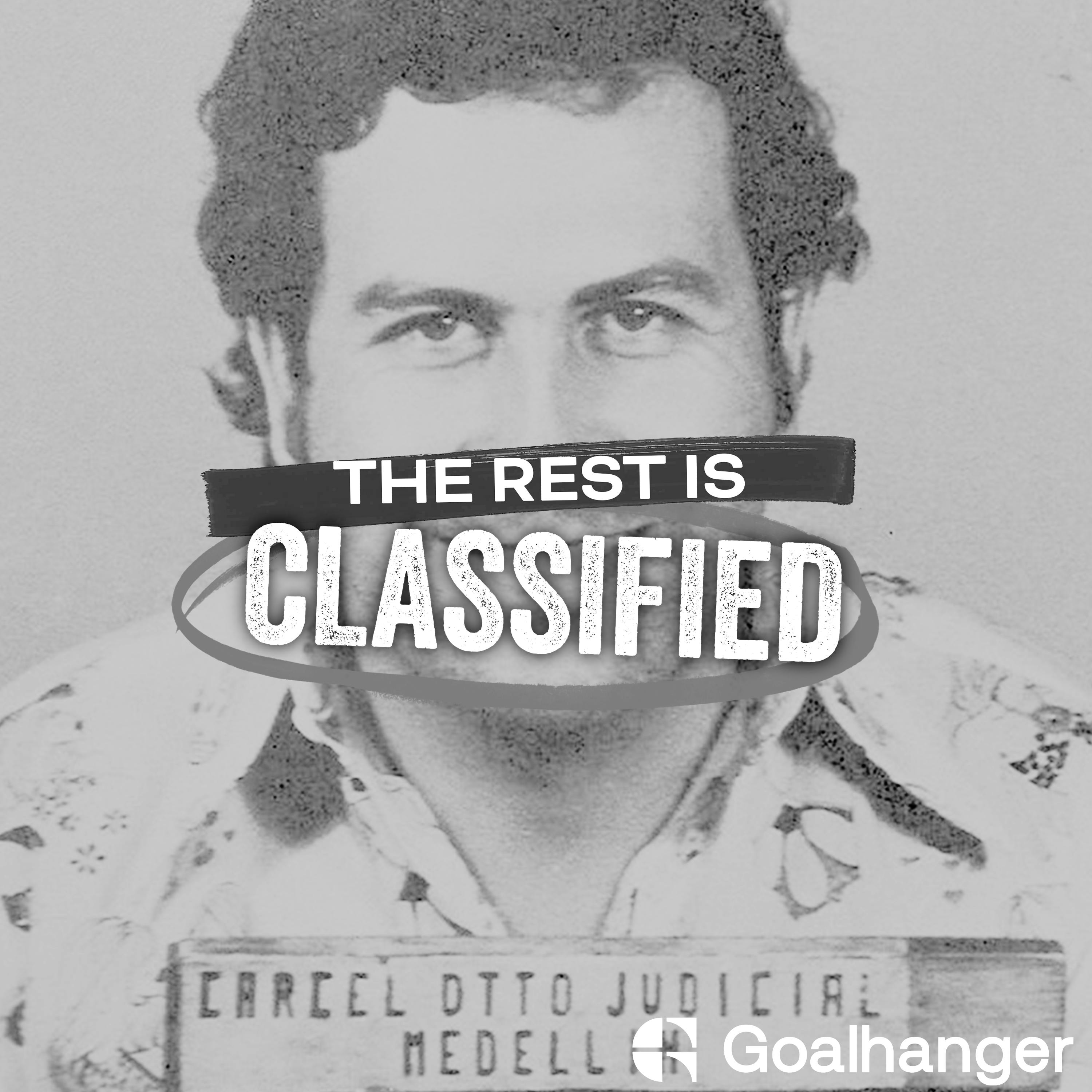
Pablo Escobar, the head of the Medellin drug cartel. The world's 14th richest man. He was in many ways a terrorist.
- [02:35]
David McCloskey
This is an economic power concentrated in a few hands and in criminal minds. What they cannot obtain by blackmail, they get by murder. And I don't think he expressed any regret at all he tries to portray himself as a man of the people, this kind of like, leftist revolutionary outlaw.
- [02:54]
Gordon Carrera
Nearly everyone in Medellin supports the traffickers. Those who don't are either dead or targets. If you declare war, you got to expect the state to respond.
- [03:04]
David McCloskey
This is the moment where he goes too far. 13 bombs have gone off of Medellin since the weekend. By the end of 87, Bogota is essentially a war zone. US spending for international anti drug efforts is going to grow from less than 300 million in 1989 to more than 700 million by 1991. It is the certain knowledge that no one is really safe in Colombia from drug cartel assassins. It's a conflict where the goal wasn't even to stop the flow of cocaine. It was to bring down this narco terrorist.
- [03:36]
Gordon Carrera
Everything has turned against him after this point. The whole thing he was building is collapsing. Yes, I remember him. His hands almost priest like drawing parabolas of friendship and generosity in the air. Yes, I know him. His eyes weeping because there is not enough bread for all the nation's dinner tables. I have watched his tortured feelings when he sees street children, angels without toys, without a present, without a future. Well, welcome to the rest is classified. I'm Gordon Carrera.
- [04:21]
David McCloskey
And I'm David McCloskey.
- [04:23]
Gordon Carrera
And that was an unnamed admirer of Pablo Escobar, writing in the pages of a Medellin newspaper, Medellin Civica, which was, perhaps unsurprisingly, founded by none other than Pablo Escobar, a man who knew how to nurture his reputation. And we are on the story of this rising drug lord, a man who will become perhaps the most famous drug lord of all time. And last time, we saw a little into his start in this wild, violent Columbia of that period, particularly of the 1970s. And we left with him making this offer to those who got in his way of either taking the silver or the lead, the bribe or the bullet.
- [05:06]
David McCloskey
That's right, Plato Plomo. It is defining feature of the way Pablo Escobar rises to power and infamy in medellin in the mid-1970s. And last time, Gordon, we had talked about how he had really used this kind of philosophy to wiggle his way out of a really serious arrest for trafficking cocaine. So by 1976, Pablo Escobar has, of course, faced no real repercussions at all for his trafficking. And he is not yet, but I think, on his way to becoming the unofficial lord of the city of Medellin and Medellin of the mid to late 1970s. Cocaine is becoming the business of the city. And these drug kingpins, a lot of the people who will become kind of founding members of this Medellin cartel, are profiting very handsomely in this period from the cocaine trade. They're building mansions, they're buying helicopters, they're buying planes. Pablo Escobar is hiring interior decorators to help him at all of his residences around the city. You'll be shocked, Gordon, if I. If I were to ask you what kind of style do you think Pablo Escobar like to decorate his mansions in? What. What would your guess be?
- [06:24]
Gordon Carrera
I would say understated. Scandinavian.
- [06:28]
David McCloskey
Scandinavian. Minimal. Minimalism, yes. You would be shocked to hear that his tastes are sort of garish, leaning grotesque. Right. I mean, it is the worst sort of Louis XIV baroque furniture you could imagine. Loud colors. The parties in this period are apparently exceptionally wild. I guess you might also be surprised to learn that bricks of coke might be served up as appetizers. There were drunken parties that ended with guests trying to hack away at each other with machetes. New restaurants and discos are opening. Apparently the Medellin cartel, one of the main hangouts is a disco called Kevin's. In this period where a lot of drugs, a lot of really high level cartel business is done. Pablo is a big soccer player, Gordon. Yeah, big fanatic. He has fields built so he and his friends can play at night under the lights. They hire announcers to call their amateur games. Soccer is going to be one of the defining loves of Pablo Escobar bar's life.
- [07:31]
Gordon Carrera
He's living the dream that we all have there of basically having your own pitch built, the announcers looking after you. But also, I like the fact that of course, those playing with him would always make sure he scored the winning goal.
- [07:43]
David McCloskey
Yes.
- [07:44]
Gordon Carrera
So again, he's living the fantasy of being a successful soccer player while being a, it's fair to say, already by then, slightly overweight drug lord. He's already slightly bloating on the cocaine and the general lifestyle of being the drug king.
- [07:59]
David McCloskey
But remember, he's not really a cocaine user, Gordon. He's getting kind of large on a lot of Coca Cola. He's a massive consumer of coke and just like pizza and fast food and all of this. And, you know, coincidentally, I was actually very concerned, Gordon, as I was doing the research for this, because this idea of, like, he fantasizes about himself as a, you know, professional soccer player. And so he's got the fields built and he's got his own team and he's got announcers this was exactly the plan that I have for my next birthday party. But it's baseball. And I, as I was. As I was reading this, I was disturbed. I don't think there are many comparisons between myself and Pablo Escobar, but this is one. When I read that, I thought, I can get. I could get.
- [08:38]
Gordon Carrera
That's what I do. Yeah, exactly. That's what I do. I think that's a sad thing. It's what a lot of people.
- [08:43]
David McCloskey
I would have a baseball team where this would happen. Yeah, exactly.
- [08:46]
Gordon Carrera
My five aside team would be successful. And of course we should say, I mean, we talked last time about his teenage bride. Important subject. But that does not stop, it's fair to say, his appetite for women either, does it?
- [08:56]
David McCloskey
No, he is not faithful to his wife. Listeners might also be surprised by this. Pablo Escobar is throughout his life going to be surrounded by women, Many if not most of them hired, apparently. And this is absolutely insane. Little section of Mark Bowden's again, his wonderful book Killing Pablo, where he says that Pablo would hire beauty queens for evenings of bizarre entertainment. The women would strip and race naked toward an expensive sports car, which the winner would keep. Or there'd be really weird, bizarre humiliations. They would have their heads shaved, or they'd have to swallow insects, or they'd engage in naked tree climbing contests, which sounds awful. So there's a sexual undertone to all of this inside the cartel that I think most of us respectable citizenry would find absolutely depraved and shocking.
- [09:43]
Gordon Carrera
And of course, he's building the massive ranch, isn't it? Obviously, I mean, his hacienda, which just sounds extraordinary and there are pictures of it which are just wild, aren't they, from this period, because it's got its own airstrip. I mean, this is the bit that I found crazy. So he's got a, you know, a landing strip for aircraft and he's got his own zoo. Again, this is a man with too much money indulging those weird habits.
- [10:09]
David McCloskey
The estate is a 7,400 acre ranch that's about 80 miles outside of Medellin. Builds it in 1979, calls it Hacienda Los Napolis. The land alone, Pablo has claimed, cost $63 million. So good chunk of change. He has that airport that you mentioned. There's a whole network of roads inside the estate. He's filled it with those exotic animals. So he's got elephants, buffalo, lions, rhinoceroses, gazelle, zebras, camels, ostriches, hippos, which, by the way, the hippos have created a massive problem in Colombia, apparently, because after the entirety of the story is played out, we should note, spoiler alert, the hippos are okay, but they get out of Pablo's estate and breed in the wild. So they're like an invasive species in Colombia. So he's got the hippos, there's a kangaroo that plays soccer. And it is in the 1980s, a period where Pablo opens up swaths of this estate to visitors. And so it is the most visited zoo in Colombia in the early 1980s.
- [11:07]
Gordon Carrera
Is that the estate where he has a small plane over the entrance to the ranch? And it is the original plane that he first used, I think, to take drugs into the United States. And it's kind of on there, you know, like most people would have, I don't know, or Nate Lyon or something like that.
- [11:22]
David McCloskey
It's got a drug smuggling plane.
- [11:24]
Gordon Carrera
He's got drug smuggling, which is particularly ballsy and particularly like, just look at me. It's kind of openly acknowledging this is where all the wealth came from. Flying cocaine into Florida from Colombia. You know, it's so open and so brazen. I love also the idea. He's got a 30s era sedan car which he thinks belonged to Bonnie and Clyde.
- [11:44]
David McCloskey
Yeah, it probably did not, by the.
- [11:46]
Gordon Carrera
Way, but it's again, he's kind of slightly relishing the gangster image, isn't he? He's playing up to it.
- [11:50]
David McCloskey
Like all gangsters, he's obsessed with portrayals of gangsters and other gangsters. Right. So he's got the Bonnie and Clyde obsession. There will be pictures found at his estate of him dressed up as Pancho villa, the late 19th century, sort of Mexican revolutionary slash outlaw. Right. So Pablo is. Is really obsessed with the gangster vibes. He's still stoned all the time. He's an overeater, he's eating a lot, drinks a lot of, as we said, coke. It's in this period that he's PR conscious. So he tries to portray himself as a man of the people, this kind of like leftist revolutionary outlaw. Right. So the Colombian establishment at the time is, I think, fair to say, despised by most of its citizens. Right. You have Marxist groups, we mentioned the FARC in our last episode, that are resisting the state. You have Catholic priests and ideologues preaching a kind of liberation theology. Right. So there's this kind of leftist wave that Pablo is not actually part of. We should stress he's not actually part of this, but he. He starts to portray himself as being kind of attached to it. And I think sets himself up as this kind of drug trafficker who's robbing rich Americans to give the proceeds to poor Colombians.
- [13:12]
Gordon Carrera
And he's going to do lots of things. He's going to spend lots of money on social improvements and, you know, donates to soccer fields, roller skating rinks. But. But do you think he really believes that? Or is this just purely a kind of cynical good PR which will give him protection? I mean, my sense. I don't know. It's hard to tell, isn't it, with these. These people, whether they start to believe their own hype. But it feels like a smart move in terms of buying support from the people, because like any kind of revolutionary or guerrilla or bandit, if you're going to survive, you want to kind of swim in waters which are friendly.
- [13:46]
David McCloskey
This will be one of probably several attempts to psychoanalyze Pablo Escobar throughout this series. But I feel like Pablo conflates his own interests, be they personal, business, sexual, whatever, with the interests of not just Medellin, but the people of Colombia. I think he sees them all as one and the same. And so what's good for Pablo must, by definition, be good for everybody else. He dumps, as you said, tons of money into Medellin. He's probably spending more on sort of improvements in Medellin in this period than the municipal government.
- [14:26]
Gordon Carrera
Yeah, housing developments, things like that that.
- [14:29]
David McCloskey
Are still around today. Barrio Pablo Escobar is this, you know, sort of housing development for the poor, which tries to give homes to people who live in huts by the city's trash dumps. There's. There's 13,000 people that still live there today. He sponsors art exhibitions to raise money for charity. He's got backing from elements of the Catholic Church in Medellin. Right. Priests walk with him through the slums very, very publicly. I think he's such an egotist and such a narcissist that he doesn't see these things as separate facets of his personality or business. I think it's all Pablo. What's good for him is good for everybody else. And the cocaine business is a way for him to make other people see how wonderful Pablo Escobar is.
- [15:13]
Gordon Carrera
And he has really created a business. I mean, we talked a bit last time, didn't we, about how he had integrated an organization and pushed out competitors and really taken over all the elements of this supply chain to build up a real network which can take the cocaine right through to the United States.
- [15:34]
David McCloskey
Well, and it is in this period of the late 70s and the first couple of years of the 80s, where what becomes the Medellin cartel is formed with Pablo really at its center. And it's interesting because the way the cocaine business up to that point has kind of functioned, and we talked about this a little bit in our last episode, is that it's a kind of small shipment game up until that period. Right. And Pablo changes this, and the Medellin cartel changed this. Right. He absorbs a lot of the cocaine entrepreneurs, the production facilities critically, those distribution networks, the smuggling routes. He collects taxes on the flow of goods. He collaborates. There's a ton of collaboration. It's what the cartel is, is it's a disparate group of people who are collaborating with each other for. For common benefit. Right. So he's collaborating with others in the cartel to put together really big loads of cocaine, finance those, and then arrange for the transportation and insurance. And insurance in this business. Obviously, you're not going to Lloyd's of London to ensure your multi ton coke shipment into Florida or Louisiana, but you need to have a backup load ready to be dispatched if the first one is interdicted along the way. Right? So they'll, they'll ensure the loads. And you need. You need scale to do this. Right. And the size of these shipments. This. This is what is financing Pablo's empire. And this cocaine glut in Medellin is how do you go from individual mules taking small amounts into the US Swallowing.
- [17:09]
Gordon Carrera
It, or hiding it in their. Their luggage or something like that? That's the start of it, isn't it? And now we're moving to kind of industrial scale size.
- [17:17]
David McCloskey
Yeah. How do you. How do you fill a plane with cocaine and get it into the US and they stitch together these air routes that go from Colombia and in some cases, hopscotch across the. The Caribbean, Gordon. Not the Caribbean.
- [17:34]
Gordon Carrera
Very good.
- [17:34]
David McCloskey
To reach Miami or Louisiana, they have these smuggling planes they operate. They actually have windows in Colombian airspace which have been obtained by the cartel, usually by bribing officers in the military, where these planes can take off and land loaded with product. They'll fly at night, usually without lights. The pilots wear night vision goggles when they enter U.S. airspace in this period. A lot of it is in Florida and Louisiana. They'll fly low and slow so they look like helicopters that, for example, in Louisiana might be coming ashore from rigs. The planes will follow radar beacons to remote sites in swamps, for example. Cocaine will get dropped into swamps and then helicopters be dispatched to recover the product, take it to Offloading sites where the shipments are broken down and then sent out to various markets by carload. So they build up this fleet of planes. In some cases, these planes can carry a thousand kilos a piece, so you got the air. But the safest way to do this is by submarine. Right. So they build miniature remote controlled submarines, in many cases, are hiring engineers and. And sort of boat manufacturers on the side to do this stuff at remote sites in Colombia.
- [18:46]
Gordon Carrera
So they're remote controlled. So it's like an unmanned drone sub, basically. It's the kind of stuff that they're using in Ukraine now to blow things up. But they were using them back then to move the coke.
- [18:54]
David McCloskey
I think the longer distance shipments probably did have a captain on the submarine, but they would. They would take these to, you know, waters off Puerto Rico. Divers remove the shipment, and then they take it to Florida and speedboats. Right, Because Florida has, like, 8,000 miles of coastline, so there's a lot of opportunities to smuggle things in. Now, the way this works is the shipments are going to be consolidated into loads that are controlled by Pablo's organization. And so in many cases, the cocaine that's on these shipments, some other trafficker who might be on the fringes of the cartel has sourced it, but doesn't have the route to get into the US and so if they want to put a small quantity of coke on one of Pablo's submarines or planes, they do that. And Pablo charges them a fee, Right? He charges them 10% of the wholesale U.S. price. Right. And so if the shipments interdicted, Pablo will repay you, but only for what the load cost in Colombia. So he's essentially charging a tax for transporting these kind of massive shipments of cocaine into the US and the retail price is so insanely high, it's around 40,000 per kilo in Miami. But in Medellin, the wholesale price is like 8 to $9,000 per kilo. So you get a sense of how massively high margin this business is. And maybe one or two shipments need to make it to the States on average to cover the cost of four to five lost loads of. And if you think the DEA or US Customs and Border Patrol or the Coast Guard are interdicting that much, think again, because at the time, the interdiction rate is maybe 1 in 10 at best.
- [20:28]
Gordon Carrera
So that gives us a sense of just how organized and how big a business this is. Worth saying, though, this isn't the only cartel in Colombia at the time. There's another one, isn't there?
- [20:37]
David McCloskey
Yeah, there's Another cartel, the Cali cartel, down in the south. So we're focused, of course, in the series on Pablo and Medellin. But he's by no means the only cocaine baron in business in Colombia in the 1970s and 1980s. And the other facet of this that is going to, I mean, really frame so much of the rest of the story is that the Colombian government is. Is stressed by this influx of so much money. The money is just absolutely pouring in. It's not just a Medellin, but it starts to infect Bogota. Between 1976 and 1980, bank deposits in Colombia's four major cities more than double. There's. There's so much cocaine money that has come into the country. The government in this period actually encourages the creation of these kind of speculative funds that offer crazy high interest rates, and they're kind of set up as ostensibly legitimate investments in speculative markets. But it is really a front so that legitimate Colombian businessmen and investors can invest in these shipments of cocaine. Maybe it's a stretch to say the government is in on it, but there is definitely a period here in the late 70s where the government is just dealing with a society that is awash in cocaine money and having to figure out, can you prevent Colombia from becoming a narco state?
- [21:56]
Gordon Carrera
And then comes, I guess, a key moment in our story, because, you know, you've talked there a bit about the risks to the state of this amount of money pouring in. And we've also established Pablo's kind of desire to be the big man. And so he is going to make a move which I think will change everything for him, because he possibly could have survived as that drug kingpin in Medellin for a while longer, certainly. But it is this step he takes next, which is to go himself into politics, which is really going to draw attention to himself and change everything for him, isn't it?
- [22:37]
David McCloskey
There is a reason why we're not doing a six part podcast on the people who ran the Cali cartel, because Pablo is absolutely the shaping force of the dip into politics. And frankly, what is going to become a war with the state eventually, because in 1978, Pablo gets elected as a substitute city council member in Medellin. He starts to finance presidential campaigns that year. So putting money into politics, right? What in Colombia at the period was called hot money. So it's drug money that was designed to influence the politics. In 1980, Pablo helps finance the formation of a new political party, which is headed by this enormously popular reformer named Luis Galan. And then in 1982. Pablo runs for Congress, and he stands as a substitute for the representative in Envigado. And we should say, in the Colombian system, you have members of Congress, essentially have an alternate.
- [23:35]
Gordon Carrera
So if you can't make it, then the alternate can come and vote and stand in your place, basically.
- [23:40]
David McCloskey
Exactly.
- [23:40]
Gordon Carrera
But also, I mean, that seems to give him access into politics. And some of the advantages of that. I mean, I think that's perhaps one of the things that's driving him as well, as well as the. The ego and the power, is the fact that it possibly also offers him a form of protection as well by being in the political game, by having that kind of influence in Bogota.
- [24:01]
David McCloskey
And one of the minor advantages, I guess, of the status for Pablo is the post substitute confers automatic judicial immunity. You can see how that might be useful. And he gets a diplomatic visa, which he uses to start traveling to the US in this period. There's some wonderful pictures of him with his son at Disney World. He already owns property in Miami, but now he can finally enjoy some of those Miami mansions. He visits the White House, also with his son in this period. So you can see how there's a lot of advantages to Pablo for being in politics. The cynical view could be okay. He gets judicial immunity and the ability to sort of corrupt the system from the inside. But then on the other side, I think Pablo sort of looks at this and says, well, Colombia is kind of me, right? Medellin is me, and it's good for everybody if I have more power.
- [24:48]
Gordon Carrera
It is the trajectory of the Godfather films, isn't it? Which he is following that story quite closely, isn't it? I suppose the difference is he doesn't want to get out of the Mafia business and go legit and then get pulled back in. He wants to do both. He wants to be in politics and still run the drug business.
- [25:04]
David McCloskey
That's a great point. And what do you think, Gordon, from a new congressman in the Colombian system in 1982, what is the centerpiece of Pablo Escobar's national political program?
- [25:15]
Gordon Carrera
Anti corruption.
- [25:17]
David McCloskey
Anti corruption.
- [25:19]
Gordon Carrera
Close.
- [25:21]
David McCloskey
Extradition.
- [25:22]
Gordon Carrera
Oh, why would he be worried?
- [25:24]
David McCloskey
An obscure choice, isn't it?
- [25:26]
Gordon Carrera
It's not the kind of thing, if you're the man of the people, that you would campaign on the most important issue if you really cared about the poor. Your political kind of agenda is preventing the extradition of people to the United States. But you can kind of see why, for him, he might have a little interest in that.
- [25:43]
David McCloskey
Well, I'll do you one better on that. You could definitely spin it as a man of the people thing. I mean, this is a violation of Colombia's national sovereignty. Right. And he's standing firm. The background to this is that in 1979, Colombia signed a treaty with the United States that recognizes the shipment of illegal drugs to be a crime against the US and in some of the legalese in that treaty, it basically allows for drug traffickers in Colombia to be extradited to the US for trial. You can imagine why Pablo and others in the cartel would rather face Colombian justice than American justice. Pablo denounces this as a violation of national sovereignty, as I said, and it's not ratified by both countries until 1981. So in 81, a year before he joins the Congress, this extradition treaty has come into force. I think we should say that not every member of the Colombian political establishment has sort of made their peace with drug trafficking, as we'll see, but many have. And I think Pablo would say in this period that his business, it's not so different from the ones that most of the Colombian elite have been traditionally benefited from. Right. So he would say slavery, tobacco, golden emerald smuggling. A lot of the big families in Bogota sort of built fortunes off of really nasty businesses. What's the difference with cocaine? Right. Again, the cartels are not really pushing the cocaine in Colombia. They're. They're selling it for exports. So he's taking back money that the Americans have stolen from Colombians. Right. And giving it to poor across the nation. And it is in this period when he's profiled in a really important Bogota newspaper as the Paisa Robin Hood, the Robin Hood of Medellin.
- [27:44]
Gordon Carrera
So you can see what he's trying to do here. But you also get this sense that he overplays his hand, doesn't he? He's pushing too far. And also, you know, he's coming up against that Bogota elite, which I think perhaps are not comfortable with. You can imagine this rough, tough, perhaps slightly coarser Medellin boy who they know is a drug lord becoming part of the political elite. And that's the bit where I think you can just sense that he's pushing too hard and he's willing to go too far, and that's going to force a crisis.
- [28:19]
David McCloskey
Maybe there. Gordon. Let's take a break. And when we come back, we'll see how Pablo Escobar's dashed hopes for respectability turn into a war against the state. This episode is brought to you by Disney. Now, most of us live comfortably, unaware of what moves just past our perception but beyond the surface of governments, corporations, and even the Earth itself lie truths and horrors we were never meant to find.
- [28:49]
Gordon Carrera
That's right. And in the case of FX's alien Earth, a fateful discovery puts audiences face to face with the planet's greatest threat.
- [29:00]
David McCloskey
And it all starts when USCSS Maginot, a space vessel owned by the mysterious Weyland Yutani Corporation, crash lands in Prodigy City.
- [29:09]
Gordon Carrera
And the rival Prodigy Corporation then sends a task force of critically ill children who've had their consciousness put into synthesis synthetic bodies to salvage and steal from the wreckage. Now, there's already a lot going on here, so imagine what happens when you throw in five different alien life forms more terrifying than anyone could imagine. One thing's for sure. We were safer in space.
- [29:32]
David McCloskey
FX's Alien Earth, an original series now streaming exclusively on Disney 18. Subscription required. TNCS apply this episode is brought to you by LifeLock. Between two factor authentication, strong passwords and a VPN, you try to be in.
- [29:48]
Gordon Carrera
Control of how your info is protected. But many other places also have it.
- [29:53]
David McCloskey
And they might not be as careful. That's why LifeLock monitors hundreds of millions of data points a second for threats. If your identity is stolen, they'll fix it, guaranteed, or your money back. Save up to 40% your first year. Visit lifelock.com podcast for 40% off terms.
- [30:09]
Gordon Carrera
Apply. Hello, I'm William Dalrymple.
- [30:13]
Anita Arnand
And I'm Anita Arnand. And we're the hosts of another goal hanger show, Empire.
- [30:17]
Gordon Carrera
And we are here to tell you about a recent series we've done on partition.
- [30:22]
Anita Arnand
On the 14th and 15th of August, 1947, Pakistan and India announced their independence from the British Empire. But as these nations gained their freedom, their rushed and violent division resulted in the deaths of well over a million people and the forced migration of over 14 million more.
- [30:39]
Gordon Carrera
It's a piece of South Asian history that many people are familiar with. But in this series, we want to explore it alongside four less well known partitions, which continue to affect the region in monumental ways.
- [30:52]
Anita Arnand
Yeah, you're quite right. In one episode, we dissect how Dubai almost became part of modern India. And in another, we're going to unpack the history behind the headlines about the conflict in Kashmir.
- [31:02]
Gordon Carrera
We also explore how the separation of Burma from India is linked to the origin of the Rohingya genocide and how east and West Pakistan separated in 1971 to create Bangladesh.
- [31:16]
Anita Arnand
So if you'd like to hear more about the five partitions that completely transformed modern Asia and how the weight of the memory of partition has been passed down through the generations. We've left a clip of the series at the end of this episode for you to listen to.
- [31:38]
Gordon Carrera
Well, welcome back. And Pablo Escobar is trying to make the move from drug kingpin into politics.
- [31:47]
David McCloskey
David, It's a natural jump for any drug kingpin, but it's not going to.
- [31:52]
Gordon Carrera
Work out for him, is it?
- [31:53]
David McCloskey
It's fair to say, no, it does not work out. And ultimately, his. His attempts, I think, to be a respectable figure not just in Bogota, but in Colombian politics writ large, are. Are going to be dashed. And I think this is a major driver for. For what's to come, because he is. He is rejected, for the most part, by polite Colombian society and builds some really powerful enemies. And of course, what good story of being socially spurned wouldn't start with being rejected for your country club application? Right. So there's a. There's an old kind of establishment country club in Medellin called Club Campestre, which is the kind of traditional ruling class. Some of whom Pablo Escobar has kidnapped. Right. Are kind of the mainstay at this club. Pablo applies for membership and he's. He's rejected, which I think also says that the country club has stood up to him potentially more than the central government in Bogota at this point.
- [32:54]
Gordon Carrera
I was going to make the analogy. It's like one of those gentlemen's clubs in London. It's like the Garrick blackballing you. But it is true that I don't think a. They probably wouldn't allow a drug lord in, but especially one who'd kidnapped half the members.
- [33:05]
David McCloskey
No, I think that overstates his kidnapping prowess by that point. But when Pablo tries to take his seat in Congress, it provokes a political storm. Now, in 1983, there is a new Justice Minister in Bogota, and the Justice Minister in the Colombian system is, I guess, comparable in the US System to our Attorney general. So, like the most senior sort of enforcer of the law. Right. In the land. Right. So it's a really important post. I don't know what the. What would be the equivalent in the.
- [33:37]
Gordon Carrera
Uk well, we have an attorney General, but I don't think it's quite the same.
- [33:40]
David McCloskey
Okay. This is Justice Minister Rodrigo Lara Bonilla, who denounces Pablo during a public hearing in Bogota. Now, Justice Minister Lara had been a pretty vociferous opponent of the drug traffickers prior to his appointment. So this is very much in. In step, and it gives you a sense of the war that's going on to some degree inside the Colombian government over whether or how much influence the narcos will have in the state. Right. But Lara, in referring to Pablo's fortune, says, quote, this is an economic power concentrated in a few hands and in criminal minds. What they cannot obtain by blackmail, they get by murder. And days after this confrontation, there's sort of a PR frenzy against Pablo.
- [34:29]
Gordon Carrera
Yeah, it opens the floodgates, doesn't it? In which newspapers and others suddenly feel like, okay, because everyone must have known it before. But it's given the newspapers and others the license to say he is a drug lord and a criminal mastermind.
- [34:41]
David McCloskey
That's right. This Bogota newspaper unearth stories from its files of Pablo's 1976 arrest. That arrest we talked about for. For drug trafficking. They've got mug shots of Pablo and his cousin Gustavo. And I think it makes it a lot harder with this out there for Pablo to separate himself from his cocaine business. Now, humorously, Pablo sends men around Medellin to try to buy up copies of the paper, which of course backfires and fuels even more interest in the story. The Justice Minister Lara then publicizes that six of the nine teams in Colombia's top soccer league are owned or partly owned by traffickers. There's like, a whole interesting side story around the influence of cocaine money in Colombian real serious Colombian soccer back in the 1970s and 1980s. Then there is a renewed criminal investigation into the deaths of those policemen who had arrested Pablo. Remember those. Those two DAS agents? It's really not the police, it's the Colombian FBI had been involved in Pablo's arrest on those cocaine trafficking charges. They're killed, and there's a new warrant that is issued for Pablo's arrest. And then surprise, the judge who issues that warrant is murdered. There's also a documentary that airs that accuses Pablo of being Colombia's premier drug trafficker worth billions. He denies the accusation. He then gets kicked out of the New Liberal Party. Congress begins proceedings to lift his immunity. The US revokes his diplomatic visa. The Catholic Church begins to renounce Pablo's social programs. This is like a. A full court press on Pablo. And then the Justice Minister Lara signs an arrest and extradition order for another major narco trafficker who is involved in the Medellin cartel. He's not one of Pablo's principal guys, but he's important, and he's actually extradited to the US and so it's the first time that 1979 agreement has been implemented. So we've gone from a potential threat to now a demonstrated threat from the government of what they can do to members of the cartel.
- [36:53]
Gordon Carrera
And so effectively, everything has turned against him after this point. I mean, the whole thing he was building is collapsing, and his political career, I guess, is over at this point. But the interesting thing is that that threat about the United States and the extradition, that has become the overriding worry for him, hasn't it? Because to some extent, he knows he's not really going to face justice in Colombia. He's shown you can kind of bribe and murder, you know, you can use silver and lead to stop that. But the US Is something different. And I guess it is also at this time that the US is starting to kind of ramp up its war on drugs.
- [37:31]
David McCloskey
Listeners who so far have said, wait a minute, there hasn't been a whole lot of spy agencies involved in the story. Well, we are about to scratch that itch here, and we'll do it by setting up the American involvement in really the sort of hunt for Pablo Escobar. So Nixon, of course, Gordon, famously declares the war on drugs in 1971. The DEA, the Drug Enforcement Administration, is founded in 1973. But throughout much of the 70s, so the story so far, the US has paid basically no attention to Pablo Escobar, or really even to Colombian cocaine trafficking in general. But by the late 70s, early 80s, certainly the time that sort of Pablo is entering politics, this is really changing. And the focus of the War on drugs is shifting from what initially had been a lot of, like, how do you deal with sort of the drug epidemic through prevention and treatment, to how do you deal with it through punishment and law enforcement. So the War on Drugs is becoming.
- [38:35]
Gordon Carrera
More militarized, going after supply, rather dealing with demand.
- [38:40]
David McCloskey
Demand is hard. And this is a really important piece of, like, why. Why does Pablo actually come into the sights of the CIA and Delta Force and the dea? Right? Is the war on drugs in the a lot of the 70s is this kind of amorphous problem of, like, how might I interdict shipments of drugs into the United States? Right? That is a super amorphous smuggling problem that is, I think, harder for the public and frankly, even harder for political leaders to really get behind and try to finance, because it just feels like you have this massive demand pull and suppliers willing to meet it. But if you're just occasionally busting shipments in Miami, is it worth the investment? The emphasis really starts to shift to what are some good enemies that we might have in this war on drugs? Right. Cocaine billionaires in Colombia who are giving people Colombian neckties and Walking around with giant mustaches and having insane parties in Medellin and wreaking general havoc on Colombian society. Those guys make for good bad guys. Those are ready made bad guys, right? President Reagan in 1982 appoints a cabinet level task force which is led by then Vice President George H.W. bush to coordinate kind of this new phase of the War on drugs. Right? So we don't yet have the concerted intelligence and special operations focus on the Medellin cartel that is coming, but we're getting a much more hardline and militarized perspective on how we might score wins in the war on drugs.
- [40:23]
Gordon Carrera
And so two things kind of have intersected, haven't they? You've got the US becoming more concerned about the War on drugs, realising they're kind of unable to stop the demand side at home and so wanting to go after it. You know, at root, as they say, it was the enemy. At the same time as Escobar has put his head above the parapet in politics and become more public and become identified, partly because of his own ego, as the most visible of these drug lords behind it. So those two things really come together in that period in the early 80s.
- [40:55]
David McCloskey
And I think attitudes toward cocaine in particular are shifting in the U.S. right? So Len Bias, who's the number two pick in the NBA draft in 1986, he dies after snorting cocaine at a campus party. John Belushi dies after injecting a combination of heroin and cocaine in L. A in the mid-80s. So you have these high profile instances of kind of the awful effects of the drug that are starting to change, change the perception of. It's like the line from Snowblind we quoted in the last episode of, you know, it's like flying to Paris for breakfast, right?
- [41:33]
Gordon Carrera
Glamorous.
- [41:33]
David McCloskey
It's glamorous. Well, no, no, look, look at the effect it's having on these, you know, athletes and celebrities. And really importantly, we have the crack epidemic in the States where crack being very cheap, dirty, smokable version. And there's this real shift in American elites of like, oh, cocaine is this drug of the glitterati to guys like Pablo Escobar are fueling a social epidemic in the United States. So all of this stuff is swirling together. Pablo's the most visible guy in the Colombian context. And at the same time, the CIA. Took us a long time to mention the CIA, Gordon. I just feel a sense of relief saying. I just feel a deep sense of relief at being able to. To say those three letters. The CIA in the early to mid-80s starts to notice links between the narco traffickers and Colombian guerrilla groups that are leftist, Marxist. Right. So you think about this is. This is a sort of peak Cold War context, right? The idea that the CIA, CIA, is looking all over Latin America for connections between revolutionary groups, leftist groups, and the Soviet union. Right. And CIA, in an intelligence estimate in 1983, notes that there are growing links between groups like the FARC. M19 is another one, this kind of urban guerrilla movement in Colombia and the narco traffickers. So the guerrilla groups are finding it much more profitable and surprisingly, to join with the narcos than to fight them. Right. And the CIA report says that in some areas, the FARC had established quotas, taxes, wages, rules for workers, producers and owners in the coca field. So the kind of. There's this meshing of the narcotics business with communism.
- [43:24]
Gordon Carrera
And it's easy to forget we are in the 80s and in the Cold War and in a period in which the US is, and the CIA particularly is doing some pretty aggressive things in Latin and Central America to fight communism and to fight left wing guerrillas. I mean, the kind of dirty wars, there's lots of pretty, pretty ruthless things which are going on there. And I guess this is the moment where that starts to feed into the issue of drugs and the cartels and gives, in a way, a reason for the CIA to focus on this and to get involved when you've also got the political imperative of the war on drugs as well.
- [44:02]
David McCloskey
Communism and cocaine. Gordon, the point is that it was absolutely not interesting or novel to be using the CIA or Special Forces or the military or any other intel or security agency to sort of go after communist influence. Right? But using them to go after drugs, that's kind of new. In the 1970s and 1980s and the Colombians. The Colombian state is a US ally. There are deep connections between Bogota and Washington. And Lara, the Justice Minister, is a key US ally in Colombia. And so with, with the permission of Justice Minister Lara, the US Department of State has begun testing herbicides on coca fields. And in March of 1984, so just a couple months after Pablo has sort of withdrawn from politics, effectively, government strikes some pretty heavy blows against the Medellin cartel. So there is a raid on a massive cocaine processing facility in the southern jungles. It's called Tranquilandia. It's a complex of 14 labs and camps housing a bunch of workers. 14 metric tons of cocaine are seized in this raid, which is the largest find up to that point in history. And in the weeks prior to that The Colombians, with American assistance, had found and destroyed seven airstrips, handful of aircraft, 12,000 chemical drums. We talk about those chemical precursors are so important to the production of cocaine. The total haul that's destroyed is probably worth about $1 billion.
- [45:43]
Gordon Carrera
Serious money.
- [45:44]
David McCloskey
Serious money. And it's the worst financial month ever for the Medellin cartel. And you actually can see this. I mean, a lot of times these raids have no impact on the dynamics of supply and demand. But after this set of raids, the price, the retail price of cocaine goes way up in the US So it's having an effect. There's a supply disruption. Right. Which means that the entire cartel is not making money. So what happens? What do they do? Well, the first thing you do in a situation like this is you meet at a restaurant in Medellin called Tasty Little Things Gordon. So Tasty Little Things is a little, I guess, cafe that the cartel members frequent. Pablo's there. He's probably in charge. A contract goes out. It's worth $500,000, this contract. We'll talk about what that is in a second. Is picked up by a Medellin murder gang. Sicarios that are associated with the cartel. They soon fill a car with guns, grenades, bulletproof vests. They drive from Medellin to Bogota. One of the hitmen, not the main guy, but one of them, is known as the Croaker, which I just wanted to be able to say on the podcast. So I included his name in here. And on April 30, 1984, Justice Minister Lara is riding in the backseat of his chauffeured Mercedes sedan. Motorcycle pulls alongside, and hitmen dispatched by the Medellin cartel shoot him seven times. The cartel has killed not a local Medellin judge or a police officer, but the justice minister, the Justice Minister of the country of Colombia. It is the first time a sitting Colombian cabinet minister had been assassinated. And it's essentially an act of war against the state.
- [47:30]
Gordon Carrera
I mean, this is a big moment, isn't it? Because you've moved from, you know, kind of low level criminality to basically going, I'm going to assassinate cabinet ministers who take me on. I mean, this is a declaration of war. I mean, it's a miscalculation, I think, again by Pablo, isn't it? It again goes back to ego. Because if you declare war, you've got to expect the state to respond. And they're going to, aren't they?
- [47:54]
David McCloskey
This is where the American role just gets deeper and deeper, because, as we said, the Justice Minister was not just an ally of the US but I think a friend of the ambassador and someone who is seen as a true partner between Washington and Bogusa to try to reduce the influence of these cartels, again, that are seen as the sort of, you know, collaborators with Marxist guerrillas, right? And Bogota, the Colombian government strikes back. So they begin confiscating estates and assets that belong to members of the Medellin cartel. The president, the Colombian president sort of vows that he'll enforce the extradition treaty with Washington, which had kind of been this political football in this period, right, of when and how will it actually be used. And a lot of members of the cartel, they go to Panama City and try to sit this thing out, right? A lot of the kingpins gather there. Now. Noriega, Manuel Noriega, who's the commander of the Panamanian army at this time, is kind of basically in cahoots with the cartel to provide them safe haven for a fee. And they go and sit in Panama for a while. And interestingly, I mean, pretty much right after fleeing, Pablo tries to work out a deal to go back, right? So there are some Colombian officials that, that get sent up to Panama City to try to deal with Pablo to figure out if an agreement can be reached. It's interesting. Pablo's being negotiated with not like he's a common criminal, but I mean, like he's a political force.
- [49:20]
Gordon Carrera
No, I find this really interesting because, I mean, this will become a theme throughout the coming parts of the story, is that he is dealt with almost as a, as you said, as a political force who they've got to negotiate with. And, and he's got a clear agenda, which is he basically, he doesn't want to be extradited to the US and so they're constantly looking at ways of doing deals. And what you sense is, even though he's killed the Justice Minister, the powers that be in Bogota don't actually want to go for a full war with him. They'd rather do a deal than unleash the full scale violence that would come from a war. And, you know, with all the repercussions there might be. So it's fascinating, isn't it? There's constantly negotiations and back and forth between government representatives and Pablo, in his.
- [50:05]
David McCloskey
Mind, the only reason that he's potentially going to get a deal is because he killed the Justice Minister. I don't think he views this as a mistake, right? Or some, some sort of unnecessary escalation that brings him to the brink. I think for him. And again, this, this will be a pattern throughout the rest of his life. The ratcheting up of violence against the state, and in some cases, just outright terrorist violence against civilians, against is all part of a negotiation to get the government to say, we've had enough. Let's give Pablo what he wants. And Pablo, sitting there in Panama City, puts together a six page written proposal that's addressed to the Colombian President. He denies responsibility for the death of the Justice Minister, pledges support for the government. He says, look, we represent maybe 70 to 80% of the Colombian cocaine business. We will turn over our airstrips and our labs to the government. We'll sell off the boats and the planes. We'll set up substitution programs to help farmers grow things other than coca. There's going to be a theme in Colombia for the next four decades is how do you get the farmers to grow things other than coca plants? And then in exchange, Pablo wants a change in the extradition treaty and to be forgiven for his past crimes. And there's a significant amount of US pressure on the Colombians to not do this deal. And I think many in the Colombian government don't want to do the deal. The deal is rejected. Pablo's kind of stuck in this outlaw status in his mind, right? He's, he's out of the country, which he doesn't, he doesn't like. And it's interesting because in this period, you could see a world where he just kind of goes and settles somewhere else.
- [51:47]
Gordon Carrera
But he wants to go back, doesn't he? I mean, whether he'd really give up his drug business, as he's claiming, I don't know. But he certainly wants to go back rather than, you know, live the life of a rich exile. I think, I think that's interesting. And actually Panama is not going to be necessarily that welcoming to him because I think Noriega works out pretty quickly that having him there is actually pretty uncomfortable.
- [52:08]
David McCloskey
Bringing the global coke business to your doorstep is not necessarily good for political stability. Right?
- [52:14]
Gordon Carrera
Yeah.
- [52:15]
David McCloskey
We see yet another nexus of communism and cocaine, Gordon, Because Pablo flees to Nicaragua from Panama, where the Sandinistas, the Marxist Sandinistas are in control. And I guess it's. It's hard for younger Brits, Americans, really, anybody, to think about a world where a lot of US Foreign policy is focused on Nicaragua. But it was the case in the 1980s that there was a tremendous amount of interest in what was going on in Nicaragua, in Washington. Right. It's, it's this kind of focal point of the global war against communist Influence that Reagan's White House is fighting. And there's an American pilot and coke trafficker who is busted by the DEA in Florida. And rather than spend six decades in prison, he decides to become an informant. And he flies to Managua, Nicaragua in 1984 to pick up a 750 kilo coke shipment. There's a camera in the nose of the plane that shows Pablo and a few associates that are supervising the unloading. And this footage really sets off alarm bells in D.C. because what we have now is a connection between the Marxist Sandinista regime who have allowed this Koch cartel to essentially have safe haven in Managua, and these Colombian coke traffickers. So this is helpful to the Reagan White House. They're trying to get Congress to continue funding the Contras in Nicaragua, the Iran.
- [53:44]
Gordon Carrera
Contra affair, which will come later, which is one of the great scandals in Washington, which is them trying to get round congressional restrictions on funding the Contras. So the nexus between drugs and communism they've realized, I guess is a way of trying to get support within Washington to, to do something here.
- [54:01]
David McCloskey
So the photos of, of Pablo and the Colombian Koch traffickers in Nicaragua, they mysteriously leaked Gordon to the Washington Post thereby. Amazing, amazing. It's amazing how that happens, thereby making the administration's case that there is this sort of connection between Colombian Koch traffickers and communism. Now, footnote on that poor DEA turned pilot is he's killed two years later, probably murdered by one of Pablo's paid gunmen in Baton Rouge. The pilot had refused to enter the witness protection program and was hunted down and killed. Pablo is indicted in Miami for his role in this shipment. And soon after that, a car bomb goes off outside the U.S. ambassador's residence in Bogota. And for those who don't know all the ins and outs of the story, there are plenty of car bombs to come in this war against the state.
- [54:53]
Gordon Carrera
But putting one outside the US Ambassador's residence is again now bit of a message. Yeah, it's a message. You know, he's already targeted the Justice Minister and now he's targeting the US government, so he's not backing down.
- [55:05]
David McCloskey
So what do you do, Gordon? You're stuck in Nicaragua. I think in this period, it's sort of hard to run a drug cartel remotely, you know, and so he maybe feeling a bit of his control slipping. In Medellin, a gang of kidnappers had actually taken Pablo's 73 year old father hostage in October of 1984. Four Pablo's gunmen are scouring Medine looking for him. They killed dozens of People who were associated with the kidnappers. And then 16 days later, his. His father is released unharmed. There's no ransom paid. Apparently the kidnappers are just intimidated into letting him go. But it gives you the sense of, like, the hordes of his authority are fraying a little bit, with Pablo in exile in Panama and then Nicaragua. And so even though he faces tremendous legal jeopardy by returning to Colombia, he decides to come home. He goes back to Medellin and has a line. It's been attributed to him. It says, better a tomb in Colombia than a prison cell in the United States. So he returns in 1984, and he will never leave Colombia again.
- [56:16]
Gordon Carrera
And so there, with Pablo Escobar back in Colombia, I think we should stop, and next time, we'll see how it's far from a quiet life on his return. Instead, the violence is going to escalate really dramatically, and the US is going to become much more deeply involved.
- [56:31]
David McCloskey
That's right. And if you want to see how the us, the CIA, the dea, Delta Force, turn their sights collectively on Pablo Escobar, you don't have to wait. Go and join the Declassified club@therealDisclassified.com where you can get early access to this series and all of our series to come, plus a wonderful, rich library of bonus content. We hope you join. We'll see you next time.
- [56:58]
Gordon Carrera
See you next time. Hi, it's William Drimple here again from Empire Unknown, another Goal Hanger podcast. Here's the clip from our recent series on the five partitions that created modern Asia. And it was deeply emotional. Sparsh picked up some pebbles from the village, which he made into jewellery. Family heirlooms for his. His family going down the generations, because he was always saying, you know, my family doesn't have archives, et cetera. We lost everything in Partition and there's nothing that we have from Baela to show where we came from. But. So he wanted to pick up something from Baela and make it into heirlooms for the next generations. You know, three, four generations from now, they'll still have a piece of baila with them. Even if, you know, the relationship between India and Pakistan worsens again. And, you know, even if his kids can never visit Baila, they'll always have a piece of bala with them.
- [57:54]
Anita Arnand
This connection with Earth, dharti, you know, they call it dharti in India, and Zamin is the Urdu word for exactly the same thing. But it is much more than just the earth. It is who you are, where you have grown from, where your your forebears have grown from and the number of people I know who have been lucky enough to travel across the border. And I count myself as one who find it impossible to leave without a scoop of earth. And I have one too, you know, in Lahore. Picked up a handful of earth and brought it back with me because I thought, you know, this is, this, this is the stuff my grandfather used to walk on.
- [58:28]
Gordon Carrera
To hear the full series, just search Empire, wherever you get your podcasts.