Loading summary
Transcript159 lines
- [00:00]
Dominic Sandbrook
Thank you for listening to the Rest Is History. For weekly bonus episodes, ad free listening, early access to series and membership of our much loved chat community, go to therestishistory.com and join the club that is thereestishistory.com so, Tom, we've got some absolutely thrilling news for our listeners down under, don't we?
- [00:23]
Tom Holland
We do, Dominic, because of course, this autumn sees England going to Australia to lose the Ashes. But they're not the only group of Englishmen who will be heading to Australia because we are going there in November and December this year.
- [00:40]
Dominic Sandbrook
So we will be playing five tests, we'll be doing five shows in front of our beloved Australian audience. So in late November, we will be doing two shows in Sydney, including one at the Opera House.
- [00:53]
Tom Holland
And Dominic, I'm particularly excited about that second show. In fact, so excited that I've gone off and not only changed my clothes, but changed the house where I'm recording this. And that's because this second show, we've had to launch it due to popular demand. Our first show in Sydney has already almost sold out. So please do be sure to grab your tickets before the second show sells out too. And we will also be doing shows.
- [01:18]
Dominic Sandbrook
In Melbourne and then the beginning of December, we will be doing shows in Adelaide and in Brisbane. Tickets are on general sale now at the Rest Is History.
- [01:30]
Tom Holland
So for your chance to see us on stage live in an Australian city near you, Simply head to thereestishistory.com to get your tickets today. I have never seen David so excited as he was before De Valera arrived. He had a big map of the British Empire hung up on the wall in the Cabinet Room with great blotches of red all over it. This was to impress de Valera. In fact, David says that the aim of these talks is to impress upon De Valera the greatness of the Empire and to get him to recognize it. And the King. David said to De Valera, the British Empire is a sisterhood of nations, the greatest in the world. Look at this table. There sits Africa, English and Burr. There sits Canada, French, Scotch and English. There sits Australia, representing many races, even Maoris. There sits India. There sit the representatives of England, Scotland and Wales. All we ask you to do is to take your place in this sisterhood of free nations. It is an invitation, Mr. De Valera, we invite you here. So that was the diary of Francis Stevenson, who was personal secretary to David Lloyd George, the Prime Minister of Britain. And it's her entry for the 14th of July, 1921. And Dominic, you Wanted me to read that in a cockney accent. But Francis Stevenson went to school in Clapham.
- [03:15]
Dominic Sandbrook
Right.
- [03:15]
Tom Holland
And as someone who lives in Brixton, I know that everyone in Clapham speaks like that. So yet again, my mastery of accent comes to the rescue.
- [03:23]
Dominic Sandbrook
Okay, very good.
- [03:25]
Tom Holland
And she is describing there the first meeting between the Chief Minister of the British Empire and the self declared Soi Disant, President of the Irish Republic. And what I can't help noticing there is that even though she's been to a very good school in Clapham, she seems to think that Maoris live in Australia. So what's going on there?
- [03:44]
Dominic Sandbrook
Yes, I saw that. Also there sits Africa, English and Burr. Yeah, I'm sure there are other people in Africa, but no one remembers who they were.
- [03:54]
Tom Holland
Yeah, she might have mentioned the Zulus.
- [03:55]
Dominic Sandbrook
Yes.
- [03:56]
Tom Holland
So this meeting between Lloyd George and de Valera, is it a success? I mean, does this go down well with de Valera, this rhetoric?
- [04:04]
Dominic Sandbrook
It's not a tremendous success. And we'll come back to this meeting a little bit later. Lloyd George afterwards said to Francis Stevenson that de Valera was, and I quote, the man with the most limited vocabulary he'd ever met. So that's slightly ominous. Frances Stevenson, by the way. She wasn't just his personal secretary. Lloyd George.
- [04:19]
Tom Holland
Oh, no, this is David Lloyd George we're talking about.
- [04:23]
Dominic Sandbrook
Yeah. She had been his mistress for almost a decade and she ended up marrying him after his wife died. So that's classic David Lloyd George behavior. And there'll be a lot of him in this episode.
- [04:34]
Tom Holland
And Dominic, generally, David Lloyd George you view as a very bad man. You've repeatedly gone record as saying you don't like him. But I can't help looking at this episode. There seems to be a sneaking degree of admiration for him.
- [04:47]
Dominic Sandbrook
Well, we shall see. I've said he's a bad man, a morally bad man.
- [04:51]
Tom Holland
Right.
- [04:51]
Dominic Sandbrook
But listeners to this podcast since the beginning will know that quite a lot of morally bad men score quite highly in my estimation.
- [04:59]
Tom Holland
Yeah. So a bad man, but a good negotiator.
- [05:01]
Dominic Sandbrook
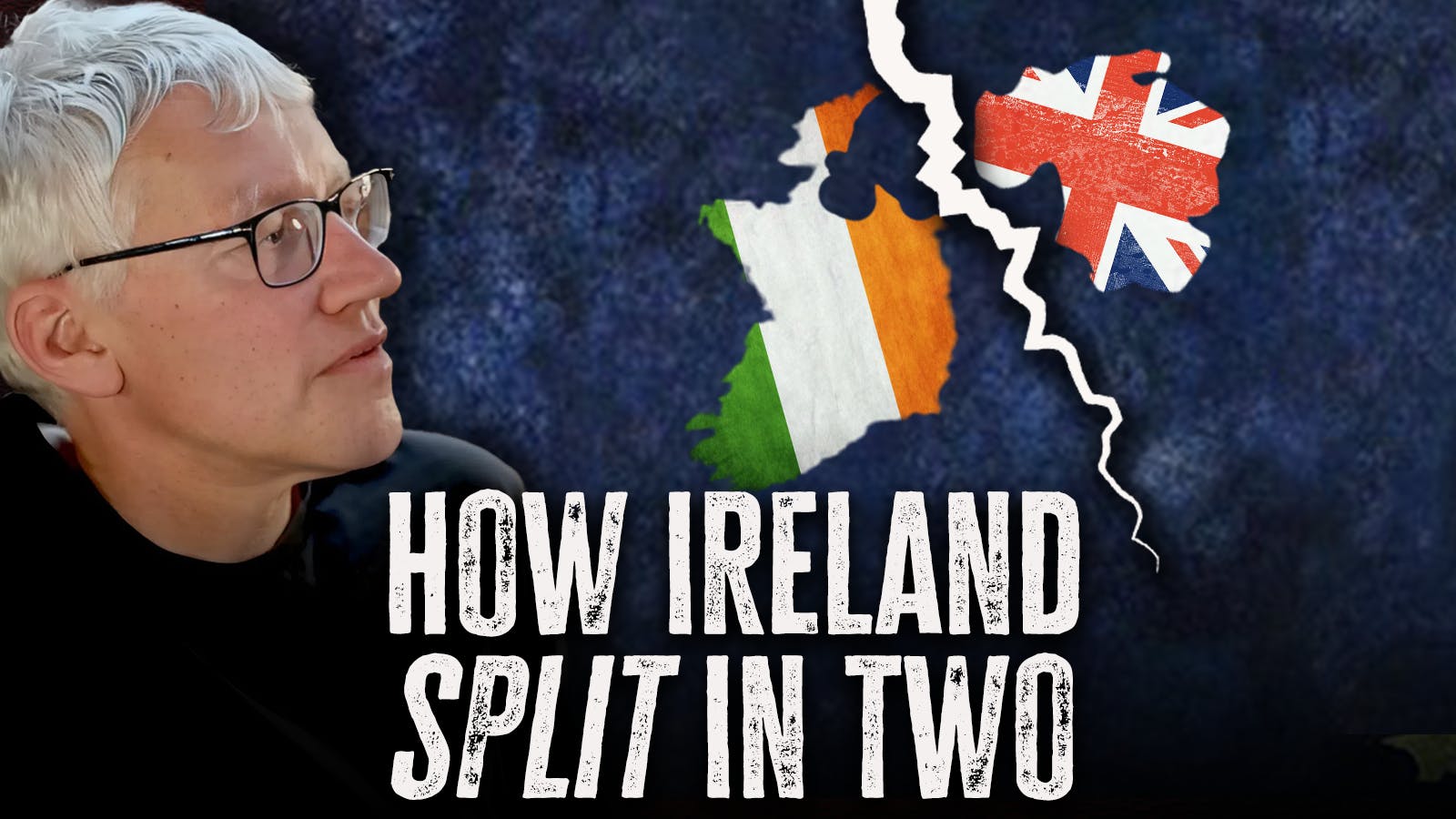
Well, we will see. So, Tom, we've returned, haven't we, from Ireland. We were in Ireland for the last three episodes with friend of the show, Paul Rouse, and we got to the summer of 1921 with Paul, didn't we? So we've been through two and a half years of guerrilla warfare, and the British and the Irish have agreed a truce. But excitingly, the real drama is only just beginning because this episode is about one of the most gripping intrigues in modern political History. It's about the deal that created two entities on the island of Ireland. So on the one hand you have a Protestant dominated Northern Ireland and you have a Catholic dominated Irish Free State, which eventually becomes the Republic Ireland. This episode also has a tremendous cast of characters. Who's your favourite?
- [05:46]
Tom Holland
I think my favorite is the guy who was Churchill's great friend. Who's the swell who likes oysters and.
- [05:54]
Dominic Sandbrook
Champagne and got lord Birkenhead. Yeah.
- [05:56]
Tom Holland
Dr. Crippen's mistress off, didn't he?
- [05:58]
Dominic Sandbrook
Yeah, Fe Smith.
- [05:59]
Tom Holland
Fe Smith, Dan Jackson's great hero.
- [06:01]
Dominic Sandbrook
He's a tremendous man. Yeah, he'll play a big part. So this episode you've got him, you've got De Valera, you've got Lloyd George, you've got Winston Churchill, you have Michael Collins. A galaxy of stars. It's very exciting. It's like an ITV light entertainment program from the 1980s. But the guy who really dominates is not an Irishman or an Englishman, it's a Welshman. We don't have enough Welshmen on, the rest is history. So it's great to get them in. So this is really Lloyd George's story and he's one of the great characters in British history. So just to give people, especially our overseas listers, a sense of him, he's from an evangelical family in North Wales. He did lose his faith, but he's very, very intensely shaped by this kind of intensely religious, non conformist background. Also an interesting thing, he was brought up speaking Welsh, not English.
- [06:46]
Tom Holland
And that's interesting, isn't it? Because he's dealing here with a lot of Irish negotiators who are all frantically trying to learn Irish but have English as their native tongue.
- [06:56]
Dominic Sandbrook
No, you're absolutely right, Tom. And he will often, he will slightly tease the Irish negotiators about this. And in fact, he'll speak in Welsh to one of his colleagues as we'll discover a great ally of his called Tom Jones, which is magnificent, isn't it?
- [07:08]
Tom Holland
Yeah, A Welsh character called Tom Jones.
- [07:10]
Dominic Sandbrook
Yes, exactly. So Lloyd George, his Welshness is massively important to him. He joined the Liberal Party as a populist outsider. He always sort of sees himself as an anti establishment figure, even when he's Prime Minister. And his career is a really extraordinary story. So he's a rhetorically brilliant, this sort of aggressive oratory. He becomes a progressive Chancellor of the Exchequer under Herbert Henry Asquith, one of the architects of the welfare state. On the other hand, he's very corrupt, he's a massive womanizer and he is totally and utterly untrustworthy. So in 1916, he had stabbed Asquith, his former patron, in the back with Conservative support to become prime minister. And by 1921, he is the acknowledged master of British politics. He's leading a coalition which is totally dependent on the support of the Conservatives. So if he ever loses that, he is out.
- [08:03]
Tom Holland
And so effectively, this great radical, the godfather of the British welfare state, is now. I mean, Lord Beaverbrook said he was a Prime Minister without a party, effectively, he's in danger of being engulfed by the Conservatives, his great ancestral enemies.
- [08:17]
Dominic Sandbrook
Exactly. That's exactly right. It's a really unusual situation in British political history where you have somebody who is seen as so charismatic, so dominating, that he almost has started to float free from party politics and to lead this kind of national coalition government purely on the basis of his personality rather than, you know, policies or anything like that.
- [08:39]
Tom Holland
And so what's his take on Ireland?
- [08:40]
Dominic Sandbrook
Well, two important points here. One, his non conformist background means that he absolutely despises Catholicism. I hate a priest wherever I can find him. He once said to one of his Welsh friends, he has no time for popery at all.
- [08:55]
Tom Holland
And does the fact that he's from a Celtic background mean that he's more sympathetic to Irish dreams of Home Rule?
- [09:01]
Dominic Sandbrook
No, counterintuitively, the opposite. So because he's a Celt and because his Welshness is so important to him, he just thinks, what's wrong with the Irish? You see, he thinks Welshness is perfectly reconcilable with the ideal of Britain and British unity in the United Kingdom. And if we, the Welsh, are happy with it, what's wrong with the Irish? Why are they so troublesome? Why are they so difficult? Of course, you know, lots of people listening to this podcast will say they've got very different histories. But for Lloyd George, there is always a sense that he doesn't perhaps have the slight embarrassment that some English people have with the Irish. You know, he just thinks, come on, crack on, knuckle down. What are you whinging about?
- [09:43]
Tom Holland
Yeah.
- [09:43]
Dominic Sandbrook
Which a lot of English people are less likely, I think, to do because they feel a bit embarrassed about the history, about the famine and all of that kind of stu.
- [09:51]
Tom Holland
Yeah.
- [09:51]
Dominic Sandbrook
Now, another really important point I think, sometimes overlooked in accounts of the treaty negotiations. Imagine if you were Lloyd George in early 1921. You're running the British Empire. The world looks like it's in total chaos. You've had revolution and civil war in Russia. You've got massive unemployment in Britain. Indeed, across Europe You've got war in the Eastern Mediterranean between Greece and Turkey. You have anti colonial uprisings in India and Egypt and at home you're under massive pressure. Britain has come very close in 1921 to a general strike within the Tory Party. A lot of people are saying, come on, Lloyd George is really corrupt and horrible, let's get rid of him. And two of your closest allies, Winston Churchill and this guy Lord Birkenhead, who you like.
- [10:35]
Tom Holland
So Lord Birkenhead is a Tory, but Winston Churchill at this point is still a Liberal.
- [10:39]
Dominic Sandbrook
Exactly. And these are two colossal, charismatic, dominating figures who are basically plotting openly against Lloyd George. So what he doesn't need is a massive embarrassment and a drain on his political capital. And that's what he thinks Ireland is. He thinks it's yet another element of instability and I want to fix it. And he doesn't care how he fixes it. But he has two red lines. Red line number one. He thinks any settlement must preserve the unity of the British Empire. Basically, the last thing we want to do is to encourage nationalists in Egypt and India. It's really interesting, actually, how Ireland, for Lloyd George and for the British generally, is not just an issue in and of itself. What they're really worried about is that it would be an inspiration to people in India and in Egypt.
- [11:25]
Tom Holland
I mean, what that suggests is that they are associating Ireland with the non white colonial possessions. Do you think that's fair?
- [11:32]
Dominic Sandbrook
No, I don't necessarily think that is fair. I think what they're doing is they want Ireland to become like one of the dominions, like Canada and Australia. That ends up effectively being their solution. What they don't want is to have any precedent for any country to break away completely. Right. Because that will inspire people in what they see as their strategically vital possessions, which are Egypt and India. So that's red line number one. Red line number two is purely domestic for Lloyd George and that is any settlement in Ireland must be acceptable to the Conservatives because otherwise they will pull the plug on his coalition. Now, people who've been listening to the rest is history for a long time will remember all through this business, the Conservatives have been completely committed to supporting the Protestants in the northeast of Ireland, in the province of Ulster, and keeping them out of a Catholic dominated Irish Parliament covering the whole of the island.
- [12:24]
Tom Holland
And so does that mean, in effect, that Lloyd George, by needing to keep the Tories on board, is giving the Ulster Unionists a veto over anything he arrives at?
- [12:34]
Dominic Sandbrook
A little bit, yes, it's slightly more complicated than that. But yes, basically he can never really afford to completely alienate the Ulster Unionists because that would alienate the Tories and it would be the end of him. By the way, if Lloyd George falls, the alternative is a Conservative government that would be more hardline on Ireland. So Lloyd George's argument is always like, I am the best that any Irish negotiating team will ever get. If you don't do a deal with me, the Tories definitely aren't going to do a deal with you. So in the first half of 1921, Lloyd George actually had taken quite a hard line on Ireland. He had told his colleagues again and again, he said, come on, we can sort this out, we can just let the army fight it out. But the violence had steadily got worse, as we heard from Paul last time. So in the first six months of 1921, the British had lost 93 soldiers and 223 members of the Royal Irish Constabulary. Now, a point worth making, those numbers are actually really small.
- [13:27]
Tom Holland
Yeah. I mean, it's not the Battle of the Somme, is it?
- [13:29]
Dominic Sandbrook
No. This is such an interesting thing and I think a point really worth stressing. It's sometimes said that the British were defeated militarily in Ireland in the 1920s. That's just not right. Even the Irish Republican army, the ira, didn't think that they had beaten the British militarily, because if you think about it, you know, just a few years ago, the British were losing on a quiet day on the Western Front. They were losing easily more men than they lost in the whole of the conflict in Ireland all those years put together. But they have the manpower, they have the resources to fight in Ireland forever if they want to. It's no problem at all. But it's a really good example of how wars are political events as much as they are military ones. The issue for the British is that they just don't have the political space to keep fighting forever, because the publicity from what's going on in Ireland is terrible. A really good example of this is all the publicity that's given to something we heard about from Paul, which is the reprisals of the auxiliaries and the Black and Tans. Even Churchill, who's very hard line, told his Cabinet colleagues, we are getting an odious reputation and they don't want an odious reputation. Some of the Dominion leaders, people like South Africa's Jan Smuts, are telling Lloyd George, come on, we need to fix this. Smut says, Ireland is a chronic wound and it is poisoning our relations with the rest of the World and Dominic.
- [14:51]
Tom Holland
Also, the key relationship presumably is with America, which is now Britain's creditor.
- [14:58]
Dominic Sandbrook
Yes.
- [14:59]
Tom Holland
And that must diminish Britain's ability to ignore global opinion because effectively, it's American opinion.
- [15:07]
Dominic Sandbrook
You're totally right, Tom. American opinion is really important. And it is also important because Lloyd George wants to conclude a naval treaty with the Americans about limiting naval spending.
- [15:17]
Tom Holland
So that's in Washington, isn't it?
- [15:18]
Dominic Sandbrook
That's in Washington and that is massively important to him. So basically not upsetting the Americans really matters. Now, what makes this even more urgent is the clock is ticking because of one of Lloyd George's own earlier attempts at a solution. So in 1920, he had passed the Government of Ireland act, and that was designed to fix the Irish issue by giving it two Home Rule Parliaments. So one would be in Belfast, and this would be the Parliament of Northern Ireland to govern six counties in the northeast of the island. This had been designed effectively by the Unionists themselves, by their leader, Sir James Craig. They didn't want the whole of the province of Ulster because they thought there were too many Catholics in it. What they wanted was just six counties because that's the maximum possible area that they can have while still having a two thirds Protestant majority.
- [16:13]
Tom Holland
So it's kind of geopolitical gerrymandering a little bit.
- [16:16]
Dominic Sandbrook
Yes. So this is what becomes Northern Ireland. Now, the other Home Rule Parliament would be in Dublin and that would Represent the other 26 counties of Ireland and it would be called the Parliament of Southern Ireland. And obviously this would have, everyone knows, an overwhelming Catholic majority, not Protestant. So the elections for this happen in May 1921, and they're big wins north and south for what you might call the sort of more extreme partisan parties. In other words, the Ulster Unionists in the north and Sinn Fein in the south. But Sinn Fein who've won in the south say, obviously we're not going to take up our seats, we're not going to sit in a Southern Parliament under British rule. That's not what we're about. But the problem is that the rubric of the act says if this Parliament doesn't sit by 12 July, then Southern Ireland will revert to a crown colony under martial law, meaning loads of troops. So by June 1921, Lloyd George's cabinet have agreed plans for a massive troop surge in Ireland and martial law across the 26 southern counties. But the British commander in Dublin, who we heard a little bit about with Paul, General McCready, magnificently pessimistic about Britain's prospects. Totally pessimistic, very gloomy. And he actually tells Ms. Stevenson, who you quoted with your Clapham accent at the beginning of the show, he says, please, will you tell Lloyd George he must ditch the quote, the absurd idea that if you go on killing long enough, peace will ensue. I don't believe it for one moment, but I do believe that the more people that are killed, the more difficult will be the final solution.
- [17:51]
Tom Holland
And Dominic also, he's very contemptuous, isn't he, Macready, of the readiness of British politicians to soak up the opprobrium that would come were the army to go in and impose martial law.
- [18:02]
Dominic Sandbrook
Yeah.
- [18:02]
Tom Holland
He says, will they begin to howl when they hear of our shooting 100 men in one week?
- [18:06]
Dominic Sandbrook
Yes, exactly.
- [18:07]
Tom Holland
I mean, and he knows his men, doesn't he? He knows that this is not something that the British government is prepared to put up with.
- [18:12]
Dominic Sandbrook
Exactly. So eventually Lloyd George gets the message and he writes to De Valera and to the Prime Minister of the new Parliament in Belfast, in the north, which has started to meet, and he's called Sir James Craig and he says, look, it's time to have a settlement. And this opens the door to a truce and that goes into effect on Monday 11th July. And actually the fighting went on right to the last minute. So that morning 10 people were killed before midday that day before the truce came into effect. And actually the threat of bloodshed, the threat of more fighting hangs over this whole process from start to finish. So you don't understand how it ends without realizing that everybody basically is expecting the shooting to start again. Now another crucial point, it is always the British who control this process and Lloyd George who controls the agenda. So that meeting that we began with on the 14th of July, it's Lloyd George who sets the tone. He does that whole business with the map of the British Empire. And Lloyd George is a great games player. He's what Theo would call a wind up merchant. He loves all this. He's always loved toying with people and unsettling them. And so right from the start, when De Valera comes in, Lloyd George has this huge performance about all the dominions. He says, the Australians sit here, New Zealand sits here, Canada. And then he rests his hand on an empty chair and he says to De Valera, and this, Mr. De Valera is where you will sit when you become a dominion, you know, at the top table.
- [19:40]
Tom Holland
But de Valera is not going to go full for that, is he?
- [19:42]
Dominic Sandbrook
De Valera doesn't fall for it. So Lloyd George just smiles and he plays his next card. He says, the British Empire is getting rid of its difficulties and we shall soon be able to withdraw our troops from other parts of the world. Oh, I hesitate to think of the horror if the war breaks out again in Ireland. And de Valera says, oh, that's a threat. You're threatening me. Lloyd George says, no, no, no, I'm not threatening you. I'm simply forecasting what will inevitably happen if these conversations fail and if you refuse our invitation to join us and this sort of shameless games playing. I have to say, I do think Lloyd George is a bad man. But there's a sneaking admiration, I think it's fair to say. Yeah. Now, the thing is that de Valera doesn't want a dominion. He doesn't want to be a dominion, he wants to be a republic.
- [20:29]
Tom Holland
And this is the famous thing that Lloyd George has pointed out, isn't it, that there is no Irish or Welsh word for republic. And he knows this because he's a fellow Celt.
- [20:37]
Dominic Sandbrook
Yes, exactly. So de Valera wants the republic. They've talked a lot about the republic, the ideals of the Republic, ever since 1916. But de Valera, I think, must know because he's, he's a very shrewd man. He must know that there is clearly going to be some kind of compromise. The IRA cannot win the war militarily. They can make Ireland ungovernable. They can win a political victory because, you know, they can embarrass the British and force them to talks. But they know that if it actually did come to a full scale war, the British would flood the island with troops and they could kill everybody. Right. I mean, it's doable. Also, de Valera knows that he is not going to get the Northeast because the six counties already have a parliament up and running. And Lloyd George is never going to shut that down and scrap it. That's just not realistic. Anyway, on the 20th of July, so just under a week later, the British make their formal offer. They say Southern Ireland can be a dominion. It can be like Canada. We, the Royal Navy will control your coasts because it's so important for Britain's security. You can't have tariffs between Ireland and Britain. What an irony. The Irish want tariffs, the British don't want tariffs, and the six Ulster counties of the Northeast can do their own thing, have their own parliament. Lloyd George's chief aide, Thomas Jones, we mentioned him, he's another Welshman. We'll come to him in the second half. He says this is the most generous offer in our history. And obviously de Valera says, no, we want to be a republic. We don't want to be a dominion. So after a lot of toing and froing, Lloyd George says, fine, why don't you come to London and we'll have a conference to discuss how the association of Ireland with the community of nations known as the British Empire can be reconciled with Irish national aspirations. And now there's a big twist. De Valera says, fine, let's have these talks, but I'm not coming. I will stay at home and I will send a negotiating team, and then they can come back with terms. And I will recommend to the revolutionary Sinn Fein assembly, the Parliament, the Doyle. I will recommend whether or not we should accept the terms that my team have brought back. Now, this is a massive decision. It's probably the single most controversial decision in Irish political history, that de Valera is not going to go to the talks himself, because, as we'll see him, not going basically means they're going to have a civil war. Why doesn't he go? Historians have argued about this, different theories. First theory is that he thinks it's beneath him. He's President of the Republic. It's beneath him to go and negotiate with a mere prime minister like Lloyd George. Number two, that he thinks the talks will produce a compromise. He knows they will, and he doesn't want to be tainted by it. He wants to maintain his purity. Number three, some people think he's frightened of Lloyd George. He's met Lloyd George. He knows Lloyd George is, you know, the world's greatest most supple and cunning negotiator.
- [23:40]
Tom Holland
The Welsh wizard.
- [23:41]
Dominic Sandbrook
The Welsh wizard. He doesn't want to be humiliated by him. And number four, which I think is actually very likely, De Valera thinks the talks won't produce a deal and that then, with everything on the brink of disaster, he can ride in as the kind of white knight and agree a deal and he will be the hero of the hour.
- [24:00]
Tom Holland
I think it's number two. I think he knows there's gonna have to be a compromise, and he doesn't want to have the moral taint of it.
- [24:05]
Dominic Sandbrook
I think there's an element of all of these things, actually. I agree with you. He must know, because he's not an idiot, that they're not gonna get what they want, and he doesn't want to be tainted, so he picks an alternative team. There's a guy called Robert Barton, who's from the Anglo Irish Protestant elite, a very good example of how complicated nationalism is. Yeah, that he's from the Protestant classes. There's a guy called Eamon Duggan, who's a lawyer who had fought in the Easter Rising. There's a guy called George Gavin Duffy, who's another lawyer and a Sinn Fein mp. And then there's three more well known figures as the secretary of the delegation. He picks a man called Erskine Childers. He's a fascinating guy. Born in Mayfair in London, went to Haileybury like Clement Attlee, went to Cambridge, fought as a volunteer in the Boer War, became a British civil servant. He wrote the spy novel the Riddle of the Sands, predicting the kind of First World War. But then he has this conversion experience in the 1910s, becomes a fierce critic of the Empire and basically converts to being an Irish nationalist. And he is Sinn Fein's head of publicity. So Childers is going. A man called Arthur Griffith, who we've heard a lot about, is going to. He's the founder of Sinn Fein. He's this sort of short, stocky journalist and he's a nationalist icon, although he's slightly been losing ground since the Easter Rising.
- [25:25]
Tom Holland
So, Dominic, people may remember who listened to our first series on this, that Arthur Griffith was the head of Sinn Fein and was a great fan of a dual monarchy.
- [25:33]
Dominic Sandbrook
Yeah.
- [25:34]
Tom Holland
The idea of the British king also being king of Ireland in the way that the emperor in the Habsburg Empire was king of both Hungary and Austria. So is there a sense that he is more open to this idea of becoming dominion?
- [25:46]
Dominic Sandbrook
Not at first. I don't think people think he's soft on this at first. At all. I think none of them want to be a dominion when they all go.
- [25:53]
Tom Holland
So Griffith has left the dual monarchy option behind now.
- [25:56]
Dominic Sandbrook
Yeah, that's history. Exactly. And the final person, somebody we've heard a lot about, the head of IRA intelligence, the revolutionary finance minister, Michael Collins. People sometimes say, oh, what a weird thing to send Collins when Collins is a fighting man. But actually Collins hasn't done a lot of fighting. He's a strategist, he's a planner. He is a good person to choose, I think. And as we'll see, the British end up really respecting him and thinking that he's a serious player, a serious negotiator. But at the heart of all this, there is a massive ambiguity. De Valera says these people, he describes them explicitly as plenipotentiaries. So a plenipotentiary for people who don't know. You send them to negotiate a deal and they can negotiate whatever they want. They do the best job they can and they don't have to come back to you to clear it with you. But in the next breath, de Valera says, you're plenty pretentious. However, any really big questions, you must refer home before signing up to them. So any deal that you do is subject to approval, but it's not really clear whether that approval will be by him and his cabinet or by the whole of the Doyle, the whole of the kind of Sinn Fein dominated Parliament. So they leave with very, very unclear instructions. Do they have a free hand to negotiate whatever they want or not? Are they just doing de Valera's bidding? Do they have to keep going to him for his approval? They don't really know themselves. And what makes this so toxic is that the republican movement in Ireland is already fracturing a bit. So previously they've been united by their opposition to Britain and their fidelity to this misty ideal of the republic. But nobody's ever really spelled out precisely what this means. And so they are basically sending a very inexperienced team, people who have never really done any international negotiating at all, with no clear plan about really what they want. And actually, I mean, if you think I'm being harsh. Ronan Fanning, professor of history at University College Dublin, wrote a brilliant book on all this called Fatal Path. He's unbelievably scathing about the team. He says this was a result of, and I quote, the primitive and one dimensional politics of Doyle Aaron, which was little more than a forum where the representatives of Sinn Fein could talk to themselves. In other words, they haven't had the kind of political training, the preparation that would enable them to have a really good team and to know what they want.
- [28:24]
Tom Holland
But isn't it profounder than that, that the notion of revolutionary violence has been sanctified over the course of the revolution? And therefore the very notion of negotiating is seen as demeaning for people who, you know, are the embodiments of the historic will of the Irish people.
- [28:42]
Dominic Sandbrook
I can tell what books you've been reading, Tom, because I think that's exactly right. Raymond Fanning makes that argument, doesn't he?
- [28:48]
Tom Holland
I couldn't remember, Dominic.
- [28:49]
Dominic Sandbrook
Who knows, right, that basically if you've been fighting a revolutionary war for a sort of, dare I say, a sacral ideal, the idea of sitting down around the table with your opponents and doing a deal where you do a lot of fudging and mudging kind of thing, of course the two things are in conflict with each other. So I absolutely agree with you. Yes, I think it's it's very hard for them to even contemplate the idea of a deal. I would say.
- [29:16]
Tom Holland
Well, they have turned their back on the kind of parliamentary democratic politics that Westminster represented and of course they are now going into the heart of Westminster to re engage but it's like they, you know, they're off to play a sport that they haven't been in training for, for 10 years or something.
- [29:32]
Dominic Sandbrook
Yeah, I think that's a fair comparison. Now by contrast, of course, the British have been doing loads of negotiating recently the Treaty of Versailles and all the associated treaties and their team are like a massive big hitters galacticos. So Lloyd George, Churchill, the Conservative leader, Austin Chamberlain, the son of Joseph Chamberlain, who'd been a great foe of Irish Home rule and somebody you mentioned, Lord Birkenhead. I mean he's one of the biggest beasts of all. He's forgotten now I think by and large formerly F.E. smith but at the time he is seen as the most brilliant man in London.
- [30:08]
Tom Holland
Yeah.
- [30:08]
Dominic Sandbrook
Arrogant, hard, drinking.
- [30:10]
Tom Holland
A wit.
- [30:11]
Dominic Sandbrook
Yeah, a great wit. My favourite one is when he's a young barrister and he's speaking to a judge, he's given this huge thing and the judge says, Mr. Smith, I am none the wiser. And Effie Smith says no my lord, but you're much better informed now. Anyway, Lloyd George has picked this team. The thing is the teams are divided among themselves. Lloyd George really needs his team to stay loyal and he needs Birkenhead in particular because Birkenhead is the sort of. He's the keeper of the Tory flame, the Unionist flame. If he deserts Lloyd George, Lloyd George's coalition falls apart. So he's essential to shield Lloyd George from criticism from what are called the Tory Die Hards. So this is true of the Irish as well because they also have their own pressures and their own rivalries. Now Collins is a really good example. Collins base with the Irish Republican Brotherhood and the Irish Republican army is a bit fragile. He has opponents, he has people who hate him, he has rivals and so he's conscious about that. And also Collins goes to London with his personal life in massive turmoil. He's just proposed to a woman called Kitty Kiernan.
- [31:17]
Tom Holland
Julia Roberts.
- [31:18]
Dominic Sandbrook
Julia Roberts, exactly. So he's got Julia Roberts on the go. 8 October, the Irish team arrive at Euston Station. They've gone by boat to Holyhead and then by train. Huge crowds of supporters there, of course, a big Irish community in London, people waving flags and cheering and stuff. The one man who's not there, very tellingly is Collins. That is very exciting for the British press because they see him as the kind of Scarlet Pimpernel of Ireland, the most wanted man in the world, all of this kind of thing. Now, he has insisted on traveling separately because he's a star. He's staying in separate lodgings from everybody else. He's got his own aids and he's got his own bodyguards. So all the others are staying in Knightsbridge behind Harrods at a place called 22 Hands Place. But he is staying in Chelsea at 15 Cadogan Gardens. So the stage is set and on the morning of Tuesday 11th October, the Irish cars come into Downing Street. Griffith leads the way and Collins is right behind him. And there's a huge crowd having to be held back by the police. Everyone's very excited. The Black door, number 10, opens and inside, Lloyd George is waiting to shake their hands. You're gentlemen, nice to see you, blah, blah, blah. Just after 11 o' clock, they take their places around the cabinet table. William Gladstone, the first British Prime Minister to try to solve in inverted commas the Irish question. That was his table. So they're sitting around the table. Lloyd George very smiley, all business, he says. Gentlemen, the time has come to end the tragic story of misunderstanding and war. And with that, Tom, the real drama begins.
- [32:48]
Tom Holland
Well, we will be back after a break to hear how things go.
- [32:53]
C
Hello, everyone, it's Gary Lineker here from the Rest Is Football. Just a quick message to tell you all about the club World cup tournament that's taking place in the US at the moment. Moment it's 32 of the best teams from all around the world battling it out to be crowned the best side on the planet. We've reached the knockout stages of the competition, which means all the big guns will be going head to head. Manchester City, Real Madrid, psg, Chelsea and Bayern Munich are just some of the sides vying to lift the trophy. Join myself, Alan Shearer, Micah Richardson, our expert out in America, Alex Aljo, as we guide you through the explosive final stages of the tournament. To make things even better, if you're watching the video version of the show on Spotify or YouTube, you can also watch all the goals and the best bits of the action as we discuss the games. A first for podcasting. Just search the Rest Is Football wherever you get your podcasts.
- [33:54]
Tom Holland
Hello, welcome back to the Rest Is History. We are in Downing street on the morning of the 11th of October, 1921, and David Lloyd George, the Welsh wizard, his moustache bristling, his eyes Twinkling is holding court. Yes, Dominic, what is he saying?
- [34:11]
Dominic Sandbrook
So he says, look, we can end the cycle of violence, he says, but we have to hurry. There are forces at work in this country which think the government has gone too far already. In other words, there's an element of a threat there right from the beginning.
- [34:24]
Tom Holland
So these are the Tory Die Hards.
- [34:26]
Dominic Sandbrook
These are the Tory die hards. Now, next person to speak is Arthur Griffith, who's the sort of head of the Irish delegation, and he says, you know, you've treated us badly since the days of William Pitt and I hope that we will now put that all behind us. But in a sort of nicely symbolic moment, Griffith speaks so quietly that many of the British can't actually hear what he's saying. And Gretchen Freeman, who's written an actually incredibly readable book on the treaty, you wouldn't think that this is a very readable subject, but she does brilliantly this sort of popular narrative. She says it was as though a lion had given way to a mouse when Griffith is speaking. And this sort of sets the tone, because almost every historian, British or Irish, who's written about this says the Irish at the beginning, they seem very nervous and very unprepared. And the difference is the British are, you know, they're bulldozers. They know exactly what they want to get and how to get it.
- [35:19]
Tom Holland
And anyone, Dominic, who has lived through the Brexit at negotiations, we'll find echoes of that process throughout this.
- [35:26]
Dominic Sandbrook
Yeah, absolutely.
- [35:27]
Tom Holland
And the Irish are playing the part of the British negotiators, and the British are in the position of the eu.
- [35:34]
Dominic Sandbrook
They hold the cards, they're familiar. Yeah, it's exactly that. When I was reading about this, I was thinking about it at every turn. You know, one side knows exactly what they want and what their red lines are, and the others are divided among themselves and don't really know exactly what they want. So a good example is at this very first meeting, Griffith says, we're thinking that maybe Ireland will be neutral. And Lloyd George just says, I'm going to shut that down right now. You're never going to be neutral. We will never accept this. We want you to be like Canada. And Canada definitely isn't neutral. The next thing, in these first meetings, Griffith and Collins in particular spent a lot of time talking about a united Ireland. How are we going to get this six counties back? But almost every historian has written about this says, this is a complete waste of time. Partition is irreversible. It's arguably partition has been on the cards for about 12 years. Well, certainly since 1912, let's say there's no way that Lloyd George is going to shut down the Parliament in Belfast because it would inflame the Tories and destroy his government. So they're wasting their time going on about this, unless they're using it in a cunning way as a bargaining chip to get something else, which, as we'll see, they're not really. Anyway, the talks drag on, and quite soon the British say, look, we've run out of patience. So on Friday 21st October, Lloyd George says, okay, enough. I want answers on three things. Allegiance to the Crown. You have to still acknowledge the King. You have to still be members of the Empire. And we want naval defense guarantees, I. E. We will basically be in charge of your security. And if you don't give us the answer by Monday, the talks are over and we're back to the war. So the following Monday, at long last, the Irish team come up with a counter offer. And this has been drafted by de Valera himself. And this is an idea called External Association. So Ireland will be a neutral republic. They're still going with that, but it'll be associated with the British Empire. Won't be a member of the British Empire, but it'll be associated with it.
- [37:31]
Tom Holland
Yeah, you've put in your notes all very reminiscent of Brexit negotiations. Endless hair splitting about tiny constitutional details that matter enormously to quite small numbers of people. I mean, that's exactly what it's like, isn't it?
- [37:44]
Dominic Sandbrook
Yeah, it is, exactly. I don't think that the average person in Ireland is really excited about whether it's a dominion or external association, all of those things. But if you're a nationalist, of course, and if you fought and if you've lost people in the war, you know, of course it matters, just as if you were, you know, somebody who'd been in the Leave campaign in 2016. You know, you really care about the outcome of the Brexit talks.
- [38:09]
Tom Holland
Yeah.
- [38:09]
Dominic Sandbrook
Of course, Lloyd George treats the idea of external association with utter contempt. And actually, again, most historians think the British are never going to go for this. There's an Irish historian called Bill Kissane. The British didn't win the First World War to contemplate humiliation in their own backyard. Again, the First World War comparison. And what is more, what's really interesting and will surprise people, the other dominions will not accept it either. So Canada and Australia, for example, have made it very clear to London they expect Ireland to remain within the Empire. They will not Be happy if the Irish go their own way as a neutral republic. So, you know, the empire is so fragile. It's at its largest ever extent in the early 1920s, but it seems so delicately poised and Lloyd George is always thinking about this. Anyway, they have this meeting on the Monday and afterwards Lloyd George says to Collins and Griffiths, could you two stay behind please for a private chat? Now if the Irish team had been more sensible, they would never have had private chats with Lloyd George. They would never have allowed themselves to be seduced into this. Because what it does is it splinters their team. And Lloyd George is brilliant in small meetings. He's a manipulator, he can play on people and stuff. And as time goes on, he has more and more of these private chats. He identifies Griffith and Collins as the people that he likes and he can do business with. And they both start to warm to the British. The one thing that you would never have expected. So Griffith actually writes to De Valere at one point and he says, you know, I think if we show a little bit more goodwill to the British, they'll give us a great deal. Which you would think that's mad, you've just drunk the British Kool Aid. The really remarkable thing is that Collins, the IRA's head of intelligence, he also starts to warm to the British. And you know, the person he really like gets on well with, Lord Birkenhead.
- [40:01]
Tom Holland
Effie Smith.
- [40:02]
Dominic Sandbrook
Yeah, exactly. He thinks because they're men's men, they're alpha males, they like bullying people, they like drinking, they like eating oysters or whatever. Yeah, they like bants. And actually Colin starts getting to the meetings a little bit early so that he can have a bit of banter with Lord Perkenhead. I love this. That's your dream dinner party, right? Michael Collins and Effie Smith?
- [40:25]
Tom Holland
Yeah.
- [40:26]
Dominic Sandbrook
So the other person who's really important in this change in the mood, we mentioned him briefly is this guy, Tom Jones, this Welshman. Now, nobody knows about him today, but in the 1920s he was the ultimate operator. One newspaper called him one of the six most powerful people in Europe, which is a big claim.
- [40:44]
Tom Holland
I'd love to know who the other five were.
- [40:46]
Dominic Sandbrook
Yeah, he's working class, he's also Welsh speaking. He's a former evangelical preacher and he's now become the Deputy Cabinet secretary. And he is Lloyd George's right hand man, basically.
- [40:57]
Tom Holland
Doesn't Lloyd George chat to him in Welsh?
- [40:59]
Dominic Sandbrook
They're talking Welsh in front of other people.
- [41:01]
Tom Holland
Kind of very ostentatiously ostentatiously.
- [41:02]
Dominic Sandbrook
To annoy. This is another thing that actually I secretly really admire about Lloyd George, because I would. If I could speak Welsh, I would do that all the time. So Tom Jones, everybody likes him, he's very likable, and the Irish team really like him. And Lloyd George uses him as a key go between. And he sends Tom Jones to the Grosvenor Hotel for another of these little meetings with Collins and Griffith. And Jones says, look, you going on about United Ireland is going to destroy these talks because the government will never abandon the Ulster Unionists. But there is an answer. He says there's an answer that could fix this. Now redrawing borders is all the rage in the 1920s. There has been a big dispute which has totally forgotten today, but has dominated the headlines all through 1921, between Germany and Poland in Upper Silesia. And Jones says, why don't we do what they did in Silesia? They had a Boundary Commission that drew a new border. You know, if we had a Boundary Commission, I reckon that Boundary Commission would give you loads of territory. You would get the bits of the six counties that are very Catholic in Tyrone and Fermana and stuff. Why don't you do that? And Griffith says, yeah, that's actually quite a good idea. I love that idea.
- [42:14]
Tom Holland
Who would be on this Boundary Commission? Who would rum it?
- [42:17]
Dominic Sandbrook
Well, this is the thing. It's not defined. Lloyd George is so cunning with all this. I mean, spoiler alert. The Boundary Commission idea flies, but never really produces anything. And this is because Lloyd George has really thought this through and this promise. Oh, the Boundary Commission could give you loads of new territory. It's hanging there. But there is also another possibility. The Boundary Commission could take territory from you. And this is never really discussed. Now, when Griffith says, oh, yeah, we could do that. This is a really important moment. For the first time, he's going against his instructions from de Valera in Dublin. He's using his own initiative, which I think de Valera never expected him to do. And then the next day, he has a meeting with Lloyd George. And Lloyd George is at his most serpentine. He says, the Tory press are giving me such a hard time. The Tory die hards. I think my coalition might break up, actually. And I really need your help. I need to persuade the Ulster Unionists about this Boundary Commission idea. So please don't dismiss it publicly, don't attack it. Just pretend that you like it and live with it for the time being. And Griffith says to him, okay, fine, I understand, you know, I'm not agreeing to it now, but I won't slack it off, Lawyer George, he says, yeah, brilliant. And the next day, he sends this guy Jones, and Jones says, the Prime Minister's asked me to drop a document describing yesterday's meeting about the Boundary Commission. Do you mind just agreeing to it? And Griffith glances at this document and he says, yeah, fine. Looks good, looks good. Now, this is a key moment when Jones gets back and says, yes, he's fine with it. Lloyd George is delighted. And Francis Stevenson says that night, I have never seen him so excited about anything before.
- [44:05]
Tom Holland
And she must have seen him excited about quite a lot of things, I would think.
- [44:08]
Dominic Sandbrook
She certainly has seen him excited. Yes, because this document has done two things. Number one, Lloyd George has shored up his flank against the Tory Die Hards. He can go to them and say, look, I've persuaded this bloke from Sinn Fein to agree to the Boundary Commission, so effectively to agree to partition. But also he plans to store this document away and to use it against Griffith later, as we shall see. So the British produce a draft treaty. This is very much along the lines that they'd already discussed. Ireland becomes a dominion, Northern Ireland does its own thing, and there's this Boundary Commission. When the Irish team see this draft treaties, some of them go absolutely ballistic. What, Ireland still in the Empire, still under the Crown. No way are we having this. But Collins has already begun to change his mind. He's been doing loads of reading on the Dominions, and one thing he realizes, and I think he's quite right, is that being a dominion like Canada or like Australia is not an endpoint, it's a process. So, in other words, he realizes that Canada, for example, is going to become a completely independent country, and then it's on a sort of conveyor belt that is leading it inexorably towards that status. And he says, look, that's clearly going to happen to Canada and Australia, so that would happen to us, too. If we get on this conveyor belt, we won't get what we want straight away, but we'll get it eventually.
- [45:30]
Tom Holland
Delayed gratification.
- [45:31]
Dominic Sandbrook
Delayed gratification. Now, the Irish team are arguing bitterly about this long into the night, which of course means they're knackered the next day when they turn up for the full meetings. And all the time, Lloyd George is piling on the pressure. He said, come on, we need the decision quickly. I don't want to restart the war, but I will if I have to. Hurry up, hurry up. And he keeps saying to them, you must accept the status of a dominion in The Empire and you must accept the King. And that means the Irish MPs or TDs as they become, would have to swear an oath of allegiance to the Constitution and to His Majesty.
- [46:06]
Tom Holland
And again, it's so Brexit, isn't it? It's so Brexit. It's exactly like the kind of ideological determination on the part of the hardline Brexit negotiators not to have anything to do with EU frameworks of justice or supervisory controls or anything like that. And more appointed principle than of politics, of course.
- [46:24]
Dominic Sandbrook
But principle matters, of course. Yeah. I mean, principle matters enormously to people. Now, the interesting thing is, Lloyd George says, look, if you don't like this, we will smash you, we will reintroduce troops and we will kill you all. Is he bluffing? I don't think he is bluffing, actually. Some historians think he was. But I think. I mean, Lloyd George is a man who was sat there quite happily in government as Prime Minister during the bloodiest days of the First World War. He's perfectly capable of sending thousands of troops to fight and die and to kill in Ireland, I think. And as we will see, Griffith and Collins both completely believe that he would restart the war if he had to. So let's move towards the first week in December, which is the deadline that Lloyd George has set. So we're on the first Saturday of December 3rd, the Irish team are back in Dublin. They've gone to meet de Valera and his Cabinet. They get there very late. Their boat collided with a schooner in the Irish Sea, so they're knackered.
- [47:20]
Tom Holland
That's very Riddle of the Sands, isn't it?
- [47:22]
Dominic Sandbrook
Very Riddle of the Sands. They've been bickering all the way. Griffith says, look, this is the best we're going to get. Everybody wants peace, we just have to suck up the Crown and the Empire and the oath. Barton and Gavin Duffy say, no, that's rubbish. The British are bluffing. They'll never start the war again. Collins is a bit ambiguous. He says, I don't like the oath. I'm not happy about the deal, but, and I quote, england could arrange a war in Ireland within a week. De Valera, of course, has still not set foot in London during this process. Says, listen, I think you should go back to London. Why don't you try pushing my external association idea again? You can imagine, like, oh, God, come on. And he says, crucially, this is really important to explain what happens in the next couple of episodes that we'll do. De Valera says, Please keep me and my Cabinet in the loop. Do not sign anything without agreeing it with me. And Robert Barton at this point says to him, why will you not come with us? Come with us to London. And de Valera says, no, no, no, I'm actually fine here. I'm quite happy here.
- [48:25]
Tom Holland
Because it seems to me that what de Valera doesn't want to compromise with more than anything is his own sense of his own virtue. And there's an amazing comment that Raynan Fanning quotes in his book, and he quotes Lionel Curtis, who is a British official involved in the negotiations. And Curtis has said of the British, the greatest strength of the British people lies in their inveterate belief that whatever else happens, they and their leaders will blunder horribly. And then he says, the greatest weakness of the Sinn Fein government is that it is almost void of any admission to the world of themselves that they can either think what is wrong or do what is wrong.
- [49:00]
Dominic Sandbrook
Yeah.
- [49:00]
Tom Holland
And that seems to me actually to map very well onto the kind of the governing principles in the negotiations. And actually, I mean, it also maps on quite well onto the Brexit negotiations as well.
- [49:13]
Dominic Sandbrook
Isn't it the difference between one team that are motivated largely by pragmatism.
- [49:17]
Tom Holland
Yeah.
- [49:17]
Dominic Sandbrook
And they have no sense that this is a process in which morality plays any part at all. And another team who genuinely believe that they're on the side of right and virtue and freedom and independence and all of those kinds of things. So any compromise is going to be very difficult. Yeah, I think that must be a huge part of it. Anyway, by the Sunday evening, they're back in London. That's the 4th of December. They go back to Downing street yet again for about the 5000th time. They have an argument about the partition of Ireland and the oath to the Crown. And Lloyd George now is just in pure kind of performative, melodramatic mood. He kind of says, we're going to have to have a private meeting, me and my team. They go out and they have a private meeting. And then he comes back in. I mean, they're probably just going out for a smoke or something, and then they come back in. And Lloyd George says to the Irish, listen, if you won't enter the Empire, if you won't accept the common bond of the Crown, then I'm afraid this means war. You know, that's how it is. And is he bluffing? I don't think he is. The next morning, Monday the 5th, his team prepare a draft statement on the collapse of the talks. They put all the Blame on Sinn Fein. And they send a coded message to the army in Ireland saying, prepare for hostilities within days. Later that morning, Lloyd George asks to see Collins alone. And they don't decide anything. But Lloyd George, by doing that, is clearly sending Collins, I think, a message, you are a serious person, like me. Come on, we can fix this. Help me to fix it. Bring the others this afternoon and we'll have one last meeting. And we'll have one last go. So that afternoon at 3 o' clock, the Irish delegates return to Downing street for this last meeting. It's a very tense mood this time. There are no cheering crowds with flags or anything like that. They've run out of money. So the first time they ever arrive, they arrive in multiple cars. This time, they all have to cram into one car, all sitting on each other's laps. It's a very indecorous arrival. And the British have slimmed down their team, so there's just four people facing them at the table. There's Lloyd George, there is Churchill, there's Lord Birkenhead and there's Austen Chamberlain, the Conservative leader. Churchill said afterwards, death stood at our elbow. Yeah, because they do think, you know, the war could be on tomorrow. And what happens now is the supreme exhibition of Lloyd George's cunning. He starts off by talking about this business of partition of Northern Ireland. The Irish say, we hate it. If you scrapped it, if you scrapped the Belfast Parliament and gave us Ulster, maybe we'd accept your dominion status. And at that, Lloyd George pretends to have a massive temper tantrum. As Barton says, Lord George got excited. He shook his papers in the air, declared that we were deliberately trying to bring about a break on Ulster because our people in Ireland had refused to come within the empire. And now Lloyd George plays his card. He points at Griffith and he says, you have lied to me. You've let me down. You promised me that you would accept my Boundary Commission. And he pulls out this piece of paper and it's the document that Griffith had approved without properly reading it a month earlier. And the other Irishman are shocked. What's this? What's all this? And nobody is more shocked than Griffith himself. The blood drains from his features. He's completely thrown by it. There's this dreadful silence. And then he says, well, I said I wouldn't let you down and I won't. I will sign the treaty. He crumbles.
- [52:34]
Tom Holland
He's like the guy who ticks the box on something on the Internet and discovers that he's given away all his money. To somebody in Russia or something.
- [52:42]
Dominic Sandbrook
He hasn't read the small print.
- [52:43]
Tom Holland
Yeah.
- [52:44]
Dominic Sandbrook
Now, as soon as he says that, Lloyd George is sort of great. Right, well, let's move on to these other little minor things, the seas, the coast. We'll do a compromise, by the way. You can have your own tariffs, we'll let you have that. And he says, why don't you have a new version of the oath that we all like, which Michael Collins has drafted? So now it's very complicated. This is pure Brexit negotiation, kind of arcane. Hairsplitting. Irish MPs will swear allegiance to the King, and I quote, in virtue of the common citizenship of Ireland with Great Britain and her adherence to and membership of the group of nations forming the British Commonwealth of Nations. So they're kind of still swearing the oath.
- [53:21]
Tom Holland
Yeah.
- [53:22]
Dominic Sandbrook
After this, they have a break. And Lloyd George says, all right, you need to make up your minds now. He says, this is now a matter of peace or war. And by the way, I require that all of you sign. It has to be unanimous. And now, the supreme bit of Lloyd George melodrama. He gets out two envelopes and he puts them on the table. And he says, this first envelope is a statement that you've accepted the terms. And he says, the other one is their announcement that the talks have failed. And that means, and I quote, war. Within three days. He says, I have standing ready a special train and a destroyer to take one of these letters to Northern Ireland's Prime Minister, Sir James Craig, in Belfast. Which of the two letters am I to send? I want your answer by 10 o' clock tonight.
- [54:12]
Tom Holland
He really is a wizard, isn't he?
- [54:13]
Dominic Sandbrook
That's great stuff. It's brilliant, performative politics, you know, it's very Hollywood. Lloyd George is great at it.
- [54:19]
Tom Holland
It's like kind of pulling two rabbits.
- [54:21]
Dominic Sandbrook
Out of a hat. Exactly. So the Irish go back to Knightsbridge and they are absolutely stunned. Gretchen Freeman describes them being in a state of profound anger, despair and panic. Griffith says, fine, I'll sign. Colin says, I'll sign. This guy Duggan says he'll sign. Barton says, there's no way I'm signing. Gavin Duffy says there's no way.
- [54:40]
Tom Holland
What about Childers?
- [54:41]
Dominic Sandbrook
Childers is the secretary.
- [54:42]
Tom Holland
He doesn't get a signature.
- [54:44]
Dominic Sandbrook
He doesn't get a say. But he's sort of. He's fuming on the margins basically the whole time.
- [54:49]
Tom Holland
He's not in favour.
- [54:50]
Dominic Sandbrook
He's not in favour at all. Then what follows, There's a huge row, a massive row. Barton described it later he said that Collins and Griffith called us murderers. They stated we'd be hanged from lampposts, that we'd destroy all they fought for. Basically, Collins and Griffith wear the other blokes down and they say, fine, we'll sign him. So they go back to Downing Street. They're told they had to be back by 10, but they'd been arguing so long they didn't get there till about 11. When they arrived, the British actually expected that they wouldn't do it. And so Griffith says, fine, we're all agreed, we'll sign it. Lloyd George and his team, absolutely delighted. There's a bit of faffing around over the small print. And at 10 past 2 in the morning of 6 December, they sign the treaty and the Irish delegates go out into the fog. It's a very foggy day, of course, it's the 1920s, it's London, there's bound to be loads of fog. They are silent, they're exhausted, they don't speak to the press, they just get straight into their car, all of them, finally into this one car, one of them getting in the boot, and they go home. And a few minutes later Lord Birkenhead and Churchill come out with his massive cigars, smoking them on the steps of Downing street, looking like huge great capitalist imperialists. Exactly. And Churchill. It's Churchill, of course, inevitably, who announces the deal to the world. So effectively, what you have is you're going to have two entities on the island of Ireland, the two entities that are there to this day, Northern Ireland with its six counties and the other 26, which become what's then called the Irish Free State, which is a literal translation of the Irish term seostort erin, which is a term that de Valera had sometimes used himself to describe the republic. So in other words, the British have got the deal they always wanted. And I think there are two obvious winners. One is Lloyd George. His inadverted commas solved the Irish question and he's kept his coalition in power with himself at the top. And the other big winners, of course, are the Ulster Unionists. They have their six county, two thirds Protestant majority state, which is what they wanted. And there are two obvious groups of losers. So one of them is Unionists and Protestants in the south of Ireland. So actually people like Sir Edward Carson, who was the original leader of the Unionists, so they find themselves now in a nationalist, Catholic dominated Southern Ireland, kind of the Irish Free State, which is the one thing they'd always dreaded. And then the really big Losers. The half a million Catholics who live in a Protestant dominated Northern Ireland. And as we will see in a future series that would do on the Troubles, they find themselves treated as second class citizens in everything from politics to housing. As David Trimble, the Unionist leader in the 1990s said, it was a cold house for Catholics. Now in Britain, people are delighted by the treaty. Lloyd George, when he briefs his cabinet, he says, I mean, this will surprise, I think a lot of listeners to this show. He says, this is one of the greatest days in the history of the British Empire. We have fixed this problem and Ireland is still part of our family. The King sends him a telegram of congratulations. The stock market booms. All his sweetness and light. But in Dublin, it is a very, very different story. When de Valera was told the deal had been signed, he said, what? They haven't checked with me, they're meant to have checked with me what's going on? And someone hands him the text and he can't bring himself to read it. He is so appalled. And the problem with the deal, for him and for his fellow hardliners, is not the partition. I think, I mean, I think all the Irish historians would agree with this. They don't like partition, but they never really expected they would get the whole island. That ship had sailed. The real issue is this key issue of principle, which is the oath of allegiance to the British monarch. So Michael Collins says, come on, these are just words. Who cares? Doesn't matter. But to a lot of republicans, they say, we're subordinate to the British monarch, really, and betraying everything that our comrades fought for. The ideal of independence. Come on. So two days later, the delegates get back and the Irish cabinet meets and the atmosphere is unbelievably toxic. De Valera rips into Griffith and Collins. You should never have signed this without consulting me. And Griffith snaps back at him. He says, you didn't go to London, you refuse to come and this is the consequence. Now the thing is, Griffith had broken his promise. He had said he wouldn't sign and he did sign it. But on the other hand, I think, for me, I think de Valera was deranged to think that he could control the negotiations from Dublin.
- [59:29]
Tom Holland
Or was he just playing a very, very long game?
- [59:31]
Dominic Sandbrook
So, Tom, by a long game you mean does he think there will be a civil war, he will lose it and then he will somehow get back into politics eventually?
- [59:37]
Tom Holland
I don't think he thinks he'll lose it. I think maybe he thinks that the negotiations will happen, he will stand on the right side of history. The negotiators will fail. The British will have signed the treaty and so they won't have any appetite for war. And he can just step in and be the hero.
- [59:53]
Dominic Sandbrook
Yeah, I think he does think that. I think he thinks he will ride in at the end as the hero of the hour. And he has been denied that opportunity because they have signed this treaty. There'll be some listeners who are more sympathetic to de Valera who say, you know, he was betrayed by his negotiators or whatever. Ronan Fanning, who's his biographer, accuses him of a gross evasion of the responsibilities of leadership. And I think, I mean, obvious difference between Lloyd George and de Valera is Lloyd George takes personal control of the negotiations. They are his baby from start to finish. He runs them masterfully. De Valera washes his hands of them and refuses to get involved. And if you're a leader, you have to get involved, I would say, but.
- [60:29]
Tom Holland
Just to stick up for de Valera. I mean, had the negotiations been happening in Dublin, then he might have turned up.
- [60:35]
Dominic Sandbrook
Maybe. There is no parallel universe, by the way, in which those negotiations happen in Dublin.
- [60:40]
Tom Holland
I know.
- [60:40]
Dominic Sandbrook
Anyway, by the end of that day, Irish politics is already irretrievably divided. The Cabinet voted by four to three, the Irish Cabinet, to back the deal. And de Valera was furious and he issued a statement straight away. He said, the deal is in violent conflict with the wishes of the majority of this nation, which is not actually, as it turns out, true. There's then an incredibly bitter debate in the Doyle, which dragged on into January. On the one hand, you have the anti treaty people who say you've betrayed the ideal of the republic and you betrayed all our friends who died. And on the other hand, you have most famously, Collins. Collins really puts himself on the line defending this. He says, this is the best deal we could get. We're never going to win a war against the British. We've made the biggest step towards independence in Ireland's history. And he says, it doesn't give us everything we want, but famous quotation, it gives us the freedom to achieve it. The Doyle voted on 7 January, and they voted by 64 votes to 57 to back the treaty. De Valera led his supporters out of the chamber the next day, and Collins shouts at them as they go out, and he calls them deserters. And his parting shot. As de Valera and Erskine Childers go out of the chamber, he goes for the worst insult in the Irish political lexicon. He says, foreigners Americans, English.
- [62:02]
Tom Holland
Yeah. Because de Valera had been born in America and Childers of course was English.
- [62:06]
Dominic Sandbrook
Yeah. So in the next few weeks, the Republican movement tears itself apart. Even the IRA splits into competing factions. And on 14 April 1922, about 150 armed IRA fighters, anti treaty faction, occupy one of the biggest buildings in Dublin, which is the Four Courts legal complex. And they're doing this as a deliberate provocation to the new pro treaty government of Griffith and Collins and indeed to the British. For the next few weeks. They are still there in this building and everybody is waiting and the tension is rising. And then on 22 June, news arrives from London of an assassination on the streets of London in broad daylight that shocks the world and will change everything.
- [62:52]
Tom Holland
Brilliant, Dominic, thanks ever so much. So we will continue this story on Monday when we will be returning to Dublin and we'll be exploring the outbreak of the Irish Civil War in the very place where it begins, in the heart of the Irish capital, in the Four Courts complex. And we will be joined there by the brilliant Ronan McGreevy. And if you want to get both those episodes on Monday, then you can do so by joining our very own elite negotiating team. The Rest is History club@the restishistory.com thank you, Dominic. Thank you everyone for listening.
- [63:29]
Dominic Sandbrook
Bye bye, bye bye. Hi everybody. You're still here right at the end of the episode. I'm very impressed by your commitment. But listen, I have a question for you. I want to ask you something in confidence. Do you sometimes listen to the adverts on these episodes and do you sometimes think, do you know what I wish that the listeners to this podcast, I. I wish they were listening to an advert about my brand rather than the other stuff that Tom and Dominic are promoting on here. If you have thought that there is of course only one way to find out what that would be like, you can disrupt the procession of adverts. You could be the next HSBC premier or the many other tremendous companies that have advertised on the Rest Is History. And you could put your brand in front of millions of like minded listeners by advertising on the Rest Is History and indeed the other shows on the Goal Hanger Network. Now you may be thinking, I don't know what the Goal Hanger Network is. Gohanger are the company behind this very show. And if you are in the market to increase the value of your brand, Goal Hanger would love to hear from you. You can register your interest or indeed your company's interest by going to gohanger.com right now and that is goal. G o a l hanger h-a n g e r dot com.