Loading summary
Transcript219 lines
- [00:00]
Dominic Sandbrook
Thank you for listening to the Rest Is History. For weekly bonus episodes, ad free listening, early access to series and membership of our much loved chat community, go to therestishistory.com and join the club that is thereestishistory.com.
- [00:19]
Tom Holland
This episode is brought to you by Mint Mobile.
- [00:22]
Dominic Sandbrook
If you're still overpaying for wireless, it's time to say yes to saying no. At Mint Mobile, their favorite word is no. No contracts, no monthly bills, no overages, no hidden fees, no BS.
- [00:38]
Tom Holland
Just premium wireless service on the nation's largest 5G network. Make the switch@mintmobile.com history upfront payment of.
- [00:49]
Dominic Sandbrook
$45 required, equivalent to $15 per month limited time new customer offer for first three months only. Speeds may slow above 35GB on unlimited plan. Taxes and fees extra. C Mint Mobile for details.
- [01:04]
Tom Holland
This episode is sponsored by Anthropic, the team behind Claude Thomas.
- [01:09]
Dominic Sandbrook
You know, history's most fascinating questions don't always have simple answers. And that's why I'd like you to meet Claude. Claude is the AI built for deep thinking. Whether you're tracing how ideas moved across empires, or if you're just exploring why certain patterns repeat, Claude works through historical complexity with you, researching with citations and connecting threads across the centuries.
- [01:34]
Tom Holland
Try Claude for free at Claude AI Restishistory and see why the world's best problem solvers choose Claude as their thinking partner. This episode is brought to you by hive.
- [01:50]
Dominic Sandbrook
You know, history is full of transformations. The Romans shifted from republic to empire. The Tudors transformed monasteries into country houses. And you know what? Hive has had one of its own. Everybody knows Hive for smart thermostats, but now they've evolved into something much greater.
- [02:10]
Tom Holland
Solar panels that help you to power your home with clean energy. Heat pumps that pull warmth from thin air. EV chargers that charge your car while you're asleep. All managed through a single app.
- [02:24]
Dominic Sandbrook
This is all about giving people the power to transform their homes from waste to efficiency, from dependence to control, from consumption to contribution.
- [02:35]
Tom Holland
So history's next great transformation may not be happening in parliaments or palaces. It may be happening in your home. A quiet revolution minus guillotines.
- [02:47]
Dominic Sandbrook
Hive know your power? Visit hivehome.com to find out more. Subject to survey and suitability. Hive app compatible with selected heat pumps. My dearest, beloved Emma, the dear friend of my bosom. The signal has been made that the enemy's combined fleet are coming out of port. We have very little wind, so that I have no hopes of seeing them before tomorrow. May the God of battles crown my endeavours with success. At all events I will take care that my name shall ever be most dear to you and Horatia, both of whom I love as much as my own life. And as my last writing before the battle will be to you, so I hope in God that I shall live to finish my letter after the battle. So that was a letter by Admiral Horatio Nelson. It was written on 19th October 1805, two days before his climactic date with destiny. One of the great dates in the British calendar, Tom, the date of the most titanic naval battle of the Napoleonic wars, Trafalgar. And Emma. Well, who was Emma?
- [04:13]
Tom Holland
Emma is Nelson's mistress, Lady Hamilton. And Horatia, who he also mentions in that letter, is a four year old girl that he had always pretended was adopted, but in truth was his daughter by Emma, Lady Hamilton. And in HMS Victory, his flagship at the Battle of Trafalgar, he had their portraits in his cabin. They were his most precious possessions. But two days on from his writing of that letter, say the morning of 21st October, they had been stored away with all the other effects that he had in his cabin for safety. And that is because by this point the French and Spanish fleet had come out from their harbour and lay 10 miles away off Cape Trafalgar in the south of Spain. And at 6.22am on 21st October 1805, Nelson gives the signal to his own fleet. Prepare for battle. And slowly, slowly, slowly, the British fleet, with Nelson's own ship, HMS Victory at its forefront, advances towards the French and Spanish battle line. And it does so at no more than a walking pace, two to three miles an hour. And so people may be wondering what was uppermost in Nelson's mind at this point. We know, because as Victory is beginning her advance towards the line of battle, Nelson invites the flag captain of his ship, Thomas Hardy, and a second captain, Henry Blackwood, to serve as witnesses to a codicil that he had just made to his will. And I will read it. It's, I think one of the most moving documents in the whole of British history. October 21st, 1805. Then in sight of the combined fleets of France and Spain, distant about 10 miles, and obviously Nelson has placed HMS victory at the very forefront of the battle. And so he knows there is a very strong possibility, one might almost say probability, that he will die in the coming battle. And that being so, his thoughts are all of Lady Hamilton. And he writes in this will, therefore, that he leaves her, and I quote, a legacy to my King and country that they will give her an ample provision to maintain her rank in life. I also leave to the beneficence of my country my adopted daughter, Horatia Nelson Thompson. And I desire she will use in future the name of Nelson only. These are the only favors I ask of my king and country at this moment when I am going to fight their battle.
- [07:02]
Dominic Sandbrook
Rocky. Very moving, Tom. Now, we have of course done the Battle of Trafalgar before and it is one of the best known stories in all British history. So most of our listeners, I am guessing, will know what happened to Nelson at Trafalgar. That was a mighty series, a mighty trilogy that we did about Trafalgar, wasn't it? Three hours on Trafalgar. We felt there was so much more to say, didn't we?
- [07:27]
Tom Holland
So much more. In fact, I think we should do the Battle of Trafalgar maybe once every two years at least. And we will be doing so, won't we, in what kind of two and a half weeks? Because we will be resuming our series on the life of Horatio Nelson, which we left. He just won the battle of the Nile. And in the final episode of that we will be returning to Trafalgar and following the course of the battle through the eyes of Nelson himself. But first, Dominic. Yeah, Emma Hamilton.
- [07:59]
Dominic Sandbrook
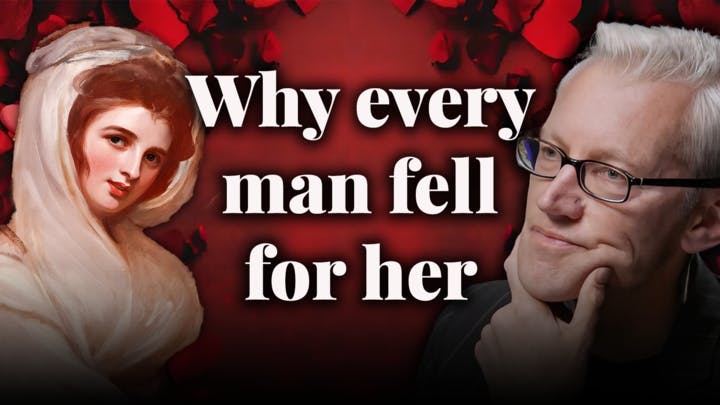
So Emma Hamilton is a very well known name even to people who are not, you know, massively familiar with society beauties of the 1790s. So what's made her famous is I suppose, her association with Nelson. But I guess the question is, what is it about her specifically that makes her so compelling to Britain's greatest naval hero? What is it about her that means that he's thinking about her even as he sails into battle and why, as he's advancing towards the French and the Spanish guns and his final moments on earth, why is he so anxious about what will happen to her after he is dead?
- [08:36]
Tom Holland
I thought we could try and answer those questions today and do an episode focused on the life of Lady Hamilton as she becomes up until her meeting with Nelson. I think her story is an amazing one, fully merits its own episode and I guess for two principal reasons. You said that she's best known for her relationship with Nelson and that's undoubtedly true, but she's absolutely no appendage of Nelson because already when they begin their affair, she's probably the most celebrated non royal woman in Europe. I mean, she has a kind of Europe wide reputation and for various reasons, so to a really astonishing degree and bearing in Mind that, you know, the invention of daguerreotypes, of photography still lie several decades in the future. At this point, she has one of the most recognizable faces of the age, for reasons that we will come to. She is famously beautiful, but she is famous as well for what she termed her attitudes. And these were very distinctive, very original performances which were designed to bring to life for observers scenes from classical art. So you could imagine maybe a kind of an image on a Greek vase being brought to life. And she does this so vividly with such a sense of authenticity that people who witness it are completely stupefied. I've always kind of read this and thought, well, you know, what was she doing? I mean, it sounds a bit like charades or something.
- [10:10]
Dominic Sandbrook
It does. It sounds bonkers.
- [10:12]
Tom Holland
But I think when you look into it, you get the sense that people are witnessing something that they had thought impossible. I mean, among the kind of. Probably the most famous person who witnesses this is the greatest intellectual of the age, Goethe, the great German writer. And he describes Emma's performance. She lets down her hair and with a few shawls gives so much variety to her poses, gestures, expressions, etc. That the spectator can hardly believe his eyes. I mean, it doesn't sound that incredible to us, but I think that what he is describing is a sense of astonishment that prefigures by a century the astonishment that people felt watching cinematography for the first time. So in other words, seeing a frozen image come to life, that is Emma's skill. And I think it suggests something of what made Emma so remarkable a figure, is that she is like a kind of 20th century silent movie star on an 18th century stage. So she's kind of Lillian Gish or Greta Garbo avant la lettre. And I think when you see her in those terms, you can understand why her attitudes have the kind of, you know, impact that they do.
- [11:25]
Dominic Sandbrook
So a lot of people may be a tiny bit skeptical about this. And Tom, I have to admit I was quite skeptical when I read about Emma Hamilton's attitudes. Cause I thought they sounded very remarkably similar to Sherrod's. But you're very evangelical about this, aren't you? You think that this is a kind of pre figuring of modernity.
- [11:40]
Tom Holland
Again and again you read people saying from Goethe and people who are incredibly knowledgeable, again and again they are stupefied. And I think what they again and again emphasize is this sense that something that they had always thought of as stationary, so a statue, an image on a vase is being brought to life for them. And it is being done through something about Emma's ability to turn the static into motion and emotion that they find incredible. And obviously there is no cinematography, so we can't witness it, but we just have to rely on the sense of superfaction that people felt when watching it. And I think take on trust that Goethe and everybody else, they're not completely mad. They're not just watching charades.
- [12:22]
Dominic Sandbrook
Okay, I think, well, we'll come back to the charade. That's a Freudian slip. We'll come back to the attitudes later on. But there's a political side to Emma, right? She's an important kind of political person.
- [12:33]
Tom Holland
Yeah. So in his codicil that he's writing on the morning of Trafalgar, Nelson praises Emma as a kind of great British patriot who has done her country noble service, just as Nelson himself, of course, has done. She becomes the wife of the British envoy to Naples, Sir William Hamilton. So that's where she gets her title and name. And while she's there, she has become the confidant of Maria Carolina Habsburg, the Queen, and a very formidable figure in her own right. And Emma exploits this friendship for Britain's benefit. And Nelson, in his codicil, specifically praises, and I quote, Lady Hamilton's influence with the Queen of Naples. Now, whether that's entirely for good we will be discussing in our next episode.
- [13:20]
Dominic Sandbrook
Yes. Because Nelson's relationship with the Queen of Naples, which we'll come to next week, turns out to be probably the most controversial element of his entire career.
- [13:28]
Tom Holland
However, from the point of view of Emma, significant, this is a woman who is admired by philosophers. She's intimate with queens, so she has a kind of glamour, I think, that fuses very potently with Nelson's own. And I think that's why she's so celebrated as a mistress, as an inamorata. And in fact, the moment they begin their affair and throughout their relationship and long after both of them are dead, people compare them to one couple from history more than any other, and that is Anthony and Cleopatra.
- [14:05]
Dominic Sandbrook
Well, there are loads of cartoons, aren't there? So when they go back to England later on, there are loads of cartoons produced showing, I have to say, quite disobliging cartoons showing Emma as a kind of an enormous Cleopatra. But we should come to this, I guess. And when people mean that comparison, they don't mean it kindly. They don't mean, oh, you're a woman who has navigated through difficult seas and actually has kept her head above water and all this. They mean you're a Bit of a. I mean, liberty's will. Forgive me for paraphrasing, you're a bit of a strumpet, as Cleopatra was. I know that's not right, but it's what people say.
- [14:37]
Tom Holland
And also Cleopatra seduces Antony from his duty. Yes, of course, as a great warrior, which I think people also say about Emma that she's seducing Nelson from his responsibility to go out and defeat the French in naval. And I think the reason why it's so easy for cartoonists and satirists and indeed people throughout high society to sneer at Lady Hamilton as a strumpet is because she is not an aristocrat. She is not well bred in the slightest. I mean, the absolute opposite. So she is born, not Emma, not Lady Hamilton, she is born Amy Lyon. And she was born into absolutely desperate poverty. And in her time, in her childhood growing up, she had scrubbed floors, she had sold her body for scraps of food. She emerged from the absolute depths of the emerging industrial society of late 18th century Britain. Right.
- [15:37]
Dominic Sandbrook
Well, she's. I mean, this is your going to be your argument, isn't it, that actually people always see Emma Hamilton as a monster, but it would be better to see her, you're going to argue as not just a victim, I suppose that's the wrong way of putting it, but as a survivor, as a fighter who's somebody who makes her own way and then becomes the victim of snobbery for having done so. That's about the long and short of it, isn't it?
- [15:59]
Tom Holland
She is absolutely a fighter. And I think there's no doubt that that's kind of a massive part of what Nelson admired in her. But also, you can see why he's so nervous for her fate on the eve of Trafalgar, because without him, what will become of her? This kind of rags to riches and then perhaps riches back to rags story is the second reason for telling the story of her life. Because it is, I mean, it's like a novel, right? It's kind of a cross between, you know, it fuses all of a twist with Vanity Fair. But I think also it's impossible to tell her story. And also think of certainly a couple of obvious 20th century icons, women who capitalized on an age of mass media to haul themselves up, as Emma did, from kind of terrible, grinding poverty. And we've covered two of them, Marilyn and Evita. And again, I, you know, I compared Emma to a silent movie star. She is a trailblazer as well for women who are able to use mass media in an industrial age to promote themselves and to kind of escape the slums. So I would say that she's probably the first great female celebrity of the emerging industrial age.
- [17:13]
Dominic Sandbrook
Do you know what she is? This is an excellent observation that Theo has made. She is the link between the lives of Marilyn and Evita in the modern world. And a great friend of the rest is history. Hwang Jinyi, who is, if you remember, on the other side of the world, Korea's greatest courtesan turned poet.
- [17:31]
Tom Holland
That's an interesting historical observation there from Theo.
- [17:34]
Dominic Sandbrook
Don't underestimate Theo's A, knowledge of the rest is history and B, knowledge of Korean history.
- [17:40]
Tom Holland
Yeah.
- [17:40]
Dominic Sandbrook
Right, let's get back to Britain, to Emma and her story. So she comes of age in a world that has been absolutely transformed by the industrial revolution, doesn't she? So she comes from the northwest of England. She's born on the Wirral Peninsula, which is just across the river from Liverpool. And she could have been destroyed by the advent of industrial modernity, couldn't she?
- [18:08]
Tom Holland
Yeah. So the kind of process of industrialization that she ultimately turns to her own ends, I mean, this is at its most destructive. It's pretty much the kind of the birth pangs of industrialization. And when she's born on 26 April 1765, a great seam of coal has only just been discovered, kind of running below the Wirral and the place she's born, it's a village called Ness, which today I gather is a very pleasant commuter village with a botanic garden next to it. But back then, and I'm quoting here, Kate Williams in her fantastic biography of Emma Hamilton, England's the Infamous Life of Emma Hamilton.
- [18:45]
Dominic Sandbrook
Oh, TV's Kate Williams.
- [18:47]
Tom Holland
TV's Kate Williams, but also Kate wrote her PhD on Emma Hamilton Williams. She describes Ness back in 1765 as a ramshackle huddle of 30 or so miners hovels set in scrubby, stony, infertile land. Her father, Henry Lyon, is the blacksmith for the, for the coal mine and her mother, Mary Kidd, is an exceedingly pretty girl from Harden. And this is a village near Chester, So it's about 12 miles away from Ness again now, very attractive. I looked it up and it was named in 2012 by the Sunday Times as one of the best places to live.
- [19:27]
Dominic Sandbrook
But.
- [19:28]
Tom Holland
But back in the 18th century it was so dead end and boring that Mary had run away from it to join a coal mine.
- [19:34]
Dominic Sandbrook
But do you know who lived in Harden? Tom?
- [19:36]
Tom Holland
Who?
- [19:36]
Dominic Sandbrook
Gladstone. And Gladstone would very much have enjoyed Emma Hamilton's attitudes But he then would have flagellated himself afterwards.
- [19:44]
Tom Holland
He certainly would, because there is, and this is an important part of the story, there is a big house just outside Harden.
- [19:50]
Dominic Sandbrook
Yeah.
- [19:51]
Tom Holland
So Harden is a village from old England with a big house and, you know, grateful villagers. And Ness is a place where the process of industrialization is kicking in very, very violently. And so for Mary, her move to Ness turns out not entirely to be a wise one. Her marriage to Henry seems to have been forced on her by a pregnancy. And as the wife of a minor, I mean, her life is not going to be a pleasant one at all, is going to kind of be relentless drudgery. Many wives of minors, they're kind of beaten, whatever. So we don't know whether that happened with Henry, but, I mean, it's a possibility. But then, just a few weeks after Emma is born, Henry dies, and the circumstances are mysterious. Emma's mother and Emma herself always very pointedly keep quiet about her father. They don't talk about how he died. And so there's kind of speculation to he drink himself to death. Did he die in a brawl? Did he commit suicide? Perhaps. I mean, we just don't know. So on one level, you know, this is a disaster for the little baby, Amy. You know, she's been deprived of the potential breadwinner in the family. But I think on another, actually, it spells a certain measure of freedom because it liberates Mary to escape the life of a worker's wife in an industrial slum, returned to her native village, worked there in the family house. For Mary, it's endless chores. But Amy seems to have kind of grown up fairly unburdened by domestic responsibilities, I think. So later in life, she described her childhood as wild and thoughtless. And what's also striking again, to quote Kate Williams, is that she grows up strikingly statuesque. So Kate writes, she was tall, strong and beautiful, with a thick mane of hair and strong white teeth. She had sparkling eyes, clear skin, voluptuous good health and bounding energy. And this is all the more striking because her childhood was marked by repeated kind of famines, smallpox, epidemics. But Emma is, you know, very clearly not a girl who's been stunted by rickets or pocked with sores. She also seems to have learned kind of very cursory reading and writing skills. But, I mean, cursory is better than nothing, which is what probably most girls of her standing would have had. And so Kate Williams explanation for this is that perhaps Emma's mother, Mary, was having an affair with someone up in the local big house. So she writes, somehow Mary found money that protected Emma from the worst of village hardship and helped her grow into a beauty.
- [22:31]
Dominic Sandbrook
Well, hold on, there's no evidence for that.
- [22:32]
Tom Holland
Right.
- [22:32]
Dominic Sandbrook
I mean, the only evidence is the fact that Amy, who becomes Emma, is not kind of stunted and unable to read and write.
- [22:39]
Tom Holland
And. And she has reading and writing. Yeah, right.
- [22:42]
Dominic Sandbrook
But if that's true, then that would be a model. Then the young Amy, Emma, would see that as a model to follow. No, would. Would draw the conclusion that actually, you know, trading on her physical charms was the way to get social and kind of cultural advancement, which would make sense given what she later chooses to do.
- [23:02]
Tom Holland
Yeah. And I think also what, what encourages her to be ambitious is probably her kind of fleeting and disastrous experience of the career that was most readily open to working class girls, which is to go into domestic service. Yeah. So Emma does work in the big house at harden. So in 1777, when she's 12 years old, she goes there for a few months and then she gets sacked, basically, I think, because she's completely hopeless at housework.
- [23:32]
Dominic Sandbrook
Okay.
- [23:32]
Tom Holland
It's not her, not her vibe at all. And then the following autumn, she travels to London to the big smoke, and again she secures a job as a housemaid there, and again she gets sacked. And this time it's for staying out late with a friend. So kind of, you know, very teenage behavior. Clearly she's not cut out to be a maid of all work, but what that experience does is to open her eyes in a way that she wouldn't have done if she just stayed in her village to the kind of entire dimensions of luxury and leisure and fine living and the kind of beautiful clothes and the plentiful food that it can provide you with. And I think it gives her a desire to have that for herself. But the question, of course, she's 13 years old, she's penniless, she's an out of towner provincial in London, she doesn't have a patron, she doesn't have anything beyond the most rudimentary education. And so the question then is, how is she gonna fulfill her dreams?
- [24:33]
Dominic Sandbrook
Right. But obviously, if her mother has had an affair with somebody in the big house, that would give her an example to follow. So for one thing, she has a show business side to her, and that's a question of temperament as much as anything, isn't it? She loves London, is the place of public entertainment, theaters, you know, dances, pleasure gardens and so on. And clearly by temperament, that's why she.
- [24:54]
Tom Holland
Gets sacked from her job because she's been out late at a fair.
- [24:57]
Dominic Sandbrook
Right.
- [24:58]
Tom Holland
She's very keen on kind of all the entertainments that London has to provide. Yeah. And which London, probably more than anywhere else in the, you know, the face of the planet at that time, provides in plentiful numbers. Yeah. So she's great one for the smell of the grease paint and all that. Right.
- [25:12]
Dominic Sandbrook
But then the other thing which isn't, let's say, an asset that a lot of girls would not have had is her physical appearance. So everything we ever read about her says she's very tall, she's extremely striking. Everybody says, you know how she's got brilliant hair, you know, you don't forget her. So at this point, what is she, 12, 13 years old? 13, 13 years old. And this is an age where a 13 year old girl would already have been prey to predatory men. Do you think?
- [25:43]
Tom Holland
There's no age of legal age of consent, you know, she's been working as a housemaid alone in rooms. I would suspect that absolutely by this point she has suffered, you know, a fair degree of sexual harassment, maybe even abuse. She turns it to her advantage, I think, by feeling a sense of confidence in her ability to turn men's heads. Right. And kind of confident that she can turn it to her own ends. And that being so, she takes the very bold and conscious decision when she's sacked from her post as a housemaid to head to London's most glamorous, most notorious, most exciting playground. And this is a place where women have long outnumbered men. And it's a great center of pleasure called Covent Garden. Right. And this is a piazza that had been designed back in the 1630s by the great architect Inigo Jones. It's been ringed by stately streets, but beyond them there's a kind of entire kind of doughnut of slums. And probably the most notorious of these is the rookery of St. Giles. And this is where Hogarth in his great satirical cartoon sets, Gin Lane. So, you know, drunk mothers, babies falling to their doom down steps, absolute scenes of squalor. I mean, but satire draws on kind of horrific reality. So what you have in Covent Garden is wealth and squalor, highbrow entertainments and low brow entertainments. To quote Vic Gattrell, the great historian of Georgian culture, what developed in Covent Garden square half mile in the second half of the century was the world's first creative bohemia. And it is the absolute epicenter of Georgian culture. So you have London's two great theatres, Drury Lane and Covent Garden. You have coffee shops that are filled with writers and playwrights and artists and you have the best shopping in the world. This is where, you know, the nation that Napoleon will mock as just shopkeepers, this is where they're really honing their art. Covent Garden offers probably the best shopping in the entire world.
- [27:55]
Dominic Sandbrook
But not just shopping, right?
- [27:56]
Tom Holland
Well, I mean there are lots of things for sale, let's put it like that.
- [28:00]
Dominic Sandbrook
Yeah, exactly. So there's a. What we might see as a seediness to Covent Garden. It's basically a massive red light district and it's full of cut purses and ruffians and street walkers and prostitutes.
- [28:13]
Tom Holland
Yeah. And so Kate Williams in her biography of Emma quotes one very excited visitor who says Covent Garden is the great square of Venus and its purlieus are crowded with the practitioners of this goddess, which is to say there are lots of prostitutes and spanning the entire social range. So you have very high end brothels, but you also have kind of gin rattled streetwalkers of the kind that you see in Gin Lane. The healthier girls even have their own kind of almanac, they have their own guide which is published annually called Harris List of Covent Garden Ladies, which gives descriptions of the form.
- [28:49]
Dominic Sandbrook
So give people a sense. I mean, many of these people would also be actresses, Right. And they'd also be kind of professional models. So there's no, you know, there's no clear divide between those difference. You know, you could easily slip from one of those roles into another one.
- [29:04]
Tom Holland
Yeah. So Jill Perry again describing this Melia, she says whoring and acting were easily elided.
- [29:13]
Dominic Sandbrook
Right.
- [29:13]
Tom Holland
I mean, this provides massive opportunity, of course. And so for a girl like Emma, who is beautiful, charismatic, high spirited, but also poor, provincial, without a support network, Covent Garden provides opportunity like nowhere else on earth. I mean, massive opportunity, but at the same time massive danger. And essentially what she's embroiling herself in when she heads to Covent Garden is a kind of high stakes red light district version of Pride and Prejudice.
- [29:45]
Dominic Sandbrook
Right. Because on the one hand the prize, the goal is to get a patron. I mean, I guess even better would be if she could somehow persuade somebody very rich and well connected to marry her.
- [29:56]
Tom Holland
Imagine that.
- [29:57]
Dominic Sandbrook
Yeah, but that would be very difficult to imagine. Much more likely is that she'll become a kind of mistress, a kept woman, I suppose.
- [30:03]
Tom Holland
Yeah.
- [30:03]
Dominic Sandbrook
The downside is if you don't manage to do that, you know, over time, you descend the rungs of the ladder of the ladies of Covent Garden. So basically in 10 years time, you're the person with no Teeth. Who's just necking loads of gin.
- [30:14]
Tom Holland
Yeah, exactly. And throughout her teens, Emma is constantly kind of swinging between these twin poles. So she gets work at the theatre at Drury Lane, Dominic, where you and I appeared very excitingly.
- [30:28]
Dominic Sandbrook
Yeah.
- [30:28]
Tom Holland
And she worked there as a wardrobe assistant. So she's dressing actresses and she gets a chance to study, you know, how they put on a performance. She gets a feel for the theater. Then she gets made redundant. And this is the lowest point of her life. She's kind of briefly reduced to walking the streets. And this is something that Emma herself never denied. So later in life, she said, I own through distress. My virtue was vanquished, but my sense of virtue was not overcome. She gets jobs in taverns. Again, the kind of. The boundary between our maid and tavern in this period is pretty, pretty narrow. And then she begins to supplement her work as an artist, model, and her most improbable gig, which is so improbable that there are historians, Vic Gatrell among them, who doubt it ever happened. But I think Kate Williams makes the case very convincingly that it did. She ends up working for a notorious quack doctor called Dr. James Graham, who runs what he called a temple of health off the Strand.
- [31:29]
Dominic Sandbrook
Oh, I can't believe this didn't happen. I've always believed this did happen.
- [31:31]
Tom Holland
I think it did.
- [31:32]
Dominic Sandbrook
Yeah.
- [31:33]
Tom Holland
I think Kate Williams arguments on this, on the veracity, are very convincing.
- [31:37]
Dominic Sandbrook
Okay.
- [31:37]
Tom Holland
And also I want it to happened, so.
- [31:39]
Dominic Sandbrook
Right.
- [31:40]
Tom Holland
Okay with that. So. So Dr. Graham is. He's a massive enthusiast for electrotherapy. He was actually a kind of an associate of Benjamin Franklin. He loves a mud bath. And again, the kind of satirists always, they love drawing cartoons of enormously fat men being dropped into vats of mud. And to quote Kate Williams, he was a supreme showman. And his lectures were extravaganzas featuring explosions, smoke, fireworks, music, and to London's utter delight, a phalanx of glamour girls posing in flimsy white dresses. And Emma's role was to pose on an absolutely enormous bed, dressed in a kind of very skimpy classical style costume, and pose as Vestina, the rosy goddess of health. And the bed itself is supported by 40 pillars of very finely worked glass. There are pipes that pump out perfume, there are kind of cranks that are operated by people lying under the bed to make the mattress jiggle. And every so often, there'll be a kind of jolt of electricity will go through the bed just to keep people on their toes and hold on.
- [32:50]
Dominic Sandbrook
You could pay to go and Lie on this bed yourself. And not just to lie on the bed.
- [32:54]
Tom Holland
Right. You could, you pay 50 pounds a night.
- [32:57]
Dominic Sandbrook
That's a lot of money.
- [32:58]
Tom Holland
You have to be very affluent to do that.
- [32:59]
Dominic Sandbrook
Yeah.
- [33:00]
Tom Holland
And essentially it's meant to be for married couples, but of course it isn't. The Prince Regent inevitably takes his mistresses with him.
- [33:06]
Dominic Sandbrook
And Emma's role on the bed, you know, she's not, she's not sleeping with the married couples, she's exhibiting the, the pleasures of the bed. She's showing off what you would look like if you lay on the bed and saying, you can be like me and lie on this fantastic bed with the electricity and, and then she gets off and these people get on it.
- [33:25]
Tom Holland
Yeah.
- [33:25]
Dominic Sandbrook
Right. Okay.
- [33:26]
Tom Holland
So outside this temple of health, Graham has set up naked statues which are actually so titillating that he ends up being prosecuted for them. And Emma is a kind of living statue. So there perhaps you have a presentiment of the idea of the, the attitudes, the idea of a statue coming to life. And her, her goal is to lie there and look like, you know, a goddess, but also to encourage the men to, to get on and, and do what they've got to do. And this is probably Emma's big break because it leads to her being talent spotted at the age of 14 by London's most exclusive and vampiric madam, a woman called Charlotte Hayes, who goes under the supercare of Mrs. Kelly. And her brothel is the classiest in London. It's not in Covent Garden, it's in much more kind of upmarket area of St James's Emma is only one of seven or eight girls who works there. Absolute world away from walking the streets. She has a carriage, all kinds of things. She dresses up in very finely cut, low cut pink dresses. She will dress as kind of famous actresses. She's never gonna be rich there because she's pretty much indentured to Mrs. Kelly.
- [34:44]
Dominic Sandbrook
So Mrs. Kelly pockets all the winnings basically.
- [34:46]
Tom Holland
Absolutely. And gets them in debt. You know, she would kind of feed them drink and then kind of run up a tab. But because the clients are all so rich, I mean, only the absolute kind of the top end of society can afford to go there. Obviously there's always the hope for the girls in this brothel that they will hit the jackpot. You know, Emma can dream of finding a man who will buy her out and that in 1781, at which point she is 16. That is the jackpot that Emma does seem to hit in the form of a very hard drinking, hard hunting Squire called Sir Harry Featherstonehaugh. At least I think that's how you pronounce it. It ends H, A, U, G H. Okay, and the question is, Dominic, who is this Mr. Darcy?
- [35:30]
Dominic Sandbrook
Well, let's take a break. And then after the break, we can see him emerging, dripping with water from the lake of love. I don't know where I'm going with this analogy, but anyway, it took a commercial break quickly. Yeah, we better get to the break. Goodbye. This episode is brought to you by Uber. Now, do you know that feeling when someone shows up for you when you need it most?
- [35:56]
Tom Holland
We all need that sometimes, and Uber knows it.
- [35:59]
Dominic Sandbrook
Uber isn't just a ride or a meal delivered. It's showing up no matter what.
- [36:05]
Tom Holland
Like for your long distance friends, bringing soup when they're sick, sending flowers when they're down.
- [36:11]
Dominic Sandbrook
When it really matters, whatever it is, you show up where there's a will.
- [36:17]
Tom Holland
We're on our way. Uber, on our way. Download the app today. This is an ad by BetterHelp. Now. 10 October is World Mental Health Day, A reminder that even the most brilliant figures in history sought counsel. Kings had advisors, generals had strategists. No one leads or lives entirely alone.
- [36:39]
Dominic Sandbrook
Now, today, that same kind of guidance often comes from therapists. People trained to listen, to ask the right questions, and to help you find a clearer path forward. Progress is rarely made in proclamations, but in steady exchanges that nudge your life onto new ground.
- [36:56]
Tom Holland
BetterHelp has been doing exactly that for more than 12 years, pairing over 5 million people worldwide through a network of 30,000 qualified professionals.
- [37:06]
Dominic Sandbrook
Their approach is simple but effective. A short questionnaire helps identify your needs. Years of experience guide the match, and if it's not quite right, you can change until it is. Finding the right person can lead to real progress.
- [37:22]
Tom Holland
If you're ready to find the right therapist for you, BetterHelp can help you start that journey.
- [37:28]
Dominic Sandbrook
Our listeners get 10% off their first month at betterhelp.com Restishory that is better. H E L P.com Restishory hey, what shall I do? Good God, what shall I do? I've wrote seven letters and no answer I can't come to town for want of money I've not a farthing to bless myself with and I think my friends looks coolly on me I'm almost mad oh, for God's sake tell me what's to become on me. Oh, dear Greville, write to me, write to me G Adieu and believe me, yours forever, Emily Hart. So that was an archive recording that's actually the only Northwestern accent I can do and it's not even. I don't even think it relates to a place. But actually what I was trying to do was channel the girl born as Amy Lyon, the woman who would become Emma Hamilton and who for now was calling herself Emily Hart. So those are her own words in the voice of the co founder of Goal Hanger, Tony Pastor.
- [38:33]
Tom Holland
Yeah. And Don, just to say, this is the first time we get to hear her in her own words. Wow.
- [38:37]
Dominic Sandbrook
And so I'm glad I've treated them with the sensitivity and respect they deserve. So she's now calling herself Emily Hart, she's saying, what shall I do? And she's in a terrible mess, isn't she? And why is she in such a mess? Because we left before the break. Mr. Darcy had entered the story dripping wet. What's gone wrong?
- [38:57]
Tom Holland
So Sir Harry Featherstone hoare, who is 26 years old, he's the MP for Portsmouth, he's the owner of an absolutely splendid pile in Sussex. He has turned out to be an utter shit.
- [39:09]
Dominic Sandbrook
Oh, no.
- [39:10]
Tom Holland
You know, it had not taken Emma long to realise this, so she has been basically bought out by Sir Harry. He takes her to his stately pile up Ark House on the South Downs and just kind of keeps her there for his own entertainment and the entertainment of all his mates.
- [39:25]
Dominic Sandbrook
But that was the plan. No, that was what she wanted.
- [39:27]
Tom Holland
Yeah, it is. The problem is that he's not really very romantic at all because all he's really into is horses. So, you know, he's MP for Portsmouth. He never, he never once gives a speech because he's always off fox hunting or racing or whatever. And actually he loves racing so much that there's one female visitor who describes how at Upper House there are races of all sorts, fine horses, ponies, cart horses, women, men in sacks. You know, he's the kind of guy that Peter the Great probably have got along with quite well.
- [39:55]
Dominic Sandbrook
Yeah, definitely.
- [39:57]
Tom Holland
So Emma, you know, she does her best. She learns to ride, which is an essential skill, and she's given a very tight riding habit, which she adores, like skittles, of course, the great courtesan. But I think she's very lonely. And her only real friend is the one man among Sahari's coterie who does not enjoy hunting. And all Sir Harry and his friends, they all find this hilarious. They can't understand it at all. And this is a guy who is very well connected, but relatively, by the standards of the aristocracy, impecunious. He's the second son of the Earl of Warwick and his name is Charles Greville. And that's the Greville who Emma was addressing in her frantic letter. His real passion is for collecting minerals.
- [40:46]
Dominic Sandbrook
Like Wilfred Owen, the poet, the war poet.
- [40:49]
Tom Holland
But since he is often alone with Emma while all the others are out hunting, inevitably they're thrown together and he ends up very besotted by her. Meanwhile, Sir Harry has been behaving exactly as you would expect a late Georgian squire to behave. He gets Emma pregnant, he throws her out of the house without a penny and he then refuses to answer her letters.
- [41:15]
Dominic Sandbrook
Oh, Sir Harry.
- [41:16]
Tom Holland
And this is why, in January 1782, she writes the letter that you quoted to Charles Greville. And her situation is desperate. She's heavily pregnant by this point, she doesn't have any money. But when she writes that letter, you know, she clearly is in desperate straits. But she is also playing a part. It is the tone of kind of high wrought sentiment. She is deliberately exaggerating to appeal to Greville. She's framing it in the tones of a kind of a lady from a novel who has been badly treated.
- [41:45]
Dominic Sandbrook
It's an epistolary novel. She's been poorly treated by the Vicomte, or whatever his name is.
- [41:51]
Tom Holland
Vicomte de Valmont.
- [41:52]
Dominic Sandbrook
Yeah, Valmont in Liaison d'. Orgeuses. And actually it completely works, right, because he, he reaches out to her. He does.
- [42:00]
Tom Holland
Well, he still massively fancies her, right? So very chivalrously, a few years later, he will describe her as the only woman I ever slept with without having ever had any of my senses offended. And a cleaner, sweeter bedfellow does not exist. Oh, right, so that's high praise indeed.
- [42:15]
Dominic Sandbrook
Yeah, high praise.
- [42:16]
Tom Holland
But he imposes very strict terms on Emma. So she has to give up her baby the moment that it's born, hand it over to her great grandmother, she has to discard her old name, so no more Amy Lyons. So this is why Emily Hart is then born. She's Mrs. Hart and she's to have no further dealings with any of her old acquaintances from Ser Harry, right the way down to her relatives. The only one that she can see is her mother, who effectively from this point on is employed as her kind of housekeeper.
- [42:46]
Dominic Sandbrook
On the one hand that sounds very harsh, but I suppose grevil would say I'm cleaning up her situation and she's gonna be much better off. And actually a lot of her old acquaintances are kind of rapacious madams and stuff, so she's better off without them.
- [42:59]
Tom Holland
Yeah, And Emma, I think instinctively understands this, that what Greville wants from her isn't just sex, but also, oddly, the kind of almost the opposite, a kind of display of chastity and modesty. And so Greville installs her just off the Edgware Road in the village of Paddington, which is just a kind of semi rural outskirt of London at this point. And basically the role he wants her to play is that of a kind of repentant Magdalene. A sinner has been redeemed. And he seems to have found this titillating in the extreme. So he deliberately kind of moulds her to his tastes. She's to be very, very modest, you know, she's to cast off all the manners of the street. And Emma kind of absorbs this, like blotting paper. So it is a kind of education.
- [43:51]
Dominic Sandbrook
Well, he's Henry Higgins and she's Eliza Doolittle to some extent.
- [43:54]
Tom Holland
I think that's exactly the parallel.
- [43:56]
Dominic Sandbrook
I mean, there are two ways you can view that. I would say you've taken a stance which is very quite cynical and hostile to grevil. You know, he's doing this because he finds it titillating and stuff. He might also have done it because he genuinely likes her and wants to.
- [44:08]
Tom Holland
Help her, that you are not mutually exclusive. I think both of those things are true.
- [44:12]
Dominic Sandbrook
Yeah.
- [44:12]
Tom Holland
He's not doing just out of charity. He wants to make money out of her. And so he does pimp her out, not as a prostitute, but as an artist's model.
- [44:21]
Dominic Sandbrook
Right.
- [44:21]
Tom Holland
And he. He kind of basically sells her as a model to the man who is widely regarded by this point as the greatest portrait painter in Britain, even greater than Sir Joshua Reynolds, the founder of the Royal Academy. And this is a man who's very emotional, very troubled, very brilliant guy called George Romney. And all his life he's been looking for his muse and he finds her in Emma. He becomes absolutely obsessed by her, by her beauty, by her intelligence, by her incredible emotional literacy, her ability to convey through her face kind of vast numbers of emotions. And again, the way in which she seems like a classical statue come to life. So this is kind of a theme that runs throughout her career, to quote the poet William Haley, who wrote a biography of Romney in 1809. So while Emma was still very much on the scene, and he wrote, her features, like the language of Shakespeare, could exhibit all the feelings of nature and the gradation of every passion, which, with the most fascinating truth and felicity of expression. And that's very much how admirers of her attitudes will also Describe her. Right. And it is Romney who paints this woman, who he calls his divine Emma over 70 times, who makes her famous, or at least her face famous, because even though Romney himself is, he doesn't exhibit paintings and exhibitions. People come to the studio and prints are made of these paintings and basically they go viral. The opportunities for the printing press to reproduce images by this point is kind of expanding all the time. And Emma rides the crest of that wave. And she's exceptional in various ways. I mean, there are all kinds of reasons why she becomes so successful, but you can list them. She's obviously unbelievably beautiful and her style of beauty. So she's got an oval face, she's got large eyes, she's got kind of very well defined lips, thick auburn hair. This absolutely corresponds to the kind of the ideals of beauty of the age and the way in which she. She gazes directly at the viewer in the way that most models don't. And some of the paintings, even those where she's kind of playing a part in a historical or a kind of literary tableau, they are amazingly vivid. They look like kind of Instagram shots. So there's one in particular where she's playing the part of Titania in Midsummer Night's Dream. And she looks like, you know, like a snap of a girl enjoying a picnic. Incredibly vivid. She's also very chameleon like. So she can be painted as a nun or she can be painted as a bacchante, you know, one of those women out tearing people to pieces up on the uplands of Thebes. And then there's the riddle of her identity. Now, who is she? Who is Emma Hart, this enigmatic woman? Because most women who appear on prints are already famous. They are aristocrats, they are actresses or whatever. Emma isn't. And this generates an absolute obsession. People want to know more about her. You know, the chance to meet her is a kind of incredible thrill. And when people come and they watch her and she's dressed in this kind of clinging classical styles of robes, very similar to the kind that she'd worn on the. The vast erotic bed.
- [47:46]
Dominic Sandbrook
And of course, hugely fashionable at this point, late 18th century. You know, everyone's. Everyone loves all the idea of the kind of new freedoms of dress and the classical lines and so on. No.
- [47:56]
Tom Holland
Yeah. And Emma becomes the figurehead for that. She's basically the kind of the Kate Moss of this revolution in fashion. And Romney, I think, is kind of playing the part of John Galliano or Alexander McQueen to her Kate Moss. But it is very collaborative because of course, you know, Emma has absolutely her own sense of fashion. She knows what she looks good in. You can see why. Basically she becomes the pin up girl for this new style of fashion that will, you know, sweet Britain. But if Romney and the female shoppers of London adore Emma in her classical outfits, there is Dominic, another man who is even more bowled over by her.
- [48:34]
Dominic Sandbrook
This is Greville's uncle. Right, now we come to the other man, the third man of the Nelson Emma triangle. And this is Britain's envoy to Naples, Greville's uncle, Sir William Hamilton. And he first meets her when. I've just checked, he was 53. So he'd been away, he'd been in Naples for the last five years. He comes back to England, 1783, and his wife has recently died and Emma is 35 years his junior. So that would make her. What is she? She's in her late teens. Yeah, right, she's in her late teens and he's 53. But he thinks she is absolutely brilliant. I mean, he's completely. He's is infatuated. Too strong?
- [49:20]
Tom Holland
No, not at all. He's absolutely blown away by her. And Emma in turn, you know, she's like the girl from the Pulp song. She has a thirst for knowledge. And William Hamilton, you know, he's got a lot of knowledge because he's an unbelievable connoisseur.
- [49:32]
Dominic Sandbrook
He loves a vase, doesn't he?
- [49:34]
Tom Holland
He loves a vase. Pompeii and Herculaneum are being kind of dug up at this point. He probably knows more about Greek and Roman vases than anyone else in Europe at this point.
- [49:44]
Dominic Sandbrook
Fascinating.
- [49:45]
Tom Holland
Well, he's also a very keen volcanologist, Dominic. Okay, so he's always climbing Mount Vesuvius and he is, he's fun, he's very stylish, he dresses well, he's witty, he's charismatic. You can see why they would get on.
- [49:58]
Dominic Sandbrook
That's the side of him that's always lost, isn't it? I was thinking about this. So later on, when Nelson enters the story, Sir William Hamilton is treated by cartoonists and by satirists as a total joke, as a doddery old fool who doesn't know what's going on. Cuckold.
- [50:12]
Tom Holland
Yeah, yeah.
- [50:12]
Dominic Sandbrook
Just as a sort of a hapless, wet, weak loser.
- [50:17]
Tom Holland
Yeah. And actually he's not.
- [50:19]
Dominic Sandbrook
He's a much more serious and more charming and more sophisticated person than that.
- [50:25]
Tom Holland
Yeah. And grevil, by this point doesn't mind a bit because he's getting a bit bored of Emma. I Think. And also, he wants to marry. He's very short of cash and Emma slightly gets in the way of that plan, you said, you know, does he. Does he feel fond for Emma? I think he does. He doesn't want to do a Saharry and just dump her, he wants to secure her future. And so he comes up with a brilliant wheeze. Why doesn't he send Emma to Naples to Uncle William and she can become Sir William's mistress.
- [50:55]
Dominic Sandbrook
Yeah.
- [50:56]
Tom Holland
So he writes to his uncle and says, look, I've got brilliant idea. What about it? And Sir William says, yeah, great. I mean, if she's on for it. And Greville lies and says, yeah, she's absolutely on for it. I've told her. He hasn't told her this at all because he knows that she won't go.
- [51:10]
Dominic Sandbrook
Right.
- [51:10]
Tom Holland
She's actually very devoted to Greville. So then he gets her to go with her mother by saying, you go out and join Sir William and I will join you a week later. So Emma sets off for Naples. It takes her a month to get there. She arrives on her 21st birthday, the 26th of April, 1786, and, you know, within days she realizes that she's been tricked. Greville has completely sewn her up and Emma is devastated. And to the surprise of both uncle and nephew, she refuses to go to bed with Sir William. And I think both Greville and Sir William had assumed that she would, that she's a good time girl, of course she will, but she doesn't actually. Emma is a romantic. She has plighted her troth to Grevil. You know, she wants security that he provided, I think, both emotional and financial, and she's not prepared to just kind of move on to the very aged Ser William. And that July, she writes to Grevil and says, if I was with you, I would murder you and myself both greiky.
- [52:09]
Dominic Sandbrook
And yet over time.
- [52:10]
Tom Holland
And yet.
- [52:11]
Dominic Sandbrook
Yeah, and yet over time. So six months, basically, she's still in Naples and eventually, you know, the flame of her ardor for Grevil dies out. And she actually thinks now, is this just calculation or what is it? She thinks, I will go to bed.
- [52:26]
Tom Holland
With sorghum after all, she has no real choice. Right. I mean, what. You know, the only choice she has, she's in a foreign country where she doesn't really speak the language. She will be penniless otherwise. Yeah. So by December, she's writing to Sir William saying, yes, I love you. Soon afterwards, it seems she's beginning sleeping with him. By 1789. She's dropping heavy hints to visitors that she and Sir William are married, which Sir William does nothing to deny. And then in 1791, Sir William and Emma return to England and there's William. He's got the permission of the King himself to marry emma. And on 6th September 1791, in a private ceremony at Marylebone, Sir William Hamilton, envoy of His Majesty to the court of Naples and the one time housemaid and street walker, Amy Lyon, become man and woman wife. And obviously for Emma, this is the fulfillment of all her dreams. Because right from the moment of her arrival in Naples, Sir William had been lavishing her with horses and dresses and servants and houses and gorgeous views over the Bay of Naples and everything. And now as his wife, she can be confident that all of these are hers by matrimonial. Right. But it's not just, you know, she's not just being materialistic about this.
- [53:47]
Dominic Sandbrook
She surely, I mean, it'd be easy for people to see this as a purely mercenary and cold blooded relationship, but all the evidence we have is that they actually were very fond of each other, they got on very well, that he is very nice to her, he's very encouraging. He is. I mean, people did mock him later on. They said, oh, he's infatuated with her, she can do no wrong, all of this kind of thing. But obviously they lived together for many years. Yeah, very successfully and very happily.
- [54:15]
Tom Holland
He's a very kind and loving husband. And I think that Emma, who had been denied kindness and love for most of her life, this is what she'd wanted perhaps even more than kind of.
- [54:28]
Dominic Sandbrook
Fine horses and clothes, emotional security, respect. She feels seen by him, all of those kinds of things.
- [54:35]
Tom Holland
Yeah, and that's really important. He respects her as well as adores her. He is angered by the snobbery with which his marriage to her is greeted. So Lady Holland, a wig, very, very snobbish about it. That he should admire her beauty is not singular, but that he should like her society certainly is, as it is impossible to go beyond her in vulgarity and coarseness. That's the opinion of Lady Holland.
- [55:00]
Dominic Sandbrook
Right.
- [55:01]
Tom Holland
But Sir William, this kind of attitude infuriates him. I mean, maybe it's because he's a kind of connoisseur of female beauty and character as well as of, you know, Greek vases. He can recognize in her all kinds of qualities in addition to her incredible beauty. So those qualities would include the fact she's very smart, she's had no education as a child, and so she has that kind of autodidactic enthusiasm. She wants to learn, she wants to improve herself all the time. So William gets her French teachers. She picks up very fluent Italian very, very fast. She shares in her husband's passions, so she's always scrambling up Vesuvius with him. She studies classical art, so she becomes very familiar with the classical statues and portraits on vases and things that Sir William loves. And this in turn is what then feeds into the attitudes.
- [55:54]
Dominic Sandbrook
Right now, just before we come to the attitudes, just to remind people, there is a huge age gap here. I mean, Theo just said in the chat, how old is she? She was 26 in 1791 when they got married. He was 61. So, you know, that's also part of the. And a really, really important part of the dynamic. But let's get back to the attitudes, because this is the core. You think of her appeal and you have totally signed up. I have. I mean, Tom, let's be honest, you have completely drunk the attitude. I don't want to say you drunk the Kool Aid, but I just want to leave that image hanging there. Tell us why these attitudes are so revelatory and so radical and exciting.
- [56:33]
Tom Holland
Let's be up front. There is absolutely an element of the dirty old man about Sir William in this. I think he's the guy who kind of fixes the lighting, does the staging.
- [56:42]
Dominic Sandbrook
Yes, just pull your dress away a little bit more, my dear.
- [56:44]
Tom Holland
There's no question that it is erotic, but it is also simultaneously learned. So in a way, it's Sir William's dream. It's kind of sexy, but also redolent of, you know, antique vases.
- [56:58]
Dominic Sandbrook
I wish that Venus on my vase would come to life.
- [57:00]
Tom Holland
Oh, she has, but it's much more than that. You know, as I said at the beginning, spectacle of a statue seemingly coming to life. An image from a vase being given flesh and blood. It enthuses and enraptures and astonishes people from across the whole of Europe, including most famously, Goethe. And Goethe's praise makes Emma's attitudes basically the kind of hottest ticket in Europe. She is an international star. She's a must see fixture for high society visits to Naples. And I will quote the historian Gillian Russell on this. She's a formative influence on the imagination of poets and artists, making Emma a key figure, Dominic, in the fusion of neoclassicism with sensibility that was to characterize the European wide cultural movement later known as Romanticism. So she is taking that, you know, 18th century obsession with the classical fusing. It with the great cult of sensibility. And she is the great precursor of Romanticism. So in that she's very like probably the two most famous men of the 19th century, Napoleon and Byron.
- [58:07]
Dominic Sandbrook
You're claiming that Lord Byron was one of the two most famous men of the 19th century? Yes, of course, that's a mad claim, but Continue.
- [58:14]
Tom Holland
No, it's not. Absolutely not. We won't go into that.
- [58:17]
Dominic Sandbrook
He's more famous than Bismarck or Disraeli.
- [58:19]
Tom Holland
Yes, massively.
- [58:21]
Dominic Sandbrook
Continue.
- [58:22]
Tom Holland
Napoleon and Byron are famous as cultural figures who haunt the imaginings of generation after generation after generation. Emma doesn't have that impact because what she is doing is dependent on. On live performance. And so once she's gone, memories of it fade. But while she's doing these, it clearly does have a massive kind of influence on the way that poets and artists are starting to think of what will come to be called the Romantic. But the influence of these attitudes, obviously, you know, it's not just intellectual because it's also a huge influence on. In the shops and the ballrooms of Britain. Emma is a massive influence on the kind of growing classical turn of women's dress. She'd been as an artist model, but even more now that she has these attitudes, the kind of the most famous floor show in Europe. Her ability to serve as a muse for designers and indeed for shoppers is obviously being massively fueled by industrialization, which enables kind of rapid turnover of fashion. And so, again, I think you could say that Emma is kind of one of the first great influencers. And I think we actually, we talked about her role in this, in the episode on this we did with Hillary Davidson, the Regency Revolution. She is a major influence both on culture and on shopping, basically. And you can tell her impact that as the years pass, even members of the highest society start to experience something of her star quality. You know, they start to dress like Lady Hamilton, some even compliment her personally. So here is. Here's Lady Palmerston. Lady H is to me, very surprising for considering the situation she was in. She behaves wonderfully well now and then, to be sure, a little vulgarness pops out, but I think it's more Sir William's fault, who loves a good joke and leads her to enter into his stories, which are not of the best kind.
- [60:10]
Dominic Sandbrook
Not of the best kind. I mean, that's very telling, isn't it? That's basically. He wants her to play a part in his sort of erotic fantasies.
- [60:17]
Tom Holland
No, I don't think it's just that. I think it reflects the fact in which they're very close as a couple and that they're always working as a team. And this, in turn helps to explain the other way in which Emma is very useful to Sir William, which is as a kind of a political operator. And it's the measure of Emma's charm that she's able to befriend someone far grander than, you know, Lady Palmerston, even than Lady Holland. And this is the most powerful queen in Europe, because Maria Carolina, she is Habsburg, she is the elder sister of Marie Antoinette, and she is the wife of the Bourbon King, Ferdinand IV of Naples and Sicily.
- [60:59]
Dominic Sandbrook
Right.
- [60:59]
Tom Holland
And she is effectively the ruler of his kingdom. And this is because Ferdinand is an absolute bore.
- [61:07]
Dominic Sandbrook
He's an oaf. He's an absolute oaf. Yeah.
- [61:10]
Tom Holland
John Sugden brilliantly describes him as a boisterous, big featured buffoon. So, like another Habsburg, Franz Ferdinand, he's absolutely obsessed with killing animals. He loves hunting.
- [61:21]
Dominic Sandbrook
He would chase his courtiers around the palace with. Throwing the contents of a chamber pot at them.
- [61:26]
Tom Holland
Yes.
- [61:26]
Dominic Sandbrook
Or throwing frogs at them and stuff like this. That's his idea of a great laugh.
- [61:30]
Tom Holland
Yeah. Absolute bands. He also has a very shrill falsetto, so he's like a Neanderthal. Unlike Maria Carolina, who. Who has a very deep voice.
- [61:38]
Dominic Sandbrook
Yes.
- [61:39]
Tom Holland
So they're an entertaining couple, but he's very dissipated and inevitably, therefore, had tried to seduce Emma, but she had pretended that she had no idea what he meant by these advances and rebuffs them. And Mira Carolina is very grateful for this and hails Emma as an absolute model of virtue. But obviously, for as long as Emma is not married to Sir William, she can't receive her. You know, that would just be an absolute. No, no. But she's always encouraging Sir William to make an honest woman of Emma. They duly go to England and get married, as we've heard, and on their journey back to Naples from that, you know, the time they spent in England when they got married, they have a stopover in Paris, and this is 1791, and it's three months after the abortive escape made by Louis XVI and Marie Antoinette, which gets stopped at Varennes and they get brought back and Sir William and Emma in the assembly when Louis XVI is forced to accept the, you know, the radical constitution, which classes him essentially as a constitutional monarch. And we've done this in our series on the French Revolution. You know, he's forced to sit on a kind of plain chair, stuff with.
- [62:49]
Dominic Sandbrook
Hats, a lot of hat action.
- [62:51]
Tom Holland
Lots of stuff with hats. Nobody takes their hats off and he's very upset and humiliated, as, of course, is Marie Antoinette. Even though Maria Carolina had refused to receive Emma, Marie Antoinette doesn't care about this. She sees Emma and gives her a letter for her elder sister. And for Emma, I mean, you can imagine this is amazing. And it enables her to rank as the only person who meets both Marie Antoinette and sleeps with Nelson. So that is quite an achievement. And a month after she's got back to Naples as Sir William's wife, as Lady Hamilton, she's invited to her first private audience with Maria Carolina. And Emma talks to her about Marie Antoinette. And she's so emotional about it, she's so overcome with sorrow for Marie Antoinette's situation that she bursts into tears. And Maria Carolina is incredibly touched by this. And soon after, Sir William and Emma are invited to spend the hunting season at Caserta, which is the kind of the great Neapolitan Versailles. And it isn't long before she and the Queen are absolute intimates.
- [63:53]
Dominic Sandbrook
Right. And for Maria Carolina, the snobbery that would surround Emma in England is not quite the same in Naples. She's just a foreigner and Emma is fun. Emma's a good laugh. Emma's not, you know, sort of tainted by the factionism of the court.
- [64:10]
Tom Holland
Yeah.
- [64:11]
Dominic Sandbrook
Politically, they're on the same page, aren't they? Because Emma is a classic working class, aspirational Tory. She's a big royalist and a big reactionary.
- [64:18]
Tom Holland
Yeah. She loves kings and queens. Absolutely. But also, you know, she has been a lady's maid to actresses. She has resources in her lived experience that enable her, I think, to get on very well with. With Maria Carolina. And as you said, the fact that they're communicating in Italian and French means that there's no opportunity for the Queen to sneer at Emma's Lancastrian accent, which she keeps all her life. Meanwhile, of course, the French Revolution is starting to become bloodier. Louis XVI is sent to the guillotine, Marie Antoinette is sent to the guillotine, and the storm clouds of war are gathering over Europe. And Maria Carolina, understandably, is terrified of the French. Emma wants to help secure ports in the Mediterranean for the Royal Navy. And basically, the interests of the two women coincide. And in 1793, when a young captain called Horatio Nelson arrives in Naples with the task of recruiting from Ferdinand IV troops that can join the the siege of Toulon, it is Emma who oils the wheels of power for him and sources him the reinforcements that the British need for the siege.
- [65:43]
Dominic Sandbrook
Right. Because Naples is crucial for the British in the Mediterranean because they have so few bases. And if they can get the support of Naples, which is obviously a reactionary, anti revolutionary, that would be a massive, massive boost. And that's where Sir William, who is basically the ambassador in Naples, and his wife are so important.
- [66:03]
Tom Holland
Yes, and Nelson is very, very grateful to Emma, very impressed by her. He sees her, her intimacy with the Queen, he thinks that's very impressive. Also her command of foreign languages. Nelson's hopeless with languages. He's also very impressed by that. And he's impressed by her charm, by her beauty and by her strong dislike of the French, which of course Nelson also has. And so I think he does leave Naples with a certain tendress, perhaps. Nelson then goes off, you know, he's sailing around the Mediterranean and the Atlantic all the time, doesn't have time for Emma at all, barely thinks of her. And meanwhile, Emma and the Queen huddle together, kind of dreading that revolution will come to naples. And by 1798, it seems that the revolution is kind of lapping at the gates of Naples because the streets of the city are absolutely seething. There are Jacobins out there. And in February 1798, the French occupy Rome, which is no distance at all from Naples. Meanwhile, news is sweeping Naples that a massive French task force under the greatest general of the revolutionary republic, Napoleon Bonaparte, is setting sail from Toulon, the great port on the south of the Mediterranean. The British had briefly captured and then lost again, and now a fleet is sailing out from it under Napoleon and nobody knows where it's going. And Emma is convinced that Napoleon is heading for Naples to conquer the south of Italy. And so she writes to the supreme court commander of the British Navy, the Earl of St. Vincent, and says, please come and rescue us. You know, we are, we, we are the target of this terrifying monster, Bonaparte. And St. Vincent duly promises assistance and he says it will come under the command of a knight of superior prowess in my train, who is charged with this enterprise and will soon make his appearance. And Dominic, who is this knight of superior prowess? It is Horatio Nelson.
- [68:07]
Dominic Sandbrook
But of course, Napoleon, I mean, they did think, you know, we, we talked when we did the Nelson series about how Nelson and his captains did wonder if Napoleon was heading for Naples. It was a real concern of theirs. But Napoleon and his armament are actually heading for Egypt, aren't they? And Nelson does, he does pass Naples and he sends Emma a note.
- [68:29]
Tom Holland
He does, he sends her a letter and says, I hope to kiss your hand very soon.
- [68:34]
Dominic Sandbrook
But that's just him being gallant, as he, you know, being polite and gallant. Right. That's not. There's no significance there particularly.
- [68:39]
Tom Holland
Yeah, I think so.
- [68:40]
Dominic Sandbrook
But isn't there some story that she does have to grease the wheels again because he goes to Syracuse and he's not going to be let in.
- [68:48]
Tom Holland
Yeah. So people may remember that Nelson is looking for the French fleet and he can't find it. He's got the whole of the Mediterranean. It's like looking for a needle in a haystack. And he sails all the way to Egypt on the assumption that Napoleon might be going there. There's nothing there. He then sails back to. To Sicily, to Syracuse, where he's told, oh, yeah, Napoleon, you know, he is bound for. For Egypt, but it's like kind of filling your car with petrol. He needs supplies to make that journey back and the commander of Syracuse refuses to allow him in and refuses to give him supplies. And it is Emma who goes to the Queen, goes to the King, sources the supplies and Nelson is then able to sail off eastwards. And on the 1st of August, he duly wins his great incomparable victory over the French at Abakir Bay. And that was the victory with which we ended our previous season.
- [69:39]
Dominic Sandbrook
Yeah, the Battle of the Nile. So that was an absolutely transcendent moment for Nelson, just a crushing, crushing victory over the French, as he wrote to. He writes to Sir William Hamilton, doesn't he? Victory is not strong enough a name for such a scene as I have passed.
- [69:55]
Tom Holland
Yeah, he does.
- [69:55]
Dominic Sandbrook
And Sir William and Lady Hamilton are absolutely thrilled, aren't they?
- [70:00]
Tom Holland
Yeah. So Emma immediately passes the news on to the Queen, informing her of the joyful news of the great victory over the infernal French by the brave, gallant Nelson. And of course, she. She dresses up ala Nelson. She has a dress specially made for her, decorated with gold anchors. She has a sea blue shawl. She wears a hairband inscribed Nelson and Victory. And when on 22nd September, Nelson arrives in the Bay of Naples on his flagship, the Vanguard, rather embarrassing. The Vanguard has to be towed in because it's lost its mast. She and Sir William are basically the first to arrive on the deck. And Emma is in an absolute lather of joy and patriotism. And she hurls herself onto the very battered and maimed admiral. And Nelson, who is of course himself, as we saw in our previous season, a great enthusiast for histrionic emotion. I mean, he indulges in it himself and he enjoys it in other people. He's completely charmed. And he writes to Fanny, his wife, who is mouldering away in a rectory back in rainy Norfolk up flew her ladyship and exclaiming, oh, God, is it possible? Fell into my arms more dead than alive. And Kate Williams, in her biography of Emma, points out that so entranced was Nelson by Emma's display that he had temporarily forgotten he had only one arm.
- [71:30]
Dominic Sandbrook
Oh, that's ominous. That's very ominous for those of us who are big Nelson fans. But, Tom, where is this all leading? Well, we will find out on Monday, because on Monday we will be resuming the great journey through the life and victories of Horatio Nelson. We'll be looking at Nelson in Naples. Does he cover himself in glory or not? We will find out. We will be examining the great romance of Nelson and Lady Hamilton. We'll be following him all the way to the Baltic and the Battle of Copenhagen. And then now some people may say, oh, but what would they do then? Because they did a series about the Battle of Trafalgar. But, Tom, we are nothing if not a patriotic podcast. The anniversary of the Battle of Trafalgar is approaching, and although we have done it, we did it very much from our perspective, didn't we? We never did it from Nelson's perspective.
- [72:21]
Tom Holland
Yeah.
- [72:22]
Dominic Sandbrook
So I don't know what you think, but I think we should probably do Trafalgar through Nelson's eyes.
- [72:27]
Tom Holland
I think we absolutely should.
- [72:29]
Dominic Sandbrook
I think that's what the people want.
- [72:30]
Tom Holland
Yeah. We're not only a patriotic podcast, but we're the people's podcast. And what the people want, we do.
- [72:35]
Dominic Sandbrook
Very much the people's podcast. And because we like people, we want to give people an opportunity to hear all that series early, to hear it straight away.
- [72:43]
Tom Holland
Because we're all heart, aren't we?
- [72:45]
Dominic Sandbrook
We are all heart like Emma. Well, I mean, you know, you can liken yourself to Emma Hamilton if you like. I'm still a little bit more skeptical about the attitudes. Members of the Rest Is History Club, our very own attitudes audience can get access to the entire upcoming Nelson series. You will get it all from Monday. And if you're not already a member and you're not enjoying the host of benefits that come with membership, then you can sign up@therealStishistory.com so while you go and do that, it falls to me to say, tom, that was absolutely fascinating. A brilliant window into Georgian London and to the life of this extraordinary character with whom I have to say, I think you have rather like Sir William Hamilton. I think you have. You have rather fallen in love, haven't you?
- [73:32]
Tom Holland
Rather like Horatio Nelson, as we will see in the next episode.
- [73:37]
Dominic Sandbrook
That is not the parallel.
- [73:38]
Tom Holland
Thank you very much everyone for listening. Bye bye.
- [73:42]
Dominic Sandbrook
Goodbye.