Loading summary
Transcript135 lines
- [00:03]
A
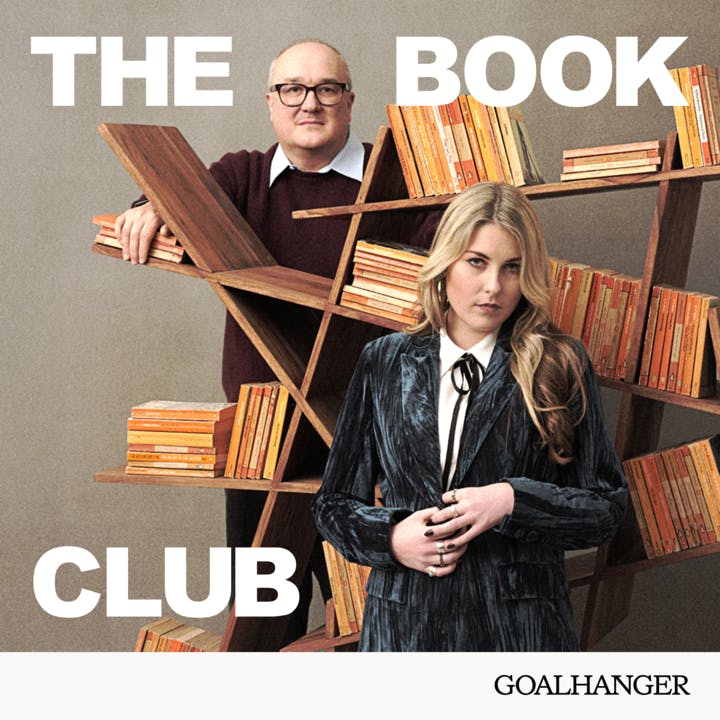
Hello, everybody. It's Dominic here from the Rest Is History. And I'm here to tell you about a thrilling new show that we have been working on here at Goal Hanger. It is called the Book Club, and
- [00:13]
B
it is presented by me and me, Tabitha Syrett. And it will be coming out every Tuesday. And each week we delve into some of the greatest, the most fascinating, the most intriguing books of all time. And it'll alternate every week between something a bit older, more classical, so for instance, Wuthering Heights, and then something maybe newer and a bit more contemporary. So the Secret History by Donna Tartt, or Never Let Me Go by Kazuya Ishiguro. And we will be digging into the kind of secret, hidden stories behind the story. We'll be uncovering the truth about the author themselves. We'll be delving into the context, the history behind the book, and also kind of unraveling the book itself a bit for you.
- [00:55]
A
Yes. So to explain the background to this, Tammy and I have been working together on the Rest is history for three glorious years. Tammy for feels like 30, but it's actually only been three. And we'd often be nattering about books when we're off doing our restless history tours and whatnot. And we decided that we would do a little bonus series for members of the restless History Club, didn't we? So we did the Hobbit and In Cold Blood and the Handmaid's Ted and so on and so forth. And we were, I think the technical term is blown away by the reaction to that from the club members.
- [01:24]
B
We were absolutely thrilled. Yeah, we were over the moon. And so we have spent the last couple of months putting together an exciting list of episodes for you. So we start with, of course, Wuthering Heights, the truth behind this iconic, famously kind of overwrought story. And obviously reflecting a little bit on the new movie. Then we do Never Let Me Go by Kazuo Ishiguro. And then what comes next, Dominic?
- [01:49]
A
So we've got the Great Gatsby. We have hamnet. We have 1984. So in two days time, we're recording an episode of your favorite book, I think, of all time. No Sarah J. Maas, A Court of Thorns and Roses. So this will be the.
- [02:01]
B
Don't pretend that wasn't your idea.
- [02:04]
A
So this is my first foray into the world of Romantasy. So basically, each week we're doing a different book, and it's a little bit like the Rest Is History. We will be talking about the author and their lives and the social context when the book was written and so on. But also it's a little bit more personal, I suppose, because we're also talking about our own reactions to the books. We're having arguments about which characters we liked and which we didn't. You have a unique identity, don't you? Because you're simultaneously ludicrously well ready, I mean, painfully well read, but also like dreadful judgment. And I think that's a really unusual
- [02:39]
B
combination and it creates, like, a fascinating tension within the show because you are very poorly read and have bad takes. So the combination of those two things together creates just dynamite. It's amazing.
- [02:50]
A
So to remind you, it's out every Tuesday, so it's in the gap between Rest Is History episodes. It's a different book each week. We will advertise the books in advance as much as possible, won't we, Tabby? So people can read or not read as they see fit. Because basically the beauty of this show is if you've read the book, brilliant, you'll enjoy the conversation. If you haven't read the books and have no intention of reading them, that's great. Cause we did the reading for you, so you'll appear incredibly well read. When you go to dinner parties, there's no doubt you do. Being Rest is history, people. So it's every Tuesday, it's the book club. And we've actually got a clip for you, haven't we?
- [03:21]
B
We do. As a massive treat, we have a clip for you from our first episode of the book club, Wuthering Heights. So we hope you enjoy it.
- [03:38]
A
Wuthering Heights by Emily bronte, published in 1847. It's set in 1801, but it's looking back even before that. And Tabby, it's one of the absolute canonical classics. And it's actually regarded, isn't it, as one of the great romantic novels.
- [03:52]
B
It absolutely is. You know, for instance, in the. In the very famous 1939 Lawrence Olivier film about it, they advertised it as the greatest love story of our time, or of any time. And as you say, I mean, it's an absolute classic. And it's particularly famous because of its depictions of kind of wild moors, simmering tensions, unbridled emotions. And of course, this very, very famous love story at the heart of it all, between Cathy, Catherine Earnshaw and the kind of iconic laconic romantic hero Heathcliff.
- [04:28]
A
And, you know, I mean, you've been going on about Weathering Heights for ages. I remember when, even before we were doing the show.
- [04:33]
B
Yeah.
- [04:33]
A
You saying it was one of your absolute favorite books. And am I not right in thinking that you used to read it? No, you used to read it every single year.
- [04:41]
B
But let me justify that for 20 years. I want to explain myself. I basically read it first when I was about 12, and I thought it was just, you know, devastatingly romantic, heartbreaking. I loved the Love Story. I loved Catherine Earnshaw, the heroine of the book, because I thought she was kind of fiery and beautiful and elegant and. And, as you say, I kind of put it on a pedestal and I would read it every year until I was about 17. Like, sort of sad teenage miser.
- [05:09]
A
Yeah.
- [05:10]
B
I stopped after that for a long time. And then. So this was my first time rereading it since I was 17. And so I was very intrigued to see what I thought about it this time. And my view on it's definitely changed. But before we get into all that and before we get into what you think of it, I think we should give a brief outline of what Wuthering Howitz is about. It tells the story of these two families, the Earnshaws and the Lintons, and they live very near each other across the Yorkshire moors. And it's kind of about the tangled relationships between them. And these relationships are particularly tangled, in large part thanks to the machinations of, you know, the iconic Heathcliff. And the plot is driven by his kind of crusade of vengeance. And Heathcliff is a foundling, taken in by the Earnshaws as a young boy and is treated very badly by his stepbrother, but falls in love with, at a very young age, his stepsister, Catherine. There's something of the Greek tragedy to it because it's kind of these cycles of revenge going round and round and round.
- [06:06]
A
So it falls into two halves, really. The first half is about. It's Kathy and Heathcliff, basically. So Kathy Earnshaw, she ends up marrying this bloke called Edgar Linton. The Linton. So the other family who live across the moors.
- [06:17]
B
Yeah, much more gentrified. Like, I think if you think this book is like Jane Austen and it's not, they are more akin to a Jane Austen.
- [06:25]
A
Yeah, that's exactly right.
- [06:26]
B
Family. Yeah.
- [06:27]
A
And so Catherine or Kathy, she's torn between slightly drippy husband, Edgar, and then harsh, much wilder, more violent Heathcliff, who is kind of her soulmate. And then the second half of the book is about her daughter, who, confusingly, would it have killed Emily Bronte to give her a different name? Yes, it clearly would, because she's also called Kathy.
- [06:49]
B
I think we could basically Just for the purposes of this, we can just call her Young Kathy. Old Kathy.
- [06:54]
A
Exactly. So young Kathy is living with Edgar, her father, in this civilized house called Thrush Cross Grange. And then she ends up coming across Wuthering Heights and she's dragged back into Heathcliff's world. And the sort of mad stuff that is going on there, for those people who haven't read it, and I'm guessing there's quite a few people listening to this who haven't read it. We won't give it all away right now, but basically there are going to be. I mean, there are going to be spoilers.
- [07:19]
B
Yeah, absolutely.
- [07:21]
A
But just on that, the way it starts, it gives you a clue to how the book works, basically, because we began with that reading, we're being told this story by a guy called Mr. Lockwood. Mr. Lockwood has rented Thrushcross Grange, so years after the events that are being described. And he's a Londoner, isn't he? So he's kind of out of his depth on the walls of Yorkshire.
- [07:41]
B
And because of that, because of the fact that he is a Londoner and quite sort of civilized or whatever, he adds a bit of comedy to it because he kind of goes into this house, he goes to meet his landlord, and his landlord is Heathcliff, who lives at Wuthering Heights, across the moors from Thrushcross Grange. And it's like. He basically walks into an asylum and it's like shadows everywhere. He keeps tripping over dead rabbits. He's slobbered on by vast wolfhounds, and he's utterly bemused by everything and everyone he encounters there. And there's this kind of grotesque cast of characters that he meets at the Heights. Anyway, so he ends up getting snowed in for the night, much to his distress, and he is put to bed in this room. And he finds a ledge in the room covered with writing. And it's a name repeated in all kinds of characters, you know, large and small. And it says Catherine Earnshaw here. And then it varies to Catherine Heathcliff and then again to Catherine Linton. And so he then starts to read this, Catherine's diary. And this triggers the mad nightmare from the opening reading, which I think I injected with so much dramatic flair.
- [08:44]
A
Nice that you're complimenting yourself yet again.
- [08:45]
B
Again, yeah.
- [08:47]
A
So basically, it's a very, very violent scene. The child's face looking through the. And actually what he tries to do, Mr. Lockwood, is he tries to basically slit the child's wrist on some broken glass, which is. I mean, you would Think. God, that's. That's a bit much in a Victorian novel. But of course, that sets the tone because there's a lot more of this kind of violence and abuse to come in the book. It's a very, very nightmarish scene. Cause it is a nightmare.
- [09:11]
B
It is. And it's very odd because Heathcliff comes into the room and is. He's. He's so angry. There's like a mad desperation to him. And it's like he has caught Lockwood dreaming the Dr. That he ought to be dreaming about this girl Catherine. And we, at this stage, don't know why. We don't understand the relationship between them.
- [09:29]
A
Yeah. So Lockwood has had this flipping weird experience staying in there. So this. I was about to say this hotel, I mean, you'd never stay it. It's like. It makes faulty towers look That a Ritz.
- [09:40]
C
Yeah.
- [09:40]
B
I'd actually rather stay at a hostel than that.
- [09:42]
A
Anyway, he's been staying at Heathcliff's house. It's full of all these mad people. There's a lot of stuff with broken glass and ghosts. And when he goes back to his own house, he finds out that the housekeeper there, who's called Nelly.
- [09:54]
B
Nelly Dean.
- [09:55]
A
Yeah. She used to work for the Earnshaws at Wuthering Heights. And she knows the whole story behind this because Lockwood is as lost as we are. And so she says, basically, well, I will tell you the story.
- [10:05]
B
Yeah. It's not. It's not exactly the kind of recuperative. No, you know, pleasant tale that I think he was hoping for amidst his illness.
- [10:12]
A
Exactly. So to cut a very long story, and complicated story short, there's these two characters, Heathcliff and Catherine Earnshaw, who later becomes Catherine Linton, who is now dead.
- [10:22]
B
Yeah.
- [10:23]
A
And Heathcliff was the foundling and Kathy was his kind of adopted sister.
- [10:28]
B
Yeah.
- [10:29]
A
And they had this incredibly tortured and intense relationship. She married this bloke, Edgar Linton, who lived across the moors. Heathcliff was driven sort of mad with rage. He ends up eloping with Edgar's sister, Isabella.
- [10:45]
B
Yeah.
- [10:46]
A
Who's massively fallen in love with him, but soon realizes she's made a terrible mistake.
- [10:50]
B
Yeah. And that's kind of interesting because Isabella falls in love with him in the way that I think a lot of audiences now fall in love with Heathcliff without having read the book.
- [10:58]
A
Yeah.
- [10:59]
B
It's the idea of him. It's the Byronic, heroic idea of him.
- [11:01]
A
Exactly. She thinks he's incredibly glamorous.
- [11:03]
B
Yeah. And romantic.
- [11:04]
A
Little does she know she has a child. Irritatingly called Linton.
- [11:10]
B
It makes you hate Emily Bronte.
- [11:12]
A
Yeah. You could have thought of a different name here, but you just thought you'd use the surname again. Brilliant. Meanwhile, Kathy's had a daughter with Edgar Linton who she calls Kathy.
- [11:20]
B
Kathy. Yeah.
- [11:21]
A
So, I mean, this is a huge part of the story. Is the doubling of names deliberate? Yeah, of course, it's completely deliberate.
- [11:27]
B
It's like the compulsive repetition. It shows you that you're trapped in these dark webs of hatred and obligation and.
- [11:34]
A
Exactly.
- [11:35]
B
It goes on and on and on.
- [11:36]
A
It's like you're saying about the Greek tragedy thing. It's basically the idea of the bitterness and the hatred and the jealousy being passed down through the generations.
- [11:43]
B
Yeah. It makes you think, though, given the violence of it and the, you know, how complicated it all is, it makes you wonder, like, what is going on in the mind from which it sprung. Like the strange mystery of Emily Bronte.
- [11:57]
A
That's a very nice segue, Tabby, into talking about Emily Bronte. Right.
- [12:00]
B
But first of all, I mean, should we talk about another fevered imaginative writer? What's your take on Mothering Heights?
- [12:06]
A
So I read Jane Eyre a few years ago for the first time. Loved it. And then I thought, I'll read another Bronte. And I read Wuthering Heights. I thought, oh, disappointing. It's not as good as Jane Eyre because I didn't really get into the kind of Fever dream side of things. I frankly did get a little bit lost. And I thought to myself, this is going to be very self incriminating. I thought to myself, this is a bit of a book for teenage girls.
- [12:30]
B
Oh, he went there.
- [12:32]
A
It's the book that a sad and lonely teenage girl would read every year. Tabby. No, but actually I've changed my mind.
- [12:40]
B
Oh, wow.
- [12:41]
A
I will reveal all at the end of the episode. But I've completely changed my mind, my mind about it.
- [12:44]
B
That's exciting.
- [12:45]
A
Before we do that, let's get into Emily Bronte herself, because critics used to call her the Sphinx of the Moors because she was such an enigma, such a riddle. We know so little of her inner life. And so that of course plays into the Bronte industry and the Bronte legend, because it's meant that obsessed readers can project onto Emily Bronte, you know, whatever they like. However, there is obviously clearly a historical person here behind the kind of layers of wild myth and legend. So, Tabby, you've done a bit of digging, haven't you, into Emily Bronte's life
- [13:21]
B
in large part because of that thing, the kind of. The myth, I kind of wanted to see how much reality there was to it. So Emily, she's the fifth of six Bronte children and that she's born in Thornton in Bradford, in July 1818. And then when she's, I think, almost two, they move to a place called Haworth in the Pennines. And her father, Patrick, is the local curate. And then she is str. The first of these three kind of early tragedies that will darken her early life because her mother, Maria, dies of cancer when Emily's about three. And then she and her older sisters, including Charlotte Bronte of Jane Eyre fame, they're sent to this school for clergymen's daughters when she's not yet six, and they're treated really, really badly. And this school is actually the inspiration for Lowood in Jane Eyre, the kind of terrible school where it all starts. Yeah. And then while there, two of Emily's older sisters die. So before the age of seven, she loses two sisters and a mother. And then so there's only four children left. And it's Charlotte, it's Emily, it's Bramwell, their only brother, and then Anne, who's also an author.
- [14:25]
A
Anne's always a bit of an afterthought, isn't she?
- [14:27]
B
She is always. I always think that's a bit harsh, though, because I really like the Tenant of Wildfell hall.
- [14:32]
A
But she.
- [14:32]
B
Yeah, she's definitely not as famous or as impressive as the others, probably. Anyway, so they're educated at home at the parsonage by their father and their Aunt Elizabeth, and definitely a bit of a weird household, I would say.
- [14:43]
A
Yeah. People think of them isolated.
- [14:45]
B
Yeah. This haunted house. Yeah. Cut off from the world. But that's actually rubbish. They were very literary. They subscribed to sort of heavyweight literary journals. The house is full of classics. And it's not surprising because their father, Reverend Bronte, was a very impressive, very, very clever man. He came from county down in Ireland and he was actually the son of a farmhand. And then because he was so intelligent, he managed to get himself to Cambridge to read theology. Although that said, he is a bit bonkers.
- [15:14]
A
Doesn't he cat walk around with a gun all the time?
- [15:16]
B
Yeah, yeah. Like all loving fathers, he walked around with a loaded gun. And I actually think you could see the side effects of some of this madness inside the odd characters of Wuthering Heights.
- [15:25]
A
He doesn't let them eat meat.
- [15:27]
B
He doesn't let them eat.
- [15:27]
A
No, not for moral reasons, because he thinks it'll make them Entitled and spoiled.
- [15:30]
B
Yeah, exactly. Exactly. Yeah. See, he's a fun guy. He's a good time. And he's also very much kind of lets himself be an outsider in their community. He keeps his Irish accent so he stands out. And he's known to be quite cold, quite distant, and he's known to have these mad, kind of fiery rages. He's a delightful fellow.
- [15:51]
A
Yeah, it sounds great.
- [15:52]
B
But I think it's no surprise then that his kids are quite odd, too. So, for instance, a local woman told Elizabeth Gaskell, when she was looking into the Brontes, that the Bronte children had no friends in the village. And I actually quite admire this because I think similarly, on one occasion, they were invited to a party and they showed no knowledge of the games played by their peers. And I actually quite respect that because my heart always sinks when I go to people's houses and they say, oh, should we play cards? Should we play Scrabble? So I'm on their side with that.
- [16:21]
A
You don't like cards or Scrabble?
- [16:23]
B
No, I don't actually like Scrabble. It's so forced. It's like the forced fun of it. Can we not just.
- [16:29]
A
Would she never play any form of game?
- [16:30]
B
Yeah, when I'm pressgranged into it. Because you don't want to be, you
- [16:33]
A
know, all those people who were thinking about inviting you to their house to play Cluedo and now change, changing their minds.
- [16:38]
B
But so, because of this, because of their reluctance to sign up to annoying, boring, forced games, the siblings do become very, very close. Unnaturally close, perhaps.
- [16:48]
A
They create these fantasy worlds, don't they? This is very you, actually. Is it Glass Town and Angria. A place called Angria.
- [16:55]
B
Yeah. And the really funny thing about it is it's not quite kind of Lord of the Rings, because they have little soldiers in them. Like they have the Duke of Wellington in them. And actually, it's very telling about how exposed these children actually were to the. To the wider world, how much they didn't live under a rock in Yorkshire, because they're kind of set all over the. The world.
- [17:15]
A
It's in the Pacific.
- [17:16]
B
The Pacific, yeah, exactly, exactly.
- [17:18]
A
So Emily, you know, they're obviously gonna have to get a livelihood.
- [17:22]
B
Yeah, well, they have to earn some money. Yeah.
- [17:23]
A
Right. So she becomes a teacher in Halifax, and that's a shambles, isn't it?
- [17:28]
B
This is where me and Emily part ways.
- [17:30]
A
I think she says to the kids at one point, I genuinely, like, prefer the dog to you. I hate you.
- [17:34]
B
Yeah. And you will discover in due Course, why that's such a frightening sentiment and why these children were actually.
- [17:40]
A
Yeah, if there's any dogs listening to this podcast, stop listening.
- [17:43]
B
Anyway, so that doesn't work out. So when she's 24, she goes with Charlotte to a girl's boarding school in Brussels and she teaches music there. But yet again, she absolutely hates it. She's very snobbish, she's quite up herself. She says that, oh, I'll only teach the children at the end of the day when I'm done with my own studies. And that's the only time that they have a break or free time. So she cuts into their free time and was, unsurprisingly, very unpopular.
- [18:06]
A
That's poor.
- [18:07]
B
She was also very unfashionable. She refused to wear the Belgian fashions.
- [18:11]
A
Would not wear the latest Belgian fashion. No, but what could a Belgian fashion possibly be?
- [18:16]
B
Well, you wouldn't understand such things because you're not a fashionista like me.
- [18:19]
A
Do you know what Belgian fashions are?
- [18:20]
B
I do, actually. I just don't feel like sharing it right now.
- [18:22]
A
Okay, fine.
- [18:23]
B
Anyway, so because of this, and I find this so amusing, there was a student called Letitia Wheelwright and she said of Emily Bronte, I simply disliked her from the first. Her tallish, ungainly, ill dressed figure, always answering our jokes with I wish to be as God made me.
- [18:39]
A
She actually sounds like a terrible person.
- [18:41]
B
Yeah.
- [18:42]
A
The great critic Catherine Hughes. I was reading an article that she wrote about this book and she described Emily Bronte as the patron saint of difficult women. You're not going to be sat next to her at a dinner party because she wouldn't go.
- [18:52]
B
She won't go out.
- [18:53]
A
But if by some terrible mischance you're
- [18:55]
B
having a Bible reading or something, her physical portrait can tell from that she's very unfashionable. And she's also said to be tall and had big bones.
- [19:03]
A
Big bones. Generally when people say you're big boned, they mean that it's not a good thing. Yeah, in an unflattering way. Right.
- [19:09]
B
And actually there's a movie that they did called Emily with Emma McKay from Sex Education. And they very, very much play into this. Like she comes across as almost autistic, I think.
- [19:19]
A
Right.
- [19:19]
B
And people said that about her, didn't they?
- [19:21]
A
Yeah, well, people have diagnosed her since with autism or with anorexia, these kinds of things which people love to do with characters in the past. I also think that's slightly dodgy. I tell you one thing that's very Dodgy, though, actually. So you mentioned the business about dogs.
- [19:33]
B
Yeah.
- [19:34]
A
As we'll discuss, Wuthering Heights is a violent book. There is a lot of abuse of various kinds of shockingly violent as well as mental. And you might say, well, where does this come from in this sort of quite withdrawn, lonely, you know, very bookish girl. And an answer is, she herself is quite violent. So she had this dog called Keeper and she loves Keeper, doesn't she? But one day he climbs on her bed with muddy paws and she reacts by punching him in the face. But not just once, but like again and again.
- [20:04]
B
And if you love dogs more than people. Oof. You're in big trouble if you're one of her students. I think we have to be slightly sympathetic towards Emily. You know, she's grown up with, as far as we can tell, a very angry father and she's suffered a lot of loss at a young age and she's very isolated. So I do have a little bit of pity towards her in that respect. But the other thing that's worth remembering is that, you know, because people, they almost canonize Emily Bronte as kind of like a feminist icon. And we'll touch on that a bit more. You know, she has quite kind of high Tory politics, doesn't she? She would have set the dog on Suffra jets or whatever.
- [20:38]
A
Right.
- [20:39]
B
Which is not in keeping with the idea of how it's this kind of free spirited sphinx of the moors. So that was a clip from our very first episode of the book club from Wuthering Heights, and we hope you enjoyed it. To hear more, search the book club Wherever you get your podcasts, Goodbye.
- [20:57]
A
Bye bye.
- [20:58]
D
Anthony Scaramucci here. As much as I love talking politics, and let's be honest, it sometimes gets me in trouble, my other and probably safer passion is books. We just dropped our 200th episode on my podcast, Open Book, another goal hanger show. And to celebrate, we spoke with none other than Waterstones and Barnes and Noble CEO James Dawn. Let's take a listen. It's a phenomenal piece of technology, James. Everything has changed. Our phones have changed, our computer, way we look at the TV. The book is a 500-year-old piece of technology. You think in 500 years it'll be with us, James?
- [21:35]
C
I think so. And I think it's astonishing simply how extraordinarily durable it is and effective it is. And as, say, newspapers, we don't read them anymore. It's on your iPad, it's on your phone. Music. The format changes all the time. Not with books. And I think when publishers also concentrate on the physical attributes of a book as well, they are lovely things and treasures forever.
- [21:57]
D
There may be too many books being
- [21:58]
A
published right at this moment.
- [22:00]
D
Do you believe that and tell us why?
- [22:01]
C
Far, far too many books. And it's getting ever, ever worse. This is speaking as a bookseller who crafts a physical space. So I only have so much space and there's more and more and lots of self publishing. Nothing wrong with writing a book and wanting to see it out in the world. But for myself, I have to curate all the time and the bit that I regret is that people get upset with me for not carrying their book. Well, I just can't. I don't have the space for it. And that's really what I mean. The fact that they sell on Kindle or they sell on Nook or online is fine by me. I want people reading, but I myself have to curate and the reality is that I can't take the vast majority of books that are published.
- [22:39]
D
I hope you enjoyed that clip. To hear more from James dawn and others, subscribe to Open Book with Anthony Scaramucci. Wherever you get your podcasts.