← The Rest Is Politics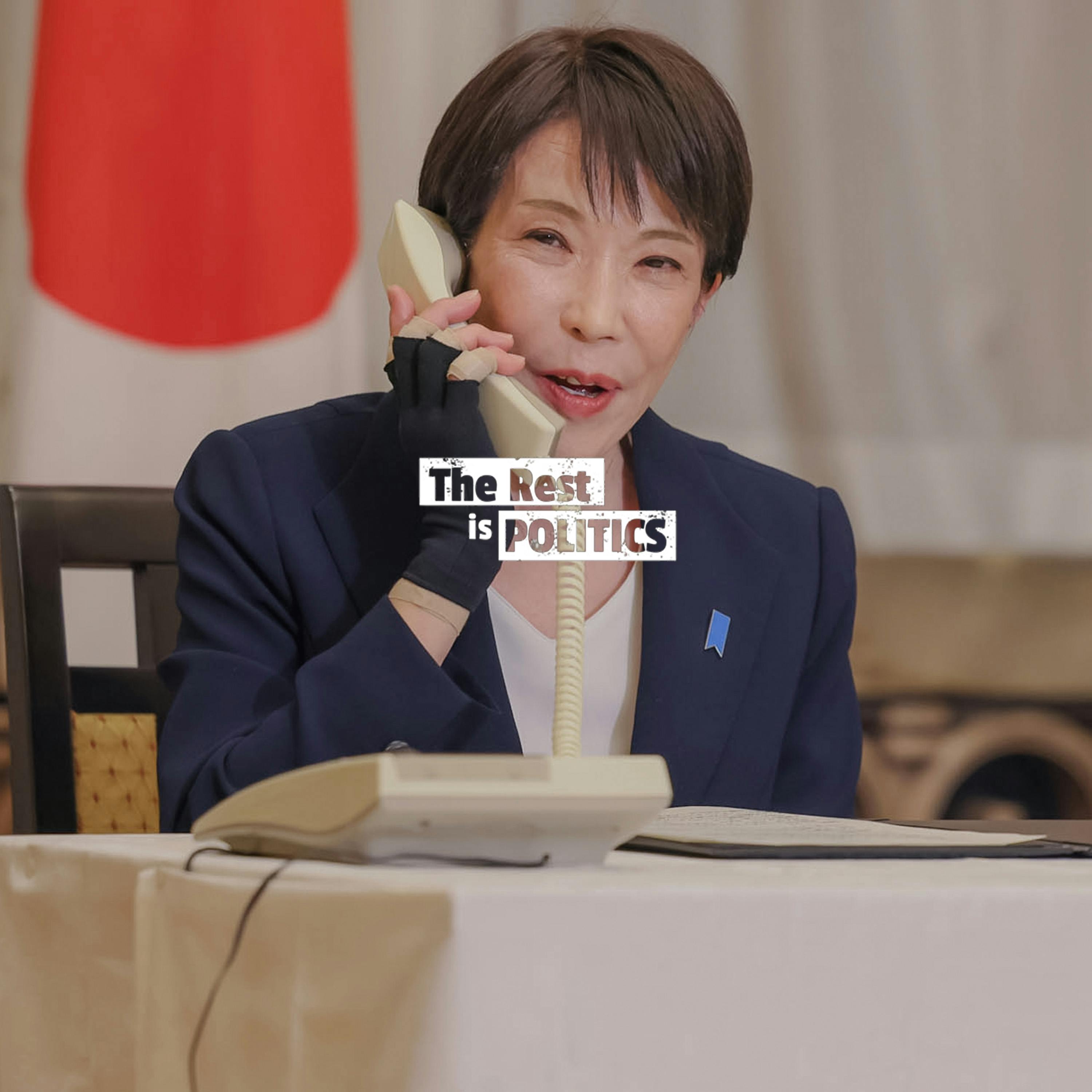
Loading summary
Transcript173 lines
- [00:00]
Alistair Campbell
Thanks for listening to the Rest Is Politics. To support the podcast, listen without the adverts and get early access to episodes and live show tickets, go to therestispolitics.com that's therestispolitics.com this episode is powered by Fuse Energy.
- [00:15]
Rory Stewart
Most of us are buying energy in the dark, not knowing what it costs. You wouldn't do that with your weekly food shop, but with energy, you're often charged first and only find out the number later.
- [00:25]
Alistair Campbell
When you don't have that clarity, you usually end up paying more than you should, which is what Fuse Energy is working to change about how energy works.
- [00:32]
Rory Stewart
The average household switching to Fuse can save around £200 on their energy bills.
- [00:38]
Alistair Campbell
Fuse handles the practical side. The app shows what you're spending day by day and what that actually means for your bills.
- [00:44]
Rory Stewart
For listeners to the show, there's an added benefit. Use the code politicswhenyou switch and you'll receive a free trip subscription.
- [00:52]
Alistair Campbell
Switch to Fuse Energy and save around £200 on your energy bills. Use the code POLITICS for a free trip subscription. Fuseenergy.com politics a better help ad we get it.
- [01:05]
Advertisement/Host Voice
February is full of flowers, candy, and of course, lots of talk about relationships. It can feel like everyone else has it all together in their love lives, but the truth is, we're all still figuring it out. Whether you're working on your marriage, navigating the dating apps, or prioritizing staying single, no matter where you are, you're right on time. Therapy can help you find your way and take some of the pressure off yourself so you can determine what you want, what feels heavy, and how you can feel lighter. Just a little bit of outside perspective from a professional can lead to new understanding and a lot of progress. So the next time you're feeling iffy about your love life, try therapy with BetterHelp and see where it takes you. And remember, you're right on time. Visit betterhelp.com restpolitics for 10% off. That's betterhelp.com restpolitics this podcast is brought to you by Carvana. Car shopping shouldn't feel like preparing for a marathon of paperwork. That's why Carvana makes buying and financing your car easy from start to finish. Search thousands of vehicles with great prices, all online, all on your time. And when you're ready, your new car shows up right at your door. It doesn't get better than that. Buy your car the easy way on. Delivery fees may apply.
- [02:32]
Alistair Campbell
Welcome to the Rest Is Politics.
- [02:33]
Rory Stewart
Me Alistair Campbell, and with me, Rory Stewart.
- [02:36]
Alistair Campbell
Now, we've done three episodes at least in recent days on Labour and the current travails flowing from the Epstein files. So we're not going to talk about that in question time. We're going to talk about the Japanese election. Fascinating. We're going to talk about the presidential election in Portugal. Also fascinating. We know a little bit of sport, Rory.
- [02:56]
Rory Stewart
Yep.
- [02:56]
Alistair Campbell
But the politics of sport. Okay, Winter Olympics, super bowl, and then we'll do something a bit lighter later on. Lovely. All right, so should we try and be really disciplined and not talk about Labour and should we try not to talk about Trump? Okay, how'd that be? That? It could be hard, but we'll try.
- [03:15]
Rory Stewart
Okay. I'm not going to take a challenge on not mentioning Trump because the first question that we're getting is from Matthew Wright in Wiltshire, which is about Japan. What does Japan's election result mean for its relationship with China and tensions in the Pacific? I mean, the beginning of the answer, of course, Matthew, is that Taiwan has become the big flashpoint between China and Japan in this election because Sanae Takechi, who is the Japanese Prime Minister, has now said explicitly for the first time to Japanese prime Minister that they would effectively go to war to defend Taiwan against China. And Xi is somebody who's seen as being closer to the man that you don't want to mention in this podcast and the US alliance just this episode. And it's going to be weaponized a great deal by China. And we'll get into that a bit later in the podcast how the Chinese might perceive it. But first, tell us a little bit about this election.
- [04:07]
Alistair Campbell
Yeah, no, it's an incredible story, this. So Sanae Takaichi is the first female prime minister in Japan. She's the leader of the ldp, this incredible party that has been in power kind of all of my life and more and is a sort of formidable political machine that's sort of been spluttering in recent years. And prime minister's falling over the edge. A lot of corruption, a lot of gerontocracy. And along comes Takaichi and she takes over the leadership. She becomes Prime Minister for the third, the third time of trying. And she's in power for 110 days. She does some really quite bold economic things. We'll talk about whether we think they're going to work or not. And then she calls a snap election and she does three things that you constantly told not to do. Don't make the campaign so short that even your own campaign candidates can't prepare properly. She has a two week campaign. Never do it in the middle of winter because people struggle to get to the polls. She does it in these massive snowfalls and don't do it when students are doing exams because particularly like her when she's got a big appeal to young people. So she does all those things. Middle of winter, students off, and it's a snap, literally a snapulation. And she's won massively, 316 of 465.
- [05:24]
Rory Stewart
Seats, up from 198. So she's gone from a minority to basically nearly two thirds of the lower house.
- [05:30]
Alistair Campbell
And if you get 2/3 in the Japanese system, it means you can make massive change. And she can do that with a bit of support from this other party, the Innovation Party. So she's going to do a lot. And she's a very, she is a very interesting figure. When we first talked about her when she became the leader, we both said, you know, that she, because she dresses like Thatcher and she says she wants to be seen as the Iron lady and she models herself on that. And I had a very interesting email from a woman called Tina Barrett, who is a professor of political science at a university in Tokyo. And she sent me a long note way back saying, you guys are getting caught out by the propaganda. This woman is more Liz Truss than Margaret Thatcher.
- [06:15]
Rory Stewart
Well, I mean, so much to talk about here, but I think first thing is Japan really, really matters. I mean, we'll get onto Portugal in a bit, but Japan is still one of the largest economies in the world. It is America's big partner in the Indo Pacific, big balance against China. And the first thing I think that really strikes me is a reminder of how unpredictable global politics has become because I was following very closely, I was in Japan last year and I was following very closely a series of Japan experts, both Japanese and foreigners, talking about this election. And basically it's been surprise after surprise after surprise. We got it all wrong. So the first thing is that when she was running for leadership, as you say, because she'd been defeated twice already and she's a woman and she's quite an unusual woman from the right, a lot of the conventional wisdom was hoping that the victor was going to be Koizumi. Koizumi is the son of the man that you knew. So he's a premise's son, he's in his early 40s, he's glamorous, he's quite kind of centrist, more on the left of the ldp. And actually what happens is that he manages to run against another Centrist, split the vote, he ends up with 27% of the vote, she gets 31%. So she comes here on pretty narrow margin against all the pundits predictions and becomes leader. Next thing that happens is everybody then sucks their teeth and says, well, it's going to be pretty difficult for her because actually, you know, she's seen as a bit of a sort of outsider in a party dominated by these people who are, as we've often said when we're talking about Japanese politics, many of them are dynasts, you know, their children, grandchildren of ministers and prime ministers. And she's from a more modest background from nara, didn't go initially to the fanciest universities, et cetera. So it's going to be difficult for her and she's in an impossible situation. The story was she can't do it because a far right party has emerged, Senseito, which is beginning to pick up big anti immigrant vote. And at the same time she's going to lose her coalition partner on the left who have signaled they're extremely uncomfortable being connected with the right wing party. So her problem feels a bit like, you know, for example, the Tory party in Britain. You don't want to overstretch it, but she's got the rise, as your friend Chris Mason would say, the rise and rise of San Sato, of reform.
- [08:44]
Alistair Campbell
The rise and rise of reform. He was a bit upset, I thought, oh, we'll talk about later.
- [08:49]
Rory Stewart
Anyway, that's happening on her right. Meanwhile, she's about to lose the left wing coalition. And the story is nobody can change Japanese politics because to use another cliche from British politics, governance is broken, Japanese government's broken. And basically the story is prime ministers don't last, nothing can get done. The LDP is mired in, as you say, old people, corruption, these incredible factions and policy machines. So she's stuck. And then she calls an election and then everyone's like, whoa, whoa, whoa, whoa, whoa, whoa, whoa, whoa, whoa. How on earth is this going to work out? Because how on earth is she going to deal with the populist rights and the fracturing Japanese politics?
- [09:29]
Alistair Campbell
And what we're talking about in the episode we did on Monday, this thing about reputational currency in the bank. So what you're describing is a place where she didn't have that much reputational currency. And as I said on Monday, where politicians get big reputational currency is by winning elections and she has won so big.
- [09:50]
Rory Stewart
Yes, exactly. So let me just sort of develop that. But certainly contrary to most of these pundits, Predictions, she's killed it. And again, you know, you can imagine when people call snap elections, people have visions of Macron, but she didn't do it like Macron. Having been in for a long time in a very weak position, she moved very, very quickly. But you've also pointed out three reasons why that election might not have worked. Actually, it worked brilliantly. Okay, so now she's in next problem that we, which is that journalists writing about it find it sometimes if you we can share a New York Times article, which is a classic example of this, they get very excited by the fact she's the first woman, she plays the heavy metal drums. So there's a lot of memes about her playing the drums with the South Korean president.
- [10:33]
Alistair Campbell
Yeah.
- [10:34]
Rory Stewart
And there are lots of special celebrity toys being made with her face and there's a bit of a movement around her, etc. And so a lot of the journalism is quite personality driven and it's not really asking the questions we normally ask in election. What actually happened district by district? How is it possible for this party to go from basically being a minority to having a super majority? What on earth happened to the opposition? What's happening with this youth vote? I mean, she's kind of a right wing, traditionalist, anti immigration and then the young people.
- [11:06]
Alistair Campbell
And the other thing that she. And again, a position that Japanese politicians traditionally have been very wary of getting too close to is actually the idea of militarization and national identity and the military. And she even had a go at China over Taiwan, which again got very little sort of entrance into the election debate, but has got massive significance because China has already retaliated, banning seafood, urging Chinese people not to go to Japan on holiday. And a fifth of all tourists to Japan are Chinese.
- [11:41]
Rory Stewart
Okay, so let me just give the Chinese perspective. So I, over the weekend spent a couple of hours with somebody from mainland China and he was emphasizing, he said, you know, to be fair, he said, look, some of this is propaganda in our school textbooks, but some of this is genuine belief. The Japanese, from the Chinese point of view, invaded Manchuria, invaded China, committed unbelievable atrocities, killed millions of people. And after the war there wasn't really a denazification and they didn't apologize properly. In fact, right wing politicians, of which she's a good example, continued to visit the shrine dedicated to war criminals. So from the Chinese point of view, they're looking at this and they're saying here is an aggressive, nationalistic, militarist power that has never come to terms with what they did during the second World war. And here's a leader from that factory action saying that she is going to fight on Taiwan's behalf against China when Taiwan belongs to China. So from the Chinese point of view, and this again isn't being picked up in the coverage, there's a real sense here from China that they're thinking about Japan in the way that maybe, I don't know, Europeans might have thought about a resurgent Germany if it had suddenly militarized in the 1960s not long after that.
- [12:59]
Alistair Campbell
I think you're right. The China, to be fair, this podcast, too, we don't talk enough about Asia, but if you've got the Chinese Communist Party saying to the Chinese public, please don't go to Japan, we don't recommend you go there for your holidays anymore, a lot of people are going to follow that. And that is a big hit on the economy. And if I go back to my professor friend Tina, the reason why she says that she's more trust than Thatcher is because of the economic policy that she is already pursuing. So she's really going for very loose monetary policy, big spending and cuts to tax. So she's promising massive cuts in consumption taxes and at the same time, she's talking about massive boosting of spending. And Tina, who's a professor of Japanese politics, is say this has got a horrible feel of the trust Kwa Tang mini budget.
- [13:58]
Rory Stewart
One of the questions here is we've talked about this a lot. The Japanese debt to GDP ratio is enormous. And normally people say that that's less of a problem than it would be in the UK Because a lot of it is owned by the Japanese sort of internal things. But there's a limit to that. And it's interesting. The markets have responded positively to our election, but there will be many other people looking, saying, where on earth is the Japanese economy going? The Japanese economy really, really matters. The world final thought. I think we need to watch carefully the geopolitics. This and this maybe relates to the question from our listener because she is very clearly going pro Trump. She sees herself as a disciple very much of Shinzo Abe, who Trump liked a great deal. She will be taking a more nationalistic line against China. We really have to watch this question on the constitution. Is she going to change the constitution?
- [14:52]
Alistair Campbell
Because she probably will be able to.
- [14:53]
Rory Stewart
If you want to, to allow Japan to become a fully militaristic power. And if so, this is the big change. Because for decades now, Japan was pacifist economic powerhouse under American security umbrella. If she shifts it to an assertive More militarized nation state, semi autonomous then I think we're in a very different world.
- [15:16]
Alistair Campbell
Yeah. The other thing that she was doing partly, I think, to deal with this far right party was very, very strong line on immigration. Now, of course, compared to most of the developed economies, Japan doesn't have that many.
- [15:29]
Rory Stewart
Very few. There's a few Kurds living in some town.
- [15:33]
Alistair Campbell
Well, they've got, they've got slightly more than one.
- [15:35]
Rory Stewart
She claims in her hometown of Nara that she saw a tourist punch a deer in the Deer Park.
- [15:39]
Alistair Campbell
I know. And there was never any evidence of it at all. So she's got a little bit of. I'm not going to mention the DJT guy, but a little bit of Trumpism to her communication. But the truth is Japan, I mean, what's one of the stories that we've talked about Japan for years and years and years and years is way ahead of us. The aging population.
- [15:58]
Rory Stewart
Median age in Japan about 51. Median age in Britain about 40. Median age in Europe higher than Britain. But by the time you get down to somewhere like Nigeria, it's 16, to give a sense.
- [16:12]
Alistair Campbell
Yeah. What's your Favorite Nigerian stat?
- [16:14]
Rory Stewart
1 in 10 children born in the world will be born in Nigeria by 2050.
- [16:18]
Alistair Campbell
Yeah. The reason why I keep asking you to repeat that is if I live to 2050, we're gonna come back and see what it is.
- [16:28]
Rory Stewart
It's also true that all demographic projections are always wrong.
- [16:31]
Alistair Campbell
Exactly.
- [16:32]
Rory Stewart
I mean, but also, I mean. Yeah, I mean, we need to talk about that in more detail some other time.
- [16:37]
Alistair Campbell
And so you've got this aging population. They're all living a very, very long time. And yet she's saying no more. You know, we're going to cut back on immigration. Like us, they're going to need it.
- [16:49]
Rory Stewart
Yeah. And as you point out, it's obviously not just that they're very healthy and eating good food, it's also they're just not having any children. And that's a problem for South Korea. South Korea. I think the average number of children is now getting down to about 0.3 per family. So this is demographic collapse and no immigration coming. Yeah.
- [17:06]
Alistair Campbell
Just on the. We should do a thing on demography at some point. But do you see that the French are right? The government are writing to every 29 year old basically saying, get on with it, have kids.
- [17:17]
Rory Stewart
Now, what do you think about Viktor Orban's policy? I mean, it's quite interesting, right? He's saying that anyone, any woman who has three children is exempt from income tax now. Any woman who has two children exempt from income tax, it's presumably quite, you know, if you were wondering, am I going to have a second child, third child, being exempt from income tax for your whole life, that's pretty good.
- [17:34]
Alistair Campbell
And we've got an election coming up and I wonder if that might be why he's suddenly saying, let's give some more money to parents. Yeah. Now, Josephine in Southall, what lessons can progressive British politicians draw from the Portuguese presidential election about how civil society can mobilise and cross party elites can coordinate to counter anti democratic movements? And this relates to the presidential election, which is not the same as a parliamentary election. I think this is. Look, there is a lot to unbundle here in terms of left, right, far right, progressive battles. But I think from the British perspective, this is as much about political systems as anything else. This is the second round of, of a presidential system where in the first round anybody can stand in the top two go through. And what's happened is that the far right guy, Ventura, who was a former sports TV commentator, kind of Gary Lineker of Portugal, he founded this Chega party in six, seven years ago and has made a huge impact upon Portuguese politics. But what's happened is that having got into the second round, there has been this mobilization. So the equivalent for Britain would be if in our. We've said often what we've known as a two party system becoming a 4, 5, 6 party system is if rather than having our parliamentary elections, you had, in the next election, let's see who votes for the wall. And then the top two, let's say the top two are Starmer and Farage, they go through.
- [19:04]
Rory Stewart
Absolutely.
- [19:04]
Alistair Campbell
And so it's a totally different system.
- [19:06]
Rory Stewart
It's much easier to see people allying against.
- [19:07]
Alistair Campbell
Exactly.
- [19:08]
Rory Stewart
So I think the positive story, which is what our question is pushing is it's rather interesting because what happened is that the Catholic Church came out for the left wing presidential candidate. Quite a lot of right wing politicians came out against the far right. So there was a sort of nice story of people creating a kind of firewall to exclude the far right candidate. And boy, is he a far right candidate. I mean, his posters during the election were, this is not Bangladesh. Right. This is key, key example of his postosis. But, but, but as we said before, two years ago, people were still talking about the Iberian exception, the idea that Portugal and Spain were somehow immune to populism. This guy on the far right, this is not Bangladesh. Over 30% of the vote. Now, that's a big vote. His Vote share is basically the same as Keir Starmer got in the last election in Britain. So this is a huge political force. He's taken it from zero to, I think, 50 seats in parliament.
- [20:07]
Alistair Campbell
I think. I wonder whether in Josephine's question is the thinking that this shows you can come together and fight them off now? On one level, it does. And there was obviously a lot of public awareness. You had quite a lot of conservatives voting for the socialist to stop Cheikh, stop Ventura winning. But I'm not sure there's much beyond that. I agree with your assessment. This shows that actually in a country that not long ago, former fascist country, don't forget that we, we see this. Maybe we shouldn't be too rose tinted about this. This is a little bit of a. I think it's a warning sign as much as anything else. It does show if progressive forces get together and fight, they can win. But it also shows that these guys are on the rise. Maybe that's two elections we've covered. Why don't we come back next week and talk a little bit about Thailand?
- [20:55]
Rory Stewart
Lovely.
- [20:56]
Alistair Campbell
Because that's another huge election. And of course, longer to unbundle that one. Because the battle there is not necessarily the battle of the ballot box. It's what happens after with the monarchy and.
- [21:06]
Rory Stewart
Okay, well, let's do that. And let me maybe to bring a lighter, quicker tone, because we've done quite a lot of serious, in depth geopolitical.
- [21:15]
Alistair Campbell
Here goes. Rory, Sports not serious.
- [21:17]
Rory Stewart
Yeah, there we are. Question from Alex in San Diego. Is the Winter Olympics a sign? Sport is the only thing that can make us feel good right now. Now, is that true for you? Is that the only thing that makes you feel good at the moment?
- [21:30]
Alistair Campbell
Well, there's a lot of things right now making me feel bad, neither of which I'm going to mention, but I. Here's the. Have you watched any of the Winter Olympics?
- [21:40]
Rory Stewart
No, and I'm really sorry because I ski. I'm in a ski obsessively. I'm completely obsessed with winter sport. So I love watching skiing.
- [21:46]
Alistair Campbell
Well, I've. I watched. I'll tell you what I've watched so far. I watched the opening ceremony, which Danny Boyle will never, ever be beaten. London 2012 were the best only ceremony of all time. But the Milan Cortina opening ceremony was terrific. It was really, really good. And it was actually quite moving. And the speeches were moving a bit long. Could have done with a good, you know, Campbell red pen through them, but they were good. And their message was about this, about there's so much division in the world. There's so much hatred. Sport can bring us together. Sports about this, this, this, it was good. And of course, the fact that J.D. vance was in the audience was, you know, I think it was pointed. And the other moment, notice I'm not mentioning his boss. When the American team came in, the loudest cheer of the evening, bar none, was for the Ukrainian team. The Ukrainian team came in and it was really moving. The whole place went absolutely crazy. They went pretty wild for the American team. And then the feed, the live feed camera panned to JD Vance and his wife and the booing started and they cut away instantly. And it then transpires that one of these American TV stations, one of the ones that's been taken over by these awful tech oligarchs that are destroying the world, they, they dubbed out the sound of the booing. My other favorite van story is an American athlete, a skater who was, as we say in the sports world, tipped for gold. She, she got silver. And I think the reason was that it turns out she was almost missed the start because she was held up by this 40 car convoy ferrying JD Vance.
- [23:29]
Rory Stewart
40 cars, it costs them the gold. That's not good. Yeah.
- [23:32]
Alistair Campbell
So I think. Well, I don't know if he did, but I'm saying he did.
- [23:35]
Rory Stewart
As somebody who is, who loves this stuff, really all I want to do is live in the mountains and live in the Alps and be at altitude and ski.
- [23:43]
Alistair Campbell
Okay, but just on that. So you ski, you like skiing and.
- [23:45]
Rory Stewart
Your family not just like it. I'm actually reasonably good at it. I was actually in teams for this kind of thing.
- [23:51]
Alistair Campbell
Oh, we need film. We need film. We need film. The rest is skiing.
- [23:54]
Rory Stewart
You can see that.
- [23:55]
Alistair Campbell
Yeah. But let me ask you this though. Why then do you not enjoy and like watching? I've never skied in my life, but I like watching the competition of the skiers. So last night I was watching this sport, I don't even know what you call this sport, where these skiers were. It was like an obstacle course. They were jumping onto tubes and skiing down those and doing these sort of.
- [24:17]
Rory Stewart
This is a freestyle.
- [24:19]
Alistair Campbell
I think it was more than freestyle because it was like barriers and all sorts of stuff. It's almost like show job. The other thing I love about the Winter Olympics is that when they're out on the mountain, you know, there are relatively small crowds because it's very hard to get to and you can't build the infrastructure. But it's these athletes, they come down and then Their family are there.
- [24:39]
Rory Stewart
Oh, it's so lovely. The other thing that makes it so unusual is, I don't know, maybe there are other sports like this, but particularly on freestyle, for example, when you're coming from the very, very top of the mountain down to the bottom, if you're the ninth person down the course, the course is completely transported because you're skiing generally for freestyle on virgin powder, untouched, thick snow.
- [25:00]
Alistair Campbell
Real snow.
- [25:01]
Rory Stewart
Real snow, yeah. So if you're. And if you're the first couple of people down and you're trying to get lines for your line, for your jumps, your style, your elegance, if you're the first person down, you can fly off the edge of a cliff, you land in fresh stuff, and then you can do a beautiful series of turns through that. If you're number six, three people have already landed there. That's wrecked. You're going to have to find another bit of the mountain to come down, you're going to have to cross their tracks, etc. Or if you watch Silent Giants. Salem, it's true too. You'll see that it's getting icier and icier and the cuts around the flag are getting sharper and sharper.
- [25:31]
Alistair Campbell
Well, I guess something similar is the fact, if you're playing Test cricket, that part of your calculation is the state of the pitch over five days and how it develops. But that's a good point. But whenever we've talked about sport before, you've basically said you've got no interest in sport because you think. It's almost like you don't think that you're doing sport, you're doing skiing. Sport, to me, is watching people in competition.
- [25:54]
Rory Stewart
Yeah. I mean, I'm happy if I'm having lunch in a bar to watch people ski. I love to watch ski and I'm learning from them, basically. I watch it in order to learn techniques I'm interested in learning because I'm interested in their angulation. I'm interested in their weight transfer.
- [26:09]
Alistair Campbell
We're going to the Munich Security Conference for the weekend. The ski slope's not that far away.
- [26:14]
Rory Stewart
I would indeed be doing that.
- [26:15]
Alistair Campbell
Well, we've got to get a film of this. If you said, I will quote what you said, you said, I'm really quite good at it.
- [26:21]
Rory Stewart
I can give you a shot of me skiing in Antarctica if you want. Oh, yeah, you can see me skiing on the South Pole.
- [26:26]
Alistair Campbell
Yeah, excellent. Talking of poles, I've got three plugs. The first is about poles, is a while you were doing whatever you're doing yesterday, I Recorded a miniseries with the guy whose book I mentioned about the Arctic. It's really, really interesting. I think the first episode's out on Friday. Great guy called Kenneth R. Rosen. Very interesting, very quirky character. Really good. Really enjoyed it, doing it. Learned a lot. Hope our listeners and viewers will learn a lot. Second plug is the current leading Jeremy Fleming gchq. Third plug. Rory, have you got Shoshana Valentine's Day card yet?
- [27:06]
Rory Stewart
Oh, no. If you've got a good recommendation on that.
- [27:08]
Alistair Campbell
Well, apparently, yeah, you can get. You can buy Trip plus membership. No, as a Valentine's present, you just go to therestispolitics.com and click Gifts. And this is a perfect present for the woman who stopped me on the tube yesterday. I said, my boyfriend loves your podcast. I said, we'll get him the bloody membership.
- [27:26]
Rory Stewart
Do you know where you and I are spending Valentine's Day? The Munich Security Conference.
- [27:31]
Alistair Campbell
Although where is this going? Yeah, yeah, exactly.
- [27:34]
Rory Stewart
Yeah. That's where we're going to be. Yeah, yeah, yeah. It's going to get our romantic. Our romantic moment. The Munich Security Conference. Nothing quite as romantic as the Munich.
- [27:41]
Alistair Campbell
Yeah.
- [27:41]
Rory Stewart
I wonder whether the Munich Security Conference is going to have weird sort of German chocolates with flowers.
- [27:46]
Alistair Campbell
God, I hope not.
- [27:47]
Rory Stewart
I bet they will. I bet they will. Anyway, let's take a break and then there's some cultural plugging I'd like to do after the break.
- [27:52]
Alistair Campbell
Excellent. We have to do Big Bunny.
- [27:54]
Rory Stewart
Okay, great. See you after the break.
- [27:55]
Alistair Campbell
See you soon. Now, just a quick pause in the podcast to mention our sponsor, NordVPN.
- [28:05]
Rory Stewart
So February is when routines take over. We drift back into doing serious things online, but in places that are convenient rather than careful. Stations, cafes, hotels. Moments where the margin for error with your data quietly creeps back in.
- [28:20]
Alistair Campbell
That's exactly the gap NORDVPN is designed to close. It hides your Internet footprint, so when you're working or traveling on public networks, your information is not left exposed.
- [28:28]
Rory Stewart
NORDVPN also includes Threat Protection Pro, which acts like a cyber bodyguard that quietly helps block malicious links and checks downloads. Particularly useful in February when inboxes fill up with expense claims, half term travel and ticket confirmations.
- [28:44]
Alistair Campbell
It doesn't change how you use the Internet. It simply removes the assumption that everything is safe by default.
- [28:49]
Rory Stewart
One NORDVPN account covers up to 10 devices. Or install it on your router and protect the whole household.
- [28:55]
Alistair Campbell
To get the best discount on your NORDVPN plan, go to nordvpn.com restispolitics you'll get four extra months free on the two year plan plus a 30 day money back guarantee. The link is in the episode description.
- [29:12]
Rory Stewart
Now just a quick pause in the podcast to mention our sponsor NordVPN.
- [29:18]
Alistair Campbell
We are in February and that is the month when the year stops being theoretical. Good intentions turn into systems, accounts, passwords, payments and life starts running through logins again almost without pause.
- [29:30]
Rory Stewart
And it feels completely normal. And it's also exhausting. So there you are, whacking on all this sensitive information day after day, simply as part of your everyday life.
- [29:38]
Alistair Campbell
NordVPN works quietly in the background, protects your data as you get on with life online. It adds privacy without asking for constant attention, encrypting what you do and keeping your location private.
- [29:49]
Rory Stewart
And we can't begin to tell you how much danger there is if you start having sensitive information and passwords and locations out there. And privacy as provided by NordVPN tends to work best when it's built in.
- [30:00]
Alistair Campbell
One NordVPN account covers up to 10 devices or you can install it on your router and protect your entire home network in one go.
- [30:07]
Rory Stewart
To get the best discount on your NordVPN plan, go to nordvpn.com restispolitics you'll get four extra months free on the two year plan plus a 30 day money back guarantee. The link's in the episode Description. This episode is brought to you by Whoop.
- [30:29]
Alistair Campbell
Whoopee. If politics teaches you anything, it's that the danger comes when you only focus on the headline and miss what's really driving the outcomes underneath.
- [30:38]
Rory Stewart
And listen, I'm wearing the Whoop now. Okay, so I actually use this device. Shoshana particularly really loves it. She works out every day. She really wants to know what her resilience level, how far she can push in a training session, and what it tells you basically when you wake up in the morning is what your resilience is and how high you can push it. So yesterday for example, it said to me, listen, you had massive resilience. You didn't push yourself hard enough in your training session, you could have done much more.
- [31:05]
Alistair Campbell
So it's giving you personalized insights so you can build routines that last and add more life to your years. So if you want better to understand how you can feel and live at your best for years to come, head to join.whoop.com tripp and get started on Whoop today.
- [31:22]
Rory Stewart
You can even sign up for a free 30 day trial so you can try WHOOP risk free and start your year with a bit of momentum. Welcome back to the Rest of Politics Question time with me, Rory Stewart, and me, Big Bunny. Yeah, yeah, well, that's right. As Alice has picked up. Generally, he does, as you might have noticed, is mock me about my incredible ignorance of popular culture. But most of our listeners will be sniggering at the fact that he calls Bad Bunny Big Bunny.
- [31:53]
Alistair Campbell
Listen, before we go, let's have the question, because this was from Catherine the Wirral. What could politicians love for a Bad Bunny super bowl performance? His celebration of love, community and joy stands in stark contrast to the divisiveness and negativity of Name Deleted and his allies, whose responses to the show looked so pathetic and weak by comparison.
- [32:13]
Rory Stewart
I watched Bad Bunny. Did you watch him?
- [32:16]
Alistair Campbell
No, I watched a bit on the news. That's it. But I. I've never got into NFL.
- [32:20]
Rory Stewart
That's pretty amazing. One of the weird things is if you watch it on YouTube and it's, you know, it's Apple music sponsored super bowl, they don't offer anything other than Spanish subtitles unless you select the auto subtitle function. And so he's singing in Spanish. I mean, you can see why Trump was completely thrown off balance. I mean, firstly, the whole thing's in Spanish, so you've got no idea at all what he's saying. Unless, like me, you're trying to rely on the auto stuff. Shoshana, her Spanish is good, but she couldn't follow half these lyrics. 135 million viewers. It's one of the biggest Super Bowl.
- [32:56]
Alistair Campbell
Half of it is that bigger than the rest is politics ever.
- [32:57]
Rory Stewart
It's bigger than the rest is politics. It's bigger than us. Bigger than us. Yeah, it's bigger than us. The Bad Bunny is bigger than us. And I don't want to annoy any of the 135 million viewers, but to describe that song as purely a celebration of what was community, joy and love. Joy and love. Maybe this is a time turn off for younger listeners, but it's an extraordinary performance where he's spending most of his time clutching his crotch and rotating in front with an enormous number of surrounded by incredible Latino dancers, most of whom have got their skirts in the air. I mean, this is much more than just a celebration of community and community and world peace.
- [33:35]
Alistair Campbell
The reviews I saw and heard, I heard a guy from Rolling Stone magazine saying it was the most mesmerizing live show you'd ever seen. And I think I've seen all sorts of people. One of my fellow swimmers, Dan, he showed me. He showed me A video this morning of I'm gonna look at the script. Was it bad or big? I get the mixed up again. Bad. A bad bunny performing. When all the backing music collapsed, all the electronic stuff collapsed. And it was. Honestly, it sounded like me in the bath. It was terrible. So has he got a good voice or is it the word? Is it like Eminem? Is it the words that are good?
- [34:13]
Rory Stewart
I think his voice is interesting, but I think it's the whole picture. It's the whole. I think, I mean it's, it's about. The songs are about celebrity, they're about girlfriends, they're about love, they're about Puerto Rico, they're about being a Latino, they're about the fact that other people want to be Latino, can't be Latino. I mean, it's a whole statement about culture and, and about Puerto Rico.
- [34:36]
Alistair Campbell
Yeah. And I'm going to break my promise now. I mean, the thought of the President of the United States sitting watching in the Oval Office or wherever, he was ready to say this is terrible because the build up, all the buildup I heard was this guy was really going to go for Trump because he's gone for ice. He said they're terrible. He's not touring the States because he's worried about Portuguese. And he didn't. And he seemingly didn't.
- [35:00]
Rory Stewart
The only thing he did is he said God bless America and then he listed all the countries in America. And I thought the joke was going to be he was going to go Ecuador, Paraguay, Costa Rica and then jump to Canada, but actually he included the United States and the whole thing.
- [35:11]
Alistair Campbell
Right. But Trump then said this is terrible. Nobody can understand a word he says. How many Spanish speakers are there in the United States? That was revealing, wasn't it? Because that basically shows that he doesn't see them as being American.
- [35:21]
Rory Stewart
Well, and they can speak. Our researchers. Wonderful research on Texas done by the producers and not something sort of bolted into the back of my brain with a weird memory stick. And it was something beautifully covered actually on Trip us yesterday. But our research has pointed out in the Texas election, Taylor recmed captured approximately 79% of the Hispanic vote in the district. A 26 point jump from the 53% that Kamal Harris received in the 2024 election. Precincts with majority Hispanic population swung an average of 34 points towards the Democrat compared with the Democrats performance in 2022. So there is a real sense that Trump may be losing the Hispanic vote. The surprise in that election, Trump's defeat of Kamala Harris, which made a huge Marginal difference was African American voters and Hispanic voters voting for Trump. And that seems to be certainly with the Hispanic vote collapsing and maybe this part of that story.
- [36:13]
Alistair Campbell
No. And it seems really strange as we head to the midterms that you single out anybody who speaks Spanish as somehow being a non American. So there are 70 million Hispanic Latinos in the United States. That's virtually the population of the United Kingdom. And Donald Trump seems to think that because he doesn't like Big Bad Bunny, as he's going to be called forever, that somehow you should be able to insult them and say they're not really American.
- [36:38]
Rory Stewart
Yeah, it's kind of. But it is extraordinary how successful he's been insulting huge bits of his demographic voter base again and again.
- [36:45]
Alistair Campbell
Okay, Roy, we both love trees.
- [36:48]
Rory Stewart
Yeah.
- [36:49]
Alistair Campbell
So this is from our friend Darren Moorcroft, CEO of the Woodland Trust. And by the way, let me say, you know my, that wonderful tree in Glasgow, the Argyle Street Ash, was Tree of the Year. It's now in the poll for the European Tree of the Year. Oh, and you have, you have to go online and vote. So go on to. Is the European Tree of the Year. You can find it all on the. The interweb with Big Bad Bunny and. But vote for Argyle Street. So Darren says, Rory, this is specifically for you. As someone involved in creating the 25 Year Environment Plan, do you share concerns it's become a largely defra only project? Very good point. Why, despite growing evidence of nature's cross government value, does the issue seem increasingly siloed? What does this reveal about how the government works and defra standing within it? And how would you fix it?
- [37:38]
Rory Stewart
Well, so Darren's right. When we were bringing together that 25 year environment plan, even though it was a Tory government, there was a moment of real cross party optimism around this. And actually, you know, I disagree profoundly with Michael Gove and I thought he went too far on some of the rewilding stuff. But broadly speaking, there was a moment where we were working very strongly with environmental charities, with the national parks, with Natural England, the Environment Agency, to define a 25 year plan which has largely been taken on by the new government and pushed ahead. But at the heart of it is nature, or pompously biodiversity. We talk a lot about climate, which is completely critical, but this is about the fact that we are losing species at an incredible rate. Many indicators suggesting 85% decline in various species. This idea of the Anthropocene, which is that basically humans are eliminating biodiversity around the planet and Britain particularly brutally affected. We have much Less tree cover, for example, than most European countries, most comparable countries. So there is a huge opportunity for us to lean into this. And one of the things, things that's making me sad is if the government's looking for projects that can really have an impact and catch people's imagination and change perceptions, I want them to return again. And if Emma Reynolds is listening, I'm going to push this again on her. Not just thinking about farming and people who look after the landscape, particularly small farmers who I think are being marginalized, but also trees. So, for example, I want to push again this idea that I think the green belt around London could become the largest forest in England, could be, and, and I mean a native forest, I mean oaks, I mean biodiversity. It will be great for the weather in London, it'll be great for air quality, it'll be great for climate change because the carbon capture, it'll be great for the populations, millions of people getting into nature. But most importantly of all, it'll be something that will be there for future generations. I mean, the oaks trees will still be there in four or five hundred years time. So, so imagine if you're Keir Starmer or Emil Reynolds, what a wonderful legacy that would be to, in 20 years time find yourself in this incredible forest of hundreds of millions of trees with all the transformation and biodiversity.
- [39:49]
Alistair Campbell
And Darren's point about silos is absolutely right, if you think about what nature, the role that nature could play in our health policy, social prescribing. One of the things I love about whenever Fiona and I are taking the dog out in the morning, there are these tiny kids who are all being sort of led up by teachers who are learning as part of their education is about just sort of living on the heath for a day.
- [40:15]
Rory Stewart
So I've pitched already this documentary that's just out on Amazon, on the King on Harmony. But one of the points that's made there by a professor at Cambridge is that on your social prescribing point, when you go out into woodland, you're literally breathing in molecules from these trees. When you're smelling pine trees, you're taking the pine molecules into your bloodstream. And some of these molecules have impacts similar in impact to almost prescription drugs. There's also data that shows that every 300 meters further away, you are from a piece of green space in a city, your health and your general indicators decline dramatically.
- [40:57]
Alistair Campbell
So green spaces absolutely is. I mean, the way that cities are developed is fundamental to this.
- [41:04]
Rory Stewart
Okay. And you are a parent of young children in London. Everybody will presumably Go through what I went through on Saturday, which is what the hell do I do with kids on the weekend. Right. And there's a limit to how much you can schlep around the zoo or go to the museum. Imagine if you could get on a train from central London and be immediately in the middle of one of the greatest forests on earth. And there is the greenbelt. Nobody's using it. It's a sort of horrible post industrial golf course zone that nobody can build houses on because of legislation, but nobody's making it work for nature.
- [41:36]
Alistair Campbell
Although we should say we're pretty blessed with parks and trees and nature, given that it's one of the biggest materials.
- [41:43]
Rory Stewart
To how well we do with that. But what we don't have are really lovely natural forest spaces. I mean, imagine how wonderful it would be to be able to walk for 20 miles through an incredible native forest.
- [41:57]
Alistair Campbell
Yeah.
- [41:57]
Rory Stewart
Just on the outskirts of London.
- [41:59]
Alistair Campbell
Yeah. With the planes going over. It's like that story of the American couple arriving at Heathrow. The pilot says, if you look out of the window, you'll see Windsor Castle where the queen lives. And the wife turns to the husband and says, why she built a castle? So did Doria airport. Sorry.
- [42:19]
Rory Stewart
It's good, it's good, it's good, it's good. I like it. It's a good jig. Okay, here we are. Final one for you. Gareth Tripp. Cornwall is happiness a state of rebellion in a world in flux. And with so many existential threats from the likes of Trump, I'd be interested in hearing Alistair and Rory's advice on how they navigate all of this and keep sane and positive. And Thomas, what do you do outside of politics that gives you hope and joy?
- [42:42]
Alistair Campbell
Well, funnily enough, it allows me to plug One of my 21 books, the Happy Depressive.
- [42:46]
Rory Stewart
Oh.
- [42:49]
Alistair Campbell
It'S good. And it's a book about how. Well, it's. First of all, how do you think about happiness? Because I think one of the reasons we're in such a mess as a world is we're completely confused about what we mean by happiness.
- [43:02]
Rory Stewart
Okay, what do we mean?
- [43:03]
Alistair Campbell
Well, what I mean by happiness is kind of long term fulfillment. I think what a lot of people think happiness is is feeling good in the moment. I actually think that the feeling bad in the moment is often for me, the spur or the inspiration to then do the pursuit of stuff that leads to the long term fulfillment where I think you find the best.
- [43:24]
Rory Stewart
So you're saying it's not really about the minute by minute pleasure. It's the sense of a longer project, a bigger activity.
- [43:32]
Alistair Campbell
Totally, totally. And I think along the way, we all have lots of really bad moments and lots of low moments, lots of setback and lots of failure. And it's how you use them to build the stuff that at the end of your life, you look back and think, well, that really matters. So I think that sense of. And that's why I've said to you before, I think we think that having a good time, and particularly in this country where it seems to be having a good time, is so often associated with basically changing your natural state through drink or drugs. How can that possibly really be what the pursuit of happiness is about? To me, that is usually the escape from unhappiness. So. And then. And while I went did the book, not less that book, because that was a sort of. That was actually a speech that became a book. But then the other book I wrote about my own depression, that was an absolute exploration of how do you find happiness even when you're depressed.
- [44:27]
Rory Stewart
Well, here's a couple of things that I was thinking about this week. One is, I went for a run yesterday with Shoshanna, down to an exhibition that she's just done in the gang.
- [44:37]
Alistair Campbell
Did she beat you?
- [44:39]
Rory Stewart
We weren't racing, we were sort of doing a sort of plodding couple's jog together. I'd back her against you, although I'm all kitted out with wearables at the moment. So I'm sort of endlessly following my sort of micro heart rate variations and stuff. Pointless, pointless stuff. And we got to the Garrison Chapel where Shoshana and Turquoise Mountain are doing this amazing exhibition open to the public. Please, anyone who's coming through London, have a look at it. And what it's showing is all the work of craftspeople, particularly women making incredibly beautiful things, in Afghanistan, in Myanmar, in Palestine and in other countries around the world. And I love that because I was trying to work out why I felt happy in the evening. But I thought were two things. I mean, one of them is, yes, I was changing my state with my endorphins. But secondly, it was the sense of being able to help in a small way with her exhibition, talk a little bit speech and see all this beautiful stuff. Now, the second thing, though, which is completely the other end, I went to see Hamnet over the weekend. Have you seen Hamnet?
- [45:38]
Alistair Campbell
I have Hamnet, yeah.
- [45:40]
Rory Stewart
Hamnet, yeah.
- [45:41]
Alistair Campbell
I'm interested in your review. I'll give you mine.
- [45:43]
Rory Stewart
Well, basically, as the parent of a young boy, I was in bits through most of it. I mean, I just couldn't handle the grief and the horror of this young boy dying. But I also felt it was very, very powerful. I felt a real sense of catharsis. I felt a sense of. In a way that I very rarely do, you know, I mean, Aristotle says you go to the theater and you go through this catharsis and your whole worldviews change. I did feel that with that film. I found it devastating. I was crying all the time. But I came out the end of it seriously, really feeling, yeah, that they had made a really incredible point about. And one thing you should be able to relate to, I thought, is the extraordinary sense that William Shakespeare, who's the central character, is saying to his wife, yes, our kid's got. Has just died, but I'm going back to work in London, I've got to write my play. And she's like, no, you effing aunt, you're not leaving me with a dead kid. And all your sympathy is with her. You think it doesn't matter what your job is, don't abandon your family. Letters and then you have to get to terms with. But on the other hand, his job is being the greatest playwright that's ever lived and he's writing the greatest play that's ever lived. And what the film I thought did at the end is balance those two things, as it were. The tensions of work and life.
- [47:06]
Alistair Campbell
You see, that's really interesting. I went to see O Mary, which is on just down the road here at the moment, which is about. Once you get into it, it's very funny, right? It's about Abraham Lincoln being this sex starved, gay sort of. It's not based on the. I don't think the real Abraham Lincoln. And the wife is alcoholic, mad, demanding, crazy. It's a crazy sort of play. And I spent the first half hour really not enjoying it because I think this is so not Abraham Lincoln. It really offends me. And I felt that a little bit about, about Hamnet. I couldn't quite get my head around the fact that Shakespeare, who I regularly think is the greatest person who ever lived because of what he's, what he contributed to the world and still does. And by the way, if people haven't seen it, Ian McKellen on the Stephen Colbert show last week doing this amazing piece of Shakespeare. But anyway, which is about what's happening in America now, we'll put it in the newsletter. So I got really irritated by it. I then got really irritated by some of the production stuff. The end when they're all that sort of the, the focus on, on the wife and the, and the, the sort of dreamy bits and what have you. I thought as a film, I thought it was rescued by the performance of the sun.
- [48:27]
Rory Stewart
Right.
- [48:28]
Alistair Campbell
Who I thought was brilliant but I wasn't as moved by as you were. Maybe it's because your kids are so young.
- [48:32]
Rory Stewart
I don't know. I, I, I was a bit crossed. My mother, because she told me to go and see it and I was like where is the health warning? How can you possibly expect a parent of an 8 year old to watch a whole film about an 8 year old dying?
- [48:44]
Alistair Campbell
Yeah, see I, part of me couldn't imagine that Shakespeare could have been quite as harsh and cruel and self centered but maybe he was. And that's the other thing I think with these, when you're dealing with historical figures. The truth is we don't know. We know a lot. There's one of the most amazing things about Shakespeare is actually beyond what he's written. We don't know that much. It's not like, it's not like.
- [49:07]
Rory Stewart
Well, it's amazing. Have you read for example Shakespeare and Silver street where they take a single two sentences. Shakespeare's only recorded words are in a small court case in London which was then discovered in the 19th century in an archive. But you're absolutely right. I mean that film is based on Agnes Hathaway or Anne and one of the questions around her is based purely on his will. He leaves her his second best bed and there's birth certificate or death certificate stuff and we have some idea about how many children they had and we know that Hamlet died and out of that Maggie o' Farrell has created this incredible masterpiece. But yes, certainly if you were doing the rest is history. It's astonishing given his stature today, how little was recorded about him.
- [50:00]
Alistair Campbell
I think that's part of the reason why he's so. It's not just that he's an amazing writer and brain. I think it's also that he's, that allows itself to mythology. Anyway, I'm glad you found it moving because that's two things we've learned today, Roy because normally I say I'm the one who gets terribly moved by you know, the music and culture that you've been moved by that and then. And we've also learned that you're an Olympic quality skier. Maybe this is a really good thing to close with. I, this made me, this made me really happy this week. It's a, it's a Message from one of our readers. Okay. She's called Seraphina Jennings and she says Dear Alistair, my name is Serafina, I'm 17 years old. I'm a regular listener of Trip. Politics is a huge interest of mine and after watching your recent episode, this is my monologue when I was sort of bearing a soul about all this recent stuff in the we're not mentioning labor, but you know what I'm talking about, she said, I can't help but want to reach out and offer reassurance. As a Gen Z, there is no one better suited to talk about reactionary politics. Most people my age get their knowledge from TikTok, and as an avid TikTok user I haven't seen this far right domination of the app. Every politics video I watch denounces Farage. For every video which supports him there are a thousand comments educating people of the nastier policies Reform would implement. And it's not just my algorithm. I went out and made fresh accounts where I don't interact with anything political and the first videos to do with current affairs were left wing, pro abortion, anti Trump, anti reform, not to mention millions and millions and millions of pure disgust at Trump and Epstein. I urge you to look at the Democrats TikTok page. It brings me a lot of hope for the future. As for the image of New Labour, she goes on after the Mandelson revelations, can I just say most people my age hadn't heard of Peter Mandelson until last week we covered the Blair Brown governments in history. He actually isn't mentioned and from what I can gather even in a level politics plays a very insignificant role. Tony Blair is often credited amongst young people in the many conversations I have as a great Prime Minister. We've grown up with no memory of New Labour but the stories of non existent waiting list, massive education in child poverty, etc etc etc. Finally, you'll be pleased to know Brexit is treated as the biggest sin of our time among young people. Repeatedly videos anti Brexit surpassed 100,000 likes denouncing it as the biggest failure we have seen. So she goes on, she says this is probably a stupid thing to write to you. I just wanted to make it transparent there is a future. I genuinely believe humanity will always prevail over hatred and lies. Please don't lose hope. So Seraphina, that made me happy this week.
- [52:32]
Rory Stewart
That was wonderful. It's wonderful. I will restrain myself from Go on, be cynical. Make a massive series of pro tories skeptical comments about the whole.
- [52:42]
Alistair Campbell
No, I think Seraphina Austerity was the right thing to do.
- [52:46]
Rory Stewart
Says Rory Stewart. Exactly. Yeah. What's all this? Exactly. No, I. I love the Alice. That was lovely stuff. Well, thank you. And look forward to hearing what viewers made of Hamnet. Whether they're on your side or mine.
- [52:59]
Alistair Campbell
I think they'll be on your side. I think I was probably in a bad mood. I went to see it as a way of escaping from the thing that I'm not talking about, and it didn't lift my mood.
- [53:07]
Rory Stewart
And. And I'd also love, if anyone makes it, the Garrison Chapel, see what they think about what, all these artisans.
- [53:12]
Alistair Campbell
Yeah.
- [53:12]
Rory Stewart
With Turquoise Mountain.
- [53:13]
Alistair Campbell
Absolutely. And by the way, if you want to. If you're not a member and you want to listen to the miniseries on the polar war in the Arctic, then just go to thereestispolitics.com and sign up after you've got your Valentine's Day gift.
- [53:25]
Rory Stewart
Brilliant. Okay, bye. Bye.
- [53:27]
Alistair Campbell
See you soon. Bye. Bye.
- [53:32]
Rory Stewart
This episode was brought to you by Penguin Audiobooks. There are Audiobook club parts. Very. I love Penguin Audiobooks, partly because I'm a Penguin audiobook person, selecting the titles that help us think clearly about where the world is heading, what's at stake when power and technology move faster than politics.
- [53:48]
Alistair Campbell
And a book that we are recommending to all of you, if anyone builds it, Everyone Dies.
- [53:55]
Rory Stewart
It's written by Lisa Yudkowski and by Nate Soares. It is a really fascinating lesson, and if you want to see the extreme case for fear around AI, this is a book arguing why AI could potentially kill us. And he does it in the style of really good popular science. He's also very, very good on explaining how in some ways, these large language models are evolutionary. They're sort of natural bodies that are developing rather than things that are fully programmed like old models. He was right at the heart of the AI revolution. He's very controversial. There will be people, and you'll see this in the miniseries, who are horrified that we're recommending it, but I think. Listen to it.
- [54:38]
Alistair Campbell
Visit penguin.co.uk trip to browse our audiobook Club and find the link to listen to. If anyone builds it, everyone Dies in our bio. Find Penguin Audiobooks now on Spotify. Hi there. It's Alistair here and you probably know Valentine's Day is not far away. February 14th. So what do you get for your loved one? I know what I'm doing, but, you know, that's for me and Fiona to know. But here's a thought. I was on the tube this morning and a young woman came up to me and she said, my boyfriend loves your podcast, you know. And I said, well, don't you love my podcast? Oh, no, I like it. It's fine. But you know, he absolutely, absolutely loves it. So I said, well, is he a subscriber? Is he a member of Trip Plus? No, I don't think so. So I said, why don't you get him a subscription to the Rest Is Politics plus for Valentine's Day? You can organize for it to arrive in his inbox or right on the morning of February 14th, and that'll make you happy. And she said, that's a great idea. I said, I'm full of great ideas. So I want you all to know, if you go to therestispolitics.com you click on Gifts and you can send the love of your life a subscription for one year to the Rest Is Politics. And it's really, really, really good value for money. Thank you.