Loading summary
Transcript53 lines
- [00:00]
A
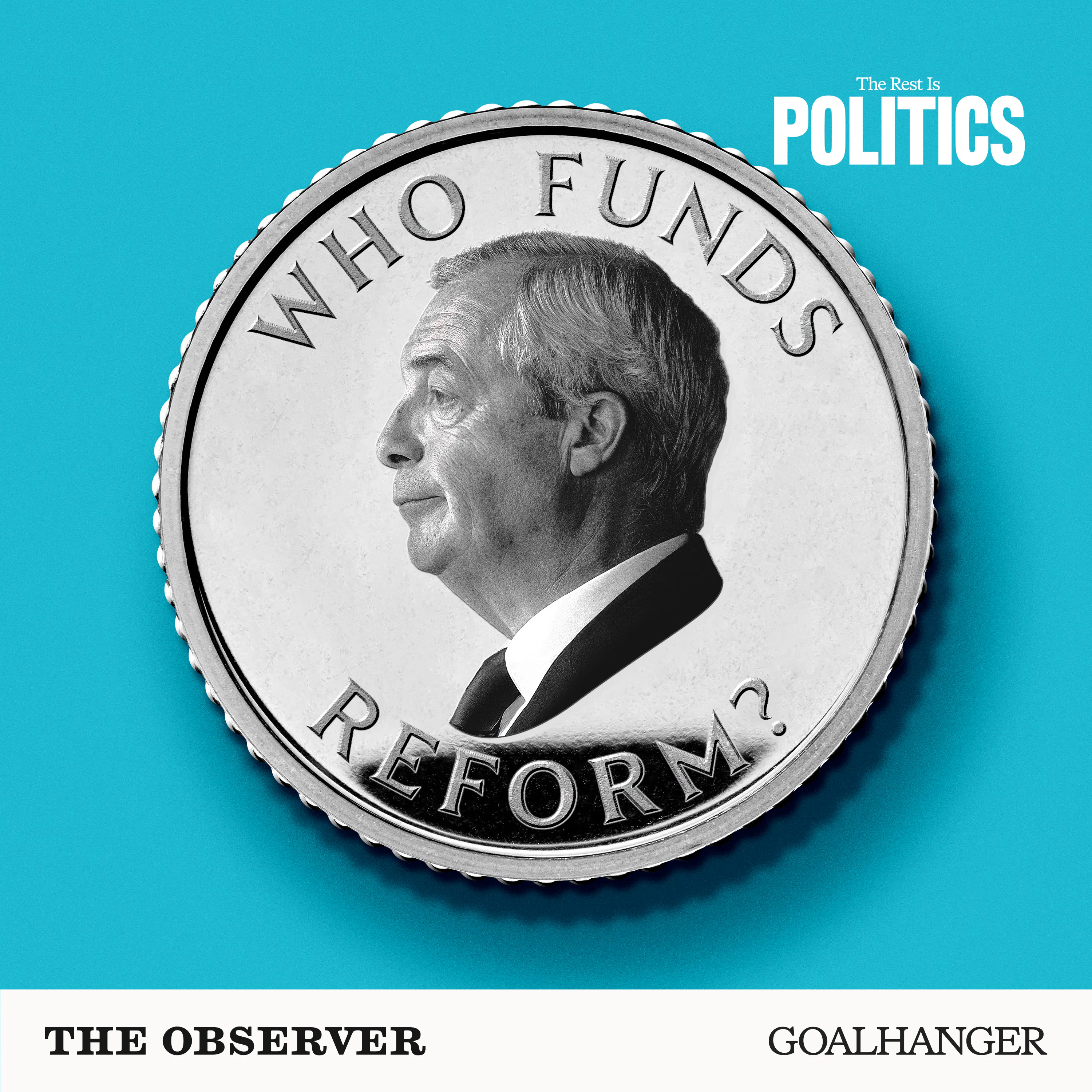
Just this week, Nigel Farage declared his biggest single payment yet as an MP £270,000 for 12 hours of work from a gold bullion dealer. That works out at £22,500 an hour, which is double what the same company paid him just nine months earlier. And it comes not long after Nigel Farage was found and accepted £5 million as a gift from a crypto billionaire who lives in Thailand. This is the man who built his entire political career on being the voice of ordinary left behind Britons. The man of the people, fighting for the people. Now one of the wealthiest politicians in British history. So how did we get here? How has a party supposedly for the ordinary working man and woman ended up attracting money from some of the richest people in the world? And what do they expect in return? We've been inundated with questions following our four part miniseries on who funds reform, so it's time that we answered some
- [01:01]
B
this episode is Powered by Fuse Energy.
- [01:04]
A
Right now Fuse Energy's tariffs are up to 200 pounds below the offgem price cap. Plus they've just launched a new referral offer that can bring your bill down even further.
- [01:14]
B
What I love is the simplicity of it. If you refer a friend, one of those few people who haven't heard about Fuse from us every week and they switch both their gas and electricity. You each get 50 pounds towards your next bill.
- [01:26]
A
So it starts with one conversation. No prize draws, no chance, no complicated reward scheme. Just the power of one smart recommendation that rewards you both.
- [01:36]
B
And remember, energy prices are more volatile than ever. But don't wait for rates to spike again. Switch to Fuse in just three minutes and move to cheaper energy designed to help you and your friends cut bills.
- [01:48]
A
So don't just listen to another price cap story. Switch to Fuse, save up to £200 and get trip plus free with code. Buy politics@fuseenergy.com politics heat up your 4th
- [02:01]
B
of July at the Home Depot with our wide variety of grills under $300 and make every gathering one to remember. Give your outdoor space a glow up whatever your budget is with savings on seasonal plants starting at $5. With the grill fired up and your backyard set to perfection, you'll be able to invite friends and family over to kick off the party. Start celebrating with low prices guaranteed at the Home Depot. Prices may vary by store exclusions apply. See homedepot.com so good, so good, so good. New summer arrivals are at Nordstrom Rack stores now get ready to save big with up to 60% off brands like Rag and bone Levi's, Adidas and free people. Join the Nordy Club to unlock exclusive discounts. Shop new arrivals first and more. Plus, buy online and pick up at your favorite rack store for free. Great brands, great prices. That's why you rack.
- [03:05]
A
Welcome to the Rest is Politics with me, Alistair Campbell. And joining me to answer your questions on our member series is Cat Neyland, who was the reporter on the series and who's been following Westminster as a journalist for the past 10 years. So, Cat, let's start with these questions on the £5 million gift. Heidi, are there any journalists still digging into the 5 million pound gift or is there now little else to find out now that Farage has brushed it aside? Taz, has the 5 million pound donation story harmed Nigel Farage and Reform's brand? Sarah, how much of an impact you think Farage's 5 million pound donation will have on Reform's popularity? The reason I just read out three of those. We had tons of questions and people, this 5 million gift bung, whatever you want to call it, really has broken through. So is there much more to find out, Kat, and what do you think the damage, if any, has been to Reform?
- [03:55]
B
Yeah. Hi, Alistair, and thank you so much for having me on the show. So, firstly, we got a letter from Christopher Harborne's lawyers complaining about various things, but one of them was the fact that we had described it as a donation rather than a gift, even though actually Reform politicians have described it as a donation. So we have scrupulously since kept to the description of it as a gift. That is their words, taking the questions one at a time. Yes, there are definitely journalists still doing, digging around it. Of course, we should all remember that it was only because of the hard work of journalists, specifically Anna Isaac at the Guardian, that we even know about this, because it was not declared and clearly there was no plan to declare it. So it is a very, very difficult story to to declare do, because of course it requires knowledge of someone's personal finances and there's not that many sources around it. But since this story has broken, there has been even greater scrutiny on Nigel Farage specifically and Reform more generally, looking at where they're getting their money from. Of course, the question as far unanswered whether this is the only sum that he received in that sort of period before he became an mp. Interestingly, there are moves afoot within Parliament to try and force that issue. So there is a bill currently going through Parliament at the minute, known sort of colloquially as the Elections Bill. The actual title is the Representation of the People Bill, which is not a name that I'm hugely fond of myself. So let's call it the Elections Bill. And there is an amendment that has been put down which would force MPs to declare sums of money, as yet undetermined, what sums that they had received in the 12 months before becoming an MP, because there are different ways that it could be interpreted. Most people do think that he has fallen foul of the code of conduct and this investigation currently being carried out by the Standards Commissioner, many people feel that will actually find that he should have declared it and that may force the issue and force him to declare more. But if not, there is this legislative move also being put pursued to do that. And that is perhaps one of the more straightforward ways to get more of that information out. And of course, we saw last week Nigel Farage pop his head up above the parapet for the first time in a very long time. Pretty much one of the first times he's taken questions since the £5 million was reported. And he was very brittle. He kept saying, it's nobody's business. It's nobody's business what I spend it on.
- [06:46]
A
Nobody cares, Nobody cares, nobody cares, nobody cares.
- [06:50]
B
I can spend it on cars if I want to. I don't even have to spend it on security. Which also kind of highlighted another issue that I have been kind of picking up from speaking to various people around Nigel Farage working in the party, which is that they are conscious that he has increasingly, under pressure, been shown himself to be quite thin skinned. So people might remember when the antisemitism allegations, allegations were made about him, his response to that was very combative, very aggressive, particularly towards female journalists. And I know that at least one Reform MP actually apologised to the female journalist in question because he felt so kind of ashamed, I suppose, at the way that Nigel Farage had responded.
- [07:37]
A
I think a lot of this is learned from Trump. A lot of Nigel Farage and reform strategy is very, very Trumpian. And it works up to a point for Trump. My big hope is that it won't work here, that actually people don't like it when he shows that brittleness. It was interesting in those interviews, as you say, he went kind of to ground for quite a while. He was clearly avoiding the media. Normally, you know, he'll turn up the opening of an envelope as long as there's a camera there. And he was particularly brittle with the female journalists. It was Sally Nugent on the BBC, I felt in particular, and then even Julia Hartley, Brewer is normally a sort of big flag waiver for Nigel Farage. He was doing that nobody cares thing. And the Trump, you know, Trump basically says, nobody cares about this stuff. He's actually on record as saying that, you know, effectively saying, I can be more corrupt in the second term because I realized nobody cared about it in the first term. Now, do you think we care more? And is your sense that the parliamentary authorities care sufficiently for this to kind of go the full course and possibly even create a by election?
- [08:37]
B
It's interesting speaking to some of the people that were involved in the Boris Johnson Partygate inquiry, because that is probably the most recent big standard inquiry that we had. And although a very different issue, the people that worked on that and some people that had worked on other cases do feel that not only that has he broken the code of conduct, but the size of the sum and the period in which it was given are such kind of huge, strong factors that the suspension that may be recommended would be enough to trigger a by election. But that said, I did go down to Clacton on Friday, hottest day of the year. Lots of people out on the seafront and many people in Clacton had not heard about it.
- [09:27]
A
Wow.
- [09:28]
B
Interestingly, even when I explained the story to them, many people said, that's disgusting. He's a thief. What a hypocrite. All the kind of responses that I think many people, regardless of their political persuasion, would have to that kind of story. But then you say to them, well, if there is a by election, would it change your perspective? Would it change the way you vote? And actually, at best I got was people saying they were on the fence, and when they were on the fence, it was more about his failure to do things locally rather than this 5 million. And I think the problem is that for many people, politicians, politics feel so far away, and they do feel sort of a plague on all their houses. Everyone is bad, everyone is at it. But I. I kind of him a bit more than I like everyone else, or I hate him least of all. And so that is the sort of prevailing kind of worldview of the people at Clacton that I spoke to.
- [10:28]
A
But if you look at this, we're recording this on Tuesday, and the Financial Times has broken a story today. Reform UK leader Nigel Farage has declared his biggest single payment as an MP, £270,000 from a bullion dealer, doubling his fee from 2025. I mean, surely eventually it gets through to people that this guy who presents himself as a man of the people, fighting for them, fighting for the poor and downtrodden and those who've been left behind. He's absolutely minting it as an mp. He is, by some distance, the best paid outside earner in Parliament.
- [11:03]
B
Yes. And that's before we even get to the sums that we don't know about. We've been obviously tracking his payments for a very long time. We have a tool called the Westminster accounts which collates all of the data. And you can see from that that company, Direct Bullion, has actually given Nigel Farage £685,000 since last election. That's not actually his biggest employer. GB News pays him about £100,000 more than that so far. But if you look at it in terms of the hours that he spends working for Direct Bullion, I actually did a piece last year and even then he was better paid than top flight Premier League footballers. So you can see just sort of how much people are getting for. And I actually interviewed the boss of this company last year because I wanted to put that exact question to him. You know, what do you think you're getting for the money? It was an interesting conversation. He was very forthcoming. He. He seems to think that the business is doing better because of the brand ambassador that Nigel Farage offers. But he also said something which I thought was quite telling, which was that whenever he calls, Nigel answers the phone. And that's helpful if you're running a business, but it's also helpful if you're looking ahead to the possibility that he might be the Prime Minister at some point. And the other thing that's worth noting about this guy, Paul Withers, is that he's also behind the company stacbtc, which Nigel Farage is also involved in the quasi Kwateng linked crypto treasury company. And even people around Nigel Farage are starting to get a little bit wary of his involvement with things like this because they worry that it, in their view, muddies the waters between what they see as a sort of genuine policy belief that he, he advocates for crypto as a kind of leveler and a sort of way of breaking away from the establishment versus being seen to be sort of privately motivated because he's making money out of it. So some of the people around Nigel see that, not necessarily himself, but of course, as he always used to say, there's no money in politics, certainly not if you're straight. But also kind of going back to that trip to Clacton when I was speaking to people in his constituency, what was really clear to me was that they didn't hugely mind about the £5 million from Christopher Harborne. They put it in the same kind of vein as the free glasses and the suits that Keir Starmer got right at the start of his time in power. That sort of dominated the news for a very long time. And it doesn't matter necessarily that the sums involved are so different. But to many of the people that I spoke in Clacton, there was very much a sense that, oh, well, they're all in it together. All the politicians are just trying to make a quick buck, you know, kind of fair play to him for making more out of it. I do think that it's more symptomatic of how people feel about politics as a whole rather than politicians as individuals. But that being said, it's pretty clear that on a national level, things are slowing down for them. So There was a YouGov poll out this morning showing that they were down 1 percentage point. Labour were up a couple of percentage points. But that being said, reform is still leading in the polls. Tories and Labour now are both on 20%. They are narrowing slightly, of course, you know, expected burn and bounce. But that drop from reform may well be a little bit to do with this £5 billion, to do with how he behaves when he's on interviews and to do with a sense that perhaps, maybe they've hit the ceiling. Maybe people didn't like the way that he reacted to the Henry Novak case. There was a sense from some people that he'd kind of crossed a line. And so perhaps we are sort of seeing the beginnings of a kind of plateauing or possibly a decline.
- [15:17]
A
I mean, I felt for some time that he's hit the peak, but I, you know, I'm always conscious of that, the, the possibility, that's wishful thinking. And so, for example, the Henry Novak, you know, murder that he immediately tried to weaponize in the way that he did, that reminded me of Trump and the Charlottesville that are good people on both sides. The money stuff, nobody cares. Reminds me of, of Trump constantly sort of saying, whatever the big scandal is, you know, nobody's talking about that. Where I go, they're talking about abc. So he's doing the same thing. I think you're right that he's dropping a little bit because of it. I also think people don't like when politicians seem to be making sort of ever changing excuses. And this question from Andrew, one line of questioning I've not seen when trying to hold Nigel Farage to account is to make the point that if he becomes prime Minister, he'll receive armed diplomatic protection for the rest of his life, in which case it follows he won't need this money for security. Surely he needs to be asked, if you become Prime Minister, will you return the 5 million pound gift to Christopher Harbor? And I think we know what his answer will be. He'll go and buy, you know, several hundred Ferraris. But do you think. I think his problem is that nobody believes. I don't know anybody who believes that that's the case. I mean, the other thing which I find genuinely offensive, in the week, the 10th anniversary of Jo Kock's murder, Labor MP, who was literally murdered during the Brexit, the referendum campaign 10 years ago, that Farage goes out and says he needs this security because he's the most attacked politician in the country. He's actually, in his own ways, you know, he's popular with a certain section of the. Of the population. So I just think that these constantly shifting excuses. It was a gift. It was. There was no strings attached. I don't know anybody who gives somebody 5 million without wanting something in return, even if it's unspoken.
- [17:01]
B
So the week that the story was reported, you'll probably remember Alistair, what happened was the Guardian went to him for a right of reply, gave him two days to come back to them, and in that period, he went to the Telegraph with a sob story about how one of his homes had been firebombed, there'd been an arson attack. And what we've actually since reported at the observer is that the police investigated it as a possible burglary, not as an arson attack. So even that story didn't kind of stand the test of scrutiny for a couple of days. And since then, we've had lots of different reasons given, of course, one of them being as it was a reward for his campaigning for Brexit. And then these series of interviews that he gave last week saying, it doesn't matter what I spend it on, I can spend it on what I like. I mean, theoretically, that is true. What he's being investigated for is. Is not what are you spending it on, it's whether he should have declared it or not. And the only people that can really make up their mind as to whether or not they are happy with what he's spending this £5 million on, if we ever find out, are the people of Clacton. That's why it's so important that the message kind of gets to those individuals and not just to the sort of same group of people that already have decided what they Think about Nigel Farage. But to this is also the more that we can do to kind of shine a light on the various money flowing into him and flowing into reform, and the more that politicians can ensure that the system that we have is fit for purpose. It's really important because we have for a long time sort of operated in this kind of good chaps theory form of government and way of things being done in a certain way. And one of the things that I think Trump has exposed and before Nigel Farage, Boris Johnson has exposed, is that if you don't have sort of quite nailed down rules, if you just go by conventions, then someone can come along and start ripping them up. And I think what Nigel Farage is doing to an extent was kind of kick started really by Boris Johnson and Dominic Cummings who came along and were like, well, is it illegal? No. Okay, fine, then we can do this.
- [19:13]
A
Yeah, Look, I agree with you. I think it's terrible and it's unfair that all MPs get tarred with the same brush. Of course, the MPs expenses scandal did a lot on that front upfront. And it is on one level absurd to equate Keir Starmer getting a couple of tickets at Arsenal on his free glasses with somebody getting literally 5 million quid bunged into his bank account. But that is the reality in which we live in a very, very cynical age. But I wonder whether the fact that it's not just Nigel Farage. So Richard Tice has had issues to do with his taxation, and of course he does the same response. Nothing to see here, no law broken, all above board, da, da, da. And then of course, you've got one of their big defectors. Robert Jenrick has had one or two issues to do with his funding and his financing. I think that as that becomes the prism through which they're being regarded, then I think a change can come further down the track in terms of public opinion. Because if your whole shtick is that you're the kind of, you know, you're the man of the people, fighting for the common man, fighting for the guy who's been, you know, beaten up by the authorities and suddenly you seem to be like the uber elitist, it's very, very hard for that shtick to hold.
- [20:24]
B
Yes. And I think also what's important is if you look at where those stories have come from. So the Richard Tice one is a good example because that was actually a Sunday Times investigation or series of investigations. And I think it's sometimes easy for people on the right of politics to say, well, it's the Guardian, it's the observer, it's the rest of the is politics. You would say that, wouldn't you? But when you have even centre right publications doing it, then people probably realize that it's not a partisan issue as much and therefore it cannot be ignored. That it is a kind of about having an ethical standard, an ethical red line that people will not cross. I mean, just to go back to the point that you were making about security, it is true to say that although he is very popular, Nigel Farage, that he is also very, very disliked. You know, this is not to say that there isn't security issues there, but Parliament offers every MP tailored security according to their needs. And so we don't know exactly what went on because Parliament does not comment on specific individual circumstances. But I know from speaking to MPs regularly about the type of arrangements that they have, the fact that the police are really involved in making sure everything is okay, you know, they might drive past their house, they might drive past their loved one's house when they're not even there. There is a real consciousness, perhaps too little too late, that MPs are genuinely at risk from people that would like to do them harm. And so, you know, I think it's difficult to say, but the idea that Parliament would leave anyone in the lurch seems to me to be somewhat implausible.
- [22:11]
A
Yeah, I mean, I also think that there is an element within politics and, and I do see this particularly on the right, where it's almost like a status symbol that, you know, if you're surrounded by four guys with earpieces coming out of their, you know, their left ear hole, there's somehow it makes you look much, much more important. Now, I know, I'm sure that people who close to Farage will hear that and think, you know, that's outrageous, that's ridiculous. But, you know, I've heard him talk about death threats. I mean, I've had very, very, very many people in politics get death threats. Okay. I can remember not long ago, I was in the same building as Farage. And look, I've worked with people who've been under the highest level of protection that there is in the, in the British state right now. And I was at this event with Nigel Farage, and he had a team of people who came in, they were doing the same sorts of things. Now. Now, unless they'd heard something very, very specific about that day, I've got to say, I think it felt very performative to me. And so, you know, and that's why I got so angry about the Jo Coxler, you know, him saying that in that week of all weeks. Because the truth is, the more you highlight that there are these threats out there sometimes that actually exacerbates the problem for the many who do not have protection. It's very interesting what you said about Clacton, that they don't like it, but also there wasn't that much awareness. And even when there was awareness, would it shift the vot? Not so sure. But bearing in mind that the at the party, at the higher level, with the MPs and the sort of full time activists and so forth, is there this, the beginnings of chatter about whether Farage is actually going to see out this Parliament?
- [23:56]
B
I would say not within Reform, the core party. I think most people are sort of still banking on him staying. I think that that may be as much to do with the realization that if he doesn't lead them into the next general election, they will have a much tougher time as it is to do with the reality. But I think it's implausible that Robert Genrick would not have defected if he didn't think he was going to have a good chance of being leader fairly soon because he was either going to lead the Conservatives at some point or lead Reform at some point. And perhaps he might think that it was sooner there than at the Tories. I think that there are growing suspicions from some of the rival political parties that it's maybe getting to him and that maybe he's, you know, if you think about how long he spent as an outsider, you know, he talks, he's been a campaigner for sort of 20, 30 years. Even when he was an MEP, he was an MEP that sort of reveled in his outsider status and the idea that, you know, he might finally get into power and his legacy is yet another failed prime minister, I think it will be giving him pause for thought. Certainly that's what some people are saying. And so I think there probably is, you know, maybe some suggestion and certainly if the polls continue to either plateau or even go down, and with this £5 million sort of circling him, it's not inconceivable that he says, you know what, I've done a great job, I've brought us this far and now I will be the best prime minister you never had, because it will sort of allow him to have a kind of off ramp, as someone described it to me, without actually being put to the final test. But, you know, we always say this, the sort of draw of power is far stronger than people, kind of quote unquote normal people realise. And so I think it would be a big step for him not to do it, having got this far.
- [26:16]
A
Well, question from Bailey. Could reform get support with a different leader or is their success entirely tied to Nigel Farage? I mean, I guess that's what you've been addressing there. He's obviously been worried about the one man ban thing, which is why he has welcomed in people like Jenrick and Suella Braverman and Nadeem Zahawi and you know, and I remember that meeting that I, I had with him, I remember him telling me that it was before I'd even heard of Zia Yousef and he was telling me, I've got this guy coming in, Zia Yousef, he's really impressive, he's really going to shake things up, et cetera. So he's conscious of that. Do you think they've done polling on the extent to which reform is Nigel Farage and I wonder what it says?
- [26:52]
B
I don't know for certain but I would imagine they have done. I mean certainly, I think Robert Genrick has a fairly sort of well established team. He's probably been doing his own polling. He certainly has enough of his own donors that that could certainly be afforded out of his pocket rather than central budget. It's both a blessing and a curse. So when you look at for example the local elections and even the Makerfield elections, they were able to bypass spending rules for both of those because they campaigned on a national level rather than on local issues. And that is to them, win win because it means they just plaster Nigel Farage all over their campaign literature and then they don't have to worry about spending limits or even saying how much they have spent on things.
- [27:39]
A
Is that not being addressed by the elections bill?
- [27:42]
B
Again, I think that is something which may have to come through in amendments but as things stand, and certainly I don't think it would be retrospective the local election, it's a bit sort of sky's the limit and you can guess how high they went on that, which is why you had weird things like I think there was a Welsh newspaper that had picked up that they were advertising about something in London in one of their campaigns literatures. So it looks a bit disorganized but it basically gets the message out. You know, vote reform, vote for change. You know, the finer details are maybe not necessarily what everyone's going to pick up on and you don't have to worry about how much it costs because you've just got £5 million from a. From a guy in Thailand. So they are able to sort of pump this stuff out with Nigel Farage's face on it and not really have to worry too much about the consequences. It does mean that I think there is a succession issue. I think Robert Jenrick and possibly Zia Youssef also sees himself as a successor. I mean, Alastair, I'm sure you watched Question Time last week when Zia Youssef seemed to suggest that he'd been blocked from standing as a candidate. I don't know whether you fell for that one or not. I mean, I'm a bit skeptical myself.
- [29:00]
A
My usual rule about Question Time is I only watch it if I'm on it. But I did, I did see, I did see the clip of Siya Yousef and it looked to me it was actually the Tory, wasn't it? Kevin Hollandrate was giving him a hard time about why he'd never stood. He looked like me, like somebody trying to find a reason to rebut. But I'm assuming that nobody has confirmed that he was blocked at any point.
- [29:26]
B
I have been asking some of my Reform sources and no one has been able to come up with a sort of by election or any other seat that he has applied for and been turned down from. But, you know, maybe we'll find that seats at some point. Who knows then?
- [29:43]
A
I mean, none of them, though, if you look at any of them, Richard Tai, Sir Yousef and Jenrick, I mean, who I guess are the most high profile of the ones who are most on television, I would say. I mean, they're not. They're not great, are they? They're not. Nigel Farage, I have to acknowledge, has got something that cuts through to the public. I'm not sure they do.
- [30:04]
B
It wouldn't be my choice, but it's not really my choice of politics either. And I think. I think Zia Youssef is another one who doesn't always speak to women with the greatest of respect. Again, I think in Question Time, the way that he spoke about BBC trying to sort of rig the numbers so that it looked as though there were fewer Reform voters and being put very much in his place. You know, it was kind of the first time, I think, that perhaps he'd sort of had that situation, but he was perfectly happy to talk all over the women, Emily Thornberry as well, who were on the panel. You know, to me, watching that as a woman, that doesn't sit well. I don't like it. Robert Jenrick and Richard Tice are more respectful but still, you know, kind of have their moments. And I think the sort of interesting thing that has been happening with some of the defections as they come over is how they affect the sort of pecking order within reform and what that does to some of the tensions within the team. So I understand that Zia Youssef didn't actually talk to Robert Jenrick for about two months after he came over. I think primarily because he was a Tory and Zey Youssef clearly designed not trust Tories. He thinks that their job is to destroy the Conservative Party. You know, the extent to which there's also a bit of male ego and hierarchy kind of coming into to play there. I would imagine that's probably another, another reason why they didn't speak for a long time. Although I gather they are speaking now.
- [31:31]
A
Oh, good to know that Jenrick and Yusuf is speaking. That's love. Lovely, lovely news for us.
- [31:38]
B
Uncovered windows can make your home feel up to 20 degrees hotter. Stay cool and save up to 50% off custom wind treatments during the 4th of July mega sale@blinds.com from outdoor shades to room darkening blinds, finding the perfect fit is easy. Get free samples, expert design help and professional measure and install services or DIY with confidence and support every step of the way. Shop up to 50% off site wide plus huge savings on door busters right now during the 4th of July mega sale@blinds.com. Hello, the Rest is politics, listeners. It's Gordon and David here from the Rest is Classified. And we've got an exclusive preview of our latest series on the poisoning of Alexander Litvinenko. A Russian security service officer is living in London with his wife and son when he suddenly falls seriously ill. He has been poisoned using a rare and highly radioactive toxin. But who gave the order, orders and why? In our latest series, we investigate the mysterious murder of former KGB officer Alexander Litvinenko in a sinister plot that goes all the way to the top of the Russian state. We delve into the murky circumstances leading up to Litvinenko's death and how foreign agents pulled off an audacious murder on British soil. One which put the entire population of London in serious danger. This is a story of personal tragedy and of cloak and dagger espionage, but also so political conspiracy. Litvinenko's murder sheds light on the cost of speaking out in Putin's Russia, but also the extent to which the British state has been willing to suppress the truth to maintain its political relationships. To hear the full series listen to the rest is classified. Wherever you get your podcasts,
- [33:36]
A
Listen. We've got loads of questions on this one. Kat, Katie, Victoria, is it true that Reform is a company, not a political party? And if so, what does that mean? Sara how does Reform get away with it being a limited company? What are the rules there?
- [33:51]
B
Yes. So in reality, it doesn't make a huge amount of difference how it's structured, whether it's a limited company or like other parties, an unincorporated association. They're all bound by the Political Parties Elections and Referendum act. So that means that they all still have to declare donations in exactly the same way, regardless of how they are composed. The fact that they are a company means that it's more about the control of direction. It's potentially around if there are any profits, but certainly when it comes to declaring donations and so on, it doesn't, it doesn't really have any bearing on that side of things.
- [34:31]
A
Yeah. You've talked a couple of times about the, you know, the kind of manosphere issues and I think you're right. Is he Youssef? I've noticed that as well with him, that he seems uncomfortable when he's being quizzed by women. That being said, Ethan Bowsher, why do you think so many young people, especially men, are drawn to reform? FINN I work with builders in Essex. What's the best way to explain to them that reform is not for the working class? Look, I meet a lot of working class men who tell me that, you know, reform, sort of, they're going to vote reform. They have voted reform. And usually it's in the area. Sometimes it is just straightforwardly about, you know, get the immigrants out. That is a big part of it. But I think sometimes it's just, look, I've tried Labor or I've tried Tory, sometimes I've tried both. And I just feel that the country's not right. I'm not in a good place. I don't. My life's not that great. And Farage looks like he gets it. That's kind of what I take for what they. But do you think I'm missing anything? Is there anything deeper than that, do you think so?
- [35:38]
B
I think for the last few years, really since Brexit, the parties, both Labour and the Conservatives, have responded to Nigel Farage in whatever iteration he has existed in by trying to outdo him or prove that they can be like him. And what we've seen with both the Tories and Keir Starmer has been that they have tried to out Farage and they have not succeeded in doing that. And I think that it was interesting and a breath of fresh air, actually, to hear Andy Burnham on Monday talk about, you know, what the subtext of what he was saying was effectively defeating populism with a bit of positivity, a bit of, you know, instead of punching down and saying you're feeling worse off because of the immigran and you're feeling worse off because of the scroungers on benefits and whatnot, that actually he was talking about reshaping the economy and redirecting some of the. Some of the investment into the nations and regions. Now talking a good talk, all well and good. Whether he actually can, can do that is another thing. But that was the first time I felt for a long time that I actually heard a different diagnosis of the problem and a different possible solution. It is going to be really difficult, of course, but I think there is a lot of this kind, kind of populism both on the right and the left, actually, which is post financial crash, exacerbated by Brexit, exacerbated by inflationary issues from COVID and all the rest of it. People feel poorer and they want to blame someone. And who's the obvious target? Well, it's the immigrants. And so if you kind of allow the politicians and all of them right and left or not all of them, but a majority of them have, have, have followed Farage and the others in doing this, then of course that's what people think, that is the solution. But actually if you present an alternative that is a bit more optimistic, then a lot of people will go for that. And so I am, you know, an optimist that it doesn't have to be this way, but I remain on the fence until I have seen what the actual plan is.
- [37:55]
A
Yeah. I thought it was interesting, though, that in the Makerfield Biola election, that. Which was obviously a big risk for Andy Burnham, when he looked at the polling at the start, that he didn't really go for the reform candidate in a way that, you know, I think a lot of Labour Bacardi campaigners have just gone right. You know, there's this guy's given us so much ammunition. There was lots of stuff being pumped out maybe on his behalf and for the Labour Party. But Andy Burnham, even when he was on the same platform, the same stage, was very much in know we have to listen to what he's saying and very, very kind of respectful whether we'll be able to do that with Farage in the House of Commons. Rory And I talked about this on the podcast earlier, that the House of Commons is so constructed and engineered for combat that whether if Farage plays his same game, which I suspect he will, and Badenoch as well, whether Andy Bernard will be able to hold that sense of trying to do politics in a different, a different, more collaborative way, I don't know. And the point about how to explain that reform isn't for the working class, I think that's, again, where this money stuff does come in. You know, these are people who look to be doing very, very well for themselves on the back of being politicians. And I think eventually that has to get through. And the other, the other thing for me, with, for, you know, why they're not for the, for the working class, I'll tell you. They are for I touch state will, therefore Russia. You know, this is a, this is a party that is. We've still not got to the bottom of their links during the Brexit campaign. We've still not got to the bottom of the Russian influence in our, in the hard right of our, of our politics. And so I think that there's lots of different ways that you can, you can go for them, but in terms of explaining to the working class, you basically got to be saying to them, these people are not for you. They do a very, very good job of pretending that they're for you. But look who they're benefiting now. They're benefiting themselves. Kat, you mentioned the other parties, and I guess the one that maybe is most alarming to Farage is Restore and Rupert Lowe. Hope Hunter. Is Restore a genuine threat to reform? Sam, do you think Lowe is a greater threat to reform the Conservatives? What do you make of the Rupert Lowe situation? I mean, he didn't do as well in Makerfield as he said he was going to, but he's kind of come from nowhere. He's obviously got a lot of money. He's got Elon Musk backing him. There was a point where Farage thought Elon Musk was going to be backing him. Do you agree with Sam that Lowe might be a greater threat to reform than the Tories?
- [40:22]
B
I think on a national level, no. But I think what is interesting about Rupert Lowe is that he has some of the same target seats that Reform would have wanted. And actually, just to go back to my visit to Clacton, although people weren't necessarily talking about. About Rupert Lowe, I think that if there was another party that would stand there, and I know for a fact that if there is a by election, Restore will stand against reform, that people might be minded to go for him. Because we've seen with focus groups and also the numbers in various polls that there is this sense that actually reform is starting to feel a bit like it's a part of the establishment, whether it is the 5 million or whether it's just a sort of familiarity, breeding contempt issue. There are people who now see Nigel Farage and some of his fellow Reform MPs as part of the problem rather than the solution. And so there is this drift towards Restore. You know, the question is not so much about whether or not Restore could get as many seats as Reform or could threaten them in that sense, but just actually taking away enough of their voters that they don't get an overall majority in a given state seat is enough. And I appreciate that with Makerfield it was more than the total. Andy Burnham won by much more than the total combined RESTORE and Reform vote. But nonetheless, having that eat away at you and also in the system that we have, having any kind of doubt as to whether or not you might be the viable second place or first place does then kind of act as a vicious loop against, against you. So there is, it's more than just could they, you know, are they, are they bigger a bigger threat than the Conservatives, but they pose enough of a threat to the right of, of risk of reform. And someone actually was saying to me, you know, restore is doing to reform what reform have done to the Tories. And that's also why we've seen a bit of a knee jerk reaction to the Henry Novak case, to the Belfast stabbings, where it feels as though things have shifted further rightwards in quite a quick space of time because they're trying to sort of outdo the threat, which is why we kind of see them talking about grooming gangs. I mean, the, the, the candidate, the reform candidate in the Greater Manchester mayoralty candidate candidacy, now she's talking about grooming gangs. And again, I think that's, that's a thing that has really only become an issue because of Restoration. Restore and because of the pressure that Restore are putting on reform.
- [43:00]
A
Interesting. And, and I, I guess the other thing that you see through the, the Nigel Farage life story is he does seem to have difficulty in maintaining relationships with people who get to be as powerful as he is. I mean, Rupert Lowe was elected under the Nigel Farage Reform UK banner. He's gone off, shown that he can do something different. Different. And the other thing, do you think there's any possibility, I mean, I only asked this Because I read about it. I don't have any independent knowledge at all, but I read it in one of, one of the newspapers that Christopher Harborne is actually beginning to rue putting so much money into reform because it doesn't seem to be delivering what he thought at one stage it would. Do you think there's a possibility actually that the big donors start to think, well, this is not going to lead to where we thought it was, which is a Farage government.
- [43:50]
B
I mean, that's always a possibility. I don't have a speed dial to Christopher Harborne, unfortunately. If I did, I probably wouldn't be sat here in a tiny cupboard speaking to you.
- [43:58]
A
You'd be in a tiny cupboard in Thailand.
- [44:00]
B
I'd be in a. I'd be in a six star suite in Thailand, I
- [44:04]
A
think actually owned, owned by him.
- [44:07]
B
But what I also saw at the weekend was reports that he is going to. He has come back onto the electoral register here. Instead of being an overseas voter, he's now described as a UK voter and some suggestion that that's how he's going to try and get around what efforts the Labour government is making to try and sort of stamp down on overseas donors. So the other thing is, Alistair, you know, he, he is a multi, multi billionaire, you know, that, that interview with the Telegraph I thought was unintentionally revealing because he was asked how much he, he was worth and he couldn't even put a figure on it. He doesn't know how many billions he's worth. And so to me, you know, obviously 5 million is an insane amount of money. It's kind of completely changed the game of British politics. But to him it's just a fraction of his wealth. So he might not be that happy with the direction of travel, but it's certainly money that he can afford to lose.
- [45:07]
A
My final one and you know, I think we've done very, very well to get this far are with, without talking about Brexit. But I think we have to because this is the thing I find extraordinary that the three history will basically say that the three big drivers of Brexit were David Cameron with the referendum and Johnson and Farage because they led the two campaigns that between them pulled it off. Johnson went on to be Prime Minister, as we know, and David Cameron I think would accept, and I believe even when he, in his rare honest moments, Boris Johnson, Johnson would accept that Brexit has not delivered what those who fought for it said, it said that it would. And yet still, despite all that damage, Nigel Farage is still being talked off as possibly being the next Prime Minister. So, Gavin Wigginton, why isn't Farage held accountable for the disaster of leaving the eu? Mick Cahill, given the weight of data that now exists about the damage Brexit has done to the economy, shouldn't Labour's obvious strategy be to slip in mention of said damage? Damage and Farage's responsibility for it every opportunity? But I'm guessing that the people you were talking to, that you were talking to in Clacton at the weekend are basically saying, well, he fought for what he believed in and he won. And it hasn't delivered what he said it was because he wasn't in charge of it. How do they rationalize the fact that he's done something which has done damage to their lives? Or do they not see the connection with Brexit at all?
- [46:32]
B
I'm just trying to think whether the B word came up at all. People were talking about small boats, people were far more exercised about local issues. So potholes, dog mess, people on E bikes and e scooters. And that's again, that's where people there was frustration. Oh, he's just used us as a way to get into power, but he doesn't really care about us in terms of Brexit, in terms of why people aren't using it more. You know as well as I do, Alastair, there is an intense nervousness in Westminster about doing it because Labour has a very shallow majority. I mean, obviously lots and lots of MPs, but many of them sitting on very, very narrow margins. And they are worried about upsetting the apple cart because a lot of them are hero voters, quote, unquote, people that will have voted for Brexit back in the day. So there is that. There is also, I think, probably still for many people in Westminster, their own sort of personal wounds that they carry from having gone through it all. And I think the easy answer that Nigel Farage, and certainly the people around Nigel Farage give is, well, it's not his fault what happened afterwards, because he wasn't in charge and had he been in charge, of course he would have made a success of it. We thought they would do better than they did. And so even if. If you try to sort of get him on that front, there's a sort of easy answer. It's actually arguably far better to push him on his record as a constituency MP now or as the leader of a political party in Parliament now than Brexit, because, you know, arguably, and they do argue he campaigned for Something, he achieved it. The people that were in charge then made a mess of it.
- [48:25]
A
Okay, well, I will not give up. But I get that, that, that is a lot of what people think. But final point for me, Kat, what did you find most interesting about taking the time you did to delve into all this? Was there anything that particularly surprised you, particularly shocked you? And what else? What's the next chapter in the Farage funding story, do you think?
- [48:47]
B
So I think that we will find out fairly soon whether he has, whether he has fallen foul of the code of conduct. And I think there may well be a further reckoning, as I said at the start, in terms of this legislation as to whether there was more money given to him in the year or few months before he became an mp. I think that one of the things that I kind of have a little bee in my bonnet about is that he is a shareholder of All Perspectives, which is the parent company of GB News. He does not declare that on his register because he, he interprets it through one set of rules. I think there's another set of rules that could be seen to suggest that he should be declaring it. I think it would be very interesting to see how much that's worth and also to get a bit more detail about where the money for All Perspectives is coming from, because by all accounts, it seems to be a sort of loss making venture currently that is propping up the party. And obviously you and others have done work around the number of people being interviewed who are just reform or reform activists, and it's populated by reform people as well, a lot of the people that work on it. So I am interested in what comes next in terms of that side of things. I think there is still quite a lot of interest in Robert Jenrick's case, which we haven't really touched on, on yet. But I think that may yet yield some more interesting lines there as well. And so I think, I mean, look, I think that there is probably still quite a wealth of stories, pun not intended, about reform and their funding, which will keep us all very busy for a very long time.
- [50:36]
A
Well, well done on the series. I've thoroughly enjoyed listening to it and I hope you enjoyed doing it. And this episode that you and I are doing, Kat, is going out to, to all, all who want it. But people have to become members to listen to your series and they do that by going to the restispolitics.com but I think you're right. I think this is a story that will run and run because I think there's there's something in what they think politics is about and what it's for and the kind of people they're appealing to that I think we're going to see more and more stories about big money and reform, and I hope you'll help us ferret them out. Thanks for all your time.
- [51:13]
B
I will certainly intend to thank you. You want to get your backyard summer ready, but you don't want to break the bank. Wayfair gets it Planning on dining al fresco or relaxing poolside? Wayfair has everything you need to prep your space. Shop now and save up to 70% off during Wayfarer Wayfair's 4th of July clearance. Score huge deals on outdoor furniture, area rugs and more. We're talking thousands of products for every style and budget, plus surprise flash deals. July 6th don't wait. Shop Wayfair's 4th of July clearance now through July 6th at Wayfair.com Wayfair every style, every home.
- [51:56]
A
This is an urgent appeal from the Disasters Emergency Committee. Two devastating earthquakes have hit Venezuela, resulting in widespread destruction. Thousands have been killed and injured, and survivors desperately need food, water, shelter and medical care. Go to dec.org.uk to donate or text DEC to 70150 to give £10. Texts cost your donation plus standard network rate. See website for T's and C's. Thank you.