Loading summary
Transcript382 lines
- [00:16]
A
Hello and welcome to the Review of Mess, a podcast dedicated to discussing the highs and lows of pop culture every month. I'm Jessica Defino and I write the newsletter the Review of Beauty.
- [00:26]
B
And I'm Emily Kirkpatrick. I write I Heart Mess, a weekly roundup of the best of the worst celebrity fashion. And welcome to our Black Friday edition.
- [00:34]
A
Oh, my gosh. It's the best thing on Black Friday that you can't buy.
- [00:38]
B
Yeah. I was just thinking, what if we, like, started like hardcore selling people things in this episode? Like, we were just like, surprise. This has been a long con, a long grift just to sell you weird beauty products.
- [00:49]
A
Actually, I don't think we'd be very good grifters. I think people would be so mad at us for violating our values that they wouldn't buy a thing.
- [00:57]
B
Just a thought. Today would be the day to pivot. I feel like I'm in Maine.
- [01:03]
A
How is it?
- [01:04]
B
It's nice. I'm recording it from a very echoey and cavernous room, which is my parents bedroom. Once again, making me happy that this is not a visual medium.
- [01:14]
A
I know. I think that every time we get onto record the best. Thank God I don't have to get ready for this.
- [01:20]
B
Yeah, absolutely. The only thing I wanted to bring up is I cheated on this podcast. I was on another podcast this month called Gabbing with Gib, with my friend Gibson, who. It's a Bravo podcast. But we discussed an essay that I wrote earlier this month, if people are interested. It's called Everything is Bravo. I wrote it for Essence. Like the shopping website? Yeah, yeah. And it's kind of just about how the ideology of Bravo can be applied to everything in modern life and how we've all become kind of micro reality stars thanks to iPhones and TikTok and having cameras in our pocket.
- [01:54]
A
I loved that essay.
- [01:55]
B
Thank you so much. It was really fun to talk about.
- [01:57]
A
I have to listen.
- [01:59]
B
Yeah.
- [01:59]
A
I did a podcast. I also cheated, so I guess we're even. I did the Seeking Pleasure podcast, talking about the substance.
- [02:06]
B
Nice.
- [02:06]
A
Which was really fun.
- [02:07]
B
I finally watched it.
- [02:09]
A
Oh yeah? Did you? What did you think?
- [02:11]
B
I love it.
- [02:12]
A
Me too.
- [02:12]
B
I find. I don't know, I'm just so taken with Demi Moore's choice for a role like that and to be the person that she is in the celebrity that she is. And someone who has had plastic surgery. Well, allegedly had plastic surgery, you know, and to choose a role like that and to show your body like that at her age and in such an unforgiving Brutal. Yeah. Unflattering way. I think there's something very punk rock about it.
- [02:36]
A
Yes.
- [02:36]
B
I enjoy that.
- [02:37]
A
And she was fantastic. It's also. I can't stop thinking about the tweet that you sent me yesterday.
- [02:43]
B
Yes. Iconic.
- [02:45]
A
Of Kim Kardashian endorsing the Substance. And she said, you know, Demi Moore looks fantastic. That was her big takeaway. How good Demi looked in the substance.
- [02:57]
B
Yeah, her big takeaway was. Yeah, the movie was beautiful. And so was Demi Moore was, unsurprisingly, Kim Kardashian's takeaway from the substance, which is just so funny.
- [03:07]
A
So spot on, too. Spot on that it has to be real.
- [03:10]
B
Yeah. My favorite, though, was the Substance movie Twitter account retweeting it and saying, yes, this is real. Like, you really can't ask for better advertising than that. Honestly, you cannot.
- [03:23]
A
Should we. Should we talk a little bit about Kim and her sexy, sexy Tesla robot to start off?
- [03:30]
B
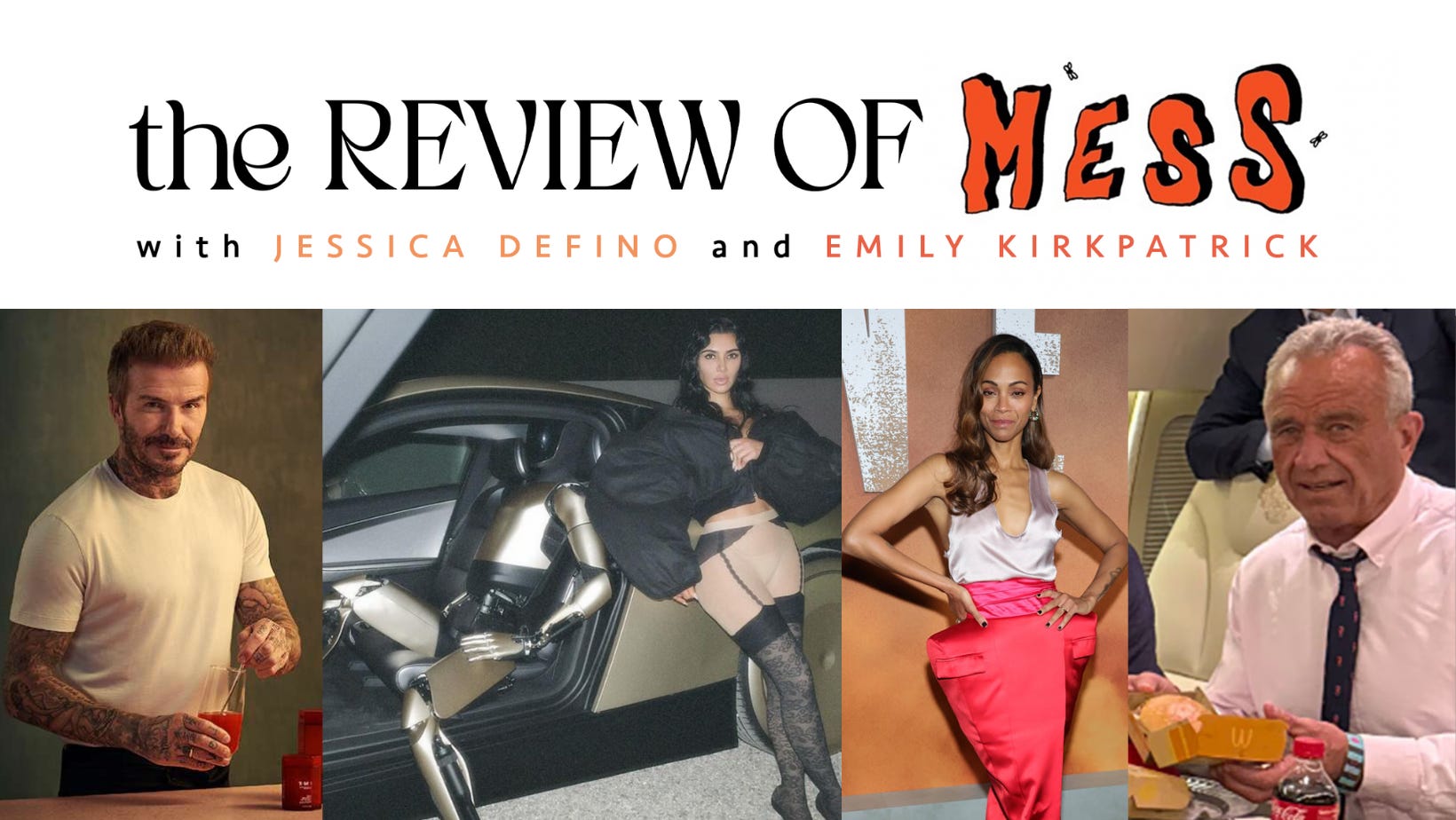
Absolutely. Well, you know, I know that everyone hates hearing about this lady, but she really occupies a space in my brain that I can't delete. And I have truly been thinking about an Instagram post that she made all week long, which is basically just not a heavily veiled advertisement for Elon Musk and Tesla. And, you know, a lot of people have been calling it kind of her MAGA soft launch and her kind of revealing herself as maybe a Trump voter. But to me, she's just kind of always been an opportunistic grifter and a narcissist, and she is a billionaire. So, you know, I think she goes where benefits her most. And that's obviously MAGA at the moment.
- [04:13]
A
Right.
- [04:14]
B
It is also kind of a Stark shift from 2016 and the way celebrities engage in politics, I think in 2016 as well. Like, you know, her and her whole family, I believe, endorsed Hillary Clinton at the time.
- [04:28]
A
Oh, yeah.
- [04:29]
B
And this time around, none of them endorsed one way or the other. Uh, in fact, they didn't say anything. They didn't say anything even when Trump won. As a matter of fact, the only thing Kim posted immediately following the election was asking people to follow her 8 year old son, Saint on Fortnite.
- [04:46]
A
Oh, my God.
- [04:47]
B
Yes. And that. That post came a week after she had to delete Saint's YouTube channel because he shared a Republican meme. Um, basically calling Harris a piece of shit.
- [04:57]
A
Oh, no. Saint's like the youngest influencer in the manosphere.
- [05:01]
B
Absolutely. He definitely is. He gets it from. Direct from his dad, I'm sure, and apparently his mom a little bit too. But anyway, after some backlash, she deleted the Instagram story, asking people to follow Santa Fortnite about an hour later. Just kind of showing the tone deafness of the whole situation. Yeah. So most recently she posted a very, very sexy photo shoot with her new Tesla robot and a Tesla Cyber Cab, which is the latest launch from Elon Musk. It's basically a self driving cab, a self driving Uber. It has no steering wheel.
- [05:34]
A
I feel like launch is a little too ambitious hard for.
- [05:38]
B
This launch is definitely too ambitious work because these things don't actually function or operate. We got reporting from the BBC. So he debuted these robots at an event to hype up the Cybertruck and the Cyber Cab. And in the videos from the event, the robots are like interacting with people, talking with them, having full conversations, like bartending, doing all this stuff. And basically afterwards the BBC reported that it was all kind of a ruse. It's all kind of a facade. There are actually people operating the robots, making them able to talk, making them able to do that stuff, and they aren't actually able to do any of that.
- [06:15]
A
I don't know why that like makes me so sad.
- [06:18]
B
Yeah.
- [06:19]
A
Like why are we putting so much effort into pretending people can be robots when we could just have people?
- [06:25]
B
Yes. Yeah. And also, yeah, it got me thinking too. Like why is the ultimate fantasy of multiple billionaires to just kind of have like guilt free servants and slaves? You know, like you could literally just employ people. You could, you know, end hunger, end homelessness. And instead your dream is like, let's create a robot subservient race to like do all of our things for us. That's pretty sick. But yeah, I think what's really funny to me is Kim posted a video of her interacting with this robot. And even that video like pretty much proves that the robots useless. Like it's not, it's not speaking at all. It can't speak obviously. And she's asking it questions and it's like not answering them. Like she'll be like, what do you want to do? And it like mimes running. And then she keeps asking a question, it just starts miming running again. And she's like, oh, run. Ha ha ha. I guess we'll go for a run. And then it like does the hula and she's like, oh, you're Hawaiian. It's like, oh my gosh. Yeah.
- [07:21]
A
Why, why even post it? Why bother?
- [07:24]
B
Well, because it's of course all one big. I mean, for me again, it's like, is. Is this Kim announcing her kind of endorsement of this administration or is it Kim signaling, like the class that she wants to belong to?
- [07:39]
A
Like, yeah, I mean, they're kind of one in the same.
- [07:42]
B
They are kind of one of the same for sure. But to me, it's like Kim's goal has always been becoming legitimized as an A list celebrity based on nothing. Right. Like most A listers, we think you have to win an Oscar, you have to win a grant, you know, you have to. These kind of traditional methods of accumulating fame. And she kind of sought to prove that you don't have to have any of that to become one of the most famous women alive. And now that. That doesn't even seem satisfying to her as she sees these multi. She is now a billionaire and she sees these multi billionaires become like the new ultimate ruling class, you know, a whole different type of like, fame and infamy and notoriety. And I think she's aspiring to that. I mean, over the years, we've seen her constantly gesturing towards this group of individuals. Throughout the Trump administration, she was obviously working with him on freeing the wrongfully incarcerated, which has been a passion project of hers. We've seen her rekindle her childhood friendship with Ivanka Trump, which, yeah, conveniently disappeared for like two decades and now suddenly her. Her BFF again. She posted a birthday tribute to her, I believe, the day or a few days before the election. Yeah. She's regularly having dinners with Jeff Bezos and Lauren Sanchez and Yeah, I just think it's, yeah, kind of her new project to become a different echelon.
- [08:59]
A
Right. I mean, when you think about. Makes sense to sort of, you know, integrate herself with these sort of like tech billionaires because she really has like, maybe her talent, has been using technology to her advantage, particularly in beauty. Right. But I'm thinking of like, you know, in this, this video of her with the Tesla robot. She's like sexualizing the robot. It's like a very sexy, sexy thing. And it's like she's. She's been sexualizing AI forever. Like, especially if you think about like Instagram face. Like, she's arguably the face of Instagram face. And that was just adopting this technology, photo editing technologies, and bringing it into the real world and making this, these cyborgian features more desirable than human features. Like even her emphasis on anti aging and all the work she has to put into her body, it's been like taking technology to make her body less like a body and more like a machine.
- [10:06]
B
Yeah, that's very interesting.
- [10:07]
A
So she probably Feels some sort of kinship with the robot.
- [10:11]
B
Yeah. She definitely has an approach to her body that's kind of like, all about modifying and upgrading in a very kind of like, you know, like getting a new phone kind of way where it's like she just puts on a new body. She puts on a new. Yeah. Physique for the day, and then that trends and then it goes out of style and you switch it up and you do it again. And yeah. Also that kind of obsession with. Yeah. Living forever in one way or another. Right. Whether it's through this kind of fame that she's cultivated or quite literally finding a way to live forever. I mean, she is very interested in Brian Johnson. She's met with him.
- [10:43]
A
Yeah. Don't Die dinner.
- [10:45]
B
Yeah. She is not. Not a part of the Don't Die movement.
- [10:49]
A
That's so true.
- [10:50]
B
It's very interesting. And yeah, I would like to emphasize again just how thotty and sexy this photo shoot. I think people need to really. We'll link to it, obviously, but people really need to go look at it to understand because to me, the immediate connotations of looking at this was like, video vixen. Like, it looks so much to me like a rap music video and something she would have done with Kanye in the past. And instead she swapped out Kanye for, like, kind of this neutered automaton figure of the future. I mean, she's, like, holding hands with it. She's sitting on its lap. She's kind of shaking her ass in front of it. Yeah. I don't know. I just find it. It's a very interesting visual, especially when you kind of consider all of the, like, techno fascism wrapped up in Elon Musk and these types of guys to kind of be this. To make it more palatable, to make it very like. Because as far as horrified as people were at these images, which they appropriately were, there is also something kind of, like, alluring about it. Right. The intention is kind of to make it very appealing to the masses. And I can see Kim kind of being used as this figure. Yeah. To make our techno fascist future a little more salient.
- [11:58]
A
Yeah. Wow, that's such a good point. And I'm thinking of, you know, Brian Johnson, the Don't Die Dinners. Longevity. Anti aging. And it's calling to mind David Beckham and his new longevity line.
- [12:14]
B
Who doesn't think of David Beckham when they think of eternity?
- [12:20]
A
So he started a longevity line, a supplement brand, an anti aging line, whatever you want to call it. It's called I Am eight Just the letters I am and the number eight. And I guess one of his co founders said in Women's Wear Daily that if you flip the eight around, it means longevity and infinite possibilities. So that's where that comes from.
- [12:42]
B
Wow. Deep.
- [12:43]
A
And yeah, it's a partnership with this company called Prinetics, which focuses on genetics and biotechnology very much in that Brian Johnson live forever type of space. It seems like it's an AG1 competitor, like an all in one supplement that you like, just take every day.
- [12:59]
B
Makes sense.
- [13:00]
A
A big thing in the marketing for this that I've seen is they're like making a big deal that it has been developed in partnership with a NASA scientist.
- [13:09]
B
Man, these guys love NASA.
- [13:11]
A
They love NASA. And I've like said it before, I'll say it a million times, I find like the beauty industry's focus on including NASA technology and all of its products, like, severely depressing. I can't think of anything more bleak than like taking the science and the study of the universe of like all that exists beyond us that we like can't even comprehend and just refocusing back on our tiny, insignificant human bodies. That's, it's so sad to me.
- [13:37]
B
It's not dissimilar from the billionaire's dream of robot servants. You know, it's like this is what you're putting all your energy and thought and money towards.
- [13:45]
A
You could do anything and this is what you want.
- [13:47]
B
All these NASA scientists being involved in beauty products makes me. It's like maybe NASA needs to be giving their scientists more work or something. You know what I mean? Like, maybe you have a little too much free time.
- [13:56]
A
I read something about that a while ago. It's somewhere in my notes for something I had been writing. But yeah, I mean, a big part of it was just funding. Like there is a lot more funding for applications of these technologies to make us like look younger or clear our skin or whatever it is than there is to like understand the mysteries of the universe.
- [14:18]
B
Yeah, the mysteries of space. Sure makes sense.
- [14:21]
A
Money is a huge part of it. But to go back to David Beckham. So the focus of this, they're calling it obviously like longevity, which is just anti aging for bros. And I really do think we're going to start seeing this market grow like crazy. But the thing that it made me think of, you know, every time that I see more men like engaging in traditionally like female coded behaviors like anti aging, even as they're distancing it themselves from it by calling it something more, bro. Yeah, yeah, Longevity. I Think of Andrea Long Chu's book Females. Have you ever read it?
- [14:56]
B
No.
- [14:57]
A
It's so good. It's short, it's really funny, really insightful. And she writes, femaleness is a universal sex defined by self negation against which all politics, even feminist politics, rebels. Put more simply, everyone is female and everyone hates it. And I just. I love that so much and I think of it every time I see something happening in the men's beauty space because I just don't see, see this evening, like, the gender playing field at all. It's not like, oh, beauty is for everyone. I think it's like trying to univ. Make like female standards universal.
- [15:34]
B
I think also those female standards are also like insecurities that brands can prey on, you know?
- [15:39]
A
Right. It's.
- [15:40]
B
And so they're trying to apply them to another gender because they're kind of like, what if we max out this one gender's willingness to like, doubt themselves and buy things to fix it? Like, let's make sure the men are just as insecure. But like you said, I'm also always fascinated by the linguistics and like the, the trickery of words to kind of get away from what it actually is because you might perceive it as a female pursuit, which, you know, for. Is viewed as inherently negative or inherently vain or.
- [16:05]
A
Right, frivolous.
- [16:06]
B
Yeah, right, frivolous. Whereas these are like serious pursuits of longevity, you know, like sustaining the body, making it stronger. Like it just couches it in like male vanity as a way to escape what it actually is, which is like. Right. Another beauty standard. Another kind of gesture towards insecurities.
- [16:25]
A
Yes, exactly. And I mean, I think another quote that comes to mind from Andrea Longchu's book is she says, to be female is to let someone else do your desiring for you at your own expense. And like that. That to me is anti aging. That is anti aging in a nutshell. That's longevity in a nutshell. Like, we don't inherently want these things. These are desires placed in us by a corporation.
- [16:49]
B
Right. And you can see that in the, in the manosphere as well. Right. Like, what you should desire is a nuclear family. What you should desire is a subservient women and being tall and being like muscular and athletic. Right. Like these are also. Yeah. Desires that are being taught to you. They're not like inherent truths of what being a man is or what masculinity is.
- [17:12]
A
Yeah, yeah, no, exactly.
- [17:13]
B
It's just couched in a different way. And it's. It's being promoted by these strong men instead of, you know, maybe a beauty influencer on TikTok.
- [17:21]
A
Yeah, exactly. I think that comes back to, like, this idea of the, you know, you were saying the construction of the false body in the age of Ozempic as, like, not necessarily being an inherent desire, but a desire that is planted within us by outside forces.
- [17:39]
B
Absolutely. And kind of two conflicting desires at once. Right. I mean, I guess I'll explain it a little more, but essentially that, like, we should be as small as possible, but then also kind of construct, through our fashion these false curves, this false, you know, hyper feminine body, but you don't actually have it, so you don't have to, like, participate in it in a way, if that makes sense. Or you don't have to be, like, guilty of the. The abundance of flesh or, you know what, or the hypersexualization of your own body. So, anyway, getting ahead of myself, but I think I'm going to write a longer essay about this because it keeps coming up in my work and I keep thinking about it a lot, but basically, I've been tracking this trend in fashion since 2022 that I call panniers. For those who don't know what a pannier is, they're also called side hoops, and they're a type of women's undergarment that was predominantly worn in the 17th and 18th centuries. And the intention of them was to extend the width of skirts to the side, so like the hips, basically, but more. More extreme. And then you leave the front and the back pretty flat, so it creates this, like, very comical kind of like, hourglass shape. And, yeah, I first started talking about this two years ago. It was a look that we saw a lot on the Louis Vuitton Runway and on their celebrity ambassadors. And then we kind of see it come all the way back again recently this month in Ariana Grande, which is also a very interesting person to bring it back at the Wall Street Journal Innovator Awards. Very bridal kind of white lace Vivienne Westwood gown, which then has double wide hips. And then we just keep seeing it pop up. Zoe Saldana and bald Meh. Aubrey Plaza and Miu Miu. Even a Real Housewife participated. And once I started thinking about the panniers that I was seeing out there suddenly, because they disappeared pretty much after 2022, like, we saw this big rise in them and then suddenly almost completely gone. And now they're back again. And I also started thinking about, we've seen a lot of cone bras this year, which is obviously Jean Paul Gaultier. In the 80s made from Madonna, Dolce, and Gabbana. And their most recent, I believe it was spring 2025 collection, they created, like, a perfect replica of Jean Paul Gaultier's original design, which, to me, I call that a knockoff.
- [19:47]
A
Yeah.
- [19:47]
B
But I'm not really sure how they're couching that as an homage, I guess, but it was very weird. We see that. We see Azen Ray in an original Jean Paul Gaultier cone bra. Chloe Bailey in a Robert woon couture spring 2024, like, peaked nipple gown. I don't know how else to explain it. Ice Spice wore a very similar black bra recently while performing. And we've also this year seen a ton of sculpted metal torso tops. So basically, kind of trompe l'oeil. Yeah. I don't know, really. So it kind of. It looks sculptural, basically. You know, statue of David kind of stuff. Most recently, we saw it on James Charles, the beauty influencer at the Gladiator II premiere. He had, like, a golden top complete with a fake six pack.
- [20:30]
A
It's making me remember this thing, like, what you were saying about panniers. Is that how you say it?
- [20:36]
B
Panniers?
- [20:36]
A
Yeah, that, like, stick out on the sides. I feel like I read a while ago, and I could just be making this up that. That, like, came into fashion to emulate, like, busts. Like, artistic busts.
- [20:47]
B
Yeah.
- [20:47]
A
Interesting, because it was all, like, torso up, Right?
- [20:50]
B
No, that makes a lot of sense.
- [20:51]
A
And, like, turn, you know, the human body into an artwork.
- [20:55]
B
Right. And it's very much putting the person on display.
- [20:57]
A
Yeah, exactly. And there's, like, a lot of similarity with the, like, sculpture with the sculptural tops.
- [21:02]
B
Right. That we'd be moving towards more, like, molded, artistic. Yeah. Turning yourself into an artistic masterpiece, almost. That's very interesting. And also dehumanizing yourself at the same time, gesturing back towards Kim Kardashian's robot, you know?
- [21:16]
A
Yeah.
- [21:16]
B
Like, with the ultimate goal kind of to be. Be an object, to not be a human.
- [21:20]
A
To be looked at. Yeah.
- [21:21]
B
But long story short, I basically, I've just been collecting all these trends and thinking, like, it's so interesting that we're building fake bodies in this age of Ozempic when. When we are seeing all these celebrities who are already quite small, making themselves even smaller, and then grafting on curves, essentially. And, yeah, it seems. It's interesting. It's complicated. It feels kind of like a gesture of control also, you know, like, this isn't. It's not your real body. So you can kind of build it again. Maybe Kim Kardashian ask. Like, you can kind of build the body that you want without the intervention of sur surgery, without actually having to have a big butt or maybe be stuck one way or the other. You know, like have large breasts or get them removed. You don't have to have that commitment.
- [22:02]
A
Yeah. It also kind of reminds me of maybe like a continuation of you know, the year of the doll as. As people called 2023. Like, this feels very like paper doll to me. Like, you start with the base and then you can just add on different.
- [22:18]
B
As you see fit. Yeah.
- [22:19]
A
Build or maybe more like Mr. Potato Head. A body part. Take away a body part.
- [22:27]
B
Absolutely. Definitely.
- [22:29]
A
I don't know.
- [22:30]
B
But yeah. And also interesting, you know, beyond ozempic, it seems like we're really seeing a return to like early 2000s thinspot and like, Pro Anna stuff that we haven't seen. Like, we have. I mean, obviously it's constantly an undercurrent in society always, but we really haven't seen it kind of pushed to the forefront and popularized like this since, Yeah, I would say early 2000 kind of Tumblr era stuff.
- [22:52]
A
It's very in the forefront in Twitter, which I have been kind of shocked by for some reason. Like in the past maybe month. It's the first time that I've been like, casually scrolling my Twitter or X feed, whatever we want to call it, and seeing like, very popular, clearly Pro Anna posts with like thinspo images or tips on like, how to get to or maintain like between 14, 15 BMI. Yeah, it's really over. It's everywhere. There was just that video on TikTok that was basically like some woman rebranding the like, nothing tastes as good as skinny feels.
- [23:30]
B
Oh, yeah.
- [23:31]
A
Moss ideology as like self care.
- [23:35]
B
Yeah. I think she said that she was like onto something. She was on to something with that.
- [23:40]
A
She was like, no, this is my self care. Because I love being like, being skinny is so much more important to me than anything else. So it's care.
- [23:47]
B
Yeah, I saw that. And then I think also the moment that kind of tipped it over for me into realizing how mainstream and normalized all this stuff had become was Liv Schmidt, if you're familiar with her and her TikTok, her very toxic TikTok presence. Liv Schmidt is actually a huge TikTok influencer, or was until her account got deleted because she is promoting anorexia straight up. She is promoting not eating, starving herself. And she would do that through like a lot of Classic pro ana tactics. I mean, showing what she would eat in a day and what she would eat in a day would be like one protein shake and one protein bar or showing how much she would work out or, you know. Yeah, similar kind of stuff to the Kate Moss stuff, like kind of just bragging about how good it feels to be thin, how good it feels not to eat. And she amassed an incredibly huge following and a lot of people were. A lot of women were actively supporting her and still do. She remakes her account just about every day, and every day gets flagged and deleted. But that doesn't stop these people from following her, you know, and supporting her point of view. It's very sad.
- [24:50]
A
I think something that we really need to acknowledge in all of this is that, like, not getting enough nutrients starving yourself can cause cognitive impairment. And I think there is a real harm to glorifying the thoughts of people who are admittedly starving themselves and not getting enough nutrients to the brain.
- [25:09]
B
Like, yes, I agree.
- [25:10]
A
This is just a really, really, really destructive pattern for, like, these individuals and for, like, society at large to start really elevating these opinions of people who are just not all there.
- [25:22]
B
Yes, that's very true. And I think that is something that does get overlooked in the. In the conversation. Like, obviously the visuals are bad, obviously the information is bad. But, yes, you are taking the advice of people who already kind of suffer from this affliction. Right. And then additionally, are. Are not at their most cognitively optimal because they're literally not feeding their brain to have optimal thoughts. And we are treating it as gospel. And, yeah, it's super concerning. And also I was wondering about your opinion on this because I see a lot of the pushback on this type of conversation being like, we shouldn't talk about women's bodies straight up.
- [25:58]
A
I. I don't know how I feel about that.
- [26:02]
B
Yeah, it's so complicated.
- [26:04]
A
I feel, okay, I should interrogate this within myself. My gut reaction is like, we sh. We have to talk about women's bodies. We don't have to talk about individual women's bodies. We don't have to be like, nitpicking Ariana Grande.
- [26:16]
B
Right. And singling people out.
- [26:18]
A
But we can look at the wider. We can take a wider view of popular culture and see that something sinister is happening. We are seeing widespread weight loss. We are seeing, like, thinness being a pelvic, as it always has, but really overtly now as the ideal. And we are seeing, I mean, at least I am on, on my social media, really dangerous ways and like, tips and tricks to implement this to get this body. And that is dangerous. And I think, you know, obscuring it by saying we shouldn't be talking about women's bodies is, like, actually more misogynistic than the opposite, because it's happening. It's happening in front of our eyes. Something is amiss here, and we have to prioritize, like, the safety and, like, well being of women who are consuming these images. Definitely just as much as, like, we would hope that the individuals who are in these images are, like, safe and, well.
- [27:22]
B
Right. And getting the help that they need. Yeah, yeah, yeah. I don't know either. It is genuinely just a question that I grapple with while looking at all this stuff, because I, like you said, I think it's undeniable that this is happening out there and that we're seeing the ramifications of it, and that these types of images really do affect the public, whether they realize it or not. And it changes their point of view on their own bodies and what they're consuming and how they're nourishing themselves. But yeah, and at the same time, I'm like, right, well, people are right. Like, we shouldn't analyze people's bodies and dissect them and, like, tell them, you know, what's wrong with them and what, what problems they have or whatever. But at the same time, how do you ignore the more widespread, rampant problem? But maybe that's just it. Focusing on the widespreadness of it versus the individual and making the individual the problem versus, like, the, the core root of it.
- [28:08]
A
Right. And if it was like, one or two individuals that you could just point out, like, yeah, then that would be weird. It's not a widespread issue, but I feel like we're now seeing it happen at kind of all levels of society, whether it's celebrity or just, you know, some girl on Instagram who has 100 followers and is posting, like, thinspo, you know, it's there.
- [28:32]
B
Yeah. And to stay silent about it feels like to normalize it in a way and to make it seem like it's okay to talk like this and promote the stuff when it isn't, you know.
- [28:42]
A
Yeah. And then I think it's also, you know, we can differentiate between, like, thin being bad and the behaviors that people are using to become thinner as being harmful. Because there will always be people who are naturally thinner and fine and healthy. There will always be people who are naturally bigger and fine and healthy. There will be people on, on both sides of the spectrum who are, you know, not healthy. But there's nothing they can like, do about that or want to do about that. And that's not like a moral failing either, I think. Yeah, a focus on the behaviors and the like studied harms of said behaviors is probably more productive than like a, you know, sweeping generalization that like thin people are unhealthy. Like, because that's not true either, you know, Definitely.
- [29:35]
B
No, I hear what you're saying. Yeah. And then also I just think the timing of this trend is a little suspicious. Making women smaller, making women weaker. I don't know, I just think in conjunction with obviously what's happening politically, but also then this trad wife movement of kind of like subservient women and women knowing what their place is and. Yeah, and also kind of the anti trans stuff as well. Right. Like there is a right kind of way to be a woman.
- [30:00]
A
Yes, well, it's gender essentialism. And that hurts women. It hurts men. It hurts trans women. It hurts trans men.
- [30:09]
B
Absolutely.
- [30:09]
A
Genderqueer people, not. It like it harms everybody.
- [30:12]
B
Harms everyone.
- [30:13]
A
And yeah, I, I definitely don't think it's.
- [30:16]
B
I don't think it's coincidence.
- [30:17]
A
Yeah, yeah, it's just too obvious. Like there's, there's. And this, I mean, it happens kind of throughout history. There's a really great book that I'm in the middle of reading called all the Rage. Have you heard of it?
- [30:28]
B
No.
- [30:29]
A
It's more fashion oriented, actually. And it kind of details the rise of certain fashion trends as like, politics are changing, as like nor gender norms are changing, et cetera. And there's there's a couple really great passages that show like how, for example, like, when women gain more rights in the political sphere, the backlash that sort of happens in the aesthetic sphere, or even, you know, aesthetic to aesthetic backlash where women had more freedom, say in the 60s to wear miniskirts. And yet that also meant now you have to completely shave your legs from, you know, ankle to thigh every day. So it's like every, every ounce of liberation is met with some sort of backstep. I mean, I was going to bring this up at the whole debate and we never got into it. But there's also the idea that like, douching was originally marketed as sort of a birth control method, like pre1960s. And then once the pill was approved and the pill was available, it became this marketed as hygiene.
- [31:41]
B
Right.
- [31:41]
A
So as women gained more liberation, like politically and socially with the advent of the pill, all of these, like, hygiene, like, insecurities Started being planted.
- [31:53]
B
Right. They're like, you're dirty in a new way now.
- [31:56]
A
Yeah. You have to police your own body in a completely different way. So. Yeah, I mean, just throughout history, these. These things happen, and it just is kind of like, uncanny the way it's happening now. It's so. It's just so obvious.
- [32:10]
B
I'm just thinking about in my own work. Like, that's super interesting, especially considering the past couple of years we have had where I keep writing about, like, how naked the red carpet is, like, how keeping hair forward. Right. Like, how much we're showing, like, the areolas completely normalized. Like, we're seeing upper vaginal area exposed, you know, on television. And it's like, I don't know, like, it does kind of make sense that we have to re. Control the body in some way or even, you know, kind of the embrace of plus size models, you know, an embrace of body positivity. It's like. No, no, no. Like, we have to counter that by being like, well, now that you can be thin by taking a pill.
- [32:48]
A
That was the rise of skincare, right?
- [32:51]
B
Totally.
- [32:51]
A
That was literally the rise of skin care. Like, you can track the rise of body positivity with, like, increased insecurity about the quality of one's skin, like, they see sawed together.
- [33:02]
B
It's just. That is so interesting. That's such a good point.
- [33:06]
A
Yeah. And there is just, like, seemingly no end to the ways we can manipulate our bodies.
- [33:11]
B
Yeah. Speaking of making choices about grafting new things onto your body, I'm thinking of.
- [33:18]
A
The rise of eye color surgery.
- [33:21]
B
Yeah. I had not heard of this.
- [33:23]
A
I think it's, like, fairly new and still fairly small. But the Wall Street Journal published a story this week about keratopigmentation, which is a surgical procedure that tunnels into your corneas with the laser and then basically tattoos them a different color. It puts pigment into your corneas that are a different color. It's $12,000.
- [33:44]
B
As someone who's weird about needles and my eyes, this is my true nightmare. This is like, I can't even get Lasik.
- [33:52]
A
Well, you don't have to worry about it because you have blue eyes.
- [33:57]
B
Right. I have the desirable ideal of the future.
- [34:01]
A
So, yeah, it's irreversible, of course. And like, I think it goes without saying, like, you can do this particular surgery to have darker eyes, but the majority of people are. Are going lighter because that is kind of the ideal. There are a ton of risks involved.
- [34:18]
B
I was going to say, like, are you going to go blind. What is the.
- [34:20]
A
I mean, yeah, you could, like, a lot of doctors think it's just like completely irresponsible to even offer it as a cosmetic surgery. Like there are medical uses for it, but for cosmetic reasons. Like there's a serious risk of vision loss, light sensitivity, bacterial infections, fungal infections. And one, one study that the Wall Street Journal referenced in their article said that about a third of participants in. In a. A smaller 40 person study developed light sensitivity after.
- [34:51]
B
It's quite a lot.
- [34:53]
A
That's a lot. It's a huge amount.
- [34:55]
B
Yeah, a third is a lot.
- [34:56]
A
Some of them said like their color eventually faded or changed. So it's like you don't even get the thing that you went through all of this pain and expense for. And yeah, there's also, there's also a procedure that I read about in Allure called laser depigmentation, which is also becoming more popular, which is a similar thing. But you can only use it to lighten your eye color. But they interviewed this like medical corporation called Stroma Medical that has I guess, the patent for this particular laser, and they predicted it's going to generate $3 billion a year from people who specifically want to make their dark eyes blue.
- [35:35]
B
That is such an interesting fixation to have such an interesting desire to be like, I don't know, it's hard for me to wrap my mind around. And also, like, if you're going to go so far as to tattoo your cornea, why not do something fun and funky? You know, like, do a little tie dye, Do a tie dye, Do a tiger stripe. Like, why is blue the dream?
- [35:55]
A
Well, let me tell you. And I just feel like. Has anybody read the Bluest Eye by Toni Morrison? I feel like this is supposed to be a.
- [36:04]
B
Horrified by it in high school.
- [36:06]
A
This needs to be required reading. Like for those who haven't read it. Like the main theme is just about like the destruction of internalized standards of beauty that are predicated on whiteness. It, you know, it's about how beauty is a tool of oppression that we like sometimes can even wield against ourselves. And like that is what this surgery is. I just really feel we need to like open the schools, reverse the book. Bands like this. It feels wild that this is. But it's like it's such a cornerstone of American literature and then you have like the dystopian surgery.
- [36:43]
B
Maybe we just need to make the bluest eye into like a TV show or a serried podcast, you know, just make it a little more palatable for the people. And then they'll see why this surgery is internalized. White supremacy, right?
- [36:55]
A
Yeah. As a side note, have you seen A Different Man? The movie A Different Man? Sebastian Stan.
- [37:02]
B
Oh, no, but I heard about, I read about it.
- [37:04]
A
It's like the Substance with Boys. I just watched it this weekend. I really enjoyed it. But the bluest eye was like a theme throughout that film too. It like, it kept like the camera would linger on, somebody reading the book or something. So I would, as a side note, recommend that for people.
- [37:22]
B
Wow. Toni Morrison trending.
- [37:24]
A
I know, I love that. The other thing that like jumped out at me from this article though was how many patients and doctors were comparing keratin pigmentation and Botox.
- [37:38]
B
Hmm.
- [37:38]
A
Like, one patient was like, I just see this surgery as an enhancement. Like, people get Botox if. If there's something here that can make you happier, like, why not do it? And I mean, first of all, it just seems like such a different thing to me. But yeah, there are some similarities. Like, both Botox and keratin pigmentation began as health interventions. Like, this was originally for eye issues, not cosmetics. And both are still medically useful today. I think Botox was invented in the 70s for eye muscle issues, but I.
- [38:14]
B
Didn'T know it was for eye related issues specifically.
- [38:17]
A
Yeah. And that's how they noticed that the eye wrinkles were going away.
- [38:22]
B
They're like, hey, you're looking a little more beautiful while I'm fixing your eye problem. Have you considered.
- [38:27]
A
So, like, yeah, both of these, like, once medical interventions are now, like, more well known for their, you know, cosmetic side effects. And then the other similarity is that, like, these lasers for this eye surgery are being used off label, which just means, like, they're being used in a way that the FDA has not approved. The FDA has approved them for something else.
- [38:46]
B
Right.
- [38:46]
A
And then at the doctor's discretion, they are using this approved tool in a completely new and sort of unapproved way. But doctors have that power.
- [38:56]
B
Same as Botox. Same as Botox.
- [38:57]
A
Same exact as Botox. Yes, exactly.
- [38:59]
B
Very interesting. It's also interesting how kind of like one acts kind of as the gateway to the other, like as Botoxes. Because I remember Botox. I mean, we're old, but I remember when Botox was like, way more controversial. You know, people wouldn't even admit to it. And now there's like Botox parties and what have you. Like, it's very normalized. And so I can see why, when you can alter yourself that way and you get these injectables that you may know are like toxins technically. But you're like, well, they work for me. You're like, well, I'm more open and susceptible to other things. Use off brand or. Yeah. Changing myself in that way is very interesting.
- [39:32]
A
Completely. I think the Allure article mentioned that a little bit. And I think one doctor they interviewed for the story said 80% of their patients had veneers as well. So this is like a subset of people who.
- [39:46]
B
They're open. Altering.
- [39:47]
A
Yeah, they're open to things. They see it all as just kind of a not so serious way to enhance. Enhance their looks. Which.
- [39:56]
B
Yeah. And I can see like when you. When you are altering things and you aren't getting any kind of negative side effects or ramifications for it, I can see why you would be like, yeah, why not like this stuff all worked it up and it was fine. Yeah. Why can't I experiment with that without kind of considering how new it is? Yeah. Kind of the more serious the potential. I don't know, the potential of vision loss to me is like a non starter.
- [40:18]
A
I know. Yeah. I could never do anything around my eyes.
- [40:21]
B
Also, can I just say, as a person with blue eyes, they're not all that great.
- [40:25]
A
I was gonna say, do you think your quality of life is like $12,000 greater than mine with brown eyes?
- [40:33]
B
I absolutely do not. And I also will say that I am more sensitive to light and it's annoying and I'm incredibly sensitive to onions. I cry, I weep at the first cut of an onion. It's ridiculous. And so let's. I just want people get that warning out there that it's not gonna top up.
- [40:49]
A
That's not important.
- [40:49]
B
People need to know you're gonna cry all the time.
- [40:51]
A
Onions are my favorite vegetable. I would not do anything to compromise my.
- [40:55]
B
You wouldn' make it with my blue eyes. And I'm also looking forward to the goths getting a hold of this technology because I think they're going to do cool stuff. I think they're going to start blacking out their eyes and whiting out their eyes and tie dyeing and tiger striping. And I think we're going to get some cool little patterns and I'm excited for them. As long as they go blind.
- [41:12]
A
I know. I was going to say hopefully they retain all of their vision.
- [41:16]
B
I don't wish that upon them, but I do wish cool, weird anti beauty standards.
- [41:20]
A
Something more inventive than blue eye.
- [41:22]
B
Something more creative and more antagonistic to beauty standards. I think would be kind of fun. If we have to do this at all. I don't, if we don't do it.
- [41:30]
A
We might as well do something interesting with it.
- [41:33]
B
Please.
- [41:35]
A
Should we get into our big discussion?
- [41:37]
B
Speaking of interesting, interesting people.
- [41:40]
A
Yeah. We have to talk about Robert F. Kennedy Jr. RFK Jr. As Trump's nominee for US health secretary.
- [41:50]
B
And you know, I really wish we didn't have to talk about him as nominee for US Health Secretary. As I was telling Jess earlier, I, I know, I know a lot of the, kind of the wackadoodle stuff about him, but I didn't realize quite the depth of what a virulent conspiracy theorist he is and just how aggressively he misunderstands science and spreads fake information around.
- [42:14]
A
No, it's, it's really concerning. And the reason that I, I thought we might bring it up on this podcast is because as the, you know, perspective US Health Secretary, he would oversee several agencies that have to do with doctors science research, including the Food and Drug Administration, and the FDA regulates the beauty and wellness industries. So he will undoubtedly have a big impact. What that big impact will be, I don't know, on the state of beauty and wellness for sure.
- [42:49]
B
Well, he's obviously going to make America healthy again. Duh.
- [42:53]
A
Yeah, that's the line. And he's, he's, Trump said he's allowed to, quote, go wild.
- [42:58]
B
Oh, man. Yeah, and he's going to go wild, no doubt.
- [43:02]
A
Do you want to run us through some of the.
- [43:04]
B
Yeah, so I, I did a little research into kind of some of his beliefs and some things that he said in the past, maybe to just give some context to the way this guy thinks and the type of, of policies he might put forth. Well, maybe to begin with, he told NPR that he has three directives from Trump in this position. It's to remove corruption from health agencies, quote, unquote, corruption, return these agencies to evidence based science and medicine, which as you are about to see, he is not very familiar with himself. And he's going to end the chronic disease epidemic, which I think is like a fittingly vague goal that doesn't really mean a lot.
- [43:42]
A
It's just like so funny to think like one guy could do that.
- [43:45]
B
Yeah, it's, it's all going to be RFK Jr. He's going to take it upon his shoulders. He's also said that the US and the fda, the things that he's going to be running, have an interest in mass poisoning the American public, which is obviously the opposite of what they do. So to begin with, in 2005, he wrote a since retracted and disproven article claiming there's a potential link between vaccines and autism and that the government was doing a massive cover up to hide this fact. He based this on a 1998 study that has been proven to be fraudulent like a million times over. And as we all know, this just isn't true.
- [44:20]
A
It's really stuck in the American consciousness.
- [44:23]
B
Yes, the American consciousness has really latched onto this connection that just does not exist. And I think one of the reasons, as what I was reading was explaining, one of the reasons that this sticks so much is because autism begins to appear in children around the same time that they receive their first vaccinations. And so people have connected them even though they are completely unconnected just because of timing in the child's life.
- [44:46]
A
Interesting.
- [44:47]
B
RFK Jr also runs an anti vaxx nonprofit called Children's Health Defense. And the co director of the Texas Children's Hospital center for Vaccine Development called him, quote, one of the most prominent anti vaccine activists in the US and globally for the last 20 years. But RFK claims that he is not anti vaxx. His children are vaccinated. How dare you?
- [45:08]
A
He just doesn't want other people's children.
- [45:10]
B
Right? Other children have to be unvaccinated. But his children are vaccinated. That makes him not anti vaxx. And of course, let's not forget all of the crazy racist stuff that he was saying at the beginning of the COVID 19 pandemic. He told the New York Post that COVID 19 is targeted to attack Caucasians and black people and that the people who are most immune are Ashkenazi Jews. And, and I'm adding the Chinese. He just said Chinese, but I did.
- [45:34]
A
Not recall that him saying that.
- [45:36]
B
Oh, really? That was. Yeah, that was a big. I think that was kind of a moment that a lot of people realized how aggressively anti vax he was. Like, he kind of flown under the radar as just kind of like a little fringy until then. I definitely remember that kind of breakthrough moment. He also told Fox News just last year that fewer people would have died in the US during the pandemic had they used ivermectin and hydroxychloroquine, which is an anti parasitic and an anti malarial drug, respectively, that obviously Trump also promoted and multiple studies have concluded are completely ineffective against Covid. Um, but it doesn't. His bad thoughts do not end there. Last summer, he told New York magazine that scientists don't really know that HIV causes aids, despite the fact that the discovery of the connection between the two. Won a Nobel Prize in 2008. And is established science.
- [46:29]
A
Yeah, I mean, that's just.
- [46:31]
B
And do people maybe don't know how few things are established science? Like, most things are kind of theories or hypotheses that are like, constantly being proven. This is just a fact. But he does not believe that's a fact. And he would also like to remove the fluoride from public water because he says it's, quote, an industrial waste associated with arthritis, bone fractures, bone cancer, IQ loss, neurodevelopmental disorders, and thyroid disease. And basically he's extrapolating that because extreme, excessive amounts of fluoride can cause arthritis and muscular damage as well as low IQ in children. However, in drinking water, there are only ever extremely low levels of fluoride, and it has only ever been proven to strengthen teeth and help prevent tooth decay. And in fact, we already have cities like in Alaska and in Canada who have removed fluoride from their drinking water. And the only thing that it did was show to increase dental problems.
- [47:27]
A
Actually, you know Lee Tillman? Lee. She has a newsletter offline time.
- [47:33]
B
Yes, Just met her at the substack.
- [47:34]
A
She's fantastic. But she wrote this post about, you know, she used to be a big wellness influencer, adopted all these wellness activities and then has been divesting from that from for years now. But she wrote this post about not using fluoride toothpaste because she was kind of hyped up against fluoride and then going to the dentist later that year and having like six cavities for the first time in her life. And they were like, use the fluoride, please.
- [48:02]
B
Please put the fluoride back in your life. We're all going to get a little taste of that, it seems, because that's one of his big talking points for what he plans to do under Trump. And in this new position, also scarily, he blames antidepressants and video games for the rise in mass shootings. He in a.
- [48:20]
A
Couldn't be the guns.
- [48:21]
B
No, it couldn't possibly ever be the guns. It's never, ever the guns that are to blame. What is that thing on Twitter that they do, like spaces or whatever where they all talk to each other? So he did a spaces with Elon Musk last year and he told him that prior to, quote, prior to the introduction of Prozac, we had almost none of these events in our country, which is like, yeah, I don't think. No. And this is also the. So the antidepressants thing is also a regular talking point from Marjorie Taylor Greene and Tucker Carlson. And there's just literally zero evidence to support this. We've heard the video games thing for forever, as long as I've been alive. And that also just really does not have any hard proof to back it up. It does not seem to be the case. And also I would add that a lot of these mass shooters don't even have. They aren't on antidepressants. They don't have mental health problems. They are. Well, obviously being a mass shooter is its own type of.
- [49:16]
A
Right.
- [49:16]
B
There's mental health problem, but they don't. They're not.
- [49:19]
A
It's not being treated.
- [49:20]
B
Yeah, probably.
- [49:21]
A
Yeah.
- [49:21]
B
Yeah. And then another. I mean, it just. There's a million let's. He says ultra processed food is driving the obesity epidemic, which, like sort of, I guess, in a sense. But basically the problem with that is you can't separate out the consumption of processed food from other broader factors in that people are experiencing, such as their lifestyle, their socioeconomic status and their access to healthcare. And so there is no conclusive evidence of the impact of ultra processed food on Americans health. He was also just photographed eating a Big Mac on a private jet with Trump, so. LOL. Like what?
- [50:01]
A
I wonder if. If RFK Jr was like upset by that, that he had to do it or if he enjoys the McDonald's.
- [50:07]
B
No, I think. Well, I think he was upset that he was photographed doing. I don't think he's upset that he consumed the McDonald's. I think that's probably something he does regularly in his private life. But I do recall. I can't remember the exact headline now, but a story did come out after that image came out. That's like RFK is like tackling the fast food industry. Trump taking it to task. You know, clearly some PR spin coming from someone in someone's camp around there, you know, trying to explain away what people were seeing. And then of course, there is just some wild transphobic opinions. Right. I don't even know what, how he came up with this, where this comes from. He claims that man made chemicals are, quote, raining down on our children, causing very profound sexual changes in them, including sexual confusion and gender confusion. And he said this, he said this multiple times, but he actually said this on Jordan Peterson's podcast. Another grifter, another deeply misinformed individual. And it was actually removed, the podcast was removed from YouTube for spreading disinformation.
- [51:11]
A
Whoa. I feel like that rarely happens.
- [51:14]
B
Yeah, YouTube is super hands off on stuff like this. Normally so for them to go so far, especially with someone like Jordan Peterson, who's so popular on the platform and brings in so much views and so much money. Yeah, they are usually pretty hands off with him and disinformation information because he spreads a lot of it. So for them to remove it is like, yeah, it's kind of like Spotify taking down a Joe Rogan pocket. You know what I mean? It's like, that's a pretty serious, egregious thing. And then of course, there's the 5G of it all, which he says is being used to harvest our data and control our behavior, which is kind of classic conspiracy theorist thinking. And then also, I just want to remind people that he's super weird. He is just a weird guy. Of course, there's the story that came out when we all thought that Ben Affleck was dating his daughter. Do you recall this?
- [52:03]
A
Oh, yes, yes.
- [52:04]
B
Yeah. For a brief moment, we thought that Ben Affleck was dating Kik. And so people started googling into her being, like, who is this lady? And out of that came a story that she told about her father, about him chainsawing a whale's head off. A whale had washed up on the beach and he chainsawed the whale's head off because. I don't know, he wanted the head. I assume he wanted the. The bones or something to hang on his wall. It's unclear that part of the story is never revealed. But he did spend hours and hours and hours chainsawing this whale's head off. And then he lashed it to the roof of their family car. And she said that, like, water, seawater, and liquid from the whale's body was just pouring in through the windows on all of them. Very horrifying. He also, just last year, maybe he revealed he, like, solved a decade old mystery of, like, how a baby bear got into Central park, which is him. He drove it there and dropped it off. A dead one. A dead baby bear? Yeah. He's just a very strange individual. Of course, he says the doctors found a dead worm inside of his brain, which I think explains a lot of what's going on here.
- [53:10]
A
I believe him.
- [53:11]
B
I fully believe him on that point as well. That is maybe the one thing he and I agree on, is that there was definitely a dead worm in his brain.
- [53:17]
A
He does.
- [53:18]
B
And then I found out in my research that he only drinks raw milk. And I am suddenly understanding how the worm got there. For those who don't know, raw milk is just unpasteurized milk. And the FDA strongly advises against it as it can contain salmonella, E. Coli and listeria, as well as viruses like the H5N1 bird flu virus. Pretty cool. Pretty cool guy. There's also just a video of him grabbing a cricket that I find to be very scary because it seems like he's going to eat the cricket. He grabs it in a way that.
- [53:46]
A
Like a very eco friendly.
- [53:49]
B
Yeah, I guess that's true. That's true.
- [53:51]
A
I've had like sustainable cricket appetizers at a fancy sustainability function and it was, it was pretty good.
- [53:59]
B
See, he's against ultra processed food. He wants you to catch your own crickets and eat them. I think that's admirable.
- [54:04]
A
Yeah, yeah, this is, this is the guy who's gonna be in charge of beauty. So a little concerning. I mean, I think I first want to point out that, I mean, I've mentioned this before on this podcast, but he will probably be the first health secretary whose wife has a beauty brand.
- [54:22]
B
I always forget about Cheryl.
- [54:24]
A
Yes. Yeah, Cheryl Hines.
- [54:26]
B
She's doing a very good job of like somehow distancing herself from her own hateful husband. Yeah. I'll be interested to see if she's invited back to Curb youb Enthusiasm and the her doing anything with Larry David.
- [54:37]
A
Right, right. So but maybe she can just, you know, coast on her beauty brand. Now. Cheryl Hines, actress, has a beauty brand called Heinz and Young. So it does feel like a pretty giant conflict of interest that he's like married to someone who has a beauty brand that will fall under the purview of the fda and he's basically about to dismantle the fda.
- [55:01]
B
I mean, you know, this administration love the conflict of a business. Conflict of interest, that's their passion. So this seems right on brand.
- [55:08]
A
Yeah. So he tweeted last month, you know, if you work for the FDA and are part of this corrupt system, I have two messages for you. One, preserve your records, and two, pack your bags. And then he, he says that the reason he believes the FDA is corrupt is its quote, aggressive suppression of certain chemicals, medicines and treatments. Which was surprising to me because I feel like with food, he's sort of on the opposite side of things. But he's, he's saying the FDA is suppressing psychedelics, peptides, stem cells, raw milk, hyperbaric therapies, chelating compounds, ivermectin, certain vitamins, sunshine, exercise and nutraceuticals.
- [55:56]
B
How, how exactly do you suppress sunshine? I'm interested.
- [56:00]
A
Yeah, I mean, well, we can get into some really weird Republican conspiracy theories about the government controlling the weather there. But I don't know if that's what he's talking about.
- [56:08]
B
Oh, whoa. Yikes. Yeah, I didn't even think about that. Oh, my God.
- [56:12]
A
Yeah, no, tell me about it. So that was kind of surprising to me and kind of went against, like, my initial reaction to, like, what an RFK Jr. FDA might look like, because he seems to be now really focused on, like, certain things being suppressed rather than, you know, certain potentially harmful chemicals being, you know, guided through the system.
- [56:34]
B
Right. It seems like both at once where it's like, according to him, the FDA is like, pumping everything full of toxic chemicals, but then also suppressing the good chemicals, I guess.
- [56:46]
A
And I think where the separation here is, you know, his reputation is very much built on his comments about the American food system and Big Pharma, and he wants to regulate those. And he is sort of promising to completely deregulate supplements and cosmetics while regulating, like, processed foods and pharma.
- [57:08]
B
I feel like he wants, like, a very DIY approach to health. Like, you know, like, you can just figure, like, supplement yourself and figure it out. We don't need these pills, you know, and vaccines. Like, we don't need companies telling us what health is. Like, you can just figure it out through sunshine and Ivermectin.
- [57:25]
A
Yeah. And so in. In reading a couple of things about this, I have kind of like, my view of what, like an RFK FDA might look like has kind of changed. So this article in in Glossy quoted a Mintel analyst, a market research company, who talked about, like, his commitment to sort of restructuring the fda, might actually slow down the way that Mokra, which is a new, like, cosmetics regulation bill that's been in process for a long time. It actually might slow down its implementation, which seems kind of the opposite of what you would expect. You would expect wanting to, like, implement these, like, safety protocols quicker. But.
- [58:10]
B
But he just felt like anti establishment in a way where I feel like he would think that, like, slowing down bureaucracy is a, you know, or like throwing a wrench in the machine.
- [58:20]
A
Yeah. And I think it probably speaks to, like, his lack of knowledge in cosmetics because this is literally the first cosmetic regulation that's been passed in like, over 80 years. Like, it is well overdue. And so this, this, like, Mintel analyst said that it's pretty likely he will not champion increased regulation within the cosmetics industry.
- [58:38]
B
Wow. I wasn't aware of this bill or 80 years. Like, I'm just thinking about how much has changed in even what cosmetics we use, let alone how they're formulated and all of that, you know, in 80 years. Yeah, it's really crazy.
- [58:52]
A
It's pretty wild. And like, I think if, maybe if, if RFK Jr. Was like less focused on like masculinity and cared about cosmetics.
- [59:01]
B
A little chemicals raining down on our.
- [59:02]
A
Children might have like some more fuel for his fire here. He could take a little kernel of truth and turn it into something wild. But he's, he's not, it seems. And yeah, it's, it's seeming like he's going to try and like deregulate cosmetics in a weird way. And then also his comments about like sunshine being suppressed and seems like he could maybe hold up approval processes for new, better, more effective and less harsh UV filters and sunscreen, which the US is kind of like in desperate need of, like around the world, people are much more advanced in what they can use in their sunscreens than we are.
- [59:42]
B
But it's like he thinks that we're not getting like vitamin D or something, right?
- [59:45]
A
Exactly.
- [59:46]
B
Wow. He is really, now that I'm learning more, he really is kind of the poster child for like crunchy to alt right pipeline, you know, because these are like a lot of very like new age hippie ideas that he's then taking to this very extreme, scary, alt right unregulated place. But like, each one I recognize as like starting in new age. I've like heard these talking points before. I don't know. It's very interesting.
- [60:10]
A
Completely. And what's really interesting is that in the two articles that I read about this from Glossy and one from Business of Fashion and overall brand founders that were interviewed for it seem like excited at the prospect of less regulation on their products.
- [60:28]
B
Sure. I mean, less red tape.
- [60:31]
A
Exactly. So it's like, it's kind of interesting because, you know, you always hear like, oh, a brand, if they don't have consumer safety, like they don't have a brand. Of course a brand cares about you. But like, some of these people are very excited about the prospect of not having to go through any sort of.
- [60:47]
B
Safety oversight that they would be excited about. Like, oh, great, now we don't have to see if that chemical is going to like poison and kill them. We can just make the product and sell it to them. Great. True capitalism.
- [60:57]
A
I know there's a really interesting quote from the founder of Apothecary, which is a supplement brand that she basically said, you're going to see brands that are probably making more loosey goosey claims that are not validated by science. And that's definitely scary. But at the same time she feels that deregulation would be, quote, a net positive for her business.
- [61:18]
B
Sure. Because she too can make the loosey goosey claims about. That's interesting too because as like, it's just very rfk because like he's already making those loosey goosey claims about like supplements and diet and all this stuff. And he's like, no, you have the right to make them as well and be like misinformed and spread information.
- [61:35]
A
And it seems like he like only has this idea of like corporate corruption as applies to big food and Big Pharma.
- [61:45]
B
Right.
- [61:46]
A
Not as applies to cosmetics or supplements especially. So I mean, I think like my predictions for what could happen in this space over the next four years, like, I think he's going to be associated with like clean, quote, unquote, clean beauty as far as public perception. And I've already seen some coverage in the past couple of weeks of like so called clean beauty apps that like help you look up safety data on particular ingredients.
- [62:12]
B
Yes.
- [62:12]
A
As being RFK Jr. Coated, which I really do not like, I really think, which I'll get into it a little bit later. But I think it is very dangerous to seed all concern about our health and safety to the far right. Like we have to preserve some of that concern on the left as well.
- [62:27]
B
Yeah. And you are, you're seeing all those apps as well. I've noticed with like food and there's like those ones that you can scan things and they're like, oh, and there's seed oils in that or there's this type of ingredient and that's already. I don't know. I was talking with my family recently about the rise of orthorexia and just kind of a fear of everything and the ingredients and everything into the point that you stop eating entirely because nothing is clean enough or pure enough. And I don't know, I can see, I can see how RFK thinks he's fighting against that kind of stuff and is actually like really contributing because it's completely unregulating it. And there actually will be crazy things in our food that we haven't even anticipated yet. They're already crazy things, but.
- [63:05]
A
Well, especially for like, I would say like more marginalized people, especially in terms of like health conditions. Like there are certain ingredients that might be fine for the general public but are triggers for certain people with certain health conditions or whatever. Like, we do need this data not for everyone to like, you know, develop orthorexia eating disorder, but like for some people's safety.
- [63:29]
B
Yeah.
- [63:29]
A
And so I am really concerned about how this public perception of him being associated with like crunchy health stuff or clean beauty and then like the rejection of that that will follow from the left could end up actually just like hurting us a little bit more.
- [63:45]
B
Definitely.
- [63:45]
A
Like, I think his influence is going to increase consumer skepticism, but it will mostly increase consumer skepticism of clean and natural brands rather than conventional beauty. And we've seen this happening over the past four years, especially post Covid. Like the complete failure of the US medical system drove people to wellness, which increased skepticism, especially on the left, of clean beauty and supplement brands in a way that actually strengthened conventional beauty that, that, you know, like the pendulum just swung the other way.
- [64:16]
B
That's a very good point.
- [64:17]
A
And so I see it happening over the next few years where the skepticism of anything claiming to be clean and natural will actually bolster a belief in conventional beauty. But conventional beauty will be getting just as much of a break from deregulation and will be making just as outlandish claims and will continue using ingredients that either, like, haven't been proven to be effective or may actually be potentially harmful.
- [64:42]
B
Yeah.
- [64:42]
A
And yeah, like I said before, I just think it's really dangerous to cede all that concern about the beauty industry and its potential harms to the right because while like alternative wellness, clean beauty market does overblow its claims, like, there are some very real reasons to be concerned about some things that demand more regulation where it seems like RFK Jr might be implementing less. So I think, I think it's going to be important for people to look at this from like a social justice perspective. There's a really great researcher named Amy Zota whose work I follow and I'll link to it in the show notes. But for instance, I'm thinking of things like recent studies that have linked hair relaxers used by primarily black women to higher instances of cancer.
- [65:27]
B
Wow.
- [65:28]
A
The use of certain cosmetics in adolescence to like, endocrine disruption that might potentially contribute to like, early onset of girls periods, which then, you know, the earlier you develop your period, the increased chances you have for developing, you know, fibroids, breast cancer, ovarian cancer, things like that. I'm thinking about things like PFAS forever chemicals being found in cosmetics. These are like bioaccumulative chemicals that are linked to cancer, liver damage, fertility issues. One study I saw in the Guardian just earlier this week found that makeup, fragrance and hair dye used in pregnancy leads to more PFAs in breast milk. So, like, there are concerns. I think the Clean beauty industry really overblows those concerns.
- [66:11]
B
Yes. And preys on that fear.
- [66:13]
A
And preys on that fear. I think RFK Jr. Is going to make that so much worse.
- [66:18]
B
Yes.
- [66:19]
A
I think there's going to be like a backlash to any of those concerns and kind of framing them as being under the umbrella of like, far right extremism. And I think that actually may end up like hurting marginalized community who desperately need some regulation in place.
- [66:35]
B
Yeah, I think that's a very good point. I hope that people start turning to researchers and scientists more and actually seeking out real information for themselves. I mean, I think we've proven that we're not very good at that. And I mean, RFK himself is not very good at that and not very good at reading scientific studies at all. But maybe it will inspire a renewed interest in seriously looking into things and doing real investigation, not just TikTok investigation, you know, and off feelings and fear mongering.
- [67:06]
A
Well, it's kind of like, you know how everyone's now saying, like, the left needs their podcast, bro, like the left needs a Joe Rogan. We do not. But the left needs like a respected scientific authority who has like, the proper concern for potential harms and the proper research for like, dismissing like, overblown claims. Like who. Who do we look to? Who can we go to? I don't know.
- [67:29]
B
I feel like we need like a next gen Bill Nye or something. You know, like some. A scientist who, like, is beloved by everyone and is kind of the indisputable source.
- [67:39]
A
Yes, yes.
- [67:40]
B
Give us a new Bill Nye.
- [67:42]
A
Unfortunately, I feel like every, like, potential Bill Nye we've had has like started their own beauty or supplement brand.
- [67:48]
B
They sure have. They absolutely. They've become a grifter. In the end, they can't help it.
- [67:54]
A
Ugh. Should we do mess of the month?
- [67:56]
B
Let's do it. Yeah.
- [67:58]
A
My mess of the month is Lili Reinhart from Riverdale. The actress from Riverdale. She launched a skincare brand well needed. Called Personal Day. Yeah, we needed one more.
- [68:07]
B
I needed one more just to round it out.
- [68:10]
A
And it was launched through the beauty brand incubator from her talent agency, uta. UTA Ventures.
- [68:17]
B
I wasn't aware. Oh, yeah, I was not aware UTA had a beauty incubator, but that makes too much sense. And that explains why there's 50 million UTA people who have beauty lines.
- [68:30]
A
Yep, yep. So this one Personal Day is an acne specific line. And the marketing is like very much focused on Lily's own experience with acne and how it's impacted her mental health. That's, like, a huge thing about this brand, mental health. And, like, I shouldn't be surprised, but I'm still really frustrated that there's just literally no substance here. There's, like, no actual conversation happening about acne and mental health. It's literally the same before and after pictures. And here's how to get rid of your acne bullshit that every brand does. And it's just like, from the. The quotes that she's been giving the press about this line, I just would expect more. So she said, she said in glossy, she said, I felt like I was surrounded by people who didn't have that problem. Acne. When you have a flaw, you look at that thing on everybody else. So for me, when I have a breakout, I look at everyone else's skin and compare myself to them. But, like, her line is not helping that she does not have acne in any of the images on the site. She's saying that these products will give you clear skin. She's, like, upholding the exact image she is saying here gave her anxiety and invited comparisons.
- [69:41]
B
Right. And implying that, like, acne, you should be, like, embarrassed and feel lesser than for your acne because you need to eliminate it. And I'm going to help you eliminate it so you can feel good about yourself.
- [69:51]
A
Well, it's saying the only way to, like, to fix your mental health about acne is to get rid of the acne.
- [69:58]
B
Everybody knows that, Jess.
- [69:59]
A
It's, like, even more egregious because, like, one of her partners in that article said mental health is part of the brand's DNA. Like, there's nothing here. Like, there's nothing. The only way that it's incorporated into the brand is Lily acknowledging that acne affected her mental health, but she's not digging into the why. She's not, like, interrogating the beauty standards that made her feel that way. She's selling them.
- [70:24]
B
Right?
- [70:25]
A
And she's not even, like, making a connection between the brain and the skin, like the gut brain, skin access, where there actually might be some interesting science that link like gut health, which contributes to depression and anxiety, which also contributes to the likelihood of developing acne. Like, there is science there to dig into, but this brand is not doing that because it would not lead to, like, evidence for a topical product to sell you.
- [70:50]
B
And I just always think with celebrity stuff like this, like, even simpler than that, it's like, if you're gonna make, like, mental, like, a vague gesture towards mental health, why not actually just be like and A percentage of my profit. Profits go to this foundation or, like, I'm gonna partner with. I don't even know, telehealth or something. You know, just like.
- [71:08]
A
I mean, yeah, Selena Gomez does that, and it really works for her brand. I don't agree with it at all, but, like, sure.
- [71:14]
B
But at least the mental health part. I'm kind of like, okay, well, yeah, it's a little more tangible, the connection than just being like, I felt bad when I had pimples and now I don't because I fix them.
- [71:23]
A
I don't have pimples. Yeah.
- [71:25]
B
Yeah. I don't. I no longer feel depression because I'm beautiful. And everybody knows that. The way you look. Look is a perfect indicator of what's happening inside your head. That's just science.
- [71:34]
A
Yep. Selling people products that. That promise to get rid of their acne is not skin positivity. And I just, like, need people to stop pretending that it is.
- [71:44]
B
Yeah. I'm also, honestly, now that I know about this beauty incubator thing at UTA, I'm thinking I would love to know what. UTA's kind of like, ultimate business model. Like, if all. If everyone you represent has a skincare brand, are you not just flooding the market with competitors that ultimately of them do? Well, like, you're not really helping your clients identify. Whatever. This is my marketing brain. You're not really helping your clients identify, like, their specific niche or like, their expertise or what their audience, you know?
- [72:14]
A
Right.
- [72:15]
B
Kind of. I guess she does. I mean, her followers are teenagers, I guess Riverdale.
- [72:20]
A
But yeah.
- [72:20]
B
I don't know. I just think it's interesting strategy.
- [72:23]
A
She also had that poetry book that she put out a while ago.
- [72:26]
B
Wasn't aware of that.
- [72:27]
A
Yeah, no, she wrote a book of poetry. And so I think that's part of, like, the mental health angle. It's like, you know, you know, theater kid in her feelings, kind of branding. I don't know.
- [72:41]
B
I would. Honestly, I would like her products better if they came with a poem.
- [72:46]
A
They should.
- [72:47]
B
They should. I just. Why not integrate everything into one? Give me a little poetry booklet. Give me some proactive light, you know.
- [72:57]
A
I think that's a great idea.
- [72:58]
B
Thank you. I'm a secret marketing genius. Nobody listens to me, but I really do have some very compelling ideas for celebrities.
- [73:05]
A
You do? You do?
- [73:06]
B
I would really like them to hear me out. Is it time for my mess of the month? Well, of course. It's my queen, my idol, my icon. Martha Stewart is my mess.
- [73:16]
A
Oh, yeah.
- [73:17]
B
She's really been just so Pleasing to me this month. She just.
- [73:21]
A
She's been messing it up.
- [73:23]
B
She's been messing it up in just the most delicious way that, honestly, I think if you're a famous person, this is exactly the kind of like a weird, petty stuff you should be messing around with other celebrities. So I guess maybe everybody knows. She had a Netflix documentary come out this month, and there's a couple clips, went pretty viral on social media. For one, there was just a iconic clip of her talking about her husband cheating on her and how, like, hurt and confused she was by it. And she doesn't understand why he would betray her like that.
- [73:52]
A
That.
- [73:52]
B
And then the interviewer says, well, didn't you cheat on him first? And she said, yeah, but he didn't know that. And he's like, he knew that. And she was like, oh, amazing.
- [74:02]
A
Oh, Martha.
- [74:03]
B
And then, of course, she also famously, there was a New York Post reporter who was kind of covering the beat of her. Her whole court case and prison sentence and such. And she was writing some pretty vile headlines and pretty vile content about Martha Stewart at the time. And in the documentary, Martha says, well, you know, thank God she's dead now. Turns out the reporter's not dead. The reporter is very much still alive. Very much still alive. But I. I interpret that as Martha was saying she's dead to her. You know, in Martha's world, this woman no longer exists. And I think that's kind of beautiful and petty in a way that I really enjoy. But then, of course, my two favorite moments of the whole month were, one, she shoved Drew Barrymore away from her on her own show.
- [74:45]
A
I saw that.
- [74:46]
B
I've been waiting for this to happen to Drew Barrymore for as long as Drew Barrymore has had this talk show. Because it's my personal belief that Drew Barrymore is too touchy. She gets too close to her guest.
- [74:56]
A
She's so touchy. You know who she should talk to is Ariana Grande and Cynthia Erivo.
- [75:01]
B
They. That would be a crazy.
- [75:03]
A
I can't even imagine how much touching.
- [75:05]
B
Yes. That might turn into something sexual. Because that would be so crazy, the way that those three would touch each other on camera. The finger holding alone. I mean. But I've been thinking this was gonna happen to Drew Barrymore for a while. Cause I think it's important for people to remember that these are strangers. Like, she doesn't know all these people just because she's famous, you know, and has been famous for a long time. Like, these are mostly strangers to her. And she really does get up in their personal space and, like, hold them. And I think. I don't know, personally, as someone who interviews people, I think that she's just conflating, like, emotional intimacy with, like, physical proximity. And so she tries to create these, like, deep, emotional, probing moments by just getting up on top of them and, like, holding their. And, like, weeping a foot away from their face. And that's just, like, not good journalism. No.
- [75:52]
A
When she, like, held Kamala Harris's hand and was like, she needs a mamala, that was it for me. That was the final straw.
- [76:01]
B
Yeah, that was a final straw for me as well. So anyway, she kept pressing Martha on her romantic life and, like. Like, being. I think. I don't remember the exact language, like, gooey and tender or something, or, like, what makes her feel soft and gooey. And Martha was like, I don't. You know, I'm not. I don't want to talk about it. And so she got closer and closer until she touched her, and then Martha pushed her backwards and said, like, sorry, you're the wrong gender. Like, I'm not trying to do that. And it's just like, you read the Room. I don't know. I really. I respected that. And just, like, an assertion of personal space and, like, also an assertion of privacy. Like, it's just none of her business, and she didn't want to go there. And Drew kept harping on it, and she said, enough. Like, I'm an old lady, and I'm gonna shove you away on your own show. Iconic. And then, of course, also, she told the world that Ryan Reynolds is not funny, which is something that I've believed for as long as I've known Ryan Reynolds is. That man is not funny. Martha was on some sort of game show, and Ryan came up and, yeah, she basically just said, you know, he's my neighbor in upstate New York, and I've met him a few times, and, you know, he's. He's a great actor. He can act funny, but he isn't funny. He's very, very serious. And I. Yeah, that resonated a lot with me. I agree with her heavily on that point. I think that is kind of the great con of Ryan Reynolds is he's. He's good at pretending to be funny, but there's no actual humor behind it. And then, of course, this story went crazy viral, and Ryan Reynolds responded to it. I don't know why I have to say his whole name every time I say it, but it's just one of those. He's got to be a Ryan Reynolds. I can't be a Ryan. Um, he responded on Twitter to the original story and said, I disagree with her, but I tried that once. The woman is unexpectedly spry. She really closed the gap after a mile or so. And I'm like, you just proved her whole point. That is cringy as hell. That is not funny.
- [77:53]
A
I have, like, secondhand embarrassment.
- [77:55]
B
It's super embarrassing. And I was just thinking about, like, beyond it not being funny, it also proves her point about, like, acting funny, because there's something about the punctuation of how he did that you can. It has the rhythm of a joke, but there is no, like, it doesn't actually make sense, and there is no real joke there. And also, to me, I can, like, feel the hand of a ghostwriter in that. Like, I feel that being workshopped in a writer's room. You know what I mean? Like, how best do we, like, counteract? And, like, how do we really get the public behind me? And anyway, you can also definitely tell that he was spiraling about it because the day after he tweeted that TMZ comes out with a story about how Ryan is super confused about this quote because he's only met. He's only met Martha twice. And I was like, babe, that's all it takes.
- [78:43]
A
You know, didn't need that second time to know.
- [78:45]
B
Yeah, she knew the first time, actually, that you were not funny. She didn't need to meet you again to know that you. That you were not funny. Yeah, I. I'm just. I'm. My Martha Standom is renewed. You know, she. Sure she girl bossed too close to the sun, but ultimately I just have to kind of stay on her behavior and her no fucks given attitude towards fellow celebrities.
- [79:07]
A
I feel like it's a refreshing attitude for someone known for homemaking.
- [79:12]
B
Yes, that too. And decorum, in a way.
- [79:16]
A
Yeah. A homemaker icon who's actually such a bitch.
- [79:19]
B
It's truly iconic.
- [79:21]
A
We need more.
- [79:22]
B
Yeah. She's like, here's the etiquette of how to make a beautiful home. And also, like, don't let anyone walk on you ever. Like, just put them in their place constantly and be a bitch. It's awesome. I love it.
- [79:32]
A
I do, too. I still haven't watched a documentary. I have to.
- [79:35]
B
Maybe I'll go do that. Yeah. Yeah, that's good. Thanksgiving. Thanksgiving week activity for everyone.
- [79:42]
A
Well, that's. We actually did finish much quicker today than we normally did.
- [79:47]
B
Yeah, we were trying to.
- [79:48]
A
We did it.
- [79:49]
B
We were trying to zoom through today for you guys. Because it's a vacation weekend. And I can't believe for once we talked less than two hours. Incredible.
- [79:57]
A
I know. I'm proud of us.
- [79:59]
B
I'm proud of us, too.
- [80:00]
A
And I'm proud of you, listener, for sticking with us.
- [80:03]
B
Yeah, no joke. That was some heavy stuff. Thank you so much for listening, man.
- [80:07]
A
Yeah, and don't forget to, like, subscribe. Review on Apple Podcasts or wherever.
- [80:14]
B
Wherever people is. I don't even know where people listen to podcasts anymore. I don't know, but do it there, please.
- [80:19]
A
Happy Black Friday. I hope you buy nothing.
- [80:22]
B
Happy shopping every day. Don't do it, but don't fall for it.
- [80:25]
A
We'll see you next month.
- [80:28]
B
See you next month. Bye.