Loading summary
Transcript502 lines
- [00:16]
A
Hello. Welcome to the Review of Mess, a podcast dedicated to discussing the highs and lows of pop culture every month. I'm Jessica Defino. I write the newsletter the Review of Beauty.
- [00:27]
B
I'm Emily Kirkpatrick. I write I Heart Mess, a weekly roundup of the best of the worst celebrity fashion. Here we are again.
- [00:34]
A
We're excited to be back for episode two with new and improved, we hope, audio.
- [00:39]
B
Yes, I'm excited for people to actually hear my many thoughts that I have to share with them. They seem to not be able to hear me at all last time, and now I think that everyone can hear a little too much of what I'm up to over here with this mic, but we'll see.
- [00:50]
A
I know it's a little ASMR with the. With the smiling. Yeah, I can hear myself smile.
- [00:57]
B
I can hear every mouth noise I'm making. I can hear every breath I take. And I hope that everyone enjoys hearing me be alive as well.
- [01:04]
A
I. I mean, I hope everyone. I hope everyone who listens enjoys. Regardless. I got some. I had a little bit of unpleasant feedback to the first episode.
- [01:14]
B
As did I. But I never get feedback quite like you get people, really. I am always surprised how much people leave me alone considering the, like, kind of inflammatory stuff I say on the Internet. And you, on the other hand, I feel like, very even keeled, very generous often.
- [01:30]
A
And yet, well, I think I might like. I'm kind of a hater.
- [01:35]
B
As am I.
- [01:36]
A
And you're a hater, but you're like, you love to hate. Like, you know, you celebrate the hating, whereas I'm, I don't know, maybe a little bit more of a Debbie Downer in my hating. So I feel like it invites people. But, yeah, I had a couple of. Couple of people just, like, upset that I was doing something about celebrities, as if that was, like, beneath what I normally do. And.
- [01:59]
B
Yeah, how dare you.
- [02:00]
A
I write about celebrity all the time. I think celebrity is such a huge part of what happens in beauty culture. And I don't think anything we talked about the first episode was anything I wouldn't have written in my newsletter at all.
- [02:13]
B
I mean, for me, it's all par for the course of what I write in my newsletter. Like, this is very much in line with everything I talk about. Yeah, I'm equally surprised always by people who really just can't stomach any talk of celebrity whatsoever, as though it isn't, like, a major part of culture. And it doesn't really both shape a lot of how our lives are and what our value Systems are and stuff. And. Yeah, and also. Yeah, and it's also a mirror of, you know, our, our values, our ethics, what we prioritize, what we're interested in as a culture. And I think that's really valuable. And I think it's, you know, it's history, you know, it's something worth analyzing and analyzing in a critical way. And I'm always very interested when people have such a knee jerk reaction to that. This week, even, I got an email from a lady who was very upset with me that I was talking about the Kardashians at all in my newsletter. And I've gotten that response in the past. And yeah, to me it's kind of, how do I talk about pop culture, how do I talk about fashion without at least mentioning the Kardashian family and the huge impact they have on it and on sales and the whole economy of fashion.
- [03:20]
A
Completely. I mean, they, they have a hand in, like, every market.
- [03:25]
B
Every market, every trend, beauty, fashion, beverages, beverages. 100%.
- [03:31]
A
And they, I mean, inspire other markets completely. Like, they're not directly involved in, like, plastic surgery, for example. But like, that family is a huge reason why, you know, many women primarily are like, risking these surgeries and procedures to, you know, mold themselves to this certain ideal that's been really celebrated and sort of created by the Kardashians.
- [03:56]
B
To me, it's like, even the fact that Brazilian butt lift has like, entered the vernacular the way it has, that we can even make jokes like bbl drizzy, like, that is Kardashians. We would not have that without them changing the body standards and them really normalizing all of those plastic surgery practices to the point that they're like, very common that we even know that you can do procedures like that.
- [04:17]
A
Right.
- [04:18]
B
We didn't a decade ago.
- [04:19]
A
And we all know people in our everyday lives who do. Like, it's very normalized now. And that definitely is like a trickle down from the Kardashians. I also think, just like, neither of us could do the work that we normally do in our reporting if not for our celebrity obsession. Like, I come from a background in celebrity reporting. I know you do too. And it's like, that's part of the reason I can do the work I do now and have the insight I have now. And I can't switch off that interest in celebrity, nor do I want to, because that's a really big part of why I can do more serious work with the knowledge of how celebrity and pop culture works.
- [05:04]
B
100% agree. Like, I've spent a decade of my life working professionally covering these people. Like, I needed that in depth knowledge. I needed that, like, I don't know, that encyclopedia to be able to bear all of, like, my critical thinking skills, my academic thinking skills. Like, I don't know, like, they aren't separate. I don't, you know, I don't know, I don't understand for people, they can't imagine that you could fuse those two things together and that it might be worth your time.
- [05:31]
A
Like, speaking of the academic and intellectual, like, frameworks, one piece of feedback I got was someone accusing me of using, like, academia, like language of academia to be a hater and a mean girl. And it's. That was really funny to me because I kind of expected the opposite. Like, I don't think I really hated on anybody. I, like, came out as a Camila Cabello. Stan.
- [05:56]
B
You did. Which is a brave take who loves.
- [05:59]
A
Moon Juice and has dabbled in vabbing. Like, I was very pro. All of the things we were talking about. And if anything, I thought people were going to be like, I think you were a hater. And it turns out you like all this stuff.
- [06:10]
B
You like everything a little too much, actually.
- [06:12]
A
Yeah. So I thought that was funny because I don't think we're hating.
- [06:16]
B
I mean, I am hating, but I don't think you're hating.
- [06:20]
A
Yeah, Depending on the topic. Yeah. But part of the job, I guess. I think we both got some pretty interesting feedback to our respective reports on the return of pubic hair as well.
- [06:32]
B
Yes. That as well brought out some interesting people who wanted to tell me about how I'm like, furthering a satanic agenda by speaking about women's pubic hair.
- [06:42]
A
Did they give detail? I mean, because you wrote a piece for the cut about, like, pubic hair being back in fashion, which was very fun and very, like, data driven. Like, you're not making something up. It's happening.
- [06:54]
B
Yeah, it was just kind of like, right, here are the data points. Here are the facts about, like, you know, I don't. I think people think that I'm, like, pushing something when really I'm just, like, reporting what I see with my eyes. Like, I just have a freak memory for, like, outfits that people wear and things that I think are funny. And so I like, pull them all together. And then people are like, you're trying to, like, make butt cracks happen. You're trying to make merkins happen. It's like, no, no. That's what is out there. It's happening and I support it. I like It. I like looking at it. I think it's interesting. But, you know, it's not my fault. It's the fashion industry's fault. Celebrities, honestly. But this lady wrote a whole article. Yeah. I've never gotten a whole blog post kind of dedicated to shitting on me. And so that was really fun. And she was very Christian, so I do get it. But it's funny because at the same time, she was kind of agreeing with me.
- [07:44]
A
Oh. I was gonna say, I feel like, you know, from a Christian perspective, isn't like that how God made you?
- [07:51]
B
Yeah.
- [07:51]
A
Why would you be against Pew?
- [07:53]
B
You would think. And yet they're unholy.
- [07:55]
A
Or is it more like your duty to please a man?
- [07:58]
B
Yeah, I don't know. I think it's more that just, like, women are disgusting and they need to, like, keep all their business themselves.
- [08:04]
A
Yes, yes.
- [08:05]
B
Not try and flaunt it.
- [08:07]
A
Of course. Of course. So I published my piece in the Guardian. It was part of my advice column, Ask Ugly. And someone had written in, asking about, like, how to style their pubic hair. I did this big poll. I pulled. We talked about it last time. I pulled a lot of people. So the article went out and basically said, you know, anecdotally, end data wise, like, the bush is back. People are not shaving as much, or they're keeping the majority of their pubic hair and shaving, like, only a little bit. Only, like, the bikini line, et cetera. And somebody emailed me from an anonymous account. They, like, made up an email address and they said, why don't you style your pubic hair by weaving it into a noose and hanging yourself until you die.
- [08:54]
B
Got you, Big Bird.
- [08:56]
A
What I just couldn't believe.
- [08:59]
B
I can never. You know, the effort that it takes to do something like that always blows my mind. I literally can't be bothered to, like, like a post or dislike. I know about things after I read them on the Internet. Like, they pass right over me. And yet I'm always amazed by people who are like, no, I need to create a burner account. I need to harass this person. I need to tell them to kill themselves with a noose of their own pubic hair. They, like, these are. This is what's important to me to do today.
- [09:27]
A
Exactly. Like, the effort of creating a fake account to do this.
- [09:31]
B
I can't even make a fake account to, like, get spam emails. You know what I mean?
- [09:35]
A
Like, I tried to make a TikTok account for myself yesterday, and I couldn't do. Was taking too much Time and I abandoned it. So I don't know. The other interesting, I guess, piece of feedback I got to that piece is a friend forwarded me an email, a marketing email from a razor brand that used it as prom. They were like, everyone's talking about the bush, but if you don't want yours, our razor is the way to go.
- [10:01]
B
I love that it's the opposite of, like, everything you're saying where, like, no one's shaving, everyone's keeping their pubes, and they're like, great. But if you do want to get rid of it, we know you like it, but just in case, this is.
- [10:12]
A
The way to do it.
- [10:12]
B
That's very interesting to use you also, you specifically, and your content for marketing purposes and beauty is very interesting.
- [10:19]
A
I know they use my name, the newsletter name, and, like, the actual article. So I don't know. I have kind of encountered that with my stuff in the past, and I'm sure you have. Well, it's kind of like what you were saying earlier of you're just reporting what's happening and people assume you're, like, endorsing it or not. But, yeah, I've always had very mixed reactions to some where people think, like, I'm promoting this or some people think I'm critiquing this or whatever, so you can see it any way you want.
- [10:46]
B
Let me tell you, no one is using the things that I write for marketing purposes. I'll tell you that right now. I think they're trying to distance themselves actively from the things I say about their brands.
- [10:57]
A
God.
- [10:57]
B
Also, you just reminded me. I guess this is more to the. The first point, but I was thinking about. There's this time that I tweeted something about Kylie Jenner, and I said, like, henceforth ill shall be known as blah, blah, blah. And someone commented on her. They're like, no one who's interested in the Kardashians knows what the word henceforth means. And I was like, that's. I just. But that's me. I just tweeted, you're responding to the tweet in which the person who cares about the Kardashians knows what's henceforth mean. Anyway, I was just thinking about that because people are like, I don't know, this idea that you're, like, putting on academia or like, you're putting on, like, this is very much my own vocabulary. I don't know what to tell you about it. If those are big words for you, like, I don't look them up. I don't know this is just how I talk.
- [11:38]
A
Right. And that also just seems like a very passe, like, beauty versus brains setup where it's like you can only be interested in one or know about one. And I mean, I actually think a big part of the problem with beauty culture is, is that at times people use these very intelligent frameworks to justify these behaviors that are actually pretty harmful for us physically and psychologically. Beauty and brains are fully intertwined.
- [12:09]
B
Yeah, for sure.
- [12:10]
A
In a lot of these justifications.
- [12:11]
B
I think. Yeah, you're right. Especially in beauty. You can see that the way the language of feminism and stuff is co opted to sell product. And it's like. And if you don't have a deep familiarity with feminism and feminism theory, like, it's like, right, you could get swept up with that and totally believe that this stuff is true. But like, if you have people who are speaking critically about it and knowledgeably about it, like, you can help see other perspectives. I think it's very valuable. And I think it's often very much like a trap that we fall into with like things that are women's interests. You know, like beauty, fashion, like they're frivolous, right. They're meaningless, they're froth. So you can't speak about them seriously. You can't analyze them seriously. It's like, that's absurd. Like if there are sports commentators, I think that there can be fashion and beauty commentators.
- [12:56]
A
Exactly. And that's like more, more misogynistic. Like, I don't know, a response I'll often get is like, in critiquing beauty, I'm critiquing women. And that's anti feminism.
- [13:06]
B
Oh, I get that.
- [13:07]
A
Just like, if you don't think like women's interests are worthy of like a deeper look, that's actually pretty misogynistic.
- [13:14]
B
I agree 100% and I, I get called out a lot for that also. It's like I try very actively in my newsletter not to discuss bodies. Like, I am discussing outfits, I'm discussing silhouettes, I'm discussing fit. And then like every other dumb thought I have. But it's like every time I talk about outfit, I get feedback that's like, oh, you like, can't talk about women that way. You can't talk. I'm like, I'm not speaking about her, I'm speaking about a changeable outfit.
- [13:38]
A
Right, Right.
- [13:40]
B
I don't know. It's very interesting the way that gets conflated that like your fashion is you and it's permanent and it's. I don't know, can't be critiqued.
- [13:48]
A
Yeah.
- [13:48]
B
It's above reproach.
- [13:49]
A
Yeah. I think that's a big part of it. The merging of presentation and inner identity. When one can be part of the other, they're just not the same.
- [14:00]
B
Yeah. And I think that's also maybe fashion's fault to a certain extent. Fashion has historically been very bad at conflating the two. You look at Fashion Police, and I love Joan Rivers, but some of the stuff she would say is obviously not PC, not okay. Or even Juliana Rancic. And what she said about Zendaya with the. The dreads that make her look like she smells like petroleum weed. Like, obviously that's very racist. And it conflates the internal with the external choice.
- [14:24]
A
Right. I think we're seeing that in a big way in fragrances right now. You know, the whole thing of, like, a signature scent and, like, what do you. What do you smell like?
- [14:34]
B
Yes. And, like, perfume as personality or, like, all. I've noticed a huge uptick in, like, perfume influencers in general. And, like, maybe you haven't seen this because you're not on TikTok, but there are these hordes of perfume. I don't know what else to call them because it's literally a hoard. Like, it's way too much product. It's like, how much product you would have at a mall, but in someone's bathroom and put on display as though they're like luxury. You're like, I have not escaped it.
- [15:00]
A
It's like the. Well, I think a lot of beauty is this, but, like, the adult version of collecting dolls or something.
- [15:05]
B
Totally.
- [15:05]
A
Like, it's your little collection of things you like to play with. And, you know, it's fine to have a hobby, but when your hobby is just, like, buying things that you will never use up, I don't know.
- [15:16]
B
And that also expire. That's what I think about when I see the hoards. I'm like, these things do go bad, by the way.
- [15:21]
A
Exactly.
- [15:22]
B
You're not going to like how they smell in a couple years.
- [15:25]
A
And it's like, with the fragrance, boom. Everyone has a perfume now. Everyone has a fragrance.
- [15:33]
B
They want to gatekeep it also, which.
- [15:35]
A
I think is exactly the best marketing email that I got this month was from Cirque du Soleil Naturally, who is launching their own perfume.
- [15:46]
B
Perfect. Just in time for summer.
- [15:48]
A
I was just. I was like, I can't believe this real. I can't believe it's not a joke. Like, there's no circumstance in which I Want to smell like a circus.
- [15:56]
B
Oh, you don't.
- [15:56]
A
Even if it's Cirque du Soleil.
- [15:58]
B
That's so weird.
- [15:59]
A
Like, they say the fragrance is inspired by the show, but, like, when I think of the smell of that, I think of, like, hairspray and sweat and like, tight polyester costume. Yeah.
- [16:10]
B
I think of Lycra.
- [16:11]
A
Yes. Yes. And it's $195.
- [16:14]
B
Oh, that's incredibly expensive.
- [16:15]
A
That's a very luxury fragrance for Cirque du Soleil. Like, who is this?
- [16:19]
B
I would love to know who their customer is. I would love. These are the moments where it's like, I wish I was on the marketing team. Like, I wish I was in the room because I would love to hear the conversation that led to them. Like the, the market data or whatever that was like, you know what? Our customers love fragrance. You know what? They love the scent of this room, this tent.
- [16:39]
A
Well, what's. What's odd too, is like, so the copy is all about, like, how it's inspired by the show and. But it's, it's also elevating gourmand notes to new heights. And they say it's infused with mouth watering notes that evoke an edible aroma. And I just don't know, like, where.
- [17:01]
B
The association with edible, the mouth watering is troubling.
- [17:05]
A
To me, foods is part of the Cirque du Soleil.
- [17:08]
B
Are they telling you the actual notes or are they just saying that they're mouth watering? Because that's alarming to me as well.
- [17:14]
A
It's very funny. So the copy says it's weaving irresistible ingredients with florals, sandalwood, and caramelized amber.
- [17:26]
B
What are the ingredients?
- [17:27]
A
We get no mention of what the irresistible ingredients are.
- [17:30]
B
Like chocolate.
- [17:31]
A
We do know they're woven with these other ones. Yeah. And then it doesn't. It really doesn't say the gourmand notes.
- [17:41]
B
I guess this at all is a question you might be able to answer. But aren't there, like, rules and regulations around how fragrance people, like, describe their. Their product?
- [17:51]
A
I don't think there's rules and regulations around how they describe them, but they are exempt from, like, ingredient disclosure.
- [17:58]
B
Fantastic.
- [17:59]
A
Because it's, it's. Protected as. What's the term for it? Like, proprietary. Proprietary formula.
- [18:07]
B
Interesting.
- [18:08]
A
So, yeah, fragrance brands do not have to disclose every ingredient that's in their formula so that they can protect themselves. And there are a couple of laws that are in the works now or have just started and are changing that. Like, now you have to disclose if there are certain like allergens or irritants inside. But yeah, by and large, people for years and years and decades have never known what's in any of the perfumes they use.
- [18:35]
B
That just seems like ripe for abuse.
- [18:37]
A
Yeah, no, I think it is.
- [18:39]
B
Like, I feel like any major industry where you don't have to disclose something like they're doing something bad that they're not disclosing, I feel like it's usually the answer. So that's troubling.
- [18:49]
A
It is.
- [18:50]
B
It is pretty troubling. Some orabella.
- [18:54]
A
Exactly. I know they could have done more with that marketing because I do think fragrance has, like, a lot of areas of concerns, like the non disclosure closure, the fact that, like, a lot of people get migraines just from smelling fragrance. Like, that's kind of alarming that this is the biggest sector, fastest growing sector of the beauty industry right now. And it's just like linked with a lot of, you know, health issues for other people that you're like, foisting your own scent upon.
- [19:21]
B
Yeah, that's interesting. I didn't think about other people. I didn't. I didn't think about other people, which is exactly what the beauty industry doesn't want from me. I fell for the trap.
- [19:32]
A
Yeah. The other piece of fragrance news that I thought was interesting is that Rihanna is the new face of Dior Jador.
- [19:40]
B
Replacing Charlize.
- [19:42]
A
Replacing Charlize. And I think what's interesting about it is that Rihanna has her own fragrance. You know, she's been known for smelling good. I feel like that's part of every Rihanna profiles of the past, like fifteen by Killian Love.
- [19:54]
B
Don't be shy, by the way, everyone supposedly.
- [19:57]
A
Good, good.
- [19:58]
B
It does smell good. I get it.
- [20:00]
A
Yeah. I can't remember what the response was to her perfume when she actually launched it. If people like.
- [20:05]
B
I literally have no memory of her even launching a perfume, which I think is like a really bad sign, as someone who covers this stuff professionally, that I don't recall that launch happening.
- [20:14]
A
But, yeah, so she's like the face of her own Fenty eau de parfum. But I think what's interesting about the Dior partnership is it. It really does show why celebrities are gravitating to their own beauty brands. It's because you have much more control of your image. And even though she's the face of Fenty perfume, she can bend the rules for herself and also go be the face of this other perfume. Whereas where celebrities were locked into partnerships with outside brands, you wouldn't be able to like, have both of those deals. Yeah, you would be like, with one house specifically. And I think I'm trying to think of other examples, but I do think we see this across the celebrity beauty space now, where it's like, you can have your own brand and also do the same, like, shilling for other brands that you did before.
- [20:59]
B
Yeah, it's very interesting. I literally. I never thought about that angle on kind of having your own personal brand is like, it is the perfect contractual loophole because like you said, it's for celebrities traditionally. It's like if you sign with one makeup brand, one perfume brand, one clothing brand, it's like you are locked into that contract. There's a non compete, you know, and those contracts can often be quite long, as you see with someone like Charlize. Like, I don't even know how long Charlize was. Like 20 years maybe.
- [21:25]
A
It feels like a really long time.
- [21:27]
B
And historically, like, perfume and makeup campaigns are like the holy grail. Like, that is what you want as a professional model, as a professional famous person. Like, because they'll take. Basically you do like one photo shoot and they use those photos for the rest of your life so you never have to do it again. And you get paid every year to be the face of it, and you never have to do any work on behalf of the thing you're promoting. So it's kind of like this beautiful, perfect job that everybody wants. Yeah, yeah. It's really interesting that, like, you know, the Kardashians, it's like, Kim can have skims and then she can be the face of Balenciaga, because those two things are like, non. They're not competitors.
- [22:06]
A
Right.
- [22:07]
B
And she owns one, so it's like.
- [22:08]
A
Yeah. And even if they are competitors, she can decide. Like, that's fine with me.
- [22:13]
B
Although I've always thought it's very odd in the reverse. Like, I don't know if I'm a Balenciaga. Like, I don't want to work with Kim as the CEO of skims because she knocks off all my stuff. I don't know. I've always thought that's very weird because you can see Kim do these real copycat pieces that look just like a Balenciaga panta shoe. Or remember when Fendi was doing all those, like, Fendi prints, everything. She was also doing that with skims prints. She was doing, like, skims Logomania pieces that looked exactly like the Fenty pieces, but with her logo. And I just. I think it's very interesting as a. As a big brand. I would think, like, I don't know, it's kind of a liability to work with someone like that, even if I do get all this attention from it because she's diluting my brand. Because now people can't tell the difference between, you know, a $3,000 Balenciaga legging and a Sims $30 legging. And that's a problem for me in my brand identity.
- [23:08]
A
Or it should be.
- [23:09]
B
It should be, but. And yet it's not. None of them seem to have that issue. All of them are, like, very happy to, like, blurred the line and. Yeah. Conflate brands when it comes to the Kardashians, at least. I don't know.
- [23:18]
A
Yeah.
- [23:19]
B
About other.
- [23:20]
A
Speaking of. Of dupes and Kardashians, do you want to talk about the. The Alexander Wang?
- [23:25]
B
Oh, yeah. You know, I feel like I brought up Alexander Wang last time, and I feel like he's becoming my beat. But I really do have beef with him. This. This month, he created an ad for his new Rico bag, which basically, it looks exactly like the Rocco bag that made him famous, except it's just like a different. A slightly different shape. So for people who don't know what that is, it's like a little duffel bag, leather, and then the bottom is covered in studs. And so he released an ad for that featuring a bunch of celebrity doppelgangers. So it was people whose livelihood is pretending to be other famous people like Kylie Jenner, Taylor Swift, Ariana Grande, and Beyonce.
- [24:07]
A
The Ariana lookalike was. Was scary accurate.
- [24:11]
B
I also found her to be scary accurate. I've never thought that Ashley, who's a famous Taylor Swift impersonator, looks all that much like her. When you really get a gander of.
- [24:20]
A
Her, you can see it looks like someone trying to look like Taylor Swift, but I feel like all the other ones looked like actual.
- [24:26]
B
Yes.
- [24:26]
A
Oh, is that them?
- [24:28]
B
Yeah. Well, the Beyonce one, I did not find to look particularly like Beyonce, but I don't know, I just thought it was a very. It's an odd ad for a lot of reasons. Like, I get why he did it, Right. Like, he needs virality right now because he's not selling product. He's not getting celebrities to wear his product. And so it's kind of a commentary on, like, on being on the outside of the industry. And yet he's so central to the industry. And also, these are the very people that he did dress historically. And to me, it's kind of burning the bridge of ever dressing them again, because I don't know Especially with someone like a Taylor Swift or a Beyonce. Like, you're using their likeness without their permission to sell a product. Like, I can't believe they haven't sued him off this planet by now.
- [25:12]
A
Especially Taylor, because I feel like. Wasn't there a huge. Didn't she make a big deal of Kanye using her likeness in that video?
- [25:21]
B
Yes, she did.
- [25:21]
A
I can't remember the exact circumstances.
- [25:23]
B
Yeah.
- [25:23]
A
For famous, historically, yeah.
- [25:25]
B
He made sculptures of a very lifelike, realistic sculptures of a bunch of celebrities, and he put them all in this giant bed with him. And that's the concept for the music video. And yeah, Taylor Swift was one of the people in the bed. And obviously he says in the song, I made that bitch famous. So it just compounded as she was already insulted by the premise of the song and then it just kind of took it to nil. But, yeah, and she's very, very, very litigious, as we saw with the Private jets tracker Twitter account. She's not afraid to send a cease and desist. So it's very interesting to me that that video's still up and that she allowed that to happen. And I'm curious what it means also, you know, from her camp.
- [26:02]
A
Yeah. I thought the campaign, like, if it was from anyone else or even like an art piece rather than a, you know, commercial for products, I thought it was a really interesting take on celebrity today and consumerism today. And it's like these, you know, simulacrums of the celebrities that the general consumer does want to emulate. And it's, you know, especially if you look at it in the broader trends of, like, beauty culture trends and fashion trends, where we're seeing this sort of blur effect across everyone. Where, like, everyone has Instagram face, everyone has like this sort of hair. Everyone is doing this sort of trend right now. This sort of, like, flattening. I thought it was really interesting. Like, it could have been a really interesting critique of that, of, like, how we buy things to become representation of the celebrity that we are idolizing or worshiping in this certain way.
- [26:59]
B
Right. And the idea of them, right, it's not even. You're not becoming the real them. You're becoming this idea that you have them, what it means to be them. Yeah, I think it's incredibly interesting, except unfortunately, it's being used to sell a handbag. So at the end of the day, he's like invalidating every commentary he's making. Especially in the midst of, like, dupe culture in fashion. We've kind of like, there is no real Luxury anymore. Like, we've. I don't know. It's very interesting. But yeah, not. Not to sell the Rico bag. And also, as I wrote in my newsletter, I think that using this premise to sell a handbag like one, it assumes, like, a deep familiarity with his brand that you would even know that the Rico bag looks like the Rocco bag, which was like, yes, it bag of 2010, but it's open 14 years since anyone's really even carried that back. Like, I haven't even seen that bag out in public, you know, even amongst regular people.
- [27:54]
A
No, no. And it was everywhere, now that I think about it. I remember.
- [27:59]
B
It was the bag.
- [28:00]
A
It was the bag. It definitely doesn't have, like, the staying power of, like, the Balenciaga City bag or something, which was huge before that and still is very culturally relevant. And like.
- [28:11]
B
Or even any Celine bag, like a Celine Phantom or a Celine Trapeze. To me, that is so much more, I don't know, relevant, memorable, historical than the Rocco bag. And so he's really assuming that people, like, know what he's talking about in this video, which I think is a bold assumption, especially after you've been canceled and out of the public eye for the last three years.
- [28:31]
A
Right. Like, wouldn't you hope no one has that memory? Like, start fresh.
- [28:35]
B
You're right. If I was him, I would, like, change the name of the brand, start over, like, try to make people forget who's associated with it. But no, he's really banking on his own notoriety, which is very interesting as someone who's been accused so many times of sexual assault and. Yeah, I don't know. I just think. I don't know. It also kind of. By associating the bag with these, like, fake celebrities, you're kind of implying the bags of fake. And then it's like, well, I can buy cheaper fake bags on Shein or whatever, you know, I don't know. It's. It's like a faulty. There's something faulty about the logic of that marketing. But I do have to admit I was wrong because in the newsletter I said that it would determine celebrities from those celebrities from maybe carrying him or working with him in the future. And no, because the next week, Kylie Jenner was carrying another one of his new new handbags when she went out to her friend's birthday. And obviously she was one of the people who was duped in the ad. And I just thought that was very interesting that she didn't seem to care. And also, as I've been clocking in the Newsletter for years now. Kylie is one of the, like, most loyal celebrities to Alexander Wang in a way that I truly. I cannot explain it unless she has her own money invested in the revival of this brand. Because I've never seen anyone ride so hard for a canceled brand like she has, to the point of, like, posting pictures of her outfit and tagging him. And I don't know if people know this about the Kardashians.
- [29:58]
A
You don't have to do that.
- [29:58]
B
The Kardashians famously do not tag. Famously do not tag, ever, designers. Unless there's a deal being done in the background. And so, to me, I found that very suspicious. But it would make a lot of sense because she's been involved with that brand.
- [30:14]
A
Yeah. I don't think her particularly would mind the dupe aspect, because I think for the Kardashians and Jenners, like, cultural replication is very important to them. Like, it's almost a sign of their influence and their relevance. The more like, that's what they've done to beauty standards really is. Has inspired their own replication. And that, to them, is sort of the goal, I think. So I could see her, out of all of the celebrities in this campaign, like, being flattered. Flattered, yeah, totally.
- [30:49]
B
And it's interesting, too, when you think about the fact that I agree 100%, the Kardashians are very flattered by mimicry. And, you know, you see that also in the famous Kanye Easy campaign, where he made a bunch of other famous women look like Kim's doppelgangers. It's like that is kind of the ultimate form of flattery to them, is like, everyone looks like me because I'm, like, the singular prototype.
- [31:12]
A
Exactly.
- [31:13]
B
But it's interesting when you consider that all these women are also stealing from other, usually black women. Right. You know, so it's like so many of their trends, they're the ones who are really imitating. They're the ones who are really lifting these ideas from other creative people. But they find it. Yeah, I don't know. It's an interesting, complicated little circle.
- [31:32]
A
I also think that the point you made about the distinction between the real and the representation, particularly when it comes to Kim, is interesting because of all of the memorabilia, would you call it, that she's been buying?
- [31:48]
B
I've been calling them her Horcruxes because it seems like she's putting, like, a piece of her soul into each of them or, like, using her soul with, like, other famous people's souls.
- [31:58]
A
Yes.
- [31:59]
B
Yeah. I'm obsessed with Kim's Horcruxes. I've been documenting them for years now. I actually, I first started talking about this way before she even wore the Marilyn Monroe dress. Because I wrote an article for Art News, I believe, maybe two years ago, and I was talking about how the Kardashians are big fans of kind of, like, taking really famous works of art and then using them as backdrops in their selfies or, like, putting in them homes and using them as kind of, I don't know, props in their content. And then by using these great pieces of art as props, they become synonymous with the Kardashians. And in that way, I don't know, they, like, link their name forever to these creators and kind of void them of their original meaning and make them synonymous with themselves. And I think that's a very interesting process. And they're very, very good at it. And I think. I don't know. My personal theory is that you can kind of see Kim learn this from Kanye. Cause obviously, Kanye would do this with his album art, where you have, like, a George Kondo painting or you have West Lang art as your merchandise, or even he did one of his videos in a James Turrell work. I can't remember which one, but it's a similar idea of, like, well, now this is, like, my artist. This is, you know, my work that represents me. And then Kim kind of translated that from, you know, her and all her sisters have Tracey Eamons in their. The, like, neon script for people who don't know.
- [33:25]
A
Oh, yeah, yeah.
- [33:27]
B
It's like, it looks like handwriting, but it's made out of neon. And they always have these, like, very live, laugh, love kind of phrases. Or, like, you know, I don't know, like, you kissed me one night, and it's like. And then I'll, like, take 50 selfies in front of it. Or Kendall has a real James Turrell light in her house. They all take photos in front of. And now that has kind of transitioned into Kim doing this with, like, actual pieces of celebrity history that, I don't know, seem to me like they should maybe be in a museum and not in someone's personal collection.
- [34:02]
A
I agree. It feels, like, a little eerie.
- [34:05]
B
Yeah, it feels eerie, for sure.
- [34:07]
A
Especially with, like, the dead celebrity pieces.
- [34:10]
B
That she's most definitely. And Kim has always kind of had a fixation on, like, certain dead celebrity. Like, I think about Aaliyah a lot. She does this, too. You know, she dressed up as Aaliyah for Halloween. She dressed her daughter up as Aaliyah for Halloween. There are these kind of cultural Iconic figures that she fixates on. And in my opinion, it's because she wants to align herself with them and be viewed as that. Even though those people usually achieve that location through some sort of, like, once in a lifetime talent.
- [34:40]
A
Yeah. Well, it kind of speaks to the Horcrus thing because it's like she's using these pieces as a portal to that kind of stature and respect without doing the thing that got those people known and recognized for their talent.
- [34:54]
B
Right. It's money for these cultural icons instead of, like, talent to achieve the level of cultural icon.
- [35:01]
A
Yeah. I don't know. I'm fascinated by, like, this. Her focus on, like, the energy infusion of the people in these pieces.
- [35:10]
B
So that was one of the things I was gonna. Cause I've been clocking this for a while, and I've always thought it's, like, very weird the way she acquires these things. And there was a particularly weird moment where after she wore the Marilyn dress to the Met Gala, Ripley's Believe it or not, which is. Who let her do that? Gave her a lock of Marilyn's hair. And I don't know. To me, it felt very, like, spooky, very witchy. And I just. And then it kind of confirmed to me that something witchy is going on behind the scenes, because I don't know. I was watching the actors on actors video between her and Chloe Sevigny, and she was asking Chloe about being one of the swans in the Truman Capote. They were talking about Chloe playing one of the swans and, like, getting to wear some of her real life pieces and, like, hold the real things that she owned. And Kim was obviously obsessed. And she was like, yeah, because I buy things like that. And she said, I'm a big fan of owning memorabilia or pieces with energy from people I love. And then I was looking it up this morning about all the other stuff she bought. And when she bought Elizabeth Taylor's jade and diamond bracelets from Lorraine Schwartz, she said, if you have a piece of jade, the energy goes into the piece and you absorb the energy. So I can feel Elizabeth in the piece.
- [36:23]
A
Interesting. She's a crystal girly.
- [36:27]
B
She's a crystal girly. And I think she. I do think she believes that these, like, talismans give her some sort of, like, power from these people. Maybe I should just say some of the other stuff that she owns.
- [36:37]
A
Yeah. There's so much.
- [36:38]
B
There's so much. And I do think this list is not complete at all because she's kind of a Julian's Auctions freak. People not in the industry might not know, but Julian's Auctions is like a big auction house that largely does celebrity memorabilia. And she seems to be in real cahoots with them. Anyway, so she got the Lock Fair. Of course, she bought Jacqueline Onassis Cartier tank watch, which I believe was a gift from jfk, like, right before he died. She owns Michael Jackson's smooth criminal hat, which still has his makeup on it, as well as a coat he wore to Liz Taylor's birthday. And she let her daughter wear both pieces for Halloween, which obviously, I don't know, it is great rage bait, which the Kardashians love. Tabloid rage bait. And that is really peak. She also purchased Princess Diana's Gerard Atala cross, which is like, just a whopping amethyst and diamond cross pendant. And people were obviously very upset about that. Well, and then most recently, of course, she WORE Janet Jackson's 1993 costume from her if music video to her concert. She actually bought it three years ago and, like, tagged Janet when she bought it. And both times, I honestly, Janet's been, like, so gracious about it. It's very interesting to me because both times she's just like, oh, glad you love it. Glad to see it's going to good use, I guess.
- [38:04]
A
Yeah, that is an interesting. Another callback to how the Kardashians generally don't tag. It's like she wants.
- [38:12]
B
She wants the association.
- [38:13]
A
She wants them to know. She wants people to click through and be like, oh, this is a real 100%.
- [38:18]
B
And also, interestingly, the only piece she owns from a person who's alive. Is that true? Yeah. The only piece she owns from a woman who's alive. I don't know. And there is something, again, a little creepy to me about wearing a pop star's own outfit to her concert. I don't know, like, confronting her with her own cast off.
- [38:41]
A
Wearing the band T shirt to the band's show.
- [38:45]
B
Yes. On steroids, you know. Yeah, it's a little.
- [38:47]
A
It's a little cringe.
- [38:49]
B
Yeah, it's a little interesting. I don't know. Yeah. So anyway, I'm obsessed with Kim's Horcruxes. I've always thought that they're going to open a museum one day.
- [38:59]
A
Yeah, I could see that, because I.
- [39:01]
B
Can already see them, like, trying to kind of open a mall, you know, that's just like, all of their stores for all of their brands. That's always been. My thought is, like, that's why she likes the Mall of America so much.
- [39:11]
A
Right.
- [39:11]
B
Is that's kind of like her ultimate vision for where this family is headed. And I can see like a Kardashian museum being like an annex to that.
- [39:18]
A
Mm, yeah, I could see a Kardashian museum with like a gift shop, of course. Remember? I mean, but I think in terms of a mall, like, if it didn't have a lot of traffic, I think they would be very embarrassed.
- [39:32]
B
They would be like.
- [39:33]
A
I feel like that's part of why they closed Dash for sure. Because it was like a proof that people were not shopping.
- [39:41]
B
I know. Which is why I was very interested that Kim opened that skims brick and mortar recently Also in Washington D.C. like, no. No shade. No shade to Washington D.C. just as your. As your premier location. I find it very interesting. And then I was like, is it because she wants to be like a politician?
- [39:59]
A
I was just gonna say this feels like a run up to a presidential campaign.
- [40:04]
B
Like, is she trying to get like Kamala and some compression wear and then that's her in to like, I don't know, take over?
- [40:10]
A
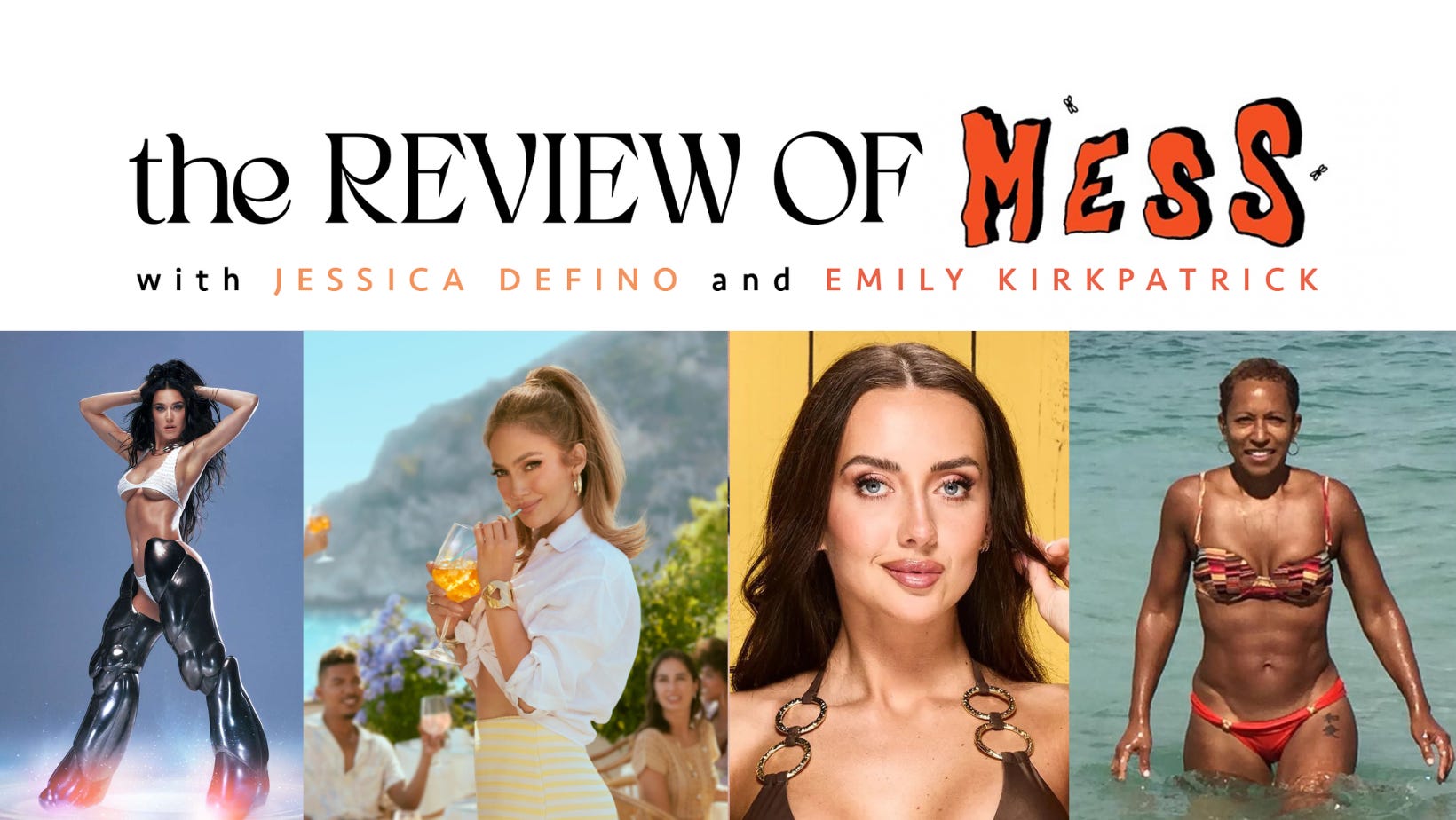
I can see it. I really can't. Okay. The other thing that I'm obsessed with right now is Katy Perry's new cyborg legs.
- [40:21]
B
You know, I'm obsessed as part of.
- [40:22]
A
Her new album promo. Yeah. I think this. I think her rollout for her new music is interesting, Fascinating, like, almost passe.
- [40:35]
B
It's amazing in a lot of ways. Yes. It. To me, it feels like a 40 something year old woman trying, like, looking at what the TikTok girls are up to and being like, well, I can do that. I can wear like a bikini. You can like see my nipples. I can have a glass purse. Like, I don't know. It all feels very like Charlie xcx but like four years ago, Charli xcx. I don't know.
- [40:57]
A
Yeah, no, I agree. And I think it's. It's kind of an interesting. The cyborg legs in particular are kind of an interesting shift in like woman as machine, which has been a big part of the beauty standard in the past couple of years. I think, like, for 2023, when I was doing my beauty predictions, I was talking about cyborg skin, which is like, you know, skin inspired by like avatars and AI art and photo editing software. And it just sort of flattens all signs of life. Like no wrinkles, no pimples, no pores, and no, you know, texture at all. And the finish of the skin is like shiny like a phone screen. So I called it like self mechanization versus self objectification. And I mean, I feel like you see that in expectations of women in a capitalist, neoliberal society anyway. Like, the perfect woman is a machine. She can do it all. She can have it all. She takes care of the kids and has dinner on the table and a high powered job.
- [42:05]
B
And we increasingly have these female AI figures.
- [42:11]
A
There's AI beauty pageants.
- [42:13]
B
Right. And I don't know, all these robots are feminine for some reason I'm always like, why, like female voices or like Scarlett Johansson having to sue over them using her voice for the AI? I don't know. And there is some like, idea that technology is feminine. I think it's a softening effect. I think they're trying to make it seem like more palatable somehow or like more docile and less like antagonistic and like a, a weapon, which is what it actually is and probably will devolve into.
- [42:43]
A
That's such a great point.
- [42:44]
B
And also, you just got me thinking. It's like, I don't know, it makes sense on a couple levels to me because it's like on one, like our, our only concept of like future is kind of like cyborg stuff or like shiny metal is often like how we think about like Matrix, Minority Report. All of that stuff to me is very like glossy, sleek.
- [43:05]
A
Yes.
- [43:06]
B
You know, Apple is always credited as kind of being the vision of the future. And you think about the iPhone getting like thinner and sleeker and shinier and all of that. So that makes sense to me. And also I never even made this connection before right now. But one of the trends that I've been documenting this whole year is kind of these like dresses moving into this like metallic sculptural realm where it's more like wearable art than it is like an actual, almost kind of liquid. Yes. Very liquid metal is how I always try to describe it. It's just these kind of big blob shapes or. Yeah. Kind of armoresque almost, but like very non functional armor. And I see how that could kind of be partnered with this more cyborg beauty to create this really like robotic illusion.
- [43:49]
A
Yeah. In a conspiracy theory sense, it's like a psyop for getting us to accept all of this new technology, you know, like all of the AI, the way that it infiltrates our lives because it's like chic and sexy.
- [44:02]
B
Now next they're going to be like, don't you want to upload your consciousness to the, to the cloud so you could live in a beautiful cyborg body that never decomposes?
- [44:11]
A
Yeah, I mean, it's Very like, man computer symbiosis. Like, which has been a prediction for decades now, which is like, eventually men and computer will have a symbiotic relationship of, you know, the body of a man and the brain of a computer.
- [44:27]
B
Totally. And Katy Perry is going to be the one to get us there. I think that's what you're missing out on here.
- [44:32]
A
Well, she sort of flipped it. She has, like, the body of a robot.
- [44:36]
B
It's funny though that you read that as robot, because to me, I read that as minotaur. Like, I saw that and I was like, horse girl. She's a horse girl. She's a metallic horse girl. Maybe it's because Beyonce, like, primed me to think of, like, metal horses. But to me it's also very. I assume people will remember this reference, but I guess I can link it out below, but Julia Fox's centaur pants, do you remember those?
- [45:01]
A
Yes, yes, I do.
- [45:02]
B
That was maybe three years ago. Maybe two or three years ago now. Yeah. But she wore this pair of pants that it made her legs look like her knees were kind of bent backwards. And it's the one that everyone lost their minds over because it has the dip that goes like way down into her, like, pubis.
- [45:17]
A
Yes.
- [45:18]
B
So she had to like, really shave because you almost see the whole thing. And people lost their mind. But it really looked like. Yeah, it really made her look like she had horse. And that, to me is what Katie looks like here as well is some metallic.
- [45:30]
A
I can see it now. It's not where I went at first, but I can definitely see it.
- [45:34]
B
Also, I think we need to talk about women's woman's world. The song itself that she's promoting is pretty crazy.
- [45:41]
A
It feels like it's from like 2014, 2015. Like a Hillary era neoliberal empowerment. Like the lyrics that. I mean, I don't know if there's more, but the clip I saw of this, that's all we have so far. The lyrics are like, sexy, confident, so intelligent, Heaven sent. So soft, so strong.
- [46:03]
B
Soft and strong is my favorite part of the song.
- [46:05]
A
Oh, my God.
- [46:06]
B
So soft, so strong. Yeah, that's funny. My.
- [46:08]
A
Like a deodorant commercial.
- [46:09]
B
It is a deal. I. That was partially what I was wondering when I heard the clip on TikTok. I was like, is she angling to be in like a Venus razor commercial? Because it's so. I don't know. It's so product selling sounding.
- [46:23]
A
Dove is going to expand their body inclusivity campaign to include Minotaurs.
- [46:28]
B
Yes. She is about to be the face of their new, like, hoof softener or whatever. No, the song is very interesting. It's funny to me, I had the exact same reaction where my first thought was, like, what in the, like, white feminist, like, Hillary Clinton campaign is going on here? And I do feel like, is that the last time she made music also, because it feels like kind of a holdover. And also, I think it's important for people to know that this song is. It's. First of all, it's produced by Dr. Luke. So, like, ew. Right. Horrible choice. Horrible choice. Especially in this day and age where, like, fans check that type of stuff, you know, I think pop stars used to get away with working with these kind of nefarious music industry people a lot more often, and they're not getting away with it now. And clearly Katie hasn't got that memo. It's also an Ava Max reject, which I feel like you're in a bad position if you're not. No shade to Ava Max. I do think she has some. Some bangers. Sweet, but psycho, I think is a classic from our Pandemic era. Yeah. However, if you're trying to be the biggest pop star in the world and you're taking Ava Max's reject songs, I think you're in a troubling place.
- [47:39]
A
Yeah. Also, it reminds me of the Jojo Siwa.
- [47:43]
B
Exactly. And how long until TikTok is going to find the Ava Max original track and release it? Yes. And everyone's going to say it's so much better and they're going to push that one to number one, and that's what you get. That's how the industry works now. But also, I need to tell you, because you are not on TikTok again. You're missing out on everything good in this world. Oh. And all the bad things. It's also. It's a horrible place. Don't get. No, don't do it. But anyway, I'm not the first person to make this comparison, but this song sounds exactly like a song that went viral on TikTok already, which is. It's even more embarrassing because it's not even a real song. This couple has a pit bull that's afraid of riding in the elevator. And so they made up this song to sing the song to the pit bull because he gets so happy and distracted, he doesn't realize he's in the elevator. So wait, let me think about it for a second.
- [48:36]
A
That's so cute.
- [48:38]
B
Yeah. Okay. It goes. He's very brave. He's well behaved. He is not afraid. And it sounds exactly like women's world. I love it.
- [48:51]
A
Oh, my God, I need a remix.
- [48:54]
B
Oh, man, that would be so good. Like, a club remix of the Pitbull song would be so good. But see, this is also a moment where I'm like, why are celebrities team so bad at their job? Because if I was on Katy Perry's team and I saw people making that comparison, I would immediately get her in a video with that dog. Like, I would have them do the songs together. I would mash it up. I would mash it up, and I would have her perform the song with the dog. What are we doing?
- [49:23]
A
You're a genius.
- [49:24]
B
Thank you so much. Please, someone hire me. Someone pay me to run your entire professional life as a famous person.
- [49:30]
A
You'd be so good at it.
- [49:32]
B
I had the same thought. When. Do you remember when Love is Blind came out? And that girl said that she, like, people said that she looked like Megan Fox, and then everybody just clowned on her and was, like, so rude to her, even though, honestly, she does look like Megan Fox.
- [49:45]
A
She did.
- [49:46]
B
I'm gonna say it. She looks like a young Megan Fox pre surgery. Get over it, everyone. And she didn't say it. Other people said it to her. But my. My thought when all that was happening is I was like, where is Megan Fox? Like, how do you not do a TikTok with that girl?
- [50:00]
A
Capitalize on this. Yes.
- [50:02]
B
And at the time, the biggest TikTok trend was that song. That's like, twin, where have you been? Nobody knows me. And so I was like, that's the. That's the meme format. Like, that's your twin. Where have you been? Like, what? Why are we not. It's so easy.
- [50:16]
A
I really think you have a future in, like, celebrity social media consulting should you ever.
- [50:21]
B
I don't want to help them.
- [50:22]
A
Want that for yourself?
- [50:23]
B
I don't want that for myself. I mean, I would like the money that comes with that for myself, because it's so easy and nobody's doing it.
- [50:29]
A
Yes.
- [50:30]
B
But I don't actually want to help these people do anything.
- [50:34]
A
You'd also make a great Project Runway judge.
- [50:36]
B
Oh, thank you so much. Thank you so much for bringing this up, because I have learned recently that I owe Michael Kors a huge apology. A huge apology. I have been ragging on this man for, I don't even know, years. Years and years and years and years. People get very upset with me when I talk about Michael Kors. I just don't. Like, I Don't like what he's done to the handbag space?
- [50:58]
A
No, I don't think anyone does.
- [51:00]
B
I don't. You'd be surprised.
- [51:02]
A
Except for, like, TJ Maxx.
- [51:03]
B
People actually like what he's done to the handbags face. I also just think a lot of his clothes needlessly make women look bad. However, after. After I recently went on a little rant about Michael Kors and what he did to Kelsey Ballerini at the Met Gala, my friend sent me a TikTok that's like a montage of every time he's ever critiqued an outfit on Project Runway. And, man, we might. Yeah. Talk about twin. Where have you been? He and I might be soul mates. Because I've never heard someone like, I.
- [51:33]
A
See some of these insults in. In I heart Max.
- [51:36]
B
Exactly. Every single one I heard, I was like, is that me? Like, is he quoting? Like, that is exactly what I would say. I wrote down a few of my favorite ones. You know, he said he called something rigatoni. Mad Max. Okay. He said one woman looked like she was pooping fabric out of her butt.
- [51:51]
A
That's very you.
- [51:52]
B
Yeah. That is extremely me. I am always saying that people are, like, pooping fabric out of their butts. He called one one a big bowl of sawdust and a crazy disco Turkey. Incredible and crazy Disco Turkey. I can also hear in my own voice. Yeah. So I just wanted to issue a formal apology to him and say if he ever wants to come on the pod or wants to make a little cameo and mess, maybe do a guest at it, I'd be very open to it. I think we're. We're soul mates.
- [52:18]
A
That would be iconic.
- [52:19]
B
I agree. I agree. Well, he'll have to really look past some of the other things I said. I think he can find forgiveness in his heart. I believe in him.
- [52:30]
A
We did the same thing we did last time, which is we thought we were just gonna talk quickly about a couple little things, and it's been an hour.
- [52:35]
B
Turns out we don't talk quickly.
- [52:39]
A
We have some bigger topics to cover.
- [52:40]
B
We do.
- [52:42]
A
Mainly the downfall of J. Lo.
- [52:45]
B
It feels like it's going in slow motion. It feels like she's been downfalling all year somehow, and it's still getting worse and still going deeper.
- [52:53]
A
Well, we were gonna talk about this in our first episode, and then we were like, eh, it feels a little old. And then the slip just kept happening, and I'm like, I think it's still relevant. So, I mean, what are some of the current signs of J Lo on the decline is like, she had to cancel her tour.
- [53:12]
B
The tour cancellation is tough. The divorce is.
- [53:16]
A
Potential divorce.
- [53:17]
B
The potential divorce is not looking good. They are selling their $60 million Los Angeles mansion, which they literally just purchased, I believe, at the beginning of this year, like very recently.
- [53:29]
A
You know the quote about the potential divorce saying that Ben Affleck is claiming temporary insanity.
- [53:35]
B
I love that. I think that's an incredible, incredible source quote. Incredible source quote. And I believe, I do believe that Ben Affleck feels that way. I can see it.
- [53:43]
A
I could see it too, after the Father's Day post.
- [53:46]
B
The Father's Day post is a particular passion of mine because I just, I wonder if she, like, recognized, like, there's two ways about it, right? Like, either this is her, like, winking to the audience and being like, here is my not so subtle confirmation that we are getting divorced, or she genuinely doesn't see the. All the weird details that she included in this year's post and why it's so telling. I guess for people not familiar with Jennifer Lopez's Father's Day post, she posted like an old picture of Ben Affleck from like Armageddon or something or I don't even know what it's from.
- [54:22]
A
It would have been Pearl Harbor.
- [54:23]
B
It might have been Pearl Harbor. Now that you say, yeah, an old black and white shot from him. A movie. Still, she posted to her Instagram stories and wrote our hero with a white heart. And that's not. And Right. I understand that. That doesn't sound so bad. But then when you go back and you look at last year's Father's Day post, which is the craziest thirst trap of Ben Affleck I've ever seen. Like, I'm pretty sure he's not wearing pants and that she just like cropped it for his protection.
- [54:48]
A
I think so.
- [54:49]
B
And then there's like five photos of them making out in various ways. I just. And it's like, papa. Like, this is to the true papa. And I appreciate papas around the world so much. It's like, okay, all right. It's a. It's a big difference. And I'm always amazed at the way that she excludes Marc Anthony, the father of her children, from her own Father's Day posts, like, will never get old to me. I think it's so crazy and funny. That is like, what, you spent like a decade of your life with that man. You have twins together. Yes. You have like 13 year old twins together. And she has never mentioned that man once on Father's Day.
- [55:22]
A
That's interesting. I guess I didn't really realize that.
- [55:25]
B
She also didn't bring him up. There was something, I think maybe it was in the documentary, or maybe she was just doing an interview about the documentary, but she was talking about how, like, Ben is the great love of her life and she's never had any other, like, real love in her life.
- [55:36]
A
Yes.
- [55:36]
B
And I was like, mark is right there. He can hear you.
- [55:39]
A
I actually didn't watch the documentary yet, but I watched It's a Tree. What's the making of?
- [55:46]
B
Oh, I don't know.
- [55:47]
A
I didn't watch the Making Of.
- [55:48]
B
I watched, like, this is Me Now.
- [55:49]
A
This is me now. Yeah. And it did seem insulting to all of her former loves.
- [55:55]
B
I think everything she does now is called this Is Me Now. Like, I think the album is called this Is Me Now. I think the tour, the movie, the making of the movie. Like, they're all this Is me now in my head. I don't know if they have different names.
- [56:06]
A
I think the reason why the downfall of J. Lo has been interesting for me is because a couple months ago, I read this article on Amy Odell's newsletter, which is called Back Row, that Talked about maybe JLo's beauty brand being the start of this turn of the public against her. And I think that's really true. It really does match up. So JLo launched her own beauty brand, JLo Beauty, in very early 2021. And the draw of the brand was she's like, I have never had Botox done. I've never had any work done. I don't use injectables. All I use is olive oil. And that's why my skin looks good.
- [56:52]
B
Classic.
- [56:52]
A
And then she goes on to launch these, like, luxury beauty products that are olive oil inspired. Like, the big one was sheet masks that were soaked in an olive oil complex, and it was $48 for a pack of three. And then when she was promoting them, she told Allure, we should be charging $10,000 for these masks.
- [57:13]
B
Okay.
- [57:13]
A
And I'm like, but if it's olive oil, why would you be charging $10,000 if you are saying your secret? And the secret your mother and your sister swear by is plain olive oil. Why is anybody going to buy even a $48 sheet mask?
- [57:29]
B
Like, to me, it's fair. Jennifer Aniston being like, the secret to my beauty is water, and then sold us hydration in, like, 50 different ways. And it's like, that's it. You just have to, like, drink smart water. And use Aveeno and like, put these eyedrops in your eyes and you'll look like me.
- [57:43]
A
Exactly. And she, like, ended up getting into, like, Instagram comment wars with people who said, like, oh, you're just doing injectables. And she responded and she was like, nope, I've never done Botox. I've never done any injectables. This is all me. This is just how I age. And I think that really did set her up for a public turn against her. Because, like, if the results she has, because she looks very young for 50 something, if those results are from olive oil, there's no incentive to buy the products.
- [58:18]
B
Right.
- [58:18]
A
If the results are not from olive oil, she's just not trustworthy. So why would you buy the products? And then like, shortly after the launch of the brand, it launched in Sephora and then nobody was really buying it. In part of Amy Odell's post, she like, links to a Reddit thing that had like, pictures of JLO beauty products with, like, literal dust on them in the aisles of Sephora.
- [58:45]
B
Yeah.
- [58:45]
A
And then Sephora either. I don't know the details. Either Sephora dropped her or she pulled out of Sephora, but you can no longer buy JLO Beauty there.
- [58:53]
B
Interesting.
- [58:54]
A
And I really do think that was the start. I think she, like, had a very fumbled beauty brand launch and like, all of this other stuff started cascading after that.
- [59:05]
B
Yeah, I think that makes sense. I also think it, like, touches on something that's the problem with Katy Perry's rebrand as well, is like, all of these, like, celebrities that kind of have been a celebrity for a minute seem to be missing that. There's this new wave of, like, people are very interested in authenticity and they can really. They're very good at sniffing it out. I think it's also because celebrities have to be so forward facing. Like, they have to be on all these platforms and they have to be kind of giving you this insight into their real personalities that they didn't really have to be doing before. And that real insight is kind of cluing people into, like, kind of how bullshit all of this is. And, like, manufactured for us. And JLO has got to be one of the most, like, manufactured veneer. You know, who she, who she is public facing is very radically different from who she is private facing. And I think people are really starting to get a sense of that. Also, I don't know when celebrities talk about, like, oh, I've never had injectables, I've never had Botox. Maybe this is just like me being trained with the Kardashian brain. But to me, I'm like, right, because you're doing everything else. Like, that might be technically true because that's the loophole the Kardashians always use. Right? Like, oh, I never got that specific surgery. It's like, Right, but you got the other one that's like. Like it. We're just not specifically using the name of it because we don't know it yet. But to me, it's like, okay, you never had bugs? Well, you certainly have. Like, lasers.
- [60:31]
A
Right.
- [60:32]
B
For one. You know, there's all sorts of technology.
- [60:34]
A
It's kind of like the Martha Stewart effect where she talks a lot about, like, how she's never done anything invasive, but she's very willing to talk about all the non invasive procedures that she does. And it's like, like, that's not really better or different.
- [60:49]
B
Right. And it's a very broad category, too. Like, non invasive procedure is a very broad category. You can get a non invasive nose job. You know, like, yes, there's a lot that's possible. And I don't know that people even know the full extent of, like, what's available to celebrities and what they can be doing that isn't technically Botox, injectables, fillers, whatever. Although I feel like those are also. Those might also be happening around the edges. Who knows?
- [61:13]
A
Who can say?
- [61:14]
B
But also, genetics, at the end of the day, genetics is happening. And you literally cannot bottle that.
- [61:19]
A
No, no, not at all.
- [61:21]
B
I don't know if anyone's seen Halle Berry's mother, but you cannot bottle those abs. She inherited those abs. I haven't seen it. Oh, my God. Halle Berry's mom looks exactly like her. She looks ageless, and she is just ripped in a way that I will never be ripped in my entire life. Eight pack on that woman.
- [61:37]
A
Yeah. I mean, these are just things that you can't. You can't buy. You can't, you can't buy.
- [61:42]
B
But celebrities love to say it's just like, you know, drink some water, have a cheeseburger, use olive oil. Just splash some olive oil on your face and you'll be thriving.
- [61:51]
A
Simple.
- [61:51]
B
Yeah, the J. Lo stuff too, you know, I don't know, it's kind of a domino effect as well. It's like once I think people start realizing it's kind of safe to be a hater of someone, they start coming out of the woodwork with, like, some truths, some hard truths about how they feel about it. I think we saw that with Justin Timberlake, especially in recent years, as everyone was kind of biting their tongue on him and they kind of, like, let loose. And you're seeing that with JLO as well, with. You know, I'm seeing, like, videos all the time of people talking about working with her and what a nightmare it was. And, like, she won't allow people to look her in the eye. She won't speak to people. She's very.
- [62:22]
A
I've seen some of those.
- [62:23]
B
Yeah. And not just from, like, random people. Like, we're talking about, like, I don't know, not equivalently famous, but, you know, people famous enough to be working with her on a commercial or behind the scenes. Yeah. I'm even thinking about influencers. Like, a couple of influencers have come forward and they're like, oh, we had to do this, like, TikTok together, this spot. And she was, like, very cold to me and, like, confused why I was there and, like, why I was speaking to her.
- [62:49]
A
Yeah, it doesn't surprise me.
- [62:51]
B
Yeah, it doesn't surprise me either. But I do think, again, that's kind of, like, demarcating old Hollywood from new Hollywood. You know, I just think a younger celebrity is aware that, like, cameras are everywhere. People, everyone has a platform now. Anyone can share their story. Anyone can tell their quote, unquote, truth about you. And you do have to be kind of conscious about that and how you treat people and engage with people, which is definitely not true. In the past, you did not have to be conscious of any of that.
- [63:22]
A
Not at all. I'm also thinking of the IO debacle with J. Lo, where that old podcast was uncovered of IO saying Jennifer Lopez's career was a scam, and then she went on to host SNL with J. Lo and had to apologize for all of that. Yeah. It's interesting that Jennifer Lopez doesn't seem to have the realization that, like, she's on the other end of that as well. Like, those things can come out about, like, about her as well.
- [63:51]
B
Well, what? You're also. The story you're talking about is also extra crazy because J. Lo's the one who said that IO apologized to her. She's the one who made that piece of information public, and she did not need to make that piece of information public, and it made her look bad. Cause why are you making this girl apologize to you for saying something that is true?
- [64:07]
A
Exactly.
- [64:08]
B
You don't sing your songs. You don't.
- [64:10]
A
No, I.
- [64:11]
B
You famously have not.
- [64:12]
A
I had no idea until these videos started coming out recently of. Of her using these Tracks of other vocalists.
- [64:19]
B
Justice for Ashanti, that is. There goes Ashanti's career in JLo, which is also. I mean, did I bring this up on the last time, or am I just confusing how much I talk about this particular event? But. But when Mariah Carey said, like, I don't know her about JLo, yes. A lot of people don't know the backstory of that, which is like, one, J. Lo isn't singing, and Mariah Carey is a very incredible professional singer. And so she was saying, I literally don't know her because that's not a singer. She's not in my world. She is not in my wheelhouse. There is no reason for me to know who that is. But also, she was saying that because her ex husband, Tony Mottola, who tried to destroy her career and kept her locked up in a mansion and wouldn't let her tour, wouldn't let her sing, wouldn't let her do anything. When she finally got free from him as a punishment against Mariah, Tony started trying to make J. Lo's career happen. He wanted J. Lo to replace Mariah on the charts, and so he put everything he had behind J. Lo. He was the president of Sony Music. Yes. So he was. That's the reason J. Lo has a career, that's the reason Mariah says I don't know her is because she was a weapon that was being wielded against her to keep her silent.
- [65:33]
A
Whoa. I did not know that backstory.
- [65:36]
B
Yeah. I don't know why that doesn't automatically make more people kind of, I don't know, look sideways at J. Lo.
- [65:42]
A
I also wonder if the fact that she doesn't seem to have. There's not really a J. Lo Stan community. Right. Like, nobody was buying tickets for this tour. And I think it's interesting because I feel like she has been so focused on being, like, a triple threat. Like, I can sing, I can act, I can dance, I can do all of this. And she hasn't really cultivated that, like, standom in one particular area.
- [66:08]
B
Yeah. It seems like she's just kind of counting on, like, the longevity of her career, that the fan base has to be built in instead of kind of courting them and appealing to them and making them want to turn out. I don't know. Part of my theory also about this divorce and why it's not being, like, officially filed or officially announced or whatever is I think that she's waiting to announce it to coincide with the return of her tour. And selling more tickets is my pet conspiracy theory. I Don't think it will work. But I think she's trying to kind of drum up some interest, some sympathy, some intrigue, you know, and get some, get some butts in the seats, because they certainly are not in the seats currently.
- [66:50]
A
Yeah, no, I could see that for sure. We'll see.
- [66:53]
B
We'll see. Time will tell.
- [66:55]
A
Should we talk about Chanel?
- [66:56]
B
My favorite Chanel. My favorite brand in the whole wide, whole wide world.
- [67:01]
A
I know. I feel like you have to take the lead here because you have such, such deep and strong feelings about Chanel.
- [67:07]
B
I have some deep Chanel lore. So as people might know, the creative director of Chanel, Virginie Villard, stepped down this month. And I feel personally responsible for it because I was spending most days, every day kind of bullying that woman relentlessly for the things that creating and putting down the Runway and selling to celebrities. For those who don't know, I have a joke Instagram account called Chanel Flops where I just post kind of the worst outfits that Chanel puts on celebrities. And they are largely, they are so bad, they are pretty shocking. Even when you dive kind of deeper into the, to the archives, you realize how long they've been looking pretty horrific. And so, yeah, the Internet was really anti Virginie for a very long time. But I don't know, people always kind of argued that, like, well, her stuff sells. And it turns out it doesn't sell. It doesn't sell because that's why Chanel is getting rid of her. Like, if it sold, they would have kept her forever. For those who don't know, Virginie was Karl Lagerfeld, the former designer of Chanel, his right hand woman for a decade, decade plus. She studied under him, she did everything with him. And so when he died, without kind of like, you know, planning for it, without kind of like picking an heir or like having talks with the company about who might be a fitting successor, she just took over. And I think for a lot of people, it was kind of like a comfort transition because she. It was very much status quo. She kept Chanel looking really exactly like it did under Karl, which is also kind of a problem because. Because Chanel's already kind of has an old lady problem.
- [68:47]
A
Like, it, it's like very stuffy.
- [68:49]
B
It's very stuffy. It's very formal. But what Carl was always good at is he did have like a real good sense of humor about it. So he was able to kind of like re infuse that into Chanel culture. And he also, like, weirdly was in touch with the youth and, like, knew how kids dressed and, like, what they liked. I don't know how, but he did. And. Yeah. And that was all kind of lost under Virginie. And instead it became these very kind of, like, I don't know, cliche stereotypes of youth culture and these very kind of, like, desperate bids to, like, seem relevant to Gen Z. But like, ultimately, that looked very. Yeah. Granny.
- [69:25]
A
Yeah.
- [69:26]
B
So now with her replacement, there's, like, a lot of speculation about who's going to be the next in line, because obviously Chanel. Yeah. In fashion, the creative director of Chanel is, like, the highest of the high. It's like being Anna Wintour, you know, it's kind of the most elite position you can have. And it's. Fashion is always like, a big game of musical chairs. And there happens to be a lot of big names who are unemployed at the moment. And so people are having a lot of thoughts about who might be a good fit there. A lot of the names that are being thrown around are, like, John Galliano, who's currently at Margiela and has his own.
- [69:58]
A
We talked so much about him last time, too. It's like.
- [70:01]
B
We did.
- [70:02]
A
The industry is gearing up to bring him back.
- [70:04]
B
Yeah. Which makes sense. That makes him my kind of, like, head pick at the moment. Just because Anna is pushing him so hard on the people. He was supposed to have his big retrospective at the Met gala's area. It just seems like that's kind of what the old guard in the industry wants, even though he really hasn't been at Margiela for that long. And then another name that keeps being thrown around is Jeremy Scott. Dana Thomas reported on this in her newsletter. She's a really incredible fashion journalist, for those who don't know. And she reported that she was at a party in Paris and Jeremy Scott came in and she was just, like, catching up with him. And she's like, oh, like, what are you. What are you up to? Like, what brings you to the city? And he's like, oh, I'm like, apartment shopping. And she's like, oh, yeah, I read that. Yeah. And she's like, what do you mean you're apartment shopping, so you have a job here now? And he got, like, super weird about it, and then he left the party.
- [70:57]
A
Whoa.
- [70:58]
B
Yes. Because she was like, it's Chanel, right? Like, you got Chanel? And he, like, zipped up and, like, just left the party. And so that, to me, is also very interesting.
- [71:06]
A
Yeah.
- [71:07]
B
People are very shocked by that appointment. But I think it makes a lot of sense. I mean, it's definitely like the. I can see it really? Yeah, I can see it really well. I don't know. It's definitely like a wilder choice for Chanel. It's like what they would consider a risky choice, even though it's like, definitely not. He's very much industry. It's really not risky. But I can see that kind of being their wild card for people who don't know Jeremy Scott. Like, long time, big time New York designer, and then he got appointed to Moschino, which is a big Italian house. And he's very funny.
- [71:41]
A
He's very funny. I loved what he did at Moschino.
- [71:44]
B
Yes, he's very campy. He's very kitsch. And I. And what he did at Moschino is also why I think Chanel would be interested in him, because he really made that brand relevant again in a way that it. It simply wasn't.
- [71:54]
A
Yeah.
- [71:55]
B
And he would. But he was still very true to, like, the house codes and the humor that is already found within Moschino. So I can see why Chanel would be interested in that. Again, Carl did have a good sense of humor. Like, you think about the Chanel hula hoop bag. You think about, you know, when he built that grocery store that, like, everything was Chanel branded and people, like, rioted the grocery store. Me too.
- [72:14]
A
Even the ankle monitor bags.
- [72:17]
B
Yes. It's just like he was very. I don't know, he had a good sense of humor when it came to handbags especially. And I can see Jeremy Scott doing something very similar with that type of content. And then also people are saying Piero Paulo Piccoli. I never say his last name. Right.
- [72:33]
A
From Valentino.
- [72:34]
B
Yes, he was from Valentino. And he got let go or he quit. I don't know. At Valentino. Alessandro Michel is there now from Gucci. And now Piero Paulo is just kind of like twisting in the wind. He did do like a very funny, very petty paparazzi photo shoot where he kind of just like promenaded around the streets of Rome carrying, like, heavily branded Gucci bags, like, right outside the Valentino store. So he's clearly pissed with his former employer. I don't think he's going to Gucci. Gucci already has a new designer.
- [73:06]
A
Right.
- [73:06]
B
But they also kind of. I don't know. I don't know how happy Gucci is with that new designer. I don't know. It's very interesting. So it's a very up in the air at the moment, but people have named him for Chanel as well, which would make a lot of sense. What he did at Valentino was beautiful, super interesting. He really made it his own. Pierpolo is also someone who was the real Valentino's right hand man and was named as his successor. He was also named along with Maria Grazia Chiari, who they did it together for a while, and then she went off to Dior and he took it over himself. But I just thought, you know, for two people who were fully trained under Valentino, they did an incredible job of, like, revamping the house and making it look like themselves while still staying true to that original vision. And so I can see why he would also be of appeal to Chanel. And then, of course, Hedi Slimane.
- [73:57]
A
This is my favorite rumor.
- [73:59]
B
Hedi Slimane is interesting. Hedi Slimane. When Carl was alive, he said that Hedy was his natural successor. And Carl was also obsessed with Hetty. Like, he owned all of his. There's a really famous interview with Carl where he, like, goes through his closet and, like, all of the pants are the pants that Hedy designed for Dior Homme when he was the creative director there. And he just thought that he was a genius. But at the same time, Carl named a lot of people his successor. It wasn't just Hetty, and Hetty certainly wasn't the last one. So I don't know, it's confusing to people, like, how seriously to take Carl when he says stuff like that.
- [74:32]
A
Right. I read a really fun rumor from Camille Sherrier, who's @luk, and she tweeted that the rumor was Hetty's big plan was to, if he was at Chanel, was to ditch all of the really big fragrances, like no Chanel, no. 5, no bleu de Chanel, and start new. And I guess, you know, the higher ups did not react well to that. But I think that would have been, I mean, not good for sales. But I think it would have been, like, an incredible move, like just something exciting.
- [75:05]
B
Right. And instead, you see hetty go to St. Laurent and do exactly that. You know, like, that is. I don't know. I do. Teddy and I have some, like, strong disagreements about, like, aesthetics or, like, what's interesting or, like, high and low end or, like, models eating, you know? But I will say one thing that he's very good at is he's very iconoclastic, which I very much appreciate in a creative director where it's like, he comes into a house and he's like, it's mine now. I do what I Want I make this look like how I want. Like, it. It can be completely divorced from the past, but often, honestly, he's going back to, like, the foundations of the brand. Instead of looking to the last creative director, he's looking to, like, its true founding and its origins and taking his codes from there and then evolving it. So you see him do that at St. Laurent, dropping the Eve's, obviously changing all the branding, kind of changing the whole way that it looks. But at the same time, he's going back and referencing, like, Le Smoking, which is a signature Yves Saint Laurent piece. Right. So I can. I can definitely see why he would go into Chanel and say, like, oh, I'm gonna get rid of all your heritage pieces. And for people who don't know, in the fashion industry, like, the money is made in handbags, fragrances, beauty. Like, you do not touch those. Those are the money makers. Like, you mess with that, like, you're done for.
- [76:23]
A
I always say, like, beauty in high fashion is the way that they get the fast fashion customer.
- [76:29]
B
Yes, for sure. Because it's like, you can get a lip gloss, you can get a fragrance. Right. And it's not going to break the bank, but it still feels it's a touch of luxury. And so, yes, they're always counting on people to do that. And then they're counting on, like, the bags to be the big gifts, Right. Graduation, anniversaries, birthdays. You're going to get, like, a wallet or a handbag or something like that. And so, yeah, you can never really touch those kind of classic standards. I was even thinking about that recently, they just had the Louis Vuitton men show. And I don't know, it's always funny to me at the shows the way Louis Vuitton, like, forces a handbag on a celebrity where it's like, it makes no sense with the outfit. Like, it's so awkward on the step and repeat. But you're like, but that's what they're selling. Like, they don't care about anything else. Right. They made Pharrell put on this, like, weird little crossbody when he took his final bow, and he immediately took it off, and I was like, that is obviously, like, corporate being, like, you need to sell bags.
- [77:21]
A
Well, he just launched a fragrance at Louis Vuitton, too. It's his first fragrance. I forgot what it's called, but he says it smells like sunlight.
- [77:29]
B
Okay.
- [77:29]
A
So whatever that means.
- [77:31]
B
This smells like nothing, but. Okay, cool. Cool. Love it. Yeah. Something very interesting is going on with Pharrell right now. I guess that's like, a topic for another time. Yeah, but I'm just very. I don't know. I'm intrigued by being the creative director of a brand with no design experience, really, outside of, like, collaborating with, like, Adidas or whatever. And then also simultaneously, he's doing, like, a Lego movie about his life. Do you know about this?
- [77:58]
A
I feel like I've heard of it. It sounds familiar, but a Lego movie.
- [78:02]
B
About his life that he did. The voices in Kendrick does a voice in it. Like, all these, like, rappers do voices in it, and I'm like, how do you. Should you be able to have the time to even do both these things at once? Like, it seems to me like you maybe need to, like, drill down and focus on one or the other and. Oh, oh, my God. And also a new clips album is coming out that he produced, and I'm like, sir, who has the time? How are you producing Eclipse album, putting out a Lego movie and putting out a new collection at Louis Vuitton. Your attention seems spread a little too thin.
- [78:31]
A
He's also another example of being able to, like, launch a fragrance and have his own beauty brand too, because he has his own, like, skincare lines as well that he's running. That's totally separate from his appointment at Vuitton.
- [78:46]
B
I completely forgot about that. And yes, his skincare line, that is also like, that is a man. That. That's genetics. That's genetics. And some. Some good touch up, I would say.
- [78:55]
A
These products played no part in how young Pharrell looks, right?
- [78:59]
B
No, for sure not. And also, this is a side note, but I feel like Pharrell is starting to aesthetically turn into Tom Ford.
- [79:06]
A
Oh.
- [79:07]
B
I can't explain it, but I saw him at the recent show and I was like, there's something so Tom Ford happening here. Maybe it's just like the yellow tinted aviators and, like, the boot cut dark denim, but.
- [79:18]
A
Right, Right. No, I can see that.
- [79:19]
B
She's looking super Tom to me.
- [79:21]
A
I wouldn't have thought it, but I can see it now.
- [79:24]
B
I don't know what that means, but just something of note.
- [79:28]
A
Okay. Should we get into the mess of the month?
- [79:31]
B
It's time for the mess of the month. Let's do it.
- [79:33]
A
Yay. Okay, my mess of the month is the viral tweet about the Love island girls. Have you seen this?
- [79:40]
B
Of course. You know I love Love Island. Love island is my passion. Love island is my life.
- [79:44]
A
I've never seen Love Island. I've never watched Love Island.
- [79:46]
B
It's such a Such a dream. It's such a nightmare. It's just a perfect reality show. I love it so much. The casting agents on that show, I main might be the smartest people in the world. I don't know how they do their job.
- [79:58]
A
I don't know either. I mean, yeah. So I've not been very involved in the fandom of this show at all. But so recently, pictures of three of the new contestants, three women, went viral, and it was captioned like, it's past time to ban fillers in England. Because none of these women are close to 30. The implication being that they all looked much older. And I think the oldest of the three, you know, I'll link to it in the show notes, was 26 or something. And so this went really viral. And then a lot of critique of it went really viral, you know, along the lines of, like, if you're only critiquing fillers by saying they make women look old, you're also only mad because it's a woman's job to look young. Like, that's also like an ageist, sexist comment, which is valid. Like, I think there are plenty of other reasons to critique filler, including, like, lack of regulation, particularly at med spas.
- [80:53]
B
For sure.
- [80:54]
A
Doctors, like medical doctors selling this as part of a health care plan. There's, like, a lot of potential risks and side effects. You know, fillers can migrate. They can cause skin stretching, discoloration. You know, they stay in the body for a lot longer than previously thought, all of this. But okay, here's my hot take is like, I think the fact that these women look much older than they actually are is a valid point, and we should talk about it, because the procedures they're getting are marketed as anti aging, are marketed as preventative aging interventions. And I think it matters that they don't work. Yeah, I think we should be clear about that, because that's the first step to saying, like, what the beauty industry is selling me is not actually doing what it's promised to do. And that first step to, like, sort of questioning your participation, I think if the motivation to do it is anti aging and it has the opposite effect, that's worth gently bringing up.
- [82:03]
B
It's worth discussing. Yeah, for sure.
- [82:05]
A
Like, it's like if you were using an anti acne cream and it gave you a lot of acne.
- [82:09]
B
Yes. People should know that you would be.
- [82:11]
A
Like, oh, I have to tell everyone. Or like, this isn't working.
- [82:15]
B
Yeah, that's interesting. Again, I think that's kind of the conflating of like. How do I put this? It's just the difference. You're talking about the actual health implications of doing this or not versus kind of you're making a moral judgment on whether you like the way they look or not and kind of conflating the two.
- [82:33]
A
Right, right. And I think a big part of the critique of people like, oh, filler looks so bad. You think visible filler looks bad, but you think. I'm sure you think it good when you can't detect it.
- [82:47]
B
Yes. I think about that a lot with plastic surgery. I'm like, there's actually a lot of plastic surgery you really like. You just don't know what it is and you don't know what you're looking at. But I also have always been, like, why I push to. I think that all celebrities should just be forthcoming about what's happening because the more aware we are of kind of what goes into manufacturing, the aesthetics that we like or don't like, the more educated we become, the more, you know. I don't know. I think it's important.
- [83:11]
A
No, I agree. I do think it's important. And.
- [83:15]
B
And also the girls. These girls specifically, I think, are the ages that are being marketed these products the hardest. You know, like mid-20s. Yes. And the fear that's being drummed up around turning 30.
- [83:28]
A
Yes.
- [83:28]
B
Which has somehow become decrepit when you.
- [83:31]
A
Start losing your collagen, like, 25 to.
- [83:34]
B
30, is that they live in fear of this age.
- [83:37]
A
Age in the marketing. Yeah.
- [83:38]
B
Yes. And so they're telling girls, specifically this age, that they need to be doing this type of pre procedure, and then they're doing that type of preventative procedure. And then they're being told, well, now you look old. Well, now it's made you look actually worse than you looked before.
- [83:52]
A
Another thing that went viral was a plastic surgeon trying to guess their ages.
- [83:56]
B
Yes. I saw him.
- [83:57]
A
And he was guessing, like, late 30s, early 40s for all of them and was sort of shocked that they were in their, like, early to mid-20s, which, you know, I. Is interesting, again, feedback to have.
- [84:09]
B
Yeah.
- [84:11]
A
Not so great when it's coming from a surgeon who is likely doing these types of procedures on other people and profiting off of them and even profiting off of bad work because there's a lot of corrective surgery being done.
- [84:24]
B
Hello. Botched the whole TV show.
- [84:26]
A
I know, I know. I really want to go back and rewatch some old episodes of Botched and like, the Swan and Swan is stuff and sort of like, remember these foundational moments. But. But, yeah, I think it's relevant that it makes you look older if it's being sold to make you look younger. I think there's, like, a gentle and factual way to talk about this. That's, like you said, not a moral critique. But also, at the same time, I do wanna say, I do think it speaks to the standard of beauty now. Not necessarily being youth, but being agelessness.
- [84:58]
B
Totally.
- [84:59]
A
I think it's very inspired by our images online, our photoshopped images online, our avatars. Like, these are things that don't age. They're static, they never move. You can get older, you can do other things to your face, and the image remains the same. And that's kind of our guiding light for what's beautiful right now is, like, a good picture. Like, people are literally bringing their Photoshop facetuned Instagram story pictures into plastic surgeons and being like, make me look like this. So I think a lot of it is like, ageless versus youthfulness is the new standard.
- [85:33]
B
It goes back to what you said about cyborg beauty too. Right. Like, is that not ageless? So that's like a timeless out. You're existing outside of time. I guess it would be the ultimate goal of the beauty. Which is interesting because when you were talking about that, I kind of. I thought about the outside of time element from, like, the reverse perspective, which is. I always think about, like, how silly age is and that we quantify stuff like that when there's, like. There's so many examples at every age of people looking incredible or people looking way older, like, way younger, way older. Like, we actually don't have, like, a really good gauge of what people's age is or, like, what they're like, old age. And so it's like. I don't know, it's very funny to me when people quantify stuff like that.
- [86:16]
A
Yeah. Because you can find examples of people at every age who look younger or who look older, which suggests there is actually no one way for, like, a particular age to look. I was reading this book, have you heard of it? Immediacy by Anna Kornbla.
- [86:30]
B
No. Sure.
- [86:31]
A
It's really good. And I think it speaks to this trend. But she talks about immediacy as the evolution of postmodernism. So if, like, postmodernism is the style of late capitalism, she calls. What she calls immediacy is the style of too late capitalism, which is what she calls the time we're in now. And it's like immediacy is like. Whereas postmodernism is about, like, Mediation, like intertextuality, irony, meta immediacy negates mediation. And she said, it's like, it's very blurred, it's urgent, it's extreme. There's no future, only present.
- [87:11]
B
Interesting.
- [87:12]
A
Yeah, I think it's. I really want to do more research into that and then maybe write something about the agelessness as immediacy, as, like, there is no, like, part of the too late capitalism framework is like, it's too late. The world is going to change in terms of climate change. We've shot past particular targets.
- [87:34]
B
It's done.
- [87:34]
A
It is too late. And what does that say about our conception of the future? And what does that mean to bring the future into the present in this timeless, ageless, extreme space of everything all at once?
- [87:48]
B
Yeah, that's interesting. Immediacy resonates with me also, just in terms of, like, I don't know, I think about age a lot in terms of living on the Internet. It's like, to me, that's another way in which age doesn't really exist or has kind of been rendered like a pointless demarcation because, I don't know, a lot of my TikTok consumption is like Gen Z complaining about how millennials are or what they do or blah, blah, blah. And I always think, like, I'm deeply in the midst of being a millennial, but it's like, I know all these references. Like, I know the trends. I know what's cool. I know you're famous people, because I live on the Internet, and the Internet has collapsed those, like, traditional age boundaries or those traditional content boundaries in a way that I feel, like, completely well versed in, like, the stupid skibidi toilet stuff, as I do in, like, Jennifer Lopez's entire career, you know, like, I don't know, there's a mobility in the immediacy of the Internet.
- [88:46]
A
There are no siloed spaces.
- [88:47]
B
Yes. And it takes you out of your age category. It takes you out of, like, your background, maybe, or the limitations that you usually find.
- [88:54]
A
I mean, it's like Sephora tweens.
- [88:56]
B
Yes, exactly.
- [88:57]
A
Like, that's a big part of it is like, there are not, like, tween kids spaces anymore. We're all on the Internet together, consuming the same things at the same time. Yeah, that's a good point.
- [89:07]
B
I think that's a great way of thinking about. Cause I even think about, like, when I was growing up as a tween, like, there's specific stores that were for you, and you went to those stores in the mall, and it felt like A graduation to be going from, like, galaxies. Gap Kids to Gap, right?
- [89:21]
A
Yes.
- [89:21]
B
And that's been totally collapsed and flattened into just one giant Internet.
- [89:26]
A
And now I feel like it's gonna work the opposite way. Whereas I don't know if you've heard that Limited 2 is relaunching.
- [89:32]
B
I just saw that yesterday and it's.
- [89:33]
A
Like, people my age are very excited about it. So it's like all of these nostalgic things are coming back. And again, they're not just for tweens or kids. It's like the 30 somethings are going to be consuming it nostalgically.
- [89:48]
B
Totally.
- [89:49]
A
Yeah.
- [89:50]
B
Yeah, that too. I'm interested to see how nostalgia develops as the younger generations get older, because how do you have nostalgia when you no longer have a shared culture? Like, you guys don't really have the same touchstones. I think we were the last generation that did have kind of all the same touchstones at the same time, consuming the same culture and media and whatever as it came out.
- [90:16]
A
No, that's such a good point.
- [90:17]
B
I'm just interested to see, like, can you even market to a nostalgia that is, like, so chaotic, like, so many.
- [90:24]
A
Subcultures for that, which is like. What is the word? It's for nostalgia that. For a time that, like, you didn't experience or something that didn't exist there. I can't remember the word for it, but I see this in perfume marketing all the time. To bring it full circle where there is, like. It's what's called nostalgia is for this thing that you've actually never experienced, but you, like, long to have experienced. So I do think that's going to be a big part of beauty marketing in particular.
- [90:53]
B
That's interesting. That is definitely true. I literally just had that experience this weekend. Yeah, I went to the movies. I saw After Hours. Are you familiar?
- [91:03]
A
No.
- [91:03]
B
It's one of Martin Scorsese's first films, I believe are, like, definitely super early in his career. And it's basically just kind of. It's like a. It all happens in, like, one night, over the course of the night, and it's just like a series of kind of, like, mishaps and hijinks where, you know, this guy loses his wallet and then he, like, trades his keys for another guy's keys and he gets lost. And, you know, it's just like one thing after that. But there's no phones, you know, there's no tax. There's no Uber. And I don't know, it just made me so nostalgic because like one. It's just a great premise for a movie that, like, one kind of, like, accident after another can lead you from here to there. But it's also just something that doesn't exist anymore.
- [91:42]
A
Right. And never existed for us, really.
- [91:44]
B
Right. Like, barely. Like, we were maybe right on the cusp of, like, not having a cell phone or whatever. But yeah, we never. I don't know, like, having enough change for the payphone, not having enough change for the subway ticket. Like. Yeah. I don't know. It made me very nostalgic for, like, that something like that even could happen to someone. Someone.
- [92:00]
A
Right. I think a lot of people feel that way about dating. I think a lot of young people feel that way about, like, a dating scene that they've never experienced too.
- [92:07]
B
For sure.
- [92:08]
A
So I think it's a very powerful emotion that is. Is actually going to be used to. To for marketing rather than a challenge of marketing.
- [92:16]
B
I agree. It's funny though, like, in the case of something like dating, I. That's definitely something people have a lot of nostalgia for something they didn't experience. But it's also like, it still now has to be mitigated through technology. You know what I mean? Like, even if you are going to whatever, a speed dating event or something, like, you probably signed up for it through Eventbrite. Yes. You know, I don't know. There's just like a weird. An interesting disconnect there that you still have to kind of use the tools of Midori to access this, like, nostalgic thing.
- [92:42]
A
Like, even if you meet in person, like, texting with someone is always a good thing, where it's like that pressure.
- [92:47]
B
Where you're stalking them on Instagram. Yeah.
- [92:50]
A
Oh, man.
- [92:51]
B
Interesting. Well, let me share with you my mess of the month, please. Which is Lady Gaga. She's back. She's back promoting her Monster Ball Chromatica, whatever documentary. And I just want to bring her up because she just really. She struck my fancy in a couple dimensions this month, which is one. She released another migraine commercial and it just blows me away that she does, like, pharmaceutical sponcon.
- [93:22]
A
I know. She, like, hosted a pharmaceutical party.
- [93:25]
B
Yes. At her. At her house. At her private home. Home. Which is also crazy. Yeah. So she. They must be paying her something wild.
- [93:33]
A
Yeah.
- [93:34]
B
But I don't know. I just. I'm very fascinated by celebrities agreeing to do pharmaceutical ads. It reminds me of Joe Jonas doing that. Like, not Botox. Was it Zeomin?
- [93:41]
A
Xeomin. Oh, yeah, yeah.
- [93:43]
B
Where it's just kind of like, I don't know, I feel like celebrities used to be a little more embarrassed about promoting embarrassing products. Like, I always think about in the 90s, how, like, Brad Pitt would do, like, a whiskey ad that's only aired in Japan or whatever, so it's like, it wouldn't taint his, like, American base audience that, like, he would agree to do something so beneath him as, like, an advertisement. And now it's, like, so flagrant, like, nobody cares. Like, everybody's just trying to make as much money as humanly possible.
- [94:11]
A
I was just gonna say, it feels like part of your point last time about, like, Kardashians, like, living beyond their means and having to constantly be doing this stuff. I feel like that's probably part of, like, every celebrity's life right now, where it's just you take whatever money you can get.
- [94:26]
B
Yeah, totally. It's just crazy to me, especially in the case of someone like a Lady Gaga, where it's like, you're one of the biggest pop stars on the planet of all time. You know, like, you are a Madonna figure. Your music should be making you enough money. You should be able to live off the royalties of your music and it getting licensed for ads and movies and all that stuff comfortably for the rest of your life. You should not be having to do a migraine commercial. And yet, so, yeah, maybe it's just.
- [94:53]
A
She'S super passionate about nurturing.
- [94:55]
B
Yeah, maybe this really. I don't know what it is. Maybe this really cured her. I don't know. Maybe that's what she wants us to believe. Anyway, so she did that. And then for the. The documentary premiere, she wore a car bumper as a shawl.
- [95:09]
A
I did not see this.
- [95:11]
B
You didn't see this? Oh, my God. Okay. Linking out in the show notes for sure, because it's very, very important to me. I need to look it up. Up. Yeah, she. She wore straight up. It's. It's a young designer. I can't think of the name right now. I'll link that too, in the show notes. But fresh out of college and her and Nicola Formachetti, like, reunited to pull off this crazy outfit.
- [95:33]
A
Incredible.
- [95:33]
B
And it's basically just kind of like a leather sheath dress, I guess. It looks very Rick Owens. And then it just kind of has this big metal bumper on top of it. That's very sculptural. Again, back to the, like, kind of 3D liquid metal sculptural trend we're seeing in fashion right now.
- [95:52]
A
Yeah.
- [95:52]
B
And it's just very interesting to me. I always think that her and Nicola have some very interesting ideas together. And I do love that when they, like, pull from grad collections and stuff and like kind of give these young designers a big platform, like, that is kind of beautiful. I don't love that she had him make this outfit for her in like two days. Well, I do wish that she had, like, perhaps given the. The recent grad, more of a heads up to make her something custom. But you know, what can be done? And then what else? What else has appealed to me about Gaga? This month her sister got married in York, Maine, which is like the town over from where I grew up. And I just think that's crazy.
- [96:30]
A
Your stomping ground.
- [96:31]
B
And I'm not 100% sure, but I'm like pretty sure that her sister got married where my sister got married. What? I haven't. I couldn't see photos. Like, I could only see the photos from the outside, so I can't tell for sure, but it looks a hell of a lot like where my sister got married, which is just very weird.
- [96:48]
A
Basically, like, you and Gaga are sisters.
- [96:50]
B
We're family. Yeah. We're best friends. We're best sisters. But then, of course, most importantly is during, after the screening, she did like a Q and A where she admitted that she's a Covid super spreader. And I just think it's so wild to just freely offer up that piece of information about yourself. Yes. And it's like four years from the start of the pandemic, we've like, I don't know, like, when you think about how people were talking about COVID at. In the, in year one and how like, people were getting like, shamed and bullied and stuff for or losing friends, losing family members over, like, their behavior and the choices that they were making around this pandemic. And then four years later for like the biggest pop star in the world to be like, oh, yeah, I was like actively spreading Covid at multiple tour dates.
- [97:34]
A
Yeah, yeah, I was part of that. Has there been much backlash?
- [97:38]
B
No, there was no backlash. No backlash whatsoever from the Internet as far as I can. Even within the room itself, Like, I would think, I don't know, I would hear that. I'd be like, oh, you know, at least make some sort of like, sad noise in response. No, the whole room cheered and whooped and was like, slay mama. Like, you did it.
- [97:55]
A
Like, look at your stamina.
- [97:56]
B
Yeah, look at your stamina performing through Covid. Like, and her, her thing was, she's like, well, I didn't want to like, cancel a show because like all the little monsters are putting themselves in harm's way as well. It's like, well, they didn't need to to be. They wouldn't be quite so much on them. In a way, it wouldn't be quite so dangerous if you weren't like actively breathing into the room that they're also breathing. Yeah. It's just interesting to me the way that the conversation has shifted and just celebrities being so, so bold, open with their bad behavior. Yeah. It gives me very, it's very Vanessa Hudgens vibes. Remember when she posted that video at like the height of the pandemic and.
- [98:34]
A
She'S like, people are gonna die.
- [98:35]
B
People are gonna die. I guess it's very that.
- [98:38]
A
Whatever.
- [98:38]
B
Yeah.
- [98:39]
A
Yes, yes.
- [98:40]
B
She's also bounced back beautifully from that statement.
- [98:42]
A
I will say.
- [98:43]
B
Nobody even brings that up to her anymore.
- [98:45]
A
No, I don't think so.
- [98:47]
B
I always feel that we should never let go of little petty things like that. I think that's what makes having celebrities fun and I think that we should bring stuff like that up all the time. And as I said last time, boo. We need to be booing people. We need to be booing them until they're uncomfortable in sharing the fact that they were Covid super spreaders.
- [99:03]
A
I completely agree. Bring back back the boo. Wow.
- [99:09]
B
Wow.
- [99:09]
A
Wow. We've done it again.
- [99:10]
B
Wow. Wow.
- [99:11]
A
Even longer than last time.
- [99:13]
B
Wow. We've talked too long.
- [99:14]
A
Once again, imagine we're going to get this together.
- [99:17]
B
It's so fast.
- [99:20]
A
Well, thanks for listening to all of that, everyone. As a reminder, you can get this in your inbox every month by signing up for the Review of Beauty or Emily's newsletter, I Heart Method or both.
- [99:34]
B
Both. Both, ideally, please. And also I am having a live show next month on July 25 at the Public Hotel and Jess will be there as well. And we're going to be chit chatting like this all night long. I just confirmed today the sponsor is going to be Sunny D Hard Seltzers.
- [99:53]
A
I'm so excited.
- [99:54]
B
And you are not going to want to miss those. I am also going to be serving them out of a light up inflatable American Flag cooler. Again, you're going to want to be in the room. Also, I'm going to be giving away some prizes and some swag that is all culled from PR boxes that I've been sent. Oh, my God. Yeah. And there's some so resourceful. Yeah, well, I get sent so much crap, honestly, and I love it, but also I simply can't use it. And I just thought it would. It could go to a good home. There is, like, a pool inflatable in there that looks like a brand. Some brand sunscreen bottles. So please. You're gonna want that. Everybody's gonna want that.
- [100:32]
A
Oh, yeah. I'm so excited.
- [100:35]
B
Me too. So, yeah, tickets will be out to that soon. Save the date and yeah, please subscribe to both of us. I think if you're listening to this, I hope that you would. Two hours of this.
- [100:48]
A
Yeah. Okay. Well, we'll see you there. We'll see you next time.
- [100:52]
B
See you soon. Bye. Bye. Ha.