← The Rich Roll Podcast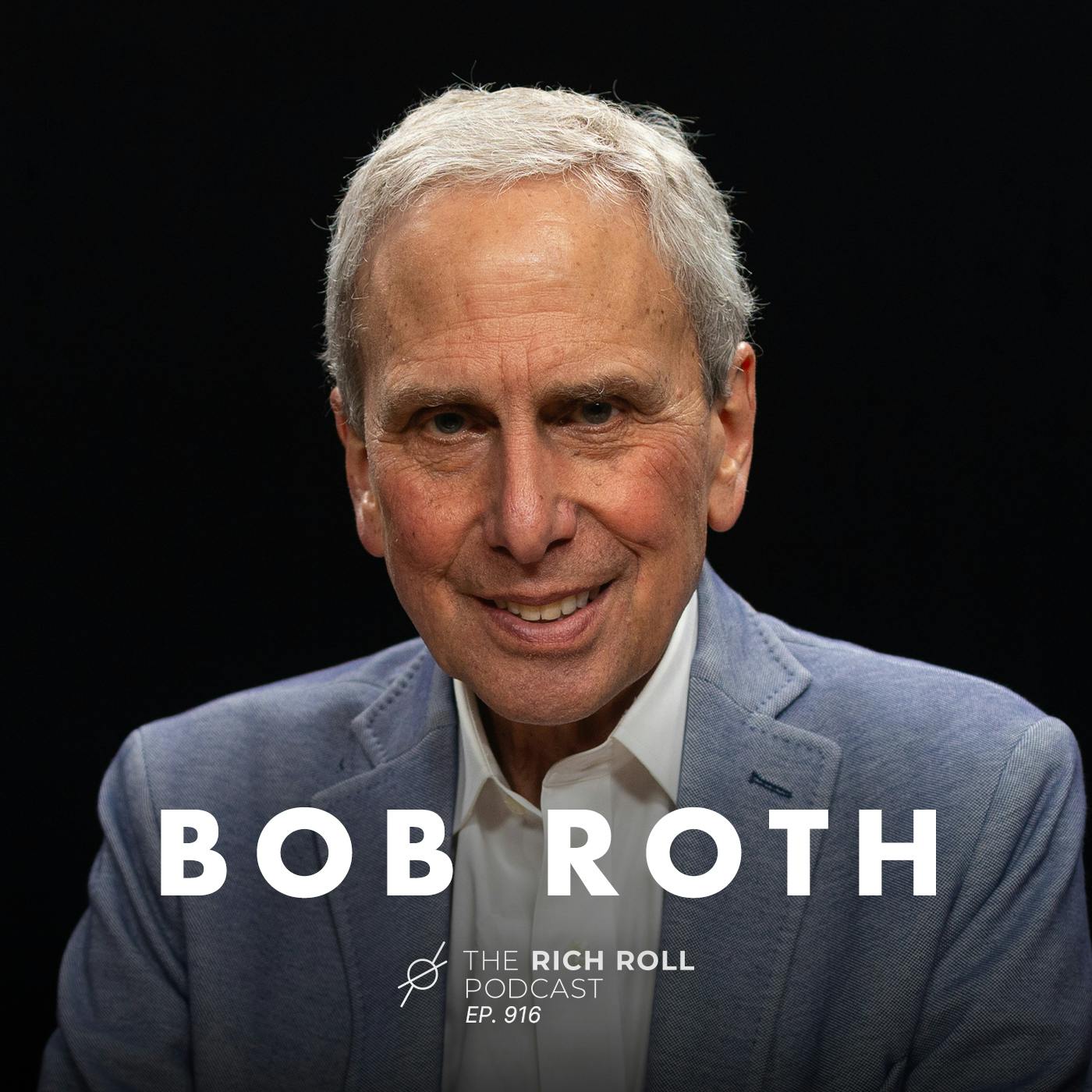
The Rich Roll Podcast
A Skeptic’s Guide To Meditation: Bob Roth On The Science & Extreme Benefits of Transcendental Meditation
01:52:12
Loading summary
Transcript274 lines
- [00:01]
Rich Roll
Movement is so much more than just exercise or training or motion. Even. Movement is a language. It's a way of connecting body, mind and environment. Movement as a way of being. A way of being that brings me close to myself, closer to other people, and to what matters most in life. And for me, what we wear in that pursuit possibly plays a crucial role. And that's what I appreciate about on they don't just make gear, they engineer apparel that supports and elevates the practice of movement itself. From running shorts with built in support to technical tees that cool you down right where it matters. Every detail is widely intentional. Seam, placement, reflectivity, breathability, minimalism that works together so the gear disappears and nothing gets in the way. This is apparel born from precision and tested by elite athletes, but made for anyone committed to the path. I've been with on since 2023. And I'm still just so impressed by how they continue to elevate and innovate in the name of purpose. Not flash. Head to on.com richroll to explore gear that supports you every step of the way. Movement is so much more than just exercise or training or motion. Even movement is a language. It's a way of connecting body, mind and environment. Movement as a way of being, a way of being that brings me close to myself, closer to other people, and to what matters most in life. And for for me, what we wear in that pursuit plays a crucial role. And that's what I appreciate about on they don't just make gear, they engineer apparel that supports and elevates the practice of movement itself. From running shorts with built in support to technical tees that cool you down right where it matters. Every detail is widely intentional. Seam, placement, reflectivity, breathability, minimalism that works together so the gear disappears and nothing gets in the way. This is apparel born from precision and tested by elite athletes, but made for anyone committed to the path. I've been with on since 2023 and I'm still just so impressed by how they continue to elevate and innovate in the name of purpose. Not Flash. Head to on.comrichroll to explore gear that supports you every step of the way.
- [02:42]
Bob Roth
It's no longer a luxury to say I'm going to take some time out to meditate, it's now a necessity. Meditation just means thinking, and as the world gets more intense, we want to have practical tools that can help us deal with what's coming. Transcendental Meditation sets up the condition for the attention of your mind to turn within and then automatically Your active thinking mind change just begins to settle down towards that unbounded source of thought. The mind is not a monkey. The mind does not wander aimlessly. The human brain and nervous system are hardwired to take deep rest at will. We've forgotten how to do it.
- [03:28]
Rich Roll
Hey everybody. Welcome to the podcast. Today we are going to continue our ever evolving and ongoing exploration in to meditation. And we're going to do it with Bob Roth, a man who has played quite a large and important role in pioneering meditation as this mainstream practice in the West. Specifically the practice of a very specific type of meditation called Transcendental Meditation, or what is commonly referred to as tm. Bob first discovered meditation as a freshman at Berkeley during the height of the 60s and, and with absolutely extraordinary consistency ever since. Meditation is something he has practiced every single day, twice a day, for more than 50 years, which I think authorizes him to have authored what is considered the authoritative text on TM titled simply Transcendental Meditation. Now, Bob is one of the most experienced and sought after meditation teachers in America. And he's also the executive director of the David lynch foundation where he has helped bring TM to more than 1.5 million children and adults with this really beautiful focus on inner city youth, veterans, domestic abuse victims, and more recently firefighters and everyday people who lost everything in the recent LA fires. This is Bob's second appearance on the show, his first being episode 372 some six years ago. And, and I'm excited for him to return because our first conversation was a little bit short due to scheduling commitments and also because my relationship with meditation has grown considerably in the many years since. So today we're gonna dive a bit deeper into meditation. What it is and what it isn't, the benefits of it and why we should all be doing it, and what distinguishes TM from other voyages into the realm of the mind and enhanced of consciousness. Bob also shares plenty of actionable advice to kickstart and sustain a practice along with a deep dive into this idea of transcendence, what it means to him, what it means to me, and many other topics which of course include some great stories about the great David Lynch. Bob is a gift. It was a gift to spend this time with him. And hopefully you will receive this conversation as a gift. So here it is. This is me and Bob Roth. Bob, you're back in the house. It's been something like six or seven years.
- [06:10]
Bob Roth
Seven years, yeah.
- [06:11]
Rich Roll
Since you first did this. It's great to see you. You haven't aged a day. If anything the meditation is serving you well in that regard.
- [06:18]
Bob Roth
It's nice to see you too, Rich. Thank you for having me on.
- [06:20]
Rich Roll
We're going to talk all things meditation today, but I think I'd like to begin with a few reflections on your friend and your colleague, David Lynch. He passed recently in January. We talked about him a little bit last time, but he's very much top of mind in the culture, as a beloved figure in the culture. And his passing has resulted in sort of this watershed of people loving on him and sharing clips of him that were circulating around the Internet. And I've spent a lot of time thinking about him lately. So where are you at in your heart and your mind with the passing of your friend?
- [07:02]
Bob Roth
Well, since we started the foundation together 20 years ago, I probably talked to him every day, you know, every other day for 20 years, working on the foundation and just as a friend. And we traveled all over the world and I learned so much from him, the way he lives his life. Final cut. And towards the end we were talking less, you know, he had emphysema, so he was talking less. But then I had no idea who was going to go when he went. So we would just chat, just for a few minutes. And it's funny, I said, how are you feeling, David? He said, on the outside my body's not so good, but Bob, Bob, on the inside, I'm happy. And he was that way. He was like a fearless guy. So it's been hard. I miss him. I miss him a lot. He's one of my best friends. And nobody sort of knows, they know David Lynch. They don't know the side of him with meditation and the foundation. But I miss him. But I've learned so much from him.
- [07:58]
Rich Roll
That is an aspiration of mine, to be happy and light hearted all the way to the end. Yeah, yeah.
- [08:06]
Bob Roth
Genuinely authentic. You know, sometimes people would say, well, you know, David lynch, he makes these, you know, dark, weird movies. And how can he, you know, Mr. Bliss with meditation and all that. And David's line was, you don't have to suffer to show suffering and you don't have to die to do a death scene. And the happier, the more clear, the more focused, the more resilient you are, the more creative you can be. He said, you know, if you, if you're stressed out of your mind or you can't get out of bed or you're depressed, how can you create? And so he was genuinely a deeply happy, edgy person.
- [08:44]
Rich Roll
How do you reconcile those two sides of him, this fascination with the dark underbelly of human nature with the childlike creative nature of this artist.
- [08:56]
Bob Roth
The way I talk to people. David was fascinated by the whole full circle of life and death. Like we're watching a movie together and sometimes I'd avert my eyes and he never did. He was as fascinated by the natural system. Like, here's a little hamster that's growing up, little infant hamster grows bigger, bigger, bigger, matures and then dies and then the body decays. And for David, none of that was off limits. That was all part of the natural processes. Sometimes people say, david, how can you do this stuff? He said, have you ever read the Old Testament? My movies are nothing.
- [09:30]
Rich Roll
Well, he talked a lot about the wheel of birth and death.
- [09:33]
Bob Roth
Yeah. Yeah, a lot. And I remember thinking the other morning waking up, I said, david and I used to talk a lot about what happens after you die. And I thought, well, now he knows.
- [09:44]
Rich Roll
What was his take on that?
- [09:46]
Bob Roth
Reincarnation.
- [09:47]
Rich Roll
Yeah, I mean, yeah, clearly that comes across.
- [09:49]
Bob Roth
Yeah, reincarnation. He didn't think that it just consciousness or life was an epiphenomenon of just the electrical and chemical interactions in the brain. He thought that this is his take, that there was a soul and you inhabit a body. And when the body drops and you continue learning lessons, you take another body, you take another body and you keep learning lessons.
- [10:07]
Rich Roll
Do you think that he has transcended the mortal coil or will he be coming back for another spin on the wheel?
- [10:13]
Bob Roth
Personally, I wouldn't mind if he'd come back.
- [10:15]
Rich Roll
Yeah, we don't know how he's going to come back. Maybe he's already back.
- [10:18]
Bob Roth
I know who he's going to be.
- [10:20]
Rich Roll
Was there a memorial?
- [10:22]
Bob Roth
Yes.
- [10:22]
Rich Roll
Did you attend the memorial?
- [10:23]
Bob Roth
No, we did it online. If you ever want to see this, it's on YouTube. It was about an hour.
- [10:28]
Rich Roll
It was a tribute to you. I did see a video, like a prepackaged sort of video where it was just voiceover of him talking and stuff from his. Yeah, I did watch that.
- [10:38]
Bob Roth
That was sweet. That was put together by just a meditator and a David lynch fan. But online, if you just do a Google on YouTube. David lynch tribute, January something, 2025.
- [10:49]
Rich Roll
I miss that. I pride myself on my research too.
- [10:52]
Bob Roth
No, and we may do something. His 80th birthday would be January 20 next year and we're thinking to do a tribute fundraising concert for the foundation.
- [11:01]
Rich Roll
Yeah. Well, he's deeply missed. And what did you like, what did.
- [11:05]
Bob Roth
You appreciate most about him?
- [11:06]
Rich Roll
I appreciated his daringness and his courage in his art and the way that he would sort of pull covers on reality, but do it in this really terrifying but also uniquely him sort of way that allowed you to glimpse human nature in all of its colors and spectrum. I still think about the opening sequence in Blue Velvet where, you know, there's the front lawn and the grass growing and the guy mowing his lawn, and then he keels over and dies. And then you kind of go into the soil, and it's like he's just basically saying, like, this is life. And if you look really closely, like, it's all happening if we pay attention to it. And so he's not, like, revealing anything that isn't true. And he's not even casting aspersions on anything. He's just. He's kind of just putting his lens, you know, very consciously on aspects of.
- [12:03]
Bob Roth
Who we are and how he would create. He said he never sort of had a big picture, ever. He wrote this book, Catching the Big Fish.
- [12:11]
Rich Roll
Yeah. I love that book.
- [12:12]
Bob Roth
Yeah. And that was. You get an idea, and then that idea is like bait, and then it attracts a bigger fish, and then it's something, and then that's a bait bigger and bigger and bigger. But he never went into anything. He was really, like, a witness of the whole thing, his creative process. And he never steered anything in one particular direction. And people used to say, why don't you make him film on meditation or something? He said, if you want to send a message, call Western Union. You know, that's not my thing.
- [12:39]
Rich Roll
Yeah. I also think that it's inspiring to see somebody just boldly be who they are and live such an uncompromising life, because I think we're all, to one degree or another, like, trapped in kind of various roles and aspects of that. And he was somebody who just lived his life in a way that was really free of all of those things, like, on his own terms. Final Cut really didn't care, like, what anyone thought. I think that that is, you know, refreshing.
- [13:11]
Bob Roth
Yeah. This idea of Final Cut, you know, you don't want to give up. He did that once on Dune. When he made Dune, somebody had control, and he said, never again, never again, never again. And his whole life was lived, and yet he wasn't just some sort of on the spectrumy guy. He had a big heart, and he was very kind. And even with the foundation, he didn't just put his name to that. On Meditation. We traveled all over the world. He wrote books. He did everything because he believed deeply in it. And he really thought that meditation could help alleviate suffering. So he was, would they say, clear mind, warm heart?
- [13:47]
Rich Roll
And I think he had, yeah, he was certainly that. How would you describe the relationship between his meditation practice and his creativity? Is it impossible to separate those things?
- [14:00]
Bob Roth
Yeah, I think it's impossible to separate. He didn't say that his meditation. He always made it clear that his meditation practice did not inform his creativity. It wasn't like, oh, now I'm a meditator and now I'm going to make all these happy, happy. What it did is it allowed him to be true to himself, to become a conduit or, you know, those deep creative ideas to come forward and then have the resilience and the strength and whatever to do it against considerable odds. So I think that it did that. I don't think there was a, oh, you meditate and then you're going to make blue velvet or something like that. But you meditate and then you're more yourself.
- [14:36]
Rich Roll
Let's talk about meditation.
- [14:38]
Bob Roth
All right.
- [14:38]
Rich Roll
How do you define meditation?
- [14:42]
Bob Roth
Meditation just means thinking, you know, thinking. So you meditate on this. So thinking. But then in meditation you've got, you know, concentration type of thinking, you've got mindfulness type of thinking, you've got transcending type of thinking and so thinking. And there's different types of thinking. So, you know, in church they have a meditation. Here's some silent meditation, so you read about something. So I think meditation itself is just taking time to mull things over or to consider what you're doing during that time differs greatly.
- [15:14]
Rich Roll
That's an interesting definition. I wouldn't have expected you to define it that way because I always associate meditation non thinking, or at least the, you know, the attempt to, you know, quiet the thinking part of the world.
- [15:27]
Bob Roth
Well, you start with thinking and then what you do to get to that. Silent is the process. So meditation is thinking. And then you have mindfulness thinking. So then you're. You're dispassionately observing your thoughts, or you have focused attention thinking where you're concentrating your mind so that you know your thoughts, your mind doesn't wander. And then you have transcending transcendental tm, Transcendental meditation, where you go to a hypothetical source of thought, field of silence that lies within. Meditation is where you start, and then where you. And then how you get there is the technique.
- [16:01]
Rich Roll
So obviously there's various traditions and strains of meditation, many ways to approach it. So share with us what Transcendental meditation is and how it's distinct from these other various Ways of approaching meditation.
- [16:18]
Bob Roth
I like to use the analogy of a cross section of an ocean where you have choppy waves on the surface and the ocean is silent at its depth. And the mind is like that. Surface of the mind is often called the monkey mind, the gadda gadda gadda mind. And that's our active thinking mind. And so there are, as I just mentioned, there's one. According to brain research, there's three different distinct types of meditation. Focused attention, which is a controlling control. Concentrate the mind to stop the mind from wandering. And the brain research on that shows that it produces, among other things, gamma brainwaves. 20 to 50 cycles per second.
- [16:54]
Rich Roll
What are the gamma? Gamma brainwaves are 20 and what are they responsible for?
- [16:58]
Bob Roth
Focus. Working hard, Working hard when you're concentrating on something, when you're really zeroing in on something. And that burns up a lot of energy because you're tired and you've worked hard. And so that's what gamma brainwaves do. And then the other is open monitoring, which is sort of a mindfulness which is observing your thoughts and moods and feelings dispassionately. And that creates theta brainwaves which are similar to dream. Four to eight cycles and then transcendental meditation. Rich. These two are called cognitive approaches to meditation. Addressing your thoughts, manipulating your thoughts, controlling your thoughts, observing your thoughts. Transcendental meditation, Automatic self transcending is allowing the mind to settle down to a deep quiet source of thought.
- [17:46]
Rich Roll
So you go below the waves, Way below the waves. Still waters.
- [17:49]
Bob Roth
Yeah. Which always exists. Which you don't have to visualize, you don't have to believe in it. It's there and we've lost access to it. Sometimes we have access to it. Transcendent moments. When you're with a newborn child or you're running or something, you have a flow state. Sometimes you have access to that, but generally not.
- [18:07]
Rich Roll
You mentioned this phrase, automatic self transcending. What does that mean?
- [18:12]
Bob Roth
Automatic self transcending means so you got the waves on the surface and transcendental meditation sets up the condition for the attention of your mind to turn within. Sets up the condition and then automatically and effortlessly. This is why a 10 year old kid can do this and a PhD and whatever could do this automatically. Your active thinking mind just begins to settle down automatically. Drawn to quieter and quieter and quieter levels towards that unbounded source of thought. I'll come back to that. When you have that experience, it's a distinct brainwave signature. It's called Alpha 1. And that's 8 to 10 this is complicated words, but 8 to 10 cycles per second. And that's a state of restful alertness.
- [18:56]
Rich Roll
So what is it about TM that allows you to achieve this in ways that these other variations on meditation don't?
- [19:08]
Bob Roth
It's a fundamental principle, underlying principle to other forms of meditation, that the mind wanders. Even at the beginning of this conversation, you know, when you said, oh, why are you thinking? Aren't you supposed to get to no thinking. And so the understanding is, the mind is a monkey, or the mind wanders. And what can I do to get my mind not to wander? What could I do to have my mind be calm? And that would be. If you use that ocean analogy, say, okay, I want to have a calm motion. What disrupts a calm motion? Waves. Stop the waves. You have a calm motion. In this meditation, you say, okay, with a mind, thoughts disturb. A calm mind stop your thinking, and then you'll have a calm mind. But that's close to impossible on that surface level. Transcendental meditation sets up the conditions. And I'll explain, they turn like a dive. You teach a child how to dive. Give the attention of the mind an inward direction, and automatically the child goes into the water. In meditation, set up the conditions and automatically we're drawn inward. Why? Because the mind is not a monkey. The mind does not wander aimlessly. The mind is in search of happiness, in search of something satisfying. You're in a room working on some mindless work, doing some mindless work on your computer. And in the other room, unbelievably exquisite music comes on. Where's your attention go? Or you go on a vacation and someone gives you two books to read. One is dreadful and you can't read a word. The other is great. Hours go by, so what is that? Mine is drawn to something more satisfying. And inside, very satisfying, my own innermost self. All we have to do with TM is set up the conditions, give the attention, as I said, the attention of the mind in inward direction. You receive from a teacher a mantra, which is a word or a sound that has no meaning to it. A couple syllables. And this, that takes a second. Over an hour, a day, over four days, you're taught how to use the mantra. It's a funny word for people. Innocently, effortlessly, no force, no strain, no agenda. And set up the condition so that the mind naturally is drawn inward because deeper levels are more satisfying. If that didn't make sense.
- [21:22]
Rich Roll
No, it makes sense. It makes sense. So the active ingredient here is the mantra as a sort of focal point. Right. And then there's all this instruction around, how to use it, et cetera. I think for a lot of people, an impediment or a barrier to really embracing TM is the fact that it is shrouded in a little bit of mystery here, as opposed to other types of meditation, which are kind of more open source and available on the Internet. Like, you know, how do you justify that? Or what is the explanation for that?
- [21:52]
Bob Roth
It was interesting that I had a conversation with a person who's high up in the mindfulness world, Sharon Salzberg.
- [22:00]
Rich Roll
She's been on the show a long time ago.
- [22:02]
Bob Roth
She's a good friend. She's great. And was talking about how what TM has done well is we have a very rigorous teacher training program. It could take months to become a teacher, and there's very rigorous upholding of the instruction. She said mindfulness has completely lost its brand. Anybody can say they're doing anything. The problem with science is that if you put a mindfulness program in a school in Spokane, Washington, it has some results. The people in St. Petersburg, Florida, have no idea what they did because there's so much fuzziness, so much whatever. And so with tm, we decided early on that we want to make this thing sort of rigorous. And so there's a rigorous training program. And it's not that the mantra. I mean, you can go online, there's millions of mantras. You know, it's just a sound. But almost more important is how to use it properly. And that's why it's taught one to one from a teacher. And people say, well, you can't scale it if you do it that way. And my attitude is I'd rather teach one person to do it right than 50 people to do it wrong. And the foundation is set up. So now we're offering there's no impediment for learning for finances, so people can learn it for free. But I say, if you're serious about wanting to meditate, call me or find a teacher and take an hour a day, over four days and learn it right.
- [23:31]
Rich Roll
And it's a four day thing. So one hour a day, broadly, like, you know, what's going on during those four days? Why does it take four days to learn how to practice it?
- [23:39]
Bob Roth
So the first day is actual personal instruction. It takes one day to actually learn the technique one to one with the teacher. The next three days are, oh, that was an interesting experience. What was that? Or how do I know if I'm doing this right? Or I had all these Thoughts, or I fell asleep, or my arm, I had an itch, can I scratch it? So many people have tried different types of meditation that much of this is to unlearn because. No, it's okay. Thoughts are a part of the practice. You don't have to. They're not your enemy. And if you have an itch, scratch it. And if you fall asleep in meditation, fine. It's natural. And that takes those three days just to be sure the person is doing it correctly and then they're on their own. Although once you've learned, you have for the rest of your life access to a real human being. Teacher to ask your questions. Because that's another thing is when people learn off of a, out of a book or online, they don't know if I'm doing this right or wrong necessarily. And I also say this is not an either or. I know a lot of people who do TM and then do a mindfulness practice or they do TM or they run or they do tm. It's just, it's a tool, a significant tool in the toolbox.
- [24:56]
Rich Roll
And the practice of it is 20 minutes in the morning and 20 minutes.
- [24:59]
Bob Roth
15 to 20 minutes morning and evening.
- [25:01]
Rich Roll
In the evening, just sitting comfortable twice a day experience.
- [25:04]
Bob Roth
You do it first thing in the morning to set you for the day, wakes you up and energizes you so that there's not these dips throughout the day. And it also makes you a little bit more resilient to whatever demands and stresses you have. And then it's done at the end of the day, four, five, six o' clock, something like that, to wash off the stress from the day or whatever you've picked up and then enjoy the evening and sleep better at night.
- [25:30]
Rich Roll
And what is the value proposition of this, Bob? Like, why should we be meditating? Why should we be doing tm? What can we expect to learn about ourselves or experience in our lives as a result of devoting ourselves to this? You know, it's like, okay, 20 minutes here, 20 minutes, you know, twice a day. It doesn't seem like that much. But there is a commitment here. And you know, for a lot of people it's asking a lot, especially for people who've never meditated before. So, you know, what's the pitch? You know, like how you make the case?
- [26:03]
Bob Roth
Well, I say there's 1,440 minutes in a day and we want to do things to maintain our health and so much what we do is from the neck down, I exercise, I eat properly, I Get enough sleep from the neck down. I'm saying for a few minutes, twice a day you do something that absolutely, according to the research, wakes up the creative networks in the brain, calms the amygdala, which, the amygdala is your fear emotional center, calms the sympathetic nervous system, which is your fight or flight, activates the parasympathetic nervous system. And when you do the meditation, it creates, as I said earlier, this alpha one, this restful alertness in a coherent way. It bathes the whole brain during that 20 minutes. And the reason why we're doing it is not for that 20 minutes. The reason why we're doing it is for the 10 hours afterwards. That's where all the data is, that's where all the results are, where it shows that, that for example, it reduces Cortisol levels by 30 to 40%. Cortisol is too much of. It is a terrible stress hormone. Nothing else does that. It raises serotonin levels, it increases dopamine and it just makes us more healthy and ourself. And later on we can talk about what it does sort of with the other parts of the brain for creativity and problem solving. But it's done as an investment in the 10 hours that follow. And you learn it and then you do what you want to do with it. I mean, the reality is you learn a tool and I always say learn it, do it for a month, see what the results are and then you decide, I'm going to do this twice a day, I'm going to do this once a day. But you try it because these days. We were just talking earlier about AI. Forget about AI, how we human beings are going to handle this. I was just out at TED talks. Yeah, yeah, every year it's about AI. But how are we going to handle this not having jobs or this upheaval, this disruption? And that's going to, I like to say it's no longer a luxury to say I'm going to take some time out to meditate. It's now a necessity and it's coming fast.
- [28:14]
Rich Roll
But there's also quite a bit of mainstream adoption at this point. Even in the kind of intervening years since we last spoke. There's very few people who aren't aware of meditation and a large percentage of the population has at least flirted with it on some level. So we are in a different world in terms of our acceptance of this and also our understanding of the very real evidence based benefits of it. Stress reduction, anxiety reduction, enhanced creativity, equanimity, all of These things are pretty common, commonly understood at this point. I like to think of meditation not as something I just do at a specific period of time every day, but a practice that I bring into my life. So there isn't like the meditation and then my life. It's to bring some version of that experience into my actual lived experience in the remaining hours of the day. Call it mindfulness, whatever you want to call it, But I'm trying to blur the lines between the rigor of the practice itself and then the rest of my life so that these things become more and more of a piece with each other.
- [29:32]
Bob Roth
And you made a really good point. Blur the lines. And the whole purpose of meditation is to blur those lines so we end up not having to meditate for the rest of our life. We actually, by dipping into that transcendent field, that. That silence that lies within and then bringing that out, then we're bringing more and more and more of that inner equanimity that's there, that inner equanimity, that healthier, more integrated style of functioning into our life. So it's a seamless. It's a beautiful description. But if there's not as much inner there at that time, if I'm going nuts because I'm a single mom and I got all this problem and I feel anxious, it's a wonderful thing to be able to take a few minutes and in a matter of minutes, reduce the cortisol and all of that, and then you just forget the meditation. You just plow into your daily life. And as far as some people say, I get it a lot. They say, I'm not skeptical that TM works. I'm skeptical that I could do it, or I'm skeptical that I'll take the time. Because I've tried meditation. If you're anxious, it's difficult to do some mindfulness types of meditation. And so the main thing is just to say, well, give it a try. Because I teach kids on the autism spectrum disorder. I teach kids who can close their eyes for more than 30 seconds, and they love. They do 10 minutes of meditation. It's a very satisfying, enjoyable experience. Not hard. You're not battling your thoughts. You're just diving within. And one last thing.
- [30:59]
Rich Roll
Sure.
- [30:59]
Bob Roth
You get to be a hundred. This is me. People ask me. I'm not exactly what you would consider your classic meditation teacher. I'm like a skeptic. I love science. I love data. I'm not into all the philosophies so much. And you could be 100% skeptical. You could think everything that I'm saying is a crock. It doesn't make any difference. It'll work just as well as anything else.
- [31:20]
Rich Roll
You just do the thing.
- [31:21]
Bob Roth
You just do it. You're already hardwired for it. You already are drawn to. Is it hard to watch a great movie? No. Is it hard to watch a bad movie? Yeah. Is it hard to be in an interesting conversation with someone? No. Hard to be in a bad one. So the mind, it's hardwired. I want. I'm drawn to something more satisfying. But I'm always looking out through my senses. This, this, this, this. Now I close my eyes and for a few minutes turn within and then effortlessly sink and dive within. And I remember telling someone once, this Wall street guy, he said, wait, wait, wait, wait. You're settling. You're 20 minutes and you're settling down to this inner calm, this pure consciousness. How do you know when your 20 minutes are up? And I said, you look at your watch. You're not going someplace. You're just settling. Your nervous system can go faster. And your nervous system also has the ability to decompress to settle down.
- [32:13]
Rich Roll
I suspect one of the other things that you get a lot of is, I hear you, Bob. That's great. But my meditation is fill in the blank. Running or doing laundry or you name it, Some kind of activity that on some level probably activates the unconscious mind. So I'm interested in how you draw the distinction between perhaps something that might be considered like a mindful practice versus the formality of what you're suggesting, which is like, this is what you do and you follow the script and it works every time. That's very different from, I'm going out into the woods for a walk.
- [32:52]
Bob Roth
Well, first of all, I think you should do all those things. I think everything we do in our life should be that mindful approach, should be going for a walk in the woods. The foods you eat, the people you're around, the work that you do, all those things should be life affirming, should be enlivening of all the different happiness, hormones and all of that. You keep coming back to the thing, the rigor. And I am abhorrent to sort of rigor myself and to strict discipline.
- [33:19]
Rich Roll
But tell me more. No, because I guess I'm trying to just get at the formality of it. Like, this is what I'm doing right now, and it's a way of doing it.
- [33:27]
Bob Roth
Do you sit down and have lunch?
- [33:29]
Rich Roll
Yeah.
- [33:30]
Bob Roth
You eat a meal? Do you lie down and go to bed? At night, the formality of going to.
- [33:34]
Rich Roll
Bed at night, maybe the rigor is in pushing through whatever resistance you have around. Like, okay, this is. Now I'm gonna do this thing. It's the leading up part.
- [33:43]
Bob Roth
Yes. And I find that from people and I would just say you just give it a try because it's actually something that you look forward to. Cause within minutes your body gains it. There was a study that was done at Harvard Medical School way back in the 70s that compared to oxygen consumption, which is a level of metabolic rest, oxygen consumption with tm and what happens when you go to sleep. And they found that it took about five and a half or six hours of good night's sleep for oxygen consumption to drop 8%. And in 20 minutes of TM, oxygen consumption dropped 16%. I look forward to that deep rest. And I can be in a crazy day, I can be in the back of a cabin. It's not like I have to go to my pillow and my cushion and I have to sit like this. I did it at a Yankee Stadium. It was a bad game. You can do it anywhere. So it's not this. And it's not like I have to do it at 5, 15, and in the evening and 6, I do it. I do it usually I get up first thing in the morning, pee, sit up in bed, meditate, and then sometime in the afternoon I find time for 15 or 20 minutes to do it. And it's very rejuvenating. And if I don't do it, fine. But if I do do it, I feel better.
- [34:56]
Rich Roll
On the rejuvenation piece, talk a little bit about the deep rest aspect of it.
- [35:02]
Bob Roth
Scientists are discovering this term, like they just coined it deep rest, which is different than the rest you gain during sleep, which is sort of up and down. You never know. And it comes in waves. You know, there's sleep and dream and sleep and dream. And it turns out that the human nervous system is hardwired to be able to access a state of deep rest at will. In the case which you're going to see in the case of, you know, you have that alpha one and all that, but we've lost the ability of doing that. And some researchers believe the fact that we've lost that ability of that, they call it a forced state of consciousness different from waking, dreaming and sleeping. It's inherent. It's who we are. We've lost access to it. That lack of access to that has given rise to all this stress and stress related disorders. Because only in that state of deep rest? Can the body heal itself from deeply rooted traumas and tensions and stresses? And so TM accesses that other things can access it. And I would say it's not an either or. When you say well, I'm going to do this or that, it's a yes and and as the world gets more intense, we want to have practical tools that can help us deal with what's coming. Foreign.
- [36:19]
Rich Roll
We'Re brought to you today by AG1. I know that I've been a loyal consumer and partner with AG1 for many years at this point, but I couldn't actually remember how long it's been specifically, so I decided to do some research. I mined my inbox to try to figure out when it all began and I discovered it's actually been 10 years. A decade in which I've seen this brand iterate its formula many times, but nothing like what just happened, which is a just launched massive next generation formula upgrade in which AG1 has enhanced its profile for broad spectrum nutritional coverage, five new vitamins and minerals, four upgraded ingredient forms that work better with your body, and upgraded probiotics for enhanced digestive support and immune health. Along the way, AG1 went beyond industry standards to rigorously test the upgrade with four human clinical trials to back up its efficacy and make a great product even better. Now, clinically backed with an advanced formula, this is the perfect time to try AG1. If you haven't yet. I've been drinking AG1 for many years now, as I mentioned, a decade, and I'm so happy happy to be partnering with them. So subscribe today to try the next gen of AG1. If you use my link, you'll also get a free bottle of AG D3K2, an AG1 welcome kit, and five of the upgraded AG1 travel packs with your first order. So make sure to check out drinkag1.com richroll and get started with AG1's next gen and notice the benefits for yourself. That's drinkag1.com Richard Rich Roll we're brought to you today by One Skin Skin Aging. All right, let's talk about it. Not from a place of fear, but from a place of empowerment, not vanity, but simply as part of health and well being. Now, as somebody who is grappling with how to best manage my personal relationship with aging up and hosting many podcasts with experts in healthspan and longevity, it's pretty clear that aging isn't this thing that just happens happens that we're completely powerless over. It's actually a process over which we have much more agency than we might suspect. So we need to work with it, not against it. And when it comes to our skin, we need to care for it consciously. And now, because of very interesting and compelling emergent science, we can actually do this better than ever. And this is the mission that One Skin is committed to and hence why I use it myself and feel very good about telling you all about it. What makes one skin different is its active ingredient, a peptide called OSO1 that was developed by an all woman team of scientists that targets the dormant cells that interfere with your skin's natural renewal process, helping your cells function more effectively. In other words, it focuses on Cellular Health. One Skin is the world's first skin longevity company company get started today with 15 off using code RICHROLL at ONESKINCO. That's 15% off at O N E Skin Co with the code richroll. Is there science around the Deep Rest and the trauma healing piece? Yes, that's very interesting to me.
- [39:40]
Bob Roth
So we are working, we've done a lot on this. We have worked for 10, 15 years now with veterans offering TM to with veterans with post traumatic stress disorder. We also work with women survivors of domestic violence In New York City. They have something called the family justice centers where we've taught a thousand women and we're working with firefighters and police officers. And what they find is they call it a state of restful alertness, that the benefits of TM show a reduction in symptoms more effectively than the gold standard, which is called prolonged exposure. I don't know if you know what that is. Prolonged exposure is reliving your experience more effective than prolonged exposure. And one reason is. And the veterans like meditating and they don't like prolonged exposure. What happens in that instance is again, there's a calming of the amygdala, which is that emotional center. There's a calming of the sympathetic nervous system, there's a reduction in cortisol, so we're less reactive. And one of the biggest things is people sleep better. So many of the symptoms of PTSD are exacerbated by the inability to sleep. So my friend Vin, who runs our veterans program, said that one of the first things vets say is, oh my God, for the first time in four months, I slept through the night. So there's a lot of benefits for trauma.
- [41:09]
Rich Roll
Yeah. So you've worked with veterans and at risk youth in at risk neighborhoods, et cetera, trauma survivors, victims of abuse. And now you're working with victims of the LA fire, people who have been displaced and Also the LA firefighters. I mean, that's quite a service. And. And I'm interested in what you're hearing.
- [41:33]
Bob Roth
All for free.
- [41:34]
Rich Roll
Yeah, all for free. Through the David Lynch Foundation. What you're hearing from the people who worked and also suffered through the LA fires.
- [41:45]
Bob Roth
Just imagine if in the midst of all the chaos and frenzy and uncertainty in your life and it's all happening around you, and you have the ability to sit down against a tree in a chair and just do this simple, effortless procedure that gives your body a state of rest in many regards. Deeper than the deepest part of deep sleep. In minutes. In minutes. It's transformative. It's absolutely transformative. And not only do we do it in Los Angeles, we did it in Asheville after that hurricane there. We got six or seven hundred people there, and there's this relief of. Of stress and tension and fear, and it's transformative. I want. We're talking to the Red Cross because the Red Cross goes into these areas and they say, okay, we're gonna build new roads, we're gonna build bridges, we're gonna fix hospitals. But no one is dealing with trauma, Rich. No one is on a scalable way. Are we gonna give everyone Ambien? Are we gonna give everyone talk therapy? So here is a tool that's scalable, that they can use, and they love it. And we're doing the research to show that it works. So that Red Cross or Blue Cross, Blue Shield or Aetna will reimburse for instruction.
- [43:05]
Rich Roll
Right, that was my next question. Like, how is it working with health care and insurance reimbursement? Because that's really the crown jewel here, right? If you can get coverage for this, then it can be something that is widely prescribed.
- [43:17]
Bob Roth
So when you want to get something reimbursed or covered by a third party, and not just insurance companies, carriers, there's every business or some of they have their own self insurance. There's research. You have to do phase one trials with 60 people to show that it works. A phase two trial is with 100 or 200 people in one hospital to show that it works. Now we're at the point of a phase three trial, which is four or five different hospitals, 600 people to 500 people, and if we get the same results that we've gotten in hundreds of previous studies, then that's gonna be the basis for leveraging reimbursement. Now, before COVID the idea of insurance companies covering meditation or TM a joke. But now we're living, as I'm sure you Know, in a crisis of mental health, you know, and there's no, if I cut my arm, I get infected. And the doctors know what caused that. And there's an antibiotic. Nobody knows why a person gets depressed. A million reasons. Person is anxious, can't sleep. So they created some medicines that work, but they don't work. They work for a minority of people. So now the research has shown the TM in frontline hospitals, doctors and nurses that it within two weeks. They did the research, we didn't. And so when we do that, from 100 people to 500 people, the research, and then I think we're just a couple years out.
- [44:44]
Rich Roll
Well, all you have to do, I would imagine, is establish that this practice leads to positive health outcomes in such a way that saves them money over time. Like, look, you can pay this right now to teach these people this, or you can pay later when their PTSD or whatever isn't healed and suddenly they're addicted to opioids or whatever happens downstream of that, which obviously becomes a much more exp. Proposition.
- [45:13]
Bob Roth
That's actually. I'm glad you brought that up.
- [45:14]
Rich Roll
Economics from their perspective.
- [45:16]
Bob Roth
That's our focus now. Cost savings. So in this, the Department of defense back in 2016, gave $2.5 million for a study on TM and PTSD. And they compared it with this prolonged exposure gold standard, and they found that TM was more effective than prolonged exposure. So then another researcher just now went in and looked at the data and see how much would it save? He said, okay, there's 6 million veterans getting treatment right now for any range. If 100,000 of those 6 million learned TM, it would save the government $375 million because those treatments don't work. They just more medicines, more medicines, more medicines. And the suicide rate is going up. And yeah, it's a pretty interesting time.
- [46:07]
Rich Roll
Are there any studies that distinguish people who have suffered acute trauma, like soldiers, et cetera, or domestic abuse victims, versus like low grade chronic trauma over many, many years?
- [46:23]
Bob Roth
Well, first of all, low grade chronic trauma, if you're living with it all the time, like an alcoholic parent, that's something called complex ptsd. And actually you can start having symptoms of PTSD even though you've not been in war. And so it helps there, but just regular old life. I mean, I've been talking. The foundation is focused on people who are really suffering, but TM has been learned by 15 million people. And it's just regular folk who find that they're sort of as they get a little Older, they think, well, I'm not sleeping quite as well as I was or getting my buttons pushed a little faster, getting triggered, little memory. I can't focus like I used to. That's where most of the people are who learn it, right?
- [47:07]
Rich Roll
Some varying degree of stress and anxiety or. Low hanging neurosis.
- [47:12]
Bob Roth
Yeah, that's right. Very low hanging. I would also say that there's more interest now because I teach a lot of. With David. Through David, he introduced me to a lot of very creative people.
- [47:26]
Rich Roll
You've taught a lot of interesting people.
- [47:28]
Bob Roth
I have. I remember once, like 30 years ago, thinking, you know, I've never seriously, I've never met a famous person, never in my life, you know, and then with David, I've taught lots of people. But as I'm sure you'll know, when you sit down with anyone, particularly when I teach them to meditate and I look in their eyes, they can't sleep or they're worried about their kid. They're just another human being. Just because their face is plastered all over a screen doesn't mean anything.
- [47:57]
Rich Roll
When I think of like low hanging neurosis, it's like Jerry Seinfeld comes to mind.
- [48:01]
Bob Roth
Yeah, like who?
- [48:02]
Rich Roll
You taught him?
- [48:03]
Bob Roth
Yeah, yeah. Well, he'd been meditating, actually, we're good friends. He'd been meditating since 1972. He learned when he was a kid in Long Island.
- [48:12]
Rich Roll
Same with Howard Stern. Right. I remember, like as a young person when he was a radio DJ in D.C. growing up, and he was on the radio every morning and he would talk about tm.
- [48:21]
Bob Roth
Yeah. He learned because he and his father were really worried about their mother who's having all these depressed qualities and all this stuff and deep depression. And then he called his mom up one time and he said, I heard something in her voice. I said, mom, what's going on? She said that she had learned tm and he said that was enough for him because there was something lifted in her voice, a heavy heaviness. And he's been doing it for 50 plus years. Another example that you just become more of who you are. Meditation doesn't sort of wash you out. TM just more of who you are.
- [48:56]
Rich Roll
It seems like there's a very high. What's the right word? Not adoption rate, but like, like sustained practice rate with tm that also, you know, from an outsider looking in on it, looks like it distinguishes it from other, other traditions. Like, you know, I like, sort of dabble in all different kinds of things, but people who do tm, like, they're all in. And they maintain it over extremely long periods of time with like great consistency. Is it just the effectiveness of it? Like how do you.
- [49:27]
Bob Roth
Two things. It's an enjoyable thing. It's not like I gotta go beat my head again, I gotta beat my. To do this thing and I gotta fight my thoughts. And is that 20 minutes? And you look at your watch and know that's a minute and a half. It's not that way. You look forward to it. It's really enjoyable. And afterwards the results are very real. In this case of Jerry, Jerry was meditating once a day. He didn't realize you're supposed to do it twice or could do it twice a day. And backstory. I was teaching the rest of his family to meditate. He'd been meditating about 20 years and I was teaching the rest of his family and I said to them, he was sitting in on a meeting and I said, said, well, you know, then you'll do your afternoon meditation at this time. He said, wait, what, What? You have been meditating for 30 years. There's a second meditation. And then he started doing it.
- [50:10]
Rich Roll
Who instructed him then?
- [50:11]
Bob Roth
Yeah, he forgot.
- [50:12]
Rich Roll
Did you get.
- [50:12]
Bob Roth
No, no, he forgot. And, and he said he has so much energy now from that second meditation. He used to just knock out at one o' clock in the afternoon. Now he's so much energy. And he said if he'd been doing twice a day, Seinfeld would still be on the air.
- [50:28]
Rich Roll
So these words, did he get Larry David into it?
- [50:31]
Bob Roth
No, he said Larry, Larry David. Talk about low hanging fruit.
- [50:33]
Rich Roll
Larry. Larry's like not going to go there.
- [50:35]
Bob Roth
No, no, no, no.
- [50:36]
Rich Roll
Who is the most surprising, like well known person that you would never suspect? I mean, I don't want you to talk about anything that's not public knowledge, but somebody you might not have expected to be into this, you know, coming to you and you teaching them.
- [50:52]
Bob Roth
I don't know, because everybody's got stress these days or you know, anxiety. I'll tell you, the kindest, most genuine person I taught is Hugh Jackman.
- [51:01]
Rich Roll
Oh, interesting.
- [51:02]
Bob Roth
He's a real deal. He grew up very humble upbringing and he's very kind.
- [51:06]
Rich Roll
It's not surprising though. I mean that guy is very focused on his well being. I mean, just unbelievably talented but also committed person in what he does for a living. But it seems to carry over in.
- [51:20]
Bob Roth
A lot of times. No, and just genuine. And you see him in crowds and he's very kind and puts attention on people. And I really, I admire Him a lot.
- [51:28]
Rich Roll
You mentioned that you're fundament is skeptic. So we talked about this a little bit last time. But let's trace this back a little bit to the origin story. Like how did you overcome skepticism? What was your introduction to this? How did you get into this?
- [51:43]
Bob Roth
So I was just like a regular dumb kid growing up in the 50s and 60s in the Bay Area and just regular, just never thought about anything. And we got really involved in politics in my family was Democratic, interested in Kennedy and Johnson.
- [51:58]
Rich Roll
Yeah, I mean you're in the Bay area during the 60s. This is ground zero.
- [52:02]
Bob Roth
I went to Berkeley. Yeah, ground ground zero. Anyway, I worked for Bobby Kennedy Sr. And I really. I remember going to an event where he spoke to 2,000 people in San Francisco on June 1, 1968 and thinking, not Republicans or Democrats, we're going to change this world. I had this sort of wanting to. And then I saw him, was assassinated four days later on television. And I decided I was going to go to Berkeley. I was going to Berkeley, I would go to law school and I'd be a US Senator like Bobby Kennedy. I wanted to change. Those are days. You wanted to change the world. Took me about a month at Berkeley to realize that politics was not going to heal the soul of the nation. It's important, but it wasn't going to be my path. And so my mom was a teacher. Then I thought, okay, maybe I'll write educational curriculum, get a degree in that. Teach inner city school kids to do it, help them navigate their way. So I was here's to tm. So I'm going to Berkeley, working full time. Well, going to school full time, working a lot. And tanks parked outside my door for Vietnam War. And it was right near People's Park. And I was very stressed, although I didn't know that. And I was. I knew that there had to be some inner anchor because everything was just so crazy. Some inner anchor. And I didn't want to. I mean Berkeley was a hotbed of crazy town. And I didn't want to get into a religion. I wasn't a political extremist.
- [53:26]
Rich Roll
You weren't banging the bongos in the tie dye shirt at the protest?
- [53:30]
Bob Roth
No, I was just this naive, just this kid who wanted to make a better world. And I was really stressed out. And a friend of mine I was working with at a Swensons ice cream parlor.
- [53:38]
Rich Roll
I remember Swenson's.
- [53:39]
Bob Roth
Yeah. Scooping the hazelnut or whatever. And he was the one guy at Berkeley that I thought was sane. He was Nice, quiet, calm, clear, focused. And it turns out he was doing tn. And I said, I don't believe in any of that stuff. My father's son, he was a scientist and a doctor and a researcher. And he held up a pen and he dropped the pen in his hand, the other hand, and he said, you don't have to believe in gravity for gravity to work in this meditation. You don't have to believe in anything. So I said, I told him, I'm going to go for three minutes. If I'm weirded out, I'm leaving. He said, go for one minute. And one of my first meditations was so profoundly relaxing and unique, different than any experience I'd ever had. And a few days later, I thought, maybe this is a tool I'll teach those kids, because I wanted to help kids. And that was June 28, 1969. Now, 50, 50 plus years later, I ran a foundation and brought it to a million and a half kids. And we want to bring it to 10 million in the next five years.
- [54:44]
Rich Roll
The tradition of TM is rooted in the teachings of Maharishi Mahesh Yogi. Is he the founder of this? What is the lineage behind this?
- [54:55]
Bob Roth
So transcendental meditation goes back. This effortless, transcending. Maharishi has said this was an original form of meditation, effortlessness, not straining. This idea of having to concentrate or clear the mind is very difficult and unnatural in a way. And he said that the innocence and the effortlessness of transcending, which just means settling down, had been lost over time, and effort crept in. But the meditation goes back thousands, you know, predates. People say, oh, this is Hinduism. This predates Hinduism. Like, what, 3,000 years old? 4,000 people have been meditating for forever. So it predates all those isms. Maharishi was a physicist, trained as a physicist in India. And then he had a chance to study for 13 with a great meditation teacher. His name is Gurudev in India. And then in 1955, Maharishi started going around the world offering the meditation. The first thing he did is he went to scientists at Stanford and said, you should. And ucla. He said, you should study this thing. He wanted it to be seen as a healthcare intervention, not as some healthcare intervention. Not just to deal with stress, to wake up, up the full creative potential of the brain, you know, that enlightened idea, but it would be rooted in science. So he was the one who brought it back out.
- [56:16]
Rich Roll
He popularized it, Popularized it. And so TM sort of gets associated with him. And he was a, you know, like A controversial figure on some level, but people know him. The Beatles went and saw him and, you know, he's sort of well known for many people making a pilgrimage to, you know, come and sit at his feet.
- [56:34]
Bob Roth
Well, so let's unpack that statement.
- [56:38]
Rich Roll
Yeah, yeah, please.
- [56:39]
Bob Roth
Yeah. Controversial figure. Only because the Beatles went and he traveled around. Cause I had an opportunity to work with him or around him.
- [56:48]
Rich Roll
Did you go to India to see him or when he came to India?
- [56:50]
Bob Roth
No, he was in Europe. I did see him in India, but I interned. He had established something Maharishi European Research University, which was doing research on brain. And that was in Switzerland. And then I moved over to Holland. He was a scientist. I mean, he loved the science of consciousness. He loved the whole thing. So. But he was under the radar. And then friends with, if I name drop Paul and Ringo, and they told me the story that Maharishi was giving a talk at a Hilton Hotel in London in 1967 with a handful of people. And all of a sudden three young guys walked in and it was the three of the Beatles. And they said. And then the press. And Maharishi didn't even know what that was. And so then he taught them in Wales. And then the next year they went to Rishikesh to take a break from all the crazy and just have, like a retreat. All the controversy was around that, oh, he has Rolls Royces. Not true. This ain't not true. It just got out there. People. He alarmed a lot of people, but a lot of people learned to meditate because of the Beatles. But 30 years later, some reporter said to him, you must be very happy because look what the Beatles did. They brought all his attention to you. And he said they were very good, creative young men. But he set my work back 30 years because it became flower power rather than science.
- [58:13]
Rich Roll
Yeah. It got associated with something non secular that becomes alienating to a lot of people. And I think that association is still somewhat pervasive.
- [58:23]
Bob Roth
Our generation or my generation, your generation, but the kids who are in their 20s and 30s, it'll outlive that.
- [58:30]
Rich Roll
Yeah. What I think is interesting here is this idea of transcendence. You're talking about transcendence in a very specific kind of secular way of becoming a little bit more of a master of the self. Right. Like transcending your mind so that you can be more calm, more present, have more mental acuity and creativity and light and joy and equanimity, et cetera. I think of transcendence a little bit differently, as sort of the peak Of Maslow's hierarchy of needs in a broader kind of more spiritual sense, like a non secular sense. Like what does it mean to transcend in my mind has more to do with. I don't want to use the word enlightenment, but how can you overcome the things that hold us back as human beings, like our. Our attachment to the material world and to our identities and all of these things that keep us separate and challenge our ability to live more freely and with more unconditional love and gratitude and things like that. Like maybe I have a little bit of a broader lens on it.
- [59:43]
Bob Roth
No, I agree with you 100%.
- [59:45]
Rich Roll
I think you're very careful with your language, like in the way that you describe transmission.
- [59:49]
Bob Roth
Because what I focus on is the benefits for a person busy. I like to call this the democratization of meditation. This is for everybody. I don't want vocabulary to get in the way. This is for everyone can benefit from this. Everyone. And I love what you said about Maslow because it wasn't until near his death that he came out and said, well, self actualization's not actually the hierarchy of needs. It's transcendence. And he said part of something big.
- [60:18]
Rich Roll
Bigger and making room for the ineffable.
- [60:21]
Bob Roth
That's right. And that transcendent field that one accesses during meditation, that settled quiet level of the mind. And I would have brought this out earlier, but I knew you were wanting to talk about it. But that transcendent field is that field, that universal field of consciousness. That is that level of connectivity. And that is only where the fulfillment can lie. It doesn't otherwise TM is just self actualization. You know, it's great for self actualization.
- [60:48]
Rich Roll
Like quote unquote optimization.
- [60:50]
Bob Roth
Yes, but on the way to. It's not distinct from. On the way to that transcendence is optimization. It's not distinct from. It's a continuum on that. And there's. Even when they talk about the science of higher quote unquote, higher states of consciousness. So there's waking, dreaming and sleeping states of consciousness. And then the meditative state is the fourth state of consciousness. They call it turiyatit in Sanskrit means the fourth. And that's that accessing that transcendent within you which is unbounded awareness. And then what grows is. And this goes back to. Harkens back to what we were talking about earlier. What blurs is the line between the two. I live more and more of that inner as I grow and outer and as I am. Am fully aware within myself. They call it A fifth state, cosmic consciousness. But then it goes on to unity consciousness, which is wholeness, oneness of everything. And the interesting thing, when Maharishi was in a conference, a science conference about this, and he said, yes, and there will be a neuroscience to every state of consciousness. This is not make believe. This is what the human being is hardwired for. It's his or her birthright, right, to have that unified level of consciousness.
- [62:09]
Rich Roll
Are there neuroscience studies on what's going on in the brain when somebody is experiencing unified consciousness there?
- [62:17]
Bob Roth
Is that what happens I mentioned earlier, where you have the EEG correlate that Alpha 1 and some meditations will have it changes in the front left lobe, an area that wakens and builds up more gray matter in the front left lobe or this area, this area. But what happens in that transcendent experience is it creates this coherent brainwave pattern across the whole brain. So that's during meditation. And what they're finding now is because the neural pathways, they say, you know, the neurons that fire together, wire together, that the coherent brainwave pattern is maintained at the same time as your waking state. And that's correlated with that feeling of inner calm, inner unboundedness in the midst of everything that you're doing.
- [63:07]
Rich Roll
See, I want to inhabit the fifth state, Bob.
- [63:10]
Bob Roth
Yeah, I think you're pretty close.
- [63:12]
Rich Roll
I don't think so.
- [63:13]
Bob Roth
I do.
- [63:14]
Rich Roll
If you had a window into my mind, it's a, you know, it's, it's, it's a bit of a mess.
- [63:18]
Bob Roth
Should you ever want, I will teach you.
- [63:20]
Rich Roll
I've had flirtations with that though, and.
- [63:23]
Bob Roth
No, tell me, tell me, tell me.
- [63:26]
Rich Roll
I've had moments of transcendence in meditation, also in endurance sports. And then more recently and more vividly, I had, for the very first time, I underwent like a medically supervised psychedelic experience. So that obviously was a much more intense experience. I had never done anything like that before. And so I had no frame of reference for what that experience was going to deliver to me. But I would say that it over delivered in every category. It allowed me to glimpse something I'm not sure even a lifetime of meditation would have been able to reveal to me, which is a complete dissolution of identity and boundaries and self and time. And it was a disassemblage of everything that allowed me now, in my normal day life to have a different perspective on what matters. That has stayed with me in a very meaningful way and has also informed my meditation practice, which is not yet tm, even though we talked about it last time. But now you've sold me like I'm in has made me much more committed and devoted to that practice. Like in the kind of integration months subsequent to that experience where you have a higher degree of brain plasticity. Like, I very consciously really leverage that to deepen my meditation practice. And that has proved beneficial. But there's something indelible about that experience that, you know, because it's so intense, just allowed me like, you know, I'm very caught up in my intellectual mind and I get in my way and all these sorts of. It's very difficult for me to, to transcend that, you know, in and of itself. So this just, this just allowed me to like, see that there's more, more out there and have, has now made me much more interested in the nature of consciousness itself and these higher states of it and what they avail us of. I mean, every happiness expert that I've had on this podcast has talked extensively about what drives happiness and what drives us away from it. And it's pretty clear and they're all, you know, they have different views on this, but they all pretty much agree that it's connection and it's, you know, it's love and it's, it's family and it's some relationship with the divine. Whether you call it faith, whatever you label it, you have to have a connection with the ineffable, a power greater than yourself. And short of that, you are shortchanging yourself of happiness that's otherwise available to you. And I think that can be a struggle for the Western mind. It certainly has been for me. But I have changed my mind.
- [66:22]
Bob Roth
So I would like to comment on a few things. When you talked about that experience, I liken that to. I worked as a kid, in addition to Swensons, I worked at a plant nursery. And in the spring, early spring, we get two different types of azaleas would come in one azalea was this in a 5 gallon. I don't know if there's still 5 gallon cans. A 5 gallon can is like little budding with a few buds and azalea. And then come a greenhouse hot, you know, this azalea fully bloomed, just absolutely exquisite. Just. Well, the problem was that fully bloomed azalea sort of got its system blown out and never really recovered from that. Whereas the little 5 gallon can planted properly and grown properly, grew every season more and more and more and more and more. So in terms of sustainability, that azalea planted in the ground is not as much of a quick hit, but it did Give you an idea of where this plant was going. But I think you could have experiences that way. But the sustainability is the nervous system likes to grow sort of steadily and sustainably and naturally. And as far as meditation could never develop all of those experiences, there are some, you read the, the saints and sages of the past. There's some pretty heavy duty experiences that you have.
- [67:48]
Rich Roll
Sure. There are outlier people who I'm sure are able to inhabit that state, you know, on their own, you know, on their own chemistry. I just don't know that I would have ever been able to do that, you know, on my own.
- [68:01]
Bob Roth
So.
- [68:02]
Rich Roll
And it's not like I need to go back and do this a bunch of times, you know, it's. I think there's more for me to learn in that. But it's not like, oh, I need to immediately jump back into that, like, I got what I needed from it. No, it's great. And I'm trying to use it and not just consider it a peak experience and move on, which is a way.
- [68:22]
Bob Roth
To take advantage of that experience, grow from that experience.
- [68:30]
Rich Roll
So right around this time last year, Julie and I embarked on this really incredible once in a lifetime, two week journey in India. We visited the Dalai Lama and Dharamshala. We then went to Rajasthan where we toured ancient temples. We took in the vibrant colors and daily life rhythms of Jaipur and we walked the streets of Delhi, dining on its delights. The experience was profound in ways that words struggle to capture. But what really resonated was how people everywhere seek connection and understanding and how stepping outside familiar environments brings clarity to what truly matters. What I've been considering lately is this idea that home is where you find yourself. And therefore when we travel, our living spaces can actually serve this purpose for others. That's where Airbnb comes in, offering this really cool and practical approach to share your space when it makes sense for your situation. The extra income from hosting can help fund these perspective shifting journeys. And your home just might be worth more than you think. Find out how much@airbnb.com host. So we're agreeing on transcendence then?
- [69:43]
Bob Roth
We are completely. And I want to talk about something else. I don't know if you ever had this fellow Dacher, I had his name, wrote a book on awe. He's great. And the Transformative power of the experience of awe. He said that human beings are lacking the emotion of awe. We have emotions of shame or embarrassment or anger and that has an effect on the nervous system. But the experience of awe, which we probably had more thousand years ago when you could look up into the night sky and you could see the Milky Way or whatever, and that he described it as an experience of something vast, unbounded. And if you look up the definition of the word transcend, it means to go beyond ordinary human experience. And we're always looking for transcendent moments. I mean, to the small things of let's go to a different restaurant, dear, or let's go to a different place for vacation, to I'm going to join a theater group or something that breaks our boundaries, to I'm going to meditate or I'm going to do what you did. We look for something that breaks our boundaries because human beings need awe. And everything is so calculated these days, and everything is so, you know, that we don't have that. And when the researchers on awe said that it reduces stress and it improves reasoning and clarity and health and all of that. Well, this is what I like about transcending is that if you use that cross section of the ocean analogy, as the mind settles down, it expands. It's like a triangle from the point at the top. It expands in that they use the term unbounded awareness. Never really knew what that meant when I first learned meditation, but it's not that bound. It's that universality of awareness. So what I focus on, what are the health benefits of that experience. But the experience is that human beings need awe. They need unboundedness. They can't live their life every day through the minutiae of point, point, point, point, point.
- [71:43]
Rich Roll
Yeah. It's interesting that we're in a moment in which we have to be told, okay, you have to go out and like, get awe in your life.
- [71:50]
Bob Roth
No, go for a walk in the.
- [71:52]
Rich Roll
Yeah, yeah. But you have to seek it out. It doesn't. We're not, you know, it doesn't happen naturally. And because of the, you know, way the gestalt of modern life, it's not going to happen unless you intentionally pursue it. But I just know for myself, even if I said, okay, I got an hour, you know, before I have to do the next thing, I'm going to go out here and I'm going to go on a walk because this is my awe time, you know, I'm probably not going to experience awe. Awe happens also, like in the in between moments. Like, not necessarily when you're seeking it, but when you are present enough in your life to make yourself available to it. And I think one of the benefits of meditation is it teaches you how to be present in your life such that your attention becomes unbounded or at least expands. Such that you're able to see things that generally elude your notice. And those things tend to be the kinds of things that make space for the experience of awe. Like I would think that the guru who's in the cave, who's been one of those outlier people, can experience awe in the most mundane of moments on a moment to moment basis because of their absolute expanded awareness and ability to be present on a level that is beyond what mere mortals are capable of.
- [73:19]
Bob Roth
So you just made really telling point of. The point that I was making. Yeah. So he says you're supposed to have awe. Well, again, if I got worried about Job and I'm worried about this and I'm going to go out and I'm going to have awe.
- [73:31]
Rich Roll
Yeah, no fucking way.
- [73:33]
Bob Roth
But if I have a direct experience of that unboundedness inside of me, not trying to control my mind, not trying to stop the wave, not trying to manipulate that mindfully, just if I just settle. Effort, the key word is effortless. No effort, any effort stops it. Just settle down and expand. Then when I come from that 20 minute period, or if it's a kid, 10 minute period, I have a broader vision. I can appreciate everything more. The mundane and the extravagant more. So one is a preparation for that. I was just saying that it was interesting that psychology is now moving in the direction of recognizing the value of awe. But where do you find that? Well, you find out where it is right here, right inside you.
- [74:18]
Rich Roll
Right. I guess the point I'm making is you can go out to New Mexico and where you can get a clear view of the, the night sky, right. And have that experience. But if you're super dialed, you can watch an old woman at the checkout counter, you know, buying her groceries and just be absolutely amazed by that. In a way that instills you with self love.
- [74:40]
Bob Roth
And that's that higher state of consciousness. That's that fifth state. That's that state of having that equanimity within me and absolutely attentive. What's going on? And again, I'll go back to David Lynch.
- [74:51]
Rich Roll
Yeah, I was just going to say like him in the hamster or whatever it is. Like, you know, he would put like the, the dead animal on the concrete in his garage and watch it decay over days because he's fascinated by that.
- [75:02]
Bob Roth
Because that's his. That's not my fascination, that's his fascination. Everybody gets to be more and more of them and it's not of themselves that's shrouded by stress or past traumas or adverse childhood experiences. The human nervous system, given the opportunity, and one of the key elements here is deep rest. The human nervous system is incredibly resilient and is incredibly, you know, regenerative. And you just have to have that experience of that transcendence inside to enjoy the outside more.
- [75:32]
Rich Roll
Why do we get in our own way so much with this kind of stuff?
- [75:37]
Bob Roth
The world is not exactly conducive right now to turning within. There's nothing in our public square, there's nothing in advertising. Hey, you know, like you were saying at the very beginning, that's a big investment. It's not like you wake up and you say, hey, I got 20 minutes to kill this morning. What am I gonna do? We have to make the time because the world has gotten so crazy.
- [76:00]
Rich Roll
We're still very much lizard brains. Like, we want, want instant gratification and convenience. We want everything expedited, just the way we want it, when we want it. All of these sorts of things, these aspects of modernity that on some surface level have made our lives better, but actually are driving us away from the core aspects of what make us feel happy and fulfilled. And we have to override those. But it seems to be that you're saying on some level that there is some instant gratification to this practice.
- [76:32]
Bob Roth
No, that's. Again, I go back to the research. Here is the middle of COVID Full on Covid. We're in Miami frontline hospitals. We taught like, I don't know, 60 or 70 doctors and nurses in the ICU and emergency rooms. And then they did a study and within two weeks there was a significant, statistically significant reduction in depression and anxiety. Now if you take an anti anxiety medication, it's. It's two months or antidepressant medication. Now that doesn't happen with everybody at every time. Cause we're all different. But it is not an aberration. The fact is the human brain and nervous system are hardwired to take deep rest at will. We've forgotten how to do it. Maybe hundreds of years ago in an agricultural world, when you're more in the flow of everything. But today we've forgotten how to access that. And so when you do that, that it has a transformational effect. You know, I work with schizophrenics or people who have serious problems that could take longer, but you know, regular folk like everybody.
- [77:33]
Rich Roll
Yeah, yeah. So you're saying short of a very acute mental health disorder, Somebody who is experiencing some level of depression or has some narrative around victimhood that's related to childhood trauma. Like, kind of more like garden variety, you know, health conditions.
- [77:54]
Bob Roth
Run of the mill, America.
- [77:55]
Rich Roll
How do you think about, like, how meditation fits in when people need outside help or. I know you're very careful to not like, overstate claims. This isn't like prescription for mental health disease or, you know, on some. You're not saying that, but like, how does this fit into.
- [78:10]
Bob Roth
It's adjunctive. It's an adjunct if a person has high blood pressure. Sure. There's a ton of research showing that TM reduces high blood pressure in some regards more effectively than antihypertensive medication. When I teach a person who has high blood pressure, I say talk to your cardiologist in a few months. You may not need as much high blood pressure medication, but if it's a genetic predisposition, you may need high blood pressure medication for the rest of your life. I'm not a doctor. No TM teacher is a doctor. We say this is an adjunct to the treatment that you're having. If you can reduce anxiety, if you can reduce cortisol levels, it can only help sleep better, better make better decisions for eating, any of those things.
- [78:55]
Rich Roll
So you've been doing this for over 50 years?
- [78:57]
Bob Roth
Meditating for 50 years, twice a day, every day.
- [79:01]
Rich Roll
There must be days where you've missed here.
- [79:03]
Bob Roth
Of course. No, I'm not like, I'm not a crazy person here, Rich. No. But I prefer doing it. But it's not like, of course.
- [79:11]
Rich Roll
And so from a personal testimony perspective, like, how do you. Like, how is your life? I guess you've been doing it so long that you don't know what it's like to not do it. So you have nothing to compare it to. But like, like, how would you say from your personal view, how it's nourished and improved your life?
- [79:26]
Bob Roth
Well, I run a foundation. And anybody who's ever run a foundation knows they say for every yes, you stand on a mountain of no's. You know, so running a foundation and doing something that's against the. When I started this 50 years ago started, I mean, Arshi brought it out well before that. You know, there's a lot of resilience. There's people saying this is nuts or this or that or that. And I just believed in the science of it. And I thought this is something that could help people. So I would say resilience and I would say conviction and persistence. It allows me to have, even with what you're doing, you're expanding. This is a lot of conviction, a lot of persistence. This is a big thing you're doing and meditation helps with that. And I think that's what helped with David lynch, with him. Because again, if you're going against the grain, if you're doing something that's never been done before for then it takes conviction, which you have to be rooted in yourself and you have to have that over time. So I would say that's helped me a lot.
- [80:24]
Rich Roll
Yeah. Conviction requires clarity.
- [80:27]
Bob Roth
Yes.
- [80:27]
Rich Roll
Like you need clarity of purpose before you and that's what generates the conviction. Right. But in order to have that clarity, you have to have like a calm state of mind and a perspective on your own life and what's important to you.
- [80:41]
Bob Roth
If what this person said hurt my feelings or that, or that, then like I never, you know, and then persistence is the energy to keep going. So I have a ton of energy from the meditation.
- [80:51]
Rich Roll
And the resilience is the ability to weather obstacles without letting them throw you off course. Right. That's of a piece with equanimity, like not getting derailed because of something somebody said or getting a bunch of no's.
- [81:06]
Bob Roth
I remember those, I don't know if those Bozo the Clown Balloon things, you knock it down, it bounces up, you know, you hit it. You remember those things.
- [81:12]
Rich Roll
Yeah, yeah, yeah, yeah.
- [81:13]
Bob Roth
So I just keep going, Just keep going. Because again, I'm sure there's times in your life that you've had to do those same things.
- [81:20]
Rich Roll
Sure. At this point, the foundation has taught a million and a half people.
- [81:26]
Bob Roth
Just the beginning.
- [81:28]
Rich Roll
Wow. So it focuses on these people who are more at risk or, you know, people who are suffering from ptsd, et cetera. But it seems to be expanding out, like with the LA firefighters and things like that. Like what's the cohort that you think is most in need of this, that you're trying to connect?
- [81:45]
Bob Roth
Transcendental Meditation has its own non profit organization and there's 150 or 200 teaching centers in the United States and people nonprofit and people come and Learn tm. The foundation, David lynch foundation was started because David and I wanted to bring this to people who are in need, who may not have access, like the women who are at the Family Justice Centers in New York. They're not going to know to go over to a TM center in Manhattan and learn tm. So we bring it to them. So the David lynch foundation is. Our common theme is trauma and toxic stress. Well, when we started that 50 or 20 years ago, that was a few number. But now, I mean, I teach people CEOs who come in and they look great, he or she looks great. And then you talk to them and there's a lot of trauma in there, a lot of pressure, a lot of concern. And whether it's their life or they're worried about their kids, I mean, we're doing a lot of teaching a lot of families now because children and grandchildren, with the social media, there's a lot of the number two cause of death among teenagers is suicide.
- [82:49]
Rich Roll
Social media, the loneliness epidemic. Yeah, we're seeing the rise of a lot of.
- [82:55]
Bob Roth
And I want to go back to your point. The happiness. Talking about connection with people, you're talking about that. I believe that that transcendent field. Well, not. I believe the transcendent field we're talking about is in Sanskrit, is called ananda, which means bliss. Bliss consciousness. Jesus said, the kingdom of heaven is within you. Psalms 4610 said, Be still and know that I am God. Lao Tzu said to he whose mind is still, the universe surrenders. So I think it's the connection with one's own innermost silent self. Still not thinking about the self, not reading about it, but actually accessing that. That is where the foundation of true happiness is. You've got to find it in yourself. But it's not like, oh, true happiness lies within. And you know, cutesy, cutesy, it's a very real experience. Then you're in a position to enjoy that inner happiness more and more.
- [83:52]
Rich Roll
What is your experience sharing this and teaching this with children?
- [83:59]
Bob Roth
Children from the age of about 5 until 10, they have what's called a word of wisdom. So they get a mantra, but they do it for five minutes. And they do it, you know, when they're playing or drawing or something, or their parents take them for a walk from about the age of 10 or 11 or above. They all love it. My experience is kids, when their parents tell them to do it, some kids will do it, but some kids will reject it after a while. But then when they're 16 or 17 and they start experiencing. If they started at 12 and they go, mom, I'd like to get my meditation refreshed. Is Bob still around? And then they go for it. They go for it.
- [84:39]
Rich Roll
What is the status in terms of getting it in the curriculums at schools? Just meditation generally.
- [84:47]
Bob Roth
Schools have become such political hotbed right now. It's just everybody's afraid of anything. So you can't do yoga in schools because that's this or that. So we were really successful. We were in schools all over the country and it was going great. And then it just got to be not just us, but everybody. And we thought we want to bring this to kids. We now go to community centers.
- [85:10]
Rich Roll
I see it's too much of a mess.
- [85:12]
Bob Roth
Just it's a mess. And the principals, I mean the administration hates the teachers, the teachers this. And it was like the kids loved it, but it just got too much. So now we're working in community centers where whole families learn to meditate.
- [85:27]
Rich Roll
It just seems so obvious that teaching this to young people at the earliest phase where they can really understand it is so critical. We look at our education system and it's a vestige of a bygone era. The way in which we teach and instruct kids.
- [85:46]
Bob Roth
How so?
- [85:46]
Rich Roll
Well, I think that the basic format of it was created at a time where we were trying to raise people to become people we could plug into the factory system and have a good workforce essentially. Right. And it doesn't seem that it's changed that much. And yet the world has changed drastically and radically. And the rate at which that change is accelerating right now is bewildering. So the fact that we would still be instructing young people in the way we always have doesn't seem to make any sense. And in a world in which like learning facts and memorizing really isn't all of that relevant anymore, what's really relevant is learning how to think, how to communicate, how to cooperate and how to develop the internal skills to follow your own compass and have conviction and resilience and self esteem and know who you are.
- [86:44]
Bob Roth
And it's ironic that the things that could do that, like meditation in some regards in general is far too controversial. Even though there's all this data and I think in the name of what they're undermining a whole generation of young people who can't. I mean the ability to deal with change is going to be the key to, I think to we talked about earlier, AI and I worry that there's forces that are trying to stop kids from having tools to really be able to change and grow. And as you said, all those qualities I don't understand. We're ready and willing, but it's just crazy.
- [87:26]
Rich Roll
And so you're forced to go to these community centers, but those are fewer and far between compared to what it used to be. There isn't that kind of after school infrastructure that you can see we continue.
- [87:36]
Bob Roth
To do the research. My feeling is sometimes it's a voice of a few people who create feedback, fear but you know to oh, this is a religion or this is this or this is that. And when there's. Which it's not but you show overwhelming data then it'll just make people shut the other people up, you know, just say no, no, no, no. This is not the middle ages anymore. You know, this is, this is.
- [88:02]
Rich Roll
People love neuroscience.
- [88:03]
Bob Roth
Yeah.
- [88:04]
Rich Roll
You know, they love neuroscience clinical trials that you can run and the more, you know, the more you can kind of make that library of evidence based data robust. I think that's Mayo Clinic. You win.
- [88:17]
Bob Roth
Mayo Clinic is coming out now on a big meta analysis of all the work we've done in hospitals that's going to open the doors for again coverage. We have a hospital in New York City that just gave the foundation quarter million dollars to teach doctors and nurses and other hospital pays for all of their employees to learn to meditate. Firefighters and police officers in New York City are learning, covered by the foundations there. So it's happening, the door is opening.
- [88:47]
Rich Roll
What is the message that you give to the skeptic? Like you're a skeptic. Somebody comes to you because their friend dragged them. How do you get into that person's mind?
- [89:01]
Bob Roth
I say to them, I, I say, I mean everyone's different. But I'll say, does the idea of sleeping better at night and all these different things, all these benefits, lower cortisol. Does that sound appealing to you? Yeah. Okay. There's no obstacle because you don't have to believe in this thing. There's no obstacle for you having those benefits. If you're a skeptic, I congratulate you. People should be skeptical. I think it's a healthy response. What it is is this song and dance. You know what is also about. I think it's healthy. I'm a skeptic. I love big ideas but I like them to be rooted in reality. You know, something down to earth. And so skeptics. I enjoy teaching skeptics almost more than anybody else because it's wow that I didn't. Where was that experience in my life? Or you've had it occasionally like in running or something. But there's not that. But if a person is willing to give it a try. I think there's a difference between skepticism and cynicism. Cynicism seems to get a whatever. Although being cynical and that's dismissiveness. Yeah. And it's very unhealthy turns out what it does to your brain and body to be cynical. But Skeptical, I think, is really healthy.
- [90:17]
Rich Roll
You mentioned you were just at ted, and I know that TED this year was programmed pretty heavily around, around what's happening with AI right now. I saw some clips of Chris Anderson talking with Sam Altman and the Peanuts cartoon and Sam sort of just saying, yeah, well, you know, you guys can say whatever you want, but like, enjoy, right?
- [90:38]
Bob Roth
Like it's coming.
- [90:40]
Rich Roll
There is a lot that's coming. And when I think about that in the context of meditation, it seems to me, and I'm interested in how you think about this, is all of us are increasingly more and more in our own bespoke information silo, right? Like everybody's feed is different. And these feeds are increasingly being populated by AI created content. I've been deep faked a couple times in this past year and they were terrible deepfakes, but those are the worst they're ever going to be. And when you see it, you're like, oh, in the not too distant future, it's going to be very easy to make it identical to me, this person saying things I've never said, talking to somebody I've never met. And when you scale that out, what does that mean for how we're consuming information? And the only way to find your ballast in that is to go inside and develop, develop your own inner compass and sense of self to guide you. Because you can no longer rely on like whatever you're seeing throughout the day to be accurate or real or something created for the purpose of manipulating you.
- [91:56]
Bob Roth
In the Bhagavad Gita, it talks about having a resolute intellect. And the resolute intellect is described as like a candle flame in a windless place. Place. And that is the ability to be true to yourself and not be swayed by all this outer stuff. I mean, you take in all the information you have to take it in, but then you make your decision that's clear and self aware. And I think that's what meditation does. It allows you to settle down again. In that ocean analogy cross section, those quieter levels of the ocean, that is where you can see deeply into things and you know yourself and you can be true to yourself. And I think that is essential because what's coming with all that, we have that moral compass and they call it in the ancient texts, they say that that level deep within Ritambara pragya, which means that level of life where only truth exists, it's like true. You're locked into the universe and we need that because there's so much misinformation and so much seduction and so, so much all of that stuff. And there was an interesting. I was at a press conference once with Maharishi and a reporter asked him, what's the key to happiness in life? You know, and I thought it was an unusual question because it was all about. And I thought, well, you know, kindness, love, compassion. He said, discernment, the ability to make the right choice. Said every day you make choices. What am I going to eat? Who am I going to be with? Should I have that extra brownie? Should I do this? That every single decision we make impacts us in one way or another. And the ability to make the right choice clear headed, calm with discernment is key. And then he said, ultimately you want spontaneous right action. Ultimately, like you're a plant based. I am too. I'm not tempted to eat something else. It's just spontaneously. I eat what I eat. And he said, you want to be on that level, that fifth state where you're just spontaneously making right decisions. But I thought discernment was very interesting.
- [93:59]
Rich Roll
That is, that's very astute. Discernment can only occur when on some level you know yourself. Right. Like so, like sort of the yogi, he's like, what is your purpose here on earth? To know yourself. Which is easy to be dismissive about, but when you actually think about that, it is the most profound.
- [94:20]
Bob Roth
The temple of Apollo in Delphi. What does it say? First thing, know thy. And then the next instruction, then it says, know thyself. Maharishi talks about, know yourself, then be true to yourself. That's the second thing he said. So know thyself, so I know who I am now be true to that. And then he said, do what you know to be right and don't do what you know to be wrong. And he said, that's the essence of every religious and wisdom tradition. Know yourself, be true to yourself, do what you know to be right and don't do what you know to be wrong. Wrong.
- [94:50]
Rich Roll
And that is put into action by dint of making decisions.
- [94:55]
Bob Roth
Yes, that's right.
- [94:55]
Rich Roll
And those decisions have to be made with discernment in order to adhere to that code.
- [95:00]
Bob Roth
Yeah. Not reactive. And he said, the gap you mentioned, the gap, the gap between action and reaction, that's where everything happens. Something happens and do I have a moment to react or do I just react? Somebody says something, I just fight back. Or is there a moment just to get gap to say, oh, I did a lot of work in San Quentin prison teaching inmates there. And you talk to every one of them I blacked out. I don't remember. Some of them are pretty calculated, but a lot of them, they just blacked out. They didn't remember doing it. And I think they just overcome with rage. There's no freedom there. There's no freedom.
- [95:37]
Rich Roll
That is, like, for somebody who's brand new to meditation, I think that is the most powerful, like, wisdom nugget. Like, what if you could just get an extra moment of pause before responding so that you're not just impulsively reacting and you have that minute or that brief moment to say to yourself, like, what's the best thing to say here? Or best thing to do? Like, just that alone. Like, if you scale that out over the course of a day or a life, life could dramatically change the trajectory of your life. Because we all have those experiences where, like, why did I say that thing? I just reacted. Or, you know, we get ourselves in trouble all the time because of our failure to have that buffer, to, like, widen that gap a little bit.
- [96:27]
Bob Roth
Have you ever heard the term that your amygdala hijacks your brain? So the hijack. There's a technical term they. Somebody wrote. So the amygdala is your. It's in the limbic system. They used to call it the fear center, but it's actually all basic emotions. It's governed from there. And what happens, you have someone walking down the street, and it's dark, and you see that, and your amygdala goes wake. Whoa. What's supposed to happen is that information's supposed to ping up to your prefrontal cortex, and then the prefrontal cortex says, no biggie. It's just a tree, or something like that. But what happens is when the amygdala. When I'm tired or stressed, the amygdala hijacks the brain, and it just sends it down to the adrenal glands. And now you're pumping out cortisol, and you're pumping out adrenaline, and you're all freaking out. So anger takes over your brain, and when a person has that rage or every moment, then it happens, is that you've been hijacked. The higher brain, the prefrontal cortex, which is judgment and rational thinking and rational filter against impulsive decisions, goes off. And now I'm just a. I have no break in there. So meditation calms the amygdala.
- [97:39]
Rich Roll
So you've gone into San Quentin, and.
- [97:42]
Bob Roth
One of the first places I ever talked.
- [97:43]
Rich Roll
Wow.
- [97:44]
Bob Roth
Well, I'll tell you backstory. My dad was a doctor in World War II, and he was injured badly in combat in World War II and he got a job at the VA Hospital in San Francisco. So I remember on Saturday, this is my interest in vets and inmates. On Saturdays he used to come into my room and said, bobby, get up. I'm going to read 1x Ray at Fort Miley Hospital. Then we'll go to Candlestick park, we'll watch Willie Mays going to heaven. And then he'd take me to the VA hospital and I'd be there for hours because one emergency became another and another and another. And I saw all these World War II veterans and Korean War veterans rolling by in wheelchairs and it was just made a searing impression. He also used to volunteer at San Quentin Prison Prison. And I used to go with him to San Quentin prison as a 12 year old. So I saw and my mom worked with under resourced kids. So I was like at an early age, saw all these people that in many regards no fault of their own, suffering profoundly from trauma. So when I became a teacher, I love teaching, but I always thought, okay, I used to think, why isn't there a foundation that will give us money so I could pay some TM teachers to go into schools and teach TM for free? And then I kept saying, my friend one time said, stop whining, start your foundation yourself. So I called up David and that's what we did. That was 20 years ago.
- [99:09]
Rich Roll
So you knew David before?
- [99:11]
Bob Roth
A year or two, A couple years before, through meditation. I see he'd been meditating since 1973. He had a great story on how he learned.
- [99:19]
Rich Roll
What is that?
- [99:21]
Bob Roth
He was like 1972 and you know, he had graduated and he had got money and he had this great Doheny park in Los Angeles where he could had a studio where he could everything and he had everything he'd want as a young filmmaker. And he said, and I wasn't happy. I had everything and I wasn't happy. And he never took any drugs. And he said he was wondering, where do I find happiness? And he remembered the story True Happiness Lies within, which he called the cruelest of all statements. Because they don't tell you where the within is and they don't tell you how to get there. And then he was on the phone talking to his sister one time and he heard a difference in her voice, like I said before. And he said, what are you doing? And she said, transcendental meditation. Next day he went out and learned. And he famously said he never missed a meditation in 50. And I'm not In that boat. But.
- [100:15]
Rich Roll
That'S a great story. He seems like he's such a curious mind that if somebody says, oh, this helped me, he's somebody who would actually do it. Like, oh, well, I'll go check that out.
- [100:25]
Bob Roth
No, because he read deeply, he heard in the voice, deep in the voice, truth. Whereas also because he's a director and a great director, that if there wasn't truth in what an actor was saying, he stopped it and had him do it again.
- [100:38]
Rich Roll
So.
- [100:39]
Bob Roth
So he was always looking for authenticity. And I learned a lot from him. When I would get up and speak at events and I'd be a little nervous and people say, oh, Bob, you did great. And I'd say, David.
- [100:51]
Rich Roll
Like, he doesn't care if you follow the script. It's like, did you show up as your experience?
- [100:56]
Bob Roth
Yeah, exactly right. And I learned a lot from that. From him. I got just be yourself.
- [101:00]
Rich Roll
Yeah, but when I think about those experiences you just shared about your dad and the VA hospital and going to San Quentin, like, it all makes sense now. Like the meditation piece was or is on some level like your vehicle to like, help people in a way that is somewhat similar to what your dad was doing.
- [101:21]
Bob Roth
Well, I was thinking about that. First of all, Kierkegaard one time said, life has lived forward, but can only be understood looking backward. So it all makes sense now. Oh. So my dad was a doctor. So I looked at meditation as a healthcare intervention. My mom was a teacher and I always wanted to do something like politics. My thing was I wanted to go into politics so you could change the laws so that everyone had equal access. What people did with that. But there should be no law that doesn't allow everyone to have equal access. And so in a way, but it's scalable for happiness, Pursuit of happiness. So meditation is a medical intervention. It's an educational tool. And it can be scalable through the healthcare system. System.
- [102:04]
Rich Roll
And what you're doing is providing equal access to themselves. Right. Like the laws are like a top level thing, but like going to, you know, the inward journey is the foundation upon which you build a better society.
- [102:19]
Bob Roth
Exactly right. It has to be even. I think that Jefferson said that you couldn't have a democracy unless you had an educated electorate. And educated then was you knew to how. How to grow crops or agriculture. He was an agricultural guy. But now educated means. I think meditation is the foundation of education, particularly as our usefulness as a vehicle for knowledge. I mean, why should a kid memorize the state capitals?
- [102:47]
Rich Roll
I know doesn't make any Sense, especially when you look at the kind of erosion of ethics and the decline of higher awareness in modern society. If you want society to not just cohere but flourish. Like you have to tend to people's souls and their spirits and teach them tools to better comport themselves and believe in themselves and feel connected to themselves. And as a result of that, other people and the world that we share, like you can't have a compassionate society if we don't provide people with the tools for their own self compassion.
- [103:28]
Bob Roth
Yeah, I mean I always thought of that with any of these political parties they say, well, the government should get out of people's business or be. It's like whatever. But if a person doesn't have the tools, as you just said, nothing's going to work. Nothing's going to work.
- [103:43]
Rich Roll
What is your forecast for the near future? Bob, we're in a very interesting moment.
- [103:49]
Bob Roth
What do you think?
- [103:50]
Rich Roll
I feel like we're on the precipice of tremendous change. That's clear. Right. And I feel like the script hasn't been written yet and it can go one of two ways, but it will go one of two ways. It's either going to go off a cliff and maybe that is what needs to happen in order to rebuild, or we can look at it as an opportunity for a breakthrough in higher awareness and higher consciousness. There is something to all these advents of artificial intelligence that could be leveraged for the many things that you care about and that you're talking about. Will that happen? I mean all the incentives are pointing in the other direction right now.
- [104:31]
Bob Roth
I think that we have advanced artificial intelligence and I think we need advanced human intelligence. And I think that's not just a pablum or just one word. And I think that meditation techniques, not just tm, but these tools for inner to develop the interior of the brain, interior of life. That is how we're right now. We're thinking, okay, how are we as human beings, as little human beings going to handle this big huge advent of artificial intelligence? But we're sort of limiting who we are. And I think that who we are could be much greater. You've talked about it much bigger. But that has to happen so we can manage the AI. Otherwise the AI is going to take over who we are today. We're just, you know, so many. The diet we eat, the medicines we take, all these things are just dumbing us down.
- [105:18]
Rich Roll
We're just, well, increasingly outsource all of our decision making. And what does that do to our ability to be discerning yeah.
- [105:26]
Bob Roth
Yeah. That was one of the scariest things when I was at ted wasn't so much that, you know, was inspiring. What's happening in healthcare and education and now with AI, a kid in Africa can have the access to the best teachers and tutors in the world. But it was when they were talking about defense in weaponry and the decisions that have to be made. Human beings are too slow to make those decisions to calculate. It's just gonna, like, wars could be fought out of our hands like an automated chess match. But I think that. I don't know. I think this coming up, I think meditation and these ancient practices, just like healthcare, has been improved by these traditional systems of healthcare, medicine, traditional systems. Who would have known all these different things? And I think, well, I'll just put it this way. I would like to do the most I can as fast as I can.
- [106:21]
Rich Roll
Well, all of these things have to have their counterbalances in a yin yang kind of way. And as we see this explosion in all things artificial, there has to be a corresponding reaction in what is authentic. Right. And there's a craving and a yearning and an appetite for real human. Human connection and experience. And what you're teaching and what you offer is the juice, Right. It is the conduit to all of those things that we're increasingly going to be desiring and yearning for because we need them to be human.
- [106:55]
Bob Roth
Even I was talking. Yes, And I was talking to this one young woman, she now 40 or something like that, baby. She said that even the younger generation, when it comes to meditation instruction, they want to teach. They want to move away from just everything online, tech and all that. People want that human connection. And yeah, I think it has to counterbalance. As they say, as the rose gets bigger, the thorns get bigger.
- [107:25]
Rich Roll
I think that's a good place to land the plane on a high note. You're a gift, but I love the work that you do, and you're just a brilliant ambassador for this movement and meditation more broadly. So I salute you and the incredible service that you provide to a million and a half people. And growing at this point is really a beautiful thing. It's inspiring to me.
- [107:54]
Bob Roth
Now I get to say something. I am honored to be on this show. I'm honored to sit across from you. I think you provide a great service and an actual blessing to your audience, which is ever growing. And I said to you before, of all the shows, when I did this seven years ago, that was the best interview this is too. And when I said, you said, you want to be in the fifth state. Enlightenment is not some woo woo thing. I think it's the best of humanity, it's the best of clarity, it's the best of kindness, it's the best of compassion. It's the best of insight, discernment. And you're great ambassador for, for humankind. So thank you for having me on.
- [108:31]
Rich Roll
A lot to me. Thank you. And I got to learn. I'll teach you. Okay, good. That's how I'm going to do it another seven years. No, that's not going to happen. I'm. I'm going to learn how to do this. So thank you, my friend. I appreciate it.
- [108:44]
Bob Roth
Really great.
- [108:45]
Rich Roll
And maybe you can come back sooner than seven years from now.
- [108:48]
Bob Roth
Anytime.
- [108:49]
Rich Roll
All right, cheers.
- [108:50]
Bob Roth
Cheers.
- [108:57]
Rich Roll
That's it for today. Thank you for listening. I truly hope you enjoyed the conversation. To learn more about today's guest, including links and resources related to everything discussed today, visit the episode page@richroll.com where you can find the entire podcast archive, my books, Finding Ultra Voicing, Change and the Plant Power Way, as well as the Plant Power Meal planner at@mealplanner.richroll.com if you'd like to support the podcast, the easiest and most impactful thing you can do is to subscribe to the show on Apple Podcasts, on Spotify and on YouTube and leave a review and or comment. And sharing the show or your favorite episode with friends or on social media is of course awesome and very helpful. This show just wouldn't be possible without the help of our amazing sponsors who keep this podcast running wild and free. To check out all their amazing offers, head to richrole.com sponsors and finally, for podcast updates, special offers on books, the Meal planner, and other subjects, please subscribe to our newsletter, which you can find on the footer of any page@richroll.com Today's show was produced and engineered by Jason Cameolo. The video edition of the podcast was created by Blake Curtis and Morgan McRae with assistance from our Creative director, Dan Drake, content management by Shana Savoy, copywriting by Ben Pryor. And of course, our theme music was created all the way back in 2012 by Tyler Pyatt, Trapper Pyatt and Harry Mathis. Appreciate the love, love the support. See you back here soon. Peace.
- [110:36]
Bob Roth
Namaste. It.