← The Rich Roll Podcast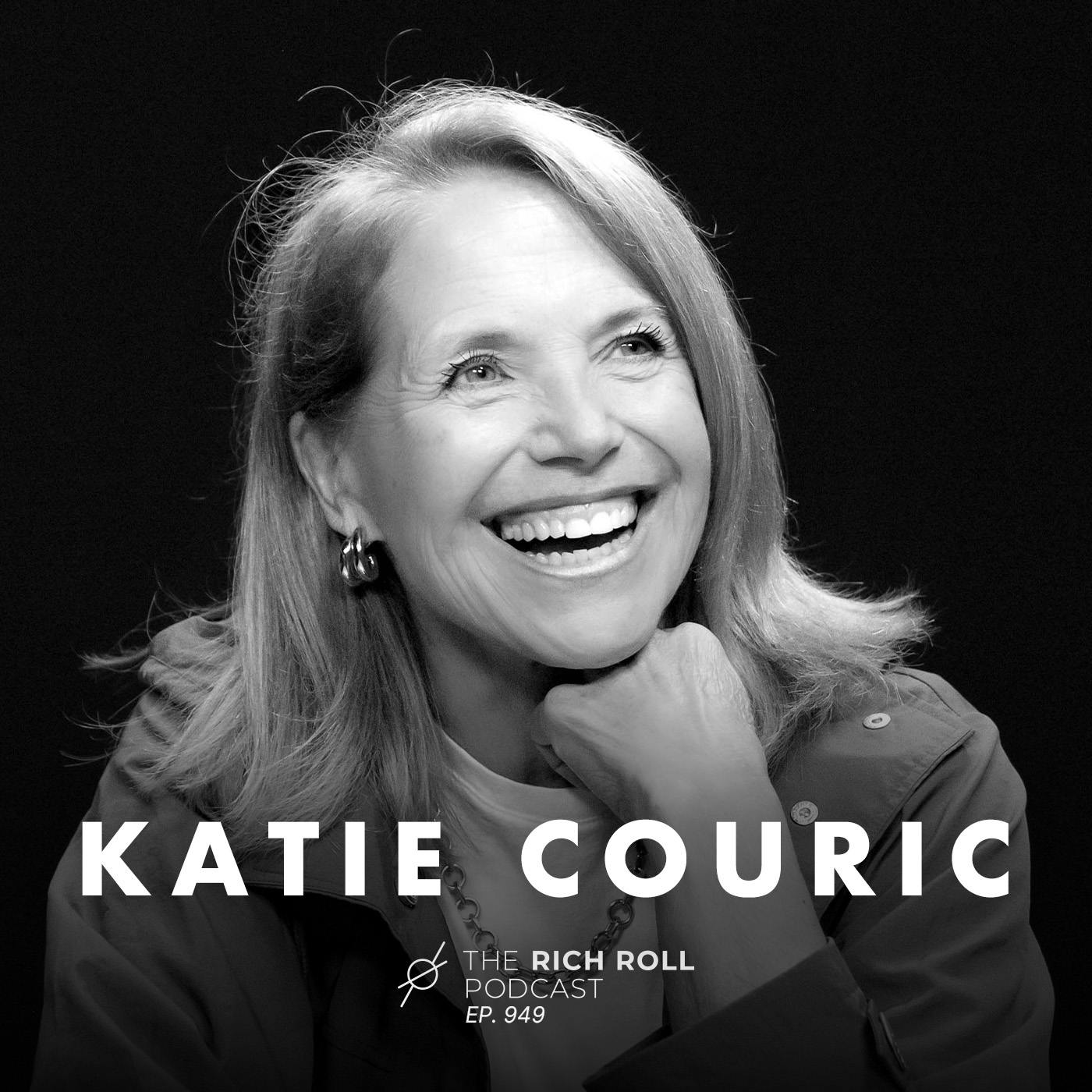
The Rich Roll Podcast
Interview With An Icon: Katie Couric On The State of Media, Institutional Distrust, Cancer Advocacy & What Actually Creates Happiness
01:57:14
Loading summary
Transcript344 lines
- [00:03]
Katie Couric
I think people need to gather together and actually have conversations that enable dialectical thinking. Like two things could be true at once or has some nuance to a conversation, like getting out of your bubble. And I think everyone's entitled to their own opinion, but they're not entitled to their own set of facts. I mean, there are some things that just are empirically true and some things that are false.
- [00:48]
Rich Roll
Katie Couric People, this is what's happening. And I gotta say, I could not be happier about it. If you're tuning into this, on the day that I put it up, I. I happen to be in Florida speaking at a wellness themed event called Eudaimonia, which means that I recorded this introduction almost two weeks in advance. So I can't actually give you an Honest Life update from last week other than to maybe fill in a few gaps. As some of you guys know, I've been working on this book, which I really want to keep under wraps until it's done. In fact, I made a promise to myself to not talk about it until then. And I made that promise to myself for a couple reasons. First, because I think talking about the thing that you're working, working on has a way of releasing just enough dopamine to give you this sense of satisfaction that makes you feel like you're doing the thing or that you have done something that you actually haven't. And also because creativity is. Is a fragile thing and. And I think it needs to be protected. So that's what I'm trying to do. So things like laundering it in conversation or in public, in my experience at least, has this tendency to put off the muse and also invite all kinds of opinions into the equation that, if you're not careful, end up causing you to question yourself or to intrude upon that precious creative process. So suffice it to say that I'm going to keep this subject matter of all of this under lock and key until the appropriate time. But I can share that this book has absolutely been kicking my ass. By far the hardest and most ambitious project that I've ever signed up for, and something that I've been working on for over two years at this point. And it's really brought me to my knees more times than I can count. I think that's due in part because I'm kind of taking a big swing with this thing, which has left me with moments thinking that I must be insane, like, why did I make this commitment to this thing? I don't know if I can possibly live up to the promises that I've made around this creation, and maybe I should just return the book advance and give up on it altogether. But per Steve Pressfield's advice, I've been taking a little contrary action to do my best to approach it like a pro, to show up for the blank page day after day. Which is a lot harder than it was when I was writing Finding Ultra all those years ago because my life is just so much more complicated than it was then with so many things competing for my time and for my attention. Not the least of which is my day job doing this podcast. But I think, I guess I'm bringing all of this up now because this project is finally, literally again, after two years of toil, just starting to take a form that I feel good about. There's a very long way to go. This book is not going to be out for a long time, but I do have a sense that I'm making progress and that it's moving in the right direction. Which is something, believe me, I was definitely questioning up to about two weeks or so ago. And so the lesson for me again, I suppose is about the power of stick to itiveness, of sticking with things, of staying true to a vision. Vision. When you finally find a vision for yourself or for a project or for a goal or an ambition or an aspiration. And that no matter what, not letting frustrations and obstacles and second guessing insecurities and life competing demands derail you. Because breakthroughs always tend to linger on the other side of our biggest setbacks if we're willing to just stay in the game and see ourselves through it.
- [04:24]
Katie Couric
Foreign.
- [04:28]
Rich Roll
Look up at my skin Through a lot over the years, decades and chlorinated pools. Just way too much Southern California sun. Basically zero thought about skin care and it wasn't really until I hit my mid-50s that I finally kind of woke up and started taking care of my body's largest organ for the first time. Which began with On Charge and their amazing award winning red light face mask. It's equipped with optimal wavelengths of red light at 630 nm and near infrared at 850 nm that work at the cellular level to help promote youthful glowing skin, smoother skin texture and more even looking skin. And the best part, the red light face mask fits right into everyday life. Just 10 to 20 minutes a day, totally portable, suitable for all skin types and backed by a one year manufacturer's warranty. But Bon Charge isn't just about your face. Their sauna blanket has been great for recovery it's like having your own personal sauna that folds up when you're done. It's currently the Bon Charge holiday sale, so you can save a massive 25% off. Just head to boncharge.com and your 25% off code will automatically be added to your order. The sale will end on 31st December 2025, so hurry and don't miss this massive chance to save big on your favorite Bon Charge products. Good Lord, the holiday season. I can't believe it, but once again, it's here, a time of year that I tend to find overwhelming because I'm a creature of routines and I don't like my routines being disrupted. But that's just the deal with holidays. All the travel, the family gatherings, eating patterns that go sideways. I think it's okay to admit that it can all be a little bit too much at times. To combat the chaos, I try to double down on horrible routines that work and don't demand that much time. And at the top of that list is AG1 Next Gen, who's sponsoring this episode. It is a daily health drink that combines your multivitamin, pre and probiotic, superfoods and antioxidants into one simple green scoop that's clinically shown to support gut health and fill in common nutrient gaps. In order to stick, routines need to be simple, so I keep it that way. Just cold water, a scoop of AG1. Done. One solid health decision just locked in before the day gets away from me. The Next Gen formula has five probiotic strains working with prebiotics to support digestion, which matters when your eating routine gets thrown out the window. And with more people getting sick this time of year, having that broad spectrum of vitamins, minerals and antioxidants feels like the smart play. Plus now there are four flavor options including Original Citrus Berry and Tropical, so there's something for everyone. Head to drinkag1.com richroll to claim your free welcome kit. You'll get a sample pack of all four flavors, a bottle of vitamin D3K2 and a shaker bottle. That's drinkag1.com richroll to give AG1 a try today. Look, there's a good chance that if you are like me, a member of Generation X, or even a boomer or a Millennial for that matter. Basically, for as long as you can remember, Katie Couric is somebody you can't remember not knowing. This constant media presence and consummate broadcast journalist who seemed to magically appear every time you turned on the TV to check out the news. And that's because Katie is an icon. This is somebody who has done it all. She's anchored the news on three of the four major broadcast networks, abc, NBC and cbs, where she was the first woman to solo anchor a network evening newscast. Katie's Also Co hosted 60 Minutes in the Today show. She's interviewed all the presidents, been twice named on Time's 100 Most Influential list. She co founded Stand up to Cancer, produced countless documentaries and specials, and now she's doing all of it outside the mainstream media ecosystem. That made her America's Sweetheart, all on her own and on her own terms. So today I have the great honor of sitting down with this legend to talk about her background and career and what it all means to her and the ways that media has changed, both for the worse and for the better. We discuss how institutional distrust and post truth politics are impacting the world, the threats posed by authoritarianism and AI, and what to do about it. How she sees the future of journalism and her role in it, as well as her perspective on the famous Sarah Palin interview and her rules for conducting a great interview generally. We also talk about the many ways cancer has affected her life and how these experiences burned her into this role as an amazing advocate. Katie's a kick in the pants and as you might expect, somebody who is just super fun to hang out with. So this is a treat. So, Terry, any longer, I will not. Please enjoy me and Katie Couric in conversation. I'm so delighted to be in your presence, just in terms of thinking about your career. You're somebody who, you know, we both grew up in dc. We're not quite the same age, but, you know, near enough. And I'm sure you hear this all the time, but you're somebody who's kind of been in my life as far back as I can remember, just this sort of constant media presence and quite iconic in all the things that you've done. I mean, you've worked at all the networks. You've had every job except for Fox. Yeah. Oh, that's true. You haven't done it. Well, there's time, you know, I don't.
- [10:27]
Katie Couric
Think they'd have me.
- [10:28]
Rich Roll
Yeah, I don't know. I don't. I don't know. Everything is up for grabs right now, I think, you know.
- [10:32]
Katie Couric
Yeah, it seems that way, doesn't it? It's crazy.
- [10:34]
Rich Roll
And that's kind of where I'm headed with this. I mean, you know, you truly are this, this iconic media figure with just a, you know, an unimpeachable legacy in terms of all the things that you've done and all the people that you've spoken to. On the one hand, this is, like, my internal conflict. On the one hand, I think it's super cool that you're, like, a digital creator. Like, you're just like the rest of us out there, like, doing a podcast, substack, a newsletter, like, all the things that you do. You also have your production company and you make these documentaries, et cetera. But at the same time, I'm like, yeah, but shouldn't Katie be, like, you know, like, in that seat that we always, you know, knew her to hold? And I'm curious, like. Like, what was the impetus or the decision to be independent and to have your own media company? Do you feel like you wish you were back there? Are you happy doing what you're doing right now? Like, and maybe that's a lead in to kind of talking about the media landscape at the current. At the current moment?
- [11:35]
Katie Couric
Well, I am very happy doing what I'm doing now, and I'm very happy I did what I did. I am grateful for the more traditional broadcast journalism career I had. I worked at ABC as an intern. I worked at CNN as an assistant assignment editor and associate producer. I then went to Miami. I was a local news reporter covering crime and all kinds of things. Then I went to D.C. i was a local news reporter in Washington. That's when I got discovered by Tim Russert and hired to cover the Pentagon with Fred Francis, which was an incredible learning experience. Then got tapped for the Today show. Did that for 15 years, and then decided, or was lured to CBS to the evening news and kind of had this idea that I wanted to make history and be the first solo female anchor.
- [12:34]
Rich Roll
Which you did.
- [12:35]
Katie Couric
Yeah. And that was sort of a very mixed experience for me at cbs, which we can talk about later. But, you know, I. I got these jobs, rich, that I never in a million years imagined I would. You know, I just wanted to be a reporter. I wanted to have a career. I really, you know, I came of age in the feminist movement in the 70s. I wanted to be financially independent, not beholden or dependent solely on my partner or my husband. And so my career exceeded my wildest expectations. So I get this job on the Today show for 15 years, and I loved it. But 15 years is a long time to be in any job. And I had this opportunity to go to cbs, and I did. And I did that for five years and then did a syndicated talk show. Cause I kind of missed Having a job where I could show more personality doing the evening News. It's like 22 minutes, and it's pretty straight. You just kind of read. Read the intros to the pieces and maybe ask one or two questions to the correspondent, and that's it.
- [13:48]
Rich Roll
But the impetus or the motivation to leave the Today show when you did and go to CBS was the motivation, at least in part, this notion of, like, I want to do serious stuff like the Today show, you know, sort of being a little bit fluffier and.
- [14:04]
Katie Couric
Well, you know, back then, I think the Today show was actually kind of set the stage for the news of the day. I mean, this was when there was much more of a monoculture culture and very few choices. Remember, this was before the Internet.
- [14:19]
Rich Roll
Sure.
- [14:20]
Katie Couric
Or at least as the Internet was, was surfacing. And I did so many really serious interviews on the Today show, from grilling David Duke to talking to presidents, to having debates with senators on Capitol Hill, to talking about, you know, bombings of abortion clinics. I think people. I think people sometimes don't have the ability to see what Walt Whitman says. You know, we contain multitudes. Right. And I did a lot of serious reporting. I went to Iraq, went to, you know, covered Desert Storm. And it wasn't so much to be taken seriously, because I think people did respect me on the Today show and appreciated the work I did. They saw my lighter side. Yes, we did cooking and, you know, I sang with Darlene Love and Jimmy Buffett, and we, you know, so I think people saw that I could have fun, but I think they also saw my serious side. But I think this opportunity to be the lone female on an anchor desk in this male bastion that was an evening newscast seemed appealing to me. And I also was excited to do stories for 60 Minutes, which was kind of one of my childhood dreams. And so it maybe would be to be taken a little bit serious, more seriously. Even more seriously, I would say, but also to just face a new challenge, you know, try something new, try a new network, try a new job. And I think probably in hindsight, it wasn't the best fit for me. I was lured over by Les Moonvest to kind of freshen up the evening news, you know, to have this less sort of stentorian voice of God like, good evening, you know, and to have a little more warmth, a teeny bit more personality. But I think that probably wasn't what traditional news viewers wanted. You know, CBS has, I think, more conservative viewers. They have more, I think, kind of traditional news consumers. And so I think both externally with the audience and internally with the makeup of the folks at cbs. It was sort of like the body rejected the organ a little bit.
- [16:56]
Rich Roll
I mean, CBS strikes me, at least at that time, as very much a boys club. And, you know, we kind of all know what happened with Les Moonves and maybe even more particularly at 60 minutes. Like, it just, you know, it was a sort of culture that maybe was not ready for what you were bringing to the table.
- [17:17]
Katie Couric
I think I was very different than sort of what they were used to. I mean, they had female correspondents. People like Leslie Stahl, Meredith Vieira worked there. Diane Sawyer worked there for a time. But I think particularly the head of 60 Minutes, when I came, just wasn't picking up what I was putting down, if you know what I mean. He wasn't really. He wasn't that into me. I should have, in hindsight, probably met with him to see how much he would embrace. I think he felt like maybe I was being forced on him and on the show because of Les Moonvest. And it was. You know, it was also a different. Every network has its own personality, in a way, and NBC, I think, was. And maybe because I was also in a really powerful position at NBC, it seemed much more collaborative and less kind of old boys network and cbs. I remember when there was a producer giving me a tour of 60 Minutes, and he said, just so you know, our mantra here is someone else's success diminishes you, and someone else's failure elevates you. And I was like, what?
- [18:33]
Rich Roll
And I said, well, it's a zero sum game.
- [18:35]
Katie Couric
And I was like, aren't there enough good stories to go around? But I think, honestly, that was the mentality there.
- [18:41]
Rich Roll
Yeah, but you did, like, eight or 10 stories a year, right, for 60 Minutes when you were younger?
- [18:46]
Katie Couric
I probably did maybe four or five. You did, yeah. But I had to kind of beg for them, Rich. Like, I would come up with stories. And I remember I said, hey, there's this new singer. I think we really should profile her. She's kind of the next Madonna. She went to a private Catholic school on the Upper east side. She's kind of outrageous. She's incred. You know, her musicality is unique, and I think she's gonna be a huge deal. I think we should profile her.
- [19:16]
Rich Roll
Lady Gaga.
- [19:17]
Katie Couric
Yeah.
- [19:17]
Rich Roll
Yeah.
- [19:18]
Katie Couric
And they called me and they said, not for us. And I was like, all right. You know, I kind of am the sort of person. I want to do it first. I don't want to do it after. Everybody under the sun has done a profile.
- [19:33]
Rich Roll
Well, you're on the right side of history with that one.
- [19:35]
Katie Couric
Well, so fast forward. She's on the COVID of Rolling Stone. She gets a lot of attention for wearing a meat suit. I still don't know quite what that was about. And she just explodes, right? So about a year later, I get a call from the booking producer who I know and still am friends with, and she said, you know that Lady Gaga story? Now we want to do it. And I said, wow. Well, you know, everybody and their brother has done this story, but maybe we can come up with a different angle. Like, how does a Catholic girls school on the Upper east side of New York create a star like this? And her backstory is really interesting. So I go over to 60 Minutes because the CBS Evening News was in a different building. And I look at the big whiteboard that has the stories that are being worked on and the correspondence who are assigned to them, and I see Lady Gaga. And my eyes go to the right and it says Anderson Cooper. And I was like, wow, Wait, what? And so I went to the head of the, the show, Jeff Fager, and I said, so confused. You know, I came up with this, this story a while ago and he said, oh, yeah, we decided to move things around. So I got, I was getting constantly. It happened with Hillary Clinton. It happened with other stories too. I just got gas.
- [21:05]
Rich Roll
You were getting boxed out?
- [21:07]
Katie Couric
Yeah, I was getting boxed out and gaslit all at once.
- [21:11]
Rich Roll
When I think of CBS News or 60 Minutes specifically, I think of that movie, the Insider, Jeffrey Wigan story, because it's such a lens into 60 minutes. And I think as just an average consumer of, of network news over the course of my lifetime, our reference points are what we see in movies and television, you know, and whether that's broadcast news or, you know, the Insider or that show, the Newsroom. And now we have the morning show, right?
- [21:41]
Katie Couric
Yeah, yeah.
- [21:42]
Rich Roll
Like, this is our way of going behind the scenes at these places. When you see those things, like, are they, do they reflect reality at all? Like, the morning show's a weird one because, I don't know, it seems like it's taking itself very seriously at a moment where that is of like that world is of declining cultural relevance.
- [22:02]
Katie Couric
Well, I mean, I think they actually, it is. That world has declined significantly. You're totally right about that in Cult, in the culture. But I think they do kind of take various issues that these networks are grappling with. You know, I just watched the third episode last night, so it's kind of Fresh in my mind. Yeah. Especially as everything's become so much more fragmented, kind of how do you stand out? And this woman Mia wanted the job as the head of news and she's saying truth is really being destroyed and she's just sort of a journalist with a capital Jeff. But then the head of the network wants it to be much more entertaining. Entertaining. And then they have this whole thing where a sponsor pulls out because they don't like the, you know, the way Jennifer Aniston's character covered something. So they're kind of echoes of those things happening in real life in modern media right now, as we have seen over the last couple of months. So I appreciate that they're kind of talking about some of these issues and, you know, which are pretty relevant to the landscape today.
- [23:21]
Rich Roll
Yeah, that show's a little soapy, but I think you're right. I did watch the third episode as well.
- [23:26]
Katie Couric
You did?
- [23:27]
Rich Roll
Yeah, yeah, yeah.
- [23:27]
Katie Couric
And I was upset that she didn't get that job and then.
- [23:30]
Rich Roll
But you knew she wasn't going to.
- [23:31]
Katie Couric
Well, I thought she was, but then I thought what's her name? Stella was gonna stick up for her and actually win and she was gonna be put in that job.
- [23:40]
Rich Roll
And.
- [23:41]
Katie Couric
And that was upsetting. But. But you're right about the soapiness. Like Stella is sleeping with whatever her name is, boss's husband. And I mean that's where sort of the soapiness.
- [23:53]
Rich Roll
But that, that sets up, you know, these power plays in the C suite. Right. Like there's all the sort of backroom brokering for jobs and promotions and things like that.
- [24:03]
Katie Couric
Yeah.
- [24:03]
Rich Roll
Is that something that is accurate? I'm sure. Because these jobs are so high paying and they're so powerful.
- [24:10]
Katie Couric
Yeah. I mean, I think in certain cases, probably. I mean, I think this is, you know, on steroids and the having an affair with your boss's husband. I don't know, that's. That seemed a little far fetched, but.
- [24:25]
Rich Roll
But you know, there were plenty of, you know, sexual scandals going on.
- [24:30]
Katie Couric
You know, they're. At the first season, they just went full on Matt Lauer and got Steve Carell to play him. And you know, it's funny cause I think they've said that Jennifer Aniston's character is based on Diane Sawyer, but a lot of people think. I think it's a composite, actually. I don't think it's based on anyone in particular. But I mean, that hit very close to home. I mean, with the whole Matt Lauer of it all. I was long gone. You know, I left in 2007, 6. And this happened to him 11 years later.
- [25:04]
Rich Roll
But you worked closely with him for a long time. I did.
- [25:06]
Katie Couric
I did for 15. Well, not 15 years. Probably 12, maybe. He was the newsreader. I was first with Brian Gumbel and then. And then Matt ended up, I think, taking Bryant's job in 95. Yeah, probably. Yeah.
- [25:23]
Rich Roll
But at that time, like, you were there at the peak of those shows holding a certain place of cultural relevance that they don't anymore, as we were talking about. But the morning show sort of assumes that that's still the case, I guess, in some level.
- [25:38]
Katie Couric
And it's hard.
- [25:38]
Rich Roll
It's hard to, like, kind of buy into that illusion, I suppose. But that brings us to where we are now. So you're out in the digital landscape as an independent, like, media personality who's running this, you know, 360°, like, media conglomerate, you know, of your own design on some level.
- [25:56]
Katie Couric
Makes it sound a lot bigger.
- [25:58]
Rich Roll
Yeah, but if you go to your website, it's like. It's like going to any news site. Like, you've got entertainment news and, like, all kinds of stuff. So you're. You're kind of hitting, you know, every category as you go in this landscape where, you know, you came up where, yes, it was very consolidated. There were the three networks and there was the person every night who said, good evening, which is weird. Like, it's still weird, you know, like, don't you want normal people? Like, I think part of, well, you know, new era is like, oh, we just want. We want to feel like we, you know, are hearing from somebody who's actually a human being.
- [26:30]
Katie Couric
Well, you know, it's funny you say that, Rich, because one of my things in an effort, which was my mandate to make the evening newscast less stilted and stuffy and more approachable and accessible. You know, I. I said, who says good evening, except for Mater D's? You know. So I said, hi, everyone. And that was like. Like radical, you know, that was so radical.
- [26:55]
Rich Roll
Strange.
- [26:55]
Katie Couric
Yeah. And, you know, and I tried to have a much more sort of casual Persona, but it just, it. It didn't work.
- [27:04]
Rich Roll
Yeah, but this shift from consolidated and, you know, kind of gated, you know, these, you know, media being gated with gatekeepers to this disintermediated landscape that's very populist and. And without gatekeepers, like, there's pros and cons to all of these things. Right. Like, so obviously there's never been more information available to everybody, but without gatekeepers, then anything goes, right? And so we're in this very strange post truth moment where everybody has self selected their information silo and we're increasingly living in, in, you know, disparate alternative realities.
- [27:47]
Katie Couric
Absolutely.
- [27:48]
Rich Roll
You can't like make sense of that without connecting it to our, this, this decline in our ability to, to communicate and, and the impact that that's having on our society and the coherence of, of a democratic republic.
- [28:06]
Katie Couric
Yes, to all of the above.
- [28:09]
Rich Roll
What is your like, like? I mean, it's your thesis on, you know, what is happening and the relationship between the media landscape and what we're seeing politically.
- [28:17]
Katie Couric
Oh my God. All right, well, so many thoughts, as they say. I actually am trying to develop a documentary about, you know, sort of the fall and perhaps rise again of journalism, depending on how you see it and how it ultimately shapes out. Because it's still sort of the wild wild west. And I mean, obviously these silos, you know, these, these self made media ecosystems and echo chambers are exacerbating polarization. There's just no question about that. You know, everything I get basically reinforces my point of view. And sometimes I'll look at other things because they're not served up to me. And I try to read, you know, the Wall Street Journal editorial page to see what people like that are saying or, you know, I love Peggy Noonan and I read the New York Times. Washington Post has kind of gone downhill, which makes me sad as our hometown paper, Rich. But I think that it's obviously creating this extremely divided country. But I think the other thing you have to add to it is the President of the United States. You know, I think that this probably would be happening, let's say Bill Clinton was president or Barack Obama or George W. Bush. I think people have different political points of view, but I think that Donald Trump has just poured gas on our whole, not only media landscape, but on our whole kind of sense of who we are as Americans and what we think of what's going on. And you know, sometimes I think, gosh, am I because of the algorithms, because of the people I talk to, because of the company I keep, because of my values? Am I, am I being unfair? But I don't think I am. And maybe somebody who disagrees with me doesn't think they are because of what they're reading and listening to and the people they're talking to every day. So I honestly feel like we are living in parallel universes and it's really hard. And I have chosen because I'm an independent journalist now without any corporate overlords telling me to take it easy or like what Bob Wright once did when I was on the Today show. Why were you so harsh with Condi Rice about Russia? And I told him to basically stay out of my journalism and I'll stay out of his executive suite, which, you know, now they're all kind of mushed together because of everything that's happened with ABC and the lawsuit and pulling off Jimmy Kimmel and now what's happening at cbs.
- [31:15]
Rich Roll
You mean with Barry Weiss coming in?
- [31:17]
Katie Couric
Well, not only Bari Weiss, but also when you look at, you know, the Ellisons, which I think may be a much bigger TikTok play. Right. That's really, I think, because how important is CBS News at this point? Not really super important anymore, but it's.
- [31:32]
Rich Roll
An important piece in a larger puzzle that the Ellisons are putting together where digital media properties and legacy media properties, you know, assembled, create a juggernaut that allows them to, you know, on some level, like, have a lever on, like, public opinion.
- [31:50]
Katie Couric
Oh, I agree, but I just don't know how important the news component is for, you know, this whole, this whole kind of land grab that they're doing. Right. With Paramount. And now they're talking about Warner Brothers and, and now I guess they're part of Tick Tock. I'm not really up to speed on sort of this whole group of Trump cronies that are. Have. Will have control of Tick Tock.
- [32:11]
Rich Roll
You would think the DOJ or the FTC would step in, you know, to, to prevent some kind of.
- [32:17]
Katie Couric
I have a lot of faith in Pam Bondi and Brendan Carr.
- [32:20]
Rich Roll
Yeah. That happening. But I think what's interesting about, I mean, there's so many threads to pull with that. But on the one hand you have the ways in which, you know, power operates in this current climate where they're going to be conciliatory to the administration in order for certain mergers and deals to get rubber stamped and approved.
- [32:41]
Katie Couric
Right, right.
- [32:41]
Rich Roll
But at the same time, also, there is a little bit of a 360 thing going on where these digital properties, whether it's Tick Tock or Barry Weiss's the Free Press, like, you know, these were independent organizations that weren't affiliated with anything legacy media oriented. But now they're now coming back around to become part of that. Like it's, it's all, it's like a full circle.
- [33:05]
Katie Couric
Yeah.
- [33:05]
Rich Roll
Kind of situation on some.
- [33:07]
Katie Couric
I mean, there's still independent media that is going to like, I don't know if you follow Midas Touch Network, for example, and I'VE interviewed those guys a couple of times.
- [33:16]
Rich Roll
And the bulwark. Yeah, the bulwark pod save, you know, the crooked media guys and things like that.
- [33:21]
Katie Couric
Yeah, I mean, it's fascinating to watch. I just read that Donald Trump is going to be on 60 Minutes and I am so curious a who will be doing the interview and B what kind of interview it will be?
- [33:36]
Rich Roll
Now that Ellison owns cbs, how much.
- [33:38]
Katie Couric
Is he going to be challenged? How much are they going to be breathing down the correspondent's neck? It's very dystopian.
- [33:55]
Rich Roll
We're brought to you today by Prolon. It is pretty clear at this point, based upon established and newly emerging evidence based science, that periodic fasting holds an important place in tending to our health as well as extending longevity. That said, there are just so many different kinds of fasting out there and admittedly it all kind of comes across as pretty extreme. This is but one reason why I appreciate the work of my friend and repeat friend of the pod, Dr. Valter Longo. As director of USC's Longevity Institute, Valter is the world's leading expert on fasting and the man behind behind Prolon and the fasting mimicking diet, which is basically this periodic five day nutrition protocol in which you're provided with delicious plant based foods, things like soups, snacks and beverages that you're permitted to eat that also at the same time trigger the cellular rejuvenation produced by a completely fasted state. Prolon's new Next Gen program feature features 100% organic soups and teas with richer taste and ready to eat convenience. Developed at USC's Longevity Institute, it's shown to support biological age reduction, metabolic health and energy. Prolon triggers autophagy, the Nobel Prize winning cellular repair process. It's the first and only patented nutritional program to support longevity through cellular rejuvenation. So if you're considering a fasting protocol, this one is backed by real research and for a limited time, Prolon is offering all of you guys, my listeners 15 off site wide plus a $40 bonus gift. When you subscribe to their 5 day program, just visit prolonlife.com richroll that's P R O L O N l I f e.com to claim your 15 discount and your bonus gift. Prolonlife.com richroll this show is sponsored by BetterHelp. You know that thing where you think about someone that you haven't talked to in forever and you tell yourself you know, I should really reach out and then you just like don't. And the longer that you wait. The heavier the phone feels and the harder it becomes until it's like this impossible lift. I know that feeling. I also know how November tends to amplify it. The days get dark early, we retreat indoors, and before you know it, we're just isolated without even realizing that it happened. The antidote to all of this is not complicated. It's connection, reaching out. Even when it feels awkward or vulnerable, which, honestly, is exactly what starting therapy feels like. There's this moment of resistance, like, am I doing this? But then you do it, and you're like, why did I wait so long to do this? This is where BetterHelp comes in. BetterHelp has served over 5 million people worldwide with more than 30,000 licensed therapists, with an average rating of 4.9 out of 5 based on over 1.7 million client reviews this month. Don't wait to reach out. Whether you're checking in on a friend or reaching out to a therapist yourself, BetterHelp makes it all so easy to take that first step. And right now, you guys, Our listeners get 10% off their first month at betterhelp.com richroll that's betterhelp.com richroll to me, it's nonpartisan, though, because nobody should be celebrating a situation in which the, the, you know, the Fourth Estate is kowtowing to power. Like, this is the whole point of the journalistic enterprise.
- [37:55]
Katie Couric
Don't you think that a 60 Minutes correspondent, I mean, do you have total faith that they're going to really vigorously challenge Donald Trump?
- [38:04]
Rich Roll
No, I don't. I don't have faith that they will, which is the point, because it's an example, it's an illustration of what's happening right now. So whether you support Trump or don't support Trump, you should be supportive of, you know, an independent, you know, journalistic, you know, ecosystem of integrity that is always going to challenge those who are occupying seats of power.
- [38:26]
Katie Couric
Right.
- [38:26]
Rich Roll
And we don't have that. So what does that mean, and where does that lead us?
- [38:30]
Katie Couric
Well, I think you still do, but he probably wouldn't go on any of those platforms. Like, you know, I don't think Donald Trump would be interviewed by someone who he perceives is not a friendly question.
- [38:44]
Rich Roll
Of course not. But the fact that it's 60 minutes makes it fascinating because that's what I mean, the place where you're going to be in the hot seat no matter who you are. Right. And if that doesn't go down, what does that say about what 60 Minutes is?
- [38:58]
Katie Couric
Well, I think it's going to be a real inflection point, honestly, for that show. And my hope is that respectfully but vigorously, he is challenged on many of the things that he has done and he believes. And, you know, I. It's going to be fascinating. But what I was saying about sort of what I'm doing now, I. I feel like, as I said, nobody's saying, hey, Katie, will you take it easy on this? That or the other thing. When I see something is happening and I think people need to be aware of what is happening, then I don't want to sugarcoat it, and I want to bring in people who talk about the dangers of what's happening and whether it's saying the election was rigged or inciting an insurrection or pardoning the January 6th rioters. I mean, we could go on and on and on. In fact, I was thinking about every month because there's so many things happening that I should post, like everything that Donald Trump has done since the inauguration or even before, right. Because I think people are just being overwhelmed. It's so much. And they forget about it. And the news cycle, you can only cover so much. And then like, hey, whatever happened to this story from three weeks ago?
- [40:30]
Rich Roll
We just move on. I mean, when you think back to Watergate or the Pentagon Papers or any of those seminal scandals that, you know, overnight destroyed political careers, you know, immediately they seem almost quaint in comparison to what we're seeing on the daily. And there's so much of it. What is that word? What is that term? Is it like Gish Gallop, where there's just a waterfall of stuff?
- [40:55]
Katie Couric
I don't know that word.
- [40:56]
Rich Roll
You just can't get your hands around it. So it's impossible to, you know, redress any of these things because tomorrow there's a whole nother set of these things, and we just sort of move on. And there doesn't seem. It's in addition to being in this sort of post truth world, we're in a post consequences world, right? Like, where nobody is being held accountable for any of these sorts of things. And so many of them, you know, violate these, these, the social contract on some level. And so we're. We're seeing the envelope pushed in, what's acceptable, and it comes from the top. And then it speaks to what you were saying earlier about, like, well, what does this say about who we are as Americans and what our country stands for?
- [41:35]
Katie Couric
Not only is it. Are there no consequences, it is, I think, embraced and encouraged. You know, I was thinking about that with the, with the meme of the AI video of Chuck Schumer and Hakeem Jeffries where they put a sombrero on and put these, you know, voiceover of them talking. And, you know, it's funny because, you know, there was a time where people would be outraged by that. And I think a certain segment of the population is outraged or at the very least uncomfortable. Right. And then you've got a whole other group that are sort of think it's great and so funny and hilarious and. And are portraying people who find it offensive as humorless. Right. So it's all kind of gotten topsy turvy. And I think a lot of it is kind of this constant struggle about sort of. Were sensitivities too heightened, you know, during some of these social movements like Black lives matter and MeToo and that happened and sort of cancel culture that was really going on. And now this, this over correction and this cultural whiplash where it's seen as great to be an asshole. Right.
- [43:02]
Rich Roll
As long as your assholem is. Is directed at owning the libs.
- [43:07]
Katie Couric
Yeah.
- [43:07]
Rich Roll
You know.
- [43:07]
Katie Couric
Right.
- [43:08]
Rich Roll
And the hangover for the. The excesses of the progressive left, you know, seems to have a very long tail, you know, because this is, this is ammunition or, you know, fodder for a lot of this stuff. A lot of the sort of glee around, you know, like, this, this behavior that it's like, do we really want the leader of the free world behaving this way? Is this in our best interest? Is this what leadership is all about? Is this the example that we're setting across the world and also for the next generation about, you know, like, shouldn't the person who occupies that office be somebody aspirational, you know, that we can, like, look up to?
- [43:49]
Katie Couric
I talked to David Frum about this.
- [43:52]
Rich Roll
He's very good on this.
- [43:54]
Katie Couric
I really like David Frum. And we were talking about.
- [43:57]
Rich Roll
And you know, like, conservative guy, like Republican.
- [44:00]
Katie Couric
Yes, exactly. Speechwriter for George W. Bush. And, you know, we were just talking because he and I, I guess, are about the same age. I'm about 10 years older than you are. But. But, you know, having been in journalism for a long time, you know, there were always disagreements and always, you know, people were angry and a lot of anger, of course, about the Iraq war and weapons of mass destruction and anger at Bill Clinton's behavior. And, you know, there are always these kind of pivotal moments during any administration, but there's always been a certain amount of decorum. And he and I were talking about this coarseness and this kind of the president of the United States acting in such an undignified, what I would say, kind of gross way, if that has opened up this new way of being a president, if we can ever turn back the clock and get that kind of decorum back. You know, we were talking about how Gavin Newsom is now being much more pugnacious, but I said to him, I still think there are lines that Gavin Newsom wouldn't cross, that Trump just punches right through with abandon and with absolutely zero shame. Can you imagine, like, being so overt about craving a Nobel Peace Prize? It's so weird to me, like, this idea that you talk about, like, of course, I'm sure anyone in his position or anyone, you know, who's a. A huge leader, that is, you know, the ultimate honor. But to campaign for it so, so shamelessly, it's so embarrassing to me.
- [45:44]
Rich Roll
Yeah, well, a couple things. I mean, first of all, you know, the celebration of vulgarity, like, this is not. This is not a good thing for our country. It's hard, you know, it's like, you know, and as interesting as it is to see Newsom, you know, put his, you know, step into playing this game, I mean, Trump is one of one in terms of, like, you know, how he operates on social media. So it's interesting and. And somewhat comical to see Nome try to, like, play the same game.
- [46:11]
Katie Couric
Well, he's pretty. I have to say, he's pretty good at it.
- [46:13]
Rich Roll
He's good.
- [46:14]
Katie Couric
He's got a very good social media person.
- [46:16]
Rich Roll
But to your point, like, is this what we want? So we want now. We want now in order to be a leader and to, you know, engender, like, support and popularity. Is this what you have to do now? You know, maybe it is, like, but I'm not excited about that.
- [46:31]
Katie Couric
Yeah.
- [46:32]
Rich Roll
And I think once you erode, you know, these sort of ethical mores around leadership, it's hard to restore them. In the same way, when we see the overreach of executive power, like, you know, once you claw that, you can't. You're not getting it back. Right. It's not going back to any of the other branches.
- [46:49]
Katie Couric
So, I don't know. I still hold out hope that somebody who really believes in separation of powers and, you know, you're hopeful, optimistic. Well, I mean, and I have to be, because otherwise I just. I'm in despair and. Yeah, I hope so. I mean, but I do think, let's say Gavin Newsom ran against whoever, hopefully not Trump. Right.
- [47:18]
Rich Roll
Anything is possible. Like, literally, it seems like anything is possible.
- [47:21]
Katie Couric
I Don't think people want to behave this way. I think people really think the President of the United States should comport herself or himself a certain way. And I think right now, with all the power concentrated among the GOP and MAGA specifically, and this cohesiveness that you see among Republicans, I think it's sort of a last ditch effort to say, we have no power, we gotta fucking do something. And if it's to punch him and mock him, and if this is the only thing these people really understand, we're gonna do a little of that.
- [48:02]
Rich Roll
Have to play on their, on their, on their playing field.
- [48:05]
Katie Couric
I don't know.
- [48:05]
Rich Roll
But to from's point about decorum, like, yes, we, we both grew up in Washington. I've said this before on the podcast, but, you know, my dad was a government lawyer. But you know, if you grow up like in D.C. or the suburbs, like, you're surrounded by government employees, people that work for the various, you know, they work in the administration or they work in one of the departments, etc, every four years, like a bunch of people disappear and a bunch of new people show up.
- [48:33]
Katie Couric
Everybody with a lot of career government people.
- [48:36]
Rich Roll
Yeah, me too, me too. You know, there would be parties and barbecues and, you know, there's Democrats and Republicans and everybody's getting along fine. They may disagree on policy or whatever, but it never interfered with, you know, the comedy of comedy. C O M I T Y of like being neighborly. You know what I mean? Like, it, there was a decorum to it. There was a, it was civilized. Like people could reach across the aisle and communicate with each other and that just seems impossible now. Like, I don't know what it's like living in Washington now.
- [49:08]
Katie Couric
Yeah, I have a lot of friends who still live in, in D.C. and they're not really that involved in politics anymore, but I don't know what it's like either. And you know, my parents died and we sold our house a long time ago. My brother lives in Charlottesville, my sister lives in Boston. And so I don't, I don't know that many people anymore in D.C. who are working for the government. But I mean, it kind of started with the Tea Party, right?
- [49:39]
Rich Roll
I think it started before that. Didn't it start with the Moral Majority and Jerry Falwell? I mean, that was sort of the original.
- [49:44]
Katie Couric
I'm talking about this lack of civility.
- [49:47]
Rich Roll
Oh, I see.
- [49:48]
Katie Couric
I think sort of really kind of bubbled up with the Tea Party. And then I do think it has been exacerbated by income inequality. Then you get this carnival barker, like Donald Trump, coming into the picture, knowing he's a brilliant marketer, like, he really knows how to, I think, hit people where it hurts. Right. And he's very clever that way. You know, I worked with him at NBC. He was on the Apprentice, and I went to his frigging wedding.
- [50:20]
Rich Roll
You did? Yes.
- [50:22]
Katie Couric
Oh, my God.
- [50:22]
Rich Roll
I need to know about that.
- [50:24]
Katie Couric
Yeah. In Palm Beach. He only asked me. Cause I was anchoring the Today show. I dressed as him one Halloween. I'm just like, oh, God, please burn those pictures wherever they are. But. But I just think that the way he operates and the politics he practices are the politics of hate and division. You know, you've heard him say at Charlie Kirk's memorial service, of all places, I don't love my opponents, I hate them. And the enemy within, he is. I want to do a piece or a deep dive into Viktor Orban because he's kind of his role model and his hero. And I think he's kind of following what he did in terms of shifting what was happening in Hungary.
- [51:09]
Rich Roll
Well, with the income inequality and, you know, the. The ways in which that is accelerating the distance between the haves and the have nots. You know, if you're somebody who is looking around and not seeing a lot of opportunity and you're in a town where there's a lot of unemployed people and, you know, nobody's going to college and, you know, people can't pay their bills, and you're pissed. Yeah, of course. So a guy comes along and. And he's tapping into your anger, your disenfranchisement, and. And it doesn't even matter if he's going to solve the problem because he's a, you know, a vessel for all of that, you know, anger and resentment, and he represents that. So of course you're going to support that person and you're going to gleefully celebrate every time, you know, he. He gets one over on the libs or whatever. Right. Like, it doesn't matter as long, you know, chaos is fine. Like, let's just blow it up, because it doesn't look like any of this is serving me anyway.
- [52:10]
Katie Couric
That's true. I mean, as you're talking, it makes me think because of, you know, the news I consume, the people I talk to, the what's fed to me through algorithms, you know, I do get comments on my social media posts about, we love him. You know, he's our guy. Some lady wrote to me, I was promoting my David Frum podcast and talking about the thing in Quantico and the James Comey stuff, and how every day something shocking happens, sometimes multiple times a day. And she said, you know, I really liked you and supported you when your husband got sick. And now I just think you're bitter and irrelevant. And it just made me think, you know, I do need to talk to more people who feel this way and really interrogate. Why. I think there's some psychological things, reasons. I think there's some socioeconomic explanations, but I also think it's because of their news consumption and where they're getting their information and their Facebook page and if they're watching Newsmax or Fox News. And, you know, and I. I think I just blocked her and deleted the comment. But I wish I had said, mary Jo, whatever your name is, I really appreciate that you prayed for me or that you cared about me when my husband was dying of cancer. You know, thank you for that. And, you know, I. I'm trying to tell people information that I think they should know, and I'd love to talk to you sometime.
- [54:03]
Rich Roll
Yeah, it's. It's a.
- [54:04]
Katie Couric
You know, it's a.
- [54:04]
Rich Roll
It's a very difficult knot to unravel because I think the. The response to that would be the liberals always think that it is a function of information. Like, if I can just get the right information in front of them, they'll see the world that I. The way that I see it, like, they're not getting the right information. Right. And I don't know that that's really the solution. I think it's much more complicated. And.
- [54:31]
Katie Couric
But I said that was part of the. Part of the puzzle. You know, some of it is the company. You know, Bryan Stevenson talks a lot about being proximate. Right. And I think we don't. To your point earlier about what life was like in Washington back in the day, we don't really co. Mingle that much with people who are different than we are.
- [54:49]
Rich Roll
Yeah, that's a problem.
- [54:50]
Katie Couric
And by the way, when we do, we usually avoid those conversations because they're just too uncomfortable.
- [54:55]
Rich Roll
So it's not unrelated to the loneliness epidemic and our relationships with our phones and our device. Like, we're just. Absolutely. We're not in community in the way that we used to be. You know, and we. We think that we are because we're scrolling and we think we're connected to all these people, but. But we're not. And that's really. I think, at the. That's like ground zero.
- [55:17]
Katie Couric
I think it's a part of it. You Know, I think it plays a big role. I think to your point, it's, it's more complicated than that. But you know, in 2017 I tried to do a documentary about loneliness and social isolation and how societies change and Vivek Murthy, the Surgeon General, you've probably.
- [55:37]
Rich Roll
Had a couple times.
- [55:39]
Katie Couric
I like, I like Vivek. And you know, it was even before that and I was just thinking about how our society has changed and how little time we spend and this was even before, I mean this iPhones had come out what they were and really came out in 2010 in a big way. Right. But I couldn't agree more. And these cultural institutions, you know, Christian nationalism is on the rise, but a lot of people don't go to church or places of worship or get together, see people face to face. And you know, I was just reading about something my friend told me called bed rotting. Do you know what that is?
- [56:23]
Rich Roll
No.
- [56:23]
Katie Couric
So bed rotting is what a lot of young people. And by the way, I'm guilty of bedrotting myself. Rich. It's when you are in bed and you spend hours on your phone before you even get up in the morning. Sometimes that happens to me, I gotta, I gotta put my phone in a different room. Cause I start reading and I have to say most of the stuff I'm reading I think it's worthwhile to read. You know, I'm reading articles and opinion pieces and an occasional recipe I see pass by. But you know, this idea of wasting so much time on your phone and these kids are just lying in bed bedrotting, it's crazy. But I think the loneliness epidemic is something that we really need to explore. And I was going to kind of look at other cultures and also look at places that are trying to fight it, but this was a while ago, nobody was interested. They thought it was too much of a downer.
- [57:27]
Rich Roll
I think we're getting a taste of the solution thanks in large part to Jonathan Haidt.
- [57:32]
Katie Couric
Yeah.
- [57:33]
Rich Roll
And what he's doing in schools and, and the fact interviewing him next month, they're really. There are phone free schools now and the teachers, the teachers are like making videos about like how incredible, you know, like how it's like unreal how different it is and the kids are happier and it's like all we had to do is this one thing and look what happens.
- [57:51]
Katie Couric
The idea that that didn't happen sooner is so insane to me. I remember taking my daughter to look at colleges and we went to uva because that's where I went to School. And neither of my kids went to uva, but that's all right. And we went to Larry.
- [58:08]
Rich Roll
Just that little comment alone. Like, I. I got a window.
- [58:12]
Katie Couric
We went to Larry Sabato's class. You must know Larry Sabato. I don't. He's a political science professor. Like, beloved, really. I mean, he has been radicalized by Donald Trump, I'll say that. I think. Anyway, we're going to his class because he's a very popular teacher. And even back then. So this was in, like, 2014, and I noticed so many people were on their computers, like, shopping at J. Crew. And I was like, this is.
- [58:38]
Rich Roll
Oh, during the lecture.
- [58:39]
Katie Couric
You mean during the lecture. And I was like, this is terrible. Your parents are paying for this. Or you're. You have a scholar, whatever. However you are here and you're not paying attention. I mean, of course, everybody does that to a certain extent. But the fact that I said to Larry, can you cut off the WI fi? And just so people can't be on the Internet while you're teaching. But the idea that it was okay for kids to have phones in school and that they were told not to use them. Lol. It was so ludicrous to me that it took so long for these schools to do something about it.
- [59:16]
Rich Roll
Well, only a few are doing anything about it right now.
- [59:20]
Katie Couric
I think New York State just did something.
- [59:22]
Rich Roll
Yeah, well, it's just like anything. It's like smoking or, you know, we don't. We don't realize until later, like, the ill that we have, you know.
- [59:30]
Katie Couric
It's funny going back to CBS, though, in 60 minutes. I remember. So it was like 2009. And I said to one of the producers who I really liked, who is really has still, still, still a good friend of mine, I was like, hey, let's do a story on how cell phones are tearing families apart and how they're changing our relationships with each other. And it didn't happen because it was too soon. To your point, like, I've always had a little spidey sense, I think, of. I think just because I'm older and I've followed so many stories throughout my life, I've always had a spidey sense of, like, what is going to surface? What aren't we thinking about? That's going to be a problem later.
- [60:19]
Rich Roll
So what is your spidey sense telling you now? What. What. What are you, democracy? What are you early on? Yeah, I think my spidey sense unraveling that there's a. We're in the we're sunsetting democracy.
- [60:29]
Katie Couric
I can't really credit my Spidey sense for that.
- [60:31]
Rich Roll
Trading it for authoritarianism. I don't know that you're early on that idea.
- [60:34]
Katie Couric
I was gonna say. I can't. I can't say that. What are other big issues? Gosh, I don't know, because everything I think to your point is so chaotic, and there's so many things that are hard to focus on. I'm working on a documentary right now about disparities in medical research between men and women. And sort of. Whether it was the Women's Health study at nih, which was stopped prematurely, or all kinds of statistics about women are diagnosed with diseases four years later than men. Women were only required to be included in clinical trials in 1993. And I just thought it would be a really interest because I think women do live longer, but they don't live better. And had we been treated as, you know, different beings with different, you know, biologies, and not just small men with boobs, I think we'd be a lot further in mitigating some of these illnesses and diseases that strike women that just have not been sufficiently studied or tested on.
- [61:45]
Rich Roll
Yeah, it's a real problem. I've had a bunch of women experts, medical doctors, come on the show and talk about that. We just. We actually just put up a compilation episode where they're basically echoing everything that you said. Like all of the. All of the research is done on men, and how it impacts women is almost an afterthought. Like they're shoehorning it in, and it's not acknowledging, like, the complexity and. And. And differences in women's brains and their hormonal systems, et cetera.
- [62:16]
Katie Couric
Exactly.
- [62:17]
Rich Roll
The impact on Alzheimer's and diseases and all of these sorts of things.
- [62:20]
Katie Couric
So glad you're bringing this up, because 2 out of 3 people who get Alzheimer's are women, and yet only 12% of the funding is spent on FE specific Alzheimer's disease. And the other statistic I always love is that erectile dysfunction. I just like saying that anyway, which gets all the money, which affects 19% of men, has gotten five times the funding as PMS that affects 90% of women. I mean, that's just sort of an example. And I was even looking at something about South Carolina and abortion laws and what's going on there, and everyone was saying, well, you know, are they requiring men to get vasectomies? Right. I mean, it just. It's crazy. The world is crazy. But I. I think I'd love to look at that compilation video.
- [63:11]
Rich Roll
You know Dr. Lisa Moscone?
- [63:13]
Katie Couric
Yes.
- [63:14]
Rich Roll
In New York.
- [63:14]
Katie Couric
Yes, I do. Is she the head of the NYU Women's center now?
- [63:18]
Rich Roll
Yeah, exactly. Yeah, I believe so. I don't want to.
- [63:21]
Katie Couric
Yeah, I'll look. We have a bunch of experts, and we're going to be talking to a lot of patients. Another, you know, issue that, that gets very little attention or funding is post postpartum depression or even postpartum psychosis. I remember covering that Andrea Yates story. I don't know if you remember that, but that was in Texas. And it was a woman who had five children. Her husband, Rusty, worked for NASA. And one day she just killed all her kids. And it was so horrific. And she, she killed her oldest son last and drowned him in their bathtub. I think he was 7 years old. And he, she chased. I, I, I think I remember. It's one of those stories that I will never forget. And I went down to Texas, I think it was Houston, and I met Rusty Yates, her husband. And he showed me around their house. It was the eeriest, most upsetting thing. And he showed me where the little boys, where their Lego sets were and where the baby's room was. And then he said, do you want to see the bathroom? And I said, no, I can't. I, I, I can't do that. But my point is that. And there was another story in Massachusetts where, where a woman, you know, killed her kids and then jumped out the window. But these things haven't been studied. You know, they don't know how to. But imagine if for 30 or 40 years, scientists and medical researchers had focused on the brain chemistry in post postpartum women. That's another area we're gonna look at because it's just really upsetting. And so many, it's so incapacitated for so many new mothers. And not only is the science not there and the research, but there's such a stigma about it too, you know.
- [65:25]
Rich Roll
So, anyway, we're not exactly in the best moment when it comes to funding medical research.
- [65:33]
Katie Couric
Oh, my God. I know we're gonna have to talk about something fun eventually, because this is, like, such a bummer. But no, I'm glad you brought it up because it's super important for people listening. So, yes, the NIH funding is being cut, I think by 40%. And, you know, much of my adult life, after I lost my husband to colon cancer and my sister to pancreatic cancer, has been spent really focused on cancer. Raising money for cancer research, getting to know a lot of scientists Increasing awareness. And you know, I started stand up to cancer with some other pissed off women who were just very frustrated at the pace of progress. So I have been in this world, you know, not like scientists have, but I have gotten such a deep, profound appreciation for what these people do and how tirelessly they work day in and day out and how hard it is and how complicated these diseases are. Not just cancer, which is like a million diseases and a million different biologies, but all these neuro, neurodegenerative diseases and heart disease anyway. And the fact there's so much wrong with cutting medical research in this way, not only are we in a huge inflection point with AI merging with basic biology and other immunotherapeutic approaches. And I know you are interested in medicine and I want to talk to you about this actually, but I'll talk to you in a minute to pull the rug out from under these scientists and patients. Stop clinical trials. It is such a disservice to our country and we're also already witnessing a significant brain drain. Scientists aren't going to stay here if their projects aren't funded. France is saying, come to France. Other countries are saying, we will fund your research. It is so foolhardy and disgusting. But there is a move on Capitol Hill with, I think it's pretty bipartisan to try to reinstate some of the funding into nih.
- [67:44]
Rich Roll
That's, that's good to know. I mean, that's the other thing. When you grow up in dc, you grow up around kids whose parents were scientists at nih. Like a lot of my friends parents were researchers at nih. And you know, listen, that was a long time ago and there, there, I'm sure there's, you know, some bureaucratic bloat and all of that, but the idea that these people are somehow, you know, co opted by big Pharma and are, are working at the behest of these corporate interests for their own personal enrichment is kind of insane. These people have devoted their lives to science and they are immersed in these research projects that are expensive and complicated and take many, many years. And a lot of this has been interrupted and disrupted. And so a lot of that science is lost. And it's quite tragic for anyone who is depending upon cures and therapies for what they're suffering from right now.
- [68:45]
Katie Couric
It's a travesty, honestly, it's a travesty. And some of these clinical trials have been either shut down or delayed. And when you're sick, I know very well from my Husband and my sister. And when you're sick, every day matters and you're just praying. I remember when Jay was sick and he was diagnosed with stage four colon cancer. And it was bleak. The prognosis was very bleak. But I was just every day perusing the Internet, like praying, is there something going on? I would call like these pharmaceutical companies in Israel. I called Bert Vogelstein, who's discovered the Ashkenazi Jew gene at Johns Hopkins. He was not very encouraging. But I do love you, Bert now, but you weren't that nice back then. But anyway, you know, just desperate. And I know what it's like. I know what it's like just saying, you know, anything, please just do anything that will extend my life. You don't even have to cure me. Extend it so I can go to my daughter's wedding or I can be at my child's fifth grade, you know, kindergarten graduation, I don't know. Or that can help me until something better comes along. But you know, how can something better come along when they aren't funding the science? It's so maddening to me.
- [70:15]
Rich Roll
You probably know that Rivian makes all electric trucks and SUVs make that the best. All electric trucks and SUVs. But did you know that Rivian's actually improve over time through software updates? Through regular over the air updates, the technology keeps evolving. New features, improved performance, additional safety features so your vehicle actually becomes more capable the longer you own it. And knowing RJ Rivian CEO, I can tell you firsthand that this is a guy who is not into tech for tech's sake. Every feature is designed for actual real world situations, like pet comfort, maintaining cabin temperature so your dog stays comfortable if you need to step away. Briefly. Adaptive lighting that responds to the environment, plus warning systems and highway assist that monitor the road alongside you, making the driving experience safer and more enjoyable. I'm so proud to partner with Rivian. They're just the best. Everything you want out of a vehicle, of course, but also because of their ethos, which is making the world a better place. Providing what you need to make the most of life's adventures and using technology to do it so you're prepared for whatever comes next and have everything you need for every adventure you can imagine. I got news for you. The holidays are coming. And with them, all these questions kind of start swirling in our minds about. About what we're going to give people that we care about. And honestly, it's really hard because most gifts just end up forgotten somewhere. But the gifts that actually do get used are the ones that make someone want to use them. And on does exactly that with their incredible line of high quality running and hiking gear. Shoes like the Cloud Ultra for trails, the Cloud Runner 2 for roads, the Club Hoodie for recovery days, hiking stuff for exploring nature in the mountains, and even accessories like performance socks, caps, hydration packs, backpacks and travel bags that work as amazing stocking stuffers. So here's the thing. The real gift isn't the gear. It's what becomes possible when the gear gets out of the way. Those early morning runs where your mind just clears that trail you've been meaning to hike, that Runner's high, or that silence at the summit when everything just clears clicks. Movement changes things. And sometimes all someone needs is the right gear to make movement more fun, more stylish and more accessible. So move yourself on over to on.com richroll to explore my picks for holiday gifts. After hosting more than 900 episodes of this podcast, I have noticed a pattern. And that pattern is that the highest performer don't buy into the latest trendy hacks. Instead, they obsess on what actually works, which is always the unassuming basics. And there is nothing more basic than hydration. But here's the kicker. Your body can't hold onto water without the right minerals. Without them, water is just like this temporary visitor. But Element has cracked the code on this, which is why I've been using it religiously for years. Zero sugar, no artificial junk, just sodium, potassium and magnesium in the ratios that actually work. And look, I'm not exactly crushing ultras right now healing from this surgery, but in some ways I need it even more. In order to properly recover, I need to treat my body even better than ever so it can heal properly and expeditiously while also maintaining my focus and my energy level levels to rock out all of these podcasts, write a book, be a husband and a dad. And I gotta say, Element keeps my brain firing in a way that water alone can't. Their new sample pack features their most popular flavors. Citrus Salt, Raspberry salt, Watermelon salt. That's my favorite. And Orange salt. Eight stick packs total. Perfect for finding your favorite or sharing with a friend. Get a free 8 count sample pack of Elements Most popular drink mix flavors with any purchase@drinklmnt.com Rich Roll Find your favorite Element flavor or share it with a friend. So your husband passed away when he was 41?
- [74:37]
Katie Couric
42.
- [74:38]
Rich Roll
42 from colon cancer. Your sister in 2001 from pancreatic cancer.
- [74:44]
Katie Couric
Yeah, she was 54. She was running with. I'm always posthumously so proud of her. Everyone said she would be the first female governor of Virginia.
- [74:55]
Rich Roll
She was a Virginia state senator. Right.
- [74:57]
Katie Couric
She was a Virginia state senator. And then she was running for lieutenant governor with Mark Warner.
- [75:02]
Rich Roll
Wow.
- [75:03]
Katie Couric
Who I also really admire. And she was diagnosed just out of the blue, you know, with advanced pancreatic cancer. And a world glimpse of my bizarre life. And I had just done the Tonight show with Jay Leno, and I was in the green room, and the publicist said, you need to call your sister right away. And you know how your, like, heart stops. And I called my Emily. I had two sisters, Emily, and my other sister, Kiki, AKA she's really Clara, but I call her Kiki. And I called Emily, and she said, don't worry, it's not about mom and dad, because I think my parents were getting older, and I was always so afraid of losing my parents. Like, I just adored my parents. She said, it's not about mom or dad. It's about me. She said, I have pancreatic cancer, and it's all over my liver. Well, I knew then and there if you have metastatic disease, that that is an incre. A dire situation.
- [76:15]
Rich Roll
You're not coming back from that.
- [76:16]
Katie Couric
Yeah. So I forget why we were talking about that.
- [76:19]
Rich Roll
Well, just. I'm just trying to help the audience understand your relationship with this disease because it's impacted you so up close and personally, like your husband, your sister.
- [76:31]
Katie Couric
And then I was diagnosed a couple.
- [76:32]
Rich Roll
Years ago, diagnosed with breast cancer and.
- [76:35]
Katie Couric
And early stage.
- [76:36]
Rich Roll
Your husband, like, a. Didn't he have, like, a liver, too?
- [76:38]
Katie Couric
Yeah, he did. Three months before I got married. I know. It's like. Like the message, don't date Katie Couric. Do not become romantically interested in me.
- [76:51]
Rich Roll
You know, stand up for cancer. But, like, cancer's following her around, like, beware.
- [76:54]
Katie Couric
You know, I remember when John Molner, my. My husband, you know, I said, oh, God. You know, I could see the New York Post, like, with my face on. On a black widow, you know, Spider, saying, what's wrong with her? And he was like, thanks, I really appreciate your concern. But anyway.
- [77:12]
Rich Roll
But in the interest of. Of pivoting. Away from depress. Pressing topics.
- [77:15]
Katie Couric
Well, wait, though. I do want to talk to you real quickly about colon cancer.
- [77:19]
Rich Roll
Okay.
- [77:19]
Katie Couric
Because I just did this funny spoof of the Sydney.
- [77:22]
Rich Roll
This is what I. This is what I was. I was teeing you up for this because I was like, this is so funny.
- [77:26]
Katie Couric
I thought you were moving on to a different topic. But then I have something serious to talk to you.
- [77:30]
Rich Roll
The less depressing aspect of this was you spoofing the Sydney Sweeney jeans ad.
- [77:35]
Katie Couric
So, like, that was fun. Did you find that funny?
- [77:37]
Rich Roll
Yeah, it was great.
- [77:38]
Katie Couric
I hope people found it funny, actually.
- [77:40]
Rich Roll
And even on your Instagram where you. You post. I think it was your Instagram. What was the brand of the jeans? American.
- [77:48]
Katie Couric
American Eagle.
- [77:49]
Rich Roll
Yeah. Like, they were like, we approved this message.
- [77:51]
Katie Couric
Yeah, I thought that was funny. I also thought it would be really a smart PR move for them. I think I suggested this to my assistant because they called my office to ask if I wanted a pair of jeans. And I said, alyssa, ask them if they would want to donate this. I did this with the Colon Cancer alliance, not with Stand up to Cancer, but a specific colon cancer group. I said, why don't you, Sydney Sweeney, present me with a check for colon cancer research? Like, give us a million dollars. How good. You know what? Good PR for American Eagle. But I don't know if they're gonna. They're gonna buy that. But it was.
- [78:29]
Rich Roll
They should have done that. I mean, it was all. It's all pr. And there was such a swirl of controversy around that that would have ameliorated that immediately.
- [78:36]
Katie Couric
I thought so, too.
- [78:37]
Rich Roll
But it was very savvy on your part, you know, to, like, meet the moment of culture.
- [78:41]
Katie Couric
I can't take credit. I can't take credit.
- [78:43]
Rich Roll
Explain it for somebody who doesn't know what we're about talking.
- [78:45]
Katie Couric
So I was approached by the Colon Cancer Alliance. I know the head of it, my friend Michael, and he said, hey, you know, we do this lead from behind campaign every year. One year, Ryan Reynolds got a colonoscopy. You know, and I do a lot of this stuff, too.
- [78:59]
Rich Roll
You famously, you know, had your colonoscopy on television. This was like, a big thing.
- [79:04]
Katie Couric
I know. Which was, you know, it's funny, looking back on it now. I really just wanted to explain to people, like. Like, this disease is preventable if it's caught.
- [79:13]
Rich Roll
A huge impact in testing. Like, yeah, like, there was a giant spike.
- [79:17]
Katie Couric
20% increase in colon cancer screenings. They called it the Kuric effect.
- [79:21]
Rich Roll
I mean, 20% by you just demonstrating that.
- [79:25]
Katie Couric
But it's one of those things, Rich, where you can't, like, do it once. You have to kind of. Well, first of all, the age has been lowered to 45. And as people, you know, get older and more and more, you know, every year, a lot of people turn 45. You have to kind of keep reminding them. That just happens. And the lowering of the H's happened a couple years ago. But I also took Jimmy Kimmel to get a colonoscopy. I gave a commencement address at the University of Massachusetts Medical School. Cause I think I've been so associated with cancer advocacy. So they invited me and I said, hmm, who could I get to get a colonoscopy this year? Maybe Tom Brady. He's turning 45. And I'm sure a lot of you Patriot fans would like me to make sure it's done without anesthesia. Cause he had just left Boston. That got a big laugh. But anyway, they approached me about doing this, and it was Ryan Murphy's Ryan, sorry, Ryan Reynolds production company. They had come up with this idea, and they asked me would I do it? And I said, sure, if you think it'd have an impact. So I did it. But, you know, I wanted to mention to you because one of the things I'm super concerned about, and this is actually taking a little bit of a negative turn after our fun Sydney Sweeney conversation, is, you know, a lot of people under the age of 50 and even under the age of 40 and sometimes 30, are being diagnosed with cancer, like early onset cancer, specifically, really mostly digestive cancers, but also breast cancer. They are really increasing the incidence. And I read that in the next five years, the number of people under the age of 50 diagnosed with colon cancer is expected to double bubble. And they don't understand why scientists are. Are studying it. They don't. It. They don't know if it's the microbiome, if somehow microplastic, it's over prescription of antibiotics. I don't know if you've had this conversation on your show, not with respect.
- [81:26]
Rich Roll
To colon cancer specifically, but the impact of environmental toxins, ultra processed foods, just, you know, the, the dysbiosis of the microbiome, all of these things.
- [81:36]
Katie Couric
Like, so, you know, all the things I'm talking about.
- [81:38]
Rich Roll
Yeah, it's when you see these spikes, look around at the world that we're living in, it's not conducive to our health.
- [81:45]
Katie Couric
Right. But, you know, there's so many theories floating around out there. And when I found out I was doing this podcast and was going to meet you, I did a little research on you. Right. And I know that you're. That you're an ultra marathoner or you're an ultra sports.
- [82:04]
Rich Roll
Yeah, I've done like some ultra, ultra.
- [82:06]
Katie Couric
Endurance competitions and things like that anyway last month. So I just wanted to tell you this because I think it's just, you know, knowledge is Power. Last month I interviewed a doctor, and I don't know if you saw this in the New York Times, but he did a study among marathon runners and ultra marathon runners. And in many of my interviews about this, like at south by Southwest with early onset oncologists and. And cancer folks, they were saying a lot of these people are uber healthy. Right. They are fit, they eat. Right. It's not like they're, you know, these schlubby people who are overweight and consume red meat constantly. A lot of them are marathon runners. So this guy in Virginia did a study and he said the number of marathon runners and ultra marathon runners who had polyps, polyps or full blown colon cancer or precancerous. Precancerous polyps, cancerous polyps, or full blown colon cancer was much higher among this group than the general population. And they're trying to figure out why. I thought it was so fascinating. And I remember somebody saying, is it because marathon. Is it something that they're eating? You know, these meal replacement bars that are so ultra processed. Is there something about that happens to you physically when you're running in terms of how your blood is circulating and going to your legs? And I just. So all I wanted to say is when I read that, I thought, I'm gonna tell Rich to make sure he talks to his doctor and that you're getting screened regularly.
- [83:50]
Rich Roll
Yeah, I haven't been screened in a while, so I will. I do.
- [83:52]
Katie Couric
Did.
- [83:52]
Rich Roll
I did see that New York Times article and obviously that was a big topic of discussion in the. The running corner of the Internet.
- [84:01]
Katie Couric
I'm sure what were people. I'm curious. I'm not in that corner.
- [84:04]
Rich Roll
It's. It's just like. It's. It's just like politics. Everybody uses it as ammunition for whatever they already believe. Like, this is why running's bad. Or, you know, oh, they're overstating this and they don't really know what it doesn't. You know, nobody's getting to the bottom of it is point. And I think, think, you know, and.
- [84:20]
Katie Couric
This was a very preliminary study.
- [84:22]
Rich Roll
It could be anything but like, I.
- [84:24]
Katie Couric
Just thought it was worth noting.
- [84:25]
Rich Roll
It's important enough to know like, that the one thing you can do is go and get screened and tested more regularly.
- [84:32]
Katie Couric
Yeah. And also this deserves more research and more funding and, you know, so this guy is gonna try to do more testing about it. But I just found it really fascinating because you wouldn't think.
- [84:43]
Rich Roll
Yeah, you would think it would be the other way around. Maybe it's because they're just. They're eating a lot more food because they're burning calories and they're just running more through their system. I mean, it could be a million things. Yeah, it's, it's, it's interesting. I would be fascinated to learn more like that. Obviously, it's in my interest that I studied well.
- [85:01]
Katie Couric
Well, I just thought about.
- [85:02]
Rich Roll
That guy's funding is like.
- [85:03]
Katie Couric
But when I read you're an ultra runner, whatever that means. What does that mean anyway? Like, you do double marathons or something.
- [85:11]
Rich Roll
Yeah, it's been a minute. Like, I haven't done. I just have had. I just had spinal fusion surgery a couple months ago, so I'm not doing anything right now except gaining weight. But in my late 40s and early 50s, I did a bunch of, like, long races, like, like double Iron man type stuff or whatever. But good to know. I want to shift gears to. I want to talk about some fun, funner stuff.
- [85:34]
Katie Couric
Okay.
- [85:35]
Rich Roll
Like, I interview people for a living, you know, so it's like, I'm not going to let you, like, get out of that chair without, like, learning a little bit about the art and the craft of, like, how to talk to people.
- [85:46]
Katie Couric
I think you're pretty good at it.
- [85:47]
Rich Roll
Well, you know, I have my own. I just started doing it and found my own way into it. But you come from, you know, rigorous journalistic standards, and what you do is a little bit different. But you've talked. I mean, listen, you've. You've interviewed every president, all these foreign leaders, like, all kinds of people over, you know, literally almost like 40 years at this point. So what have you learned about how to approach. Whether it's a challenging interview or, you know, a different kind of conversation about what could possibly make it great? Like, what do you, when you go into sitting down to talk to somebody, like, what are you thinking about? What's important to you? How do you approach these things?
- [86:27]
Katie Couric
Well, I think a lot of times, sort of, overall, I'm thinking about what do I want the audience to get from this interview? Like, are there certain things, things that we'll be discussing that I think are informationally important for people to know? So that's sort of my North Star. But I also think, and I'm sure you found this, there's so many different kinds of interviews, right? There's some that demand more challenging questions. You know, there's some people who are more slippery who don't answer the question. So I would say, like, listening is critical. Like, you really have to listen to people and make sure you're hearing an actual response to the question. Like with politicians. So I would say, I mean, so let's say a politician or, you know, somebody who's talking about something technical. You, preparation is key. Like, I really appreciate that you, you knew my sister died and that you knew that I had been diagnosed with breast cancer, for example, and that you had gone to my website. First of all, like, the person who you're talking to really appreciates that because you can tell when someone is not prepared. Right. It's a turn off for me anyway. I don't know how you feel when.
- [87:54]
Rich Roll
You'Re being sure, of course, but I mean, that's even like what you just said is like the, the basis level of preparation. Like, I think you, you owe it to the person who's sitting across from you to come armed and ready to speak to them.
- [88:09]
Katie Couric
But you'd be surprised at the number of people who are not prepared or who kind of. I think in a format like this, you have no choice. But I think you sometimes get in situations and you're like, wow, they really didn't prepare. So preparation, I think, is key. And I also think, you know, you want to talk about things that the person hasn't been asked 800,000 times before. Like, that's not very interesting for that person. So you may want to go, you know, try a different angle. So that's what I try to do. And then, you know, a lot of people are nervous during interviews. It sounds like you interview people who have done this a lot for the most part. But it's really important for people who aren't experienced at this to really make them feel comfortable. And I think the way to make people feel comfortable is, you know, first of all, I think you have to exude sort of a certain level of empathy. Right. But I also think it's important for people to feel like you really, actually are really interested in what they have to say and that you have empathy. And, you know, I just interviewed Emma Willis, and I had interviewed her before for a Town and country thing, and she wrote something about caregiving. And I think we just had a really good conversation because she knew that I really cared about what she was talking about and that I also cared about her as a person. So I know that's kind of all over the map, but I think that I always tailor my approach and my questions differently depending on who I'm talking to.
- [89:59]
Rich Roll
Yeah, if you're gonna sit down with Yasser Arafat, oh, God, that was scary.
- [90:03]
Katie Couric
It's Gonna look different than I used to remember his name when I was at CBS with I'm a Dinner Jacket. Cause I'd see his name on the prompter, and I'd be like, fuck me, fuck me, fuck me. It's coming. And then I'd see Mahmoud. And then I. I'd always say mahmoud. Okay, I got Mahmoud Ahmadinejad. I'm a dinner Jack.
- [90:22]
Rich Roll
That is. That is like something that you would see in one of those TV shows. You got the earpiece in and somebody's talking to you, and you're trying to make sure that you say the name right.
- [90:30]
Katie Couric
I got so mad, I ended up being very close friends with this guy I worked with at cbs, a writer named Jerry. And I remember early in my time there when I was just getting crucified by the press and people inside the building were not really into me, and he. Without telling me there was a story, and he put the word sputum in the prompter as part of the story. I can't remember what the story was, but sputum is not a word that you say sort of in normal conversation, Right? I was so mad. Cause I thought he was just trying to.
- [91:10]
Rich Roll
Like, he's trying to fuck with you or something.
- [91:12]
Katie Couric
I really did. I still am not 100% sure he wasn't. I know he likes me now. Well, kind of. And. But, you know, sputum. What is sputum? It's like saliva, right?
- [91:25]
Rich Roll
Yeah. Like when you're. You're spit. Right? He could have just said you're spit your saliva or something.
- [91:31]
Katie Couric
But, I mean, if you saw sputum for the first time on a teleprompter, would it throw you a little?
- [91:35]
Rich Roll
I don't know. I guess it would depend on the context. You know, I don't. I don't know what you were reporting on.
- [91:41]
Katie Couric
I can't remember the story and why it was even included.
- [91:44]
Rich Roll
When you think back on. On all the people that you've talked to, like, what Are there ones that stand out in your mind? I mean, it's. It's got to be like the. The. The Sarah Palin interview has to be one. I mean, that. That's kind of one for the ages, right?
- [91:59]
Katie Couric
Well, I think it was a time where if someone came across as sort of flustered or not having the intellectual depth required for the second most powerful person in the country, that that mattered. I don't know if an interview like that would have the same impact today. I think that was a moment of a moment in time where people were like, wait a minute. And I don't know if it had.
- [92:29]
Rich Roll
Been who could be second in command and could possibly end up being president. Was struggling to answer basic questions.
- [92:37]
Katie Couric
Yeah, and I was very intentional about that interview. I did a whole podcast with my producer, Brian Goldsmith, about it and why it had such an impact. And I think it was just this moment in time. Barack Obama was sort of flatlining a little bit. She, as you recall, gave a mesmerizing and extraordinarily charismatic speech at the Republican convention. And she was just this breath of fresh air, you know, and the. What's the difference between a. What did you say? A pig and a soccer mom lipstick. And so I just, I think everybody had the sense that she might be all sizzle and no steak, as they say. And so I really was intentional about the questions I asked her that would indicate her sort of critical thinking skills and her accumulated knowledge and her understanding of how government works. And I remember saying, I am not going to react. I almost had a Parkinsonian affect. And I just was very, you know. But it's so ironic to me that the question that everyone remembers is what.
- [93:55]
Rich Roll
It was, what new sources that you.
- [93:57]
Katie Couric
Yeah, it was sort of an establishment. I think it was in establishing your worldview, because I was sort of interested in what makes somebody so ideological in either way, like, what shapes them. Right. You know, for you, it might have been your parents, I don't know, you know, or where you went to college. Who knows? Right. And I said, as you've established your worldview, what. What newspapers and magazines have you read that really have influenced you? I can't remember it specifically. And that's when I think she just wanted me out of her way.
- [94:37]
Rich Roll
Well, it wasn't that question. It was the follow up question where she said she.
- [94:42]
Katie Couric
Anything and everything, whatever they put in front of me.
- [94:44]
Rich Roll
And then, you know, you're. It was. And you did this a couple times I rewatched it and. And it was the follow up of, like, can you name anything? Like, what do you mean specifically? Like using the word specific. Like, name some, you know, things, you know, like really, like not letting her.
- [94:59]
Katie Couric
But I sort of did it in a way. And I don't know if you noticed, but this is sort of, I thought was a little artful. I said, I'm just curious, like, can you name a few? Like, specifically what sort of things do you read? So it wasn't so, like, specifically, give me some names.
- [95:16]
Rich Roll
No, it didn't. It didn't feel like you were hammering her. Yeah, it Was. And it was a walk and talk, you know, like you were sitting across from each other with lights. So it was a little more informal or casual. I feel like in 2025 that would have been like on a podcast. It wouldn't have been, you know, on, on like network television. But because we don't live in a monoculture. I mean, that was like a moment like that just traveled the world and then, you know, just became the topic of many a Saturday Night Live skit.
- [95:44]
Katie Couric
And yeah, Tina Fey, well, you know, when she, when she showed up, when she was announced by McCain, the first thing I said to my colleagues, I was doing the evening news, I think in Ohio. I was on a remote. I go, oh my God, she looks just like Tina Fey. And then sure enough, Tina Fey plays her. That was an interesting, important interview. But I think now people, I tried to be, you know, just as I said, have no facial expression. But now that interview would be treated one way on certain media outlets and.
- [96:23]
Rich Roll
Another way it was a hit job. Yeah, it was in bad faith.
- [96:28]
Katie Couric
Yeah. But I think it much more so or Katie Couric was out to get her.
- [96:34]
Rich Roll
But as evidence of how different the times were then, in the immediate aftermath of that interview, like nobody, it kind of built over time, right. The Republicans weren't upset about it.
- [96:46]
Katie Couric
No, I think everyone kind of every.
- [96:48]
Rich Roll
It just sort of everyone accepted it at face value.
- [96:51]
Katie Couric
I think people thought it was fair, you know, that my questions weren't gotcha questions. Everyone but Sarah Palin herself. But I remember John McCain, I interviewed them together and he said, I thought that was a very fair interview. He was such a decent man, John McCain.
- [97:08]
Rich Roll
Yeah, if only, if only.
- [97:13]
Katie Couric
Remember when people were talking about Obama in a campaign rally, I don't know if you've seen this most. A lot of people have and they were saying, you know, saying disparaging things about Barack Obama, he's a Muslim or that he's a terrorist or something. And John McCain said, wait a second, that's not true. True. He's an American.
- [97:34]
Rich Roll
He's a fine man, ethically stand up.
- [97:38]
Katie Couric
We have policy differences, but he's a good man.
- [97:42]
Rich Roll
Yeah, that wouldn't happen today. No, the tan suit, it's just, you know, these things that happened that were like so dumb that created all these controversies that, you know, today, like, it just seems strange.
- [97:56]
Katie Couric
How about the birth certificate? The, you know, you go back to Donald Trump on the, this rampage about the birth certificate. He feels totally comfortable just lying, bald faced, lying about things. And you know, I think it What's. What's still stunning to me is that Americans seem okay with it.
- [98:17]
Rich Roll
So what's the way forward, Katie? How are we. How are we solving these problems? A big problem is, is institutional distrust and distrust of the media on some level. We have to repair, share our faith and expertise and find some way to, you know, be able to agree on. On basic things if we. If we want to kind of survive as a. As a democratic republic.
- [98:42]
Katie Couric
I couldn't agree with you more.
- [98:44]
Rich Roll
How are we going to do. You're sort of eyes on deck? You know, you've talked to everybody. You've been everywhere. Like, I feel like you would have a sense or a grip on. On what ails us and what the antidote is.
- [99:00]
Katie Couric
I think you're giving me too much credit. I think that. I guess, I mean, all the things we talked about, I think people need to gather together and actually have conversations that enable dialectical thinking. Like two things could be true at once or has some nuance to a conversation. So I think that whole idea of Bryan Stevenson being proximate, like, getting out of your bubble, I think there is this lingering feeling, maybe it's from Hillary Clinton and the deplorable comment that coastal elites look down on people. And again, I think some of that is exacerbated by income inequality, like all these billionaires and people who are truly struggling. I think the Democratic Party, this is no big, you know, epiphany has lost its way with working class people 100%. I mean, there are some things that just are empirically true and some things that are false. And I think. What did Daniel Patrick Moynihan say? Everyone's entitled to their own own opinion, but they're not entitled to their own set of facts. Well, now everybody is entitled to their own set of facts. So how do you convince somebody that Tylenol doesn't cause autism? You know, I'm not saying that it doesn't deserve further study, whatever, but to make that statement, you know, when the one thing that. That has been shown to increase your risk of autism is high fevers. So it's really hard for me to kind of be that middleman, to kind of broker trust when I think so much of the lies are on one side. Do you?
- [101:11]
Rich Roll
You? Yeah, it's despairing. You said earlier that, you know, you're in your own bubble. I'm. I am, too. I think on some level, we all feel like we're the exception to the rule. And, you know, we're not. You know, we're not the one being manipulated, it's all these other people, right? And we're not really acknowledging the extent to which, you know, we've, we've selected our information silo just like everybody else, right. I, you know, try to step outside of it and hear all different kinds of opinions. But you know, my feed is what it is and of course it's reaffirming like my worldview. And the more it does that, the more, the more difficult it becomes to try to understand somebody else's point of view. And when you see something that doesn't make sense to you, you're like, well, why would somebody do that? Like, it, it's confusing to me. And I think people on, on the other side are having that same experience. And I think short of us finding a way to put our phones down and to Bryan Stevenson's point, like, you know, get together in spaces that have nothing to do with our news feeds. That seems to me to be the only way that we're gonna fix this problem. But in order to do that, we do need, we do, we need to like solve, solve economic inequality. We have to solve the housing crisis. Like, we don't have those after school spaces and we don't have the faith institutions that are central to communities in the way that they used to be. And so a lot of the, those places are, are kind of have gone the way of the dodo in some, in some sense and we have to find a way back. Maybe it's, you know, mandatory public service when you graduate high school, Peace Corps, teach for America or something like that, where you're getting, you know, people out into the world, right? Real world, and you' getting them to do it, you know, together in a way that's creating bonds that we're not creating right now.
- [103:11]
Katie Couric
Definitely. But you know, I don't know how that kind of usurps sort of this constant inundation of news that, you know, is confirmation bias or that aligns with your own point of view. But, but you know, one side really respects experts and science and appreciates these people and thinks highly of them, and one side doesn't really feel that way.
- [103:45]
Rich Roll
It's hard to get over that one.
- [103:46]
Katie Couric
So it's hard for me to find these threads of connection now. I think there's, obviously you can't, I mean these, all these groups are not monolithic. I think Democrats are particularly diverse in terms of how people feel. But I think maga, I think, you know, I think there are a lot of people have arguments about what role should government play in our lives. You know, like Ronald Reagan said, government is the problem. Right. And does private enterprise in certain situations do a better job? And I think, gosh, that that's certainly ripe for conversation. Right. And, you know, is there too much government waste? Is there, you know, has government let us down? All those things, I think, are really ripe for a full and rich conversation, but I think that those are, people are conservative, and that's not necessarily who MAGA is. Right. And MAGA is a very specific strain of populism that I'm not sure has necessarily. Well, I guess they do have some, you know, views that are consistent, you know, about immigration. Right. And I think somebody said to me, Trump has pinpointed a lot of the problems. It's just the solutions that he's pursuing. Like, I think most people will agree that the immigration system needed reforming. And in fact, there was bipartisan legislation that was about to be voted on. And Trump said, don't vote on it, because I think he wanted to use it as a campaign weapon. And it's hard for me to think there's not a better way to reform our immigration system than having masked ICE agents pulling families apart. And by the way, targeting people who are American citizens and not giving due process, I mean, that's not the way to solve the immigration crisis. You know, of course there's a better way to do it, but a lot of people, I think, have no problem with that. It, you know, they're like, yeah, get them out of here. We don't care how you do it.
- [106:15]
Rich Roll
That's a rough one to swallow. I thought you were going to lead us out of the depressing part.
- [106:24]
Katie Couric
I'm so sorry.
- [106:26]
Rich Roll
I don't think we're going to solve this.
- [106:28]
Katie Couric
I know. Well, you're the one who asked me what the solution was, and I'm like, jesus, I don't know.
- [106:37]
Rich Roll
Yeah, sorry about that.
- [106:38]
Katie Couric
That's okay.
- [106:39]
Rich Roll
But we are going to land this plane on a higher note because I, I, I want to pivot to, to, to advice like, you've lived this incredible life. You have reached the, you know, highest pinnacle of success. You've met, you know, experts in every field and world leaders, etc, and, and on some level, you've synthesized, like, all of this, you know, inspiration and, and lessons.
- [107:03]
Katie Couric
I don't know. I think you have, I don't know.
- [107:05]
Rich Roll
Do people, like, what have you learned from talking at all these people? Well, you wrote a book about it.
- [107:09]
Katie Couric
Why? Oh, well, that was the best advice book.
- [107:12]
Rich Roll
Right. So this is, this is kind of like what I want to lean into now, this idea of over the course of your life and all these people that you have spoken to, what is, you know, some of that. Some of that advice that you think would be helpful to share.
- [107:27]
Katie Couric
Oh, God, come on. Well, you can do it. I have spoken to so many people.
- [107:35]
Rich Roll
You, you're giving commencement speeches. This is right on the tip of your tongue.
- [107:39]
Katie Couric
I mean, I guess when all is said and done to me, the, the way to be a happy person. I think some of it, you know, I don't know if you read my book in preparation. I mean, I would be really impressed if you did.
- [107:56]
Rich Roll
I actually didn't because I was in D.C. caught up in.
- [107:59]
Katie Couric
That's okay. That's okay. I think you might like it. I think your wife might get a kick out of it, too. But I've told some of the stories from the book here today. You know, first of all, I think people have, you know, this constant search for happiness and fulfillment and meaning. I just got on my Kindle, Viktor Frankl, because I can't believe I never read Man's Search for Meaning. I'm so embarrassed. I did read Primo Levi Levy, Primo Levy's book about. About being a concentration camp. But, you know, this. This searching, this constant desire to be happy. I think it's pretty simple. I think. I think people find happiness having a life of service and purpose, you know, whatever that is, like doing something nice for people and kind of getting out of your own way and. And I think, you know, self care is so weird to me. I think it's important. Obviously, you know, you have to take care of yourself because you have to be there for the people who depend on you and the people who love you and the people you love. But I have always found the most fulfilling thing for me is to feel like I'm doing something that. Something positive that I'll leave behind something good. And so I think, you know, when I was so powerless watching my husband die, I felt like I have to inform people and educate them about colon cancer and that they can do something about it or, you know, I've always been that person who sees the person by themselves. And I'm. I always want to go over there because. Because I feel like, oh, I don't want that person to be all alone and I know they're feeling really awkward and weird. I'm going to go talk to that person. So there are ways, big and small, I think, to be just aware of people and aware of what they may be experiencing. And I think I just happen, I think my IQ isn't off the charts, but I do think I have very strong emotional intelligence. I'm just, I just am very aware of my surroundings and what people may be feeling. I think most of the time, not always. So I guess for me just, and this is really based on my life. It's, it's, it's having some meaning by doing something for someone else, you know, And I feel like you're, you're doing that by helping people understand the world or digging into conversations that people may learn something and maybe they'll be able to apply it to their own lives. Lives. I feel I'm serving a real purpose right now, trying to help people understand what's happening in this crazy world and honestly kind of telling them we better pay attention to this. We don't want to be the frogs in the slow boiling water. And I had to kind of pick up the pieces after my husband died. I had a six year old and a two year old and, and I always say to people we're all terminal, right. And we all have a finite amount of time on the planet. And finding joy is an intentional act. You have to try to do things that bring you joy. So I mean, I don't know if that's advice, but also find stuff that you love to do. Like when it comes to work, I mean, I know you kind of, of had a, an interesting journey and.
- [111:42]
Rich Roll
Yeah, I had to wander around a little bit.
- [111:44]
Katie Couric
Yeah, but you're obviously a smart guy, but you were waylaid. And I'm sure part of your being able to get your together was like, why am I here and what can I do to have a purpose driven life? Right? I'm assuming.
- [112:03]
Rich Roll
Yeah, I wouldn't say that I, I was doing an equation. It was a lot more confusing.
- [112:08]
Katie Couric
But I mean that's ultimately where you landed. Right?
- [112:11]
Rich Roll
Of course. And, and I would echo everything that you said. I think that happiness is not something that you aim for. It's a byproduct of orienting your life around, figuring out what brings you joy, what you're naturally interested in, curious. Curious about, and then marrying that to how it can contribute to the betterment of others. So the service aspect with the, you know, kind of internal desire to do that thing like that, that for me, like, that's the gift. Like when you can find something you really love and then figure out how to make it part of a greater contribution, that's, that's where you're going to find happiness, meaning fulfillment. They're all byproducts, products of those things. But I think service, like going into any dynamic, big or small, and looking to figure out how you're going to give more than extract, you know, and I think we're in kind of an extraction forward environment. Like it's all about like what's, what am I going to get out of this? And like, how am I going to be better off as a result of this conversation or this experience as opposed.
- [113:22]
Katie Couric
To like, or what can you. Yeah. What have you done for me lately?
- [113:24]
Rich Roll
Yeah, exactly. You know, and it's very transactional in that way. But I think when you're service oriented and looking, looking for opportunities to give, like to me, that's always the path towards greater happiness.
- [113:39]
Katie Couric
And I think, you know, it's, it's, it's a luxury to be able to, to, you know.
- [113:45]
Rich Roll
Yeah.
- [113:45]
Katie Couric
If you're to have this kind of privileged life.
- [113:48]
Rich Roll
Yeah. You're trying to put food on the table. Of course, it's like, yeah, it's such a privilege. Perspective.
- [113:53]
Katie Couric
This morning when I was bedrotting, I saw this woman on some podcasts talking about a recent Harvard study about the number one thing that created a happy life or that led to a happy life. What do you think that is?
- [114:12]
Rich Roll
Well, it had to be some kind of service oriented response. No. What?
- [114:19]
Katie Couric
Relationships.
- [114:20]
Rich Roll
Ah.
- [114:22]
Katie Couric
Like the quality of your relationships. Having a network of friends to support you, for you to support. This was what the Harvard study said. And it's, it's interesting because when my husband was really sick, you know, I mean, his quality of life was terrible. And I remember him saying, this is no way to live. And, and he said, you know, the only thing that really matters is your, your family and your friends. You know, he was an ambitious guy, you know, like to be a natty dresser. You know, we all get caught up in the bullshit. And you know, I think that just echoes what I saw with this Harvard study. It's really, it's really like your human connections and your friends and you know, people you can call when you're really sad or an emergency happens and you're not, you know, they're going to be there and they're going to really care. So I think that's, that's another thing that I've learned and I think I've, I've learned again. You know, as I said, we're all terminal. You know, there, there are no guarantees in life and, and you really, you forget it. You know, it's like when you have a stomachache and you're like, why didn't I not appreciate when I didn't have this miserable stomachache or a terrible headache and I felt okay? And it's easy to forget these things, you know? Cause they pass and you have these moments of realization. But I do think, like, I, I think losing Jay and losing my sister has given me me such an appreciation.
- [116:12]
Rich Roll
For getting of what's really important.
- [116:14]
Katie Couric
Yeah. But like, I woke up today and yeah, maybe I'm kind of creaky. I'm 68 years old, but I drove here and talked to a friend on my way and like, that's a good day. As my father in law says, like, he's 94. He was the ski instructor for many years in Aspen. He took last year, year off. He said he was on medical leave. He's the most wonderful guy. And I always say, like, herbie, what, what are you hoping for this year? And he'll say, like, I'm hoping to be vertical. So, you know, I think every day we're vertical, we're pretty damn lucky. And it's always nice to remember that.
- [116:55]
Rich Roll
Well, we gotta get you.
- [116:57]
Katie Couric
I gotta go back with my grandson.
- [116:59]
Rich Roll
You gotta stop scrolling on your phone when you wake up in the morning. I'm gonna get you to commit to that.
- [117:03]
Katie Couric
I know.
- [117:04]
Rich Roll
Like, I'm a journalist. I have to know what's going on for. He's like, stop that. Like, I think that will.
- [117:08]
Katie Couric
Oh, no. I have a, I have a problem. I have a problem. Yeah, I mean, you know, it's pretty clear to me you have an addictive personality, Rich, for sure. I have never found myself addicted to anything until now. And I am addicted to my phone.
- [117:24]
Rich Roll
I think on some level, everybody is. But I think that what that, what that means or what that does is it gives everyone a greater appreciation for the nature of addiction. Because we're, we're people that are not, you know, classic addicts, like, addicted to drugs or gambling or whatever, are getting a taste of like, dopamine.
- [117:45]
Katie Couric
Huh? Yeah.
- [117:46]
Rich Roll
And maybe, hopefully, you know, my hope is that that makes people more empathetic about the nature of addiction broadly.
- [117:54]
Katie Couric
Also. It's like, like that habitual. It's so habitual. You know, it's like you got this thing in your hand and you're like. And you know, I, I, I also gave a commencement address to my daughter's high school. And I talked all about, about the importance of being bored, because we're never bored anymore because we're always on our phones if we have a moment to relax and we're in a restaurant waiting for a friend. We go to our phone. And there's a part of your brain that is responsible for creative thinking, that it only lights up when you're not distracted, when you have a blank space.
- [118:29]
Rich Roll
We're the last generation to know what it's like to grow up where you were compelled to be bored.
- [118:34]
Katie Couric
Right? And that's why all your good ideas sometimes come in the shower, because you're just there. It's just you in the water. And I'm afraid that it's going to really stymie our ability to be creative.
- [118:50]
Rich Roll
This is a pendulum swing, though. I think young people are very keen about this and they're on their own behest, like, making decisions around, like, their digital hygiene that, you know, we're. That we're not. Because they see what their parents are doing. So that makes me optimistic and hopeful.
- [119:07]
Katie Couric
It's amazing, though, like, my little grandson who's 18 months old, you know, if Ellie is. Has her phone anywhere near her, let's say she's making a call and he's been watching Ms. Rachel a little bit, like just in very small amounts. And I mean, he sees that phone and he does a beeline and he's like tapping on the screen. So, you know, it starts really young and that's really scary. And one thing I'll just tell you before I go is that, you know, for some reason, as I bedrot, I've been getting fed a lot of videos from the 80s. Like, hey, we're from the 80s. We, you know, we actually had landlines and talked to people on the phone. Or we're from the 80s, we rode our bikes all day. And, you know, all this stuff that, that. And it does show how much life has changed. And then I think it ends by saying, wouldn't you like to be back in the 80s?
- [120:09]
Rich Roll
Yeah. Yeah. My kids are like. Sounds like it was a lot better. I was trying to explain.
- [120:13]
Katie Couric
Well, my daughter says that too.
- [120:14]
Rich Roll
Yeah, I was trying to explain to them that we had a party line. Did you have a party line on your phone? Do you remember that? Like, where you would pick up the phone, but you shared your phone line with some other stranger or whatever, and you could only call, like, when they weren't on the phone.
- [120:26]
Katie Couric
You had a party line in Washington, D.C. that's so funny. I know that when you wanted to reach somebody and you got a busy signal that, like, you were just screwed. Like, you just have to keep calling and calling. And I remember one day I was going to a basketball game. I was cheerleader, which I know is a big shock to you. And I didn't have a white turtleneck, and I had to borrow white turtleneck from my friend Barbara Cherney. So I did an emergency break in, and I got in so much trouble from her mom because that was the only way you could break into a landline call. So the operator says, we have an emergency call from Katie Couric, or Katie. And her mom was on the phone, and I got. I mean, understandably, she was so pissed at me. But that's what you had to do when. When you got a busy signal. I mean, it's so crazy, isn't it?
- [121:17]
Rich Roll
It was a different time.
- [121:18]
Katie Couric
And now I think landlines are coming back.
- [121:20]
Rich Roll
I think so. Well, let's get you back to your. Your daughter and your grandchild. Did we accomplish anything? I don't know, but I loved talking to you. That was super fun. Do you feel like. How do you feel?
- [121:33]
Katie Couric
I feel like we had a really nice conversation, and I feel a lot less inhibited now than I used to. I used to really have to be careful. And I'm sure some people don't agree with me or didn't like what I was saying or. But I feel. I feel comfortable expressing myself and having a point of view, and I feel like I've kind of earned the right to do that. I think you have, and I really appreciate. I really appreciated talking to you. It was fun.
- [122:05]
Rich Roll
Yeah, I had a lot.
- [122:06]
Katie Couric
And next time, you have to come on my podcast.
- [122:08]
Rich Roll
Anytime. Anytime.
- [122:09]
Katie Couric
Cause I want to hear about swimming at Stanford. I want to hear about addiction that led to another addiction. And. And I want to hear about your heart situation and how that was such a wakeup call for you. And, you know, I'd like to talk to you about what you've learned from all these interesting people you've talked to.
- [122:30]
Rich Roll
I'm happy to share with you anytime. All right, everybody, that's it for today. Thank you so much for listening. I really do hope that you enjoyed the conversation. To learn more about today's guest, including links and resources related to everything discussed today, visit today's episode page@richroll.com where you will find the entire podcast archive, as well as my books, Finding Ultra, the Voicing Change series, and the Plant Power Way. If you'd like to support the podcast, the easiest and most impactful thing you can do is free. Actually, all you got to do is subscribe to the show on Apple podcasts, on Spotify and on YouTube and leave a review or drop a comment. Sharing your show or your favorite episode with friends or on social media is of course awesome as well and extremely helpful, so thank you in advance for that. In addition, I'd like to thank all of our amazing sponsors, without whom this show just would not be possible, or at least, you know, not free. To check out all their amazing product offerings and listener discounts, head to richroll.com sponsors and finally, for podcast updates, special offers on books and other subjects, please subscribe to our newsletter, which you can find on the footer of any page@rich roll.com today's show is produced and engineered by Jason Cameolo along with Associate producer Desmond Lowe. The video edition of the podcast was created by Blake Curtis and Morgan McRae, with assistance from our Creative Director Dan Drake, content management by Shayna Savoy, copywriting by Ben Prior and of course, our theme music, as always, was created all the way back in 2012 by my stepsons Tyler and Trapper Pyatt, along with their cousin Harry Mathis. Appreciate the love, love the support and I'll see you back here soon. Peace Plan.