← The Rich Roll Podcast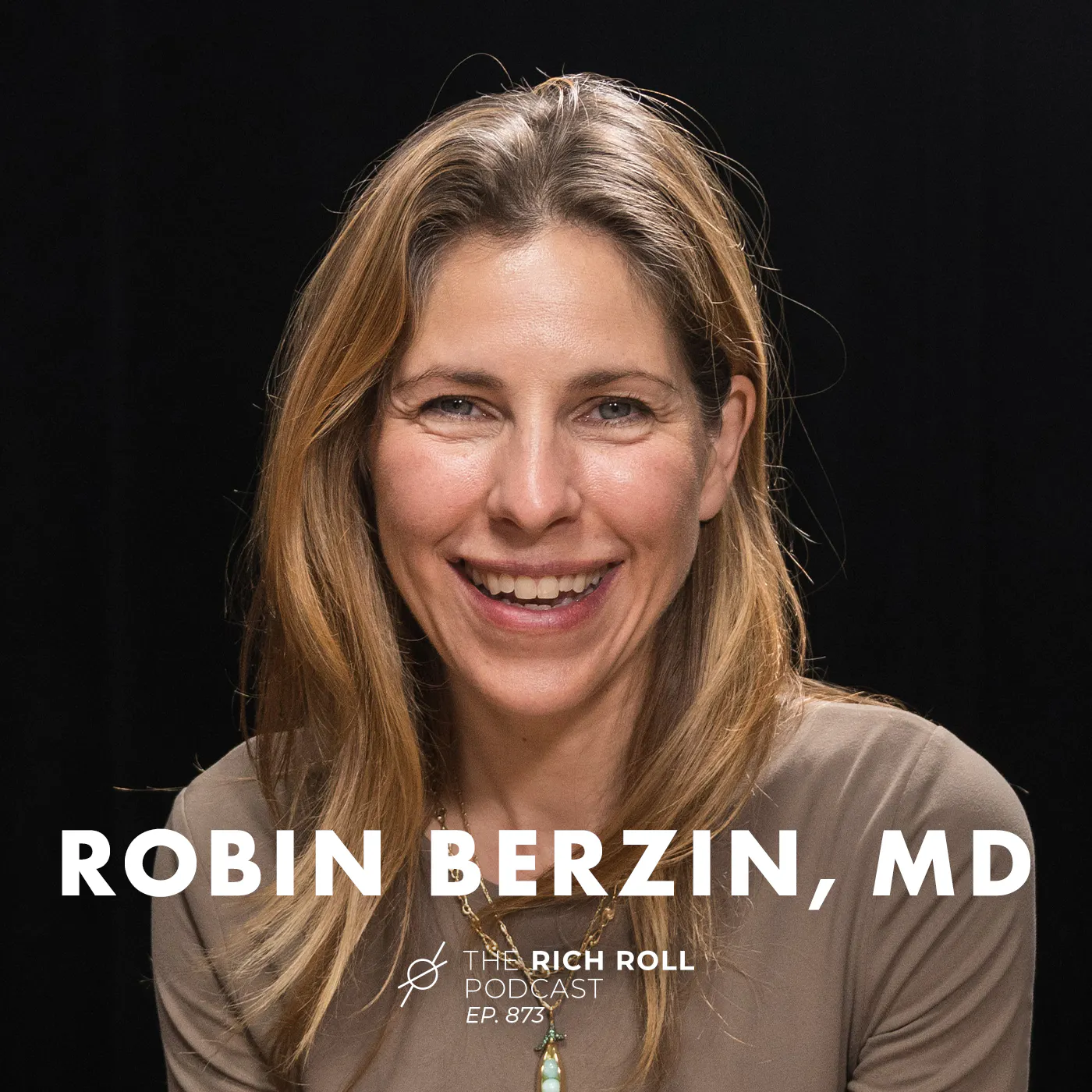
The Rich Roll Podcast
Root Cause Health: Robin Berzin, MD On Functional Medicine, Longevity For Women, GLP-1s, Hormone Therapy, & Utilizing Lifestyle For Long-Term Well-Being
02:16:50
Loading summary
Transcript209 lines
- [00:01]
Rich Roll
This podcast is in partnership with Airbnb. The holidays. They're here, they're great. But, you know, also kind of a lot of pressure, particularly on the wallet. We're all feeling that pinch. But here's a thought. While you're away celebrating what's going on with that empty home of yours, has it occurred to you that this very thing, sitting right here doing nothing, could actually be earning you some extra holiday cash? Have you thought about that? Well, Airbnb makes it super easy to host your home while you're somewhere else enjoying a festive getaway. When you think about it, it's actually quite clever because you already actually have everything you need to offset those holiday expenses. It's not just for long trips. Even a few days away for New Year's could be this amazing opportunity. Let's say you're not going out of town. Well, how about that empty guest room you're using for storage right now? I mean, what's preventing you from turning that into a sort of cozy winter retreat for travelers? And what's great about this is just how flexible it all is. You're in control. You decide when to host, and you fit it around your holiday plans. It's not about becoming some kind of full time innkeeper. It's about making your space work for you during this busy season and enjoying a little passive income along the way. The point is this. Your home just might be worth more than you think. So if you're curious, find out howmuch@airbnb.com host this episode is. Brought to you by Whoop. We all have a bunch of different reasons for needing to perform at our best. Maybe you're training for a triathlon. Or maybe you're just balancing parenthood with a busy schedule. Or maybe you're just ready to bring your health and fitness game to the next level. So whatever your reason, Whoop is what you need. It's a 24.7wearable that truly can help you get where you want to go. With professional grade technology developed by leading performance experts, Whoop measures heart rate with 99.7% accuracy and provides near perfect sleep tracking. In fact, get this. 100% of members with a goal to improve their sleep agree that Whoop is helping them reach that goal 100%. Now look, I have a crazy schedule. Sometimes I'm working super late into the night. Other times I'm up at 4am and whoop. And all that data it gives me makes it pretty clear the toil this schedule takes. And that in turn helps me Stay in check helps me dial it back and really see in real time how small changes can have a real impact on recovery, energy and so much more. It's just a really great tool. So try WHOOP for one month free and get ready to unlock the best version of yourself. Head to whoop.com that's W-O-O-P.com to get started.
- [02:50]
Dr. Robin Berzin
I realized as I looked around me that we were trying to use pharmaceutical drugs to cure disease, but they weren't curing the disease, they were managing the symptoms. Patients were frustrated, kind of falling through the cracks. People living with chronic diseases for years, if not decades, and no one was getting better.
- [03:06]
Rich Roll
Unfortunately, much of healthcare has become sick care, but the cure for this is a system better equipped to promote well being and prevent illness in the first place. The prescription for this cure is functional medicine. The problem, however, is that functional medicine is just far too expensive and inaccessible to help those who need it the most. Dr. Robin Berzin decided this problem was worth solving. And then she spent a decade innovating a brand new approach to affordably provide what she calls root cause medicine to patients at scale.
- [03:41]
Dr. Robin Berzin
First of all, I want everyone to think about their relationship to medical care differently. It's all about treating the root cause, and a lot of people don't feel well, are stuck being sick, and we've been unwilling to invest in the solutions that work a lot but take a little bit longer.
- [03:57]
Rich Roll
Like functional medicine, Parsley Health addresses the rising tide of chronic disease by leveraging advanced diagnostics with lifestyle changes to address the cause of health issues. So today we discuss all the what's hows and whys of root cause medicine. We talk about how she was solving the accessibility problem and the important role that technology is now playing in improving integrative care. Robyn also shares her longevity protocol for women, and we cover gut and metabolic health, responsible supplementation, Ozempic, and more.
- [04:32]
Dr. Robin Berzin
This is the future. Getting people their data, helping them understand their own bodies. It's the only way forward. Functional medicine allows us to track something that I think is amazing that our healthcare system doesn't actually care about that much, which is like.
- [04:52]
Rich Roll
It'S good to see you, it's been many years. We were just chatting before we sat down that we owe a great deal of gratitude to Jason and Colleen Walker, the founders of MindBody Green, for putting on this annual event called Revitalize every year that brought together all of these interesting people and minds in the wellness space. And that's where we first met. And I owe them so much for my own career and just the support that they gave to the community at that very, like, special moment in time.
- [05:27]
Dr. Robin Berzin
I feel the same way. I feel like I owe them a debt of gratitude, too. I just got to see Colleen in Miami, like I was saying a couple months ago, and they're still at it. And what they created in that early years of the wellness movement, when there wasn't really a movement yet and there wasn't a community around it, and they brought everybody together and they celebrated all the content creators and they celebrated all the weird doctors like me who wanted to talk about something outside of the conventional medical system. And we know each other from that. So here we are.
- [05:58]
Rich Roll
And you are a weird doctor indeed. So fly your freak flag. You're here today. It's great. And I really celebrate what you've built. And, you know, one of the main reasons I wanted to have you here today is because functional medicine has become this thing that I think a lot of people are increasingly more and more aware of. It's certainly a recurring theme or subject on this show, and I've hosted many of the functional medicine superstar doctors over the years, which is great, but the common sort of refrain or response that I get from the audience is like, that was amazing, but I can't afford to go see that person, or the only appointment I can get is months from now, or, that doctor's not taking on any more patients, or, I don't live in New York and I don't live in la, and there are no doctors or primary care practices like this where I live. So, like, what am I supposed to do? And what's so amazing and unique about you is that you've built something really powerful that addresses this very thing at scale that makes functional medicine not only affordable, but accessible. And I think that's a real gift, and I want to celebrate it and I want to learn all about it.
- [07:08]
Dr. Robin Berzin
Thank you. Well, I'm excited to talk about it today.
- [07:11]
Rich Roll
Where to begin? Well, I think, first of all, I don't even know if it needs to be said, but just to kind of underscore kind of where we're at in terms of health in the developed Western world. I mean, we're seeing chronic, chronic health ailments skyrocketing that are debilitating millions of people. And, you know, you and I both know you much better than me, that these are diseases that are. That are, by and large, the consequence of lifestyle decisions, that are preventable, that don't necessarily need to be just sort of managed with Pharma, but can actually be reversed with proper care. And this is sort of the mission you're on. So maybe we just start with explaining what it is that you do, how it's different from the typical conventional primary care physician that most of us go to see, and how it's different from the typical functional medicine clinics that we know about.
- [08:04]
Dr. Robin Berzin
So I'm a conventionally trained doctor, and my big aha was when I was training at Columbia and then subsequently Mount Sinai Hospital in New York. And I realized as I looked around me that we were trying to use pharmaceutical drugs to cure disease, but they weren't curing the disease, they were managing the symptoms. And for a lot of people, it was like a band aid, and patients were frustrated, facing long wait times kind of falling through the cracks. People living with chronic diseases for years, if not decades, and no one was getting better, and our system was completely overwhelmed. Like, this clearly wasn't working for anyone. And meanwhile, we're talking over and over again about how healthcare costs are skyrocketing and it's hitting all of us in our premiums. And it felt like I was on this broken pattern that I couldn't get out of. And I looked around and I was lucky enough to discover functional medicine and learn about functional medicine. And for me, it was this huge light bulb because I realized that there was a way to help people get healthy, stay healthy, reverse chronic disease, prevent disease, optimize health. But it would take looking at disease and the body in a completely different way from the perspective of how do we treat the root cause? And so that's really what functional medicine is. It's how do you treat the root cause instead of band aiding the symptom. And I fell in love with that once I saw that. And once I had the privilege of, you know, training with the Institute for Functional Medicine, working with some of the top doctors, like people who've been on the show, like Dr. Hyman and Dr. Morrison in New York and others. And seeing what I saw, it's like you can't see unsee what you've seen. And it was clear to me that we needed to bring this medicine to a lot more people, because the system that we had created wasn't helping us get well, it was just helping us stay alive.
- [09:51]
Rich Roll
And the real barrier to making this accessible is figuring out a scalable business model. Right? Because what we know when we think of these clinics is very bespoke. Posh offices that don't take insurance are incredibly expensive, and they're fantastic if you can afford it. How do you scale something like that and make it accessible? The only way to do that is by creating a brand new model altogether and then ultimately figuring out how to onboard insurance carriers 100% right.
- [10:22]
Dr. Robin Berzin
And so I started Parsley Health with that idea in mind. I also had such a great experience learning with and training with and seeing the practices of some of the greatest functional medicine doctors in the space. But I looked around and I saw really expensive clinics, crazy wait times, people spending 5, 6, $10,000 in one visit or in a couple visits, no real operational model that would scale this past like a doctor or two, no evidence base and data. I didn't see a lot of streamlining of the protocols people were using. Dr. So and so had his thing and Dr. So and so had her thing and coming out of places like Columbia and Mount Sinai, that really bothered me. And it also made me realize that we needed to change that if we were going to scale functional medicine. But it can't be Dr. So and so's this and Dr. So and so's that. You need evidence based protocols that work repeatedly. You need data that proves that the medicine works. And, and I also saw that you needed technology, you need software to make this more accessible, put it online. And I knew exactly what you said, that if we didn't get it out of the cash pay world and into insurance, it would never reach the people who needed it most. Because if you look at the data, 30% of Americans have not just one but two chronic conditions. These are things like diabetes and heart disease we talk about a lot. There are also things like autoimmune, GI depression, anxiety hormone issues like infertility, menopause. These things all travel together. They are all highly responsive to root cause medicine, to lifestyle medicine, to treating the root cause through nutrition and lifestyle change along with drugs. But that kind of medicine isn't accessible to the people who need it the most. And so my whole mission with Parsley, I said all right, let's start it out, let's figure out the operations, build a software platform around it, build in some telehealth, make it accessible and make it more affordable on the cash pay side. And we did that at the beginning, but let's also track our outcomes data, let's build some data tools, let's document our protocols and let's make sure we're hiring board certified physicians and other clinicians. We actually created the first ever clinical fellowship to train doctors in functional root cause medicine. So we had to be able to hire PCPs and family medicine, internal medicine docs, and train them in this medicine and let's track outcomes and let's publish some of them to see if we can get to insurance. And all these years later, I've been doing this for eight years, which actually isn't that long, I know, but it feels like an eternity. But we're now in network for almost 15 million covered people in New York and California and we're at this inflection point. I was just in a call the other day with folks from one of the biggest health insurance companies in the United States. And I think you'll love this because this is a name we've all heard of, but I won't say which one. And they said to me, robin, we're interested in doing a deal with you, we're interested in bringing you to some of our employers. But there's a bit of a holy war. There were it's going on at the highest levels in this health insurance company around functional medicine, because there's people here who've had their lives transformed by it. There's people here that say consumers want this, employers want this, like this is real. And there's people here that are very skeptical and very resistant to a different medical model, a different way of treating disease. And so there's been more debate about this than like any other service that we've considered bringing on. But to me, I view that as this most amazing thing because we've gone from a place where functional medicine was niche and fringe and for what I call the really rich, the really green and the really desperate. And now we're talking to the biggest insurance companies in the country and they're talking about this has to happen. How do we figure this out?
- [14:26]
Rich Roll
It's interesting that these behemoth insurance companies, I mean, I'm of two minds on this. On the one hand, that's amazing, the level of receptivity that there are cohorts of people in these large companies who are like, listen, we need to do this and it changed my life and this is the future. While also, of course, you're going to have the old guard who just like, this is the way we do it, why would we ever change? But when you look at the pure economics, and perhaps this is where the whole data thing comes in, it seems like a no brainer, like the most obvious thing that an insurer would want to get on board with this because if they really analyze how much money they're paying out to manage, you know, these chronic health ailments that could be prevented by this different type of, you know, medicine altogether. The savings are ginormous for them. So the economic incentive is there. I'm curious around, like why it's so difficult for them to.
- [15:26]
Dr. Robin Berzin
Because you have to prove it. You have to prove it. And Parsley is the first functional medicine organization that's achieved any meaningful scale that's tracked outcomes. We have independent actuarial analysis. Actuaries are like the people who figure out do things in insurance. Save money or not is the best way I can explain it. But we have independent analysis showing that we reduce cost of care by 23% in these chronic high cost patients. Patients with autoimmune disease, GI disease, you may say 23%. I would think it would be thousands of percent. For comparison, things in health care today that save like 4 or 5% are considered the biggest wins you could ever imagine. So 23% is astronomical and that's in year one. Part of the resistance is also because our system is set up such that the insurance companies lose all of their members about every 18 to 24 months until you're on Medicare. So if you're on commercial insurance, as opposed to Medicare or Medicaid, where the government has you ostensibly for many years, the commercial insurers only have you for 18 to 24 months. And so they're often, they're looking for ROI, they're looking for cost impact in that first 12 months. And that's really hard to show. When we at Parsley, when we start working with an autoimmune patient, thinking of someone with a woman in her mid-40s, she's got plaque psoriasis, which can be a debilitating autoimmune disease. It's these plaques and rashes all over your skin and your scalp. She's also got joint pain because plaque psoriasis also turns into psoriatic arthritis. So it's another auto related autoimmune process. It attacks the joints and the skin. She's also got GI issues. And because of all of this, she's anxious and depressed. This person's on drugs that alone cost $30,000 a year to her employer or health insurance. On top of that, she's spending maybe like 20 grand a year on her own money, not only on her insurance premiums, but on wellness treatments, on other doctors, on stuff that isn't covered. And she's sick of being sick. And in this patient's case, through functional medicine, we were able to identify some of the root cause drivers of her disease. She's allergic to some of the food she's eating like gluten and dairy. She's got an underlying GI infection, she's got yeast overgrowth and other issues that no one's ever diagnosed or treated. And through working with her, helping her bring her inflammation down, changing her foods, treating her with supplements, also getting her on some drugs that are the $30,000 a year drugs, she gets completely better, saving herself tens of thousands of dollars, saving her insurance company or her employer, as the case may be tens of thousands of dollars. And what's crazy is that we're the first organization to prove that, to show that that type of cost savings works. But when we work with a patient like that, it may take us 12 to 18 months, sometimes two years to get her to that outcome. And because our system is set up in a certain way, there isn't the patience to wait that long, which is where I think we've over indexed on pharmaceutical drugs and interventions that work a little bit very quickly. And we've been unwilling to invest in the solutions that work a lot but take a little bit longer. Like functional medicine, we're results driven.
- [18:49]
Rich Roll
We want to see what's happening right away. We're not too big on like, patience and the long road, you know, sustained healing. The whole system really isn't like, you know, created to, you know, emphasize that.
- [19:04]
Dr. Robin Berzin
But I think all of us as individuals, I mean, your story is this. For me, it's the same. We're on this journey of life and we want to feel good and we want to look good and we want to reach our highest potential and we don't want to be sick. And so for us, yes, maybe we'll switch jobs in 18 months and we'll be on, this year we're on United, and next year we're on Aetna and the year after that we're on Cigna or whatever. But for us, this is our journey. And I think that's where you've seen individuals and consumers pushing the big insurance companies and the health systems and demanding this and saying, we don't want to be sick anymore and we don't want Band aids and we don't want a quick fix because, yeah, Maybe we got 5% better for two months and then we got worse again with your intervention. But I want to get actually better. And I think that push is what will change the system.
- [19:54]
Rich Roll
Ultimately, the best entrepreneurs are the ones who identify big problems and basically devote their lives to solving them. This is certainly a big problem. And I have to imagine that at the starting line, knowing some of these functional Medicine doctors who are out there spending hours with patients and, you know, charging them, as you mentioned earlier, upwards of, you know, just thousands and thousands of dollars, telling you like, well, this is the only way you can create a business out of this. It's the only way that it works. You're not going to be able to scale it. So how did you begin to figure out like that there is a solution and develop a business model that would make it affordable while also allowing you the time and the space and the patience and everything that goes into properly treating the patients the way that they deserve to be treated in the way that you wanted to treat them.
- [20:48]
Dr. Robin Berzin
You know, I was fortunate that in addition to my medical training, I'd had one startup before Parsley. I co founded a digital health company that was like an app to help doctors and care teams and hospitals better communicate with each other. When I was in med school, landlines, pagers and fax machines were how care teams in hospitals, like doctors in hospitals, would communicate. Sadly, it's somewhat still this way, but my co founder and I in med school developed this app that would replace that. It was essentially like WhatsApp for doctors before WhatsApp existed, because we would sit there in the hospital and we would page someone and then we would sit by a phone and wait for them to call us back. And that's how you communicated and think about the slowness of that level of communication. Right. And so I had a little bit of startup experience. We built that company and he ended up running it for a long time, raised money for it. And I also did some consulting and health tech for a little while. And so I sort of started to see some patterns of what was happening in healthcare from this movement of what they call consumerization of health. Like, okay, we have to make these services more friendly and usable for people. This idea of value based care, okay, we want to start paying for outcomes not just for services rendered. Right. Because that just leads to more and more and more services rendered. And through those experiences, I sort of put together a financial model for what I thought could work that would enable us to afford to pay doctors and health coaches, but would allow us to deliver the medicine in a more longitudinal and streamlined way so that we could bring the cost down. And I didn't really know what I was doing, to be honest with you, because I was a doctor and no one teaches you any sort of business skills whatsoever when you are training in medicine. But I built a spreadsheet of what I thought could work. And I asked all the smart People I knew who were good at business and did no finance to weigh in on it. And then I just tried it. So Parsley initially was me, two part time health coaches, like an office manager in a wework. And I had some connections to the powers of wework at the time, the now infamous wework, and I had some connections to the powers that be. And they had said no to one medical and they had said no to every medical service because they didn't want rooms full of sick people in their offices. That's not what they were designed to do. But long story short, I convinced them to literally, they just blacked out the line in the contract that said no medical use. And they let us open a clinic in the WeWork on 23rd Street. And so I had no money and we're completely bootstrapped. But I just literally got 40 or 50 people to sign up in advance and pay for their year with us in advance. And I said to the health coaches and the office manager, I was like, listen, we have three months of Runway and we may completely run out of money and you may not have a job very soon. But if you're willing to sign up for this adventure with me, and I didn't take a salary for a while, let's sort of pilot this model and one, see if anybody likes it. See if anybody will sign up and start to work out what it would mean to service people through a combination of online care and in person care, a combination of a membership model that includes a certain number of services. Let's see what people actually use. And so my answer to you is, I just tried it. And as I did that and started to pressure test some of my assumptions, we started to learn, okay, one, there's a real business here, and two, here's some assumptions that were right, here's some that were wrong, and then shift the model over time, as well as invest in things like operations and tech that would make it more efficient as we grew, and then took on some venture capital from there. But for me, it was an imperative. I sort of looked around and I said, I'm not interested in being a doctor to super wealthy people. The only people can afford this. I'm not interested in a practice that costs this crazy amount of money. I'm not interested either in something that's Robin Burzen's medical practice. I'm only interested in doing this if it's something that can scale and ultimately reach a lot of people and be affordable and accessible. And so that was like the whole premise from the beginning.
- [25:14]
Rich Roll
Well, it was smart to starting a WeWork and approach it like a pilot program.
- [25:19]
Dr. Robin Berzin
Smart or scrappy is some way.
- [25:21]
Rich Roll
But rather than. I guess what I'm saying is rather than like, here's my business plan and before I even start, I'm going to go out and try to raise a ton of money before I've even gotten my feet wet to see if this is going to work at all.
- [25:34]
Dr. Robin Berzin
Well, I didn't also have that luxury. Like, I looked around me and I was a doctor, a woman. I didn't have any experience raising venture capital for my first company. My co founder had done all of that. So I hadn't had the interaction of the fundraising side. So, I mean, I literally didn't know what I was doing. When we raised our series A in 2018, I, like, didn't have a head of finance, and I could not believe that a VC firm invested $10 million in this business. I was like, shocked and amazed. But here we are.
- [26:05]
Rich Roll
Yeah. So now you have 40,000 members, is that correct?
- [26:10]
Dr. Robin Berzin
We don't remember numbers, but we've got treated 40,000 members, certainly over time.
- [26:15]
Rich Roll
This is more than that. Okay.
- [26:17]
Dr. Robin Berzin
No, we've treated 40,000 members over time. And member numbers fluctuate over time.
- [26:23]
Rich Roll
And at the core, it's, you know, when you say members, it's a subscription model. Like, you pay a monthly fee and now you have these major carriers who cover that. Right. For a lot of people. But if insurance doesn't cover it, or you have the option to just pay this monthly fee and be a member and that affords you a certain number of visits and a certain level of, you know, whatever diagnostic things. And then I'm sure beyond that, there are things that aren't covered. That's an amazing way to get people kind of into the system and acclimated with what you do. And then the whole data piece, like, I'm interested in what the data is telling you in terms of, like, the efficacy of your approach. Like just, you know, from a macro perspective.
- [27:08]
Dr. Robin Berzin
So we've run this analysis with this outside firm that looks at healthcare data essentially to understand what's happening in our patient population over time and what's cool. I learned this the other day, actually. I was talking to one of the big physicians who's a leader in the functional medicine movement, someone who's been a great mentor to me, and he knows the space super well. And he's like, you know, Robin Parsley has essentially the largest and only large longitudinal data set in functional medicine that exists. And We've looked at it a couple of times and you clean the data and you narrow things down. But we have a pretty large data set of patients who've been seeing, you know, for a couple of years at parsley, which is shockingly rare in medicine in general. So much of our medical care out there in general, primary care, specialty care, it's super episodic, right? You come in for this and then you don't come back. There's not this sense of like a journey. And so we have this data and we've looked at it, and what we've shown is that not only are we reducing the cost for this type of patient, but we've shown the following. One, our patient population is pretty sick. They have a lot going on. I think in the early days, people sort of perceived that maybe parsley was like, for the worried. Well, or for people that wanted to just noodle on their health but didn't really have anything going on. Not the case.
- [28:24]
Rich Roll
80% of the biohacking erewhon customer.
- [28:28]
Dr. Robin Berzin
Yes. And we have those customers. And we love you if you're listening. We love you come all day. We love helping you do a keto diet, we love helping you noodle on your labs. But the majority of people who sign up for parsley are actually people with chronic conditions. So 80% have two or more chronic conditions, 60% have three or four or more. And so these are people who are like, my patient the other day, she's 50 years old. I'm prescribing hormone replacement therapy for menopause symptoms. I'm helping her switch, get off of her antidepressant. In her case, I'm treating the fact that she has high blood pressure, high cholesterol and weight gain. Of course, now she wants to go on to GLP1, so we're talking about that. I'm managing like seven things in one visit. And that's who our population is. And by the way, this woman is high performing in her career. You'd see her walking down the street, you wouldn't think she was sick. And I think that's a lot of America. A lot of America is like, I'm not sick, I don't have a disease, I'm fine. But I have weight gain and high blood pressure and high cholesterol. And I'm depressed and I'm going through hormonal changes. And I like that is how we think, which I find so interesting. And so this analysis showed that Parsley's patients are, by and large, people who've got Multiple things going on, multiple conditions and symptoms. That parsley is able to reduce cost because we reduce the chronic prescription drug burden that they're on. So the number of meds that they're on by 65% and that we significantly reduce the number of specialists that they see. So if you think about it, somebody who's got menopausal symptoms and weight gain and depression and high blood sugar and high cholesterol, that person could have anywhere from like three to five specialists on top of their pcp, none of whom are talking to each other and all of whom are sort of intervening in their one area of domain that's a massive amount of time. Crazy lack of coordination and costs a lot for her, it costs a lot for the system, it costs a lot for everyone. And so the data shows that we reduce specialist utilization in this population by 77% over a two year period, which is amazing. And that 80% of our members significantly improve or resolve their symptoms in their first year. So that one's probably the one I like the best because we're helping people feel better. And we built the first ever data tool to track symptom severity in a chronic population. We've published it, it's on PubMed, we've done lots of papers on it. And it allows us to track something that I think is amazing that our healthcare system doesn't actually care about that much, which is like, how do people feel?
- [31:10]
Rich Roll
How do people feel?
- [31:12]
Dr. Robin Berzin
How do people feel?
- [31:12]
Rich Roll
How do you quantify that in a data set?
- [31:16]
Dr. Robin Berzin
You quantify it by asking people a series of questions that have been designed in a way. FDA has guidelines around how you build something called a PROM patient reported outcomes measurements. And we followed those guidelines to build this questionnaire. And it looks at nine body domains, GI symptoms, joint pain and musculoskeletal symptoms, mood symptoms like anxiety and depression, hormonal stuff. And it looks at nine body domains. And so when you answer these questions multiple times, it will trend how people are feeling across their body in a way that's actually never been done before. The closest thing that exists is a similar type of tool from the NIH called promis, which I find to be somewhat useless. Like, as a doctor, it doesn't tell me a lot. It's very vague and general about what's going on with this patient. And most patients say it feels a little bit irrelevant to their lives. But they have validated this PROMIS questionnaire out in the literature many, many times, meaning they've shown that what people say on this actually corresponds to how healthy or sick they are. And then we were able to take our tool, which is called the Parsley Symptom Index. I'm such a nerd right now, people. I'm sorry. And we were able to validate that against promise. So we were able to show that it also is a validated tool that can correspond to how sick or well people are. And it gives us a way of understanding sometimes disease that's getting worse before it's declared itself in other ways. It gives us a way to sort of engage people. And it also gives people such an amazing mirror of what's actually going on with them. Most of us live in our heads and we are not paying a lot of attention to, like, how our gut feels or how our hormones are doing. People are really good at sort of grinning and bearing it through symptoms for a long time until something falls off the wagon, gets so bad that they go to the doctor. And we found that this tool allows people to understand their own health and have a mirror back to it that they can track over time in this really interesting way.
- [33:23]
Rich Roll
I'm sure that that of course deepens their engagement with their own relationship with their health. Right. Like, once they can see it and understand, oh, here's what's going on and here's why these things are happening. With that understanding, they then feel like they have more agency and are more inclined to, you know, make the better decisions.
- [33:43]
Dr. Robin Berzin
Absolutely. It also is very gratifying for me as a doctor because we'll meet with someone at the beginning of parsley and their score will be like 100. And they'll have all these things going on. And six months later they're like, you know what? I really want to lose the last ten pounds and I cannot get this weight off. And I'll be like, so the migraines and the IBS and the skin rash that you had six months ago that you've now completely forgot about. Let's just take a moment to celebrate that all of those things are gone.
- [34:11]
Rich Roll
You know, we so quickly forget.
- [34:14]
Dr. Robin Berzin
We so quickly forget.
- [34:27]
Rich Roll
We're brought to you today by on being a gearhead. I'm all about testing the latest sports tech. But you know what often gets overlooked? Apparel. Apparel is crucial to performance. And that's why I was blown away by the folks at On Swiss Labs. Their cutting edge approach from sustainability to precision testing for performance enhancement is next level. It is truly Swiss innovation at its best. Visit on.comrichroll that's on.com richroll I own a bunch of spectacles And I made the grave error the other day of donning a normal non Roka pair on my indoor trainer when I was riding my bike indoors. And I got to tell you, it was a disaster. Every three to five seconds I had to take my hands off the handlebars and push my glasses back up my nose until I got so frustrated I just tossed them aside. This is the dilemma of every active but optically impaired person I know. And as someone who is relied upon eyewear every single day since I was five years old, it is also the source of endless aggravation, thankfully now eradicated thanks to Roka, the stylish performance eyewear company founded by two former Stanford swimming teammates of mine who have gifted everyone like me and quite frankly the world with their fashionable line of super lightweight prescription glasses and sunglasses dresses with patented no slip nose and temple pads that are just impervious to sweat. And no matter what you do, remain locked on your mug, no matter how intense your workout, without the dork factor. These things go everywhere with me, from the trail to the dinner party. Put them on, feel the difference and wear without limits. Unlock 20% off your order with the code richroll@roca. That's R O K A dot com. So when someone comes into your office and they're suffering from a variety of symptoms, the first thing you have to do is figure out, all right, what's the root cause of all of these things? You have to untangle that knot and figure out exactly what's going on. And from a holistic perspective, how are all these things related or unrelated? Like what is the interplay? What is the relationship between physiology and psychology? You know, it's, I've heard you talk about this a lot. Like the lungs and the kidneys and the heart aren't sitting in separate jars. Like, you know, this is one ecosystem, right, that we have to treat and we have to understand that when we're going in. And then there's the process of trial and error of seeing what works and what doesn't, to figure out how you're going to, you know, chart this course for this person and then that person goes on the journey. And that journey is one of multiple years and is successful only when there is that level of engagement and the kind of follow up care and the accountability. And that's where like most of these practices are. People who aspire to this type of medicine and falls off a cliff because you have to have staff and resources and outreach and everything that goes into keeping that person engaged. And you know, with all of the follow ups to make sure that they're on that proper trajectory.
- [37:57]
Dr. Robin Berzin
Yeah. Which is really, really hard, I would imagine. It is really, really hard. And it doesn't work for everyone. What we found though, that I think sets this up for success at Parsley, maybe a little bit better than sort of the typical medical setting is that we one set that up from the beginning like, this is a journey. We set those expectations. You don't get fit like going on one bike ride. Right. I would imagine. I don't know. You tell me.
- [38:25]
Rich Roll
I try, I try every day.
- [38:27]
Dr. Robin Berzin
You're like, I did it once, I am now in peak performance. Right. It doesn't work like that. So you also don't get healthy going to the doctor once, or seeing a health coach once, or investing in your health one day. It has to be a journey. So we set up that expectation. The other thing I think though, that works for us and this is where this mix of wellness and medical at parsley is so interesting and in functional medicine in general, I think is so interesting, is that it's rare in the regular healthcare system for your doctor to prescribe you how to eat a certain food or not. And it's really rare for your doctor to prescribe you a supplement and a sleep protocol and a meditation protocol. And it's very different when you sort of get this generalized wellness advice. Yeah, I should do this. Everyone knows, right? I should eat less sugar, I should move more. All of these things. We know these things, or a lot of us are starting to know these things. But it's really hard to do when that comes from your doctor in the form of a prescription, when it's tagged to, you have this disease or this symptom and this is going to make it better. And when we tag it to your results. And I think that's one of the most powerful things about parsley is the diagnostic testing. We test you and we show your results and we explain them to you. The motivation level's a little bit different because it stops being about, I should do this because, you know, the wellness powers that be tell me to, or I should do this because, you know, I know I'm being bad. Those kinds of shoulds are what sort of drive people to fall off that cliff. But when it's, this is about me feeling my best. This is about me not having this disease. This is about me not being in the hospital again. This is about me not having another surgery or getting off this drug. The motivation level is different. And that I think carries a Lot of weight. And then our program includes health coaches and nurses and software and the combination thereof. We're always like, what level of harassment do you want from us? Because there's gonna have to be a lot. Some people are super self motivated and some people need a lot of support to make changes. And that's okay. Like, we're all different and for us it's about figuring out, okay, well, what do you need to make this a reality in your life?
- [40:42]
Rich Roll
Yeah, we all ultimately sort of fall prey to the, to the whatever system we're in. Right. So if the system is set up to help us win and that becomes the default, then you're headed in the right direction. But within that, there's going to be a wide variety of people in terms of their relative motivation. Right. So with this data set and all these patients that you've seen, what do you think is the biggest differentiator between the person who's like, I got this and just runs with it and like, does it it versus the person who is really challenged to make these changes and struggles. And struggles and struggles.
- [41:20]
Dr. Robin Berzin
I think it's two things. One, I love the data that says, and this is not parsley data, but it says that you are sort of the product of the people you hang out with the most. So regardless of what we do at Parsley Aid, people who have friends and family and surround themselves with other people who are motivated to take care of their health and motivated by wellness in some way, eating healthy or moving or exercising, people who seek those other folks out and in their lives, in their communities, in their homes, that is a huge predictor for people of whether or not they can sort of stay with it. Because if you're heavily influenced by the people around you who are like, screw it, like, hand me a cigarette and a soft drink, it makes it much harder to stick with anything. And then the other piece of it is actually psychology. And I recently did a talk with Gretchen Rubin from the Happier Podcast, and she has this book out called the Four Tendencies. Have you read this or seen this?
- [42:18]
Rich Roll
No, no, I've had Gretchen on, though it was a long time ago. I haven't read the new book.
- [42:22]
Dr. Robin Berzin
She's awesome. So the Four Tendencies, it's one of these personality questionnaires that you've seen in probably lots of different forms over the years in different ways. But what we see is that it really holds true when it comes to your health. There are people who are very self motivated by sort of intellectual information. Right. You tell them what the right thing to do is. And they're the sort of person that then wants to do that thing. Those are the people at Parsley who are like, don't want to talk to a health coach. If you hang me by my fingernails, like, I do not care. Just tell me what to do and I'll go do it. So you have that group, then you have people who are very motivated by someone else sort of telling them what to do. So whether it's a doctor or a health coach or their mom or their boss, they really need that external motivation. And for those folks, we really see them engage in some of the community work we do with our patient population. The health coaching, that human relationship is really motivating to them to make changes or do something. And this is not exactly from Gretchen's. You know, Gretchen, if you're listening to this, I'm butchering the four tendencies. I'm sorry, but sort of my observation of how that plays out in our patient population. There's another group of people, I think Gretchen calls them the rebel. But they are the sort of personality where they really don't like being told what to do and they don't like to do anything that they have to. But if they can be convinced that it's their idea and that they want to do it because it's going to make them better or get them where they want to go. Right. That can be a really big motivator. And so in our health coaching and in our interactions with our doctors, this is why, by the way, I'm always skeptical of these health interventions today that are just like a coach in an app. It's like, we're going to use an AI and we're going to tell you what to do. That works for the type of person for whom information is all they need. But that person who's purely motivated by information is probably 20%.
- [44:28]
Rich Roll
They're already there anyway, or they didn't.
- [44:30]
Dr. Robin Berzin
Have the information, but now that they do, they're like, oh, my God, that's my lab result. You mean my apob is way off the charts and my blood sugar's up and I have a thyroid disease. I had no idea. Only 10% of Americans get preventive and proactive testing. We are wildly under testing and under diagnosing in our country, waiting until the wheels fall off the wagon, and then we're running blood tests. And that is absolutely wrong from my perspective. And so when you give that type of personality that information of their data or a diagnosis or a protocol. Did you know that no longer eating gluten it's not because gluten is good or bad. It's because it's creating a massive inflammatory response in your body. And you're going to feel better when you stop eating it. When you help them with that information, they go do it because now they have it. And there's a lot of people that don't have that information. I see people every day who are highly educated, former escaped lawyers like yourself, who you would think know this, right, in New York or everywhere across the country and don't. And so I don't think it's a matter of education. I think mostly we do a terrible, terrible job of educating anyone in this country about how to keep their body healthy. It's just health education and awareness is really low. But that type of person, you do give them that information, they'll go do it. You give the same information to a group of other people and they need that external motivation or that this was my idea, type of feeling in order to act on it. And it's much more about psychography than it is about demography.
- [46:08]
Rich Roll
So you have to psychologize every patient to figure out how they're properly motivated before you can provide them with effectiveness.
- [46:19]
Dr. Robin Berzin
We do our best. We do our best.
- [46:21]
Rich Roll
I know that you have like an interesting intake form. Right. Every time you go to the doc, you fill out that thing. It's the ticking of all the boxes. It takes forever and it's all the same stuff. But you have sort of upended that.
- [46:33]
Dr. Robin Berzin
Yeah, we've built this online intake that goes much deeper and looks at a whole bunch of things. We do what we call the root cause medicine assessment. And that assessment essentially has three parts. It's this really in depth online intake. Before you come in, it's an hour long doctor's visit where you're deep diving and then it's testing. And those are essentially the three data sets that we use to figure out, at least to start what is driving your condition and what's going to be the most effective intervention that we can start with. And on that intake, we're asking questions that probably your regular doctor hasn't asked you, like what you're eating, how you manage stress. I always remind people that, you know, wine and Ambien will lead to a very different health outcome than yoga and gardening. Like, we as your doctor, need to know how you're managing your stress. A lot of people are using very destructive methods, very physically destructive methods, sometimes emotionally destructive methods, to manage the stress that we all experience. And so it's Fascinating to me that in our medical system, you go to your primary care doctor. None of that is investigate it on the get go. And so we look at those things. We also look at your childhood, and we go back in time in a big way. A lot of our medical system today is sort of. I call it, you know, that game at the fair, like whack a mole, where you're like, whacking the thing. I really deeply enjoy this game, but I feel like healthcare sometimes is like that. It's go to the doctor, fix what's right in front of you, ignore the rest. And, you know, somebody with migraine headaches, we start with, well, did these migraines start, like yesterday, or did they start 10 years ago? And if it was yesterday, what was happening yesterday? If it was 10 years ago, what was happening 10 years ago? Because oftentimes that is really the clue to figure out, well, what's driving this thing in the first place? And that also that look back in time and we go all the way back to birth and childhood. And it could be traumas. It could have been diseases, it could have been surgeries. It could have been. We see this all the time. People go through a period where they're on a ton of antibiotics for sinus infections or acne. Then X years later, they've got horrible GI issues because they've destroyed their microbiome. And they're like, why do I have ibs? The GI doctor is giving this patient pills to relieve gas and pills to relieve constipation and other pills to relieve diarrhea. And we're saying, well, not only what do you have? Okay, if you're irritable, bowel syndrome, but where did that come from? Okay, it came from these years of antibiotics that led up to it. Okay, that helps us say, all right, we're gonna run this test to see if an imbalance in your microbiome. And then when we get the results, we're gonna treat that imbalance so your IBS goes away. And it's that looking back in time, and we do that through this root cause medicine assessment process.
- [49:21]
Rich Roll
It's amazing that in 2024, like, you're the only one who's kind of figured out how to do this at scale. Maybe there's others. I don't know when it's so obvious that if you have an ailment that the first thing you want to do is figure out the cause of it, to go to the very root, to use your word, rather than just slap something on top of it. Like how did we get to this state in which that is the typical experience of anyone who interfaces with traditional healthcare.
- [49:54]
Dr. Robin Berzin
I think it's a lot of things that happened over a long period of time. But we have a healthcare system that is short term focused, it is highly reactive and episodic. And we are willing to spend $250,000 to take a vein out of your leg and tie it around your heart when you have heart disease. But we're not willing to spend $350 on a longer visit with a doctor when you're 40 to figure out that you're developing heart disease and to put you on a trajectory to not needing that surgery called a CABG later in life. Right. And it ultimately comes down to incentives and economics and just the way that the healthcare system is built. It's not because doctors are bad people or not well meaning or not smart. It's not because people aren't working really, really hard. They are. But the way that we pay for health care ultimately determines what happens in healthcare. And I feel like a lot at parsley. I feel like this all the time. We're this David facing the Goliath of the healthcare system. And I've sort of glossed over us getting in network with insurance. We work with some major employers, big names we've all heard of right now. We work with airlines, we work with hotel groups that are bringing parsley in for their employees. And this is what I set out to do. I set out to get here, to get it past the cash and into insurance and into employers. But what it has taken to do this is so much time and meaningful amounts of capital and just the willingness to go to 100 meetings with various executives at a health insurance company and watch as you try to get to the next meeting. And the person who's been championing you just left that insurance company, went to another one. You're trying to get this message through and it's really, really slow. Because our healthcare system I think by its nature is conservative. We want to do no harm and so we want to be safe. But as a result of that, we've ground our ability to innovate in the way we deliver patient care to an absolute halt.
- [52:20]
Rich Roll
But you've broken that paradigm. And as hard as it has been to get to this point, to have a thriving, successful enterprise that is growing at scale and now has buy in from all of these insurers and you're working with large corporations handling their a few of them.
- [52:39]
Dr. Robin Berzin
The goal is many more. The goal is many More apologies for.
- [52:43]
Rich Roll
Being out over my skis a little bit. The point I'm trying to make is that that is that you're not only now achieving that goal of being able to help a lot of people affordably, but you've created this, this thing that now the industry can look at and say, oh, this can work. Like it's an example of that exists for others to say, oh, well, now we know it can be done. Now other people can do it. Right? And I think, look, I think it's changing really fast. Maybe I'm just in my weird, you know, kind of of bubble, but certainly more and more young doctors are interested in going into this field. And it seems like medical education is recognizing that and there are programs now for those up and coming MDs. And at the same time, consumer interest in this is exploding. I mean, you know, with whoop and like all of the technology now that that is now available to consumers, from CGMS to sleep trackers and the like, like, people are very engaged metrics. Like, people are paying attention to their sleep and how much deep sleep and REM they're getting and what their HRV means and all. I mean, that didn't exist, you know, when you began this journey, right? So you can go get a DEXA scan. You could do, you can do all these things. And, you know, how does that, how does that, you know, kind of percolate through culture and, you know, create kind of this foundation of supply and demand for what you're delivering? I mean, I think I'm very optimistic about this. And the fact that you kind of broke the mold and have done this is going to open up the floodgates.
- [54:22]
Dr. Robin Berzin
I think so too. And I also think that I get asked all the time, how do you feel about these direct to consumer MRIs, and how do you feel about direct to consumer testing? And how do you feel about just this rash of data that's now become available to not everyone, Some of it's still pretty expensive, but a lot more people than it was a few years ago. And most medical folk that you talk to are like, this is bad. They don't like it, they don't like it. And I'm like, that is just you being territorial. This is the future. Getting people their data, getting people proactive diagnostic testing, helping them understand their own bodies. It's the only way forward. We cannot wait until you have time, the healthcare system has time for you to go to the doctor's office to learn anything about your body. We have a massive physician shortage Average wait time for primary care visits is over a month. Everyone's using urgent care as primary care, which is, by the way, everyone. Your primary care is not colds and flus, right? It's so much more than that, but we've sort of conflated the two. Sadly, in my view, we have months long wait times for all of these specialists. That cannot be the only way that we get people information and help them. So I'm super bullish. I did one of the direct to consumer MRIs and, and like a full body MRI? Yeah, a full body MRI. Like, you know, experience is super clunky and these things are still very expensive. I look forward to the day when every one of us once a year is standing up in a machine that's open that in 10 minutes is scanning your body and giving you this data. And it's just part of our preventive healthcare and the technology, the like physical hardware isn't there yet, but it will be. And that's going to be game changing for the empowerment that we all feel. The data set that you have right now through. And as much as I love these companies, Whoop, Ara, whatever, super limited, right? And CGMs. Super limited. But we're going to enter an era in the next 10 years, maybe 20, where that data set becomes much vaster and much more actionable than even things like knowing your steps in your blood.
- [56:33]
Rich Roll
Sugar are today actionable and accessible. I mean, they're going to continue to improve, improve and become more affordable and a better experience.
- [56:42]
Dr. Robin Berzin
I mean, when I went to get my mri, I said to the lady, the tech running in, I was like, listen, we have a very low probability of me finishing this, so I just want to set expectations for you.
- [56:51]
Rich Roll
If you're doing a full body MRI, how long are you in your mouth?
- [56:53]
Dr. Robin Berzin
It took 45, 50 minutes. And I'm claustrophobic. And man, I was like, in there.
- [56:59]
Rich Roll
That'S a long time.
- [57:00]
Dr. Robin Berzin
Literally every meditation tool that I've ever, ever learned, I'm like calling, I'm like, sandra, are you there? Can you talk to me? I did not enjoy that experience. For those people who can just get in that thing and hang out for 45 minutes, I am so not for.
- [57:18]
Rich Roll
Nothing, I got an MRI this past weekend on my lower back. I've had a chronic lower. I'll talk to you about that offline. And it was only 15 minutes. But yeah, I do a meditation where I'm like, okay. But I bring it up only because when it's done, and I also got X rays like you get these discs and then you have to wait a couple days for a written report. And I'm trying to get this information to an orthopedic doctor who's a friend of mine up at Stanford and I have to mail this stuff to him. I'm like, wait, you can't just upload it to the cloud and send it instantly and seamlessly. Even with hipaa there has to be ways to do that. I'm like, this MRI machine is such an incredible piece of technology and yet getting the information from one person to another is. We're back in 1982.
- [58:10]
Dr. Robin Berzin
Yeah, I mean don't get me started on HIPAA and protected health information. We've. Instead of making it illegal to judge you or charge you more or discriminate against you is the word I'm looking for based on your health information. We said all the health information has to be private. And that has created a massive slowdown in our ability to share information between providers and doctors, to get information from one system to another, to get people collaborating to get health data in patients own hands. It's created just insane legal waste in cottage industries around this. And when we think about the things, I spend part of my day with patients and figuring out how to help a woman deal with her hot flashes and her bone density loss. And then part of my day sort of like thinking about this crazy system that we're up against and pieces of it that are making it so hard to operate that we forget sometimes we don't have in really any other industry. And so you watch all these other industries just flying past us and it's like, why is healthcare like this? And some of it is regulatory and has to do with sort of how we've decided to solve certain problems in a way that it puts the burden on the system to spend trillions of dollars on protecting things like your scan instead of just emailing it to you and then having you be able to email it to your doctor.
- [59:51]
Rich Roll
I mean banking and E commerce figure these things out. Like if we can figure it out for how we spread our money around, we should be able to figure it out for just data about our personal house.
- [60:02]
Dr. Robin Berzin
I agree with you. Your next guest should be the someone who can solve that problem. I have however, have sided to solve this other problem and I will just leave that one to someone who can.
- [60:11]
Rich Roll
Back to all these consumer tools that we have. These are going to continue to improve and get refined. And I kind of understand some hesitation on behalf of the conventional medical establishment because I think There isn't enough information or education around how to interpret all of this data that suddenly we're being flooded with, it's just a waterfall of information about all these different metrics and we don't really have the context to understand what's important and what isn't. And people get really heated around CGMs for this reason. And I can kind of understand that. But. But it's solved with the education piece so that we can make right decisions about how to interpret the data. And they're just tools. And I think taken as a whole, all of these tools are getting people engaged with the preventive aspect of health. Like, oh, I realize when I eat too much, too late or don't eat enough, then my sleep isn't what it is. Just that alone, it's such a huge thing for the average person to have an awareness of. That didn't exist not that long ago.
- [61:16]
Dr. Robin Berzin
I had no idea that sushi is one of the highest blood sugar spiking meals that you can eat. But people learn that type of thing when they use these devices. I think also as these types of tools become more ubiquitous and everybody's using them, we start to learn how to interpret that data better. Right? The analysis of a lot of what we see. People bring us their MRI scans or their blood work from a company that they went directly to to get their blood work done. We get these results all the time. And the question is, now what do I do with this information? Not just is the result good or bad, but what do I do with it? And that's the piece that's missing. But I think the more that we have these tools and the more people use them and the more data sets are out there, the MRIs being an example, the bigger the data set we'll have to work with is right. If you're only using MRIs for one purpose, you don't then have this huge data set of just people going to get them. But now that we do, I think we're going to learn a lot from that and get smarter about interpreting them and giving people better information, more actionable information. And then at the end of the day, there's parsley or there's your other doctor and we're there to say this is what you do with this information. I had a patient do Gallery by Grail, which is one of these tests that looks at cancer DNA in your bloodstream. And I think that one is even further behind the MRIs in the sense that it's an amazing test and it's so interesting. And we do offer it at Parsley, but it is even less clear. The gap is even broader. And this isn't, by the way, a knock on the company that makes it. It's just the nature of the test itself that there's a pretty good gap between. Like, what do I do if there's a cancer DNA cell floating around in my body? Right? Because then you can end up on a witch hunt of sorts that could lead nowhere or could just be inactionable or could end up in sort of a level of ongoing surveillance that. That's unsustainable from a financial or time perspective.
- [63:14]
Rich Roll
And isn't that the same risk with, like, a DEXA scan or a full body mri? You're gonna find something.
- [63:20]
Dr. Robin Berzin
You have these risks. And at the same time, I say to my patients who come and ask me, you know, should I get one of these things? And I have a real conversation with the patient, I say, listen, are you the kind of person who can handle this information? Because we need to consider that before you go get that test. Like, I knew that I could handle whatever I found in an MRI like that, and I wanted to know. I found a thyroid nodule. It's small. It's below the size that we want a biopsy. I got a subsequent ultrasound. I'll get an ultrasound every year or two. I'll keep track of it. And if I need to biopsy it and see if it's cancer and so forth, if it grows at all, then I will. I. As a doctor, I'm incredibly privileged. I'm knowledgeable. I know how to sort of manage this information. I also know where to get advice on this information. But if you're the type of person who's gonna see that thyroid nodule or that lump or that bump and just not be able to deal, you have to know that before you decide to get one of these tests, because it will unlock. If you do find something, it will give you reassurance in a lot of areas, but it may unlock going down.
- [64:27]
Rich Roll
The rabbit hole on something else and just unreasonable anxiety.
- [64:30]
Dr. Robin Berzin
And unreasonable anxiety. I have another patient. She found lung cancer, and she found it early, and she had a partial lung resection. And she's so happy she found it. And she was someone who, you know, was pretty healthy walking around, wouldn't have ever had a reason to think she had lung cancer. Now, the question we then have, she's in her mid-50s, so the question is, like, well, how long she could have had this thing till today. She died, and it could have never done anything. But for her, knowing it was there and having it taken out single nodule made her feel really empowered and really good. And I can't say that that's a bad outcome. I can only say that that's a good outcome.
- [65:22]
Rich Roll
Holidays mean gift giving. You got to go out there, you got to find those cool, perfect gifts for all the the people you care about in your life. Your peers, your co workers, your family members. And everybody's thinking about what is that perfect gift? What is that cool, unique thing that I could give? Well, what's better than the gift of health? And this is where AG1 comes in my Go to nutritional supplement. I drink it every morning. AG1 has been a game changer. I've been doing this for years. It's just one of my non negotiables because it's packed with nutrients that just do so many things for me. They, they help me sustain my energy and overall just promote my whole body health with probiotics, with prebiotics and adaptogens. It also supports my immune system. All of these things help me stay on track, especially when I'm traveling without having to think about like what is my supplement stack? AG1 is your all in one. So this holiday season, try AG1 for yourself. Or you can gift it to someone special. It's the perfect time to focus on supporting your body body with an easy and surprisingly delicious daily health drink. Again, it's my Go to supplement. And that's why I've been partnering with AG1 for so long. And right now, every week of November, AG1 will be running a special Black Friday offer for a free gift with your first subscription. In addition to the welcome kit with five AG1 travel packs and a bottle of vitamin D3 plus K2. So make sure to check out Drink AG1 to see what gift you can get this week. That's drinkag1.com richroll to start your holiday season off on a healthier note while supplies last, you know what I learned from hosting this podcast for the past 12 years? I've learned that professional development isn't just about climbing the ladder. It's about understanding how we work and how we interact. That's why why I'm super excited to tell you about Work Life with the brilliant Adam Grant. An organizational psychologist and just one of my favorite thinkers. Adam brings together experts and leaders who share fascinating insights about improving work, from making meetings productive to building remarkable teams. Want to make your work life not just bearable, but actually meaningful? Listen to Work Life with Adam Grant wherever to get your podcasts. What are you seeing most typically or most frequently in the patients that are coming in? If you could be make generalizations.
- [67:50]
Dr. Robin Berzin
Yeah. At Parsley we see a lot of autoimmune disease. Autoimmune is deeply under recognized. It's under diagnosed, it takes five to seven years to get diagnosed. And it's things like psoriasis, rheumatoid arthritis, Hashimoto's thyroiditis, celiac disease and multiple sclerosis, eczema, the list goes on. And the body's on fire. That's how I put it. Some part of your body's on fire. Your immune system is confused, it's mistaken your body for non self and it's attacking part of you. And these diseases are very slow moving at times, but then they can suddenly speed up. Crohn's disease and ulcerative colitis, another GI example, they're really under diagnosed, they're really poorly recognized, they're massively on the rise in part we believe, because we've destroyed a lot of the microbes in our guts that are important for regulating our immune system. Because many of us live in these sort of highly, relatively speaking germ free environments and we're not exposed to dirt and infections that also teach our immune systems. Our immune systems are systematically in our culture losing tolerance. And tolerance is that ability to recognize self from non self. And 80% of these diseases are in women. And for reasons that are poorly understood. It's related to estrogen, but we're not exactly sure why. And you see a lot of autoimmune first time flares postpartum because women have baby and progesterone craters. And when that happens, that hormonal wave has a big impact on the immune system. Again, that body is an ecosystem concept. Another big time for first, autoimmune flare is menopause because again, hormones are shifting, immune system sort of goes through this transformation. And so we're seeing a lot of it. And a lot of people getting a visit with a rheumatologist in America is like, you know, trying to hit a bullseye with darts like get lucky. And it's really long wait times. There are very few of them. And the only solutions that they have are sort of wait until things get bad enough and then go on these drugs. And then the drug pathways escalate to these very exp IV or injectable drugs that are not fun to be on. And so we see a lot of it and we're often diagnosing it a lot of women have what I call FLC feel like crap syndrome. Men have these too, by the way. It's not exclusively women, it's just more women than men. And they have like joint pain and joint swelling or weight gain or brain fog or these GI symptoms or these rashes. And because our healthcare system as it stands is so transactional and fast, there's no time in a typical 10 minute, 15 minute primary care visit to like put these pieces together. And so women will go years with this under recognized until the disease sort of gets worse and worse. And what's amazing to me about it is you can actually reverse the disease, especially if you get to it early. So for a lot of people, food allergies, insensitivities, what we call leaky gut or intestinal permeability, which is this process where the lining of your gut, which by the way people, I love this fact, I find it so fascinating. It's one cell layer thick. We have one cell, microscopic cell layer between the outside world and everything you eat and the inside of your body. And these specialized cells are like deciphering friend from foe and creating this protective barrier and charged with absorbing every calorie. Like I think it's so interesting. And that cell layer can get damaged through alcohol, too much ibuprofen and over the counter medications. Stress can do it, chronic stress. Other medications, glyphosate, which is the chemical that is roundup, the weed killer, gluten as a protein, the gluten molecule. So all these things can damage that and these things are so common and then that can lead to this inflammatory cascade and this autoimmune process. So. So I'll get to metabolic health and weight and blood sugar because that's the other big one. But a ton of autoimmune and GI issues that I would say people are living with for long periods of time and sort of like muddling through with over the counter medications. And we have a partnership with CVS Caremark and we did a pilot with some employers and we actually showed that some folks that had been some patients who'd been prescribed these very serious biologic medications, these really expensive drugs for their autoimmune dise came to Parsley like right before they started the drug. And we were able to keep them from ever needing the drug and putting their autoimmune into remission. In this case it was psoriasis or plaque psoriasis. What's cool is you can really send autoimmune in the other direction for a lot of people. But there's nothing out there that is designed to do that except for this kind of medicine.
- [72:43]
Rich Roll
Wow. Do you think it's an exaggeration that the majority of of people are on this spectrum of dysbiosis just because of the way that modern life is?
- [72:55]
Dr. Robin Berzin
I think everybody is. I mean, you take antibiotics, you eat sugar. 75% of our diets alter refined, processed foods, which is destroying the good bugs and feeding the bad ones. Everyone always asks me about probiotics, and I'm like, what you eat every day, what you put in your mouth every day defines who lives and who dies in your gut. And by the way, your other microbiomes, your skin microbiome, the vaginal microbiome, there's all these microbiomes. And so what we eat is the number one driver. And then all of these medications and pesticides and chemicals in our food. There's so many additives, dyes, chemicals, things that are in processed foods that people don't really realize the degree to which they're exposed to. And it's massively changing that microbiome population.
- [73:40]
Rich Roll
And then understanding that the immune system essentially lives in the gut, and the gut is responsible to such a large degree with respect to hormone regulation, it really is a control panel for so much, and we're only beginning to really understand how that works. It's so complicated. And to be somebody who's walking around with whether it's psoriasis or some form of gut dysregulation, just getting to the point where you understand what's causing this, let alone, like, how to fix it. So few people, I think, even arrive in that place. Right. Where somebody would say this issue can be tracked to what's happening in your gut.
- [74:20]
Dr. Robin Berzin
Yeah. I mean, it's novel information and it is new, but it's so cool. I'm, like, obsessed with it. Because we have such a huge ability to shift the trajectory of autoimmune gi, blood sugar disease, heart disease. Like, all of these things have this common control panel of what we're eating and what's happening in our gut. And I got asked yesterday by another health plan executive, health insurance company executive. He was like, so help me to understand parsley health treats. He asked the same question you did. What are the top conditions that you treat? Autoimmune gi, blood sugar and metabolic health, heart health, anxiety, depression, hormone imbalances. I was like, those are the big six. And he's like, what do all these diseases have in common? Because we have things for, like, kidney disease and heart failure. Right. These really End stage diseases. And one of those diseases, they sound really different, what they have in common and the thing that I explained to him is that all of these diseases are highly modifiable, if not reversible. If we change the foods that we're eating, the chemicals we're ingesting, how we manage stress and how we move, they all respond to it and they're all influencing each other. And that was just like this mind blown moment for this person. You know, a lot of people in healthcare don't know much about health or the body that's interesting. Who are making decisions about which services make it to market and which don't, and what gets covered and what rates. And you know, it's not their fault. They're just, they're hired for a different job. They're not necessarily experts in health and medicine. And you know, this information has really been disseminated more recently over the past 10 or 20 years. And it's understood and the functional medicine community is the one practicing it.
- [76:12]
Rich Roll
I think on some level there's still a little bit of Sherlock Holmes that has to go into this, right? Like these things are complicated when these people come in and you're not going to be able to figure it out in an hour.
- [76:21]
Dr. Robin Berzin
I call functional medicine the investigative journalists of medicine because we're the people that spend the time and figure it out. And, and you can't always be reductive and assume you know the answer. You have to look more broadly to understand what's driving some of these issues. But the good news is that a lot of the interventions that work are really common and they're accessible, if not free. And that's what I love about it. Can we help you stop eating these foods and reduce inflammation in your body so your plaque psoriasis goes away? Instead of taking a $30,000 a year drug, that, that is a way better outcome. And oh, by the way, when you do that, you're gonna have more energy, more clarity, better sleep, better digestion. Your hormones will settle down because everything is connected. When your blood sugar goes up, your insulin goes up. When insulin goes up, testosterone bumps. When testosterone bumps, it's converted into estrogen and you get this massive wave downstream effects on the hormones from your blood sugar that, that is totally solvable. So you can have one intervention, eating real food, avoiding refined sugar, processed food, seed oils, and have this tsunami of goodness that happens across the body in terms of solving some of these issues.
- [77:39]
Rich Roll
You mentioned metabolic health. I mean, that's what you're talking about here. That's the other big one.
- [77:43]
Dr. Robin Berzin
Yeah, that's the other big one. And it's funny, people come to us for lots of different symptoms that ultimately are driven by their metabolic health. So the hormone imbalances. I just mentioned pcos, Polycystic ovarian syndrome, really common in younger women. It leads to irregular periods. It's one of the number one drivers of fertility issues today. Women sometimes have acne, facial hair growth, and they have irregular periods is often the sign. And PCOS is actually driven by a blood sugar issue. So it's a metabolic disorder. And for so many people eating a lot of sugar, leading sedentary lives, their blood sugar gets. That's off, and then that has this downstream effect, and it shows up in a woman in her 30s as PCOS and an inability to get pregnant. And so the intervention, I mean, we have had so many success stories. I had a patient with PCOS and hypothyroidism, so low thyroid function. Her gynecologist told her she would never get pregnant without ivf. She hadn't gotten her period in, like, two years. And we were able to, through diet, through exercise, building some lean muscle mass, through prescribing progesterone in a certain part of her cycle. So some medications as well. Drugs are important. They're great tools as well. We love them at Parsley. We prescribe them too, and we put all those things together. She got her cycle back. She's now had three kids without any outside intervention. And I think that the metabolic health is the root of so many of these different things. So, yes, lots of people come to us because of weight gain, slow metabolism, but they'll also come with hormone issues, or they'll also come with brain fog and depression, and that can have metabolic health at its root. Pre diabetes. Diabetes can be driving depression because when your blood sugar is chronically high, your body's inflamed, and then when your body's inflamed, your brain is inflamed. And brain inflammation is linked to anxiety, anxiety, and depression. So we can intervene on diet and exercise and end up using metabolic health as the lever to treat these other things that you might say, well, that's not metabolic health.
- [79:53]
Rich Roll
Including mental health.
- [79:55]
Dr. Robin Berzin
Including mental health, anxiety.
- [79:56]
Rich Roll
Wow.
- [79:57]
Dr. Robin Berzin
Yeah.
- [79:58]
Rich Roll
In the same way that most people, if not everybody, is experiencing some level of dysbiosis, like, metabolic health is not that different. Right. Like, what percentage of the population is metabolically dysregulated?
- [80:11]
Dr. Robin Berzin
The vast majority, 50% of people over 45 have metabolic syndrome or diabetes. One in two if you're 45 or older, chances are, roll of the dice.
- [80:21]
Rich Roll
For somebody who's new to that term.
- [80:23]
Dr. Robin Berzin
You have pre diabetes. So define your hemoglobin A1C, which is a simple blood test, is above 5.7 and below 6.5, or you have diabetes, which is above 6.5. And what all that means is that your body has lost the ability to regulate how much blood sugar is in your bloodstream. I always describe our little red blood cells that float around when they get too much sugar on them. It's like frosted flakes. And they go from being round and smooth and able to kind of course through your bloodstream and deliver oxygen to your fingertips and your nose and your organs. They get frosted when there's too much sugar in the bloodstream, and then they get crunchy and they get oddly shaped and they can no longer deliver oxygen. And that's why people with severe late stage diabete diabetes get blindness and they lose sensation in their feet and often need amputations. All of that is because of lack of oxygen to the extremities, essentially because the red blood cells are so covered in sugar. And when we eat a lot of sugar and eat these high sugar meals day in and day out, our blood sugar spikes. And then a little fun organ in our gut called the pancreas always comes back to the gut, shoots out insulin, because the insulin's job is to take all that sugar in your bloodstream and put it away, put it inside your cells. And over time, it's like screaming at your kid to clean their room. Although you and I are such great parents, we never do that. But it's like trying to say the same message over and over again. Your body pumps out insulin over and over again and the cells stop. They're like, we're full, we got no room, or we're not going to listen to you anymore. And then over time, the pancreas kind of burns out. And so if you have this blood test that shows that you're pre diabetic or diabetic, it's saying that your body has lost the ability to regulate blood sugar in the bloodstream. That damage is starting to happen across the body. And yes, you can manage that to some degree with drugs, starting with metformin and other drugs. GLB1s have come to the forefront as a way to manage this, mainly through suppressing appetite. And then people eat a lot less, and then they have fewer blood sugar spikes. But ultimately, that metabolic disarray is super common, and it can be showing up for you in things that don't seem like a metabolic or weight issue. So again, hormone, irregular periods, trouble getting pregnant, anxiety and depression. Right. It can show up in sort of all these different ways. And that is what I think a lot of people sort of. If you are waiting until you can feel diabetes, we are so far gone down the trajectory. I mean, this is like you're shaking, you're passing out, you're losing feeling in your feet, you're losing your eyesight. And what drives me nuts is that in our culture, we're not proactive about testing. We're not saying, let's just test this. I mean, everyone should be getting a fasting insulin and a hemoglobin A1c twice a year from when they're a teenager. Every single person.
- [83:27]
Rich Roll
We're so far from that. But I've started testing annually just because these tools now make it so much easier. And I have these apps that interpret the data and show me where I'm at and where I should be and how to fix things and stuff like that. I do feel like that's changing. And people, like young people, know what HbA1c is. That's new and novel, I think. And so I do think it's moving in the right direction. And I think the other piece to this is short of having insulin resistance or diabetes that's so advanced past the point of irreparability, these things are treatable and reversible. Right. You can deal with your metabolic dysregulation and get it kind of back on an even keel.
- [84:14]
Dr. Robin Berzin
Yeah. You can completely reverse it. You can 100% turn it around. You can change what you're eating. You can start doing some exercise. Weight training is so critical because you're building some lean muscle mass. And your lean muscle mass is like your resting metabolic engine. It's what burns calories when you're just sitting. And so if you turn into mush over time, as many of us do, not you, but many of us, your body sort of loses that ability to keep that metabolic rate high and sort of burn calories at rest. And so amongst other things. And so you can completely turn it around. I was working for a while with a guy and parsley members, my patient working in Miami. And it's just amazing when it clicks for people. It's just like the most beautiful thing to watch. He had depression. He was sitting up late at night, eating ice cream and eating so much food. He had a really stressful. He ran a company. He was really stressed by his job. He had high blood sugar, he was diabetic, he had high cholesterol, he had high blood pressure, he had weight gain. He had, like, literally all the things joint pain. Because once you start gaining weight, your joints start getting painful and giving out. And as I worked with him and explained that the things he was eating were ultimately causing all of this pain that he was suffering, it took a while. And it took getting some tests, showing him the data, getting him some tests again showing him the data, and some real conversation about the trajectory he was on. And I just said to him, you're literally walking yourself into the grave. Like, is that what you want? And like, real talk. And I think not enough doctors have those types of conversations with their patients. It just clicked for him. He got a trainer to come to his house a couple times, and he got a weight set at home so he could just do it on his own because he was like, I'm not going to go to the gym. And he cleaned up his diet and he got sober. Also helped him stop smoking. And this radical health transformation that he's experienced over the past year has been, like, phenomenal to watch. All of his numbers are looking good. Most importantly, or just as importantly, he's so much happier and he feels so much more in control. But it didn't happen right away. Like, it took this process of this information kind of sinking in and not just seeing the data, but understanding through conversation with me. His daughter would join some of these calls with me to see that I don't want this path. And that to me is like, if this man who's in his 60s can completely reverse diabetes and heart disease in a year, like, so can anyone. Wow. Yeah.
- [87:02]
Rich Roll
And his blood markers all turned around.
- [87:04]
Dr. Robin Berzin
All completely turned around, like APOB and.
- [87:06]
Rich Roll
LDL and all that kind of stuff.
- [87:08]
Dr. Robin Berzin
All in the not perfect. But I'm a big believer in not letting perfect be the enemy of really.
- [87:16]
Rich Roll
It takes a lot of patience and it takes a village. You know, his daughter, like, being on the calls and all of that.
- [87:22]
Dr. Robin Berzin
Yeah, it came to that. But she could see that her dad was effectively dying in his 60s, and she didn't want that for him. And so she got involved as well. And I think, you know, he didn't sign up for parsley. Cause he wasn't aware that, like, this he was not in a good trajectory. But the solutions that had been given to him were sort of like, take this pill, take this pill, take this pill. We get some people coming to us because they're like, I just can't all of these medications anymore like this. This is just not going to work for me.
- [87:50]
Rich Roll
Speaking of medications, you mentioned GLP1 receptor agonists. We're talking about Ozempic.
- [87:57]
Dr. Robin Berzin
I'm like, is it a four letter word?
- [87:59]
Rich Roll
Yeah. Well, I'm curious, like, you know, what is your perspective on this? What are you seeing with. I'm sure you have patients that are on it, right?
- [88:06]
Dr. Robin Berzin
Oh, yeah.
- [88:07]
Rich Roll
And also you're collating all this data, like, what are you learning about it?
- [88:11]
Dr. Robin Berzin
You know, so I'm not the biggest fan of GLP1s. I understand their utility. And I do have, for example, a patient who's a guy who's morbidly obese with sleep apnea and binge eating disorder. And this person has tried everything and a GLP one is probably going to save his life. And I'm all good with that. That's amazing. But let's say that's one use case. And there's a lot of people using GLP1 not because they're truly diabetic or not because they're sort of severely overweight, but just to lose weight. And I think it's a super slippery slope because it doesn't work long term. I have not seen a single person use GLP1s for that use case and not gain the weight back. And so it's take this for life, the cost and injecting yourself. I know the orals are coming out and we're gonna have a lot of new tools in this category and that will make it more sustainable when the cost comes down. There's an oral version of it, but I think it's a slippery slope because it essentially is an appetite suppressant. And all of the downstream effects that people talk about, not just the weight loss, but the impact on cholesterol and blood sugar and so forth, are essentially because you're just not eating that much. And what I see most people do is keep eating the foods they were eating before, but just less of them. So if we're eating refined sugar and we're not eating that much protein and we're getting a million omega 6 seed oils, but we're not getting omega 3s that feed our healthy brain. You end up in the same place. And then people sort of go on them for whether it's the six months to the 18 months that everything's been studied in. People used to use HCG in this way. It's a hormone. It's actually the hormone that the placenta makes when you're pregnant and you can Inject it and suppress appetite. And I saw a lot of clinics, this is like back in 10 years ago, using HCG. And people would come and ask for HCG to suppress appetite. Appetite. I just hated it because I was like, this is just temporary and you can't survive on 700 calories a day. And you're still eating the crap foods you were eating before. You're just eating less of them and you're going to boomerate and right back. And that's what I saw then and that's what I'm seeing now. I also think we don't fully understand what the side effects are going to be. So there's the obvious side effects of gut paralysis. And for most people that doesn't happen. But if it does, it can be dangerous, it can be really uncomfortable. People have vomiting, a lot of acid reflux, constipation. We've talked a lot about the gut today and messing with the gut is never a good idea. So we're now messing with the gut long term. There's implications for thyroid, you're higher risk of melanoma. So you need to get frequent skin cancer checks, which a lot of people then are told to do but don't do. And I just think we're in the early days of really understanding these drugs have weirdly been around for a long time. But they were used in such a narrow way way and for such a specific use case. And the newer generations of them haven't been around for a long time. And using them en masse in this way, it is effective. Like I will not argue that it is effective and for some patients I think it's really important, but I'm pretty skeptical of them in general.
- [91:27]
Rich Roll
Yeah, I like the way you put all of that. I mean, this was sort of the topic of consternation between me and Johann Hari when I had him on. I wouldn't call it an argument, but like sort of a jocular exchange change where I got criticized for maybe not being as empathetic to him as I could have been. And you know, look, this is a guy who's lost a lot of weight. He looks fantastic. He wrote a book about this and I thought he was very even handed in addressing the pros and the cons as he saw it as an investigative journalist. But he's been on it for a long time and he basically is like, I'm staying on it. But he's that guy who you mentioned who just eats less of the bad food. Like he talked about. He still goes to Kentucky Fried chicken. He just has less. And. And I'm like, please just use this period of time, this opportunity to reframe your relationship with food. You have this incredible opportunity where you're not hungry and so you're not going to crave all these things and you can learn how to eat well so that if and when you go off it, you're nourishing yourself properly. And perhaps you can liberate yourself from this addictive relationship, this obsessive relationship that has plagued you your whole life. And.
- [92:37]
Dr. Robin Berzin
And let's talk about that.
- [92:38]
Rich Roll
I thought that was like, am I off?
- [92:40]
Dr. Robin Berzin
No, you're 100% right. And I want to talk about that point. Cause I think it's one place where I from. I don't know him personally, but from what I've read and listened to disagree with Peter Attia, who's very like, calories in, calories out. And that is true, that is correct from a pure metabolic perspective. But what I think it ignores deeply is the negative impacts that these processed packaged foods, these fast foods, that these Frankenfoods, as Mark Hyman calls them, like whatever you call them, the anti nutrients have on our bodies. And it's not just about metabolism and weight, which is super important. It's also about the fact that the foods that we're eating are completely depleted in key minerals and nutrients that are important for our bones. It's the fact that we eat a 26 to 1 ratio of omega 6s to omega 3. Omega 3 fats, omega 3 fats. Like I did a talk earlier today, and it was explaining our cells are these little balls and they're like these little sort of fluid balls, and they're surrounded by this layer of fat. And if that fat is turned into bad fats, they get stiff and they don't listen to hormones and they don't work as well. And our brains don't work as well. Our brains are made of fat, and so our hormones are derived from fat. Our testosterone and our estrogens and our progesterones are made of fat. So when you eat just less of the really bad foods, you're deprived of key minerals and nutrients. You are fueling your body with toxic inflammatory fats. You are attacking your gut microbiome and creating leaky gut. And what we talked about earlier, the relationship to gut and immunity and immune system disarray. And so if the only thing in your life that matters is metabolism and weight, yes, this can be an effective way of addressing that. But if people are using these drugs and not using Them, as you just pointed out, to reset your palate, to get used to real foods. Because the foods we're all mass consuming that are ultra refined are designed by very smart people to be addictive. Like the food industry isn't dumb. This is on purpose. And so we can use these tools to remember what a real strawberry tastes like and appreciate the bitter taste of vegetables and get used to olive oil and all of these things that have been sort of removed from the standard diet that can massively impact your health. And so I deeply, deeply disagree. And this is based on seeing 40,000 patients in our practice, that a calorie is a calorie, a calorie is not a calorie. But from a pure metabolic perspective, that is true. But from an overall health and wellbeing perspective, when we think about cognitive function, bone health, and just the composition of your body and your ability to live your life, to be an athlete, to do your job, to be a great partner, a calorie is not a calorie. And that's what I think we're missing in the GLP1 conversation.
- [95:42]
Rich Roll
Have you had experience with patients who have gone off it, who in that period of time did change that relationship and when they went off it, were able to stick with a healthy, healthier version of diet? Or do they just. They go back to the bad old habits because the cravings just come back like a tornado?
- [96:00]
Dr. Robin Berzin
I would say I have seen a few, and I have seen a few people really change their diet, get really serious. And we have. So we have a whole GLP1 protocol at Parsley. All of our providers are trained in GLP1s. We do prescribe them. Our protocol also includes nutritional guidance, fitness guidance, and supporting people in making those changes so that, that they. You know, one of the biggest problems with GLP1s is that you lose as much muscle mass as you do fat mass. And so from a body composition perspective, you and I, we really encourage people, can you get a full body DEXA before you go on it? And then when you've been on it for a while, to sort of track that fat versus muscle mass loss. Unless people really hit it hard and they really are dedicated to building lean muscle mass while they're on the glp, that will happen. They will lose as much muscle as fat, and so they end up weaker, they end up with a lower metabolic rate, they can reset their palates. But I will say that slowly over time. What I usually see is people often get back to their old habits or the weight just comes back because they're unable to control the cravings in the same way. Except for those people who are able to make that change. And then I would say, say they do much better much longer term. I will also say that it's early days, and I wouldn't say that we have a sample size of people who've been mass on GLP1s for many, many years and come off like we're in the first kind of three years of this trajectory. And now literally every company that was selling you Viagra online will now sell you a GLP one online. The horse is out of the barn, and that's fine. But I am skeptical for all of these reasons.
- [97:38]
Rich Roll
Reasons I want to switch gears and turn our attention to regenerative health, or what we call longevity medicine, I suppose. Super hyped right now. A lot of people talking about healthspan and lifespan extension, and there's some interesting, cool research and findings that are coming out. And there's also a lot of insane hyperbole out there. So I want to get into how this impacts women specifically and as. As a differentiator from kind of the discourse out there. But before we do that, can you just help us find, you know, some sanity in all of this? Like, what should we care about? What should we not lose sleep over? Because there's so much, you know, we can drill down into NMN and NAD and peptides and, you know, there's all kinds of. There's no end to all of these things that we're seeing, like when we're scrolling on Instagram or whatever. Oh, yeah, you know, how are you counseling your patients with regard to this?
- [98:36]
Dr. Robin Berzin
You know, I had someone recently, I guess this was last spring, come to me, and she had just been to one of these regenerative medicine clinics and she'd gotten the works. It felt like a car wash menu. It was like, I did stem cells and I did exosomes and I did peptides, and I was started on a hormone replacement therapy protocol with extra testosterone. And I was just like, okay, all well inside the hyperbaric ozone and hbot, which, by the way, both of those two things do have their uses and the cost of the works. Just like when you go to the car wash, there's like the basic car wash and then there's the works. And your car kind of looks the same whether you get either one when it comes out. But she'd spent a lot of money on the works. And what I explained to her is that. And I tell all of our patients, if you don't get the foundations right, all of these extras will not matter. And so you cannot live on fast food and ultra fine diet and have a sedentary lifestyle and never exercise and scroll doomscroll, Instagram or TikTok all night or whatever your poison choice is and expect that these types of therapeutics will work. And some of them can be the icing on the cake. A lot of them are not at all researched to understand what is the minimum effect of dough, what is the right dose for the right person, What's a potentially toxic dose. I wrote an article a few months ago on peptides. It's literally the wild west when it comes to some of these compounds. And while there is some compelling research in maybe animal models or sort of lab research and understanding, well, how do these things work? And GLP1s, by the way, back to those are a peptide. And so peptides are just a string of amino acids. I mean, the word peptide almost doesn't mean anything. It's just a protein essentially, or a, a fragment of a protein.
- [100:36]
Rich Roll
It sounds cool, and it sounds so cool.
- [100:39]
Dr. Robin Berzin
And I know I'm gonna get skewered by my biohacker friends on this. But most of them, with some exceptions, really don't have any great research behind them. We really don't know what the right dose is, how long to take them, what's safe, and the impact for a lot of them is pretty esoteric. So what I counsel people and I have this protocol for women for longevity called brains, bones and booty that I'm obsessed with lately. And I'll tell the story of where that came from, but that it applies to women, it also applies to men. I think what everyone wants is to look and feel as good in the second half of their life as they did in the first half of their life. I think what most people want, and especially women, are not as turned on by this idea that, like, I'm gonna live three years longer than you because I did all of these crazy treatments. Some people, including women, are turned on by that, but a lot of people aren't. A lot of people want, I think, to feel like I'm approaching 45 or 50 and I'm looking at the latter half of my life and the idea that I just have to be resigned to not feeling good, being sick, not looking good, sucks. And I want, really I want. What I want is health span more than I want longevity. I want to be as healthy and feel as good as possible for as long as possible. And so that's what we focus on. And so I say, all right, before you go get the works at a regenerative medicine shop, if that's within your means, which parsley's all about, serving people for whom that's just not even a possibility, I say let's focus on the core tenets of brains, bones and booty, or your muscles, which is really going to give you the health span and the ability to look and feel well that you're looking for.
- [102:25]
Rich Roll
It's the boring stuff, right? It's like, are you getting eight hours of sleep? Are you moving your body? Body. You know, are you doing resistance training and some kind of aerobic training? Right? Are you, you know, getting out in nature? Do you have friends? You know, it's like, it's not, you know, it's not. It's not the sexy stuff, right?
- [102:45]
Dr. Robin Berzin
Right. It's not a sexy.
- [102:45]
Rich Roll
These are the real drivers. I mean, Atiya would say, like, exercise by far is the most important of all of these things. But if you're exercising like a maniac and you're not sleeping or you're eating like, or, you know, you're in your basement and, you know, refusing to go out and see people like, all of these things, more important than any of.
- [103:04]
Dr. Robin Berzin
These other interventions, they're gonna have a way bigger impact. But here's where I think it can get sexy, or at least sexier. So I think when you say all of that, you know, eat less, eat more plants, move more, right? People just, like, go into snooze mode, right? We've known this, but we want the special.
- [103:20]
Rich Roll
I'm special. Give me. I want to go. I want to be in the VIP room. I want to go behind the velvet rope, and I don't care what it costs. Like, I don't want to hear. That's what you tell normal people. Tell me, like, I'm here because, you know, I. I am the chosen one and I need the special information, right?
- [103:38]
Dr. Robin Berzin
And listen, where some of these types of interventions can start to help our bodies heal and regenerate from the sort of catastrophic insult of how we eat and how we move in modern life today. Great. I'm like, all for them, by the way. I wanna be clear. I'm not anti any of these things. It's just that I see that a lot of them cost a lot of money, don't work or don't work reliably, and that people think that they can make up for everything else, which they can.
- [104:05]
Rich Roll
It's an excuse to not do those boring things.
- [104:08]
Dr. Robin Berzin
Exactly. And I think so. Brains, Bones of booty is not boring here as well. I'll tell you why.
- [104:12]
Rich Roll
It sounds fun.
- [104:13]
Dr. Robin Berzin
It sounds fun.
- [104:14]
Rich Roll
It sounds like I would read about it in Cosmo.
- [104:17]
Dr. Robin Berzin
Good. So one of my friends a while back, like, a year ago, signed up for parsley and said to me, can I please come? I just turned 40. I had a baby. I went through the whole IVF journey. This woman is a former athlete. Like, former professional athlete. You would look at her on the street and be like, healthiest person ever. Like, she doesn't have to think about anything, right? But she's like, I'm 40. I had a kid. I'm finally done with this fertility journey that I felt like, took over my life and psyche for years, and. And I don't feel great. I don't know why. Is it just because I'm a mom? Everyone tells me I'm a mom, so therefore, I'm not gonna feel great. And I don't know what to do for my health now. And I'm not a professional athlete anymore. I'm a normal working person. And I guess I'm just waiting around for menopause to hit. And I realized when she said that, that so many people, especially women, are in that boat. They don't know what to do, specifically what to do besides eat less and move more. What does that mean? And what should she be doing? What could it mean to have a great menopause that's totally asymptomatic or lightly symptomatic? What could it mean to feel as good and look as good as she has until this point in the future? And women in particular go through this radical health transformation that men do not go through twice. They have babies. 86% of American women will have had a baby by the end of her childbearing year. So it's still the vast majority. And that is a huge health transformation for women. It leads women to lose a lot of their lean muscle mass. I lost all of my core strength that I had built up through. I'm not an athlete, to be clear, but just like sports and life and moving and doing yoga and all these things, three kids in a row. I lost all my core strength. I lost a lot of lean muscle mass. You deplete the good fats in your body because one baby will take all of those omega 3s, especially if you breastfeed, let alone three. And there's no protocol or recipe for women who go after childbirth to be like, what do I do now? And so that's the first Radical health transformation. And the second one is menopause, which 100% of women will go through, which is finally getting the attention it deserves. And unlike men, who go through andropause, and yes, they go through sort of a slow decline of testosterone that accelerates in their 60s and 70s. It has a couple sort of cliffs. But it's not these same radical health transformations that women go through twice within roughly 15 or so years of one another, depending on when women have kids, sometimes sometimes less. And in that, women are almost set up for weight gain, for poor metabolic health, for brain fog, for osteoporosis, for all of the things that we do not want, and essentially a worse health span, whether or not they will live longer than men. Cause on average they do a little bit. And so when she came to me, I was like, all right, I'll see you. I never see new patients, but this was a friend. So I was like, all right, I'll see a new patient. Patient. We ran a bunch of tests. Turned out she had early onset Hashimoto's thyroiditis. So she had an autoimmune disease. She didn't know she had very early, like, hadn't hit her numbers yet in terms of her thyroid function, but was there. She was feeling really depleted. She had a really pronounced imbalance in that omega 3 to omega 6 balance. She had a number of nutrient, Other nutrient deficiencies. And she had not at all in perimenopause, what we would call perimenopause. But we got kind of a baseline on her hormones that her overall testosterone level was already in the low end of normal. So she's going to be one of these people that really loses her testosterone by the time she's 40, by the time she gets closer to 50. And so I was really inspired by that, by this comment of like, do I just sit around and wait for menopause to hit and. And then kind of let everything fall apart from there. And I realized no one is anywhere telling women what to do.
- [108:43]
Rich Roll
Except for Lisa Moscone.
- [108:45]
Dr. Robin Berzin
Yes.
- [108:45]
Rich Roll
Who's the best?
- [108:46]
Dr. Robin Berzin
Yeah, there are a few. And then the response is, we'll do hrt. And we're prescribing an HRT is hormone replacement therapy. And we're prescribing way too little and way too late in hrt. But it's not enough. It's not the only answer. And so I developed this protocol that addresses not getting osteoporosis, building up lean muscle mass in very specific ways by eating adequate protein, by doing strength training, to make sure that your metabolic level doesn't just fall off a cliff, because these hormonal changes will drive it there if you don't heavily intervene. And taking care of your brain health, which is highly specific things for. From Omega 3 fatty acid supplements, I drink a tablespoon of really high quality olive oil every single day. To taking certain supplements from lion's mane and other things that help improve synaptic activity. To everyone's favorite intervention, which is exercise. Because exercise and building up lean muscle mass has been shown to really improve cognitive function. And by implementing this protocol that's highly specific foods, supplements, exercise, and in the case of brain meditation, because meditation does improve gray matter and does improve brain health and cognitive function over time. You can give women especially, although all of this applies in most ways to men as well, you can give women especially a very specific recipe and blueprint. And then you can add hormone replacement therapy onto that, which I do. And we do in a way that says, all right, we're gonna not only maintain your good health from pre kids, pre health transformation, but we're gonna even accelerate it and even give you this opportunity now that you're done with having children, to double down on your health and to set yourself up for not having all the things that women are told are inevitable, which is gaining weight and brain fog and exhaustion and bone density depletion and et cetera, and higher.
- [110:48]
Rich Roll
Risk for Alzheimer's and dementia related conditions.
- [110:52]
Dr. Robin Berzin
Exactly. And so we talk about a lot. I think you talk about this. The four horsemen of cancer and dementia and heart disease and diabete that are killing America, essentially. And this is a plan that will help people, especially women, not get there. And I think we need to be talking to women about it who are 35 plus, who are ending or maybe even is still in the middle of that fertility journey and thinking about what are we going to do for your health so that that doesn't become your inevitability a couple years from now.
- [111:26]
Rich Roll
That's great. I mean, the idea that it's like, well, just go on HRT and that's the end of the conversation is like shocking. Right? But after talking to Lisa, it's not surprising. And you shared with me some of the statistics around the longevity research. I mean, essentially, it's all data based on studies on men. Right. There haven't been any women specific studies on healthspan, is that correct?
- [111:51]
Dr. Robin Berzin
Yeah, Nothing.
- [111:51]
Rich Roll
That's amazing. Women, you said women account for just 41% of research subjects today. And that's for all research Is that.
- [112:01]
Dr. Robin Berzin
That's in general and also in any studies related to longevity. And women weren't even included in research until 1993.
- [112:10]
Rich Roll
Any research.
- [112:11]
Dr. Robin Berzin
There were in some, but they were systematically excluded from research because it was felt that women and their hormones made things complicated. And so a lot of generalized research was done exclusively on men. Women.
- [112:23]
Rich Roll
Women are just complicated.
- [112:24]
Dr. Robin Berzin
They're so compl.
- [112:25]
Rich Roll
They're just fucking things up all the time.
- [112:27]
Dr. Robin Berzin
It's the best.
- [112:28]
Rich Roll
They're a problem.
- [112:31]
Dr. Robin Berzin
You know, what we have is relatively recent, and, you know, so I'm a big proponent of hormone replacement therapy. I think we've underutilized it, and I actually think that it is part of the brains, bones and booty protocol. Like, we wait way too long to put women on hormones, and we don't test them. There is so little testing of women's hormones to say, are you making any testosterone? A lot of our testosterone, you know, testosterone is made by ovaries. It's also made by adrenals. And then after menopause, when your ovaries call it quits and they're over and done with, you're still making testosterone through your adrenals. And so a lot of women have depleted their adrenal function and their ability to make good testosterone for their adrenals. So we'll see women with really bad. Really low testosterone. I don't want to say bad. Very low testosterone, very way before menopause. We'll see women. Women who have very low progesterone levels. And testosterone and progesterone are also really critical, not just estrogen, to maintaining brain health, maintaining bone health, and maintaining energy and blood sugar. And so we test for these things early. And I recommend for women who are 40 plus, at 40, get a baseline of your hormones, a complete baseline, and test them once a year, at least every two years. And then if you start to have symptoms, test more frequently and use testing as a guide for hormone replacement therapy. The other thing that I find somewhat terrifying is there's a lot of now selling of hormones online, a lot targeting men as well as women. And anyone who's recommending hormones to you, especially as a woman who has never given you full testing and doesn't know your other health risk factors, do not take hormone replacement from that person.
- [114:17]
Rich Roll
And if your baseline results are irregular, that could be the result of many different things. Right. That could be rectified short of replacement therapy.
- [114:27]
Dr. Robin Berzin
Yes. And there's so much we can do. Like I mentioned earlier, blood sugar is a huge driver of hormonal Balance. I see this in moms like myself all the time. Sleep deprivation and just sheer exhaustion dehydration impacts our hormonal balance. There's some supplements that have good evidence based behind them, not a lot, but some that can be supportive to things like progesterone balance and overall cycle health, that you could start way in your perimenopausal period with some direction before hrt. And then HRT can be started in phases. We can start with a little bit of testosterone, a very low dose progesterone testosterone, and then make our way to estrogen when we need it. But all of the research shows that women who are on HRT who started it around 50 or around when menopause onset had a 40% reduction in all cause mortality. And it was just the women who started it like 10 years after menopause at 60 plus, where there was higher cancer risk, higher dementia risk. And so a lot of the research, you know, the Women's Health Initiative research, that was sort of misinterpreted as saying that HRT was dangerous. Dangerous, really deprived a lot of women from getting support with their hormones. And what we see now is that it's heart protective, neuroprotective and cancer protective. And I'm gonna put a big caveat there. If used in the right way, and there are of course, some women for.
- [115:56]
Rich Roll
Whom it's not appropriate that cancer fear has a long tail, like it seems to persist. And, you know, I think most women are walking around with that apprehension.
- [116:05]
Dr. Robin Berzin
Yeah, I think so too. And I think it's based on misinformation, largely. And then the medical community perpetuates, giving a talk on women's health recently. And someone says in the chat, my PCP told me HRT is dangerous. And the medical community at large hasn't gotten up to speed in the more recent interpretations of the data that show that actually hormone replacement therapy, if used in the right way, is highly protective for some of these same issues that we were so scared of.
- [116:35]
Rich Roll
Is it possible for somebody to find this Brains Bones foodie protocol as a downloadable PDF protocol, or is this just something you're working out that you work with your patients?
- [116:47]
Dr. Robin Berzin
Well, I have so on robinversonmd.com, which is my website, I have a newsletter and it's one of the newsletter archives. Like you can read about it. And it's really. Yeah, subscribe to the newsletter. You can read the whole archive for free online. And I give sort of the highlight reel of it. And then the more advanced version is Literally what we work through with our patients at Parsley and what I work through with my patients who are in this category. And then we personalize it, right. Maybe I have a woman whose testosterone is looking great. You know, she doesn't need supplemental testosterone. She doesn't need testosterone support. She's making great testosterone. Like, leave that alone. And we'll focus on other things.
- [117:21]
Rich Roll
She needs to think about bone health and her booty.
- [117:23]
Dr. Robin Berzin
Yeah, well, she needs to think about lean.
- [117:25]
Rich Roll
Right.
- [117:26]
Dr. Robin Berzin
Lean muscle mass.
- [117:27]
Rich Roll
Yeah. Like bone density and how much muscle are you retaining as you age? Like, that's not a gender thing, but it's a little bit more acute. Right. With women who are aging up in that, in that bracket.
- [117:37]
Dr. Robin Berzin
Well, after 45, you know, women's bone density starts to really start. Start to decline. And I always tell this to my patients. There's really crappy options on the market in terms of drugs for bone density. The original bisphosphonates have like, gnarly side effects. They can cause a breakdown of your jaw tissue, and they can only be used for a certain number of years. And the worst part of all of it is they don't work that well. So it's like. And now there's a newer generation of those medications, seems to work a little bit better, but still has some of the same side effect profiles and still can't be used long term. And so really, the cells of your bones can build bone, but high impact, you need impact. You need impact to do it. You need to have the right nutrient base to do it. Vitamin D3, K2. You need calcium and phosphorus. Our food supply is depleted in these things. A lot of people are vitamin D deficient. You can have all the calcium in the world. If you don't have vitamin D to absorb it, you're not gonna have a healthy calcium balance. So that's where testing comes in. That's where personalizing the protoc comes in and giving people the things that are going to be most impactful to them. Right.
- [118:49]
Rich Roll
Speaking of D3, maybe we can talk a little bit about, we got to close this nightclub down soon. I could talk to you for like nine hours about all this stuff.
- [118:58]
Dr. Robin Berzin
Like, I have no idea how long.
- [118:59]
Rich Roll
We'Ve been in here on like, sleep and food and alcohol, but as we kind of near our expiration date, what supplements? That's a whole other world, right? Like a lot of hype around, you know, what's your stack and all that kind of thing. And it's easy to get lost and just start taking tons of Stuff without any sense of efficacy. So you know what is efficacious? What are the supplements that. I know it's general terms like we're not doing, you know, like hours of intake at Parsley. But what can you share generally about what people should be thinking about?
- [119:33]
Dr. Robin Berzin
Yeah, a lot of people have a supplement graveyard where like they have like all the supplements that they tried for two weeks. That kitchen drawer, everyone's, everyone's got one. You know, supplements can be really powerful tools and if they're the right supplements and they're formulated in the right way to be bioavailable and they have legit quantities of the active ingredients in them, most of the supplements on the grocery store shelves and the pharmacy shelves are like waste of time, you might as well be taking sawdust. But if you can get professional grade supplements that are of a high quality, bioavailable, they are what they say they are, they're safe, they're tested, they don't have heavy metals in them. The probiotics are actually alive. Right. That narrows the pool of supplements that we're talking about. And I always make that point first when I get asked this question because it's not just about what the supplement is, it's about what the quality is. And there's some great companies out there that make high quality supplements. I take stuff from Thorne, from Menagenics, from Orthomolecular, from Zymogen, There's a lot of other companies that I like as well. They're not the only ones. Those are just some of them. But we're talking about a different level of supplements that can actually work. And then from there the things that I see most people generally benefit from and that I feel really confident saying if you take this, you will get benefit. Vitamin D3, K2, always make sure that it's D3 and it comes with K2.
- [121:00]
Rich Roll
Why is that important?
- [121:01]
Dr. Robin Berzin
Because vitamin D will help you absorb the calcium, vitamin K make sure it goes into your bones, not your heart. And so vitamin D and K are some of our fat soluble vitamins and they're really important for bone health. In addition, vitamin D is really important in pregnancy. Everyone. The long term studies on babies who were vitamin D deprived in utero and long term bone and dental health is not good. I see women all the time who are pregnant whose OBGYN didn't tell them to take vitamin D. But I digress. So I think a lot of people, unless you're sitting out in your lawn naked for like a good 20 minutes a day, which Most of us aren't. I live in New York City, I'm covered head to toe. I'm inside all the time. Your body can make very good vitamin D if sun exposed, but I do recommend taking it. And most people benefit from at least 2,000 units a day and can easily go up to 5,000. And if we test you and your levels are low, then we want you, you to be on at least 5,000. It's important for immunity, it's important for mood. There's actually really interesting research on vitamin D and depression and anxiety and it's important for bone health. So for all those reasons, the next one I also recommend to a lot of people is methylated B vitamins, methylated cobalamin and 5mThF, which is our methylated folate. These B vitamins are really helpful for helping your body, the body break down and dispose of hormones. We make hormones every day. We get rid of them every day. A lot of people have sort of too much estrogen on board. People are overweight have too much estrogen. The B vitamins help you break those down. They also help you make neurotransmitters, which is so critical.
- [122:41]
Rich Roll
One question on that. So average consumer goes to the. Wherever you buy your supplements or is looking online. And when it comes to B vitamins, it's just like that's a whole kind of like Amazon superstore in its own right. It's like B complex, B6, B12 methylate. You know all. There's so much. Right. Even the informed person is like, do I need to get separate things of all of these? Can I just go with the B12? Do I, the methylated B12? Do I get this B complex?
- [123:10]
Dr. Robin Berzin
Do you have any B complex? Is great. Make your life easy. Get a B complex and get the ones that have the methylcobalamin. Look for that M, E, T, H, Y, l and the 5mthf as your form of folate. And the brands I mentioned and getting good brands usually formulate them in the right way.
- [123:29]
Rich Roll
Cyanocobalamin is the one that's not the methyl, not methylated. So it usually comes in one of those two forms.
- [123:36]
Dr. Robin Berzin
One of those two forms. So look for that word methyl on the label. And these B vitamins just. I see such a high impact for. And I want to point out, because you'll hear a lot of the medical community say supplements are just making yourself have expensive pee. And I'm like, okay, there's a difference between correcting a deficiency. Like you are B vitamin deficient. And actually a lot of people more than they think are. But there's a difference between correcting a deficiency and using something to optimize how you feel. And what I see for a lot of people is they feel a lot better, more energized, better digestion, better hormone balance when they are on methylated B vitamins and when they don't, there's some genetic reasons for that. Also, we're exposed to a lot of toxins in our lives, heavy metals in our lives. If you're a sushi eater or fish eater, you're probably getting a lot more mercury into your body than you realize. And our B vitamins are really critical for helping us get rid of those things. And so those are kind of my two top ones. The other two are, I have seen people have mood transformations by taking omega 3s. The data on omega 3 fats as a supplement for heart health is actually kind of a mess. Right. There's some really good pros. There's some. It doesn't do anything. I don't think the research on it in general that's been done is that great. But for mood and for brain health and for cellular function and for immunity, those omega 3 fats are super helpful. And for some people, people, they start taking omega 3s and their mood stability improves dramatically.
- [125:13]
Rich Roll
What do you make of that? What do you think is happening?
- [125:17]
Dr. Robin Berzin
It's a really good question. I don't exactly know the mechanism of action there, but it is real. There are people who are not taking that supplement to have that effect. And there are studies that show that omega 3s can improve depressive symptoms. But exactly how is not very well understood. So those are some of the ones I really like.
- [125:39]
Rich Roll
I take all of those things. Right. I take creatine also.
- [125:43]
Dr. Robin Berzin
Another good one.
- [125:44]
Rich Roll
I would say in the last two years I've been really diligent about my supplementation for the first time. Like I would be kind of a tourist with it and I would do that. You take it. I don't know what, you know, like what is going on, but I've been relatively rigorous and I would say, and I'm outdoors all the time and my, my D levels are not deficient. But I was experimenting with vitamin D and going up to 5,000 and, and, and I was experiencing some like mood elevation as a result of that. So I think there really is something to that for sure. But I've always taken methylated B. I'm still looking for a good plant based omega3.3. That's a whole other Conversation.
- [126:29]
Dr. Robin Berzin
I know, don't get me started. I'm not a fan of the plant based Omega 3s. There's a whole Pandora's box. We can't do it.
- [126:35]
Rich Roll
We're in a good place, Robin.
- [126:36]
Dr. Robin Berzin
Yeah, let's just not.
- [126:37]
Rich Roll
We're.
- [126:37]
Dr. Robin Berzin
I was so afraid in this conversation that we would get in some sort of like vegan animal protein fight. And I was like, mentally and emotionally prepared for it.
- [126:47]
Rich Roll
Listen, want to talk about protein? Maybe we'll do it. We can do. Let's set it up and we'll talk about the stuff that can make for a fun conversation.
- [126:55]
Dr. Robin Berzin
I feel like we didn't. I mean, I, I was so rich. I was ready for animal protein psychedelics. I was like, come on, you're the first person.
- [127:05]
Rich Roll
We almost made it through the whole podcast without the word psychedelics coming up. And it would have been the first in a long time. It's like, it's a joke. Almost everybody comes on and talks about their. Anyway, no, I think we did great. I kind of think we did it. I mean, listen, maybe let's end it with like top line. What do you want people to think about more seriously than maybe they do? Like the biggest levers in terms of what's going to make a difference in their daily lives and their mood and their sense of well being.
- [127:38]
Dr. Robin Berzin
First of all, I want everyone to think about their relationship to medical care differently. It's all about treating the root cause. And a lot of people don't feel well, are stuck being sick, are sick of being check out functional medicine. Understand that the regular medical system is not designed to treat the root cause, but if you treat the root cause, you can feel better and you can get out of this. And we're talking a lot about longevity and we're talking a lot about wellness, but it's really important to remember that a lot of people are actually suffering from a lot of diseases that they're kind of living with for years and decades and not getting better. And so my message is, let's treat the root, not the symptoms, and get you better and get you off of meds. And that's. That is a possibility. It can happen and it does happen every day. And then for feeling good and feeling well, I mean, it's brains, bows and booty. It's that it's building muscle mass, understand what's happening to you metabolically, get testing, treat your bones seriously, do impact exercise and make sure that you have the nutrients on board to build strong bones and take care of your brain. Because if you do all of those things. You will. I know it. I feel like I feel better and look better at 43 than I did at 20. And my goal is to keep this going for as long as possible. I don't feel the need to live to 120, but I do feel the deep desire to look and feel good for another 40 years. And all of the things that I recommended today and talked about in terms of this protocol will help you do that.
- [129:06]
Rich Roll
And imagine you are 120. You've done it. Robyn and Parsley Health is thriving. What do those clinics look like in 2045 with your sense of how quickly technology is advancing and these tools that are, you know, developing that allow us to catch things very early on through scanning and diagnostic tools, et cetera. It seems like, like we're on the precipice of sort of a breakthrough in how we think about well being and disease rather than treating it so far down the line, like catching it at its, you know, the very first instant it becomes problematic and, you know, being able to, like, keep people healthy from that, that perspective instead.
- [129:51]
Dr. Robin Berzin
Oh, I look forward to this Future. I'll be 120. I'll be surrounded by all of my grandchildren. I'm gonna have really long gray hair. I'm having a great time.
- [129:59]
Rich Roll
Maybe not. Maybe your hair won't turn gray.
- [130:01]
Dr. Robin Berzin
Maybe it won't. I don't care if it does. That's not my objective. I will not be running Parsley Health because someone else will be at that point. But even though you're so vital, right. I'll be so.
- [130:11]
Rich Roll
I have so much energy.
- [130:13]
Dr. Robin Berzin
I will. And it'll be a blast and I'll be having fun. But I also will have in my living room or in my bathroom cabinet, a device that tells me all of my lab results and can give me a full body diagnostic at any time. And it'll be something that's in everyone's home. And that data will be transmitted not only to me, but to the various types of healthcare professionals that I work with, mostly remotely. And I'll be given personalized protocols and recommendations of what to do. And I'll be eating the right foods and taking, taking the right medications, because medications are going to be important part of the story too, and I'll be really empowered and I won't have to go anywhere. It's all going to be at home. And I think we're moving into that reality where we've had healthcare has been in these giant facilities and someplace we have to go and My vision is that healthcare is just like, literally in the palm of your hand in your house.
- [131:05]
Rich Roll
I'm kind of, like, jealous that I feel like I'm like the generation that was born just before all this cool stuff's gonna happen, but you're Gonna Live.
- [131:13]
Dr. Robin Berzin
To 120 and so you're gonna see it.
- [131:15]
Rich Roll
Well, I don't know. I think maybe I'm 10 years. Like, I missed it by, like, you know, like, I'm right up to the edge and I'm gonna.
- [131:22]
Dr. Robin Berzin
How old are you?
- [131:23]
Rich Roll
58.
- [131:24]
Dr. Robin Berzin
Okay. No way. You've got another good 40 years here. I mean, you're doing all the things I'm trying. You've got a great supplement stack. You don't need to do anything else.
- [131:34]
Rich Roll
All right? And listen, you can come back and by that point, let's come back and we'll have an arguing podcast.
- [131:38]
Dr. Robin Berzin
I was so excited for that. Really? I mean, kind of. You should have told me ahead of time. I mean, kind of. You were so kind.
- [131:45]
Rich Roll
We'll do that next time.
- [131:46]
Dr. Robin Berzin
We didn't fight about anything, people.
- [131:49]
Rich Roll
Cool. So if people want to learn more about you and parsley health and also to find out whether, like me, does. Does my insurance cover this and how can I, you know, how can I, like, sign up for what you're doing? How do they do that?
- [132:03]
Dr. Robin Berzin
Super easy. Parsley healthy. And you can go online. You can sign up directly. We're available in all 50 states. You can also do a consult call. So we have a free call program. You can talk to somebody for free for 15 minutes. Who's going to answer all your questions about insurance, how it works? We find with healthcare, people like to talk to someone and understand what's going on and how it works. Today, we are only in network in New York and California, but we are working on expanding that rapidly. And if we're out of network for you, we can help you submit for reimbursement. And our prices are the most accessible and affordable. I meet doctors all the time who practice functional medicine, who cannot believe how affordable parsley health is. And so while it's not in network everywhere, for a lot of people it is. And we're fighting the good fight and working on making sure that we can get as much coverage as we possibly can.
- [132:53]
Rich Roll
Yeah, beautiful. Well, I just want to acknowledge, you know what, what a public service it is. Like, you've created this really powerful thing and I think it's game changing and it's helping many people and you've really solved, like, a huge problem. And it's just, it's a beaut. It's beautiful.
- [133:06]
Dr. Robin Berzin
Thank you.
- [133:07]
Rich Roll
Yeah, congrats. And I think you or your team was gracious enough to create a discount code for our audience. $150 off their membership, valid only for cash paid members, which means not available for those who are paying through insurance when you use the code richroll.
- [133:25]
Dr. Robin Berzin
Yep.
- [133:26]
Rich Roll
Yeah, so thank you for that. I have no skin in that. I don't get anything out of that. I just think it's great that you did that. So I appreciate that as well.
- [133:32]
Dr. Robin Berzin
But you should use that code, Rich, because we're going sign you up and figure out your back issues.
- [133:35]
Rich Roll
All right. Yeah, I'm thinking about it. That's it for today. Thank you for listening. I truly hope you enjoyed the conversation. To learn more about today's guest, including links and resources related to everything discussed today, visit the episode page@richroll.com where you can find the entire entire podcast archive, my books, Finding Ultra Voicing, Change and the Plant Power Way, as well as the Plant Power meal planner@meals.richroll.com if you'd like to support the podcast, the easiest and most impactful thing you can do is to subscribe to the show on Apple Podcasts, on Spotify and on YouTube and leave a review and or comment. This show just wouldn't be possible without without the help of our amazing sponsors who keep this podcast running wild and free. To check out all their amazing offers, head to richroll.com sponsors and sharing the show or your favorite episode with friends or on social media is of course awesome and very helpful. And finally, for podcast updates, special offers on books, the meal planner and other subjects, please subscribe to our newsletter, which you can you can find on the footer of any page@richroll.com today's show was produced and engineered by Jason Cameolo. The video edition of the podcast was created by Blake Curtis with assistance by our creative director, Dan Drake. Portraits by Davey Greenberg, graphic and social media assets courtesy of Daniel Solis. And thank you Georgia Whaley for copywriting and website management. And of course, our theme music was created by Tyler Pyatta, Trapper Piet and Harry Mathis. Appreciate the love, love the support. See you back here soon. Peace Plants Namaste.