← The Ronan Levy Podcast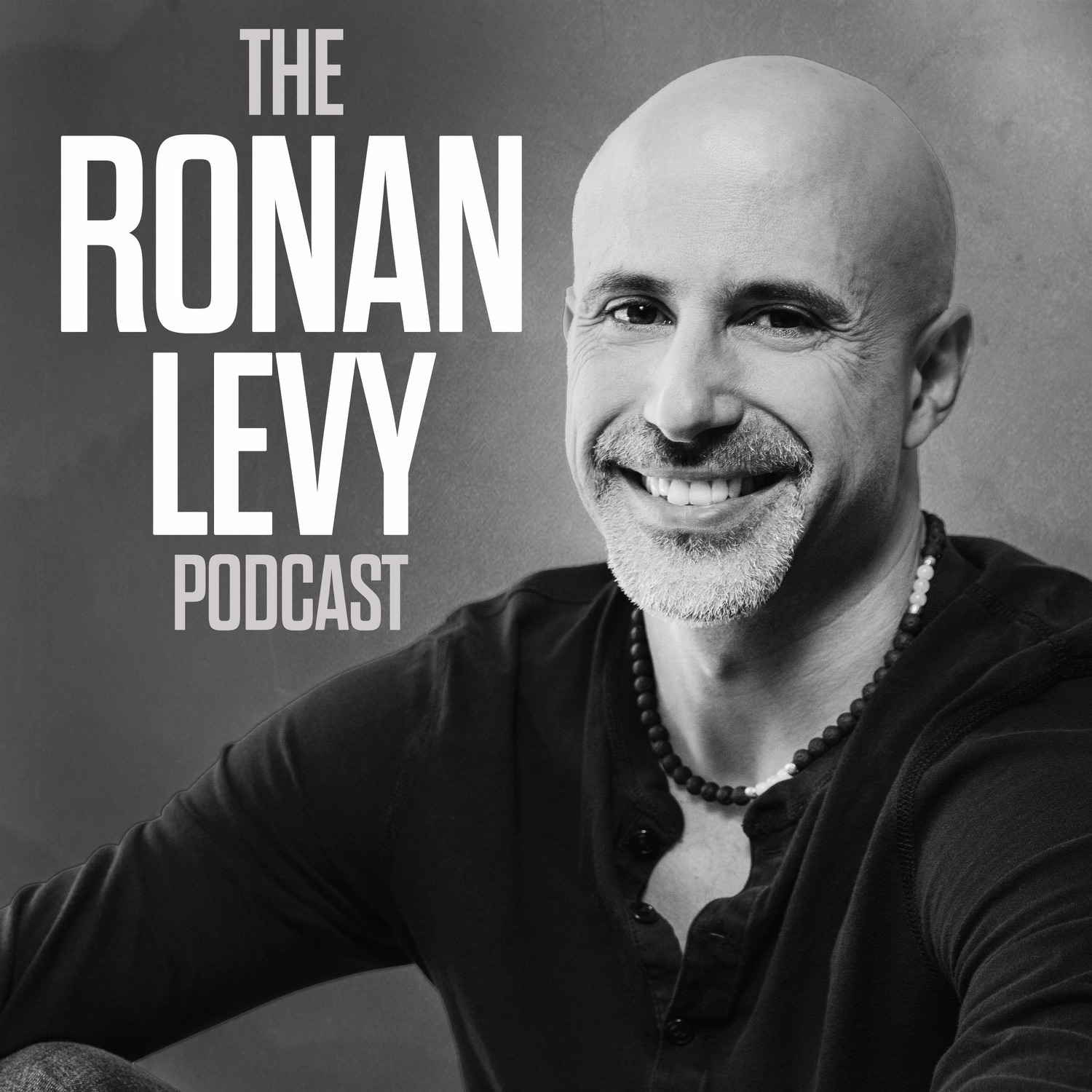
The Ronan Levy Podcast
From Punk To Monk: Karma, Fame, and Success w/ Raghunath
01:05:08
Raghunath Cappo (@raghunathyogi) is the punk who became a monk.A teen in search of meaning, Ray Cappo fled his suburban Connecticut enclave for New York City—and found community among the misfits of Manhattan’s Lower East Side. He fell in love with...
Loading summary
Transcript111 lines
- [00:00]
Raghunath Kapo
Sometimes we make a couple choices, and unless we're very conscious about where we want to go, who we want to become, we sometimes get swept away in the riptide of material existence without ever asking, like, why am I working so hard? What is the goal of all this? What is a home run anyway in this culture? You know, what is a win? It's like we're running a race that has no finish line. And I think part of our spiritual path is sometimes you got to like, pull the car over and check the map.
- [00:35]
Ronan Levy
Hey everyone, Ronan here. This episode is brought to you by Sizzle Brands. I know it's easy to dismiss sports drinks companies as companies just pimping another product, but honestly, with Sizzle, this is something different. Although our product is hydration, our purpose is elevation. I'm recording this intro an hour before heading to a training camp that we are hosting for the world's most elite hockey players. The program is so enticing that these players, who usually pay for nothing, are paying their own way to get there because the experience we are offering is so cutting edge that they want to be there. No one else could do that, not even the NHL. So when I say Quench is serious about what we do, I mean it. Visit quenchhydration.com and use Levy 20 for a 20% discount. That's Quench spelled C W E N C H. Okay, back to the show. This isn't widely known, but one of my companies is called Iron and Fuzz Holdings Inc. The name was inspired by the following if you lack the iron and Fuzz to take control of your life, if you insist on leaving your fate to the gods, then the gods will repay your weakness by having a grin or two at your expense. If you fail to pilot your own ship, don't be surprised at what inappropriate port you find yourself docked. It's actually a theme that seems to come up quite often in this podcast. An invitation to stop, look around and ask where you and we are going. And it's certainly true of the following conversation with Ray Raghunath Kapo. Ray is a fascinating character, a vegan hardcore punk musician turned Hindu monk, all as described in his recent book From Punk to Monk A Memoir, which we discuss closely in the following chat. Enjoy the conversation and I hope you find in it some inspiration to navigate your own ship. Thanks for listening. Well, I wanted to get into your story shortly. I wanted to ask start off by some hard hitting questions, which is a potentially provocative question off the top. So much of the book and for everyone listening Ray recently. Is it, is it out now or is it still about to be released?
- [02:47]
Raghunath Kapo
It's out now. Your book, it's out there and getting around. Yeah.
- [02:50]
Ronan Levy
Awesome. So he recently published a book called From Punk to Monk, a memoir about Ray's experience both in the early punk scene, I guess, early straight edge scene as well, and also through a spiritual exploration, you know, through India and, and Vedic culture and all of that. And you know, one of the things I've noticed in my kind of explorations is that so much of the exploration around spirituality, in fact most spirituality I find centers around trying to tame the ego. So with that in mind, what made you want to write a book about your story? Which, you know, at least off the top may seem not very ego less.
- [03:37]
Raghunath Kapo
Oh, that's good. Interesting point. I actually didn't. I pitched like a self help book to the publisher about writing a book about these sort of esoteric principles, but making them sort of palatable and understandable. And they said, yeah, we'll do that book, but first let's hear your story. And I argued with them. I said, listen, my story's not that good. It's like I wasn't like a drug addict, I wasn't in jail, I never got over heroin. It was like I wasn't homeless. I think just let's write a book about, you know, values and, you know, esoteric spiritual values and I'll try to translate them to modern pop culture. And they were like, no, you got a good story, just write your story first. So for me it was sort of a struggle because I'm a storyteller, but oftentimes not my own story. And I think the idea of your ego, like self promotion, it can be, it really depends on what your intention is behind everything. And if, if you're, I think in this book especially I, I'm very quick to show my, my hand. There's no poker face going on. I'm showing you all my struggles as a monk, all my struggles traveling to India, showing my struggles on the path. So I don't think it made me in. Put me in the great light, like I'm Marcus Aurelius or some stoic renunciate. But yeah, I think it could be, it could be for a person's ego. It depends on the intention behind why you're trying to do it. For me, I feel like the spiritual message and the spiritual journey is a lot is a part of the. There's a, there's a demographic in the human, in human beings that, that find that Pursuit that they're just. They're not satisfied with the way material life is playing out. And they think there's got to be something more. Either they. They have some deep impression in their heart like a spiritual calling, or they've just fulfilled all their desires and they realize there's nothing here for me. I want something more or I want to die. Or sometimes people get so caught up in the glue trap of their desires.
- [05:58]
Ronan Levy
Yeah.
- [05:59]
Raghunath Kapo
That they've just. There's the train. Train's gone off the. Off the rails and they're like, they're on their knees and they're saying, I need God or I'm gonna die. So I think there's a demographic that can relate to a person's spiritual journey. I know I could. I loved reading stories about people on a spiritual journey. From Autobiography of a Yogi to A Journey Home by Radhana Swami, or, you know, even something like Jonathan Livingston Seagull or something like that. Books that have this idea of there is an arc to our life and it's supposed about reaching higher and reaching inside instead of trying to go outside to find your satisfaction. So for me, that journey was attractive. And the players in that journey, it seemed like we try to find ourself going through their life because as different as we are, and, you know, we're all pretty different, we go through the same things. We all get our heart broken, we all fall in love, we all lose our money, we all gain some money, we get hurt, we get betrayed, we learn how to forgive, or we get deeper into our resentment. And a lot of our lives for millennia has been played out again and again and again. And it's just sort of updated for the modern age. So what do you do with all that stuff? And that's sort of like, you know, the spiritual quest.
- [07:25]
Ronan Levy
Yep, that's exactly it. So I'm going to ask that question. What do you do with all that stuff?
- [07:31]
Raghunath Kapo
Well, if you've got some knowledge about the spiritual class, what do you do with it? You either stick your head in the sand and just try to say, I'm not going to pay attention to this. It's happened to me at different times in my life where I just say, I'm not going to. I have this information, but I want to live in the matrix, or you try to incorporate it into your life as best you can, or you just cut yourself from your life. That was sort of like the beginning stages of my spiritual journey. I'm just going to cut out everybody that I know and isolate myself and Sort of recreate myself. So that's an option too.
- [08:11]
Ronan Levy
Yeah. So I have a whole bunch of questions that, you know, I'm going to reference pages just to give you context.
- [08:17]
Raghunath Kapo
But sure.
- [08:18]
Ronan Levy
For anybody listening who doesn't know the story, although I guess in the name From Punk to Monk and I suppose back again, can you give a brief synopsis of your story and the journey you've taken to get to this point?
- [08:36]
Raghunath Kapo
Sure. I was. I was like a disenfranchised youth, not attracted to my high school life. I was a punk. I felt like myself to be a nonconformist. I would run away from my suburban high school on the weekends and go to the Lower east side of New York City in the early 80s. There I found a home with a bunch of other freaks, weirdos, misfits. The Lower east side was a mecca for people who just didn't want to live a corporate, corporate rock life. But also it was alternatives to diet, alternative to spirituality, alternatives to music, alternatives to healing and health. And so it was a very, very interesting time. Alternatives to art, street art became popular. Breakdance became popular, you know, hip hop became popular. Hardcore straight edge punk became popular. And it was all happening for New York, Connecticut, New Jersey, Queens, Long island, all on the Lower east side. That was where everyone would end up. And there was a type of. We were all bonded together by our freakdom, basically. It's not like I was into goth or I was into, you know, I was into, you know, breakdancing. But everybody could relate to each other because none of us were welcome in the public, in the. On the public for public display. It was all happening sort of on the street, underground. And so there's a great appreciation and a great. And a great connection. It's something like. It's something that culture now could get a lesson from. How can we be completely different and still find some type of connection with each other? So it was happening. We were joined together by our own freak, freakiness. And so from there I got more. I started a band. And the band, even though it was in the punk scene, we are really inspired by Eastern thought, spirituality, self control, clean living, positive attitudes, vegetarianism, which was also not in the conversation in 1982 so much, or 1985. And it was really anathem to the opposite of what was going on in the punk scene, which was people were doing any type of drug, street drug, sleeping, you know, sleeping in the park, sloth. It was the opposite of that. So from that band we created like tens of thousands of followers all over the world. And that band was called Youth of Today. But in a short time, after a few years, I just realized, like, okay, I don't take drugs. I don't drink, I don't intake intoxicants. I have cleaned up my diet. Now what. Where do I take this? If life is about evolving and growth? I got very attracted to Eastern thought. And that's where in 1988, my father died, sort of untimely. And with the loss of some stability, my father, and with the futility of material success, I felt like just a strong, loud calling to, you know, cut my life off and work on some inner engineering of my thought process and my own spirituality. And that was when I was 22 years old. And that was 1988. That was. That was a very long synopsis. Sorry about that.
- [12:01]
Ronan Levy
No, no, no. And so at that point, you took off and spent, was it six years in India.
- [12:08]
Raghunath Kapo
I was. I was among six and a half years back and forth in India. I still go back and forth to India twice a year ago, but living in ashrams the whole time as a celibate monk and then a student. But also the weird twist in this, after giving up music, the more I studied Indian thought, or I wouldn't call it Indian thought, but Vedic thought, is that to really purify yourselves of your desires, you don't give up what you do. Because sometimes we find that things that we're good at, things in our workplace, we get good at them, we get accolades for them, we get paid for them. All the negative stuff comes with that, too. People become envious of us, we get envious of other people. My greed becomes exacerbated. Maybe lust is tied. Lust, greed, envy, anger. These are all things that Buddhists and Hindus have talked about for millennia. So sometimes the very thing that we're good at, that we're successful at, can ruin our life and make us hate the very thing we're good at. I've seen it happen so many times with people who are perfectionists, like virtuosos in athleticism or music or at art. And the very thing that they love, that was their passion, it destroys them. So I gave it up because I felt like, yeah, all these things are plaguing me now. It was so much more fun when no one ever heard of us. But what I did find was the Gita says, no, you don't give it up. You just do it differently. You do it with a spiritual intention. And that changes everything. That will change everything. You're over the envy. You're over the greed, you're over the lust, you're over all those things. Why? Because you're not doing it to be God, you're doing it to serve God. And that is sort of an underlying theme in the book. Whatever you call God in India, Eastern thought, it's a very broad understanding of God. It's a very ecumenical or welcoming idea of people on a spiritual path. It's not faith based. It's an experience based idea that we are all part of God and that we are all spiritual beings. Not that we're born sinful, we're just born forgetful. We forgot that we're actually a spiritual being. And even when we use, throw around this word like yoga, the idea of yoga is that we do certain things, whether it's a physical stretching or breathing techniques or meditational techniques. We do that not to convert you to a Hindu. We do that to remember what we forgot because we've clouded up our own window. And what is the window is we have false identifications of what we think we are. We think we're a bit. I identify myself as my career, identify myself as my nation. I identify myself as my political party. I identify myself as a man or a white man or a black man or even, or, you know, a gender preference. We're none of those things. According to the ancient books of India, we're spiritual beings. That's our identity with a capital I. I say capital I because I also have a small I identity. I am a father, I am a teacher, I am. But those are all just like temporary. The real identity is I'm a spiritual being. I'm here for a few days only on this planet. And I'm here to reconnect and give love. It's that simple. And so the real yoga process, the real yoga process is to make us remember what we forgot.
- [15:57]
Ronan Levy
I love that. It's beautiful. One of the places I always get and I appreciate towards the end of the book you, you said, you know, in response to some of the questions you get from interviewers that you, you know, reasonably believe, I think you were the words you used, right, which is.
- [16:11]
Raghunath Kapo
Like reasonable faith, you know, reasonable faith.
- [16:14]
Ronan Levy
Reasonable, yeah. What I always often get trapped in because I'm very much into the spiritual path, not necessarily through the path that you've taken, but is why do we forget? You know, using that context and the way you describe it, like why is it so complex? Why do we get dropped here and forget? And you know, if you kind of grow up in a Western culture, you Know and don't have the lock, opportunity or even misfortune, I guess, in some cases to stumble across the path that you've taken. You know, what is the answer that's given from that perspective of why we forget?
- [16:51]
Raghunath Kapo
I can give you how they teach it in my own realization about it is we forget because we want to forget. Okay, I think it's safe to say you and I have willingly chosen to do something we know is wrong. We've, like, actually opted in. I know this is wrong. I know it's not good for me, but I'm gonna do it anyway. We willingly enter into illusion. Often we eat the second piece of cake. We eat the right, you know, we indulge where we should. We know we shouldn't. I can't believe I'm doing this. I can't believe I ate the whole thing. Whatever it is, we do it. And why do we do it? Just because we want it. It's unbridled senses, and we make mistakes again and again, and it's okay, but we're just going to have to learn these lessons again and again. And we look at this human existence as a training ground to step it up, evolve or devolve. We have this opportunity. It's like a rotating door. You can go in that door, you can go out the door, depending where you want to do it. Do you want to upgrade your life or do you want to degrade your life? The choice is ours and the choice isn't ours. In this one life, it's our choice, practically speaking, moment to moment. We can upgrade our conversations or you can have a degrading conversation. You can upgrade the media you consume, or you can degrade yourself with media. You can upgrade the food you eat or degrade yourself with the food you eat. Everything is either an upgrade or a degrade. And that's called in spiritual. That's the concept of spiritual evolution. There's that. We are evolving in this lifetime. And, you know, we can see twins, identical twins. One person takes a choice of health and wellness, taking care of themselves and one sloth, laziness, addiction, pornography. And they become two different beings. And our upgrading and our degrading choices, our habits that we can choose, that we can change and we change. We create healthy habits by the company that we keep. And that company can manifest in a person. It can manifest in a partner. It can manifest in the literature that we Consume or the YouTube videos we consume, et cetera.
- [19:20]
Ronan Levy
Are you sure that we can upgrade our media these days? Because I'm not sure that's actually possible.
- [19:24]
Raghunath Kapo
You gotta be an archeologist, man. Right? There's a lot of places to dig. You gotta be. You gotta look for the gold. There's gold out there. The information age is filled with 99.9% nonsense. You gotta find that gold and you gotta be careful because the rest of it is addictive. Yeah, the nonsense is addictive. Yeah, the gold is addictive too. So you gotta. I think we just have to check in with what our addictions are on a regular basis. And by the way, I'm not, I'm not preaching from the pulpit here. I'm swimming, I'm swimming in the cyclone myself, you know, but we look at it as like we want progress. We're not shooting all in the sky for perfection. Today can I make a little progress today? Like a 12 step person would say, how about today? Today can I make a little progress? And we keep it like that. It's a day to day journey, moment to moment sometimes.
- [20:22]
Ronan Levy
Yeah, very, very much so. I was listening to an interview. Have you heard about Jonathan Haidt? He's a researcher.
- [20:30]
Raghunath Kapo
Oh yeah, he's great.
- [20:31]
Ronan Levy
He's great. Yeah, it was really interesting about. It was just. He was on, on the all in podcast which I don't know if it's a nugget of gold or some of the trash. I think it flip flops between the two. But this interview they had with him was fantastic. And he was just talking about media and how social media has. You just created a terrible environment for extremist views. And it's so much trash and it's had such a negative impact on how our society works. You know, if you have a chance to listen to it. It came out a couple days ago. I'd strongly recommend. Check that one out.
- [21:06]
Raghunath Kapo
It is a. Yeah, it can push us, you know. Hate sells. Yeah, hate sells. It's an easy purchase. You know, just like we see these sitch not what are they like these reality shows and where you got some over the top guy screaming at a lady and they're in love and they're passionately in love and then they hate each other's guts. And there's big. That sells. Extremism sells. You know, if you have a nice regulated life, a happy family, you know, it's dinner time, let's all sit down for dinner. That doesn't sound. It's boring, it's. No one's gonna watch that. You know, we sell the extremes and we want to purchase it. We want things to be out of control. So yeah, we got to be careful what we're addicted to. And even though there is sort of like you were saying, I don't know if this podcast is good or not. You can also be an archeologist in bad places. You can go to a place that is problematic and find some gold there too. And so that's. I look at myself as an archeologist, like, can I find a piece of gold even in a crazy place? And yeah.
- [22:19]
Ronan Levy
Do you recall what attract. What made you attracted to the freak lifestyle that made you want to head down to the Lower east side? You know, if I. If I was putting on my. And I'm not a therapist or psychologist, but if I was putting on my hat to be one of those, I would say there was some underlying trauma that, you know, you felt rejected somewhere along the lines, and so you decided to reject everything else along the way. Have you. Have you looked back on that in yourself?
- [22:42]
Raghunath Kapo
You know, it's a good question. And at least at the time, what was running through my mind is like, I just don't want. Maybe because I was like six out of seven kids.
- [22:54]
Ronan Levy
Yeah.
- [22:54]
Raghunath Kapo
And maybe I was just like, you know, I want to do something different. Everybody's going to college, all my brothers and sisters going to college. And that was like the paved out path for everybody. And I just like, well, I don't know if I want to turn out like that. I don't know if I want. I want to try something different. And I was sort of like. I felt like I didn't want to fit in. You know, who knows where it stems from? Was it this life? Is it a pre. See, this is the thing about Eastern culture. You say, yeah, it could have some. Maybe some childhood trauma. We say that trauma was from lifetimes ago, and it reoccurs unless you deal with it. So maybe it was three lifetimes ago of trauma. But I had this idea of like, I don't fit in this place. I don't feel welcome here. You know, whatever that was. When I got into the New York City punk and hardcore scene and the alternative scene of the Lower east side, I felt the same way. I don't fit in this scene. And sometimes I think that desire was a very beautiful desire because it made me start to choose my identity outside of a reflection of other people and just try to find myself. And that was sort of like a maybe something burning inside of me. And maybe I don't know where that came from. To be a nonconformist doesn't necessarily. To want to be a Nonconformist doesn't necessarily mean you're cool or better or anything. It could be also for your ego. You want to be distinct. You want to be noticed or admired for being a unique guy. So I don't think it was necessarily a pure desire. But whatever it was, it led me to sort of finding a tribe, sort of a spiritual tribe. But first find myself first. I didn't go to India to join a religion. I think I wrote this in the beginning of the book. I didn't go to India to wear yet another costume. I wanted to take off all the costumes that we wear. And that's how it's taught in Eastern thought that we are all just putting on different costumes. As Shakespeare said, we're all players on a stage, putting on some role, putting on some performance. What are we underneath the costume? Oh yeah, I tell that story about the naked man and the box in the book. I don't know if you remember that guy building a box naked.
- [25:07]
Ronan Levy
Yeah. And besides being part of the divine, who are you? Who, who is Ray? Who is Raghunath Capo? How do you, how do you answer that question now?
- [25:21]
Raghunath Kapo
You know, I look at it like to, like I said earlier, a lowercase I and a capital I. The capital I is like, yeah, besides being a spiritual being. But then I play some roles in this world. In this world, I'm a father, you know, it's a big important role for me. I'm a teacher, I'm a student, I'm friends, I'm a good friend. If you're friends with me, I'm a good friend. Those are my, you know, I'm an outdoorsman. You know, I'm into plants, I'm into outside being outdoors on a regular basis. I'm. I like, I genuinely like people and like to get to know people. I like to talk to strangers. So these are just parts of this material mind. And again, it's. It's what I, it's what I. It's the, it's the car I'm renting for this lifetime. Just like if I was to go to LAX and rent a Mercedes, you'd say, well, what are you. Well, I can go 120 miles per hour when I, you know, floor it and I take diesel gas and I'm. This is, you know, front wheel drive. But it's truthfully, it's just the rental you got. So in this lifetime, this is the rental I got. He's, you know, short Italian male guy, slightly balding, 58 years old, popped out a bunch of kids, you know, runs. Runs a retreat center farm in upstate New York.
- [26:43]
Ronan Levy
Yeah.
- [26:43]
Raghunath Kapo
And that's my. That's my temporary identity in this world. It's. It's been a fun. It's been a fun ride. I was a punk rocker celebrity as a child. And then. And then later, I never finished that story. But later in the ashram, I started another band with other monks, which became very bigger than the first band and toured internationally. But still remaining the principles of monastic life.
- [27:09]
Ronan Levy
Right. That's awesome. That's an undertaking.
- [27:12]
Raghunath Kapo
And it's a weird story. It actually is a true. When the publisher told me to write the story, I was like, my story. It's actually a very interesting story.
- [27:21]
Ronan Levy
It's fantastic.
- [27:24]
Raghunath Kapo
It's a unique story. It's been a fun ride.
- [27:27]
Ronan Levy
What I love about it is the honesty about how complex that is, you know, finding those balances. The stories about, like, you and Buffalo playing at a shitty warehouse because it was Buffalo and those crazy. Yeah, it wasn't clear. I mean, it sounds like the people who attacked you in Buffalo, like, were just psychopaths, but do you have any idea what the hell was going on and why that happened?
- [27:50]
Raghunath Kapo
You know, years later, somebody told me somebody went up. I don't. If you're unfamiliar with this book. I tell the story on both Joe Rogan and Rich Roll, but basically five guys got out of a car and girls and beat the hell out of a bunch of people. They had baseball bats, a gun, and someone told me it was provoked. Now, some. Recently someone just told me, yeah, I was at that show. You know, what happened is someone threw a. A rock through the back of this car and they just took it out on everybody.
- [28:24]
Ronan Levy
Oh, shit.
- [28:25]
Raghunath Kapo
But I don't know the story. All I know is it played out in the most terrifying slash spiritual experience of my life and something. And I think that's a sort of a good analogy for a spiritual quest, is it's sometimes the very tragic things. If your mind is in the right place, it can be the most incredible experience of your life. And that I will say I've met a lot of incredible spiritualists and swamis and sadhus and sages and swaminis. I've been to holy places all over. All over the world, but especially in India. I've been holy rivers, been incredible kirtans. I've studied sacred literature. But getting beat up in that Buffalo warehouse by this gang was the most spiritual experience of my life.
- [29:12]
Ronan Levy
I'm just going to leave that there because I can stand for its own. And people can draw their own questions or inferences from it. You know, I, I have Here on page 105, you talk about your relationship with Jennifer and how you were looking for a relationship to make you whole. You now have kids. So I'm guessing your perspectives on relationships have changed. You know, you talk about in the book very much how Vedic tradition encourages you to use your talents, but in service, you know, for God or however you want to describe that. You didn't talk about how your perspectives on going from celibacy in which relationships, you know, I guess we're a way to get yourself lost and trying to find yourself, but you can never find yourself in anybody else. And I think most people at some point in their lives realize the hard way that a relationship is great mirror to learn things about yourself, but it's not a way to complete yourself. But your perspective obviously shifted at some point and wondering how and when that happened.
- [30:11]
Raghunath Kapo
Yeah, I think you hit it on the head. It's exactly, exactly what you said. There is this idea and that illusion is still rampant that this person will make me whole. This person, I'm just a half a. I'm just a half. And that when that other person comes together, then I'll be a whole person. And we replace God with a being. We're all parts of something greater. And instead of finding that connection with the source, instead of the leaf finding connection with the roots, we're trying to find it with other leaves. Right? But we're all really sort of zeros in this world. We're all zeros and we want to be whole. And we become whole by connecting with Source. And then we feel like, yes, this is my deep connection. We can't be a zero and try to connect with another zero. Zero plus zero does not equal one. Zero plus zero is zero. And so I'll make her my God and I'll be like, you ever been a relationship where like the per. Either you or the person is so incredibly needy? Where you feel like, okay, this is too much. The fact is we have too much love to give that no human can even take it. It's just too much. We are born to give love to Source. That's the only repository for our love. Humans can't take the amount of love that we have. And so we freak people out with our love sometimes. So we first have to become connected. If we come connected, then we can add so many things to our life. Not just a partner. We can add children to our life. Or else suppose you really need, you want love. So Bad. So you, you get with a person and you have, you get a baby. I've seen this again and again. The parent becomes needy on the baby and that makes the baby feel like, like responsible for the parents emotions. And so again and again, first we find connection and then whatever I add to that, that's a wonderful thing because I'm, because I, because I actually have something to give to my partner. I have something to give to my child. But if I'm needy for that child. Yeah, that becomes a problem. That becomes a problem.
- [32:38]
Ronan Levy
It becomes, yeah, 100% it is. Do you remember when you kind of found yourself at the point where you had gone from looking for wholeness from a partner and were open to actually being with a partner? Was that, was there a kind of moment of revelation or did it just sort of evolve into a place where.
- [32:58]
Raghunath Kapo
You'Re like, okay, you know, I sort of, I think I sort of put this in my book also. It wasn't a conscious decision on my part because I actually really enjoyed being a monk. Some people don't enjoy being a monk. Some people try it for a little while and they're over it. And some people are monks their whole life and it's rare. I enjoyed doing it. But there was a very mature monk that I mentored under and he, he said, if you're thinking about it, you might as well do it. You might as well at least start thinking like that. Before as a monk, I was just not. No, if a beautiful woman came into my thoughts, I would be like, beautiful, but not what I need right now. That's what my mantra was. So he said, you may want to start thinking about a partner, a life partner. And from there it sort of opened a door for me to think, okay, what does this mean now? That could be a whole sec. Part two of my book, which has been unwritten. But, and it, and it wasn't easy. It's not. I, at least for me, it wasn't easy. It's like you're walking a slack line because you have to loosen the reins a little when you're in a, when you're in a relationship, when you're out in the world. But at the same time you don't want to loosen them so much that you're falling back into the same problems. You moved into an ashram in the first place. So I found it to be a slippery slope, or I like to use that example as a slack line, which you can fall either way at any moment. And it took me some time to find the Balance there.
- [34:31]
Ronan Levy
Right? Okay, cool. On page 191 of the book, you talk about, quote, the pain of success, how magnified pleasure creates magnifying pain. You know, and. And having read Alan Watson, I presume you've read some Alan Watson in your day. Isn't that what the essence of the human experience is? That's the kind of the majesty of consciousness that we can achieve great highs, but the cost of it comes at the V. The expense of vulnerability to great lows. Like, how do you reconcile that?
- [35:02]
Raghunath Kapo
I think when you're doing your work in this world with the appropriate intention, which I said earlier was like to serve the divine instead of being. To serve the center instead of being the center. When you can do with that intention, then you're a little detached from your success in this world or your failure in this world. You just feel like, I have a mission and you love my mission. Good, good. That's great. You hate my mission. Oh, good, that's great. You're completely almost oblivious to the praise or the criticism from others. Just like a train, as one of those super trains, one of those high, high. What are they called, those bullet trains. There might be a lot of dogs barking at the bullet trains, but the bullet train is not going to stop to appease the dogs. So whether people take you down and criticize you or say, oh, you're crazy, or you're insincere, or they give you tons of accolades, you're the best, You're. You're inspirational. Either one, you're not stopping. You're just moving ahead on your focused goal, on your focused offering. I like to call it an offering, but at the same time, there will be great loss, there will be great heights. But when you're doing it for the sake of the service, you actually couldn't care less for those heights. Now, if you're doing it for the sake of the result, for the sake of impressing people and wanting to stay in good, in good with all your detractors, then you're going to suffer. You're going to suffer. But if you're doing it for the right reasons, you're relieved immediately from that. Does that make sense?
- [36:42]
Ronan Levy
Yeah, I think so. I think it comes down to. I think the word I'd use is attachment, which is, you know, you get attached to the highs and you can also get attached to lowest, to be quite honest. But if you can experience them without longing for them, you have that, I guess, ideal intersection of service is what you're going for. But you can ride those Highs and lows without necessarily longing for them.
- [37:07]
Raghunath Kapo
Because you're right on that. I, I agree. 100. I use the analogy of suppose there's someone like a Mother Teresa of this world and she's got a mission and she's in the ghettos of Calcutta and she's, you know, giving food, protecting, you know, people from human trafficking and helping orphans. Don't exactly know what she's doing, truthfully. But suppose someone in a European country wants to give her an award and award her with a million dollars. She just wants to go get that check, make a statement, and go right back to work. She's not saying, oh man, you gotta fly me first class. You know, she's not caring. Oh, what kind of. Does he have linen bedsheets? I only sleep on linen. She wants to get the check and she wants to go now. She might get linen bedsheets and she might get a penthouse apartment, or she might be flying coach or she might be flowing, flying first class. Personally, I don't know Mother Teresa, but if she's who I think she is, she'll take whatever she gets. But she's focused on her mission. So in that mood, when we're focused on a mission, yeah, sometimes you get, sometimes you get to be around in the lap of luxury and sometimes you're in a. In hell. But we're okay with that. As long as we can serve, we're good with that. That's what we're, that's what we're aiming for anyway. We may not be there, but that's what we're aiming for.
- [38:31]
Ronan Levy
You drop some massive names throughout the book. Moby Zach from Rage. How have you seen. I guess, you know, being in the rock scene, you probably have a great vantage point and seeing these people to watch how different paths for people evolve. And I'll, you know, this is just a, kind of an anecdote, but I saw Rage play twice in Toronto a couple years ago, back to back shows. And it was very illuminating to me and also terribly disappointing because here's a band that stands literally for raging against the machine of society. And what I witnessed in the back to back performances is that the performances were exactly identical. They were, in fact performances. And so I realized that there was a huge lack of authenticity, at least in what I was watching. And that really sucked, I'll be honest with you, because it kind of felt like the rage against the machine very much became the machine. So, I mean, I don't know if you're still in touch with Zach or I'm guessing with Moby because he wrote the foreword to the book. But how have you seen other people's paths, especially such, I guess, high attention paths evolve for these people?
- [39:44]
Raghunath Kapo
Rage against machine. I haven't seen them play live in a long. I haven't really talked to Zach in a while. I ran him into the streets. Not that, actually not that long ago. It's probably like 15 years ago. I'm at that age where yeah, I was like, you know, in the 90s, what was I 10 years ago?
- [39:59]
Ronan Levy
Yeah.
- [40:01]
Raghunath Kapo
So I haven't really. I lost touch with him, but we were very close. But Moby I've seen recently came because I was in his documentary. He wrote, he did On God, the name slips me now, but it was punk rock influences in veganism and vegetarianism. So he came to my farm and we had a nice talk and then he wrote the foreword of the book. And I've seen him around more recently.
- [40:31]
Ronan Levy
Yeah.
- [40:31]
Raghunath Kapo
The interesting thing is fame is an energy. And to deal with powerful energy like electricity is an energy. And I wouldn't let my, you know, 10 year old son climb a telephone pole after a storm. Say, hey, the lights went out. Can you climb up that pole? It seems like the, the cord is not hooked up properly.
- [40:55]
Ronan Levy
It was a wrench. Go for it.
- [40:56]
Raghunath Kapo
So you can be a great performer. I can't speak for the authenticity or integrity of Zach. I'm sure he's a nice guy now, you know, but at the same time we can all become victims of that energy of fame, that energy of wealth, that energy of beauty, that energy of strength, that energy of intelligence. Sometimes I've seen the most intelligent people ruin their lives because they just become incredibly arrogant.
- [41:27]
Ronan Levy
Right.
- [41:28]
Raghunath Kapo
And sometimes they use their intelligence to manipulate people and like, you know, shame other people when they've done something wrong. Then I've seen people ruin their lives with fame. Ruin it. Like they were really good people. And then I've seen people do it with money. They get, they just get so much money that their lives become riddled with insecurity. They start to think like, I can't trust anyone. Everybody's after my money. Every, no one wants to be my friend anymore. And then they have, they have, or they have a bunch of fake hanger ons that really just do want their money.
- [42:02]
Ronan Levy
Yeah.
- [42:02]
Raghunath Kapo
So it's these things. It's not like the people are bad, it's. They can't handle those energies. And that's completely understandable.
- [42:12]
Ronan Levy
Yeah.
- [42:13]
Raghunath Kapo
Because even low levels of that energy of fame, wealth, beauty is enough to Throw you right off course. Yeah, because what does our ego do in the first place? Our ego says you're the center and people don't get it yet. And you've got to convince them and you've got to get their validation. You got to win them over to teach them that you are the center. Then you get something like fame that actually makes you feel like the center for a few hours on stage. And you're like, see, I guess I'm right. I guess I am the center. And all these people are clapping and they're all agreeing that I'm the center. So what f. What those energies can do is they endorse the illusion that we're already in when we're born into this world. They exacerbate the illusion. So that's why a spiritual practice, you know, is so necessary if you're dealing with any of those things. Or else they ruin our lives. They ruin our lives. We've seen it again and again. Oftentimes it's. It comes down to, I can't deal with this, so I'm going to intoxicate myself. I'm going to take drugs, I'm going to drink, I'm going to become a womanizer or, or something to stick your. Or. Or you, you know, you either get into spirituality or you get into philanthropy. Anything to deal with the pain that those energies cause. And they do cause a lot of pain. Just you can't go to Starbucks and buy a cup of coffee because there's a thousand people want a piece of your attention that are treating you like a cut out cardboard poster that they can take a selfie with. It's exhausting. It's exhausting. So if you don't know how to deal with that energy, you fry yourself like a child climbing the telephone pole.
- [44:00]
Ronan Levy
Who, who in your mind has handled it well? Who, who has kind of. Because you talk about George Harrison and another guest on the podcast, Paul Saltzman, happened to be in Rick Rich at the time the Beatles were there and ended up spending a week in the ashram with them. And he has this great quote from George about, you know, you know, we're the Beatles, but is it happiness? Is it love? I'm bastardizing the quote. And you know, George seemed very enlightened. I don't know if he did well with it, but it seemed like he handled the fame and wealth well. But are there other people you think, or doing it well?
- [44:42]
Raghunath Kapo
You know, people are people's personal Persona and private, their public Persona and private Persona is hard to Understand. But I think people can do well with it. If they apply. Either they have some inherent intelligence, deep knowledge, or like someone like George, who is very, very. I have a lot of friends that were good friends with George and that were with him on his spiritual journey and they were with him at his death. And they. He called them on his death. He. He died in Los Angeles and they flew there to be with him. So they would tell me personally, that doesn't mean he did everything right and it doesn't mean he had some. He tripped up a few times. But if we can stay on a spiritual track, sometimes you take a boat and the boat is a speedboat, and sometimes you take a sailboat. If the sailboat has its compass set, it will tack north and south, north and south, north and south, but it heads up in the appropriate direction, then it's a win. So sometimes, especially people who experience a lot of fame or validation, generally they're not on the path of a sage, but they have to experience the ups and downs of the material world. If they can dial into that internal compass or a spiritual compass, then they can be protected from the overwhelming pain of material existence. Oh, God. I was just listening on the ride down here about. It was like a 60 Minutes Australia of like, the lives of the ultra wealthy. And there was, it was a documentary of, like these children that grow up into such incredible amounts of wealth and their friends, and it's like wealth that we can't even get. Like the children of Johnson and Johnson who 100 years ago, they just, they were just born into having billion. Once they hit 21, they become multimillionaires, if not, if not billionaires. And when you examine their lives, you could just see they're going to have it hard. They're going to have it really, really hard. And people may like, oh, no, you don't get it. No, I get it. I really get it. You know why I get it? Because I had it a little. I wasn't Michael Jackson. I had a little. I had a little fame, I had a little popularity, I had a little success. And in that littleness, it was overwhelmingly crazy. And you still have to. And whether you have it or not, you still have to deal with the ego, you still have to deal with the envy, you still have to deal with the greed, you still have to deal with the lust, you still have to deal with the resentment, you still have to deal with the, the, the learning how to forgive people. Those are things everyone has to deal with. And if you have some quote, good Karma, you got to be careful with good karma. Good karma can ruin your life.
- [47:56]
Ronan Levy
Explain that. Is that is it.
- [47:58]
Raghunath Kapo
Good karma is like what, everything. We were just talking about a good. A guy's born. Born into, well, great amounts of wealth. A person becomes super, super famous. You know, a person is breathtakingly beautiful. That type of, we'd call it good karma. Can ruin your life. Can ruin your life.
- [48:16]
Ronan Levy
Yeah, no, it's. It's interesting. I had a thought recently about, and it comes from a different, somewhat philosophical viewpoint. But, you know, if. If experience, if life is in essence the universe experiencing itself, then we humans, at least as far as our perspective goes, are the most equipped to take on the hardest challenges of, like, the universe experiencing itself. We can, we can deal with the most complexity. Right. We can't deal with, I think, the energies at the levels you're talking about with fame and wealth and all that kind of stuff. But in the same token, if, if you kind of put a bit of a Vedic lens on it, which is, we choose this life, we come into the people who are dropping themselves into those ultra intense energies, you can almost have a lot of compassion for them being like, hey, you've chosen a hard path, man. And I have a lot of compassion for you and, and, and best wishes. Whereas I think in most, most of our society, they're met with ire because on so many materialistic levels, they have everything.
- [49:23]
Raghunath Kapo
Sure, yeah. Sometimes they choose it. And sometimes, sort of. Sometimes we get on a train and we just can't get off. And okay, I'm in Dallas right now. But it's sort of like you make one choice and that choice affects the rest of your life. I didn't really choose to have this career I've been in for 40 years. I just wanted to get good grades because I thought that was good. Then a headhunter picked me up at this company. Now I work at this company. And then it was only obvious that I want to make it, get a raise. And next thing you know, this is my life. So sometimes we make a couple choices. And unless we're very conscious about where we want to go, who we want to become, we sometimes get swept away in the riptide of material existence without ever asking, like, why am I working so hard? What is the goal of all this? What is a home run anyway in this culture? You know, what is a win? It's like we're running a race that has no finish line. And I think part of our spiritual path is sometimes you gotta, like, pull the car over and Check the map. It's the exit. Why am I speeding so fast if I miss the exit? What good is me going 105 miles per hour if I'm supposed to be off at that last exit? Yeah. So sometimes the world, our lack of choice, our lack of decisions, then the universe chooses us. And we get implicated also by, again, the people we hang out with. The workplace, the workplace environment where we spend a lot of time, the people we choose to partner up with, that influences in a lot of ways. Sometimes we partner up with a really problematic person, and that person takes us to all levels of hell. You know, maybe they're an addict or a drug addict or have a secret life or whatever. Sometimes we marry a person or partner up with a person that takes us to higher places that we could never imagine, and they drag us out of our low lowliness. That happens too. So the company we keep while we're in this lifetime, it's also very, very powerful to influence our next lives. So all we're saying is figure it out. Figure out who you want to become, what you want to do, where you want to go, because life is super short. It ends quicker than we even imagine.
- [51:41]
Ronan Levy
I have a whole bunch of other questions that I'd love to run past you. If you do have time to pick up the conversation at some point in the next few weeks, I'd love to, if not totally understand. And we can, we can book it there for sure.
- [51:51]
Raghunath Kapo
Let's just reschedule it with or whoever else you did it. But this is great, great interview.
- [51:58]
Ronan Levy
Awesome. Thank you. Thank you for your time. Have a great day with your mom in New York City, and we'll pick up a time to continue the conversation.
- [52:06]
Raghunath Kapo
Okay, my friend.
- [52:08]
Chris
Hey, podcast people, don't leave yet. This is your favorite podcast producer, Chris, and after we recorded this episode, I stuck around to reflect and ask Ronan some questions about the interview.
- [52:24]
Ronan Levy
That was not what I was expecting, actually. What were your thoughts on it?
- [52:28]
Chris
I really enjoyed it. In typical monk fashion, he had the discipline to stay on a tight timeframe and not overindulge in an hour and a half or two hour podcast. So it's interesting. When you first described him to me, I thought Raghunath's story sounded incredibly familiar. And then I looked it up and I remembered he was on, like he mentioned, he was on the Joe Rogan Experience in February of 2020, which is when the whole world changed, right?
- [53:04]
Ronan Levy
Yep, that's. That's a very good point.
- [53:07]
Chris
And back before, Joe was interested in other things besides Covid. And vaccines. So it was interesting because a lot of this conversation, I think, was really about, like, asceticism, the avoiding of kind of earthly material pleasures and indulgences, you know, And I think, in a sense, it's kind of confronting because you and I are both kind of, like, ambitious guys who are also into personal development and spiritual. And so it makes you ask. It was like. Like he said, like, what is a home run in this culture anyway?
- [53:50]
Ronan Levy
Yeah, yeah, I thought that was totally on point. You know, my. And I'm. I'm a little bit cautious for both saying too much, but maybe we can, with the magic of your editing, weave this in, especially if we can pick up a second part of the conversation. It's interesting. In my experience, interviewing people now, some people will speak from the heart and some people will speak from. I don't want to call it dogma, because that sounds a little bit too ruthless, but from principle. And I was trying to get at him speaking from his heart, and he was often speaking from principle. And so I found that a little bit challenging. And so the questions became a little bit more. A little bit more kind of lightning round, kind of, what do you think about this? What do you think about this? What do you think about this? Instead of a more naturally flowing conversation. Now, that also may be just a function of the fact that he was rushed and wasn't sure what he was walking into. But, yeah, I think. I think there's some beautiful insights in there, but I would love to hear it coming from his heart as opposed from the philosophy he learned along the way.
- [54:54]
Chris
Yeah, I like how he would weave in metaphors around, like, speedboats and sailboats and different ideas. But it does also feel like maybe that's something he's recited multiple times before or somebody taught him. Right. I was. I was going to ask you what is What. What do you feel like, is your relationship with kind of attachment to success and material things as someone who is both spiritual and ambitious? I mean, do you feel like you kind of oscillate between, like, I don't need all of this stuff versus I need to provide a life of abundance for my family? I think we're all kind of torn between these two different worlds.
- [55:41]
Ronan Levy
Yeah, a hundred percent. You know, I think I've come to the point in my life where I'm asking the question quite a bit of what Ray just asked, like, what is a home run? And I didn't get to ask the question, but I was going to pose this quote to him, which was, you Know, if desire causes suffering, it may be because we do not desire wisely or that we are inexpert at obtaining what we desire instead of hiding our heads in a prayer of clot. Anyway, I won't read the whole thing, but it's kind of like there are energies, like you talked about, the energy of wealth and fame, but there's energies of beauty. Right. And beauty can be overwhelming. In fact, we know it can be overwhelming because can only stare at a truly beautiful thing for a couple of seconds before we kind of have to look away and become overwhelmed. But the pursuit of beauty, I think, is an honorable one. And so it's like, do I need more money to buy a bigger house? No. Would I. I was going to say love, but maybe that's the wrong word. Would I appreciate having more money so I could buy a house so I could be right next to the water and appreciate the beauty and the power and. And majesty of, you know, the lake? Yeah, I think I would get a lot of value out of that. Now, how hard am I willing to work to make that happen? Is I think the real question of, like, if I pursue the things that I'm passionate about and that outcome is one that reveals itself, that's awesome. But I'm not going to sacrifice my purpose, as ill defined as it is right now, but following my passions for solely the pursuit of having that placed by the lake, you know, is where I am in my journey. So, yeah, so it's like, I don't. I don't necessarily ascribe to the asceticism, if that's the right word, that I think Vedic culture requires, but I do recognize the fleeting enjoyment of a lot of the things we spend our time trying to make money to buy and how that's a poor payoff.
- [57:55]
Raghunath Kapo
Yeah.
- [57:56]
Chris
As I was listening to you guys talk when I said it was kind of confronting, it makes me think about how much time and energy am I just thinking about acquiring material possessions? This camera, some clothes, some. I need to make more money. I need my net worth to go up. What I enjoy about podcasts like this is we get to glean some of the things from his journey without having to go on that journey ourselves. So he's gone to this mountain like he's lived in an ashram. He's gone through the whole journey, written the whole book, and we. I can kind of get some little nuggets of wisdom without having to go on that journey myself.
- [58:38]
Ronan Levy
Exactly. And, you know, I don't know that anyone. I don't know that you can all of a sudden take the lesson of what he may have experienced. But I do hope people at least get intrigued being like, you know, there's something that appeals to me about his experience on an ashram and, you know, being a celibate vegetarian, you know, that maybe I'm going to go explore that. Not that, oh, you know, well, he learned these things doing that, therefore it's right more the invitation of there's a part of that story that tickles my curiosity and I want to lean in more. And I think that's really the only thing people could really take from any of these conversations or from a book or anything along those lines.
- [59:19]
Chris
I think the kind of actionable takeaway. Here I am, personal development bro. Trying to like, okay, well is, is this question of like, is this media I'm engaging with today upgrading or downgrading my consciousness? And you even brought this up with the all in podcast where you're like, sometimes I'm not sure. Yeah, yeah, sometimes I think it's, I'm becoming more informed and I'm, I'm learning things. But maybe this is just like gossip or just a highbrow form of very rich people speculating about the market. And I just, I don't know.
- [60:00]
Ronan Levy
That's it. It's, it's a whole bunch of self important people. I find it a lot of self important people, people with an overdeveloped sense of self importance and intellect offering opinions on things they're inexpert at. And you know, in this particular conversation with I, I dread the comparison. Like in the conversation with Jonathan Haidt, Jonathan was great and he was talking about his things and they were asking questions that expounded on his points and made them more tangible and understandable. Whereas when they had Donald Trump on the podcast, they were just asking like setting up a platform to spout out something and then never trying to parse apart what he said. It just became, you know, a megaphone for all of his shit. Now, I don't know how much of it was true or not, but there was no inquiry where the questions posed to Jonathan hate were in the nature of inquiry and added value to the conversation. So that's why it flips back and forth, I find.
- [61:01]
Chris
Yeah. And we just had Lex Friedman bring his daughter Ivanka on his show, so it's.
- [61:07]
Raghunath Kapo
Yeah.
- [61:08]
Chris
Interesting. I, yeah, I haven't even started that one, but I don't know, I guess I feel like we're like, he said, good karma can ruin your life. Yeah, I Think we are. We are blessed with, like, a medium amount of good karma where we're not, like, fabulously wealthy or famous. And so maybe there's a sweet spot there.
- [61:37]
Ronan Levy
Yeah, Yeah, I would say that's right. Or maybe we're blessed with being a little bit wise enough to be careful what we put in our mouth, you know, so we're not swallowing all of the big energy as he talks about or all the, you know, lies we get sold through highly commercialized society.
- [61:59]
Chris
Yeah, I mean, it's. It's. You know, as he was talking about, this good karma can ruin your life thing, it's like, I've seen just the smallest amount of authority. Fame and wealth totally go to people's heads. And so when you observe that, it makes you. It's like, could be a cautionary tale.
- [62:19]
Ronan Levy
Yep.
- [62:20]
Chris
I think the thing is, I hope this show is an upgrade to people's consciousness and not a downgrade, and hopefully we've done that today.
- [62:28]
Ronan Levy
Yeah. I mean, I would say if service is the thing that dictates between upgrading or downgrading, then I would say that we're doing it for the right reasons and therefore it should be upgrading. Hopefully.
- [62:45]
Chris
I'm curious if we can get a part two, what you would want to dive into next.
- [62:51]
Ronan Levy
Yeah, I wanted to. You know, again, I. I wanted to read him that quote of if desire causes suffering, and it may be because we do not desire wisely, because I've always struggled with this notion. And there's another thing where he said, real freedom is being in control of your mind and senses. And it's been a lot of my experience and learning that control is the opposite of freedom. You know, by. By definition it is, but I think a lot of the time our suffering comes from a need to control. And. And so giving up control is actually how you. You seek happiness, how you seek freedom. So there's things I just want to probe a little bit about that philosophy. And then I wanted to get into, you know, kind of our more standard questions of, like, looking back, what is the one thing growing up that you wanted more than anything, and what is the one thing you would have done differently? You know, what, dreams for your future, all that kind of stuff. Getting a little bit to know, Ray, more than.
- [63:52]
Raghunath Kapo
Yeah.
- [63:52]
Ronan Levy
Some of the places we got to so far.
- [63:54]
Chris
I've got this quote here. Anything that takes over your free will is the devil itself.
- [63:59]
Ronan Levy
Yeah.
- [64:00]
Chris
By Mr. Cat Williams on Club Sh.
- [64:03]
Raghunath Kapo
Shay.
- [64:03]
Chris
You know that one that went super viral a while back?
- [64:08]
Ronan Levy
I don't know that one. But I think there's, I think there's something to that.
- [64:12]
Chris
I, you know, he alluded to maybe the next book being about relationships and transitioning from kind of vowed cell celibacy to transitioning back into having a partner. And so yeah, I just think that's really fascinating a lot you guys touched a little bit on relationships today. So particularly like romantic relationships and how you I guess balance that with the spiritual path.
- [64:43]
Ronan Levy
Yep. For sure we can talk about let's see if we can get let get him back and have that conversation. I certainly have some thoughts about it.
- [64:52]
Chris
All right. Well I thought it was awesome praying for a part two and yeah it was awesome conversation.
- [64:57]
Ronan Levy
Thanks, man. Thanks for being a part of it. Thanks for this part of the conversation, the reflection and I'll see if we can get part two scheduled.
- [65:05]
Chris
All right, let's do it.
- [65:06]
Ronan Levy
Sweet buddy. Have a great day.
- [65:07]
Chris
Later.