← The Ronan Levy Podcast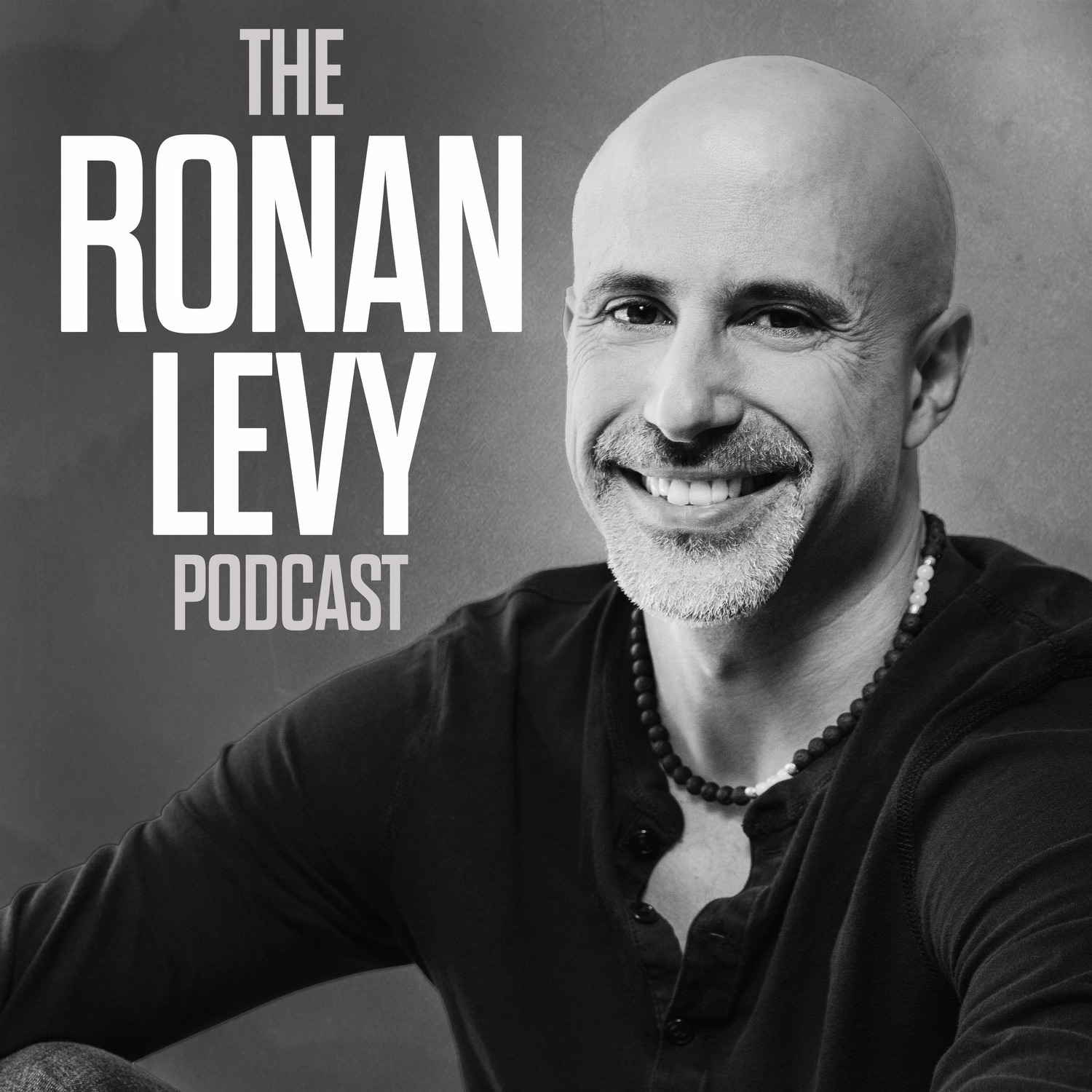
The Ronan Levy Podcast
The Wonderful Business of Music w/ Brandon Reid
01:43:05
When it comes to being successful in the business of managing musicians, there is one piece of advice that trumps them all: do your best to keep them on the straight and narrow. So it's no surprise that Brandon Reid, whose clients include The Natio...
Loading summary
Transcript251 lines
- [00:00]
Brandon Reed
I've got to tell you what that was because you'll think it's fucking hilarious. So I got a call yesterday from a freight forwarding company saying we have a crate to deliver to Aaron Dessner. And I'm like, okay, what's the size? They're like, it's four and a half feet by four and a half feet by six and a half feet. And it weighs 260 pounds. And immediately I'm like, oh, man. This is Ed Sheeran sending Aaron a giant stuffed animal in a wooden crate.
- [00:33]
Ronan
Hey, everyone, Ronan here. It's damn near impossible to follow a cold open like that with an introduction that will do any justice. And I'm not gonna lie, I was tempted to end my intro with just that. But in homage to today's guest, I will do my best to give him a proper introduction. His name is Brandon Reed. As you'll hear in our conversation, Brandon and I set out to remake the music industry back in 2018 by trying to launch Aurora Music Group, a music label that would live within Aurora Cannabis, Inc. Well, the effort was noble. The evil forces of darkness, namely an unforgiving stock market and a prick named Darren Karasjuk. Darren, if you're listening, I hope you've become less of a prick with time stopped us from achieving that ultimate goal. But while I don't believe in silver bullets, I do believe in silver linings. And one of those silver linings is the friendship that Brandon and I developed through the process. Attracted to music from a young age, Brandon went to Temple University to study sound engineering, spent 15 years touring the world as a tour manager and sound engineer, and then made the jump to music management, where his clients have included the national Broken Social Scene, Big Red Machine, Georgia Harmer, and for all the swifties out there, the co writer of the album Folklore, Aaron Dessner. Enjoy the conversation. How's life, buddy?
- [01:57]
Brandon Reed
It's good, thanks. Yeah? Yeah. I'm really happy. This is the first time that we've spoken since kids back to school times.
- [02:06]
Ronan
Yep.
- [02:08]
Brandon Reed
And every year in the fall. I don't know, it's probably not just me, but I get a lot of momentum from somewhere.
- [02:20]
Ronan
Okay.
- [02:21]
Brandon Reed
Yeah, it's almost. It's probably just an appendage of, you know, we all went through many, many years of schooling. Yeah, it's probably that, right. That, you know, in summer we're sort of per. Missed more than we are otherwise to, like, take a break or disappear. And in August, I remember remembering that I was like, shit, I don't know if I'M going to have the energy this year. And then all of a sudden it came back.
- [02:51]
Ronan
That's good. That's good. Yeah. I mean, we do burn out, I think, over the summer a little bit. It's also, I'm pretty sure, like, we are cyclical beings, right? Like we, we evolve to respond to changes in the weather season. And right now, if we were little tiny squirrels, we'd probably be hustling like fucking crazy to catch a bunch of acorns to get ready for the impending hell that we call Canadian winter. So it's probably, it's probably not just psychological. I imagine that there's some cyclical, biological considerations going into that. But what are you putting that momentum towards right now?
- [03:30]
Brandon Reed
Well, it's funny, you know, as you're speaking, I was thinking about, you know, working in the music business post pandemic. You know, I'd say prior to the pandemic, the music business probably had a higher level of normal work from home type scenarios. And in the music business, like other jobs, like traveling jobs, work from home often means like work from hotel or work from airport. And I think the pandemic definitely one of one effect, one sort of long standing, you know, remaining apparatus of the pandemic in the music business is that I think people are taking a lot more time off. And when I say people, it really means people that work at record labels or music publishers, like more. The more corporate jobs, the less entrepreneurial and the more corporate jobs. And like, from, from an Instagram point of view, like, I think, like, I've seen so many people in like Greece and Italy and whatnot, and that seems to persist. Like post pandemic, it feels like music industry people take off like almost all of January now, right? Maybe even like the second half of December and then all of January. But anyway, that just popped up in my mind because it feels like a lot of people in my industry are still coming back from summer, you know, especially those without kids.
- [05:10]
Aaron Dessner
Right.
- [05:10]
Brandon Reed
Like post Labor Day, if you have kids, then, you know, summer's over. Right, but what am I working on, you know, right now, as you know, but your listeners mostly do not. You know, I'm working on three or four clients. A young artist from Toronto named Georgia Harmer, who's the niece of Canadian folk singer Sarah Harmer. Georgia's in her mid-20s. She signed to the Toronto label Arts and Crafts. She just did an amazing tour with the band City in Color. So she's getting, she's gearing up, she's got a new record it's got to be mixed. It's probably going to come out next year. And then we manage Broken Social Scene, the chaotic Toronto enterprise from the early 2000s.
- [06:04]
Ronan
I like how it's an enterprise and not a band.
- [06:08]
Brandon Reed
It's something, it's something, you know, my colleague Grant, to whom, you know, Grant really is the lead on that project. And you know, it's, it's, it's a labor of love in the way that. In the way that, you know, Social Scene kind of came out of the early 2000s. And you know, there were really four bands that came out of their Big Bang. It was. Or four artists, one would be stars Broken Social Scene, Metric and Feist. And in the pecking order of the commercial success of those four artists, social scenes on the lower side of the 50%. Now, having said that, they can still do like 30 to 50 really great shows a year. So we just had them playing a concert series in Salt Lake City last weekend and a headlining show in Denver. And this weekend they're doing a festival out east and then they fly to the west coast for this festival called Rifflandia. So like, with a band like Social Scene, like what, you know, providing the management oversight looks like. And Ronan, you know this. I look at management in the music business, like coaching. We're coaching musicians and artists just like NFL, MLB coaches are coaching their players. It's trying to get the best out of them and getting the best out of Broken Social Scene. As mentioned, it looks like playing 30 to 50 meaningful shows a year. And despite that they haven't been the most consistent. They still do really great business playing live. You know, here in Hamilton. This weekend we have Super Crawl, our big free festival, which is really, really amazing. Since living here and doing my job for the last 20 years, I think Super Crawl might be one of the best free festivals I've ever seen. Like, I'm going to go see the amazing Austin instrumental band Explosions in the sky on Sunday for free.
- [08:36]
Ronan
Nice. What time are they playing, do you know?
- [08:39]
Brandon Reed
I think they're playing about 5:30. Yeah, I'm going to be racing to it because Amanda and I and the kids have a reservation to Rizzo's House of Parm in Crystal Beach. Do you know about this?
- [08:52]
Ronan
No, tell me.
- [08:53]
Brandon Reed
So it's Maddie Madison's Italian restaurant.
- [08:57]
Ronan
Okay.
- [08:58]
Brandon Reed
And it's, you know, I think he lives. I think he has a farm like in the Welland area somewhere down there, you know. But I brought up Super Crawl because it's exactly the type of event that's that broken Social Scene will headline, you know, so, yeah, what maintaining their career looks like at this point is just all the logistics and coordinating involved with making sure those shows happen. And eventually they'll put a new record out. And if Kevin Drew, the principal member of the band, sees this podcast, which he might, he wouldn't mind me saying that the reason why Feist and Metric are probably more successful than Social Scene is because they put out records, like, every two to three years, you know, and Social Scene will wait five to six years. And it's not because they're lazy. It's because all the members have other interests and other projects and other businesses. And, you know, when you're a band especially, but probably any artist, I would highly encourage someone to try to put a record out every two years. You know, it's just consistency and perseverance in music is what leads to longevity. And I want to go back and say, make a comment on your opening about Aurora Records. And I remember doing this last time, too.
- [10:29]
Ronan
Should we tell the story before you comment on it?
- [10:32]
Brandon Reed
Sure, yeah. Yeah.
- [10:33]
Ronan
Give me overview. Okay. So Brandon and I, for everyone listening, connected, I guess. It was about 2017, 2018, after Aurora had acquired Canadian cannabis clinics. And as a recalcitrant lawyer who loves trying to figure out the way to break the rules or get around the rules, I was looking out and I saw a world in which the cannabis regulations were going to make marketing almost infinitely impossible, because Health Canada, despite its best interests, likes to screw things up, like many regulators. And so came up with the idea of, what if we created a music label within Aurora. At the time, Aurora was flush with cash. And what we would do is we would sign big artists. Because Aurora made money through the sale of cannabis, we didn't have to worry about making money through the sale of music. We signed big artists. We would release a song with a given name or an album with a given name, and then we would sell the corresponding cannabis product with that name through retailers in Canada and elsewhere. And then we could go out, market the shit out of the music, make sure that the cannabis product was also favorably prominent in any kind of conversations around that music. So people could walk into the store and know exactly which products they wanted. And it was brilliant because it was. Well, I'm going to say so myself, because a, the music industry was going through challenges, and so the economics of music were changing. And here was an opportunity to basically take a music label, put it in a business that didn't have to profit from it, but could make money off of it and use it to market its products. And so Brandon, who at the time was managing the national, and I, courtesy of Reuven Ashtar, who gets a shout out here, you know, connected. And we convinced Terry Booth, then CEO, Aurora, to fund Aurora Music Group. And we got to it, and then the bottom fell out of the market and everything changed. So that's the short story of Aurora Music Group. But it was fun, it was ambitious, and God, it would have been great. We were so close to. We had just signed our first couple of artists too, which was amazing, but so be it. Anyway, sorry, that's the background. Over to you, Brendan.
- [12:45]
Brandon Reed
Yeah, you know, my comment was simply just that it continues to be an amazing idea and I really hope that if regulations evolve, someone else takes this idea and runs with it. And, you know, as you were speaking, the concept that I was rattling around in my mind was that at one point we had meetings with a representative that oversaw the estate of both Nirvana and the Beastie Boys, in addition to a bunch of current giant artists. And if you, you know, control the estate and assets of an entity like Nirvana, let's just say on the shelf somewhere, you probably have a bunch of live recordings. And if we were to license, say, two songs and print each song on either side of a piece of vinyl and in conjunction marketed a cannabis strain called Smells Like Teen Spirit, that's still a good idea, you know, or a Beastie Boys product called Brass Monkey, you know, so we'll see.
- [13:51]
Ronan
Did you say that? Like, I actually, like, I physically feel like, I don't know, like, excited and so devastated that we didn't get this going because it would have been so fucking cool.
- [14:03]
Brandon Reed
Look, I love weed and I work in the music business and I own a vinyl record store. And I know that if we had, you know, 12 inch singles with an A side and a B side of any number of artists, you know, like, we, we had a direct connection too, to the Grateful Dead estate. Like, of course Dead fans would buy those products and they, they even would to today. Right, but because, you know, a lot of, obviously a lot of these artists that are our legacy acts, like, alive or otherwise, you know, they have vast vaults of assets that if they're not being exploited, then they're not earning. And, you know, a lot of these, you know, I think we dove into this last time when we spoke. You know, what's post pandemic, what's in trend right now for legacy artists is to sell their catalogs, whether they're selling songs, which is effectively IP or they're selling masters, which is, you know, the actual recording of their songs. You know, a lot of times now I just saw, I just saw something the other day. I can't remember. It was. It was a David Bowie song. And Bowie's an interesting one because in the last few years, Warner bought his entire catalog. And so, like clockwork, whenever you see these catalogs go down in big sales, you'll see placements in TV and advertising, maybe in a way that you probably wouldn't see while the artists were living or in the active phases of their career. I guarantee you now, after mentioning this Bowie example, you're going to see like a chase card commercial or like, you know, you'll be at the supermarket or whatever and you just hear a lot more because you now have like bean counters and placement people with replace. With placement responsibilities. They've got the onuses on them to recoup whatever giant figure it is that they paid for these catalogs, you know, So I think Springsteen as well, like, Springsteen sold his catalog to Sony for half a billion. And I bet when Springsteen, you know, walks it through the pearly gates, we'll see it really ramp up because all of a sudden, like, he won't be asked anymore, like, how do you feel about the GM commercial? You know, or whatever. Yeah, his kids will just be like, I don't care.
- [17:01]
Ronan
I got a paycheck, whatever.
- [17:03]
Brandon Reed
Right.
- [17:04]
Ronan
I get that. That couple of questions that come to mind, which is I guess, kind of retrospective and prospective. So retrospectively, you know, up even when, when we were probably kids, like 14, 15, 16, you know, when an artist sold their music to a commercial, they were a total fucking sellout. And now it's just the expectation that you're going to sell to some sort of commercial. Whether you're selling your catalog or just licensing your music to be featured in an ad, you were probably firsthand witness to that evolution. Because it sounds like if you started 20 years ago, you're right around the time of like Limewire and Napster. Did you witness, like, how did you see the evolving attitudes towards selling your music to commercial interests?
- [17:53]
Brandon Reed
You know, when I listen to your quick little summary, accurate summary of the digitization of music when we were teens, any music active music fan, let's say in the 90s, probably spent 80 to $150 a month on recorded music. Because in the 90s, a new CD could have been as expensive as 25 or 30 bucks.
- [18:29]
Aaron Dessner
Right?
- [18:30]
Brandon Reed
And I grew up in the States, so, like, those prices here in Canada were probably Even higher. And if it was, yeah, if it was a anticipated record, like the price could be, you know, upwards of $30 US. And you know, now fast forward to 2024. The public can pretty much have access to humans recorded history of music for between 10 and $15 a month depending on what fidelity level they're purchasing from either Spotify, Apple Music or Tidal. And so that's obviously really shrunk the monies going into the pool for artists and labels, publishers, et cetera. And the CD was just a wave of money because they cost less than 10%, 10 cents to produce. I probably have joked to you in the past that if I was doing my job that I'm doing Now in the 90s, I definitely have a helicopter for sure.
- [19:45]
Ronan
Yeah.
- [19:46]
Brandon Reed
But I have a Hyundai EV right now, which I'm fine with by choice. By choice. But so, and what happened when you know, we saw it with Napster and you know, Metallica's hole battle against digital, digital piracy.
- [20:15]
Aaron Dessner
Right.
- [20:16]
Brandon Reed
And you know, CDs led to all of us having CD burners which then made it just super easy to pirate. You know, it's interesting now I guess like 20, 30 years later to see that like Metallica had no real fallout from their stand against Napster. But I also don't think that there's really anything it didn't benefit them really. Like I don't think that there was any longstanding benefit. You know, Also in the 90s, Pearl Jam went up against Ticketmaster, who do you think tickets all their shows now? I actually think they have a, they have an all in tour deal with Live Nation, which which as you probably know is the same under the same umbrella as Ticketmaster and both of which are being investigated by the Department of Justice right now.
- [21:13]
Ronan
I saw that, yeah.
- [21:13]
Brandon Reed
Heard the UK authorities launched an investigation over the Oasis tickets.
- [21:20]
Ronan
Interesting.
- [21:20]
Brandon Reed
Okay, so you know, going back to this like digital piracy meets the streaming era. During that transition, the major labels like mainly Sony and Universal figured that they were going to do these licensing deals with basically granting streaming rights because I don't think that they realized it was going to completely take over the business of physical product. They thought like, oh, this little streaming thing, it's going to be a niche portion of the market in order to make some money versus none. Let's do these deals. And from that moment on, all of those attorneys and those labels, it's really Sony, Universal and to some extent Warner. They set the market precedent for everyone.
- [22:19]
Aaron Dessner
Right.
- [22:21]
Brandon Reed
And I mentioned my client, Georgia Harmer, who is I think different Musically and genre wise from her aunt Sarah. But they fit a similar enough demographic. In the 90s, Sarah Harmer would probably have sold hundreds of CDs at every show.
- [22:43]
Aaron Dessner
Right.
- [22:45]
Brandon Reed
Now, you know, artists mainly try to sell vinyl to showgoers and it's fine.
- [22:54]
Aaron Dessner
Right.
- [22:55]
Brandon Reed
But my point being is that at the sort of working class or even middle class level of the music business, the economics have been essentially decimated.
- [23:09]
Aaron Dessner
Right.
- [23:09]
Brandon Reed
And the only way, and this is a crazy detail that I'm reminded of regularly, the only way that working class and middle class artists get compensated in a meaningful way from the digital consumption of their music is through an organization called SoundExchange. And what SoundExchange does is they compensate rights holders for music that's played on satellite radio.
- [23:44]
Ronan
Interesting.
- [23:45]
Brandon Reed
Which is mainly SiriusXM and to a lesser extent, Pandora.
- [23:50]
Aaron Dessner
Right.
- [23:52]
Brandon Reed
And so when those.
- [23:57]
Ronan
That's the only place they make meaningful money. If you're kind of like a middle class artist.
- [24:01]
Brandon Reed
Absolutely. Interesting. Why is. Because when those platforms started to take hold, SoundExchange was created through legislation to operate effectively as a nonprofit and track rights holders. And so, you know, you can be a small. You can be an indie artist on an indie label and put a record out and in the first year make $35,000 from Sound Exchange, but you won't make music through your record deal, which is mostly coming from streaming royalties and any physical sales, mostly vinyl. You might not see money for two to three years. So it's kind of crazy. Can you hold one second? Yeah, of course, yeah, just give me one second. I'm sorry, I got a call. This person keeps calling me.
- [25:01]
Ronan
No worries.
- [25:02]
Brandon Reed
Hello? I'm good, how are you? Are you delivering to Stuyvesant? Are you delivering to Stuyvesant? Okay, great. I just spoke to Ariana at your office and asked her. The person who was going to receive had to run out to a medical situation, so I gave Ariana the approval for you to drop in front of the left garage door. Yeah, thanks, that'd be great. No, we're good to go. Our property manager is going to be there shortly. My name is Brandon. All right, sorry about that.
- [25:38]
Ronan
That's all right.
- [25:38]
Brandon Reed
I've got to tell you what that was because you'll think it's fucking hilarious. So I got a call yesterday from a freight forwarding company saying we have a crate to deliver to Aaron Desner. And I'm like, okay, didn't expect that. What's the size? They're like, it's four and a half feet by four. And a half feet by six and a half feet and it weighs 260 pounds. And I'm like, who's the sender? And they're like, warner Electric Records. And immediately I'm like, oh, man. This is Ed Sheeran sending Aaron a giant stuffed animal in a wooden crate. I'll tell you later on when the property manager opens the crate, which we're then going to probably have to cut up and burn. Thanks, Ed. I'll let you know if it was the giant blue plushy stuffed animal from his Eyes Closed video, which he threatened to send to Aaron recently, or the other thing it could be is when we had dinner with Ed in Santa Monica a few months ago, he told Aaron he was going to send him a cold plunge tube. So it's, it's one of those two things, you know, four and a half.
- [26:49]
Ronan
Four and a half. It weighs 260 pounds. That's going to be a cold plunge ton. A cold plunge tub. I can't imagine that's a stuffy that weighs that much.
- [26:56]
Brandon Reed
The only, the only, the only reason why I'm not counting out the stuffy is that a wooden crate of that size is also just heavy.
- [27:04]
Ronan
You know, that's true. That is very true.
- [27:06]
Brandon Reed
It's. Whatever it is, it's almost certain as soon as I saw a Warner. Oh, give me one second, they're calling me back.
- [27:13]
Ronan
No worries.
- [27:14]
Brandon Reed
Hello? Say again. That's correct. Yeah, with like a wooden facade. All right, thanks, man. Bye.
- [27:31]
Ronan
There you have it, folks. The real life and times of what a music manager does these days for massive artists like Aaron Dessner.
- [27:39]
Brandon Reed
Yeah, the limits are just boundless. And I'm not complaining. And I think that you know this, like, I'm tremendously grateful because for all of the dismal economics that I just described, I'm fortunate enough that I can only have a few clients.
- [28:01]
Aaron Dessner
Right.
- [28:02]
Brandon Reed
Most managers are 12, 15 clients and I don't even know how they do it. And one of the reasons why artists most regularly change management is because they find their managers are too busy to handle their affairs. You know, and I come from the school of thought that if you're lucky enough to have someone who's really performing well in this really challenging industry, it would be irresponsible of me to try to over diversify my roster. It would just be people do it. But again, going back to the coaching metaphor, Grant and I and our other team members, we really do focus on servicing our clients careers and legacies kind of to some extent over our own. There Are no doubt many, many management type folks who if they had a client like Aaron, they would go and they would basically leverage the creation of like an empire.
- [29:09]
Aaron Dessner
Right.
- [29:09]
Brandon Reed
But I'm just not interested in that. I mean, managing a band like the National. The national have 12 full time crew members and wives and kids and in a management position like you have to from time to time, like engage with all of them. And almost every one of the people I just mentioned think that they can call, email or text me whenever they want.
- [29:36]
Ronan
Yeah, like a concierge.
- [29:39]
Brandon Reed
Oh, absolutely. That's a part of it. I mean, it's not for everyone. It's a stressful job. I feel like I've grown to live within it and manage it. But you know, to put a pin in that streaming conversation and answer your question, I think you probably have a couple others as well to answer your question. You know, the. Well, actually go back, remind me the context of your question. It's escaped me. You had a specific point that I went off on a journey on.
- [30:21]
Ronan
That's okay. I was just asking, you know, what it was like being witness to the evolution from being selling out as the greatest sin of music to being the de facto norm.
- [30:34]
Brandon Reed
Yeah, I'm back with you now. So, yeah, sometime when streaming really kind of became the prevalent listening medium, which probably happened sometime, let's just call it 2010-2015. Somewhere in there, most people found themselves a subscriber to one of the platforms. And I'm happy about this. I think the public knows how unfavorable the exchanges, the financial exchanges with artists. I think the public knows and especially people like us. I'm a Gen X millennial cusper because I'm 81.
- [31:26]
Aaron Dessner
Right.
- [31:26]
Brandon Reed
And I have an older brother and own a house. So I kind of swing up.
- [31:30]
Aaron Dessner
Right.
- [31:31]
Brandon Reed
I think. And we all remember spending, as mentioned, the 100 to 150 bucks a month on music. And so it's hard to not feel like, oh, I'm getting a deal. Everybody knows they're getting a deal. Now when I talk to people about this, the one area that there's one perspective, one sort of school of thought that says, oh well, people used to pay a lot more for music, so they'll probably tolerate rate increases by the streaming services. And now we're just seeing this in the last, I'd say six months to a year. Far more regular price increases from Spotify, Netflix, Disney plus because they're slowly starting now. On the film and TV side, the writer and actors strike definitely made Netflix and Disney plus and to a lesser extent, the music streaming services realize we've got to put more money in the kitty right now. The question that I don't know the answer to is like, how much will the public tolerate after you've had everything for $10, are you going to ever pay 50? You know, probably not because as much as people like music, people like deals and you know, nowadays we all have, you know, we're not, most people aren't any longer spending $150 a month on cable TV, but we all have like a litany, maybe up to a dozen for some people of like content streaming services and subscriptions right now, right around when this happened, like when the public started to realize, oh, I'm getting a deal and the artists aren't getting paid. I think the public and musicians and the whole sort of infrastructure of the industry really eased on how we're going to place our music, you know. You know, I'm from Philly, the artist Kurt Vile is from Philly. He used to play at this tiny club in Fishtown called the Fire. Every Sunday. You know, back in the early 2000s he did a Bank of America commercial. And when I saw that I was like, this is great. You know. Now like most musicians and frankly most people who work in the music industry are left leaning folk and people's, you know, ethics are involved in what you will and won't do. But conveniently so, you know, tobacco advertising has basically disappeared. So you know, people used to have like, I've worked in the industry long enough that I remember like tobacco sink proposals, like we'll give you $80,000 to use your song in our commercial or whatever. But that's not even a thing anymore. And alcohol is like so much less. So like there's far less. And in fact I think there's legislation that prevents like liquor marketing on TV these days. So I mean, you don't really see too. I mean, I guess you do see like Captain Morgan, right? And stuff like that.
- [35:18]
Ronan
Yeah. It's been so long since I've watch, watch advertisements because I've just moved to streaming that I don't see advertisements anymore. But I'm pretty sure alcohol can. Therefore, while in Canada alcohol couldn't advertise on TV traditionally, but now it can and I think it does. But no one watches traditional linear TV anymore. So it's kind of like, yeah, the.
- [35:35]
Brandon Reed
Only time I see commercials is really when I'm watching baseball.
- [35:38]
Ronan
Baseball, Yeah. I was about to say sports. Live sports.
- [35:41]
Brandon Reed
Yeah. And you know, so where the money is now for musicians and artists in advertisement, it's pretty much in either like banking related products like credit cards or just banking products or cars, right?
- [35:56]
Ronan
Oh, like in terms of advertising, those are the advertisers who pay a decent clip for your music.
- [36:01]
Brandon Reed
You know, like the big one on. I mean, it's so funny because we've got Taylor coming to Toronto for six nights in November, which was the biggest ticket on sale in Canadian history. She sold 250,000 tickets in less than an hour. I think there were actually something like 20 million people in the queue, which is almost half the population of Canada, you know. But it's also a lot of Americans and international folks as well. Anybody just desperate to get tickets. But I loved it when I started to see. Now of course Rogers owns the Rogers Center. Rogers owns the Blue Jays Sky Dome.
- [36:41]
Ronan
It's the Sky Dome. It will always be the Sky Dome. Fuck that. Yeah, okay. They own the Blue Jays. Yep.
- [36:46]
Brandon Reed
So in the lead up, in the last six to eight weeks, what we've been seeing on Blue Jays commercials is the John Krasinski Taylor Swift Shake it off commercial. Have you seen this?
- [36:59]
Ronan
I haven't, no.
- [37:00]
Brandon Reed
He's on a boat, dancing. They play it almost like every commercial break. But moving on, for even working class and middle class artists, the TV syncs can be significant. Like the one idea, the one example that comes to mind is there's a young artist named Giuliana Riolino who is from Welland, Ontario. She signed to arts and Crafts in Toronto. She has a song on a Subaru commercial right now and they play the hell out of it. And I don't think it was a song she wrote and recorded that was then synced for the commercial. I think she met with a producer and a writer and wrote the song for the commercial. So it's not even a song that you can stream. It's a catchy number. I would almost guarantee you've heard it. It's a female vocal that has a really sort of like 60s sound to it. Really playful song.
- [38:05]
Ronan
Okay.
- [38:06]
Brandon Reed
It's been on the, been on the Subaru commercials for like two years now. But, but yeah, yeah, just to put a pin in your, in your question. Yeah. The, the concept of selling out is, is just, it's, it's antiquated. It's redundant at this point. I think if I even had to theorize a scenario in which, you know, someone would be called a sellout, you know, it's hard to come up with an example because listen, all you have to do is follow music Media or music writers or artists on, say, Twitter. And people are every day, even every hour, communicating their frustrations over the economics of the music business right now. And it's not just recorded music, it's also touring.
- [39:04]
Aaron Dessner
Right?
- [39:04]
Brandon Reed
Post pandemic, everything got more expensive, from flights to hotels, trucks, buses. All the crew people that were underpaid pre pandemic were like, nope, we're not coming back unless fair wages are instituted. Which I think is great, being a longtime touring person.
- [39:26]
Ronan
And that's why tickets to see the national and the War on Drugs at Budweiser stage in a couple of weeks for like 250 bucks or something like that, which was an insane price in my mind. But I guess the way you talk about it, it makes sense now.
- [39:37]
Brandon Reed
It's tough. And, you know, going back to that point of, you know, will. Will the average music fan tolerate, you know, let's just say, obscene or excessive price increases to Spotify or Apple Music, the answer is probably not, because they are having to pay so, I mean.
- [40:01]
Ronan
Damn much for tickets. It's fucking insane how much it costs these days.
- [40:05]
Brandon Reed
Exactly, exactly. And so artists, really, what we're seeing. I just had a conversation with Grant about this, because if you listen to what Live Nation tells its shareholders and therefore the marketplace when they do their calls, you'd think it was like, boom times. You'd think it was like, never been better. Now, that's obviously the belief they want everybody to have, and I'd say to some extent, they're correct. Now, if you're a legacy act, if you're Paul McCartney, if you're Elton John, if you're Springsteen, your tickets are selling no problem, because you've got the baby boomers with endless disposable income, and they're going to go pay $400 to $500 to stand in the first 20 rows to watch Paul McCartney. Now, if you also have this massive sheen of new, if you're Olivia Rodrigo or Billie Eilish or Zach Bryan or Kane Brown, you're doing great. Or Noah Khan sold out two nights at Fenway, if you have that sheen of newness, or you're a legacy artist, you're doing fine. Now, when you come down from that level of success a little bit recently, a widely publicized example of the difficulties that people in that middle ground are facing are the Black Keys. The Black Keys a few months ago canceled their entire arena tour, fired their management, and changed booking agents. That's embarrassing. They should have been in theaters from the start. And when that happens, when Live Nation or their main competitor, Aegis. When they convince an artist and their managers and their agents to do an arena or an amphitheater tour, it doesn't always go well. And who it affects the most are the artists.
- [42:28]
Aaron Dessner
Right.
- [42:30]
Brandon Reed
Because when you're Live Nation and you own, here in Toronto the Budweiser stage and they own an equivalent, we call that either an amphitheater or a shed. People call it a shed.
- [42:42]
Aaron Dessner
Right.
- [42:43]
Brandon Reed
There's a Live Nation owned shed in every major city in North America. And what do they want? They want that thing open as many nights a week as possible. And if one or two nights of the week only half sell, how much does it impact them?
- [43:00]
Aaron Dessner
Right.
- [43:01]
Brandon Reed
Because they're still also on top of selling tickets, selling parking and beer and hot dogs and pizza, right? Yeah.
- [43:10]
Ronan
The marginal cost to opening up the shed is very low. How do those economics translate to the artist, though? If a show is only sold out 50% as opposed to 100%, what is the impact to the artist?
- [43:24]
Brandon Reed
Yeah, so most touring contracts are based on guarantees, right? And the guarantee will typically represent, you know, I'd say typically represent, you know, what the artist's share would be after expenses if the event sold, say, 70 to 80%. Okay, right. So if an event sells, say 70%, at that point the deal's probably broken even. Like ticket sales has covered all the event costs, including the artist's guarantee.
- [44:07]
Aaron Dessner
Right.
- [44:08]
Brandon Reed
And most deals for a shed, depending. It all depends, of course, on the ticket price. But you know, on a, on, on, let's just say like a hundred dollar ticket to the amphitheater, to the Bud Stage, the deal for the headliner is probably like, let's just say $150,000 plus 80% after the deal breaks even. So anything between, say, 70 or 80 to 80% and sold out is just deemed as profits that the artists and the promoters split, usually along the lines of like, you know, the promoter will usually take 10 to 20%, you know, of the profits. So, you know, one of the reasons why Live Nation, you may be thinking this, but one of the reasons why Live Nation and AEG have had so much success consolidating promoters around the world is because it's really, really risky. And like, one show can, like, destroy a local independent promoter. There's a really reputable promoter in Toronto that I won't mention that has sort of prevented to date partnering up with either Live Nation or aug. I'm sure that they've gotten many overtures over the years. I'm sure both AEG and Live Nation have tried to buy their company. And really what the local promoter deals in is relationships, is maintaining relationships with agents, managers and artists so that the artists don't go and do a global or a North American all in deal with Live Nation or AEG to only play at their events.
- [46:08]
Aaron Dessner
Right?
- [46:09]
Brandon Reed
So the pandemic hits. No one does Live Nation or no one does live events for two years at least. And so if you're a local promoter and Live Nation comes along and says, like, we'll buy 51% of your company, I wouldn't blame anyone for doing that. I, I think it's, I think it's, I know people who have done those deals. I've looked at those deals before and I think it's, the music business is a place where I think if you see an opportunity to take money off of the table and lower your risk, you ought to do it. When I've looked at those types of deals in the past, mentors of mine have all said, you got family here and you've got to think about the precariousness of this business. I'm going to Philly on Monday of this coming week because number one, I'm going to take the opportunity to watch Monday Night Football Eagles, Falcons with all of my Philly friends.
- [47:16]
Ronan
Nice.
- [47:16]
Brandon Reed
And number two, the national are at the man center and Aaron's so busy and we have so much ongoing business that I basically have to fly to him to get a meeting now, you know, but you know, I didn't take much convincing because I'll get a cheesesteak and see a bunch of old friends. But yeah, so it's interesting times and you know, going back to the Black Keys, you know, there's a legendary punk band called Bad Religion that also just canceled their tour. The 90s metal band Helmet canceled their tour. You know, it's just tough. And you know, my client Georgia Harmer, I mentioned earlier in our, in our chat, Georgia just did this amazing tour with City and Color through the States. She stopped at like the Ryman Auditorium in Nashville, some of the best venues in, in the country. And it was a break even endeavor for Georgia. You know, Georgia did it all to promote her career. And so if you're a working class or middle class artist and you don't make money from recorded music and you break even from touring, it's artists these days, they are prospectors and they are, you know, they're picking away looking for gold and the odds are long. And because of my job and because of, you know, the sort of experiences that I've been fortunate to have. And how many people in my life know about these things? I often get asked to like speak to young artists, right? You know, my dad will call me and say oh, you know my, my Florida golf buddies daughters boyfriend is a musician, like will you talk to him? And I try to, I try to. And I always like kind of get the cold sweats like in the 10 minutes before the call time because I realized like, you know me, I'm a truth teller. Like I don't, I can't fucking bullshit someone, right? So like when you know you have to tell someone a hard truth, it's nerve wracking. And I often find myself saying, hey, what else are you good at? I spoke to a young musician not too long ago who had a corporate job, had a really notable and successful business and I kind of felt like the honest thing to say to her was like, hey, look, make music your hobby. You live in London, Ontario and you have a great job, like love making music, you don't need to make it your job. And having again the privilege over the last four years of working with people like Taylor Swift and Ed Sheeran, you see what everyone's competition is. Taylor made four records in four years, right? And she's done the biggest tour in history at the same time. And so someone needs to ask themselves like, do I have that in me? Even in like the kernel of the hope that it might develop, right?
- [50:57]
Ronan
It's tough just talking like I, even though I've never formally been in the music industry, I came back to him being like, oh, the stories that I have from the music industry because I did work with MuchMusic and MTV and Me and Shout out to Chris Unwin were the first two people to figure out a live streaming deal with a record label for a live performance with Fallout Boy. And this was probably sometime in 2009. It was the first deal because every label was afraid to set the economics for like the sync split. And you know, and then, you know, we tried to game the system to some degree in the cannabis industry through a more Aurora music group. And I also remember when I worked for an online dating company. It was fascinating. We engaged some agency out of Toronto, sorry, out of Florida, that worked with, I'm drawing a blank on who the artist was. They'll come back to me. And we signed them and they wanted $200,000 to write a song, you know, for this online dating company. And we said, okay, go. And literally the next day we had the wrath of the song in our email Because I guess they had the tracks written already, so they just had to rhyme some lyrics over it. And I'm like, holy shit, that was fast. But anyway, my question is. Well, a couple of thoughts. One is like, you look at this. I remember reading an article a couple of years ago about how nobody subscribes to newspapers anymore and it's costing us all much more besides, you know, the political divisiveness. Without subscribing to newspapers, you lose local reporters. Local. Local reporters keep politicians honestly. And when politicians are dishonest, the borrowing rates for municipalities go up. And so when you actually look at the economics, it would be cheaper for everybody to pay a dollar a day for a newspaper than it is for the city to borrow. You know, incur the increased borrowing costs as a result of an increased risk of corruption. And I feel like as I look at the music industry, we would all be better off if we just went back to buying CDs. Like, the overall cost profile would be much lower for us to buy CDs than it will be. As you rightly point out, these streaming services go up and up and up, and then you're kind of stuck with them because unlike with a cd, you can stop buying a CD next month. You don't have to spend anything on a cd, but if you turn off, you know, your streaming service, you lose access to all music, not just, you know, the music you're listening to. And so I could see a system whereby we're all better off by going back to old ways. And that leads me to my question, which is, it sounds like it's a very precarious world for most artists, but there's got to be some people that are just gaming the fucking system and writing it very successfully. Do you see anybody doing that? Because the whole system is stacked in such a bad way. There's got to be someone who's going to be like, I'm going to break all the rules about how things are done and do it my own way and making it work. Who is doing that these days, if? Anybody?
- [53:55]
Brandon Reed
Well, I'd say in a finance bro, kind of diabolical way, it's the executives at Spotify. You know, every time I see one of Those owners sell $80 million worth of stock, it enrages me because that's our money. That's the artist's money. And, you know, I think, you know, Daniel Ek has a higher net worth than Taylor Swift. That's insane.
- [54:24]
Ronan
So it's a collective action problem then. So, like, all artists should get together and create their own streaming service. Right. Like, you know, it' co op there.
- [54:31]
Brandon Reed
They tried with Tidal, okay, that was title. So Tidal had a whole bunch of artist owners from Arcade Fire to Beyonce and Jay Z. And it wasn't enough. Honestly, it wasn't enough. The other thing about Tidal is that it's all lossless audio. Tidal is the highest fidelity streaming service and they don't offer a degraded product now that the price being the same and having a whole bunch of artist owners still wasn't enough for the public to care.
- [55:06]
Ronan
Right, interesting.
- [55:07]
Brandon Reed
So the. So Spotify had a first in advantage over everyone and they have a good product. I can't say they don't. They have a really good product. It works very well. You know, not to disparage my dear friends over at Sonos. I like it's a bit of a different product, of course, because it's a speaker product that comes with software and I like what they're doing, but that shit is so buggy, you know, Spotify, My wife has to rejoin her speakers almost every day.
- [55:42]
Aaron Dessner
Right.
- [55:43]
Brandon Reed
Spotify works really, really well. The way it's integrated to Apple CarPlay is very user friendly. But this is a bunch of finance people who saw the opportunity to run in like a bank heist and steal the value.
- [56:06]
Aaron Dessner
Right?
- [56:07]
Brandon Reed
So they're winning now. Artists that are winning and I take pride in this for your listeners benefit. Like, I'm a dual citizen. I was born in Canada, but I grew up in the States, so I've got both. I sort of more feel American than Canadian, but I do have Canadian pride. I've lived here in Canada now for 12 years. Canada punches way above its weight on the global artist landscape. We've got Drake, Justin Bieber, the Weeknd, Shawn Mendez. It's amazing, right? And so people like Drake and the Weeknd are winning. And they're winning because they take their product to the people so effectively, right? And they put out new music.
- [57:06]
Ronan
What does that look like? How do they take it to the people regularly? So I'd say I know Georgia, Georgia Harmer is like an up and coming. So it's not a comparison. But what lesson would you take from Drake and tell Georgia to use as a simple example?
- [57:22]
Brandon Reed
The biggest, the biggest piece of wisdom is perseverance. Everyone who's talented is rewarded with growth. And I know that's a broad statement. I said everyone. But in my experience, anyone that I've worked with that's talented, that's put their talent into practice every day has found growth now because of the Factors that we've discussed already, mainly the economics. You know, you can go get a job, an entry level job for the city of Hamilton right now for 60 or $70,000. You can drive a UPS truck for $70,000.
- [58:11]
Aaron Dessner
Right.
- [58:12]
Brandon Reed
So when you're an artist and you're a musician and you know that there's jobs out there that could provide you maybe even a middle class lifestyle, I mean, for a lot of people that those are the reasons why they give up.
- [58:28]
Aaron Dessner
Right, Right.
- [58:29]
Brandon Reed
Yeah.
- [58:30]
Ronan
I had, you know, Humble from Humble and Fred Howard Glassman, I think his last name is. I had him on the podcast, the episode should be coming out soon. And he was talking about his comedy career and he said the same thing, actually. He like quit midway through. And all the comedians who stuck at it and persevered, he's like every single one of them who kept at it, made it. And it seems to be a theme across creators is that you just gotta keep your head down if you're good.
- [58:56]
Brandon Reed
Yeah. And I don't love this factor about it, but it's a factor that's worth noting, is that those with privilege have a great advantage over those that don't. Because when you're an artist who come when you're an artist and you have a trust fund, Right. Or you know, you've got somewhere somehow that's going to bankroll your creative ventures, there's frankly just less risk.
- [59:22]
Aaron Dessner
Right.
- [59:23]
Brandon Reed
You know, Georgia Harmer as an example. You know, Georgia's parents are artists. You know, her father is the longtime touring guitar player in both Sarah Harmer's band and Kathleen Edwards Band. So what how that benefits Georgia is that she's lived and breathed the music hustle her entire life. She knows that part of this, this vision, part of this journey that we're building will take her away from home for probably 150 to 200 days a year, every year for the rest of her life. That's a lot for a lot of people.
- [60:03]
Aaron Dessner
Right.
- [60:05]
Brandon Reed
And so. But Georgia doesn't have the financial privilege that many, many other artists do. You know, I hate the phrase Nepo baby. I fucking hate it. Because while I'm a little bit jealous of people who, you know, you know, for example, in the music business, two people that come to mind, a really successful music manager named Jeffrey Azoff, who manages Harry Styles and the Canadian pop phenom Tate McRae. His father's Irving Azoff, the Eagles manager. The person who's now running Warner Music's name is Elliot Grange. His father, Lucian, is the global head of Universal Music. He's probably the most powerful person in the music industry. Now, I don't think Jeffrey or Elliot got their jobs necessarily because their fathers are who they are. I think they're brilliant. Like, they deserve those jobs. But it's hard to. It's hard to argue that there's not some measurable, embedded advantage in there. Right. So over the course of the last two or three years, Aaron Dessner has been working with the artist Gracie Abrams. And Gracie is the daughter of film director producer J.J. abrams. And Gracie went from having. You know, one interesting thing that you may find is we sort of man, we. The industry measures. The most common way to measure an artist's success level is how many monthly listeners they have on Spotify. Yeah, you may know that from our previous work together. Yep, for sure. In the last two to three years now, Gracie's signed to Interscope, one of the coolest labels in the world, and Gracie's gone. In the three years we've worked with her from like 2 or 3 million listeners to 24 million, she's sold out three Radio Cities in a few weeks. She's doing really, really well. Now, someone like Gracie, like, aside from the fact that she's tremendously talented and really driven and brilliant, she's got CEO qualities. You know, she also. In the sort of building and developing phases of her career, you know, like, probably, I'm going to guess probably, I don't know this for sure, but probably didn't have to worry about paying rent. Right. And these are the times that are probably the most. This is obvious. These are the times that are probably the most common times for people to quit and say, I'm not going to do it. And, you know, the reality is, because of how competitive this business is, some people that quit, that was the right choice. You know, I mean, myself included, I was a musician and in bands from, like 13 to 21. But at some point, I realized my parents aren't going to pay my rent, number one. And number two, I might just be better helping artists exercise their vision than doing so for my own. And that comes with sacrifices.
- [63:34]
Aaron Dessner
Right.
- [63:35]
Brandon Reed
You know, I didn't. I didn't play a guitar for 10 years. It took me. It took my son finding music to, like, you know, find that passion again, which is beautiful.
- [63:45]
Ronan
That's awesome. It is beautiful. And I haven't picked up a guitar in pretty much the same timeframe, but I hope to again.
- [63:52]
Brandon Reed
But tell me this.
- [63:53]
Ronan
Yeah.
- [63:53]
Brandon Reed
I know for a fact, because you're a good dad, that there are Things that you do with your kids that unlock joy, that hibernated for a long time, totally 100%. And those are such a nice thing, you know, like, I fish more than I have. I fish now more than I have in the last 20 years, you know, but those are the best parts of being a parent, is when you realize that you share so many loves with your kids, if you're lucky. Some people don't, I guess.
- [64:27]
Ronan
But yeah, I mean, for me, I think it's rediscovering all those things that you love, because as a kid, you love just about anything. You know, if you're active and moving and, you know, there's flashing lights or something, it's going to be awesome. And we become a little bit hardened, I guess, as adults as we focus on just keeping our shit together to get through. One question, couple of questions, three questions that come to mind. But first one is you talked about being on the road for, like, 150 or 200 days, and that's going to have its own impact on your mental and emotional and spiritual wellbeing. And one of the people I've had on the podcast was Mike Posner. You know, I took a pill in Ibiza and. Cooler than that. Cool. Cooler than you. And, you know, he's been very, very public about his mental, emotional spirit, health struggles, how he went from, like, this kid in university in his dorm room, rocket ship crash, rocket ship crash, walked across America. And now he seems to have achieved a level of somewhat stability in who he is, how he's doing it, and he seems to be having a great time. How do you. How do you help your artist deal with that?
- [65:46]
Brandon Reed
You know, it is. I mean, it's an everyday, ongoing work in progress. And, you know, I've. I've said in the past that, like, being a touring artist is trying to, like, live your life inside a washing machine. You know, you feel like you're being tumbled, like, constantly. And, you know, I think, like, establishing healthy habits is a huge part of it, right? And in the music industry, especially, because drugs and alcohol are such a thing, right? You know, drugs and alcohol take what's already a really hard job and a hard lifestyle, and they escalate the peaks and the valleys, right? And so, you know, as a human on planet Earth and also someone who has to, like, coach artists through, you know, challenging circumstances, I think the best thing that you can do is nurture and establish healthy habits. And I think, you know, if we look at our lives as these series of peaks and valleys, and I Hope. And I feel that as I get older, my tendency to have peaks and valleys has downtrended. I think everyone, you know, all of us, ourselves, you and I and my artist clients, we need to try to determine what that average line looks like. What does that medium line look like? What are the things that throw you out of whack?
- [67:39]
Aaron Dessner
Right.
- [67:40]
Brandon Reed
You know, our. Where I come from, like, with my boomer parents and the way that they were raised from their parents of the day, my grandparents, you know, especially for. I mean, for all people, especially for boys. I think our boomer parents mostly taught us to, like, suck it up, like, deal, take the lumps, you know, And I think that's not great because I think it clouds the ability to actually focus in on what your triggers are.
- [68:25]
Aaron Dessner
Right.
- [68:26]
Brandon Reed
If you're just told to, like, man up, then you don't really think about, like, well, what are the things that freaked me out? Or what are the things that threw me out of whack? Because I'm happy to say I haven't struggled. I have a sort of ongoing struggle with anxiety, But I haven't really had a struggle with depression for a while. And what I have learned about depression is it's way easier, I find, to keep yourself to that middle line than it is to get you out of depression if you've gone down that way.
- [69:10]
Aaron Dessner
Right.
- [69:11]
Brandon Reed
To me, depression looks like how it manifests, like, visually, is that it feels like you're going in a circular downward ramp in a parking garage and you can never find the exit.
- [69:24]
Aaron Dessner
Right.
- [69:25]
Brandon Reed
And I just find that if you maintain that baseline through whatever means possible, you know, I think that's the challenge. But, you know, going back to Turing, I also truly believe that there's some really significant percentage of the population that simply can't handle the circumstances.
- [69:53]
Ronan
I thought you were going to say the truth. I was really waiting for can't handle the truth.
- [69:57]
Brandon Reed
But I know what you're doing. I mean, I think that there's a really. One way that I've seen it manifest over and over again is touring folks, whether they be artists or crew people. By crew people, I mean lighting experts, audio, video, et cetera.
- [70:17]
Aaron Dessner
Right.
- [70:18]
Brandon Reed
If you're on the road and you have a partner at home that has a really difficult challenge with that lifestyle, it's never going to work. You're either going to get off the road because your spouse needs you in bed with them every night, or the relationship's not going to work out.
- [70:40]
Aaron Dessner
Right.
- [70:41]
Brandon Reed
But I really do think that the impact of life on the road Whether you're a musician. Now, my big brother is an executive at Johnson and Johnson and he spends two thirds of the month traveling. It's hard for him too. It's a hard lifestyle when you've got a home life that you love. Which becomes another problem for touring people sometimes because of the immense amount of time spent on the road, you don't invest enough in a home life. So much so that when tour ends, you go home to nothing. And that can be what makes people find depression or drink or use drugs, right? I mean, there's no shortage. Once again, Kurt Cobain comes to mind, right? Just had no sort of home life to return to. Now, I know it's a complicated situation for him, but I remember when we were.
- [71:50]
Ronan
It's really tough when we were in Cincinnati and I came down to meet the guys in the national and their wives were there, you know, and remember, we're sitting. This is my favorite moment of the whole trip when we're sitting in the bus on the way home from the venue. I think Aaron's wife was there. No, I think it was her who was saying something about how she knew Lars from Metallica and heard the stories about how after every show, you know, the guys from Metallica would have girls waiting in showers in the hotel or whatever for them. And like the dead look on Aaron's face and he's like, yeah, that's not, that's not what it's like been for us, that's for sure. And I'm like, oh yeah, there's real people. And actually that was probably one of the things I admired most about everybody in the band was like, just how real they were. Despite incredible success, they still seemed by and large genuinely grounded. And I can only presume having their spouses present for at least part or some of the tour is a sign. And their kids actually was a huge factor.
- [72:53]
Brandon Reed
Yeah, it's, you know, I think routine, right, routine plays a big role in this. And you know, one of my passions that's been rekindled through my nine year old son Victor is baseball. You know, we've been to like nine or ten baseball games this year. And he loves to sit in the new bullpen section at the Rogers center overlooking the Jays bullpen. And it's a bit of a. It's still a bit of a secret because those seats are some of the best seats in the building, but you can usually get them for under 100 bucks a ticket. And one of the fascinating qualities of sitting there is that you get to watch the Starting pitcher warm up. And if you watch someone like Kevin Gosman or you watch someone like Jose Barrios, they do the same thing every day, exactly the same thing. I would share similar advice to any of my artists colleagues about how to conduct their practice. And you know, artists that I work with who you know, I tell my artist colleagues and our partners so that it helps people keep focused on what the meat and potatoes are of their work. And when you're an artist, the three main things that you should be focused on doing are writing songs, making recordings and playing shows. And in 2024 and onwards, there's never been more distractions. TikTok social media, right? And those all of, all of the sort of ancillary distractions that are vying for an artist's time. I'm not saying that they're not important because they are, but the basics, the three pillars are write songs, make recordings and play shows. Those are the best ways that an artist can take action, right? Because a part, a huge part of what an artist should be trying to do, using a sports metaphor, is play offense, put the ball in play. If you keep doing that, if you keep repeating that, I brought this up because clients of mine that are more. Because not everybody's equally as good at all of those three things, some people are really great performers and they need a lot of help with songwriting. But artists that I work with that are primarily songwriters, I try to encourage them. Write a song every day. Write a song a day. I believe in flow state. I felt it back when I was mixing shows when I was an engineer. Earlier in my career while I was working with the National, I was their manager, but I was also their front of house mixer. And I could walk out to the audio console and mix a show for 80,000 people at Glastonbury and not care because I did the same thing every day right now, it would scare the bejesus out of me. I don't think I could do it. My dear friend Hayden, the Toronto musician, he's going to see the national at the amphitheater and he was like, oh, can you mix the show as a joke? Because I took it obviously as a compliment because he used to feel like I did a good job when I was doing it. But when he asked me that, I actually had an immediate stress response, right? Because it's nerve wracking. Like when you sit in the audience of a big gig, you barely hear you. You almost hear no stage volume. Everything that you hear passes through the hands and the ears and the brain of the mix engine.
- [77:01]
Aaron Dessner
Right?
- [77:02]
Brandon Reed
So it's a big responsibility.
- [77:05]
Ronan
Yeah, except if you're at fucking Rogers Center, Sky Dome. That place is a shithole for music. I don't understand how anyone goes there. Like, all you hear is noise in the background. That's all you hear.
- [77:15]
Brandon Reed
I'm interested to hear the Taylor show there, to be honest, because they're the best in the biz.
- [77:21]
Ronan
They better be.
- [77:22]
Brandon Reed
They bring everything, right? So, you know, they're probably. They probably have. If I had to guess, they probably have eight trucks of PA only, right?
- [77:32]
Ronan
Jesus.
- [77:33]
Brandon Reed
And I mean the. I went to the Ed Sheeran show last summer. Ed did two nights sold out at the Rogers Center. And Ed's just the best guy, you know, he's so generous. Like, sent me a watch and sends us like album sales awards. Like, you know, when the record goes to number one, they'll send like a little trophy, you know. When he came to Toronto, he gave me a box and gave me like 30 tickets and. And that show actually sounded pretty damn good. So I think, I think in most cases I'm. I'm with you. That like, like, it's one of the reasons why going back to the Black Keys disaster with their arena tour is that like, people like us, I'd say, you know, Gen Xers and millennials of both of both genders or of all genders, people in our age groups, like, care about the sound of a show.
- [78:34]
Aaron Dessner
Right.
- [78:36]
Brandon Reed
But younger folks don't.
- [78:38]
Aaron Dessner
Right.
- [78:39]
Brandon Reed
And you know, my dear friend Michael Brown, who's a visual show designer, who you may have met, Michael, he works on the visual productions, designs the visual productions for the National Bon Iver. He did Tom Petty's last tour, he did the Death Cab Postal Service tour and he's currently doing Gracie Abrams. And I recently asked him, you know, like, what's the demographic of the show? And her fans are really young. They're mostly 13, 14 year old girls. Now, artists of people are fans of people like Gracie Abrams or Tate McRae or Billie Eilish. I could be wrong. I don't think they're going to the show and really analyzing audio fidelity. I think if they can hear the lead vocal and they can hear the words, it's probably enough. You know, I've seen two shows in recent memory at the Air Canada center, which is now. Is it still called the Air Canada Center?
- [79:41]
Ronan
Scotiabank.
- [79:42]
Brandon Reed
Scotiabank, yeah. The two shows that I've seen in the last recent memory was Radiohead and I saw Tame Impala and both of them, you know, from a former the position of a former audio engineer and, you know, Gen X millennial showgoer. It was atrocious. It was, it was awful. And for both of those shows I got comped tickets. And if I had paid a hundred bucks plus, I probably would have been disappointed because again, the Black Keys, they just should have probably better estimated that their fans want to go to Massey hall, not Scotiaback Arena. Right. And it's going back to that conversation point. It just affects the artist so much more it just affects the artist so much more negatively than say the promoter or the building if it doesn't go well.
- [80:35]
Aaron Dessner
Right.
- [80:35]
Brandon Reed
It's just, it's just, you know, U2's longtime manager, Paul McGinnis, who managed them for all the way up until his retirement. Interestingly enough, Irving Azoff and Jeffrey azoff now manage U2. Paul McGinnis was always a staunch advocate of sell out every show. It's always easier to add another. It's always easier and better to add another date than it is to like look like a fool and half sell your arenas. When one thing I think is a universal truth of working for artists is when an artist walks on stage and the room is half filled or less, so they get pissed.
- [81:23]
Ronan
Yeah.
- [81:23]
Brandon Reed
And they're. The first question in their minds is who's to blame? Who's to blame for this?
- [81:30]
Aaron Dessner
Right.
- [81:31]
Ronan
I feel also like, especially like I would rather just me personally. I'm not an artist. So, you know, this opinion is worth as. You know what they say about free advice. It's usually overpriced, but it's like, give good value to your fucking audience. Right? Like, if I feel like I stretch to pay for a ticket to see a band and the music is like, eh, or the sound quality and it's like I'm going to be pissed off. Whereas if you offer a fair value and then just do three shows as opposed to one, it's like everyone will be so much happier. It's such a better offering.
- [82:02]
Brandon Reed
And the challenge is always time. The challenge is always calendar space. And if you're fortunate enough to be an artist, you know, I'll say this. One of the benefits of the digitization of music is that it's globalized music consumption.
- [82:20]
Aaron Dessner
Right.
- [82:21]
Brandon Reed
You know, for example, a couple days ago they maybe in the last week or so, they announced the schedule for Lollapalooza South America. Now Lollapalooza South America. Each one of those events in Sao Paulo, Rio, Buenos Aires, they'll have more attendees than any of the Lollapaloozas in America. Yeah, you know, there it's a huge market. I saw this, I saw the emergence of South America as a massive player in the global music market. I saw it coming because I've been going to Brazil and South America for many years and as soon now they all have smartphones. And it's why we're also now the new gold rush in the global development of music is South Asia. It's Punjabi music. All of the big music companies are now investing in South Asia, India, because you have millions and billions of people who have smartphones and can now stream anything.
- [83:25]
Aaron Dessner
Right.
- [83:26]
Brandon Reed
And so what that's done in a beneficial way is it's given an artist that's had global success so many places to tour to and make money. So the managers, the artists, the agents, the promoters, they're always saying, okay, well you know, an artist is probably going to tour say 200 days a year and how do we maximize profits inside any given year with their, their, their ability. So now having said that, there are many, many artists who could play arenas that choose deliberately not to.
- [84:07]
Aaron Dessner
Right.
- [84:08]
Brandon Reed
Here's an example. Mitski. Mitski, at one point, it's crazy to say, and your listeners may also find this surprising because I do too, that Mitski has about the same monthly listeners on Spotify as the Beatles.
- [84:23]
Ronan
Really?
- [84:25]
Brandon Reed
Mitski absolutely could have played the Scotiabank Arena. She chose to do three Massey Halls. Now.
- [84:34]
Ronan
It's awesome. I have so much respect for that.
- [84:36]
Brandon Reed
Me too. And it was a great show. And this brings me to the thought that I think is on brand for the vision of your podcast, is that the quality of the advice that artists take or are sort of in the periphery of is just so important. And when Mitski, you know, I know Mitski's agent and her manager and when she would have communicated the preference to deliver a theater type show for her fans, even though it meant they'd have to camp out for multiple days in each market, which comes with expenses.
- [85:23]
Aaron Dessner
Right.
- [85:25]
Brandon Reed
You know, she didn't get, she didn't get commercial resistance from her management.
- [85:31]
Aaron Dessner
Right.
- [85:33]
Brandon Reed
Whereas, you know, there, there are like all professions, there's some really bad managers out there, right. Who are looking at the bottom line only or maybe more so than say the show going experience for an artist's fans and how that's going to stack up over years and hopefully decades and their artists, mental health. You know, some people are really, really great at playing arena shows. Springsteen. It's not easy. It's, it's hard. It's hard. I mean, I just finished Saying to you that I don't think Radiohead and Tame Impala connected with me in that arena. I tried, right? I tried. I definitely smoked a joint, drank a couple beers, I tried to connect with them. And you just, you know, I often feel like at the downstage edge of any performance. So the downstage is, you know, where the artist's toes are facing the downstage edge. And then that space that hangs over the front of the audience. I sort of view it as this plane, right? And in the best of scenarios, an artist performance cuts right through that plane. But sometimes, especially in say arena circumstances, it stays behind it, right. And it never becomes like three dimensionally immersive, right. You know, someone like Bon Iver, Justin, who I'm happy to call a friend and a client, he can cut through that plane like a magician, right? And you know, that's, that's, that brings me up to another fascinating quality of the work that I do. Is that the quote unquote it quality, people that have it, it's a real thing, right?
- [87:38]
Ronan
For sure.
- [87:39]
Brandon Reed
Like you have to be a practiced and probably there's some, you know, God given talents that have been imparted, right. You know, you have to have it and not everybody does. And that's sort of one of the things that I'm thinking when I talk to people that I've asked be to speak to that I'm thinking about, which is that like, you know, you can't, I don't think you can learn that I, I would encourage anyone to prove me wrong, honestly, and I would congratulate you otherwise. But I think that people are born with this ability that they then develop, right?
- [88:29]
Ronan
The charisma of it all. Yeah, that, that actually reminds me of a question. So just coincidentally today we released an episode with Paul Saltzman and Paul Saltzman is a very famous movie producer and also has the unique and distinguished experience of having been in India when the Beatles were there and actually got led into the ashram where they were hanging out. And if you listen to the opening of the episode, he tells of this moment with George Harrison where George looks at him and he said something along the lines of, you know, we're the Beatles, right? We've got all the money you can imagine. We could all the have, we have all the fame you could ever desire. But it isn't peace, it isn't happiness and it isn't health. And George was 24 at the time. And the obviously the spirit of the Beatles moved the entire world in some ways. Who are the artists that you think right now have that kind of not just it factor, but like, the spirit to move the world in a way that kind of like the Beatles. I mean, Taylor Swift obviously has the influence, but I don't know that she's necessarily using it in a way that reflects a bigger drive to do good beyond just entertainment and meaningful music. Is there anyone who you look to, even if they're just up and coming right now, that has that thing?
- [90:00]
Brandon Reed
I will say I'll challenge you on the Taylor point a little bit, because I do feel like Taylor is from a commercial perspective and a creative perspective. I feel like she's the Michael Jackson of our times.
- [90:14]
Ronan
Yep.
- [90:15]
Brandon Reed
And I think that there's a whole lot of philanthropic work that's being done both publicly and behind the scenes. And I also would say that her decision to endorse Kamala Harris, I think will have an epic impact on the outcome of the race. I think that voter registration numbers will see soon, I think, in the coming days, weeks, the direct impact that her taking a position. And I'll say that even though she endorsed Kamala Harris specifically, her encouragement for the public to scrutinize their choices and register to vote, I think are just as important. So, I mean, I think as who in the music world are world movers? I think it's impossible for anyone to, frankly, even come close to the level of impact that Taylor's having now. Outside of that, I want to make a Beatles comment, too, because it popped in my mind is that, you know, at least in the past, I know wisdom was like a focus of the vision of what you're interested in, and I'm also really interested in it, too. And I try to be like, ears wide open to wisdom all the time. And whenever I hear something that I find wisdom from, it, like, burns in my memory.
- [92:12]
Aaron Dessner
Right.
- [92:13]
Brandon Reed
And I was listening to the Beatles channel the other day, and Paul was on there, and he said a couple things, really two things that really stuck with me. One, he said, when I was growing up, I just assumed everyone had a great dad because he had such a great father. He's like, I only learned later. Yeah. Not everybody does. I mean, I feel similarly, like, I have a great dad, and my appreciation for him over the years has definitely skyrocketed.
- [92:45]
Aaron Dessner
Right.
- [92:48]
Brandon Reed
The second thing that Paul said is that my dad taught me the phrase D I n do it now.
- [92:56]
Aaron Dessner
Right.
- [92:58]
Brandon Reed
And I think why Paul McCartney and someone like Aaron Desner have had so much success from their talent is because they do it now.
- [93:14]
Aaron Dessner
Right.
- [93:15]
Brandon Reed
And I see this with friends that are creatives in other mediums, like writers.
- [93:23]
Aaron Dessner
Right.
- [93:26]
Brandon Reed
And again, going back to Aaron Dessner and other musicians and artists, producers, writers that I've worked with, such a huge, I'd say attribute that's led to their success is finishing. Finishing is hard. Publishing your work is hard. It's scary, right? It's really scary. And going back to what I said before about, like, playing offense and taking action and putting the ball in play, those that have found the most success are. I've found people to be capable of pouring their heart and their soul and all their focus into something, releasing it and then moving on.
- [94:22]
Ronan
Yep.
- [94:22]
Aaron Dessner
Right.
- [94:23]
Brandon Reed
And sometimes doing multiple things at the same time.
- [94:26]
Aaron Dessner
Right.
- [94:28]
Brandon Reed
But you know, in terms of world movers, like, I think, I mean, again, Ed Sheeran, huge force of positive energy.
- [94:43]
Aaron Dessner
Right.
- [94:44]
Brandon Reed
You go to an Ed Sheeran show, which most of them have, you know, 60 to 80,000 people at all over the world.
- [94:51]
Aaron Dessner
Right.
- [94:53]
Brandon Reed
You know, everybody's smiling like, he brings so much joy to the public.
- [94:59]
Aaron Dessner
Right.
- [95:00]
Brandon Reed
And so I not only experience, but also, you know, make a living off of helping artists take their message to their fans. And I get a real sense of accomplishment and gratitude when I see anyone connected. I think earlier in our call, you talked about newspapers. And I've had a whole journey in really acutely the last four to five years, personal journey related to media consumption with when Trump got elected in 2020 or in the lead up to 2020, and then the pandemic, I, like, OD'd on media.
- [95:58]
Aaron Dessner
Right.
- [95:59]
Brandon Reed
Like, I overdid it and it affected me in a negative way. You know, for example, in the current presidential campaign, I already know who I'm voting for. Why would I watch hours and hours and hours of CNN and msnbc? I watched a few minutes of the debate. But in our lives, especially our adult lives, media has taken this drastic transformation from information to entertainment.
- [96:40]
Aaron Dessner
Right.
- [96:41]
Brandon Reed
You know, our parents, our boomer parents. Well, I'll go back even farther. My grandmother used to watch the Price is Right in the Young and the Restless.
- [96:51]
Ronan
Yep.
- [96:52]
Brandon Reed
Now all the boomers just watch MSNBC and CNN and Fox News.
- [96:57]
Ronan
Yep. Yep.
- [96:58]
Brandon Reed
And it's not good for you. It's programmed to scare you.
- [97:03]
Ronan
Yep.
- [97:03]
Brandon Reed
Right.
- [97:05]
Ronan
Politics have turned into political theater. It's become political theater. It's not politics anymore. There's no policy.
- [97:12]
Brandon Reed
And so, you know, if you, you know, I live in a century home. My house was built in, like, 1904. When the original owner of this home wanted to consume media, he would sit down with the Hamilton Spectator A cup of coffee and probably his pipe and have a peaceful old time learning about both local and global events once a day. Maybe you live somewhere like London where they've got the Evening Standard so you get twice a day.
- [97:44]
Aaron Dessner
Right.
- [97:45]
Brandon Reed
But right now we have like, you know, there's no end to how we're inundated with media. You simply can't avoid it. And if you want to, it has to be a conscious choice.
- [98:01]
Ronan
As your phone dings in the background.
- [98:03]
Brandon Reed
Yeah, I'm sorry about that. I don't know how to turn my messenger on my computer off, but that's all good.
- [98:09]
Ronan
I have one final question, actually, two final questions. One is, how's the record store going? And two, are you going to go see the national and the War on Drugs when they're here in the next little while?
- [98:22]
Brandon Reed
Yeah. So question number one, you know, it's a tough question to answer and what I'm going to say is the store is sustaining.
- [98:36]
Ronan
Okay.
- [98:36]
Brandon Reed
And I see the vision for it to continue to sustain. Now from a business perspective, I invested in this record store five years ago and I haven't pulled a single dividend but I also haven't lost my money and we have no debt. That's good. Now pulling back the lens a little bit, I think especially in Canada, but probably in the States as well. There's an absolute cost of living crisis and post pandemic, generally I think people are spending less money on products like vinyl records.
- [99:15]
Aaron Dessner
Right.
- [99:16]
Brandon Reed
So my partner in the store, he's. I just had a meeting with him the other day. You know, we probably. Our August was probably worse than the prior two years. And so I think it's a great question because it also plays into the music industry economic landscape that we've been talking about. Just to let your listeners know that at the indie level record store those folks are hand in mouth like it's a month to month existence. And for that reason, anyone that is listening to this conversation that buys vinyl, buy it from an indie retail store, either in the store or online. Because every indie retail store will sell their inventory online as well. Buy it there versus Amazon if you care.
- [100:23]
Aaron Dessner
Right?
- [100:25]
Ronan
Yep.
- [100:26]
Brandon Reed
Okay, so the second question is yes, I'm going. I'm also going to go to the Philly show on Tuesday next week and I'm looking forward to it. I'm looking forward to it. And I'm looking forward to it because mainly the, not only all of the band members but all of their crew members, I've known most of them for like a decade plus. And we've traveled around the world together. And when you do that with people, you become family. And that's actually one of the greatest gifts of my career is that I might have mentioned this to you last time we spoke, but recently I had a really great call with this well known industry person named Goldie who owns a record label called mom and Pop. But before he started his own label, he signed Rage against the Machine and a bunch of really amazing talent. We connected recently and he paid me this really lovely compliment that stayed with me, which was, you know, praising my ability to have a music business career that's had multi, multiple acts.
- [101:43]
Aaron Dessner
Right.
- [101:44]
Brandon Reed
You know, I went from like a touring person to a studio engineer to a manager, and then a manager of a band and now a manager to one of the biggest songwriters and producers in the world. And so I'm really thankful for that. And I brought that up because while I would never want to tour again like I used to, you know, when we worked together on Aurora music before the pandemic, I was still on the road 100 days plus a year. Right Now I don't have to do that anymore. And I take these short business trips where I get to sleep in a hotel room, not a bus.
- [102:19]
Aaron Dessner
Right?
- [102:20]
Brandon Reed
But one of the greatest gifts of my touring life is I'm happy to say I have friends in every city in the world. And, you know, we can go to. I can take Amanda and the kids to Tokyo or I can take them to Melbourne and we'll know people who there who can show us, like, the real deal.
- [102:39]
Aaron Dessner
Right?
- [102:40]
Brandon Reed
So that's great. But. But yeah, yeah, going to see the National.
- [102:44]
Ronan
Awesome. All right, buddy, I'm gonna say let's wind up here. We've been at it for quite a while, so you so much.
- [102:52]
Brandon Reed
I hope that was as good as the last one.
- [102:53]
Ronan
I can't remember.