← The Rosary in a Year (with Fr. Mark-Mary Ames)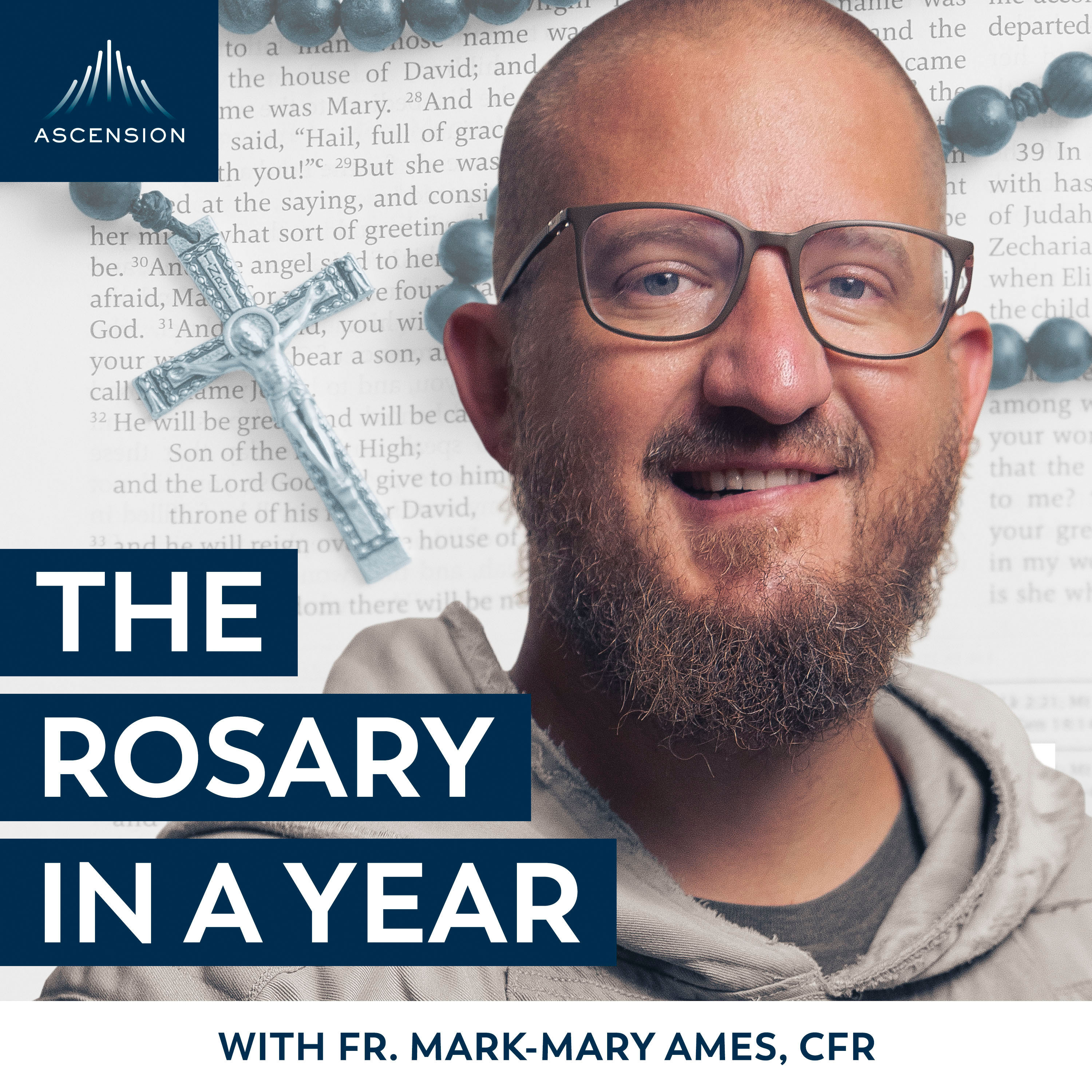
The Rosary in a Year (with Fr. Mark-Mary Ames)
Day 50: Rejoice in the Beauty
00:09:33
God takes our ordinary and turns it into the extraordinary. Fr. Mark-Mary leads us through a meditation on the mystery of the Visitation, focusing on the Magnificat, describing how Elizabeth’s words of joy turn into song in Mary. Similarily, God enters the narratives of our lives, turning our prose into poetry and song, making our lives into something beautiful. Today’s focus is the mystery of the Visitation and we will be praying one Our Father, three Hail Marys, and one Glory Be.
Loading summary
Transcript1 lines
- [00:00]
A
Foreign Mark Mary with Franciscan Friars of the Renewal and this is the Rosary in a Year podcast where through prayer and meditation, the Rosary brings us deeper into relationship with Jesus and Mary and becomes a source of grace for the whole world. The Rosary in a Year is brought to you by Ascension. This is day 50. To download the prayer plan for Rosary in a year, visit ascensionpress.com rosaryinayear or text on R I Y to 33777. You'll get an outline of how we're going to pray each month and it's great way to track your progress. The best place to listen to the Podcast in the Ascension app. There are special features built just for this podcast and also recordings of the full Rosary with myself and other friars. I encourage you to pick up a copy of the Rosary in a Year Prayer Guide, a book published by Ascension that was designed to complement this podcast. You'll find all the daily readings from Scripture, Saint reflections and beautiful full page images of the sacred art will be Reflecting on the second joyful mystery is the visitation Luke chapter 1, verse 39:56 in those days Mary arose and went with haste into the hill country to a city of Judah, and she entered the house of Zechariah and greeted Elizabeth. And when Elizabeth heard the greeting of Mary, the child leaped in her womb and Elizabeth was filled with the Holy Spirit. And she exclaimed with a loud cry, blessed are you among women, and blessed is the fruit of your womb. And why is this granted me that the mother of my Lord should come to me? For behold, when the voice of your greeting is came to my ears, the child in my womb leaped for joy and blessed is she who believed that there would be a fulfillment of what was spoken to her from the Lord. And Mary said, my soul magnifies the Lord, and my spirit rejoices in God my Savior, for he has regarded the low estate of his handmaiden. For behold, henceforth all generations will call me blessed, for he who is mighty has done great things for me, and holy is his name and his mercy is on those who fear him from generation to generation. He has shown strength with his arm he has scattered the proud in the imagination of their hearts. He has put down the mighty from their thrones and exalted those of low degree. He has filled the hungry with good things, and the rich he has sent empty away. He has helped his servant Israel in remembrance of his mercy as he spoke to our fathers, to Abraham, and to his posterity forever. And Mary remained with her about three months and returned to her home. My Brothers and sisters, prose is really important in human culture and expression and in history. It is in prose that narratives are told, that stories with full human experiences are communicated. But prose has limitations. There's something that poetry and the poets can offer that gives meaning and beauty and emotion to the events of history and the movements of the heart that prose simply cannot do justice to. And then again and again and again, the poetry has entrusted their work to the composer. To give it flesh, to give it movement, to give it more emotion, to take what it is and to magnify it. I believe, my brothers and sisters, that we see this movement from prose to poetry being culminated in song, in what we refer to as the second joyful mystery through visitation. How does it begin? It begins with prose. In those days, Mary arose and went with haste into the hill country. She entered the house of Zachariah, and she greeted Elizabeth, right? She speaks with prose. She offers a greeting to Elizabeth. And then we see the human events quicken and the emotion heighten. And when Elizabeth heard the greeting of Mary, the child leaped in her womb. And Elizabeth was filled with the Holy Spirit. And she exclaimed with a loud cry, blessed are you among women, and blessed is the fruit of your womb. And as the scripture continues and Elizabeth's greeting of joy comes to an end, poetry and song arise and flow from the hearts and the lips of the Blessed Virgin Mary. My soul magnifies the Lord, and my spirit rejoices in God my Savior, for he has regarded the low estate of his handmaiden. And so begins this great song of Christian praise and poetry that we call the Magnificat. Before the marvels of God and the mysteries of our salvation, we need more. We need more than just narrative. We need more than just prose. We need poetry, and we need song to fully express our hearts and our joy. And my brothers and sisters, I believe this is the movement, the ongoing movement of God and of our response. God enters our narrative. God enters our ordinary. He enters our prose, and he makes it poetry and then song. And so, my brothers and sisters, like with Mary, as we say before the Lord in the mystery, like, be done unto me according to your word. What we are saying is, lord, I give you permission to take my prose, to take my ordinary, to take my narrative and turn it into poetry and song, to make of my life something beautiful, Be it done unto me, Lord, according to your word, make of my life something beautiful. And I'm not an artist, but so many artists that I speak to, they emphasize just the importance of beauty being a good for its own sake, before the beautiful and the great works of art, we don't always have to ask the question, like, what does it mean? What do I do with it? Like, sometimes we just behold it and sit before it and value it for itself. That's what I'm going to invite you to do before the beauty of the events that we have. Just read, just ponder it, just marvel in it. Rejoice in the beauty of this interaction between Mary and Elizabeth and the children in their womb. And the expressions of joy and of song simply remain before its beauty. And together. Let us pray. In the name of the Father and of the Son and of the Holy Spirit. Amen. Our Father, who art in heaven, hallowed be thy name. Thy kingdom come, Thy will be done on earth as it is in heaven. Give us this day our daily bread and forgive us our trespasses as we forgive those who trespass against us. And lead us not into temptation, but. But deliver us from evil. Amen. Hail Mary, full of grace, the Lord is with thee. Blessed art thou among women and blessed is the fruit of thy womb, Jesus. Holy Mary, Mother of God, pray for us sinners now and at the hour of our death. Amen. Hail Mary, full of grace. The Lord is with the. Blessed art thou among women and blessed is the fruit of thy womb, Jesus. Holy Mary, Mother of God, pray for us sinners now and at the hour of our death. Amen. Hail Mary, full of grace. The Lord is with the. Blessed art thou among women, and blessed is the fruit of thy womb, Jesus. Holy Mary, Mother of God, pray for us sinners, now and at the hour of our death. Amen. Glory be to the Father and to the Son and to the Holy Spirit. As it was in the beginning, is now and ever shall be, world without end. Amen. In the name of the Father and of the Son and of the Holy Spirit. Amen. All right, thanks, everybody. Thanks for joining me and praying with me again today. Look forward to continuing this journey with you again tomorrow. Poco. Poco. Friends.