
Podcast
The Ruffian
Hosted by Ian Leslie · EN
10episodes
Episodes
Newest firstAll episodes

PODCAST: How To Think About AI and Jobs
Jun 1900:36:17Tap to summarizeFor this episode I’m delighted to welcome Benedict Evans to discuss AI and jobs and much else besides. Benedict is an independent technology analyst who has spent 25 years thinking about tech-based industries. He’s worked in Britain, Silicon Valley, and New York, where he’s now based. He’s is one of the most respected voices in tech, which is why his newsletter has nearly 200,000 subscribers. In a field dominated by spurious assertions he is distinguished by his deep knowledge and understanding of the history and economics of technology, and his forensic mind.This conversation is in two parts. In part one, free for all, we focus on AI and jobs. There’s a lot of wild hype around this topic. Benedict is the antidote to it. He breaks the question down and provides a framework for thinking about it. Part two, for paid subscribers, will be coming soon. I was recovering from a horrible cold when we recorded this so I was rather groggy, but it’s OK because Benedict was brilliant. I hope you enjoy our conversation. This is a public episode. If you'd like to discuss this with other subscribers or get access to bonus episodes, visit www.ian-leslie.com/subscribe
Transcribe →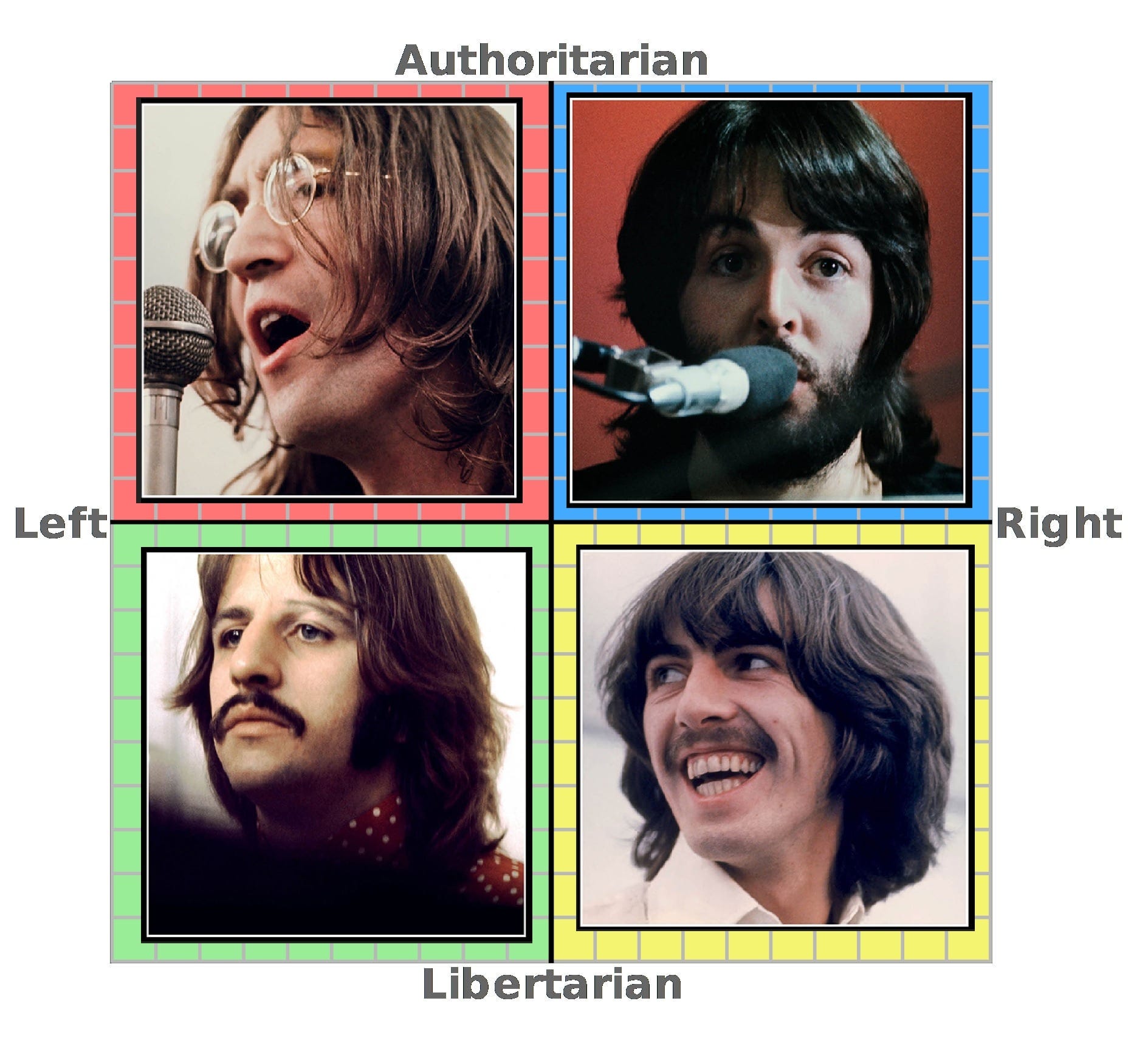
NEW POD: Cass Sunstein On The Politics of The Beatles
May 1900:50:16Tap to summarizeI'm delighted to say that my guest for this episode is Cass Sunstein, a professor at Harvard Law School and one of America's pre-eminent legal scholars. Cass has been an adviser to President Obama and President Biden. He's also the author or co-author of numerous excellent books on a staggering variety of topics, from behavioural economics to conspiracy theories to fame to climate justice and more.This conversation was sparked by his latest book, On Liberalism, a thought-provoking re-examination of what it means to be a political liberal in an age when liberalism is under attack. Cass is great at making connections between politics and culture, so I naturally wanted to talk to him about the Beatles, and whether they can be said to embody a liberal outlook on life. We start off by talking about his first love, Bob Dylan.Paid subscribers will be able to access the second part of this conversation, published soon, in which we range further afield. Enjoy! This is a public episode. If you'd like to discuss this with other subscribers or get access to bonus episodes, visit www.ian-leslie.com/subscribe
Transcribe →
NEW PODCAST: Why Do We Keep Getting Education All Wrong?
Feb 500:54:31Tap to summarizeEver since I wrote a book about the trait of curiosity I’ve taken an interest in the science of learning and education. In the book, I criticised the popular idea that teaching children facts and knowledge somehow gets in the way of their curiosity and creativity. All evidence points in the opposite direction. And yet a thousand Ted Talks have been launched on the idea that we should dispense with fact-based curricula, with instructional teaching, with learning by rote, with classrooms of kids sitting in rows, and so on. Such practices are said to be relics of the industrial age which must to swept away so that kids can follow their curiosity, wherever it takes them.This remarkably seductive narrative is almost completely unsupported by evidence - either the evidence of what works in school systems around the world, or evidence from cognitive science. It persists because it taps into some old and potent myths about learning.I recently read a new book called Instructional Illusions which tackles some of these myths head on. I’m delighted to have one of the book’s authors, Carl Hendrick, on the pod. Carl began his career as an English teacher in an inner city London school, before moving into education research. He is a professor at Academica University of Applied Sciences in Amsterdam where he leads research projects that bridge cognitive science, educational psychology, and classroom practice.We talk about what so many ‘education experts’ get wrong; about why they consistently underestimate the importance of hard work and focused learning; why intrinsic curiosity is overrated; why having fun in the classroom shouldn’t be confused with actual learning, and lots more. I hope you enjoy our conversation (and maybe learn something). This one is for paid subscribers only. This is a public episode. If you'd like to discuss this with other subscribers or get access to bonus episodes, visit www.ian-leslie.com/subscribe
Transcribe →
New Podcast: Books of the Year with James Marriott
Dec 1700:38:47Tap to summarizeI know what you’ve been thinking: it’s been too long since the last Ruffian pod! Well, it’s back. Earlier this week I sat down with returning guest James Marriott, of The Times, to talk about our year in reading. I published my Top Ten reads of 2025 a few weeks back. You can read James’s list on his excellent Substack, Cultural Capital.James is currently hard at work on a book about the decline of literacy so doing this pod was a welcome break from, er, writing and reading.This is Part I of a two-part conversation. Part II, which will be for paid subscribers only, arrives tomorrow. In that one, we talk about some of the books we didn’t like and discuss what kinds of thing stop us from reading a book.I hope you’ll get some last-minute present ideas here. Enjoy! This is a public episode. If you'd like to discuss this with other subscribers or get access to bonus episodes, visit www.ian-leslie.com/subscribe
Transcribe →
New Podcast: Jemima Kelly's Adventures With The Radical Right
Oct 1301:03:59Tap to summarize“It is a sunny Sunday in June and I am sitting in a Porsche with a man I recently matched with on Bumble, two Spanish sighthounds, an intersex DJ and Curtis Yarvin. “Let’s go Team Fascist!” shouts my match as he pulls away from the grand Georgian terrace in Pimlico where Yarvin has spent the morning chatting about Austrian economics with 86-year-old crossbench peer and Keynes biographer Lord Skidelsky.”This is how Jemima Kelly’s recent Financial Times longread opens and it only gets crazier after that. The last time Jemima came on the show she talked about her visit to Mar-a-Lago, court of the then ex-president, Donald Trump. After reading her entertaining account of a garden party thrown by the UK branch of the Very Online Right, in honour of Curtis Yarvin (J.D. Vance’s pet intellectual), I knew had to have her back. Jemima is a brilliant storyteller and a shrewd judge of character. In this conversation she offers an eye-popping account of the party along with acute insight into the nature of this increasingly influential political movement.In Part Two, which will be released shortly, for paid subscribers only, I ask Jemima what it’s like to report stories in which she’s surrounded by weird people with unsavoury views. How does she get them to reveal so much to her, while maintaining her integrity? Don’t miss this one! This is a public episode. If you'd like to discuss this with other subscribers or get access to bonus episodes, visit www.ian-leslie.com/subscribe
Transcribe →
New Podcast: Daisy Christodoulou on How Technology Is Making Us Stupid
Sep 1800:47:59Tap to summarizeIn this episode of The Ruffian’s podcast we ask whether the price of using increasingly smart machines is increasingly stupid humans. My guest is Daisy Christodoulou, director of education at No More Marking, and my favourite thinker on learning and education.Daisy recently wrote a Substack post asking whether we live in a ‘stupidogenic society’ - just as it’s said that we live in an ‘obesogenic environment’ - one that tends to cause stupidity. She argues that our use of technology to substitute for cognitive skills has got to the point where human intelligence is in decline, a claim she supports with evidence. Daisy is no Luddite. She works for an edtech company. She acknowledges that modern technologies are incredibly useful, indeed indispensable. But she’s interested in the trade-offs we’re making between utility and intelligence, and in what the optimal point might be. She also gives her view on how schools should adapt to this environment.I hope you enjoy our excellent, somewhat intelligent conversation, which is available on all the usual podcast platforms. This is a public episode. If you'd like to discuss this with other subscribers or get access to bonus episodes, visit www.ian-leslie.com/subscribe
Transcribe →
Podcast: Why Is Britain So Depressed?
Sep 800:49:13Tap to summarizeBritain is in a depression. Not an economic one - we're still growing, albeit slowly - but a cultural and political one. We are running low on optimism, self-esteem and, most dangerously, on hope - on the sense that we can fix things.Voters have become deeply cynical about the political class; support for both main parties has collapsed. They’re turning to Reform, not necessarily because they believe Nigel Farage will fix anything, but because he captures the almost nihilistic mood. How can Britain get out of this moment? To put it another way, how can it get happy again? Broadly speaking, there are two paths out of here, which in reality have to be travelled at the same time. The first is economic growth. But higher growth won't come unless we make progress down a second path - a cultural and psychological one. We need people to believe that they can improve things - improve their lives, their communities, their country. One way of putting this is that we need a more “high agency” culture. That's what I'm going to discuss with returning guest James Kanagasooriam, chief research officer at FocalData. James is a pollster, and one of the most brilliant political and cultural analysts around. He’s just completed a major research project on agency among British voters. Agency is a concept that’s become popular in Silicon Valley (James credits Cate Hall, the poker player, businesswoman and writer, for shaping his thinking on it). It’s essentially about believing you can make things happen. James has created a way to measure it at scale, and the results are fascinating. This is a public episode. If you'd like to discuss this with other subscribers or get access to bonus episodes, visit www.ian-leslie.com/subscribe
Transcribe →
NEW PODCAST: Max Bennett On the Evolution of Human Intelligence
Aug 2001:07:24Tap to summarizeA few weeks ago I posted an extract from a brilliant book called A Brief History Of Intelligence, by Max Bennett. It proved really popular with Ruffian readers, so I’m delighted to have Max on the podcast to discuss some of the questions his book raises.In Part One, which is free for everyone, and on all the usual podcast platforms, I ask Max about the concept of 'reinforcement learning' and what makes it so important to both human and machine intelligence. We talk about the differences between how AIs learn and how humans learn. We also get into the evolution of imagination - the human ability to simulate different worlds and different futures. (It's all fascinating but I strongly recommend checking out that part of the discussion in particular.)In Part Two, which will land in a few days for paid subscribers only, I ask Max about something he doesn't get into in the book - the future of AI. How does his deep understanding of human intelligence inform his thinking about where we're headed?Enjoy! This is a public episode. If you'd like to discuss this with other subscribers or get access to bonus episodes, visit www.ian-leslie.com/subscribe
Transcribe →
NEW PODCAST: Helen Thompson on Britain's Next Crisis
Jul 22, 202500:39:38Tap to summarizeThere is a growing sense that Britain's fiscal position is unsustainable. We’re spending more than we’re raising in tax, our debt is growing faster than the economy, and bond market scepticism about the government’s ability to fix any of this is driving up our interest payments.We may be heading for a crisis that will make Liz Truss’s mini-budget debacle look like a minor wobble. It would cause a lot of economic harm. It could also force us to rethink our priorities, as happened in the wake of the IMF bailout crisis in 1976. In order to think about what a crisis would look like and what its effects might be, I invited Helen Thompson on to the podcast.Helen is professor of political economy at Cambridge University. She is an expert on political and economic history, with a specialism in the geopolitics of energy production. Helen will be well known to many of you from her podcasting and journalism. In recent years she's become a widely influential thinker and writer beyond the academy, renowned for the depth and seriousness of her analysis. I can't think of a better person to ask about Britain's next crisis.This episode is a two-parter. In part one, which is free for all (Search ‘The Ruffian’ on all the usual podcast platforms), Helen talks about the forces pushing us towards crisis point, why she thinks the reckoning could come very soon, and why the current government's attempts to head it off are doomed to fail. We discuss whether and how a crisis might lead to a reset of our political priorities, with reference to past crises. In part two, which will be for paid subscribers only, we talk about what a crisis would mean for our Net Zero target. We also ask whether Nigel Farage's Reform has peaked too early. While it’s not very cheery, I found this a fascinating and eye-opening conversation. I hope you will too. This is a public episode. If you'd like to discuss this with other subscribers or get access to bonus episodes, visit www.ian-leslie.com/subscribe
Transcribe →
New Podcast: Alison Gopnik On Whether the AIs Can Think For Themselves
Jul 16, 202500:53:11Tap to summarizeAre our new AI overlords tools intelligent in the same way humans are? Is an AI agent truly, well agentic? Does it have a mind of its own, so to speak? Might it just decide to destroy us? Or is this completely the wrong way to think about it?In this episode I get into these questions with Professor Alison Gopnik, professor of psychology and affiliate professor of philosophy at UC Berkeley, where she's also a member of the AI Research Group.As many of you will know, Alison is a brilliant and profound thinker on cognition, innovation, and learning. She bridges the worlds of developmental psychology, philosophy, and technology. Her superb books on the science of childhood learning were a big influence on my own book about curiosity..I invited Alison on to discuss a recent paper she co-authored which argues that AI is not an ‘agent’ but a ‘cultural technology’ like the library or the printing press - just the latest in our long history of finding new ways to organise and transmit human information at scale. We discuss that and much else besides. This was so much fun to record. Alison gives us a scintillating and witty tour of her thinking about thinking; human and machine. This is a public episode. If you'd like to discuss this with other subscribers or get access to bonus episodes, visit www.ian-leslie.com/subscribe
Transcribe →