← The Run-Through with Vogue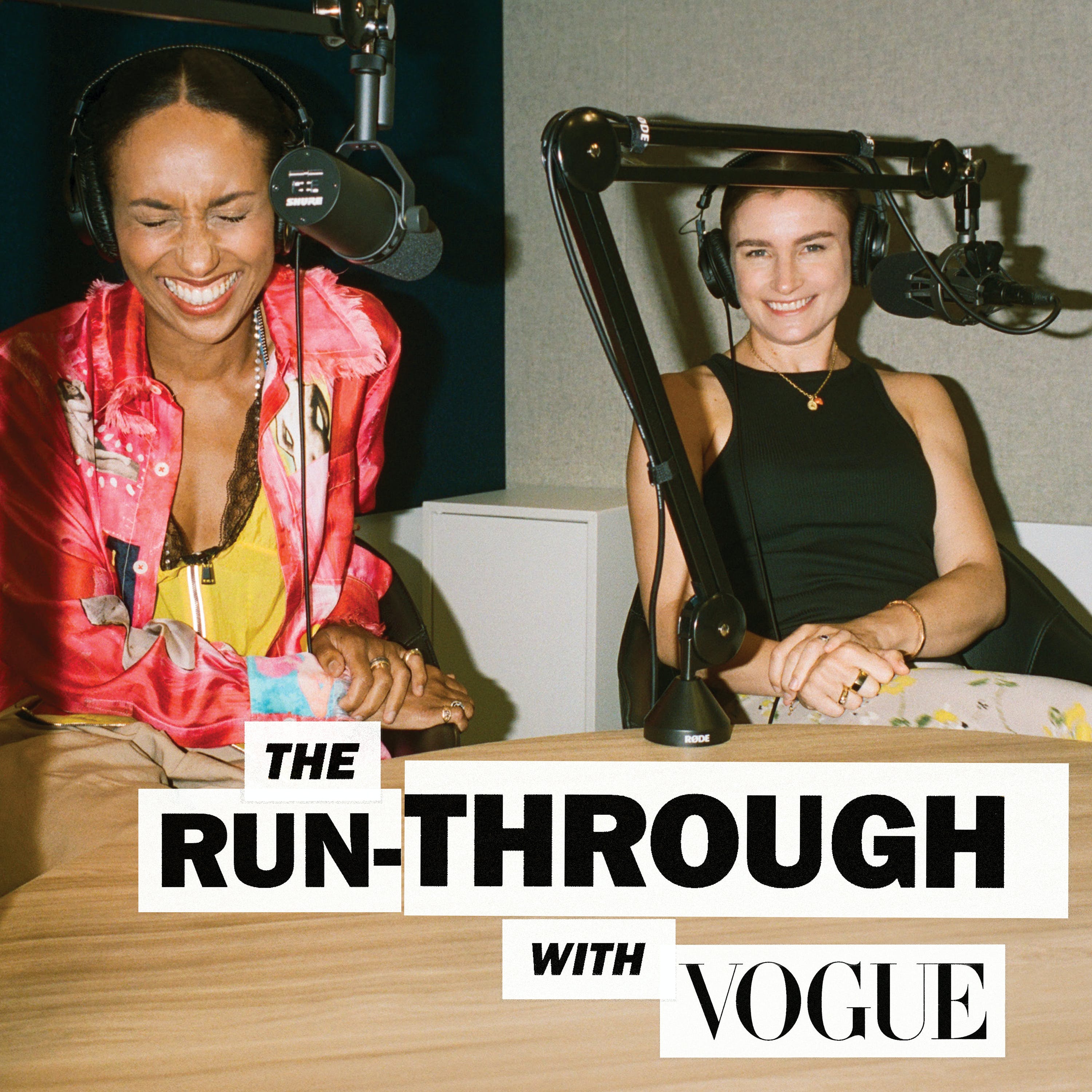
The Run-Through with Vogue
50 Years of Armani with Jim Moore, GQ’s Creative Director at Large
00:27:55
Loading summary
Transcript55 lines
- [00:01]
Intuit Sponsor
This is a message from sponsor Intuit. TurboTax Taxes was waiting to get your money back, which turned into worrying about getting your money back. Now taxes is matching with a TurboTax expert who can do your taxes today and help you get up to a $4,000 refund advance loan fast. Get an expert now on TurboTax.com only available with TurboTax Live full service refund has $0 loan fees and 0% APR refund advance loans may be issued by a 1st Century Bank NA or we term supplies subject to credit approval.
- [00:40]
Nicole Phelps
This is the run through. I'm Nicole Phelps. Today I'm joined by legendary menswear expert and GQ creative director at large, Jim Moore. Giorgio Armani turned 90 this year and he's looking ahead to celebrating his 50th anniversary of his brand in 2025. This year on October 17, will be the first time that he's shown his main collection outside of Milan. I thought it'd be a great time to look back at how Armani changed the codes of not just menswear, but also women's wear over the past five decades. And there's no one better to do it with than Jim Moore. And you will soon find out why. Okay, let's get into it. Thank you, Jim, for coming. I'm so happy you're here.
- [01:24]
Jim Moore
Thank you, Nicole. It's amazing being here.
- [01:26]
Nicole Phelps
Everybody's got a fashion gateway drug. And for me, it was unzipped, the 1995 movie about an Isaac Mizrahi. I want to know, was American Gigolo yours? Famously, Armani did Richard Gere's wardrobe for that. And you were at GQ when the movie came out, right?
- [01:45]
Jim Moore
Totally my gateway drug. A couple years before I was an intern at GQ, I lived in St. Paul, Minnesota, and I saw a couple movies. One was Lipstick and the other one was Mahogany. And they were fashion movies. Not that I could put myself into those characters, but it got me excited to maybe get get out of the small town and move to New York. I had parents that were like, go follow your dreams. So I ended up in New York. When I started my internship at gq, it was right at the cusp of when Conde Nast purchased the magazine. They were owned by Esquire before. So I came on board as an intern and I just loved sitting on the floor, arranging socks by color, packing trunks, whatever. And then when I was able to go on full time, which was later in 79, they were working on a cover for American Gigolo. And it's when the Idea came up that this had to be on the COVID This was a big moment because up until then, fashion and film really didn't kind of go together, so to speak. But Armani's incredible impact on fashion and tailored clothing and Richard Gears wasn't bad to look at and looked pretty good in a suit. That all kind of happened at once. So that March 80 cover would have been the first cover that my name was in the masthead of. Although I didn't work on that shoot. It was January of 1980 that it came on full time. And that kind of landed on my desk with my name on the masthead a couple months later. And it was pretty thrilling.
- [03:31]
Nicole Phelps
What was different about those suits that Richard Gere wore? What was distinctive? What felt different from the fashion that had been in the air previous to that moment?
- [03:44]
Jim Moore
Well, I think if you thought of what was Armani's suit, what is Armani's suit today? It is obviously a aspirational piece of clothing that men look up to in those days. It was the first time we really saw men looking sexy in a suit, you know, in a sexy, masculine way. I mean, Armani was very, you know, he bucked against the trend of everything being a little bit shoulder padded and heavy fabrics and pinstripe and all of that. And sure, he did his pinstripe suits, but there was a fluidity to his clothes and a sexiness and an ease. And he brought that into the world of menswear. And it was kind of on the coattails of a movement in the 70s that was happening in Milan, but also most of Europe. The Italian tailors especially were softening up a little bit with their fabrics. And the Italians have always been the kings of menswear. And they've always had the best fabrics, but the fabrics were always a little bit. The linens were a little bit stiff and the gabardines were a little bit thick. And Armani's like, how can we kind of soften this up? How can we take the interfacing out? How can we, you know, do a tie that's unlined? How can we take the shoulder pads out? How can we create something that's a little bit more fluid still? Kind of drapes on the body, drapes closely to the body, but is much more moves with the man and has a little bit more of a sensuality. So the movie is a very sexy movie. It's about a man and a woman and a beautiful wardrobe of Armani suits that he lays on this incredible bed and starts to put together. So I would say, you know, at least for that moment in the film. Film, the suit is the star of.
- [05:30]
Nicole Phelps
The film, Richard Gere, at his most devastatingly good looking.
- [05:34]
Jim Moore
Absolutely.
- [05:35]
Nicole Phelps
So thinking back to that moment, was Armani's effect on menswear instantaneous? Do you remember people in your orbit or in fashion, what they thought? Was it love at first sight? Did it take a while for the Armani effect to go into effect?
- [05:53]
Jim Moore
I think it was pretty rapid fire. I mean, I didn't really enter the arena until I didn't get to New York till 77. He started in 75. And all I remember is, like, even when I was an intern, I would hear the fashion director and the fashion editors talking about Armani and Bisile and Gianfranco, Ferre and Zegna and all these Italian brands. And the Italians were really starting to percolate to the top. They were really. They were doing some really innovative things. And, you know, to be fair, everybody was kind of in their own corner. The Americans were doing incredible work. Ralph Lauren was kind of coming into his heyday, and the kind of modern, preppy American look was really celebrated in those days. We had more menswear designers than we do today, even. So the Italian look, the French look, the American look, they were quite diverse. But the Italians were the ones that we always had our eyes on. And I remember the Italian collections, as we used to call them, always had the most pages because there was the most news, because, you know, Versace was doing something, you know, a little bit more colorful, and Ferre was doing something a little bit more grand and nostalgic. And Armani was doing something a little bit more modern and looked harkened a little bit back to the 20s and the 40s, but was. But was really future thinking in a way. So Armani was tossed around a lot, and it wasn't really until a couple years later that he built up his momentum and his empire, but he certainly started at rapid pace.
- [07:36]
Nicole Phelps
Okay, we're going to take a quick break.
- [07:48]
Nomi Frye
I'm Nomi Frye.
- [07:49]
Vincent Cunningham
I'm Vincent Cunningham.
- [07:50]
Alex Schwartz
I'm Alex Schwartz. And we are Critics at Large, A podcast from the New Yorker. Guys, what do we do on the show every week?
- [07:57]
Vincent Cunningham
We look into the startling maw of our culture and try to figure something out.
- [08:00]
Alex Schwartz
That's right. We take something that's going on in the culture now. Maybe it's a movie, maybe it's a book. Maybe it's just kind of a trend that we see floating in the ether.
- [08:09]
Nomi Frye
And we expand it across culture as Kind of a pattern or a template.
- [08:15]
Vincent Cunningham
We talked about the midlife crisis, starting with a new book by Miranda July. But then we kind of ended up talking about Dante's Inferno.
- [08:21]
Nomi Frye
You know, we talked about Kate Middleton, her so called disappearance. And from that we moved into right wing conspiracy theories.
- [08:29]
Vincent Cunningham
Alex basically promised to explain to me why everybody likes the Beatles.
- [08:33]
Alex Schwartz
You know, we've also noticed that advice is everywhere. Advice columns, advice giving. And we kind of want to look at why. Join us on Critics at Large from the New Yorker. New episodes drop every Thursday. Follow wherever you get your podcasts.
- [08:56]
Nicole Phelps
So what about other early memories of styling? Giorgio Armani clothes for gq? You had this landmark moment for you when you put the American Gigolo cover. But what other memories stand out?
- [09:12]
Jim Moore
I think because he was such a force in menswear, in fashion at that point, he was considered for most stories because his suits were really at the forefront of what was happening in tailored clothing. And all of the Italians were softening up a little bit. You had movies on the cusp of coming out like Wall street, which were much more contained and much more. Their suits were more like gladiators in a way. That was really their uniform. And it was a little bit more stiff. But Armani was kind of pushing against that and just getting back to going to the shows. When I did finally get the opportunity to go to the shows in the mid-80s, I remember seeing all the shows and they were all great, but Armani would always be the last one. And you would see that show and it would just be, you know, goosebumps for 13 minutes. And the reason it was goosebumps is because you'd never seen a suit walk down a Runway, have, like, the swagger that Normani's suit had. And one of the standout things for me was the fact that his color palette was so unusual and so hard to describe. It's like, is it a toasty beige, a smoky olive, a chalky taupe? You know, it's like. Or maybe it's none of those colors you couldn't describe. And fabrics you just wanted to kind of like, touch. And he was showing then in a much smaller theater. So literally the models would come by and you'd feel the. You'd feel the swish of the air and the fabrics. You almost wanted to grab them. So he was giving us something we hadn't seen before, which was super exciting.
- [10:52]
Nicole Phelps
I think we use the word grayish to describe it. Sort of gray, sort of beige greige.
- [11:00]
Jim Moore
And kind of the first designer to do monochromatic you know, like a whole look to your point, all in gray, but in different textures. So it didn't feel. It still felt really special. I mean, the clothes were luxurious. They were expensive, they were aspirational, and they were definitely going on every GQ shoot.
- [11:20]
Nicole Phelps
So you've styled 540 GQ covers over your career.
- [11:28]
Jim Moore
Sounds right.
- [11:30]
Nicole Phelps
How many of them would you say were Armani? Or do you remember special ones that had Armani on the COVID Remember the.
- [11:39]
Jim Moore
Movie the Usual Suspects?
- [11:40]
Nicole Phelps
Yes.
- [11:41]
Jim Moore
So we did a photo shoot. We were. As Vogue is, we're always trying to kind of back into what's happening in popular culture. And we heard about this movie, the Usual Suspects, that was gonna be this incredible movie. And, you know, no one really knows past the 20 minutes that they show you as a screener. But the cast was amazing with so many incredible actors. So we decided that we would dress these guys all in Armani because they were all different shapes and sizes. You had Benicio Del Toro, who's like, you know, six five, a big guy. And then, you know, some of the actors were a little bit smaller. And Chaz. Paul Materi was like, you know, 44 long or something. And, you know, I just got the idea, like, let's shoot them all in Armani because it's kind of a telling a double story here. They're gonna look great. You know, the suit is kind of like one of the stars of that movie. And also, you know, it kind of brings home the fact that everyone looks great in Armani. If you put an Armani suit on, you're like, good to go and conquer the world.
- [12:49]
Nicole Phelps
You're golden. There's something hard to describe the way that clothes make you feel, but something about what Armani does gives men and women who wear the clothes that sensation. And can you go into it a little bit more? What is the magic of what he's doing that creates that feeling of confidence, but also quite relaxed at the same time? I mean, what makes him unique?
- [13:17]
Jim Moore
I mean, that's a super good question, I think. You know, menswear gets a bad rap sometimes, because you're really talking about no matter which way you invented or reinvent it, it still is about 20 pieces. You know, it's a little bit different than women's. It's more of a system of dressing. It's more of a wardrobe, so to speak. And he was the first one to kind of disrupt that claim and say, you can wear a very elegant suit on the weekend. You just put a cashmere T shirt under it. Or you can wear this suit to a black tie event, as long as you wear a black shirt and a black tie under it. And so he was kind of disrupting the codes of menswear a little bit. So instead of it being like, you need a blazer with gold buttons, you need a white starched shirt, you need a striped rip tie, all of these kind of codes of menswear, he was coming in saying, yeah, I love the suit, I love the shirt, I love the tie, but why can't it be something a little bit more fluid, something a little bit more exciting? And so he was a very early disruptor in changing the landscape of how men looked at themselves in suits. You know, because suits are, you know, it's a coat of armor. A guy puts on a suit, he goes to work, he gets compliments cause he's wearing something tailored. But after a while, the suit is like wearing the guy. Because, you know, after a while, whether it's the interfacing of the shoulder pads or the way it buttons or whatever, the suit kind of gets old and it starts to feel like, oh, I've got to wear this suit. And Armani brought joy back to tailored clothing. He brought this idea that, like, you're gonna feel comfortable in your suit, you're gonna feel comfortable in your tailored pieces. You're gonna want to wear one of my top coats with a cashmere hoodie underneath and a pair of jogging pants. You're gonna, you know, he taught us how to be an elegant Italian, you know, and have that kind of cosmopolitan look no matter where we lived, and gave us the confidence to wear something a little bit softer and not so hard edged. And I think that really changed things forever.
- [15:29]
Nicole Phelps
Have you worn a lot of Armani over the years?
- [15:32]
Jim Moore
I remember buying my first Armani suit, which was even with my press discount in those days was a lot of money because it was expensive. And I opted for an Emporia Armani suit because the price was a little bit less. But I remember putting it on and just it was a black crepe suit. And just the realization a lot of times stylists in this business like myself, it's like we put on a uniform and then our job is to dress other people. But when we put on something really special, we really feel really special. When I put this black Pruermani crepe suit on, I thought, this is a suit that I'm going to wear all the time. I'm going to wear the jacket with a pair of jeans. I'm going to wear the suit to a formal event, I can, you know, I can. It becomes this thing that, you know, you don't need a lot of it. You just need the right pieces, and they're great investment pieces. So over the years, I had a beautiful shearling from Armani. I had some beautiful, beautiful top coat. And they were all very memorable pieces because they had a certain swagger that didn't overwhelm you, but definitely gave you a presence and a look.
- [16:44]
Nicole Phelps
So when Mr. Armani turned 90 this summer, you posted on Instagram and you said that he still has a lock on the aspirational wardrobe for men, and you used that term earlier in our conversation. What does that mean exactly? Especially given the fact that one of the hallmarks of Normani suit is this sense of, like, ease. So how do you combine aspirational and ease?
- [17:11]
Jim Moore
You know, I think throughout menswear culture over the last 30 or 40 years, the Armani suit, he's not alone in this, but he certainly has the market on a suit that guys look up to. It might be even. You know, we all get excited about something that maybe we want, but it might be a little bit out of reach, Whether it be economically or maybe it's something we don't think we're going to get that much use out of, but we kind of want it right. It's like the thrill of the hunt. And Armani always provided that. He displays his clothing beautifully in all of his stores. It's a seduction, really, and it's like a retail seduction. And when you go into the store, you're treated beautifully. You're not met by people who are looking on their phones. They're there, they're professionals, and they're going to get you the suit that fits you right? So I think he. He ushered in this experience that maybe people weren't used to buying a suit was a little bit like, I gotta get this suit, I gotta get it tailored, and I gotta get out of here, and I just gotta. I need a black and a gray and a navy, and I gotta go home, you know? And tailoring was a drag where you go into Armani, it's like, this suit's gonna change the way you feel. It's gonna be maybe $1,000 more than you thought you were gonna spend. But the experience overall and the. The amount of wear you're gonna get out of the suit and the versatility of it is really going to take you far. And I think people believed in the American gigolo myth as not really being a myth. Like, if I buy an Armani suit, the compliments are gonna start pouring in and I'm gonna be able to walk into the corner office and maybe grab it for myself.
- [18:50]
Nicole Phelps
That's the secret of all good fashion, right? That it, you know, if I buy this, it is gonna make my life better.
- [18:57]
Jim Moore
Exactly.
- [19:00]
Nicole Phelps
More on Armani. The break.
- [19:09]
Nomi Frye
Ready to add a touch of Vogue to your collection? Browse shop.vogue.com for exclusive merch like limited edition mugs. And here's a treat. Get an exclusive 15% discount with code VOGUEPOD15 at checkout. Happy shopping. I have to admit, my very favorite part about the holidays is doing all of my gift giving and gift prepping. I love getting a special thing for everyone who are the hardest people on my list to shop for for quality gifts at an affordable price. My go to is Quince. Something that everyone needs in their closet in my opinion is Quince's iconic Mongolian cashmere sweaters which start at $50. Personally, I love getting these for my kids. They have Quince jeans and Quince cashmere pullovers. Whatever you're looking for. All Quint's Items are priced 50 to 80% less than similar brands. How do they do that, you wonder? By partnering directly with top factories and cutting out the cost of the middleman, which passes the savings on to you. Gift luxury. This holiday season without the luxury price tag, go to quince.com runthrough for 365 day returns plus free shipping on your order. That's Q U I n c e.com runthrough to get free shipping and 365 day returns. Quince.com runthrough pivoting a little bit.
- [20:44]
Nicole Phelps
Armani is turning 9 or is 90. He is celebrating his 50th year in business next year. That kind of longevity is just incredible. And you have to be better at just the suit to have that kind of longevity. And he was really at the forefront of fashion and celebrity, that Nexus and was doing a lot of dressing of celebrities in the early 90s, which is I think when I started watching the Oscars and becoming very interested in the fashion. And you started hearing his name a lot, I think at the 1990 Academy Awards. Women's Wear Daily called it the Armand because he dressed so many stars. So take us back to the late 80s, the 90s, when Art Cooper made that pivot to celebrities on the COVID of gq. How did it shake up fashion and what do you remember about that?
- [21:42]
Jim Moore
That was a great time. I mean, celebrities and fashion especially at the Runway shows, that was kind of unheard of, especially at the men's shows. But I remember specifically going to an Armani show in the late 80s, and, you know, there's this flurry of activity over in a section across from us. You know, what's going on? What's going on? What's going on? You know, the photographers move out of the way. The show starts. Still don't recognize any of these people. Turns out that they're all Italian soccer players that we wouldn't recognize. But in Italy, they're, you know, the kings. So they're all dressed impeccably, each one better looking than the next. They're all David Beckham's and Richard Gere sitting in the front row. And that was kind of like the first foray into, like, okay, so that's a great hook. You know, it's like, bring in the celebrities. Obviously the celebrities. It's a perfect storm. It's a symbiotic relationship. You know, the celebrities want to wear Armani. They are very loyal to Giorgio, and they started coming to the shows, and before you know it, it was, you know, an Italian pop star. And then all of a sudden, it crossed over into Hollywood. And then, oh, my gosh, there's George Clooney, there's Leo, there's Brad Pitt. And I think to this day, a lot of those actors still wear Armani. There's an incredible loyalness to him. And I feel like when I would shoot George Clooney and he. I'm not sure we had to exclusively put him in Armani, but that we put him in some Armani. And his description of Armani was like, I have a busy life, and everything he makes fits me perfectly. And whether it's off the rack or custom, we can't all have custom clothes. But he wore a lot off the rack. He said, whether it be a cashmere T shirt or a beautiful suit or a top coat, it just works for me, so why would I look anywhere else? So I think obviously there's a deal there. But it's like, I think he really genuinely loved the clothes. And even though he was outfitted by Armani, he was always interested in seeing the rack of clothes that I would bring with me and try some things on that maybe he wouldn't normally wear. But it was a uniform for him, and it made him feel comfortable, and it made him feel good, and he knew that the quality was great. He didn't have to worry about anything. And it probably didn't need that much tailoring and, you know, the Giorgio Armani universe is really built on a spirit, you know, a kindred spirit, but also like an aspirational spirit and a way to dress and a way to move through life and a way to be your own.
- [24:21]
Nicole Phelps
That's great. Your own celebrity. I always regretted that Armani did two shows for women's wear, and I always seemed to be invited to the one where the celebrities weren't. So I never got to see Leonardo DiCaprio in the front row, much to my chagrin. But another thing he did that was innovative, this was in the late 80s. He opened a VIP shopping office in LA. And you have this Milanese designer with an outpost in la. And he was at the forefront of that, which now is a massive. Everybody has huge celebrity teams, all of these big fashion brands.
- [25:01]
Jim Moore
Yes. I think. I mean, looking back at those days and thinking of today, not a lot has changed. I mean, he has the same people in place in LA. Wanda McDaniels and her crew. And that's another thing that comes with the Armani empire is like, there's a lot of loyalty within the company. There's a lot of people that have been there for many years that are in that industry. There are, you know, celebrities love to be dressed by Armani because they see familiar faces and they know that he has, you know, world class tailors. And so when he kind of opened this outpost, as you said, in la, I think it was just, you know, open arms and, you know, they came running, they came flocking to be dressed by him, the men and the women. And I think it was kind of a natural for the men to be dressed. I think the women's was. Came just a little bit later. I mean, he started off in men's and women's, but it's like he was kind of a men's designer that needed to break into women's. And I think when he did, it was embraced equally. The LA connection, the Hollywood connection was a very natural transition for him. And, yeah, he started. He opened the gates to red carpet dressing for sure.
- [26:22]
Nicole Phelps
And even today, there are young Hollywood stars. Hunter Schaeffer wore Armani at the Cannes Film Festival this year, styled by Dara Allen. So his appeal and his allure continues for many generations later. Why do you think young people are as turned on as the Jodie Fosters and the George Clooneys were in the 90s?
- [26:47]
Jim Moore
Well, I think it's a couple things. First of all, they know that there's, you know, Armani has the element of consistency and surprise. Right. Which I think is a good formula for any designer. But Armani kind of invented that idea that, you know, you're going to get these amazing fabrics and these amazing silhouettes. But I'm gonna surprise you a little bit, you know, each season. I remember in 1991, maybe it's 1990, excuse me. We did a story called the Armani Revolution, which is probably like our 10th Armani story. But this was when he live as if the clothing wasn't soft enough. This is when he literally like yanked the shoulder pads out, took all the horsehair lining out, made the suits as light as feather and completely unstructured, but very shaped still. And that was a revolution because although the Italians were making things lighter, no one was taking all of the lining out because soon as you take all the lining out, then you lose the shape of the jacket. So he found a way to keep the the shape in, but to make the suit very lightweight. So these innovations have occurred throughout his career, but have kind of backed into his philosophy where he can still make you look elegant, make you look cool, give you this kind of sexy swagger. You're the person in the room everyone's looking at. And I think the younger generation is keyed into that. And on the flip side of that, you know, who doesn't love the 90s? I mean, I just saw your amazing documentary on vogue in the 90s, and I think he's having a resurgence because that look, you know, Jodie Foster in that pantsuit or Robert De Niro in a suit or whatever, that's cool to a younger generation now. So Armani was never not cool, but now he's cool to a younger generation. We're seeing this, and I'm seeing this on designers mood boards. You know, armani from the 80s and 90s, as it should be. He's an eternal designer, so he should constantly be inspiring all of us, which he has been.
- [28:51]
Nicole Phelps
I do love how fashion moves in these cycles. And both of us have been in the industry long enough to have lived through the earlier cycle. It's fascinating, isn't it, how it works, how everything comes back around?
- [29:07]
Jim Moore
It is. And it is such a cycle. It's cyclical and it's recyclable and it's. But it does always come back in a new way. You know, we're at a really exciting time now because we have a lot of designers that are pushing the envelope a little bit. We have, you know, if you look at someone like Jonathan Anderson, he's taking clothes and really he's celebrating new silhouettes, but he's also dipping into other pots. You know, he's finding artisans that have been around for years that no one knows about and incorporating their work into the clothes. So I think, you know, I'm super proud and excited about the new generation. But I would think that, you know, maybe somewhere in there, when I see a dress looking very fluid or if I see a suit that feels like it's a little bit oversized and has a beautiful flowing pant and might harken a little back to the 40s, might have that Hollywood waist, which is kind of of back in style again, I would have to say that somewhere in there is an essence of Giorgio Armani. So I think he's had his, he's had his fairy dust on everything.
- [30:19]
Nicole Phelps
Thank you, Jim.
- [30:20]
Jim Moore
Thank you, Nicole.
- [30:28]
Nicole Phelps
That's it for the Run Through. See you Thursday.
- [30:38]
Nomi Frye
The Run through is produced by Chelsea Daniel, Alex DePalma and Joanna Solotarov. It's engineered by Jake Loomis and James Yost and mixed by Mike Kutchman. Stephanie Kariuki is our executive producer and Chris Bannon is Conde Nast's head of Global audio.
- [31:04]
Jim Moore
From prx.