← The Run-Through with Vogue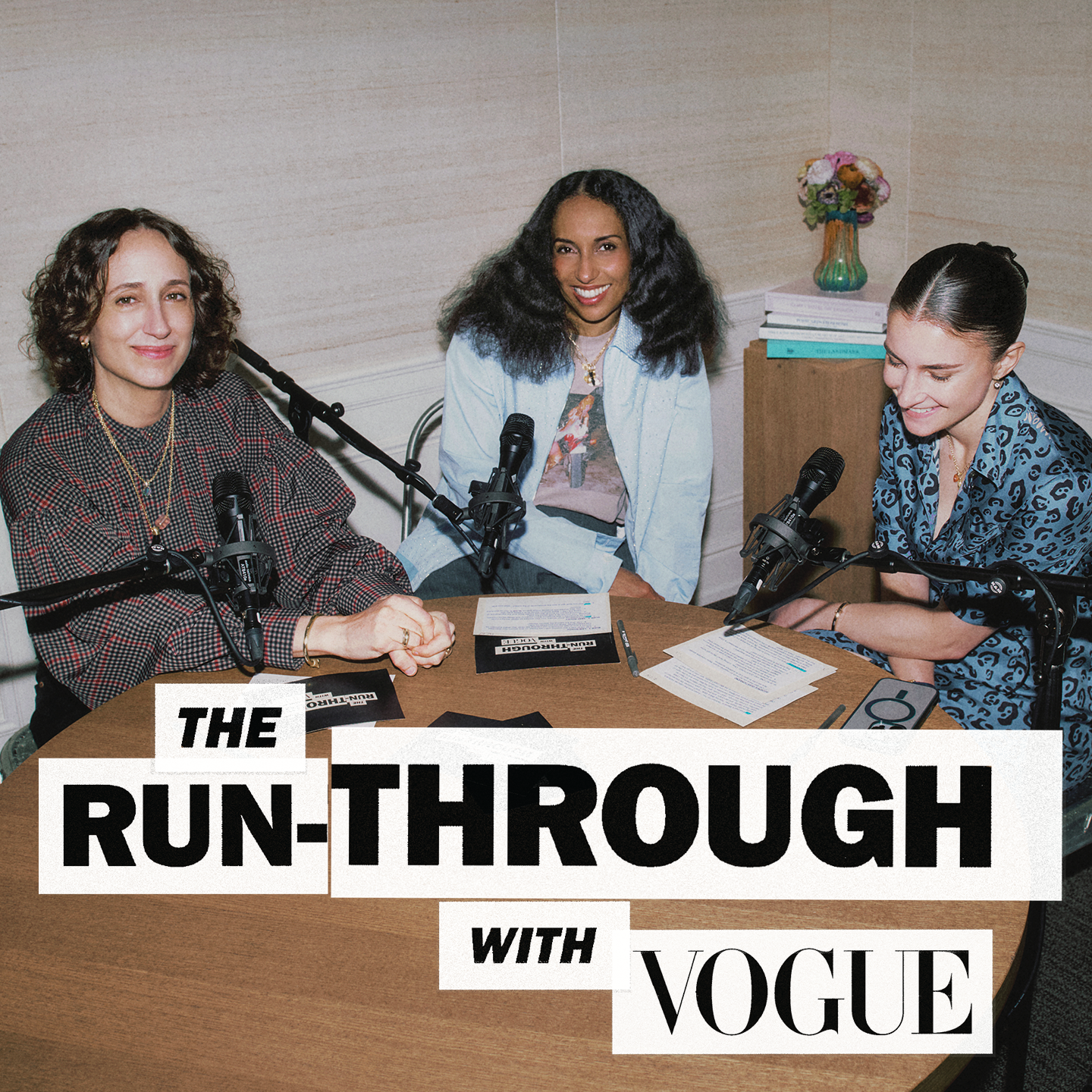
The Run-Through with Vogue
How La DoubleJ’s JJ Martin Created One of Fashion's Most Joyful Brands
00:42:17
Loading summary
Transcript78 lines
- [00:01]
A
Most people don't realize how much of their personal information is being bought and sold every day. Data brokers are making billions, pulling details about you from public records and the Internet, then packaging and selling it, usually without your consent. That's how your information lands in the hands of scammers, spammers, even stalkers. It's why you get endless robocalls and why ads seem to follow you everywhere. That's where Aura comes in. Aura actively removes your data from broker sites and keeps it off. They also instantly alert you if your information shows up in a breach or on the dark web. But Aura goes beyond data protection. With one app, you get a vpn, antivirus, password manager, spam call protection, dark web monitoring, and even up to $5 million in identity theft insurance. All backed by 24, 7 US based fraud support. Other companies might sell just credit monitoring or just vpn. Aura gives you all of it together at the same price. Competitors charge for just one service. Start your free trial today@aura.com safer protect yourself now@aura.com safer.
- [01:19]
B
This is the run through. I'm Nicole Phelps. Today I'm in the studio with the one and only J.J. marshall, the founder and creative director of Milan's fashion and lifestyle brand, LA Double J. Hi, cutie.
- [01:32]
C
JJ oh my gosh, I'm so happy to see you.
- [01:34]
B
This has been a long time dream of mine to have you here.
- [01:39]
C
Oh my God, I'm honored. I love my title and my lead up. Really appreciate it.
- [01:44]
B
The news, Peg, despite the fact that I've wanted you here for years, is that you have opened a townhouse, a store in the Upper east side of Manhattan that is not just a store.
- [01:57]
C
Correct. We're calling it the Lighthouse. And it's five different floors all dedicated to some different aspect of what we're doing at Double J. But this is the first store that is a real flagship, let's say all of the stores since I started in making them in 2021. We were kind of late to the game with retail, to be perfectly honest. But I wanted each of them be a raise your vibration station because that's our company mission. And so each one of them takes a different form of that and gives people an opportunity to connect with something. Hopefully that's not just commerce.
- [02:40]
B
So tell us what you mean by raise your vibration.
- [02:46]
C
It's an energetic thing. It's truly, I feel like the company is dedicated to just elevate energy, elevating experiences. So by that it's honestly making you feel good. If we're gonna just like, simplify this. And we don't need to go quantum, and we don't need to talk about spirituality. It's literally, how can we make you feel as good about yourself, as radiant, as connected to your life force as possible? And sometimes people come to us and they are just in it for the superficial thing, for the dress. For the dress, or for the plates or for the Murano glass or whatever it is. But I think subliminally, the energy is already working on them because we're very intentional about the patterns and the prints that we create. A lot of them have sacred geometries I'm super picky with. When we're developing prints, it's always an energy test. I'm never really looking with my eyes. I'm feeling actually into the frequency of the patterns and colors, as you may know, are connected with our chakras, which are our energy system inside the body. And then I would just say that there's, like, the joy and the warmth and the openness that people resonate with with the brand. So those are things that, like, I think anyone can relate to. And you don't really need to be have a spiritual IQ to get that. You just know that when you're coming in our world, you're gonna feel good about yourself, which is my aim.
- [04:19]
B
You do have a spiritual iq. So one of the elements of the store is called the Light Temple. Is that right? Tell us what the Light Temple is.
- [04:29]
C
So this is a space that is. So we have two floors of store, and then above that is the Light Temple. And this was a space where I wanted to allow people to have firsthand experiences of raising their vibration that don't have to do with buying something. So we started this in 2020 when Covid hit, and we started having these gatherings for our community that we called the Sisterhood of people that wanted to come together to find other ways to raise their vibrations. So whether it was meditating or energy healing or sound healing or channelings, and we started online and then went back.
- [05:13]
B
I went to one of those.
- [05:14]
C
I think you did. I'm pretty sure you came to Divine DNA Activation, if I'm not mistaken. So we started online. Then we moved it into the Divine Mother Cave in the basement of our Milan store. So that was another space. And then when we opened up our headquarters in Milan, we created a Gong Temple space. And we have about six classes a week there that are open to the public, and they're open to our employees. And then we have visiting healers and teachers. So when we Opened this flagship in New York a couple weeks ago. I wanted to have another space in America where our community can come and have these kinds of experiences. And so we partnered with these wonderful people, the Italians of Grotta Sonora, as well as their company in the US that's called Gongmatic. And they're these wonderful people. Madava Margherita and this guy Simon, who's an American with his beautiful songbird wife, Simone. And they are kind of curating the sound experience in the temple. And it's open to our community and you can come in. They have gongs that they play, but then there's also a gong that plays itself, which might be good for you can just drop in when you want.
- [06:33]
B
And they have made gongs specially for this space.
- [06:36]
C
Yes.
- [06:37]
B
What goes into making a custom gong?
- [06:39]
C
I know, it's really, really intense. Actually, the one that we have in Milan was by a friend of mine that lives on the base of Mount Etna, and she was doing some really wacky stuff. I mean, the base, they're generally made of copper, and then they're, like, infused with, quote, unquote, don't freak out light codes. So this is just like an energy frequency that's happening. So, for example, the one in Milan was working with the codes from the volcano in Mount Etna and then submerged in the sulfuric waters outside of Volcano island in the aileoles. And these ones here have been made at Groto Sonoras in their special cave. It's like an hour outside of Rome. When you go visit in Rome, maybe we can have you go and check it out if you want to see how these things are made. But there's a lot of intentionality with this. And it's not just a physical object. There's a lot of energy that the people who are working on them are transmitting through intention, through frequency, through sound. They're adjusting. They are sound experts. And it's just another way of working with your energy. And what's so powerful about these sound experiences is that it can kind of just swipe your mind and let all of your thoughts dump out and you come into resonance with this sound and suddenly your vibration is up where the sound of the gong is, and it's electrifying. I mean, they can be quite psychedelic as well for those that are kind of into that, or they might just be very relaxing, but it's super powerful.
- [08:23]
B
We're very excited because we actually have some sounds from the gong experience at the store that we're gonna play for you.
- [08:32]
C
Oh, my God. I love that. That's like a total treat, cherry on top that I was not aware of, but let's do it.
- [09:14]
B
So you. You mentioned the early days of La Double J. I would like you to. To talk about that. You were a journalist. You went to Milan to write.
- [09:24]
C
No, I went to Milan for love. I quit my job. I was working in marketing at Calvin Klein, and I met this Italian guy at a party in New York. We started long distance dating, and then I moved to Milan without a job because in 2001, there wasn a single Milan fashion company that had a marketing department. I couldn't find a job. And then I met Godfrey Dini at a cocktail party, of course. And he was looking for stringer reporters for the world's first online fashion news service, which was Fashionwire Daily. And that's how I started. It was so funny and it was so hilarious because in 2001, obviously the Italians didn't have websites. They thought the online world was a total joke. I couldn't even get invitations to the shows that I was supposed to write about. When they did let me in, I was in like, the 55th row standing. Couldn't see anything above, like, the shoulders. So it was a real exercise in humility and perseverance. And no matter what's going on, you know how sort of judgy the fashion world is. And it's such a hierarchical, patriarchal system of the cools and the not cools and the haves and the haves nots, at least when we started. Right. So it really forced me to stay in my center and believe in what I was doing. And it was really funny because after just like, keeping my nose down and doing a great job, Susie Menkes was the only person probably reading my articles, and she offered me a job. So I kind of went from, like, the world's sort of lowest in terms of standing in the Italian's mind to, like, their top paper. It was really fun.
- [11:09]
B
Susie was writing for the International Herald Tribune at the time.
- [11:13]
C
That was an incredible showcase. And from there, that's when Christina o' Neill was reading the Tribune and saw it and said, oh, my gosh, come start writing for us at Harper's Bazaar. So that's how that journey started.
- [11:24]
B
I think that's when we met. When you were working at Harper's Bazaar.
- [11:28]
C
Yeah.
- [11:29]
B
And as a. As someone who's still a journalist, you know, 20 or more years later after meeting you, I find your journey so, so fascinating and so inspiring. So somewhere along the way, you, as you said, you started to sell vintage dresses.
- [11:47]
C
That's because it was really funny. I was around this time. So the company launched in 2015, around 2013 and 14. That's when my spiritual practice was like, kind of coming together. And all of that had to do with an infertility sort of detour that was super traumatic. Okay. So I kind of reached out to these woo woo people because I had tried everything else and a series of things that had happened to me during my life and was kind of let down by Western medicine. And it was so interesting because the spiritual practice was blossoming just at the time when I was thinking about this company. Now that I look back, I wasn't aware of it then, but when I look back, I think my feelers were out. That's what's really cool about developing your quote unquote spiritual practice is that you're just starting to understand that your intelligence is not just right here in your brain.
- [12:50]
B
It's not just in your head.
- [12:51]
C
It's not just in your head. There's so much happening in the body. There's so much happening in the heart, the belly, the womb, for women especially. And these practices were, I think, opening up the eyeballs and the mouths of these, like, cellular receptors and energetic receptors that were getting a lot of intel. And what I had learned was that, you know, so first of all, I was getting sort of messages that the journalism just felt really low energy for me. I could not write another profile of Giorgio Armani. Like, I just couldn't do it. It was like the same thing over and over again. The same designers, Dolce and Gabbana, Donatella, everyone. I loved all of them. But, like, the fifth round, the 10th round that you're doing this, I was just. I felt like it was Groundhog Day. So that was one thing. And on the other hand, I was getting real. I was just playing at home with all of the vintage that I'd been collecting for about 15 years. And there was such a delight and excitement around it. And my husband at the time had started this company that was helping brands go online. And he was the one who said to me, he was like, you know what? I think you can sell some of that vintage jewelry that you're collecting. And I was like, actually, well, if I sell the jewelry, I want to sell the clothes. But if I do this, I don't want to just have an e commerce website. It really needs to be a magazine. And I want to show all these incredible Italian women that I've met over the years that the magazines never wanted to profile all the small ones, all the sort of cool women that had formed my education in Italy because it was really an education in aesthetics, in style, also a mentality education of like, it was like a psychological initiation, being in Italy, unwinding the type A go, go, go, do, do, do, New Yorker attitude that I had. And so all that to say a long way of saying I was just kind of following the joy rocket. And so Double J came forth as like a joy baby. And this is so funny because oftentimes people ask me, like, how do you start a company? Da, da. Honestly, follow the joy crumbs because anything that you would do for free at night and on the weekends has value because that means that your internal heart center is like fully operational. And whenever you've got that going, whatever your creation is that's coming from that is supersized.
- [15:30]
B
So I have a second career as a hiking guide.
- [15:33]
C
Perfect.
- [15:37]
B
We'll be right back with JJ Martin after a quick break.
- [15:50]
D
We are in uncharted territory.
- [15:53]
E
Staff writer Evan Osnos on the New Yorker Radio Hour.
- [15:56]
D
I think all of us right now are trying to make sense of an avalanche of news every day. And there aren't very many places where you can go and understand how something looks in the grand scope of history and context. That's what I come to the New Yorker for.
- [16:10]
E
I'm David Remnick, and each week my colleagues and I try to make sense of what's happening in this chaotic world. And I hope you'll join us for the New Yorker Radio Hour.
- [16:20]
F
So, guys, if you feel like you have been seeing a lot of sirens and mermaid inspired looks lately, I definitely did on the Met Gala red carpet. I will say that Macy's called it first this season. Find pieces that perfectly capture the tropical fantasy trend at Macy's. Think soft and flowy dressing, shells and water, pearls, jellies and flat sandals and mules, a cute pair of thong sandals or thin wedges. Macy's has it all. You can shop Macy's online or in store today.
- [17:01]
B
So I remember the early days of the the website and you could find vintage pieces and then your own silhouettes, working with mills that made beautiful Italian fabrics, Italian silks, silk twills. I think if I'm remembering correctly, I still have one in my closet.
- [17:21]
C
I'm so glad you have an original. I do. Yeah, it was. You know, when you start a company, I think it's really important to have intention, objectives, business plans. I had all of that. And at the same time, as you start knocking up against the wall on things, you need to pivot. This is like such a practice in flexibility, versatility, resilience. My now ex husband was and is my business partner, but we didn't have outside investment. Everything was like super scrappy all the time. And I was really mindful about not kind of like trying to run ahead of what we were doing and keeping it lean. And also just like feeling into what was happening and the vintage we sold it. But what I didn't realize was that this was not the real real or Vestiere collective. This wasn't last season's Prada. My collection was 1960s 70s pieces, you know, wonderful things from Valentino, Yves Saint Laurent that I had found. And you can't restock that overnight. So that's why we pivoted to the new merchandise. But I didn't start with a collection. I started with one dress, which you had, which was the swing dress, really easy silhouette, T shirt, short sleeve, a line in the wonderful silk that's made by Montero, 120-year-old silk manufacturer on Lake Como. And it was really cool because they had been working for, like, the world's greatest fashion brands. You go there, they're printing Vuitton, they're printing Dior, Gucci, silk, twill, they're specialized in this. But no one had ever really name checked them. They'd always been behind the scenes. And so I was asking them to do me a favor, which was to get vintage prints from their archive. And in return, I was like, guys, I wanna promote you. This is such a story. This is amazing that we're finding these old prints in your archive and bringing them back to life and recoloring them and repositioning them et ceter. And it was really fun. And that two things that were born early that I think served us really well were, number one, collaboration. I love to collaborate. Feels very. I love being in a circle. I love collaborating spiritually. I love collaborating commercially. It's really fun. Two or more is always better than one. Then the other thing was that first dress was very easy and it was very versatile. So it fit a lot of different women's body shapes. And it was the kind of thing that you could wear to breakfast on a Sunday with sandals, or you jazzed it up with the heels and the jewelry. You're kind of ready for, like, cocktails. And it could go from summer or layered for winter. And that kind of became like this refrain. In general, I just wanted really easy, accessible, approachable things that make women look great and feel great.
- [20:21]
B
Well, as you were alluding to before when you mentioned Armani, Dolce and Gabbana and. And Donatella Versace. Milan is a bit of an insular fashion world. And I wonder what it was like to be a young American woman in Italy as an entrepreneur. Were there roadblocks or.
- [20:41]
C
Okay, so the first thing that I noticed is when I told people I was leaving my journalism job to start my own company, people, Italian people, told me, you're crazy. Don't do this. This is the dumbest thing you could ever imagine. Because in Italy, they don't have that American mentality of like, let me just go off and do my own thing. They do not have that. There is an entrepreneurial spirit in Italy, but it's very generationally passed on. So if you're going to be owning your own business, it's because your dad did it, your grandparents did it, whatever. You know, your grandma, whatever. So there was a lot of people being like, that's not gonna work. You don't. You know. So there's a lot of naysaying that way. Then I will say I didn't really get so much, you know, backlash from the Italian suppliers, let's say. But that's also because we stayed really narrow and deep with one supplier for as long as we could. So I think that's what a lot of young designers or companies make the mistake of trying to do a lot all at once. Then they can't make the minimums. They don't have the relationship, and you're not. So we really, like, anchored this baby. She had some really deep roots from the beginning. And then suddenly, when people saw what we were doing, I suddenly started getting all these phone calls from other silk manufacturers in Como who were like, what about our archive? What about our archive? It was really cute. I will say that the fashion industry, I don't think anyone was looking at what we were doing in terms of. I doubt Dolce Gabbana and Miuccia Prada were up on what Double J was doing, but that's actually now changed a little bit. And it's really cute because we get all these messages oftentimes from our friends that work at other companies, and they're like, yeah, that Double J or your project or whatever is on our mood board. And that is just so satisfying.
- [22:38]
B
We at Vogue often get asked who to recommend for various open positions. And I've told you over the years that when an Italian job comes open, I. I'm always recommending you. Call up JJ because you have. I mean, no Offense to the Puccis and the Etros of the world, but you have built an Italian brand, you know, with its basis in Prince, and not unlike the Puccis and the Etros of the world that were, you know, in the middle part of the last century.
- [23:11]
C
Well, first of all, that's an honor. And, like, I have so much respect for both of those brands. They are phenomenal. And I think maybe the print history of Italy is kind of unique because it really mimics the exuberance and the joy of the Italians themselves. Like, these people know how to live. They know how to laugh. They know how to eat. They know how to rest. We have so much to learn from them. We really do. They know how to, like, regulate their nervous systems without it being, like, a prescription, you know, it's just happening naturally. So I think that a lot of the print history in Italy was happening just, like, as a natural geyser of inspiration coming off of the land. And to be honest, I just feel I really credit my spiritual practice with this, because what was happening was that I was, like, really starting to open. My first 10 years of Italy, I was the crabbiest, bitchiest, most complaining person ever. I had a real, like, turnaround. And the minute I sort of turned my attitude around and started seeing the beauty and the opportunity in every single thing, including that waiter that never came to your table. Ever more time to enjoy the surroundings, which is probably gorgeous, my life, like, radically changed. And then I think, being open, I started, like, sucking in what, the Italian juices. It was very natural that I kind of came into resonance with Italy, and it was a real love affair. I mean, I'm. I'm a super cheerleader that. You remember the years when nobody wanted to come to Milan, Right. I didn't really want to be in Milan for a while, too, but I turned it around, and now it's, like, a popular place. Everyone wants to come talk about your.
- [25:18]
B
One of your most recent collections, because it's a good example, I think, of weaving your spiritual practice into your prints. Was it last? You're talking about the Book of Kells and this trip you made to Ireland.
- [25:30]
C
It was amazing. That was a very special collection. I've done a few collections that were really specifically taken from one particular sacred site tour. I love sacred site tours. If you need any recommendations, I'm your person. Like, I. I love the kind of travel in which you're connecting to the indigenous people, the ancestral traditions, all of that kind of stu. One of those trips was to Ireland with a friend of mine called Dee Kennedy, who I was also co hosting the trips to Egypt with. So she's trained in many different mystery schools, one of which is the Celtic tradition. And she brought a group of us, and we were for 10 days in Ireland going inside dolmens, going to sacred stone circles, meditating, connecting with the ancestors of the land, the stories. It was just phenomenal. And we finished the trip in Dublin at Trinity College in Dublin. And, I mean, I'd heard of it, but I'd never been there before. And we ended the tour. There was this illuminated manuscript. I can't remember the exact year, 500, something like this. These people had definitely taken mushrooms or ayahuasca. We were so on the same wavelength. I couldn't believe it. I was literally jumping out of my body. I could just feel it so much. And so I brought the picture. I bought all the catalogs, all the books, took all my pictures back, and we started the collection from there. And we'd done a similar thing from my many trips to Egypt. And these are like my Wonder Woman cuff. That is Kephrey. So the scarab is such an important part of. These are not. These are real experiences that have shaped my spiritual practice. Like, I am super connected to the ancient Egyptian mystery school. And the scarab has become also a symbol that we use, whether it's on prints or it's on buttons. There's just this, like, subtle transmission that you can give to customers whether they're aware of it or not. But I just love that there's intentionality. Like when we started doing the jewelry as well, that was another way to sort of open another door, let's say a portal to energy. So I love doing that.
- [28:11]
B
We'll be right back with JJ Martin after a quick break. I write a lot about you for Vogue Runway, and so does my colleague Tiziana Cardini. And recently she said that your clever design instincts and blissful disregard for trends and social media stats are fueling a retail boom, which is true. Here you are opening a store in New York. I wondered if. If you do pay attention to what else is going on in fashion, are you looking.
- [28:51]
C
Oh, of course.
- [28:52]
B
And how does it impact or not what you do?
- [28:54]
C
So it's really funny. As time goes on, I probably shouldn't say this, but I'm kind of becoming less and less interested in fashion. But at the same time, I know, because, remember, I remember what it was like having a job in your world and you needed to know exactly, like, the 5 millimeter change in the silhouette that Raph was doing or you know, someone else was bringing on. You know, your eye gets so trained to all of that. I'm completely off of that. I have no idea. But I'm very interested in the commercial parts of fashion and I love to look to see newsletters. Isn't that so weird? I subscribe to people's newsletters. I like to see what netapport. When Matches had their newsletter, it was my favorite one because they had such a point of view. I think it's really important to be like, where are you operating? We're not operating on like a Runway. Changing the face of fashion. I really want this to be something that resonates for our customers. And so I'm genuinely interested in like, oh, look what they bought. Why? Oh, that's so interesting. I don't go shopping that much. So when I get those like magazine articles of like, what are your new purchases? I was like, I don't know, I bought like a crystal and like a chair. You know, I don't really have
- [30:15]
B
too
- [30:15]
C
many things that I'm buying. I think it's good to be connected but not drowning in it. I like to see what people are doing on Instagram and then it's also really important to pull yourself back and unwind because that can be so heavy and dense energetically. You know, you sort of need to even like go click on your Instagram already with your like light body activated. You're not gonna get it right or
- [30:41]
B
just stop following the people who bring you down. Right?
- [30:44]
C
That's mute those 100%. And it's funny how I think sometimes we feel like we have to follow certain people for our job. No, you don't. Unfollow, click.
- [30:55]
B
Yes, I do a lot of muting. So remind me at what part of the process you. You branched out from fashion and ready to wear and launched home. And what was that instinct like?
- [31:09]
C
It was really quick and it was a completely instinctual choice. There was no business plan there. I had been throwing events. Like also things were not so clear cut. And what I like to invite young designers or people who are starting their businesses is just to remember starting a company is really messy and very multitasking and you're doing like a hundred different things at once until you figure out you're throwing all of the chewing gum on the wall and like what sticks. So at the beginning also we were doing a lot of content for brands. I was doing events cause they really liked the curation that they had seen on the website with the great gorgeous Girls and the legendary ladies and the school of Shura. There were all these, like, fun narratives that were being created on the website. So I was also throwing events and we were taking our prints and creating tablecloths. And then we would do like a mix and match napkin. And then I would take my vintage plates and we would just do this for fun for ourselves. And there was such a vibe around it. And that's what I mean about, like, when you're feeling it, that's when you gotta go. So I found a wonderful supplier that was creating porcelain in Verona. They also were sort of a no name. They do a lot for Ginori. They were specialized in white plates and really basic things. And we came to them and, you know, put 35 colors on a single plate and turned their world upside down. And they were so funny. Soon after that, we partnered with Salviati, our Murano glassmaker. All of these people, this is what I love about Italy. They adore a design challenge. So what I notice in America or in the uk, where I've seen people put things together, whether it's like at your home or in fashion, et cetera, there's never the same attention to detail as there is with an Italian. I think Italians, honestly are hardwired in their DNA for beauty and quality. They are obsessed.
- [33:21]
B
You were on the verge of opening a store in your hometown of Pacific Palisades, and we know what happened there. At the beginning of 2025, what was that like?
- [33:31]
C
It was brutal. I had just come back from India, where I had done 18 days of panchakarma and, like, ripped off 52 past lives. I come home and three days later, my hometown where I had grown up had completely been decimated. The house that I grew up, my grandmother's house, my aunt's house, my church, my school, everything gone.
- [33:55]
B
Burnt to the ground in the fire.
- [33:57]
C
Burnt to the ground. In addition to the store that we were about to open the following month. So, you know, on the one hand, there was the whole business concern of, holy shit, this was such an important investment. And all the money, all the time, everything just down the drain. Our good friends from Mother Denim, who we had done a collaboration with, they were next door to us. So we both lost our stores together. I mean, it was like. It was insane. And. And then on the other side, there was all the grieving to do. It's really kind of incredible when your history, your family history gets wiped out. And. I don't know, I'm always sort of looking at whatever happens in my life through the lens of. Wait a second. Why did. Whoa. What do I have to see here? What do I have to learn? There's so much ancestry, like, so much heaviness as well, that kind of needed to be burned through. And that was right before the year of the snake. There's so many things of just like, peeling down things that were no longer necessary. And to be perfectly honest, if that store had opened, we probably would not have been in the position to open this store. And this has really become. The Lighthouse in New York, is now our American flagship. We definitely will not be able to do something as extravagant, at least not in the near term. So, you know, you just get put back on a different train track. So that's where we are.
- [35:35]
B
What is New Yorker's reaction to the store been so far?
- [35:38]
C
It's adorable. I love it. It's so cute. People are so enthusiastic. I was just in the store yesterday with these clients. That's kind of my favorite part, I have to say, is connecting to people. I love this conversation. I wanna, like, I wanna exchange stuff. And right after this, I'm going up there right now to formally anoint the Light Temple. And we have a group of about 18 of my favorite healers and teachers that I know here, some of whom who have come up, like Ray Orion, who you need to know, who's come up from Florida. Noelia has come up from Miami, and then we have the guys from Gongmatic and Groto Sonora, as well, as well as another group. So it's very cool that we can offer people so many different things. I mean, there's an incredible homeware section. My friend David was there yesterday, so that's for him. Then there's like, the fashion for the super Upper east side fashionista. Then there's more downtown girl stuff. And then there's like, spiritual stuff for our group and community. Who wants to. It was Anamaria, who, you know, who works with us, she was like, let's have a kids day at the Gong Temple. All the kids need to get gonged. I'm like, like, yes, that's a great idea. The world around us is radically changing. We see it, we feel it geopolitically, economically, socially. We feel it in the media world, in the fashion world. So rules are breaking down right now, and new rules of the game are being written. And I'm really interested to see how that wants to come through without manipulating that. But really, like, what is, like, for the highest good for everyone, like, what is truly of service? Women love beauty. There's nothing Wrong with fashion and beauty, where it becomes a little weird, is when they get addicted to consuming it. So what I really love is the idea that, you know, helping a woman connect into the self, love and the beauty within that is then reflected by these things that she's putting on herself and lighting her up.
- [37:49]
B
Mm.
- [37:51]
C
I'm really into that.
- [37:53]
B
I thought you were gonna go in a different direction. I thought you were gonna talk about the ways that fashion might change. Do you think about the ways that the industry needs to change?
- [38:02]
C
Yes.
- [38:03]
B
As a leader, I'm curious what you. What you would say to that. What should fashion be doing differently?
- [38:10]
C
I'm really keen on. First of all, we operate in the luxury realm. We are making our product 100% in Italy with some of the best artisans and factories in the country. We're also doing it at a price point that is significantly lower than all of the luxury players in Italy. It's really funny. You can never win, right? Like, people are always like, your product is so expensive. And I'm like, wait a second. This is the right. It is. It's expensive, but it's a luxury product. And I feel like it's being done in Italy, supporting this craft and this tradition at the right price. We don't go on sale. We never have markdowns. We never do that in the store. We don't do it online. The first price is the right price. And I think that that idea of, like, treating the customer fairly, supporting the Italians, like, I'm really into this idea. Like, the future of fashion for me needs to be something in which it makes sense from these perspectives, and that is not taking advantage of people. But at the same time, I mean, this, like, beauty has power. Why do you think women who are, for me, the most hooked up and naturally attuned to all the sort of wisdom in the world, why are women more naturally attracted to it? It's a superpower. We finding it in nature, you're finding it, you know, in humans, you're finding it in creations. It's a superpower, but it also needs to be not taken advantage of, you know, so I think that the more the fashion industry needs a little bit of a wake up call on this. I mean, I think that there will be a little bit less greed, let's say. How do we really put something out there that's like a mutual thing? I think fashion will follow successful fashion will follow successful new Earth realm companies, which are about the collective. Like, we have to really think about everyone opening their hearts, everyone being kinder. To themselves, being kinder to their families, being kinder in their communities, being kinder to other countries. I honestly feel like the human race is, like, up for a new consciousness, and the fashion industry is up for a new consciousness.
- [40:46]
B
Well, what you're saying is really resonating because there is a new generation of women designers, especially here in New York in the US who are. Who have gone into that, you know, what you call a white space, who. They're. They're making clothes that, that are sort of wearable, everyday clothes. They're not Runway fantasies. And they are more right priced than a lot of the designer brand names that we know, which have gotten so outrageously expensive.
- [41:14]
C
And then the ones that are getting so outrageously expensive, that's kind of shooting themselves in the foot because they'll never build their ready to wear business that way. They will always be relying on the handbags and the shoes and the small leather accessories that people were always coming for or the fragrances. I. I'm just interested in helping women get dressed and look great and feel great.
- [41:38]
B
You are someone who has had career pivots. You left marketing to go to journalism. You left journalism to become an entrepreneur and launch this fabulous brand. Career pivots are hard for a lot of people. So when. What do you tell people who are eager to make a change?
- [41:58]
C
Oh, my gosh, career pivots are. Are really hard. You know, it's scary. It is so frightening. So I don't think I would have been able to do this pivot if I didn't have some of these tools. So I think it's very important to more and more come into yourself so that you are knowing what turns you on, what truly excites you, what do you truly care about? Because the more that you're sort of, like, looking out there, what must be done, you're never gonna really get that, like, jazz and that clarity of what's right for you. There are so many businesses out there, especially in fashion. So in order to stand out, in order to create something that has real resonance, I really think you need to be doing something that is unique. And the only thing that can be truly unique is going to be you and your energetic imprint that is totally different from everybody else's. It's like your thumbprint. So it's kind of like what is your unique mix of, like, hiking together with podcasts or whatever it is, you know what I'm saying? It's very important to start to develop a very deep relationship with yourself. I honestly believe that. And the more that we are gentle with ourselves, and we're listening and we're taking the cues that are coming from the deepest, wisest, most centered place, you know? Cause there's so much distraction, what we need to be doing, what it needs to look like. You can get very, very off track like that. So start your spiritual practice, people.
- [43:51]
B
All right. I think that's a good place to end. Thank you. J.J. martin.
- [43:56]
C
Oh, my gosh. I'm so honored. Nicole Phelps and the whole Vogue team, it's just. It's a pleasure. Thank you.
- [44:03]
B
Can't wait to see the store.
- [44:04]
C
I know we can't wait to gong you.
- [44:12]
G
The run through with Vogue is produced by Chelsea Daniel, Alex De Palma, and Alex John Burns, with help from Emily Elias. The show is engineered by Brand Bundy and mixed by Mike Kutchman.
- [44:24]
C
Bye.
- [44:37]
B
From prx.