Podcast
The Safety Consultant Podcast
Hosted by Sheldon Primus, MPA, COSM, COSS · EN
The Safety Consultant Podcast with Sheldon Primus is your ultimate weekly guide to starting or growing a profitable occupational safety and health consulting business. Are you ready to be your own boss and make a greater impact? Your expertise can help more people create safer workplaces, and your skills deserve a platform where they can truly shine. If you feel limited in your current role and believe your knowledge could serve the broader workforce more effectively, this podcast is for you. Join us as we explore the steps to launch your own safety consulting business, share insights on navigating the industry, and provide strategies to maximize your impact on workplace health and safety. Now is the perfect time to take control of your career and make a difference!
28episodes
Episodes
Newest firstAll episodes
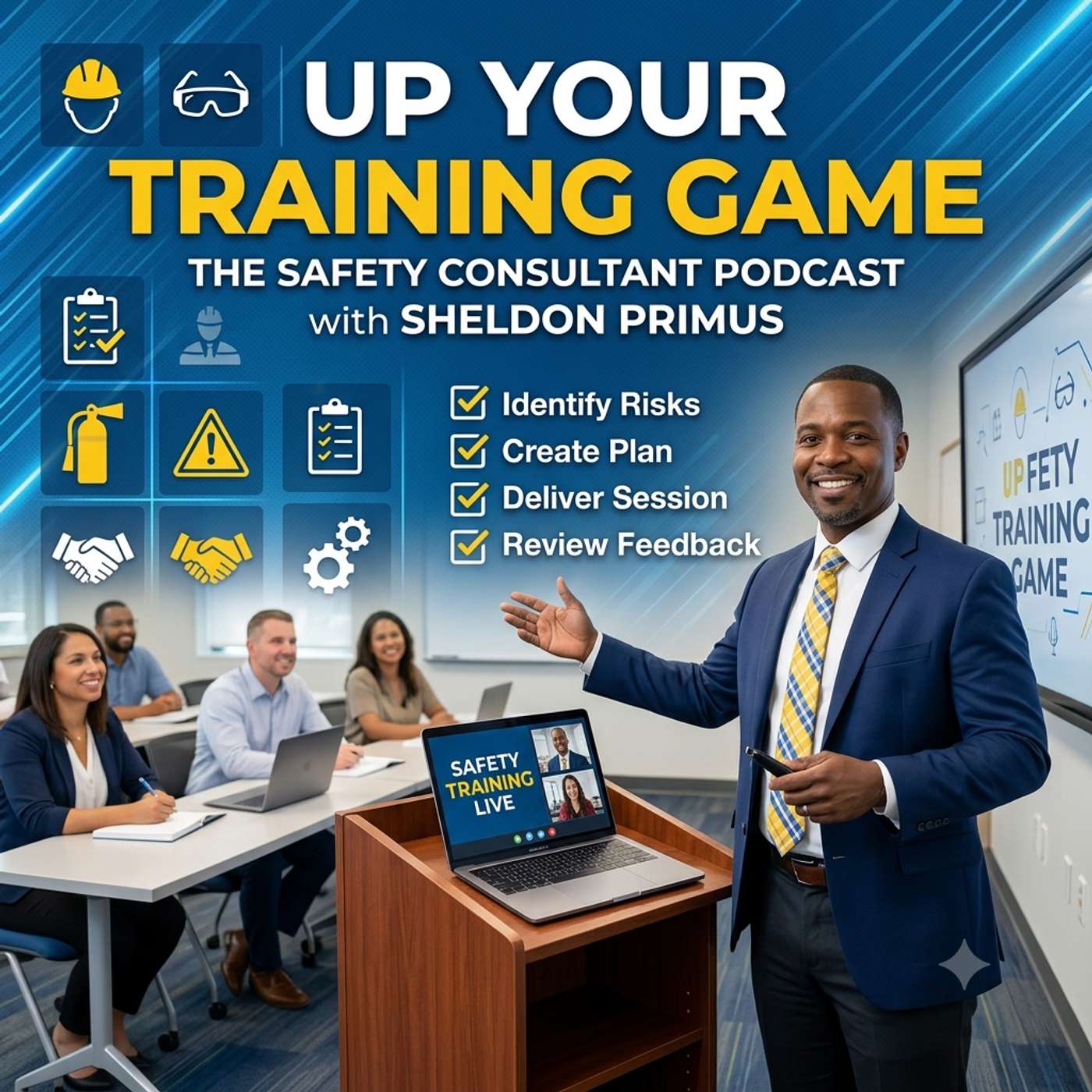
Up Your Training Game With These Tips
2w ago00:25:40Tap to summarizeWelcome to another empowering episode of The Safety Consultant Podcast, hosted by Sheldon Primus. Whether you're a seasoned EHS professional, building your own consulting business, or new to the field, this episode is packed with practical strategies to elevate your training effectiveness and sharpen your consulting edge. Broadcasting from a small town in Minnesota, Sheldon Primus revisits and upgrades his classic "5 Tips to Be the Favorite Instructor," now including essential guidance for both in-person and online safety training. Tune in as Sheldon Primus walks you through actionable steps to engage learners, handle unexpected disruptions, and deliver value that gets you invited back time and again.Sequence of Topics Covered1. Introduction to the Podcast and HostSheldon Primus welcomes listeners to the Safety Consultant Podcast 01:03Emphasis on blending safety expertise with business acumenAudience: Safety professionals, new consultants, and those interested in safety2. Purpose and Content of the PodcastTeaching the business of being a safety consultant 01:42Coverage of OSHA compliance, regulatory requirements, and safety management systems3. Setting and Personal ContextSheldon Primus records from Magnolia, Minnesota 02:14Reflection on life as a traveling safety consultant and RVerMention of previous episodes with industry peer Jill James and her association4. Revisiting a Previous Episode: “5 Tips to Be the Favorite Instructor”Reference to episode 106, originally aired in 2021 03:58Outline of the five original tips:Know your material inside outBe prepared for disastersDon’t preach but teachBe respectful and personable to facility staffAlways help set up and tear down5. Expanded Tips for Modern Safety Traininga. Know Your Material Inside and Out 07:11Importance of deep knowledge for flexibility and engagementBeing able to go off script to clarify or elaborate for learnersUsing real-world analogies and storiesVisualization techniques to prepare for training sessionsTaking students on a storytelling journey (hero, villain, conflict, resolution) 11:03b. Be Prepared for Disasters 12:49Carrying backup equipment and connectorsHaving a long HDMI cord and other AV toolsBringing personal hotspot and backup devices 13:59Arriving early to account for technical or logistical issuesc. Don’t Preach, Teach 15:19Avoiding a lecturing or punitive deliveryRelating OSHA standards to on-the-job realitiesIncorporating practical examples and engagementMinimizing reading directly from PowerPoint slidesd. Be Respectful and Personable 17:31Treating the training site as someone else’s space 17:41Cleaning up, resetting the room, and showing courtesy to staffBringing personal supplies (markers, erasers, etc.)Being polite and helpful beyond just teaching deliverye. Always Help Set Up and Tear DownActively involve yourself in logistical tasks before and after training 19:136. Additional Tips for Online TrainingEngaging online learners through chat and direct questions 19:24Encouraging use of chat features to foster participation 19:40Utilizing break-out rooms for peer-to-peer learning 20:18Using online games (e.g. Game Show Pro via learningware.com) to boost testing and engagement 21:04Offering digital raffles and prizes7. Business Calls to ActionInviting listeners to enroll in the Safety Consultant 101 Course at safetyconsultantblueprint.com 23:23Encouraging prospects interested in coaching to visit sheldon.coach and fill out the intake form 24:07Each segment is filled with structured, actionable advice aimed at elevating safety consultants’ training delivery and supporting their business growth.Ready to unlock the next level in your consulting business? ~Explore the Safety Consultant 101 Course at safetyconsultantblueprint.com, or get one-on-one business coaching with Sheldon at sheldon.coach.
Transcribe →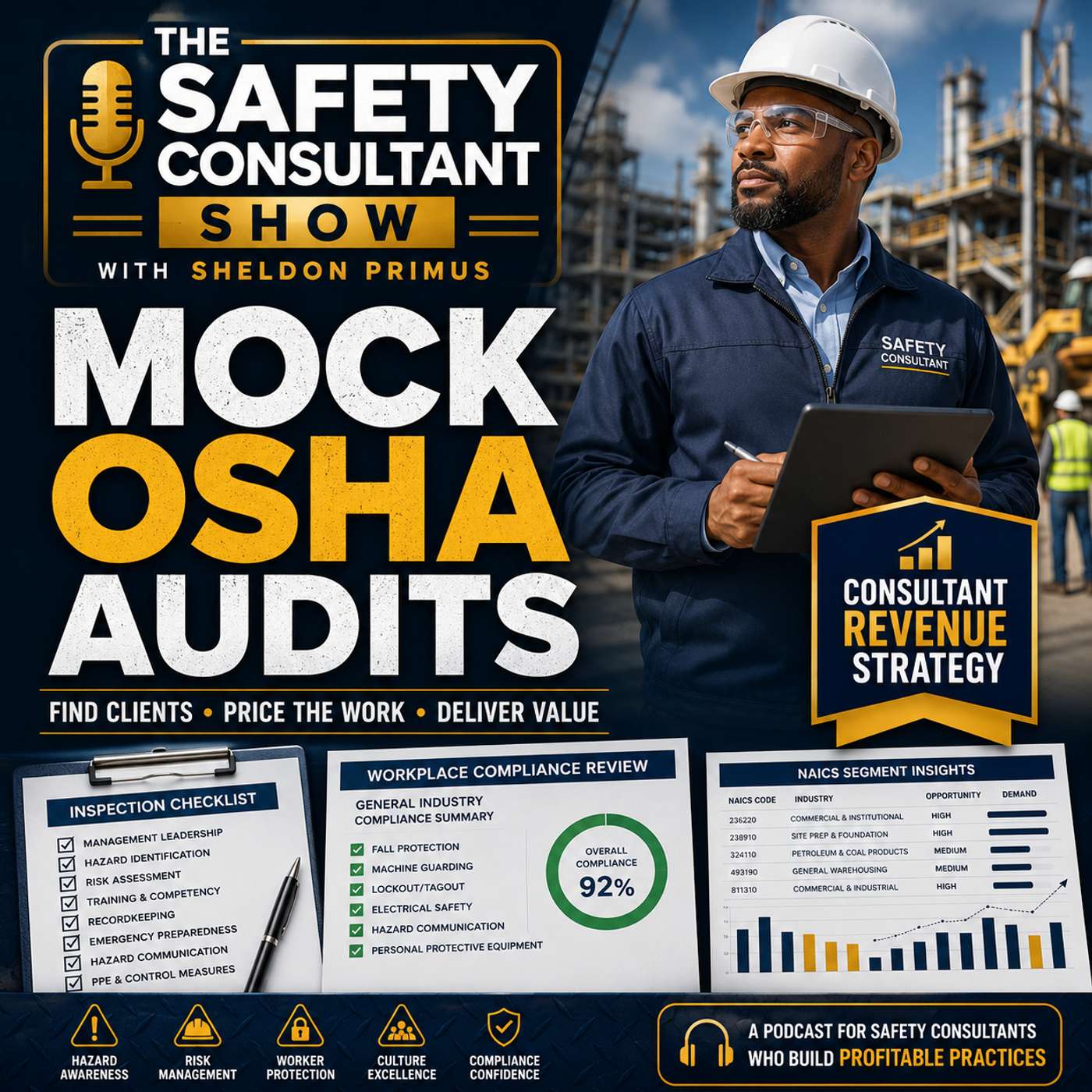
Mock OSHA Audits: How Safety Consultants Find Clients, Price the Work, and Deliver Value
3w ago00:31:03Tap to summarizeIn this episode of The Safety Consultant Show with Sheldon Primus, Sheldon explains how safety consultants can approach mock OSHA audits and other mock regulatory agency audits as professional consulting services.Sheldon covers how to find clients, use OSHA inspection data, evaluate NAICS codes, think through pricing, review administrative controls, inspect physical worksites, and deliver a report that gives the client clear findings and practical remediation steps.Topics covered include: Finding mock OSHA audit clients Friends, family, referrals, and past coworkers Using OSHA establishment search data Looking at OSHA emphasis programs Using NAICS codes and frequently cited standards Pricing based on urgency, hazard level, and company size Why not to default to hourly pricing 50/50 payment structure Administrative review: written programs, OSHA logs, and training records Physical site walkthroughs Taking photos and connecting findings to standards Creating remediation recommendations Turning mock audits into follow-up services This episode is especially useful for safety consultants, EHS professionals, OSHA compliance trainers, and anyone building a safety consulting business.Learn more at safetyconsultantblueprint.com
Transcribe →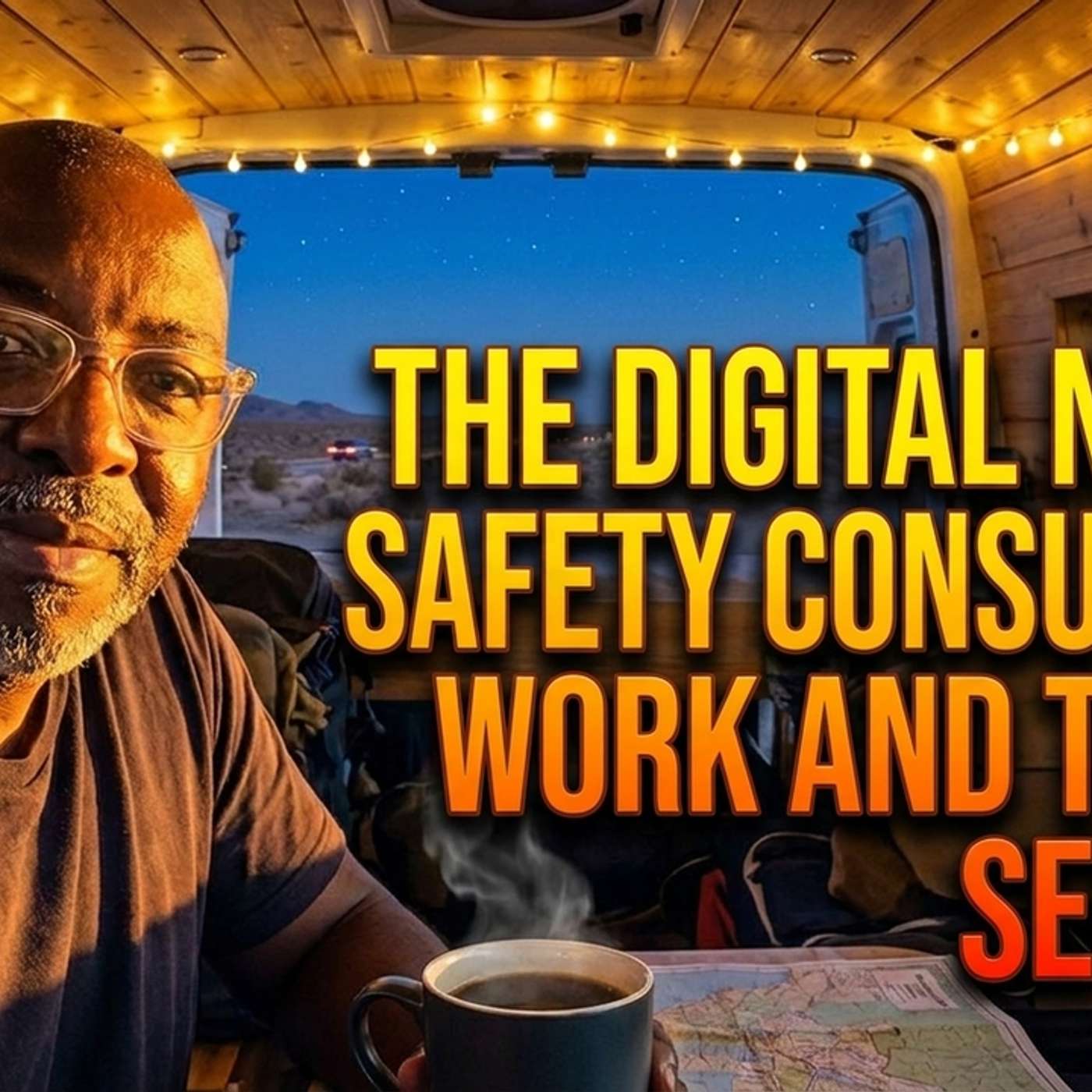
The Digital Nomad Safety Consultant: Work and Travel Secrets
4w ago00:35:04Tap to summarizeEver wondered if you can run a successful safety consulting business while traveling the country in an RV? Sheldon Primus shares his personal journey and the exact tools he uses to maintain a professional consulting practice from the road. 🚐✨In this episode of the Safety Consultant Podcast, Sheldon breaks down the logistics of being a mobile safety professional. He discusses everything from downsizing your life to managing 50/50 contracts that keep cash flow steady while you move between locations. You will learn about the essential tech stack required for remote work, including satellite internet, portable power stations, and high-quality audio gear. Whether you are looking to reduce your overhead or simply want more freedom, this guide provides the blueprint for a location-independent consulting career. 🛠️💼Chapters0:00 Intro and Life in South Dakota4:10 Transitioning to Full-Time RV Life8:25 Financial Planning for Mobile Consulting12:15 Securing Training Contracts and Online Work15:30 Digital Tools and Resource Recommendations19:45 Building an Online Learning Management System23:10 Marketing Strategies and QR Code Tracking26:50 Behind the Scenes: Audio and Video Gear31:20 Staying Connected with Starlink and Hotspots35:04 Video EndSheldon also reviews his favorite resources for safety pros, including matchmaking platforms like Yellowbird and interactive training tools like GameShow Pro. Discover how to leverage technology to provide top-tier service to your clients without being tied to a traditional office. By focusing on virtual training and digital program reviews, you can reclaim your time and travel the world while helping companies stay OSHA compliant. 🌐📈If you found this video helpful, please hit the subscribe button to stay updated on the latest in safety consulting and business brilliance. Visit sheldonprimus.com/resources for more resources and to join our community of safety professionals.#safetyconsultant #rvlife #occupationalsafety #businessofsafety #remoteworkMy website: http://www.sheldonprimus.com
Transcribe →
Navigating a Slow Economy: How to Keep Your Safety Consulting Business Thriving
Jun 2900:34:39Tap to summarize📉 Navigating a Slow Economy: How to Keep Your Safety Consulting Business ThrivingWhen the economy slows down, corporate budgets freeze, and external contracts are often the first to face scrutiny. But a slow market doesn't mean your safety consulting pipeline has to dry up.In this episode of the Safety Consultant Podcast, host Sheldon Primus breaks down exactly how to pivot your business strategy to thrive in a down market.🔍 What you’ll learn in this stream:The Shifting Mindset of Corporate Buyers: Understand how risk aversion and cash flow panic change how companies hire.Reframing Your Value: How to speak the language of CFOs, sell ROI, and shift to "fractional" or modular safety services.Leaning Out Your Expenses: Practical, actionable ways to audit your tech stack, minimize travel overhead, and stay highly profitable between clients.🚀 Business Resources Mentioned:Grab your Recession-Proof Consulting Framework: safetyconsultantblueprint.comTake the Readiness Assessment for One-on-One Coaching: sheldon.coachDon't just survive the downturn—learn how to build a resilient, recession-proof consulting business. Hit play and let's get started!
Transcribe →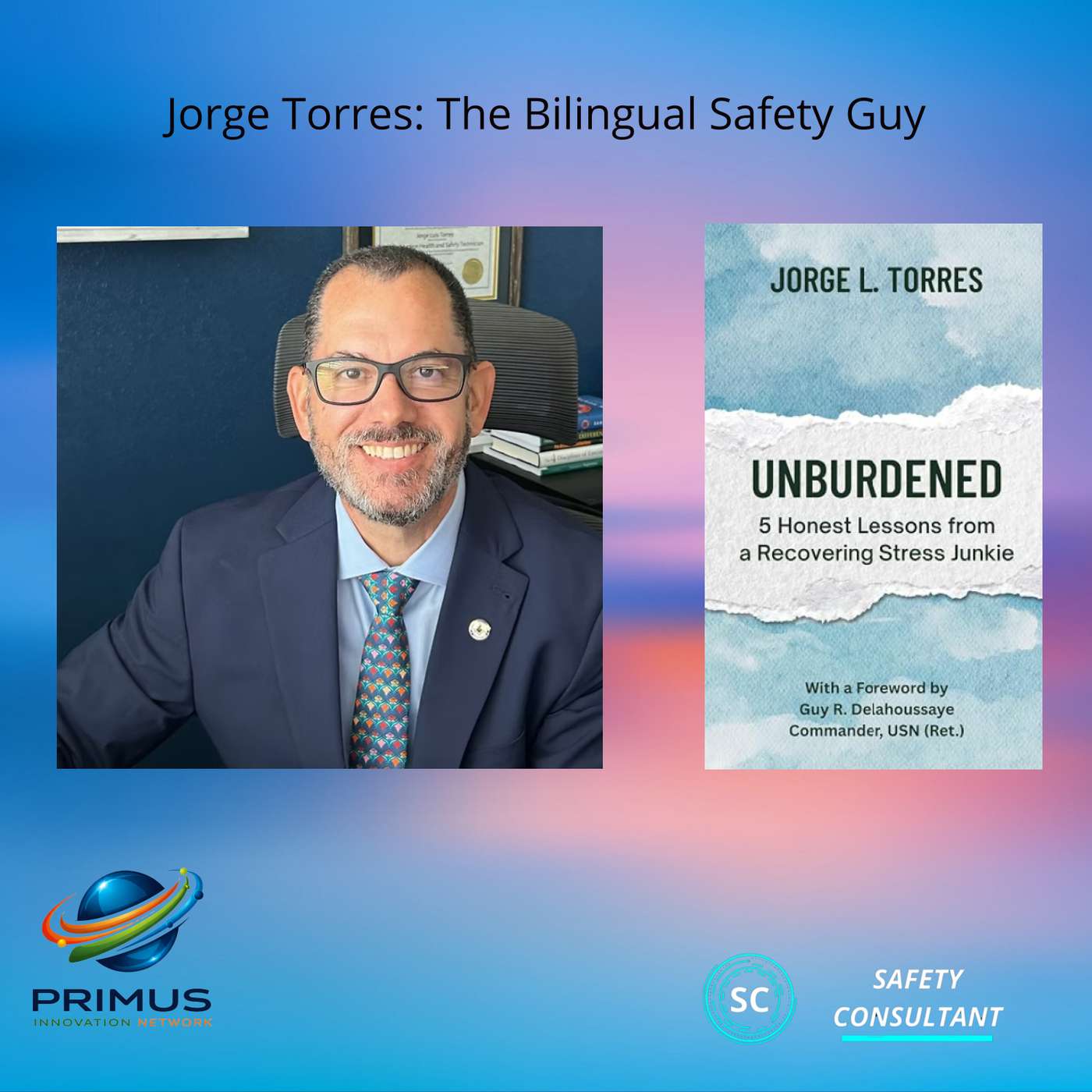
Are you a "Stress Junkie"? 🧠 My conversation with Jorge Torres "The Bilingual Safety Guy".
Jun 2200:53:26Tap to summarize🎧 Unburdening the Safety Pro: Mental Health & Moving Beyond the "Stress Junkie" Labels with Jorge TorresWelcome back to the Safety Consultant Podcast! In this episode, Sheldon sits down with Jorge Torres, also known as The Bilingual Safety Guy, for a vulnerable and vital conversation about the "business of being human" in the safety industry.Jorge shares his powerful journey from working as an on-site paramedic to becoming a seasoned safety consultant and speaker. But this isn't just a career retrospective—it's a deep dive into Jorge’s book, The Unburdened: 5 Honest Lessons from a Recovering Stress Junkie. We explore why safety professionals, who are often the "empathetic implementers" of mental health initiatives for others, so frequently neglect their own well-being.🔍 Key Episode Takeaways:Admitting the Problem: Why acknowledging "it’s okay not to be okay" is the first step toward reclaiming your health.The Eisenhower Matrix: How to use this classic tool to regain control of your time and stop living in "hair-on-fire" mode.The Multitasking Myth: Jorge breaks down the "biological improbability" of multitasking and why focusing on one thing at a time actually makes you a better consultant."I Am Not My Job": Re-framing your identity beyond the safety vest to show up better for your family and yourself.The Family Impact: A candid look at how unmanaged professional stress bleeds into our most important relationships.🚀 Business Resources:Ready to Grow? If you’re a safety pro looking to transition into consulting, take the Consultant Readiness Audit at sheldon.coach.Get the Book: Pick up your copy of The Unburdened on Amazon to start your own 5-lesson workshop.
Transcribe →
Future of OSHA 2027
Jun 1500:36:07Tap to summarize🎧 The Future of OSHA: Unboxing the 2027 Budget & What It Means for YouWelcome back to the Safety Consultant Podcast! In this episode, I'm braving the cold Canadian wind (and dodging some very cute chipmunks) to bring you a live look at OSHA's FY 2027 Congressional Budget Justification. Why are we looking at a budget? Because you can always tell what is truly important to a government agency by where they spend their money. Grab your coffee and join me as we unbox this budget and map out exactly how you can keep your clients regulatory-safe in 2027! 🔍 Key Episode TakeawaysThe Shift in OSHA Standards: OSHA is actively moving toward deregulation, reducing standard-setting full-time equivalent hours (FTEs) from 72 down to 44. Because of this shift, you shouldn't expect many new standards to be released in 2027. Instead, the agency will focus on publishing guidance products and creating plain language revisions of current regulations. Major proposed rules, like the heat stress standard, will likely remain in a holding pattern. Enforcement Isn't Disappearing, It's Changing: Don't believe the rumors that OSHA enforcement is stopping. The budget reveals that a massive 70 to 80% of initiated inspections will be unprogrammed. This means OSHA will be heavily focused on responding to formal worker complaints, fatalities, amputations, and hospitalizations. Programmed Inspections: The remaining 20 to 30% of inspections will be programmed, primarily focusing on National Emphasis Programs and targeted high-hazard workplaces. Construction Remains a Primary Target: The construction industry is definitely not exempt from enforcement. OSHA plans to conduct 11,240 planned construction inspections in FY 2027. They will be heavily targeting sites with high probable hazards, specifically zeroing in on the Focus Four: falls, electrical, standby, and caught-in hazards. The Truth About Training Grants: Once again, the requested budget for the Susan Harwood Training grants is set at zero. However, Congress historically funds these programs anyway, so if you rely on this material for your non-profit, don't panic—it will likely still be there. 🚀 Promotions & Business ResourcesJune Strategy Promotion: Since it's National Safety Month in the US, I'm offering a special bonus! If you purchase the updated Safety Consultant 101 course at safetyconsultantblueprint.com during the month of June, I am going to give you a free 30-minute strategy session to talk over your goals and get you steered in the right direction. https://safetyconsultantblueprint.com/ Live Online Workshop: Join me this August for a 2-hour live online workshop. We are going to dive deep into mindset issues, starting your business, and defining what your clients and services look like. Sign up at sheldonprimus.com/events. One-on-One Coaching: Are you ready for professional coaching to get unstuck? Head over to sheldon.coach and take the Readiness Assessment to get started. If we're a good fit, I'll offer you three days of free introductory coaching chats to map out your goals before we create a custom agreement. Until next time, stay safe, stay savvy, and keep consulting like a boss. Go get 'em!
Transcribe →Unleash the power of the OSHA Data and Resources page!
Jun 200:33:47Tap to summarizeUnlock the power of the OSHA data and statistics resource page to help you find clients, value your services, and set you apart from competitors. Sheldon uses this tool for many clever ways to get true context on a hazard and who can benefit from your services.
Transcribe →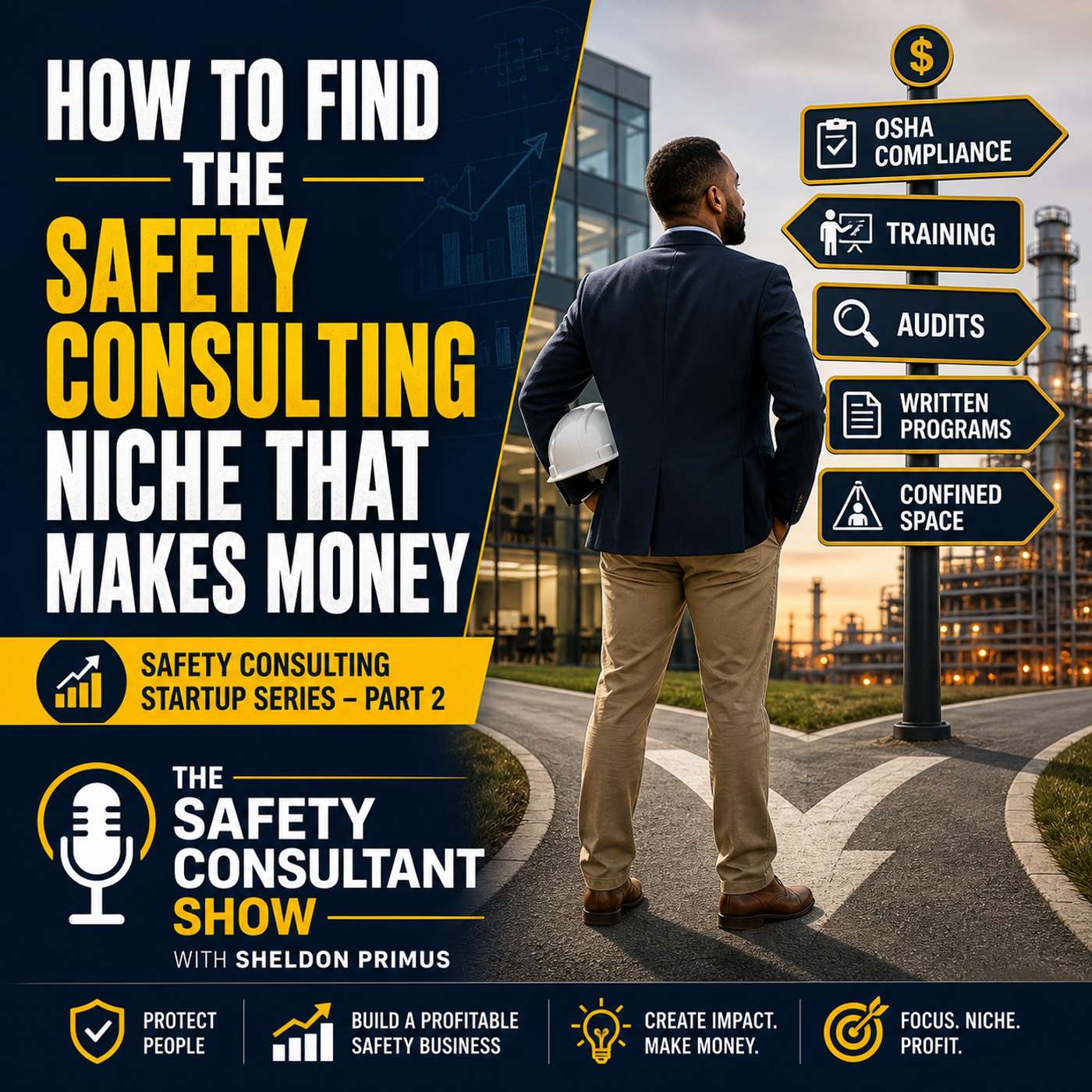
Safety Pro to Business Owner Part 4: Certifications and OSHA Outreach Training
May 1800:18:57Tap to summarizeIn Part 4 of our "Starting a New Business" series on the Safety Consultant Show, we are wrapping things up by talking about credentials. You don't need every letter in the alphabet behind your name to be successful, but you do need the right ones.Here are a few key takeaways from today’s episode:🎯 Match your certs to your niche: Don't just guess. Look at what potential clients in your specific industry (like construction or oil & gas) are actively asking for in their job listings and get those exact credentials.🎓 Degrees vs. Certificates: A Bachelor's or Master's degree in EHS will always carry the most weight, but if college isn't an option, programs like the COSS (Certified Occupational Safety Specialist) or COSM provide incredible value based on your real-world experience—no degree required!.🦺 The OSHA 10 & 30 Advantage: Becoming an authorized OSHA 10 and 30-hour instructor (through the OSHA 501 or 500 train-the-trainer courses) is one of the best ways to gain local recognition and instantly open up new revenue streams.If you are ready to take your safety experience and turn it into a profitable consulting business, this episode is a must-listen.
Transcribe →
Safety Pro to Business Owner Part 3: Build Your Safety Consulting Network in 2026
May 1100:20:13Tap to summarizeYou’ve got the business name. You’ve got the legal setup. You’ve started thinking through your niche.Now comes the part many new consultants miss:How do people actually find you?In this episode of The Safety Consultant Podcast, Sheldon continues the 2026 business startup series by walking safety professionals through practical networking strategies that can help them start building real consulting opportunities.This is not theory. This is the “go make something happen” part of the business.If you are an EHS professional, safety manager, trainer, OSHA compliance specialist, or future safety consultant, this episode gives you practical places to start building your network before you leave your job, while you are still testing your niche, or while you are trying to land your next client.What This Episode CoversIn Part 1 of the series, Sheldon covered getting your business legal and structured.In Part 2, he talked about finding a profitable niche.In Part 3, he focuses on where to network and find consulting opportunities, including:Using Upwork to find project-based consulting workSigning up with Yellowbird as a safety professionalBuilding relationships through LinkedIn groupsNetworking inside Facebook safety groupsPartnering with your local safety councilUsing training events to build credibility and attract future clientsProving your consulting concept before leaving your full-time jobWhy This MattersA safety consulting business does not grow just because you know OSHA standards.It grows because people know what you do, trust that you can help them, and can find you when they need your expertise.That means you need more than technical knowledge.You need a network.This episode shows you how to start spreading that web in a smart, practical way so you can begin turning your safety experience into business opportunities.Featured Resources MentionedSheldon discusses several places safety consultants can use to start finding opportunities and building relationships:Upwork A freelance platform where you can bid on safety, training, writing, compliance, and consulting projects.Yellowbird A platform designed to connect safety professionals with companies needing EHS support.LinkedIn Groups A strong place to build visibility, answer questions, and connect with safety professionals and potential clients.Facebook Groups Including Sheldon’s Safety Consultant group, where safety officers and consultants can network and share opportunities.Local Safety Councils A powerful local networking option where you may be able to offer training, partner on events, or connect with organizations needing help.Who Should ListenThis episode is especially helpful for:Safety professionals thinking about becoming consultantsEHS managers wanting a side incomeOSHA trainers looking for more business opportunitiesNew consultants trying to find their first clientsExperienced safety pros who need a better networking strategyConsultants who want to build visibility without spamming people onlineKey TakeawayYour network can become your first business development system.But the goal is not to spam people.The goal is to show up, participate, answer questions, build trust, and let people see that you are the person who can help solve their safety and compliance problems.As Sheldon says, this is about taking action right now.
Transcribe →
Safety Pro to Business Owner Part 2: How to Find the Safety Consulting Niche That Makes Money
May 400:16:55Tap to summarizeIn this episode of The Safety Consultant podcast, Sheldon continues his series on what he would do if he were starting a safety consulting business today.This week’s focus is one of the most important early business decisions you can make: finding your niche.Sheldon breaks down how to identify the work you already do well, the topics people naturally come to you for, and the services that can create real income as you grow your consulting practice. He also explains why it helps to have more than one niche or revenue stream while you build momentum.If you are a safety professional, EHS leader, trainer, or aspiring consultant trying to figure out how to turn your experience into a business, this episode will help you think more strategically about where you fit in the market.
Transcribe →