Podcast
The Safety Consultant Podcast
Hosted by Sheldon Primus, MPA, COSM, COSS · EN
The Safety Consultant Podcast with Sheldon Primus is your ultimate weekly guide to starting or growing a profitable occupational safety and health consulting business. Are you ready to be your own boss and make a greater impact? Your expertise can help more people create safer workplaces, and your skills deserve a platform where they can truly shine. If you feel limited in your current role and believe your knowledge could serve the broader workforce more effectively, this podcast is for you. Join us as we explore the steps to launch your own safety consulting business, share insights on navigating the industry, and provide strategies to maximize your impact on workplace health and safety. Now is the perfect time to take control of your career and make a difference!
29episodes
Episodes
Newest firstAll episodes
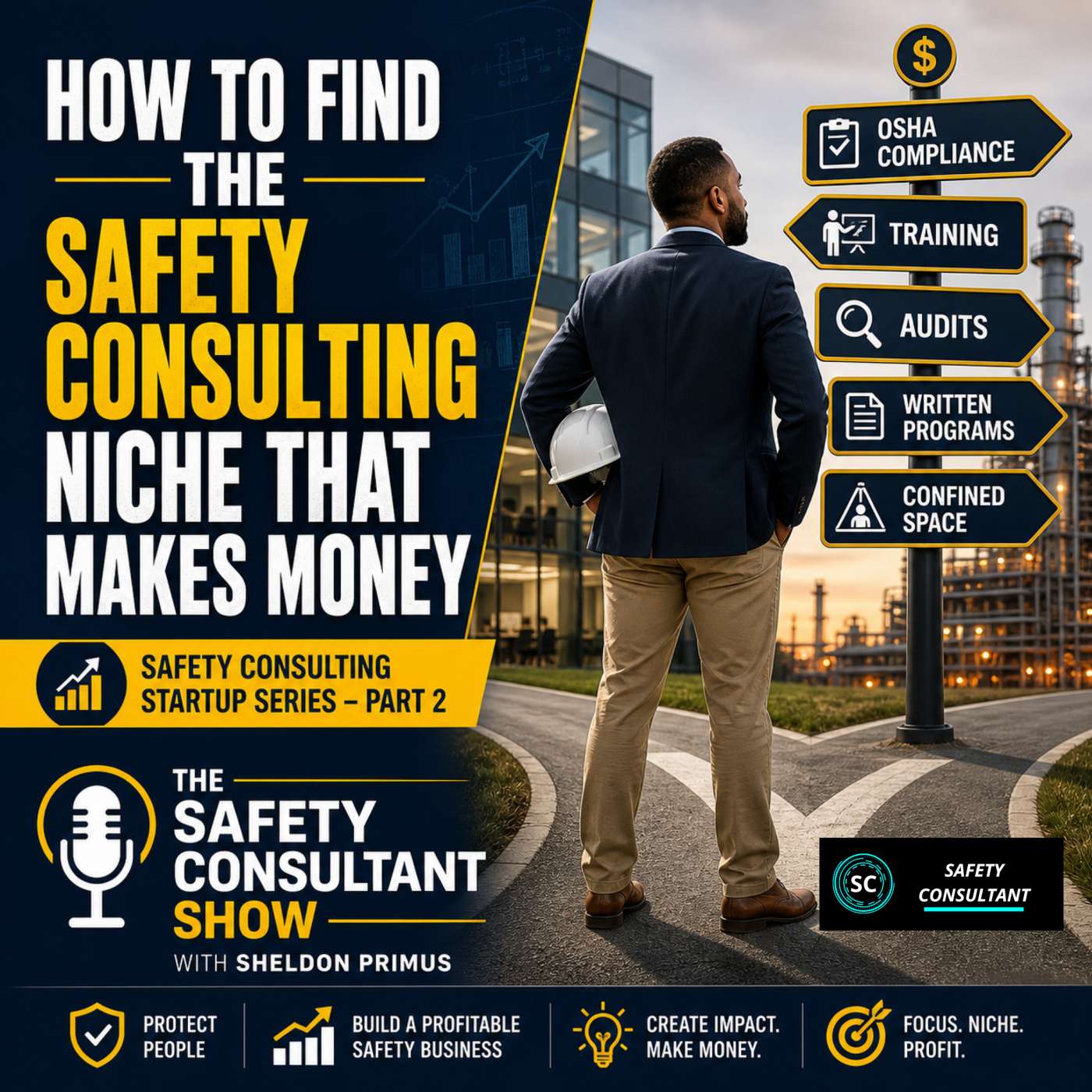
Safety Pro to Business Owner Part 2: How to Find the Safety Consulting Niche That Makes Money
May 400:16:55Tap to summarizeIn this episode of The Safety Consultant podcast, Sheldon continues his series on what he would do if he were starting a safety consulting business today.This week’s focus is one of the most important early business decisions you can make: finding your niche.Sheldon breaks down how to identify the work you already do well, the topics people naturally come to you for, and the services that can create real income as you grow your consulting practice. He also explains why it helps to have more than one niche or revenue stream while you build momentum.If you are a safety professional, EHS leader, trainer, or aspiring consultant trying to figure out how to turn your experience into a business, this episode will help you think more strategically about where you fit in the market.
Transcribe →From Safety Pro to Business Owner-Part 1
Apr 2800:23:05Tap to summarizeIn this episode, Sheldon Primus kicks off a new series for safety professionals ready to start a consulting business in 2026. Part 1 focuses on the foundation: choosing a business name, securing your domain, setting up business email, getting insurance, understanding the value of a DUNS number, opening a bank account, and preparing to accept payments. Before you chase clients, build the business structure that helps you look professional, operate legally, and get paid.
Transcribe →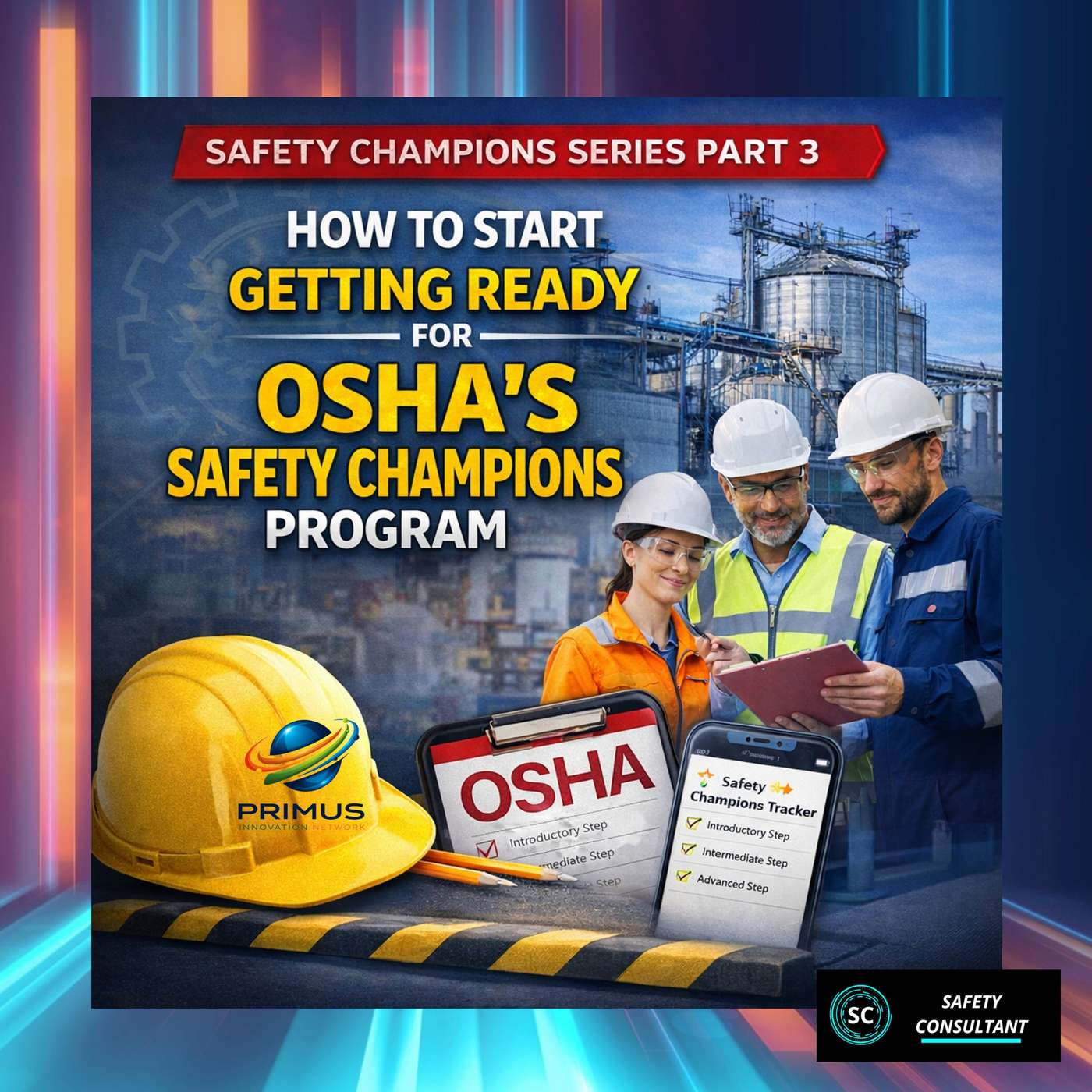
Safety Champions Program Series Part 3
Apr 1300:31:14Tap to summarizeIn Part 3 of this Safety Champions series, Sheldon Primus wraps up the conversation by focusing on the practical question many safety leaders are asking: How do you actually get ready for OSHA’s Safety Champions Program? In this episode, he walks through what readiness looks like at each stage and explains the program’s 3-step structure as building the foundation, making the safety management system operable, and proving the system is sustainable and improving over time.Sheldon breaks down how organizations can begin by securing leadership commitment, creating written policies, assigning safety responsibilities, surveying workers, identifying hazards, establishing controls, building training plans, evaluating OSHA logs and injury records, and coordinating with contractors. He then explains what it takes to move into the intermediate and advanced stages, where organizations show that the program is functioning, improving, and becoming part of the way the business operates.This episode is ideal for safety professionals, consultants, and business leaders who want to understand what OSHA readiness really looks like and how to move from compliance-only thinking into a stronger safety and health management system. Sheldon also invites listeners to take the next step through his Safety Champion Readiness Workshop, where he helps attendees work through the framework in a live virtual format.
Transcribe →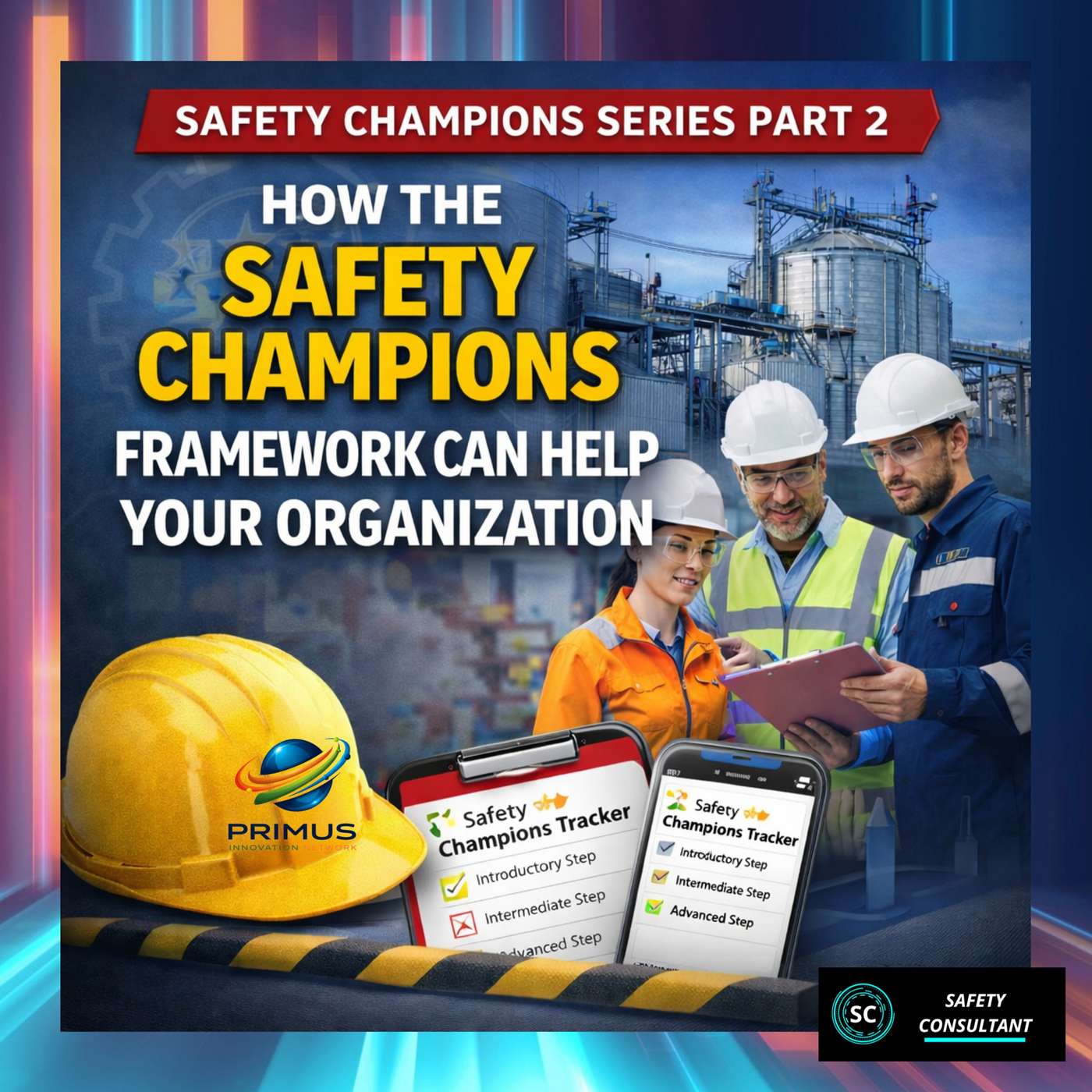
OSHA Safety Champion Program Series: Part 2
Apr 800:29:02Tap to summarizeIn Part 2 of this Safety Champions series, Sheldon Primus moves beyond the introduction and breaks down how OSHA’s Safety Champions Program can help organizations build a stronger, more connected safety and health system. He explains that while SHARP and VPP are designed for organizations already operating at a higher level of safety maturity, the Safety Champions Program is meant to help employers start earlier and build step by step. In this episode, Sheldon walks listeners through OSHA’s seven core elements of a strong safety and health program: management leadership, worker participation, hazard identification and assessment, hazard prevention and control, education and training, program evaluation and improvement, and communication and coordination for host employers, contractors, and staffing agencies. He explains how each element strengthens the overall system and helps move safety from disconnected activities into a more complete safety management approach. He also connects the framework to concepts like ISO 45001, leading and lagging indicators, worker trust, JSAs/JHAs, hierarchy of controls, learning teams, and contractor management, showing how the Safety Champions approach can become a real operational advantage rather than just another initiative. This episode is for safety professionals, consultants, and leaders who want to understand not just what the program is, but how it can help improve the way an organization leads, communicates, trains, evaluates, and reduces risk.
Transcribe →
OSHA Safety Champions Program Series Part 1
Apr 400:29:13Tap to summarizeIn this first episode of a 3-part series, Sheldon introduces OSHA’s new Safety Champions Program (SCP) and explains how it differs from SHARP and VPP. He frames SCP as a practical, voluntary pathway for organizations that want to start building a stronger safety and health program from the ground up, rather than waiting until they are already operating at a mature recognition-program level. In the episode, Sheldon explains that SCP is built around three phases — Introductory, Intermediate, and Advanced — and OSHA’s seven core elements of an effective safety and health program.Sheldon also highlights how the program uses a tracker and SGE support to help employers document progress and move step by step through the process. He contrasts SCP with SHARP, which is aimed at smaller employers using OSHA consultation, and VPP, which is geared toward mature, high-performing safety systems.This episode is for safety professionals, consultants, and leaders who are asking:What’s next for our safety system? How can we start preparing for OSHA’s new Safety Champions Program?Sheldon also introduces his upcoming Safety Champion Readiness Workshop, where he’ll spend four hours helping attendees break down the steps, understand the tracker, and build a readiness roadmap.
Transcribe →
AI and Safety Management: Smarter Safety Without Losing the Human Touch
Mar 2400:22:00Tap to summarizeWhat happens when artificial intelligence meets real-world safety management? In this episode, Sheldon breaks down how AI can support Environmental Health and Safety professionals in practical, meaningful ways. From hazard recognition and data analysis to training development, trend spotting, and management decision-making, this conversation explores where AI fits into modern safety systems and where human judgment still matters most.This episode is for safety consultants, EHS managers, trainers, and leaders who want to understand how to use AI as a tool for better planning, better communication, and better outcomes. Sheldon cuts through the hype and focuses on what matters: how AI can help improve safety performance, support compliance efforts, and make safety management more proactive instead of reactive.If you’ve been wondering whether AI is just a buzzword or a real advantage for safety professionals, this episode gives you a practical lens for using technology without losing the people-first foundation of EHS.
Transcribe →
Welcome to Season 6: A New Season of Safety, Strategy, and Consulting Success
Mar 1600:35:05Tap to summarizeSeason 6 is here!In this kickoff episode of the Safety Consultant Podcast, Sheldon Primus welcomes listeners back and sets the stage for what’s coming next. This season will continue blending safety leadership, consulting strategy, and practical insights to help safety professionals grow their impact—and their businesses.You’ll hear about the direction of the show for this season, what topics are on the horizon, and how the podcast will keep supporting safety pros who want to think bigger about their careers.Whether you're an experienced consultant, an aspiring entrepreneur, or a safety professional looking to expand your influence, Season 6 is built with you in mind.Let’s get started.
Transcribe →
OSHA 2026: What’s Changing, What’s Coming, and Where Enforcement Is Headed
Mar 300:29:37Tap to summarizeOSHA has a new leader, a new poster, and a very clear inspection strategy for 2026. Are you ready?In this quarterly OSHA update, Sheldon breaks down the biggest changes safety professionals and consultants need to know — from the new “OSHA Cares” poster to federal enforcement reductions and the 24,929 inspections planned for the year.You’ll learn:What the new OSHA poster means for employersWho the new head of OSHA is and why it mattersWhere enforcement dollars are shrinking (and where focus is tightening)Why 70–80% of inspections will be unprogrammedThe four hazards that will dominate construction inspectionsIf you're a consultant, safety manager, or building your own safety business, this episode helps you anticipate where OSHA is headed — so you can position yourself (and your clients) ahead of the curve.Stay proactive. Stay strategic. Stay inspection-ready.
Transcribe →
Spring Forward: From Learning Mode to Leadership Mode
Feb 2300:25:16Tap to summarizeSpring is a season of growth — but growth doesn’t happen just because the calendar changes. It happens when you decide to move.In this episode, Sheldon explores why so many safety professionals stay stuck in “learning mode” and never make the leap into leadership. Backed by behavioral research on the intention–action gap, perfectionism, and productive procrastinationSpring Forward, he breaks down what’s really holding you back — and how to shift from preparation to execution.More importantly, this conversation goes beyond hustle. It’s about the freedom that comes with ownership: choosing your clients, controlling your schedule, and building a career that gives you options — not just income.If you’ve been thinking about launching or growing your consulting business, this is your nudge to stop collecting knowledge and start building momentum.🌱 Learn more at sheldon.coach
Transcribe →
What Really Happens to OSHA During a Government Shutdown?
Feb 1600:23:03Tap to summarizeWhen the federal government shuts down, what actually happens to OSHA? Do inspections stop? Are citations paused? Is enforcement put on hold?In this episode of the Safety Consultant Podcast, Sheldon Primus breaks down what a government shutdown really means for OSHA, employers, and safety professionals. Using the Department of Labor’s official contingency framework as a guide, Sheldon explains which OSHA functions continue, which ones pause, and how businesses should prepare for both the shutdown period and the surge of activity that often follows reopening.You’ll learn why a shutdown does not mean a free pass on compliance—and why relying on enforcement pressure instead of building a strong safety culture can put your organization at risk.In This Episode, You’ll Discover:How government shutdowns affect Department of Labor agenciesWhat percentage of OSHA staff are furloughed during a lapse in fundingWhich inspections still happen (imminent danger, fatalities, catastrophes)What enforcement and compliance activities are suspendedWhy injury reporting requirements never stopHow the six-month statute of limitations still impacts citationsSmart steps safety professionals should take during a shutdownWhy OSHA activity often increases after funding resumesWhether you’re a safety manager, business owner, municipal leader, or consultant, this episode gives you a strategic roadmap for navigating uncertainty while staying compliant and protecting your workforce.Because even when the government shuts down… Your responsibility under the OSH Act does not.
Transcribe →