← The Secret World of Roald Dahl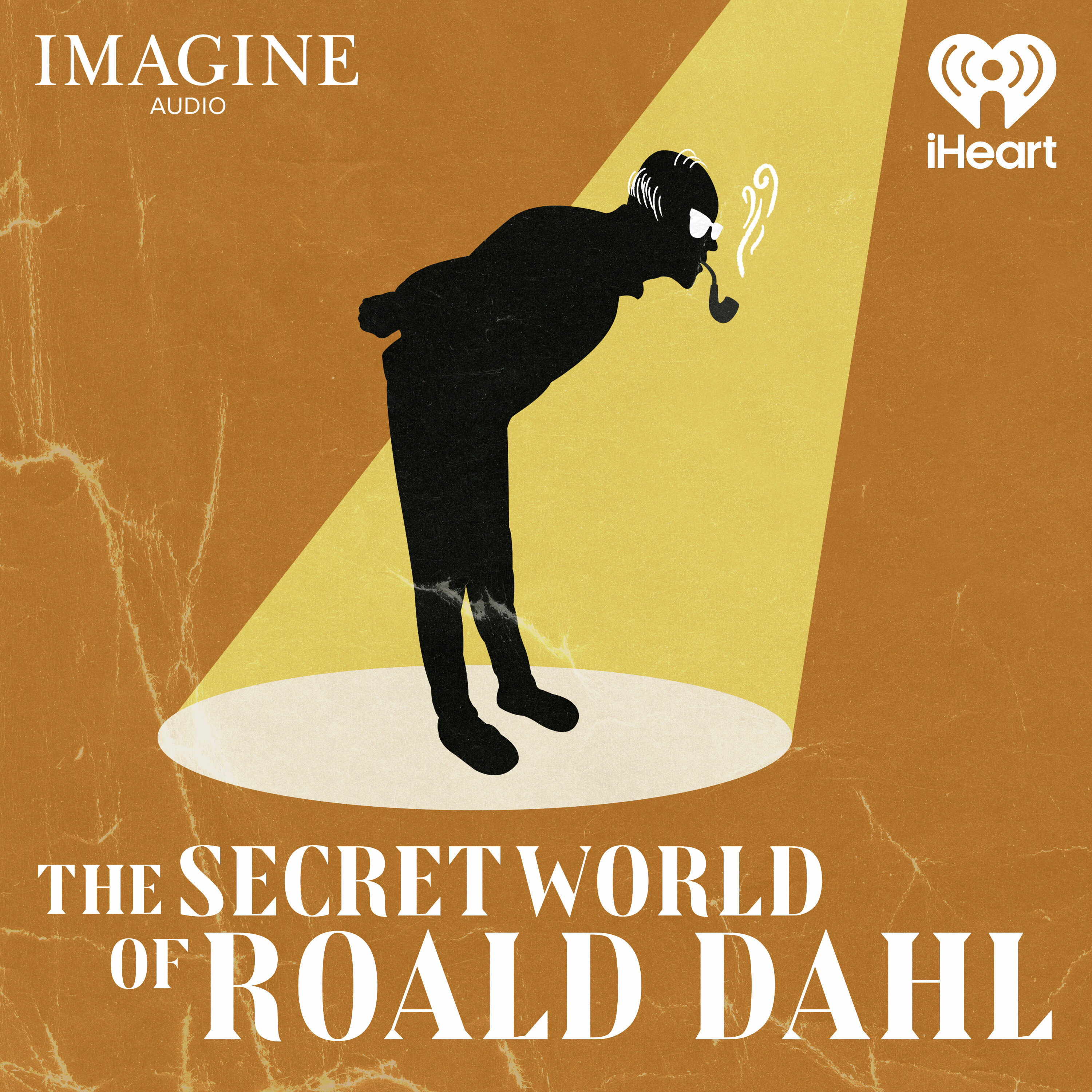
The Secret World of Roald Dahl
(Bonus Episode) Giant: A Conversation with Playwright Mark Rosenblatt
00:45:44
Loading summary
Transcript98 lines
- [00:00]
Aaron Tracy
This is an I Heart podcast.
- [00:02]
Inner Balance Ad Host
Guaranteed human if you're feeling off fatigue, mood changes, skin shifts, yet your labs say everything's normal, you're not alone. Meet Oestra from Inner Balance, the first all in one prescription Strength Bioidentical hormone cream that's natural and effective and only takes one drop 10 seconds a day. Oester replaces five to six products women typically use to treat symptoms and is third party tested to ensure the highest quality. Visit innerbalance.com today to start feeling like yourself again. That's innerbalance.com support for the show comes
- [00:37]
Public Investing Ad Host
from Public, the investing platform for those who take it seriously. On Public, you can build a multi asset portfolio of stocks, bonds, options, crypto and now generated assets which allow you to turn any idea into an investable index with AI. It all starts with your prompt. From renewable energy companies with high free cash flow to semiconductor suppliers growing revenue over 20% year over year, you can literally type any prompt and put the AI to work. It screens thousands, thousands of stocks, builds a one of a kind index and lets you back test it against the S&P 500. Then you can invest in a few clicks. Generated assets are like ETFs with infinite possibilities, completely customizable and based on your thesis, not someone else's. Go to public.com podcast and earn an uncapped 1% bonus when you transfer your portfolio. That's public.com podcast paid for by Public Investing Brokerage Services by Open to the Public Investing Inc. Member FINRA and SIPC Advisory Services by Public Advisors, llc. SEC Registered Advisor Generated Assets is an interactive analysis tool. Output is for informational purposes only and is not an investment recommendation or advice. Complete disclosures available@public.com disclosures there's a difference
- [01:38]
Redfin Ad Host
between liking a house and actually getting it. Redfin is built to make up that difference and close the gap between finding and owning the home for you. Redfin agents close twice as many deals as other agents, so when you find a home you love, you're not a step behind when it comes to making an offer. That means less watching great homes disappear and more focus on the one you'll call home. Redfin helps turn saved listings into real addresses. Get started@redfin.com Own the Dream
- [02:09]
Mark Rosenblatt
introducing Home Care Plus, a new subscription service from Lowe's that helps make life easier by
- [02:14]
Aaron Tracy
giving members a hand with home maintenance.
- [02:16]
Mark Rosenblatt
Let Lowe's tackle the tasks you keep meaning to do, like electric dryer, vent
- [02:20]
Aaron Tracy
cleaning, replacing hard to reach light bulbs, and more.
- [02:23]
Mark Rosenblatt
Subscribe to Home Care plus for just
- [02:24]
Aaron Tracy
$99 a year and consider your to do list. Done. Members get more at Lowe's Available and select zip codes only.
- [02:31]
Mark Rosenblatt
Cancel anytime. Non refundable fee.
- [02:33]
Aaron Tracy
Product purchase required.
- [02:33]
Mark Rosenblatt
Terms and service restrictions apply. Details@lowe's.com Terms subject to change hey there, it's Aaron. Sorry you haven't heard from me in a little while. We've been working really hard on a couple bonus episodes that we can't wait to share. Today is an exciting one for me because I get to sit down with the writer behind a huge new Broadway play all about Roald Dahlia. Now bear with me for a second here. When I was young, the movies Armageddon and Deep Impact came out within a couple months of each other. Both were big studio movies with pretty much the exact same premise about a space object coming to annihilate Earth. Very weird. A few years later, two movies about Truman Capote's experience writing In Cold Blood were released back to back, even though In Cold Blood had come out 40 years earlier. This strangely happens a bunch. There were two big movies about volcanoes one year for no apparent reason. Both DreamWorks and Pixar came out with movies about ants six weeks apart one fall. And there were competing Pinocchio adaptations not long ago. I don't have a great explanation for why this happens other than the writers are all sort of drinking from the same tap to some extent, consuming the same news, having the same fears and anxieties about the world, and sometimes we arrive at the same place at the same time without ever speaking to one another. All of this is to say, I sort of hope this podcast about Roald Dahl was going to be the place to spend time with his biography this year. And I was wrong. And really happily so. A fascinating play called Giant, which is centered on one afternoon in Dahl's life, has just begun its Broadway run. I've been thinking about it, and I think that shared tap between me and the writer of Giant is a world where antisemitism has stopped feeling like a historical footnote and started feeling like a very live wire. Mark Rosenblatt is the playwright behind Giant. John Lithgow plays the lead role. He is a perfect role doll. The play transferred to Broadway from London, where it was a huge, huge hit and won the Olivier Award both for Lithgow and for Best New Play. I went to see it in New York the other night with my wife and my closest friends. Lots of celebs and tastemakers were in the audience. This play is a big deal, and deservedly so. It is a really smart fraught complicated depiction of a thorny issue. While doub as a vivid portrait of Dahl, Mark was recently profiled in the New Yorker. For a writer, there may be no greater stamp of approval. It's the same magazine, of course, that published Dahl's early short stories and jump started his career even cooler. The profile on Mark was written by the legendary critic John Lahr. Over decades, Lahr has profiled people like Tennessee Williams, Edward Albee, Mike Nichols, and now Mark. In his piece, which is a rave for the play, by the way, Lahr writes, giant is an invitation for people to think for themselves. A rarity on Broadway, Lahr also understandably lingers on the most astonishing thing about the play, it's the first one Mark has ever written. Mark has spent years as a theater director, but he had never even attempted to write a play before Giant and now is on Broadway. There's a funny corollary there with Dahlia. Dahl didn't write what he's most famous for, children's books until his mid-40s. And now here's Mark, maybe the most talked about playwright in the world right now, also in his mid-40s and also starting on an exciting new path. On today's episode, I sit down with Mark for a wide ranging conversation. We do reference his play a little, of course, so let me give you a very quick summary. It takes place on a single afternoon in 1983 at Dahl's home in England. Dahl is in his late 60s at this point and at the peak of his fame. The Witches is about to be published and it looks like it'll be a hit. The big complication at the center of Mark's play is that Dahl has just written a book review about Israel's invasion of Lebanon. In that book review, Dahl writes some very anti Semitic things, the kinds of things we talked about in earlier episodes of this show. In the play, Dahl's publishers descend on his house to try to convince him to publicly apologize. He refuses and he goes one step further. The play ends on a really dark note with Dahl picking up the phone, calling a young journalist and doubling down on his bigotry. I sat down with Mark in a small studio in midtown Manhattan, a short walk from the Music Box Theater where his play is running. We're just a couple of writers who have spent a lot of time thinking about and writing about Roald, Dahlia, Talk and Shop. If you've liked our show so far, I think you're really going to enjoy this. The conversation reminded me of all the big themes and fascinating questions that Made me want to write this podcast in the first place. Now here's John Lithgow accepting his award for Best Actor at the Oliviers for Mark's play.
- [07:25]
Aaron Tracy
Oh, my God.
- [07:28]
Mark Rosenblatt
I can't tell you how much this means to me. Giant is one of the best experiences I have ever had on stage. This is largely thanks to a handful
- [07:41]
Aaron Tracy
of very dear friends, some old, some new.
- [07:46]
Mark Rosenblatt
Our director, Nicholas Heitner, that's the old friend. Our debut playwright, Mark Rosenplatt, that's a new friend. I've obviously never worked anywhere near Broadway, but it seems it's both very glamorous and also just incredibly workmanlike.
- [08:03]
Aaron Tracy
Yeah. I think like anything, it's just. To me, it just seems to be that, you know, there are obviously, like, little moments of glitz. There are parties and stuff at the. At the kind of delivery end, but most of it's just a lot of people working really hard. Yeah. And kind of getting tired and grumpy and.
- [08:22]
Mark Rosenblatt
Yeah.
- [08:23]
Aaron Tracy
Being. Trying to smile.
- [08:24]
Mark Rosenblatt
Yeah. So, you know, like I told you, I. I love the play. I think it is also such a good idea for a play. It's one of those ideas that I am so mad I didn't come up with myself. Where did it come from? Can you take us back to, like, the first germ of the idea, the
- [08:43]
Aaron Tracy
origins of the play? Dahl was not part of.
- [08:46]
Mark Rosenblatt
Really.
- [08:47]
Aaron Tracy
Yeah. I was not thinking about Dahl. There seemed to be a lot of active conversation about the rights and wrongs of Israel, Palestine, and then there seemed to be moments where it was tipping over into more anti Semitic stereotyping. And I just was thinking, as I've never written a play before, and I was working as a theater director, and, you know, you're a freelance theater director. You're trying to think of ideas for a play or a project. And I thought it would be really interesting to see if we could find a way to prize apart the difference between one thing and the other. And then I thought, but I need a. I don't want to write about that. I don't want to write about the contemporary British political system. I remembered because I'd grown up absolute. You know, he. Dahl was the wallpaper of my childhood. And, you know, I love, loved his work. And I remembered that he had been accused of anti Semitism. I looked up the. The nature of that accusation, what it. The material, you know, what it was. And the article on Wikipedia that I got linked to was. I read it, the. This book review that he wrote, and. And it seemed to me a perfect mirror of those kinds of conversations that were happening in the British political system, I thought, oh, that's interesting.
- [10:00]
Mark Rosenblatt
Totally. That makes a ton of sense. I mean, it's. And it's also the opposite of what I've done with the podcast. And with the podcast. I very much wanted to get deep into Roald Dahl, and I was very happy to find all these themes that resonated with me and very much resonated with, like, where we were as a culture and what was happening in the news. But mostly, I just wanted to get into this really complex guy's head. But I'm curious for you. I mean, you said your play takes place entirely on a June afternoon in 1883. Mine covers the arc of his entire life. Did you have to learn about his entire life in order to be able to write that one day when he was an old man?
- [10:35]
Aaron Tracy
Yeah, my research process was sort of. Was kind of some form of like. I mean, first of all, I didn't have a process. I'd never written a play before, but my instinct was to. Was to just dig deep and kind of go method on Dahl. I sort of. My memory is, this isn't. I started writing really actively writing it. I pitched it in, like, 2018, but by the time I came to write it, it was Covid. I was. I was at home, and I was just piling through the biography. My intention writing the play was never to. As a dramatist, was. Was not to smash the Roald Dahl pinata on stage. It. To do a hatchet job. It's not interesting to watch that. And I think a more hopefully, you know, for 10 minutes, it might be interesting to portray him as some kind of, you know, villain. But for a meaningful play to invite difficult questions, you can't kind of go into those binaries. So hopefully with the. That's the play. Not it's not just Dahl, but. But the other characters in the play. Everyone's, I hope our sense of who's right and who's wrong is. Is. Is. Is usefully, helpfully, excitingly destabilized. And there's that through the experience of watching the play and. And. And Dahl. But I would say so. So for me, like, you know, there is obviously a red line, which is anti Semitism.
- [12:00]
Mark Rosenblatt
Yeah.
- [12:01]
Aaron Tracy
Bad. Very bad. I'm Jew. I. That's what brings me to the material. But to prize apart the difference between political debate and. And. And racism is where my interest lies. I. I think that, for me, Dahl's trauma and his tragedies are part of something psychological. They Play into something psychological with Dahl. I mean this may not be a very profound thing to say, but I find it used to find it very useful, which is that I. Dahl seems to me a pathological fixer. He, he believed in his, he really backed himself to fix things.
- [12:44]
Mark Rosenblatt
You think about the Wade doll Till valve.
- [12:46]
Aaron Tracy
Exactly. He, when, when tragedy came, when challenge and adversity came, Dahl felt that, that his role in that was to fix the problem. And the valve you, that you describe, that was the perfect example. I mean even though that valve was patented, you know, after Theo had recovered and wasn't part of Theo's recovery, you know, it was his ability to extrapolate from the, those that specific circumstance and, and fix the problem that he witnessed.
- [13:19]
Mark Rosenblatt
Yeah.
- [13:20]
Aaron Tracy
With, with, with Patricia. The same. He, he. Yes, there are many kind of ethical issues about how he approached her rehabilitation. There's a lot of kind of criticism you can make of the bullishness, almost the bullying nature of that rehabilitation, but he worked with a expert in the field and they, not only did he help her restore her motor skills within a year to the point where she could go on stage the following year and present the best actress Oscar to the. Her, the person who won it the year after she did. Right in the most extraordinary moment where the whole of Hollywood stood for her because they knew how ill she'd been. That was dull. That was dull. Working with someone creating a, you know, they basically did an equivalent job. They, they, they, the work they did together, the methods they, by which they helped get her back on her feet literally became part of standard practice in, in rehabilitating people. He was a fixer. But when he couldn't fix problems, he was, he met, he collided with that failure in a, in a spectacular way. Now of course, if you lose your 7 year old daughter to encephalitis, it is, it is unimaginable. It is the grief that any father would feel is unimaginable. But and I'm not saying that he didn't, he felt it's a pathological rebound that made him feel so kind of wildly grieving. He just lost his daughter tragically in the, in the space of a few hours. But I think that he, it's also about his lack of control over those circumstances. He tried to get the, the, is it the, the, the, what's it called? The hemoglobin?
- [15:10]
Mark Rosenblatt
Yeah, he tries those vaccine.
- [15:12]
Aaron Tracy
Yeah, he tried to get it for her because there'd been an outbreak at her school. He, he pulled levers to get a family friend A doctor. The doctor would only issue it for Theo. He tried to prevent it. It happened. And his inability to stop Olivia dying is. Was. I think, Must have impacted him in such a profound way. I think, to cut a long story short, but I think that when he opens that book review and he sees these dead children or these maimed and disabled and amputated children, this carnage in Beirut in 1983, of the conflicts in Beirut in 1982, and this is someone who we know had raised money for children around the world in the years leading up to it. Had. Had done fundraising for Palestine in the years leading up to that. He sees these photographs and he wants to fix the problem. He doesn't want to just raise money or raise. He wants to actually solve it. And that, I think, is the pathology at work. I think that the. The. The anti. Semitism, which is real, but the. The what? There is nothing. There is no greater tool, even though it's a completely useless tool in reality. But there is no more compelling tool than a conspiracy theory to fix the problems of the world. It simplifies everything. It gives you control. And I think that it becomes. It. It becomes. You know, for Dahl, it is. It is like fixing other things. It is the thing he rushes to.
- [16:54]
Mark Rosenblatt
Right.
- [16:55]
Aaron Tracy
The enemy is this. The problem is this. They need to be dealt with. And this article is. Is like the valve. Yeah, it's like. It's just that it's. It causes so much damage and so much offense because he is not equipped to deal with the complexities and nuances of a global political system. But he. He wants to. That's his pathology. His.
- [17:15]
Mark Rosenblatt
It's just so frustrating because he could have used his platform to just denounce the Israeli leadership, denounce the Israeli government for what they were doing in Lebanon, but instead he broadens it. Because to attack Jews everywhere. Y.
- [17:27]
Aaron Tracy
Because to simply denounce them doesn't give you the fix that you can't fix the problem through meaningful criticism. You. It's too big and wild a problem. You need to hold it in a. In a system of. Of simplified, you know, reductive. Interesting logic.
- [17:50]
Mark Rosenblatt
Yeah, I think that makes a lot of sense. I want to go back to what you said about how you think that he's a guy who just tries to fix everything. When he sees a problem, even if it's like hydrocephalus with his son's brain, he just. He. He gets a toy maker together with a neurosurgeon and he builds a valve. I'm wondering where that came from like, for. My theory is sort of that he went through his life like this kind of Forrest Gump character where he just had triumph after triumph after triumph. I mean, he was a spy in wartime Washington. And he didn't just befriend, you know, a lowly staffer at the White House. He got invited by Elle or an FDR to go up to Hyde Park. He became buddies with the first family. And when you go through life like that, you start to feel like nothing is. Is out of reach, like you can solve any problem. Do you think that that's what it is?
- [18:39]
Aaron Tracy
Or.
- [18:39]
Mark Rosenblatt
Or do you have a sense of. Of why he always felt like he could be the guy to solve things? Was it just pure ego?
- [18:46]
Aaron Tracy
It's certainly, obviously true that he was a very traumatized child and a lot of his friends were, too. They had the. They had the crap beaten out of them through their childhood. They were. They were. They were beaten in. In. They were being trained to run the empire. They were. They were beaten and then expected to then administer the beatings. They were taught what it was to be on one side of the stick in order. Partly in order to. To. To be the wielder of the stick when they grew up. And they were taught to organize the world into very simple, easy categories of racial difference and cultural difference in order to kind of crudely organize governance in far flung countries that they had absolutely no idea truly about. So there was a. There was certainly a kind of schooling, a mode of schooling that they were all part of that was about a preposterous entitlement to govern the world that. That you could only have if. If you truly didn't understand the world.
- [19:56]
Mark Rosenblatt
Right.
- [19:57]
Aaron Tracy
And so maybe the. The ability to fix things comes a little bit from. From that also. I mean, this is someone who discovered that they were a writer relatively late in their life.
- [20:12]
Mark Rosenblatt
Right.
- [20:13]
Aaron Tracy
And the excitement and confidence that that must have brought him when he realized they had this innate skill that could make him money must have also kind of fueled some of that confidence to be in the world and to make something of himself.
- [20:30]
Mark Rosenblatt
Totally. I mean, I think that's a big part of it. He didn't write James and the Giant Peach's first children's book until he was 45. Right. He had lived all of these other lives before doing that. And I mean, it's sort of ironic because the thing that took him to FDR and Eleanor was a book he wrote, the Gremlins, this amazing, you know, short story that was sort of propaganda, but Eleanor loved it. And read it to her grandkids. And it was a bit of a children's story. And it got him invited to the White House and to Hyde Park. And so kind of the answer to what would lead to his later success in life was there from his early 20s, but he wasn't ready for it. He wasn't there yet. I do think one of the reasons that he wrote this book review, or one of the reasons that the book review became so problematic is because he always felt kind of ashamed of being a children's book writer. I mean, I'm curious what you think about that. But he always wanted to be a New Yorker writer, a writer for sophisticated adults. And here he was relegated to children's books. He was the most successful of all time, but still he felt a little bit ashamed of it. And so now, 1983, here's his chance to write a grown up book review that's gonna be read by grownups. And he's like, I'm gonna take my shot here. I'm really gonna.
- [21:41]
Aaron Tracy
I don't know. I mean, no, I totally. You're absolutely right that, you know, that he was a kind of grumpy, that he wasn't taken serious, that he wasn't. He hadn't successfully made it as an adult writer. And he was. I mean, I. My play kind of jokes about being jealous of Kingsley Amos, the great British adult novelist who was knighted. And, and, and the kind of adulation that the adult writers got and the fact that the children's writers were not taken seriously. All of that is very much at play. And there's always a duality with him. I think he's. And sometimes, you must excuse me, sometimes, when talking about the character of Roald Dahl that I wrote. I don't know if this is absolutely true of the real Roald Dahl, but I sense that there was a duality that. On the one hand. On the one hand. And this is where his charisma comes from. On the one hand, he's angry that he's not an adult writer. On the other hand, and that he's sort of relegated to being a children's writer. On the other hand, he loves being a children's writer and fully is fully grumpy about the fact that people don't understand and take seriously what a children's writer does, which is the ability that adult writers don't have. He, in his view, to create work that, you know, for him, an adult writer only needs to persuade a reader to read their book once. For him, the genius of the mechanism of what he's doing is to persuade a child to read his book 40 times. It has to be read multiple times. That the end of a chapter has to come at the perfect moment. The illustration has to be in the perfect place. The grisly jokes need to push you forward. The mechanics of writing children's work is, in his view, as sophisticated and as challenging as, as anything an adult writer might, might face. And he gets really grumpy that he can't be taken seriously.
- [23:32]
Mark Rosenblatt
Is there anything in your research that you weren't able to answer? Like, are there any holes? Are there anything like, if Roald Dahlia was alive and came to your performance, terrifying, thought, very terrified, came backstage afterwards
- [23:45]
Aaron Tracy
and confronted you, even more terrifying, is
- [23:48]
Mark Rosenblatt
there anything you would need to ask him? Is there anything you felt like you just never quite got deeper than the surface on.
- [23:59]
Aaron Tracy
No. I mean, not because I think I got everything, but just because, I mean, I don't try in the play to sort of identify a moment when he became an anti Semite or, you know, there's no, there's no kind of attempt to find some root cause to it all. And I probably, I suspect there wasn't one. Yeah, I also don't know. I mean, in the play he is extreme. I mean, he's a, you know, Dahl was an intelligent man, but I don't think that he would necessarily have engaged in the kind of lively, agile political debate with, as happens in my play, the back and forth of that he does in the play, I don't think he would have. I think in some ways there are some very big differences between the doll that I wrote and the doll of real life. I don't know. It's a really good question. I can't think of a good answer.
- [24:59]
Inner Balance Ad Host
If you're feeling off fatigue, mood changes, skin shifts, yet your labs say everything's normal. You're not alone. Meet Oestra from Inner Balance. The first all in one prescription strength bioidentical hormone cream that's natural and effective and only takes one drop, 10 seconds a day. Oester replaces five to six products women typically use to treat symptoms and is third party tested to ensure the highest quality. Visit innerbalance.com today to start feeling like yourself again. That's innerbalance.com support for the show comes
- [25:32]
Public Investing Ad Host
from Public, the investing platform for those who take it seriously. On public, you can build a multi asset portfolio of stocks, bonds, options, crypto and now generated assets which allow you to turn any idea into an investable index. With AI, it all starts with your prompt from renewable energy companies with high free cash flow to semiconductor supply growing revenue over 20% year over year. You can literally type any prompt and put the AI to work. It screens thousands of stocks, builds a one of a kind index and lets you back test it against the S&P 500. Then you can invest in a few clicks. Generated assets are like ETFs with infinite possibilities, completely customizable and based on your thesis, not someone else's. Go to public.com podcast and earn an uncapped 1% bonus when you transfer your portfolio. That's public.com podcast paid for by Public Investing Brokerage Services by Open to the Public Investing Inc. Member FINRA and SIPC Advisory Services by Public Advisors llc. SEC Registered Advisor Generated Assets is an interactive analysis tool. Output is for informational purposes only and is not an investment recommendation or advice. Complete Disclosures available at public.comdisclosures Now I'd
- [26:32]
Redfin Ad Host
like to introduce you to Meaningful Beauty, the famed skincare brand created by iconic supermodel Cindy Crawford. It's her secret to absolutely gorgeous skin. Meaningful Beauty makes powerful and effective skills. Skin care simple and it's loved by millions of women. It's formulated for all ages and all skin tones and types and it's designed to work as a complete skin care system leaving your skin feeling soft, smooth and nourished. I recommend starting with Cindy's Full regimen which contains all five of her best selling products including the Amazing Youth Activating Melon Serum. This next generation serum has the power of melon Leaf Stem cell technology. Its melon leaf stem cells encapsulate for freshness and released onto the skin to support a visible reduction in the appearance of wrinkles. With thousands of glowing five star reviews, why not give it a try? Subscribe today and you can get the Amazing Meaningful Beauty system for just $49.95. That includes our introductory five piece system, free gifts, free shipping and a 60 day money back guarantee. All that available@meaningfulbeauty.com Ever wonder how to
- [27:33]
Reynolds Kitchens Ad Host
make hosting look effortless? Here's a secret Getting ahead of the mess with new Reynolds Kitchens Countertop prep Paper. Just lightly wet the counter beforehand so the paper grips and stays in place. Then lay down the Reynolds Kitchen's countertop prep paper so drips and spills stay on the paper, not all over your kitchen counter. You can roll out dough, prep a party spread or cook alongside family when you're done. Cleanup is as simple as lifting the paper and revealing that clean counter underneath. Effortless. You can use it for cooking and Baking, prep, and even crafting, especially when you need extra working space. Because when the mess is already handled, you can focus on what matters. The food, the people and the moment. It may look effortless, but now you know, it's Reynolds Kitchens countertop prep paper. Take a tip from me. Wet it, set it, prep it, done. Make it easy, make it with Reynolds Kitchens countertop prep paper. Available now in the Reynolds wrap aisle in Walmart and Target.
- [28:45]
Mark Rosenblatt
One of the central ideas of my podcast is Dahl spent his entire life trying to figure out kind of not only what kind of man he was, but what it even meant to be a man in his part of the century. One of the reasons I think it works so well as a podcast is because there are all these distinct chapters. He was a businessman for Shell Oil and he was a fighter pilot and he was a spy and a playboy and a struggling Hollywood screenwriter and a writer of adult sophisticated fiction. And then a children's writer. I don't know. Does that, what do you make of that? Do you think that that's right? I mean, this is a guy who lost his father when he was three years old. He was surrounded by women. He had all sisters and a mother. I'm just curious if in any of your research or any of your thinking about his relationships with other men in his life, if that feels like it holds water for you.
- [29:33]
Aaron Tracy
Well, you mean the shape shifting?
- [29:35]
Mark Rosenblatt
Yeah. And just trying to figure out masculinity. It felt like he wore all these different masks of masculinity. Like trying to figure out am I this kind of man? Am I this kind of man? Am I this kind of man? It was, he had a search for identity that was more fulsome than almost anyone else I've ever written about.
- [29:52]
Aaron Tracy
Yeah, I mean he was certainly an opportunist and I think he. Some of the self image that he carried in him, I'm sure stemmed from the sort of mercantile success of some of his ancestors. The grandfather, the images of entrepreneurship and, and eccentricity and doing it yourself. The self made man, the, the moving from one country to another, the, the, the hustling. I'm sure that, that he drew from that. I, and I'm sure as you're right, that, that the death of his father throughout sort of just it sort of through created a chaos that he then had to pick a path through because nothing was certain after that. The paths of us being a son to a father had been shattered. Especially as you say, because he, his family was so much more female than it was male. So the stepping up into a role that he hadn't had time to step into, the grasping for being something, for being something successful, being something powerful, being something someone who could move in the world. Like the desire to do that was there, but perhaps the. The guide ropes weren't there because he didn't have a father shepherding him through that stuff. But then also the world changed around him. You know, a world. A world war happened, and that in itself was chaos. It enabled people to do all sorts of things that perhaps in quieter times they might have ended up in a solid job in a bank somewhere, you know, so there was. There was like a confluence of factors, but he was certainly in my play, the self image of being a kind of heroic RAF pilot was a big part of it. It's also easy to forget that by the time we meet him in the play, he's very charming and charismatic and funny, but he's also broken physically and he's lost his hair and he's heavily, heavily smoking. And he can. He has to. He's been humiliated by his body. He's had six lamin tenectomies, he can't climb the stairs. He has to. Lissy has to build a bedroom on the ground floor because he's in so much pain. It's easy to forget that he was this dashing, handsome RAF pilot, and in his heart, that's who he still is. It's no coincidence to me that he's writing his memoirs in the summer that this happens. He's not only writing a review of. Of an incident that takes place out of Israel, out of that was what had been Palestine, but he's also doing that against the backdrop of sitting in his shed and writing. Writing, going solo, where he's remembering. And he was an extraordinary. Remember. Yeah.
- [33:03]
Mark Rosenblatt
He was
- [33:05]
Aaron Tracy
vividly remembering Haifa and this beautiful land that he felt had been stolen from these wonderful, you know, locals who would make him make them cakes and give them tea as they flew out to save the world from, you know, the. The. The axis of evil. So for him, yeah, there's a real romance that he's conjuring in the last part of his life. He spends half of this book review reminding the reader of his own honor and chivalry. Yeah, he talks about being an RAF pilot who would never. He describes being an RAF pilot who flew over a French airfield to and waited for the pilots in the airfield who were having a picnic with their girlfriends to clear before he looped back and shot up all the planes. And he compares that act of honor and to the awful anti honorable acts of the Israeli army. So everything to him is a kind of reference back to this, you know, who, who he was. Right. Without even the tiniest self awareness that he was part of an imperial complex. It never occurs to him that as he sits there in his fighter plane, in his hurricane, the, the, the terrified locals of, of Haifa might be bringing him cake and tea because they're terrified of him. Only in, in his head he is always. And that is a baseline for him, that is vital.
- [34:45]
Mark Rosenblatt
Yeah, Yeah, I, I couldn't agree more. I, I reading your play. I mean, I think that that is the image most people have of doll of this sort of old bald man shaped like a spoon. His back hurts, he's just sitting in a chair broken, he's divorced, he's. Than him, which is, you know, always looks a little bit ridiculous. And they have trouble remembering or even believing what so much of my show is about. The beginning of his life, his 20s, when he was the most dashing man in the world and he was hanging out with Ian Fleming and Ogilvy and Coward and they were just like, you know, playing spy games in D.C. and New York that fall from grace. Especially for someone who had such a good memory, such a good recall like he did. Must have been just so hard to remember. You were James Bond and now you're this and you're pissed.
- [35:33]
Aaron Tracy
Yeah, yeah, yeah.
- [35:34]
Mark Rosenblatt
You know, as I was writing my show, I very much felt like Dahl was sort of infecting my day to day life. I was thinking about him a ton, certainly about the subject of whether or not we can separate the art from the artist. Because the anti Semitism bothers me so much and I have two little kids and I'm very much thinking about whether or not I'm going to share the books with them. What is your relationship like with Dahl now? You know, I love what you said about him being sort of the wallpaper of your youth. But now that you know so much about him, what's the relationship like?
- [36:05]
Aaron Tracy
Well, I, I read I have two boys, four and six. The four year old's just too young for Dahl. But my six year old, I read Dahl to him. I don't want to lose it. You know, there's part of the part in some way, part of writing the play was trying to kind of hold these two truths in my head.
- [36:26]
Mark Rosenblatt
Yeah,
- [36:28]
Aaron Tracy
I don't want to deny him the pleasure that I got from reading these amazing, gruesome, grisly, funny books with these amazing illustrations. So I'M a very happy reader. I mean, I make certain kind of adjustments when I read them, but they're not really about the things we're talking about. They're more about them. There are things I don't want to put in his head. For instance, you know, there's misogyny in, in. And it's not. There is misogyny in the writing and there's, there's things like, like as an example, we love reading the Twits. But when he goes on his riff about how Mrs. Twit used to be pretty but she had bad thoughts through her life and that made her ugly, that's like not cool. I think to tell a six year old that maybe someone who isn't conventionally attractive or pretty is like that. Perhaps because the thoughts they have, there's a very, there's a kind of moral cruelty that I don't want to put in his head. So I just like improvise around that stuff. But you know, the question of should he, should we read his work or not? I mean, I think obviously you have to, to take each case artist and their work on, on, on their own merits or demerits. In the case of Dahl, I mean we, we, we, we raise it in, in the play, there is a sort of. In the disaster meeting, the crisis management disaster management meeting that the, that Dahl's American and British publisher have with Dahl. At one point, his New York publisher raises the issue that, that in the context of his anti Semitic book review, his the Witches, which is the book he's currently proofing and is about to about to be released, may be construed as having some anti Semitic stereotypes in it. But that's not the same to me as saying they are anti Semitic. It is anti Semitic. I'm not sure that Dahl is even with the witches is, is in, is con. Is being in. You know, consciously or even maybe you could. It's impossible to say he's not unconsciously drawing on anti Semitic stereotypes, but I don't even think that's where his head is. I think in, mainly in the books, the, there is, the prejudices aren't present. Yeah, there is certainly a simplification of the world. You know, plucky, resourceful little people fighting against the awful kind of capitalist farmers or the, you know, the, the adult. You know, there's always baddies and they, and the world is simplified. And that extrapolation that Dahl makes into, into conspiracy theories is, is definitely, there is definitely a connection between that kind of binary thinking that was necessary to a children's writer. And then the jump into the using that kind of logic to explain Israel, Palestine, not helpful. But in terms of the books themselves, I don't see. I said, you know, I don't see those things. I don't see that at play. It's just that it's one instinct leading into something political that is not helpful. So, yeah, I. I love the work. I want to be able to read them to my kids. And I approach it in the full knowledge of who he was.
- [40:01]
Mark Rosenblatt
Right.
- [40:02]
Aaron Tracy
Yeah. And that's my job as an adult, to hold those things. I think I'm not saying with every single person who has transgressed, every single artist that's transgressed, you can apply the same logic always. There may be people who we just cannot bear to read anymore, especially if the transgression or crime in their life is present in the work.
- [40:26]
Mark Rosenblatt
Exactly.
- [40:27]
Aaron Tracy
But I don't necessarily think that's true of Joel. And I think we sometimes have to do the difficult work of being an adult in the world and hold complex opposition, opposing truths in our heads and hold the things that are good about that artist, like my desire to share it with my kids and just be a grown up. But that's not necessarily. I'm not. Not equally saying that people that feel they can't read his books are not. That's their own adult decision to make too. So it's, it's, you know, it's not a rule for living. It's just my rule for. From how I go about my life,
- [41:04]
Mark Rosenblatt
I feel very similarly. I think if the anti Semitism, if I could point to it in the text, it would be an easy decision for me. I'm not into. I'm Jewish. I'm not interested in giving my kids anti Semitic text. Obviously, I can't really. I mean, you're right, the witches, maybe you can see some tropes there. But, you know, and some people say, you know, the swan, you can see a little bit of anti Semitism. But, you know, I also don't stop myself from reading Hemingway, where you can see some anti Semitism. You know, I told you I watched a Woody Allen movie last night. Like I am capable, you know, as you are of watching movies, of reading books by people who, you know, were sometimes monsters in their personal lives. People like Bill Cosby, I think, are different. For me, I have no interest in watching the Cosby show in part because I think that that sort of familiar dad Persona that he created was, in many ways, it feels to me now, anyway, like his way of getting away with all of his crimes. And so that feels different to me than Dahl. But yeah, I also feel like everybody has to decide for themselves. Did you, in your research, did you spend time on all the censorship controversy where his publisher went in and changed the word ugly and changed.
- [42:14]
Aaron Tracy
Well, that was happening once I was further. I was quite a long way into writing it when that started to happen. And as I said, like I, I don't know whether the execution was just flawed. I haven't looked at those, those texts and seen what they've done. They're in an optimal world for people that when they're reading their, reading a book to their children don't feel they can improvise. That's not their strength to improvise as they're reading and, and adapt just to kind of clear out some of the stuff they don't want to put in their K. Maybe it's useful to have a sort of guide of a way of doing that. I don't want to, I, you know, I'm, I feel I back myself to do that when at bedtime.
- [43:03]
Mark Rosenblatt
Yeah.
- [43:04]
Aaron Tracy
And that maybe not everyone does. So if, if there's a, that in an optimal version, maybe it's useful for people to have some kind of glossary of some kind of awareness raising alternative that could help them, you know, not pour some of the kind of less, you know, the kind of unethical stuff in their kids ears. But you know, I don't know, I think it's, you're just. Yeah, it's just, it's make, I don't know, just thinking on your feet.
- [43:36]
Mark Rosenblatt
Totally. Did you watch any of the Wes Anderson doll adaptations on Netflix? What do you think? Do you think. I mean, obviously Dahl would have different feelings about those than he does about your play. He's not a character. Well, he is a character in those Wes Anderson ones, but they're very faithful to what he wrote. Yeah. What do you think of those?
- [43:54]
Aaron Tracy
I, I, within those four, four films, I think there's the Swan as well, isn't there some. I absolutely adored and I thought they released all of the, some of the complexity of like you know, of Dahl's dark imagination and, and then just occasionally I just think the framework that Wes Anderson uses to tell those stories, the self consciousness of it just overloaded a bit for me and took me out of the story a bit too much. That slight archness of storytelling. You know, he's a genius. Wes Anderson, what he does at full tilt is just, you know, something you admire and occasionally it doesn't allow you into the heart of the story.
- [44:34]
Mark Rosenblatt
Right. That's really well said. But I do think that that sort of the partnership of Anderson and Dahl in Death is just like a perfect melding of two very idiosyncratic, you know, artists, but being brought together in a way that I think kind of advances both of them. Similar to him and Hitchcock. You know, I'm sure you've watched or read or know of the Hitchcock TV show where Dahl wrote several of the scripts that are fantastic. Dahl and Disney did not work out so well. I think that makes a lot of sense. They are completely opposite sensibilities. Do you have a favorite of the Dahl movies or do you any you show to your kids?
- [45:12]
Aaron Tracy
I was just thinking about Fantastic Mr. Fox, which is more Wes Anderson, which I. I think it does an amazing job of. Of reclaiming like what he's done with Fantastic Mr. Fox as the books are so defined for a generation by Quentin Blake's drawings. And somehow Anderson has. Has re. Has created an alternative visual language by which to run those that story through your mind. He's kind of done an equivalent to Quentin Blake's extraordinary work.
- [45:45]
Mark Rosenblatt
That's well said. Yeah.
- [45:46]
Aaron Tracy
And so there's a power to that. That is a met. Yeah. Is really amazing.
- [45:53]
Mark Rosenblatt
There are so few movies and no TV shows I can think of where Dahl is a character. And obviously writing about writers is hard. A lot of times they're not active. Too much is going on in their head, which may be the reason. But. But it is just so surprising to me that he's such an important figure. He shaped so many of our childhoods. And no screenwriter director, very few of them have ever made him a character. Did you have any thoughts about that?
- [46:17]
Aaron Tracy
No. Only that, I mean, first of all, there's a lot of material that he wrote to get on with. And he's a children's author. So in a way, whatever is complicated about him as an adult may be less interesting to the children who want to read his. Would rather see fantastic Mr. Fox than a kind of. Of, you know, adult. Look at who this guy really was. I mean, I didn't. As I said at the beginning, I didn't come to it thinking I want to write a piece about Roald Dahl. I had something to say about it, something, you know, in the world to say, I guess. And then he happened to be a vector for that. And I think that sort of sideways into dollar has meant that because the material. The thing I'm writing about is about where is the Truth in these debates that then when Dahl becomes the character is you ask, you then ask where is the truth in Dahl? It becomes a way of opening up a person through the lens of a theme.
- [47:28]
Mark Rosenblatt
What do you expect your audience to be like in New York? I think the audience, from what I can tell of the podcast, are people who very much grew up with Doll or who are currently reading Dahl to their kids and want to know more about him. I assume that will be the same for you. I also assume that the New York audience is going to be very different than your London audience. People are going to be here to learn more about the anti Semitism people who are very interested in the issue. I'm sure you'll have a lot of John Lithgow fans. Yeah. Any thoughts on what the audience reaction might be here?
- [47:57]
Aaron Tracy
No. I mean, I think that, you know, the play deals with some pretty kind of third rail hot button issues that are a lot as alive in New York as they are in London. Artists versus art, Art versus the artist. The, the, the, the difference between meaningful political debate and, and rate and, and prejudice. Prejudice. But I guess like, and, and, and, and one thing I wonder is because there's an American character in the play who visits a New Yorker who visits Dahl's eccentric ramshackle home in, in Great Missenden. For a British audience, maybe we're closer to the great Missington home, waiting for an outsider to come in. Maybe for American audience it's the other way around. We're waiting for one of our own to kind of come into this strange world. So it'll be interesting to see if that there's a perspective shift as the audience watch it. And, and, and I guess, I guess, I guess that what I hope in a way, like for those people that really do love his work and even some of his, you know, his dark stories for adults. The play I know we've talked about, I'm talking about it in kind of terms of debate and political debate, but it's a, it's quite a kind of. Hopefully it's a funny, tense, hopefully gripping story about whether a famous man will, you know, apologize for something he's done and where. And the suspense of the evening is, is to, to find out what this, you know, this charming, naughty, mischievous, impish, loving, compassionate, cruel man will do. And funnily enough, I, I wasn't kind of conscious of it as I was writing it, but, and was certainly wasn't intention. But there is something. Tales of the unexpected about the play and it's partly because One of the things that I didn't realize happens in the play consciously until I got to the end of it was that Dahl as a character does a lot of what Dahl's own characters do, which is he's endlessly playing tricks on people. Dahl's stories are full are endlessly full of tricks.
- [50:14]
Mark Rosenblatt
Absolutely.
- [50:14]
Aaron Tracy
It's all they, you know, you can think of of so many examples. The twits characters in the short stories are playing tricks on their spouses. Is all about tricks and control. Yeah. And the play is about control, losing control. What happens when Dahl loses control? How does he wrest it back? How does he what. What are the extents to of cruelty that he goes to to pull back power? And the sort of chilling, nasty, funny way in which he does that in the play, I hope is sort of is part of what gives the play. It's kind of causes sparks to fly.
- [50:52]
Mark Rosenblatt
Where can people see the play? When does it open?
- [50:55]
Aaron Tracy
The play opens first previews on March 11th at the Music Box Theater on Broadway. And our Open Night is the 23rd of March and we're playing until June 28th, so we're here for 16 weeks.
- [51:07]
Mark Rosenblatt
Fantastic. So exciting. Well, this has been really amazing. Thank you so much.
- [51:12]
Aaron Tracy
Pleasure. Thank you very much for having me.
- [51:18]
Mark Rosenblatt
The Secret World of Roald Dahl is produced by Imagine Audio and Parallax Studios for iHeart Podcasts. Created and written by me, Aaron Tracy. Produced by Matt Schrader Post production by Wind Hill Studios with editing, scoring and sound design by Mark Henry Phillips. Music by APM Executive producers Nathan Klokke, Kara Welker, Brian Grazer, Ron Howard and Aaron Tracy. If you enjoyed this episode, be sure to rate and review the Secret World of Roald Dahl on Apple Podcasts or wherever you get your podcasts. Copyright 2026 Imagine Entertainment, iHeartMedia and Parallax.
- [52:07]
Cantu Ad Host
Dryness is one of the biggest challenges for curly hair and many products. They clock out after wash day. The new Ultra Moisture collection was literally designed with our hair in mind. Curls, coils, all of it powered by Botano oil and Jamaican Black Castor oil. Which means the science is actually doing the work. Clinically proven to help retain moisture for up to five days. This means non stop moisture for up to five whole days. The shampoo gently cleanses without stripping. The mask deeply, conditions and helps reduce breakage. The leave in adds rich moisturization with hyaluronic acid and the curl cream wraps every curl in luxurious hydration with long lasting definition. No sulfates, no parabens, no silicones, no mineral oils. Just nourishment without the compromise. Because here's the thing. Your hair deserves products that actually understand it. Moisture that starts at the root and keeps going well past wash day. That's the Ultra Moisture Collection from Cantu. Explore their full line built for every curl pattern, every hair routine available now at Walmart. Go GET IT if you're feeling off
- [53:13]
Inner Balance Ad Host
fatigue, mood changes, skin shifts, yet your labs say everything's normal, you're not alone. Meet Oestra from Inner Balance, the first all in one prescription Strength bioidentical hormone cream that's natural and effective and only takes one drop, 10 seconds a day. Oester replaces five to six products women typically use to treat symptoms and is third party tested to ensure the highest quality. Visit innerbalance.com today to start feeling like yourself again. That's innerbalance.com you're listening to a podcast,
- [53:45]
Redfin Ad Host
so you're doing something else too. Like maybe scrolling home listings on Redfin, saving places you like without thinking you'll get them. Because that's what house hunting has become. But Redfin isn't built for endless browsing. It's built to help you find and own a home. Redfin agents close twice as many deals as other agents, which means when you find a place you love, you've got a real shot at getting it. Redfin helps turn saved listings into real addresses. Get started@redfin.com own the dream ever wonder
- [54:20]
Reynolds Kitchens Ad Host
how to make hosting look effortless? Here's a secret. When prepping for cooking and baking, get ahead of the mess with new Reynolds Kitchens Countertop prep paper. Just lightly wet the counter so the paper grips. Lay it down and drips and spills stay on the paper, not on your counter. Cleanup is as simple as lifting it away to reveal clean counters. Effortless it is, thanks to Reynolds Kitchens Countertop Prep paper. Wet it, set it, prep it. Done. Available in the Reynolds Wrap aisle at
- [54:57]
Cantu Ad Host
Walmart and Target, this is an iHeart podcast. Guaranteed Human.