← The Shit No One Tells You About Writing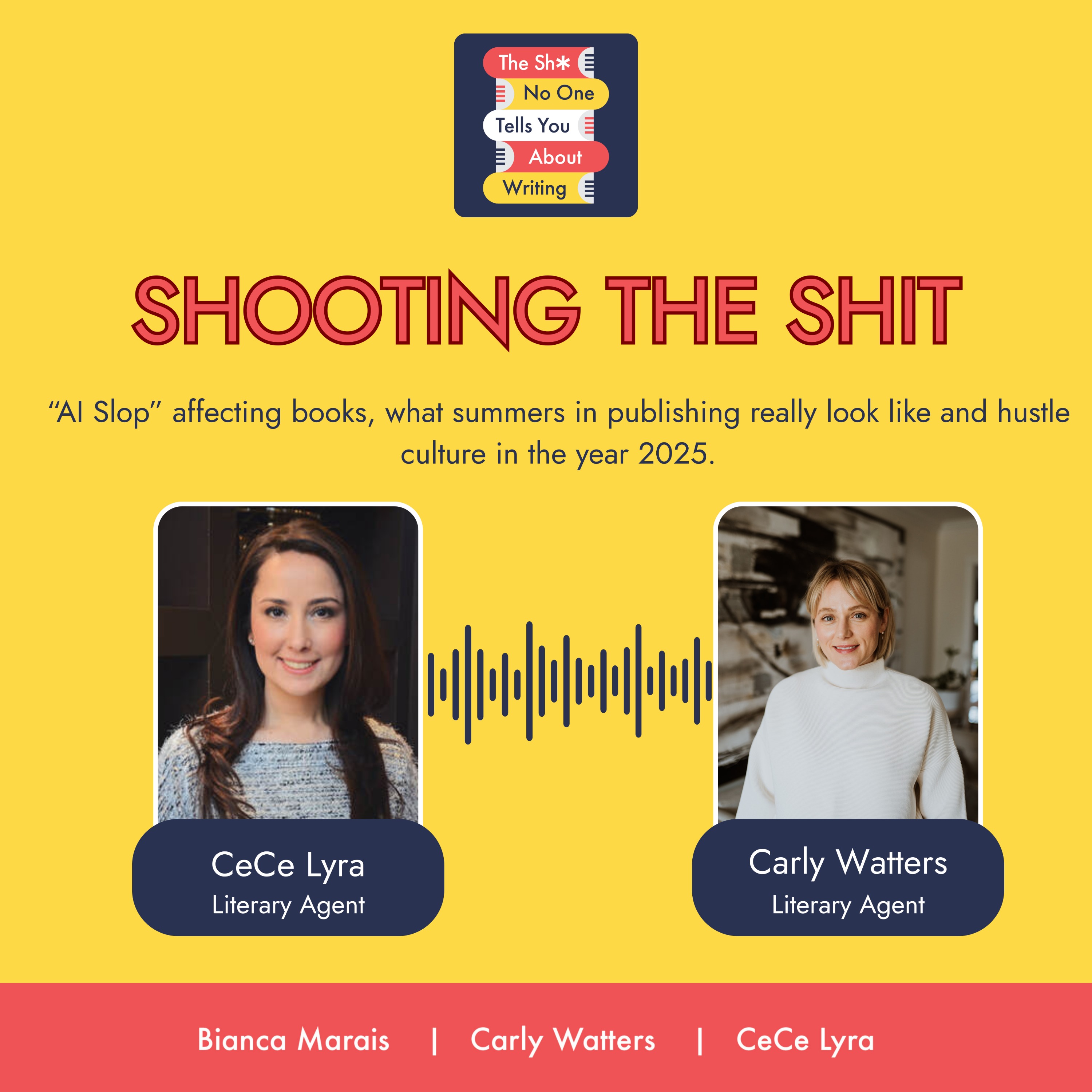
The Shit No One Tells You About Writing
Shooting The Shit: "AI Slop" affecting books, what summers in publishing look like and hustle culture in the year 2025
00:44:35
Loading summary
Transcript61 lines
- [00:00]
Carly Waters
As summer winds down and we get back into back to school mode, thinking cozy interior decor is top priority. From layering fabrics and textiles to extra pillows and fresh sheets and plush bath towels, I can't stop thinking about being enveloped by my home. Whether it's by the fireplace or a piping hot bath or making sure the kids are tucked in their beds. We recently redid our bathrooms in our house. Goodbye 1990s and I love how they've come together, but one thing that always solidifies the look is the towels, soap bottles, hooks and more. Whether it's hand towels or guest bags bath towels, I like to make sure the textiles textures and are handpicked items and they feel like a hotel bathroom or spa and each detail is considered Wayfair has the perfect options for us. Wayfair always delivers so quickly so you don't have to wait and second guess any decision making. It's already at your door. You can make confident choices that suit your style instantly. I like luxe, detail oriented, minimal, individual and stylish pieces and Wayfair's got me covered. I think about how the pieces in my house communicate with each other while also being unique and Wayfair is the best place to shop because your house is not going to look like everybody else's. It's going to reflect you if you're thinking of a room or a space that needs a refresh for fall as we get back to routine, Wayfair's huge selection is easy to navigate with detailed filters to make sure you're getting the best selection for your taste and your budget. Wayfair makes it easy to tackle your home goals with endless inspiration for every space and budget. Get organized, refreshed and back to routine for way less Head to Wayfair right now to shop all things home. That's W-A-Y-F-A-I-R.com Wayfair every style every Home.
- [01:28]
Bianca Marae
Beta Reader Matchup time is happening again. It's been so gratifying over the summer to be tagged in so many posts about beta readers who've become writing besties and who are still going strong many years after they were first matched. Some even travel to meet up and do writing weekends together, which sounds incredible. I can't guarantee any of that. That's entirely up to you, but what I can guarantee is that you'll be matched with a group of people working in your gen, genre and or time zone who will critique 3,000 words of your work as you critique theirs. In return, you can sign up from now until the 31st of August. With the matchup emails going out on the 1st of September, head to my website, Biancamarae.com and look for the beta reader matchup tab.
- [02:20]
Carly Waters
Welcome to another episode of Shooting the Shit with Literary agents Carly Waters and Cece Lira, where we dissect publishing gossip, discuss book industry trends, and the overall state of the book business. If you've ever wanted to grab a coffee with two literary agents, grab your mug and pull up a chair. Hi, everybody. Welcome to another Shooting the Shit episode with me and Cece. Welcome to hanging out with us, hearing everything that's going on behind the scenes, what's going on in our agent brains. We have a huge list of things to talk about today. I have pulled together some links and Cece and I have shared some notes. We kind of got a Google Doc system going where we're sharing what we want to talk about in these episodes. So we have everything from AI to what summers and publishing really look like. I want to talk about hustle culture in the year 2025 and what it means to kind of, I don't know, like, be. Be entrepreneurial in this day and age of the soft life. And yeah, we have some other articles we want to talk about, too. But first of all, how's your week been, Cecelia?
- [03:26]
Cece Lira
It's been busy and good. How about yours?
- [03:29]
Carly Waters
It's been okay. So we're recording this right after the Canadian long weekend, so it feels like a short one. Lots to get done. But also, and this kind of feeds into some of our summer and publishing conversation, which is. It's kind of good when it's a little bit quiet, we can catch up on things. So I'm not mad about everybody in publishing taking their holidays and enjoying themselves. And I love when everybody's, like, putting in their out of offices. Like, everybody deserves this time off.
- [03:54]
Cece Lira
So have you been getting a lot of out of offices? I've been getting a few, yes.
- [03:58]
Carly Waters
It kind of depends on the week, but there's always somebody that's away in some capacity, so it hasn't been too bad.
- [04:04]
Cece Lira
Yeah.
- [04:04]
Carly Waters
All right, where do you want to start, Cece, what's on your mind? Of all the. All the links and topics we have to cover today, I mean, I know.
- [04:11]
Cece Lira
That we should wrap up the whole dark rom com thing. I will be honest with our listeners. I did not read lights out. I did not have time. I had too much to do. Still planning on it. But I'm excited as a future reader for Carly to tell us what she thought about it.
- [04:27]
Carly Waters
Yes. Okay, I am. We have to continue this, because once you have read it, I definitely want to know what you thought about it. Yeah, I liked Lights Out a lot. I would say personally preferred it to Butcher and the Blackbird. I can never remember if it's Butcher and Blackbird or Blackbird and Butcher. So whoever is listening to this can correct me. I liked it a lot. I think it was much more psychological. And so I liked that a lot about it. And I thought. Which was really interesting about this one in particular, which it ended up being a lot more about kind of like the human animal instincts, which I thought were really interesting in a way where as we were getting to the end and the author kind of, you know, teased this out a bit more, but I kind of written some notes down about it, really hearkened back to this. Animal instincts in an age where AI is kind of trying to wipe this out. Like, one of the reasons I think people might be so drawn to it is that it is again, like, there's a scene of them, like, running through the woods together, and they're soaking wet in this winter night trying to get away from the. One of the crimes that they're involved with. And so this, like, deep connection to nature, to animal instincts, I think makes a lot of sense in this day and age, you know? Anyway, we'll talk about it more once you've. Once you've read it. I don't want to spoil it for you, but I thought that the stakes were a lot more realistic. And I just. I like the psychological elements, so we'll put a pin in that until Cece's read that one.
- [05:44]
Cece Lira
I hope. I love it. I definitely love the idea of psychological elements and something dark and at the same time, witty. So that sounds exciting. One of the things that brings me the most joy in life is when I lose myself in a book and I binge read. Now, usually most books I do not binge read. Usually most books I will read a little bit every day because there's just not enough time to binge read a book. But some stories, they just suck me in and I forget about where I am, what I'm doing, what's on my to do list, what's for dinner. Like, I just forget about real life and I start living this parallel life and I become someone else. And that's really special. And the last book that did that for me, I should actually correct myself, the last non client book that did that for me was the Compound. I just loved that book. So much like, it's such a fascinating novel. The premise is essential. Obviously, she was interviewed on our show, so that's really awesome. And the premise is essentially Love island, but in a dystopian near future. And so the challenges are, you know, they get to be starved. They don't give them water. Like, it's actually like, the stakes are so much higher. And it was just incredibly interesting. And it broke a lot of storytelling rules as well, which. Which was fascinating to me, like, how the author managed to pull that off. I will go on the record and say that I do not believe that she wrote it in six weeks. Apparently, she said that on our show. I didn't actually listen to the interview, but multiple people DM'd me to say, Cece, the author wrote this in six weeks. I do not believe that for a second. I am sorry. That is simply not true. Author. If you want to DM me, go for it. Do not believe it. No one can write something that amazing in six weeks. And I just. No, I don't accept that. But it was so good and so bingy and so addictive. Like, I just loved it. Do you have that. Do you have, like, books that you read and you, like, binge and you can't do anything but read the book? Like, obsessive books?
- [07:34]
Carly Waters
Yes. No, I would say my tendency is to just binge things in general. So if I am liking something, I just. I've said this before. I'm an all or nothing person. Like, once I'm in, I'm in the whole way. I think it's also because when I have limited time, I'm like, okay, I gotta do this. Like, I know we'll talk about books in a second, but in terms of TV shows, like, once I watched one episode of the Pit, I had to watch the entire thing. Like, I was up till three in the morning. Just like, I literally watched it the entire time I was in Pittsburgh because I wanted to get the Pit in Pittsburgh experience, which was. Which was great. So I am an all or nothing person. Like, I try. And I've said this before on our Books with Hook segment of the show, like, with client books, I want to sit down and read it beginning to end. I do not want to be interrupted because I find that if I am enjoying something and obviously enjoy all my clients, that I really want to be immersed in the experience so that I can. I can be with it beginning, middle, and end so that I can reflect on it in a more holistic way. So when I'm liking Anything I'm binging it basically is the. The long answer, I guess the short answer in terms of what I binge where I felt like, you know, I said like, quote unquote, the last book that ruined my life, essentially. I honestly think it has been some of the Romantasy series because the world and the characters kind of come together in a way where when you put it down, really felt like I missed that. And so I would maybe say, I'm just trying to think if it would be. I would say probably the second fourth Wing book because I read them back to back when they had both come out. So it wasn't like I read the fourth Wing book and then had to wait for the next one and the next one. So I read the first two back to back and I really felt like really sad and that I had to put them down and not be in that world anymore. And it took me a while to. I just read Onyx Storm this summer. I know I was very behind on that. So, yeah, I don't know. There's certain things where I think if there is especially a world that I get to be in, that's when I feel like I miss it. So I don't feel like, in terms of like, books that ruin my life, it's always contemporary novel. Sometimes it is like historical. Like, for example, you know, Kristin Hannah always does this incredible job in her historicals of feeling like we were there in that moment, you know, like four winds or whatever it is where we're. We feel like we're so there. And then when you put it down, you look up and you're like, oh, it's actually not, you know, I'm not in the dust bowl or like, I'm not in a blizzard right now or like, you know, whatever the weather is or the environment. Those are the books where I feel like that ruined my life because, you know, nothing will compare. So, yeah, I would say Romantasy and historical does that the most for me. But I will honestly, I binge everything. Like, I read a submission. It's kind of a submission again, I'll talk vaguely about my agent stuff. So I had somebody submit to me who was a published author basically looking for representation. And so I put it on my Kindle and I was loving it and I just read it all night. You know, I. I'm a pretty fast reader as well. So once I'm reading something, I can kind of power through it because I'm pretty fast. So, yeah, basically anything I'm enjoying is a binge Read for me, the fascinating.
- [10:28]
Cece Lira
Thing about our jobs, I think, as literary agents, is that. So the best way to explain literary agenting to someone who's not in publishing, does not want to write a book, is to be like, oh, like, like a real estate agent, but for books and not houses. Right, but. And this is where it gets tricky. If you want to know what a house is worth, if you want to know what a house will sell for, you look at comps that sold around that house. These are objective metrics. You look at things like, when was it recently renovated? You know, what the plumbing situation is, how many bedrooms, whether the cabinetry is whatever, like this. It's just so objective for the agent. Of course, sometimes homeowners have, like, you know, subjective feelings towards their homes. But these are the metrics that go into making a decision of, you know, is this home sellable? For what? Et cetera. That's why it's called real estate. It's real. Now what we do is we sell intellectual property. And the metrics of, can I sell this? And for what? That's all emotion. And the number one emotion I track when I'm reading something is, do I want to go back to it? So if I start reading a submission and then there's this pull, this deep, deep psychological pull that's almost like a new gravitational field that makes me go, you have to go back to that book. Like, I'm writing an email, but my mind is going, you have to go back to that book. I'm talking to someone on the phone, but my mind is going, go back to that book. Like, that pull is a huge metric. And so it's interesting to me that you read in one sitting, because then how do you know if you have the poll? Like, do you just know because you want to keep reading?
- [12:03]
Carly Waters
That is the poll. Yeah, it is. Yeah. Yeah. It's like, I don't need to do anything else because I am very aware I'm somebody that needs a certain amount of sleep. Let's just say I'm very cranky when I don't get my sleep. So if I'm willing to be like, okay, I'll push it a couple extra hours, knowing I'm going to cut the price tomorrow, that, like, that is the poll for me. And I agree with you like that. And a lot of editors will say that, yeah, if I want to come back to it, then I know it's for me. And so I know that's a common thing, but for me, it's, yeah, what am I willing to forego, like, what am I willing to block out in order to be in this world a little bit longer?
- [12:39]
Cece Lira
Do you always read at night or weekends? Because, like, if stuff isn't interrupting you, if you. Then it must be, right? You must.
- [12:45]
Carly Waters
Yeah. I mean, just because of, you know, my general schedule in life. So I would say, Gosh, 90% of the time I'm reading in the evening. Like, I'll pick up a manuscript. Like, my husband puts the kids to bed, and I pick up a manuscript around seven. I. I'll be done by midnight. So I'll do a lot of. Yeah, I'll do a lot of, like, block reading in the evening and weekends. I can a little bit on the weekends, but it's a bit more piecemeal. But I can't just based on, you know, how many emails I have to reply to and how many zooms I have, I can't set aside time on a weekday, essentially. Yeah. To read.
- [13:20]
Cece Lira
Not in one sitting, that's for sure. That's interesting. No, that's a really interesting look into your process. Yeah, I like that.
- [13:27]
Carly Waters
That's a little bit about me.
- [13:28]
Cece Lira
Speaking of emails and zooms and hustle, do you want to talk about hustle culture?
- [13:33]
Carly Waters
Yeah. This has been on my mind, and sometimes when I think like, oh, you know, is it an essay? Is it a real. Is it a. You know, what. What is the way that I want to talk about something? I'm like, okay, I think this is maybe something that Cece and I should get into, because I've been thinking a lot about this lately for a variety of reasons, but I've been thinking about hustle culture and entrepreneurial spirit. And I think about this in the context of often, like, how I mentor younger people will ask me, like, oh, you know, how did you get to where you were? Or, like, what advice would you give to your younger self? Like, those type of questions. And it's really hard for me to kind of divorce, like, the era that I kind of came of age in, from how I got to where I was. And I know, and again, we're both kind of millennials, maybe we need a Gen Z to, like, pop in on this conversation. But I think a lot about how to advise somebody who. In a. In a group of people who feel like, you know, they want more work life balance, they like this quote, unquote, like, soft life environment. Hustle culture makes people think about burning out, and therefore, people don't want to burn out. And so how do you advise people to, like, get that Fire under them, knowing that, like, I was somebody that worked a ton of hours. You know, I worked seven days a week between a couple jobs starting out and starting. Yeah, I don't know. Does that make any sense at all, this thought process I'm working through?
- [14:53]
Cece Lira
It does, because I feel like you're trying to reconcile things that seem like contradictions because you want to give an honest answer. And the way you found your success had to do with hustling. Like, you hustle to get to where you are. There's no, I mean, there's no way to say that that's not true. Right. But at the same time, you want to be like, honoring people's desire for the soft life. And so it's for sure really interesting. I get a lot of. I mean, I shouldn't say a lot, but, you know, every once in a while someone will reach out and they'll say, hey, I'm thinking of becoming an agent. This is especially common for lawyers. Like this week I had a lawyer call me. So she did her. She worked in publishing before she went to law school, then went to law school, worked as a lawyer, and now is thinking about going back to publishing specifically to be an agent. So when she worked in publishing, she worked in editorial. And she's like, I just need to know how you made it work, what it was like. And when you talk to someone who comes from a certain type of background, and lawyers are one example of that, I don't really think that I spend too much time addressing the hustle just because there's just no way someone made it into law firm culture without hustling. They might not want to, but it's just like banking, certain industries, it's like, well, you hustle. You might not call it hustle.
- [16:11]
Carly Waters
You signed up for this. This is the real. Exactly. Yeah.
- [16:13]
Cece Lira
And with other industries, especially people who like, are going straight, like from university and then they want to just go into publishing and like their prefrontal cortex isn't even developed yet. And so it's very, very wonderful time to get into something you love. Like, I'm, I'm like low key jealous of people who have only ever agented because I'm like, oh my God, you never had the before times. But at the same time I'm like, do you know how good you have it? You know, but when I talk to people like that, I, I just, I can't get around the fact that I don't know how you do this job without a certain level of obsession and hustle and hopefully there's a way to reconcile that. Hopefully there's a way to not burn out and not, like, lose the spark. That's for sure important. But I just don't. I don't know how to make that work because it's so competitive and it requires so much planting of seeds like you're planting seeds, and you will only see the fruits of those seeds years later. Years. And that kind of stamina, that kind of drive to be working so hard and not seeing any results and not really having any guarantees that you will see results for years, that requires a certain kind of, I think, hustle. I hope I'm wrong. I hope people tell me, no, no, I've done it. I actually think one thing that would be really interesting for us to talk about on the show would be talking to people who left agenting and then kind of like reporting back or something, just being, like, dispatches from people who left agenting. Why? Why are you happy? Or what were your reasons? Because I can't imagine doing something else. And I've thought about it, I've considered it. I've had moments in my life where I was like, should I keep doing this? But when it comes down to what makes me happy, it's this job. At the same time, if I want to give someone advice about honoring their soft side, I don't know how. Like, I don't know. I don't know how to do this without obsession.
- [18:05]
Carly Waters
Yeah, I think it's because it is such an entrepreneurial job, and I think a lot of people don't go into it thinking, like, I am. I'm entrepreneurial. I'm, like, starting my own little business and, you know, your own Rolodex, your own clients, like, everything. Right. You're like, building your own little infrastructure business of one, even within a larger agency, because you are your own advocate in that sense. So, yeah, I don't. I don't know. I haven't really quite figured out the answer, because I do think this job requires a certain level of intensity because it's a sales job. You know, when we've talked about that before as well, where we're essentially salespeople like you kind of talked about when you're saying that, you know, we're. We're agents, obviously, and a certain type of agent, but we're salespeople at the end of the day, and there is no way to be a salesperson without a certain amount of hustle. Like, I just don't think those two things align. But, yeah, I think we have to put out a survey for people who have left agenting and. Yeah. What were the reasons? And are you.
- [18:59]
Cece Lira
Well, we're salespeople in a buyer's market. That is an important distinction. Like, that is a very important distinction. You know, we're not selling water in the desert. We're not. We're salespeople in a buyer's market. Like, how are you not going to hustle? Please, Someone actually answered this question. I'm actually curious.
- [19:21]
Carly Waters
No, I. I'm with you. Yeah. I just. I don't know. I guess I struggle with. Yeah. The idea that everybody has to find their own balance and they come at it in their own way.
- [19:33]
Cece Lira
Yeah.
- [19:33]
Carly Waters
But. Yeah, I don't know. I guess my greater question is maybe is there a way. Is there a way to achieve work, life, balance without burning out? And I think most of us figure it out eventually.
- [19:45]
Cece Lira
Yeah.
- [19:45]
Carly Waters
But it's hard to advise. It's not something you can advise somebody on how to do it.
- [19:49]
Cece Lira
Right.
- [19:49]
Carly Waters
It's like everybody figures it out on their own.
- [19:52]
Cece Lira
Can you hustle and still embrace a soft life? Is that possible? Yeah.
- [19:58]
Carly Waters
And that's what I think the kind of the question, the greater question is. But anyway, anybody's listening has the answers. Drop them in our YouTube comments here or. Yeah, let us know what you think on the matter, because I certainly haven't figured it out.
- [20:11]
Cece Lira
If you have the answers, you should sell the answer. People listening because it's a big deal. Like, you should be selling it. Just saying.
- [20:18]
Carly Waters
Just so you know. All right, now a message from our sponsors. Did you know that your calendar age doesn't always match how old your body truly is? I recently took the True age test from True Diagnostic to discover my biological age. And I know it's going to completely change the way I think about my health. You guys know I take my health very seriously. From training for triathlons to wanting to live a long time to raise my boys and watch them grow. Health is such an important, important part of my life and family. Biological age is a powerful indicator of how fast you're aging internally, which directly predicts your risk for serious diseases. Here's why that matters. Research shows that if your biological age is even just five years older than your actual age, you risk developing diseases like cancer or heart disease, and they can jump by as much as 30 to 50%. That's a big deal, and it's completely avoidable. The good news is nearly 90% of biological aging is in your hands. Yes. It's driven by things like your lifestyle habits, environment, which means you have a lot of control over it. I recently sent in my sample and I can't wait to see what the results are. I'll keep you posted about what my true age is and what other health indicators I found. The True Age Test doesn't just give a number. It quickly shows your heart, brain and liver immune system and how they're aging. I'm looking forward to getting the results back. I can't wait to get my actionable strategies from academic scientists at Harvard, Yale and Duke to help me slow aging and reduce my risk of disease. The test itself is super easy and convenient. I did it from home. No doctor visit or big needles, just a quick painless finger prick. Send off that tiny sample in a prepaid package. In about two or three weeks you'll get a detailed online report about your aging and health fast and hassle free. If you care about protecting your health and want to find out what your real age is, head over to truediagnostic.com and use my code T Ya to get 20% off your entire order or subscription. That's truediagnostic.comand use T Snotyaw at checkout to get 20% off. Your future self will thank you this spring watching everything outside bloom I'm also watching my kids blossom in their French Immersion program at school. It's amazing but also a big motivator for me, especially because we are headed to France next month. I want to be able to join in more, you know, if you want to connect more with your kids language journey or maybe prep for your own adventure this season. Rosetta Stone helps build those skills Rosetta Stone is the trusted leader in language learning for over 30 years, offering an immersive and effective approach that helps you absorb and retain new language naturally on desktop and mobile wherever and whenever it fits your lifestyle. It is a trusted expert for 30 years with millions of users in 25 languages offered. Spanish, French, Italian, German, Korean, Chinese, Japanese, Dutch, Arabic, Polish and so many more. There's fast language acquisition. You can immerse in so many ways. No English translations. It's an intuitive process. And don't forget the speech recognition True Accent feature. It gives you feedback on your pronunciation. It's very convenient flexible learning anytime, anywhere on the go with the mobile app or on your desktop at your schedule. And there's amazing value lifetime membership for all 25 languages for any and all trips and language needs in your life. Lifetime access. So don't wait. Unlock your language learning potential now. The shit about writing listeners can Grab Rosetta Stone's lifetime membership for 50% off. That's unlimited access to 25 language courses for life. Visit RosettaStone.com today to get started and claim your 50% off today. Don't miss out. Go to RosettaStone.com today and start learning today. All right, and we're back. Okay, Cece, so let's talk a little bit about summer and publishing. We kind of briefly talked about it, but a lot of people listening to our show are aspiring authors. I know there's lots of authors that listen to us and people in publishing who have different perspectives on this, but everybody's like, oh, everybody talks about summer being slow. What does slow mean? So I kind of wanted to give a little bit of context to what summers look like for me. And obviously, again, everybody's a bit different, but there's everything from summer Fridays, which we can explain. So Summer Fridays, it's not, you know, unique to publishing in general, but it is completely common across the whole spectrum of the publishing world, which is people work one extra hour from Monday to Thursday so that they can get their Friday afternoons off. So that's. That's what summer Fridays are. I'm sure most of you are familiar with this. So it kind of leads to a culture of people taking more Fridays off in general because it's, like, only a half day they have to take off. Or sometimes, especially for people more junior in their career, they'll actually spend Friday afternoons doing the things that they didn't get to in the rest of the week because they're like, oh, it's a quiet office. Like, I can, you know, get through all of this. So there's the summer Fridays. There's catching up on reading. I know a lot of authors wonder, like, oh, should I be querying in the summer? Because, like, agents are always saying, get some quiet time. But a lot of us catch up on our reading in the summer because we have less noise with other things. So that's super common as well. And then the pace of acquisition. So obviously, you know, we still have clients out on submission and books under option and all of this other stuff. And so right now, I am waiting on an offer for something, but it tends to be a little bit slower because people need approved, you know, editors need approvals from their bosses or their boss's boss, and if that person's away, then that can delay things. And then obviously, I want to let all the editors know who are considering the project that I have an offer. So it just tends to move a little bit Slower in that regard because somebody's boss is always off. But, cece, do you want to elucidate on what your summers look like?
- [25:42]
Cece Lira
It's pretty much the same experience as yours. I think that some of our job has to do with relationships and interacting with people, and we require information from people, whether that's an offer, whether that's connecting to discuss a project that an editor wants to commission. In that part, I think the pace changes. But then I personally really like the fact that I have more time to read and more time to catch up on things. I also take a lot of time to, like, scout projects because there's so many books that I'm interested in seeing in the world. But then we need an author to write it. Where's this author? We're talking about non fiction here, people, in case everyone's going, what? For example, like, I've been wanting an expose on Tipping Culture for years. I need this book in my life. And so I spent time, you know, researching authors that could possibly write this, who could possibly write this expose. And so I think that it all comes down to the parts of our job that we control more versus the parts of our job that we control less, only because they're more collaborative. I appreciate seasons. I am someone who, maybe because it wasn't always my reality, I appreciate the fact that summer is different from fall, and fall is different from winter, and winter's different from spring, that not all parts of the world are like that. Some places you live in perpetual summer. And so that's. That's. That's really, like. It's a positive thing for me. Like, I like that it makes time more special.
- [27:03]
Carly Waters
Yeah, I agree. It's like, it bookends things, right? It's like, I have to do this by this day because this is the changing of the season and the pace and the culture changes. So that's super important. So there you go, guys. Books are still being bought, agents are still signing projects. Everything still happens in the summer, even if it's just a little bit. A little bit slower. Okay, somebody DM'd me. You know, people DM me all the time, so that's not new. But somebody DM'd me to pitch me their services, which were. They are a personal assistant to authors. And so, you know, this is something that, you know, certain authors have, some don't. Obviously, it costs money to have an assistant. Got me thinking a little bit about, you know, how many authors these days actually have assistants because it's so much more common now for Somebody to need help with social media and so on and so forth. So, CeCe, do you. Do any of your clients have assistants to help them with, like, admin or socials?
- [27:55]
Cece Lira
Not fiction clients, but nonfiction clients? Yeah, yeah, I have a couple who do, but I think they would have these assistants even if they weren't writing books, just because of their demanding jobs, you know, so, yeah, interesting. What about yours?
- [28:08]
Carly Waters
Yeah, I. I do have some that have help and some where it's like more admin oriented because there's just like a certain volume of foreign rights stuff to manage and, and just there is a lot of admin. Once you get to kind of a certain level of management of intellectual property, it's a lot of work. And then there's obviously people who need help just with socials and things like that. But I polled my social media followers just to see who was following me and what they were thinking about the topic. So I got 171 replies. So the question was, how many published authors have an assistant? So 171 replies. And I put three different categories. One was, do you have an assistant? The other one was, no, I don't have an assistant. And then the next answer was people who just want to see the answer. People being nosy about the question itself. So 142 of them just wanted to see the answer. So I know it was a lot of aspirational authors, you know, just wanted to. To get the information or other agents or other editors. 25 had no assistant and 4 had an assistant. So that is approximately a very small sample size. But 16% potentially of published authors have assistants. So that doesn't really surprise me because we know that there's only a certain percentage of authors who have the volume of work that need an assistant. Kind of coming back to the admin side and the social media side of how much work is required. But yeah, I just thought that was interesting about who needs assistance and why and when that would maybe come into play.
- [29:32]
Cece Lira
Yeah, especially because you're doing a creative job. Right. So if you can outsource admin stuff, if you can outsource the. The stuff that does take a mental load, why not? Like, if that's something people want to do, and these days it's so much easier because everything's virtual anyway.
- [29:47]
Carly Waters
Yeah, totally. Yeah. And I know that there are some assistants who work with like a bunch of authors and they have specialties in certain fields and things like that. So, yeah, super interesting job for people who want to. Want to help out, but I don't know how much demand there is for people who are going to need assistance. All right, cece, where do you want to go to next? Anything else that we haven't talked about, or do you want to go to our links section of our conversation?
- [30:09]
Cece Lira
No, I think we can go to our links. Let's do that.
- [30:12]
Carly Waters
Okay, so a few links that kind of stood out to us this week that we wanted to talk about. One of them was from the bookseller. And it's about the concept of AI Slop. And I think you can like, probably imagine what AI slop is, but I'll give you a definition which is essentially self published books that flood the marketplace, generally written by AI. It could be a ripoff of an existing book or it could just be like, nonsense. But it's this idea of just like content flooding the self published ecosystem to create so much content out there. And yeah, I think this article does such a great job of kind of tackling so many of the issues with it. So the article came out August 5, it was written by Lauren Brown and the bookseller, and the title is AI Slop. Versions of books on retailers like Amazon risk harming consumer confidence. And I think this is a really important article to talk about because it impacts so many things, like the negative effects of author brands, customer confusion, information overload in terms of how much content we get on the Internet. So yeah, I want to talk about this one. Did you have a chance to check it out?
- [31:24]
Cece Lira
Yeah, absolutely. And I loved it. Thank you for sharing. I don't know, I feel like our listeners are hearing the term AI slop and they're going, oh, okay, that's redundant. But yes, they're essentially like, so this is a ripoff. This is a total ripoff situation with potential copyright infringements, like, potentially so many legal issues. Imagine writing a book. Imagine going through the process that everyone who follows our show knows is hard. And then you have a book out there and then someone else. Well, not someone, I suppose, I guess someone had to do it. But all of a sudden AI, like AI comes in like AI generated work and rips off your book and either copies your title or builds off it and makes it seem like it's your book and summarizes your content, but not in a way that's intelligent at all. Like in a way that makes your content seem dumb. So not only again, so many legal issues, but also like insulting to your work and harmful to your brand. And because the person buying this is obviously not aware of what they're doing, like, it's an honest mistake. And so it is so mind blowing. Like, it's just so mind blowing to me that this is the world we're living in and this is not new. I remember this happened to, I think it was Jane Friedman where someone, you know, she has obviously books and someone kind of like did an AI slot version of her book. And I know that it, you know, I have clients who are experts. And so AI versions of workbooks based on their books come out and obviously like this is just unacceptable. And if anyone reads the article, like people did ask Amazon, what are you going to do about this? And I just found that their answer was just so disappointing because it's super vague. It's essentially saying things like, we care about this and we take this seriously, but there's no actionable thing that we can count on as readers and as publishing professionals to protect authors. So it's just, it's very, very discouraging to me. And I love the fact that the article focuses on consumer confidence because I don't know, stock market. Like, the stock market is something that is, I think, fairly objective. Right. Like you have fundamentals, you have charts and graphs and all these sorts of things. And yet even the stock market tracks consumer confidence because consumer confidence matters. Like whether people are feeling optimistic or pessimistic, engaging. That matters because it influences people's willingness to spend money. And, and if you take that to books, like people are buying books, the books arriving in their homes are like terrible books. And so they're going to go, well, next time they buy a book, they're going to go, well, I'm not going to spend this money on this book, people. We already don't have enough readers in the world. We don't have to destroy the confidence of the readers we have. Like, this is a serious, serious issue. And I just don't know what's going to happen about it. But like it's not good.
- [34:04]
Carly Waters
Yeah, well, one of the Amazon responses was essentially like, we changed the number of uploads people can do in a day for self pub. I think you guys remember hearing this news, I can't remember if it was last year or early this year so that it would slow down the slop. But like it does not affect, like it, it's not going to change what actually happens with this content if people keep doing this. Yeah, I don't know. I. It happened to one of my authors really recently a super, the book was doing super well on the Amazon charts. And so somebody clearly saw that it was doing well on the Amazon charts and wanted to piggyback off of this. It's also not unique to books. You know, I also think about fashion, right? When somebody sees, you know, something coming down the Runway and then Zara and H and M or whoever else goes and makes a knockoff and, you know, it's in the stores in a couple weeks after the designers painstakingly create these beautiful designs, and then we have fast fashion ripping it off for profit. So, you know, it does happen in so many creative industries. It doesn't make it okay. And I think what I. I guess what I find so alarming is in this information age of AI, I find that information overload also really concerning. Because if somebody goes to wherever they get their books, you know, they're typing it in the title that they want, something else comes up, they click it by accident. How again, how are they going to know whether they're getting the right thing or not? And then they're not going to. Maybe they won't buy a book by that author again because they're like, oh, that author. You know, that was confusing. I wasn't sure what I bought. Or the title was misspelled by one letter or the author's name was misspelled by one letter. And to me, it just affects author brands so much. And it's just even more important of a reason to just like, protect your author brand so immensely. So it's like so clear when this is actually affecting authors. And it also comes back to community. Right? Because certain authors who have great communities, they'll say, hey, everybody, go report this. And then everybody goes and reports it and is able to kind of help out. So I'm hoping, again, I'm the eternal optimist, that it will bring us back to kind of the community element of being there for each other and again, collectively reporting these when we see them. Because we cannot let this just go right on by because it's, It's. It's. Yeah, it's. It's not going to get fixed. It's going to get a lot worse, especially as AI gets more competent. So, yeah, I don't. I find this really alarming.
- [36:16]
Cece Lira
Yeah. From your lips. From your optimistic lips.
- [36:21]
Carly Waters
Yeah. So that was a great article to read. So the next article. So this was definitely making the rounds and there's lots to talk about about it. And as a follower, also made sure that we saw Raveena Raju. Also made sure that we saw this. So author Nikki Payne wrote about. I know you guys have heard this, this in so many different Ways in so many different contexts. But the Sydney Sweeney dilemma. And we're not going to kind of recap it all because by the time this has come out, you guys are very well versed in what was happening with the ad campaign, Sydney Sweeney's ad campaign. But basically, Nikki Payne wrote the. A great article on her sub stack called Sydney Sweeney in the White Utopia. And she kind of brings a bunch of this back to kind of critical theory. She brings it back to how we can look at this uproar and this, all of this in the context of the culture industry that we're in, which is book culture, and how this all connects. And so this also really weaves into the conversation that we had with my author, Bailey Hanna in New York. I know I talked about that great panel that we did for 831 books at McNally Jackson talking about cowboy romance and what does that all mean? And we had some really great conversations kind of getting at some of the things that Nikki was talking about, which is, you know, romance novels in genres that can give us these white utopias. And so check out the article. It's really great. But what I wanted to kind of focus on was once you kind of scroll down in her article, she says, here's where it gets interesting for those of us who read romance. These white utopia fantasies are everywhere in our TBR piles. And so she breaks down four different types of romance categories that have a tendency to fall into these white utopias. And so she says hockey romance, where everyone looks the same and shares the same values. Hockey players are powerful, aggressive, sporty, but safely white as well. Cowboy ranches, where, quote, traditional living, end quote, is romanticized. These erase indigenous displacement, black ranch labor, Mexican vaquero origins to create fantasies of white frontier life. Mafia families were, quote, bloodlines, end quote, end quote, heritage, end quote, determine everything. These romanticize ethnic insularity and blood purity as loyalty and family values. And small towns where the biggest conflict is whether the coffee shop will close, not systemic racism. These imagined spaces where social problems are individual and economic, never structural or racial, was the quote. So, yeah, I think it was a very, very interesting article. And I love articles where we take something happening in the kind of current zeitgeist moment. It's having a big uproar. And like, there are so many ways that we can apply that to the lens of how we create and consume the culture in our book world as well. So, yeah, I want to talk a little bit about the. The different types of romances as well, a little bit further. But Cece, did you have any thoughts before I go on my diatribe?
- [39:02]
Cece Lira
My favorite part of the article was, and I don't have it in front of me now, but it's a line that essentially read, you know, be curious about why you like what you like. And to me that is such a smart encapsulation of truly just living a life that's more aligned with the values we have. You know, when it comes to discussions of any of the isms, and we'll talk, we'll talk about racism, but any of the isms, really, it's not the people who wake up and think I'm a white supremacist that are the problem, because these people, like probably are lost case. I mean they're definitely the problem, but no one's talking about that. We're talking about the fact that sometimes it's unexamined and you're actually pretty perpetuating problems without realizing it. And that is the work. And how do you do the work? And I think again, it begins with curiosity. It begins with going, hey, why do I like this? You know, and not the surface reason, the deeper reason. It involves self reflection and it involves really spending some time with, with, with, with our own thoughts. And we all have it, we all have things that we, you know, need to self reflect about. But I just thought that was so fascinating, you know, why do we like what we like? And I, I am not someone who gravitates towards these, these small town settings and hockey romances and all that as a reader, but I do gravitate towards other things. And then why, why do I do that? And I thought that was super, super interesting. I, I really appreciated the way she, she encouraged us to do that. And I thought that was so great.
- [40:30]
Carly Waters
Yeah, I thought it was really interesting about, yeah. Thinking critically about the values that are reinforced and why they're reinforced. And so on the panel that we were at, my client Bailey Hannah was at panel that I just talked about and we got in so many great conversations about so many things. And one of the things that Bailey had said about why she can't read hockey romances and a lot I find I, I would be so curious about what demographically and geographically which women and men are reading these hockey romances, because so many people who grew up in hockey culture and we don't have to go into the big Hockey Canada scandal unless we really want to, but so many of us that grew up in this like deep hockey culture are so repulsed by those novels because it reinforces so Many things that felt so icky about so many boys and men that we grew up and grew up around. And so the fact that people can idealize that some people just go like, ew. Like I just, I can't go there. So I think that's really interesting. And then back to the cowboy ranches and tradition where traditional living is romanticized. All incredibly valid, incredibly valid points. I think that's super important. As I said, Nikki's quotes were they erase indigenous displacement, black ranch labor and Mexican vicario origins to create fantasies of white frontier life. Super fascinating. And one of the things I think that really drew me to Bailey Hannah's work in particular, because, you know, as Cece and I know there's so many different authors out there looking for representation and, you know, we only get to work with such a select group of authors. And I think one of the things that was so important to me about Bailey's work in particular was how working class her ranchers were. And so, because there's this whole like Yellowstone thing where it's like these people are billionaires already and that power dynamic, it was everything from the financial side of it and the corporate side of it down to the land. Right. And the colonization of the land. And what I've loved so much about Bailey's world in particular is that there are no rich ranchers. These are people living completely blue collar, working class lives. Because that is the reality of most people who live and exist on farms. And it is really hard to making a living working on harm. So the romanticization of this, like traditional living is so historical in that sense of like the romanticization of it, because the reality of it is really dirty. I mean, Bailey talks like in her books all the time about like how physically dirty it is. You know, it's not like you're on your white horse walking through the sunset. It's very gritty, it's very dirty. She always talks about in her books about like how Everybody's up at 4 in the morning, nobody has a day off, nobody's making any money from this. And anyway, so one of the things I really love about Bailey's cowboy romances is the class dynamic that she tackles in her, in her cowboy romances. So that's one of the reasons I love Wells Ranch.
- [43:12]
Cece Lira
Yeah, it's class dynamics are this really interesting fodder for storytelling. And it really makes us think about the greater isms, like I said, right. Like for the people who want to be living a life that's aligned with their values and for the People who want to celebrate diversity and want to essentially like evolve as human beings. And I feel like that's probably all of us listening here to our show then, then being curious about that and, and, and just exploring that. That's just so good, you know, because the lost causes are the lost causes. Like I wish they have epiphanies. Like I wish I wish them epiphanies is what I'm saying. But probably that won't happen and probably they're not listening to us.
- [43:51]
Carly Waters
So we wish you all epiphanies. Yeah, that's, that's the message. Okay. I think the last kind of big topic we wanted to talk about was the kid lit market. There's a really interesting article. So it came out on July 11th in Publishers Weekly, written by Joanna O'. Sullivan. The title of the article, Breaking YA Authors Crossing over into Adult Fiction. And this was a really well done, kind of more long form article on a lot of authors who wrote ya, maybe in the kind of like 2000s, early 2000s and how they have grown up, how their audiences have grown up. Because I think everybody was noticing this trash and say everybody, most people in publishing who are paying attention were not, was noticing this trend of. In Publishers Marketplace, Publishers Weekly, there's all these deals of like best selling YA authors, adult debut. And everybody's like, oh, okay, you know, a huge moment of the movement out of the kid lit market in general. A lot of contraction. The kid lit market. I think everybody's kind of been following the public publishing news knows that the middle grade market is really tough. You know, Barnes and Noble isn't taking very many titles anymore. Book banning publishers are being a lot more cautious unfortunately about like what they're putting into the kid lit market. So there's been this kind of mass exodus out of the YA and kid lit space. And so I found this article really interesting and there were some really interesting stats and I know CCU wanted to get into the stats as well.
- [45:15]
Cece Lira
Yeah, I, I loved the article. I get sad when I hear about contracting markets. I know that that's a part of life. And I also understand that when we have a boom, it's normal for us to then later have a fall in that. I just, to me the most interesting thing about the YA market and it's not a market I sell in at all, never have. And so it's the readership. So many readers of YA are adults, middle aged adults often. And I don't think enough people realize that. Yeah, you're writing it for youth for kids. But people often want to relive the raw and angst and the firsts. And so you read those novels and what does it say that the market's contracting? What does it say about where we are as a society in a larger way? What does it say that people are gravitating towards? Like authors in the space are gravitating towards adult stories, I'm sure. And I think, Carly, you mentioned this when we chatted about talking about this. I'm sure that banning is also a part of it, right? Like the book bans. So it's just, it's just a really big topic. And I, I never like contracting markets. That's never something that makes me happy with reading, with publishing. But I think it's interesting to see how so much of what readers are yearning for has to do with more adult themes. You know, like, what does that say about us as a society?
- [46:43]
Carly Waters
That's. That's interesting for sure. Okay, some stats. So one of the stats was, According to a 2024 research performed in the UK by Nielsen Book, commissioned by HarperCollins UK, nearly 2/3 of YA readers are adults, with 28% over the age of 28, reflecting a trend that's been building for more than a decade. Along with that shift, the lines have been blurred between what's expected in a YA novel, what's consistent considered adult from the behavior protagonist of the subject matter. Who is YA for? Is a question that is circulated among readers, parents, agents, and the publishing for years. The presence of a teen character alone is not enough to classify a book as ya. I'll just be really interested, I guess I should say, about how publishers kind of react and respond to this. I think we've seen a couple new adult imprints pop up recently, so it'll be interesting to see what they publish. And is it more adult or is it more ya? Is there like a lower new adult and an upper new adult or, you know, an upper YA that will be kind of in that bucket as well. So I don't know. There's a lot of blurring of the lines here. To me, it's always up to the reader. You know, it's like we can publish these books, market them, try to get them into stories, but it's up to the readers to decide, like, who it's for. You know, we say that about crossover of anything. You know, you can market things as much as you want, but you know, it's the people that read it and interact with it and share it. That's who the market is and how the market flows. So I think we should pay a lot of attention to the consumer behaviors in the YA space, in the new adult space for the next little while.
- [48:13]
Cece Lira
Well, listeners or I guess, watchers, if anyone's watching us on YouTube, you have the power because you're readers. So all stories are about power. I'm fond of saying that. So you have the power.
- [48:25]
Carly Waters
All right, well, that's it for us today. I will preface this with we will not take everybody's ideas, but I do look at them my dm. So if people do have articles they want to make sure we cover, you can send me a message. I will not be responding to everybody just because I can't. But yeah, we're open to interesting things you guys see around the web and want to make sure that we cover because we definitely do our best to read as much as we can in terms of news articles and substacks, but there's a lot of content out there. So yeah, if a bunch of you send us the same article, then we'll know something's in the water. So keep us in your mind when you're reading really good stuff.
- [49:00]
Cece Lira
And if you're listening to this and you go to our social media feed, leave a comment. We're really curious for your feedback and we are so appreciative of the people who have already left us comments with their feedback. It really helps Carly and I know, like, what are people listening to? What are they most liking? What do they, you know, wish they could see more of? So that's, that's really, really appreciated. So thank you so much.
- [49:23]
Carly Waters
Yeah, and we're going into the quote unquote, busy season in September. We're going to try to keep up our usual schedule here of dropping something interesting into your feed on Mondays. So, yeah, we'll see what, what gossip and news the rest of the summer brings and move us into the back to school feeling of September. Bye, everybody.
- [49:39]
Cece Lira
Bye, everyone.
- [49:40]
Bianca Marae
Cece Lira is a literary agent at Wendy Sherman Associates. If you'd like to query Cece, please refer to the submission guidelines@www.wsherman.com. carly Waters is a literary agent at P.S. literary Agency, but her work on this podcast is not affiliated with the agency and the views expressed by Carly on this podcast are solely that of her as a podcast co host and do not necessarily reflect the views, opinions, policies, or position of PS Literary Agencies. Agency Beta reader matchup time is happening again. It's been so gratifying over the summer to be tagged in so many posts about beta readers who've become writing besties and who are still going strong many years after they were first matched. Some even travel to meet up and do writing weekends together. Which sounds incredible. I can't guarantee any of that. That's entirely up to you. But what I can guarantee is that you'll be matched with a group of people working in your genre and or time zone who will critique 3,000 words of your work as you critique theirs in return. You can sign up from now until the 31st of August with the matchup emails going out on the 1st of September. Head to my website Biancamarae.com and look for the beta reader Match up tab.