Podcast
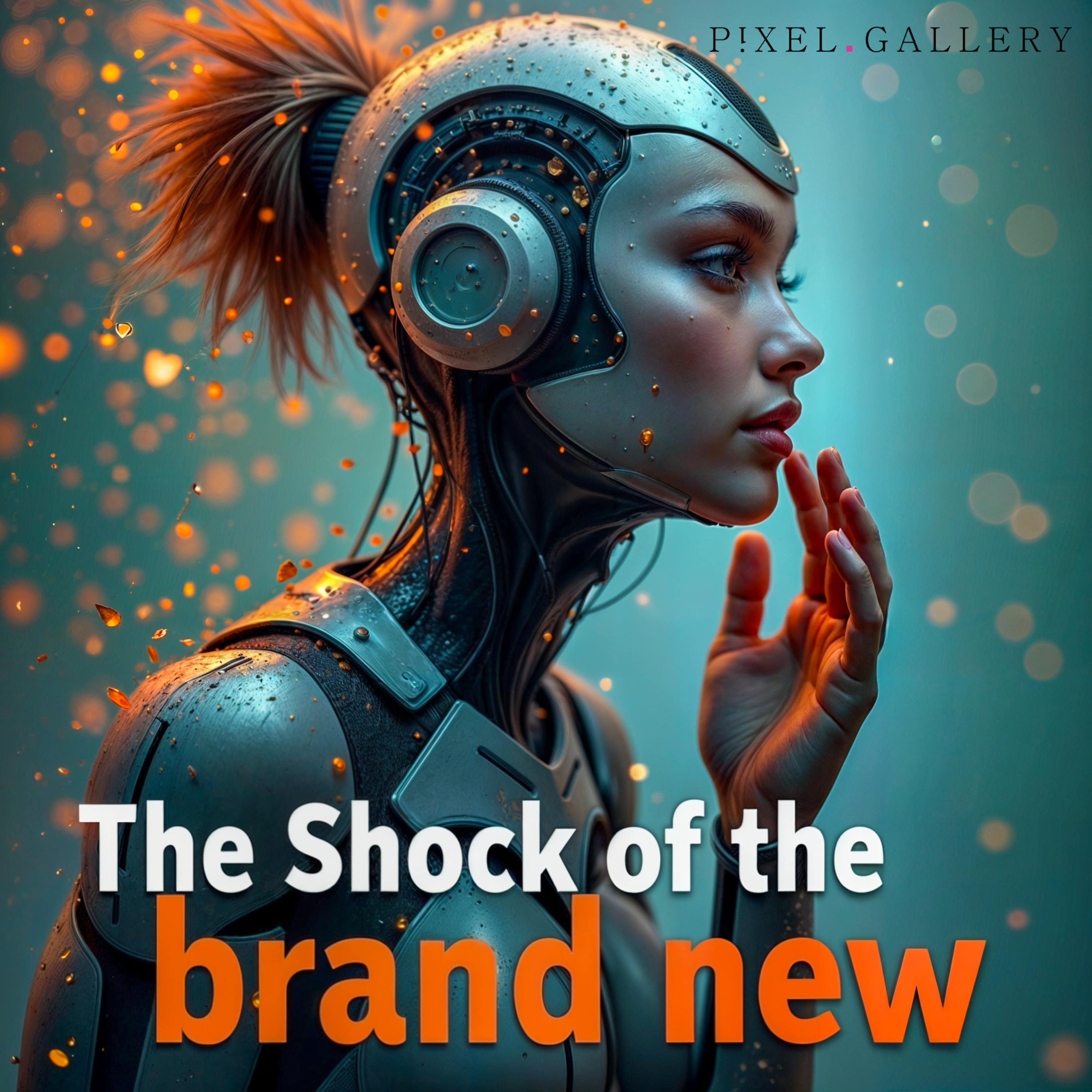
The Shock of the Brand New
Hosted by Pixel Gallery · EN
Dive into 'The Shock of the Brand New,' a podcast at the intersection of art and artificial intelligence.
Each episode delves into how AI is reshaping the art world, from groundbreaking creative processes to ethical questions and the future of human expression.
With lively discussions, expert insights, and thought-provoking debates, Pixel Gallery's hosts make complex topics accessible and engaging. Stay ahead of the curve and explore the frontier where creativity and technology collide.
Subscribe to 'The Shock of the Brand New' and redefine your understanding of art in the digital age.
7episodes
Episodes
Newest firstAll episodes
Pop Art and the Rise of Consumer Culture
Dec 15, 202400:14:12Tap to summarizeThis episode explores how 20th-century artists grappled with the rise of mass media, its impact on art and what AI Artists can learn from the past. From Robert Rauschenberg's "Combines" made of discarded objects to Andy Warhol's iconic pop art, discover how artists transformed everyday items and consumer culture imagery into thought-provoking masterpieces. We'll delve into movements like pop art, examining how artists responded to a world saturated with signs, advertisements, and the fleeting nature of modern life. Join us as we uncover the ways art evolved in the face of mass media, challenging traditional boundaries and redefining artistic expression.
Transcribe →Expressionism: A Legacy of Artistic Truth
Dec 8, 202400:22:27Tap to summarizeThe sixth episode of The Shock of the Brand New focuses on expressionism, an art movement that explored themes of anxiety, isolation, and the breakdown of the self. Expressionism emerged in reaction against industrialization, modern cities, and the loss of individuality in the late 19th and early 20th centuries.
Transcribe →Surrealism and AI Art
Dec 2, 202400:09:52Tap to summarizeThis episode of The Shock of the Brand New explores how surrealism's principles can be applied to AI art, leading to innovative and thought-provoking creations. Surrealism, a movement that emerged in the early 20th century, sought to challenge conventional thinking and explore the unconscious mind. The surrealists, led by André Breton, believed in the power of dreams, spontaneity, and irrationality to reveal hidden truths and new forms of creativity. AI art can utilize key surrealist principles to push the boundaries of artistic expression: - Embrace the unexpected: By incorporating randomness and unpredictability in algorithms, AI art can generate surprising compositions, reflecting the surrealist value for spontaneity. - Transform the ordinary: Surrealist artists, like Marcel Duchamp and Meret Oppenheim, transformed everyday objects into art that questioned conventional meanings. Similarly, AI-generated art can reinterpret familiar objects and symbols, encouraging viewers to see them in a new light. - Evoke emotions: Surrealist art aimed to provoke emotional and psychological responses in viewers. AI art can similarly tap into the subconscious through abstract imagery, symbolism, or unexpected juxtapositions, creating a deeper resonance with viewers. - Blur the lines of reality: Surrealism questioned the nature of reality and representation. AI art can continue this exploration by blending realism with fantasy, creating works that challenge the boundaries between the conceivable and the fantastical. By integrating these surrealist ideals, AI art can become a bridge between technology and human imagination, offering viewers a glimpse into a reality beyond the tangible world.
Transcribe →Blueprints and Brushstrokes: Lessons for AI Art from Modernist Architecture
Nov 24, 202400:17:52Tap to summarizeIn the episode we explore the fascinating parallels between modernist architecture and AI art in this episode. From Le Corbusier's radiant city to Mies van der Rohe's minimalist skyscrapers, we uncover lessons on balancing structure with human connection. Discover how AI artists can avoid the pitfalls of rigid design and create art that’s both innovative and emotionally resonant. Join us for a deep dive into the future of creativity!
Transcribe →Where Modern Art meets AI
Nov 17, 202400:14:55Tap to summarizeThe third episode of The Shock of the New explores how modernism's themes of pleasure, beauty, and harmony with nature are reflected in AI art. It examines how AI art echoes the modernist search for a "lost paradise" using digital tools.
Transcribe →Art in the Age of AI: Parallels and Paradoxes
Nov 9, 202400:15:30Tap to summarizeIn this episode of The Shock of the Brand New, we dive into the fascinating parallels between the early 20th-century art movements and today's AI-driven creative landscape. Exploring influences from Dada and Constructivism to the technological upheavals post-World War I, we examine how AI art is reshaping our understanding of creativity, authenticity, and the artist's role. We unpack themes of mechanization, alienation, and political engagement, questioning whether an algorithm can truly capture the complexities of the human experience. Can AI art maintain a meaningful voice, or does it risk becoming a tool for commercial interests? Join us as we critically assess the potential and limitations of AI in art, contemplating its ability to either bridge or widen the gap between human expression and technological innovation. Listeners will walk away pondering: Is AI art a new form of rebellion akin to Dada, or a mechanized extension of today’s digital age? And more importantly, can it ever rival the emotional depth and urgency found in timeless works like Picasso’s Guernica?
Transcribe →Art Beyond the Algorithm: Where Art History Meets AI Creativity
Nov 2, 202400:24:56Tap to summarizeJoin us we journey through the evolution of modern art and discover how it intertwines with technology, setting the stage for today's AI-driven creativity. This episode explores how historical movements like Cubism, Futurism, and Dadaism, influenced by innovations like the Eiffel Tower, the automobile, and film, foreshadow the artistic possibilities and anxieties we face with AI. Just as the Eiffel Tower symbolized the potential of modernity, AI represents the promises and perils of our digital future. The episode examines parallels between the societal shifts brought on by the automobile and the transformations AI is bringing to the art world. It looks at how early cinematic breakthroughs, like those of the Lumière brothers, paved the way for new forms of visual storytelling, mirroring how AI enables novel forms of artistic expression today. The episode analyzes how Cubism's fragmented perspectives find an echo in AI's ability to create art from a multitude of data points, offering a new vision of representation for a complex digital age. It also investigates the legacy of Futurism's obsession with speed and how it's manifested in AI's rapid artistic creation, prompting us to re-evaluate the creative process itself. Additionally, the episode connects Dadaism's rebellious spirit and critique of technology with the often surreal and absurd nature of AI-generated art, leading to questions about art's purpose and authenticity in a world where machines can create. "Art Beyond the Algorithm" invites you to reconsider the relationship between artist, medium, and audience in an era where machines are active participants in the creative process.
Transcribe →