Loading summary
Transcript82 lines
- [00:00]
Nick Loper
If you're selling online or out of a storefront, you already know the challenge. You're hoping people find your listing or
- [00:06]
you're waiting for them to walk in.
- [00:08]
Whatnot lipsthat this is the live shopping platform that's exploding right now on Whatnot. You go live and you sell directly to real people in real time. They see what you've got, they ask questions, and they buy. And what's crazy is Whatnot buyers spend more than an hour a day in the app. So whether it's beauty products, collectibles, thrift store finds, electronics, even cookies, sellers are building real thriving businesses on Whatnot. I've seen the rankings, I've seen the revenue numbers, and the number of sellers making over a million dollars on Whatnot has doubled in the last year. Now's the time to give it a try for yourself. For a limited time, Whatnot will match your first $150 sold in the first month. Visit whatnot.com sell to start selling. That's w h a t n o t.com sell whatnot.com sell 250 bucks an
- [01:04]
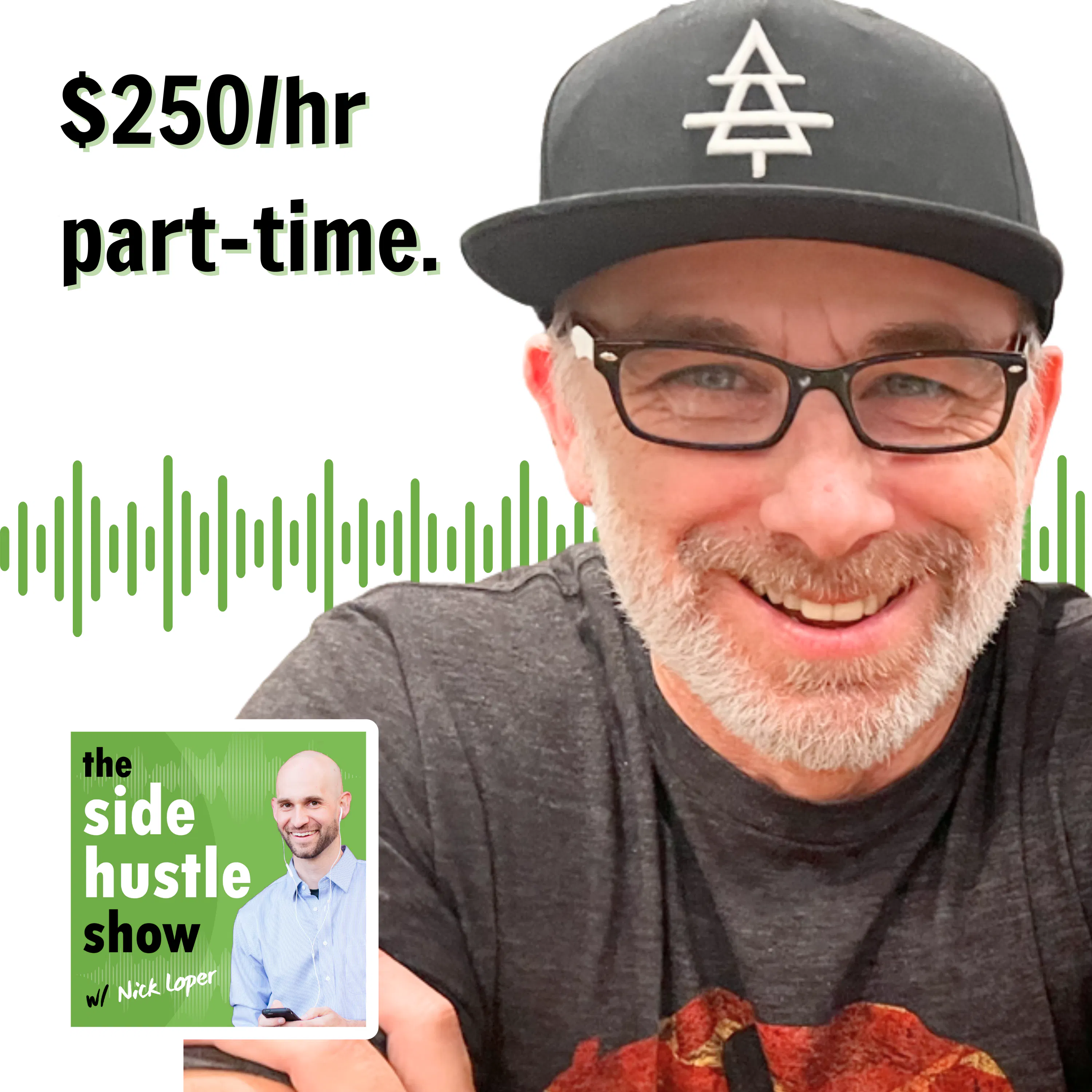
hour Solving Other People's Problems Today's guest is a longtime side Hustle show listener who took just a sliver of his expertise and turned it into an extra $40,000 last year. I think you might be able to take a page out of his playbook and unlock a similar high value side hustle for yourself. From synergypermits.com, jim Lashbaugh. Welcome to the Side Hustle Show.
- [01:27]
Jim Lashbaugh
Hi Nick. Thanks for having me. Excited to be here.
- [01:30]
Nick Loper
Excited for this one. Stick around. We're covering idea generation, pricing and promotion and the simple question you can use to close more leads. So Jim, my understanding is you're working as a firefighter for almost three decades, never met a firefighter without a side hustle. Yours was flipping houses, and as part of that, you built up some experience or some expertise in the permitting side of the business. And that's what Synergy Permits is born out of. So tell me about the moment where you start to well, maybe I could offer this little sliver as a service to other people.
- [02:04]
Jim Lashbaugh
Every firefighter we don't do well with downtime, so almost everyone has something on the side. I was fortunate enough to have a couple buddies that were into remodeling houses, and along that route, one of the most painful aspects was handling the red tape with jurisdictions on getting building permits or remodeling permits or land division permits. I did that myself over the years, never ever thinking I would do it for anyone else. And then eventually I retired from the fire department and scaled back and just stopped working on houses. But I still had a friend of mine, an ex partner, that asked me to handle a permit for him. And I was like, I really don't like doing those, but I'll do it. So I did it for him, charged him a little money for my time. It went fine. And my wife was like, oh, you're pretty good at that. Maybe you could spend a little less time on the couch and do this for other people. And so I was like, okay, I suppose I could. And just kind of made a couple phone calls to some builders I knew. They kind of put the word out a little bit to people they knew, and that's how Synergy Permits was born.
- [03:16]
Nick Loper
I like this idea of turning pain points into. Even though you. You kind of knew how to do it, but you're like, oh, man, this is, like, this is the least fun part of the job. Like, you'd much rather be out there, like, building stuff and improving the properties. Like, this is kind of a necessary evil. And I think a lot of people would shy away from it as a potential side hustle. But we've heard from a lot of different guests, well, if it was a pain for me, it's probably a pain for other people. There might be some profit there. And it sounds like a similar situation here where, like, I can learn to love it for the right price.
- [03:44]
Jim Lashbaugh
You're exactly right. It's a pain point. And actually now I enjoy it because more of when it was my own projects. There's the stress behind it, and it's like, I have to get this amount of time. You know, my money's behind this, and it wasn't really enjoyable. But now that I'm doing other people's permits and I see when they expect a permit to come out six months from now, and they end up getting it in three to four months, and how. How happy they are and how much money they saved by me helping them with that. There's really no stress on my end, and it's much more enjoyable. And I get better at it. I learn everyone at the cities, all the different jurisdictions I work with, I know the reviewers by name. Now I have the ability to send them this little side email sometimes, like, hey, you said you need this on this permit, but on this other permit that I just did last month, you didn't ask for that. Can we just not do that? And they go, oh, yeah, you're right. We didn't need that there, so I guess we don't need it here. Right. So there is something to be said with the connections you build as well.
- [04:41]
Nick Loper
Right. There's not necessarily economies of scale, but there's efficiencies with the relationships that you build. And you start to see the same patterns over and over again. And the hourly rate starts to improve the more you do, for sure.
- [04:52]
Jim Lashbaugh
And I guess that kind of leads up to my first real client. Right? So I did a couple for a couple friends of mine, but then I got a phone call from someone that I didn't know, actually, it was a plumber. And he said, I was talking to so and so, and I heard you handle building permits and demolition permits and land division permits, and I have a garage that needs to be demolished. Then he literally said, can I pay you to handle this for me? And immediately I had two thoughts. I was like, oh, no, this just got real. You know, what have I gotten myself into? The second was someone just called me and offered to pay me money. That was a really, really cool feeling. And they didn't ask how much experience I had. They didn't ask what my qualifications were. And he didn't even ask how much it was gonna cost. He just didn't want to do it himself.
- [05:42]
Nick Loper
Yeah, yeah.
- [05:43]
And so at this point, there's no social media, there's no website presence. You had kind of just established a reputation of having done it yourself for years and then having done it for a couple friends. It sounds like.
- [05:53]
Jim Lashbaugh
Yeah, I don't even know if there was a reputation yet. I mean, I had literally told, like, two builder buddies of mine. And then in conversations, they heard someone needed a permit and told them my name. And then that person, they gave him my number, and that person called me. And that really blossomed into what it is now. I think that first client, I charged $500, which probably was about $100 an hour of my time that it took to do the paperwork, processes, deal with all the. Everything that goes on with doing the permits. And that was the starting point. And I didn't know what to charge. And now I have a much better idea, and my rates are significantly higher now. And I have, like you said, a reputation and a clientele built up.
- [06:33]
Nick Loper
Now it's kind of a scary moment when somebody reaches out and it's not somebody that you know. And I remember having this moment. Well, like, in a couple different instances. One was where, you know, the side Hustle show first hit, like, 50 downloads in a day, and there might legitimately Be strangers listening to this now, like, that's really intimidating. Like, what if they think it sucks? You know, it's similar like with, you know, doing a book launch and, you know, you blast it out to your whole network and the whole game is to try and eventually get beyond that network. But then what happens? Like, oh, it feels really vulnerable now all of a sudden. There's a risk associated with that. Oh, what if I mess this up? But really cool. I wanted to ask, just to peel it back. If you were giving advice to other side hustlers and you kind of came up with this little sliver of expertise that might be monetizable in your case, what thought exercises or otherwise would you put people through to find a similar idea where they might be able to monetize their own expertise in this way?
- [07:27]
Jim Lashbaugh
One thing you hear everyone talk about when you listen to podcasts or you read books, and it's like, start with your circle. You know, people, right? And that's old advice, and everybody hears it and they kind of go, okay, you know, I don't want to have a big circle. But what I realized in doing this business was that it's not your circle that matters. It's all the circles that you touch. I call it the skipping rock theory. When you skip a rock, every time it hits the water, there's a ripple that goes out. It's just one ripple, not one ripple. If you're a good rock skipper, you can get six, seven ripples going at once. And each of those ripples is going to affect a lot of people. So if you just like for me, for instance, I put it out to two people. Each of them have their own circles. They put it out to people. That plumber that I helped, he has got me other work. His own circle has put it out there. So I'd say to anybody that is worried about starting out, that doesn't think that their circle of influence is. Is big enough to really do anything. If you are a mom that handles carpooling and you're good at scheduling parties for sporting events, tell your kid's teacher, tell your kid's coach, tell your neighbor, tell your brother, tell four people. Those four people are going to hear someone else that needs it, and they're going to tell them, Those people are going to tell other people, and those people are going to tell other people. And it sounds simple, it really is simple, but you just have to take that first step.
- [08:46]
Nick Loper
Yeah, People have to know what it is that you do, and it doesn't take much. The Bigger idea here is like tapping into your network's network. Right. You know, I can only see out to the horizon, but the other people out there, they could see, you know, another seven miles past. That could be really powerful. I like that. How about on the idea specific side, arriving at this idea of like, oh, maybe this is something I could charge for. Maybe this could be the next stage of the side hustle.
- [09:13]
Jim Lashbaugh
Yeah. This was not my idea. This was never even on the list of things that I would do. It was my wife pointing out to me that, you know, you're pretty good at this. Why don't you try it? So something that I recommend that people do is write down the things that you're good at, the things that people ask you about, and that people. The things that people ask you to help them with. And when I would have made that list, I would have made that list when I started this, business permitting, wouldn't have been on it. It just wouldn't have crossed my mind. But then go ask your wife, your best friend, and a co worker to do the same thing for you. Like, what's Jim good at? What do people ask Jim about? What did people ask Jim to help with? And all three of them probably would have had permit on their list, even though it wasn't on mine.
- [10:01]
Nick Loper
Yeah, that's interesting.
- [10:02]
Jim Lashbaugh
And so I suggest people do this, and then there's going to be something across the board there that everyone mentions and maybe two or three things and then focus on that. Just try it.
- [10:14]
Nick Loper
Yeah. Yeah, that's really good. Somebody put it like, oh, you can't see the label from the inside of the jar. Or you call it the curse of knowledge, where it's hard to imagine not knowing the thing once you know it. And so tapping into other people's perceptions. Well, you know, if you had to name three things that Jim is good at, what would be on that list? Or above average at, or, you know, what does he know more about than the average person? You know, kind of soliciting some external advice might open up some ideas.
- [10:42]
Jim Lashbaugh
That's exactly it.
- [10:43]
Nick Loper
Were there other service providers in the Portland area doing this as a service, or did that not really enter into the equation at all?
- [10:53]
Jim Lashbaugh
No, there is. There's like one. One big company that does it that the big commercial companies go to and big builders go to, and a lot of little guys go to because it's all they know. And then, surprisingly, what I learned after starting to do this, a lot of surveyors and a lot of engineers and a lot of designers do this, but they hate it. They just hate it. My biggest clients now, or most of my clients, come from designers and surveyors because they get clients to design houses and they want them to handle their permits, but they don't want to do it. And so they call me and then we. We partner up and we make a great team. The two of us working together will get things done faster, cheaper, and more efficiently than they could possibly do on their own. What's their one specialty? It's not doing permits, and mine's not designing. So they handle their portion, I handle my portion. We both get paid, client's happy, and it just keeps going like a snowball.
- [11:49]
Nick Loper
Okay, so it sounds like almost a white label approach underneath the surveyor designer's umbrella, where it's like kind of the, you know, behind the scenes arm taking care of the permitting side. Meanwhile, they're interfacing with the. The end client.
- [12:05]
Jim Lashbaugh
There's two ways it works. Some do exactly that. I contract with a surveyor that has a client, and I never meet the client or talk to the client. I just work through the surveyor. Then other, other ones, other designers, surveyors will say, hey, here's an email. I'm introducing you to Mr. Smith. I'm handling his design. Mr. Smith, here's Jim. He can handle your permitting side. We'll be working together on this project for you. And then I bill them separately. He built the surveyor separately. It all depends on how people want to do it, and I'm happy to do it either way.
- [12:32]
Nick Loper
As long as they have a steady volume of work. It kind of keeps your calendar filled without having to do a ton of outbound marketing or promotion.
- [12:40]
Jim Lashbaugh
I don't know if it's like this for all entrepreneurs. You know, like I hear a lot of people saying, okay, you got to find your customers, you got to cold call, you got to do Google Ads and whatever. I'm actually afraid of what would happen if I advertise if I put out Google Ads. Right now, it's just me. I am looking in the future of bringing someone on to take on some projects. But right now there's enough out there for everybody that's doing it, and especially if you can find the people that don't want to do it. I was just listening to one of your latest drops about the woman who did the laundry service. You know, she started just doing people's laundry. There's a lot of laundromats out. There's a lot of people doing laundry in the world, but there's a lot more people that have laundry. So there's still a niche for her. There's still enough to carve out a good living doing something that other people are doing. So for me, I haven't had to advertise. The word gets out, it's spreading. People are calling me, which now my rates are going up. I charge significantly more now than I did when I started just over a year ago. And then those rates are probably going to go up again as I get busier and as more clients come my way and as I fine tune my, my revenue streams and the way I bill my, my projects.
- [13:48]
Nick Loper
Yeah. Reminds me of Carter Osborne, who was our college admissions essay specialist. Like niche of a niche with a niche type of service. And for him, one strategic partner. Like somebody who was like the broader college admissions consultant person who hated doing the essay portion. And so it was just like, could I farm out that work to you? Yeah, absolutely. I love it. And it's like very similar. Like, look, this is not our wheelhouse, it's not our area of expertise. But we got Jim. We got Jim in our corner. He's your guy.
- [14:14]
Jim Lashbaugh
Yes.
- [14:15]
Nick Loper
More with Jim in just a moment, including his tech stack and his pricing journey to not charge by the hour, but still earn 250 to $300 an
- [14:23]
hour for his work.
- [14:25]
In the next 60 seconds, 23 entrepreneurs are going to find their next team member on Indeed. I'm excited to partner with Indeed for this episode because when you need to find amazing candidates fast, you need the powerful matching technology and unmatched reach of our sponsor, Indeed. Stop struggling to get your job post seen on other job sites and get the help you need fast. Plus, Indeed's sponsored jobs help you stand out and hire even faster. It'll make your post jump to the top of the page for your relevant candidates, and the proof is in the results. Sponsored jobs posted directly on indeed get 45% more applications. That's why for my next hire, I'm using Indeed. There's no need to wait any longer. Speed up your hiring right now with Indeed side Hustle show listeners will get a $75 sponsored job credit to get your jobs more visibility@inn Indeed.com Sidehustleshow just go to indeed.com Sidehustleshow right now and support our show by saying you heard about Indeed on this podcast. Indeed.com Sidehustleshow terms and conditions apply. Hiring Indeed is all you need. When you're running a business, you know that every missed call is a missed opportunity. That's why today's episode is brought to you by Quo, spelled Q U O. The smarter way to run your business communications. Quo is the number one rated business phone system on G2 with over 3,000 reviews. And it's built for how modern teams work. That's why more than 90,000 businesses, from solo operators to growing teams, all rely on Quo to stay connected. Quo works right from an app on your phone or computer. That means no more juggling multiple phones or taking work calls on your personal line. Your entire team can handle calls and texts from one shared number, kind of like a shared inbox. So everyone is up to speed. While Quo's built in AI automatically logs, calls, generates summaries, and highlights next steps so nothing gets lost. It can even answer the phone for you and qualify leads when you're not around. Make this the year where no opportunity and no customer slips away. Try quo for free. Plus get 20% off your first six months when you go to quo.comsign. that's quoq u o.com sidehustle quo. No missed calls, no missed customers.
- [16:44]
But this being a service based business, I'm anticipating relatively low startup costs. And you know, with this first $500 client, it's kind of like, okay, I'm off to the races here.
- [16:55]
Absolutely.
- [16:55]
Jim Lashbaugh
What do I need? First of all, back in the day to process a building permit or a land division permit, you had to go down to city hall and wait in line to meet with each different reviewer. The life, safety and fire, you know, zoning, all the different. You spend all day to just work on one permit. Now, due to Covid, everything is electronic. Everything's. I work from where I'm standing right now behind my desk. I don't have to go anywhere. I don't have to. I don't meet clients in person. Once in a while I get a husband and wife that want to do something. They want to meet in person. But for most of my clients, I might do a zoom meeting, but it's all right here. I already have a computer. I already have a cell phone. Really the only startup cost for me once I got going was when I decided to get a professional email. You know, I'd had a Gmail email. So Now I spend $7 a month, I think it is. And I have a synergypermits.com. you know, Jim, at synergypermits.com I didn't even have a website until a couple months ago. One of the things that I did invest in was a invoicing app called joist. It's like $15 a month. I Used to just write out invoices and email them in like Excel spreadsheets. And it was really unprofessional looking. Now it's very professional. It tracks if they've opened it and then I can upload who's paid or partially paid. It's really one of the things that best things I've done for my, my business is just getting that system in place for billing. Another thing that's been fantastic for me, which I don't, I don't even know what it costs. Maybe six or seven dollars a month. It's called Trello. Have you heard of Trello? It's basically note taking app. I'm a big post it note guy. My desk screens used to be covered in post it notes and finally I heard on a podcast, maybe it was even yours, about this Trello app. So I looked into it and now I have it open all the time on my screen. And now instead of post it notes, I make notes on Trello and I can separate them by job or by personal.
- [18:43]
Nick Loper
Yeah, it kind of tracks the stages of each job you're working on.
- [18:46]
Jim Lashbaugh
Yeah, yeah, I can say, oh, I just got a call from the reviewer that I need something. I put it in Trello to remind me that needs to get done and I can do it from my cell phone if I'm on the move. If a thought just pops in my head, which lots of pops, thoughts pop in my head all day long. Instead of sending myself emails with notes, now I just click Trello and keep the notes. I recommend anybody check it out. It's great for organization and just not to lose track. The worst thing I could do as a permitting is to forget to call a reviewer, forget to turn in a document. And so it's been a lifesaver to just keep me honest and keep me making sure I'm not missing anything.
- [19:21]
Nick Loper
Yeah, if you got one project going on, it's different, but if you got several different projects, you know, making sure they're all kind of in various stages of approval of development. So that makes sense. On the pricing side, do you have a rule of thumb for when am I raising my rates? It sounded like, okay, I'm going to start out targeting 100 bucks an hour, you know, proof of concept, let's see if people will pay it and let's see if I enjoy doing it at that rate and then we can kind of level up. But curious if you had a rule like, okay, every six months, upping it or what?
- [19:52]
Jim Lashbaugh
When I started I thought everything was hourly. That's all I knew. And today I do not charge hourly. I've had a couple clients question how much time I put into it because they're focused on the hour now that I bid my job. Never had someone question, this is the cost for the job. Doesn't matter if it takes an hour or 20 hours. This is just what the price is for the job. But initially I didn't know what to price. And so I started off with that $500 job. The next job I did, I did it for $1,000 because I knew that that based on my experience that that was getting closer to what people would pay from other companies. But I still didn't consider myself an expert, although people were calling me to do something, which that is my definition of an expert now is if someone is calling you to do something for them, then you are their expert. So finding what other people charge was a little difficult. People don't really give out that information very easily. And it's very job specific. I wanted to be different. So I set flat fees for my jobs. I started at $1250 for a building permit. Somebody wanted to build a house or an adu, an accessory dwelling unit or a garage. The process is the same for all of those things. So I charged $1250 and then I quickly jumped to $1500 and now I'm at 1700 and $50 as my starting price. If someone wants a duplex, then I add on a little bit or fourplex or they're going to do a cottage cluster, you know, so there's all these things that different that are available out there for people to build. But I quickly jumped from one price to the next to the next. I'm up at 1750 and I see myself probably going even higher than that now. And people don't question it. My clients know the value of it and the pain that I'm taking away from them. And it's been very successful.
- [21:30]
Nick Loper
Yeah, the pain you're taking away would be the hours of trying to figure it out themselves and the potential cost of screwing it up. The potential cost of the delay in screwing it up or the delay in letting things fall through the cracks. And now you've got months of extra carrying costs on your flip or your build. And like before you can sell and get your exit and get paid. And so it's like, okay, to pay the gym, 1750 to save potentially three months of interest is huge.
- [21:57]
Jim Lashbaugh
You hit it on the head. Now, this doesn't necessarily apply to everyone's business. But time applies to everyone's business. You have a client, you're doing website, whatever it is, if they're used to something taking six months and you can do it for them in three to four months, they're going to pay you all day long and then they're going to pay you more than they probably normally would pay because you're saving them so much time. And with my clients, the average permit time it takes, let's say in the city of Portland, that's where I'm at, which is notorious as the stringiest and hardest to work with jurisdiction in Oregon. But you want to build a house, the average permitting time is it's like nine months now. My average and that's something really major comes up is between four to five months. And now the main reason for this, if I'm a contractor and I'm working, I'm out there building a house and I have to deal with this permit and I get an email from a reviewer saying, hey, we need this other information. He doesn't have time to. He may not even open that email for weeks. Right? And so there's a weeks long delay. Then he opens it and it says, we need these plans updated, we need a survey changed, we need, you know, we did an arborist report. And then he goes back to work on the house and he says I'll get to it later. And it gets delayed, it can get delayed by months. And then, and then he's got to get a hold of this. So that's everything I take off of their plate. I contact the surveyor, I contact the arborist, I contact the reviewer and get everything done. Boom, boom, boom. Usually within 24 hours of getting a notice from a reviewer that they need something, I've got that sent out to whoever needs to get that information. If it's not something I can get myself and then get back to them as quickly as possible. The real value, I'm saying people is stress and time. And with contractors, time is everything.
- [23:37]
Nick Loper
Yeah, stress and time. It's a shift from hourly pricing to value based pricing plus and the more you do, the more efficient you get at it. So the hourly rate improves, but you have a sense for how much time it might take to do this 1700, 1700 fifty dollar job these days.
- [23:52]
Jim Lashbaugh
Yeah, yeah, you probably noticed I just got a big smile on my face when you ask that question. Let's say just a simple house permit. If everything comes to me and it's ready to go and I submit I'm getting at least 250 to $300 an hour in my time for running a standard permit. Now sometimes it can be less if there's problems. And it takes time over the months, takes a few more hours here and there to work on it, but sometimes it even takes less. And so it melds into that middle ground of I'm guessing around $250 to $300 an hour for my time, which is outstanding.
- [24:23]
Nick Loper
We should pause there and just like celebrate that for a second because that's really cool.
- [24:28]
Jim Lashbaugh
And here's the other thing. For me, I don't want a full time job. This is literally a side hu for me. I get up in the morning, I have a glass of water, take some vitamins, come up, respond to emails, go take my dog for a walk, come back, call a reviewer, call a surveyor, work on a permit, go out to lunch with a buddy or my wife. We have a wakeboard boat. We live right off the Willarent River. We'll go in the middle of the day and go out wakeboarding, wake surfing and wakeboarding. One of the things I would recommend to anybody out there is whatever you're doing, whatever your business is, you know, just give extra value than the person expects. I made the commitment, I'm going to answer a phone call no matter what I'm doing most of the time. I don't do things on Sundays. And if I'm sitting at dinner with the family, I'm not going to take a phone call. But I'll usually answer the phone because that can save weeks of time. If it's a reviewer that would normally send me a check sheet and then it goes back in the system and takes weeks to get to. But just wants to know something real quick. If they're taking that step, I want to get that to them right then and see if I can save weeks of time for my clients. So this is really a side hustle. This is really a side gig that came from nothing and it's getting busier. Last January I did two permits, I had two clients, I did two permits. Right now I have over 25 active permits going. And so it's really grown and I've had to really set my time to keep it a side hustle, to keep it to where I'm not spending eight hours a day on it.
- [25:52]
Nick Loper
Yeah. Now all of a sudden I built myself a full time business in retirement.
- [25:57]
Jim Lashbaugh
Right. And that, that's not kind of what my plan was, but it's kind of going that way. And now I'm kind of dealing with do I want to keep taking on more and more, which I do, I wanted to build, and that's where I'm talking about maybe bringing someone on to help. But it's a very niche thing that someone really has to know what they're doing. I have to train them up. I actually have kind of my hooks into someone that's actually a reviewer for the city, one of the jurisdictions that is going to be planning on retiring soon and might want a little side gig of his own doing some extra projects. So that's like the perfect person for me.
- [26:27]
Nick Loper
Yeah, I'm glad that you brought that up because number one, I think this is probably the big unlock is okay, what's the specialized skill that I can charge fixed prices for and earn 10 times on an hourly basis, what another gig app, side Hustle, might pay. So I think that's really powerful. And then the second thing is like, well, what happens if it gets too popular? Like, ah, this is what. I wasn't supposed to be doing this 40 hours a week. It's supposed to be a little side project. And so I guess I could raise rates more like that would be one way to kind of weed out the clients who don't want to pay. Or I could kind of start to build this agency business where people are still coming to synergy for this work, but now I have an expert underneath me who can fulfill that and take a percentage and meanwhile still be guarded about your time and still have time for wakeboarding and all of that. Is that the path that you kind of foresee going down?
- [27:19]
Jim Lashbaugh
Exactly. I think so. I think that the idea that you have when you start your business probably isn't going to be the exact idea that it turns out to be a year, two years, three years later. So I started out just thinking people would hand me their documents and I would submit them for building permits. But what it's really evolved more into, which is I'm changing my pricing structure to meet is land use planning, which is fancy term for what am I allowed to do on this property. So I help them plan out what, based on the zoning code and building code, what they can do on this piece of property. Can I build a house? Can I build a duplex, Can I build a cottage cluster? Or no, I can't build on this lot because there's a little sliver of it that's in a flood zone. And they bought this piece of property and they didn't realize it. And so a lot of my clients are trained them now to come to Me before they buy properties so that I can do some research for them. And so this is a whole different side of the business now where I can charge for research and land use planning before permits are ever even come into the picture.
- [28:17]
Nick Loper
Oh, okay, what do you charge for that? Just a consulting basis, 500 bucks for an hour call or something. Right.
- [28:24]
Jim Lashbaugh
So right now I did say just a little while ago that I don't charge by the hour, but now I'm kind of getting back into charging by the hour. The flat fee rate is something that set me apart from other people that do permits, which is great. But for this land use planning, it really has to be kind of a by the hour thing. And right Now I'm charging $95 an hour for that. And it only take me a couple hours to really dive into a property for someone and then that leads to a land division permit, a demolition permit, a building permit. So it leads to much more work after that. So I charge a little bit less for that.
- [28:56]
Nick Loper
Got it.
- [28:56]
Jim Lashbaugh
But it's still obviously $95 an hour isn't anything to sneeze at. But I know that it's probably going to lead to other work. And even if my decision, if I go back to those people and say no, don't buy this property, you're not going to get your money's worth out of it. Now I built trust in them as well and they're going to come back to me and they're going to, they've told their partners, I have one builder again, it's ripples, man. You do something really good for someone at a really good value. It was a builder that I did some research for. I didn't charge him anything actually. And now it's led to four other clients for me from that one person.
- [29:25]
Nick Loper
Yeah. Tapping into these kind of strategic partners or these potential long term partners. We think of it in terms of lead fountains and in this industry, yeah, the builders, the surveyors, the designers. It's not just the one off homeowner that wants to add an ADU, like okay, my lifetime value of that client is one or the $1,750. But if it's a builder like can connect you with multiple parcels, multiple jobs, you're going to keep coming back to the well. So that makes a lot of sense.
- [29:52]
Jim Lashbaugh
That's exactly right. Just like any business, Right. You want to get the people that know more people in the industry. So I'm trying to go and I'm learning that for me that's surveyors and Designers for the most part. But for someone else, it could be someone that heads up their kids baseball league, maybe not their coach, but who's the guy that runs the league that you know, you want to start doing parties or you want to start selling baseball bats, whatever it is, those are the contacts you need to make and have your coach put you in contact with that person. And then GUESS what, there's 10 more baseball leagues within a 15 or 20 minute drive of you, guaranteed. So there's a big market for whatever you're trying to do.
- [30:31]
Nick Loper
Yeah, I think just for any industry that you're in, thinking of who those connection hubs might be and you might not be, but one or two kind of degrees of separation removed from those and thinking, well, how can I be of service to these people? In some ways, just getting on their radar, letting them know what it is that you do.
- [30:49]
More with Jim in just a moment,
- [30:50]
including his effective close that turns 90%
- [30:53]
of prospects into paying customers. And some business idea donations coming up right after this. Look, payday is awesome, but when you're the one running the payroll, like calculating the taxes and the deductions, trying to stay compliant, it's not always as simple as it was when you're just on the receiving end. Unless of course, you have our sponsor, Gusto. Gusto is the online payroll and benefits software built for small businesses like yours. It's all in one. It's remote, friendly and it's incredibly easy to use so you can pay, hire onboard and support your team from anywhere. Recommended by many a side hustle show guest, Gusto automatically handles your payroll tax filing, direct deposits, health benefits, 401 s and more. You're going to love the simple, intuitive interface, all with no hidden fees and no surprises. And if you run into any trouble, you've got direct access to Gusto's certified HR experts. Now's the time to get out of admin mode and into growth mode. Try gusto today@gusto.com sidehustle and get three months free when you run your first payroll. That's three months of free payroll at gusto.com sidehustle one more time, it's augusto.com sidehustleen the thing that wears me out as a business owner is rarely the work itself. It's the decision fatigue that surrounds the work. How to reply to this message? Is this person going to make a good guest? What's the right tool for the job? If you want to sell products online, Let me take some of the decision fatigue off your plate. There's a reason why millions of businesses including dozens of side hustle show guests all choose our partner Shopify. This is the one decision that makes all future decisions easier, right? For example, you no longer have to start from scratch in designing your storefront. You can just pick from one of the proven templates and customize it to match your brand's style. You can quickly generate product descriptions, use their built in AI to enhance your product photography, and even fire up email and social media campaigns to drive traffic and sales. Start your business today with the industry's best business partner, Shopify and start hearing. Sign up for your $1 per month trial today at shopify.com sidehustle go to shopify.com sidehustleen that's shopify.com sidehustlez now when
- [33:12]
you're talking with prospects and even customers who've already signed on with you, you had kind of your three tiered rule to close more business. Number one was be kind, be helpful, be proactive, answer the phone. What they call number two was to give more value than people are used to. If they're used to having this thing take six months if I can get it done in three or four, all of a sudden it's like why would I ever do this myself again, right? And then the third thing was a question that you posed in a pre call chat and curious what that was and how you use that in your conversations to close deals.
- [33:43]
Jim Lashbaugh
So usually when I get a call from someone, I will just listen to them at first and see what they have to say, what they have to vent about, whatever problem or whatever issue they have and what is their one thing that's big to me. My one thing is not drafting, it's not designing. My one thing is just processing these permits for people. And I just turn that around on people and say this is not your one thing. You're a builder, you don't want to be focused on this one thing. You have better things to do. As soon as I say that to them, their eyes get big and it's an aha moment for them and they're sold. They're ready to write a check at that point, really, because they want this off their plate and they know someone so well. Here's how I convince people and it's a soft sell for me. Someone calls me, they say hey, I have a permit I need. It's like, okay, well where is it? Blah blah, okay, hey, do you have a couple minutes? I'll just pull it up right now and sure. So I get on the computer While I'm on the phone, I pull up their property and then I throw out a bunch of code mumbo jumbo to them for about two or three minutes. And then I go, so, you know, I can totally handle this for you. Here's my fee. I can get started on it next Tuesday if you want. What do you think? And as soon as I have that conversation, they realize I know what I'm doing and I know more than they know about this, and it's going to be hard for them. And I want to say 9 out of 10, but it's almost 10 out of 10 people say yes at that moment.
- [35:01]
Nick Loper
It's such an effective close this. What's your one thing? What do you really want to be spending your time on? Because people have used it against me. And you know what? You're right. For a specific call with, like, a bookkeeping company. Years ago, I was still doing all my bookkeeping in Excel. I was the weird person who liked doing it. Like, oh, the little dopamine rush of like a PayPal notification. Oh, I better go log my revenue. And they're like, is this really what you want to be spending your time on? It's like, you know what? You're right. Probably shouldn't be doing that at this stage. But it was really effective close. So I like that. You know, what's a day in the Life? You got 25 different permits in the pipeline right now. And so kind of guiding. I mean, a lot of it is like kind of hurry up and wait, like waiting for a reaction from city hall to kind of move it to the next step. But where's your time going these days?
- [35:44]
Jim Lashbaugh
Yeah, so every day I've got permits in different stages of work, and so I'll be entering new permits into the system, or I'll be responding to reviewers check sheets, or I'll be replying to clients emails asking for updates, or I'll be sending them forms that need to be signed. The great thing about what I do is the owner or the client, the builder, he doesn't have to work with the surveyor or the designer anymore. I'm handling that, which is kind of different. A lot of the people that do what I do require the owner to be the middleman for all these things. Instead, I've chosen to take that off their shelf, off their to do list, and I'll work directly with these people, which has been great for me because now I have these great relationships with all these surveyors and designers that are bringing me business now. So at first it was like, I'm going to do this as an add on for my client so that they don't have to deal with them. And so it's extra work for me. But it's turned out to be the best thing that's happened to my business.
- [36:38]
Nick Loper
Yeah, I mean, you're seeing great results. Just a little over a year into this, what's surprised you the most along the way?
- [36:44]
Jim Lashbaugh
Not a single client has ever asked me what my credentials are. All right, let that sink in for a second. So what makes me an expert is that people pay me to do this thing. And most people, they don't care what your credentials are. They. Oh, someone else has paid you to do this before. Oh, okay. You know, I mean, I have a kid. You know, they're in sports or whatever. You sign them up with a coach. Sometimes you ask what their credentials are, what their history is, but really is like, oh, Billy's paying them for extra lessons. Okay, well, I need to get in on that too. For entrepreneurs that are out there for side hustle, people that are out there really holding back because they don't think they're an expert because no one would pay them. And it's just not true. People don't look at it like that. You just need to get that first job, get that first bag of laundry that somebody's going to pay you to do, and you're off to the races. Now suddenly you have that one person. Now you can go to, the next person says, people pay me to do laundry. Do you want me to pay me too? To do your laundry? Right. So getting that first one, whether it's your mother or your sister or whatever, get that done and then get the second one. And now it's just going to be a snowball effect. If you do it right, you do it good, you add value, more value than they're expecting. My biggest advice to people would be, again, is to do beyond what people want you to do. If you're a auto detailing company that comes to your house to do auto details, when you're done, wash off the driveway, put a little mint on the steering wheel. If you are a flower delivery person, leave an extra note, leave an extra flower in there that they didn't expect, and they're going to pay someone to do this, what they are going to remember is the person that did a little extra that they are not used to. And that's what's going to bring business back to you.
- [38:22]
Nick Loper
I like that. Well, what's next for you? You mentioned potentially bringing on some help to kind of grow the business from here. But where do you want to take this thing?
- [38:29]
Jim Lashbaugh
My wife and I and my stepson and my mother in law are going to head to Europe for about, for a few weeks this summer. And so that for me is going to be a test. Can I really do this job anywhere in the world? And it's just the time difference, but we'll deal with that. But it is, it is very much remote. Bringing someone else on, as I mentioned, is something that I'm looking towards maybe later mid to end of this year of doing to see if that can work and scale the business. But really what I'm looking forward to is finding a side hustle for my stepson and his buddies. We actually this last year did a, we got a couple of his buddies and we did a junk calling weekend for him and this was fantastic. You know, they're like 16 years old, they made flyers, they went around to the whole neighborhood and put them on their doors. And then when we started, you know, basically saying email or call this number if you have any junk you want hauled away. We're going to be here just one day. And then we got so many calls that we had to say, okay, we're going to be here two days. We got so many more people that, okay, I guess we're going to do this for, you know, Friday, Saturday, Sunday. And then we actually ordered a huge, the biggest dumpster you could and had it parked in front of our house. And then we went around with a trailer for two and a half days, picking up everybody's junk and dropping it. And luckily our neighbors are all really nice and they didn't care that this was going on, but they all had a great time. It was horrible weather, they all got soaked, but they all walked away with a little stack of cash in their pockets. So I'd like to see if we can find something else for them to do on that line.
- [39:56]
Nick Loper
Wow, that's a really creative kind of one off, low risk. I mean you're not renting the dumpster, you're not doing any of it until you have the clients kind of pre sold or pre signed up.
- [40:06]
Jim Lashbaugh
Right? It was great because. And actually we didn't even have to pay for the dumpster until after the fact. Right? So you order it, but you don't pay for the dumpster Is really. People are listening in for a business idea. There's a lot of junk haulers out there, right? There's a lot of junk haulers out there. But is there Anyone that just canvases a particular neighborhood, you know, plus I
- [40:23]
Nick Loper
like the scarcity of it. Like, look, this is a one day event because we have similar, like, you know, community wide hazardous, like bring your old cans of paint or your old fluorescent bulbs or whatever, bring your batteries to this thing. But it's one day only. And you're like, oh crap, I better go.
- [40:35]
Jim Lashbaugh
Exactly. I do have a couple of other little side hustle ideas I wouldn't mind sharing with you. I have a lot of ideas running through my head if you're interested in doing that little segment.
- [40:43]
Nick Loper
Yeah, let's do it.
- [40:44]
Jim Lashbaugh
Every city has a flower wholesaling in Portland. There's one called the Portland Flower Market. You can go there and you can just pick out all your flowers and if someone just went and canvassed the neighborhood a week in advance, put up flyers everywhere, got on the Facebook, said, I'm going to be driving by in my van or my car or it's. This is Portland. There's a lot of bicycles and a lot of people hauling trailers behind their bicycles. So maybe a bicycle trailer full of flowers. I'm going to be coming to your neighborhood on this day, on this Saturday from this time to this time. If you want me to stop at your house to buy a bouquet of flowers or to put together your own bouquet, just send me an email and then just go from house to house to house with your cart full of flowers, where people get to come out to the sidewalk, pick the flowers in your bouquet and then walk in their house. And then you go four doors down to the next customer. And with a business like this, my brain's always going. It's like as soon as you get someone to email, you say, yeah, please stop at my house, I'd love to get a bouquet. You reply back to that person, says, that's fantastic. I'm really putting my heart into this business. Do you mind taking a moment and sharing with two of your neighbors that I'm going to be coming through on that day too and see if they'd like to come out and look at the flowers with you and then use their circle to build your business. I think this could really grow. Then after the event's over, you can follow up and say, hey, by the way, I started my own Jenny's flowers business. Let me know if all your flowers needs in the future. I'd love to meet those needs in the future as well.
- [42:01]
Nick Loper
Yeah, really kind of a creative, low overhead, low risk way to get started and hopefully build a sense of community too.
- [42:08]
Jim Lashbaugh
Right? And just like with the dumpster thing, for something like this, you don't have to go buy a bunch of flowers in advance. You get not necessary orders, but you get that these people want you to stop. And then you can go, you get 10 people or 20 people or 30 people say that they want you to stop. Then you know how many flowers to go pick up. The second idea I have is about 20% of the people in my neighborhood have the ring cameras, which we have as well. But a ring installation person would be a great business for someone where you just. Same thing, you could canvas neighborhood or put it on Facebook. You don't push them in advance. Someone says, yes, I want you to come install a ring camera for me. And you charge $95 to install this ring camera. And then of course, if you want to, you want one on your back door too. Since I'm already here, I'll just charge you 80 to install that one. And then you can purchase these if you can, especially if you purchase them on a credit card and someone ends up not buying them, you can return them and you never really got charged for them. And you can come install the ring cameras. And then you say, oh, by 20, an extra $25. I'll do the setup on your phone. Because every one of these, you know, needs the phone set up. And it's kind of confusing. It's a little add on, you know, if you, you can handle or I'll, I'll do the setup on your phone. And then of course there's other things that ring has now. There's different security cameras and whatnot. Again, the same thing is that you just ask that person, hey, please tell, I'm going to be in your neighborhood. Please tell two more people. But for someone that wants to do this, because I think there's a, I think there's an angle here too to like if you can get these cameras at wholesale or at, or Costco packs or something like that, where you're getting them a little bit cheaper than people can buy them themselves. But then you can still charge the full retail price. There's a little bit of money to be made there as well.
- [43:40]
Nick Loper
Yeah, definitely. We came across a guy who was doing probably 30,000 bucks a month worth of TV mounting. It was just again, kind of a one off customer. Not likely to turn into a lot of repeat business, but a skill just about anybody could learn. And boom, boom, boom. You know, I don't know, I think he was going primarily through thumbtack, but you know, different, different marketplaces to go and get customers for something like that.
- [44:03]
Jim Lashbaugh
I think after you did a couple of them, you could install a ring camera and program someone's phone in well, less than an hour. Right. So you could be making 150 to $200 an hour doing this, I think very, very easily if you got really good at it and built a reputation.
- [44:15]
Nick Loper
Totally. Well, Jim, these have been awesome. Synergypermits.com you can find Jim over there. Let's wrap this thing up with your number one tip for side Hustle Nation.
- [44:23]
Jim Lashbaugh
Yeah, I think it comes back to again, just adding more value. You know, if you clean houses, take a minute to organize the dog toys, you know, if you're updating websites, when you're done, have a couple people that, you know, leave them a five star review. Just something that those people aren't expecting, expecting you to do that's going to make them remember you because they're going to pay somebody. They'd rather pay somebody that they like and that did something extra for them.
- [44:44]
Nick Loper
Totally. Yeah. This, that was kind of my. One of my takeaways here was like building that relationship going the extra mile. And you gave lots of cool examples. Oh, if you're detailing cars, leave a little mint on the thing. Like, you know, super easy to do, doesn't cost you hardly anything. And something memorable at the very top of the show we talked about, you know, the profits really come from solving problems and taking away pain. So much easier to sell pain pills than it is to sell vitamins. In this case, in the permitting case, they know that it's going to be a pain and they don't want to deal with it. It's like if there was an easy button solution, like, yeah, just call Jim, he'll take care of it. If you could be the gym for whatever your niche is. There you go. There's your ticket to 200, 250, 300 bucks an hour. And then this closing question of what's your one thing? If you're offering any kind of niche service to somebody who maybe could do it themselves but probably shouldn't be doing it themselves. Look, is this your one thing? No, probably not. Let me take care of it for you. Before you go, I want to make sure you grab your free listener bonus. That is my AI assisted side Hustle brainstorming worksheet. You can answer a few short questions, including some that Jim tossed out here as potential thought exercises. And then you're going to get a custom prompt that you can paste into the AI of your choice and start the conversation around some personalized business ideas that are really tailored to you. Your skills, your interests, your goals. So just hit the show notes and you'll find the link in the episode description will get you over there and you'll be able to download that for free. Play around with it. See what kind of cool ideas that I could come up with. But big thanks to Jim for sharing his insight. Big thanks to our sponsors for helping make this content free for everyone. Side hustlenation.comdeals is where to go to find all the latest offers from our sponsors in one place. Thank you for supporting the advertisers that support the show. That's it for me. Thank you so much for tuning in. If you're finding value in the show, the greatest compliment is to share it with a friend. Fire off that text message. Let them know, hey, you ought to check this out. Until next time, let's go out there and make something happen and I'll catch you in the next edition of the side Hustle Show.
- [46:41]
Hustle on the.