← The Side Hustle Show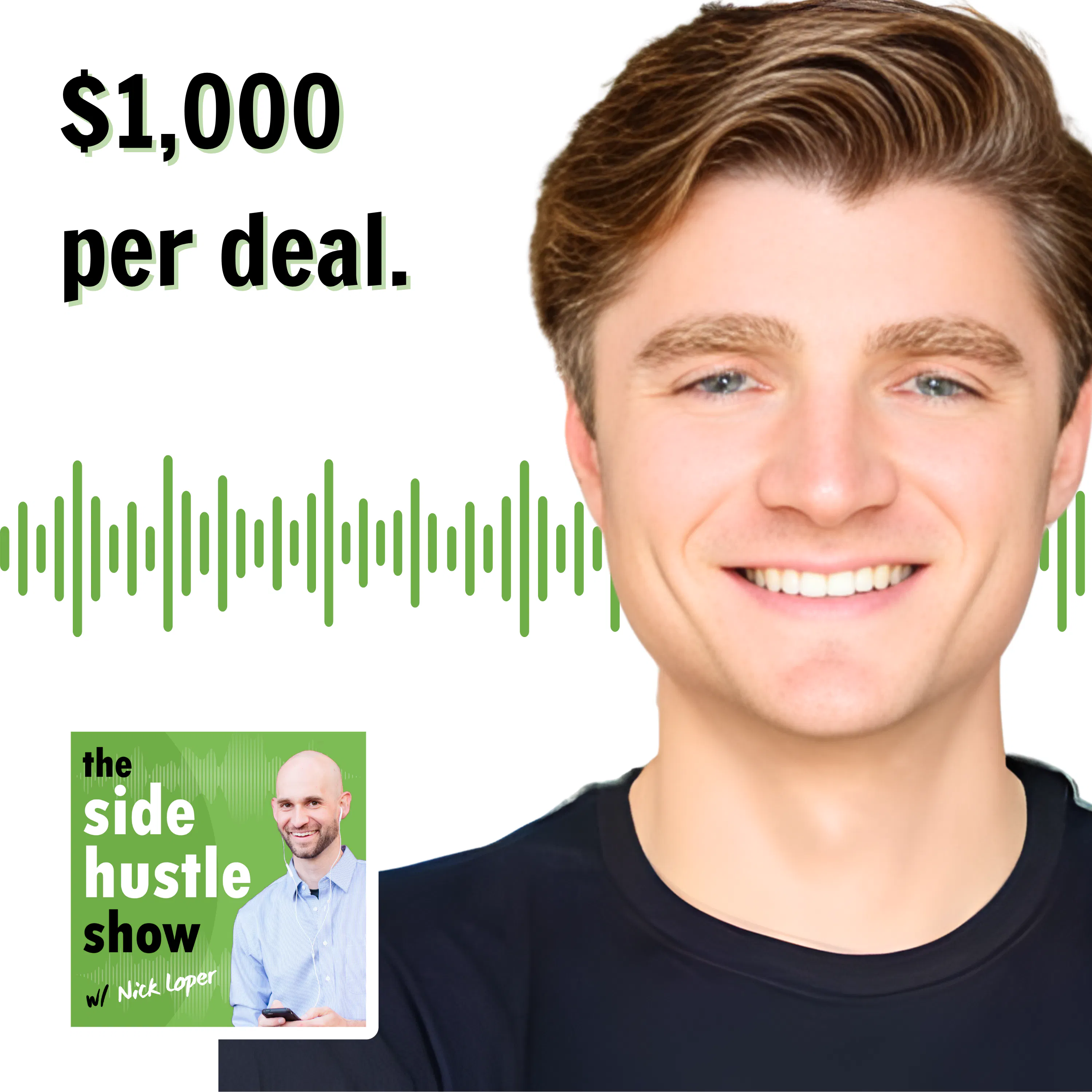
The Side Hustle Show
733: $25k/Mo From a Vibe Coded App, $10k/Mo Selling “Fake” Watches, and More
00:49:20
Loading summary
Transcript151 lines
- [00:00]
A
There's a side hustle that's exploding right now and that's live selling on whatnot. I've seen whatnot climb to the top of the app store. I've seen the seller earnings everything from small part time projects to multi million dollar businesses. Whatnot is the largest dedicated live shopping platform. Whether you're selling beauty products, collectibles, electronics, thrift store finds, luxury, fashion, even food products like cookies, sellers are building real thriving businesses. So how about this? People selling on whatnot sell 10 times more than on other major marketplaces. That's because you're not just listing products and hoping somebody finds them. You're building real connections with buyers. And those buyers, they're spending more than an hour a day in the app. They're not just browsing, they're bidding. They're buying and they're coming back. You go live, show off your products in real time and then turn what you love into real income. And for a limited time, Whatnot is matching your first $150 sold the first month. Visit whatnot.com sell to start selling. That's W-A-T N O-T.com sell whatnot.com sell. All right, Jason, I'm going to give you three headlines. Two are real, one is fake. Your job is to pick the fake one. Headline. Number one, I make two to ten thousand dollars a month selling watches that don't tell time. That's number one. Okay, number two, 52 year old librarian earns $4200 per month narrating other people's voicemails, the voicemail narration side hustle. And number three, flight attendant rakes in $28,000 a month with her weekend balloon side hustle. So those are our three candidates. Which one do you think is the fake one?
- [01:46]
B
Wow. How much did you say the balloon side hustle was?
- [01:49]
A
The balloon side hustle was $2,800 a month.
- [01:52]
B
That seems. I'm going to say the librarian won.
- [01:54]
A
Well, you would be the winner. The librarian won is fake. What gave it away?
- [01:57]
B
Wow. I just didn't see it being very practical to have my voicemails narrated by somebody else.
- [02:03]
A
Yeah, the voicemail one is a little bit weird because we've seen plenty of precedents around. People narrating Reddit threads on, on YouTube, even creating podcasts around this. So maybe there's, maybe that was the telltale sign. But I love the specificity of it's always just something unexpected plus some dollar amount plus something even more unexpected. And you're like, wait, that's random. You can make money doing that.
- [02:25]
B
Yeah.
- [02:26]
A
Well, Jason Vanderveer is here. He is the creator of the goal planner@goalcrazy.com goal like a soccer goal. He's the author of Dream Driven, the step by step process to discover your perfect business idea and launch it this year. Also in a longtime real estate investor, a serial side hustler if you will. And so we've got a handful of headlines to work through today in addition to rounds two and three with Jason, the business idea donation plus the triple threat coming up after that. But the one I wanted to start off with because I know you've got some experience in the car business, as do I, is this professional car buying negotiator? This is Tommy Mikula, 33 year old former car salesman from North Carolina earning up to $200,000 a month. Crazy at thousand dollars a deal helping negotiate the best price on your new car purchase. And I think he has a pretty sizable social media presence at this point so people hire him to negotiate on their behalf. What's your take on this one?
- [03:30]
B
I mean, I think it's a great idea. I know that there are lots of games played out there with car dealers. I think probably the biggest benefit is it's just saving people time. So you brought up. I have experience. I my family owns car dealerships in our area so I worked there and I had worked with never this guy. But there were professional car buyers who would reach out that would facilitate a deal for their customer. And I don't know, it seemed like a win for the customer. I was the salesman on the other end of it and it just saved some time.
- [03:59]
A
Did you like dealing with this middle person negotiator or was that kind of like a red flag?
- [04:04]
B
We were very transparent with our pricing so I feel like I didn't have to hold anything back. I wasn't worried about like not making my commission or anything because I just wasn't paid on commission. I would say the hardest part was you didn't know if you were putting in all the work for no reason because they are calling asking for very specific things that take time and it's like that's my job to get it for him. But since I can't talk to the buyer, it's like am I just getting this so you can shop at other dealers or is somebody actually interested in moving forward on this right now? But other than that it was like I'd put in the time to get them the information and leave it in their court. And it would either come back as like, super easy deal or it would come back as I would never hear from him again.
- [04:43]
A
Yeah. And I guess I would expect the negotiator, middle person to be kind of on the fleet acquisition side. Look, I need 100F, 150s for whatever company it is. And we're going to try and negotiate the best deal, but to do it on an individual basis and try and source this specific model of car and try and find the best price. It sounds like it is a lot of legwork and upfront, but I imagine that Tommy kind of has the template or a process, and you can go out and watch his video. He's got 600,000 subscribers across YouTube and TikTok and some people, and there's article reference this where they'll just kind of learn his scripts and mannerisms and then go and try to negotiate themselves.
- [05:28]
B
Yeah. Well, it's interesting. When I was doing the research on this guy, I feel like that seems like the biggest asset of what he's doing because, like, if you want to go help somebody buy a car, you're trying to get leads from people who are also trying to buy cars. And car dealers have giant marketing budgets to try and get those leads, you know, of. Of who's interested in buying a car. But what he's doing is he's using the process to. He's making these videos that are maybe controversial, like the. The conversations get pretty heated between him and a sales manager, him and a. A salesperson. But then he's growing this big audience using that content, which then gives him leads. But then he's growing an audience, and an audience has a lot of value in itself. So I viewed it as. It was a really creative way to make viral content online.
- [06:15]
A
Yeah. There was a note here that he started by offering the service for free, I believe, through Reddit. So he closed 50 deals for strange that he met online and said, look, there is proof of concept. I can do this. I could do this repeatedly. And then he started putting a price tag on it and put it up for sale. So the site that he's doing it through is called Delivered. Delivered to me without some vowels. So we'll link that up in the show notes if you want to go and check that out.
- [06:42]
B
Yeah, and I think there could be a lot of opportunity in your own area because lots of people are afraid to go into the car dealership. It's like some people are afraid to call the pizza man. It's like they want to do it all online. If you can just book it through a guy online and have him work out the logistics. It'll save you the pressure of dealing with somebody.
- [06:59]
A
Yeah, I think there is something to that where it's like, just make it easy. And I think car buying is probably moving towards just that one fixed price type of thing, where it's like, why are we doing this dance? If this is your best deal, why don't you just give that to me up front? It's like, oh, it's all about holding on to the whatever gross margin that you can. But I thought this was a really interesting productized service where we've seen examples in, you know, video production or content writing or any number of different skills that people have. His happen to be, you know, these car buying negotiations.
- [07:31]
B
Yeah.
- [07:31]
A
One business idea that we've tossed out over the years is kind of the used car concierge, where it's like, look, I know what I want, but, you know, the filtering and the haggling, you know, all in the inspections and all this different stuff that goes into that process is such a tedious pain where it's like, you know, maybe somebody who knows that world could. Could provide that. And maybe with the world of AI, maybe there's something there too. But I thought this was a cool example of leveraging a skill that the guy kind of learned on the job and kind of flipped it around. It's like, oh, I can help customers now.
- [08:04]
B
Yeah. Well, it goes back to. I know, kind of one of your principles you talked about on your. In your own content is what skills you already have. Right. This guy was a good negotiator because he worked at a car dealership, and he used that in a different way, but it was a skill he already had.
- [08:17]
A
It's funny. It's a. One of the articles says he's gaining a little bit of notoriety in certain dealer communities where people start to recognize his voice. And sometimes the salesperson's like, oh, I'm a fan. But other times it's like, I don't want to talk to this guy, you know, give up on this deal.
- [08:32]
B
Yeah.
- [08:32]
A
So he says, I'm contemplating investing in a voice changer.
- [08:36]
B
Yeah. Well, the one I watched, he had a assistant who was trying to do a lot of it. So maybe that's a temporary way to solve that, train other people.
- [08:45]
A
Yeah, that's probably how it scales. If he's doing 200 deals a month to get to that $200,000 revenue rate, that's. That's a lot of volume to be doing.
- [08:54]
B
All by yourself.
- [08:54]
A
So you got to bring on a team and it is kind of one and done. And maybe how often does somebody buy a car? And so it's like, there's no recurring revenue here.
- [09:02]
B
Yeah. I feel like you'd have to build a good referral system on the back end. Because if you really enjoyed it, I could seeing a lot of referrals coming from it. Kind of like when you buy a car, people typically ask you about it, like, oh, wow, where'd you get that car? And if you can explain the process and there's a good referral, it's a win. Win. Yeah.
- [09:20]
A
I will say my underrated negotiating tactic is just silence. The salesperson wants the deal probably worse than you do. So if you can just sit for a couple days.
- [09:30]
B
Yeah.
- [09:31]
A
See what they come back with. I mean, use this several different occasions. Sometimes on accident. Right. We'll be like off the grid, just not checking email for a couple days and people will come back, oh, sorry, you know, what about this price instead? Like, oh, the other one probably was going to be okay, but if you're going to offer me less just by not responding, that's also okay.
- [09:50]
B
Yeah. Say no. I feel like from me coming from the car business, saying no several times to the salesman, and I think that's whenever you're buying anything, say no a few times. Let them lower their price. And if you go in at the end of the month, the chances that you can get a really good deal is higher because they have their number to hit and they have huge incentives to hit that number. So they're willing to get aggressive.
- [10:13]
A
Yeah. The car business is so funny in that way where it's like, it's all about the making the month. And you know, we have a friend who would work at this luxury manufacturer. They would be pulling forward all these sales, doing weird, like, lease, you know, loaner transactions. It's like, aren't you just screwing yourself over for next month? It's like, we'll worry about that in 30 days. It's just like, okay, man, we'll do it. Definitely check out delivered to me. We'll link that up in the show notes. The next headline that I want to share is that watch headline. The two to $10,000 a month selling watches that don't tell time. This is the Now Watch. Now watch.org, i will try and bring this up. It is a watch that like it is described. It just says now on the face of it. And sometimes they look like real watches. I think he does have A model that it actually does tell time. If you want a combination of this reminder to be present, but also you have some functionality along with it.
- [11:09]
B
I mean, I love just the niche ideas of this and I think this idea seemed like a business that in today's world is actually possible with social media and influencers. You can find these people who are really curious on being more present. Probably before the Internet, this would have been extremely hard to sell. But it's interesting, when I was reading about this guy, he said it was actually kind of hard to find a supplier of watches who would make this for them.
- [11:33]
A
Yeah, yeah. It's like a bracelet with a face on it.
- [11:36]
B
So yeah, I like it. I'd be curious to see like how many or do they have any way to get repeat buyers? Because otherwise it seems very much like a one and done sort of business. Right. It's like, what's the next mindfulness tool you can sell them? Yeah, yeah, that this is just the gateway product for.
- [11:52]
A
Yeah. How can you branch that out? Like, is there an app version where like changes the lock screen on your phone to like, instead of selling the time, it says now or it says the time like really small, but it still has like a much bigger reminder to be present than kind of the default setting is.
- [12:07]
B
I'm thinking like if he has an email list of people who are very into the mindfulness. If you launch like a journal that has a handful of mindful prompts in it or a meditation app, just something else to sell them. That was kind of one of the things that struck me when I was researching this is you have the customers. How are you going to turn it into more sales?
- [12:27]
A
Yeah, we'll get into an app example a little bit later, but I've been messing around with Vibe coding an app of my own, and it's pretty straightforward. I mean, yes, like everything, there's a bunch of troubleshooting and stuff that doesn't work right out of the box. But it's. I don't know, it's been pretty fun so far. So maybe there is an app version of this now watch type of thing. The interesting thing is the founder Greg says for the first five years of this business, like, so he has the idea, first five years of the business says it made almost nothing. Then someday along the road, like this, influencer finds it, discovers it, posts about it and it takes off. It goes viral and all of a sudden everybody wants one and it's just kind of this almost sticking with it very much as a side hustle during Those years. And I don't know, it's a super niche product. Maybe it's a novel gift idea, but is it ever going to be a full time thing? Maybe not. It sounds like now he's trying to do more intentional influencer marketing and try and ramp it up.
- [13:25]
B
Yeah, I think influencer marketing and I know like one of the things you talk about on your email list is courses or like digital PDFs or something. If this guy had a basic course on mindfulness, to me, I feel like that's where the power comes in, is like you can sell a physical product but pay money on ads. Cover your cost of advertising with selling that physical product. But really you're building an audience of these mindfulness people and it's like, what's the next thing you can sell them? Your product is just the front end way to start the relationship.
- [13:55]
A
Yeah. Because it's pricing is, you know, 29 to $89. So. Yeah. And you've got manufacturing costs, you've got shipping costs, you may have ad costs. So yeah, you're making a one off sale. You're different than playing a volume game.
- [14:09]
B
Yeah. You need some products on the back end.
- [14:11]
A
Yeah. It's a cool idea though. I'm into this now. This seems like a natural fit for kind of the stoic movement. And there's, I think he even mentions in one of his posts, like there's this line in a Jimmy Buffett song about buying this watch from a crazy man. You know, it doesn't use numbers or moving hands. It always just says now and now. You might be thinking that I've been had, but this watch is never wrong. And it's like, hey, you know, you can appeal to different audiences.
- [14:35]
B
Yeah, maybe. Was he influenced by the power of now when he made this?
- [14:39]
A
Yeah, yeah. The now watch guy definitely credits that as being an inspiration because it's like
- [14:43]
B
there's so many mindfulness books. If you could mail those watches out to the authors, they might just think it's funny or creative, but post it. And they also have an audience of these mindful people. And if the author wears it, it's like, oh, wow, that's. I need the watch now too.
- [14:58]
A
Yeah, totally. Yeah. They post about it because it's like, imagine your manufacturing costs maybe $5 on the low end for some of these. Like, yeah, what's it cost you to try and get it in the hands of potential people who could drive a ton of sales?
- [15:09]
B
Yeah.
- [15:10]
A
Next up, the $25,000 a month app that the founder Vibe coded in just three days. Plus lots more with Jason coming up right after this. When you're a small business, the right hire can be make or break. Hoping the right people see your job posting isn't the best growth strategy when the pressure's on and you need the right hire. This is a job for Sponsored jobs join the 3.3 million employers worldwide who use our sponsor Indeed to connect with quality talent that meet your specific criteria, talking skills, experience, certifications or location. How Indeed Sponsored Jobs work is they boost your job post in the search results so you can reach the best fit candidate to help your business thrive. Spend less time searching and more time actually interviewing candidates who check all your boxes. Less time, less stress and more results when you need the right person to cut through the chaos. This is a job for Indeed Sponsored Jobs side Hustle show listeners get a $75 sponsored job credit to get your job the premium status it deserves@ Indeed.com podcast just go to Indeed.com podcast right now and support our show by saying you heard about Indeed on this podcast. Indeed.com podcast terms and conditions apply. Need to hire. This is a job for Indeed Sponsored Jobs so last month it was time to replace the air filter in the car, which is about the level of vehicle maintenance I'm qualified to do. So I google up the part number, I find this random store that is selling it and then to my absolute delight I see that they're running on Shopify. How could I tell that little purple shop pay button at checkout? It meant not having to create yet another new account. It meant not having to find my wallet. I am paid and checked out in just a couple clicks. You already know that our sponsor Shopify is the commerce platform behind millions of of businesses around the world, including that car parts website and dozens of side Hustle show guests. And you probably already know about the built in store templates and marketing tools that make it easy to get your store online and get found. But what you might not know is that Shopify can also help manage your inventory, ship products internationally, and even handle customer returns. On top of that, you've got access to their award winning 24. 7 Customer Support if you have any trouble. So let's see less carts go abandoned and more sales going with Shopify and their Shop Pay button. Sign up for your $1 per month trial today at shopify.com sidehustle that's shopify.com sidehustleen One more time it's shopify.com sidehUSTLE all right, the next one I want to share is $25,000 a month from a vibe coded app. This is by MAU Baron, who built an app called PrayerLock, a Christian prayer app. He says it took him just three days to build. The concept of this is pretty simple. It locks your phone until you complete a prayer session. The tagline is, do you have one minute for God? And I imagine you might either say, well, yeah, of course I can do that. Or it might make you think twice about unlocking your, ah, dude, I really need to do that right now.
- [18:13]
B
How do you say no to that? Yeah, I love it. So when I was reading about this guy, it's incredible he did this in three days. But maybe that's just the nature of vibe coding. I haven't gone too deep into that yet, but when you looked at what he did to get this in the hands of people distributing it and helping with an onboard process, it seems like he worked really hard. He took a powerful mindset into this of, I'm gonna actually build this. It wasn't just looking for the quick cash. Yeah, the Vibe code did make it quicker, but he put in the work to distribute it really well. Was that kind of the impression you got from it?
- [18:44]
A
Yeah. So it started out with kind of organic ASO or app store monetization, People searching for prayer or those types of keywords, Then going to paid influencer marketing, and then scaling with paid advertising starting well. Now he says spending $2,500 a month to drive traffic that way, or maybe little bit more, because he says the $25,000 a month is with 50% profit margins. And so my guess is that probably doesn't include the App Store's 30% take. And it probably has some ad costs in there. So Maybe net is $12,500 a month.
- [19:18]
B
Yeah, that's good. Because I feel like I know for me as an entrepreneur, when things got really exciting was when I finally had something to sell that I believed in. Right. Like, the first thing for me was my planner. But, like, if it's an app, the Vibe coding can make that so much quicker where you can have it, vibe code it, but it's still gonna require you put in the work to market it. But I know that's what I had been craving for when I was dreaming of entrepreneurship. It's like, I just need the right product or I need the right idea to get started on all these tactics I was learning. And I think vibe coding can help you get. Here's a finished product. Now you have something to dedicate your energy to selling yeah, so Mao says.
- [19:56]
A
The creator of the Prayerlock app says, it took me three years and 10 different app building attempts to make this $25,000 a month. And he says, I started with absolutely nothing, but I decided I never wanted to work a job in my life. So I'm not sure how he's paying the bills during those three years. But this is probably important to note that it wasn't. The very first thing that he built was a home run out of the gate. It was, I'm going to test, I'm going to iterate. Yeah, this one only took me three days, but I've been at this for three years. It's kind of like every overnight success is 10 years in the making.
- [20:25]
B
Yeah. It's a good thing to remember. Get started. Right. Just so you got to put in your dues to find the winner.
- [20:32]
A
The subscriptions are ranging from around $10 to $80 or 999 to 79.99. And I'm guessing, like, okay, is that, you know, per week, per month, per year? Like, depending on how big a timeframe you chunk off on that.
- [20:45]
B
Wow, it's really interesting. Another thing that came to my mind when you were talking about this, which we kind of talked about with the Watch idea, but the power of having an audience like, you make your app, but then you need somebody to sell it to. And even if you've done that eight different apps in the past, and they all, quote, unquote, failed because they didn't catch on. If you were building a list of customers who now know the style apps that you make are curious about you, that's the big asset. Because then if you want to launch another app, it's way easier if you already have a list of people to send it to, rather than starting completely from scratch.
- [21:21]
A
Right. Yeah. There's some benefit to working in public. And I don't know if he was doing that for the full three years of, you know, trying stuff, and maybe some of it works, maybe some of it doesn't. Or if this is just a pure put it out into the market and if it gets any sort of traction, then I'll double down and build out some more features.
- [21:36]
B
Yeah, yeah.
- [21:36]
A
Says he's also working on a, hey, look, if this concept worked, how can I repeat it in other niches? You know, tapping into the functionality of the phone. So he said he's working on a Step Lock app next, where it's like, well, you want to unlock your phone, go give me 100 steps. And then we'll and then we'll talk. So it's like, wow, what other different pivots could there be to this concept since it's proven to work? And I think it's kind of tapping into the broader, you know, like the now watch kind of those broader trends toward mindfulness and less screen time or more intentional screen time. And I think there's definitely something there. So he's doing well with it.
- [22:09]
B
Yeah. And hopefully the next one will be easier. Now he's kind of learned the hard things and he can use the one app to market the other. It's really neat. Yeah.
- [22:17]
A
It's funny the App Store renaissance, where it was like, you know, early days of the iPhone, 2007, 8, 9, you know, was a lot of interest in developing apps, but few people had the technical skills to do it. And now all of a sudden, here we are almost 20 years later and there's, there's been this resurgence of App Store submissions because everybody can build an app at this point.
- [22:39]
B
Yeah. So now the real struggle is getting people to buy yours. Right. Because there's so many.
- [22:44]
A
Right.
- [22:45]
B
The marketing side, I'm thinking back of that watch company. It's like if that guy already has the contacts, all these people now it's just so much easier for him if he wants to make a mindfulness app. The hard part is building the audience and then you can launch whatever to him. So he already has that.
- [23:00]
A
Yeah. He's already got 7,000 physical product customers to, to market to. Okay, next on this list. And this is a testament to building in public for sure. This is the AI agent made him $250,000 while he slept. That's the clickbaity headline. We'll dive into the details here, but this is from Nat Eliason, who's been working in public or a, you know, relatively public content creator, especially on X for, for many, many years. So he sets up Felix with openclaw. This is the name that he's given to his little openclaw bot. And it says, look, you are going to be the CEO. You're the CEO of this company and your goal is to build a million dollar business. This is kind of the, the marching orders that he gives. And it goes on to make, you know, the headline number of $250,000 in a relatively short period of time. And a little bit tricky to figure out what is actually selling here. But I think the first thing was digital product sales related to how to hire an AI or how to create your own. So it's almost kind of circular. Referencing in a way where it's like, it doesn't look like it's going out into the world and like, solving other people's problems. And not. Not to say that, like, how to build your own AI isn't a problem, but it's very circular in a way.
- [24:14]
B
Yeah. He created an AI agent to teach other people how to hire AI agents. Right. There is a circle there somewhere.
- [24:21]
A
It's like the old joke of, you know, how do you make money on the Internet? Is, you know, sell the secret to making on the Internet.
- [24:26]
B
Yeah. I feel like when I was reading about this guy, it just pushed my thinking on I am not expecting enough out of AI or I'm not like, pushing it to do things that it could be. I had read this other article that I was reminded of with this one where somebody asked AI, what can I invest a thousand dollars in that would earn me the most over the next 30 days? And it said, basically told it, give the thousand dollars to make poly market bids where you, like, bid on things going on in the market, but they're like a couple cents each. If you lose, you lose a couple. But if you win, you might win like $0.06, but you're 5,6x ing your money. But the guy has gone up to like almost 90 grand in an account now from AI, which is just both those stories. Like, why aren't I trying to create this AI machine to help make me more money?
- [25:12]
A
Yeah. It could find this little micro edge and kind of make these asymmetric bets.
- [25:18]
B
Yeah. Getting more creative or getting responsibilities. Like, now that I even have my own business of what's the AI bot that I can be giving to say, hey, I want you to do this. How can you optimize, like, give it an actual roll and just let it run wild with it and see how far it can go.
- [25:33]
A
Yeah. Okay. Here's a little bit more about what Nat's AI bot does. It says it has an agency model. So Felix operates an agency that builds and maintains fully functional AI employees for other companies. So not just digital products, but actually building and providing this service to other companies. The bot is handling the sales pipeline, emails, invoicing, all that stuff where it gets a little bit fuzzy. There's this whole crypto token element to it with a big chunk of the revenue, probably 2/3 or more.
- [26:03]
B
Yeah. Like 150 of it, I think.
- [26:05]
A
Yeah. Of the revenue is in Felix tokens. It's. It's created its own cryptocurrency, which is ripe for who knows what.
- [26:13]
B
What.
- [26:13]
A
What's the inherent value in these tokens that he's, he's created.
- [26:16]
B
Yeah. What else was really interesting was the guy put in a lot of work to create what he called a soul. He like really formed this identity for this AI bot so that he had the capacity to. And have guidance on how to act within our world, which is kind of a loopy. A loopy thing to be doing for these AI bots.
- [26:36]
A
Yeah, it's a weird time to be around. I've gotten a few cold email pitches from Polsia, I believe it's called, because the signature on this says this company runs autonomously. And they're like, what, you know, let me click on. It's like very. The email itself was very obviously written by AI, but like, let me click on this, see what it is. And you click on it and it's like, oh, we are running thousands of companies autonomously. It's like doing market research, it's doing outreach, it's doing payments, it's doing fulfillment. And it's like, this is wild. Like, at what point do we truly become kind of this zero person company, which is kind of the trendy headline right now? Could you build a zero person company? I was like, well, where does that leave me? But it's a weird space.
- [27:15]
B
Yeah, it's interesting stuff. But for people who are doing this as a side hustle, creating those AI bots can make your time go so much further. Right. If you only have an hour or two hours a week to dedicate towards your side hustle, hopefully that can multiply it to be doing a lot of the tedious legwork.
- [27:31]
A
Yeah, we've got a full open claw episode coming up to figure out. Well, how do I build one of these for myself? Because this is like I'm concerned about the security and the infrastructure and how much access do you really give it and everything like that. But I think there's definitely some use cases, probably more within the poly market trading examples like finding little arbitrage things before they get. Get erased and wiped out. Like that's an interesting use case and you know, minimize your downside risk, experiment with it, have some fun, see what happens. But probably a better use case is to plug it in as a virtual employee to your existing business. Like what could you, what processes could you speed up or improve with an always on assistant.
- [28:15]
B
Yeah.
- [28:16]
A
All right, next one we're going. Well, this is still an online example, but no AI involved. This is Christine Tyler Hill elementary school crossing guard, makes $14,000 with a monthly mailer, a Physical paper mailer. Good old fashioned. No email, no. No AI required here. So Christine is an artist and illustrator in Vermont. And she starts noticing just like these little moments of gratitude and beauty in nature at the crosswalk every morning. The geese that are flying by the clouds, the cute dog that's walking by in a sweater. And so she starts posting these monthly cloud reports, she calls them on Instagram. These are kind of like hand illustrated, like kind of nice looking things. So she builds up quite a following over there. In fact, at the time of this recording, she is over 50,000 followers. So this is probably predicated on audience first, product second. But then she launches the cloud report earlier this year. This is the eight page written paper zine that she calls it printed on, you know, nice cardstock. And she mails it out to subscribers every month, $8 a month for $80 annually and lands over 2,000 paying customers. So Wall Street Journal reports $14,000 a month.
- [29:28]
B
Wow.
- [29:28]
A
This started from, you know, observations at the crosswalk where she's making 14 bucks an hour.
- [29:32]
B
Yeah, it's incredible. I mean, this gets me excited because I sell something very different, but similar in a way. It's a paper product that you mail to somebody. And I feel like now people are curious about holding something fiscal like that. There's such a different feel from like, let me send you my free PDF of this to. I'll mail it to your house and you can touch it, feel it, interact with it up in a certain type of packaging. It just creates more of a relationship where people are physically reminded of you. You're not just another email in their inbox. She's an artist too. I was looking on her Instagram. She does a good job of putting her personality in there because I think that's ultimately what people are attracted to, is she has this personality, very blue collar but relatable job that people gravitate to. Was that kind of the vibe you were getting? Just, just. She's done a good job of putting her personality into it.
- [30:22]
A
Yeah. People, I think, want to support her first and foremost rather than, you know, if you don't get your little paper thing in the mail, life goes on. But okay, I want to, I want to be proactive. I want to support her as an artist.
- [30:36]
B
Yeah. And it's such a different vibe than what's put out there. So many people on social media are like, look at my Ferrari, like, you should come buy my stuff. Right? And she's like, look at me, I'm directing traffic and I got pooped on by a bird today and come by myself. Just stands out because it's so different.
- [30:53]
A
Yeah. I like this one for the recurring revenue element to it. I imagine as the social account continues to grow then then so does the customer base for the print newsletter here.
- [31:05]
B
Yeah. And so I don't know if this is something that she's doing yet, but I know with my paper products it's very natural to put in a call to action for the next step within there. It's like if somebody just bought one, you could have the call to action to go subscribe or to go get something else. But it's just, it's natural and they, they touch it, they feel it, and they don't feel super sold because they still receive something physical of value. So I think it builds a good relationship.
- [31:32]
A
Absolutely. Well, that's a good place to plug the goal crazy planner and the physical product that you've got going on. So we will be back with more with Jason, including his business idea donation for side Hustle show listener coming up right after this. Bring us this natural reset point. And if you've been putting off dealing with some of the messier parts of your business, well, maybe now's the time to do a little spring cleaning. That's why today's episode is brought to you by Quo, spelled Q U O. This is the smarter way to upgrade and streamline your business communications. Quo is the number one rated business phone system on G2 with over 3,000 reviews. And it's built for how modern teams work. That's why more than 90,000 businesses already trust Quo for theirs. Quo works wherever you do right from an app on your phone or computer. And it lets you keep your existing phone number. Plus, AI is built right in, not something you need to bolt on after the fact. With automatic call logging, summaries and next steps so nothing gets lost. It can even answer the phone and qualify leads for you when nobody can take the call. Let's make this the season where no opportunity and no customer slips away. Try quo for free. Plus get 20% off your first six months when you go to quo.comsidehustle that's quoq u o.comsidehustle quo no missed calls, no missed customers. Running a business is hard. If it were easy, everybody would be doing it right. You've got a to do list a mile long and you got a dozen different hats to wear. So here's a resource to help lighten your load. I'm excited to partner with gusto for this episode because they've Been one of the most recommended services by Side Hustle show guests. Gusto is the easy, affordable online payroll, HR and benefits tool for modern small businesses. In fact, they help over 400,000 businesses like yours take the pain out of tasks like payroll tax filing, direct deposit, health insurance administration, 401k benefits, onboarding tools, and lots more. Of course, I encourage you to do your own due diligence. Check out their reviews online, and I think you'll find the common threads in the comments about how easy it is to use their great customer support and the great value. So here's the deal. To help you get started or to make the switch, side Hustle show listeners can try gusto today@gusto.com Sidehustle and you'll get three months free when you run your first payroll. That's three months of free payroll at gusto.com Sidehustle one more time. That's Gusto. G-U-S-T-O.com Sidehustle all right, we're back with Jason Vanderveer from goalcrazy.com let's hear your business idea donation for Side Hustle show listeners.
- [34:08]
B
All right. Is it all right if I give two?
- [34:10]
A
Yeah, let's do it. The more the merrier.
- [34:12]
B
These are two different types of people. Okay. So the first one that comes to mind is if you've ever had, like, an older person in your family who's got dementia, Alzheimer's, you need something to do when you're with them. And when my grandpa, he had Alzheimer's, we would look through lots of, like, scrapbooks. But I think it'd be so powerful if you made a book book specifically targeted for older people. And kind of what's in my mind is like a child's book. You don't need to get a kid's book. There's only a few pages. Lots of times they're like cardboard paper or they're thicker paper, so it's easy to turn the pages. Mostly a picture, a couple sentences, kind of like that style. Like what would be for a kid but for the older people. So maybe instead of it being a. A story about a unicorn, it's a story about short story about somebody who was in World War II or somebody raising a family, somebody who was raising a farm. Like something that they relate to. But I think it could give them something to read, but then something their family and friends could sit down and read with them. And right now, from me looking, I didn't see products like this on the market. You can get Normal books with extra large font. But there wasn't like, like how children's books are like a new genre of books specifically targeted for older people. So I think like that could be great idea, but I think with AI it would be pretty easy to build. You could have AI help you write a story, have it help you illustrate it. And if you're familiar with print on demand and Amazon does print on demand, where they can print your products on demand, or there's a bunch of other companies out there, you could have AI help you write the story, design it, list it on Amazon and you won't even have to wrap up any inventory cost. It's just then getting the sales of this product. So tell me your thoughts on that.
- [35:59]
A
Yeah, my first thought is like, you know, yeah, dementia is brutal and we've had some Alzheimer's in the family and you kind of watch this slow, painful struggle to almost be an unrecognizable as the person that you once knew. Yeah, I like that it gives you kind of an activity when you go to visit or talk about. I like the scrapbook idea. You know, I know that memory is in there somewhere. Can we pull it back up maybe? This is a blue ocean. Like nobody else is doing it. I'm not sure what the market think demand would be like here.
- [36:29]
B
Yeah, the nice thing is I don't think it would take a lot of upfront capital to try it. Like, I'm thinking you could do it, have a dozen of these books printed out and just go to your local nursing home and say like, would you guys want to buy these or offer to give them to them for free and just say like, let me know your feedback. Do people actually use these? Is this just like a silly idea? But I think it could be pretty easily validated and if it works, I think you could burn and turn these books pretty quickly with AI and make a bunch of them. Yeah.
- [37:00]
A
Does it seem ageist? I see the rejection being like, dude, I want a real book. Don't give me this, you know, kids Tyvek cardboard, you know, board book style thing.
- [37:08]
B
Maybe the cardboard pages is pushing it too much. I mean, this isn't like the, the touch and feel like, oh, feel the little furry page like for a kid's book. Yeah, I don't know. I could see that. I just know when I've had family members who are at that there's just this need. It's like, I want to sit with grandpa and talk to him. But what do you talk about? Because I can just Talk about myself. But he's not in a place where he can answer questions. So it's an activity to do.
- [37:33]
A
Yeah.
- [37:33]
B
Obviously if your family makes some scrapbooks, I think that would trump this idea for sure. But some people, that's not their thing.
- [37:40]
A
Yeah, well, low cost, easy to validate, kind of on a low risk basis and see what takes off.
- [37:46]
B
Yeah. Okay. So this is like the idea that I'm thinking more for like the at home person who's a little more technical savvy. Other idea I have is flipping plat playsets. So maybe you've heard of people flipping couches. I feel like that's gotten some attention online.
- [38:02]
A
Totally.
- [38:03]
B
So we're in the market for a playset for our kids. And if you look on Facebook Marketplace, so many people have them listed for free because they just want to get their playset gone. But it seems like people don't want them because they don't have the capacity to, to go there. They don't have a vehicle to get this thing, unassemble it and drive it back to their house. So I'm thinking you start a business where you flip these. Like if, Nick, if you have a playset listed on Facebook MarketPL for free, I would see that, screenshot it, list it for 500 bucks with free delivery. And then if somebody messages me and wants to buy it, I'm going to message you and be like, hey, can I pick it up Thursday, get it from you for free and drive it to this person's house and keep 500 bucks. Now this is going to require work and some sort of big vehicle. But for more the blue collar or like, like to do things with your hands. I think there could be good opportunities for this. Free products. And you're providing a service of free delivery because that's what people need.
- [39:01]
A
Okay. So at first I was like, if your competitors are listing all these things for free, okay, sure, I can source free inventory. Yeah, great. But then there's still a bunch of free listings out there. And that was like, well, why is, why is the customer going to buy from me if they could go and get it for free? But I really like this idea of, you know, almost selling it before you have it.
- [39:19]
B
Yeah.
- [39:20]
A
Which is somewhat risky because free stuff on Marketplace like does get swooped up pretty fast. But I like this idea of, well, maybe I could get a verbal yes from the seller and then a verbal yes from the buyer. And I'm playing middleman here. And I like this way of, you know, screenshotting. I don't even have it yet. But I could do the free delivery. I'm gonna do this setup and tear down and, and bring it to your house.
- [39:39]
B
Yeah. Cause really what I'm selling is the service of picking it up. Or even if I saw you were selling a playset, I could send you a message and be like, hey, I'll. I'll offer free delivery for 500 bucks. If you wanna sell it for $500 or kind of work it out with the seller, but otherwise just flip it. And if you start getting traction with it, it's like I knew a friend who grew pretty good sized business with flipping couches and eventually he had a store and a warehouse and employees. It's like if you get traction with it, maybe end up buying them and fixing them up and having a yard where people can come look at them and buy them just like any other playset store. It's just heavily discounted.
- [40:17]
A
Yeah. I like this arbitrage play where oftentimes you'll find it in big, bulky, hard to move items where people don't have the capacity to move that stuff. And so if you can in with a pickup truck with a dolly or something like that and be willing to deal with the logistical pain of it, all of a sudden there's some margin to be had.
- [40:35]
B
Yeah, just go there, unassemble it, put on your trailer, haul it to the next person's house.
- [40:39]
A
Yeah, you could easily make your four or five hundred dollars in half a day doing this, depending on how complex this is to tear down and rebuild.
- [40:47]
B
Yeah, some of them might be complete junk. So you're gonna have to get good at weighing that out so you don't have to deal with the crappy one
- [40:53]
A
ones Playsets is a really interesting niche because you're totally right. Like just once, once your kids outgrow it, you're like, well, what do I do with this? I just need it gone. It's taking up space. Or we need to put a soccer net there instead or a baseball batting cage there instead. And now you know, we gotta get rid of this thing.
- [41:09]
B
Yeah. One thing that I don't know if this would transfer from couch sales, but I think it could is my friend who was flipping these couches, he would go to the couch stores that sell them new and he would just say, hey, if you ever have somebody who wants to get rid of an old couch, I'll pick you up it up for free and get it out of their house. So then those big box stores were sending him leads like, hey, here's customers, they just bought a couch from us. They have an old one. Normally they would charge the customer to pick it up and get rid of it. Or now my other friend would just pick it up for free. So it was a win win for the customer for the company that sold the new couch. But I wonder if something similar happens with these playsets. Maybe not, because probably buy one playset, but you look at some of these playsets that are really, really. They're pretty intense. I wonder if, you know, maybe they bought a house that has a little playset and then you got the person who has a lot of money and wants to buy the big playground for the backyard. Yeah. If you can offer, hey, when you sell one, if they have an existing, I'll pick it up for free, get it out of there completely free of charge, and then they're sending you leads.
- [42:07]
A
I love that couch. Strategic partnership with the furniture stores. We bought some appliances a few years ago for a remodel. And I forget if it was like, free disposal of your old one or, you know, maybe it was a $40 charge, we'll hold the old stove or something. But he's like, well, do they scrap that? What do they do with that? Right? So it's like, yeah, could you insert yourself into the middle of this transaction that's already happening and saying, oh, that has value to me as a. As a reseller, I will come in and pick that up.
- [42:34]
B
Yeah. Hopefully somebody can give it a try and let us know in the comments if it works.
- [42:38]
A
Yes. Very cool. All right, let's move on to round three, the triple threat. The first step here is a marketing tactic that is working for you right now. This could be in the planner business. It could be on anything else that you're on working, working on.
- [42:50]
B
So something unique that I've been able to do with my planner business is I imagine your audience is very familiar with the concept of FBA selling on Amazon, having unfulfilled products.
- [42:59]
A
Yes.
- [42:59]
B
So I sell my planners and mark them, market them pretty aggressively on Amazon. But I use that as an engine to grow an audience. People buy my planner, it shows up, they get all these extra free bonuses that the planner tells them about once they open it that they need to go put their email address in for. And then I'm able to grow my own audience where I feel like other people who are selling on Amazon, they're spending money on ads on Amazon. But it's all to grow the Amazon ecosystem, which you're playing on somebody else's turf. There Versus I'm using it to grow an audience off of Amazon, where then I can sell them other products, digital products, courses, coaching, whatever. But Amazon is the lead engine. So especially if somebody's in that FBA space already, it's like, how can you use that as an engine to grow your own audience, not just improve your ranking within. In there.
- [43:48]
A
Yeah, I look at Amazon as a lead source. Like, yeah, if I make money selling any of my books, great. But I actually have one that I just updated up there for free on Kindle for exactly that reason. And inside the book are tons of references to the podcast, to the Facebook group, to, you know, bonus material. It's like, this is the entry point into the world, into the side Hustle Nation ecosystem. And I want to have that, like, super low friction. But even better, I mean, you're getting paid to sell the product. And by the way, come on in, the water's warm. There's all these bonuses.
- [44:19]
B
Yeah, yeah. And that's like, where having a subscription product does make things easier. Cause like, okay, if you break even on your first sale, it's a subscription product. They're gonna need another one once they finish it.
- [44:29]
A
Yeah. It lasts three or four months. And then. Okay, now we're onto if I. If I got in the habit of using it. Sure, I want another one.
- [44:35]
B
Yeah.
- [44:35]
A
What kind of bonuses or incentives are you giving people to sign up for the email list?
- [44:40]
B
Free trainings. Free, like training videos on how to use the planner. And then many of the exercises within the there, they can use it there or they can download a printable version of it because sometimes they might want to do it more than once, depending on how many goals they have. So you can get those assets from the planner. And something I've done now to incorporate my podcast in there is maybe there's a section on habit tracking. Right. And in that section I'll say, hey, if you want a list of training specific on habits, go download it here. And I'll send them to where I get their email address. But it'll be a list of podcast episodes of my own where we talked about habits. So I'm still growing my email list and I'm growing my podcast all from starting with that planner.
- [45:21]
A
Okay. And you have a coaching service on the back end. So it's not just the, you know, even if it's a subscription physical product, it's still somewhat limited.
- [45:28]
B
Yeah. Cause once I get them on my email list, you know, that's the nurture. Help them get a relationship with me and have Regular calls to action to book a call with me about coaching. Very cool.
- [45:37]
A
How about a new or new to you tool that you're loving right now?
- [45:41]
B
Manus. Maybe everybody else has already heard of it, but the Manus AI bot agent to help me out with things like it's got its own computer screen. I it's been helping me run some ads. It's been helping me with web design. Yeah. Pushed my thinking on what I can do with AI.
- [45:56]
A
I've never heard of this.
- [45:57]
B
Yeah. Manus M A N U S Manus im. So they just got bought by Facebook for like a couple billion dollars. So it's an incredible agent.
- [46:06]
A
Oh yeah, man. This is now a part of Meta. Okay.
- [46:08]
B
Yeah. So and then like, if I'm asking it to do things that I would want to integrate in with Facebook, if it's like web design or ads, I haven't like experimented with this a bunch either. Both ways to see. But it seems like it should communicate a lot better if Meta actually owns it. But playing around with it, it's pretty incredible when it's working compared to ChatGPT. You ask it a question and it just spits it out. You'll ask it a question and you'll watch this one's computer screen actually going and doing the research and you can watch along with it. Or if I want it to like, hey, do some stuff for my website. And I use go high level for that. It can like log on and be like, hey, I need your help here. And it'll pull up its screen and then I'll help it and then it'll keep going again. It's like it has its own computer. It's like more like a person than you just put in the question and it answers with a response.
- [46:59]
A
Okay. I had never heard of this before, so that's a cool one.
- [47:03]
B
Yep.
- [47:03]
A
All right. How about your favorite book other than your own from the last 12 months?
- [47:07]
B
10x is easier than 2x by Dan Sullivan. Really pushed my thing.
- [47:11]
A
Thinking what's something you're doing as a
- [47:13]
B
result of that is going after bigger targets. So I've got a podcast. Yeah. Just going after bigger guests. Or if I'm pitching other podcasts, going after them, setting targets that are bigger. An exercise that helped me out, which I think other business owners, I would encourage them to do. Is writing out on a piece of paper just a rough profit and loss of your business with all the numbers 10x, your revenue, 10x, your expenses, your advertising, 10x. And I feel like just seeing that on paper of wow, this is what it would look like to 10x my advertisement. This is what it would look like to how much I spend to vendors. It's all sudden opened up. Yep. If I want to get to that new top line number, here's the activities I'm going to have to start doing.
- [47:52]
A
Do you see a path even just as you're describing this exercise? It's like, I mean it's 10x. It's a significantly bigger business than it is today.
- [47:58]
B
I think probably what it's helped me clarify is all the stuff I have to say no to. It's kind of like, well, if I'm going to get to those numbers, I wouldn't be spending my time on all these littler things. Like for me, really what that's clarified me too is the 10 next. The clearest path to get to that number is really putting energy into my book and coaching. Program Planner is kind of like part of that marketing funnel, but just selling like little one off courses or digital PDFs or downloads. It's just like, nope, I'm just putting in a lot of energy to do something a little there. It's. How do I make much simpler one path for my customers rather than lots of individual products?
- [48:35]
A
Yeah, it kind of breaks your frame a little bit to say, you know what got me here is not going to get me there. And to say I'm going to have to start doing something fundamentally different and more scalable if it's really going to be a 10x year, or maybe, maybe it's going to take five years to get there. But it's like, what's the path to get there?
- [48:51]
B
Yeah, I'll have to do less, get better at it, hire more people out. Probably that's been the most tangible, the most recent thing is just I need to stop doing these things because 10x me would not be spending time on that. I need an AI agent like manuscript. Do it. Or hiring more vendors to work with. Yeah, running ads, web design, editing, making graphics.
- [49:14]
A
Yeah, I like that. We had a guest on the show, Brian Geren said, you know, as the entrepreneur, as the CEO, your job is to live one year in the future and say, well, if I'm not going to be doing that myself a year from now, why am I doing it today? And kind of putting yourself in that place, in that mindset. Well, the 10x version of me isn't going to be doing that. So, so let's, within reason, you know, within the constraints of your reality, like, okay, let's start to Build some systems and guardrails and build the team around what it's going to take to get there.
- [49:42]
B
Yeah. On that. The title, 10x is easier than 2x. People have been recommending to me this book for a while now and I feel like I would hear the title and think like, yep, I got it. I understand what the book's about. And really I had a friend finally buy it and mail it to me and I was like, jason, you need to read this book. And I'm so glad I did because, yes, that is the concept in the title. But he breaks it down into a way that's just really implementable. It pushed my thinking a lot more than I did not just get it fully from hearing the title.
- [50:10]
A
Very good. Yeah, it's been a while since I've read that, so I will need to revisit it. We will link that up in the show notes for this episode as well as all of the different stories and resources that we've been talking about today. And Jason's book as well. It's dream driven. The step by step process to discover your perfect business idea and launch it this year. What's next for you? What's got you excited the these days?
- [50:32]
B
Yes. Streamlining my process here. Probably the. The next project that's on my horizon that I'm excited about is I've been selling these planners and I'm now having people reach out to become goal crazy certified coaches, which again, it's like, I had no idea all these things would happen when I would sell a planner business. So now I have a beta group with six people becoming goal crazy certified coaches, which is really exciting. But. And I want to tie this back to like some of the things we were talking about earlier with those other products. It's like once you have your foot in the door and you're building an audience, more opportunities start opening up on the back end. So put in the work to get that first product. And if you have a product already, your mind needs to be thinking, what's the next thing? I need to be selling them so you can help them in a deeper degree.
- [51:15]
A
Yeah. Well, there's your ticket to scaling. The coaching business is bringing on more coaches and the people are reaching out to you proactively about it. That's a great sign.
- [51:23]
B
Yeah.
- [51:23]
A
Yes.
- [51:24]
B
It's been fun.
- [51:25]
A
Well, very cool. I appreciate you joining me. Goalcrazy.com is where you can find more about Jason. If you are wondering what to listen to next, I encourage you to grab your own personalized side Hustle show playlist. All you have to do is go to Hustle show, answer a few short multiple choice questions. You can do it right on your phone and it's going to spit back eight to ten of our greatest hits episodes based on your answers. You can add them to your device, you can learn what works and you go make some more money this this year. Again, Hustle show for that. Big thanks to Jason for sharing his insight. Thank you to our sponsors for helping make this content free for everyone. Side hustlenation.com deals is where to go to find all the latest offers from our sponsors in one place. That is it for me. Thank you so much for tuning in. Until next time, let's go out there and make something happen and I'll catch you in the next edition of the side Hustle Show. Hustle on the.