← The Slowdown: Poetry & Reflection Daily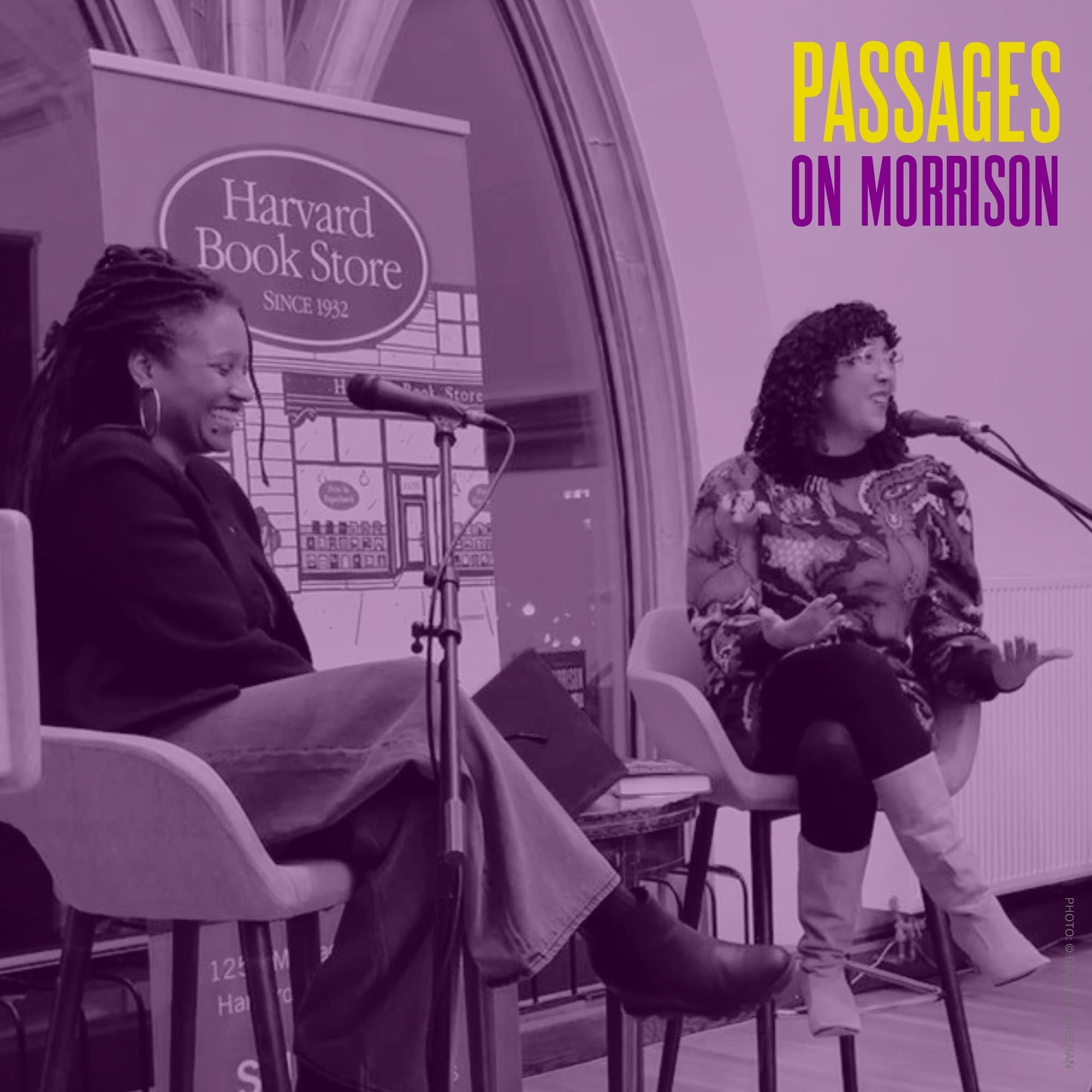
The Slowdown: Poetry & Reflection Daily
Bonus Episode — PASSAGES: On Morrison featuring Tracy K. Smith and Namwali Serpell
00:29:45
Loading summary
Transcript57 lines
- [00:01]
Call to Mind Host
Anxiety, depression, bipolar disorder. At least half of us will experience a mental illness in our lifetime. In a new series of special reports from Call to Mind, we hear about the mental health impact of stress, climate change, immigration, and more. Tune in for conversations with people managing hardship and experts seeking solutions. Listen to Call to Mind from American Public Media.
- [00:32]
Sarah McCrae
And Doug, there's nowhere I wouldn't go to help someone customize and save on car insurance with Liberty Mutual, even if it means sitting front row at a comedy show. Hey, everyone, check out this guy and his bird. What is this, your first date? Oh, no. We help people customize and save on
- [00:48]
Call to Mind Host
car insurance with Liberty Mutual together.
- [00:49]
Sarah McCrae
We're married.
- [00:50]
Call to Mind Host
Me to a human, him to a bird.
- [00:52]
Sarah McCrae
Yeah, the bird looks out of your league. Anyways, get a quote@libertymutual.com or with your local agent. Liberty. Liberty.
- [00:58]
Micah (Slowdown Producer)
Liberty.
- [00:59]
Sarah McCrae
Liberty.
- [01:00]
Micah (Slowdown Producer)
Hey, it's Slow down producer Micah. Today we're excited to share a bonus episode, the first installment of Passages on Morrison. Produced by our friends at Random House Publishing Group. The new podcast takes reading on the road as Namwali Serpell, novelist, critic and Harvard professor, joins fellow writers and skilled readers in conversation to pore over excerpts of Toni Morrison's prose. This show is a love letter to reading closely in community. You'll hear Serpel in conversation with poet and former host of the Slowdown, Tracy K. Smith. Together, they read the Opening of the Bluest Eye, Toni Morrison's debut novel, and discuss all that the passage emits and erases. They emulate the possibilities of reflection and perspective from slowing down and moving with care through a text, through the intentions of the writer and the world they build with us, the readers. And the second episode, featuring acclaimed poet and essayist Hanif Abdurraqib, is available to listen now, wherever you get your podcasts.
- [02:05]
Tracy K. Smith
There were no marigolds in the fall of 1941.
- [02:11]
Sarah McCrae
Passages, images, passage, voice, passage, form passages on Morrison.
- [02:28]
Namwali Serpell
Hi, this is Nawwali Serpell. I'm speaking to you from my office in the English department at Harvard University. There are long shelves lining the walls around me full of all the books that I've read and that my students have read and that we study here together. And there's this small green loveseat that's covered in a pattern that in my home country of Zambia, we call Chitenge. When I hold office hours, my students come and sit on my little green couch and we talk about what we're reading and what we're writing. I'm here getting ready to head out to the launch event for my new book On Morrison. It's a book that was born right here at this desk at Harvard, where I teach a course on the works of Toni Morrison. But it's not a biography and it's definitely not a textbook. On Morrison is an essay collection exploring the entirety of Morrison's writing. Her novels, her poetry, her criticism, her plays. It's a book I hope people will read alongside her works. I consider Morrison not as an untouchable icon or monument, but as a deeply inventive, experimental, and really, in a way, revolutionary writer who had a virtually unmatched understanding of literary form. In the next couple of months, as part of the book tour for On Morrison, I'll be passing through many cities to bring the book to readers. Columbus, Cleveland, Philadelphia, New York, Oakland. And I'll be in conversation with many of my favorite writers and most importantly, devoted readers of Toni Morrison. People like Hanif Abdurraqib, Vincent Cunningham, Cathy Park, Hong. And just as this book came out of conversations with my students and colleagues here, we're going to take these events as opportunities to read and talk about some passages from Toni Morrison's works together. We'll hit the road soon, and we're going to take you with us tonight. We're starting just down the street in this big room on the upper floor of the First Parish church here in Cambridge, Massachusetts. I'll be talking with my friend and colleague here at Harvard, the former US Poet laureate and veritable genius, Tracy K. Smith. It seems fitting that for this kickoff event, we'll be talking about the opening passage of Morrison's debut novel, the Bluest Eye. Tracy will read it, and you can find the passage in the episode description, if you want to follow along. Morrison is a famously, maybe infamously, difficult writer. She insisted on being so she felt it was a way to be taken seriously. And as I've taught her work to students over the years, I've learned that really, the best, or maybe only, way to read Toni Morrison is to reread Toni Morrison. Yes, allow that first reading experience to wash over you in all of its wonder and bafflement, but then return to it, hopefully with other readers and spend some serious time with the words on the page. I'm thinking of this tour as a kind of traveling classroom or a salon parlor. The goal is to come together in person with fellow readers in different places, to explore exquisite writing together. Reading in this way is a shared practice of attention, and it's a shared pleasure. Okay, I'm going to lock up my office now and head over to the venue. Morrison always liked to say that reading and writing were like one's own mind dancing with another's. Let's go dance.
- [06:24]
Sarah McCrae
Please join me in welcoming the Molly's proud.
- [06:35]
Namwali Serpell
Hello, everyone.
- [06:37]
Sarah McCrae
Welcome. Good evening. So we are going to talk about Anne Morrison, but we're going to start with something a little different. We're going to hear Morrison's words, and the way we'll do this is we'll read a passage from her novel the Bluest Eye. And after we've read it, Tracy and I will read it closely together. We'll have a conversation, a deep dive into the language, into the images, the metaphors, in order to open up what Morrison is doing at the level of form which is the focus of my book. The Bluest Eye was Morrison's first novel, published in 1970. Many of you will know it as the story of Pecola Breedlove, a little black girl who longs for blue eyes. But Morrison tells the story in a really strikingly experimental way. We don't get, in fact, Pekola Breedlove's perspective. We barely get her voice. And when we do hear her voice, it is through a strange, disembodied dialogue with herself. Morrison adopts this strikingly innovative, almost modernist form, one that she said breaks the narrative into parts that have to be reassembled by the reader. So I'd love to do some of that reassembly with you today. So, Tracy, will you read for us?
- [08:14]
Tracy K. Smith
I'm going to use my large print copy just out of nervousness for my eyesight, Quiet as it's kept. There were no marigolds in the fall of 1941. We thought at the time that it was because Pecola was having her father's baby that the marigolds did not grow. A little examination and much less melancholy would have proved to us that our seeds were were not the only ones that did not sprout. Nobody's did not. Even the gardens fronting the lake showed marigolds that year. But so deeply concerned were we with the health and safe delivery of Pecola's baby, we could think of nothing but our own magic. If we planted the seeds and said the right words over them, they would blossom and everything would be all right. It was a long time before my sister and I admitted to ourselves that no green was going to spring from our seeds. Once we knew, our guilt was relieved only by fights and mutual accusations about who was to blame. For years, I thought my sister was right. It was my fault. I had planted them too far down in the earth. It never occurred to either of us that the earth itself might have been unyielding. We had dropped our seeds in our own little plot of black dirt. Just as Pecola's father had dropped his seeds in his own plot of black dirt. Our innocence and faith. And were no more productive than his lust or despair. What is clear now is that of all of that hope, fear, lust, love and grief, nothing remains but Pecola and the unyielding earth. Cholli Breedlove is dead. Our innocence, too. The seeds shriveled and died. Her baby, too. There is really nothing more to say except why. But since why is difficult to handle, one must take refuge in how.
- [10:52]
Sarah McCrae
Thank you. That was extraordinary. You read that story so beautifully. Thank you, Tracy. I am so curious what you make of a passage like this from the perspective of poetry.
- [11:10]
Tracy K. Smith
Yes. I mean, I have, like. Almost like a little sonic and tonal landscape on the copy that I took notes on. Because there are so many regions and clusters of gestures. The first thing I hear is the sense of many voices or the voice of gossip with that opening clause, quiet as it's kept. Which, you know, many of us know from colloquial or vernacular. Kind of like chatter, which means kind of just the opposite of what it says. But then there's, like, so many negations. No, Marigolds did not grow. Did not. Nobody were not. No. You know, not even nothing. So there's so much that's like puncturing the first paragraph. As I read it, I see the flare of golden color every time the marigolds are mentioned. And so the. The. Just the contrast between what we are made to imagine in many. In many instances. And what we're told is not coming, never came. Yes, so that's part of it. There's more, too.
- [12:17]
Sarah McCrae
Yes. No, that's. That's. That's beautiful. I'm very interested in the way in this novel. Morrison uses this technique that we call paralepsis as literary critics, but is very easily exemplified by the colloquial phrase, not to mention. And then you go ahead and mention anyway. And she does this at, like, narrative length. In this novel. There's whole lists of things that aren't there. And it's a very beautiful kind of evocation in this opening. The marigolds we keep seeing are not there. That's what didn't grow. So. What an amazing thing that literature can do. Right. It can tell you what's not there. But because we're so used to being Instructed to see by a single word. Like marigolds. We see the marigold. We have this kind of doubleness. We have the sense of the marigold. And then the marigolds have been erased. They have been buried.
- [13:19]
Tracy K. Smith
Right.
- [13:19]
Sarah McCrae
And this is exactly what Morrison does with Pecola herself. Right?
- [13:24]
Tracy K. Smith
Yeah. There's a lot in this passage that has to do with time and distance. In the second paragraph, you know, we get those phrases like, it was a long time, or once we knew for years, it never occurred to either of us. And so I'm also thinking about, like, the long. And this is a very adult voice, right. The composure and the composition of sentences. And so there's this sense of this long gaze back or long, deep gaze in that's operating here as well.
- [13:57]
Sarah McCrae
Yeah, there's a wonderful doubleness. To Claudia McTeer, who is our narrator here. We don't know that that's who it is yet. We just have we. And we have, you know, the name Pecola, but we have my sister, but we don't actually have the sister's name, which is Frida. So we have this focus on the Breedlove family, Pecola and Cholli Breedlove. But we know that that's not who's speaking. We know an I is speaking, a we is speaking. And it's an older we with this sense of wisdom, the sense of looking back. Now, here are the things I know that I didn't know back then. And as the story proceeds, we get this double charact narrator. Claudia as a child and Claudia as an adult. It's a really kind of impressive, I think, way of opening a debut novel. Right. With so many layers.
- [14:53]
Tracy K. Smith
There's also the layer of sound, all of those E sounds. The seeds breed love. I don't know what. What you make of that fabric of sound.
- [15:04]
Sarah McCrae
I mean, there's a musicality. I mean, even just the alliteration, quiet as it's kept.
- [15:10]
Namwali Serpell
Right.
- [15:11]
Sarah McCrae
Those two Cs that it's like a softness, but it's also breaking. I think for Morrison language and its tonality, that song like, quality was really important because she often aspired to the quality of jazz or the quality of the blues. And I spend some time in my chapter discussing why I think the blues is so important to this first novel in particular. Part of that has to do with the subject matter here, which we get right away and is incredibly tragic. Pecola was having her father's baby. That's. What a horror. That's in the second sentence.
- [15:55]
Tracy K. Smith
And as you describe, it's on the COVID of an edition of the book. Right.
- [15:58]
Sarah McCrae
The first edition of the book. Morrison put this page that you all have as the COVID of the book itself. So it's almost like you've opened the book without even opening the book. And in the novel itself, it's italicized, but it has this very kind of. Almost like the opening overture to a song. Because it tells you the whole story. It tells you everything. It sounds all the notes that you're going to hear later. And then itself describes that. Right. It's like, here's the story. There's nothing really more to say. Again, paralepsis, not to mention, there's nothing to say. But then, except why? And since why is difficult to handle. One must take refuge in how that's going to be the purpose of the unfolding story before us.
- [16:49]
Tracy K. Smith
There's a lot of recalibration that we can imagine happening. Even, you know, the pages that we didn't read before this. The primer and the acceleration of that rote language. And the way that you're caught up in something that's sonic, that's speed based. And then you come into this really different tone. So you've already been acted upon in a really powerful vibratory way.
- [17:14]
Sarah McCrae
Yeah. So the technical first page is. Here is the house. It is green and white. It has a red door. It is very pretty. Here is the family. And then it runs those words together without punctuation and then without spaces between them. Until you get this kind of blur. And it feels like, as you say, mechanical, like this machine of ideology of what whiteness and prosperity and American beauty is supposed to be. And then, quiet as it's kept, we get the black voice coming in, talking about what's actually happening intimately in real homes, not Dick and Jane homes.
- [17:54]
Tracy K. Smith
Yeah. I hear a little glimmer of the. The imprint of that white vision with if we said the right words, if we did our magic, everything would be all right. And then that. So quickly swept. It's already been swept away by the time it arrives. But that feels a little bit like it's taken from the register of Dick and Jane.
- [18:15]
Sarah McCrae
I mean, I think, again, the novel gives us things that it then obliterates or erases. And I can't help but think that the kind of cluttering of that American Dream primer into this kind of mess. It reminds me of Claudia, the narrator's desire to dismember dolls. That she would get these Blue Eyed dolls and she breaks them apart. But there's something that she understands to be kind of terrifying about that in her. Right. So I think you're right. There's this kind of tension of, like, wanting it to provide structure, respite, some kind of stability, but then this also this, like, really violent rejection of it because it is clear that this is what is demolishing this community. Yeah.
- [19:08]
Tracy K. Smith
You talk in the book really compellingly about all of the ways we approach the bluest eye wrongly. You know, like, nobody gets the bluest eye.
- [19:21]
Namwali Serpell
Yeah.
- [19:22]
Sarah McCrae
Start by being like, nobody knows this book. I mean, I'm being provocative.
- [19:28]
Tracy K. Smith
Yeah, definitely.
- [19:29]
Sarah McCrae
But I think there's a way that the book has been reduced, simplified, turned into a certain kind of sloganeering. I might even say that is completely counter to Morrison's original aim with the book. I learned recently that not only did Holt, her original publisher, send in the book to the Library of Congress with Toni Morrison, even though she wanted it to be published under a different name. Oh, really? Yeah. I'm not sure she would have gone for Chloe Morrison or Chloe Wofford, which is her birth name. But she. Tony is her. Is a abbreviation of her baptismal name, Anthony. She converted to Catholicism as a teenager, and that's when she started to adopt that nickname. When she got to Howard University, people couldn't pronounce Chloe, and so she went by Tony. Then she married an architect named Morrison, but they were divorced by the time she published this book. And she called the publisher being like, I don't want this to be. And they were like, it's too late. But the other thing that they did is that they submitted it to the Library of Congress as an adolescent fiction. And Morrison did not believe that this was a book for children. It's a book about children. It's also a book about adults. And the notion that this is a book that we should teach in junior high really shocked her when she learned this. The only thing that made her reconciled to that is when she learned that for some young people, the book was giving them a language to express the abuse that they were feeling or experiencing at home. That was the only. Because otherwise she was like, this is a scary book. This is a book for adults and very much about the adult forces that have rejected Pecola. It's a structural argument. We think of it, I think, almost like Catcher in the Rye or something like a first person narrative, but, you know, but it's a little black girl and we're giving voice to the voiceless. And I just feel like that has led to the book's modernist and, as I said, really experimental form being neglected or being put to the side. It's actually, I think, a harder book than some of her later books. I'm sure some of you have experienced that, not just formally, but also what we're being confronted with in that second line.
- [22:02]
Tracy K. Smith
Yeah. You talk about how, rather than thinking about the themes that Morrison writes about, paying attention to the formal behavior of her works, teaches you how to read them. I wonder if I can ask you to talk a little bit about the path to that theory about her work. Is it part of your early reading experience with her, or did it come through teaching?
- [22:29]
Micah (Slowdown Producer)
Both.
- [22:29]
Sarah McCrae
I mean, it came through the fact that kind of the best way to read Toni Morrison is with other people, whether that's in a classroom or a reading group. And I found being given clues or keys or just even the vocabulary to name the various techniques she was using. And also a history of those techniques was really helpful for me to truly appreciate the profundity and the riches of what was on the page. But I think I also, to be honest, I was a little bit pissed off. I was a little irritated with the way that Morrison gets talked about. I think one of the sad things that happens when you achieve monumental status is that the art that you have poured your work into, your labor into, gets turned into a set of banners or a set of notions, as you say, themes. And sometimes wrongly so, things get attributed to Morrison that she did not believe or ascribe to. In particular, the idea that she wanted to cancel the white male canon. She was absolutely adamant that she would. She was like, I can't do without Aeschylus and Shakespeare and all these writers. Why would we want to get rid of them? Right? So things like that, where I felt like the reputation and the misconstrual of all of the things she was trying to do, meant that people were no longer actually reading the work anymore. One of her best friends was Fran Leibowitz. I don't know if everybody knows that, right? That's another thing that's surprising about Toni Morrison. But they loved to talk on the phone all the time, and they. They cracked each other up all the time. And in the. You know, there was a series of eulogies for Morrison when she passed in 2019. And Fran Leibowitz told the New York Times, it's among kind of a list of people just expressing their grief. She says, I know it sounds like a crazy thing to say, but I always thought Tony's writing was underappreciated because people always looked at it through the prism of her Being black and being a woman. But Tony was a very experimental writer. See, I would take that. Butt out.
- [24:42]
Tracy K. Smith
Yeah.
- [24:43]
Sarah McCrae
I would say she was black and she was a woman. And perhaps because of that, she was a very experimental writer. There were a lot of things Tony did through her writing that just went unremarked upon. I do think she was misunderstood and underrated. That sounds like interesting. It sounds like a wild thing to say. But what I've noticed is that those who love Toni Morrison, who adore Toni Morrison, and those who are a little bit dismissive of Toni Morrison, both suffer from the same reputational problem. Right. Which is that they don't actually read her anymore. They don't actually attend to what's on the page. I think one of the things that I really wanted to do in writing the book was think about how Morrison on the page had affected me as a reader, professor and a writer. And so I want to read a little bit from the chapter on the Bluest Eye just to talk about how this decision to tell the whole story all at once in the beginning, on the very cover of the Bluest Eye, affected me as a writer of fiction. So this is from the beginning of my chapter, banned as it's been. Everybody knows what the Bluest Eye is about. A little black girl who wishes she had blue eyes. That's not really a spoiler. Besides, Toni Morrison didn't care about spoilers. In fact, she gave away the whole plot of this, her very first novel, in its opening narration. Quiet as it's kept. There were no marigolds in the fall of 1941. We thought at the time that it was because Pecola was having her father's baby that the marigolds did not grow. The gossipy tone and the mystery of the missing marigolds divert our attention from those six key words. Pecola was having her father's baby. But these are, in fact the book's shocking revelations. Incest, rape, child pregnancy. And as yet more spoilers in these early pages go on to tell us, stillbirth and death, the preface concludes, there is really nothing more to say except why. And since why is difficult to handle, one must take refuge in how Morrison's novels always teach us how to read them and if we pay attention, how to write our own. There's a direct line between the beginning of the Bluest Eye and the opening of my novel, the Furrows. It goes, I don't want to tell you what happened. I want to tell you how it felt. When I was 12, my little brother drowned he was 7. I was with him. I swam him to shore. That is, in fact, the story. Deliberate spoilers like these force the reader to shift their expectations away from narrative suspense, what happened, and toward experience and feeling instead. In other words, if the reader already knows the marigolds didn't grow, that the ill begotten baby died, that the little boy drowned in the arms of his sister, then they must focus their attention not on what happened, but on how it happened, how it felt. Spoilers are like a confidence trick. A writer must have faith that a mere series of events is less interesting than how it is told. Having minored in classics at Howard, Morrison would have been well aware that the Greeks had watched Oedipus Rex again and again, all the while knowing its cataclysmic ending. Once, at the end of a lecture I was giving on the novel, I brought up Toni Morrison's choice to disclose the Bluest Eye's events of abuse and death on its very first page. This was evidence, I suggested, that she didn't believe in trigger warnings any more than she believed in spoiler alerts. The next class a student raised their hand even before I began to speak. They had been thinking about what I had said. They agreed with me that to put Pecola was having her father's baby on the book's cover was a spoiler, but they argued that this was in fact also a trigger warning because it would prevent some bookstore browsers from opening the novel to read further. Good point. But I wondered aloud in my reply, is that a trigger warning or is that just a trigger? Aren't these rather traumatic things to encounter on the first page of a book on its very cover? Is Morrison giving us an off ramp to avoid violence, or is she seeking as swiftly as possible to inflict it upon us? Why print a label on a book that would surely push some readers away? Quiet as it's kept, nobody knows what the Bluest Eye is really about.
- [29:39]
Tracy K. Smith
Thank you.
- [29:44]
Sarah McCrae
Thank you all for coming out. Passages on Morrison is a production of
- [29:50]
Namwali Serpell
the Random House Publishing Group.
- [29:52]
Sarah McCrae
It was recorded on tour for my
- [29:54]
Namwali Serpell
new book on Morrison, an exploration of all of Toni Morrison's writing. You can find this episode's passage in our show Notes. This podcast was created and Produced by Sarah McCrae.
- [30:05]
Sarah McCrae
Our technical director and sound designer is the Reverend John Delore.
- [30:10]
Namwali Serpell
Publicity and book tour coordination by Carrie Neal and Peter Dyer.
- [30:14]
Sarah McCrae
Our cover art includes Toni Morrison as
- [30:17]
Namwali Serpell
Song of Solomon, a 1981 lithograph by the artist John Sokol.
- [30:22]
Sarah McCrae
Thank you to my conversation partner, Tracy K. Smith the Harvard Bookstore, the First Parish Church, Nico Rivers, our partners at
- [30:30]
Namwali Serpell
Lithub and the entire team at Hogarth
- [30:33]
Sarah McCrae
and the Random House Publishing Group.
- [30:35]
Namwali Serpell
Our next episode is a conversation with Hanif Abdurraqib about the end of Song of Solomon. Thanks for listening and for reading with us.
- [30:46]
Call to Mind Host
Anxiety, depression, bipolar disorder. At least half of us will experience a mental illness in our lifetime. In a new series of special reports from Call to Mind, we hear about the mental health impact of stress, climate change, immigration and more. Tune in for conversations with people managing hardship and experts seeking solutions. Listen to Call to Mind from American Public Media.